



Abstract

Photo of Darrin Thornton by Cody Goddard
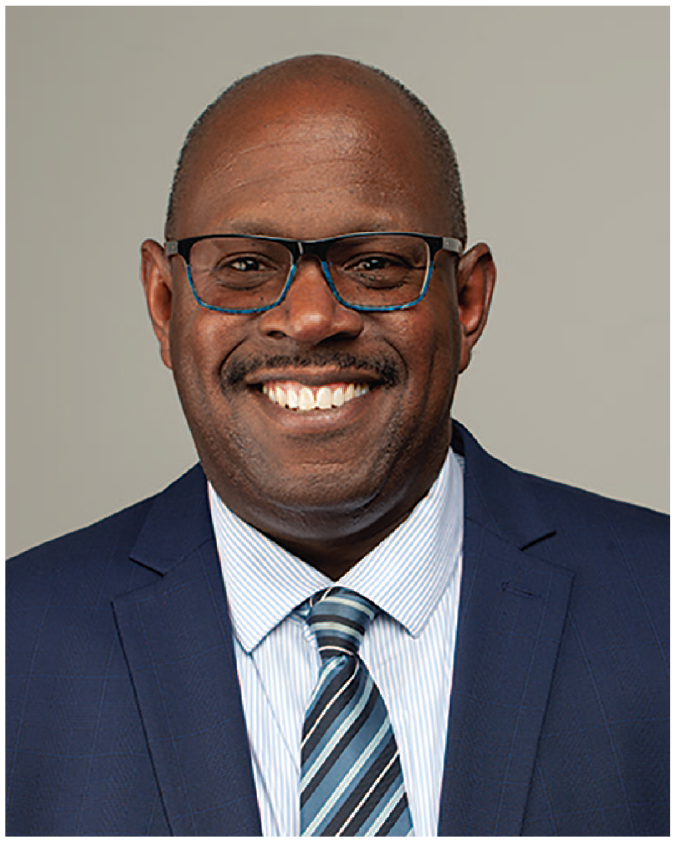
Photo of Juliet Hess by Harley Seeley

Vignette 1
Kofi, a Ghanaian American high school senior, lugs his tall atsimevu drum into his college percussion audition. He has been working with an Ewe master drummer on his drumming since he was little, and he is excited at the prospect of furthering his music studies at a university. His teacher often says that music is in us because we have a heartbeat. He checks his audition schedule after signing in at the registration desk in the front lobby of the newish music building. The person behind the desk offers him directions to his audition room, which will take place in a half hour. He makes his way to the room. When he arrives, he hears the snare drum through the closed door and then the marimba. He rests his hand on top of the atsimevu and waits for his turn. When the door opens, he walks into a room with three people sitting behind a table. The older white man introduces himself and the others as percussion professors at the school and invites Kofi to play. Kofi takes his atsimevu out of the bag and performs the lead drum for gota—a dance that requires both sticking and hand drumming, with one hand on each. He gets into the groove, and before he knows it, the song is over. The panel is staring at him. The older man, who seems to have seniority, gestures toward the snare drum and marimba and inquires if Kofi might show them what he could do on those instruments. Kofi had only seen these instruments in the band room of his school, but he did not participate in the program. He shook his head. The older man thanked him, and Kofi left the room, with a heavy feeling in the pit of his stomach. Several months later, he received his rejection letter in the mail.
The Question of “Excellence”
In considering the audition as a barrier to an entry into both music and music education, the question of excellence emerges as an important site of reckoning. “Excellence” in a music school audition encompasses Western classical music, the ability to read notation, and knowledge and execution of Western classical technique. Auditions typically exclude musics beyond the scope of Western classical music, instilling a hierarchy between Western classical music and other musics. 1 In postsecondary auditions, all-state auditions, or other high-stakes auditions, when we encounter nonclassical musics, we tend to evaluate nonclassical music through a classical framework. In doing so, we impose Western musical elements, such as dynamics, form, and harmony, to musics that may not be understood through such elements. 2 Broadening our view and the expansiveness of excellence seems imperative to embracing the wealth of musics that could be a part of postsecondary musical study.
Given the tendency to evaluate non-Western classical music through a classical music framework, the task perhaps becomes determining how to break down biases that impede recognizing all excellence—what we call pan-excellence. Part of the problem we identify is epistemological—a problem of ways of knowing and knowledge. We do not currently have the lens or the knowledge to recognize pan-excellence when we encounter it. The first step to breaking down some of the biases in place is recognizing when what we encounter is beyond our scope or knowing that we do not know.
Recognition of Bias
As music educators, certified and degreed, we are prepared in a particular way based on the gateways and curricular requirements and common experiences often dictated by certifying accreditation bodies. Thus, our expertise is limited to those experiences and any others we pursued either cocurricularly or out of personal interest. Though the hope is multimusicianship, it is more likely that we have developed deeper expertise and understanding in a more limited range of musics.
The audition process is the first gate of access to professional music study. The evaluation of talent is a key, and inherently subjective, process. If we wish to diversify the academy beyond the existing Western classical framework—what Philip Ewell calls the white racial frame 3 —we must be able to evaluate excellence in musical styles outside our training. It is not reasonable to expect any one person to be able to provide a substantive evaluation of every type of music/genre/medium. Yet, there is excellence in every genre.
There are two critical decision points to navigate: (1) the panmusical sense to know that what you are experiencing is excellent yet beyond your scope and (2) the self-awareness to know when you need to seek others with expertise in other musical genres. If we plan to open the gates of access wider, we must evaluate potential in a nonbias form beyond framing all music inside a Western classical window. For our purposes, we offer the concept of pan-excellence for consideration. Pan-excellence includes the full range of genres and styles of music, inclusive of Western classical music.
Vignette 2
After a long day of listening to auditions, a student walks in carrying a guitar and a footstool. They are auditioning to gain admittance to our music composition degree program. I ask if they require a music stand, and they state they are playing from memory today and will not be using one. I’m impressed by this approach and hope they don’t have a memory lapse under the pressure.
They break into their repertoire and the sounds filling the room are magnificent but not at all what I was expecting to hear. The classical guitar sound I was expecting sounded otherworldly. I honestly wasn’t sure I had ever heard this type of music before as I could not place the style or origin but found it to be beautifully played. At a logical point in the performance, I ask them to pause. I ask them about the piece and the style. I ask how long they have been playing and the nature of their instruction. It is clear they are well versed on the instrument and play at a very accomplished level. Now, I’m at a loss for how I will be able to validate their accomplishments.
I ask the student to record their audition material and provide a video link that can be shared. Then I go back to the audition committee and request that we find someone expert in this genre to give a listen and provide an assessment since I’m clearly out of my league regarding the nuances of this genre, though musically I can tell this student is rather accomplished.
Realizing Pan-Excellence
In most schools of music, students work through some sort of foundational musicianship curriculum, often including music theory, music history, studio lessons in their area of excellence, and ensemble experiences. The challenge in realizing pan-excellence beyond the admissions process is offering pathways to degree completion that do not require a both/and approach for students who perform in non-Western ways. Right now, those students must also be able to perform Western classical music to successfully navigate a music program (both/and), rather than an either/or approach, which may allow excellence on a full range of musical genres without also having to capitulate to Western classical music.
Pan-Excellent pathways would require a reenvisioning of musicianship skills and how they are taught and assessed. The question becomes what skills are “basic music skills” for most musics. For example, theory courses could incorporate both written (in various notational conventions) and oral traditions, from the start embracing the fundamentals of different musics that may differ widely from each other. Music history could focus on a full range of musics through different time periods. Approaching history via a social/anthropological lens would allow students to recognize pan-excellence across history. Musicianship skills then may draw richly on aurality alongside written traditions within and beyond Western classical music and further facilitate the recognition of different elements of music as socially situated and not necessarily universal.
While solo performance seems plausible via hiring content-specific specialists for studio instruction, the ensemble situation is more complex. Embracing pan-excellence requires developing ways for pan-excellent students to grow within the ensemble context, and those contexts should be of the equivalent quality and rigor as Western ensembles. Imagining these experiences will require music educators to consider various ways of assessing musical understandings and accomplishments across multiple musical ways of knowing and being.
In vignette 2, the professor auditioning asks the student to describe their journey of becoming musical, thus changing the hierarchical teacher–student power dynamic. Rather than assuming that the student would not be successful, this professor met the student where they were, even though they were unfamiliar with the tradition presented. The professor nonetheless recognized the student’s dedication and skill. Taking students at their word about their expertise suggests that fostering pan-excellence in music schools will be student centered and student driven.
Ultimately, this type of fundamental education would develop learners who can recognize pan-excellence in music performance themselves across the full range of musical practices. Having these learners in our institutions ideally generates a cohort of practitioners who both are pan-excellent performers and able to identify and assess potential in future generations. Future faculty with these abilities set conditions for social change within music schools and foster the possibility for the full recognition, admission, retention, and nurturing of pan-excellence throughout the full degree program, further leading to K–12 music educators who embrace pan-excellence among their students. Recognizing and embracing pan-excellence then potentially provides the key to social change within music institutions.
Footnotes
Notes
Darrin Thornton and Juliet Hess are coeditors of the Equity in Music Education column for Music Educators Journal. Darrin Thornton (