




Abstract
For consent to be fully informed, it must be tailored to each patient, who must be appraised of alternative treatments (including that of no treatment) and informed of the material risks which an individual would wish to know and consider significant. This also includes Covid-19 related risks. Whilst surgeons had at times to offer sub-optimal treatments due to pressures caused by the pandemic, patients should still be given the choice to delay their treatment. Consent obtained remotely via digital technology must comply with the same requirements as in a face-to-face setting.
Keywords
Where we stand
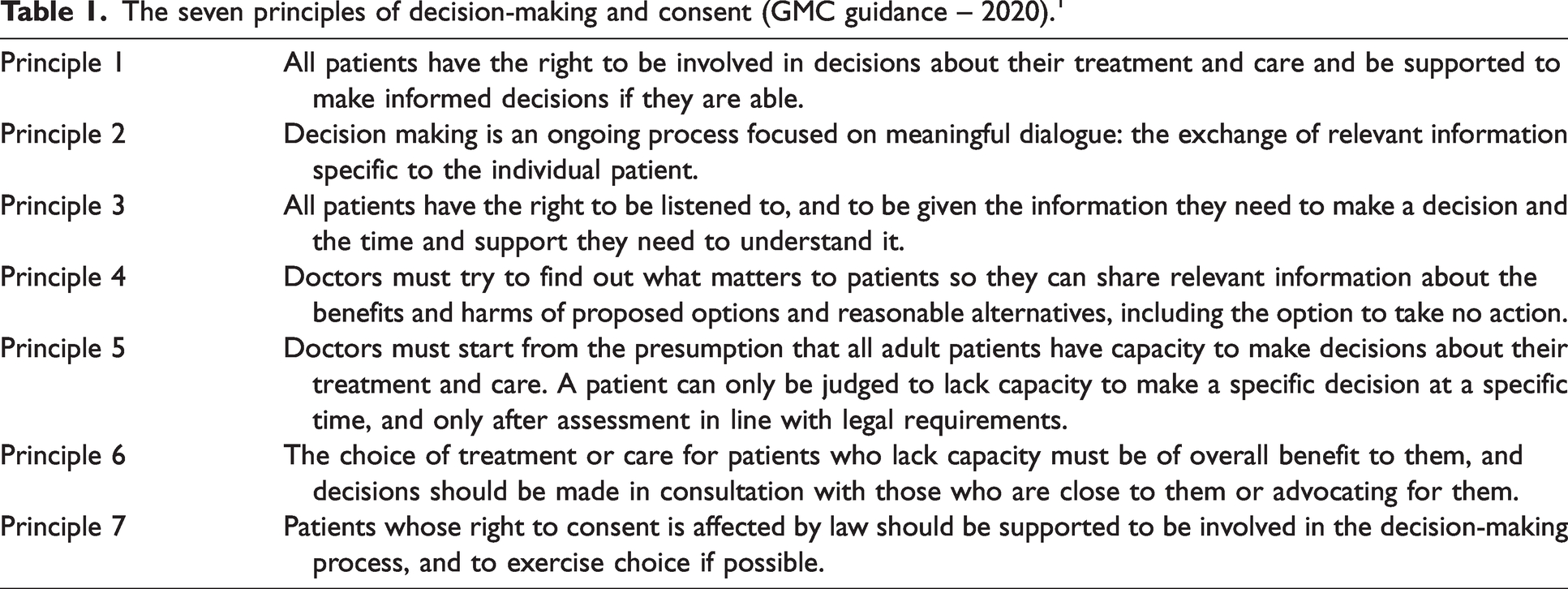
Informed consent is an ethical and legal requirement which is one of the several key principles within the Good Medical Practice (Table 1) 1 Every patient has the right to be involved in the decision-making process about their care and the doctor has to explain in clear terms all the information the patient needs to reach an informed decision. This includes: (a) diagnosis and prognosis of a pathology; (b) the proposed procedure, what it would involve and its desired outcome; (c) its risks and benefits, including the adverse effects; (d) alternative investigations and treatments; and (e) potential outcomes of taking no action.
The seven principles of decision-making and consent (GMC guidance – 2020). 1
Prior to 2015, the standard for disclosure of information was defined by the Bolam test, where the doctor was not considered to be negligent, if a reasonable (majority or minority) body of responsible doctors considered their practice appropriate.
The 2015 Montgomery v Lanarkshire Health Board Supreme Court ruling 2 requires a doctor to take into account an individual patient’s wishes and enable them to decide which treatment to undertake after they have been informed of all material risks, namely, the risks which a reasonable patient would consider significant.
This shift to a patient-centred approach set by the Montgomery case was already the standard of care set by the General Medical Council (GMC) in 1998 and consolidated in 2008 and many years before the legal requirements set by the Supreme Court in 2015.
What Covid-19 has changed
The outbreak of the Coronavirus Disease 2019 (Covid-19) pandemic created an unprecedented strain on healthcare resources in the UK and elsewhere and resulted in doctors offering some patients sub-optimal treatments when first-line treatments were not available.
Despite the concept of “therapeutic exception” whereby doctors can withhold information that they consider may be detrimental to a patient’s health, it is still perfectly reasonable to inform patients about all treatment options, so they are able to make an informed decision whether to undergo a treatment, or to wait until a specific one they would prefer becomes available.
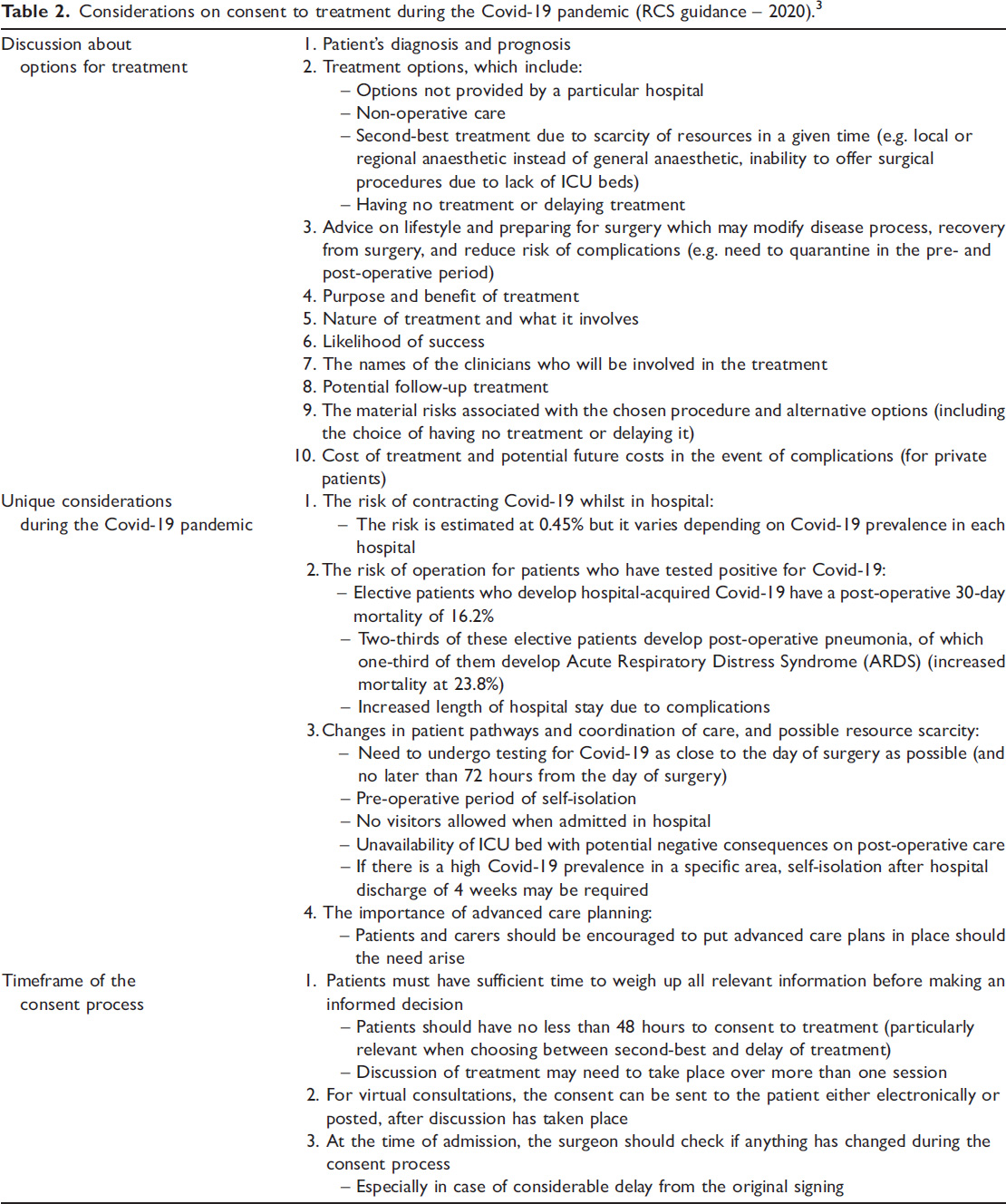
Table 2 highlights the material risks and complications associated with Covid-19 which the patient should know when consenting to treatment. 3
Considerations on consent to treatment during the Covid-19 pandemic (RCS guidance – 2020). 3
During the pandemic, the healthcare system had to adapt itself to guarantee service provision. Remote consultations with visual and audio technology, referred to as “telemedicine”, developed considerably. The Royal College of Surgeons (RCS) states that, when obtaining consent, the principles set by the GMC applied whether the conversation was face-to-face or virtual. 4
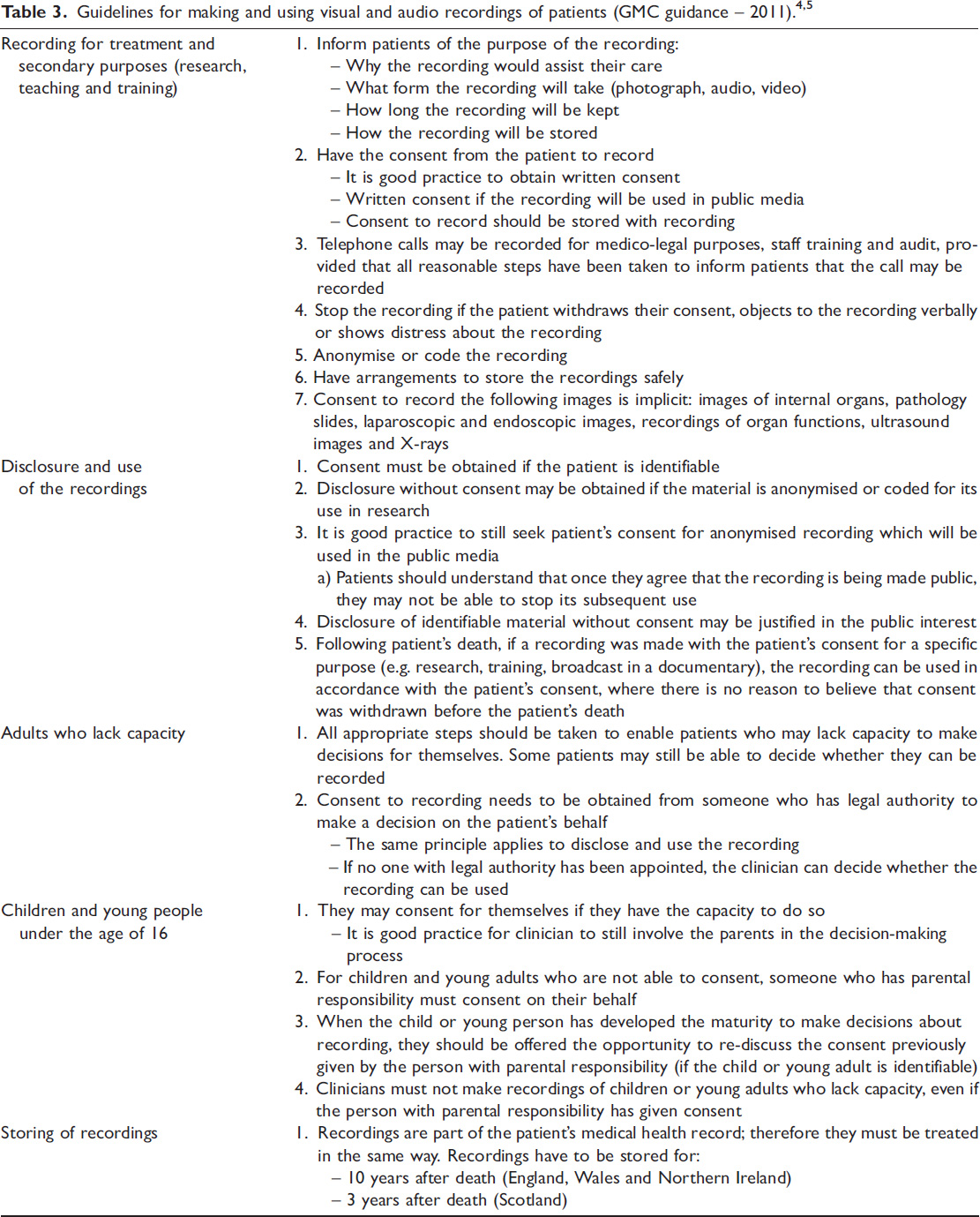
Table 3 summarises the GMC guidelines for visual and audio recordings of patients, which can be used by clinicians to aid the process of obtaining informed consent. 5
Conclusions
The principle of informed consent has undoubtedly been revolutionised in the last decade and clinicians must adapt their procedures to fulfil their obligations to patients and avoid litigation.
Footnotes
Acknowledgements
None.
Contributorship statement
MDC: concept/design and drafting of the article. EAG: design, critical revision and approval of the article.
Declaration of conflicting interests
None.
This project was qualified for and received one of the 2021 British Association of Oral and Maxillofacial Surgeons (BAOMS) 2nd degree student bursary. The organisation did not have any involvement in the project.
Ethical approval
Not needed.