



Abstract
Abortion has always been a vital issue in reproductive and legal medicine. Globally, medical termination of pregnancy (MTP) is allowed primarily on six grounds: (1) to save the life of a woman, (2) risk to the physical and mental health of a woman, (3) pregnancy due to rape or incest, (4) risk of a child being born with a serious fetal anomaly, (5) socio-economic reasons, (6) a woman's request. Most countries have standard legal abortion policies, yet there remains disparity with respect to prohibition, gestational age limit, specific grounds, etc. Abortion laws are constantly changing globally based on regional social and economic viewpoints. Recently, some countries have liberalised their abortion laws, while a few have further restricted theirs. While some countries still completely prohibit MTP. Like some others, India amended its MTP law in 2021. We consider the medico-legal and ethical issues and examine existing MTP laws both globally and as generally applied in India.
Keywords
Introduction
According to the World Health Organization (WHO), abortion is the termination of pregnancy before 20 weeks’ gestation. 1 It may occur spontaneously but it can also be deliberately induced. Centres for Disease Control and Prevention (CDC) consider induced abortion legal when lawfully performed by a licensed clinician. 1 While legal abortions are considered safe, illegally induced abortions may not be. According to WHO, 30 women die from every 100,000 unsafe abortions in developed countries and 220 from every 100,000 unsafe abortions in developing countries. 2 Abortion is considered unsafe when the termination of pregnancy is carried out by an unskilled individual or in an environment that does not meet the minimum standard of medical care required, or both. 3 Unsafe abortion continues to be a serious public health issue worldwide, leading to maternal mortality, especially in countries with stringent anti-abortion laws. 3
For this reason, abortion laws have been framed globally to ensure the health and safety of pregnant women. Abortion laws vary from country to country and have been changing to reflect the socio-political viewpoints of the region. In June 2022, the Supreme Court of the United States of America overturned the judgment of Roe v Wade, the landmark ruling that made abortion lawful nationally in 1973. 4 In the absence of a federal norm, now it is up to each of the states of the US to create legislation protecting or prohibiting abortion. Similarly, China banned all abortions for non-medical reasons in 2021 due to an all time low birth rate, 5 while countries such as Haiti and Sierra Leone, where abortion is completely illegal, are on the verge of decriminalising abortions.6,7
This article reviews abortion laws globally with reference to permitting medical termination of pregnancy on various grounds and the evolution of abortion law in India which has recently been amended.
Abortion laws: Global scenario
The earliest known records of abortion techniques and general reproductive regulations date back to 2700 BC in China, and 1550 BC in Egypt. 8 Modern global reforms and reconsideration of abortion laws began in the early 20th century. Until then, abortion was legally restricted in most countries as it was associated to the higher mortality of women from unsafe abortions, and religious beliefs that considered killing a fetus a sin and immoral. 9 The advancement of safer techniques for abortion and changes in social thinking changed attitudes and abortion policies worldwide. The first country to modernise its abortion policy was the Soviet Union in 1920. 9 Since then, most countries have been progressive when reforming their abortion laws.
Grounds for abortion
Lawful abortion in most countries rests on six grounds: (1) risk to the life of a mother, (2) risk to the physical and mental health of the mother, (3) pregnancy from rape or sexual abuse, (4) risk of a child being born with a serious fetal anomaly, (5) social and economic reasons, (6) request of the woman. 9 The application of abortion laws globally based on these specific grounds is discussed below.
To save a life of a woman
This is the most basic ground on which abortion is allowed in most countries. The status of this ground in different countries is shown in Table 1. Even the countries with the most restrictive abortion laws typically make an exception to preserve the woman's life. But what constitutes an endangered life, and who decides, is unclear in most legislation. 10 WHO recommends that countries should provide a list of diseases that can be considered life-threatening. The list should be illustrative but not exhaustive and should not supersede the opinion of a doctor who considers the woman's life is in danger. 11 WHO also recommends that threats to the life of a woman should not be limited to physical health but should take account of social conditions locally, e.g. this could arise if a pregnancy was out of wedlock and family disapproval could result in violence against the woman. 12 Some countries include the risk of suicide as a threat to the life of a woman and allow abortion on this ground. 11
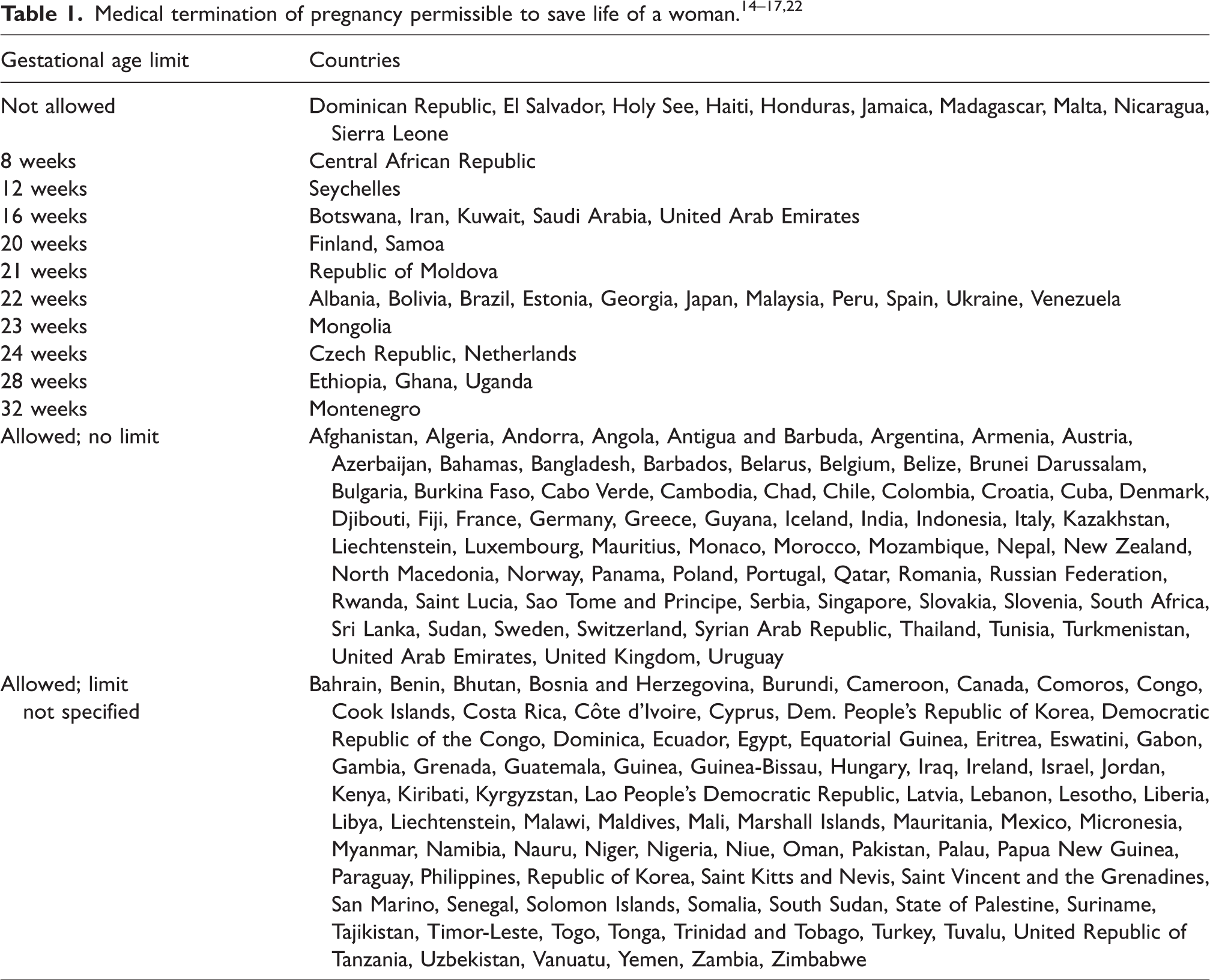
In around 37 countries, such as Afghanistan, Bangladesh, Bhutan, Chile, Egypt, Gabon, Iran, Mali, Micronesia, Kenya, Philippines, Senegal, Somalia, South Sudan, Sri Lanka, etc, abortion is allowed only to save a mother's life.13 –16 In Egypt, if the woman's life is in danger and she signs a statement stating that the treatment was lifesaving, doctors are permitted but not legally obliged to terminate the pregnancy. 17
To preserve the physical or mental health of a woman
Most nations that legalise abortion on medical grounds specifically include mental health along with physical health. The status of this ground in different countries is shown in Table 2. In this regard, WHO states that physical health disorders which should be included under this ground should be the ones which have been brought on by or resulting from pregnancy. In contrast, mental health conditions may include psychological anguish brought on by coerced or forced sexual activities, among other illnesses. 12 There is no gestational restriction on this ground in most countries, reflecting the fact that certain health hazards requiring medical attention might manifest at any point during a pregnancy.
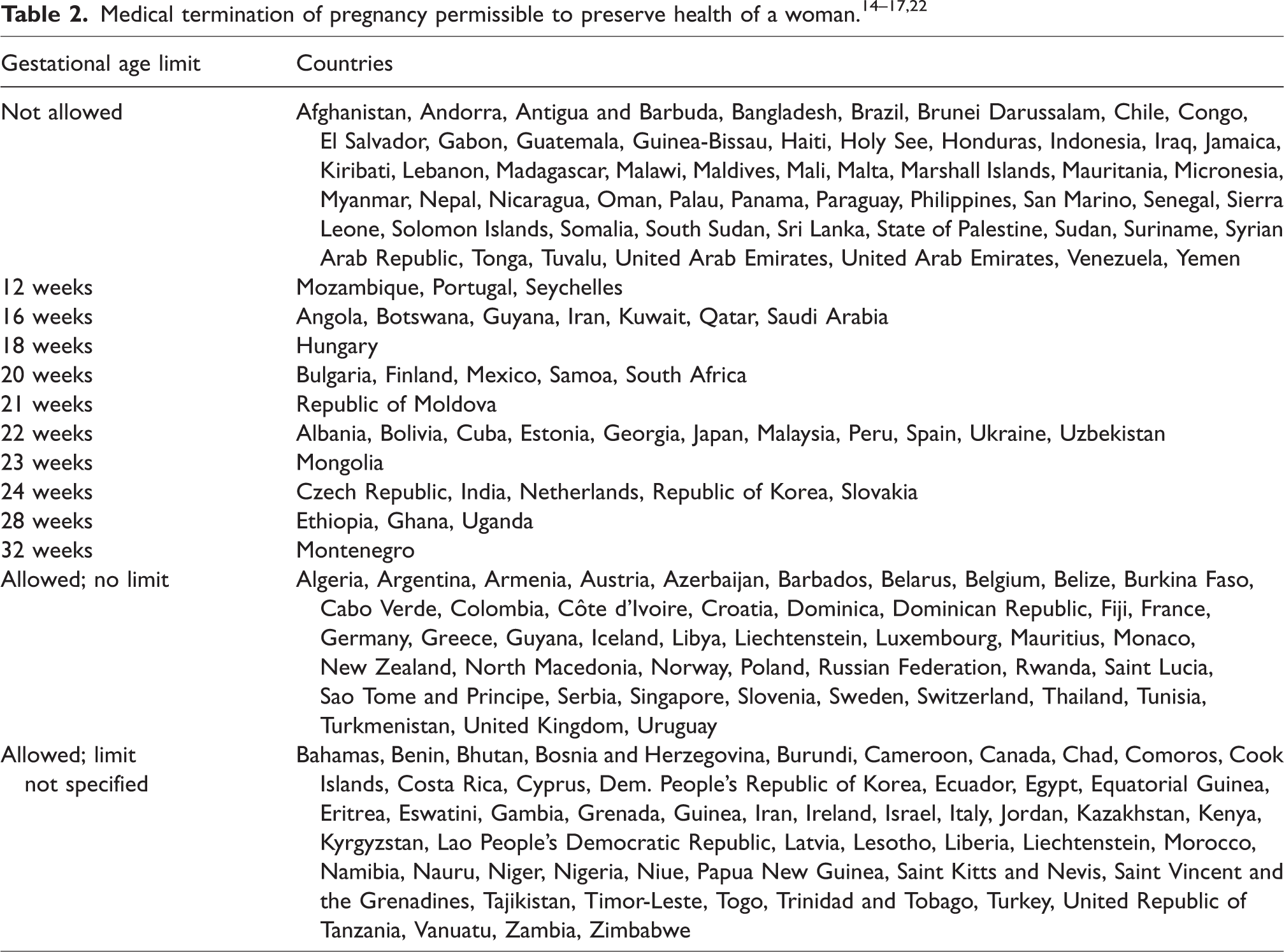
Some countries, e.g. Thailand, require additional assessment of a woman by a doctor other than the one performing an MTP to allow MTP for mental health conditions which may make it more difficult for them to get abortion services. 18
In cases of fetal impairment
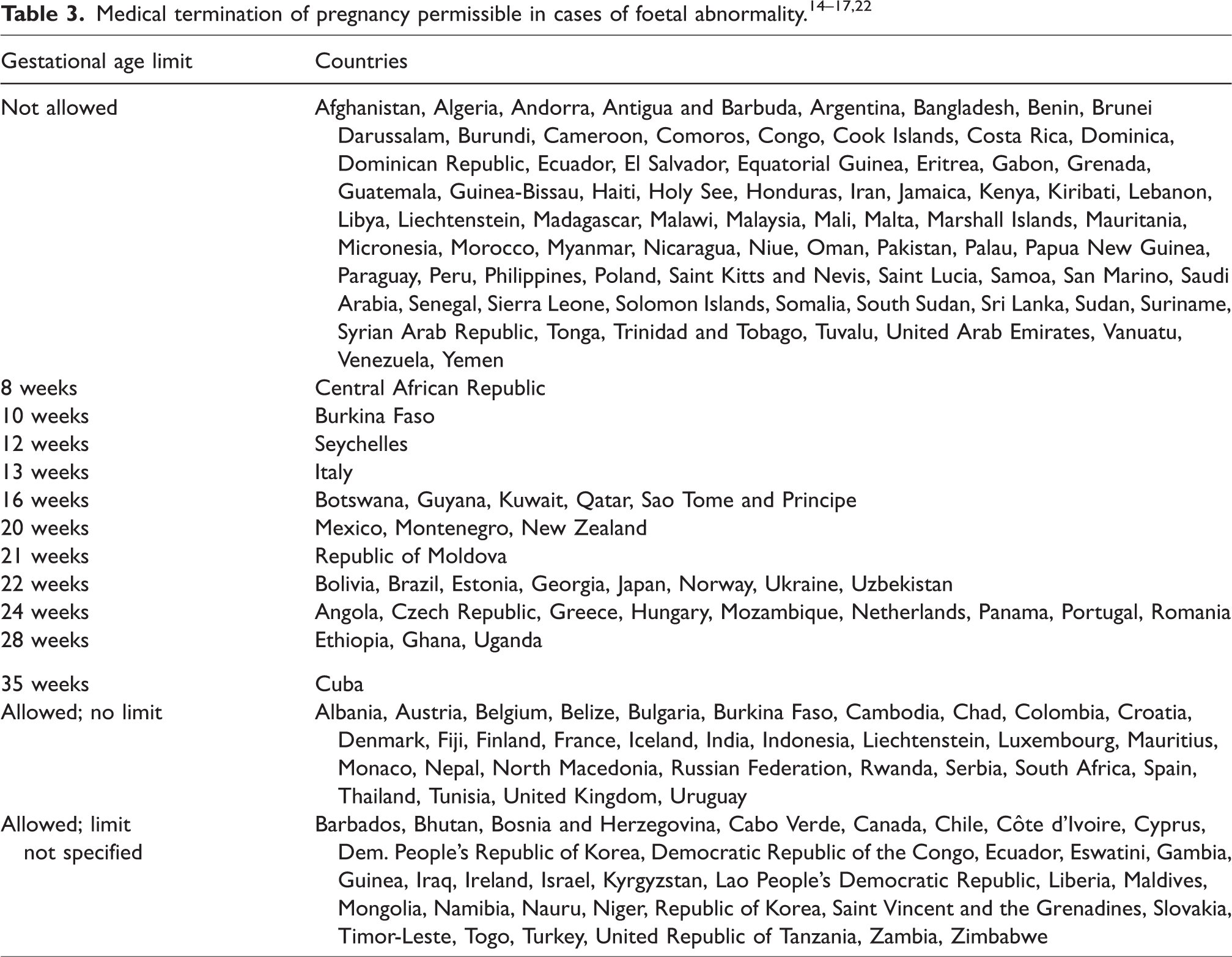
The status of this ground in different countries is shown in Table 3. Some nations restrict this exemption to cases of “fatal” fetal impairments or “non-viable” pregnancies, while others demand the disability to be “severe” or “permanent”. 19 Defining such phrases can be difficult since they frequently lack precise medical meaning. This might make it unclear if an abortion is lawful. 19 Advances in diagnostic modalities have revealed more fetal anomalies even in the second and third trimesters. In most countries, laws have been progressive, but Poland further restricted abortion access in 2021 by disallowing abortion in cases of fetal abnormality. 13 In most countries where abortion is allowed in cases of fetal impairment, there is no gestational limit.
In cases of rape or incest
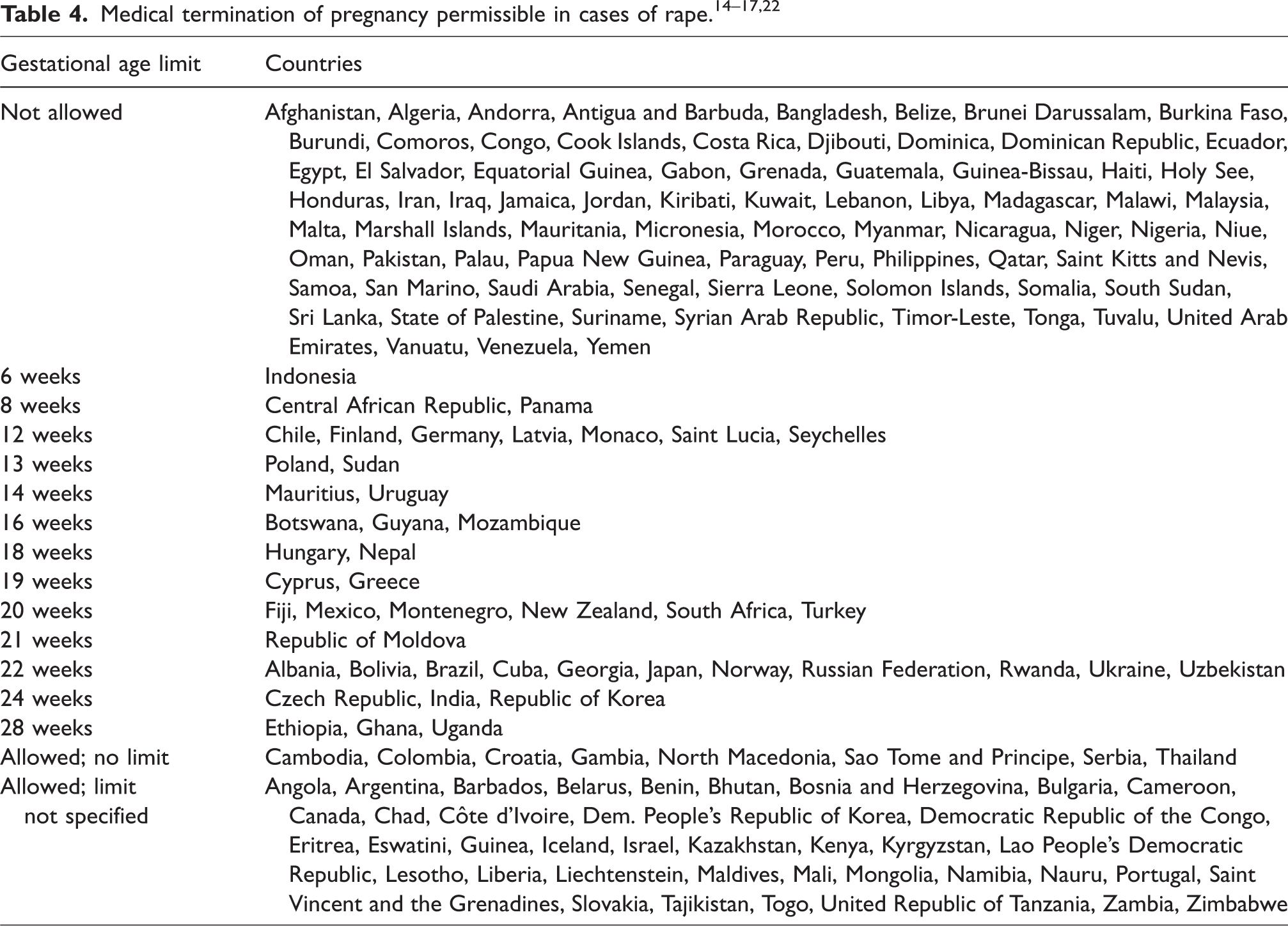
The majority of countries around the world allow abortion in cases of rape or incest. A few only permit abortion following rape and not incest, but all nations that permit abortion in cases of incest also permit abortion in cases of rape. 20 The status of this ground in different countries is shown in Table 4. Nations that permit abortion on medical grounds, particularly mental health reasons, may construe these exclusions to encompass rape or incest even though they are not expressly stated in the legislation. 20 In a few countries, the law requires evidence of rape or incest before allowing an abortion, which can result in delay and increase the risk of associated health issues. 20
For social/economic reasons
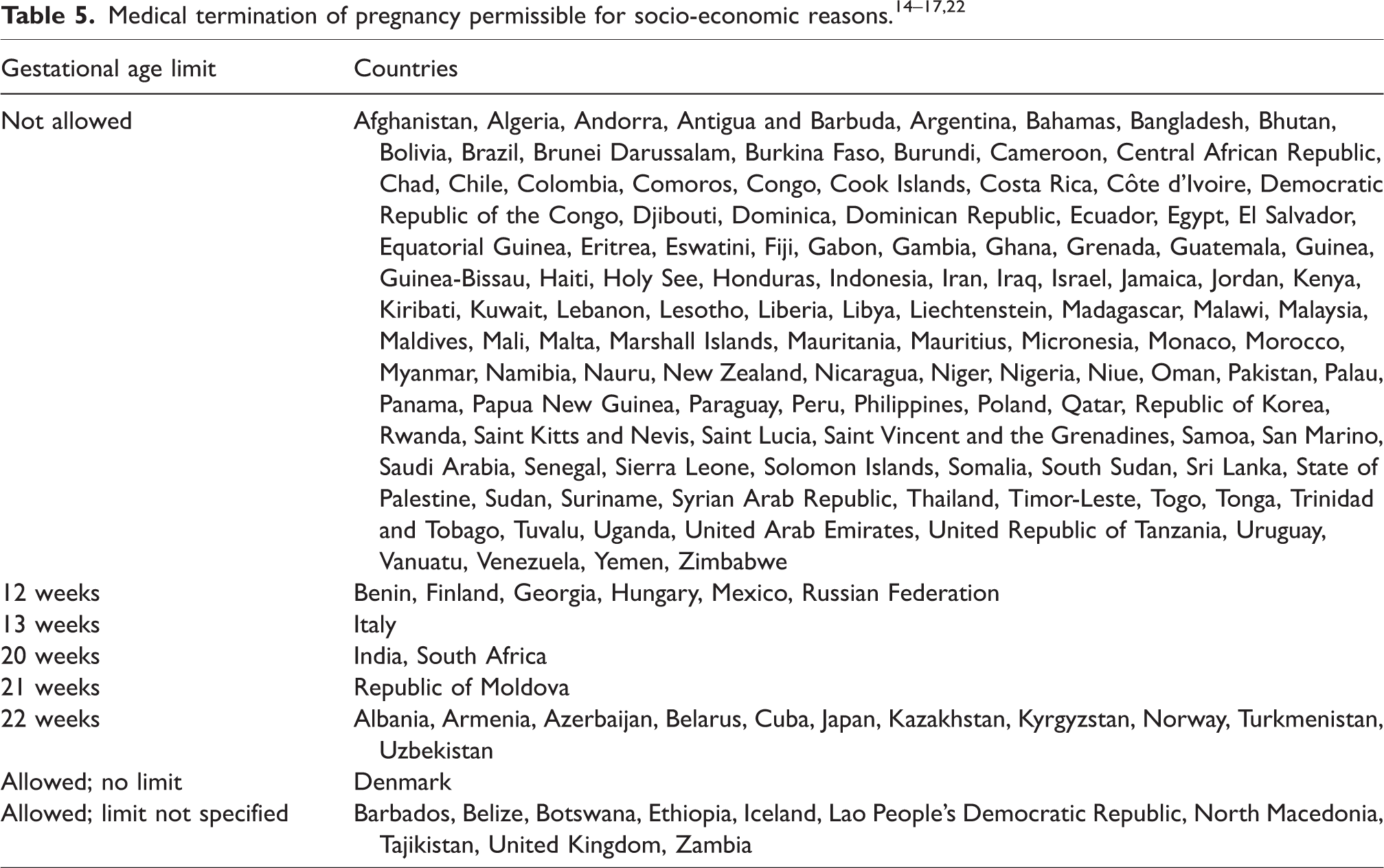
When evaluating the probable effects of pregnancy and childbirth, few nations take account of a woman or girl's actual or reasonably foreseeable surroundings and her social or economic conditions. 21 The status of this ground in different countries is shown in Table 5. Social or economic grounds on which abortion is allowed are generally related to a woman's health. WHO recommends including some socio-economic factors including how recently the woman last gave birth, and whether her financial situation is impacted by the number of children or anyone in the home who is ill, and whether the woman's age or maturity would affect her ability to raise the child, etc. 21
On request
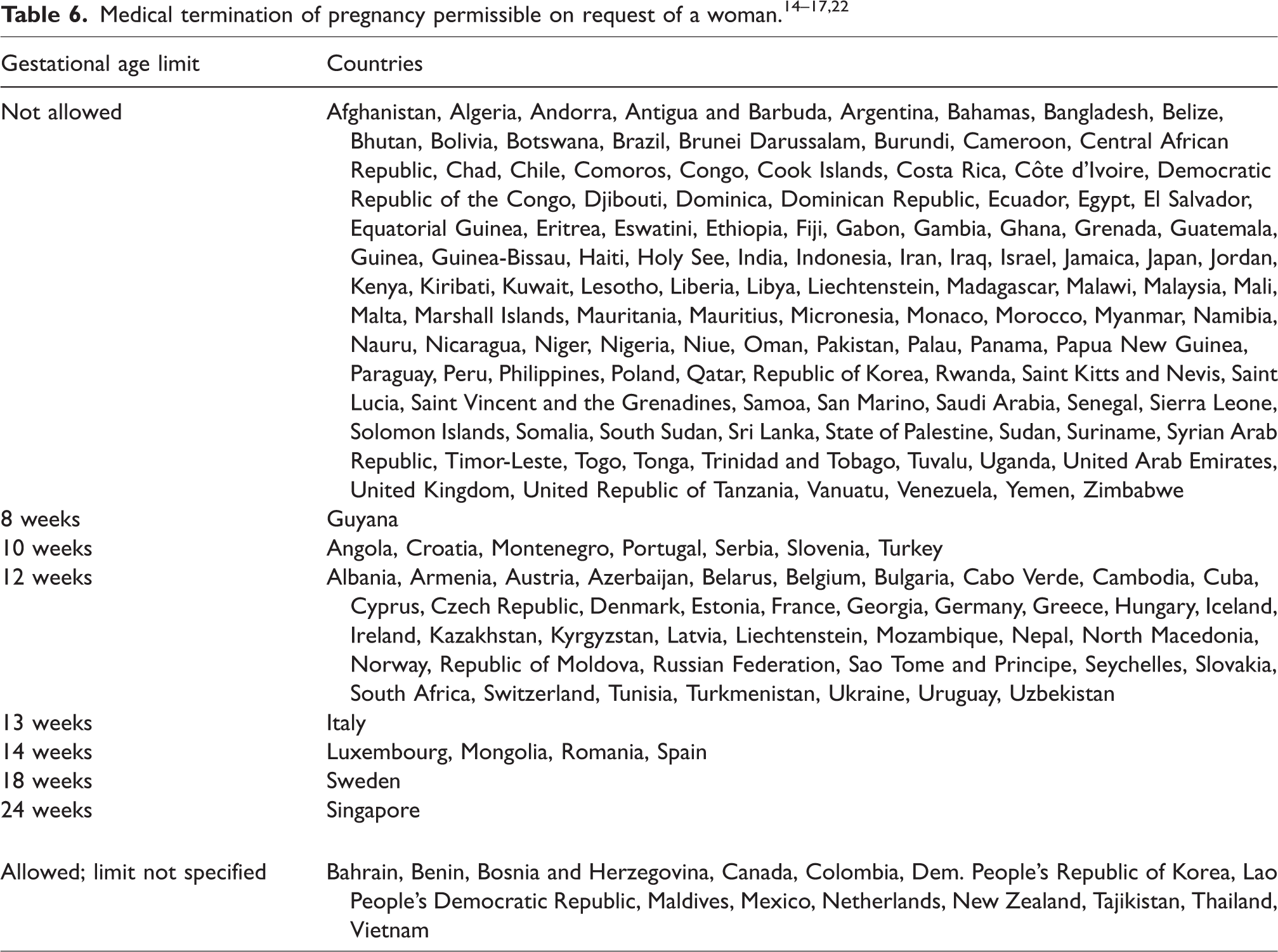
The option to prolong or end a pregnancy within a predetermined gestational limit is often left up to women and girls by nations that permit abortion on demand. This is the most liberal approach. The status of this ground in different countries is shown in Table 6. Currently, around 60 nations allow abortion at the pregnant woman's request.14 –17,22 However, the gestational age up to which it is permitted varies from country to country. While gestational limitations worldwide range from 8 weeks to 24 weeks, with some nations not explicitly stating gestational limits, the average gestational limit for abortions on demand is 12 weeks. Around 25 of these nations additionally need parental or spousal consent or notice. WHO recognises that requiring third-party authorisation from physicians, courts, husbands or parents can be a substantial obstacle to accessing abortion services for women and interferes with women's ability to make their own decisions. It calls on States to eliminate such restrictions from health laws and practices. 23 Abortion is frequently permissible on various grounds after the gestational restriction for abortion on request has passed. 23
Countries with a complete prohibition of MTP
There are a few countries, such as the Dominican Republic, El Salvador, Holy See, Haiti, Honduras, Jamaica, Madagascar, Malta, Nicaragua, Sierra Leone, etc, where abortion is still completely prohibited. 22 Before 1998, El Salvador allowed abortion in some cases. In 1998 it was completely prohibited. 13 Nicaragua in 2006 passed a law banning all types of abortion. 13 In other countries, abortion was banned from the inception of their law. Complete prohibition increases the likelihood of women opting for an illegal and unsafe abortion and, thus, maternal mortality.
Abortion laws in India
The first exclusive law for abortion in India was passed in 1971. Until then, abortion was completely prohibited except for saving a woman's life; there was a provision for punishment for both the woman and the doctor who performed an abortion illegally. 24 This law existed from 1860, during the reign of the United Kingdom over India. A woman or couple seeking an abortion used to approach quacks and inexperienced midwives in the village (daai) and paid high prices for an illegal and unsafe abortion. Further, there was a growing population rate due to the unavailability of safe abortion access in the 1960 s. To curb these issues, the Central Planning Board of the Government of India in 1964 proposed the idea of family planning. Based on the family planning committee's report, the Medical Termination of Pregnancy (MTP) bill was submitted to the parliament of India. It became the MTP Act in 1971. 25 The Act was based on the British Abortion Act, 1967, but the main idea of liberalising the abortion laws came from the report of the family planning committee.
The Medical Termination of Pregnancy (MTP) Act, 1971
The MTP Act allowed abortion on the grounds of risk to the mother's life or her mental/physical health, risk of the child being born with severe illnesses or deformities, pregnancy as a result of rape or intercourse with a mentally ill woman, and pregnancy due to failure of contraceptive measures in a married woman. The Act liberalised abortion by allowing MTP with a woman's consent and with her legal guardian's consent in the case of a minor or mentally ill woman. MTP was made accessible up to 12 and 20 weeks of pregnancy with the opinion of one and two doctors, respectively, for the ground mentioned above. MTP was allowed up to any gestational age to save the woman's life. 25
Though the 1971 Act was helpful, some issues needed to be addressed. The gestational age limit of 20 weeks under the Act made it difficult to terminate pregnancy beyond 20 weeks, especially in cases of late detection of rape and fetal abnormality. In such cases, the woman's only option was to appear before the court through a writ petition or to carry on with the pregnancy. Many fetal abnormalities and genetic disorders were, however, only diagnosed after 20 weeks of gestation. 26 These issues caused great distress to women and their families, highlighting the need for amendments to the existing MTP law, and the 1971 Act was recently amended to empower women by providing comprehensive abortion care.
Amendment of MTP Act 1971
India's abortion law was amended in 2021. 27 The MTP Amendment Act 2021 extended the limit of termination of pregnancy up to 24 weeks in certain categories of women: survivors of rape or incest, in minors, woman whose marital status changes during the ongoing pregnancy (widow and divorcee), a woman with major physical disabilities, mentally ill woman, chances of serious fetal abnormality, or a woman with pregnancy in humanitarian settings or disaster or emergencies.
In the amended Act, a provision is made for forming a medical board for considering MTP in cases of serious fetal abnormality with gestational age above 24 weeks. The medical board should include a gynaecologist, paediatrician, radiologist, and any other number of members notified by the state. The medical board has to submit its opinion in this regard within three days of a request. If allowed, the medical board has to ensure that the termination of pregnancy should be done safely with all appropriate precautions within five days of the board's decision.
The amendment extends abortion services to unmarried women under the failure of a contraceptive clause to provide safe abortion services based on a woman's choice, irrespective of their marital status. 27 The recent amendment also gives due recognition to the rights of the live-in couple. Recently, the Supreme Court of India allowed the termination of pregnancy to a 24-week pregnant woman in a live-in relationship whose partner refused to marry her. 28 The Supreme Court explained the decision by stating that the amended law includes the word “partner” instead of “husband” to benefit the unmarried woman.
Conclusion
The right to safe abortion is a legitimate right of a woman. Every country has its history of abortion laws, and if access to abortion is available, women seeking the services must navigate specific laws in various healthcare systems. Most countries have been progressive in reaching the goal of comprehensive abortion care for women worldwide apart from some which are still exercising complete prohibition on abortion. On the other hand, countries like El Salvador, Nicaragua, Poland and the United States of America have taken the reverse path and adopted restrictive and regressive abortion policies. Indian abortion laws have been amended to better serve female reproductive health needs and are progressive. However, there are still unaddressed issues regarding the possibility of sex-selective abortion due to allowing abortion beyond 20 weeks, abortion after 24 weeks of gestational period in cases of rape, custodial issues in cases of live born children during an abortion, and complete autonomy of pregnant females opting for abortion.
Footnotes
Declaration of conflicting interests
No conflicts of interest to declare.
Author contributions
VM, DJ and TK conceptualised the idea of the manuscript. DJ, DCB and VM prepared the initial draft of the manuscript. VM, RSS and TK have done critical revision of the manuscript. All authors approved the final manuscript.
Funding
No support in the form of grants.