




Abstract
This study reviews autopsies performed by the Legal Medicine department of the University of Milan from 1990 to 2018. In particular, the characteristics of the perpetrator, the victim and the type of existing relationship, the means used, and the place and time of the crime. A retrospective analysis was conducted, extracting data from the Milan Institute of Legal Medicine database, selecting cases of murder-suicide from the archive between 1990 and 2018 (a total of 75 cases with 84 murder victims). Available data was processed statistically. Univariate and bivariate analysis techniques were mainly used. Significance tests (Chi-square) and correlation studies (Pearson's R) were also conducted, the results of which were then examined and discussed in light of legal, medical and criminological expertise.
In almost all cases, suicide followed immediately after the murder, at home and in the context of an emotional relationship. The murderer and person committing suicide is almost always male and the victim female. A firearm was the most common weapon in cases of both murder and suicide.
The results indicate that the issue of gender is relevant in murder-suicides as indicated by international and national literature on homicides. Furthermore, the use of firearms endorses the importance of limiting their availability through more restrictive laws.
Introduction and purpose of the study
Murder-suicide occurs when the perpetrator of a homicide takes his or her own life after killing the victim(s). 1 Some perpetrators have created further specifications such as “extended suicide” a and “dyadic death” 2 –4 while others focus on demographic, criminological and clinical aspects. 5 –12 What emerges is that, even though the numbers are limited, the negative impact on people, families and the community is considerable. For this reason, we decided to carry out this analysis of murder-suicide cases present in the autopsy records of our department.
Characteristics of the sample and methodology
Our analysis is based on forensic reports concerning methods of killing and time and place of recovery of the corpses. Some personal information on perpetrators and victims, obtained from the forensic medical database is taken into consideration. All considered cases took place in the territorial jurisdiction of Milan and Monza’s Prosecutor's Office between 1990 and 2018. Figure 1 shows the cases for each year.
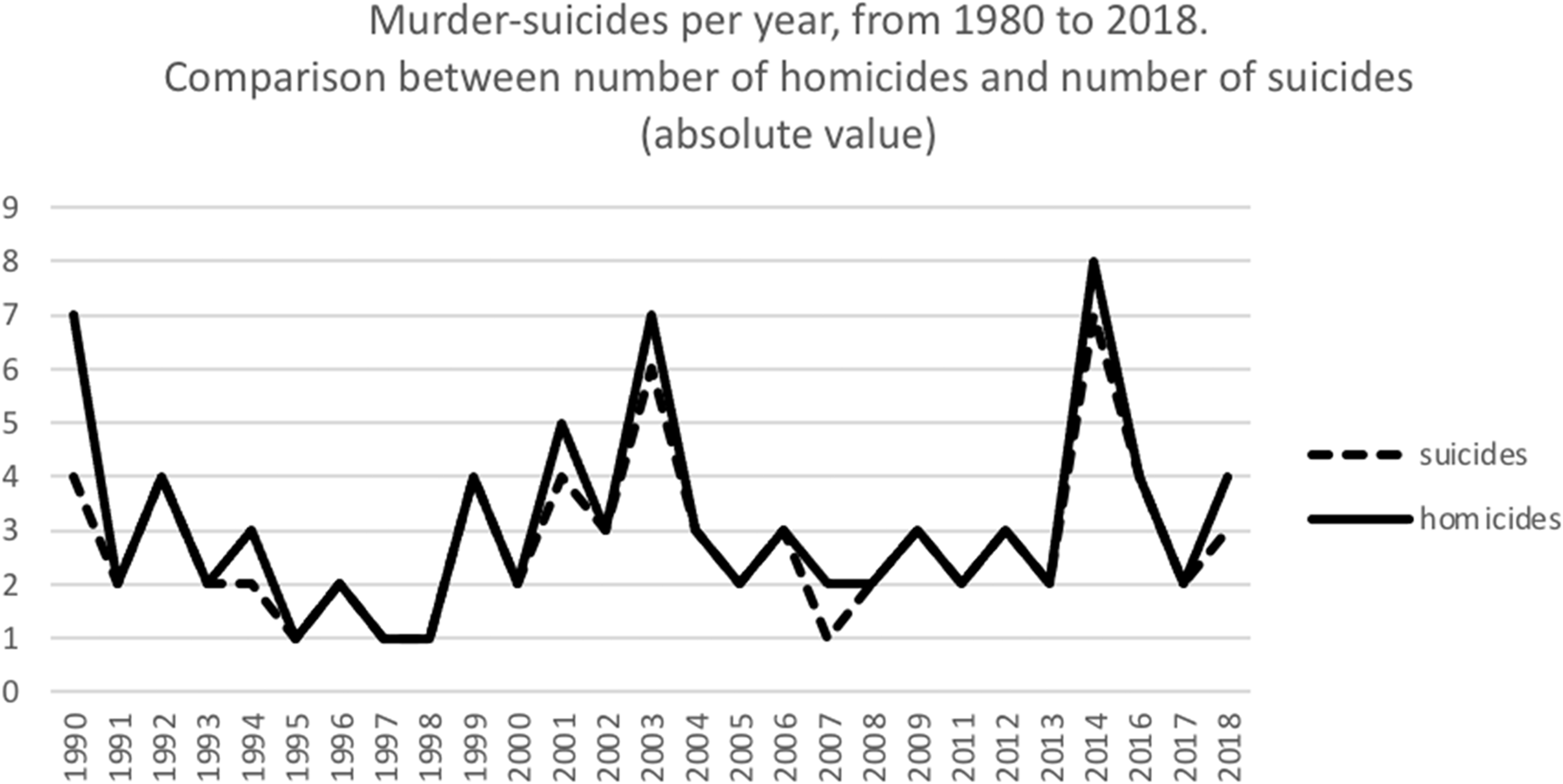
Murder-suicides per year, from 1990 to 2018. Comparison between number of homicides and number of suicides (absolute value).
There were 841 homicide cases which underwent a judicial autopsy of which 75 were homicide-suicide cases, including 1 triple murder-suicide, 7 double murder-suicide cases and 67 single murder-suicides (Figure 2).
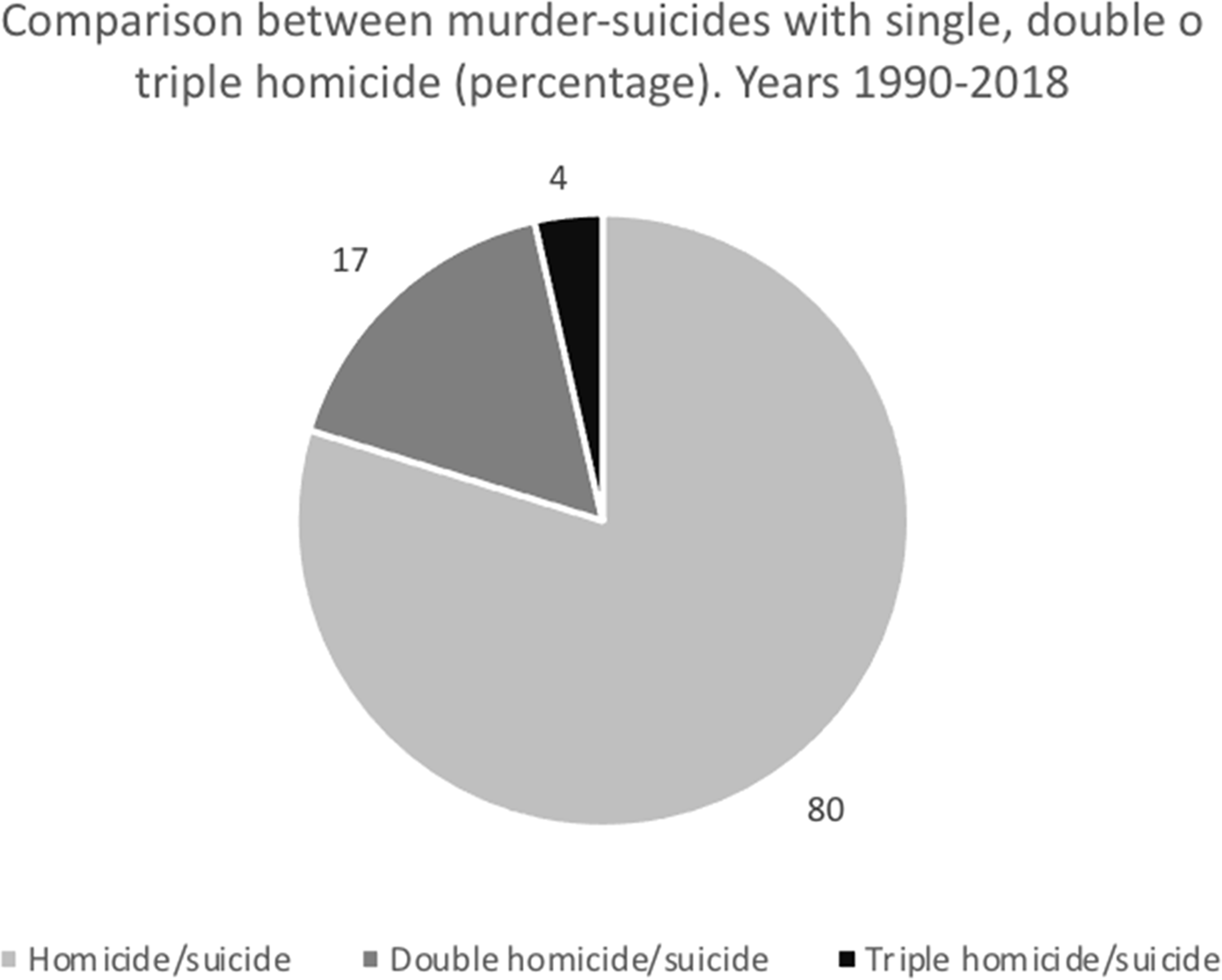
Comparison between murder-suicides with single, double or triple homicide (percentage). Years 1990–2018.
With respect to the considered geographical area, Milan and Monza represent two districts of the Lombardy region, with a population of 4,124,250 inhabitants out of a total of 10,060,574 for the entire region. 13 In the considered provinces there are 2,004,581 men and 2,119,669 women. Foreign women numbered 280,379 out of a total of 549,100 subjects. The latter data refers to foreign individuals registered on the Italian territory. 13
Univariate analysis techniques (frequency distribution analysis of the modalities of each of the considered variables) and bivariate analysis (analysis of the joint distribution of pairs of variables) were used; moreover, for some pairs of variables, significance tests (Chi-square) and correlation studies (Pearson's R) were carried out, the results of which will be summarized in the next paragraph.
The variables of the Milan Institute of Legal Medicine database to be analysed were selected in light of previous studies, including: age, sex, citizenship, means of death and presence of a reported psychopathological disorder. 14, 15
Results
From a first analysis of the data, it is clear that, in most cases, the person killing another was or had been in a close relationship, such as husbands, lovers and former partners (Figure 3). The presence of contextualised crimes in the family should not be underestimated: in such cases, the victims are often minors. In almost all the cases the perpetrator is male and the victim female (Figures 4 and 5). The gender gap between perpetrators and victims is linked to the fact that in multiple murder-suicide cases the victim is usually a male child.
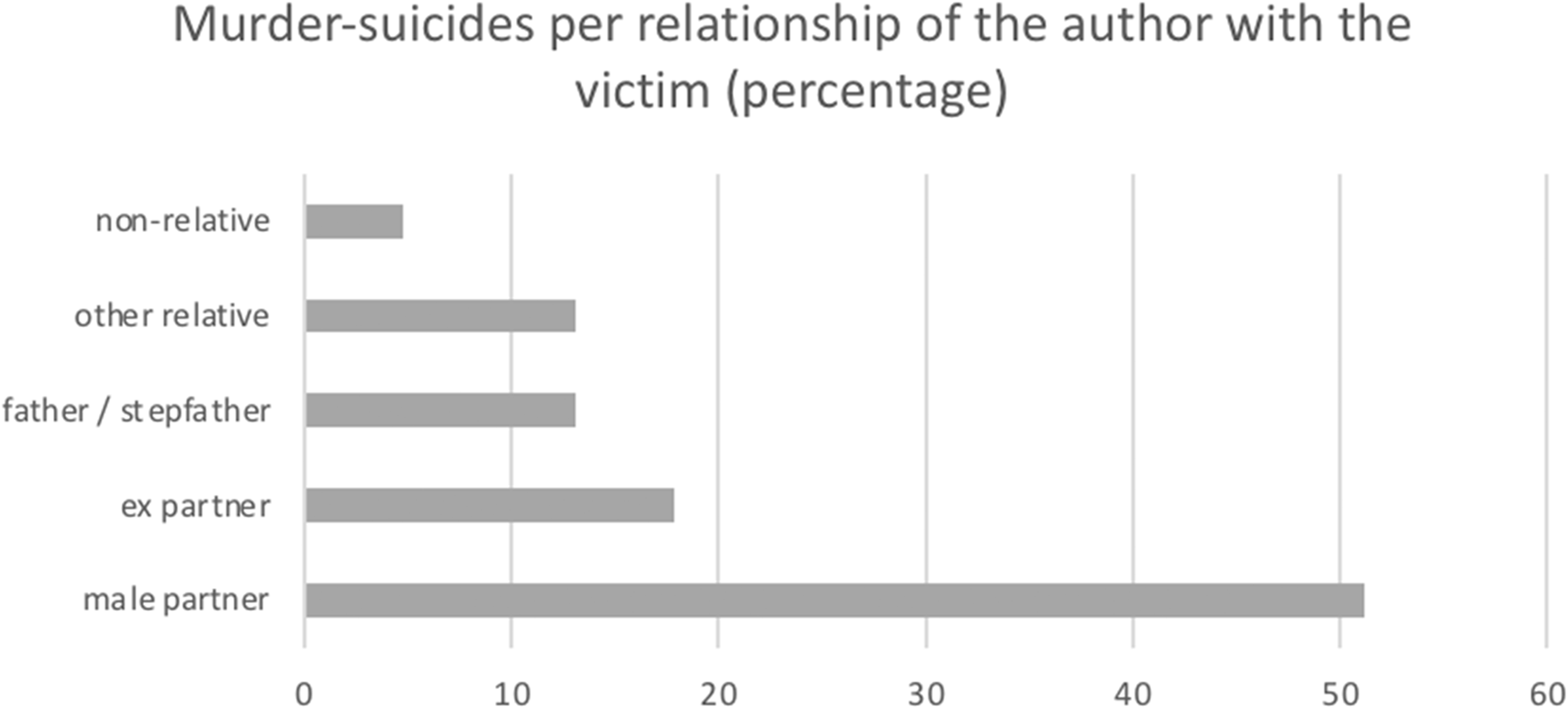
Murder-suicides per relationship between the perpetrator and the victim (percentage). Years 1990–2018.
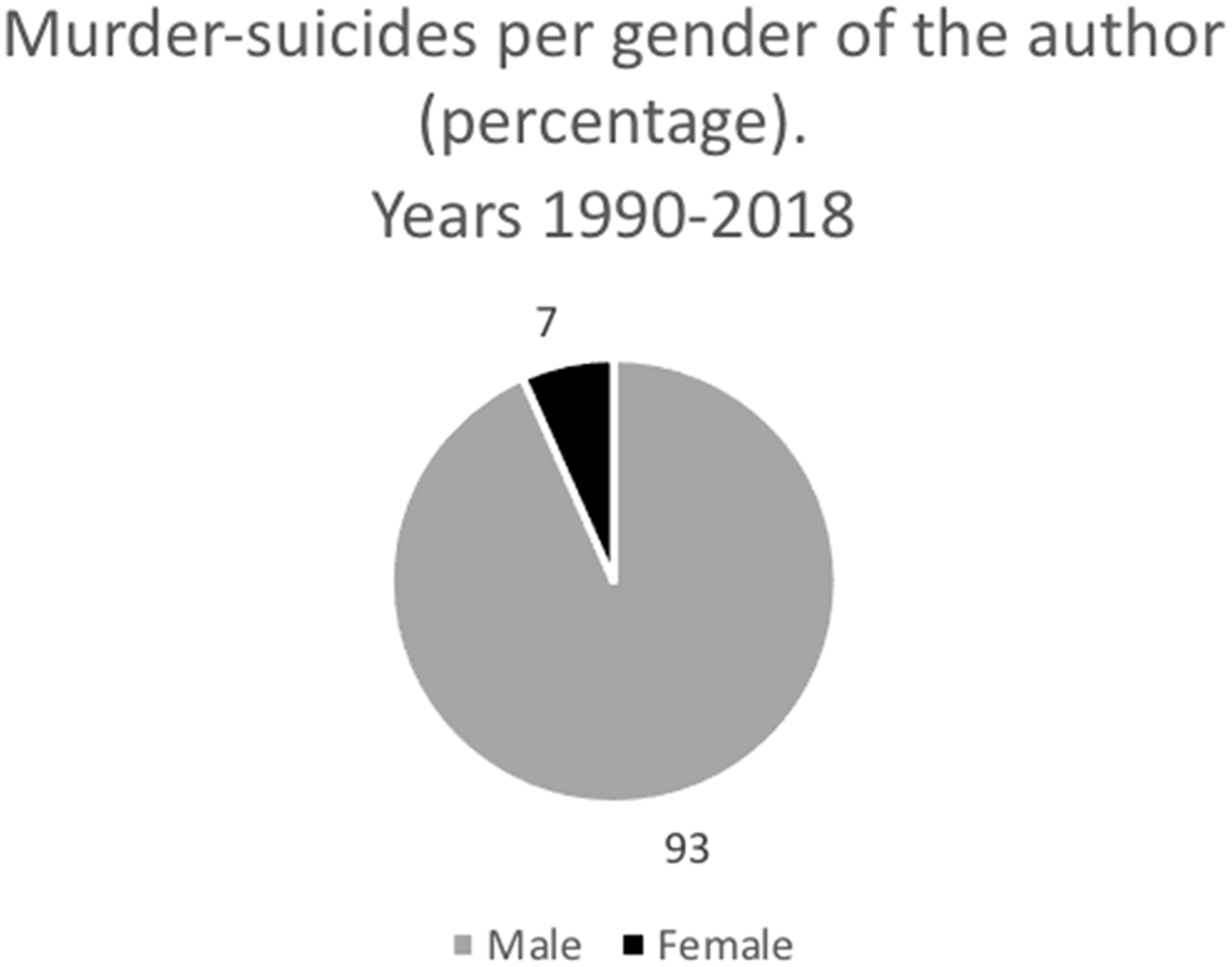
Murder-suicides per sex of the perpetrator (percentage). Years 1990–2018.
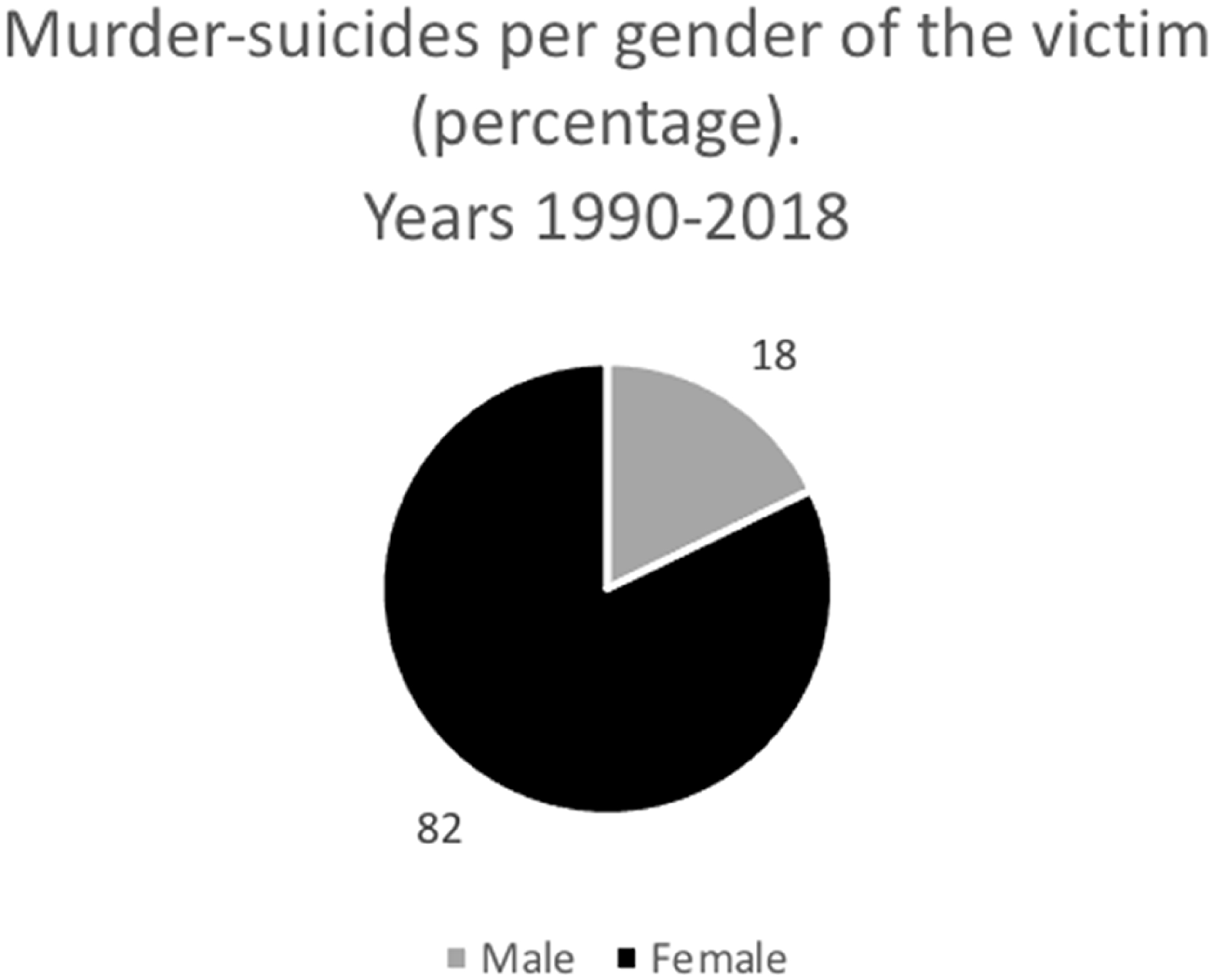
Murder-suicides per sex of the victim (percentage). Years 1990–2018.
We have found very few cases involving a female perpetrator; from a first qualitative analysis two cases of mothers who killed their underage children emerge; in two other cases these women are daughters who murder their elderly parents and in one case a wife kills her sick husband.
As for the perpetrator’s and the victim’s nationality (Figures 6 and 7), the percentage of Italian subjects is remarkably high.
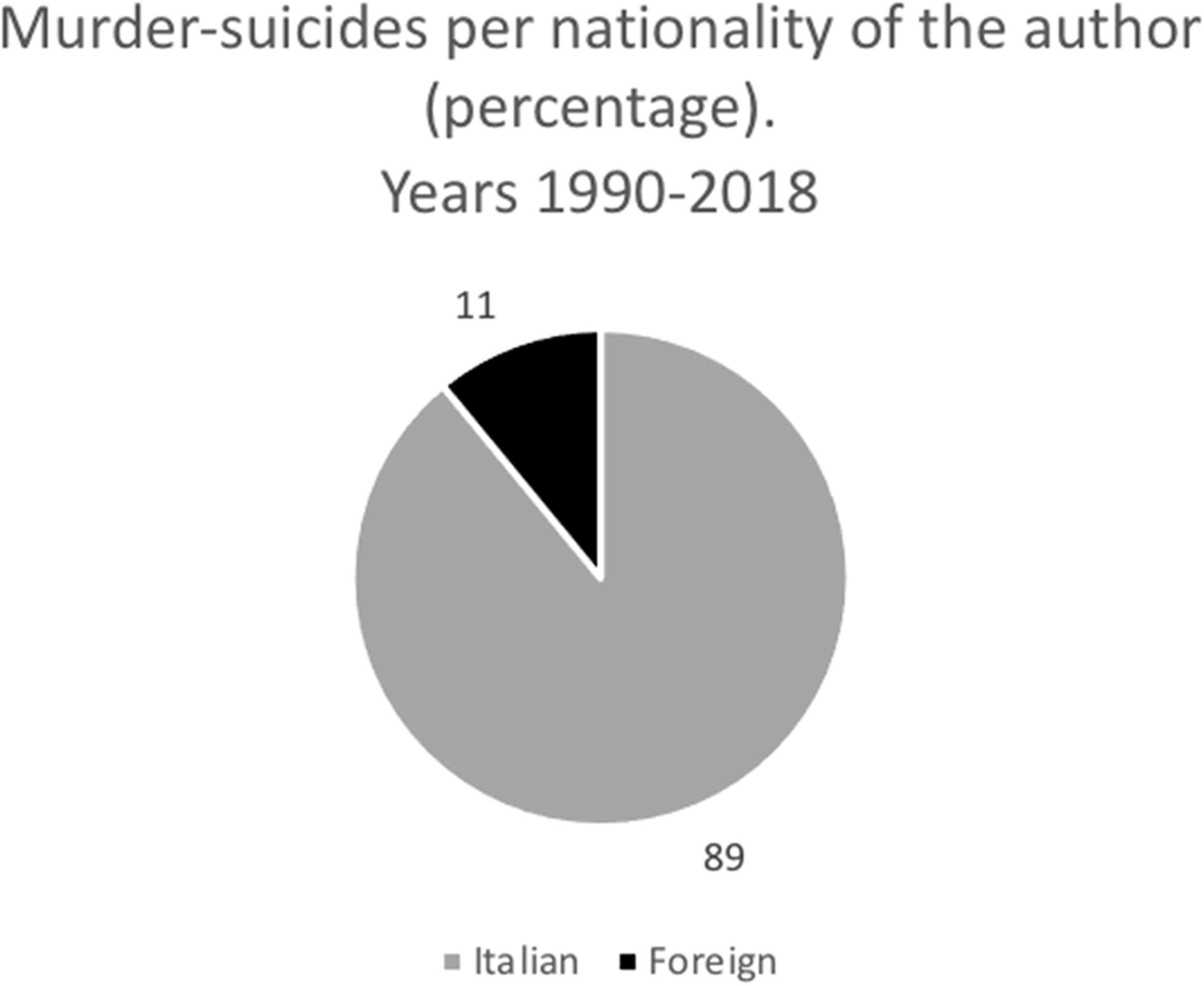
Murder-suicides per nationality of the perpetrator (percentage). Years 1990–2018.
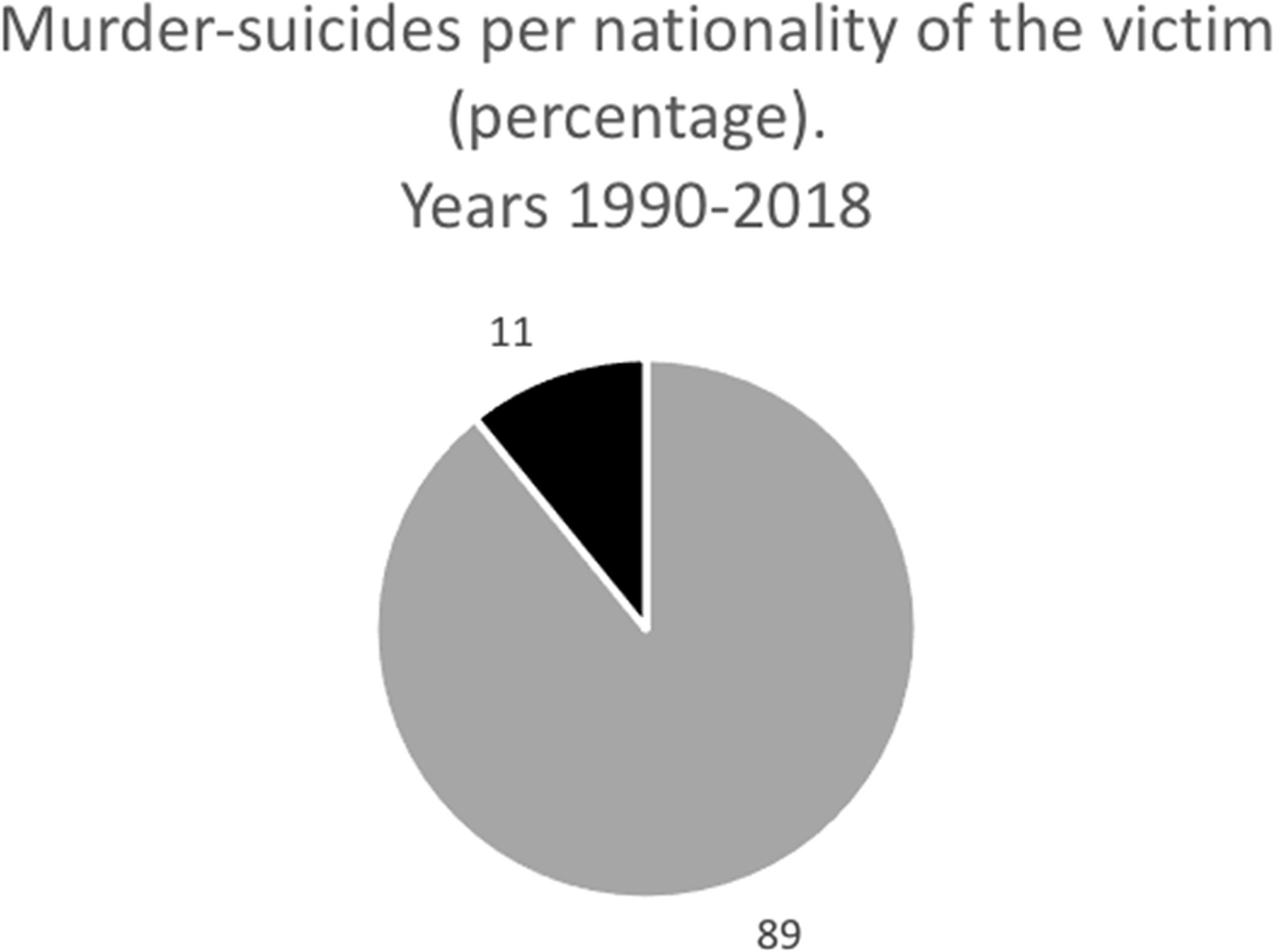
Murder-suicides per nationality of the victim (percentage). Years 1990–2018.
In accordance with the literature about research conducted in Italy, our analysis confirmed that these types of crime mainly take place at home. 10, 12 In our sample, 69% of the murders were committed at home (Figure 8), while suicides took place at home in 59% of the cases.
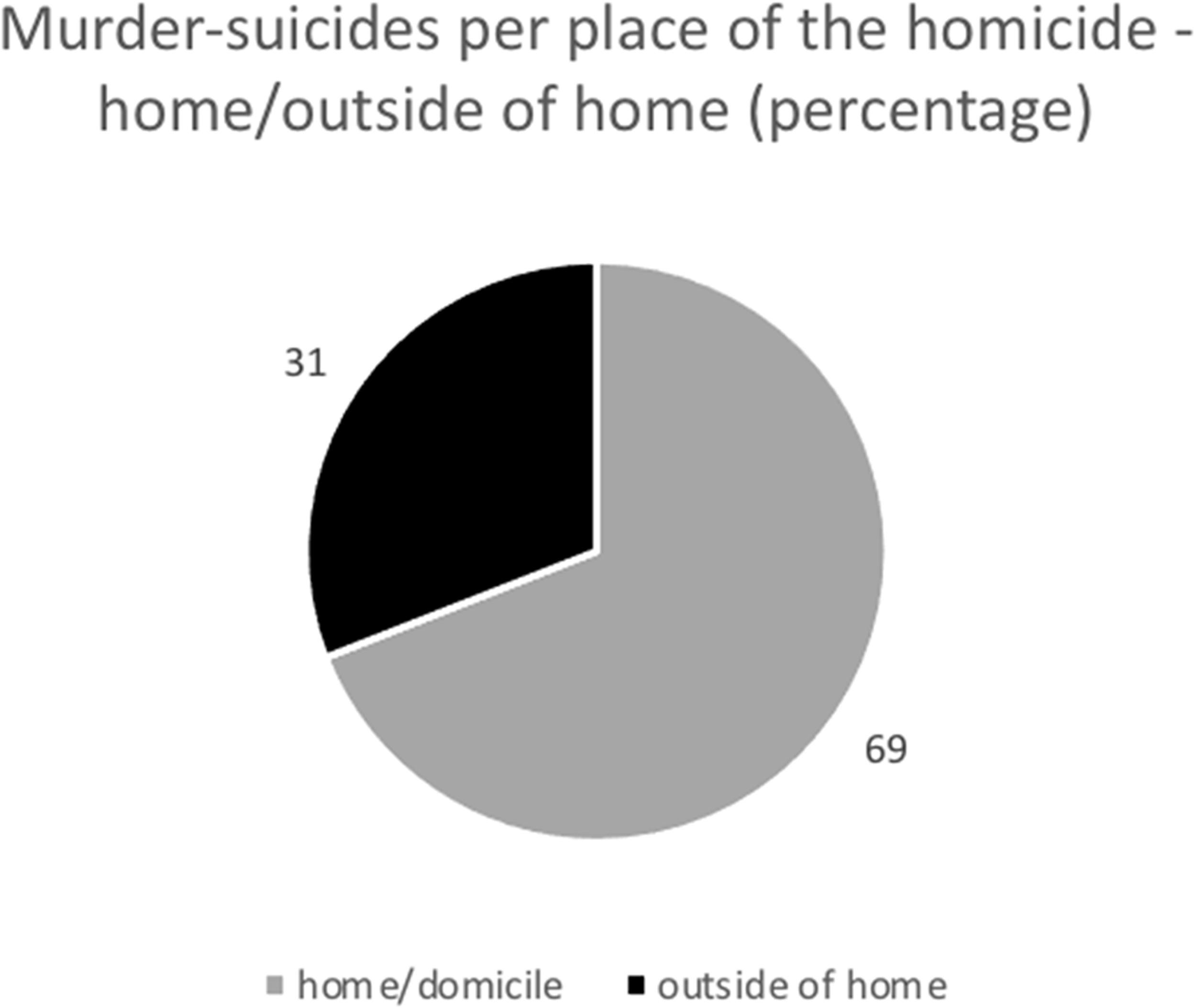
Murder-suicides per place of homicide – home/outside of home (percentage). Years 1990–2018.
Consistent with the component of passion, often connected to this type of behaviour, the bedroom is the place where these crimes are committed (Figure 9). Homicides in hospital or in a healthcare environment are linked to the cases of pietatis causa homicide.
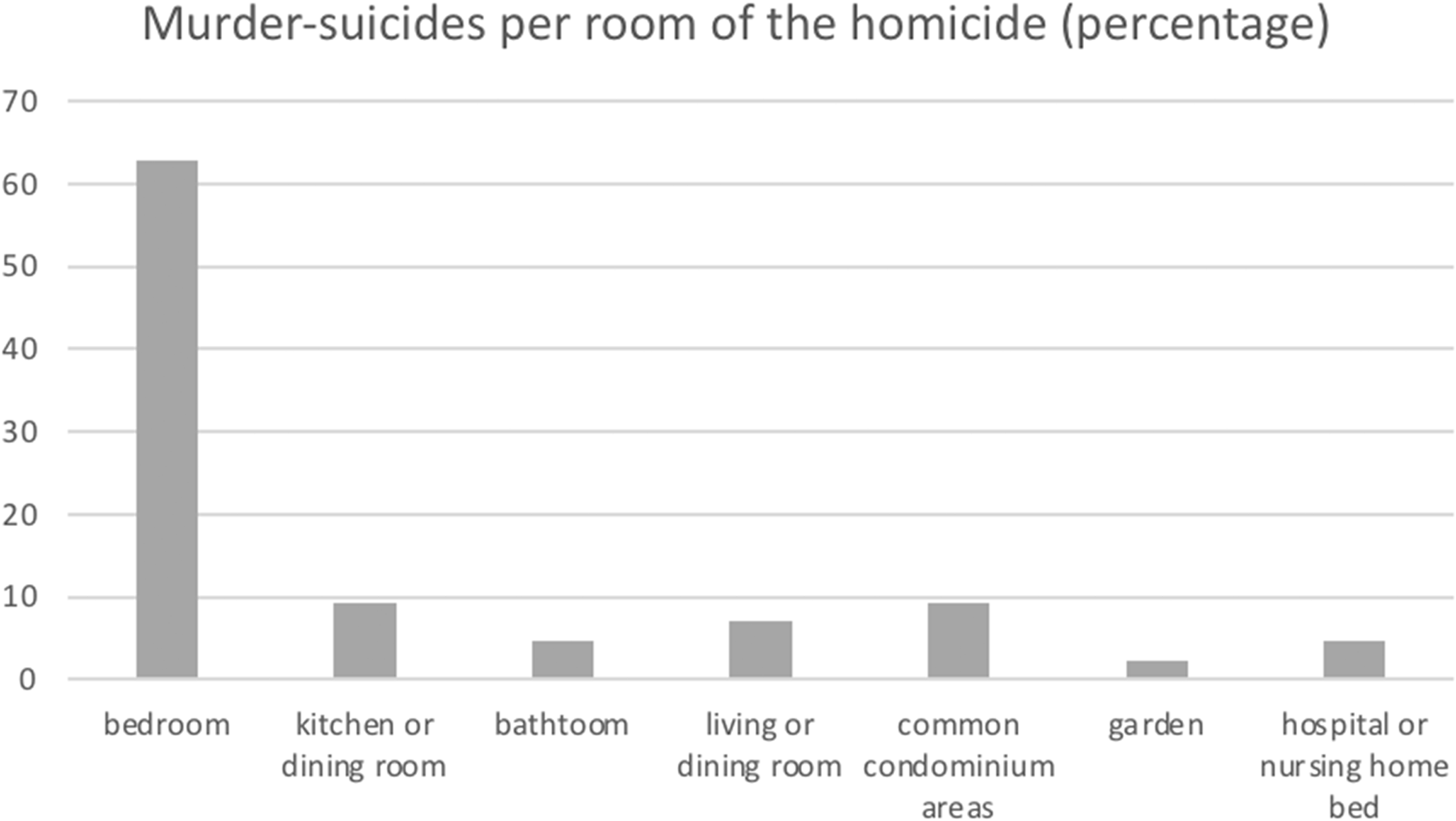
Murder-suicides per room of homicide (percentage). Years 1990–2018.
Firearms are the most common weapon both for cases of murder and suicide (Figures 10 to 12) with most actors using of the same method for both the murder and the suicide (the correlation is significant, with r = 0.310). Second to firearms is stabbing and mechanical asphyxiation. Other harmful means are statistically less significant.
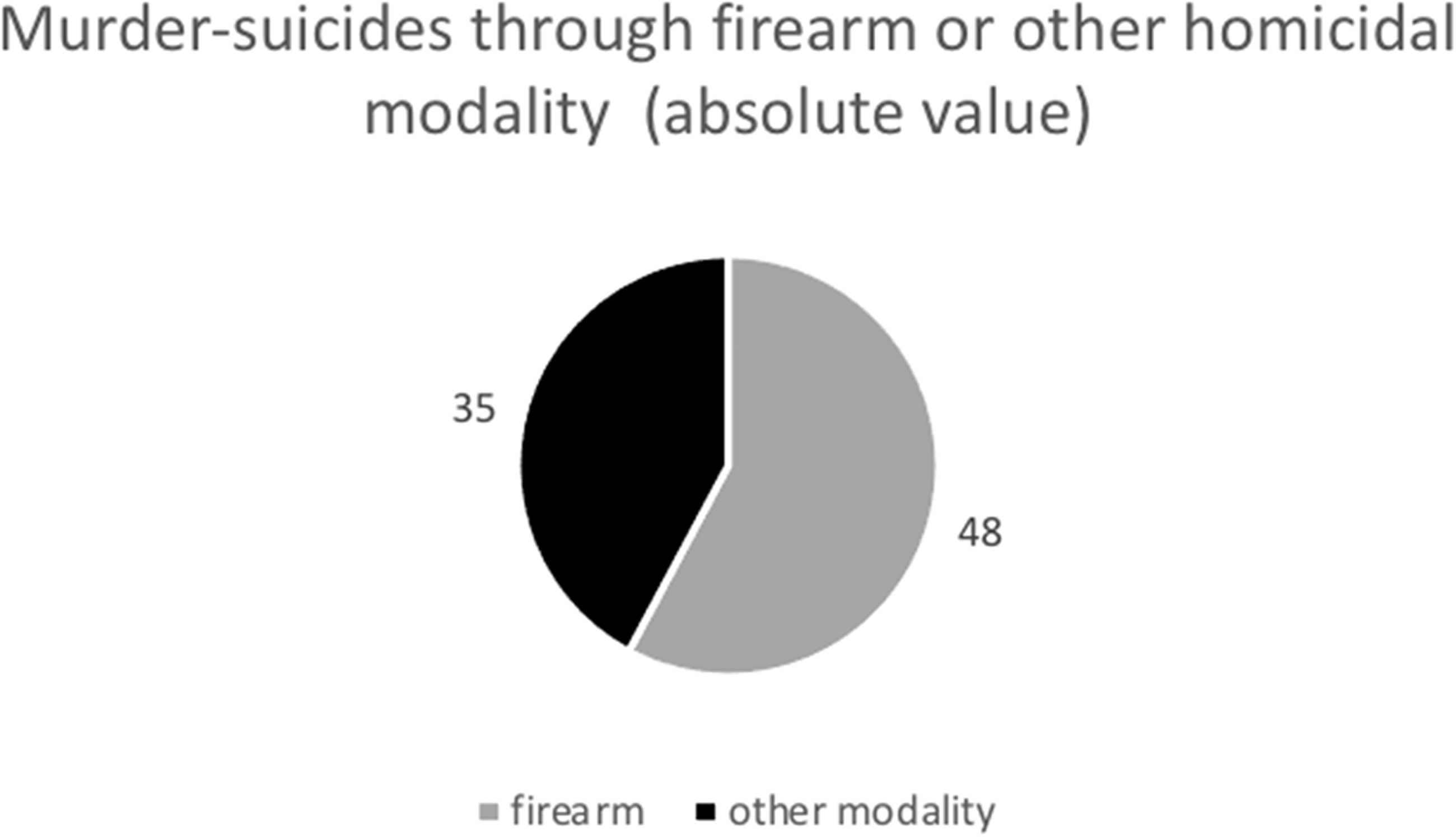
Murder-suicides by firearm or other homicidal modality (absolute value).
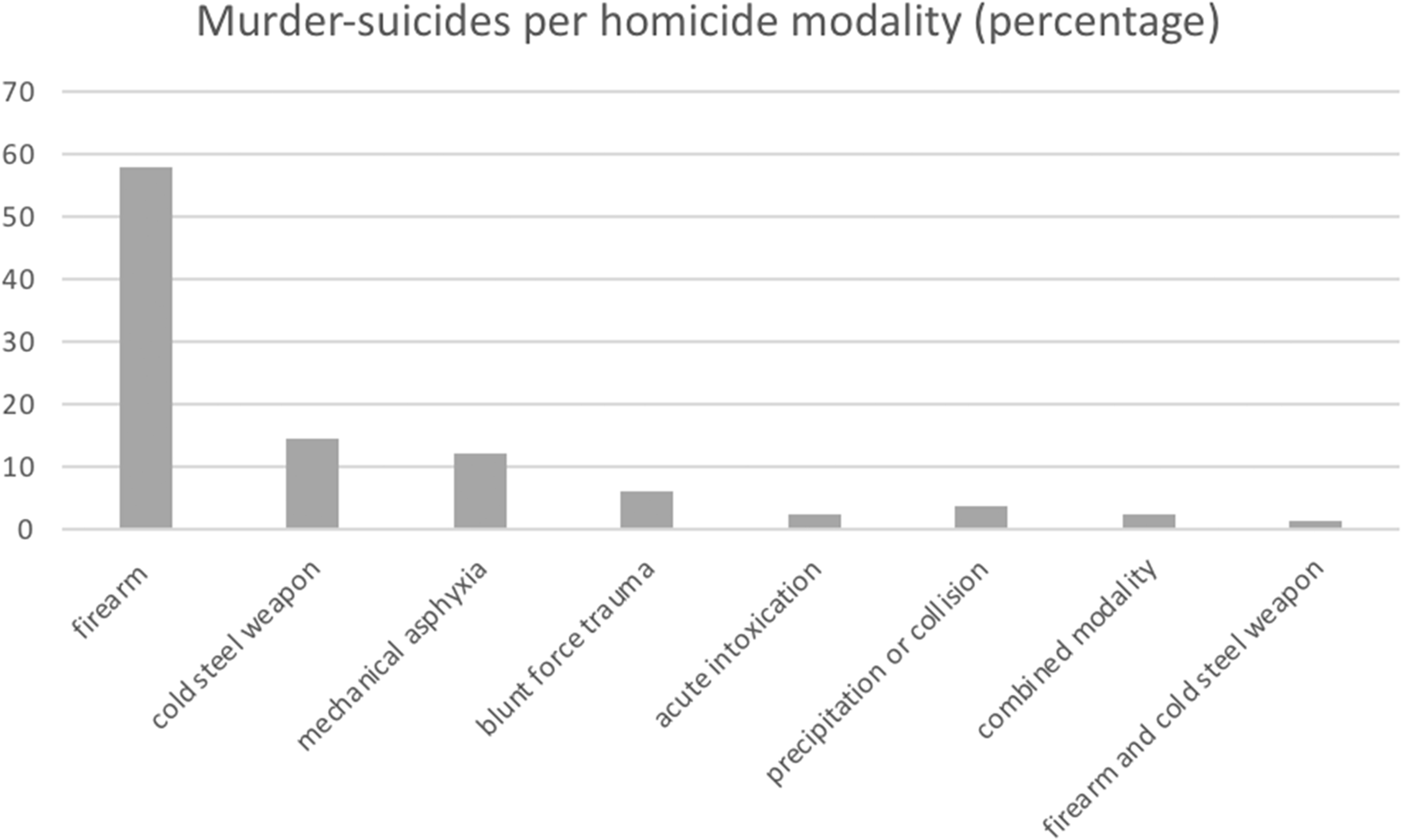
Murder-suicides per homicide modality (percentage).
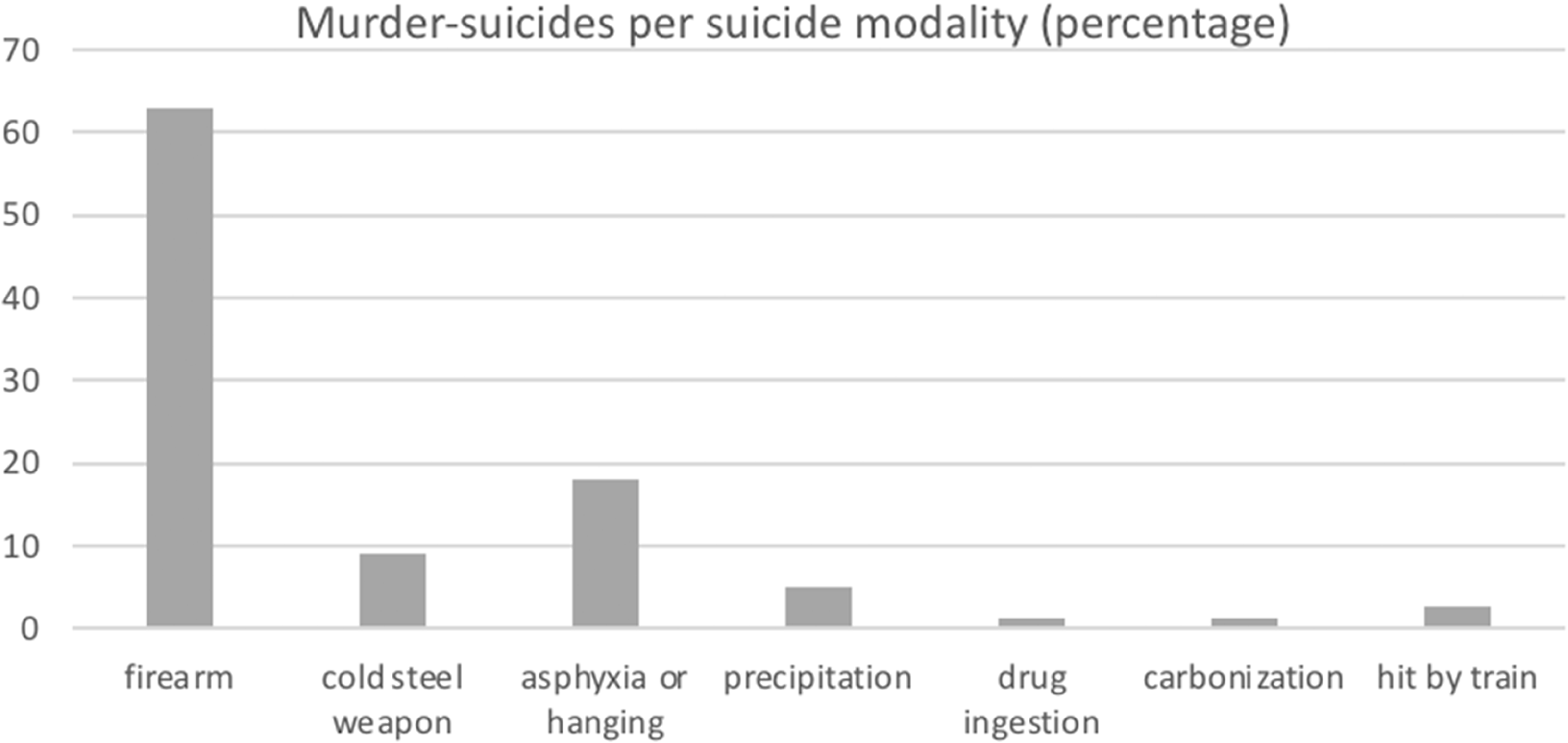
Murder-suicides per suicide modality (percentage).
In almost all cases of suicide (see Figures 13 and 14), the suicide takes place immediately after the homicide and in the same place; this is true in about 3 cases out of 4 (the correlation between the variables of the place where the murder occurred and the place where the suicide took place is significant with r = 0.681).
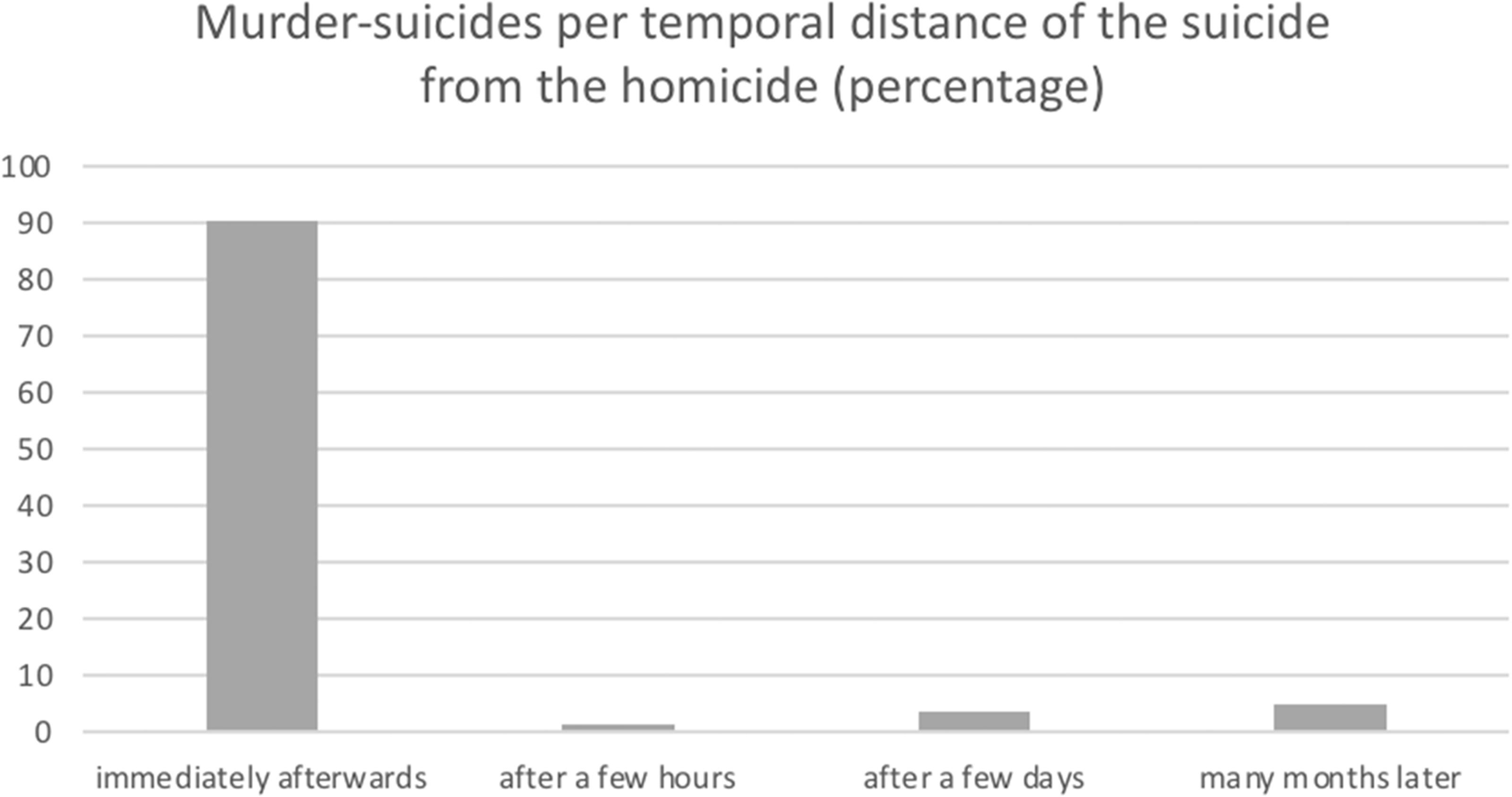
Murder-suicides per temporal distance of the suicide from the homicide (percentage).
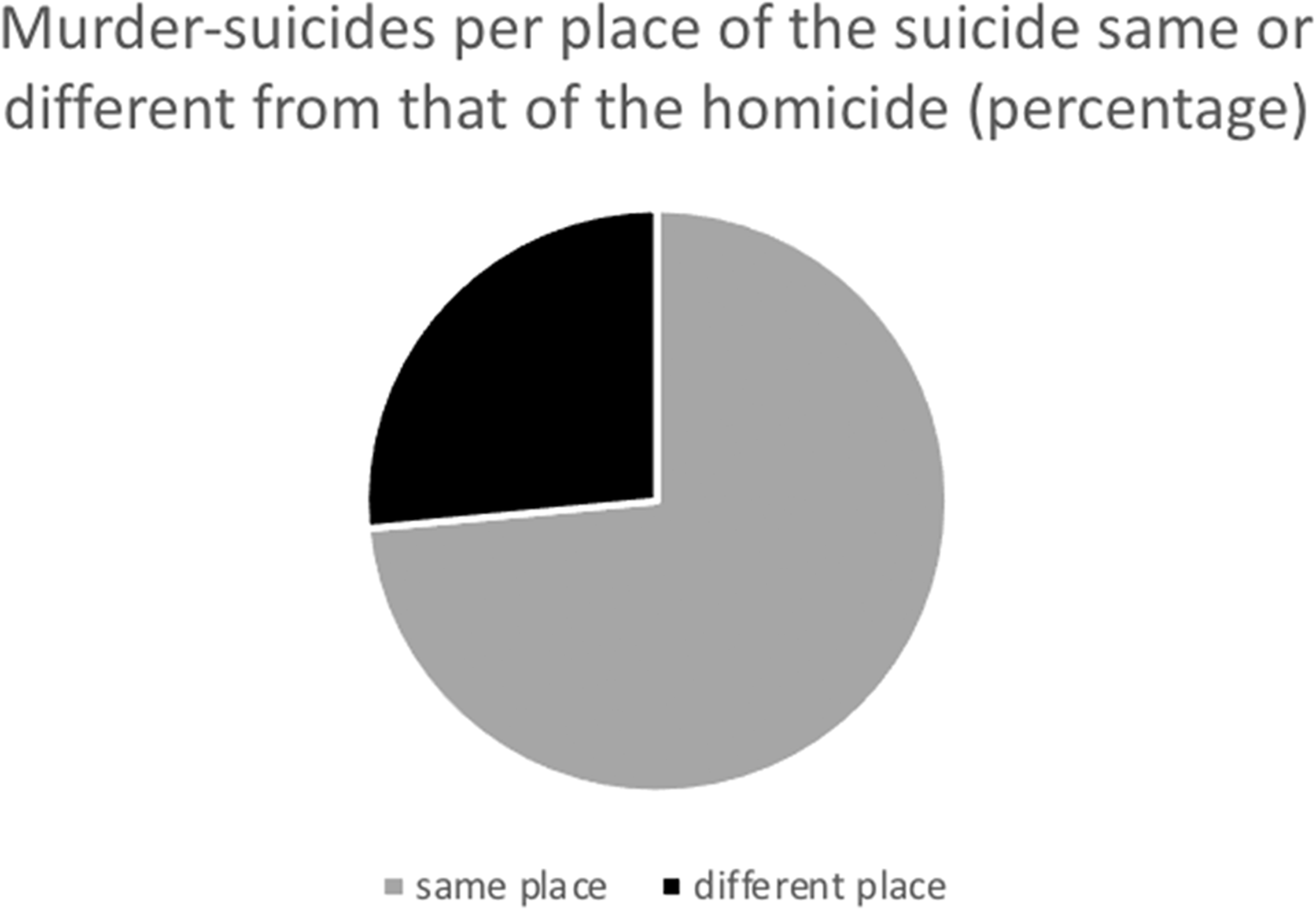
Murder-suicides per place of suicide same or different from that of the homicide (percentage).
There seem to be two age groups mainly affected; one 30–44 years of age and second is 60+. Both clusters in which the cases connected to a pathological state of the partner are probably located (Figure 15). With victims, the situation is different (Figure 16) with a significant number of minors represented by sons and daughters. The segment where, in terms of percentages, the highest number of victims is found is 18 to 29 years of age: the category of young women. The correlation between the age of the perpetrator of the murder-suicide and the victim is significant (r = 0.674), indicating a link between the ages of the perpetrator and victim which rise together.
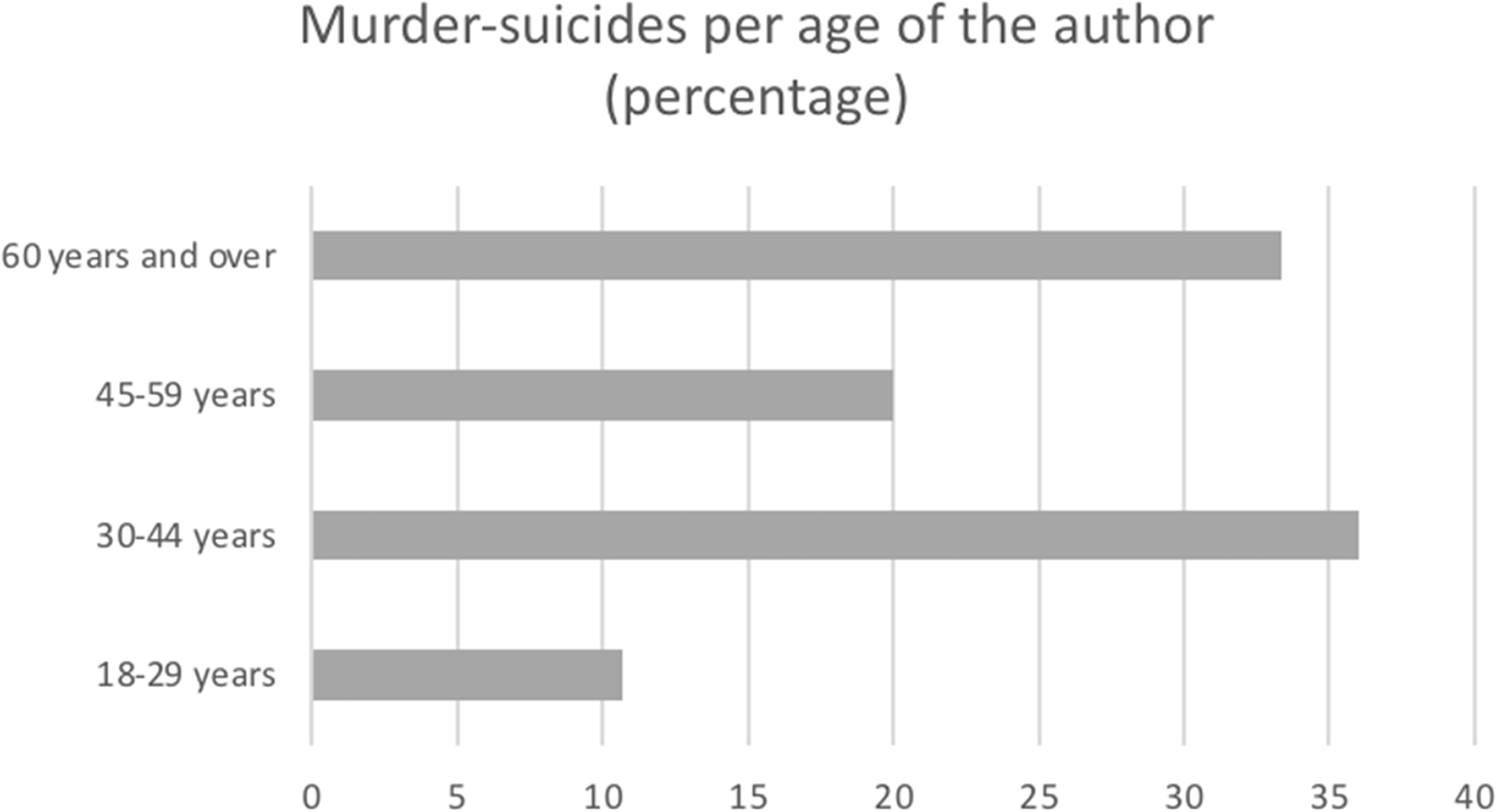
Murder-suicides per perpetrator’s age (percentage).
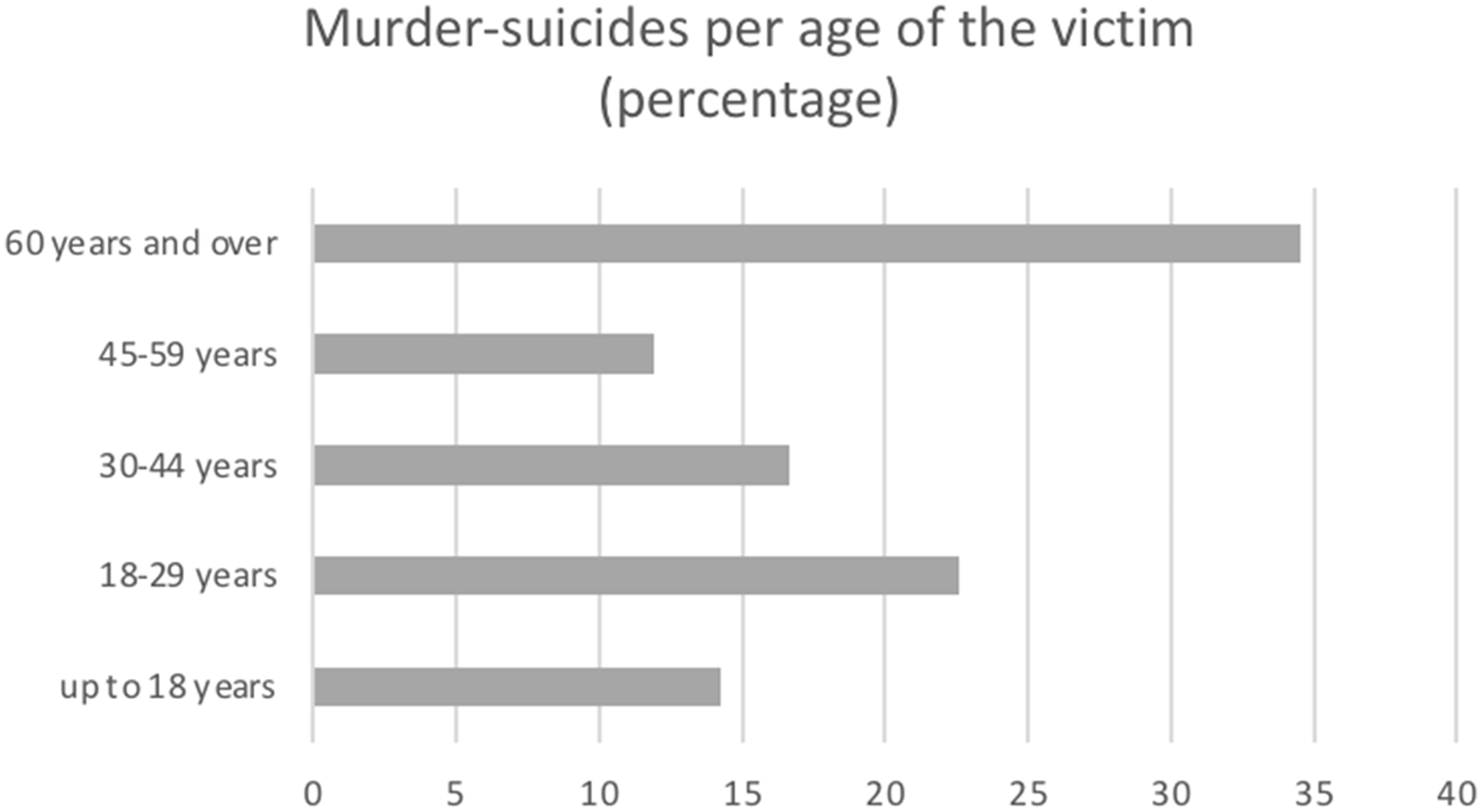
Murder-suicides per victim’s age (percentage).
Before carrying out the autopsy, relatives or people close to the deceased are asked for some clinical and personological information, also concerning the possible presence of psychiatric disorders. This information is not always documented or certified. The reports show a significant presence of clinically-certified depression and other unspecified psychiatric disorders (Figure 17). Furthermore, among the murder-suicide perpetrator, reported substance abuse emerged in 5 cases (4 cases of drug addiction and 1 case of alcoholism).
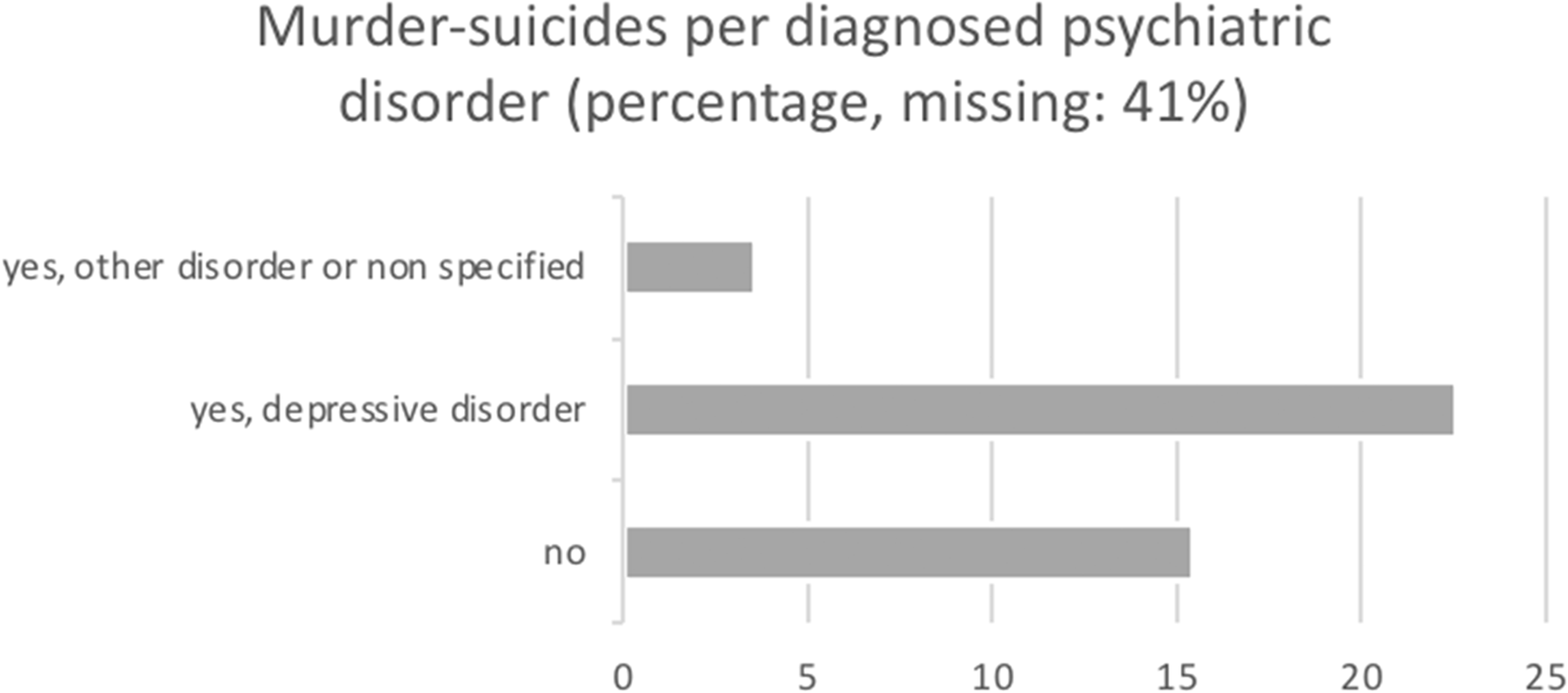
Murder-suicides per reported psychiatric disorder (percentage, missing: 41%).
Discussion and conclusion
Murder-suicide is rare and thus poses criminological and medico-legal challenges. This study aims to provide a quali-quantitative case study of the phenomenon and reveals some interesting data. First, the need for early intervention to provide care and support and spot early warning signs and worsening behaviour which can include self-harm and harmful behaviour.
Then, the common use of firearms, which can pose serious risks even when lawfully owned during moments of emotional stress even without the presence of full-blown psychopathologies. Hence the need to limit the possession of firearms in Italy and elsewhere as evident from international research. 8,16,17 Other information from our sample are the relationships between the deceased and where the crimes took place, namely mainly at home. 7 This emphasises the need, especially in cases of abuse and domestic violence, to provide prompt, targeted and multidisciplinary interventions which where necessary can assist the victim after she/he is removed from the place where they live with the perpetrator. 18
Couple dynamics may involve other family members such as minor children (born from recent relationships of one of the partners or from the couple). This could explain the presence in our study of victims under the age of 18.
What of mothers who murder their children and kill themselves? It is important to underline the need for timely psychosocial interventions capable of intercepting problems as already indicated in extensive criminological literature.
It is important to note that elderly people may be at risk. This is a serious problem and requires targeted preventive interventions having regard for our ageing population. 19, 20
In conclusion, a phenomenon emerges which is of great criminological and medico-legal interest. It requires constant updating and long-term research that enables us to understand its progress, to identify prevention strategies that consider the dangers it poses.
Footnotes
Declaration of conflicting interests
The author(s) declared no potential conflicts of interest with respect to the research, authorship, and/or publication of this article.
Funding
The author(s) received no financial support for the research, authorship, and/or publication of this article.