



Abstract
An infant may die from unintentional suffocation if their exhausted, or inebriated or sedated mothers fall asleep while breast feeding or just sharing a bed and roll over on to them. The mother wakes up to find the baby dead in the morning. Diagnosis is complex due to minuscule autopsy findings and denial by parents about overlaying although it was accidental. Unusually, in this case, the baby was “over layed” by a young male child from the same family. The female baby was found listless next morning by her mother and died after three months of treatment. Death circumstances, non-sudden outcome, and unusual circumstances of overlaying the baby.
Introduction
Overlaying is the oldest described asphyxial death. 1 It was very common for babies to share a family bed upper strata until relatively recently. 2 Infant death from accidental crushing in a shared bed was tolerated in societies until the advent of advice for safe infant sleeping environments. 3 , 4
Overlaying occurs when a person is sharing a bed with a young child and unintentionally rolls onto him/her. It is a type of smothering and a subtype of suffocation. This will be revealed by checking the death scene and/or findings suggestive of a person overlaying or wedging an infant and thus obstructing the infant’s airway or there may be an honest confession of an accident in conjunction with autopsy findings. 5
Anecdotally, deaths from overlaying most often occur on Saturday nights when infants share with obese, inebriated or sedated mothers who fall asleep while breast feeding but occasionally they may be caused by a father or siblings sharing their bed with a child under 12 months old as they can be smothered when their face is pressed or wedged against another person’s body or body parts (such as the mother's breasts). Or they may become wedged against, for example, a mattress when sharing a bed with an adult or another child which causes the accidental obstruction of their external respiratory orifices. 2 , 3 , 6
Bed sharing is an important risk in overlaying infant deaths and particularly for infants aged under six months. Risk is aggravated with a current smoker, someone obese and someone with impaired alertness or arousal ability either because of fatigue, medications, alcohol and/or drugs. Other important risk factors are soft water beds, couches, arm chairs or bedding accessories such as soft pillows and blankets. 6
Autopsy pathology findings may not be specific or obvious if present and will resemble other asphyxia deaths which can make diagnosis difficult. 7 Evaluation of the scene and the sleeping environment of the infant is more helpful to determine manner of death than absolute reliance on post-mortem findings alone in deaths from overlaying. 6
In this case, it was a 10-year-old child (who happened to be the 5-month-old female dead infant’s uncle) who had caused her death by overlaying. The result was delayed death after three months of treatment instead of a sudden death. There was an absence of usual risk factors and circumstances referred to in existing literature which made this case so rare.
Case history
A 10-year-old boy was very attached to his 4-month-old niece and wanted to share her cot out of affection. Her mother reluctantly agreed. She and her husband slept separately and were shocked next morning to find her baby listless and got her admitted to hospital. The boy was unaware about overlaying the baby and causing her accidental suffocation.
Hospital course
A five-month-old female infant was admitted to hospital one Sunday morning with alleged history of gasping following accidental smothering. Emergency physician noticed blanching of nose and mouth and a prognosis of asphyxiated brain death was made. Accidental smothering due to overlaying was diagnosed taking account of the physical findings and an enquiry. Baby survived three months to die after succumbing to ischaemic encephalopathy complications.
Autopsy
Tracheostomy with unhealthy granulation tissue was present (Figure 1). Frenulum was intact (Figure 1). Brain was softened with diffuse architectural distortion (Figure 2). All internal organs were congested (Figure 3). Cause of death was stated as hypoxic ischemic encephalopathy and its complications.
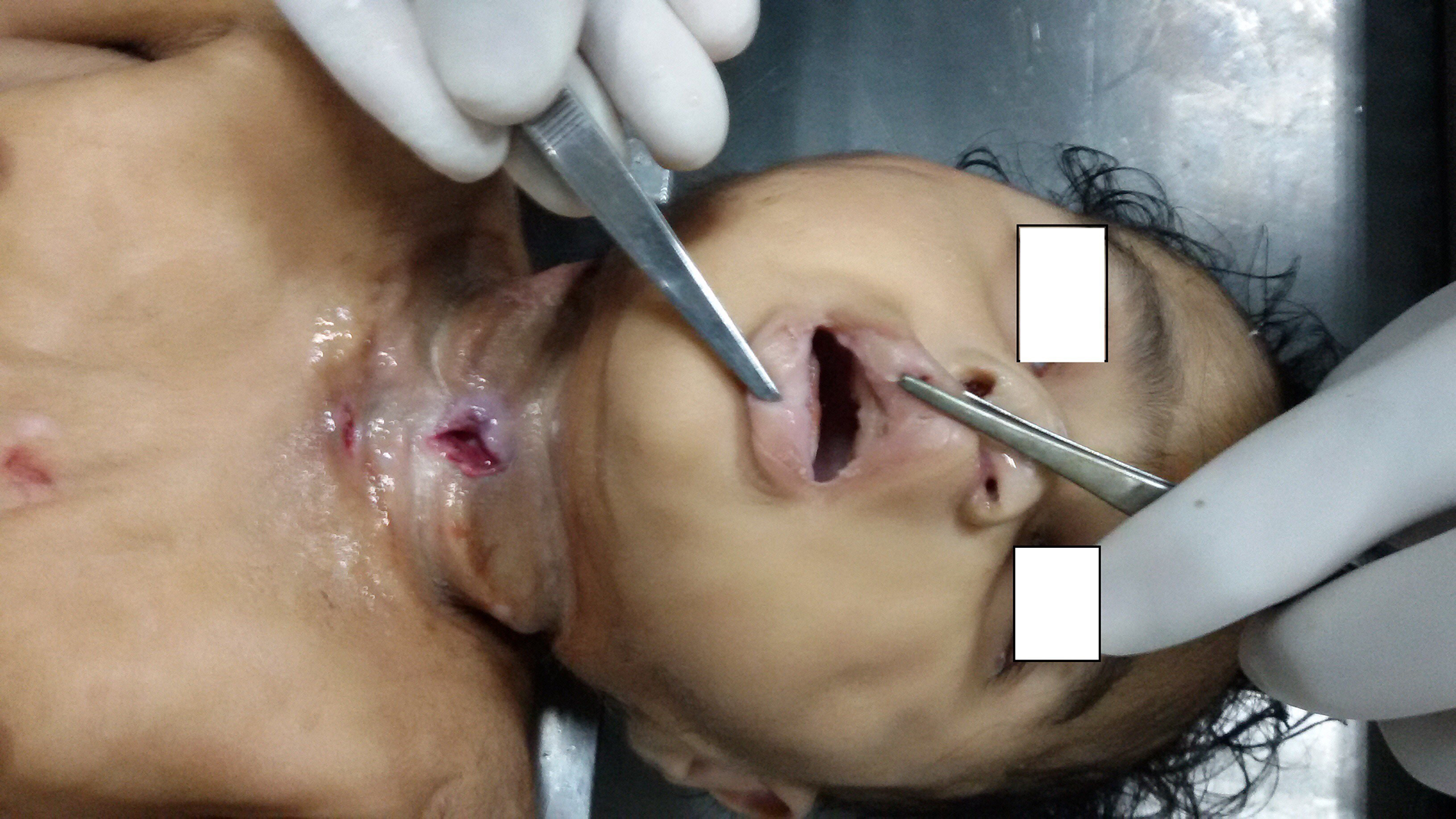
Tracheostomy at the neck: Examining frenulum which was found to be intact.
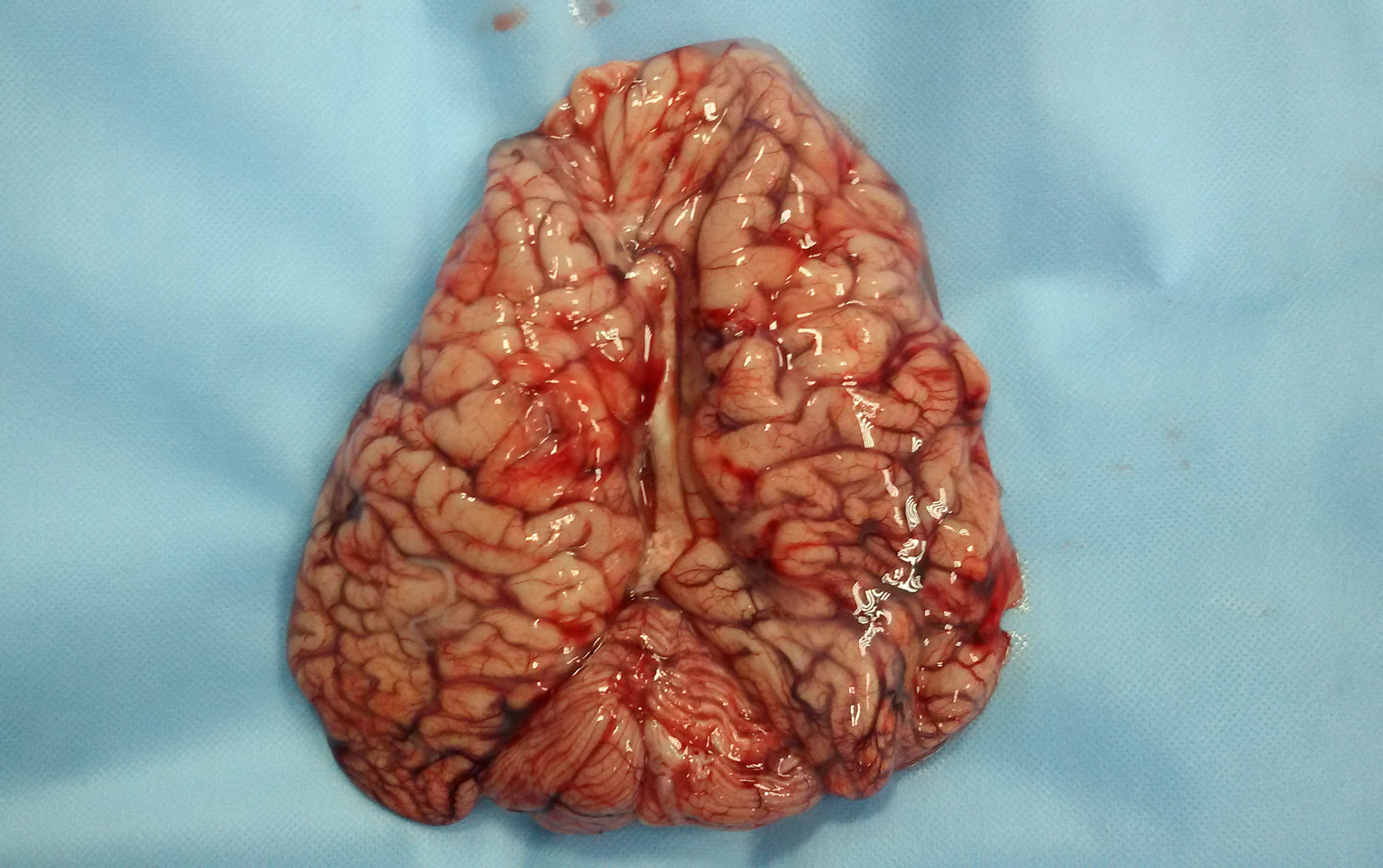
Softened brain with architectural distortion.
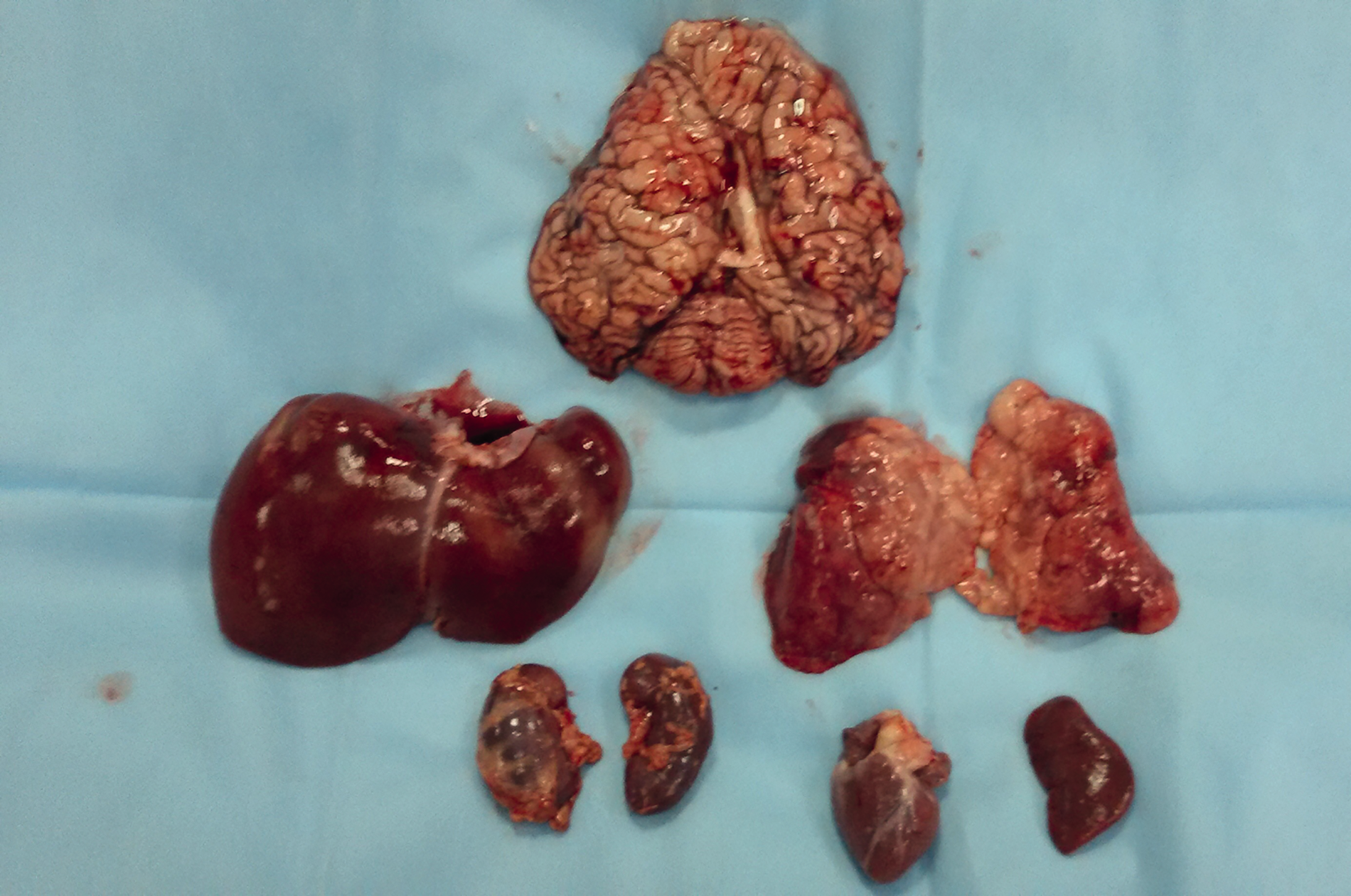
Gross naked eye examination of internal organs.
Discussion
Asphyxia is the second most common cause of accidental death in infants and children up to age 14. Recently, there has been an increase in correct diagnosis of overlaying as a sub-type of asphyxia causing sudden death in infants which otherwise were included in the general category of SIDS (sudden infant death syndrome) and SUID (sudden unexplained infant deaths). This has been attributed to studies establishing accidental asphyxial deaths to be heavily influenced by infants’ sleep environment. Dedicated paediatric autopsies and thorough death scene enquiries are major contributory factors in this regard.
Overlaying has been reported as a leading mechanism of unintentional suffocation in sudden infant deaths. 7 Pasquale-Styles et al. 8 identified this type of asphyxias as the most common cause in 178 out of a total 209 sudden unexpected infant death investigations. Hayman et al. 9 reported overlaying and wedging respectively in 30 and 18 out of 48 accidental suffocation deaths of infants with more than two-thirds in bed sharing situations. Lambert and her co-workers 5 reported accidental suffocation sudden infant deaths mostly due to soft bedding (69%) followed by overlaying (19%) and both having bed sharing as a common denominator. Overlaying was found causative in the majority of cases of sudden deaths in infants around four months of age. Alcohol or drug intake in mothers before co-sleeping is a reported association for neck and chest compression in most cases of overlaying. 5
Combrinck and Byard 10 reported death of a five-month-old male infant due to asphyxia from external airway obstruction by a soft foam mattress, two rolled bolsters and layers of soft bedding. Kim and Collin 11 reported three of the rarest types of accidental asphyxia deaths including a 5-month-old black boy suffocating on a plastic bag while sleeping, a 6-month-old white boy suffocating beneath an adult body pillow and a 10-month-old girl accidentally hanging herself by a pacifier string.
In this case, the 10-year-old child was silent from innocence and ignorance after causing accidental death by overlaying his previously healthy infant niece while sharing a cot with her. Respective autopsy pathology and laboratory findings were hypoxic encephalopathy and cerebral dysfunction consequent upon overlaying and consistent with cerebral hypoxia. 12
Mother would normally have been suspected of female filicide (child being 1st born) but there was clear cut evidence at enquiry of accidental overlaying by a child. 13 Child was not under the influence of alcohol or drugs but too immature by virtue of age and knowledge to anticipate the risk and possibility of accidental death by smothering due to bed sharing. His childish body may have been insufficient to cause sudden death of infant. Authors speculate that the opportunity for sexual intimacy with her husband at the weekend was the reason why the initially reluctant teetotal mother finally allowed her little brother in law to sleep in the cot with her infant which was the clinching co-incidental factor.
The sharing of a single cot with an infant even by a 10-year-old child is very dangerous for the baby. It highlights the dangers of ignorance of a safe child sleeping environment and where there is gross poverty in deprived families. Families living in constrained space may share a single bed in developing nations. The fact that there was nobody else in the room with the child and infant was also unfortunate. 14 Overlaying is usually done by parents, grandparents and adult siblings 11 However, the literature has no reports of it being caused by a 10-year-old child and resulting in the delayed death of the infant. Authors propose further more detailed examination would reveal a definite oetiology for SID for babies aged four to five months which are reported either in cross-sectional studies involving large number of subjects 5 or studies involving individual cases 11 including this one.
Conclusion
Multiple external injuries such as abrasions, bruises or oral-intraoral lesions should rule out accidental asphyxia deaths from overlaying. Awareness and legislation in the form of modified legislation on a par with the Children and Young People Act 2008 of the United Kingdom may become necessary for developing nations soon.
Footnotes
Declaration of conflicting interests
The author(s) declared no potential conflicts of interest with respect to the research, authorship, and/or publication of this article.
Funding
The author(s) received no financial support for the research, authorship, and/or publication of this article.