Abstract

The organisation of the 16th SECAL Congress was almost entirely carried out in the context of the COVID pandemic. The Organising Committee, as well as the SECAL Board, designed an event with many alternatives, according to the possible situations, and even accepted the risk of a cancellation. The reunion of our professionals and the exchange of experiences seemed so beneficial to us that it was worth the risk.
Fortunately, November 2021 brought us a lull in the pandemic in Spain and, without letting our guard down, on the 16th of that month almost 100 SECAL members gathered for the pre-congress workshops. It was a very exciting time. There were eight workshops, covering a wide variety of topics, previously chosen by the attendees: basic and advanced experimental handling of pigs, techniques for blood collection in rodents, management of rodent colonies, experimental design and statistical analysis, necropsy in rodents and pigs, sperm cryopreservation, and FELASA workshop on classification and severity reporting of experimental procedures, which was supported by Laboratory Animals Ltd.
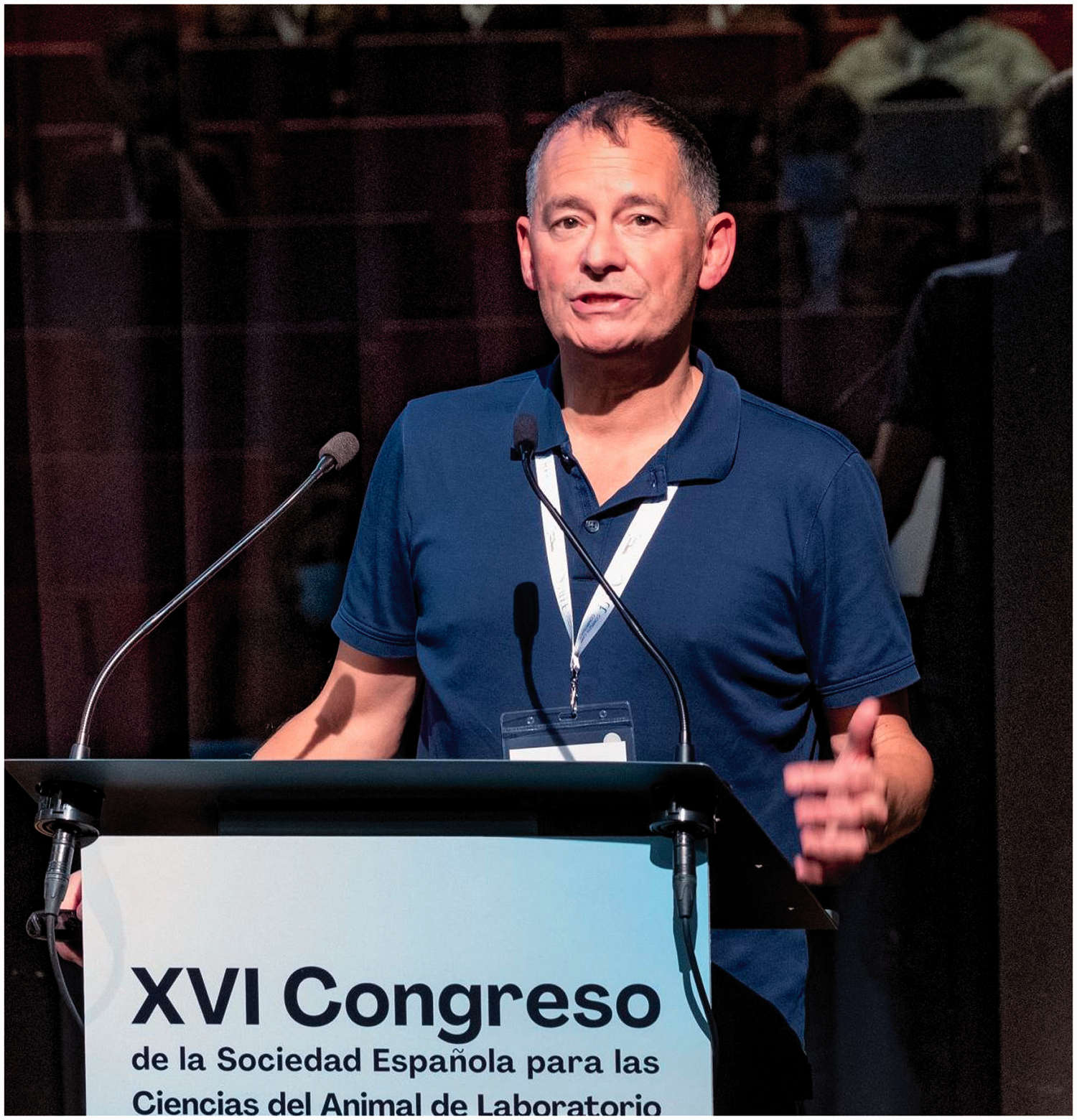
From 17 to 19 November, the Congress brought together 310 attendees, 21 commercial stands and 42 scientific posters. The scientific programme consisted of a special lecture by Professor Luis Enjuanes, a round table on the challenges of current regulations, and eight regular scientific sessions with the following topics: the crisis of reproducibility of results, ethical evaluation of animal studies, actions for transparency (supported by Laboratory Animals Ltd), pathology, housing of large animals, animal handling and behaviour, occupational risks, and health monitoring. In a post-congress survey, attendees expressed that all these sessions met or exceeded their expectations!
There were 34 speakers, with contributions of great relevance. In this report, we will only briefly outline the contributions on two topics, because they are hot topics: the COVID pandemic and transparency in animal research.
The COVID pandemic was particularly addressed in three lectures by Professor Luis Enjuanes, Dr Joaquim Segales and Dr Jesús Martínez-Palacio, respectively, from the point of view of a virologist specialised in coronaviruses, a researcher focused on infectious diseases and One Health, and an animal facility manager; three points of view that probably covered the main concerns of the attendees.
Spain has been one of the countries that earliest and most intensively was involved in actions in favour of transparency in animal research. For this reason, the session focused on this topic, with the participation of Mr Kirk Leech, was highly anticipated. Mr. Leech gave a clear view of the perception of animal research among society and called on researchers and laboratory animal professionals to be courageous in showing and explaining their activity. In addition, different activities led by Spanish institutions were described, which can probably serve as inspiration for others. Thanks to the support of Laboratory Animals Ltd, this session was streamed online and is available on YouTube (https://www.youtube.com/watch?v=JEHI1I57mRA&t=56s).
At the end of the Congress, two posters were awarded prizes, voted by the audience and a panel of experts, respectively. These works were the following:
‘The six Cs in the culture of care’, by Anna Vilà and Hernán Serna. ‘The improvement of housing and management in the rat’, by Julia Sánchez-García et al.
As usual in SECAL Congresses, half of the Board of Directors was renewed and a new president was appointed: Dr Juan Rodríguez.