




Abstract
Complete blood count, serum chemistry values, and biological reference intervals were compared between two age groups (34–49 and 84–120 days old) of healthy male and female laboratory raised natal multimammate mice (Mastomys natalensis). Blood was collected via cardiocentesis under isoflurane anesthesia. Data sets of machine automated complete blood counts and clinical chemistries were analyzed. Significant differences between sex and age groups of the data sets were defined. The baseline hematologic and serum biochemistry values described here can improve interpretation of laboratory research using natal multimammate mice.
Introduction
Mastomys genus is made up of multiple species that are commonly referred to as multimammate rats, multimammate mice, or African soft furred rats. Mastomys natalensis and M. coucha, originating from sub-Saharan Africa, 1 are the two most common Mastomys species used in biomedical research. 2 Historically, Mastomys spp. were introduced into laboratory research for Yersinia pestis studies owing to being an important link in the southern African plague cycle. 1 Since their introduction, Mastomys spp. have been used to study various viral diseases (Lassa virus, 3 papillomavirus,4,5 Mopeia virus, 6 and Crimean-Congo hemorrhagic fever virus 7 ), parasitic agents,4,8 autoimmune thyroiditis, 9 gastric carcinoid tumor formation, 10 and helicobacter infections. 11 Mastomys spp. have a lifespan of three years and are notorious for having large litters of 12–22 young. 12 Female Mastomys spp. have a 23-day gestation period with pups being weaned between 21 and 28 days and both sexes reaching puberty between 55 and 75 days old.2,12
Reference intervals (RIs), results that represent 95% of a healthy population, have an important role in interpreting clinical results of experimental laboratory animals to values from healthy populations.13,14 Normal baseline hematologic value averages and ranges have been published for 40 and 90 day old M. natalensis 15 in addition to M. natalensis younger and older than 6 months old. 16 Serum biochemistry averages and ranges have been described for 90–140 and 200–250 day old M. coucha and in M. natalensis younger and older than 6 months old.16,17 True RIs, representing the 2.5–97.5-percentile of the healthy population, were not determined for each sex/age group in these publications due to low sample size (N < 40).13,15–17 Species- and method-specific RI for M. natalensis can benefit laboratory animal clinicians performing point of care hematologic and biochemical testing on clinically ill animals and can help researchers better interpret experimental data sets.
The goal of this study was to develop species- and method-specific hematologic and serum biochemistry RIs for two age groups of male and female laboratory-bred natal multimammate mice (M. natalensis) according to the guidelines of the American Society of Veterinary Clinical Pathologists (ASVCP). 13 The two age groups assessed were between 34–49 and 84–120 days old and were chosen based on their use in research at our facility and to allow for comparisons to be made between sex (male vs. female) before and after sexual maturity.
Material and methods
Animals
Clinically healthy, laboratory-bred (originally wild caught in Mali and transported to the facility in 2013), 18 specific pathogen free, intact male (n = 120) and female (n = 116) natal multimammate mice (M. natalensis) between 39–49 (male: n = 60; female: n = 54) and 84–120 days old (male: n = 60; female n = 62) were housed according to the Animal Welfare Act and the Guide for the Care and Use of Laboratory Animals in an AAALAC International accredited facility with an approved Institutional Animal Care and Use Committee protocol. Animals were free of ectromelia virus, mouse rotavirus, lymphocytic choriomeningitis virus, mouse adenovirus, Sendai virus, mouse hepatitis virus, minute mouse virus, mouse parvovirus, mouse polyoma virus, mouse norovirus, Theiler’s murine encephalomyelitis virus, Mycoplasma pulmonis, pinworms, and ectoparasites according to dirty bedding serology and filter EDx PCR testing (IDEXX BioAnalytics, Columbia, MO, USA). Same-sex, group-housed animals were kept at 14-h light cycle, 22 ± 2°C, and 40–60% humidity in individually-ventilated disposable cages (Innocage® IVC Rat Caging System, Innovive, San Diego, CA, USA), with autoclaved bedding (Sani-Chips®, P.J. Murphy Forest Product Corp., Montville, NJ, USA), and provided with ad libitum rodent chow (2018 Teklad Global 18% protein rodent diet, Envigo Teklad, Denver, CO, USA) and reverse osmosis water. Enrichment included nesting material (Enviro-dri®, Shepherd Specialty Papers, Watertown, TN, USA), shelters (Shepherd Shack®, Shepherd Specialty Papers, Watertown, TN, USA) and/or Crawl Balls™ (Bio-Serve®, Flemington, NJ, USA). Animals were considered healthy according to daily health checks, the absence of any morbidity reports, and clinical evaluation.
Blood collection and analysis
Blood was collected via terminal cardiocentesis completed in multiple cohorts from non-fasted, anesthetized, natal multimammate mice using isoflurane anesthesia to effect between the times 08:00 and 11:00. The centesis site was cleaned with 70% ethyl alcohol prior to blood collection. After blood collection, natal multimammate mice were immediately euthanized while anesthetized via cervical dislocation using a commercial mechanical cervical dislocator (Stoelting Co., Wood Dale, IL, USA).
Blood was collected in a 1-mL slip-tip tuberculin syringe (BD syringes, Becton, Dickinson and Company, Franklin Lakes, NJ, USA) with attached needle (BD PrecisionGlide™ Hypodermic Needle 23 G x 1”, Becton, Dickinson and Company, Franklin Lakes, NJ, USA). The needle was removed prior to expelling blood into collection tubes. Blood was aliquoted into a serum separator tube (300–600 µL, Micro tube 1.1 mL Z-Gel, STARSTEDT AgG & Co., Nümbrecht, Germany) and an EDTA tube (200–500 µL, Micro tube 1.3 mL K3 EDTA, STARSTEDT AgG & Co., Nümbrecht, Germany).
EDTA blood-filled tubes were manually inverted per manufacturer recommendations and then placed on a tube rocker at room temperature until analyzed using a ProCyte Dx Hematology Analyzer (Idexx Laboratories Inc., Westbrook, ME, USA). Hematological parameters assessed include: red blood cell (erythrocyte) count (RBC), hemoglobin concentration (HGB), hematocrit (HCT), mean red blood cell volume (MCV), mean cell hemoglobin (MCH), mean corpuscular hemoglobin concentration (MCHC), platelet count (PLT), mean platelet volume (MPV), reticulocyte count (Ret #), total white blood cell (leukocyte) count (WBC), neutrophil count (NEUT #), lymphocyte count (LYMPH #), monocyte count (MONO #), eosinophil count (EO #), and basophil count (BASO #).
Serum separator tubes were manually inverted and allowed to clot at room temperature for at least 20 min according to manufacturer recommendations and then centrifuged at 10,000g for 5 min. Serum was aliquoted and frozen (–20°C) for later analysis in batches. Serum samples with low volume (<121 µL) or severely hemolyzed were not analyzed. At the time of analysis, serum was thawed to room temperature (20–22°C) and analyzed using Vetscan® VS2 Chemistry Analyzer (Preventive Care Profile Plus, Abraxis Inc., Union City, CA, USA). Serum biochemistry analytes assessed include: blood urea nitrogen (BUN), creatinine, alanine aminotransferase (ALT), alkaline phosphatase (ALP), aspartate aminotransferase (AST), total bilirubin (T bili), glucose, calcium, total protein (T protein), albumin, globulin, sodium, potassium, chloride, and total bicarbonate (tCO2).
A total of 236 EDTA blood samples and 182 serum samples were analyzed. Sex and age numbers per group can be seen in tables below.
RI analysis
RIs for the above analytes were determined according to ASCVP guidelines 13 using Reference Value Advisor. 19 Reference limits were calculated using the non-parametric approach unless sample size fell below n = 40 due to removal of outliers. Outliers for each parameter were determined according to Tukey’s interquartile fences when data from the four groups were combined. If an outlier for a parameter was removed, the remaining parameters from that sample were still used in analysis. A robust method with parametric Box–Cox transformed data was used to calculate RI for parameters with low sample size. Ninety percent confidence intervals (CIs) of the RI were determined using a bootstrap approach. Creatinine values (<0.2 mg/dL, n = 55) and T bili (<0.1 mg/dL, n = 8) below the limit of detection (l.o.d.) were changed to l.o.d./√2.
Statistical analysis
Statistical analysis software (Prism 8.20 for Windows, GraphPad Software, La Jolla, CA, USA) using two-way analysis of variance with Sidak multiple-comparison testing was used to compare hematologic and serum biochemistry values according to sex (male vs. female) and age (34–49 vs. 84–120 days old). Values determined to be outliers in RI analysis were also excluded from statistical analysis. Adjusted p-value less than 0.05 was considered statistically significant.
Results
Hematology
Hematologic values were compared between age and sex for M. natalensis with means ± standard deviation (SD) and ranges (Table 1) and RI with 90% CI (Table 2) described. Sex and/or age statistical differences were seen with all hematologic parameters except MCH and MONO # (Table 3).
Hematological reference means ± standard deviation (SD) and ranges for male and female natal multimammate mice (Mastomys natalensis) between 34–49 and 84–120 days old.
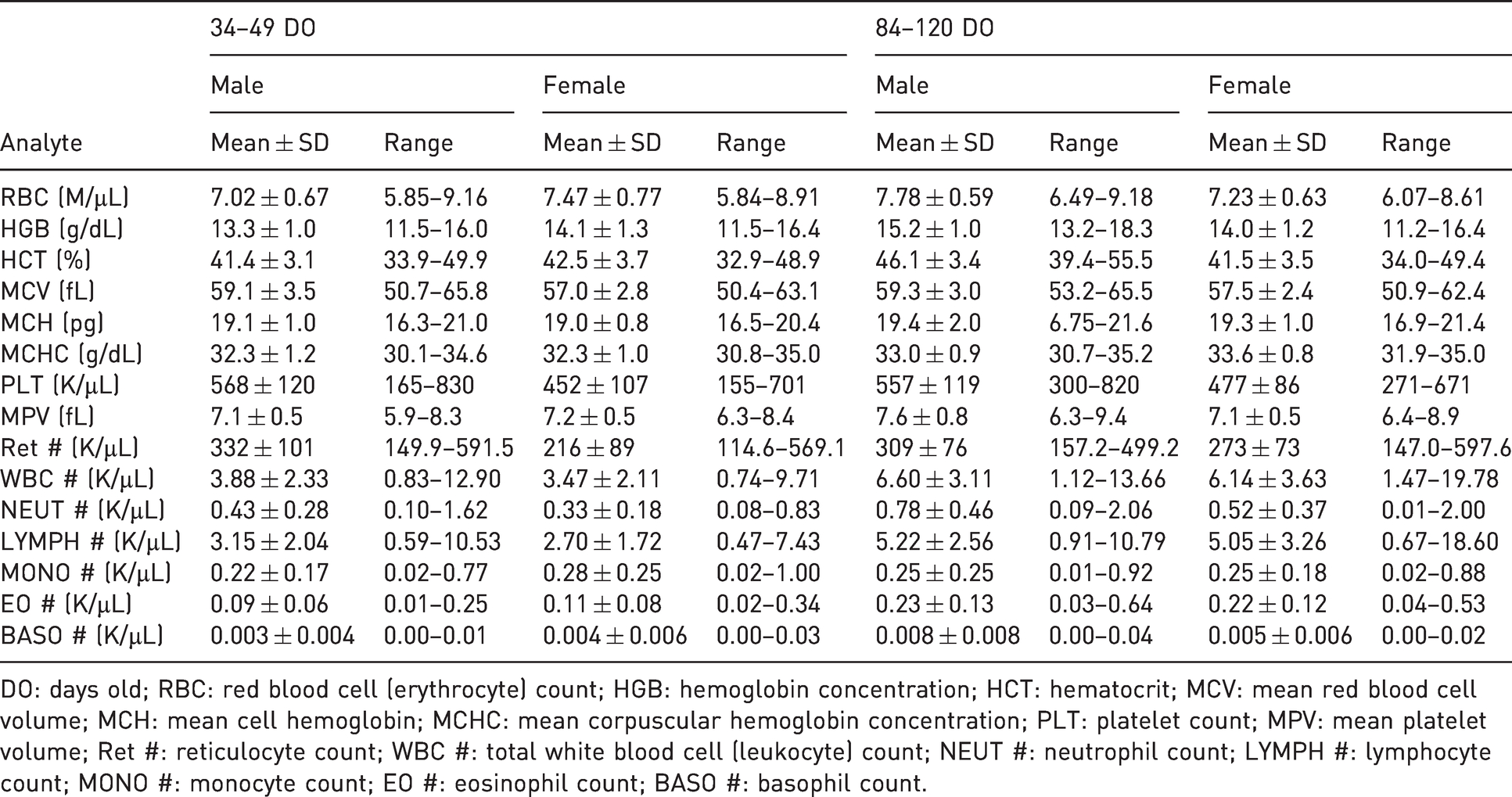
DO: days old; RBC: red blood cell (erythrocyte) count; HGB: hemoglobin concentration; HCT: hematocrit; MCV: mean red blood cell volume; MCH: mean cell hemoglobin; MCHC: mean corpuscular hemoglobin concentration; PLT: platelet count; MPV: mean platelet volume; Ret #: reticulocyte count; WBC #: total white blood cell (leukocyte) count; NEUT #: neutrophil count; LYMPH #: lymphocyte count; MONO #: monocyte count; EO #: eosinophil count; BASO #: basophil count.
Hematologic reference intervals and 90% lower and upper confidence interval limits of each analyte for male and female natal multimammate mice (Mastomys natalensis) between 34–49 and 84–120 days old. Total animal numbers are noted for each sex and age group. Number of outliers designated within parentheses for each analyte.
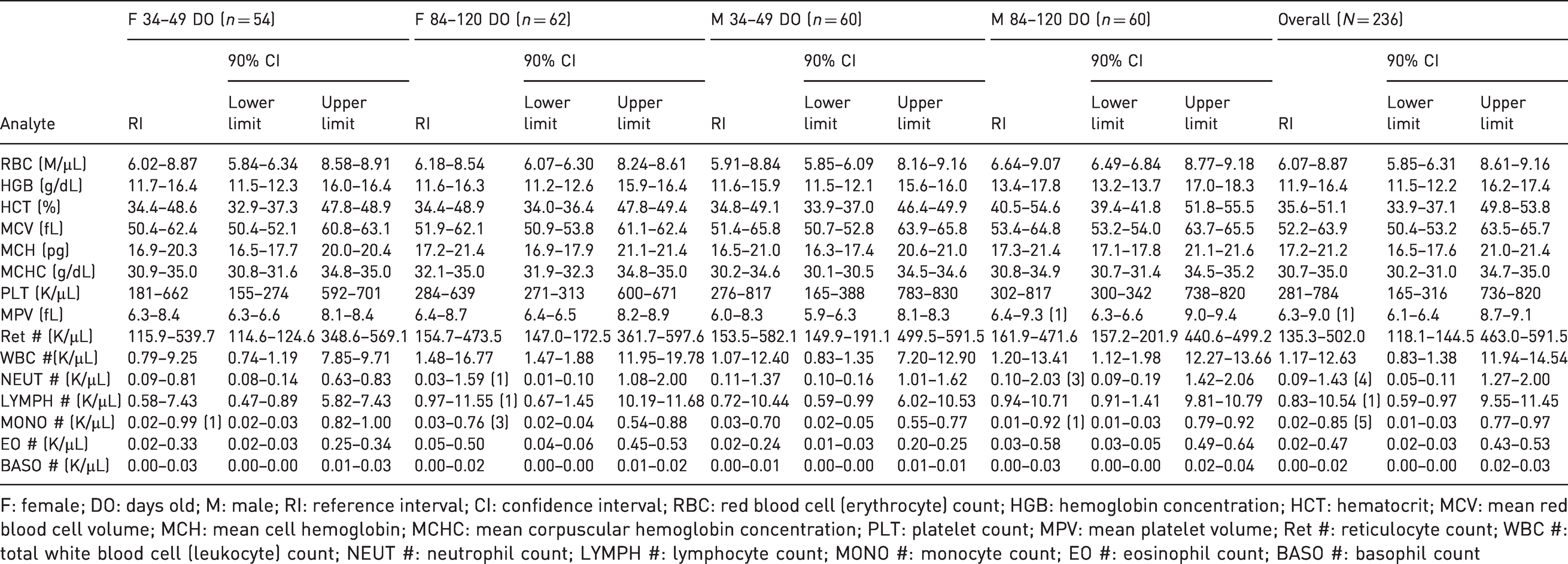
F: female; DO: days old; M: male; RI: reference interval; CI: confidence interval; RBC: red blood cell (erythrocyte) count; HGB: hemoglobin concentration; HCT: hematocrit; MCV: mean red blood cell volume; MCH: mean cell hemoglobin; MCHC: mean corpuscular hemoglobin concentration; PLT: platelet count; MPV: mean platelet volume; Ret #: reticulocyte count; WBC #: total white blood cell (leukocyte) count; NEUT #: neutrophil count; LYMPH #: lymphocyte count; MONO #: monocyte count; EO #: eosinophil count; BASO #: basophil count
Sex (male vs. female) and age (39–49 vs. 84–120 days old) hematological adjusted p-values of natal multimammate mice (Mastomys natalensis).
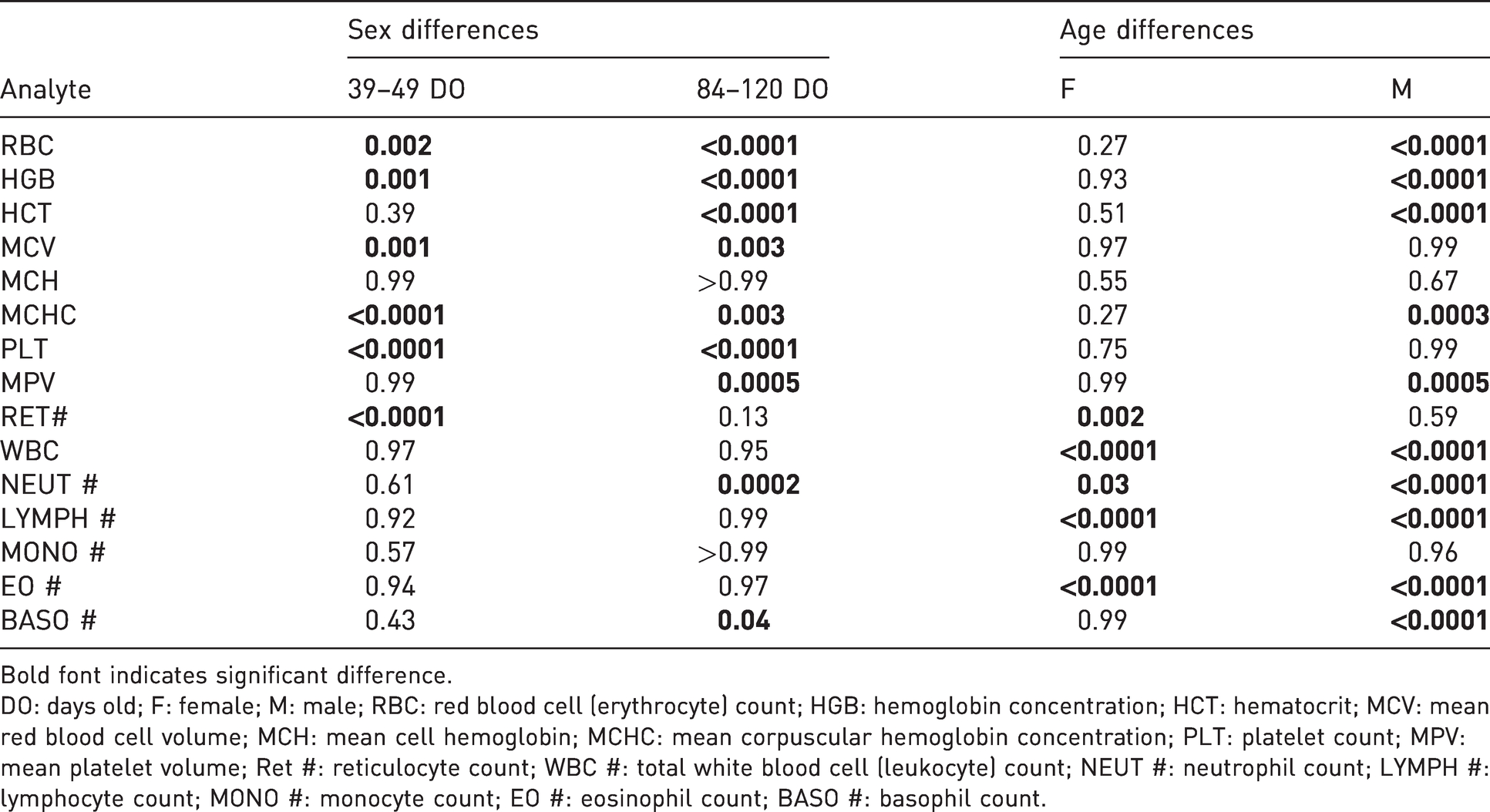
Bold font indicates significant difference.
DO: days old; F: female; M: male; RBC: red blood cell (erythrocyte) count; HGB: hemoglobin concentration; HCT: hematocrit; MCV: mean red blood cell volume; MCH: mean cell hemoglobin; MCHC: mean corpuscular hemoglobin concentration; PLT: platelet count; MPV: mean platelet volume; Ret #: reticulocyte count; WBC #: total white blood cell (leukocyte) count; NEUT #: neutrophil count; LYMPH #: lymphocyte count; MONO #: monocyte count; EO #: eosinophil count; BASO #: basophil count.
At 34–49 days old, female M. natalensis had significantly higher RBC (p = 0.002), HGB (p = 0.001), and MCHC (p < 0.0001) compared with male M. natalensis, while males had significantly higher MCV (p = 0.001), PLT (p < 0.0001), and Ret # (p < 0.0001) compared with females. At 84–120 days old, female M. natalensis only had significantly higher MCHC (p < 0.003) values compared with males of the same age, while males had significantly higher RBC (p < 0.0001), HGB (p < 0.0001), HCT (p < 0.0001), MCV (p = 0.003), PLT (p = 0.0004), MPV (p = 0.0005), NEUT # (p = 0.0002), and BASO # (p = 0.04) compared with females.
Statistical differences in hematology values between the age groups were observed with both females and males. Female M. natalensis had significantly higher Ret # (p = 0.02), WBC (p < 0.0001), NEUT # (p = 0.03), LYMPH # (p < 0.0001), and EO # (p < 0.0001) at 84–120 days old compared with 34–49 days old, while male M. natalensis had significantly higher RBC (p < 0.0001), HGB (p < 0.0001), HCT (p < 0.0001), MCHC (p = 0.0003), MPV (p = 0.0005), WBC (p < 0.0001), NEUT # (p < 0.0001), LYMPH # (p < 0.0001), EO # (p < 0.0001), and BASO # (p < 0.0001) at 84–120 days old compared with 34–49 days old.
Serum biochemistry
Serum biochemistry values were compared between age and sex for M. natalensis, with means ± SDs and ranges (Table 4) and RI with 90% CI (Table 5) described. Sex and/or age statistical differences were seen with BUN, ALP, AST, T protein, albumin, globulin, and tCO2 (Table 6).
Serum biochemistry reference means ± standard deviation (SD) and ranges from male and female natal multimammate mice (Mastomys natalensis) between 34–49 and 84–120 days old.
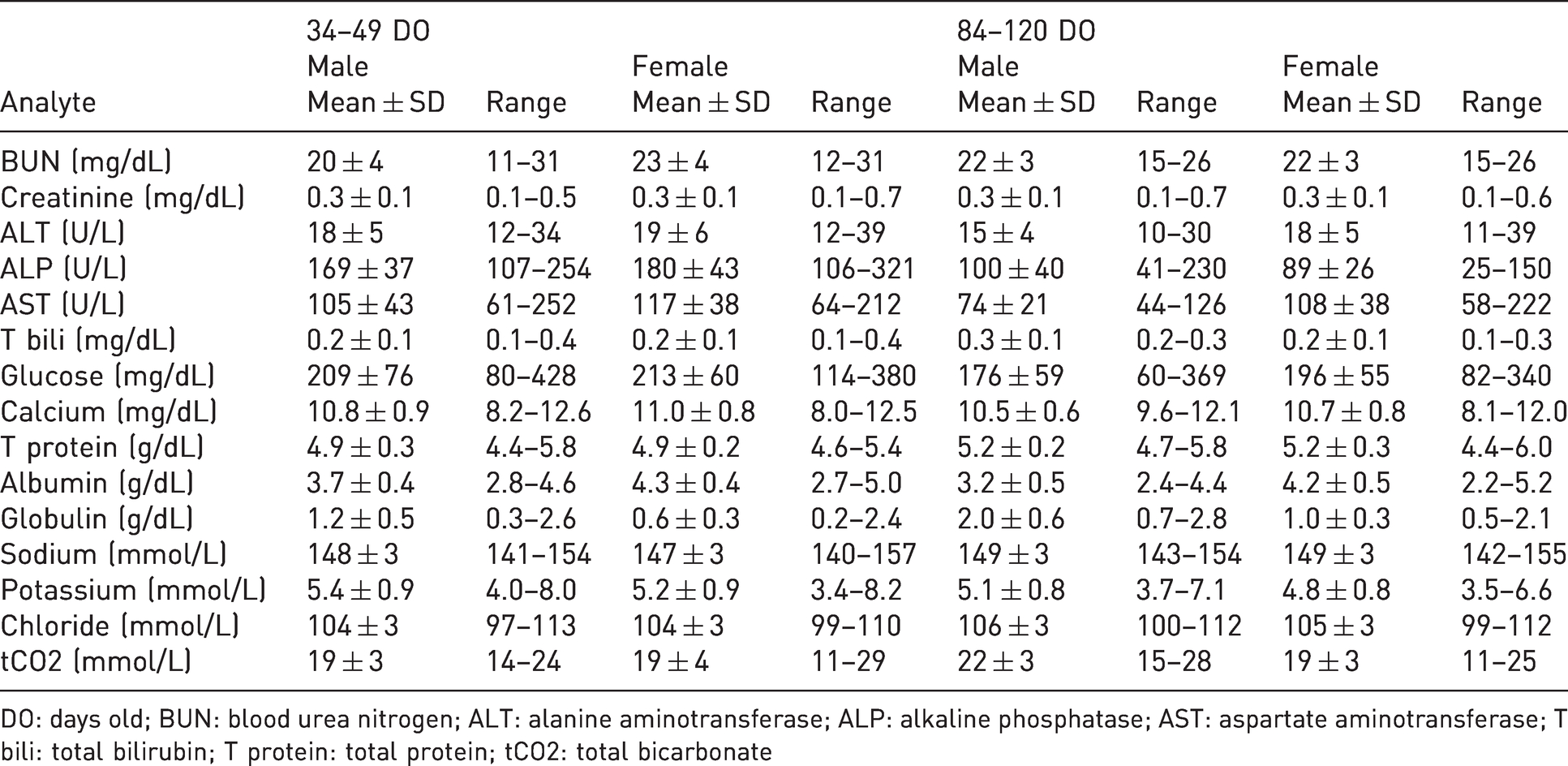
DO: days old; BUN: blood urea nitrogen; ALT: alanine aminotransferase; ALP: alkaline phosphatase; AST: aspartate aminotransferase; T bili: total bilirubin; T protein: total protein; tCO2: total bicarbonate
Serum biochemistry reference intervals (RIs) and 90% lower and upper confidence interval limits of each analyte for male and female natal multimammate mice (Mastomys natalensis) between 34–49 and 84–120 days old. RI determined according to non-parametric methods unless noted with superscript letter. Total animal numbers noted for each sex and age group. Number of outliers designated within parentheses for each analyte.
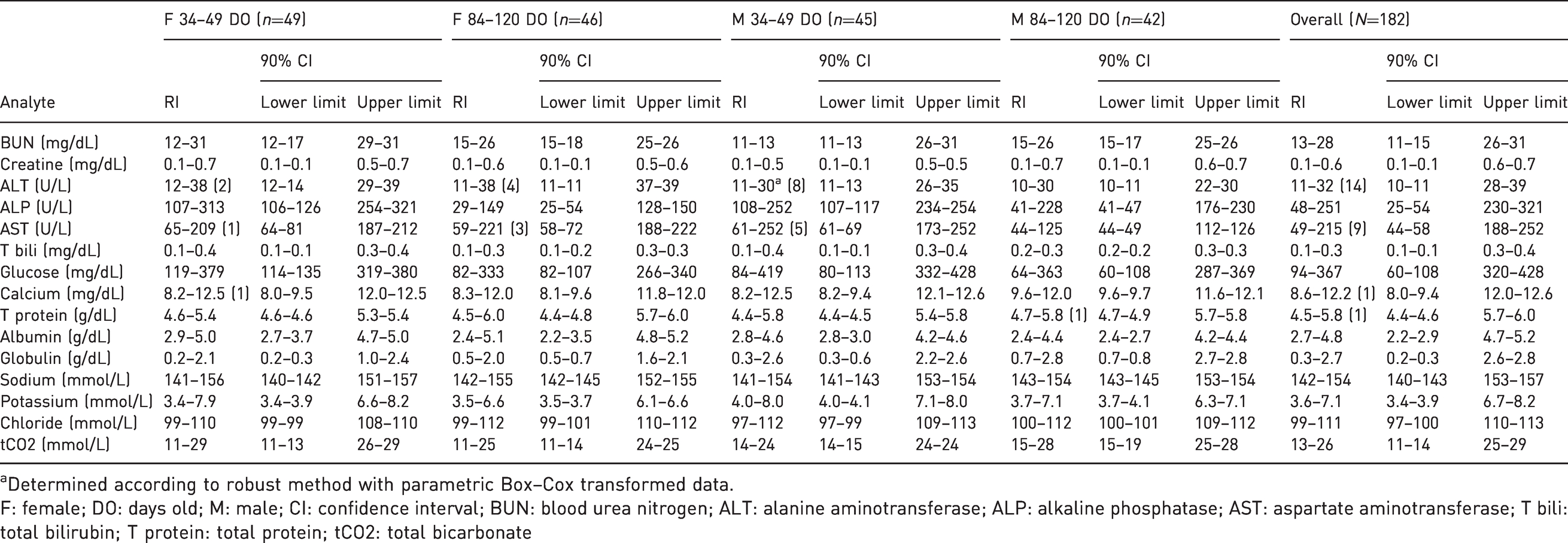
aDetermined according to robust method with parametric Box–Cox transformed data.
F: female; DO: days old; M: male; CI: confidence interval; BUN: blood urea nitrogen; ALT: alanine aminotransferase; ALP: alkaline phosphatase; AST: aspartate aminotransferase; T bili: total bilirubin; T protein: total protein; tCO2: total bicarbonate
Sex (male vs. female) and age (39–49 vs. 84–120 days old) serum biochemistry adjusted p-values of natal multimammate mice (Mastomys natalensis).
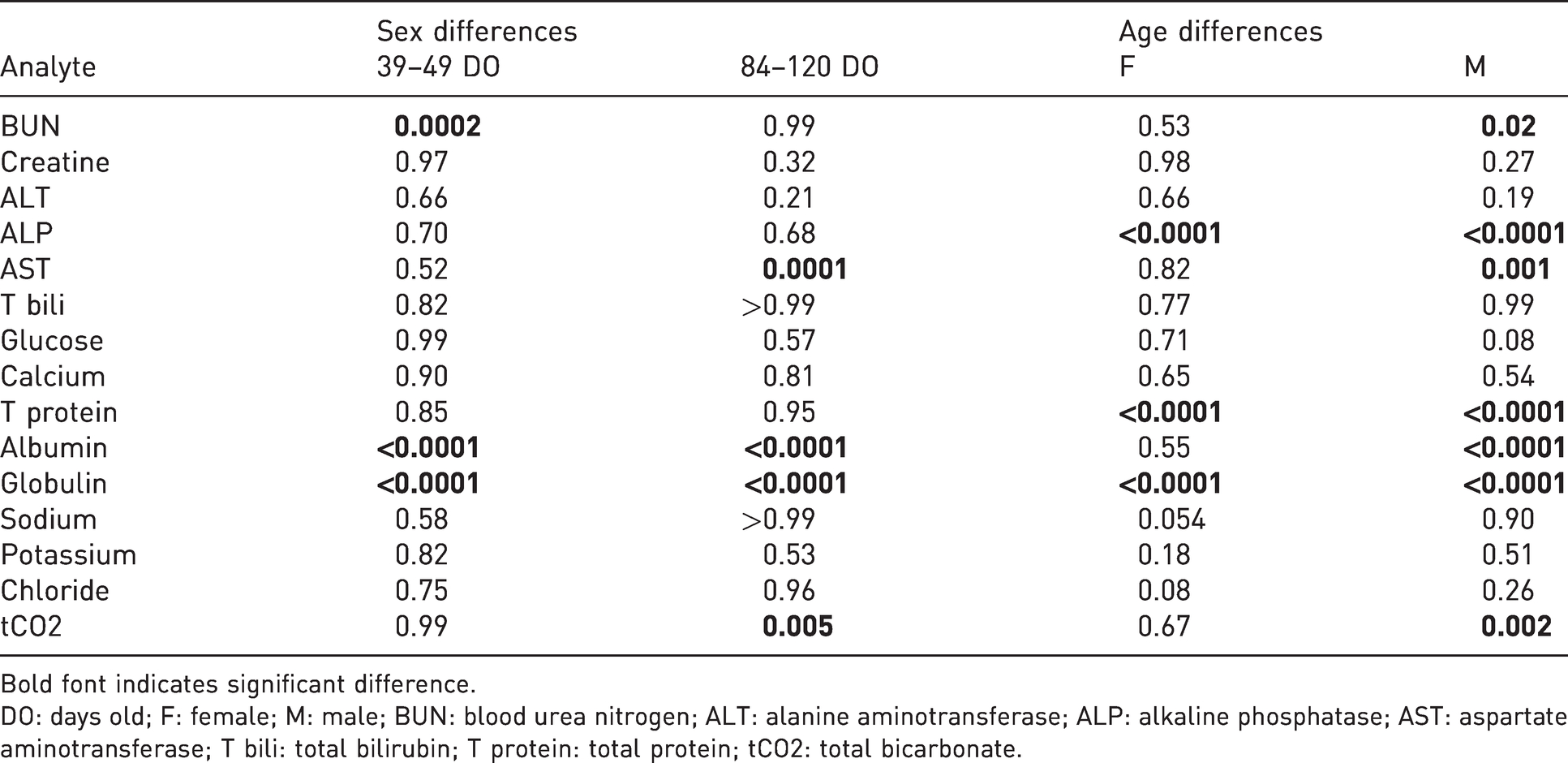
Bold font indicates significant difference.
DO: days old; F: female; M: male; BUN: blood urea nitrogen; ALT: alanine aminotransferase; ALP: alkaline phosphatase; AST: aspartate aminotransferase; T bili: total bilirubin; T protein: total protein; tCO2: total bicarbonate.
At 34–49 days old, female animals had significantly higher BUN (p = 0.0002) and albumin (p < 0.0001) compared with males, while male animals had higher globulin (p < 0.0001) than females. At 84–120 days old, female M. natalensis had significantly higher AST (p = 0.0001) and albumin (p < 0.0001) compared with male M. natalensis, while male M. natalensis had significantly higher globulin (p < 0.0001) and tCO2 (p = 0.002) compared with female M. natalensis.
Statistically significant differences in serum biochemistry values between the age groups were observed for both female and male M. natalensis. Both sexes had significantly higher T protein (p < 0.0001) and globulins (p < 0.0001) at 84–120 days old compared with 34–49 days old, while ALP (p < 0.0001) was significantly higher at 34–49 days old compared with 84–120 days old. In addition, male M. natalensis had significantly higher AST (p = 0.001) and albumin (p < 0.0001) at 34–49 days old compared with 84–120 days old, while tCO2 (p = 0.002) was significantly lower at 34–49 days old compared with 84–120 days old.
Discussion
Data collected from this study revealed significant differences between sex and age groups for both hematology and serum biochemistry values. These findings show the importance of species- and method-specific RI for both sexes at multiple different age ranges, which has also previously been emphasized.13,20 The age ranges in this study were chosen because they are the most common age groups used in infectious disease research at our facility and are separated by sexual maturity. This study provides a statistically robust complete hematology and clinical chemistry RIs for both sexes at different ages, unlike current published reports.
Hematologic findings described here are in similar ranges to previously published findings for M. natalensis.15,16 Kagira et al. saw higher blood cell parameters (RBC, HGB, HCT, MCHC) in aged (90 days old) M. natalensis compared with juveniles (40 days old), which was also seen in this study. Wozniak et al. showed no significant differences in blood cell counts or hemoglobin concentrations between young (<6 months old) and old (>6 months old) M. natalensis. 16 The lack of significant difference between the young and old animals may be due to low sample size or the large age ranges used between the two age groups associated with the authors’ partitioning criteria. 13 Higher blood cell parameters as animals age have been described in other rodents (rats 21 and mice 22 ) and are hypothesized to be associated with a maturing hematopoietic system.
Differences in hematologic parameters between sexes of the same age have been described previously for other rodents,22,23 but not with M. natalensis.15,16 The lack of significant differences between sexes described by previous publications15,16 compared with the differences we observed could be due to several factors. For example, variables between the studies include number of animals sampled, the age of the animals, husbandry differences between facilities, colony genetics, colony health, blood sampling technique, and collection site. Since this colony’s establishment in 2013, multiple colonies of M. natalensis have been created from this original colony and include animal colonies in Hamburg and Berlin, Germany. It is important to consider that the findings found in this study may not represent all M. natalensis colonies due to differences in husbandry practices between facilities.
WBC count means for both sexes and age groups described in this study were lower than previously reported by Kagira et al. 15 but were similar to those of Wozniak et al. 16 This could be due to blood collection location and colony health as Kagira et al. collected blood from the tail vein while our study and Wozniak et al. collected blood via cardiocentesis. Previous research has shown that blood collected from the tail (room temperature or heated) or other peripheral blood collection locations of laboratory mice or rats results in significantly more WBCs compared with blood collected from the heart.24,25 Additionally, Wozniak and colleagues’ colony and our colony are free of common rodent pathogens according to environmental PCR samples and dirty bedding sentinel serology results, while published hematology data reported by Kagira et al. was generated from colonies recently procured from the wild with intermittent parasitic infestations. 15 Infection with certain pathogens may elicit inflammation resulting in significant changes within the leukogram. More specifically, parasitic infections may cause eosinophilia. These leukogram differences between the published results and our study illustrate the necessity for specific pathogen free colonies. Due to a lack of differential counts, a comparison of the affected leukocyte population (neutrophils, lymphocytes, eosinophils) between Kagira et al. and our study is impossible. Other potential explanations for the difference between WBC counts between the two studies could be husbandry (feed and bedding) and age differences.
Serum biochemistry values described are similar to previously reported values for Mastomys spp.16,17 Globulins, electrolytes, and tCO2 reference ranges or intervals for M. natalensis have not been previously published in the literature. Similar to our findings, Yamamoto et al. saw significant differences between age (90–140 vs. 200–250 days old) for T protein, albumin, and ALP in Mastomys coucha. 17 Interestingly, Yamamoto et al. described sex differences in ALP and glucose, while neither of the age groups assessed in the current study showed significant difference with these parameters. 17 A recent publication reported sex-dependent differences in BUN, AST, and ALB in M. natalensis, which was also observed in this study. 16 However, one difference between the two studies is that their study reported female M. natalensis having BUN values lower than males, while we show the opposite.
Differences in ALP between the age groups was expected as young, growing animals tend to have higher measurable ALP than adults due to elevations in the bone isoform of ALP. Studies have shown that this is true in mice and rats. 26 Similar to previous reports of Mastomys 17 and other rodents, 27 glucose values in this study were relatively high (means between 176 and 213 mg/dL). These values may be normal for M. natalensis or could be due to increased anxiety in laboratory conditions. Mastomys spp. have been described as having increased escape reactions and are easily stressed when handled.2,18,28,29 Thus, we suspect the glucose levels may be a physiological hyperglycemia associated with acute epinephrine release stimulating rapid glycogenolysis.
RIs were calculated using a previously published set of macroinstructions called Reference Value Advisor (RVA) 19 referenced by the ASCVP guidelines. 13 Some of the parameter’s 90% CIs determined by the RVA are wider than recommended by the ASVCP guidelines. 13 It is recommended that CI should not exceed 0.2 times the width of the RI. Increasing animal numbers could improve the width of the CI, due to CI width being dependent on sample size. 13 ASVCP guidelines recommend at least 120 samples per partition to determine 90% CI non-parametrically, unless bootstrap method is used. 13 Obtaining 120 reference samples per sex and age could be considered unethical as it would be time consuming and costly with little benefit and stress to more animals. The goal of this study was to obtain n > 39 samples of each age and sex to allow for removal of outliers. Only one parameter (ALT) in one group (male Mastomys 34–49 days old) fell below n = 40 after removal of outliers, and thus RIs were determined according to a robust method with parametric Box–Cox transformed data.
The ASCVP guidelines are modeled after the Clinical Laboratory and Standards Institute recommendations with specific language for veterinary species and consider partitioning criteria, selection criteria, exclusion criteria, and pre- and post-analytical procedures. Previous publications assessing reference ranges of Mastomys spp. lack important considerations recommended within the ASCVP guidelines, such as partitioning criteria and sample size previously discussed.
In conclusion, findings from this study provide serum biochemical and hematologic parameter baseline reference means, ranges, and intervals for laboratory raised M. natalensis. Additionally, we describe age and sex significant differences in these parameters. Our findings both recapitulated previous findings and described differences not seen before in Mastomys spp. This information can benefit fellow researchers studying M. natalensis and may help interpret experimental or clinical data.
Footnotes
Acknowledgements
The authors would like to acknowledge the dedication and hard work of the Rocky Mountain Veterinary Branch technicians for carefully monitoring and caring for the animals during this study and members of the NIAID International Center for Excellence in Research (ICER) in Mali, especially Nafomon Sogoba and Sidy Bane, for their support of the field and laboratory work. Underlying research material related to the paper is available upon request.
Declaration of Conflicting Interests
The author(s) declared no potential conflicts of interest with respect to the research, authorship, and/or publication of this article.
Funding
The author(s) disclosed receipt of the following financial support for the research, authorship, and/or publication of this article: financial support for this study was supported by Intramural Research Program and the International Center for Excellence in Research of the National Institute of Allergy and Infectious Diseases, National Institute of Health.
