




Abstract
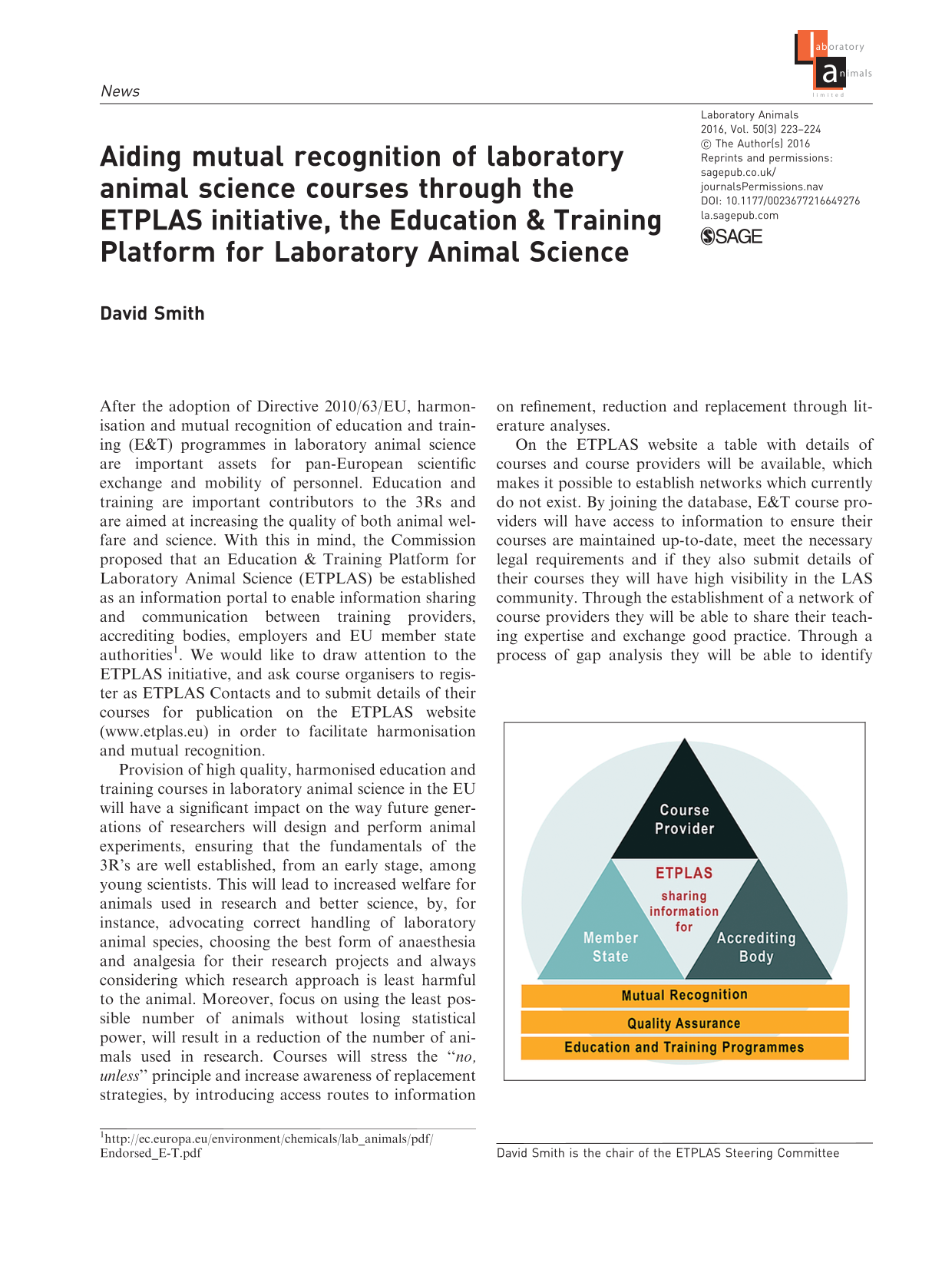
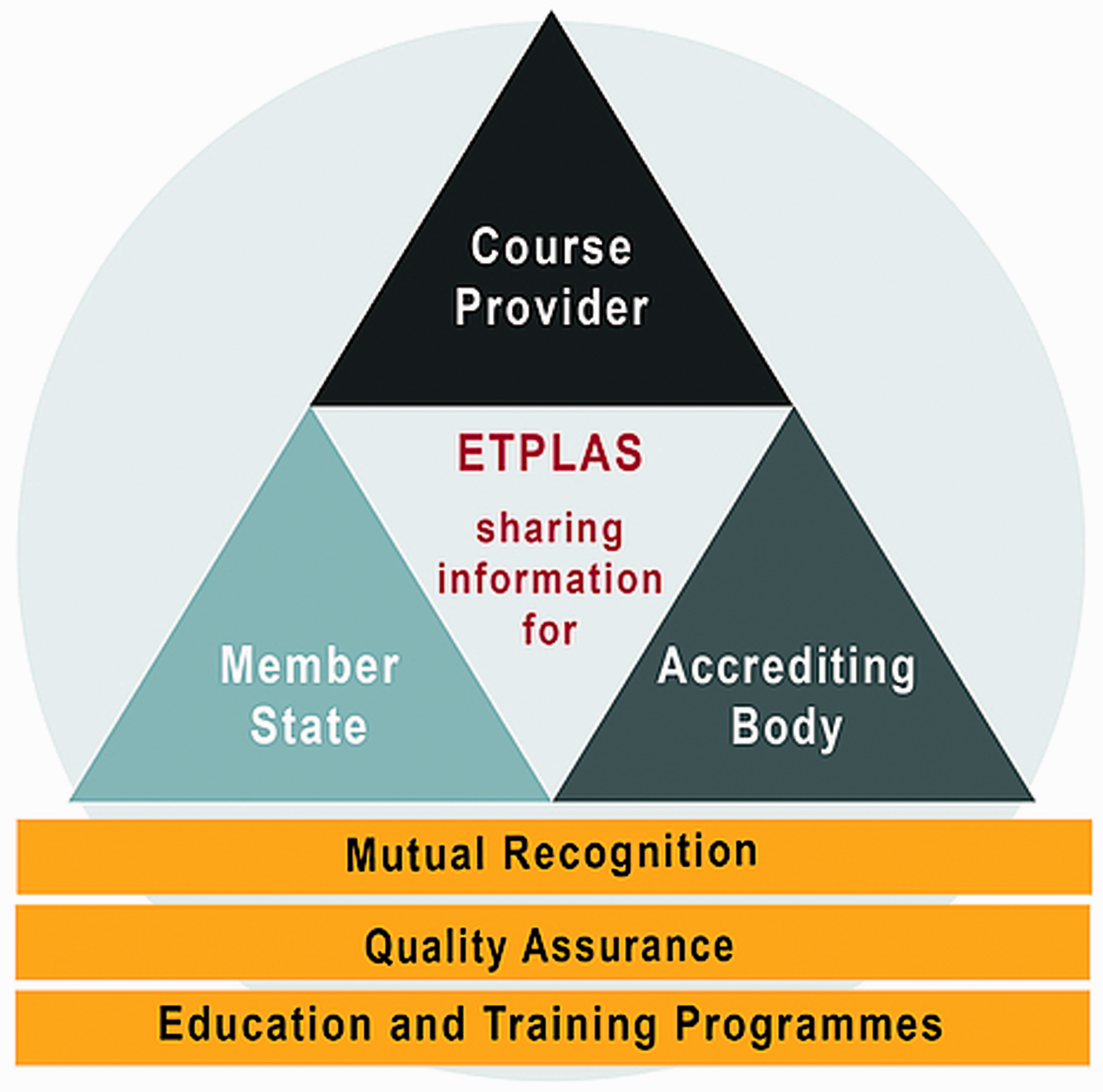
After the adoption of Directive 2010/63/EU, harmonisation and mutual recognition of education and training (E&T) programmes in laboratory animal science are important assets for pan-European scientific exchange and mobility of personnel. Education and training are important contributors to the 3Rs and are aimed at increasing the quality of both animal welfare and science. With this in mind, the Commission proposed that an Education & Training Platform for Laboratory Animal Science (ETPLAS) be established as an information portal to enable information sharing and communication between training providers, accrediting bodies, employers and EU member state authorities 1 . We would like to draw attention to the ETPLAS initiative, and ask course organisers to register as ETPLAS Contacts and to submit details of their courses for publication on the ETPLAS website (www.etplas.eu) in order to facilitate harmonisation and mutual recognition.
Provision of high quality, harmonised education and training courses in laboratory animal science in the EU will have a significant impact on the way future generations of researchers will design and perform animal experiments, ensuring that the fundamentals of the 3R's are well established, from an early stage, among young scientists. This will lead to increased welfare for animals used in research and better science, by, for instance, advocating correct handling of laboratory animal species, choosing the best form of anaesthesia and analgesia for their research projects and always considering which research approach is least harmful to the animal. Moreover, focus on using the least possible number of animals without losing statistical power, will result in a reduction of the number of animals used in research. Courses will stress the “no, unless” principle and increase awareness of replacement strategies, by introducing access routes to information on refinement, reduction and replacement through literature analyses.
On the ETPLAS website a table with details of courses and course providers will be available, which makes it possible to establish networks which currently do not exist. By joining the database, E&T course providers will have access to information to ensure their courses are maintained up-to-date, meet the necessary legal requirements and if they also submit details of their courses they will have high visibility in the LAS community. Through the establishment of a network of course providers they will be able to share their teaching expertise and exchange good practice. Through a process of gap analysis they will be able to identify opportunities for new E&T courses both in terms of content and location.
New research scientists, technicians and care staff will be able to source appropriate courses and check their content and availability. All persons working with animals will have the opportunity to access information on the website listing opportunities for continuing education. As a new regulatory requirement, this function will be in increasing demand.
By promotion of high quality, harmonised E&T courses, and the subsequent publication of the details of such courses, competent authorities and employers will have access to information to facilitate the process of mutual recognition. This will promote free movement of personnel involved in LAS both within a country and across the EU.
The overall impact of the ETPLAS initiative might eventually lead to equivalent levels of qualification throughout Europe whilst contributing to an improved experimental design of animal studies and the universal acceptance of the principles of the 3R's.
It is our hope that course providers currently not registered in the ETPLAS database will take the opportunity to register, and submit details of their courses and thus contribute to mutual recognition of education and training courses in laboratory animal science.
