




Abstract
The 1960s were a pivotal moment for global air transport: the confluence of the technological innovations of the jet age and the formal decolonisation of most African countries resulted in a new connectivity between Africa and the world, as global aerial mobility rapidly intensified. This paper focuses on the multifaceted role of the jet plane in this process. Jets as flag carriers were key objects in terms of national representation on foreign ground for the newly independent nations. They featured prominently as icons of postcolonial African modernity, were diplomatic tools in the Cold War context and were valuable business assets in a competitive global market. The biographies of the first African-owned jets, Air Afrique's DC-8s and Ethiopian Airlines’ Boeing 720Bs, were analysed for this paper. Following these biographies brings to the fore the social life of planes as a new and exciting research avenue for postcolonial aerial infrastructure and geographies.
Introduction
Air transport is a key element of both the theoretical and practical dimensions of the unfolding of high modernity and globalisation from the 1960s. 2 This period was characterised by the increasing international connectivity and dependency of markets, production and consumption, and a growing need for global mobility. 3 In recent years, studies within anthropology and science and technology have engaged with global infrastructure, and this research has inspired a large new field of critical approaches to infrastructure. 4 In particular, a vibrant discourse on the “coloniality of infrastructure” has emerged. 5
Narratives in the history of modernity and technology have commonly focused on innovations as pivotal moments, but some of the most field-shaping work in the history of technology has demonstrated that it is more important and insightful to study the periods of intense use, after the initial spread, to understand the greatest impact technologies have had. 6 This is also the case with jet aircraft and the specific technological innovations behind long-distance jets that started in the 1950s: the development of more efficient and powerful turbofan engines, along with advancements in aerodynamics and the use of lighter, stronger materials which enabled these aircraft to travel longer distances without refuelling, was a process whose main impact unfolded only during the 1960s, when all internationally operating airlines offered travel by jet and a large number of planes served an ever-increasing amount of passengers for worldwide, long-distance travel. 7 In this paper, I want to focus on the history of the first African jets, to study a pivotal moment in global transport infrastructure from an African perspective. The idea of following planes throughout their life cycle, to trace a kind of object biography, seemed compelling from the moment when I learned that each plane carries a unique registration and hence an identifier which, in theory, would make it possible to trace a complete history – something historians can rarely accomplish with their research subjects.
Approaching global air transport through the history of specific jets, I argue, can help to disentangle the complexities that make it a challenging field of research. Following an individual plane proposes an alternative to a linear-technological, innovation-centred or purely political history of flight. The plane is analysed as an object that forms part of an assemblage, one that consists of a physicality and geography that extends beyond the direct realm of aerial infrastructure and includes social, political, cultural and economic connections – an argument that Waqar Zaidi has recently made for aerial social spaces, drawing important insights from anthropological and sociological research and theories. 8 Studying planes highlights the various transformations that air travel brought about in different regions, such as through tourism and trade, and it helps to include those aspects of aviation that are not directly related to mobility, such as the representative function of national airlines and aviation technology and the political bargaining stakes behind cost-intensive technology deals. This paper takes as a starting point the biographies of four passenger planes, purchased by two of the most successful African airlines in the 1960s: two DC-8 jets acquired in 1963 by Air Afrique and two Boeing 720Bs acquired in 1961 by Ethiopian Airlines. Through this, attention is drawn to the symbolic and cultural as well as the material, political and economic aspects that shaped postcolonial aerial infrastructure and geographies. It shows that while international flights to Europe and the US were key to generating profits for African airlines and made up the majority of the airlines’ network, the connectivity between Africa, notably the hubs of Dakar and Addis Ababa, and the Arabian Peninsula was increasing. The stories of these planes help us understand how aspects that were common in the jet age played out in the African postcolonial context, and bring to the fore those issues that were specific to the situation in Africa at the time: the challenging airline economics and the crucial role of subsidised jets for building up aerial infrastructure, the importance of the symbolic relevance of planes as sites of international attention and flying sovereignty, and the new political geographies of pan-African cooperation and Islamic networks.
The source material for this historical study comes with some limitations in terms of the information about the purchasing context, as well as about the purchase of used planes. The archival situation for both airlines is not exactly straightforward and requires a reconstruction of business operations through published material from the airlines and an array of other sources. In the aftermath of its bankruptcy in 2002, the corporate archives of Air Afrique were dispersed and most likely have been largely destroyed. For the information on Air Afrique, this paper is based on material from the French National Archives, namely records from the Ministry of Transport and the Fonds Foccart that cover the period up until 1967, when French policies towards Africa shifted to less close-knit involvement. In addition, some material was provided to me by the Ivorian economic historian Koffi Loukou Bernard, who worked with a contact in the former Air Afrique offices in Abidjan for his dissertation. 9 Ethioipan Airlines has corporate archives, which were made accessible to the historian Bahru Zewde when he composed a volume on the company's history for its 40th anniversary, but they are not generally open to the public or researchers. 10 For this paper, I was fortunate enough to be able to use records from the Ethiopian national archives that cover the period from 1955 to 1973. 11 Another source of information has been websites created by nostalgic fans or former employees of the airlines, as well as plane-spotting forums and trading platforms for memorabilia.
The life cycle of an aircraft encompasses several distinct stages: initially, the process starts with the order and purchase phase, where airlines place orders with manufacturers and financing agreements are made. Following this, the construction of the aircraft takes place. After assembly, the aircraft is readied for its inaugural flight – not merely a test of its aeronautical capabilities but also a symbolic and celebratory event. Subsequently, the aircraft enters operational service, traversing different routes across the globe, and it may change hands through reselling or leasing agreements. The final stage of an aircraft's life cycle is scrapping, where it is decommissioned and either repurposed or dismantled to salvage spare parts, thereby contributing to the sustainability of the aviation industry. On the following pages, we will look especially at the first, third and fourth stages of the first African jets’ life cycle, and the three different roles that these jets served in the 1960s and 1970s: they were stages for the newly independent nations of postcolonial Africa, they were diplomatic tools in the Cold War and they were important assets in a volatile business.
Planes as stages for new nations
The purchase of two new Douglas DC-8 jets by Air Afrique in 1962, registered as TU-TCA and TU-TCB, marked “a second foundational moment” after the signing the company's founding agreement in 1961 in the eyes of contemporaries. Only with its long-distance machines, they recall, did the company become properly independent. 12 Air Afrique, established in 1961, was jointly founded as a postcolonial, pan-African enterprise by eleven francophone West African states after their independence – but with 33 per cent French capital, and additional loans and assistance provided by France. This initiative was a significant step forward in fostering African aviation, as it united multiple nations in a common endeavour to enhance air connectivity in the region. The airline symbolised a collective effort towards improved regional integration, facilitating economic growth and cultural exchange across West Africa. Air Afrique's operations played a crucial role in linking African nations, both with each other and with the world, embodying a pioneering spirit of African cooperation and multinational enterprise in the aviation sector. 13 With the help of the DC-8s, Air Afrique was not just able to serve the existing routes, which were taken over from French airlines upon independence, but could implement its plans for building up an intra-African route network, one of its primary business goals. Although Air Afrique was partially French-owned and employed a good number of French technicians and managers, the purchase of state-of-the-art jets was a milestone decision in terms of independence, not just because it was a decisive step away from leasing French planes, but because it was a sign of business success and growth, and especially of the international reach of the airline. The inauguration of the first plane to arrive in Africa, TU-TCA, was celebrated in October 1963 as a big event; the plane was baptised “Abidjan” after the Ivorian capital by Marie-Thérèse Houphouët-Boigny, wife of the president of Côte d’Ivoire. The second plane, TU-TCB, was baptised “Brazzaville” after the capital of Congo; it was inaugurated in January 1964 by Marie Massamba-Débat, wife of the Congolese president at the time. 14
Ethiopian Airlines, established in 1945, has become a symbol of resilience and progress in Ethiopia and the African continent, because of its continued success and longevity. The airline was founded as a joint venture between the Ethiopian government and Trans World Airlines (TWA), with the latter providing technical and managerial assistance for the first 30 years of the company's existence. This partnership was crucial in establishing Ethiopian Airlines as a significant player in the global aviation industry. Over the years, the airline has grown to serve a vast network of domestic and international routes, becoming known for its safety record, operational efficiency and contribution to Ethiopia's socio-economic development. The airline's success story is a testament to the strategic collaboration between Ethiopian and American interests in the aviation sector. 15 After its first decade of steady growth and profit, Ethiopian Airlines’ competitive ability on its established international routes towards Europe, Asia and West Africa became endangered. After about half a year of research and discussions between the general manager and the board, the decision to purchase two Boeing 720Bs was made in late 1960. Delays in the planned airport extension pushed back the starting date of jet services for over a year. The originally purchased jets had to be sold, and their replacements were delivered to Ethiopia towards the end of 1962. The inaugural flight of EAL's first jet, registration ET-AAG′′, named “Blue Nile”, on 2 November 1962, from Seattle to Addis Ababa was organised with notable guests from the US and Ethiopia. The companion jet, ET-AAH′′, named “White Nile” and then renamed “Queen of Sheba” in 1965, was delivered on the same day. A few weeks later, in January 1963, both jets started their operations with inaugural flights to Nairobi and Madrid, again with a number of notable guests on board. 16
Corporate advertising strategies in postcolonial African states, whether by indigenous or former colonial companies, have been pivotal in shaping a distinctive African identity. 17 In the air transport sector, adverts consistently highlighted African airlines, equipped with state-of-the-art jets, as symbols of African modernisation and economic development, but they also exemplified the continent's adherence to its rich traditions and heritage. The advertisements put forth the narrative that Africa, through its aviation sector, matched the West in technological advancement and surpassed it by offering access to destinations of profound cultural and historical significance. These marketing campaigns were instrumental in broadcasting the emergence of new African national and regional identities on an international platform, targeting an elite audience that included politicians, investors and business professionals across Africa and Europe. 18
Airline poster imagery has a dual nature, serving as both a source of objective information and a canvas for subjective aspirations or desires. Airlines adeptly addressed national identity concerns by employing highly localised visual elements, which resonate with specific cultural meanings. 19 Simultaneously, they appealed to international market sensibilities, striving for symbolic and economic capital. A crucial semiotic tool in this pursuit was the harmonious integration of cultural symbolism with recoginsable iconicity, which manifested in abstract stylisations that evoked a sense of movement and dynamism. 20 Building on internationally established principles of airline marketing, in which “[s]tewardesses became the product used to sell the airline”, 21 both airlines merged the popular fantasy of the flight attendants as “the perfect wife” with a travel experience that spoke to Western passengers’ desire for exotic encounters. In the case of Air Afrique, this extended to the in-flight experience, where the hostesses’ mid-flight transition from Western to African-styled uniforms reinforced the staging of a regional African identity. 22 Ethiopian Airlines claimed “we invented the air hostess 3,000 years before they invented Boeings” in one of their print ads in 1971. 23
In advertising their newly acquired DC-8s, Air Afrique posters utilised the fact that the DC-8 was highly popular and iconic, perceived by many as the “ultimate airliner of its day” and a symbol for technological progress. 24 The DC-8 featured prominently in the airline's advertisement to market Air Afrique's services to European customers as competitive and convenient. One example of a poster that communicated this message shows a photographic image of the upper body of a gazelle, with its characteristic long neck and alert ears, against a stark white background (see Figure 1). The gazelle is facing left and appears serene and majestic, its gaze fixed forward. A jet is depicted as a simple line drawing at the top of the image, flying from right to left, symbolically “passing” over the gazelle, implying a dynamic of dominance or overview. Next to the gazelle's body, at the bottom of the poster, is the text of the advertisement, reading “Air Afrique – the most modern of the new airlines. A Jet passes. Symbol of speed and comfort, connecting the worlds of today. Air Afrique's DC-8 turbofan aircraft link Africa and Europa.” 25 The text juxtaposes the idea of the airline's fleet and services as the “most modern” with an image of an animal that is often associated with the African continent, referencing the contrasts and connections between Africa and Europe, the traditional and the modern, and nature versus technology.
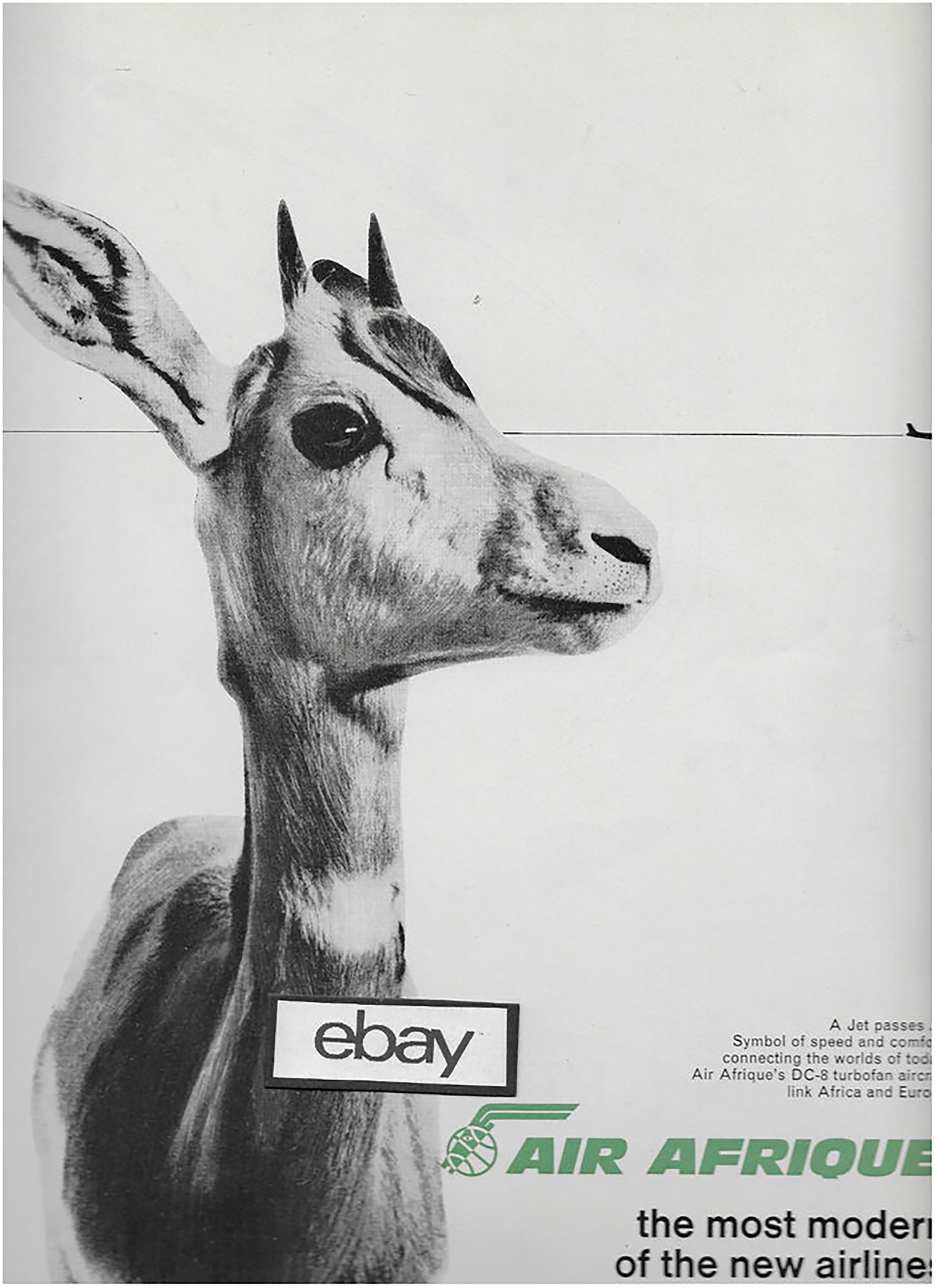
Air Afrique – the most modern of the new airlines.
Another example is a minimalistic advertisement that was created for print circulation in magazines. The graphic element is a stylised depiction of an airplane ascending at a steep angle, emphasising the slogan's notion of altitude and ascent (see Figure 2). The overall design is clean and focused, using the contrast between the vast white space and the dark, bold elements to draw attention to the central message of progress and reach that sits at the top of the page: “Plus haut, plus loin. Higher up, further”, in both French and English, conveying a message of aspiration and ambition, and reflecting the airline's goals and the experience it offers to its customers. 26
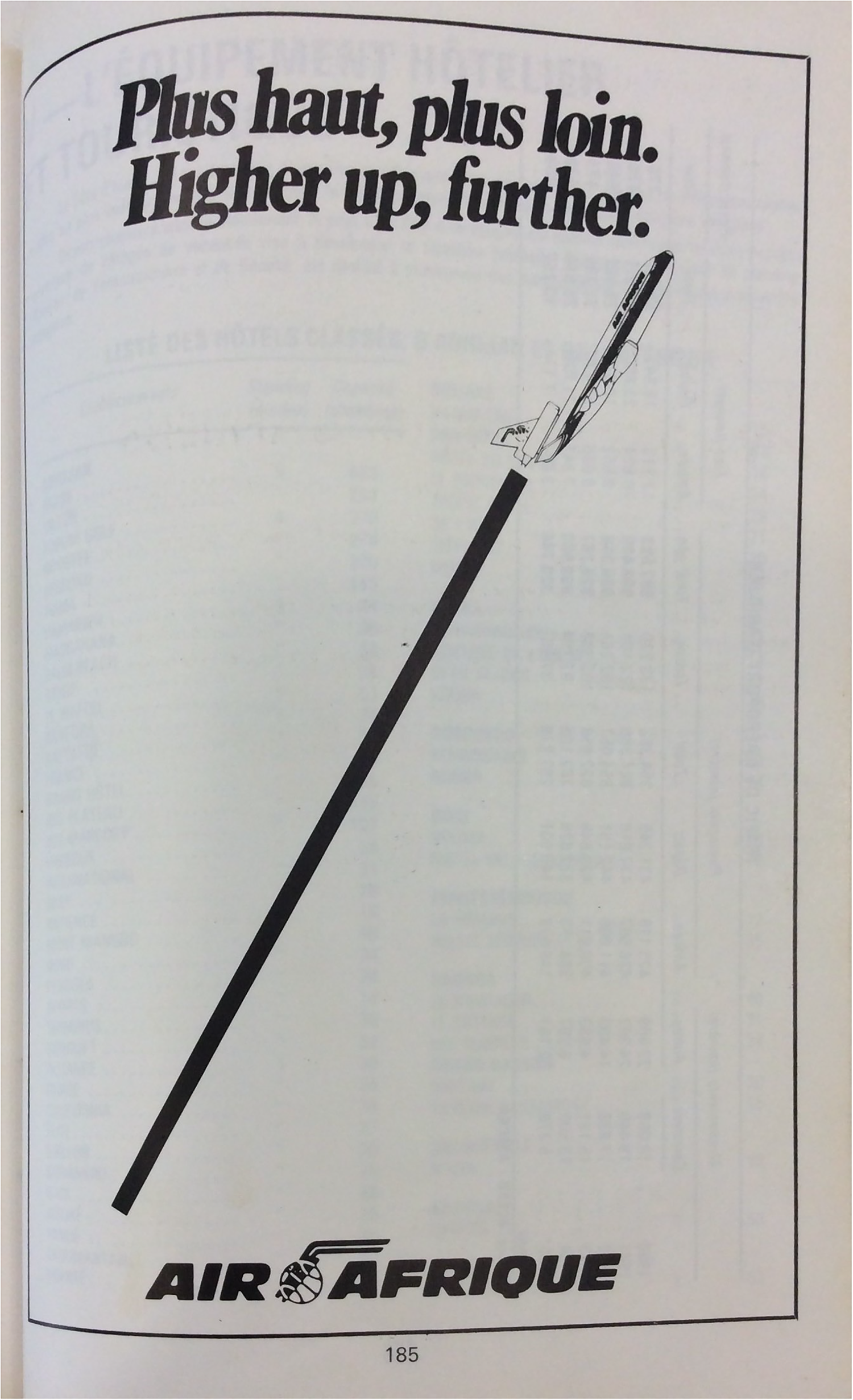
Higher up, further.
Although many advertisements followed this strategy of presenting a new and equal Africa, many of the airline's specifically targeted European, especially French, tourists, and in this did not divert far from the visual and textual language and tropes of colonial adverts. 27 Exemplary is one Air Afrique advertisement featuring two men observing a rhinoceros in a savanna-like environment, suggesting the proximity to wildlife that a journey with Air Afrique could offer. The headline, “5 heures après… un face-à-face inoubliable!” (“5 h later… an unforgettable face-to-face!”), 28 emphasises the allure of adventure and accessibility to Africa's natural wonders through Air Afrique's flights. The text below the image invites viewers to imagine the thrill of encountering Africa's majestic animals and enjoying the continent's traditional dishes, promising an exceptional experience with every flight thanks to the newly acquired DC-8 jets. The ad positions Air Afrique not just as an airline, but as a gateway to the unique and memorable experiences available on the African continent – for European tourists.
Ethiopian Airlines played a pivotal role in Ethiopia's national integration and economic growth, while also helping to improve the country's image. Early on, it adopted engaging slogans like “The Wonderland Route” and “The Land of Queen of Sheba” [sic] to attract Western interest in Ethiopia's culture and history. By 1950, the airline began offering package tours along its domestic routes to the international community in Addis Ababa, including diplomats and foreign professionals and their families. Since many of these expatriates had incomes from abroad, this form of domestic tourism was seen as a way to funnel some of that foreign currency into Ethiopia's economy. 29 Consequently, from the 1960s, Ethiopian Airlines’ marketing efforts increasingly focused on the North Atlantic region. While the 720B was not as iconic as the DC-8, the brand name Boeing was used similarly in advertising by Ethiopian Airlines to demonstrate that the airline provided an African travel experience comprised of the superior technology of a US plane and the superior hospitality and service of the African hostesses.
One advertisement for the 720B services features an image of a Boeing 720B jet and a map highlighting the airline's routes from Madrid to several African cities, with Addis Ababa as a hub (see Figure 3). The headline reads: “Now an Ethiopian adventure can begin in Madrid… by jet!” 30 The text promotes Ethiopia's exotic locations, the experience of flying with Ethiopian Airlines and the convenience of starting the journey in European cities such as Madrid, Frankfurt or Athens. It emphasises luxury with phrases like “Imperial Crown” service, suggesting that the airline provides an experience fit for royalty, including gourmet meals and first-class treatment. The ad aims to allure travellers with the promise of an unparalleled travel experience to unique destinations in Africa.
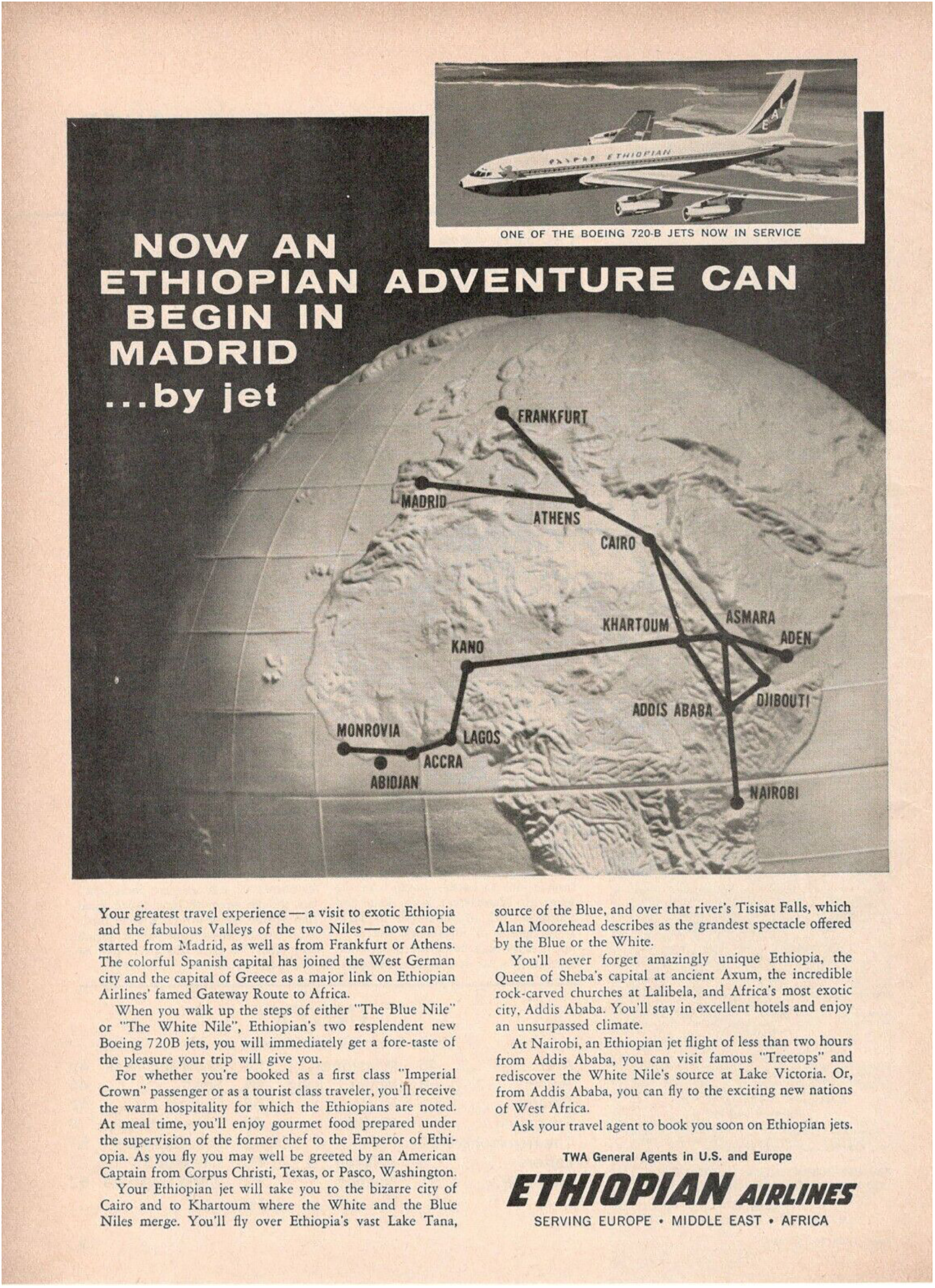
Now an Ethiopian adventure can begin in Madrid… by jet!.
In another ad, the copy encourages the reader to “Take flight” with Ethiopian Airlines to various African cities, promising a romantic journey into history. 31 The advertisement conveys a sense of adventure and exploration, visually and through the text: it features a drawing of an aircraft in flight at the top (see Figure 4). Below is a photograph of the iconic Great Sphinx of Giza, reinforcing the theme of travel to exotic and historically rich destinations. The ad positions Ethiopian Airlines as a conduit to the enchanting and sophisticated wonders of Africa, with a focus on service and performance.
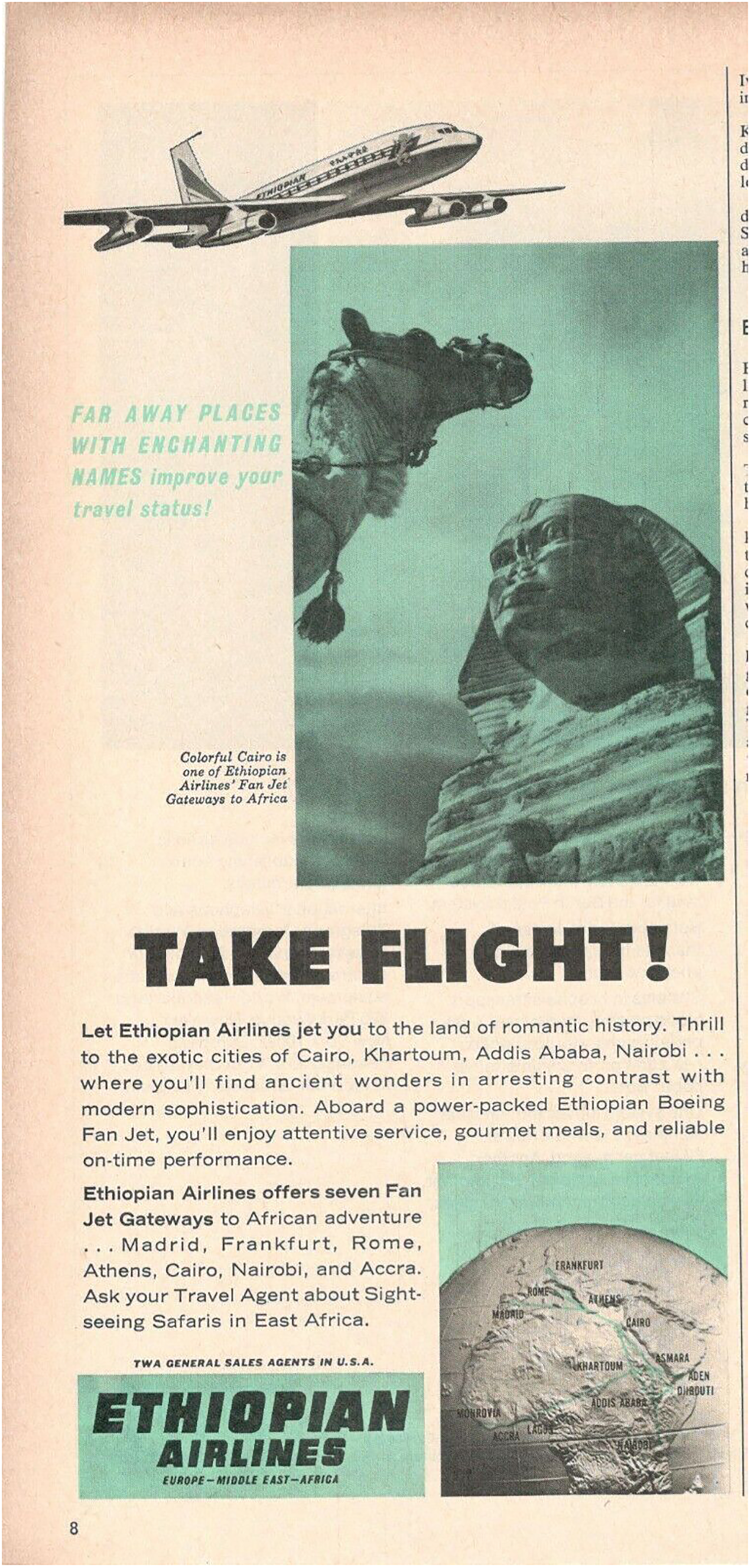
Take flight!.
The advent of air travel significantly shaped the postcolonial geopolitical and social landscape of Africa. As countries approached and gained independence, air travel became a critical conduit for heightened diplomatic and economic activities within Africa and with the world. This period saw an increase in corporate and political travel, predominantly conducted via national carriers of the travellers’ home countries. Among the 50 airlines providing intercontinental connections to Africa, only a third were African. 32 National African airlines thus primarily served high-profile travellers like diplomats and politicians attending numerous continental meetings and conferences, especially after the formation of pivotal institutions like the Organisation of African Unity (OAU) and the United Nations Economic Commission for Africa (UNECA) in Addis Ababa from 1960. 33
Even more representative power lay in those numerous moments when African heads of state descended the stairs of their planes onto the tarmac of the new airport in Addis Ababa for the many congresses and meetings from 1962 that led to the foundation of the OAU. For important meetings, Haile Selassie and his entourage spent entire days at the airport, tirelessly and personally greeting every arriving head of state. 34 In Nelson Mandela's autobiography, he recounts a pivotal moment during his 1962 trip from Ghana to Ethiopia as a representative of the African National Congress (an organisation, then illegal in South Africa, fighting against apartheid), on a mission to garner support from the pan-African summit. As he boarded the Ethiopian Airlines flight, Mandela was confronted with a stirring symbol of emancipation: a black pilot commanding the aircraft, the first he had ever seen. He remembers this encounter, a stark deviation from the oppressive norms of South Africa, as not just a personal revelation but a testament to the rising tide of African sovereignty. For him, it was a vivid embodiment of the era's liberation struggle, illustrating that Africans were reclaiming their narrative, mastering domains once unjustly reserved for whites and steering the continent towards freedom and solidarity. 35
Mandela's view on the symbolic power of flying sovereignty and black pilots resonated with the image that both the airlines discussed here heavily advertised and communicated. Air Afrique's DC-8 campaign also featured a poster depicting an abstract painting of an elephant and the slogan “Air Afrique unit l’Afrique par jet DC-8” (“Air Afrique unites Africa by DC-8 jet”). Ethiopian Airlines’ first corporate history was published in 1984 with the title “Bringing Africa Together”. The acquisition of jet aircraft by African airlines was not merely a matter of upgrading their fleets; it symbolised the emergence of a new paradigm in the geopolitical and cultural landscapes of the time. These jets were emblematic of a shift away from dependency on former colonial powers like France, signalling the advent of an era where African nations engaged directly with the global community on their own terms. Planes served as powerful vehicles to showcase successful postcolonial nation-building. TU-TCA served routes to France and other European destinations and was deployed on the first transatlantic flights to New York, carrying the flag of the newly independent francophone nations of West Africa around the world. 36 The 720B enabled Ethiopian Airlines to fly directly to several African and European destinations, as well as to India and the Middle East. 37
For both airlines, the introduction of jet services also played a pivotal role in knitting together the fabric of African societies with the expansive Islamic world. This usefulness of these aircraft was particularly pronounced in the transformation of the Hajj pilgrimage experience for West Africans. Prior to the introduction of jets, the arduous journey to Mecca in Saudi Arabia, the holiest site in Islam, was a formidable endeavour. The advent of jet travel, with its ability to cover the vast distance between West Africa and Jeddah – the gateway to Mecca – redefined this pilgrimage, enabling a far greater number of pilgrims to undertake the spiritual journey with ease and speed. 38 Both Air Afrique and Ethiopian Airlines not only operated their own flights to Mecca but also, during the peak season of Hajj, occasionally leased their jets to the Saudi Arabian carrier Saudia. 39 This collaboration underscored a burgeoning partnership beyond mere commercial interests, fostering a sense of unity and shared purpose across continents. Despite the clear lack of profitability from these routes, Air Afrique persisted in maintaining the service. 40 This decision underlines the recognition of the Hajj's profound significance within West African societies during the 1960s and 1970s, as well as the strategic importance of nurturing a sense of solidarity among the nations of the Global South. 41 The operation of these flights was not just a business venture but a political statement, an affirmation of identity and support for the Islamic faith among West African nations, and a testimony to their commitment to fostering interconnectedness in a rapidly globalising world.
Planes as diplomatic tools in the Cold War
Historically, the establishment of most African national flag carriers occurred during the colonial era, primarily to serve the ruling powers. The international aviation routes, along with the foundational infrastructure such as airports and aircraft, were predominantly designed to connect the colonies with their European metropoles along South–North trajectories, thereby serving the colonial agenda of commodity export. Upon attaining independence, African countries were confronted with the task of crafting and managing an autonomous air transportation network – a task made more difficult by a pronounced deficit in both technical acumen and financial assets. 42
Of those challenges, the biggest obstacle to the aerial independence aspired to by postcolonial African nations was the capital-intensive nature of air transport. Setting up and running airports and maintenance facilities were beyond the means of African governments in the 1960s. Either pre-existing colonial facilities were used to reduce the necessary up-front investment or governments had to turn to foreign sources of financing, especially development loans from the West and the East, from governments or state airlines of aeronautically established countries. As for planes, many African airlines owned some older models suitable for serving domestic travel, but these machines themselves were “gifts” from departing colonial governments. 43 For long-distance travel to Europe, the US, the USSR and Asia, most airlines had so-called “blocked-space agreements” with the national carriers of these countries, meaning they rented a certain number of seats on their flights, a predecessor to the code-sharing model. Among the new African airlines, Ethiopian Airlines and Air Afrique stood out because they were the first that were able to secure loans to purchase not just smaller planes, but long-distance jets, which had begun to revolutionise the air transport market since the late 1950s. 44
The most striking commonality for both plane types analysed in this paper is their source of financing, which was arranged through the US Export–Import Bank (EXIM) in both cases. To understand the dimensions of these deals, it is helpful to compare the purchase price of the jets presented here: US$9.375 million for the DC-8 and US$15.2 million for the Boeing 720B. 45 The US had very attractive and competitive conditions for financing, meaning a US plane came with an offer to arrange and guarantee a loan with US banks through the EXIM Bank for up to 80 per cent of the costs. In 1963, for example, the bank covered financing guarantees for jet sales of US$59 million to Air Afrique and the airlines of Japan, Spain, Venezuela and Finland. 46 This often included not only the plane but also spare parts and maintenance equipment. It did, however, come with strict conditions, among them that no non-US airplanes could be purchased during the lifetime of the loan. 47
For Air Afrique, acquiring its first jet aircraft was not merely a transaction but a statement of autonomy, economic liberation and African ingenuity. The decision to purchase two Douglas DC-8 planes in December 1962 was underpinned by the airline's ambition to manifest its “seriousness and dynamism”, as articulated by Air Afrique's President Director General Cheikh Fal in his correspondence with the French Minister of Transport. 48 This move towards ownership over leasing or chartering was strategic, aiming to establish independence from France, enhance bargaining power in international air traffic rights negotiations, and reduce the drain of African economic value to French partners.
The financial strategy employed by Air Afrique to facilitate this procurement was characterised by leveraging loans from US banks, supplier loans from Douglas and parts manufacturers, and implicit loans, through favourable payment terms that allowed Air Afrique to delay interest payments and capital repayments well into the future. While this underscored the reliance on Western financial mechanisms to achieve African entrepreneurial goals, it also shows that the newly independent governments were able to utilise the political and market competition between Western governments, most notably the US and France. The purchase represented an economic paradox; while the jets’ price tag symbolised a bold overreach, it was also a calculated risk to spur growth and self-reliance. The acquisition was driven by a robust business case predicated on the belief that the new jets would not only enhance the company's reputation but would also generate sufficient profits to amortise the loans swiftly, thereby validating the pan-African mission of self-sustaining development. 49
In the early 1960s, Ethiopian Airlines navigated a complex web of financial, technical and geopolitical factors in its pioneering decision to acquire its first jet aircraft. John B. Spencer, an American who served as a close advisor to the emperor from the 1930s to the 1950s, undertook preliminary research and negotiations with several airplane and engine manufacturers, as well as with financing institutions in the UK, France and the US. He also explored, but quickly discarded, Soviet capacities, as any Soviet financing would only cover Soviet equipment. Central to his reasoning for the decision-making process were financial considerations. Generally, jets were financed by combining loan credit from the manufacturers and loans from banks, with an all-in loan to cover the remaining costs, as even a down payment of 10 or 20 per cent, which was a standard requirement by banks and manufacturers, could not be provided by the Ethiopian government. The EXIM Bank emerged as a critical financier due to its willingness to cover a substantial portion of the purchase price, a facility previously used by the Ethiopian government for airport extensions, demonstrating their preference for American financing over Soviet, German, French or British alternatives. The preference for US financing was reinforced by the fact that a loan from US banks, public or private, would allow Ethiopian Airlines to exert pressure on Boeing to extend their terms. International lending institutions such as the International Bank for Reconstruction and Development were not considered sufficiently flexible, fast or feasible by Spencer. 50
In the political context of the Cold War and imperial competition, the US government and the Soviet Union, as well as the United Kingdom and France, fought for dominance over global air routes and the market for civil aircraft. The Chicago Convention on International Civil Aviation was based on the premise that colonial powers could leverage their territories for aviation bargaining. However, the postcolonial era of the 1960s introduced complexity for long-haul flights requiring overflight agreements with numerous countries. This led to a proliferation of bilateral negotiations and agreements during the Cold War, further complicated by geopolitical tensions. 51
The United States had already unabashedly taken a leadership role in shaping the set-up of international civil aviation within the organisational settings of the International Civil Aviation Organization (ICAO) in the early years after World War II; the US and Soviet governments in particular utilised airlines and airplane manufacturers to secure their strategic interests through building up a global, modernised air transport infrastructure. 52 This concerned the establishment of routes as well as the sale of aircraft. US airlines provided management assistance to foster commercial aviation in developing countries, and US plane manufacturers like Boeing and Douglas offered planes with highly attractive funding packages through loans from the EXIM Bank. 53
An important part of Soviet aviation diplomacy was to expand air transport to the non-aligned African and Asian countries through Aeroflot and Czechoslovak Airlines (CSA) and to contribute to the building of the aviation sector in a number of African countries. With the arrival of the first Soviet-built jet airliners, the Tupolev 104 in 1956 and the Ilyushin IL-18 in 1959, Aeroflot and CSA started operating international long-distance routes and devised plans to establish economic relationships with developing countries, especially those in the process of gaining independence from colonial rule, in order to gain a foothold in these countries before the US. 54 Eventually, the US won the upper hand in this competition, and the majority of African airlines were equipped with Boeing and Douglas planes.
Planes as assets in a volatile business
After discussing the symbolic and diplomatic roles that the four jets played in the 1960s, I would like to look at their role as critical business assets for the airlines, enabling expansion, adaption, resilience and staying competitive in a highly volatile industry and market. The corporate archives show that both airlines conducted extensive research and calculations beyond political concerns or attractive financing offers in their decision-making process that led to a preference for the model and type of plane ultimately purchased.
For Air Afrique it was important that the decision was a direct challenge to the status quo of economic exploitation; by chartering French aircraft, Air Afrique was inadvertently funding French airlines’ fleet expansions. Owning its own aircraft was thus a move to reclaim economic value and utilise African assets judiciously. Beyond the financial and operational rationale, this procurement decision was laden with political and ideological significance. It affirmed Air Afrique's role as a pan-African venture, aimed at asserting African sovereignty in the aviation industry and rebalancing an erstwhile disproportionate cooperation with French interests. Through this strategic aircraft procurement, Air Afrique deftly intertwined its business objectives with the broader aspirations of West African nations for economic independence and regional empowerment. 55
From an operational viewpoint, the DC-8 was the plane that offered the most versatility in terms of Air Afrique's business plans: it allowed for easy conversion from a cargo to a passenger version, and even for a mixed transport of cargo and passengers, and offered the potential to enlarge the cargo network as well as serving the planned route expansion to New York. Since Air Afrique made up to 50 per cent of their profits from cargo, this was paramount for a robust business case justifying the expense of jet acquisition. 56
For EAL, technical evaluations also played a crucial role. Aircraft like the Boeing 720B were preferred over the Convair 600/880 and other models due to their suitability for the Ethiopian high-altitude climate, runway compatibility and superior cargo capacity. The 720B was not only seen as operationally advantageous but also as a vehicle for future growth and competitiveness. Furthermore, the management's recommendation of Boeing was influenced by the technical assistance provided by TWA, an existing American partner, underscoring the influence of strategic partnerships on the decision. 57
Moreover, the documents reflect a nuanced interplay between the necessity for modernisation, the practicality of aircraft performance and national prestige. The Ethiopian management's alignment with Boeing was indicative of a broader vision that intertwined the airline's growth with the nation's image. While financial pragmatism and technical suitability were the primary drivers, the underlying current of enhancing national prestige through association with jet technology cannot be overlooked. This multifaceted decision-making process ultimately set the stage for Ethiopian Airlines to become a standard-bearer in African aviation, as evidenced by the later celebration of its jet acquisitions as symbols of national progress. 58
Planes underwent commoditisation during the jet age that started in the late 1950s. Initially a state-funded military activity, plane manufacturing shifted towards market-driven entrepreneurial efforts. 59 Two key factors contributed to this transformation: first, the dramatic rise in passenger capacity made air travel more affordable, leading to a sharp increase in passenger miles. Second, advancements in engine technology improved speed, efficiency, and power, which extended travel distances, reduced costs, and travel time, and decreased the need for stopovers.
In response to this growth, governments expanded national airline fleets, and private charter airlines introduced a new level of competitive dynamics to the global air transport market. 60 Standardisation of aircraft models and parts, especially by manufacturers like Boeing and Airbus, simplified maintenance and fleet management, further commoditising planes by making them more interchangeable and tradable. This shift towards operational efficiency and cost-effectiveness over unique design features typified their status as commodities.
The jet age also spurred technological innovations that altered the economics of air transport. The introduction of jet engines significantly reduced operational costs, increased the frequency of flights, and shortened aircraft lifespans. Rapid advancements in technology necessitated continual fleet upgrades, focusing competition on comfort, convenience, and speed rather than fares due to regulatory constraints. 61 As a result, airlines prioritised route expansion and fleet modernisation, making market research and forecasting essential for maintaining competitive operations. 62
Owning planes and operating maintenance and overhaul facilities afforded Air Afrique and Ethiopian Airlines a key advantage in terms of resilience and ability to adapt, because through providing services and leasing planes to other airlines, they were able to create additional revenue. Only a year after its inauguration, TU-TCB was leased to the French airline Union de Transports Aériens (UTA) in 1965, in exchange for the lease of a slightly older model of the DC-8, a DC-8-30. UTA needed a DC-8 to serve its Pacific routes, which the DC-8-33 was not equipped for. It was, however, suitable to fly the inter-African and Africa–Europe routes, for which Air Afrique mainly needed the long-distance jets. 63 Arguably, this undermined the sovereignty aspect for Air Afrique and influenced future plane purchases, where the management argued more decisively for buying American rather than French planes. At this point, TU-TCB received a new registration number, F-BJCB, and was re-baptised with the name “Charlie Bravo”. For three years, the plane served on UTA's routes in the Asia-Pacific region, until 1968. It then re-joined Air Afrique, and with its companion TU-TCA continued flying passengers to and from New York and pilgrims to and from Mecca. 64
The first Ethiopian-owned jets, the two Boeing 720Bs with registrations ET-AAG′ and ET-AAH′, never actually flew under the flag of Ethopian Airlines. The initial purchase of these planes was concluded in 1961, but negotiating the acquisition of the planes went much faster than expected. Therefore the expansion of the terminal building and the airfield in Addis Ababa, to make the airport large enough for the jets to land, had yet to be finished by the time they were ready to be delivered. They were sold to the Saudi Arabian airline Saudia in the same year, and a new order was made for delivery in 1962. Both planes were leased to Middle East Airlines in 1966.
The business models of Ethiopian Airlines and Air Afrique, which were predicated on the anticipated expansion of their capacity and network, placed jets at the heart of their corporate strategy. By assuming a leading role in the regional market, they aimed to make airline economics viable. This involved innovative practices such as aircraft leasing and establishing robust maintenance operations, thereby optimising operational efficiencies and enhancing their competitive edge in the aviation industry.
Conclusion: loose ends and future avenues of research
We set out to explore jet biographies in order to unpack some of the complexities of postcolonial air transport in Africa; our findings show that jets were stages for new nations and for modernity, as diplomatic and economic tools and business assets. But what happened to our jets at the ends of their lives? The retirement of Air Afrique's first jets happened after they had been in service for more than 20 years. In 1983, TU-TCB / F-BJCB was retired and then purchased by a Dutch entrepreneur, disassembled and then transported by boat and road to the site of the Leeghwaterpark leisure centre in Purmerend, Netherlands. There, it was re-fitted as a pancake restaurant, which was abandoned in the mid-1990s. It then fell victim to vandalism and was eventually destroyed in a fire and scrapped in 2000. In 1985, TU-TCA was sold to the French company Minerve, based in Nîmes, where it was dismantled and used for spare parts. 65
In January 1968, on a flight from Kano via Lagos to Beirut, ET-AAG′′ had an accident during landing. 66 The plane was destroyed and written off after the incident. 67 ET-AAH′′ was returned to Ethiopian Airlines in 1968 and was eventually sold back to Boeing in 1987. It was last spotted in the Marana Pinal Airpark in Arizona, one of the world's biggest sites for aircraft storage, maintenance and scrapping since the dry climate of the Sonoran Desert provides ideal conditions for long-term conservation. 68
My hope was that if we could follow planes from the moment of purchase to their manufacture and delivery, their many years of service in different airlines with changing passengers and cargo, the routes flown, evolving maintenance and security protocols, all the way to their scrapping, we could disentangle the complex layers of technological and political regulation on the one hand, and the many actors and actions involved to get a plane off the ground on the other. In this way, we could foreground different actors, networks and relations that go beyond the well-trodden narratives of technology-centred aviation history that still dominate much of the literature. Much as a teleological, grand-narrative story seems unsuitable for writing the history of modernity, there is not one general global story of aviation, planes and air transport in the twentieth century or the postcolonial period. Or to put it differently: if modernity needs to be studied critically in a postcolonial context, so does aviation, and especially planes, as one of the key symbols of technological modernity and progress. Rather than being a linear story, the jet age is comprised of many specific accounts of particular events, places, objects and people – and it was inevitably shaped by ideas and imagined forms contained in these stories.
In concluding this exploration into the acquisition of jet aircraft by African airlines, I recognise that the concept of object biographies is traditionally rooted in anthropological studies, focused on mundane and often overlooked objects, and its application to the biography of a passenger plane is not without its challenges. A passenger jet is a complex assemblage, subject to numerous maintenance and transformation cycles throughout its life. Yet it is precisely this complexity that offers a rich tapestry for historical inquiry. By extending the concept of object biographies to include such dynamic assembled machines, we open a pathway to unearthing the nuanced narratives of technological progress. Future research, delving deeper than the scope of this paper, holds the potential to illuminate the unexplored corridors of aviation history. It could offer new insights into the experiences of those who lived and worked in the shadows of airfields, the paths of social mobility carved out by cabin and ground crew roles, and the cultural significance of jets as a platform for Africans stepping onto the global stage and for non-Africans encountering the continent afresh. The potential for future research is vast. These avenues open the door to a broader understanding of the impact of aviation beyond the mechanics of flight, shedding light on the human dimensions of African aviation history. By giving voice to these less recorded and less prominent narratives, we would construct a more comprehensive account of how jets have not just moved people across continents but have also been instrumental in the socio-economic transformation and global integration of Africa.
Footnotes
Acknowledgements
This article is based on research funded by the German Research Foundation (Deutsche Forschungsgemeinschaft DFG), within the Priority Programme 1859 “Experience & Expectation” (project no. 415981408). I want to thank Lukas Jung who supported me as research assistant, and Jonathan Krautter who worked as a researcher in the project for over a year and did the heavy lifting in terms of retracing the financing schemes. A heartful thanks also goes out to Immo Steckel, Lennart O. Carls and Leon Ludloff, all students of the research seminar «Independence in the Air», led by Astrid McDonald at the HU Berlin in the Summer of 2020, who worked with archival material from Ethiopian Airlines that I provided – and brought great insights to my work. I also want to thank Waqar Zaidi and Jonathan Krautter for their helpful and honest feedback as well as their continued patience and encouragement that helped me develop this paper.
Declaration of conflicting interests
The author(s) declared no potential conflicts of interest with respect to the research, authorship, and/or publication of this article.
Funding
The author(s) disclosed receipt of the following financial support for the research, authorship, and/or publication of this article: This work was supported by the Deutsche Forschungsgemeinschaft, (grant number 415981408)
