



Abstract
This paper sheds light on a West African technological landscape of the early twentieth century that transcended the boundaries of various West African population groups and natural environments. The conceptual framework of technological landscape employed in this study serves to explore the everyday spaces and details of trade and transport activities of merchants from Northern Nigeria, as well as the engagement of forest dwellers in Côte d’Ivoire in the trade of gold and other natural resources they cultivated, harvested and produced in the forest. Building on archival materials from Nigeria and Côte d’Ivoire, the paper considers various historical actors who have often been neglected in history of technology narratives but who are certainly relevant in West African (transport) history.
Keywords
Introduction
In October 1906, H. Lamblin, the French administrator in command of the Cercle des Lagunes, reported to the Governor of Côte d’Ivoire on the impact of a smallpox epidemic that hit Abbey country in 1905 and 1906, leaving numerous villages surrounding the post of Ery-Makouguié stranded. Fleeing from the deadly smallpox outbreak, Abbey communities had abandoned their homes and sought refuge in makeshift camps in the forest. Abbey country was situated in one of the densest evergreen rainforest environments of West Africa, if not of the continent. The Abbey not only built and moved to these temporary settlements, but they also went into isolation to avoid other Abbey communities as well as external traders and travellers. As protection from smallpox infections, they physically blocked the access to these camps. Lamblin described how they even cut down large trees to block the forest paths between village communities. Only the most important ones serving the plantations in the forest were kept clear for regular use. All other paths through the undergrowth were either not maintained and cleared of vegetation or were actively blocked to obstruct the regular, free circulation of goods and people. 1
This example hints at the importance of a sophisticated forest path system that existed in southern Côte d’Ivoire at the beginning of the twentieth century, a fact that is often overlooked in narratives of the history of technology and the history of transportation. Africanists for example have dealt to a large degree with mechanized forms of transport in African historical settings, most notably with different narratives of motor-vehicles. 2 Although these sophisticated studies are crucial for an understanding of complex histories of transport and mobility of people on the continent, they still mostly deal with historical change in the first place and seldom deal with historical continuities and technological co-existence. While these studies are often biased toward mechanised transportation (railroads, cars, lorries, etc.) and transport networks such as roads or railways, we show that the history of transport (technology) must include more than these mechanised forms and these presumably obvious networks. 3 The network of paths had existed throughout West Africa long before the arrival of French colonialists and traders and they remained an important infrastructure in the everyday life of the forest until the beginning of/mid-twentieth century. They were important contact routes to either neighbouring communities and population groups, like for instance the gold and gunpowder-trading Akyés, or served as entry points for traders and hunters into the dense undergrowth vegetation of Abbey country. Although these contact and trading routes were expanded by railway and road networks under French colonial rule in the first half of the twentieth century, they still remained important in the inner-forest trade and everyday mobility of people. As will become apparent in this paper, such networks of (forest) paths also played a crucial role in everyday transport and trade in Northern Nigeria.
Our main intention in this paper is to move away from such bias, focusing rather on the neglected forms of transport, especially in the Global South and in colonial African settings. Based on empirical cases in Northern Nigeria and Southern Côte d’Ivoire, we will explore the continued importance of human porterage, footpaths, pack animals and waterways for various forms of transportation in West Africa. The empirical part of this paper is structured into two sections: The first highlights a history of human porterage and donkey transportation in Northern Nigeria. The second section elaborates on the importance of waterways and forest corridors in the southern Ivorian rainforest, primarily for the transport of wood resources and the gold trade.
Rather than adopting a large technical system perspective, which has become common within the history of technology, we have employed the concept of “technological landscape”, which was originally introduced by the Swedish historian of technology, Svante Lindqvist. 4 We develop his idea further to highlight the complex nature of transportation and trade both in the pre-colonial and colonial phases in West Africa. When looking at these two phases, we aim at highlighting the continuities and changes in human and nonhuman transport in the region. Leaning on Lindqvist's initial thoughts as well as Francesca Bray's further development of the concept, we provide a detailed narrative of a complex transregional technological landscape of human and animal transport and trade. One of Lindqvist's central arguments is the need to abandon the West's obsession with (historical) change, so as to produce other historical narratives than those of technological innovation, always centred on the presumably new at the forefront. Lindvist states that these narratives generally have not attached enough importance to the either slowly changing or continuous things in the background. 5 In our case, for example, this could refer to the long-established network of forest paths or the age-old existence of donkeys as important actors in trade across West Africa. 6 Francesca Bray built on Lindqvist's initial thoughts and defined a technological landscape as “the repertoire and distribution of skilled material practices and technical artefacts that a society draws upon to function”. 7 The history of transport and trade in West Africa opens the opportunity to understand transport practices and trade networks as part of a wider technological landscape. They comprise the material and non-material repertoire of everyday transport practices that West African societies and nations relied on to function and maintain their economic trading activities. In contrast to Bray, we do not only include material practices and artefacts in this examination, but rather consider the natural environment of different ecosystems and various geographical spaces as an integral part of the repertoire a society needs to function. As noted above, a bias toward high-tech artefacts or networks can be problematic, so maybe the term “technology” is part of that problem. El Hariry and colleagues suggest changing the study of technology into the study of material culture instead, as this approach enables us to “take the multiple worlds of materiality at face value”. 8 Based on Francesca Bray's thoughts regarding “technological landscape” and “technological culture”, they argue that “[a] history of material culture in West Africa would not prioritize railroads, automobiles, and trucks, but investigate the social and economic importance of footpaths and porters, pack animals and packing techniques, as well”. 9
This paper intends to shed light on a West African technological landscape that transcended the boundaries of various West African population groups and natural environments. It discusses the trade and transport activities of merchants from Northern Nigeria, as well as the engagement of forest dwellers in Côte d’Ivoire in the trade of gold and other natural resources they cultivated, harvested, and produced in the forest. At the same time, this West African technological landscape of transport and trade considers the strong connections between material culture and the natural environments of the humid evergreen rainforest in southern Côte d’Ivoire and the savannah and desert settings in and around Northern Nigeria. Thus, the transportation networks we will discuss always combine natural and material elements. As our case studies show, if we want to comprehend everyday transport and trading activities, we need to retrace what it meant to move through these two natural environments.
The conceptual framework of technological landscape employed in this study serves to explore the everyday spaces and details of trade and transport activities in West Africa. This includes trading sites such as marketplaces, train stations, (trading) towns, or improvised gold trading sites, as well as artefacts like transport containers specifically produced for the preservation of kola nuts or the Akyés’ gold book, which was used to transport gold dust from riverbeds. The paper agrees with Mikael Hård that the described landscape by no means came into existence with the advent of Western technologies introduced by European colonial powers. 10 To the contrary, it existed prior to the introduction of railroads and telegraph lines and, as this paper shows, even continued to exist. Consequently, this paper extends beyond histories of colonial trade developments and colonial transportation systems such as railway lines or telegraph networks.
Building on archival materials from Nigeria and Côte d’Ivoire, our examination considers various historical actors who have often been neglected in history of technology narratives but who are most certainly relevant in West African (transport) history. Furthermore, donkeys and rivers were at least as relevant for a functioning transport network as people were as carriers for the transport of goods. The primary sources stem from three different main archives in Northern Nigeria and Southern Côte d’Ivoire: The Kano Province Archive (KANPROF), the National Archive Kaduna (NAK) and the National Archive of Côte d’Ivoire (Archives Nationales de la Côte d’Ivoire, ANCI). Although these sources are often the written records of European colonial administrations, a dedicated examination and a reading between the lines nevertheless makes it possible to identify hitherto neglected historical actors and everyday practices. 11 Other sections rely on traveller accounts and secondary sources meaning a balanced mix of source material as the basis for this article.
As this paper will conclude, one important underlying dimension of the West African technological landscape of transport was the interplay and the interrelationships between people, animals, nature and technology in space and time. Rivers and waterways were an integral part of the two natural environments and thus of importance for traders, sellers, buyers and producers of goods. Canoes, wagons, transport containers and animals alike were the technological pre-requisite for transport and trade in West Africa. Traders, farmers, blacksmiths, weavers and animal breeders left their mark on the natural environment they lived in and used technology in specific ways. We therefore show that people, animals, nature and technology were involved in reciprocal relationships across historical phases and geographical spaces in West Africa.
Human porterage, animal transportation and footpaths in Northern Nigeria
When we turn our attention to those who ultimately made trade between people from different regions possible by carrying trade goods, we delve into a complex world of transport as well as local and regional everyday trading activities. Examining the modes of transport gives insights into such everyday realities and helps us reconstruct how people, goods and animals were transported and moved across West Africa. This section therefore explores the role of human porterage and footpaths for trading activities in, from and to Northern Nigeria. The earliest means of transport are human beings themselves. They walked on foot, from place to place and to distant lands. They used their hands, arms, heads, shoulders or backs to carry their loads. 12 Due to the importance of human porterage as a tool for many centuries, in his seminal work on transportation in the pre-industrial economy of Northern Nigeria, Ogunremi states that “the majority of the people used their heads or back to carry loads which they could not carry by hand” 13 (Map 1).
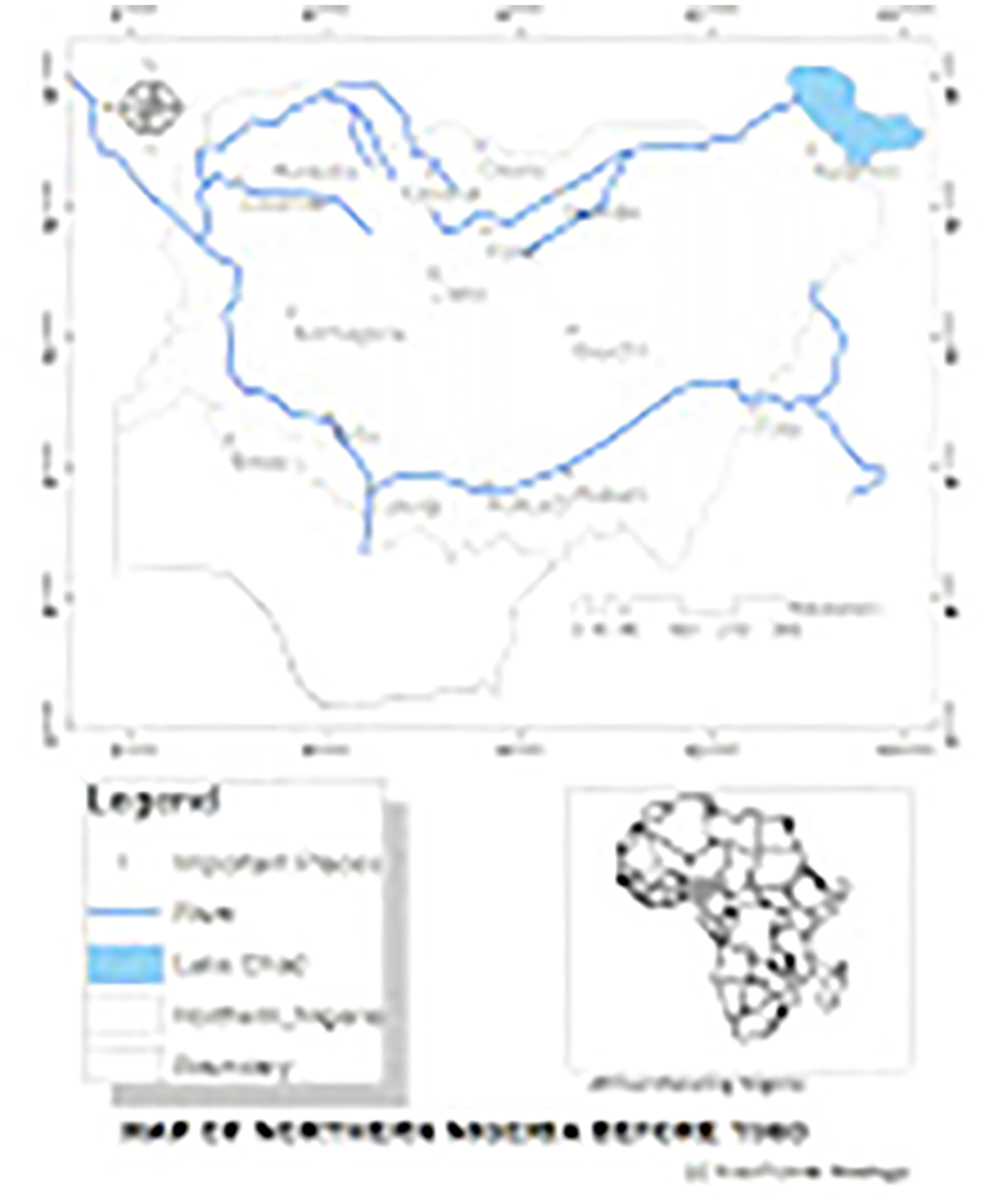
Overview map of Northern Nigeria. Copyright: Yusuf Madugu.
Bush tracks provided the major links between towns and villages in the interior of Northern Nigeria, as well as to neighbouring regions. They became increasingly important to the local traders, who were becoming enthusiastic about exchanging local produce for both domestic and foreign manufactures. 14 In this system, a trader would hire a few strong men, the number varying according to the volume of the loads they would carry and their carrying capacity. 15 For each type of product, there were special containers like leather bags, pots and baskets for head carriage. Calabashes, pots and leather bags were suitable for liquids such as palm oil and groundnut oil, whilst baskets were used for yam, potato, cassava and other products. Special cages were constructed to transport fowl, pigeon and other birds.
The Hausa caravan traders (fatake) relied greatly on their porters to carry their personal belongings and trade goods from one place to another. 16 Women and children were also employed as carriers but were usually made to operate along shorter routes. 17 Ogunremi notes that, “in 1826, when Hugh Clapperton was passing through Borguland to Hausaland, he noted that Nupe women hired themselves as porters as far as Kiama in Borguland”. This was the reason why Ogunremi concludes that the existence of hired porters is also an indication that people saw nothing derogatory in head carriage but that it was rather established everyday work.
Also, the hardship and hazardous nature of human porterage caused physical ailments such as stiff necks, chest pains, backaches, foot pains, balding, wrinkled heads, eye ailments and so on, porters tended to receive higher wages than average unskilled labourers. For example, in the mid-nineteenth century, porters received 1200 cowries per day, while ordinary labourers were paid 400 cowries per day. 18 In 1890, Charles Henry Robinson, a nineteenth-century British traveller, had to pay 1500 cowries per day per porter between Lokoja and Kano, which was equivalent to 9d (penny). Also, from Keffi to Zaria, Robinson paid each porter 20,000 cowries plus a food ration of 300 cowries. 19
It was reported that human porterage (dako in Hausa language) was one of the most important methods of transportation in nineteenth-century Northern Nigeria. Dan Asabe argues that “the methods became more popular and more important with the expansion of long-distance trade especially after the establishment of the Sokoto caliphate with headquarters at Sokoto at the beginning of the nineteenth century when movement of goods and services throughout the caliphate and beyond became more possible and safe”. 20 Similarly, due to the nature of the land topography which is mostly flat land of the northern Guinea savannah and Sudan savannah vegetation with open bush land, shorter grasses and scattered trees, favoured the use of human porterage alongside pack animals which were involved in the production and distribution of foodstuffs, kola, natron, leather articles, manure, pots, cotton, textiles, salt and ivory. 21 These items were transported to market places near and far. 22
It was common for professional porters to hold travellers to ransom by refusing to proceed further unless their pay was increased. Robinson, who dealt with 51 carriers at a time, complained that: as in other parts of the continent, so here, the one unceasing trouble is the management of the native carriers. It is indeed almost impossible for anyone who has not had personal dealings with African porters to realize the worries and vexations which their employment involved.
23
Despite the availability of pack animals in areas of the north such as Kano, during the colonial period, the colonial government made extensive use of professional porters. Their activities en route reached a point that Lugard, the colonial administrator at the time, remarked: I think means should be found to prohibit the use of carriers, whose thieving and looting propensities do incalculable harm, and cause bitter discontent and resentment among the villagers on the routes they traverse.
24
It should be noted that towards the end of the nineteenth century, professional human porterage as an important means of transportation had begun to decline mainly because there were alternative jobs such as the construction of the railways which not only absorbed more labour but also offered regular and higher remuneration. 25 Nevertheless, human porterage continued to feature prominently during the colonial and post-colonial periods. For instance, when the railway line reached Kano in 1911 and officially opened for traffic in 1912, there were not enough roads and motor vehicles to sustain it properly, hence, pack animals and human porterage were used to transport raw materials such as cotton and groundnuts from production centres to collection centres and to the rail stations from where they were finally transported to the coast. Andreas Greiner similarly shows that caravan trade and human porterage in German East Africa continued to exist despite the fact that the German colonial administration tried to ban caravan trade. 26 Just as in other colonial contexts such as in Northern Nigeria and Southern Côte d’Ivoire, the continued existence of human porterage shows that the colonisation of transport and mobility was often not as successful as initially intended.
In the post-colonial period, since there was less long-distance trade by foot because of the availability of mechanical transportation systems such as trains and motor vehicles, what was required of human porterage in the transport economy was to load and unload goods on railway wagons and motor vehicles. 27 This example illustrates exactly what Svante Lindqvist intended with the idea of technological landscape. It scrutinises the co-existence of various technologies and stresses that despite the introduction of railway and motor transportation, people remained important as carriers and shippers in one way or another. This is highly relevant as it shows that innovations and “new” technologies were not the only drivers of historical change but that old and long-established ones were at least as important in such processes. Often, a reciprocal relationship between these two “categories” existed, proving that reflection on the opposing simplistic dichotomies of new and old is too short-sighted.
Although the importance of human porterage in West Africa cannot be downplayed, a history of the technological landscape of trade and transport in West Africa must certainly also consider the importance of pack animals. Camels, mules, horses, oxen, bullocks and donkeys were widely used as age-old, long-established means of transport in the pre-industrial and modern economy of Northern Nigeria. The latter, the donkey, is the oldest, the commonest and the most reliable mode of transport because of its adaptation to the natural environment, easy breeding, easy maintenance and its strength. 28
Donkeys could be used to carry almost everything and could also be mounted. The products were packed in special leather or mat panniers designed to give double bags (Mangala in Hausa language). They were placed across the donkey and kept in position by the weight of the load on each side. 29 In this case no tying was necessary. They travelled with the kola nut traders as far south-west as Gonja (in Ghana), an important kola nut market of the Ashanti. The kola nuts were carried for the most part in Kano-made baskets, each of which contained three to four thousand kolas, while two of them formed a donkey's load. 30 While the camel was not usually employed beyond the terminal entrepôts of the trans-Saharan routes, the donkey not only crossed the Sahara but went beyond these last trading posts further south to Borguland, Nupeland and even as far south as Ilorin. A donkey has the carrying capacity of circa 50 kg of load depending on the size and type. Its ability to travel for 2–3 days without water and to cover about 30 km a day meant it was perfectly adapted to the desert. If not for its lower carrying capacity, the donkey would have been almost as good as the camel in the desert. 31
The importance of donkeys to the Hausa caravan traders was once more highlighted by Barth in 1851, when he witnessed a caravan of two to three hundred donkeys carrying natron from Kano to Nupe. 32 Robinson also noted in 1895 that he and his party got mixed up with a caravan consisting of several hundred donkeys. 33 In 1900, when Richardson was on a Christian missionary tour of the North, he saw a caravan which consisted of 677 donkeys travelling towards Kano. 34 Even though what they were carrying was not clearly stated, there must have been many of these large caravans. But there were also numerous small groups using them for local trade numbering ten to 15, and many farmers used one or two to carry their products to local marketplaces. 35
When the railway reached Kano in 1912, there were no motor roads to feed it properly. Apart from porters, the donkey was the main carrier of the export products to the rail stations. There was therefore a great demand for donkeys. Buyers of local products, whose purchasing power had increased due to the sale of export products at railway stations, bought or hired donkeys at higher prices. The price of donkeys went up from 2 to 5 pounds in the early twentieth century probably because of higher demand from the colonial administration, the Jos tin mines, and greater use by the producers of export products. 36
The branches of trade were at least partly controlled by non-Kanawa (people of Kano). In contrast, the trade to the south, whether of ivory and slaves for the Saharan trade or of kola for local use (and some transit trade), was carried out almost entirely by Kano merchants, and largely paid for with products from the Kano area, cloth in particular. 37 Barth posited that “but we must bear in mind that the greater part of the persons employed in this trade are Kanawa (i.e. southern trade) and that therefore they and their families subsist upon this branch of trade”. 38 Kola from Gonja (ultimately from Ashanti) was an important import into Hausaland, both for local consumption and for re-export. Barth estimated the quantity at 500 donkey-loads a year, amounting to 80 to 100 million carriers worth (some 23,000 pounds), about half of which, he reckoned, was profit. 39 Robinson confirmed that, on one occasion, he met a native caravan consisting of about a thousand men, together with a large number of donkeys, carrying kola nuts up to Kano. 40 Most of the people employed in the trade were Hausa people.
Both Monteil and Robinson claimed that the commercial power of Kano in the nineteenth century stemmed from the kola nut trade. 41 For example, Robinson claimed that the value of the kola nuts in the caravan, which was only one of several that came to Kano annually for the same purpose, was little less than a hundred thousand pounds sterling. Shea concludes that even if one agrees that Kano's wealth at the time was based on the kola nut trade, there is still the need to look for exports from Kano which enabled them to import millions of kola nuts from Gonja, adding furthermore that the most important single export from Kano was cotton cloth. 42
Ivory, slaves, kola and Bilma salt were largely paid for with cloth.
43
In Barth's view: Kano's cloth, and particularly the dyed and beaten cloth, was famous throughout a very large region, extending north to the Mediterranean, throughout the Central and Eastern Sahara, east to Borno, Baghirmi and Wadai, west to Timbuktu and beyond, south-west to Gonja and Kong, south east to Adamawa limited only by the nakedness of the pagan sans-culottes who do not wear clothing.
44
Some of the beaten turban cloth made in Kura were highly regarded on account of the quality of the dying, which placed the Kano industry ahead of all other towns and naturally commanded the highest price. Johnson rightly posited that this and much of the other cloth was made and dyed not in the town of Kano itself, but in the surrounding areas, although Kano was reported to have 2000 dye pits, and no doubt did a considerable amount of dying. 47 Barth estimated the total quantity of Kano cloth exported mid-century at 300 million cowries worth (877,000 pounds) at the very least, about two to three thousand tons a year. As Barth remarked, there was really something grand in this kind of industry. 48
Donkeys were and still are important means of transportation for the economy of Northern Nigeria due to their tremendous contribution to both local and international trade as well as their domestic usage. The role of the donkey and horse in shaping the economy of the North continued to feature prominently during the colonial period and even beyond. Although, unlike donkeys, in West Africa, horses were of significance more for warfare than for transportation. The colonial administration decided in 1942 (war period) that animal transport rates would be fixed at the same rates as motor transport with a view to providing an incentive to animal transport owners. They also wanted to ensure the maximum possible use of animal transport to save petrol, tyres and repair on motor vehicles. Residents were therefore required to use animal transport in their provinces and ensure that motor transport was replaced by animal transport whenever possible. 49
Thus, the donkey was and still is an important aspect of the economy of transportation in Northern Nigeria. This adds to the idea of David Edgerton's book, The Shock of the Old, in which he uses the example of horses during Second World War. 50 Although the war apparatus seemed heavily based on tanks, trucks, and other military machinery, it was mainly horses who enabled Germans to keep supply lines running. The presumably old and out-dated continued to exist, remaining important for everyday transport activities. From the post-colonial period up to the present, donkeys continue to play an important role in transporting goods in and around the inner cities. The cities were traditionally structured into narrow streets such that they could not be accessed by motor vehicles. In the rural areas, donkeys and oxen play a significant role in moving harvested crops either to homes or to markets that operate at regular intervals.
Waterways and forest corridors in Southern Côte d’Ivoire
The first section of this paper has shown that pack animals and people as carriers played important roles in the trade and transport sector of Northern Nigeria. This second part of the paper focuses on the river transport of wood, and then on alluvial gold mining and gold trade in the forest of southern Côte d’Ivoire.
Before diving into these different activities in the forest, we require a rudimentary understanding of the complex ecosystem in which they occurred. The forest of lower Côte d’Ivoire used to be one of the largest, densest humid evergreen rainforests of West Africa, if not of the entire continent. This refers to the forest in the past as it hardly exists today, especially if compared to the late nineteenth and early twentieth century. A growing plantation economy, the expansion of road and rail infrastructure, population growth and a large timber sector have all in one way or another contributed to the widespread destruction of the ecosystem. Deforestation reached a stage where, according to Jean-Claude Arnaud and Gérard Sournia, two-third of the forest was destroyed only between 1956 and 1979. 51 These drastic developments at the transition from colonialism to formal independence were the consequence of woodcutting activities, which were set in motion under French colonial rule. Although developed in a rather anarchic manner in the early years of French occupation, when especially larger, older trees were often cut down without any regulations, stricter rules and laws were passed in later years after 1912. In his doctoral dissertation on the history of forestry exploitation under colonial rule, Kassi Pascal Tano argues that these unregulated early years of woodcutting were ruled by the international timber companies’ focus on large profits as worldwide demand for various wood species from Sub-Saharan Africa grew exponentially. 52
The problem of this vast deforestation by these mentioned external actors was that the forest was not given the needed time to regrow sufficiently. Although it took a comparatively long time for the forest in pre-colonial Côte d’Ivoire to regrow to its original dimension, which indeed did not often happen, it was still possible, if human actors allowed for it, that such forests could regrow substantially becoming a reconstituted secondary forest, which was at least somehow comparable to the primary forest. This meant it did not regain its original density and floral composition but could still compensate for the previous phase of wood harvesting and deforestation.
53
Destruction in such secondary forests was thus often no longer visible. French explorers and travellers in West Africa always expressed how overwhelmed they were by the density of trees and the atmosphere under the canopy of trees: The ground is covered everywhere by a powerful vegetation maintained by frequent rains. From one end of Attié to the other, there is a dense, bushy forest, populated by giant trees and gigantic lianas that reach for the heavens in an inextricable jumble to conquer the air and the light. Only a few clearings, at the location of villages and plantations, tear the dome of greenery and throw a sunny note into this dark and monotonous jumble.
54
Before woodcutting grew into an important pillar of the French colonial economy in Côte d’Ivoire, wood resources had been exploited and used by numerous actors from within and outside the forest of lower Côte d’Ivoire. Several types of wood played different roles in the lives of forest dwellers. First, trees were obviously used locally within the forest. Auguste Chevalier, for example, documented the different usages of the rônier palm tree (Borassus aethiopum) in Ivorian contexts. He attested to its importance in West Africa, not only in Côte d’Ivoire, as “[l]e Rônier est considéré en Afrique tropicale comme une plante si précieuse que chacune de ses parties porte un nom particulier dans les diverses langues”. 55 The wood of the male tree, for example, was very solid and its resistance to insects, shipworms and humidity was particularly appreciated by the French, who used this wood to produce pilings, bridge piers, walkways and telegraph poles. As the trunks of the female tree were usually hollow and could be used to make gutters, fence posts, fences and sometimes rafters. The leaves were used to thatch the roofs of huts, to make baskets, cases, mats and fans. The veins of the leaves were used to make ropes and the petioles a kind of piassava, some sort of brush or broom. 56 This kind of palm tree was therefore one of the tree species that was cut down, also by Ivorian forest dwellers. When trunks needed to be transported, they were often removed from the dense forest undergrowth by pulling them to the nearest waterside.
Although most forest dwellers were not wood traders themselves, they were still often involved in tree logging, either cutting them down or ensuring their transport towards the coast. Nzema traders, a group of West African commercial traders coming from the coast who were called Appoloniens by French explorers, were usually in charge of woodcutting sites, collaborated with agents of wood factories and facilitated the transport of tree trunks. When felling large trees, a circular cut was made at the base of the cylindrical part of the tree with the help of axes. These were formed by a large soft steel chisel, which was fixed at the end of a hard-wooden handle. The French observer, Lieutnant Macaire, noted in a publication at the turn of the century that these axes were made by blacksmiths in certain villages in the forest. Once trees were cut down, the trunks were usually cut into 4-meter-long logs. 57 Without a doubt this was a very labour-intensive activity and French traveller Camille Dreyfus observed how forest dwellers and other West African woodcutters found solutions for the traction of the logs across the forest. They transported them in corridors and paths in the forest,
which were solely deforested for such transport purposes: De temps en temps une trouée dans la verdure: c’est une route ouverte par les coupeurs d’acajou sur laquelle on voit encore les fortes branches qui ont servi rouleaux pour descendre à l’eau les billes éloignées ou d’un trop fort cubage.
58
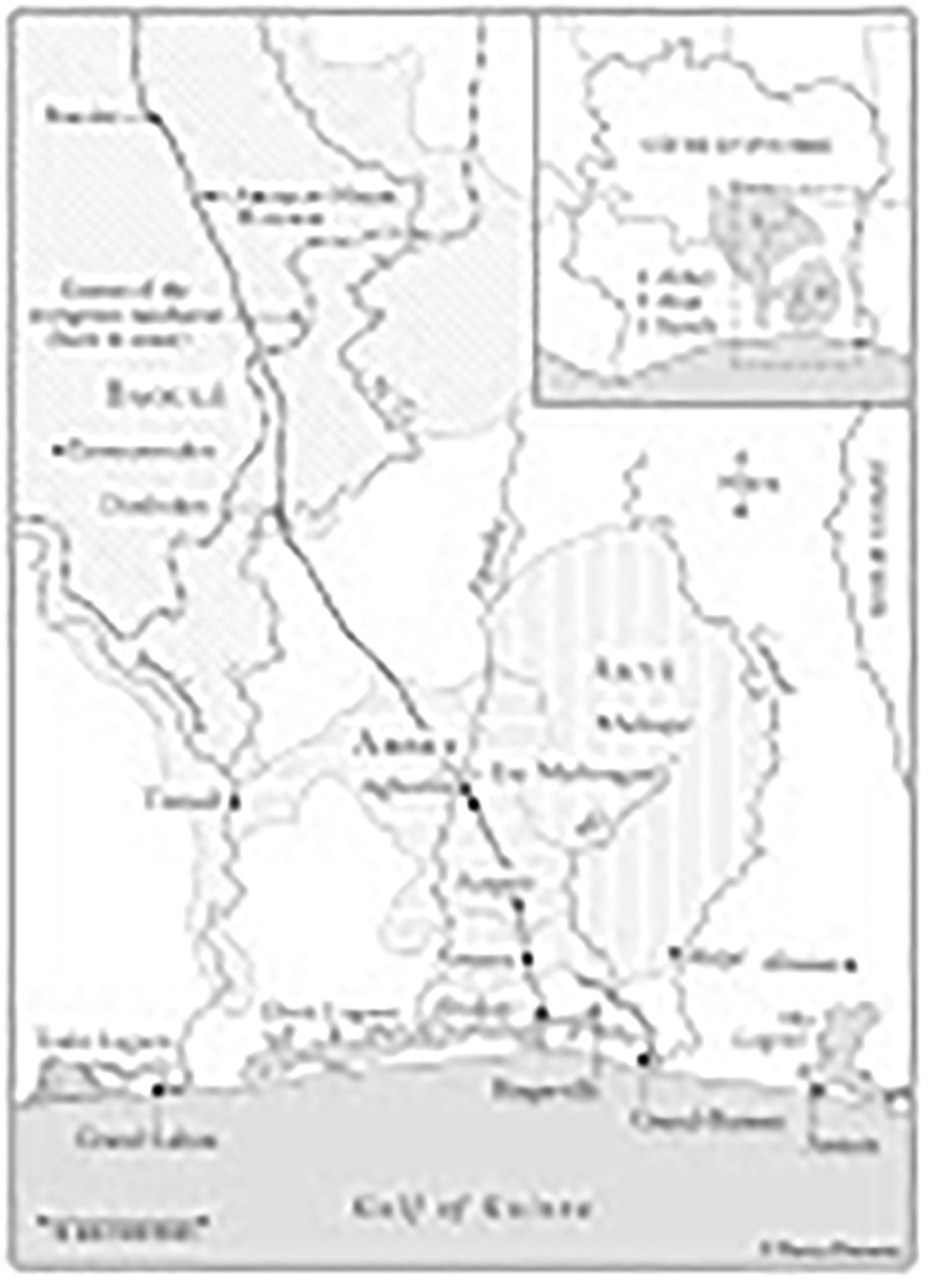
Overview map of Southern Côte d’Ivoire showing Abbey and Aké country in the southern forest at the turn of the twentieth century. These rivers were important for both wood transport and alluvial gold extraction. Copyright: David Drengk.
These forest rivers did not only transport tree trunks. They also carried a lot of sediments containing gold particles, especially during the rainy season. Gaston Adrien Joseph, who was first sent to Côte d’Ivoire in 1909 as cartographic geographer and who was appointed deputy administrator of Côte d’Ivoire only one year later, shed light on the different modes of extracting gold, which existed in the colonial territory of Côte d’Ivoire at the time. 61 The Bodets Akyé, also called Boddins Akyé, in particular engaged in gold mining. 62 The country of these Akyé of the centre as they were also called, was traversed by the Mé river and its tributary, the Mansa. In these riverbeds, the Boddins Akyé searched for alluvial gold deposits that were washed through in river sediments. According to Joseph, the miners either searched for gold sediments directly in the river or in wells they dug right next to the rivers. The Akyés kept these extraction sites a secret as they knew from their long engagement in gold mining and gold trade how valuable this business was. As the French were very keen on learning more about the Akyés’ experience with gold, they tried to identify these sites. However, the Akyés often actively prevented them from finding and accessing the respective forest paths that led to the river sites. 63 Hence, forest paths once again played an important role in the transport and access to gold deposits in the rivers.
Of course, the story does not end with the extraction at river sites. The transport of gold and its actual trade obviously followed after the mining. As we argue in this paper, the history of the technological landscape of transport and trade means we also have to look at the artefacts which became important in the process of transport and trade. The “gold book” (livre d’or according to Camille Dreyfus) was such an object. 64 As it turns out, this book had nothing to do with books in the traditional sense. It was rather a packet of oilcloth or wrapping cloth, sometimes made of tobacco leaves. Among the Akyé, this assemblage was also called dja. 65 This dja or “gold book” was culturally and politically of great importance in various Akan groups in West Africa, including those gold trading groups in the territory of Côte d’Ivoire.
The following image shows a gold trading and weighing scene in the forest, including such a gold book or dja. This package usually contained two white towels and a small scale. The two trays of this scale were attached to the holding beam by thin threads. With the help of another thread through which the trader could pass his thumb, he could hold all the other threads with the rest of his fingers. While the gold was put on one of the trays, a so-called “gold weight” was put on the other. These weights were also part of the gold book and there were basically of two different kinds, those of natural origin such as stones, seeds or shells and those that were man-made, usually cast in different metals by blacksmiths. These latter weights could be found in all kinds of shapes and forms and were made by filigree craftsmen or blacksmiths. Nowadays, the weights from Ghana and Côte d’Ivoire are well-known and various museums across the world exhibit their collections of West African gold weights, which have attracted the attention of a wide range of scholars. 66 Apart from the scale and the gold weights, the gold book also consisted of a small copper spatula, a container to store the gold dust, an oilcloth to examine the gold on, as well as a hen's feather and sometimes a magnet to get rid of any remaining impurities in the gold dust (Figure 1). 67
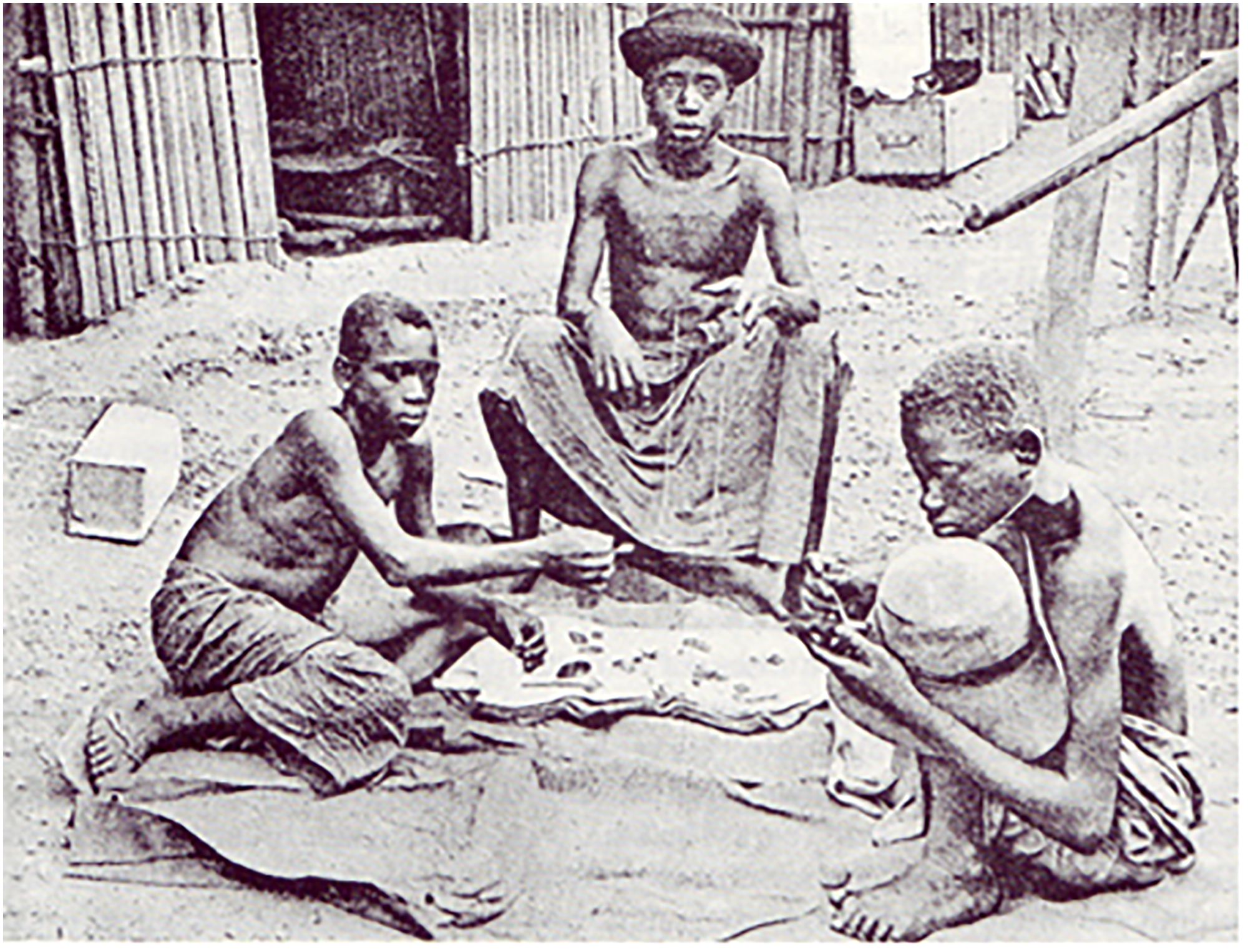
Scene of gold trade and gold weighing in the southern forest. Source: Marcel Monnier, France noire: (Côte d'Ivoire et Soudan) (Paris: E. Plon, Nourrit et Cie, 1894).
This scene and the content of the gold book draw attention to some fascinating details of the gold trade and show that its transport and trade after mining involved much more than simply placing gold in a container. Indeed, the gold book, the utensils it contained as well as the traders’ knowledge and weighing skills can be regarded as part of the repertoire of “materials, tools, skills, knowledge and styles” that formed the technological landscape of transport and trade in West Africa. 68
Concluding remarks – continuity and change in a landscape of material culture
In Northern Nigeria, the use of the horse as an important means of transportation became very prominent during the early colonial period. To some extent, the British colonial regime even pioneered its Transport Department based on pack animals. Sule Bello noted that to alleviate the transportation difficulties of the colonial companies, in 1904 the colonial government set up a separate transport department, which continued to function for eight years until the official opening of the railway in Kano in 1912. 69 At this point, it became a sub-department within the Department of Public Works. This department was responsible for exploiting and improving all existing forms of transport (particularly horses and donkeys), and to introduce new ones, whenever necessary, for the expansion of the colonial enterprise (e.g. the clearing of roads). Moreover, a campaign was carried out for clearing cart-tracks as well as building bridges between certain areas of agricultural produce and Kano. 70 Within a few years, a number of cart-tracks had been completed, that is, Zaria–Kano (completed in 1906), Katsina–Kano, Katagun–Kano, Bauchi–Kano, and Sokoto–Kano (all completed by 1909). 71 Hence, irrespective of the availability of motor transport, animal transport should always be preferred over motor transport whenever possible. 72
This example shows one major strength of the analytical tool of technological landscape: It elaborates on the co-existence of technology and counters the West's obsession with change and innovation. 73 As we have shown in this paper, historical change in everyday trading and transport activities did not come about through the simple introduction of new technologies, for example, mechanised forms of transportation from the Global North. In fact, we have shown the contrary: Trading routes and commercial centres in Northern Nigeria, Southern Côte d’Ivoire and West Africa at large were kept alive because long-established means of transport like human porterage or pack animals and the use of locally produced transport containers continued to be used. Following David Edgerton's work, the old was not automatically removed by the new. 74 On the contrary, as we have shown and as Svante Lindqvist has also argued, technologies continued to exist and in our West African cases, various modes of transport and trading activities co-existed side by side.
As we have highlighted, transport of goods and trading activities in Northern Nigeria made use of human muscular strength and the enormous endurance of pack animals like donkeys. As traders relied on these historical actors to move their trading objects from one place to the other, and thus needed them to survive as businessmen, we bear witness to a fascinating interplay between the natural environment of such trading routes and areas of porter recruitment, the human and non-human actors, transport technologies like various kinds of containers, and transport practices like tying techniques for goods. Ultimately, applying the idea of material culture has served to overcome a bias in the history of technology toward mobility through mechanised transport. As this bias is manifested in the term “technology”, we follow up on the initial thoughts of El Hairy, Hård et al. and speak of the material culture of trade and transport instead.
Furthermore, we are convinced that in combination with this material culture approach, the lens of a technological landscape enables us as historians to retrace trade routes, elaborate on the natural environments of such activities, highlight the various historical actors such as people and animals, and finally reconstruct the everyday use of technology. Drawing the picture of a technological landscape thus helps us to shed light on complex everyday interconnections between people, material culture and nature in history. In West Africa, this brings to the fore the Abbey network of forest paths, the role of Northern Nigerian traders in regional kola nut trade, the force of river currents, the importance of donkeys, or the relevance of human porters.
Footnotes
Acknowledgements
We would like to express our gratitude to the members of the INTRA network (International Network on Transport in Africa) for their comments on earlier drafts of this paper, to Professor Mikael Hård for his continuous support, to the members of the ERC-funded research project “Global-Hot” and their feedback as well as to Carla Augusto for proof-reading the final version of this paper.
Declaration of conflicting interests
The authors declared no potential conflicts of interest with respect to the research, authorship, and/or publication of this article.
Funding
The author(s) disclosed receipt of the following financial support for the research, authorship, and publication of this article: This work was supported by the European Research Council Advanced Grant No. 742631: “A Global History of Technology, 1850-2000” and SLUB Dresden (Open Access Publication).
