




Abstract
Objectives
This study tests the relative timing of inmate infractions in the weeks before and after a visit.
Method
Our sample is a cohort of 823 male inmates who participated in the Dutch Prison Visitation Study (DPVS) (2017) and had visitation and misconduct data. Using two-level random effects logistic regression models, we examined week-to-week associations between infractions and prison visits, including visits from partners, family, friends, and official visitors.
Results
The probability of an infraction is comparable to average levels in anticipation of visits, increases up to 18 percent in the weeks immediately following visits, and then returns to baseline levels. This pattern is found for contraband infractions, but no effects were found for aggressive infractions. Strongest effects were found for family and official visits. When inmates are visited frequently, the risk of infractions postvisit is similar to average levels.
Conclusions
The findings show that visits can have harmful effects on inmate infractions. These effects seem to stem from increases in contraband infractions. More research is needed to further understand the mechanism behind visits’ effects.
Imprisonment, by definition, involves separation from family, friends, and the broader community. Separation from social relationships is one of the most distressing aspects of life in prison, and is often cited as a primary reason for adjustment problems (Adams 1992; Liebling 1999; Monahan, Goldweber, and Cauffman 2011). Lack of contact with the outside world can be detrimental to inmate’s emotional well-being, resulting in loneliness, depression, suicidal ideation, defiance and, consequently, have adverse effects on prison order and safety (Liebling, 1999; Poehlmann et al. 2008; Van Ginneken et al. 2019). One of the few opportunities presented to inmates to facilitate meaningful social interaction and stay connected to the community is through prison visitation. Even though visitation is a part of prison programming worldwide, prisons are not universally welcoming to visitors, visiting hours can be short, and experiences can be rather grim (Comfort, 2016; Moran et al. 2017; Turanovic and Tasca, 2019). In addition, visits are increasingly reserved as a ‘reward’ for inmates who behave according to prison rules (Boudin et al. 2014; Hutton 2017; Van Gent 2013). Such limitations to meaningful interaction with social ties may be problematic for the well-being of those in prison and those affected by incarceration, and, more broadly, for the rehabilitative goals of punishment, which raises questions about the viability of incarceration.
Prison visits are unique events in prison as doors open to the outside world. Accordingly, scholars have emphasized that these events may have consequences on day-to-day prison life (De Claire and Dixon 2017; Tahamont 2013). The promise of seeing loved ones during a visit can distract from prison life and give inmates something to look forward to, which could improve compliance to prison rules (Bottoms 1999; Toch and Adams 1989). Seeing family and friends during a visit may provide inmates with comfort and emotional support which could help them adjust better to life in prison (Casey-Acevedo and Bakken 2002; Monahan et al. 2011). Also, visits can remind inmates of their lives beyond prison walls, which could help protect against developing a criminal identity while incarcerated (Wolff and Draine, 2004). Some visitation research suggests that receiving visits in prison is linked to reductions in infractions and improved well-being (e.g., Cochran 2012; Houck and Loper 2002; Reidy and Sorensen 2020).
And yet, as scholars increasingly note, inmates can have very heterogeneous visit experiences. Not all inmates receive visits while incarcerated, and even when they do, inmates differ greatly in terms of how often, from whom, and in which periods they receive visits (Cihan et al. 2020; Cochran 2012; Siennick et al. 2013). Some inmates are visited regularly, while others only sporadically receive visits. Some receive visits from one single relationship, while others see a variety of relationships while incarcerated. Also, experiences during the visiting hour are not uniformly positive. Not all visitors are supportive and conflicts can arise, potentially leaving inmates vulnerable when dealing with prison staff and other inmates after a visit (Meyers et al. 2017; Wallace et al. 2016). At the end of each visit, inmates must separate (again) from their visitors which may increase feelings of loss and isolation and exacerbate inmate misconduct (Dixey and Woodall 2012; Turanovic and Tasca 2019). This could be particularly difficult as some inmates are unsure when their next visit will occur.
While it is clear that there is variability in the way visits are experienced, existing studies have struggled to explain how these events affect in-prison behavior. A popular strand of research within the visit-misconduct literature compares visited and non-visited inmates in terms of misconduct. While this work has highlighted that the relationship between visits and misconduct could vary depending on who is visiting (Benning and Lahm 2016; Woo et al. 2015), the type of visit (i.e., contact, non-contact, or conjugal visits) (D’Alessio et al. 2013; Hensley et al. 2002), and across different groups in prison (e.g., Reidy and Sorenson 2020), the focus has been on whether inmates receive visits, which is a rather limited measure given that visitation is a heterogeneous experience. In addition, prior studies have yielded rather inconsistent findings, with some demonstrating beneficial effects (Ellis et al. 1974; Gonçalves et al. 2016; Woo et al. 2015), harmful effects (Benning and Lahm 2016; Casey-Acevedo et al. 2004; Jiang et al. 2005; Lindsey et al. 2017), and null effects (Clark 2001; Goetting and Howsen 1986). These varying results may largely be due to the fact that visited and non-visited inmates differ in many important ways and most studies do not have measures for all these confounds. These threats to internal validity make it difficult to disentangle visits’ effects. Moreover, work on this topic is complicated by the fact that prison officials increasingly use visits as a behavioral incentive tool. For example, in many cases inmates must behave well to gain visitation privileges. Yet, studies rarely consider the relative timing of infractions in relation to visits. What is needed are more rigorous, comprehensive examinations of visitation and its effects to check the robustness of visits’ effects and assess possible theoretical mechanisms.
In this article, we provide a detailed account of how visits – in all its variety – affect inmates’ disciplinary infractions. To this end, we use detailed administrative data on visits from 823 adult, male inmates in the Netherlands to test the relative timing of inmate infractions in the weeks before and after a visit. We employ a within-persons design in which inmates serve as their own baseline, meaning that their risk of infraction around a visit can be compared to times when they do not receive visits. This allows us to isolate visits’ effects as individual differences are less likely to distort the results. More than that, studying visits’ effects within individuals rather than between individuals provides an opportunity to consider the timing of infractions in relation to visits. Even though many theoretical arguments used to explain visits’ effects on in-prison behavior either implicitly or explicitly assume that inmates adjust their behavior before or after a visit, with one exception research rarely considers within-persons effects (Siennick et al. 2013). By investigating the probability of inmate infractions before and after visits, as well as considering several features of visits thought to be important for visits’ effects (such as who is visiting and the frequency of visitation), this study helps to gain a deeper understanding of when, how, and under which conditions visits affect in-prison behavior.
The Relative Timing of Infractions in Relation to Visits
One potentially useful way of addressing the complexity between visitation and inmates’ behavior prior to and following visits is by investigating the direction and timing of visits’ effects. This is important as theory and scholarship suggest that inmates may moderate their behavior prior to and following visits. For example, an upcoming visit may help distract inmates from prison life which could reduce deprivation-induced misconduct in the weeks before a visit. Also, as correctional administrators worldwide use visits as a behavior management tool (Boudin et al. 2014; Hutton 2017; Van Gent 2013) inmates may be reluctant to misbehave prior to visits. Inmates who have previously had their visits revoked may be especially motivated to comply to prison rules to ensure that they can see their loved ones. After a visit inmates’ behavior may also change depending on how the visit went (Meyers et al., 2017). While supportive visits could improve inmates’ emotional state and behavior, upsetting and stressful visits may increase incidences of misconduct. Moreover, feelings of deprivation could be high immediately following visits as inmates have to say goodbye to loved ones again (Mignon and Ransford 2012).
Despite the possibilities that behavior may change prior to, during, or after a visit, only one study has tested the relative timing of inmates’ infractions in relation to visits. Siennick et al. (2013) innovatively used a within-persons design to assess week-to-week changes in probabilities of infractions in the six weeks leading up to a visit, the visit week, and six weeks following a visit for 7,000 inmates in Florida. In doing so, they estimated the impact of visits by comparing inmates’ risk of disciplinary infractions during periods when they received visits with periods when they did not receive visits. One of the central contributions of this study was evidence of an anticipatory effect: inmates’ risk of infractions decreased in the weeks leading up to a visit. They additionally found that the probability of an infraction sharply increased in the weeks immediately following a visit (coined as the separation effect) and then gradually returned to normal levels. This study made a substantial contribution to the literature by being the first to demonstrate that inmates’ behavior changes in anticipation of and after a visit. However, Siennick et al.’s (2013) use of a within-persons design is just the beginning; there are compelling reasons to apply this technique in different contexts and across populations. To give one example, in Florida (like in many US states) visits are treated as a privilege, meaning that correctional staff can restrict visits based on behavior. This could mean that the found anticipatory effects may be purely due to the use of visitation as a behavior management tool, rather than the experience of the visit itself. In other words, if results leading up to a visit are nonexistent in a context where visits are an individual right (and thus cannot be revoked), this would provide some evidence that such anticipation effects are a result of inmates adjusting their behavior as to not lose visitation privileges.
Variability in Visitation-Misconduct Effects
Although past work has limitedly investigated the direction and timing of visits’ effect, prior research and theory suggest that visits’ effects may vary depending on the type of behavior in question, who is visiting, and the frequency of visits. Explorations of these contingencies are valuable for checking the robustness of visits’ effects and identifying potential mechanisms behind such effects. Even so, few studies exist on these aspects. We describe below how and why these contingencies are important for visits’ effects.
To begin, visits are assumed to help inmates cope with the pains of imprisonment (Sykes 1958). This improved ability to cope could reduce deprivation-induced misconduct, such as defiance or aggression towards others. Accordingly, a finding that visits similarly effect all type of infractions would suggest that visits reduce the pains of imprisonment as any kind of violation of prison rules could be considered an act of defiance (Toch and Adams 1989). Another possibility is that visits’ effects operate via informal social control, whereby it is assumed that visitors would discourage anti-social behavior (Laub and Sampson 2003). Although visitors may disapprove of serious types of misconduct, such as aggression, they may be less likely to disapprove of minor types of misconduct, particularly those that are noncriminal (such as possession of a mobile phone). It is also possible that visitors, especially those that are criminally involved, could even encourage misconduct by bringing in prohibited items. Visits thus could create infraction-specific effects. Such a finding could also be a result of how prison staff react to visits. For example, it is possible that staff police individuals who rarely receive visits. These possibilities are largely obscured in prior research since studies typically use a global measure of disciplinary infractions (i.e., whether or not an individual received a disciplinary report). Some extant literature does suggest that visits may reduce serious, violent misconduct (Ellis 1974; Lahm 2007; Tahamont 2013; Woo et al. 2015; Reidy and Sorenson 2020), whereas other studies demonstrate that visits increase drug-related infractions (Jiang et al. 2005), and even others find that visits affect different infractions in a similar way (Siennick et al. 2013).
Who is visiting may also be important for visits’ effects. Inmates receive visits from a variety of relationships, including partners, family, friends, and official visitors (such as lawyers, social workers, probation officers). These relationships may differentially impact an inmates’ behavior. For example, spouses or partners are thought to be an important source of informal social control (Laub and Sampson 2003). A few studies have indeed found that visits from partners are linked to reductions in infractions (Bales and Mears 2008; Siennick et al. 2013; Woo et al. 2015). But, if visits are thought to reduce infractions through alleviating stress, then any person who provides a listening ear may help. This would also include visits from professionals, such as lawyers or social workers. To our knowledge, no prior studies have investigated the effect of official visits on in-prison behavior. This is regrettable as inmates are commonly visited by professionals (Kjellstrand et al. 2021) and for some inmates these are the only visits they have (Bares and Mowen 2020). Moreover, investigating whether and how official visits affect infractions, could provide some evidence that visits’ have a generalized effect on inmates’ behavior, which could indicate that visits affect misconduct through altering their perceptions of the deprivations of imprisonment.
Finally, while some inmates receive frequent visits from one or more visitors, others are only visited sporadically. If inmates receive frequent visits, then they may feel better supported by family and friends, which may help them cope with the pains of imprisonment. In turn, this is likely to be most effective in reducing aggressive reactions towards prison staff or fellow inmates (Sykes 1958). Also, when inmates receive frequent visits their visitors are able to exert informal social control by monitoring their behavior. Contrastingly, if visits are sporadic, then visitors are not able to keep an eye on how an inmate is doing. If inmates can see family and friends on a regular basis then the negative effects from separation could be tempered. For example, Siennick et al. (2013) found that Florida inmates who had closely spaced visits were more likely to show a rapid decline in disciplinary infractions post-visit. Moreover, two other American studies examining visitation patterns and misconduct using administrative data found that consistent visitation was associated with lower likelihoods of misconduct (Cochran 2012; Cihan et al. 2020).
The Current Study
In sum, the association between prison visits and disciplinary infractions is complex. Inmates’ behavior can change not only in anticipation of visits, but also after visits and these effects can vary across infractions, who is visiting, and depending on how often an inmate is visited. Unfortunately, research providing empirical testing of these complexities, especially the direction and relative timing of disciplinary infractions in relation to visits, is scant (with the exception of Siennick et al. 2013). In this study, we aim to advance the literature on visitation effects by testing how the probability of receiving a disciplinary report changes in the weeks leading up to visits, the visit week, and the weeks following visits. We use a within-persons design to isolate visits’ effects among 823 adult, male inmates in the Netherlands. We go beyond past studies by testing not only the effects of personal visits, but also the effects of official visits. Moreover, we introduce a different policy context to the extant literature, which as will be evident below, offers an interesting alternative due to the fact that visitation is a right which is exercised liberally.
Dutch Incarceration and Visitation Context
The Dutch incarceration context is characterized by a low imprisonment rate, relatively high pretrial population, and short prison stays (De Looff et al. 2018). As a result, most inmates are housed in a single cell and there is no overcrowding. The prison climate in the Netherlands is internationally considered rather liberal and humane and although prisons have limited their programming in recent years, prison regimes have daily schedules consisting of work, education, recreation, and visitation.
Dutch inmates have the right to one hour of visits per week with up to three unique visitors per visit. This right applies to all regimes, including the most common regimes (prison and pretrial detention) and more specialized regimes such as extra care (for more vulnerable prisoners). Notably, inmates in prison regimes can earn an extra hour of visits (maximum of two hours per week) by behaving well. All inmates share the same visit rooms, as inmates in different regimes are often housed in the same facility but on separate units. Most visit rooms are designed so that inmates sit on one side of a long table (typically with a clear plexiglass divider of several inches on top), while visitors enter and sit on the other side. Brief physical contact (i.e., kiss and/or hug at beginning and end of visit) is allowed.
For the purposes of this article, three features of this context are worth highlighting as they may have implications for visits’ effects. First, many inmates in Dutch prisons spend a significant amount of their time awaiting trial. The initial stages of a prison stay are considered very stressful due to the shock of imprisonment, uncertainty about the trial, and adjustment to the new environment (Adams 1992; Liebling 1999). Visits may be particularly important to help inmates cope with these stresses, and thus, may have stronger effects on in-prison behavior. Also, it may be particularly risky for inmates to engage in misconduct since they are awaiting trial and are serving short periods in prison.
Second, while visits are often treated as a ‘privilege’ in many US states (Boudin et al. 2014), weekly visits are legally conferred in the Netherlands and therefore cannot be revoked. Prison governors can limit or (temporarily) defer visits if prison safety or order makes this necessary (Regulation on Restrictive Housing in Penitentiary Institutions, Article 21, section 2), however, jurisprudence from the Criminal Justice Council (Raad voor Strafrechtstoepassing en Jeugdbescherming) shows that prison governors often take measures to ensure that visits can still occur, even if they then take place behind glass (see for example RSJ S-19/1651/SGA from May 22, 2019). It is therefore possible that in this context visits may not have an ‘anticipation effect’ as inmates do not have to behave well in order for their visits to continue. Moreover, since inmates are certain of their next visit, this may make it easier to say goodbye to family and friends at the end of a visit.
Third, visitation rates (i.e., the proportion of inmates visited and the average number of visits), are relatively high in the Netherlands (in comparison to a Florida sample, see Siennick et al., 2013; Cochran 2012, 2014 and a New York sample, see Hickert, Tahamont, and Bushway 2018). Dutch studies demonstrate that the majority of inmates (estimates ranging from 74–89 percent) in the Netherlands are visited and inmates are visited relatively frequently (Hickert et al. 2019; Berghuis et al. 2022). Since visits are quite commonplace, it is possible that visits’ effects may be less strong in comparison to other contexts.
Method
Data & Sample
The data for this study comes from the Dutch Prison Visitation Study (DPVS), which is part of a nationwide study on prison climate in The Netherlands (the Life in Custody study; Van Ginneken et al. 2018). The DPVS aims to examine prison visitation from different perspectives and in all its variety. All inmates housed in eight prisons 1 in the Netherlands between January and April 2017 were approached to participate (N = 2,095). Of these eligible inmates, 1,397 agreed to participate. Inmates were specifically asked to give permission to use administrative data, such as visitation records, for research purposes. Of the 1,397 participants, 49 inmates did not give permission to use administrative data and hence were not part of the study.
Visitation data were pulled from a nationwide database used to track inmate-level information (such as demographic characteristics, transfer records, and visitation data). Data from six months prior to the data collection (August 2016) and six months post data collection (September 2017) were made available. In the same period, prison staff recorded the dates of disciplinary infractions and the type of infraction in the Central Digital Depot (CDD). Our sample consists of all participants of the DPVS study who received personal visits between those dates, with three exceptions. First, we excluded inmates in open regimes because they have furlough every weekend and therefore do not receive visits in prison. Second, we excluded inmates in persistent offender regimes since they can see family and friends on furlough. While some inmates in this regime do receive visits in prison, it is not uniformly recorded in administrative records. Third, we excluded those inmates who had only been visited once in the research window (N = 52), so that visit frequency can be examined. We created an inmate-week file containing one row for each week that an inmate was incarcerated during the study window. Our resulting sample size is 33,201 observation weeks for 823 inmates 2 .
Measures
Disciplinary infractions
Using the event date recorded in the CDD, we created a dichotomous variable of whether each inmate received a report for a disciplinary infraction during each week in our data collection window. Using the details in these reports we also created dummy variables for whether the inmate committed one (or more) of the following infractions: (a) aggressive infraction (e.g., arguing, threats or other verbal conflict, kicking, beating, throwing things toward others; aggression directed at either prison staff or fellow inmates were included), (b) contraband infraction (i.e., possession of or use of drugs, phones, and other prohibited items), or (c) rule breaking (e.g., violating house rules, work refusal, unauthorized absence). Note that we examine infractions from official prison records. These records likely underestimate inmate misconduct (Bosma et al. 2020; Steiner and Wooldredge 2014) and reflect some bias resulting from the discretionary power of staff members (Light 1990).
Visits
The administrative data indicates on which date(s) each inmate received a personal visit. This was used to record whether an inmate received a visit during each week. Information concerning the inmates’ relationship to the visitor were used to record who the visitor was, including partner, family member, and friend 3 . Beyond personal visits, we also separately recorded whether an inmate received a visit from an official visitor (e.g., social worker, lawyer) during each week.
Since we wish to examine within-individual changes in infractions in relation to visits, we created sets of dummy variables for visits: one dummy variable to indicate if an inmate was visited in a week (then “visited this week” equals 1) and 12 dummy variables which flag the six weeks leading up to the visit and the six weeks following the visit (in line with Siennick et al. 2013). For example, if an inmate was visited in his fifth inmate-week, then that inmate scores 1 on the visited this week for that inmate-week, 1 on the “1 week to visit” on his fourth inmate-week, 1 on the “2 weeks to visit” on his third inmate-week and so on. This means that inmate-weeks outside of this visitation window score ‘0′ on all visitation variables, and, thus, are the reference category.
Some inmate-weeks scored a 1 on both previsit and postvisit indicators when two visits occurred within six weeks of each other. To examine whether this overlap impacts visits’ effects, we created a set of dichotomous variables indicating whether each of the 12 weeks preceding and following a visit overlapped with the previsit or postvisit window of another visit. Ninety-two percent of visits occurred within six weeks of another visit. Most inmates had at least one non-overlapping visitation window; for 106 inmates all visitation windows overlapped. Since there is substantial overlap in the data, it is important to investigate whether previsit and postvisit trends differ by overlapping visitation windows. For example, it is possible that visits’ effects differ when two visits occur within a few weeks of each other when compared to visits that occur six weeks apart (i.e., in an nonoverlapping window).
Time-varying control variables
Following prior visitation research, we controlled for the week of incarceration and holiday week (i.e., whether a national holiday took place in that week) as these external factors which change over time could potentially impact either the receipt of visits or infractions.
Inmate characteristics
We also included some variables to control for the fact that visits may have different effects for inmates who are visited frequently. We calculated each inmates’ average number of weeks between visits and then created two inmate-level indicators of visit spacing: 1) whether the inmate scored in the bottom quartile of the average spacing measure and, 2) whether the inmate scored in the top quartile of this measure (similar to Siennick et al. 2013). We also controlled for characteristics known to be associated either with visits or misconduct: age during data collection (years), whether an inmate was born in the Netherlands (0 = no, 1 = yes), whether an inmate was committed for a violent offense (0 = no, 1 = yes), and the number of prior incarcerations (in the past five years).
Analytical Strategy
We estimated two-level random effects logistic regression models using the maximum-likelihood estimation with robust standard errors (MLR) in MPlus (Muthén and Muthén 2017). MLR does not delete any observations with missing data nor imputes any data, but rather uses all available data per case to compute maximum likelihood estimates. The models predict week-to-week associations between disciplinary infractions and the occurrence of a visit, upcoming visits, and visits in the recent past. The models include the 13 dummy variables described in the visit measures section at the inmate-week-level (level 1, N = 33,201 observations) and the time-varying control variables and inmate characteristics at inmate-level (level 2, N = 823 inmates). In order to examine an inmate’s own change we must compare them to themselves under different circumstances (i.e., their “average” state). We therefore added individuals’ means on level 1 visitation indicators to the analyses at level 2. These act as control variables, such that the coefficients of the inmate-week-level (level 1) variables represent the within-individual change (Osgood 2010). This approach is in line with recent developments in multilevel modelling, which show that these estimates replicate fixed effects analysis within people while also estimating effects of time-invariant control variables, modeling heterogeneity bias, and providing interpretable estimates (Allison 2009; Bell and Jones 2015; Bell, Fairbrother, and Jones 2019; Firebaugh, Warner, and Massoglia 2013). We also control for week of incarceration to help rule out maturation as a threat to validity (Osgood 2010). All continuous inmate-level variables were grand mean centered. The intercepts therefore can be interpreted as the log-odds of an infraction during the weeks outside of the visitation window for an ‘average’ inmate. Since visitation is measured using sets of dummy variables, we also present results from multiparameter Wald tests of the joint significance for sets of visitation indicators.
The analyses proceeded in four steps. First, we used the global measures of visitation to examine if the probability (log-odds) of an infraction changes in the weeks surrounding a personal visit (the ‘main model’). Second, we assessed visitation effects on different types of infractions by substituting the outcomes into this model. Third, we tested in separate models whether effects differ across partner, family, and friend visits. In addition we examined whether visits’ effects differ for official visits. Fourth, we examined whether visitation effects depend on how often inmates are visited. We examined this in two ways: 1) by adding overlap indicators (see visits measures section) to our main model and 2) by testing our main model across subsets of inmates who were visited relatively frequently, infrequently, and had an average spacing. The latter provides an indication of whether visitation effects look differently based on visit frequency.
Results
The results are presented here in four sections, in line with the steps described above. Before getting into the results of our analyses, we first present the descriptive statistics for our study variables.
Descriptive Analyses
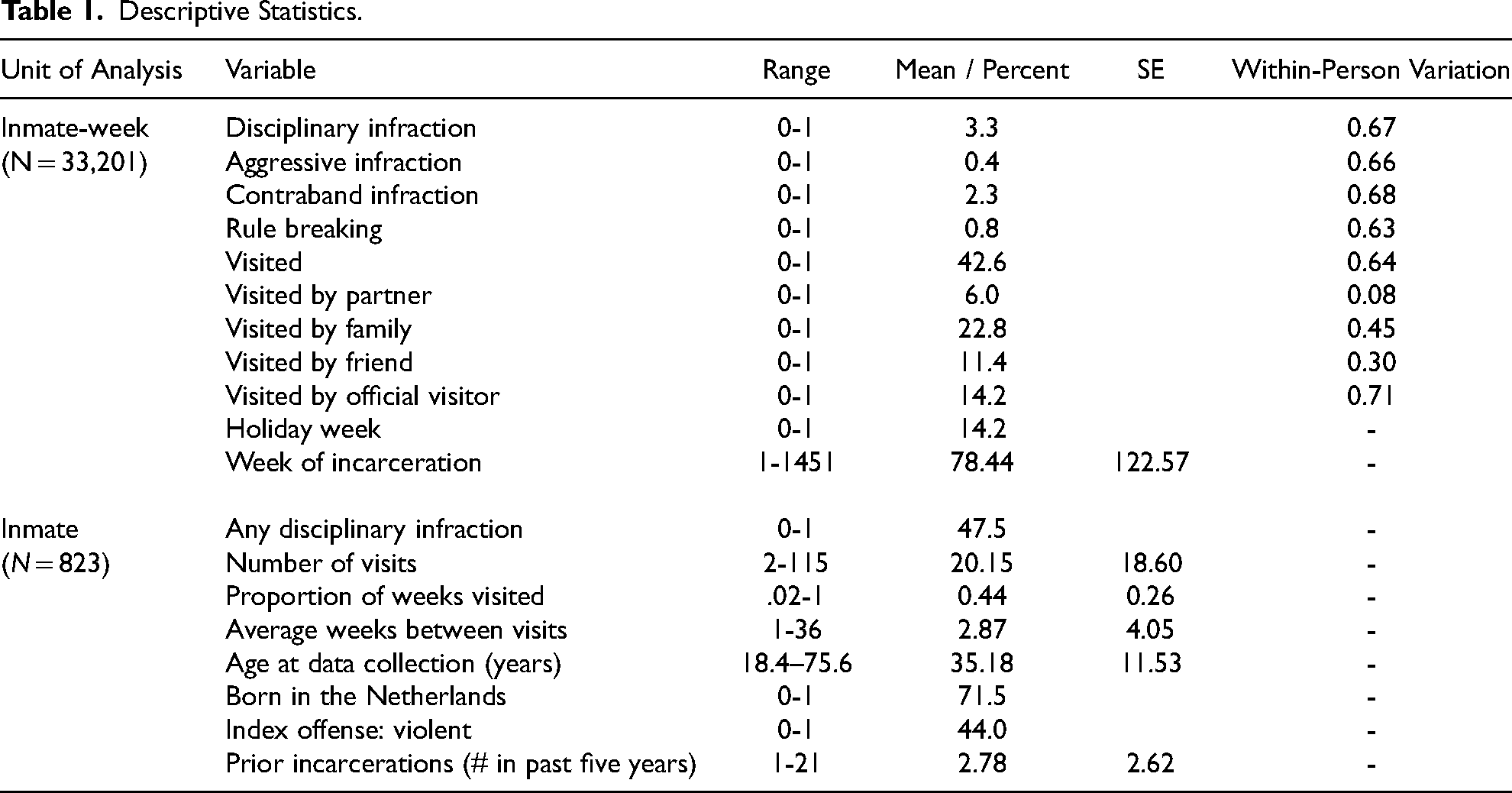
The descriptive statistics on each of the study variables are reported in Table 1. In terms of disciplinary infractions, 48 percent of our sample committed at least one disciplinary infraction. During the same time period, inmates in our sample received on average nearly 20 visits. Visits were relatively frequent; the average number of weeks between visits was 2.87 weeks. Since we are interested in within-individual change, the last column of Table 1 reports the amount of variation in each time-varying measure across the study period within individuals (as opposed to between). As shown in Table 1, the lowest proportion of total variation that lies within persons was found for partner visits, which may have implications for the reliability of the logistic regression estimates in the multivariate analysis on partner visits. For all other key variables, there is considerable within-individual change, which substantiates our analytical strategy and indicates that the estimates presented below are efficient.
Descriptive Statistics.
The Relative Timing of Infractions in Relation to Visits
First, we start by presenting our main model regarding the relative timing of disciplinary infractions in relation to visits. Table 2 shows logistic regression estimates predicting whether inmates received a disciplinary report in a given week from indicators of whether they were visited 4 that week or surrounding weeks and from the control variables.
Within-Individual Logistic Regression Estimates Predicting the log-Odds of Receiving a Disciplinary Report from Personal Prison Visits and Control Variables.
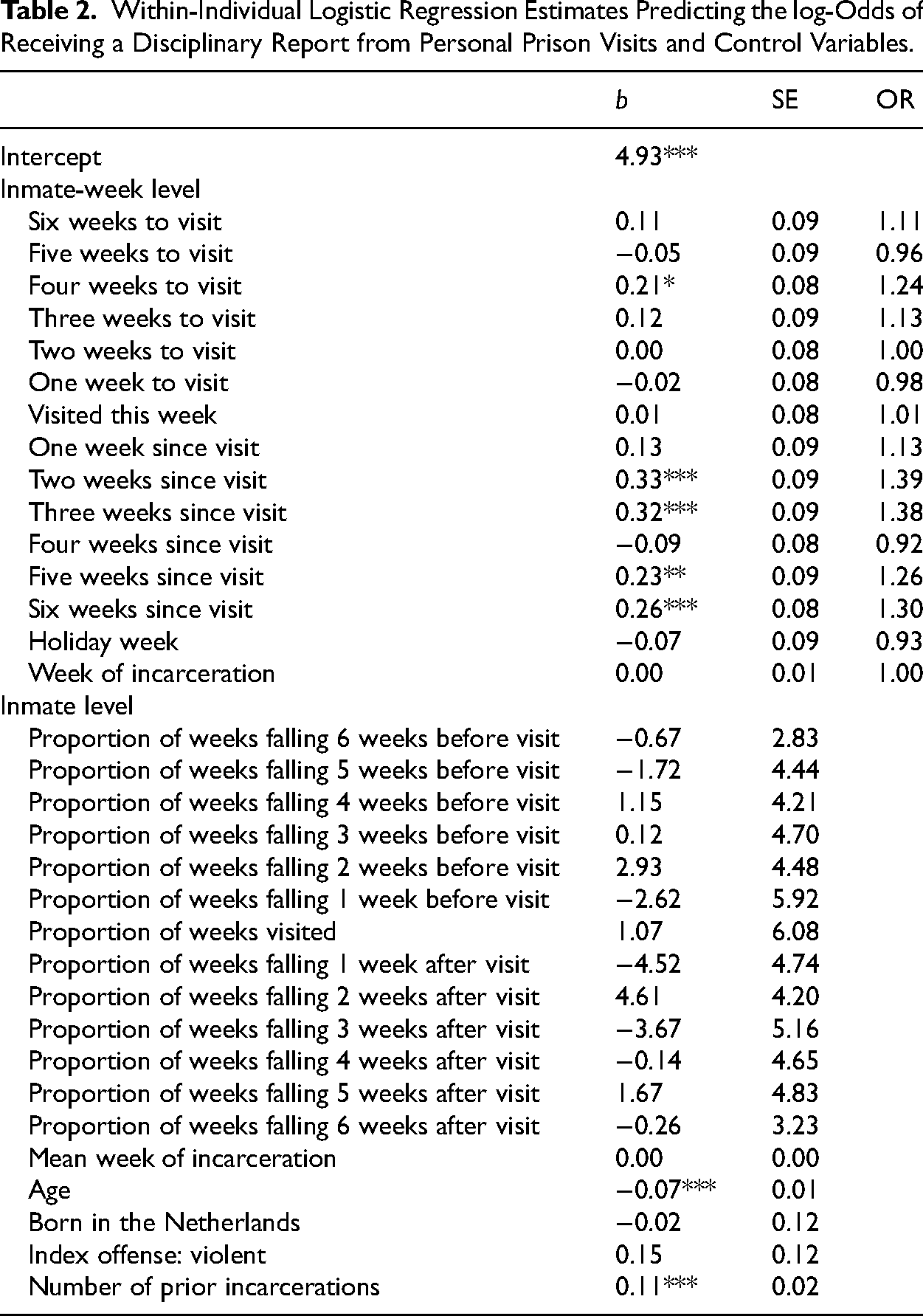
The intercept shows that the average weekly probability of an infraction outside of the visitation window is .007 (exp[-4.93]/(1 + exp[-4.93]) = .007). The log-odds of an infraction are not significant in the weeks leading up to a visit, except for four weeks to visit (logistic b = 0.21, p < .05). The log-odds of an infraction are significantly higher than baseline in several postvisit weeks (logistic b = 0.33, 0.32, 0.23, 0.26 for 2, 3, 5, and 6 weeks afterwards; weeks 2, 3 and 6 p < .001, week 5 p < .01). Wald tests of the joint significance of coefficients indicate that inmates’ previsit risk is not significantly different than their usual risk and that their postvisit risk is significantly higher than their usual risk (χ2 = 99.23, df = 6, p < .001).
Figure 1 illustrates these findings. It shows that the predicted probability of an infraction is relatively stable in the weeks leading up to a visit (except for four weeks to visit, but the difference [6 percent increase] is minimal). After a visit, the probability is statistically indistinguishable from the baseline probability in the first week after a visit (logistic b = 0.13, p > .05). Then the probability spikes when it is 18 percent higher than baseline in week 2 and 17 percent higher than baseline in week 3 after the visit (respectively .008). The probability of infractions remains 8–11 percent higher than baseline up to six weeks after a visit (although the predicted probability is similar to baseline in week 4). By the seventh week the probabilities decline to average levels (not shown).
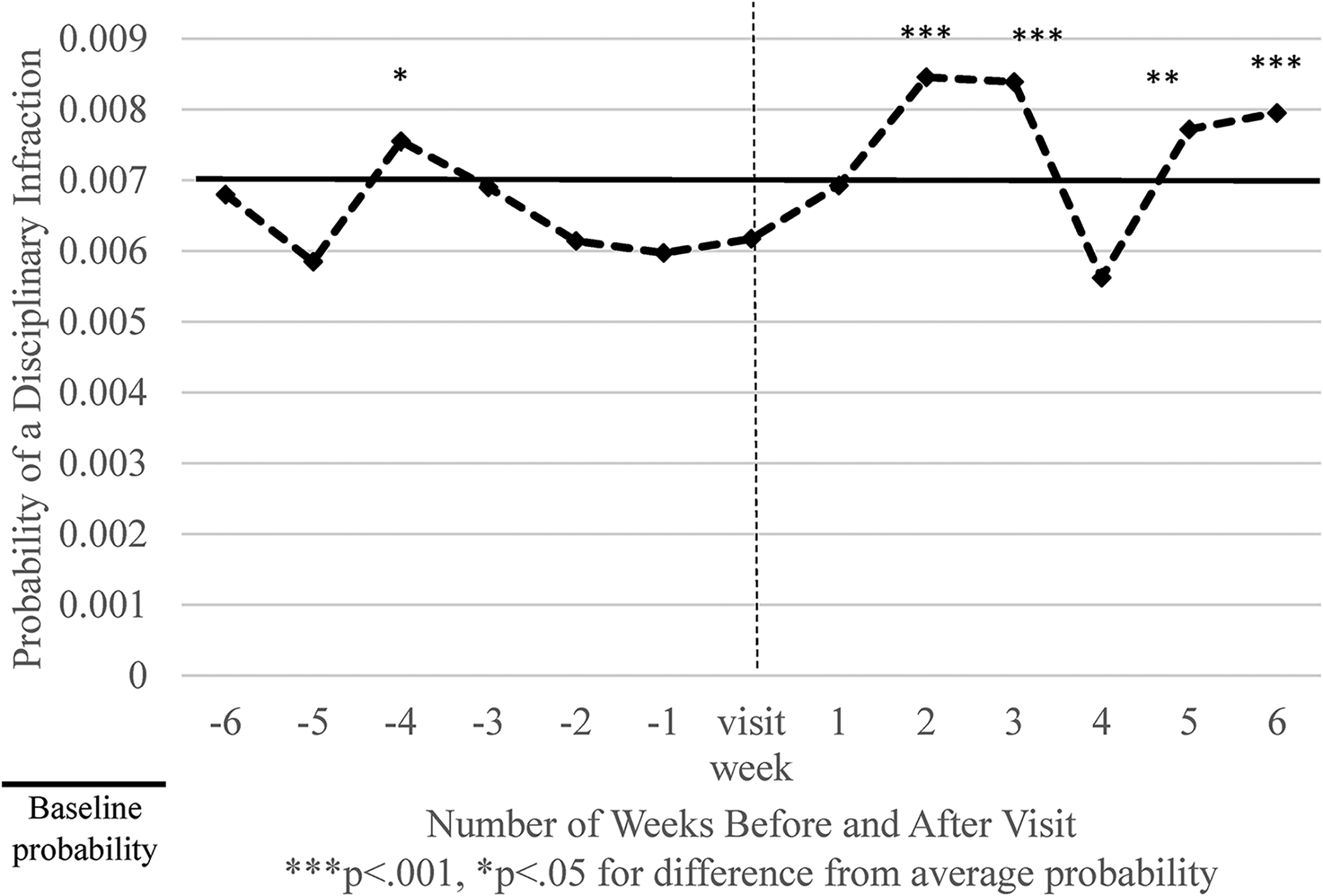
Timing of the effect of a prison visit on the probability of an inmate disciplinary infraction.
Effects of Visits on Different Infractions
The second set of logistic regression models predicted separately the effect of a prison visit on the probability of aggressive infractions, contraband infractions, and rule breaking. Figure 2 shows the predicted probabilities (regression estimates are not shown but are available upon request). The differing heights of the lines indicate that the baseline probabilities of infractions differ: the greatest is for contraband infractions (.005), followed by rule breaking (.0017), and aggressive infractions (.0006). The predicted probability of each type is similar to baseline in the weeks leading up to a visit (except for four weeks to visit on contraband infractions, but the difference [1 percent increase] is minimal). After a visit, the probability increases for contraband infractions (in weeks 2, 3, and 6) and rule breaking (in week 5), but the probability of aggressive infractions is similar to baseline in all postvisit weeks. Wald tests confirm that inmates’ postvisit risk of contraband infractions (χ2 = 79.88, df = 6, p < .001) and rule breaking (χ2 = 24.94, df = 6, p < .001) are significantly higher than their usual risk.
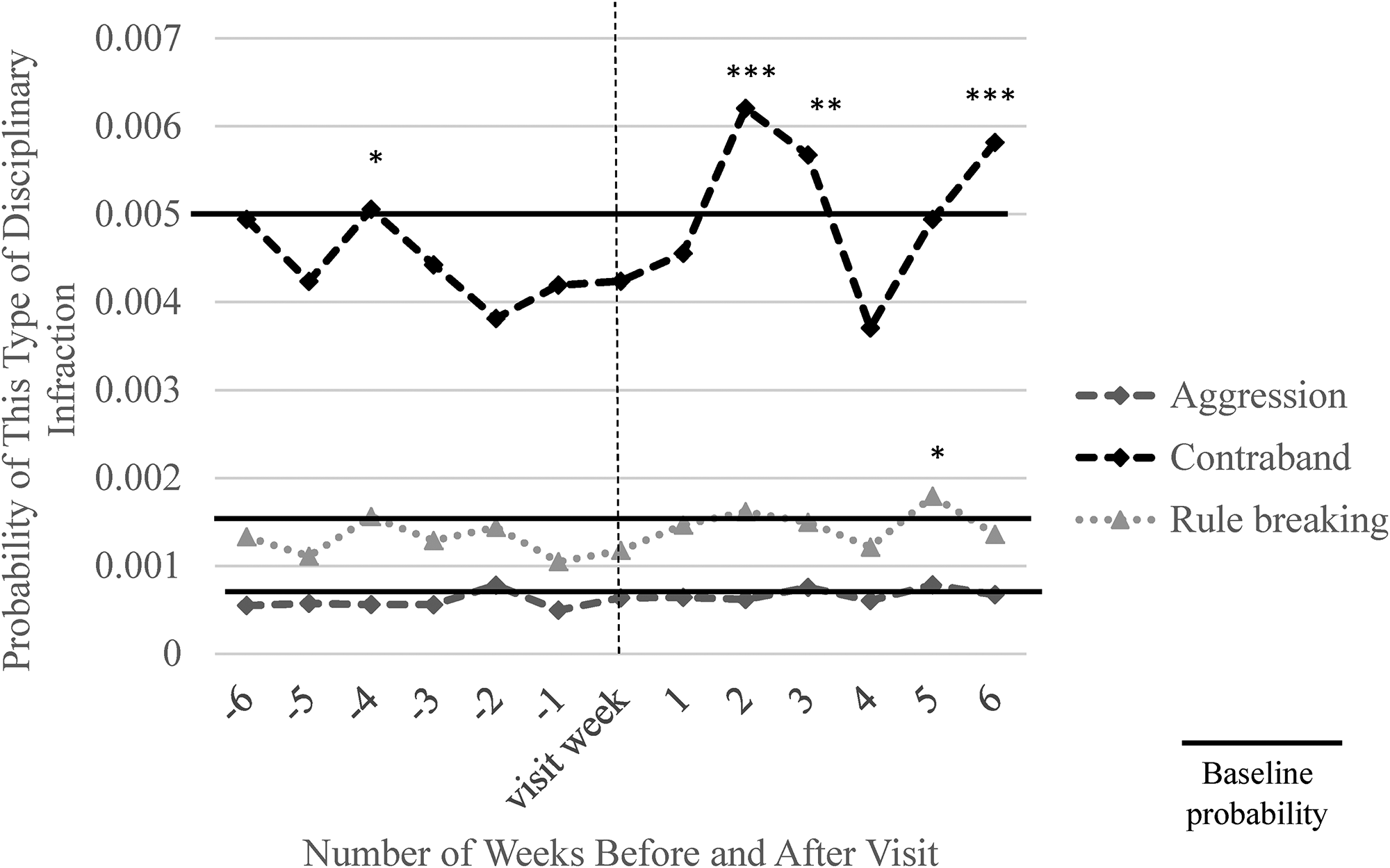
Timing of the effect of a prison visit on the probability of different types of inmate disciplinary infractions.
While both contraband infractions and rule breaking show an increase at some point in the postvisit weeks, the magnitude of these effects differ. Contraband infractions show the greatest percental change, namely 23 percent higher than baseline two weeks after a visit (and respectively 12 and 15 percent higher in week 3 and 6 postvisit). Percental changes in rule breaking were much smaller, i.e., 9 percent higher than baseline.
Effects of Different Visitors on Infractions
Third, we analyzed whether visits’ effects depend on who is visiting. We first examined personal visitors, namely: partner, family, and friend visits. Then, we explored the effect of visits from official visitors on disciplinary infractions. The results of these analyses are summarized per visitor in Figure 3 (to compare results across the different visitor types, see Figure S1 in the online supplementary materials). Each analysis was conducted including only the subset of inmates who received a visit from the type of visitor in question (see Table 1 for descriptive information) and thus the samples are smaller than our total sample (see Figure 3).
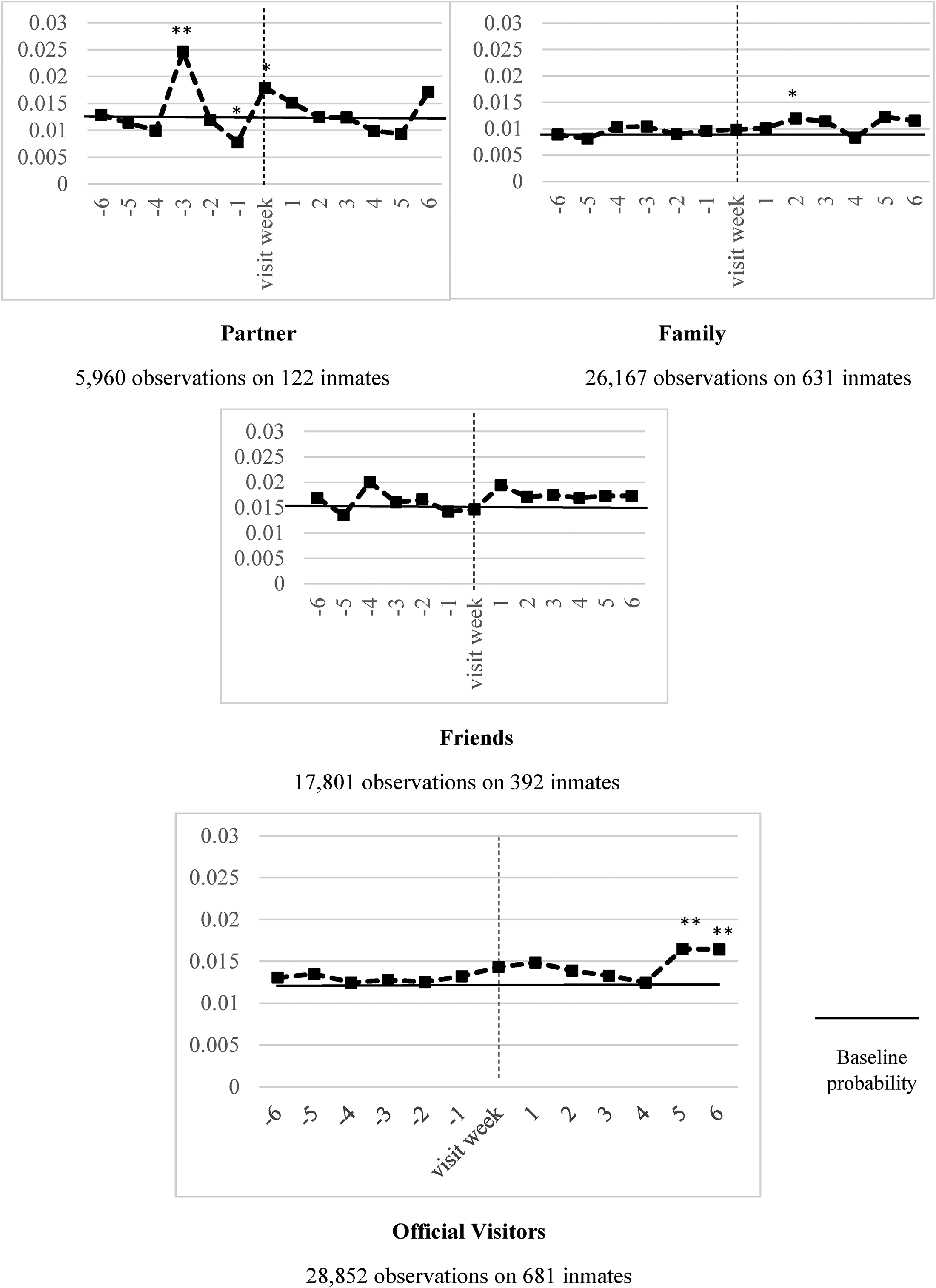
Timing of the effect of different visitors on the probability of inmate disciplinary infractions, among inmates ever receiving that type of visit.
Partner, family, and friend visits
The baseline probabilities varied across the visitor types as the differing heights of the line in Figure 3 suggest. Inmates who received family visits had the lowest baseline probability (.009), whereas inmates who received friend visits had the highest baseline probability (.015) for infractions. Trends differ across these visitor types. For partner visits, the predicted probability of an infraction increases in week 3 prior to a visit but decreases by 38 percent in the week before a visit (all other weeks are not significant). Visits from partner appear to increase the probability of an infraction in the visit week, but then the probability returns to baseline levels. Wald tests indicate that inmates’ previsit risk is significantly different than their usual risk when a partner visits (χ2 = 23.50, df = 6, p < .001). In line with the relatively low within-person variance reported in Table 1, we observed relatively large standard errors for the partner visit logistic regression estimates (meaning that these estimates may be less reliable). In contrast to partner visits, the probability of infractions is similar to baseline in the weeks leading up to a family or friend visit. After a family visit, the probability increases up to 34 percent higher than baseline two weeks after a visit, but the probability is similar to baseline in all other postvisit weeks. Wald tests confirm that inmates’ postvisit risk is not significantly different than their usual risk when a family member visits. For friend visits, the probability of infractions is similar to baseline in all postvisit weeks.
Notably, since inmates can receive multiple visitors during one visit, the presented groups of visitors are not necessarily mutually exclusive. We therefore conducted additional analyses in which we distinguished between whether a single visitor type visited in that week (for example, partner only) or multiple visitor type (for example, partner and friend) (the full results are available upon request). The results demonstrated that when a partner came alone or with multiple visitor types, inmates’ risk of infractions were higher than usual in the weeks prior to a visit (in weeks 3 and 5) and then returned to baseline levels in the postvisit weeks. For friend visits, inmates’ risk of infractions were similar to average levels in all pre- and postvisit weeks for both when a friend came alone or with multiple visitors in a week. Unfortunately, the group of family visits with multiple visitors was too small to conduct separate analyses on since most weeks in which a family member visited no other visitor types visited. Results from when only family members came to visit in a week looked similar to the trends presented for family visits in Figure 3. Taken together, the results suggest that the presented estimates are largely attributable to the visitor type in question, and visits’ effects do not seem to differ if multiple visitors visit in a week.
Official visitors
As can be seen in Figure 3, the probability of an infraction is comparable to baseline (.012) in the weeks leading up to an official visit. After an official visit, the probability is similar to baseline in the four weeks after a visit, and then spikes in weeks 5 and 6 (the probability is 31 percent higher than baseline). Wald tests confirm that inmates’ postvisit risk is significantly higher than their usual risk when they receive an official visit (χ2 = 27.35, df = 6, p < .001). Because the group of official visitors is heterogeneous, we conducted additional analyses on two separate groups of official visitors 5 : social workers and criminal justice actors (e.g., police and probation services). A similar pattern (as described above) was found for criminal justice actors, but visits from social workers had no effect on inmates’ risk of infractions in the weeks prior to and following their visits. This suggests that the postvisit increases found for the total group of official visitors seems to mainly stem from criminal justice actors.
Effects of Frequency of Visits on Infractions
Lastly, we examined whether visitation effects depend on the frequency of visits. Since visit windows substantially overlapped in our data, as inmates were visited relatively frequently, we examine visits’ effects while controlling for this overlap by adding our visit overlap indicators to the main model. Then, we turn to whether visit effects look different for inmates who are visited frequently versus infrequently.
Effects of overlap of visits
The logistic regression estimates reveal that when visits occur within six weeks of each other, the log-odds of an infraction increase in the third week after a visit (all other weeks are not significant; results are available upon request). This suggests that previously found postvisit increases up to five or six weeks after a visit are likely a result of the overlapping visitation window (i.e., a second visit occurring).
Effects of visit spacing
Next, we also examined whether visitation effects depend on how often inmates are visited. Based on the average number of weeks between visits (M = 2.87, SD = 4.05), we created three subsets of inmates: 1) inmates who scored in the bottom quartile of the average visit spacing (i.e., were visited relatively frequently, meaning they were visited on a weekly basis [N = 205]), 2) inmates who scored in the top quartile of the average visit spacing (i.e., were visited relatively infrequently, meaning visits were on average seven weeks apart, with a range of 3–36 weeks between visits [N = 205]), and 3) inmates with average spacing (scoring 0 on both previous indicators, N = 413). We ran models separately for each subset, see Table 3 for results (only estimates for the visitation indicators are shown, but models were computed using all inmate-week-level and inmate-level variables from the main model).
Within-Individual Logistic Regression Estimates Predicting the log-Odds of Receiving a Disciplinary Report Based on Visit Frequency.
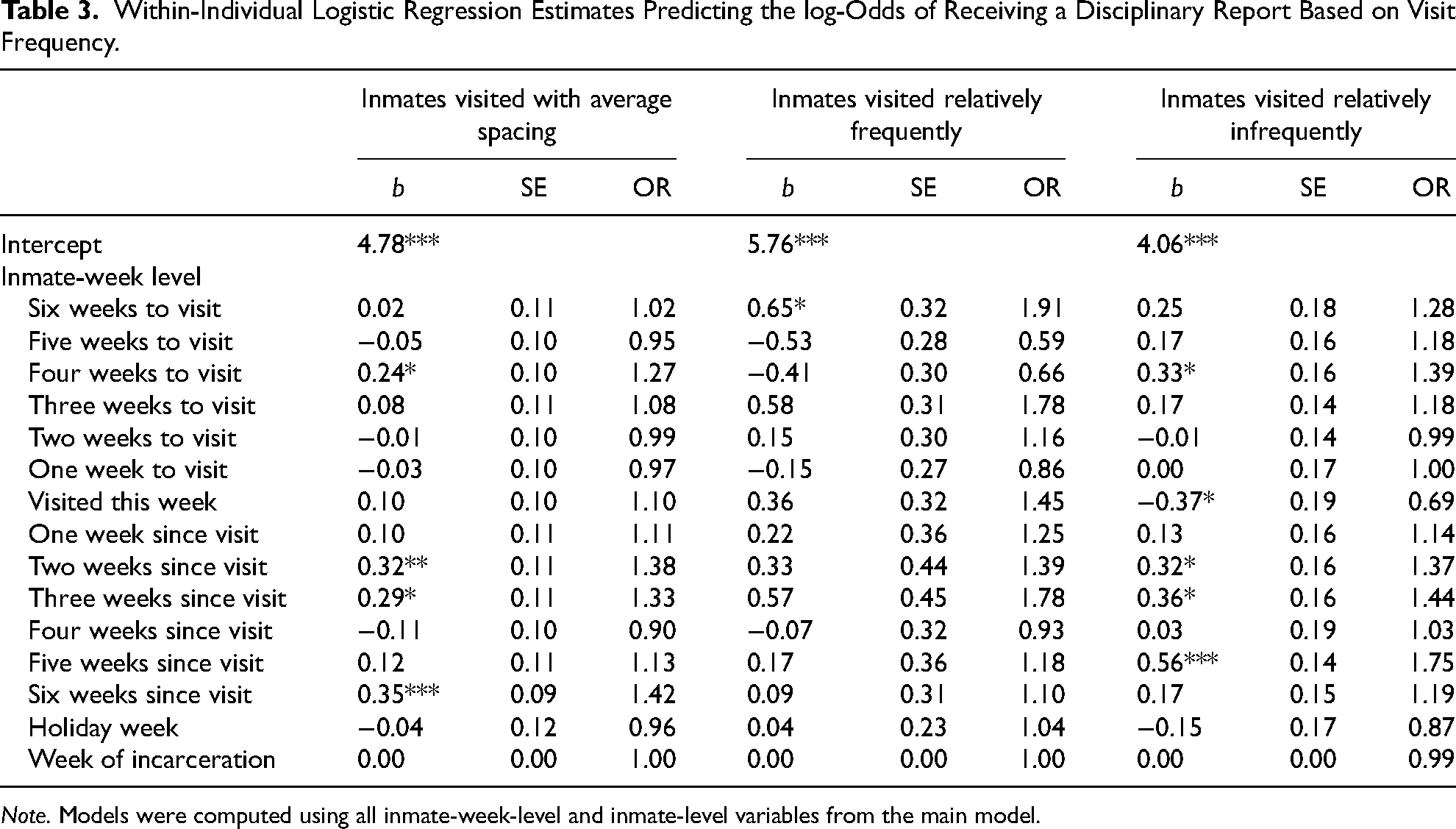
Note. Models were computed using all inmate-week-level and inmate-level variables from the main model.
Despite differences in visit frequency, previsit trends look similar across all groups. Postvisit trends, however, do differ across the groups. Most notably, the log-odds of an infraction are not significant in all postvisit weeks for frequently visited inmates. It should be pointed out that this group receives consistent, frequent visits (i.e., on a weekly basis), which leaves little room for within-person variation. Consequently, we observe higher standard errors for these logistic regression estimates. For inmates in both the average visited and infrequently visited group, the log-odds are significantly higher in several postvisit weeks. After a visit the probability of an infraction increases up to 73 percent higher than baseline for infrequently visited inmates (in week 5) and up to 41 percent higher than baseline for the average spacing group (in week 6).
Discussion
Theory and prior scholarship suggest that inmate behavior may change both prior to and following visits (Adams 1992; Bottoms 1999; Casey-Acevedo and Bakken 2002; Monahan et al. 2011; Toch and Adams 1989), yet little is known about whether and how inmates change their behavior in response to visits. We found that not all visits equally affect inmate infractions and that visits’ effects are not necessarily beneficial as some theory and prior research anticipate. Among our sample of visited Dutch inmates, we found the probability of a disciplinary infraction was similar to average levels in the weeks before a visit. After a visit, inmates’ probability of an infraction increased in the third week following a visit before returning to average levels (controlling for the overlap between visitation windows). These postvisit effects seem to stem from increases in contraband, because postvisit increases were not found for aggression or rule breaking infractions. Strongest effects were found for family and official visits. When inmates were visited frequently, the risk of infractions postvisit was similar to average levels. These findings more broadly raise questions about incentive-based inmate control strategies for achieving prison order, especially those that potentially limit meaningful social contact and consequently, impede rehabilitative goals of punishment.
Our findings counter predictions that inmates may adjust their behavior in anticipation of visits. It is possible that inmates do modify their behavior when visits are considered a privilege (as Siennick et al. 2013 found that inmates’ risk of infractions were consistently lower in the weeks prior to visits), but if visits are legally conferred, and consequently, inmates are certain of their visits, then they seem less likely to adjust their behavior in anticipation of visits. This provides some indirect support that anticipation effects are rooted in management and control (i.e., that inmates anticipate visits and are reluctant to jeopardize them) rather than as acting as a diversion from prison life. Alternatively, it is possible that there is little room for anticipatory benefits in the Dutch incarceration context as inmates are visited relatively frequently and the available programming is quite rehabilitative-focused in comparison to other contexts. Since studies have rarely examined anticipatory effects of prison visits, scholars should attempt to replicate and expand on these findings.
Our findings also counter some visitation research which shows that receiving visits in prison is related to reductions in inmate infractions (Cochran 2012; Cihan et al. 2020; Gonçalves et al. 2016; Woo et al. 2015). The bulk of these studies point to a generalized effect, meaning that receiving visits, in comparison to not receiving visits, seems beneficial for life in prison. Perhaps visits do have a longer lasting impact that occurs later in prison sentences, but has limited or adverse effects in the short-term. Our results did demonstrate that frequent visits seemed to temper negative effects. This coincides with prior work which suggests that the frequency of visit may be more consequential than purely receiving a single visit (Cochran 2012; Cihan et al. 2020). This could be because frequent contact provides more emotional support over time. It is also possible that frequent visitors may be reflective of supportive relationships. That said, a lack of an increase in postvisit effects among the frequently visited group in our data may be due to reduced efficiency in the model estimates or a ceiling effect. As evidenced in Table 3, the baseline levels of infractions (i.e., the intercept) is substantially higher than inmates with an average spacing or relatively infrequent visits (5.76 versus 4.78 and 4.06 respectively). More research is therefore needed to untangle why visits may lead to reductions, and others may not.
Nevertheless, our study is not the first to identify some adverse effects of visits (Benning and Lahm 2016; Casey-Acevedo et al. 2004; Jiang et al. 2005; Lindsey et al. 2017; Siennick et al. 2013). Scholars have proposed several possibilities to explain why some visits may have harmful effects, including negative visitation experiences (Turanovic and Tasca 2019) and pain of separation (Siennick et al. 2013). In this study, however, we see that these harmful effects specifically pertain to increases in contraband infractions. Although Dutch inmates may experience visits, and the separation at the end of each visit, less intensely as they are visited more frequently and imprisoned for short periods of time in comparison to their American counterparts, we doubt that context could fully explain our findings as Siennick et al. (2013) also found strong effects for contraband infractions. This suggests that the label ‘separation effects’ may not fully explain postvisit increases in infractions, but rather these increases could be a result of increased security risks as visits may provide an avenue to bring in prohibited items. Alternatively, these increases could be a reflection of staff reactions to visits. For instance, if staff spotted or are suspicious of a handover during a visit, they may conduct cell inspections which increases the chance of finding contraband. Staff may even police particular visits. Moreover, staff behavior could also explain a lack of association with aggression or rule breaking. If staff know that an inmate just had a stressful visit, they may withhold from writing-up an inmate. Scholars should examine these possibilities. This could include diary studies as self-reported information about inmates visit experiences and misconduct could shed light on these mechanisms. Future studies could also investigate prison staff perspectives to further our understanding of institutional decision making surrounding visits.
While our results generally seem to suggest that Dutch inmates do not experience a lot of stress after visits, we found some suggestive evidence that official visits may be stressful for inmates. Visits from professionals (including lawyers, social workers, probation officers, etc.) increased the probability of infractions in the fifth and sixth week postvisit. Since official visits are on average 5.6 weeks apart, it is possible that the resulting increases are due to a second visit. Perhaps inmates are hopeful after a first visit, but a second visit may bring disappointment, stress or frustration in addressing legal or re-integration needs. This is a likely explanation as we observed in an exploratory analysis that official visits increased the probability of aggressive infractions but had no significant effects on contraband infractions or rule breaking. Also, additional analyses demonstrated that these negative effects stem largely from visits from criminal justice actors (such as police and probation officers). Visits from social workers did not affect inmates’ risk of infractions. While we can only speculate about the mechanism behind this effect, finding an effect of official visits on (aggressive) infractions is an important finding in itself. Most prior studies, including the broader visitation literature, focus on personal visitors, even though lawyers, parole officers, city officials, and social workers are common visitors. Our results at the very least warrant the inclusion of these visitors in future studies, which should also attempt to distinguish between different types of official visitors.
In short, more work is needed to determine when, how, and for whom visits affect institutional misconduct. This study furthered our knowledge about the relative timing of infractions in relation to visits and added substantially to the literature by exploring within-person effects of visits from personal and official visitors in a different population and context. However, as with any study, there are also some limitations that need to be acknowledged and considered when interpreting the findings. As mentioned earlier, our measure of infractions comes from prison records which reflects staff detection and discretion (Bosma et al. 2020), which could bias our results. Future studies which use official infractions data should at least attempt to control for prison unit-level variables. In addition, our estimates may be subject to omitted variable bias (Halaby 2004) as other prison experiences could vary over time and correlate with infractions and visitation. More work is needed to identify relevant time-varying correlates of visitation. Due to the available administrative data on infractions, we were unable to test visits’ effects from admittance into prison for our entire sample. It is possible that previous experiences with visits have already shaped how inmates behave before and after visits. For example, perhaps inmates or their visitors who have been caught smuggling in prohibited items before, have adapted their behavior based on these experiences. While additional analyses using a subset (N = 487) of inmates admitted within the study window did yield similar conclusions, this remains a limitation nonetheless. Finally, although who is visiting is certainly important, it is challenging to isolate the unique effects of each visitor type as inmates can receive visits from multiple visitors at the same time. This issue deserves further study.
Despite these limitations, our study has challenged the idea that visits have anticipatory effects on behavior in prison, led to new interpretations of postvisit increases in infractions, and highlighted several critical questions to be addressed in future work. Based on our conclusions it is understandable that correctional officials, at least in the Netherlands, have increased security measures surrounding visits in recent years. While this may help minimize risks, our study indicates that not all visits nor visitors are of equal risk. Thus, it seems important to find a balance between weighing risks while also creating environments that encourage and promote supportive relationships. The latter is particularly important as social ties are especially crucial for a successful reentry (e.g., Mitchell et al. 2016) and recent research suggests that imposing more constraints and surveillance for visiting may be less effective in reducing recidivism (Turanovic and Tasca 2021). In contrast to risk-focused policies, our study, as well as several American studies (including Cochran 2012; Cihan et al. 2020; Siennick et al. 2013) indicate that frequent visits have the potential for beneficial effects. Correctional officials therefore ought to consider implementing policies like placing inmates in prisons near their social network to increase visit frequency (Berghuis et al. 2022). Also, our study shows that postvisit increases were less pronounced among Dutch inmates, perhaps because they are certain that their visits will occur. While prisons worldwide use visits as a behavioral incentive, and these incentives may result in inmates adjusting their behavior, this study raises important questions about the effectiveness of these strategies, especially if the influence is merely short-lived and only applicable to individuals who might receive visits (which in some U.S. states is quite a small subset of inmates). Not only that, but there are real concerns about using visits for such purposes as it undermines fundamental rights to respect for private and family life (Article 8, European Court of Human Rights) and can hinder the development and maintenance of the social ties that are critical for reaching the ultimate goal of prison systems: improving reentry outcomes.
Footnotes
Acknowledgments
The Dutch Prison Visitation study, as part of the Life in Custody study, was funded by the Dutch Custodial Institutions Agency (DJI) and Leiden University. The opinions, findings, and conclusions expressed in this article are those of the authors and do not necessarily reflect those of the DJI. The authors wish to thank the DJI for their support with the data collection.
Declaration of Conflicting Interests
The author(s) declared no potential conflicts of interest with respect to the research, authorship, and/or publication of this article.
Funding
The author(s) received no financial support for the research, authorship, and/or publication of this article.
Supplemental Material
Supplemental material for this article is available online.

Notes
References
Supplementary Material
Please find the following supplemental material available below.
For Open Access articles published under a Creative Commons License, all supplemental material carries the same license as the article it is associated with.
For non-Open Access articles published, all supplemental material carries a non-exclusive license, and permission requests for re-use of supplemental material or any part of supplemental material shall be sent directly to the copyright owner as specified in the copyright notice associated with the article.
