



Abstract
Objectives: Test the diffusion of responsibility hypothesis by examining associations between the presence, number, and role of co-offenders and adolescents’ perceived responsibility for criminal behavior. Methods: The study uses data from the Crossroads Study, a longitudinal study of 1,216 male adolescents who were arrested for the first time. A series of generalized ordered logistic regressions assess how different features of the group context are linked to adolescent offending. Models first examine the relationship between the presence of a co-offender and adolescents’ perceptions of responsibility for their crime, followed by co-offending specific models examining the impact of the number of co-offenders and role in the co-offense. Results: Adolescents’ perceptions of responsibility for criminal behavior decrease when they co-offend, as the size of the group increases, and when crime is not solely their idea. Conclusions: The study's findings are consistent with the diffusion of responsibility hypothesis, which highlights an important psychological experience tied to the group context. The findings contribute to our understanding of adolescent risky decision-making and shed insight into how the group context may facilitate criminal behavior.
Introduction
Most adolescents ascribe to conventional values and disapprove of criminal behavior, yet many still participate in crime (e.g., Agnew 1994). Reconciling this incongruence has led scholars to consider both individual and situational factors that free individuals from the moral distress or guilt attached to offending (e.g., Cloward and Ohlin 1966; Cohen 1955; Sykes and Matza 1957). Scholars invariably reference how co-offenders can diffuse responsibility for criminal behavior, yet there is limited direct empirical evidence to support this mechanism (e.g., McGloin and Thomas 2016; Wallach et al. 1964). Given that adolescents are especially susceptible to the influence of their peers (and others) and are more likely to be involved in group crime, co-offending may enable an important psychological rationalization by reducing youths’ perceived responsibility and mitigating the consequences of crime (e.g., Reiss and Farrington 1991; Scott and Steinberg 2008; Warr 2002). To understand the implications of engaging in crime with others, the current study evaluates whether group offending contributes to diffused responsibility among a sample of adolescent offenders.
Embedded within explanations of co-offending (e.g., rational choice, social exchange, and collective behavior) is the premise that the presence of others changes how criminal opportunities are perceived and implicates accomplices into criminal decision-making (Granovetter 1978; McCarthy et al. 1998; McGloin and Rowan 2015). Curiously, the diffusion of responsibility associated with engaging in crime with others is often cited as an important experience attached to the group context of offending. Diffused responsibility could be described as a reduction in an individual's perceived appraisal of his/her accountability over their actions or behavior (e.g., Follingstad et al. 2020; Shaver and Drown 1986). Most work on this topic has largely inferred such a process occurs by observing extreme outcomes in group settings (e.g., presence of weapon) or drawing indirect conclusions from laboratory experiments and hypothetical vignettes (e.g., McGloin and Thomas 2016; Wallach et al. 1964).
Understanding whether the presence of others facilitates diffusion of responsibility in criminal events can help explain group offending, particularly during adolescence when both offending and the influence of peers generally peak (e.g., Warr 2002). Although the reduced perception of responsibility may not add to intrinsic psychological benefits when adolescents engage in risky behavior with their peers, it may mitigate emotional distress (i.e., guilt) or complement these benefits by feeling not wholly responsible for the consequences of risky behavior (e.g., Gardner and Steinberg 2005; Sykes and Matza 1957). As the guilt of engaging in illegal behavior does not squarely reside within a single individual, this process can help explain why adolescents who may maintain conventional values are more often involved in group offending (e.g., Warr 2002). This type of work may also provide insight into the specificity of social exchanges attached to group offending (e.g., Weerman 2003). Depending on the size of the group or one's role in the offense (i.e., instigating or following), diffusion of responsibility may be more or less of a salient property of the group context. Ultimately, the current study seeks to expand upon the existing work and evaluate whether the group context and characteristics of the group explain this important exchange attributed to group offending during adolescence.
The Power of the Group
The salience of others in shaping decision-making of individual behavior has piqued the interest of scholars for some time (Asch 1951; Darley and Latane 1968; Le Bon 1896). In Le Bon's (1896) study of the nature of crowds, he argues that a collective mind forms and develops distinct character and behavior that drastically differs from any single individual. Le Bon (1896) attributes this psychological feature of the crowd to explain why individuals may engage in behavior they would previously not consider, suggesting that this deindividuation process unleashes inhibitions and contributes to risky behavior (e.g., Diener et al. 1980).
To test this diffusion of responsibility hypothesis, early work examined how group settings contributed to greater risk-taking in laboratory or classroom settings. In a series of experiments, Wallach et al. (1964) considered whether individuals opted for riskier (and more rewarding) aptitude questions from College Board exams when in groups. Consistent with the diffusion process, Wallach et al. (1964) observed a risky shift in the difficulty of aptitude questions (and corresponding higher payoff) selected by individuals when they had to make such a decision with two other individuals. A similar set of conclusions were drawn from studies examining the impact of groups on children stealing candy or money while trick-or-treating (Diener et al. 1980), the expression of resentment toward parents (Festinger et al. 1952), and the decision to issue monetary fines in a learning experiment (Mathes and Kahn 1975). To some extent, prior work suggests these processes operate more readily among adolescents (De Caroli and Sagone 2014) and nearly all speculate about how diffusion might operate within more serious antisocial behavior. If the presence of others during criminal acts displaces responsibility, such an experience may contribute to the growing recognition of how the social nature of crime impacts offending during adolescence (e.g., Kreager et al. 2016; McGloin and Thomas 2016; Thomas et al. 2020).
Diffusion of Responsibility and Crime
The theoretical underpinnings of the diffusion of responsibility hypothesis implicate several key frameworks in the study of criminal behavior. First, this process directly speaks to efforts aimed at understanding the experience of group offending (e.g., McGloin and Thomas 2016; Reiss and Farrington 1991; Warr 2002). The presence of other offenders is argued to contribute to a number of important “exchanges” experienced by co-offenders, including a diffusion of responsibility (e.g., Weerman 2003). However, while existing research has provided indirect evidence for diffusion of responsibility through identifying associations between co-offending and more violent offending (e.g., Lantz 2020; Tillyer and Tillyer 2019) or a greater likelihood of future delinquency (Walters 2020), this process has not yet amassed direct empirical support. Second, rational choice and offender decision-making scholars have demonstrated the role that perceived guilt has in explaining criminal behavior with some work exploring how peers impact this relationship (e.g., Nagin and Paternoster 1993; Piquero and Tibbetts 1996; Thomas and McCuddy 2020). Interestingly, McGraw (1987:248) argues, “that guilt is a linear function of responsibility…. The greater one's responsibility for a negative outcome, the more guilt one should feel.” If the immediate group context can reduce perceived responsibility for criminal activity, perhaps this feature of offending can contribute to our understanding of how adolescent offenders rationalize guilt associated with behaviors that violate conventional norms (e.g., Sykes and Matza 1957).
Less specific to the group offending literature, diffusion (or denial) of responsibility has been referenced as one of Sykes and Matza’s (1957) techniques of neutralization used by offenders to neutralize the guilt of involvement in criminal behavior. 1 Sykes and Matza (1957) suggest that because most individuals involved in crime experience guilt, view law-abiding others and values favorably, and spend time in prosocial settings alongside law-abiding others that these individuals must neutralize guilt attached to their criminal behavior. Thus, consistent with McGraw (1987); Sykes and Matza (1957) implicate the degree to which one can neutralize responsibility for an offense in understanding how an individual can overcome the attached guilt. Importantly, Cohen (2001) has argued that the denial of responsibility is the “master account” among the available techniques of neutralization, as the redefining of ones’ responsibility can release individuals from personal and social disapproval. Matza (1964) similarly references how private moral beliefs can be overcome by the “shared misunderstanding” of one's peers being more committed to delinquency when in the presence of others. Embedded within this misperception may also be a sense of shared (and perhaps uneven) responsibility amongst those who are perceived to be more delinquent. Recent work documenting the interdependent role others play in facilitating criminal opportunities further suggests that co-offenders may be a propellant of diffused responsibility (e.g., McGloin and Rowan 2015; Warr 2002).
If the presence of others contributes to diffusion of responsibility and is reflected in rationalizations of involvement in crime, then we can further our understanding of the importance the group context has within adolescent offending. Still, a few important empirical and theoretical challenges remain. The most pertinent being that Sykes and Matza (1957) argue that neutralizations occur prior to the decision to engage in crime, otherwise individuals would be less able to escape guilt derived from their involvement. Although some prior work has demonstrated evidence in support of the direction of this relationship (e.g., Agnew 1994), there is very limited support for the pre-crime implementation of these neutralizations (e.g., Cromwell and Thurman 2003; Maruna and Copes 2005). Part of this challenge is methodological, as apart from the use of hypothetical scenarios to explore intentions to offend, it is difficult to capture the exact perception one might have over perceived responsibility just prior to committing a crime.
As a result, research tends to rely on examining rationalizations that occur after the fact to explore these processes (e.g., Maruna and Copes 2005). Scholars have suggested that rationalizations that occur after a crime may still be consistent with a broader and extended neutralizing process exhibited by offenders and that the more likely causal ordering is delinquent acts arriving before rationalizations (e.g., Hirschi 1969; Maruna and Copes 2005). Such an ordering is also consistent with Sutherland’s (1947) expectation that peers can facilitate the acquisition of rationalizations for crime through social and deviant interactions. While the current study acknowledges Sykes and Matza’s (1957) claim that neutralizations should occur before a crime is committed, we contend that if also viewed from a group process perspective, much can still be gained by assessing whether diffusion of responsibility occurs as a result of group offending. We anticipate observing diffused responsibility among adolescents involved in group criminal behavior more than it would be seen among solo offenders. Although solo offenders certainly can deny responsibility, it is the group context that provides a situation where such a rationalization is more readily applicable (e.g., Minor 1981).
Dimensions of the Group Context
Group Size
Diffusion of responsibility originated in the context of explaining behavior in large crowds, which suggests that the size of a group may be an important facilitator of this process. Although most group criminal events involve a small number of accomplices, evidence suggests that variability in group size has important consequences on the nature of criminal acts that have been theorized to be a function of diffusion of responsibility. Relying on official records for juveniles, McGloin and Piquero (2009) observed that the likelihood of a violent offense increases as the group size in each incident increases and that this was not accounted for by whether members of the group had a history of prior violent behavior. This latter finding suggests deviant normative influence may not be sufficient to entirely explain the connection between groups and violent crime (e.g., Conway and McCord 2002). McGloin and Piquero (2009) argue processes such as diffusion of responsibility must be occurring to explain this relationship.
In a study using National Incident-Based Reporting System (NIBRS) data, Lantz (2018) examined whether the severity of the crime and perhaps indirectly diffusion of responsibility, increased as the number of co-offenders increased. Indeed, findings showed that incidents that involved larger groups were more likely to result in weapon use and serious injury. Tillyer and Tillyer (2019) also observed the positive relationship between a number of co-offenders and victim injury risk, but further demonstrated that this effect was impacted by situational characteristics such as whether the crime was motivated by financial gain or if the location had formal guardianship. In addition to situational characteristics, Lantz (2020) found that gender and age conditioned the relationship between co-offending and victim injury. These studies reinforce and clarify the importance of the group context, however, the mechanisms associated with why such consequences are associated with group offending are indirectly inferred based on observed differences in features of the crime.
In perhaps the closest examination of the diffusion process, McGloin and Thomas (2016) distributed experimental hypothetical vignettes to a sample of undergraduate students to discern how the number of others involved in a criminal scenario impacted anticipated rewards and informal costs. McGloin and Thomas (2016) concluded that as the group size in a criminal scenario increases there is a corresponding increase in the expected excitement and inclusion, lower perceived risk of getting caught, and lower perceived responsibility for being involved. Viewed jointly with prior work, these findings suggest that the diffusion process may be experienced differently depending on the size of the group and emphasize the need to continue to evaluate the potency of this specific mechanism across this dimension of the group context.
Role in Offense
Even within group offenses, there are reasons to not expect all individuals to be equally motivated to commit an offense. As Reiss (1988) pointed out, offenders arguably vary in the degree to which they recruit (i.e., instigate) or follow other offenders and these differences may have important consequences for understanding criminal behavior. Subsequent work suggests that there is significant variation in the degree of instigation across offenders and crime types (e.g., McGloin and Nguyen 2012; Warr 1996). One implication of this variability may be that any observed diffusion of responsibility could reflect one's role in a particular offense and not a shared psychological experience.
If it is an individual's idea to commit a crime, perhaps due to some level of expertise or skill, they may be less likely to diffuse their own responsibility. Indeed, instigation may contribute to the acquisition of status, loyalty, or respect from peers that leads to an embrace of responsibility for an offense (e.g., Hochstetler 2001; Matza 1964; Warr 2002). Individuals who “follow” the lead of others may rely on diffusion of responsibility to justify their participation and overcome guilt associated with an offense. Although Warr (1996) and Hochstetler (2001) observed that most criminal events have an identified leader, collective and incremental decision-making within group contexts may lead individuals to perceive their role as something less than as a pure instigator or follower. Among these individuals, diffusion of responsibility may still be an important exchange given that they are not claiming they initiated an offense. Hochstetler (2001) highlights the evolving nature of criminal opportunities that lead certain individuals to be aware of the influence of others just before an offense is committed. Diffusion of responsibility may be at least partially implicated in how these situational peer processes alter offender perceptions of crime. Such distinctions speak to the situational specificity of how rationalizations may be used differently by some within the same offense and offer a more nuanced conceptualization of how diffusion operates (e.g., Minor 1981).
Nonetheless, diffusion of responsibility as a group-based process may be experienced by all individuals involved regardless of one's role. Responsibility may be viewed as being shared by all parties, particularly among adolescents in the early stages of offending. Indeed, given research documenting that the mere presence of others alters other dimensions of risks and rewards associated with crime, it might be expected that diffusion of responsibility operates similarly (e.g., Gardner and Steinberg 2005). Viewed from this perspective, variability in instigation across individuals suggests that instigation is not solely the result of some individual trait (e.g., Warr 1996). This may imply that exchanges of co-offending—including diffused responsibility—are tied to the act of being in a group and less with a specific role (e.g., Warr 1996; Weerman 2003). If this is the case, we might also anticipate there to be limited distinction in how youth view their responsibility based on their perceived role in the crime.
Importantly, a consideration of multiple dimensions of the group (i.e., size and role) can better clarify whether and how diffusion of responsibility operates. If diffusion of responsibility is purely a function of the number of others present, then a role in a co-offense may not have any impact on perceived responsibility. Alternatively, diffusion of responsibility does not assume the process occurs equally across actors. Variation in co-offense roles may reflect how adolescents enter these criminal situations and signal the applicability of the use of such a rationalization (e.g., Minor 1981). Therefore, the current study seeks to provide insight into whether diffusion is purely a function of the presence of (more) others, as originally articulated, or whether the organizational structure of a co-offending matter in contextualizing responsibility.
Current Study
To move beyond indirect evidence regarding this exchange attributed to group offending, the focus of the current study seeks to empirically evaluate whether diffusion of responsibility is experienced by adolescents involved in group offenses. The current study relies on a unique sample of adolescents involved in crime to consider whether group offenders are more likely to perceive reduced responsibility relative to solo-offenders, and how this process unfolds within co-offenses depending on the number of other co-offenders and an individual's role in the offense. This study offers an opportunity to capture whether adolescents experience diffusion of responsibility at a particularly important crossroad in their developmental and offending trajectories. The sample of adolescents provides a window into a formative period of moral and legal socialization that may inform how adolescents interpret responsibility generally (e.g., National Research Council 2013). As first-time justice-involved youth, although diffusion of responsibility can occur without official justice system contact, these youth may be evaluating responsibility seriously for the first time. Ultimately, the current study explores multiple dimensions of the group nature of offending and its role in diffusing responsibility among adolescents.
Data and Methods
Data
The present sample includes 1,216 justice-involved male adolescents from the Crossroads study (http://sites.uci.edu/crossroadsinfo/). Participants were recruited from three sites: Orange County, California (N = 532); Philadelphia, Pennsylvania (N = 533); and Jefferson Parish, Louisiana (N = 151). Participants had been arrested for the first time for a range of low-level offenses such as vandalism (17.5%) and theft (16.7%). Adolescents were between the ages of 13 and 17 years (M = 15.29, SD = 1.29) at their first interview, which took place within 6 weeks after receiving the case disposition for their first arrest. A representative of the disproportionate number of racial/ethnic minority adolescents who come into contact with the justice system, the current sample was racially/ethnically diverse, with 45.8 percent identifying as Latino, 36.9 percent as Black, 14.8 percent as White, and 2.5 percent as a self-identified other race. In the current study, 22 youth with missing information on at least one covariate, resulting in a final analytic sample of N = 1,194.
Procedure
Before interviews were conducted, signed parental consent and youth assent were obtained from all participants. Information about what the study would entail was provided to participants, and they were also provided with a detailed overview of the Privacy Certificate from the Department of Justice. This Privacy Certificate states that participants’ identities and responses are protected from subpoenas, court orders, or any other type of involuntary disclosure. Participants were also informed that participation in the study was completely voluntary. All study procedures were approved by the Institutional Review Board at each of the three interview sites. Participants were recruited using the information provided by the courts in Orange County, Philadelphia, and Jefferson Parish. Interviews were conducted face-to-face by trained research assistants using a secure, computer-administered program. Interviews lasted ∼2 to 3 h and took place in the youth's home, at a coffee shop in the participant's neighborhood, or in an institution if the youth was residing in a secure facility at the time of the interview. Participants received $50 for completing their first baseline interview.
Dependent Variables
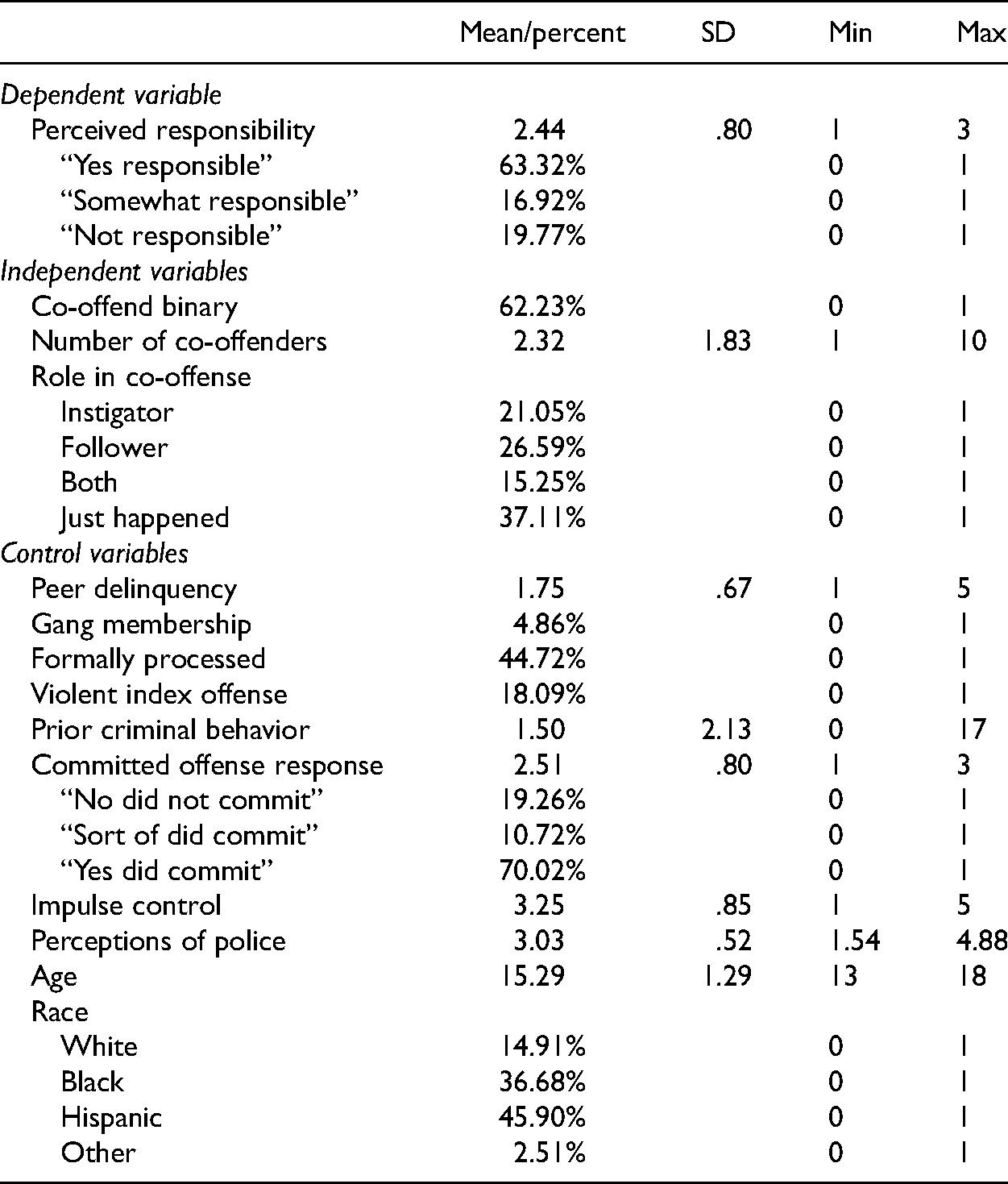
To capture youths’ perceived responsibility for the offense, they were asked, “Were you responsible for what happened (was it your fault)?” 2 Participants responded on a 3-point scale with “no” (1), “somewhat” (2), or “yes” (3). Approximately 19.77 percent of participants reported not being responsible at all for their crime, 16.92 percent being somewhat responsible, and 63.32 percent that they were responsible. Thus, even though all youth enrolled in the current study were adjudicated by the justice system, 3 ∼37 percent believed they were not entirely responsible for the offense.
Independent Variables
Youth self-reported whether there were co-offenders present when they committed their crime. In the context of other offenders, participants were asked, “Was anybody with you when the offense happened?” with response options being “0 = no” and “1 = yes.” This question was used to generate a binary indicator of the presence of co-offenders. If youth reported the presence of co-offenders, they were then asked to indicate the number of co-offenders, names, gender, and age of co-offenders. In line with previous research suggesting that adolescents are disproportionately more likely to commit crimes in groups (e.g., Reiss and Farrington 1991; Scott and Steinberg 2008; Warr 2002), ∼62.23 percent of adolescents in the present sample reported co-offending, with youth reporting an average of 2.32 co-offenders. A small number of youth (N = 14) were outliers in the reported number of co-offenders (e.g., 100). To address this, the number of co-offenders was top coded at 10. Even within a co-offense, an individual's role may vary as individuals may instigate or follow others and this may correspond to one's perception of responsibility (e.g., McGloin and Nguyen 2012; Reiss and Farrington 1991). To explore this, youth in the study were asked about their role in the offense, “Was doing the offense your idea or someone else's idea?” Responses were “my idea,” “someone else's,” “both,” and “it just happened.” Among co-offenders, 21.05 percent indicated it was their idea (i.e., instigation), 26.59 percent said it was someone else's idea (i.e., follower), 15.25 percent said it was both their and someone else's idea, and 37.11 percent said it just happened (Table 1).
Descriptive Statistics on Study Variables (N = 1,194).
Control Variables
To address factors that may be related to both the likelihood of group offending and one's perception of their responsibility, a variety of control variables were accounted for. To account for the extent to which individuals are associated with deviant peer groups, peer delinquency was included as a covariate. Peer delinquency was examined using a measure adapted from Thornberry et al.'s (1994) delinquent peers scale. Participants responded to 13 items assessing the number of their friends that engaged in antisocial behavior (e.g., “How many of your friends have taken a motor vehicle or stolen a car?”). Responses ranged from 1 “none of them” to 5 “all of them.” The 13 items were averaged to create an overall indicator of peer delinquency (M = 1.75, SD = .67, range = 1–5). Higher scores indicate greater peer delinquency. Whether or not participants were members of a gang was assessed by asking participants, “Did you join a gang, or have you been a member of a gang at any time?” Responses were 1 “yes” or 5 “no.” We included gang membership as a covariate to account for whether youth may have used gang involvement to potentially rationalize engaging in criminal behavior. Approximately 4.86 percent of participants had been a member of a gang.
Data on the type of initial justice system processing (i.e., 1 = formal, 0 = informal) for each youth's index offense was obtained from the Department of Probation at each study site. Adolescents who were processed formally (44.72 percent, N = 534) had their cases adjudicated and needed to appear in court, whereas informally processed youth (55.28 percent, N = 660) were diverted from court and had their cases handled by probation. Justice system processing was included as a covariate to account for potential differences in how youth perceived their level of responsibility for their crime based on the degree of involvement with the system. The index offense committed by participants to be eligible for the Crossroads study was categorized as either violent (18.09 percent, N = 216) or non-violent (81.91 percent, N = 978) in nature. Prior research suggests that the presence and number of co-offenders can vary by crime type (van Mastrigt and Farrington 2009). As such, we accounted for whether a youth's index offense was violent or non-violent in the present analyses. Criminal behavior during the six months preceding participants’ first arrest and enrollment in the study were examined using the self-report of offending scale (Huizinga et al. 1991). Participants self-reported their involvement in 24 different criminal activities ranging from theft to drug dealing to homicide, and a variety score was calculated to indicate the number of different types of crimes that youth had committed (M = 1.50, SD = 2.13, range = 0–17). Variety scores are widely used in criminological research and are highly correlated with the severity of antisocial behavior (Hindelang et al. 1981; Thornberry and Krohn 2000). Offending variety prior to the study was included as a covariate in the current analyses to account for any initial differences in youths’ criminal behaviors.
Although youth enrolled in the study were adjudicated by the juvenile justice system, many perceived that they did not actually commit the crime they were charged with. This could reflect a disagreement over charging language or that a youth believed they did not legally or physically commit a crime—both of which may impact how they perceive their responsibility. To capture whether youth believed they committed the offense, youth were asked, “Did you do the offense that you were charged?” Response options were “no” (1), “sort of” (2), or “yes” (3). Approximately 19.26 percent of youth said that they did not do the offense they were charged with, 10.72 percent responded with “sort of,” and 70.02 percent said that they did do the offense. Although this measure is significantly correlated with the outcome measure of responsibility at the bivariate level, it is not a perfect predictor of perceived responsibility. For example, nearly 22 percent of youth who said that they did commit the offense indicated that they were somewhat or not responsible for the offense.
Impulse control was also included as a covariate to account for the fact that youth who think less about consequences and act without deliberation may view responsibility for their actions differently. Impulsivity was examined during the baseline interview using a subset of the Weinberger Adjustment Inventory (Weinberger and Schwartz 1990). Eight items assessed participants’ impulsivity (e.g., “I stop and think things through before I act”). Youth were asked to self-report the degree to which each statement reflected their behavior, with responses ranging from 1 “false” to 5 “true.” Some of the eight items were reverse coded and then averaged to create an overall indicator of impulsivity (M = 3.25, SD = .85, range = 1–5). Higher scores indicate greater impulse control.
When individuals perceive the police as less legitimate or unfair, they may feel more justified in committing crimes (Tyler 1990). As such, participants’ perceptions of the police were included as a covariate in the present analyses. Participants’ perceptions of police were assessed using Tyler’s (2002) measure of justice system legitimacy, which taps several dimensions of treatment by police: correctability, ethicality, representativeness, and consistency. Youth were asked 18 questions regarding their perceptions of police (e.g., “I have a great deal of respect for the police,” or “The police considered the evidence/viewpoints in this incident fairly”) and indicated their level of agreement with those statements using a 5-point Likert scale ranging from 1 “strongly disagree” to 5 “strongly agree.” The 18 items were averaged to create an overall indicator of participants’ perceptions of police (M = 3.03, SD = .52, range = 1–5), with higher scores indicating higher levels of perceived police legitimacy. Lastly, youth self-reported their age (M = 15.29, SD = 1.28) and race/ethnicity (14.91 percent White, 36.68 percent Black, 45.90 percent Latino, and 2.51 percent self-identified as other).
Analytic Strategy
First, we examine the bivariate associations between each of the main study variables. Next, based on the ordinal nature of the dependent variable, a series of generalized ordered logistic regressions are estimated. An assumption of these models is that the effect of covariates on each outcome group (i.e., not responsible, somewhat, yes responsible) are the same between groups, otherwise known as the proportional odds/parallel-lines assumption (e.g., Williams 2006). For example, this implies that the effect of co-offending on the likelihood of a youth perceiving they are not responsible for an offense compared to all higher categories of perceived responsibility is the same as the effect of co-offending on perceiving that they are somewhat responsible versus fully responsible. As such, a series of partial proportional odds regression models were run utilizing Stata 16.0's gologit2 command that relaxes the proportional odds/parallel-lines assumption only for those covariates that violate the assumption. For this reason, the effect of some covariates is not the same across each level of the dependent variables and separate coefficients will be reported accordingly that reflect cumulative logit models (Williams 2006). Models will first consider the binary indicator of the presence of a co-offender, followed by co-offending specific models that separately examine the impact of the number of co-offenders and their role in the co-offense. The final model will consider the joint effects of the number of co-offenders and their role in the co-offense in predicting perceived responsibility.
Results
Bivariate Analyses
The correlations presented in Table 2 display each of the bivariate associations of the main study variables. Importantly, whether youth engage in a co-offense (p < .001) and the number of co-offenders (p < .001) are negatively related to perceived responsibility. Instigation of the offense (p < .01), whether youth state they committed the offense (p < .001), and perceptions of the police (p < .001) are positively related to perceived responsibility. There is not a significant bivariate correlation between formal processing of youth and perceived responsibility.
Bivariate Analyses of Study Variables.
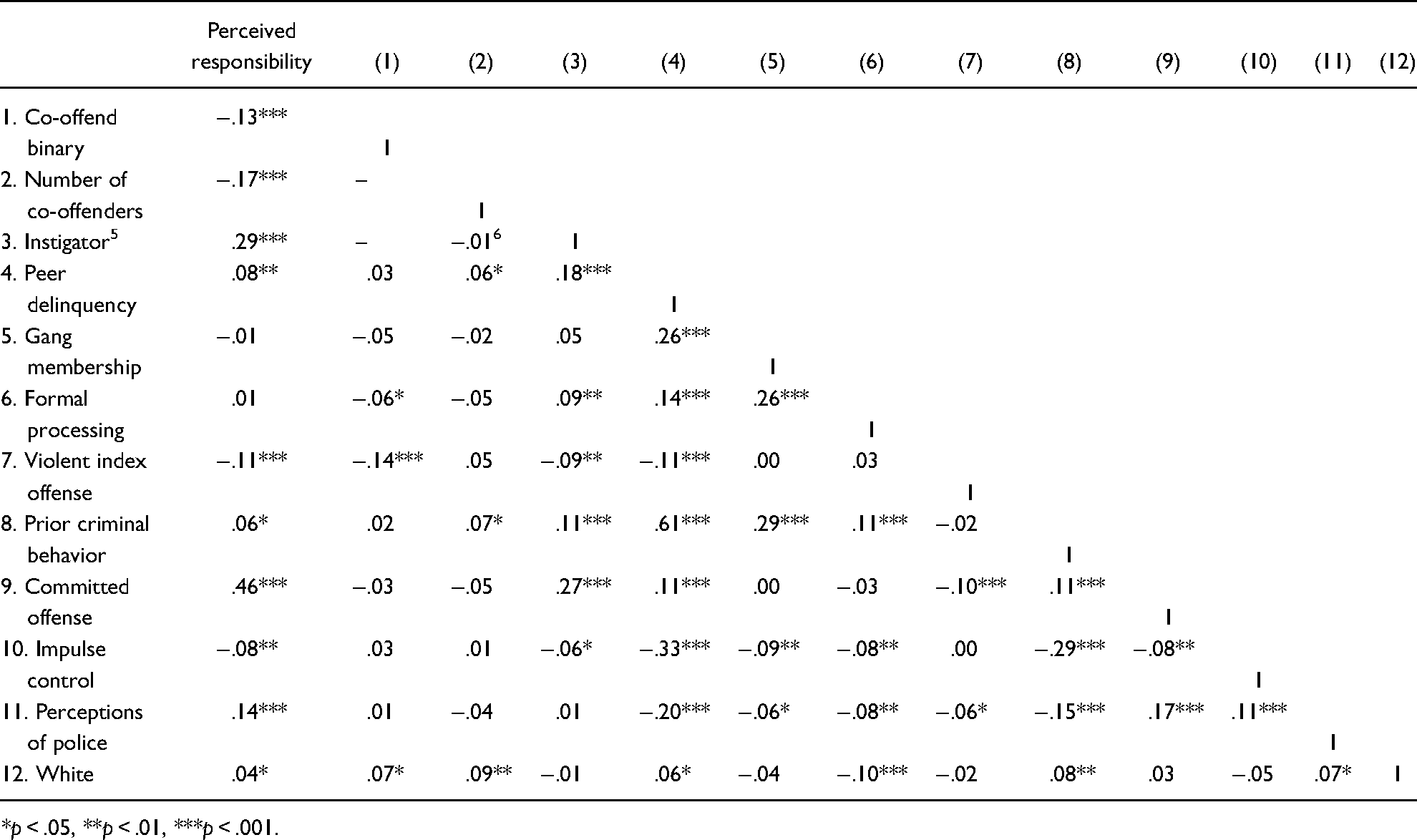
*p < .05, **p < .01, ***p < .001.
Generalized Ordered Logistic Regression Analyses
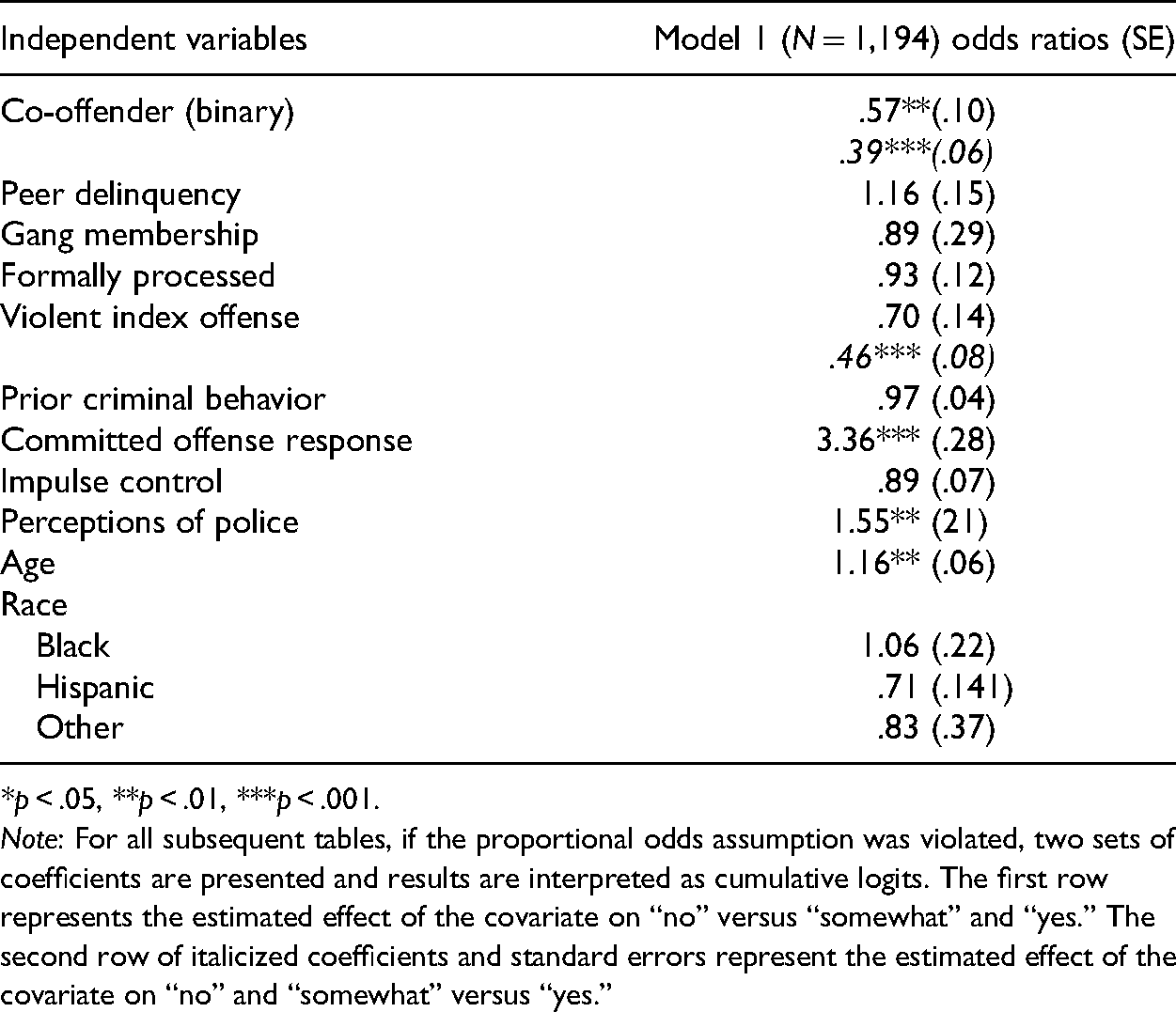
Across the generalized ordered logistic regressions, odds ratios that are <1 indicate that youth were less likely to respond to higher response categories (i.e., somewhat responsible and yes responsible). Results from Model 1 (Table 3) indicate that when youth engaged in a crime with a co-offender, they were more likely to indicate they were less responsible for the crime. The effect of co-offending violated the parallel odds assumption, such that the effects of co-offending varied in a consistent direction across the response outcomes. Youth who engaged in a co-offense were statistically more likely to indicate they were not responsible versus being somewhat or responsible for the offense (OR = .57, p < .01) and were more likely to indicate they were not responsible or somewhat responsible versus responsible for the offense (OR = .39, p < .001).
Ordinal Logistic Regression Results—Co-offender Binary.
*p < .05, **p < .01, ***p < .001.
Note: For all subsequent tables, if the proportional odds assumption was violated, two sets of coefficients are presented and results are interpreted as cumulative logits. The first row represents the estimated effect of the covariate on “no” versus “somewhat” and “yes.” The second row of italicized coefficients and standard errors represent the estimated effect of the covariate on “no” and “somewhat” versus “yes.”
Figure 1 presents the average marginal effects of youth who engaged in a crime alone compared to those who co-offended across each category of responsibility. Those who committed a group offense had a 7 percentage point greater probability of stating they were not responsible (SE = .02, 95percent CI = .03, .11, p = .001), a 14 percentage point greater probability of stating they were somewhat responsible (SE = .03, 95 percent CI = .09, .18, p = .000), and a nearly 20 percentage point reduced probability of stating they were responsible (SE = .03, 95 percent CI = −.26, −.14, p = .000). Youth who were older (p < .01), perceived the police more favorably (p < .01), indicated they committed the offense they were charged with (p < .001) were significantly more likely to indicate that they were responsible for the crime. Interestingly, having a violent eligibility offense was significant and violated the parallel odds assumption. Youths who committed a violent eligibility offense were more likely to indicate they were not responsible or somewhat responsible versus responsible for the offense (OR = .46, p < .001)
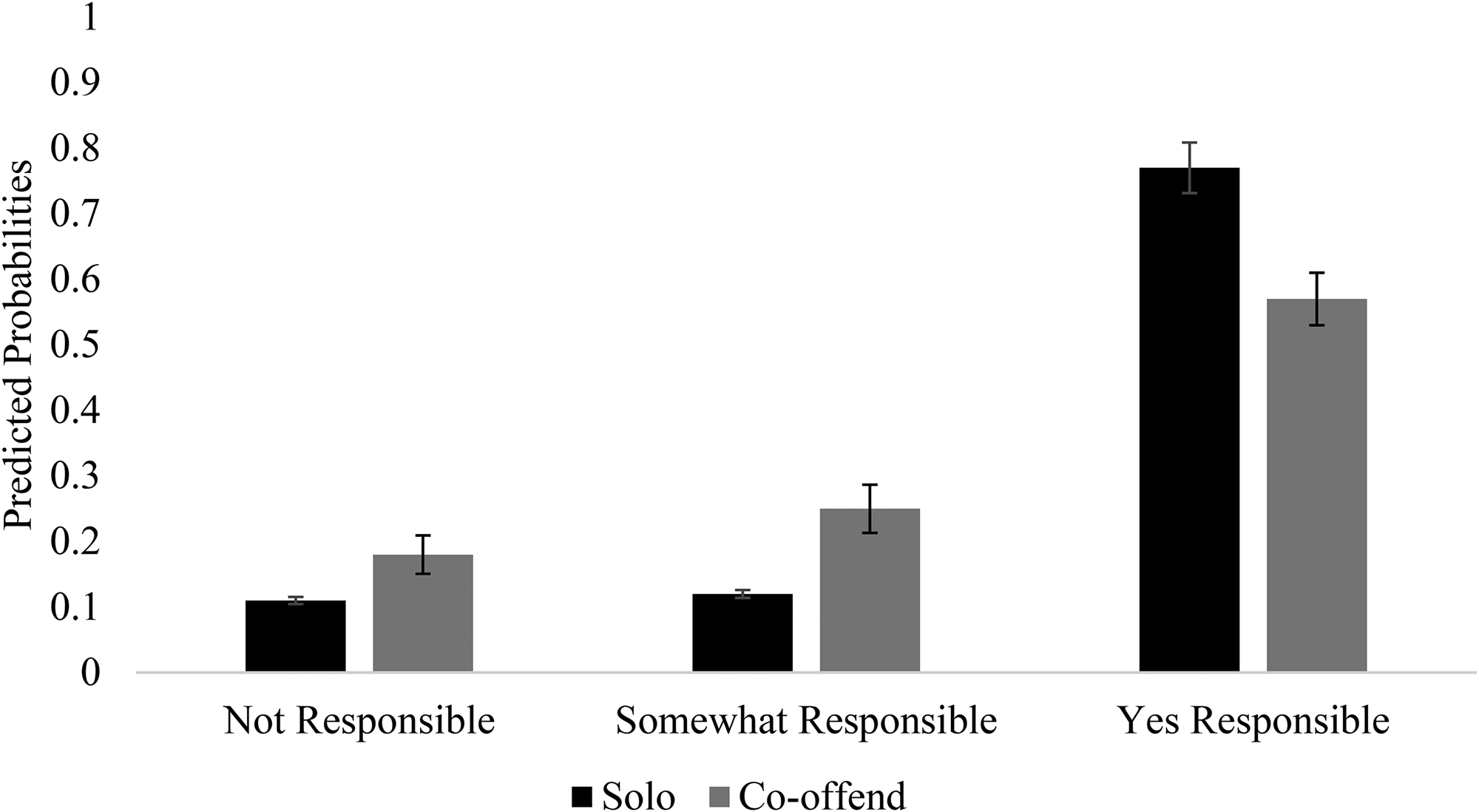
Predicted marginal effects of co-offending on perceived responsibility, with 95 percent CI.
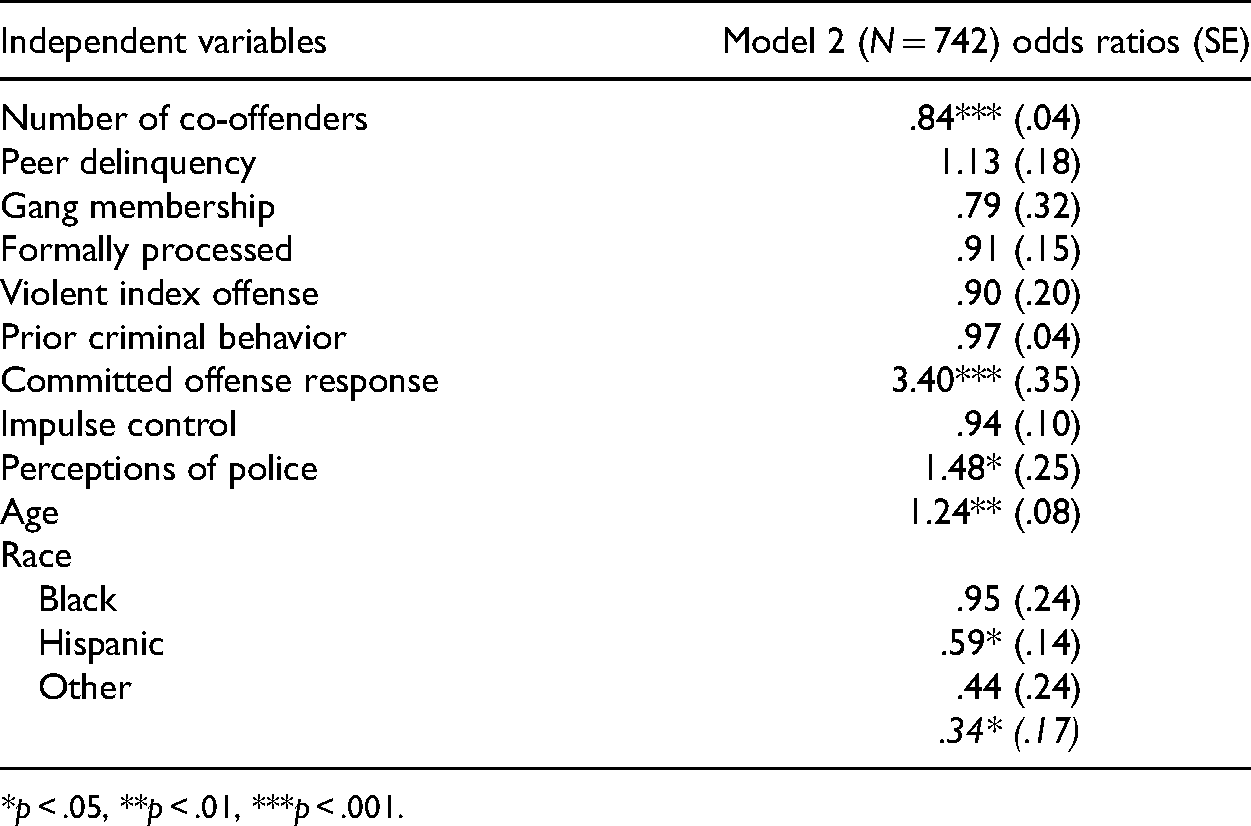
Table 4 presents the findings for the relationship between the number of co-offenders and perceived responsibility. 4 Among youth who engaged in a co-offense, as the number of co-offenders increased there were significant reductions in perceived responsibility (OR = .84, p < .001).
Ordinal Logistic Regression Results—Number of Co-offenders.
*p < .05, **p < .01, ***p < .001.
Figure 2 shows the predicted marginal effects of the number of co-offenders on the likelihood of endorsing each response to the responsibility outcome. As the number of co-offenders involved in a crime increases the predicted probability of a youth stating he was responsible significantly declines and conversely the likelihood that a youth states he was somewhat or not responsible increases.
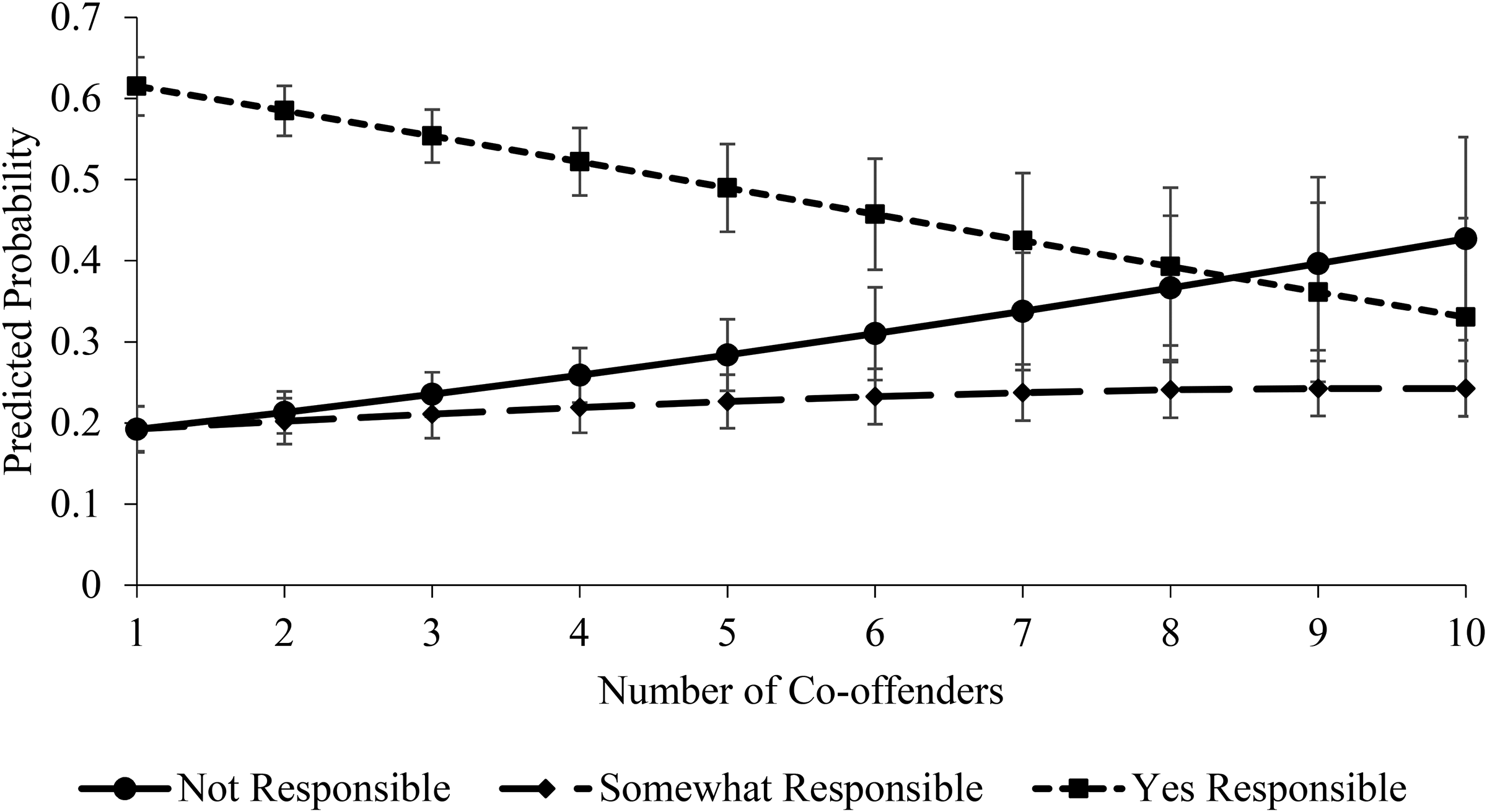
Predicted marginal effects of a number of co-offenders on perceived responsibility, with 95 percent CI.
Compared to White youth, Hispanic youth were more likely to indicate they were less responsible (p < .05). Youth who were older (p < .01), had more favorable perceptions of police (p < .05), indicated they committed the offense they were charged with (p < .001) and were more likely to indicate that they were responsible for the crime.
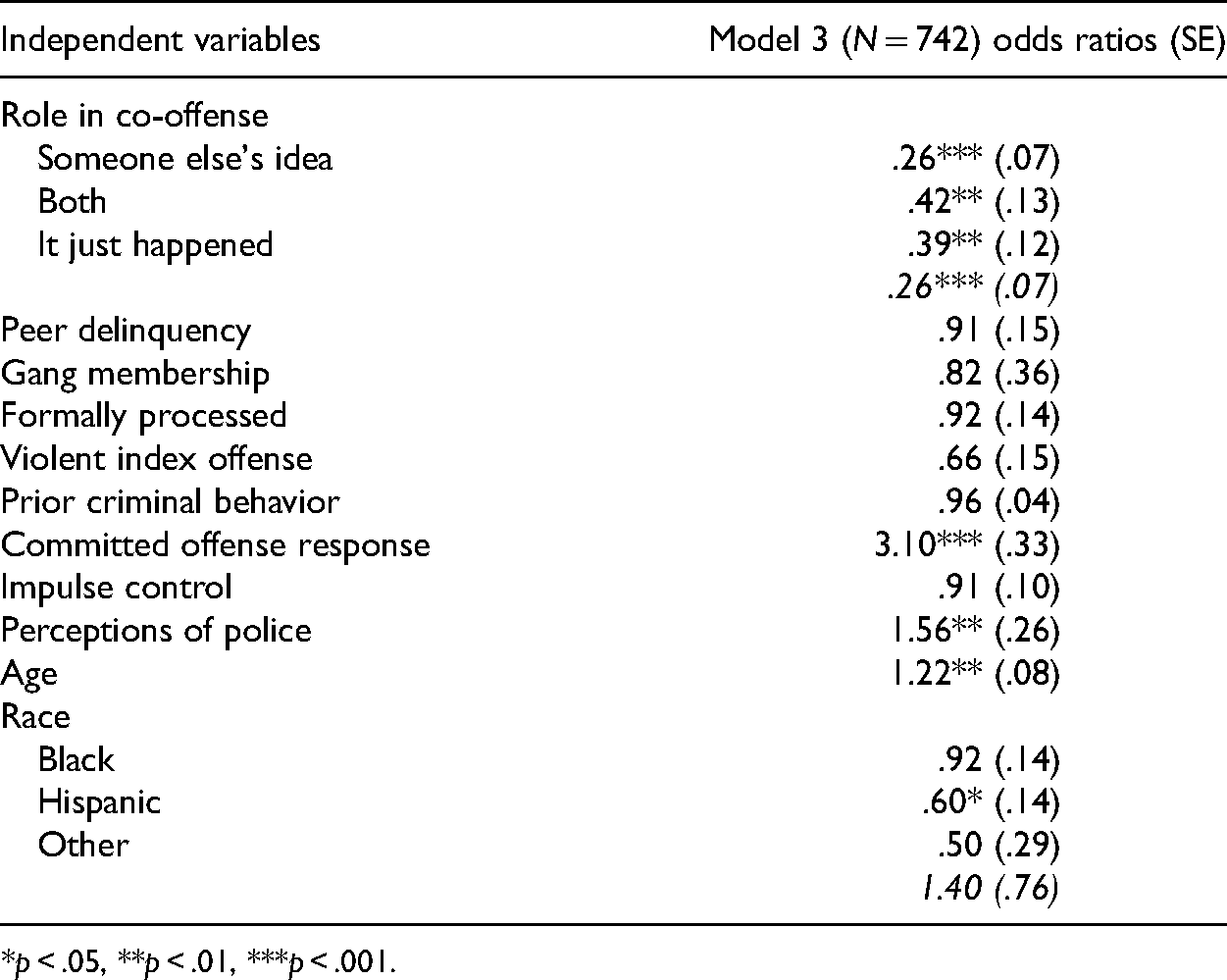
Table 5 presents the results for the impact of the co-offender role has on perceived responsibility. Instigation of an offense is the reference category in all models. Compared to individuals who instigated the group offense, followers were significantly more likely to indicate that they were less responsible for the offense (OR = .26, p < .001).
Ordinal Logistic Regression Results—Role in Co-offense.
*p < .05, **p < .01, ***p < .001.
Figure 3 shows the average marginal effects analyses that indicate, relative to those who led the offense, co-offenders who indicated it was someone else's idea were 17 percentage points more likely to indicate they were not responsible (SE = .03, 95 percent CI = .10, .24, p < .001), 13 percentage points more likely to indicate they somewhat responsible (SE = .03, 95 percent CI = .07, .18, p < .001), and 30 percentage points less likely to indicate they were responsible (SE = .06, 95 percent CI = −.40, −.08, p < .001).
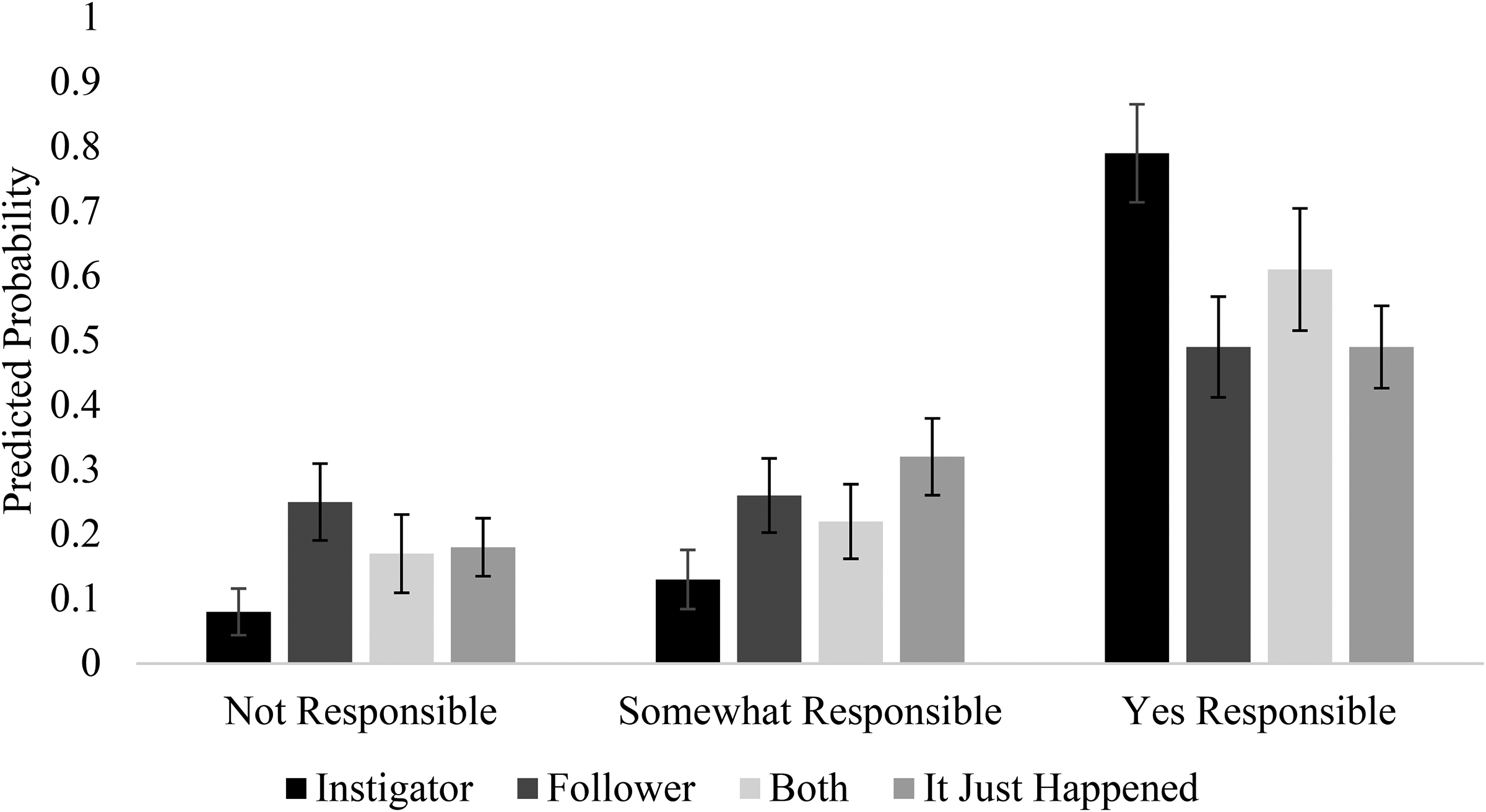
Predicted marginal effects of role in co-offense on perceived responsibility, with 95 percent CI.
Results also indicated that youth who stated it was “both” their idea and someone else's (p < .01) and youth who indicated “it just happened” (p < .001) were more likely to indicate that they were less responsible for the offense compared to those who instigated the offense. Of note relative to instigators, the effect of youth who stated “it just happened” violated the parallel odds assumption such that these youth had an even greater odds of stating that they were either not responsible and somewhat responsible compared to stating they were responsible (OR = .26, p < .001). Alternative specifications of the reference category were also considered. Results suggest that there were no differences in the effect of being a follower relative to youth who state “it just happened” or youth who stated they were “both” an instigator and follower relative to youth who stated, “it just happened.” Youth who adopted follower roles were significantly less likely to indicate that they were responsible than youth who stated they were “both” instigators and followers (p < .05). Compared to White youth, Hispanic youth were more likely to indicate they were less responsible (p < .05). Youth who were older (p < .01), viewed police more favorably (p < .05), and stated they committed the offense (p < .001) were more likely to indicate that they were responsible for the offense.
Finally, Table 6 presents the results where the effects of the number of co-offenders and the role in the co-offense are jointly considered. Results indicate that both features of the group context are statistically significant and relatively consistent with effects shown in prior separate models. As the number of co-offenders increased in an event, youth were significantly more likely to state they were less responsible (OR = .84, p < .001). Relative to instigators, followers were significantly more likely to indicate that they were less responsible for the offense (OR = .26, p < .001). Similar effects also emerged from previous models when the reference category was rotated across each role in the co-offense.
Ordinal Logistic Regression Results—Number of Co-offenders and Role in Co-offense.
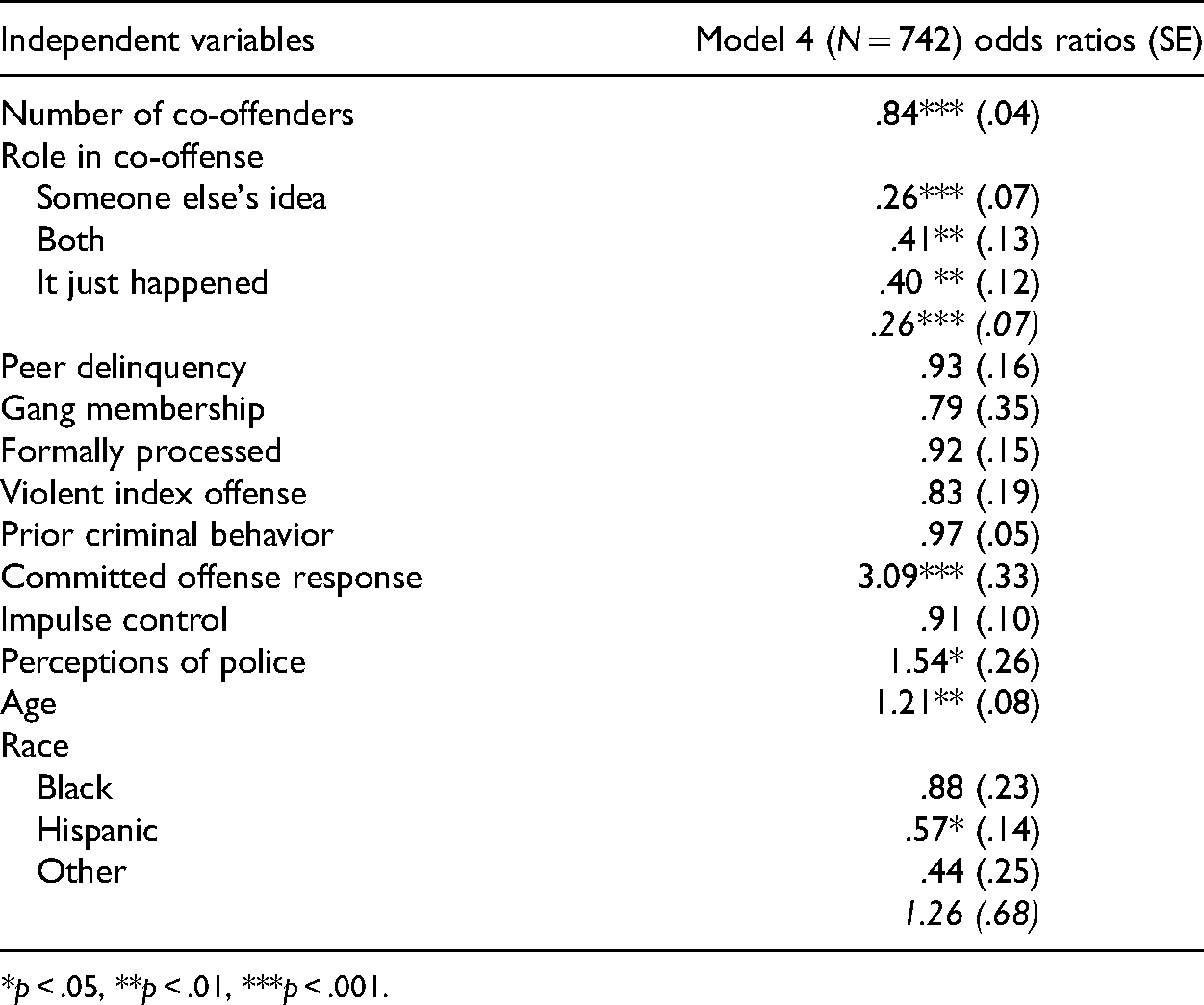
*p < .05, **p < .01, ***p < .001.
Figure 4 shows the average marginal effects analyses for the effects of the number of co-offenders on perceived responsibility, which indicate a similar declining trend in perceived responsibility as the number of co-offenders increases. Figure 5 shows the average marginal effects analyses for the effect of the role in a co-offense. Results were nearly identical to the previous average marginal effects analyses that indicated those youth who identified as a follower were significantly less likely to state they were responsible (p < .001) and more likely to indicate they were not (p < .001) or somewhat (p < .001) responsible.
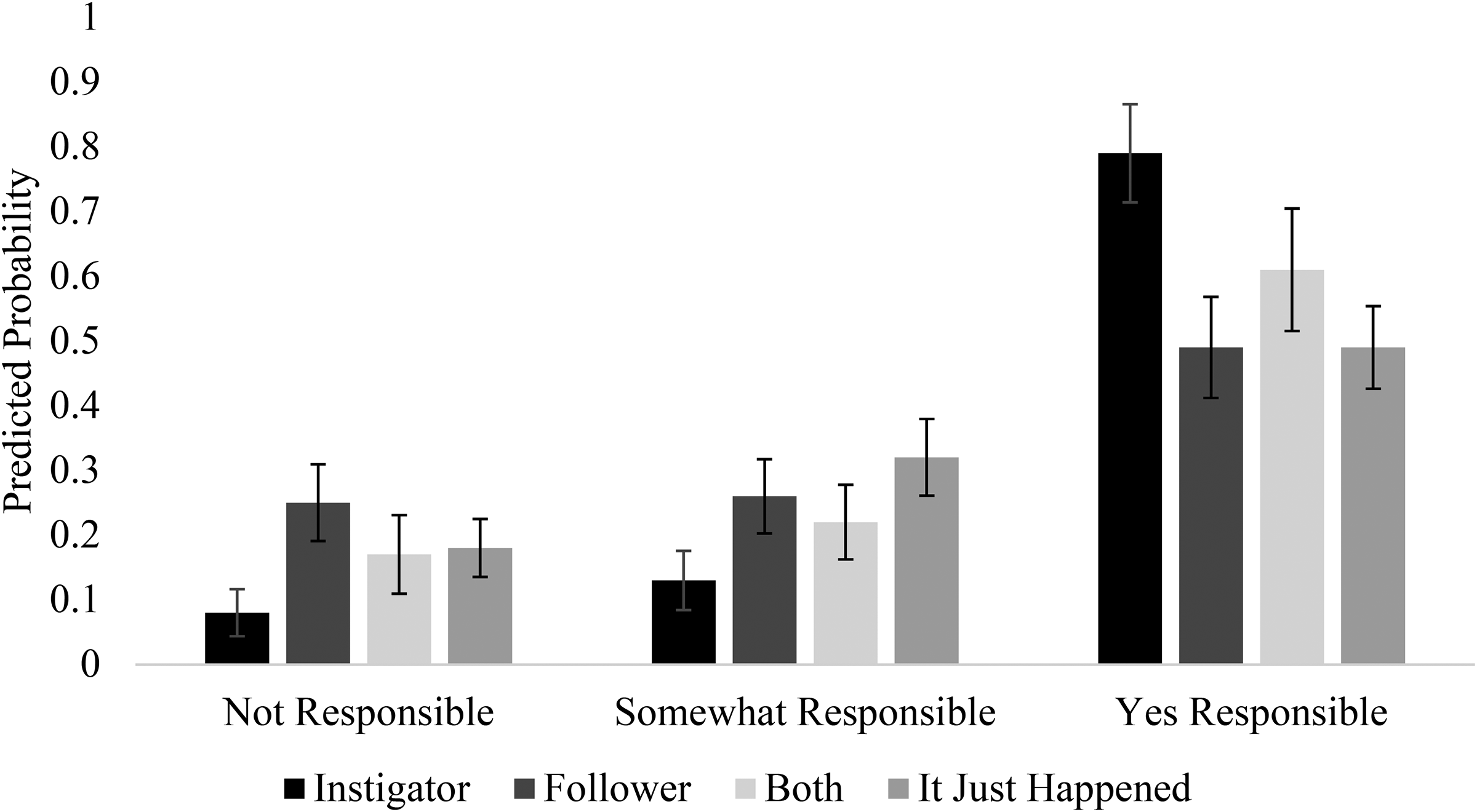
Predicted marginal effects of role in co-offense on perceived responsibility while accounting for a number of co-offenders, with 95 percent CI.
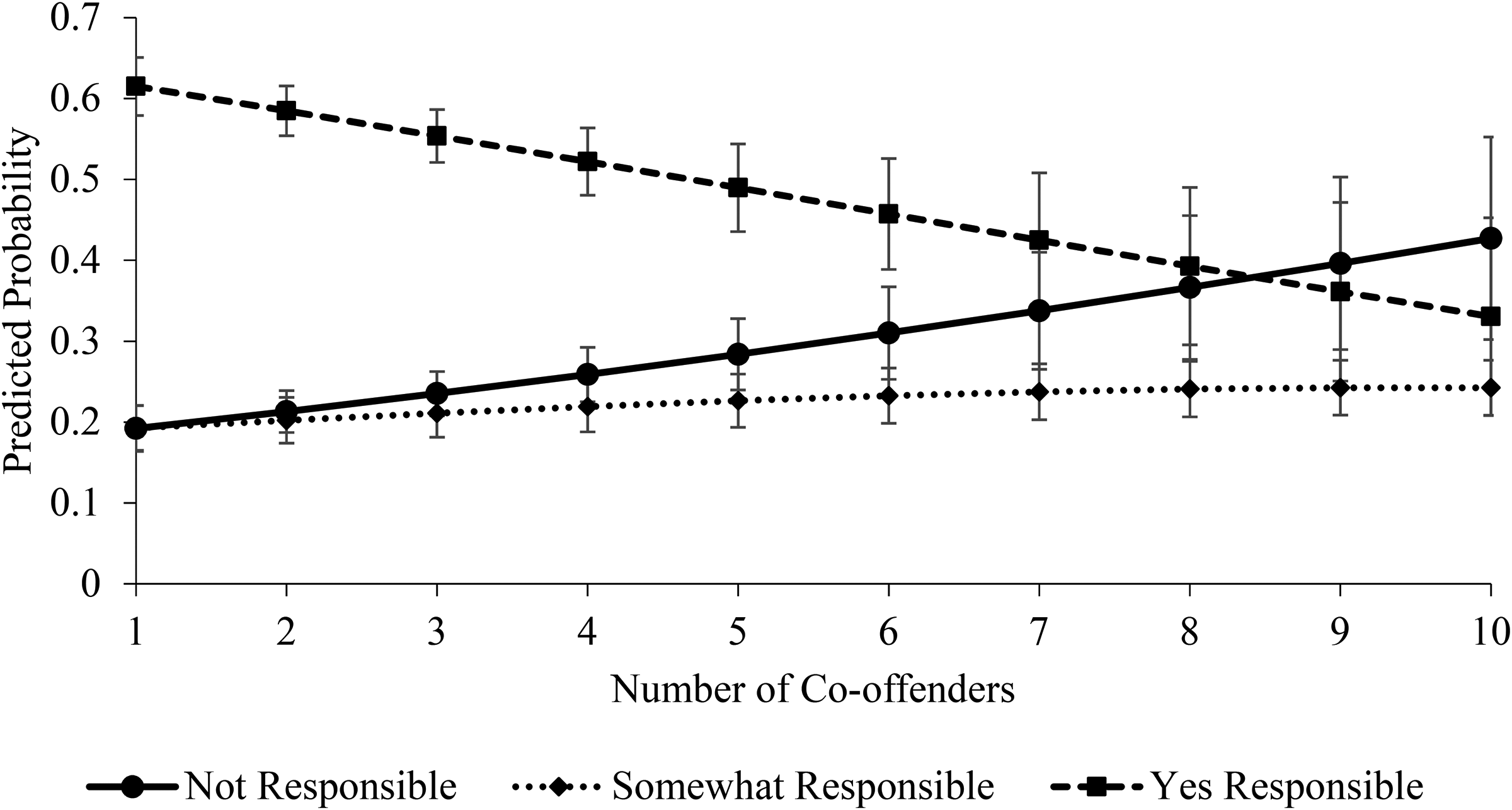
Predicted marginal effects of a number of co-offenders on perceived responsibility while accounting for a role in co-offense, with 95 percent CI.
Discussion
The group context of crime is more than a mere incidental feature of criminal behavior, as it offers several key benefits that facilitate criminal behavior and alter the offending experience (e.g., Warr 2002; Weerman 2003). Diffusion of responsibility has been suggested to be one of the social exchanges of group offending that contributes to perceived reductions of informal sanctions that inhibit risky or criminal behavior (e.g., Rebellon et al. 2010). Further, these social exchanges are perhaps most relevant during adolescence when group offending is most prevalent (e.g., van Mastrigt and Farrington 2009). The current study used a large multisite sample of justice-involved adolescents to examine diffusion of responsibility. Importantly, we investigated adolescents’ perception of responsibility for the first offense for which they were arrested, shedding light on a critical period of development and offending that could impact criminal recidivism and further justice system involvement. Results from this study provide supportive evidence to show that adolescents rationalize their own behavior through a diffused sense of responsibility when engaging in crime with others and that this process is a function of both the general presence of (more) others and the specific role within an offense.
The findings may seem self-evident, as it is probabilistically more likely for individuals to believe they are less responsible for their behavior as the number of other people present increases. Nonetheless, this is a mechanism inherent to the group context that illustrates the consequential psychological dynamics involved when engaging in crime with others during a developmental period heavily impacted by one's social environment. Importantly, a variety of other factors that could influence how responsibility is viewed (i.e., interactions with police, whether youth state they committed the crime) were studied and controlled for in our analyses.
In addition to the finding that the binary measure of whether youth engaged in a co-offense predicted lower perceived responsibility, diffusion of responsibility also varied by two key characteristics of the group—the number of other co-offenders and the role occupied by a co-offender. The fact that we observe diffusion of responsibility in relatively small groups and that it increases as more co-offenders are involved reinforces the salience of this process within criminogenic settings that are common during adolescence. These findings support prior indirect evidence that diffusion of responsibility explains the positive relationship between the number of co-offenders and the violence/severity of an offense (e.g., Lantz 2018, 2020; McGloin and Piquero 2009; Tillyer and Tillyer 2019). In the model examining the binary measure of co-offending, youth who engaged in a violent index offense were significantly more likely to indicate that they were not or somewhat responsible relative to stating they were responsible. Supplemental analyses (not shown) suggest that person-oriented offenses (mostly assault and battery) had significantly more co-offenders present compared to other offense types. Indeed, this covariate did not emerge as statistically significant in models that only included those who engaged in co-offending, indicating that the size of the co-offending group may be related to violent offending. Future work may want to consider more precisely how group size is tied to crime types to understand exchanges more or less relevant across these different crimes (e.g., Sykes and Matza 1957).
Results also demonstrated diffused responsibility was more likely to occur among those who said it was someone else's idea and those that indicated collective roles (i.e., “both” and “it just happened”). This contributes to our understanding of the specificity and generalizability of this rationalization (e.g., Minor 1981; Sykes and Matza 1957). Scholars make clear that rationalizations do not require a crime to occur, but rather help in understanding how crime is made possible (e.g., Cromwell and Thurman 2003; Maruna and Copes 2005). Viewed in such a way, these rationalizations become a form of “situational morality” that varies across roles (Cromwell and Thurman 2003:548). Consistent with Hochstetler (2001), part of the “scene setting” process that facilitates incremental movement toward a criminal act may include how individuals attribute influence onto certain participants based on the initiation of the criminal act. Still, findings from the current study also indicate some deal of consistency amongst those most likely to diffuse responsibility. Non-instigators (i.e., followers, “both,” and “it just happened”) were all significantly more likely to perceive themselves as less responsible than instigators; however, there were limited differences in the effects across these specific roles. Thus, the interactional dynamics within group events that lead to variation in roles may simultaneously shape how individuals involved in group offenses generally shape their responsibility narrative; however, the primary distinction is observed between instigators and all other roles.
When both the number of co-offenders and role in the co-offense were considered jointly, results indicated that both features of the group remained significantly related to perceived responsibility. This challenges Le Bon's (1896:10) statement that diffused responsibility is derived “…solely from numerical considerations” by illuminating the importance of individual-level roles within the group context. Thus, although this social exchange associated with co-offending may be attached to the “group” generally, how it is accessed and perceived by specific individuals can vary. Diffusion of responsibility does not demand that it be distributed equally. If individuals are more likely to instigate offenses that they perceived themselves skilled at (e.g., McGloin and Nguyen 2012), perhaps this serves as an additional vehicle for how individuals conceptualize responsibility.
The current analyses did not unpack whether group size moderated the effect of role in the offense. Consistent with evidence demonstrating non-linear peer effects, it is possible that the role individuals occupy is more salient in structuring responsibility in smaller groups, however, among larger group sizes there may be limited differences in how responsibility is perceived across roles (e.g., Zimmerman and Messner 2011). McGloin et al. (2021) uncovered how the presence of others across scenarios with divergent group sizes impacted participation in group offending and attributed this finding to meaningful differences in perceived rewards and costs. Thus, the effect of one's role on perceived responsibility—as an informal cost associated with crime—may be viewed quite differently depending on the size of the group. Future work may want to explore whether a role in a co-offense still matters as group size increases. As seen in all of the models, there was also limited differentiation of how the group context impacted whether youth perceived they were not responsible versus somewhat responsible. While this may reflect a limitation of the measure, it suggests there is limited variability in the diffusion process. The fact that youth essentially viewed responsibility as binary (i.e., “yes” versus “somewhat” and “not”) speaks to the potential crudeness in which youth interpret their responsibility and the salience of co-offenders in shifting that view.
It is necessary to emphasize that these findings were based on a sample of first-time justice-involved adolescents. The present study provides insight into how the presence of peers (and others) may contribute to the disproportionate involvement of adolescents in risk-taking. Given the heightened role of peer influence during adolescence, the sample offers a window into a key developmental period where the importance of this type of exchange is most relevant to adolescent decision-making. Adolescents may use this sense of diffused responsibility as part of the justification for risky behaviors by assuaging guilt. In addition to activating reward-seeking regions of the brain (Chein et al. 2011), the presence of others may make the “risky” component of deviant behavior even more exciting or preferred because the perceived responsibility for one's role in the act is reduced.
Importantly, the observed diffusion of responsibility (particularly during a youth's first official contact with the justice system) can have implications for how they perceive police or the criminal justice system more broadly. If youth are punished as a result of engaging in a group offense, they may view the sanctions as unfair because they may not perceive the full gravity of what they have done since they did not commit the crime alone or it may not have been their idea. As a result, their perceptions of police may be negatively impacted by how they diffuse responsibility onto others. Given those poorer perceptions of police are linked to higher rates of offending (Piquero et al. 2005; Tyler 1990), the extent to which adolescents diffuse responsibility when co-offending may be associated with their likelihood of engaging in subsequent offending. Efforts to promote procedural justice within policing interactions or any accountability intervention may want to acknowledge the group context as part of providing “voice” in individual actors’ views of their responsibility (e.g., Tyler and Murphy 2011).
A few limitations to the current study are worth noting. The current consideration of the diffusion process is structurally innocent, which means that we did not evaluate whether this diffusion process is conditional on other factors such as characteristics of the co-offender (e.g., age, gender, race), homophily between co-offender characteristics, or crime type (e.g., Granovetter and Soong 1983). Given Lantz's (2020) findings regarding how age and gender condition the relationship between co-offending and violence, there might be a reason to expect that the diffusion process may also be associated with these dimensions of the group (see also Tillyer and Tillyer 2019). The measure of perceived responsibility may not entirely encapsulate feelings of guilt, which is argued to be one of the primary ways co-offenders mitigate internal distress when faced with the decision to engage in crime. Recent evidence documenting the importance of guilt as a moral emotion tends to utilize measures that capture how much an individual feels bad or remorseful about committing a crime (e.g., Svensson et al. 2013; Thomas and McCuddy 2020). Although responsibility and guilt are likely mutually connected, this remains an empirical question that warrants additional consideration (e.g., McGraw 1987).
As mentioned, scholars have distinguished between neutralization of behavior that occurs before a crime is committed and rationalizations used to retrospectively justify the act (e.g., Minor 1981; Sykes and Matza 1957). Youth in this study were asked retrospectively about their perceived level of responsibility, which by the prior logic situates the presence of co-offenders as a rationalization. Thus, the study cannot directly speak to whether youth utilize the presence of others to neutralize the moral conflict of engaging in crime prior to committing the offense. Still, scholars have argued these rationalizations remain consequential and diffusion of responsibility may occur both before and after an offense (e.g., Cressey 1953). Future work may want to consider how proximate diffused responsibility is to the decision to engage in crime. Given evidence to suggest that there is within-person variation in guilt across crime types, it may also be important to consider how prior levels of crime-specific guilt interact with the group context and diffusion of responsibility (e.g., Svensson et al. 2013; Thomas and McCuddy 2020).
In conclusion, the current study adds to the recognition of the importance of the group context within adolescent offending. Assessing how group processes inform adolescent decision-making contributes to our understanding of the complex experiences of adolescent offenders and sheds insight into future behavior and involvement in the justice system. For instance, exchanges or benefits linked to group offending may render conventional deterrence policies less effective because co-offenders provide informal reinforcements (e.g., increased social status in peer-group and diffused responsibility) for engaging in offending that outweigh the guilt associated with crime or costs of potential punishment. This may be particularly salient during adolescence when youth are particularly susceptible to peer influence (Gardner and Steinberg 2005; Scott and Steinberg 2008). Therefore, policymakers aiming to reduce offending in young offenders could apply more focused deterrence strategies that have been linked to reductions in violent crimes committed by groups and gangs, which leverage the group context as an avenue of informal social control to discourage antisocial behavior (Braga and Weisburd 2012). Further, practitioners and policymakers could provide youth who are at risk for offending with strategies in resisting peer influence, which may help mitigate the effects of deviant peer influence that can lead to group offending.
Footnotes
Acknowledgments
We are grateful to the many individuals responsible for the data collection and preparation.
Declaration of Conflicting Interests
The authors declared no potential conflicts of interest with respect to the research, authorship, and/or publication of this article.
Funding
The authors disclosed receipt of the following financial support for the research, authorship, and/or publication of this article: The Crossroads Study was supported by funding from the John D. and Catherine T. MacArthur Foundation, the Office of Juvenile Justice and Delinquency Prevention, the Fudge Family Foundation, the William T. Grant Foundation, and the County of Orange.
