



Abstract
This article presents an expansion of the Peace Accords Matrix Implementation Dataset, incorporating data on partial agreements and newly established Comprehensive Peace Agreements. The new Peace Accords Matrix Implementation Dataset now includes coding for 51 provisions across 42 Comprehensive Peace Agreements and 236 partial peace agreements (with 78% of these negotiated prior to the Comprehensive Peace Agreement and 22% negotiated during the 10-year Comprehensive Peace Agreement implementation process). This expanded dataset offers nuanced insights into the negotiation and implementation processes of Comprehensive Peace Agreements, the types of provisions negotiated within partial agreements, those later incorporated into Comprehensive Peace Agreements, and those renegotiated throughout the Comprehensive Peace Agreement implementation period. The article details the methodology and criteria employed for integrating partial agreements into the Peace Accords Matrix Implementation Dataset, provides descriptive statistics on the provisions within these agreements, and examines the implementation trajectories of pre-Comprehensive Peace Agreement partial agreements and Comprehensive Peace Agreements for up to 10 years. Additionally, it examines the interrelatedness among partial agreements, Comprehensive Peace Agreements, and Comprehensive Peace Agreement implementation processes. One of the key applications of the partial peace agreement data presented is the empirical testing of the gradualism proposition in trust-building. The findings indicate that Comprehensive Peace Agreements exhibit a higher overall implementation rate when a greater number of partial agreements are negotiated beforehand. However, this is conditional and influenced by the duration of the negotiation process. The article concludes with a discussion of the challenges and limitations encountered, along with suggestions for future research on civil war peace agreements.
Keywords
Introduction
The termination patterns of armed conflicts underwent a significant shift following the Cold War. Increasingly, these conflicts concluded with peace agreements rather than military victories by one side (Kreutz, 2010). This shift has created a demand for detailed information on intrastate peace agreements and their implementation processes. The original Peace Accords Matrix Implementation Dataset (PAM_ID), developed by Joshi et al. (2015), addressed this need by providing annualized data on the implementation of 724 distinct provisions across 34 Comprehensive Peace Agreements (CPAs) negotiated between 1989 and 2007.
This article expands and updates the PAM_ID in three areas. First, and most notably, it introduces new data on 236 partial peace agreements signed either before or after a CPA. This addition includes detailed information on the provisions within each partial accord, the initiation of implementation for pre-CPA partial accords, and data illustrating the various connections between partial accords and the broader CPA negotiation process. Second, the dataset now includes eight new CPAs, increasing the total number of CPA cases to 42. Consistent with previous CPA cases, the implementation of these new CPAs is tracked for 10 years. Third, all cases from the 2015 release that had not been tracked for a full 10 years have been updated.
The expansion of PAM_ID to include partial agreements reached in CPA negotiations is both important and timely. The historical ‘rise of the peace agreement’, which successfully ended dozens of civil wars over roughly a two-decade period, appears to have slowed. Previous research has demonstrated that CPA implementation significantly influences post-war peace and violence, potentially more than any other single factor. However, there is a notable gap in our understanding of the processes leading to the formation of CPAs. We know that negotiations culminating in CPAs tend to last significantly longer than those that do not result in CPAs. Paradoxically, the frequency of negotiation failures is positively correlated with the durability of post-agreement peace (Joshi and Quinn, 2015).
Therefore, an essential focal point of future research and practice should be identifying the elements of the process and setting that keep parties on the negotiating pathway despite repeated failures. Something key lies in how negotiating parties consolidate gains through the release of partial agreements as they address issues incrementally. Ultimately, many of these partial accords are incorporated into the final CPA. Interestingly, numerous partial agreements are also negotiated post-CPA, when signatories must revisit negotiations to advance the implementation process. This new data provides valuable information on these partial agreements, their provisions, their interrelatedness within the negotiation process and their contextual incorporation into CPAs. Understanding how these partial accords accumulate and build upon each other will offer practical insights for peace process practitioners and researchers.
Conceptualizing pathways from partial agreements to CPAs
CPAs are designed to permanently resolve conflicts through the negotiation and implementation of reforms addressing the substantive issues underlying the dispute, with negotiations involving the major armed groups of the conflict (Joshi et al., 2015: 552). By this definition, a partial peace agreement is any agreement that does not meet these criteria. Existing work defines partial agreements as agreements signed between a subset of the warring parties (Nilsson, 2008; Wallensteen and Sollenberg, 1997: 343) or as agreements that addresses some but not all of the issues underlying the incompatibility (Högbladh, 2011).
We define partial accords based on their purpose and role within the peace negotiation and implementation process, rather than merely their position in relation to a CPA. The role and impact of partial accords within the larger process are best understood as integral components of the pathway to a CPA and its implementation. Partial accords must be signed or approved by the government and at least one rebel organization that also signed the CPA. They should contain provisions addressing a limited number of issues relevant to the broader peace process. Consequently, pre-negotiation or process accords lacking substantive provisions or goals are predominantly excluded.
In this broader context, we conceptualize the implementation of partial accords as steps intended to advance the peace process rather than concluding it, which is the ultimate aim of CPA implementation. We define implementation of partials as some observable measure of the start of the implementation process, mirroring the definition of the initiation of implementation for provisions in CPAs. All initiation coding is benchmarked against the text of the agreement itself as it enters into force, rather than any external benchmark, to ensure the robustness of our implementation measure. Coding the level of implementation in a manner similar to CPAs was not feasible for pre-CPA partials due to the evolving nature of provisions. Collectively, CPAs and the pre-CPA and post-CPA partial agreements capture the entire negotiation process. In the following section, we explore the various pathways through which parties reach a CPA and how partial agreements contribute to the formation of a CPA (see Figure 1).
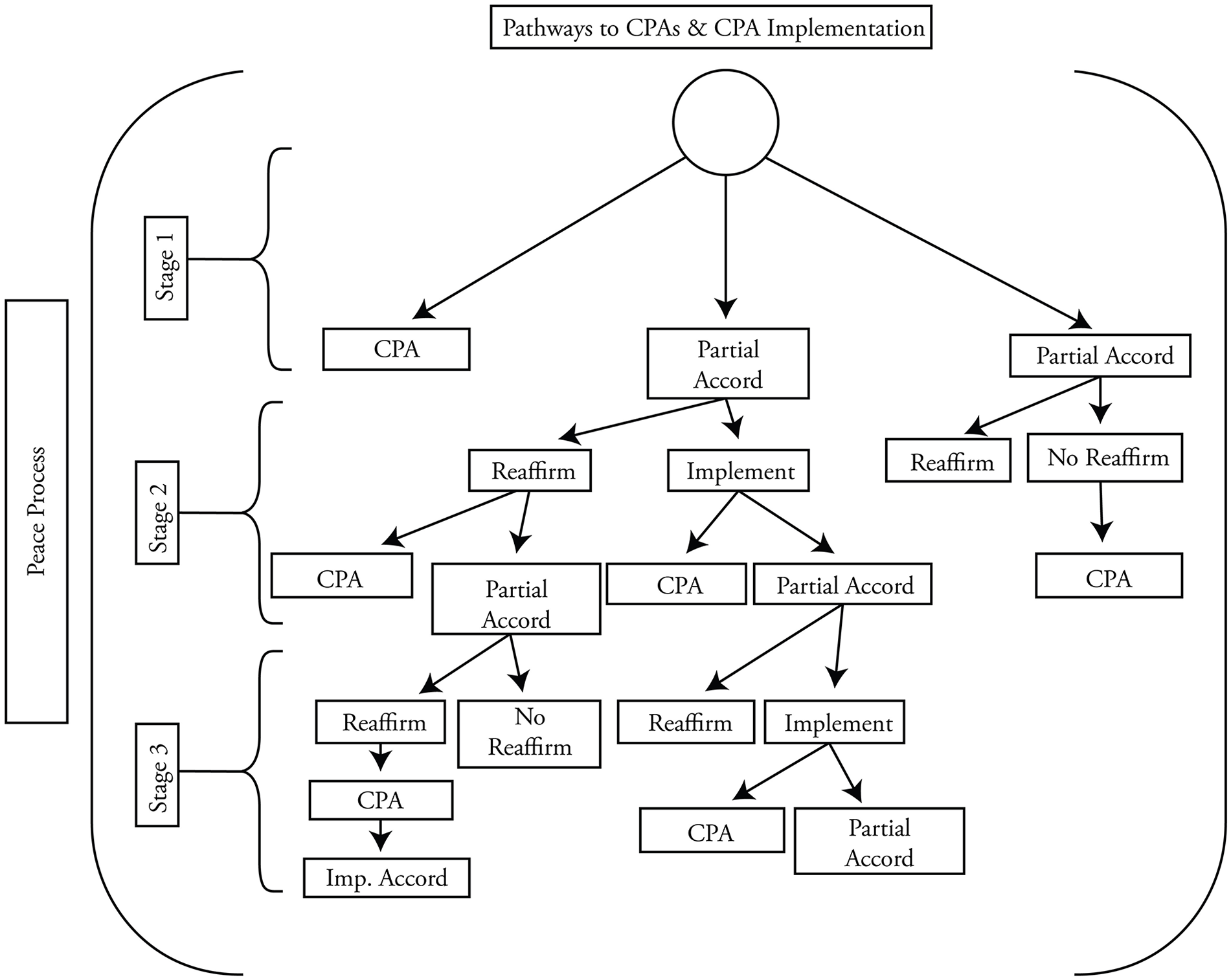
Pathways to CPAs.
The simplest negotiation path involves the negotiating parties signing a CPA without any preceding partial agreements, as with Bangladesh’s Chittagong Hill Tracts Accord in 1997. After a CPA is signed, the parties might need follow-up agreements to address issues that arise during the implementation process. An example of this is Northern Ireland’s 2006 St. Andrew’s Agreement. These post-CPA partial agreements may be utilized to resolve disagreements or further define the mechanisms that facilitate implementation of CPA provisions.
The more common path involves the parties signing numerous partial agreements en route to a CPA, as seen in Papua New Guinea, where 18 partials were negotiated before the 2001 CPA. Unlike CPAs, partial agreements do not always enter into force immediately, calling for the start of implementation. The entry into force of a partial agreement marks the point at which the parties are obligated to begin complying with its terms and commitments. When accurately tracking the implementation of partial agreements, the crucial question is: when do the signatory parties intend implementation to begin? Do the parties expect implementation to follow immediately, or is it anticipated to occur later. Entry into force signifies the official start of the agreement’s implementation phase based on a stated or implied date in the accord, marking the point at which the agreement becomes operational and its obligations become binding on the signatory groups.
Reaffirmation is the primary metric by which we measure the continuity of a peace process and the relationship between past and new agreements. We conceptualize and code reaffirmation by identifying specific references to prior agreements within the peace process, signifying that the parties view the new accord as an extension of previous agreements. A subsequent partial agreement may either reaffirm or assert the continuing validity of the earlier agreement, or it may not. Typically, a series of partial agreements will repeatedly contain the same provision, with each new agreement making amendments or additions in response to changing circumstances or to clarify ambiguities that arose from prior interpretations.
Finally, after reaching mutually accepted terms on a set of issues through multiple partial agreements, the signatories proceed to sign a CPA. The CPA can reaffirm existing partial agreements by either reasserting the parties’ adherence to prior partials, or incorporating those partials directly into the CPA as chapters or annexes, as in the 1992 Chapultepec Agreement in El Salvador (see Online Appendix Table VIII and explanation). By doing so, the CPA brings previously negotiated partial provisions into force, marking the end of formal negotiations and the start of the implementation process. Alternatively, the CPA can supersede existing partials by introducing new provisions and implicitly terminating provisions from prior partials that are not enumerated or reaffirmed in the CPA. In either scenario, the CPA becomes the definitive document governing the provisions that enter into force and are to be implemented in the post-CPA period.
As these brief sketches of various negotiation pathways illustrate, multiple types of data are essential for studying the peace processes that lead to CPAs. The first type is the content and implementation of the CPAs themselves, as originally introduced in PAM_ID and updated here. The second type is the content and implementation data for the partial agreements negotiated before and after the CPA. While other data sources provide coding of the content of a population of partial agreements (i.e. Bell and Badanjak, 2019; Högbladh, 2011), 1 and several others offer implementation data for selected provisions (i.e. Jarstad and Nilsson, 2008) or implementation events (Prorok and Cil, 2022), none provide implementation data contextualizing the various accords in the peace process. This includes how accords build on each other through reaffirmation and entry into force, suggesting a ‘piecemeal’ approach in peace processes (see, Aduda, 2019; Mattes, 2018).
Mattes (2018) examines ‘piecemeal’ approaches to peace and finds a positive correlation between partial settlements and subsequent comprehensive agreements. However, her analysis pertains only to interstate border conflicts and has not yet been extended to civil wars. Aduda (2019) examines intrastate conflict cases from a mediation angle and finds that failed agreements lead to less subsequent external mediator involvement. Hence explicitly consolidating positions in partial accords in a negotiation also carries risks as failed agreements may serve as reminders or signals to future parties, highlighting persistent commitment issues and undermining confidence in future mediation efforts. Our updated PAM_ID is the first dataset to provide a comprehensive view of this ‘piecemeal’ approach by illustrating connections across agreements within a CPA process and the longer-term trajectory of outcomes.
New data on partial agreements in CPA peace processes
To gain deeper insights into CPAs, their varying rates of implementation and different types of content, the PAM_ID has been expanded and updated. The new data identifies 42 negotiation processes leading to CPAs in intrastate armed conflicts that meet the Uppsala/PRIO threshold of 25 battle-related deaths (Wallensteen and Sollenberg, 1997). This includes eight new CPA cases that were not part of the original Joshi et al. (2015) dataset, as they were either negotiated after 2007 or initially considered to be non-comprehensive.
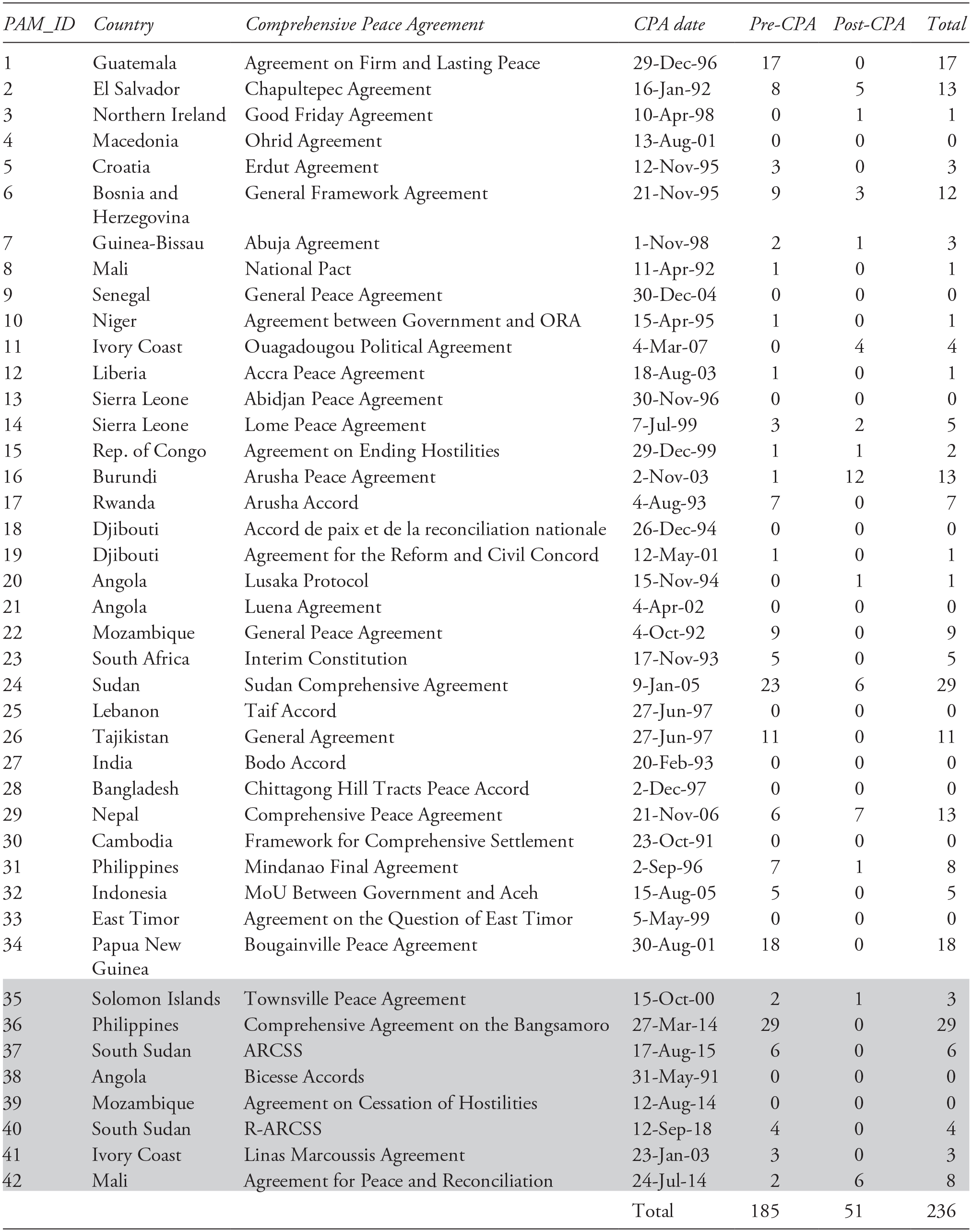
Connected to these 42 CPA peace processes is a total population of 236 partial agreements. Table 1 lists each CPA and the associated partials signed before and after the CPA. Some 64% of CPAs were preceded by at least one partial agreement, and 45% of CPAs were followed by at least one partial agreement.
List of Comprehensive Peace Agreements with frequency of pre- and post-agreements.
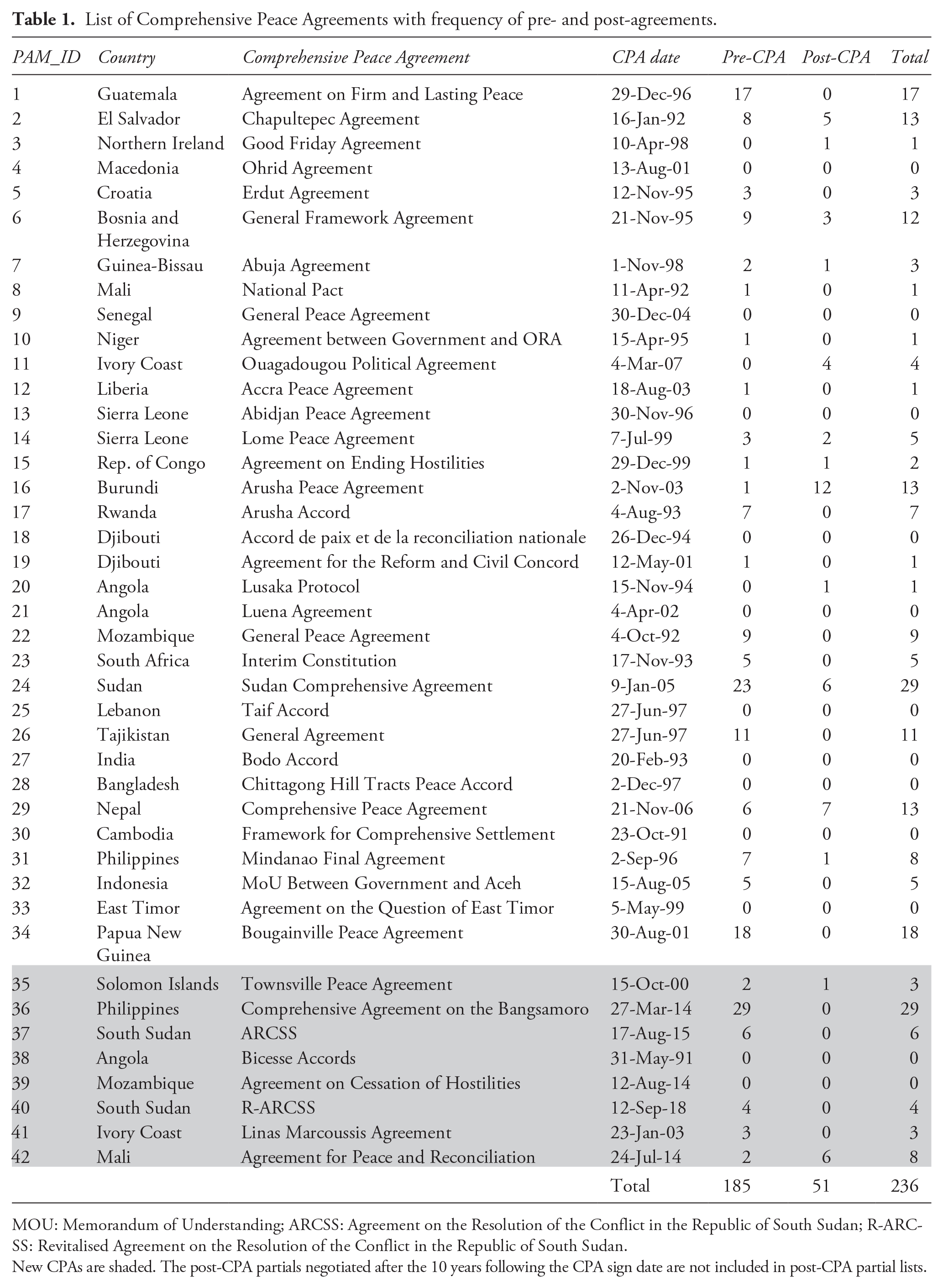
MOU: Memorandum of Understanding; ARCSS: Agreement on the Resolution of the Conflict in the Republic of South Sudan; R-ARCSS: Revitalised Agreement on the Resolution of the Conflict in the Republic of South Sudan.
New CPAs are shaded. The post-CPA partials negotiated after the 10 years following the CPA sign date are not included in post-CPA partial lists.
The new data provides detailed information on the different types of provisions negotiated in these partial agreements, including the dates when each partial agreement technically entered into force and when the initiation of implementation for each provision was actually observed. The data distinguishes between pre-CPA partials that are later integrated into the CPA and those that do not become part of the CPA. In the data presented here, 54% of all pre-CPA partials entered into force before the CPA was reached. Further, 48% of all pre-CPA partials were reaffirmed in the CPA. The data also identifies post-CPA follow-up agreements in which parties renegotiated provisions during the CPA implementation process.
These 236 partial agreements were content coded based on the methodology in Joshi et al. (2015) for identifying the presence of 51 types of provisions in CPAs (Online Appendix Table II). A provision is a goal-oriented action or set of actions falling under a relatively discrete policy domain like education reform, police reform or legislative branch reform. In total, 1195 new provisions were added to the PAM_ID from coding these new 236 partial accords. Of this total, 72% came from pre-CPA partials and the other 28% came from post-CPA partials. The eight new CPAs were also content coded using the same methodology. Finally, the update includes new implementation data for the new CPAs and the pre-CPA partials. In the eight new CPA cases, annual implementation narratives were written for the 149 new provisions following the methods outlined in Joshi et al. (2015). 2 Each provision was evaluated against provision-specific benchmarks and coded on an ordinal implementation scale from 0 to 3, with 0 indicating no implementation, and 3 indicating full implementation.
The previously utilized PAM_ID methodology for tracking implementation of peace agreements could not be fitted upon pre-CPA and post-CPA partials without some modifications. For pre-CPAs, establishing a firm target or baseline for implementation was challenging as parties were still negotiating toward the CPA and the language would evolve over time on a given issue. For this reason, we focused on those accords that entered into force as a first step and then examined implementation initiation, as opposed to level, reflecting that the goal of pre-CPA partials is primarily to advance to more specific language on the issue in future accords. For post-CPA partials, coding implementation independently of the CPA implementation process already captured in PAM_ID would result in redundant coding if the post-CPA partial falls within the 10-year timeframe of PAM_ID. Adjustments made to a provision by a post-CPA accord were already incorporated in the original CPA implementation coding. Rather, post-CPA partials provide information on the kind of issues that frequently require renegotiation. Table 2 provides an overview of the data. 3
Overview of data with organizing principles.

The data introduced in this paper builds on existing implementation data. For instance, Hoddie and Hartzell (2003) offer cross-sectional implementation data on military reform provisions in 33 agreements. Jarstad and Nilsson’s (2008) data provides binary coding on the implementation of military, territorial and political power sharing provisions in 83 peace agreements between 1989 and 2004. The PSED (Power-Sharing Event Dataset) data from Ottmann and Vüllers (2015) covers 80 peace agreements between 1989 and 2006 with details on powersharing implementation (introduction and dissolution) at the level of government and rebel dyads for 5 years. Data from a study by Prorok and Cil (2022) includes implementation events for 903 provisions in 80 peace processes. The expanded PAM_ID provides new detailed information on the content and implementation of 1344 provisions in 278 peace agreements.
The case of Nepal illustrates the application of the coding methodology for pre-CPA partials, CPA and post-CPA partials. Between November 2005 and November 2006, the parties negotiated six partial agreements, which contained a total of 19 unique provisions. Of these six agreements, only the Code of Conduct for Ceasefire entered into force before the 2006 CPA, meaning that the implementation process for the ceasefire provision was initiated before the CPA’s signing. The CPA reaffirmed the other five partial agreements, subsuming all of their 19 provisions plus an additional 10 new provisions. This resulted in the implementation of 29 CPA provisions being tracked for 10 years. During the implementation process in Nepal, seven post-CPA partial agreements were signed, addressing topics primarily related to constitutional reform, disarmament and reintegration of the Maoist combatants, military reform, prisoner release, and reparations.
Application: The role of partial agreements in CPA peace processes
It is common for negotiating parties to sign and release partial agreements on the path to reaching a CPA. While a CPA is intended to mark the conclusion of negotiations and the start of implementation, partial agreements serve a different purpose. What role do these agreements play, and why are they pursued? Negotiating partial agreements offers several strategic advantages on the road to a CPA and its subsequent implementation. First and foremost, partial agreements consolidate incremental progress toward a CPA, as demonstrated in Nepal, where agreement on the future of the monarchy and transition to federalism were reached through numerous partial agreements. Partial agreements allow the parties to break the process down into smaller, more manageable pieces, addressing consensus issues first to build momentum. This stepwise approach was also evident in Tajikistan. Additionally, partial agreements can address crises during negotiations. For instance, many of the 18 partial agreements preceding the 2001 Bougainville Peace Agreement in Papua New Guinea were attempts to effectively manage crises.
Partial agreements also serve as metrics for stakeholders and the international community, offering insights into the progress of negotiations, identifying successes, and highlighting unresolved issues. The negotiation processes in El Salvador and Guatemala suggest this approach. Moreover, partial agreements allow parties to test specific measures or arrangements before fully committing to them, refining the final CPA and improving its quality.
From a strategic perspective, partial agreements signal a commitment to the peace process. Peace negotiations often fail due to a lack of trust between parties, as they doubt each other’s willingness to honor commitments without strong third-party enforcement (Walter, 2002). Research shows that signaling commitment during the post-accord period improves trust and compliance (Joshi et al., 2017; Walter, 2002). Yet, existing research underemphasizes how the peace process itself can create conditions for trust-building. 4 By demonstrating commitment through partial accords, the parties can generate public discourse and support to sustain the peace process.
We should also expect to observe complex interactions between partials, the length of the negotiations and other contextual factors. A lengthy negotiation process might indicate difficulties in consensus-building or frequent renegotiations, which could weaken the eventual CPA. However, longer negotiations may also produce more partial agreements, enabling incremental progress and trust-building. Conversely, shorter negotiations with fewer partials may reflect stronger initial cooperation and a more streamlined pathway to a CPA. Thus, the question of whether more partial agreements are advantageous depends on the duration and context of the negotiations.
Using the updated PAM_ID data, we tested whether partial agreements predict higher implementation rates for CPAs. The dependent variable is the overall implementation rate, ranging from 1.87% to 97%, reflecting the extent of reforms implemented (Joshi et al., 2015: 557; see footnote 9). Key independent variables include the number of pre-CPA agreements, negotiation length (measured as time since the first pre-CPA agreement), alongside controls for post-CPA partials (see Online Appendix Table V). To account for time series cross-sectional data and serial correlation in the dependent variable, we applied feasible generalized least square models with panel-specific first order autoregressive errors (Greene, 2003: 273). Standard controls affecting peace implementation processes were included (DeRouen et al., 2010; Hauenstein and Joshi, 2020; Joshi et al., 2017). 5
First, we assess the unconditional impact of pre-CPA partials. We find that a greater number of partials is associated with higher CPA implementation. An agreement with no partials has an expected implementation rate of about 58%, which rises to 62% with 10 partials (p < 0.05). Figure 2 shows the average CPA implementation rate from zero to 20 pre-CPA partials.

Predicted CPA implementation by number of pre-CPA partials.
Second, we examine the interaction between pre-CPA partials and negotiation length. Generally speaking, the interactive results suggest that fewer partials are never a better strategy, regardless of negotiation length. Additionally, we find that longer negotiations are never better than shorter negotiations, no matter how many partials are signed during the process. The results of the key interaction are presented in Figure 3. As can be seen, an increasing number of pre-CPA partials is more beneficial in lengthy negotiations processes. For a process lasting 11 years, each additional partial agreement increases implementation by 0.5% (p < 0.05), suggesting that partials can help build momentum and reassurance during extended negotiations. Conversely, long negotiations without many partial agreements negatively affect CPA implementation. For example, each additional year of negotiations in a process with only two partials reduces CPA implementation by over 1% (p < 0.05). These findings suggest that extended negotiations coupled with multiple partial agreements can significantly enhance CPA implementation, highlighting the nuanced role of partials in peace processes.
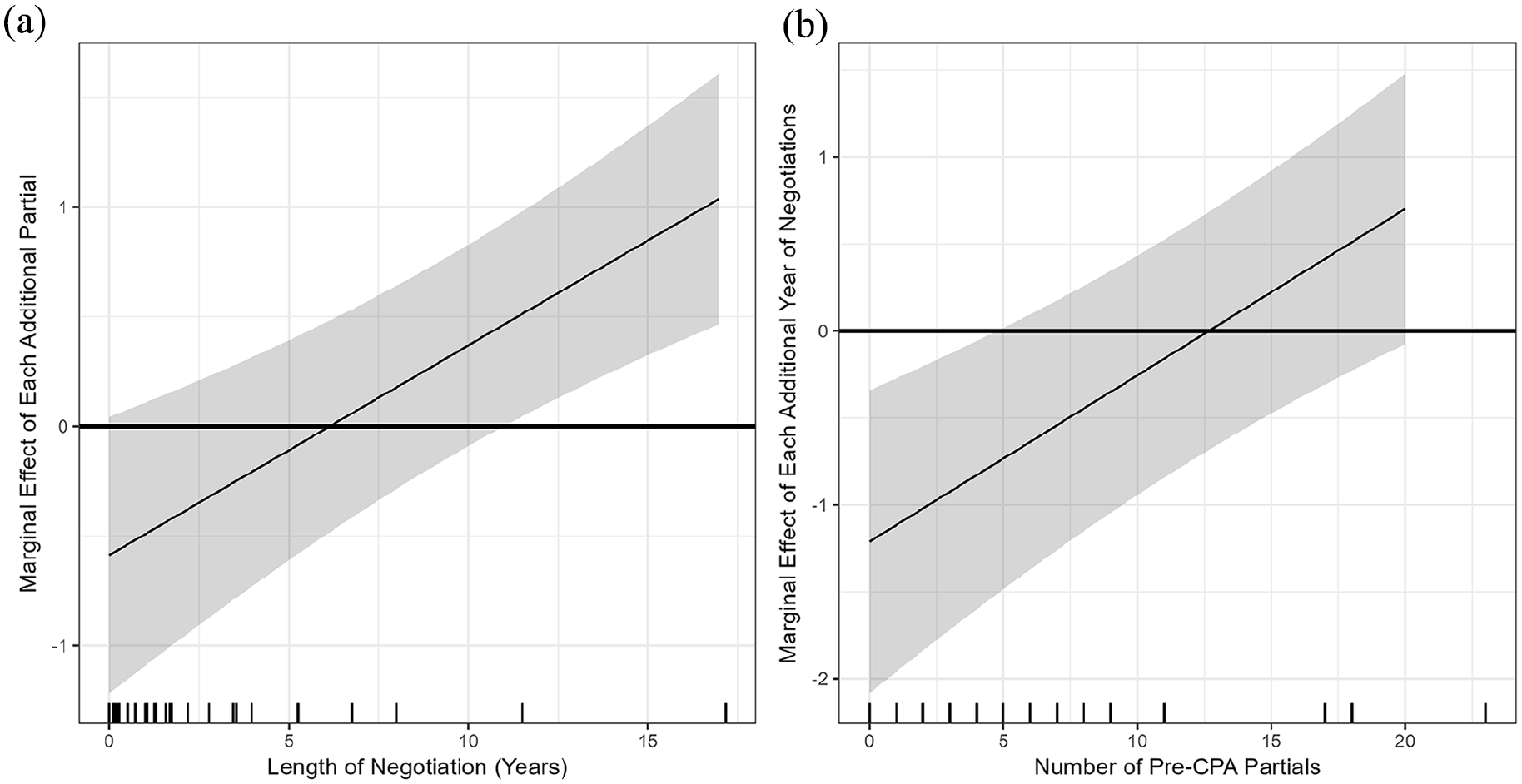
Marginal effects of (a) negotiation time and (b) pre-CPA partial agreements on implementation.
Additional descriptions of new data
The data allows multiple ways of exploring how pre-CPA partial accords, CPAs and post-CPA partial accords relate to each other over time. One such relationship is shared provisions. Figure 4 shows the 25 most common provisions in each type of agreement. Eighteen of the 25 appear in all three types of agreement. Four provisions are common in pre-CPA partials and in CPAs, but were not in post-CPA partials. The least likely topics to garner attention in a post-CPA partial agreement are: decentralization, refugees, withdrawal of troops, and dispute resolution committees. Three provisions present in CPAs and post-CPA partials are uncommon in pre-CPA partials: truth and reconciliation mechanism, civilian administration reform, and paramilitary groups. Four provisions appear most frequently in post-CPA partial agreements: media reform, reparations, regional peacekeeping and UN peacekeeping.
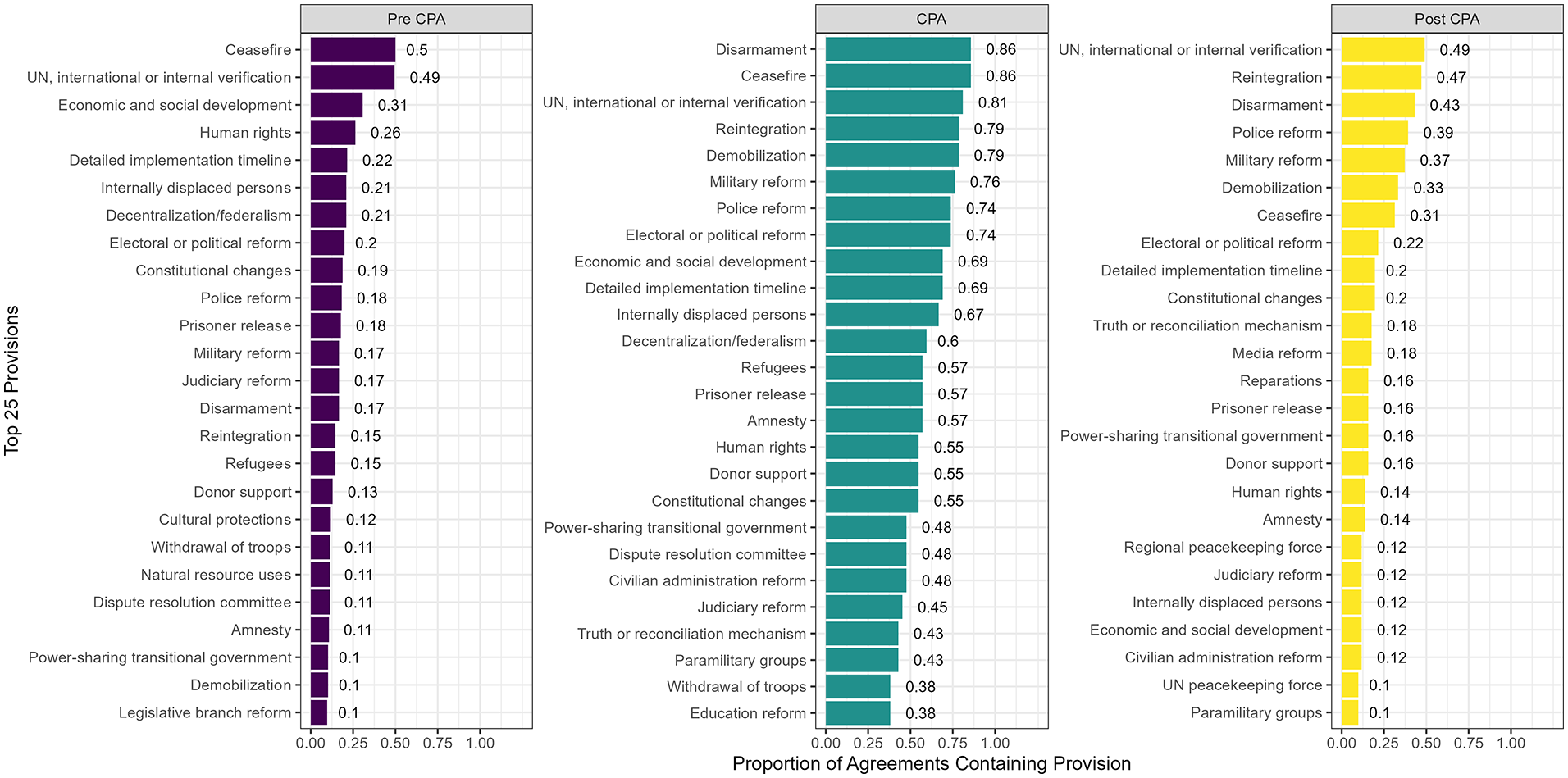
Most frequently negotiated provisions in pre-CPA partials, CPAs and post-CPA partials.
For pre-CPA partials, the bar represents the proportion of agreements that entered into force (99 out of 185) and are initiated. For those pre-CPA partials that entered into force, Figure 5 shows in which provisions implementation was initiated. In pre-CPA settings, the most initiated provisions were ceasefire, verification, prisoner release and implementation timeline. The right-hand panel in Figure 5 shows the CPA provisions most likely to reach full implementation within 10 years or the final year of observation. Ceasefire, disarmament, verification, demobilization and reintegration provisions are the five most common provisions across the 42 CPAs. Verification and ceasefire provisions are fully implemented 82% and 81% of the time, respectively. By comparison only 31% of disarmament provisions, 39% of reintegration provisions, and 48% of demobilization provisions are fully implemented. Provisions like human rights, economic and social development, and truth and reconciliation commission remain at the bottom of the list.
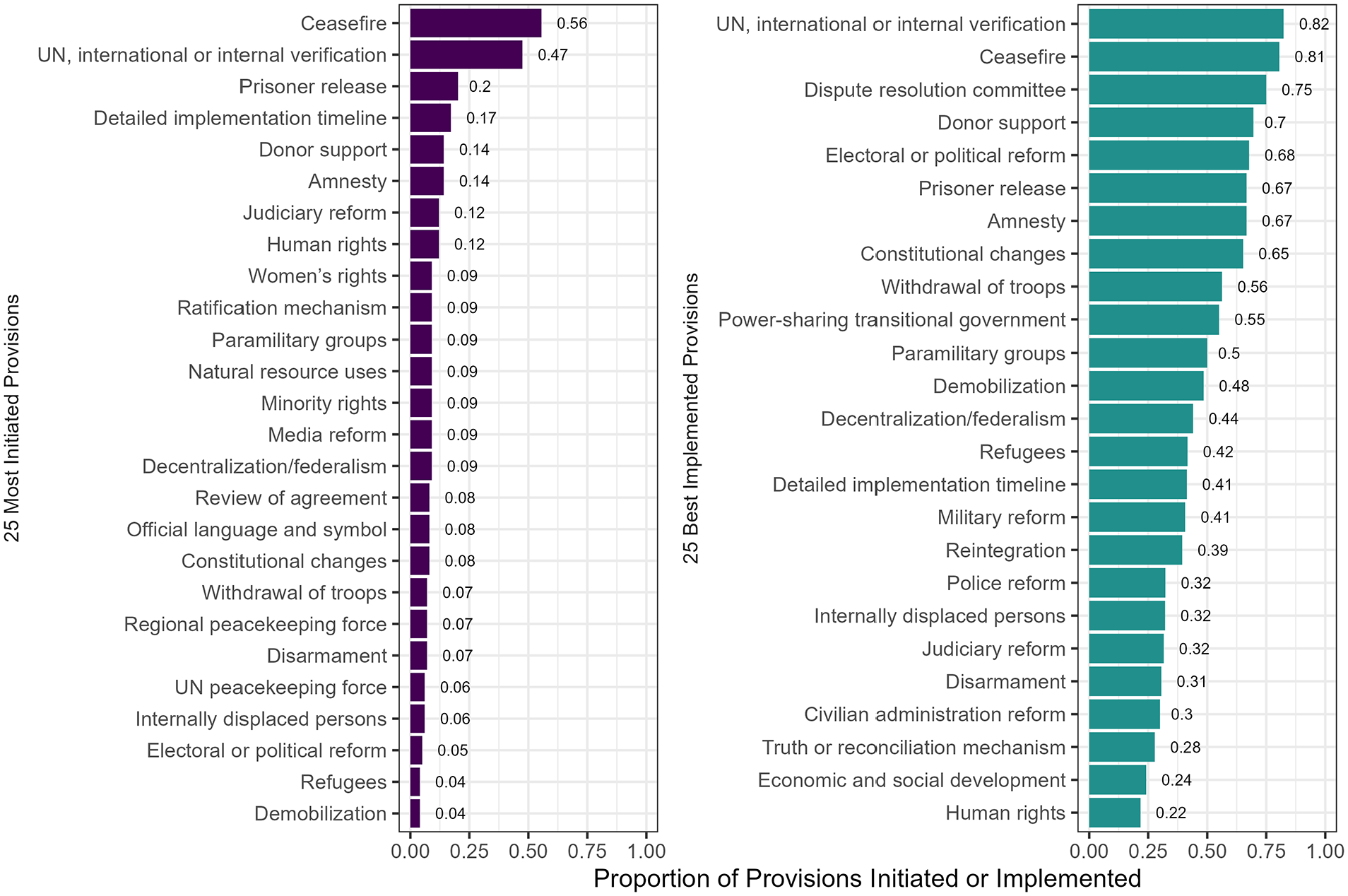
Provisions with highest initiation in pre-CPA partials and highest implementation in post-CPA partials.
Figure 6 provides a disaggregated view of the implementation of the verification provision over 10 years for the 42 CPAs. Thirty-four CPAs (81%) contain a verification provision, which is fully implemented in only 28 accords (82%). The figure shows the majority of implementation changes occur in the first 3 years of the process. More generally, out of 873 total provisions in 42 CPAs, 429 or 49.14% reached full implementation within 10 years; 23.33% reached intermediate implementation; 16.72% reached minimum implementation; and 11.80% were never initiated by year 10 or the final year of observation.
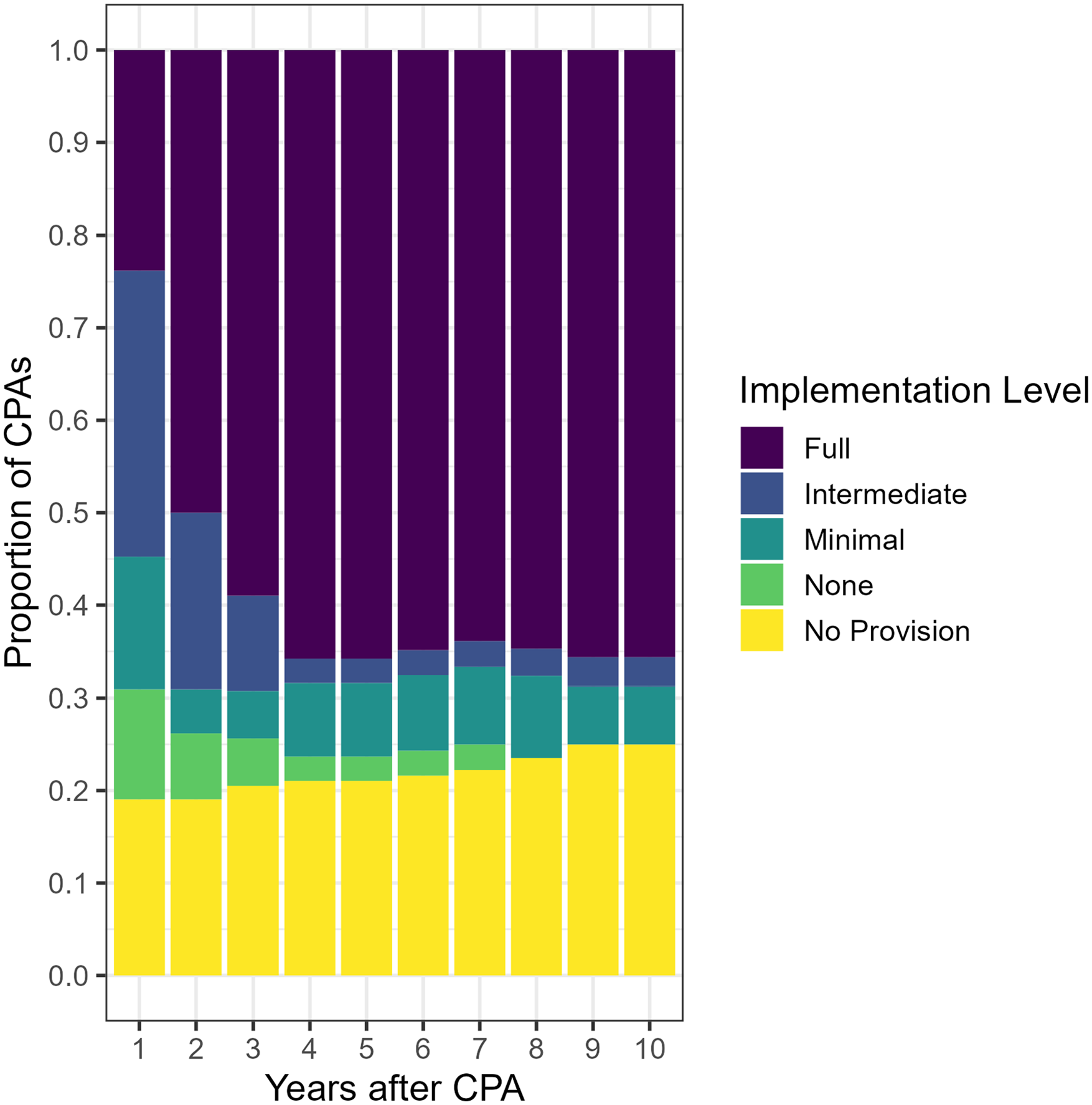
Implementation of verification mechanism.
Figure 7 summarizes the instances of reversals at the CPA provision level. Reversal is a one-sided deliberate dismantling of what has already been implemented. A major reversal suggests a change from one category of implementation to a lower one, while a minor reversal is a change within the same category of implementation. Combined together, the dataset records 35 major and 81 minor reversals, with 26 CPAs having at least one reversal. The majority of these reversals were related to ceasefire provisions, followed by transitional powersharing government, demobilization process, and the implementation of provisions to address internally displaced persons.
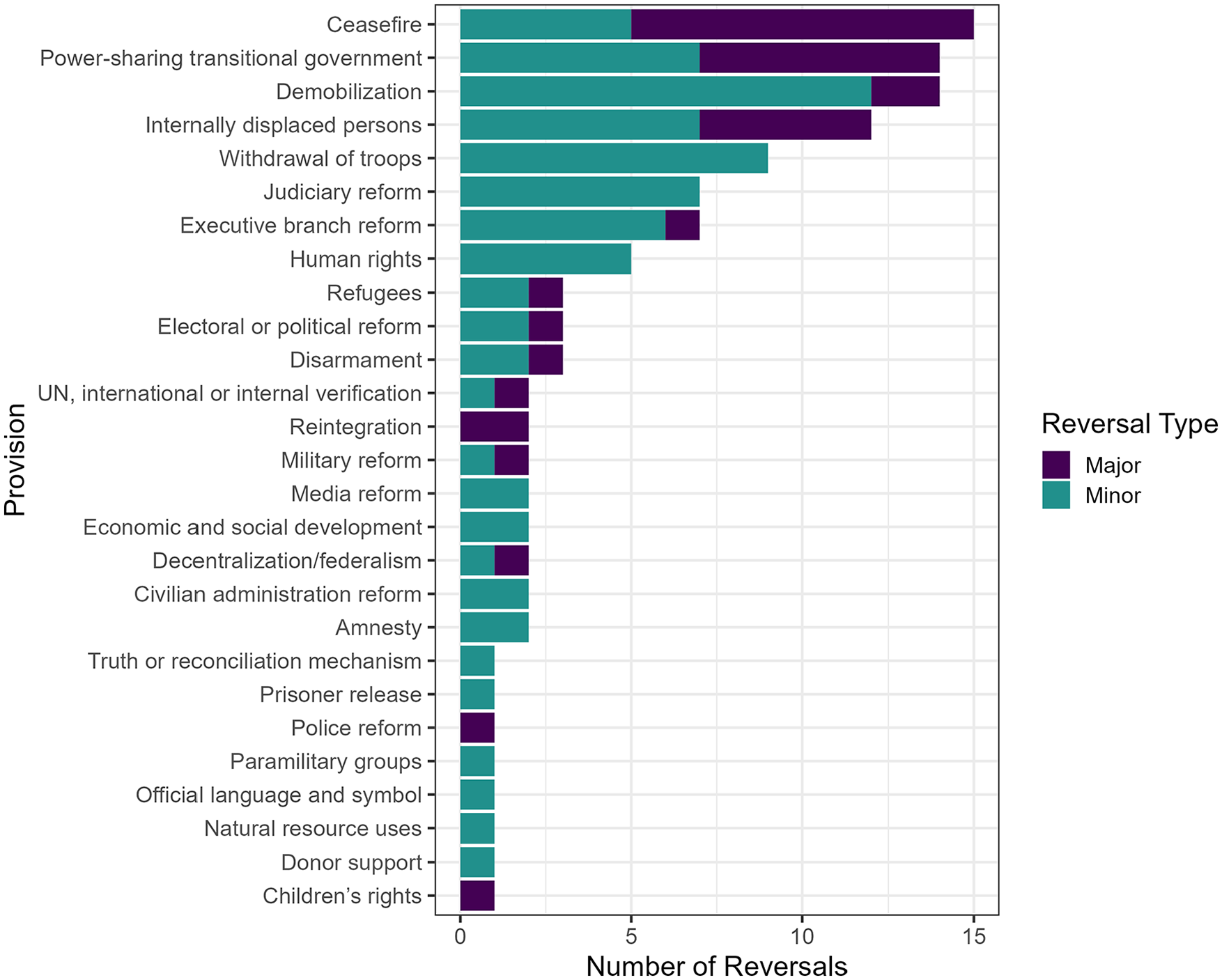
Recorded implementation reversals.
The longitudinal structure of the CPA data is amendable to examining the provision level and CPA level variation over a 10-year period. Figure 8 presents the annualized variation in the level of aggregate implementation rate by using the Peace Accords Matrix methodology to produce a normalized percentage ranging from 0% to 100% (Joshi et al., 2015: 557). Figure 8(a) compares three CPAs negotiated with UNITA in Angola (1991, 1994 and 2002). Figure 8(b) compares Nepal (2006) and Ivory Coast (2007), two CPAs that recently marked the 10th year of implementation. Figure 8(c) compares four CPAs with an ongoing implementation process as of 2021. These charts present a broad perspective of peace implementation trajectories that differ significantly, which scholars can use to study the progress, setbacks and stalemates of peace processes.
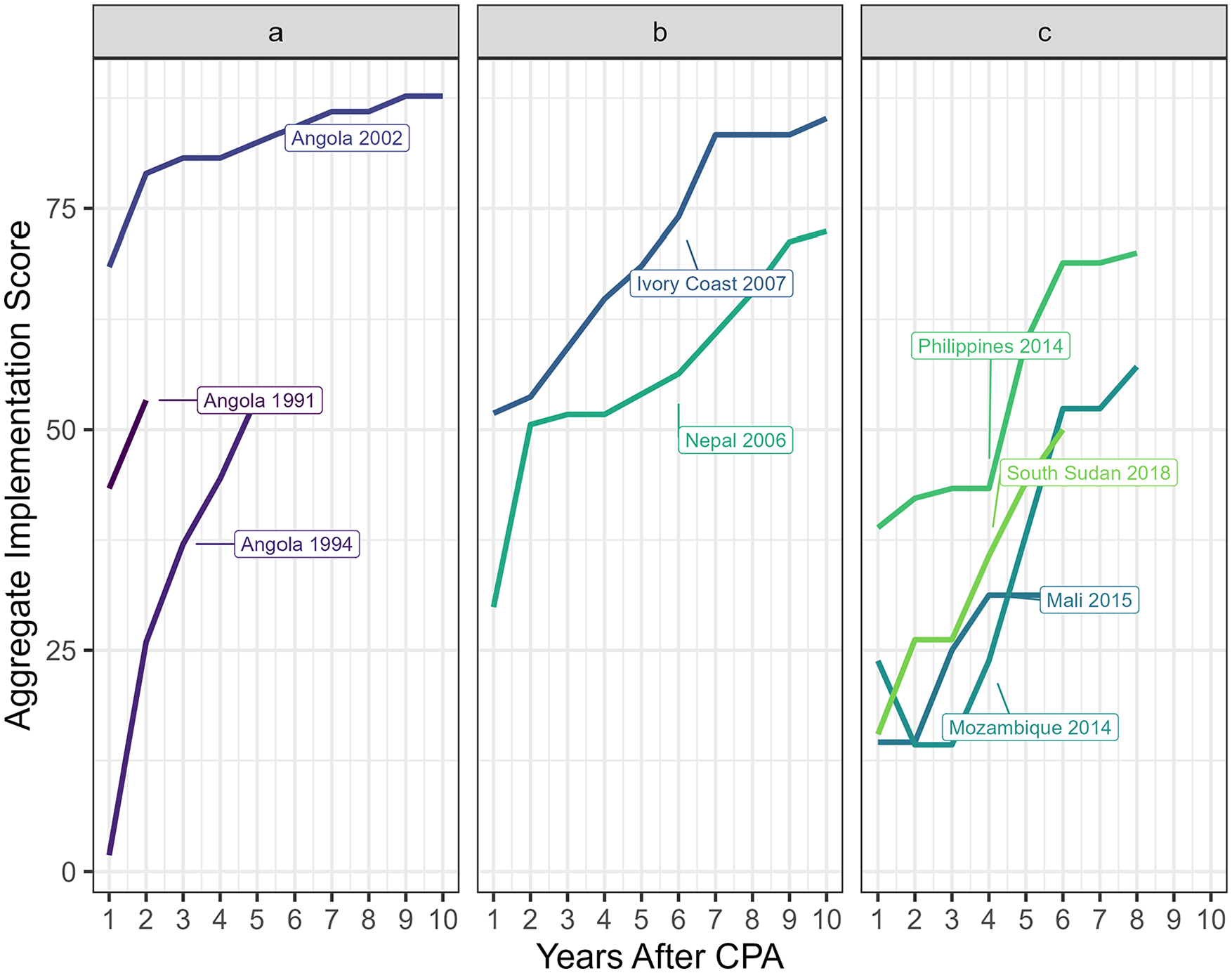
Annual variation in the level of aggregate implementation of CPAs: (a) CPAs negotiated with UNITA in Angola (1991, 1994 and 2002); (b) comparison of Nepal (2006) and Ivory Coast (2007); and (c) comparison of four CPAs with an ongoing implementation process as of 2021.
Conclusion: Limitations and future research
This article introduces an updated PAM_ID, which now includes data on the provisions of 42 CPAs. This release also greatly expanded the dataset by applying PAM_ID methodology to all peace accords before and after these 42 CPAs. This amounted to adding 236 pre- and post-CPA partial agreements. While our dataset can offer new insights into the implementation of partial agreements in peace processes that ultimately led to a CPA, there are also limitations of focusing only on CPA processes. The first limitation is the inherent bias in our sample selection. Our dataset focuses exclusively on collecting partial agreements from peace processes that culminated in a CPA, thereby excluding partial agreements from processes that did not result in a CPA. This limitation precludes us from drawing conclusions about the likelihood of reaching a CPA based solely on the presence or characteristics of partial agreements. Users of our dataset should avoid assuming that the presence or characteristics of partial agreements can predict the likelihood of reaching a CPA. Additionally, they should recognize that the presence or absence of post-CPA partials is not independent of the CPA implementation process but is generated from its performance. Another limitation concerns our inclusion criteria, which only include agreements signed by the government and one of the main parties to the CPA. While this criterion ensures the relevance of these accords, it may overlook some contextually significant agreements.
Despite some limitations, the updated dataset supports the exploration of practical and theoretical research questions related to CPA design, implementation and improving negotiation strategies toward more effective CPAs, such as: (a) Why do parties in some CPA processes, but not others, negotiate partial accords before or after CPAs? (b) What role do these accords play? (c) Why do some partial accords enter into force immediately, while others do not? (d) Why do some partial accords reaffirm previous accords while others do not? (e) Why are some CPAs followed by partial accords while most are not? (f) Is there any relationship between the types of provisions in partial accords as well as the timing and the renegotiation of issues in post-CPA partials? These and other research questions can be explored by utilizing the data introduced in this article, which encompasses the entire universe of CPA cases and their associated partial accords.
Footnotes
Replication data
The dataset, codebook and do-files for the empirical analysis in this article, along with the Online Appendix, are available at https://www.prio.org/jpr/datasets/ and  . Data visualization was conducted in R (4.3.0) and analysis in Stata (17.0).
Author contributions
The authors confirm contributions to the article as follows: study conception and design: MJ, JQ; data collection and update: MH, MJ, JQ; data validation: MJ; analysis and interpretation of results: MJ, MH; draft manuscript preparation: MJ, MH, JQ. All authors reviewed the results and approved the final version of the manuscript.
Declaration of conflicting interests
The authors declared no potential conflicts of interest with respect to the research, authorship, and/or publication of this article.
Funding
The authors disclosed receipt of the following financial support for the research, authorship, and/or publication of this article: The Kroc Institute for International Peace Studies at the University of Notre Dame’s Keough School of Global Affairs provided funding support.