




Abstract
What drives host community preferences towards the reintegration of former Islamist militants? While recognizing the importance of host communities in the reintegration process, empirical evidence on the factors influencing community support for reintegrating former Islamist militants remains limited. We hypothesized that community preferences are shaped along the perceived threat level influenced by three factors: organizational profile, identity traits, and reintegration channels. We empirically examined these using a conjoint survey involving Somali civilians from three cities with disarmament, demobilization and reintegration centers and a separate survey of former al-Shabaab disarmament, demobilization and reintegration graduates. Our results showed that security-related attributes, such as involvement in killings, recruitment history and unit association wielded a substantial influence on threat perceptions. Heightened threat perceptions played a key role in shaping wartime preferences, explaining how host communities categorize security threats. Notably, our results underscored a community preference for disarmament, demobilization and reintegration program graduates and for those granted government amnesty over ex-fighters reintegrated through traditional channels, highlighting the efficacy of formal reintegration channels in managing community threat perceptions compared to informal pathways.
Keywords
Introduction
Al-Shabaab defectors who are given amnesty have crossed a point of no return because they risk being hunted down by al-Shabaab intelligence, making these high-profile defectors more acceptable to host communities. – Somali government official in Kismayo, September 2020
What factors shape host community preferences for the reintegration of former Islamist militants? While extensive research has explored the reintegration of former combatants in civil war contexts (Berdal and Ucko, 2009; Kaplan and Nussio, 2018a; Suurmond et al., 2020; Tellez, 2019), applying these frameworks to former Islamist militants is less well understood. Although recent studies have increasingly examined the perspectives of both host communities and former militants in the reintegration process (Ike et al., 2020), the unique challenges posed by extremist ideologies necessitate adjustments to address these specific contexts (Blair et al., 2021; Kao and Revkin, 2023). Additionally, empirical evidence underscores the crucial role of societal perceptions of risk and fairness, rooted in local moral values, in shaping the reception of ex-combatants (Godefroidt and Langer, 2023; Tellez, 2021). Our research aims to advance this understanding by exploring how community preferences are formed and their implications for the reintegration of former Islamist militants.
In this research, we argue that host community acceptance of ex-militants is shaped by threat perceptions that are based on three key intersecting factors: organizational profiles, identity traits and the nature of the reintegration channel – formal or informal. Our investigation focuses on the reintegration of former Islamist militants, particularly those associated with al-Shabaab in Somalia. We pre-registered our empirical expectations and used a forced-choice conjoint experimental design, similar to Godefroidt and Langer’s (2023) study in Nigeria. We conducted our study with 1,503 participants across 75 communities in the three cities of Mogadishu, Kismayo and Baidoa in South Central Somalia (Figure 1). These cities house the three most important and longest-run government disarmament, demobilization and reintegration (DDR) centers for former al-Shabaab fighters. In Somalia, the government has partnered with the United Nations Assistance Mission in Somalia (UNSOM) and a number of partners to implement the Defector Rehabilitation Program. Although this program is context-specific and tailored to unique circumstances, it largely adheres to the United Nations (UN) DDR standards while incorporating additional components aimed at countering violent extremism (UN Peacekeeping, 2024).
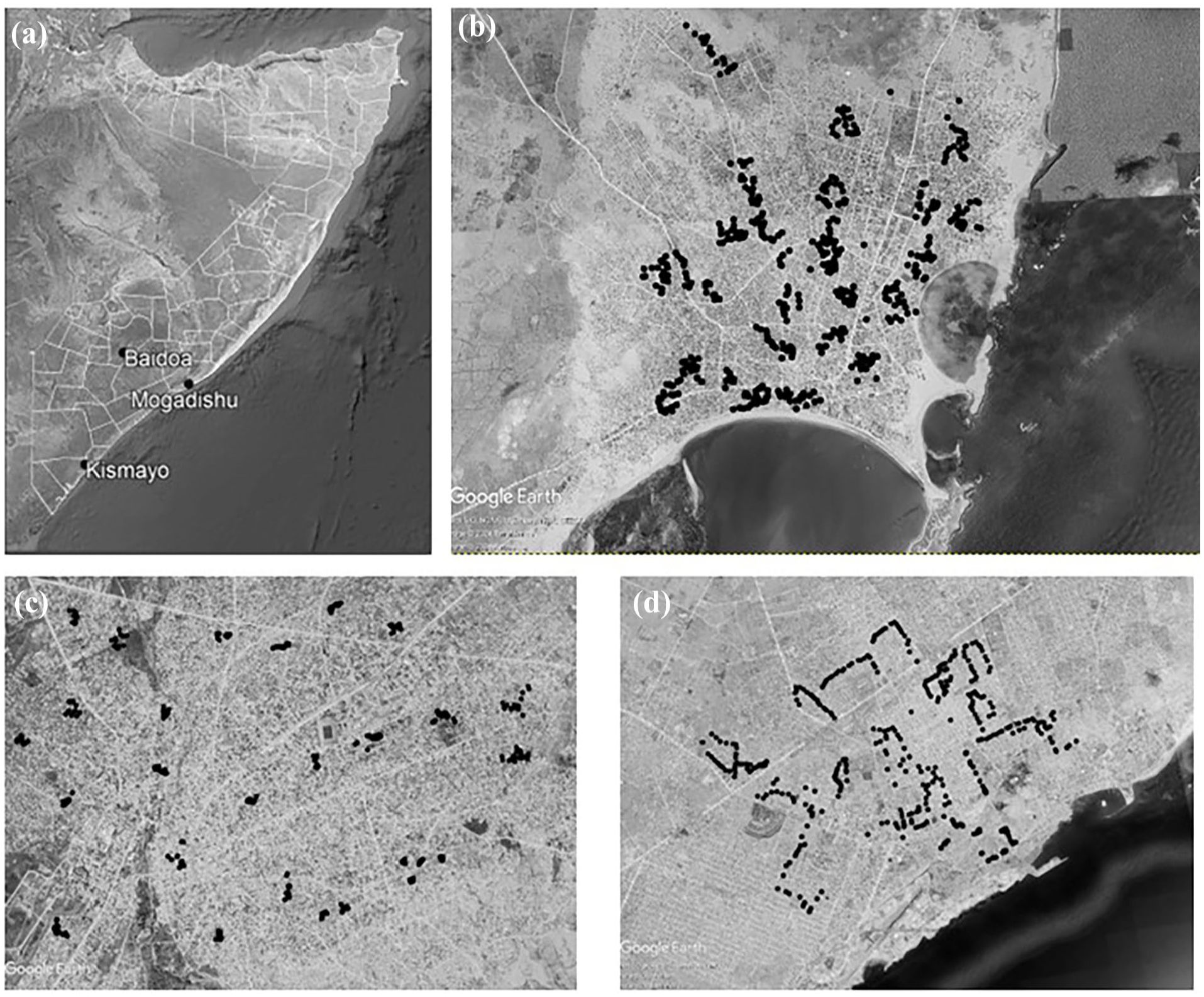
Survey locations Three cities and 75 communities in South Central Somalia: (a) the three Somali cities where the three DDR centers currently operate, (b) Kismayo, (c) Baidoa, and (d) Mogadishu. (b) to (d) show respondents clustered in 75 communities (25 communities at each location).
Our conjoint analyses yielded two significant findings. Firstly, security-related attributes had the most significant impact on community threat perceptions, significantly influencing host community preferences for the reintegration of former militants. Somali civilians were 27 percentage points (pps) less inclined to accept former al-Shabaab combatants who were involved in killings and 12 pps less inclined if the ex-militant joined the group voluntarily. Furthermore, civilians exhibited hesitancy in accepting former militants associated with the feared intelligence unit, the Amniyat, if they were apprehended rather than defecting, and if they belonged to clans that differed from the civilians (all effects were statistically significant).
The second notable finding pertains to how civilians evaluate and ‘vet’ distinct groups of ex-militants based on the reintegration pathway they undertake. For ex-militants categorized as ‘low risk’, there was a notable 17 pps increase in the likelihood of acceptance if reintegrated through the DDR centers backed by the UN compared to the traditional authority (TA) mechanism. Interestingly, the outcomes also highlighted that for ex-combatants labeled as ‘high risk’, civilian trust in government-led amnesty initiatives surpassed that for other reintegration approaches. Specifically, this trust margin exceeded the TA mechanisms by 22 pps and exceeded those who underwent the prison program by 4 pps. Based on these insights regarding how civilians assess different groups of ex-militants based on their reintegration experiences, we conducted a follow-up survey involving two distinct groups of 200 ex-al-Shabaab fighters: those who had graduated from the DDR centers and those awaiting entry into the program. Key findings from our second survey highlighted that individuals who had completed DDR programs had an increased likelihood of securing employment and demonstrated greater involvement in cooperative activities within their host communities.
When interpreting our results, it is important to note two scope conditions. First, our analysis specifically examined the effects of four distinct reintegration pathways on community preferences, including UN-supported reintegration centers, therefore, our findings should be understood within contexts where such centers are prevalent. The UN currently supports DDR programs across nearly 20 countries, providing direct assistance to DDR centers within peacekeeping missions in the Central African Republic, the Democratic Republic of Congo, Somalia, Mali and South Sudan, as well as offering technical assistance in non-mission settings such as Iraq, Colombia and Burkina Faso, among others. 1
Second, our findings should be interpreted with the understanding that, while the UN’s support for DDR centers has historically addressed various conflict settings, recent initiatives have increasingly focused on Islamist conflicts. Notable examples include UN-supported DDR centers in Somalia, Mali and the Lake Chad Basin, as well as Cameroon’s DDR program launched in 2018, which aims to reintegrate former Boko Haram militants through four DDR centers (Rhianne and Anthony, 2023). 2 The introduction of a new UN Integrated Disarmament, Demobilization and Reintegration Standards module in 2021, specifically addressing DDR for terrorist organizations like al-Shabaab and Boko Haram, underscores this evolving focus and broadened scope of UN DDR support (United Nations, 2021).
We assert three contributions to the evolving empirical literature on the reintegration of former combatants into host communities in Islamist conflict settings (Blair et al., 2021; Godefroidt and Langer, 2023). First, the issue of Islamist militancy holds significant importance, as citizens in Islamist conflict settings frequently express concerns that defectors may still adhere to extremist ideologies, potentially leading to acts of violence within their communities or recruiting others into their group (Blair et al., 2021). Indeed, civil wars centered around Islamist claims are 73% more likely to recur compared to intrastate armed conflicts centered around non-Islamist claims (Nilsson and Svensson, 2021). Theoretically, our findings demonstrated that individual preferences were shaped by perceived threat levels associated with ex-combatants, elucidating the interplay between community- centric understandings of threats and preference formation (Kaplan and Nussio, 2018b). By conducting a comprehensive examination of host communities’ preferences for all possible reintegration pathways, we advance explanations about the role of threat perceptions in wartime preference formation, which stem from both subjective psychological processes and situational characteristics (Canetti-Nisim et al., 2009; Tellez, 2021).
Our second contribution is empirical. Our design and the selection of our case allowed us to directly engage with the population involved in the reintegration: host community members exposed to former combatants who have reintegrated through four different reintegration modalities and former al-Shabaab militants. We believe this is the first study carried out with real participants in an Islamist conflict setting, which distinguishes our research from recent empirical studies, such as the work conducted by Godefroidt and Langer (2023) with Nigerian university students. Finally, this research highlights critical policy implications based on robust empirical evidence. The study focused on three cities in South Central Somalia, selected for the diverse reintegration strategies implemented in the region. This comprehensive analysis provides policymakers with valuable insights into the effectiveness of both punitive and non-punitive approaches, offering a framework for informed decisionmaking that considers the perspectives of both the host communities and former combatants.
Social reintegration of former combatants in Somalia
The reintegration process for ex-combatants in Somalia is guided by their assessed risk level, as determined by the National Intelligence and Security Agency (Felbab-Brown, 2015). Screening procedures are applied to all individuals disengaging from al-Shabaab, with distinct standard operating procedures (SOPs) for men, women and children. These SOPs assess the defectors’ roles within al-Shabaab and their degree of radicalization, resulting in a classification into ‘high’ or ‘low’ risk categories. Individuals classified as low risk are considered eligible for DDR centers, whereas high-risk individuals are generally sent to prisons (European Union Agency for Asylum, 2023). Additionally, a third pathway involves high-value defectors who receive government amnesty and protection upon defection along with their followers. The fourth pathway, involving TA channels, lacks a standardized structure for assessing ex-combatants’ risk levels. Although qualitative data and policy reports generally support the assumption that most ex-combatants are classified as low risk, there are exceptions, and criteria may vary across communities. 3 In the three cities where formal DDR centers operate (Mogadishu, Kismayo and Baidoa), these serve as the primary settlements for many former al-Shabaab militants. Prior to the reintegration of low-risk ex-combatants into host communities, information about each individual is communicated to clan elders. These elders inform the host community about the ex-combatants’ histories and threat levels (European Union Agency for Asylum, 2023). This guarantor process ensures that ex-combatants cannot easily misrepresent their risk levels, as social vetting by clan and religious elders involves sharing accurate information about their backgrounds.
Investigating host community preferences for accepting former Islamist militants in South Central Somalia was suitable for two main reasons. Firstly, our participants in the selected cities were familiar with all four reintegration pathways, as indicated by our field research and focus group discussions conducted prior to the survey. This familiarity allowed us to analyze various reintegration modalities, distinguishing our study from similar research (Godefroidt and Langer, 2023; Kaplan and Nussio, 2018a). Second, how community members perceive and socially vet former militants remains highly pertinent, particularly in the context of host communities within Islamist conflict settings that continue to endure extensive violence in the form of bombings, killings and abductions (Blair et al., 2021). Residents in the three cities studied are aware that participation in DDR centers is associated with ex-combatants being of low risk, while those who choose the prison or amnesty routes are considered high risk (Khalil et al., 2019). Through our extensive focus group discussions during the research design process, we discovered that in the three cities where we conducted the survey, local intelligence – both verified and unverified – is commonly shared about former combatants, forming an imperfect local risk classification (see also Kao and Revkin, 2023).
We acknowledge that these scope conditions may limit the generalizability of our findings, as the dynamics observed in these cities may not fully represent the broader context across Somalia, especially in regions lacking DDR centers. Nonetheless, given their varied reintegration pathways, studying these three cities offers valuable insights that could inform the understanding of community preferences for former combatants in other similar settings worldwide where UN-supported DDR programs are present (Ayissi, 2021; Schulhofer-Wohl and Sambanis, 2010; UN Peacekeeping, 2024). A comparison of the four types of reintegration pathway for former al-Shabaab combatants in Somalia is presented in Table 1.
Types of reintegration in Somalia: similarities and differences.
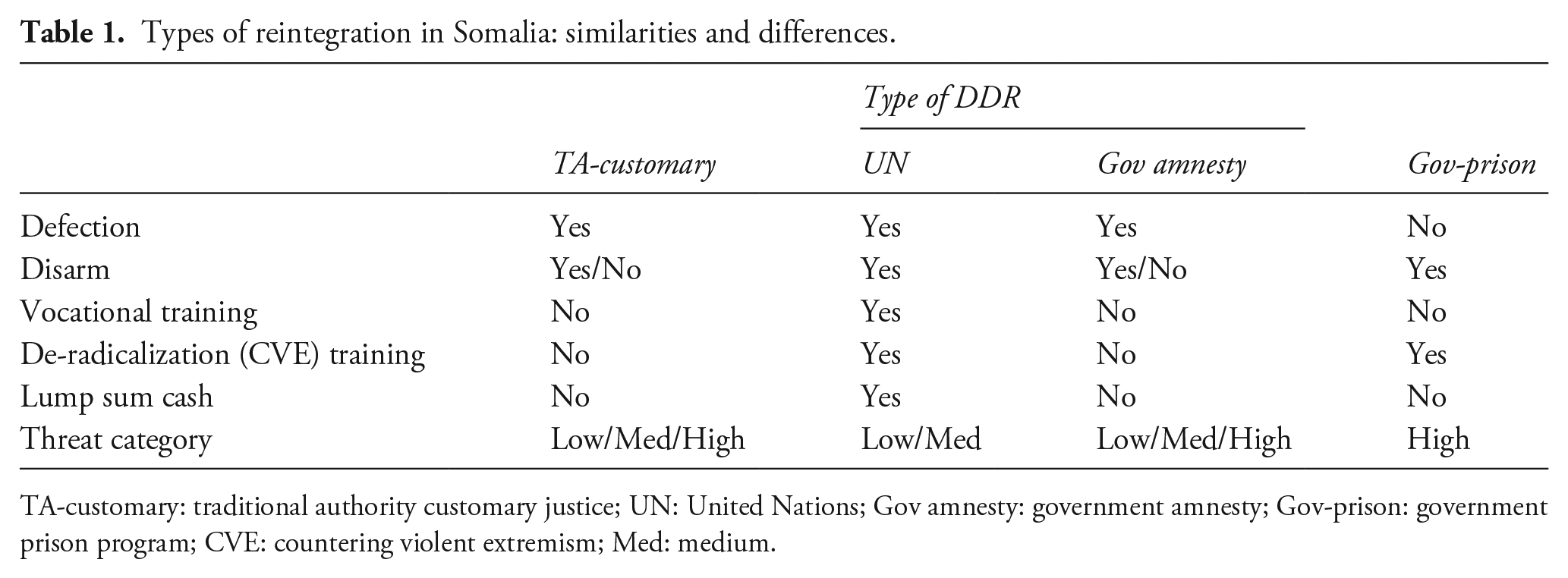
TA-customary: traditional authority customary justice; UN: United Nations; Gov amnesty: government amnesty; Gov-prison: government prison program; CVE: countering violent extremism; Med: medium.
Social reintegration of former Islamist militants: Host community categorization of security threats
Threat perceptions exert considerable influence not only among the belligerents involved in peacebuilding efforts but also among communities, contributing to a pervasive atmosphere of societal mistrust (Beber et al., 2014; Hirsch-Hoefler et al., 2016). Perceptions also shape host community preferences for the reintegration of former militants, often hindering reconciliatory efforts (Blair et al., 2021; Godefroidt and Langer, 2023). This phenomenon stems from community apprehension about former combatants maintaining affiliations and ideological ties with armed groups (Kaplan and Nussio, 2018a). Individual and group threat perceptions can identify which former combatants may pose security risks. In this context, it is noteworthy that as many as 43% of Nigerian civilians believe that reintegrated former Boko Haram members might harbor intentions to cause harm, rather than ‘coexist peacefully within the community’ (Blair et al., 2021: 2).
Recent empirical research on the reintegration of former Islamist militants into host communities suggests that civilians prioritize understanding the motives and accountability of the policy recipients rather than analyzing the specific details or complexities of the policies themselves (Godefroidt and Langer, 2023: 4). Sociopsychological research recognizes that individual threat perceptions, intensified by fear, can influence political worldviews, suggesting that existential fear prompts both individual and collective behavioral responses (Canetti-Nisim et al., 2009). Building upon research on the micro-foundations of preference formation (Tellez, 2021), we outline three primary determinants expected to shape threat perceptions, thereby influencing community preferences for ex-militants.
Combatant profile
Literature on reintegration underscores that the combatant profile of former fighters significantly influences threat perceptions in host communities (Godefroidt and Langer, 2023; Humphreys and Weinstein, 2007; Kaplan and Nussio, 2018b). Indications of extensive combat experience or military leadership roles may increase perceived security risks, while less martial involvement may reduce them. The first factor we address is the ex-militants’ recruitment history – whether they joined voluntarily or under coercion, and how they were discharged – whether through apprehension or voluntary defection. Host communities often perceive ex-fighters who willingly joined violent militant groups but were subsequently apprehended as displaying non-remorsefulness, stronger ideological commitment, or an increased propensity for violence, in contrast to those who were compelled to join but later defected (Berdal and Ucko, 2009). Furthermore, communities often view defection as a more intentional act than capture by security forces: defectors often face significant risks and insecurity tied to their personal safety (Gelot and Hansen, 2019), potentially making them more likely to find acceptance within the community.
Moreover, the perceived degree of past abuses or violent acts of an ex-combatant may influence their reintegration prospects. Ex-combatant affiliation with a particular unit of an armed group should therefore align closely with community expectations regarding potential violence. Insights from DDR research in Liberia highlight that ex-combatants associated with abusive units encounter more resistance during reintegration efforts (Humphreys and Weinstein, 2007). Previous studies have indicated that despite the availability of lenient measures, the severity of combatant transgressions positively correlates with support for retributive justice (Hall et al., 2018). Recent research on post-ISIS reconciliation in Iraq supports this notion (Kao and Revkin, 2023). We expected that the Amniyat, the intelligence unit of al-Shabaab, would instill the highest level of fear among community members due to its extensive involvement in extrajudicial killings of defectors, infiltrated attacks and extortion activities. In terms of abusive behavior, we expected its military units to be next feared because of their military capacity and responsibility for human rights abuses and breaches of international humanitarian law (European Union Agency for Asylum, 2023). However, we expected that police and justice units tied to Islamist militant groups would be perceived as less abusive due to their provision of public goods such as traditional, albeit repressive, justice and (sharia) law enforcement (Felbab-Brown, 2015). Therefore, we proposed that ex-combatant acceptance levels would depend on the unit they served in, with perceived involvement in intelligence or military units generating higher threat perceptions compared to the justice or police units.
Furthermore, in conflict settings marked by the illicit spread of weapons, valid concerns exist about ex-militants potentially amplifying crime and violence (Phayal et al., 2015). The fear that these individuals might misuse their weapons and skills for criminal purposes can fuel distrust, ultimately hindering community willingness to embrace their reintegration. This emphasizes that the type and gravity of a former combatant’s past violent deeds can influence threat perceptions and preference formation about reintegration, with more severe offenses resulting in diminished acceptance and backing. Therefore, our primary objective was to determine how community preferences result in a micro-level process of identifying former Islamist militants as potential security threats, leading us to formulate the following hypothesis:
Hypothesis 1: Civilians’ acceptance of ex-militants’ reintegration will be lower for those who voluntarily joined al-Shabaab, were captured by security forces, were associated with more abusive al-Shabaab units, and were involved in killings during their affiliation, in comparison to ex-militants who were forcefully recruited, defected, and were not involved in killings.
Identity traits
Social categories such as ethnicity and gender, which have been observed to significantly influence individual inclinations in peacebuilding (Haas and Khadka, 2020), may also play a role as an additional factor in shaping community acceptance. We anticipated that ethnicity would exhibit greater persistence than most other identity markers in shaping ex-fighter acceptance, influenced by a complex interplay of factors. On the one hand, ethnic identity, when marked by heightened ethnic homogeneity, influences in-group favoritism (Habyarimana et al., 2007). In such circumstances, ethnic identity plays a significant role both in the recruitment and organization of insurgent groups (Hudson et al., 2015), and in facilitating their successful reintegration into society (Colletta and Muggah, 2009). On the other hand, during conflict, violence and psychological distress may mean that ethnic identity becomes more salient, exacerbating pre-existing societal cleavages (Haas and Khadka, 2020; Milliff, 2024). This, in turn, could accentuate in-group allegiances and foster greater antagonism towards ex-combatants from out-groups or from minority groups. Reintegration, therefore, is likely to pose challenges in communities where the former combatant’s ethnic profile differs from the predominant one, or when the combatant hails from a minority clan.
The second determinant is intertwined with the influence of ethnicity on informal governance structures, especially within active conflicts where interclan biases are exacerbated due to the absence of state authority (Blattman et al., 2014). In such contexts, community preferences might evaluate clan affiliations more significantly than ex-fighters’ degrees of radicalization. Lineage and communal ties are likely to run deeper than political extremist beliefs. Reintegrating ex-fighters along clan lineage might alleviate security concerns for both communities and ex-fighters. Notably, while communities stand to benefit from ex-fighters’ protective roles, their acceptance within their own clan can concurrently mitigate the risk of ex-fighters reverting to violence (Kaplan and Nussio, 2018a). When high-profile defectors participate in government amnesty programs and relocate, clan allegiance assumes paramount importance, as notable former commanders who defect often resettle alongside their followers (European Union Agency for Asylum, 2023). We posited that clan identity would foster group loyalty and a sense of duty, encouraging the embrace of in-group ex-fighters. Consequently, ethnicity appears to connect with security concerns for both former militants and the communities they aspire to reintegrate into.
Gender represents another crucial social identity influencing civilians’ preferences for ex-combatants, as societal perceptions of masculinity and femininity often shape attitudes towards individuals involved in conflict. However, gender-oriented DDR research varies on how gendered norms influence community preferences for female ex-combatants. Several studies suggest that women are often attributed less responsibility for the harm inflicted during conflicts compared to men (Ahola et al., 2009). Additionally, in armed conflicts fought over self-proclaimed Islamist aspirations, civilian preferences tend to favor restorative transitional justice mechanisms, imposing milder sanctions on women collaborators compared to their male counterparts (Kao and Revkin, 2023). Gender-sensitive reintegration initiatives in Nepal, the Philippines, Sierra Leone and Liberia, on the other hand, suggest that former female combatants, particularly from marginalized clans, face elevated risks of non-acceptance by their communities due to the associated stigma (Tarnaala, 2016). This is because women participating in armed groups often adopt roles traditionally associated with socialized masculinity (Stern, 2019). However, there is limited research on the impact of women fighters’ affiliation with militant groups on community perceptions and trust, especially when such armed groups challenge societal norms. Women involved in militant groups often assume roles that defy traditional gender expectations, such as tax collectors, madrasa teachers and security agents (European Union Agency for Asylum, 2023). Based on such discussions of how ethnic and gender traits influence community dynamics for reintegration, we propose our second hypothesis:
Hypothesis 2: Community members will display lower acceptance of ex-militants from different clans compared to those from the same clans, exhibit a preference for male ex-militants over females, and approach the reintegration of female ex-militants who cannot lead a household with greater caution.
Forms of DDR: Formal and international
The prevailing empirical research has predominantly centered on reintegration channels within non-Islamist contexts (Gilligan et al., 2013; Humphreys and Weinstein, 2007; Phayal et al., 2015), thus underscoring a disparity in discerning potential variations in effectiveness between Islamist and non-Islamist conflict settings. Given this discrepancy in knowledge, we identified three mechanisms for how internationally funded DDR programs might mitigate threat perceptions among host communities towards former Islamist militants. Firstly, vocational training, monetary compensation, and psycho-social support provided by such formal initiatives may mitigate recidivism risks and alleviate community concerns related to reintegration. Previous research on reintegration indicates that dissatisfaction with economic circumstances significantly contributes to former combatants’ engagement in criminal activities and violence (Arjona and Kalyvas, 2012; Blattman et al., 2017; Kaplan and Nussio, 2018b). In South Sudan, reintegration efforts were less effective without post-reintegration employment (Phayal et al., 2015). Building on lessons from past experiences, particularly in the context of violent extremism such as in Somalia, the UN now emphasizes the importance of coupling economic assistance, such as vocational training, with efforts to counteract extremist ideologies (UNSOM, 2019).
Government DDR programs are also assumed to alleviate credible commitment issues among former militants since they are supported and protected by ‘external security guarantors such as the UN peacekeepers’ (Walter, 1997: 340). The presence of military peacekeepers serves as a security assurance during reintegration because they increase the costs of conflict resurgence (Hultman et al., 2014). Even in UN regional partnership missions such as the African Union Mission in Somalia (AMISOM), peacekeepers are entrusted with supporting the DDR process to provide a level of security for both the disarmed combatants and the receiving communities concerned about the risk of re-engagement (Gelot and Khadka, 2024). This form of third-party security provision can under some conditions mitigate community concerns about ex-combatants resorting to spoiler violence (Nilsson and Svensson, 2021). Additionally, formal reintegration pathways offer a promising avenue for countering extremist ideologies among ex-militants, potentially garnering increased public support for these programs. Most Islamist militant groups’ recruitment narratives frame Islam as threatened by the West (Mitts, 2019), in addition to offering solutions to political and economic grievances.
Governments, in their efforts to counter extremism, collaborate with religious and clan leaders, as well as family and community actors, to combat extremist narratives through civic education and awareness campaigns. These initiatives, as seen in Nigeria and Somalia, target both active and former militants, aiming to counter radicalization, promote defections and strengthen resistance to violent extremism (Blair et al., 2021; Khalil et al., 2019). Research looking into violent extremism underscores that threat perceptions of an armed group often originate from locals categorizing specific individuals as more ideologically extreme (Gelot and Hansen, 2019). Hence, it is conceivable that host communities may exhibit a more favorable disposition towards ex-combatants who have been exposed to counter-narratives against radical ideologies, which are cultivated through formal reintegration programs, in contrast to those who have not been exposed to such narratives. This presupposition suggests that effective counter-narratives have the capacity to dissuade ‘moderate’ extremists, thereby potentially diminishing threat perceptions within host communities. In this context, it is plausible that Somali civilians may be more favorably inclined towards ex-combatants exposed to counter-narratives against religious, political and social ideologies, developed through formal reintegration programs, as compared to those perceived as less radical due to the lack of exposure to such narratives.
Lastly, TAs’ influence on the community acceptance of ex-Islamist fighters can be assumed to play a significant role during reintegration processes. It is well established that informal institutions play a crucial role in maintaining order and providing basic security in areas with limited government presence during conflict (Blattman et al., 2014). However, the extent to which community members are swayed by their traditional leaders when reintegrating former fighters remains relatively unexplored in the empirical literature. Reintegration programs often adopt an informal approach facilitated by TAs distinct from formal channels such as those seen in Somalia. Unlike formal processes, this informal approach does not mandate disarmament, potentially attracting ex-combatants who seek to retain their weapons (Hartzell et al., 2001). While disarmament may be perceived as desirable by the community, its absence does not directly affect the ex-combatants’ ability to rearm nor does it guarantee the surrender of old, unserviceable weapons. Communities may show a preference for ex-fighters retaining arms over DDR program graduates who are disarmed, as the former could potentially bolster local security by joining clan militias. Conversely, in Islamist conflict settings where militant groups often employ repressive violence against civilians, host communities are likely to support formal reintegration processes due to the disarmament requirement for ex-militants. These dynamics may increase threat perceptions and highlight disarmament as crucial for successful reintegration. Based on this, we present our final hypothesis:
Hypothesis 3: The order of community acceptance for ex-militants, ranked from most to least, will be for those coming from DDR centers, government amnesty, government prison programs, and finally the traditional authority channel.
Research design
We followed the recent trend in the empirical literature of using conjoint experiments in conflict settings, particularly for their ability to capture how individuals weigh complex trade-offs in their evaluations (Godefroidt and Langer, 2023; Kao and Revkin, 2023; Loizides et al., 2022; Tellez, 2021). By requiring respondents to make a forced choice, this method provides nuanced insights into the evaluations of both supporters and opponents of reintegration. Data for our study came from a survey fielded with 1,503 participants across 75 communities in the cities of Mogadishu, Kismayo, and Baidoa in South Central Somalia. Selection of the three cities, providing access to all four possible reintegration paths, maintained ‘information equivalence’ within our experimental conditions, thereby ensuring that our treatment conditions reflected the real-world experiences of our respondents (Dafoe et al., 2018). Additionally, our comprehensive respondent selection process ensured a diverse participant pool, encompassing community members, religious leaders, clan elders and women leaders.
For a detailed discussion on our sampling strategy, see Section B in the Online Appendix.
Research ethics
Conducting surveys in conflict zones poses ethical challenges, particularly when addressing sensitive questions related to violence (Wood, 2006). Asking respondents to recount past violent incidents or share their views on security-related decisions, such as reintegrating former combatants, can lead to emotional distress (Kao and Revkin, 2023). Our priority was to minimize the risks and potential harms for both respondents and research enumerators. This required carefully balancing the ethical and safety concerns with the public-knowledge-benefits surveys can provide for host populations’ political attitudes (Wood, 2006).
Before starting the survey, we obtained institutional review board approval from the University of Essex for our study design, including the sampling methodology, participant selection and specific questions.
We then conducted a pilot study in all three cities, incorporating input from the field research manager, as well as from consultations with local security representatives, political leaders and elders. The pilot study helped us reduce the risk of retraumatization or fear, particularly concerning respondents’ ethnic affiliations or other possible triggers. Based on feedback indicating ongoing high levels of insecurity, we determined that a conjoint survey design was suitable. Confidentiality and anonymity protocols were strictly maintained, and respondents were clearly informed of their right to withdraw from participation or skip questions at any time. Our experience showed that respondents could evaluate risks to themselves while considering the broader public benefits of the research. Section A in the Online Appendix provides a detailed account of our approach to addressing ethical considerations during research in conflict settings.
Choice of conjoint attributes
For our conjoint design, we selected nine attributes, each with two to four levels (see Table 2). We took several steps to ensure that our choice of nine attributes were relevant and contextual. Firstly, our choice of the nine attributes and their relevance to the preference for ex-combatants’ reintegration was derived from existing conflict and reintegration literature (Godefroidt and Langer, 2023; Kao and Revkin, 2023; Kaplan and Nussio, 2018a). Secondly, to verify the local authenticity of attributes during social reintegration in the Somali context, we conducted separate focus group discussions involving key stakeholders in social reintegration of former al-Shabaab members. These included officials from the Kismayo and Baidoa DDR centers, TAs, women leaders, and youths. These discussions explored the reintegration process, including how former al-Shabaab members are brought into DDR centers, what is known about their experiences during their time there, the process of their reintegration into the community, and their current status. A recurring concern expressed was the fear of recidivism and what evidentiary criteria should inform community trust in the reintegration pathways.
Attributes for ex-al-Shabaab combatant profiles in conjoint experiment.
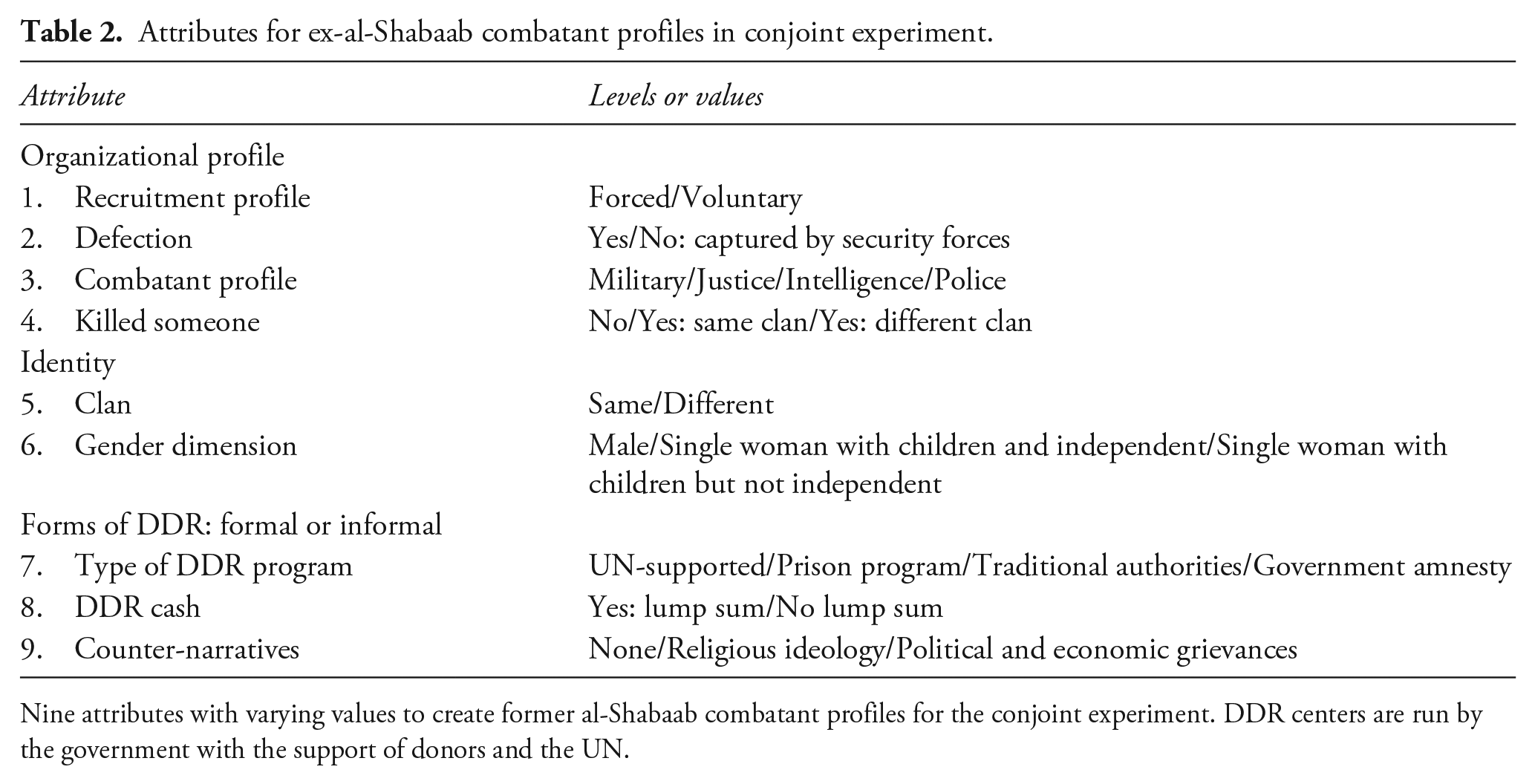
Nine attributes with varying values to create former al-Shabaab combatant profiles for the conjoint experiment. DDR centers are run by the government with the support of donors and the UN.
Thirdly, we made earnest efforts to gather information about former al-Shabaab combatants. We obtained two distinct lists of graduates from the Baidoa DDR center, along with their respective vocational training programs. In the first group, out of the 70 ex-combatant graduates, 46 received training in small business, 13 in hospitality, and 11 in masonry work. Similarly, within the second group of 63 graduates, 33 were trained in business, 13 in hospitality, and 17 in masonry. Notably, all 133 graduates were male. Despite references to an all-women DDR center in existing research (Khalil et al., 2019), it remained closed during the period of our survey. Additionally, we conducted individual, open-ended discussions with eight former al-Shabaab combatants who were squad leaders, and had already reintegrated into host communities. Among these, seven ex-combatants had joined voluntarily, while only one had been forcibly recruited. Among the reasons for joining, two cited poverty, four were motivated by resistance against foreign occupiers, and one joined for personal reasons. Notably, seven out of the eight were employed as street vendors. Lastly, we conducted an in-depth analysis of previous quantitative findings derived from a survey conducted by the UN with 2,300 Somali citizens in 2016, which also captured perceptions of citizens towards the reintegration of former al-Shabaab combatants (see supplementary information, Figures C1 and C2). Our focus group discussions and semi-structured interviews during the research design phase were crucial for validating the ecological validity of our conjoint survey (Godefroidt and Langer, 2023; Michael Auerbach and Thachil, 2020).
Conjoint experiment
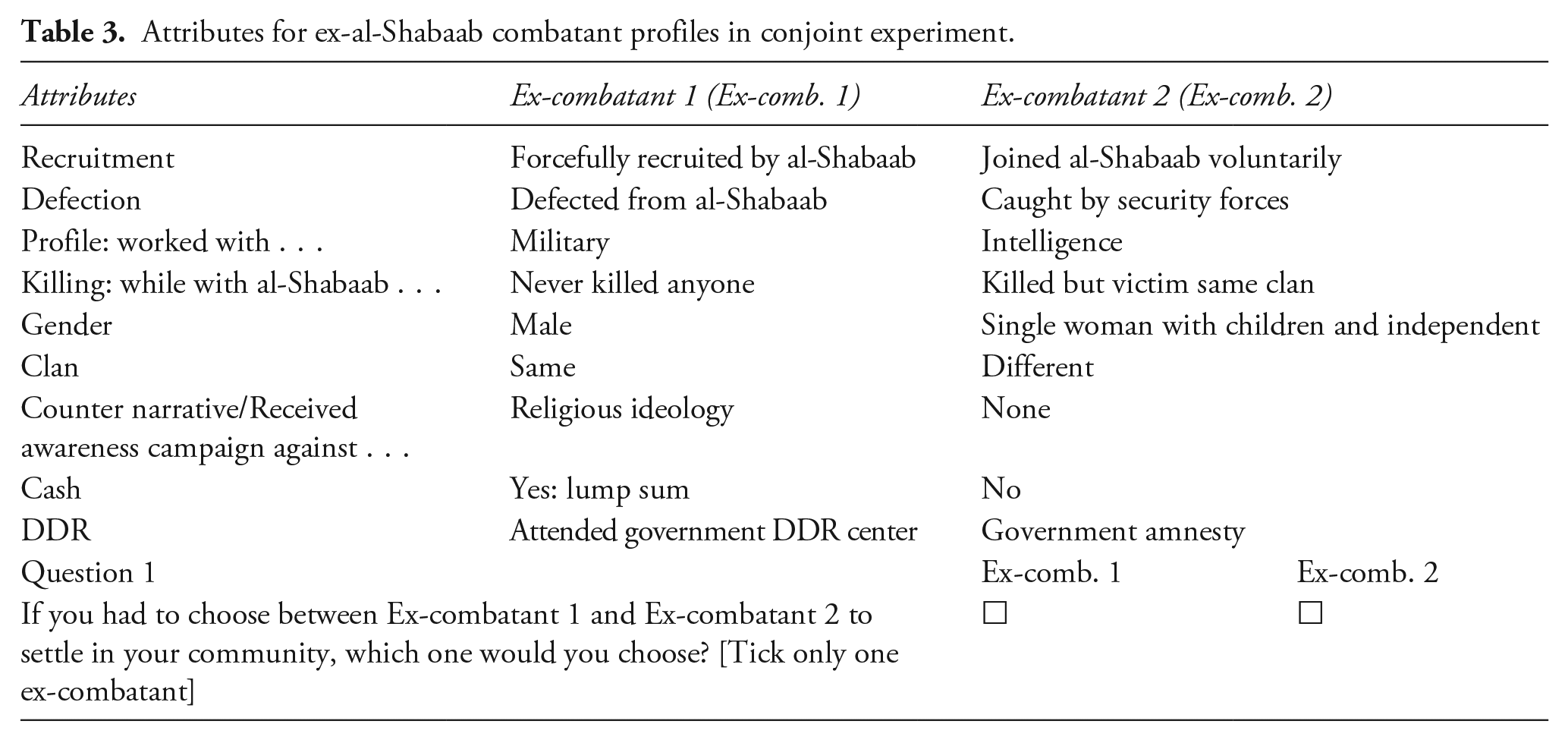
We conducted our conjoint survey in October and November 2020 using a three-step randomization process (detailed in Section B in the Online Appendix). After explaining the survey’s purpose and obtaining consent, participants completed a conjoint experiment involving five sets, each featuring two scenarios describing ex-combatants. After reviewing each pair, participants made a forced choice on which ex-combatant they preferred to be reintegrated into their community. The order of attributes was randomized into four groups. For robustness tests, participants were then asked to rank the two ex-combatants individually (see Table D.1 in the Online Appendix). With each participant exposed to five sets (10 scenarios total), we collected 15,030 observations. Scenarios were presented in person as follows:
I want to request you to imagine that you have been informed by your neighbors that there is a former al-Shabaab combatant who is going to be reintegrated into your community next week. I will read you two scenarios. Each scenario will describe one ex-combatant. After I read the two scenarios describing the two different ex-combatants, I would like you to choose ONE ex-combatant between the two possible types. You have been told the following about these two former al-Shabaab combatants (see Table 3).
Attributes for ex-al-Shabaab combatant profiles in conjoint experiment.
Results: The drivers of reintegration preferences
We followed Hainmueller et al. (2014) to estimate average marginal component effects (AMCEs) by running ordinary least squares regressions of the binary ex-combatant choice variable on dummy variables for each attribute level (excluding whichever level served as the reference category) and cluster standard errors at the respondent level.
Our main results are displayed in Figure 2: (a) presents the AMCEs points at a 95% confidence interval (CI) and (b) shows the marginal means (MMs). Several individual-level determinants for acceptance of the reintegration of ex-al-Shabaab combatants immediately stood out. First, as we hypothesized in H1, civilians placed high importance on the security-related organizational attributes of the ex-combatants. There was less preference among Somali civilians for former al-Shabaab combatants who voluntarily joined the group as opposed to being forcefully recruited (by 12 pps, p < 0.000) and for those who were captured by security forces as opposed to those who defected (by 3.5 pps, p < 0.000). In comparison to fighting soldiers under al-Shabaab military units, community members were more likely to accept those who worked in the justice and police sections (4 pps, p < 0.000 and 2.3 pps, p < 0.033), but were also less likely to accept those who worked in the al-Shabaab intelligence unit (4.5 pps, p < 0.000). These findings corroborated insights gained from our focus group discussions with ex-combatants and community members, indicating that intelligence-, military-, police- and justice units were categorized based on the extent of their association with abusive behavior. Unsurprisingly, having killed someone as an al-Shabaab militant was the strongest barrier to community acceptance by more than 20 pps (same clan: 22 pps, p < 0.000; another clan: 27.7 pps, p < 0.000).
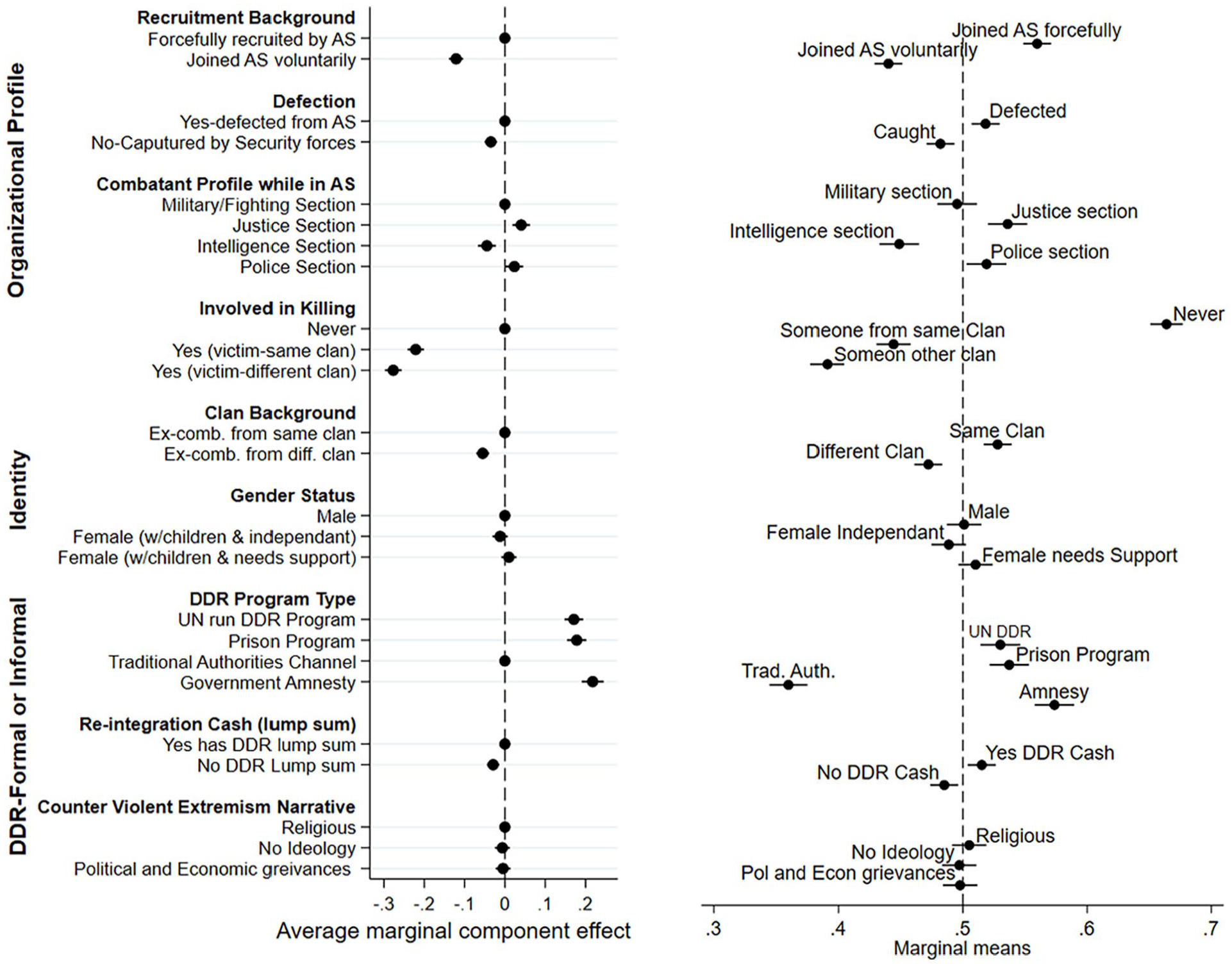
Main results of the effects of randomly assigned ex-al-Shabaab combatant attributes on the probability of being preferred for reintegration: (a) estimated average marginal component effects (AMCEs) and (b) marginal means. AMCE estimates are based on the benchmark ordinary least squares model with clustered standard errors at the respondent level (95% CI). Results with community and enumerator fixed effects but no controls. Results with controls can be found in the Online Appendix (Table C5). N = 15,030: 1,503 participants × 10 scenarios.
Secondly, we examined how social identity traits influenced threat perceptions of reintegration, related to H2. We found that combatants from a different clan were less preferred by 5.5 pps (p < 0.000). These findings revealed that participants in our study perceived ethnic bias, showing a preference for accepting ex-combatants from the same clan over those from different clans. In Somalia, where clan dynamics significantly influence social interactions (Khalil et al., 2019), members of the same clan also tend to support ex-fighters during their reintegration into civilian life. This observation aligns with recent conflict literature that underscores how conflict exacerbates identity cleavages (Haas and Khadka, 2020). Moving to the choice between a male and a female ex-combatant who was a single woman with children but was independent, we found that the latter was less preferred than a male ex-combatant (1.2 pps, p < 0.213) but a woman with children but who needed support was preferred over a male ex-combatant (1 pp, p < 0.307). However, both results showed weak pp values and were not statistically significant. Women’s allegiance to al-Shabaab presents particular challenges in relation to categorization due to their continued residence in the home communities, unlike men who often reside in camps (Stern, 2019). This difficulty in discerning women’s involvement may stem from post-conflict DDR policies that prioritize men over women, even those who have played significant roles in insurgency. Our findings revealed a departure from the anticipated gender dynamics. Instead of facing a gendered backlash, women were perceived as posing a lower security threat, aligning with recent research anticipating more favorable attitudes towards women in violent organizations (Kao and Revkin, 2023). Our findings indicated that while gender was not a significant factor, preferences for ex-combatants from the same clan seemed to be more strongly linked to threat perception.
Finally we turn to our final set of results tied to H3: how types of DDR channels shape threat perceptions of reintegration. In our assessment of the DDR programs preferred by civilians, we observed that ex-combatants who underwent formal channels for reintegration were significantly favored over those accepted by TAs such as religious leaders and clan elders. In fact, graduates from the formal DDR centers were more likely to be accepted by 17 pps (p < 0.000), those who underwent the prison program by 17.8 pps (p < 0.000) and those who were granted an amnesty by the Somali government by 21.8 pps (p < 0.000). There was a marginal effect (5 pps, p < 0.001) on the civilians’ preference for ex-combatants that were given amnesty over those who participated in reintegration programs in the DDR centers. Remarkably, the TA channel of ex-militants’ reintegration showed the strongest negative influence in the model. This finding suggests that TA social power may have altered, affecting pre-existing tensions between the formal state and the customary justice system (Gelot and Khadka, 2024).
Reinforcing our expectation that formal pathways would be favored over informal ones, we found that ex-combatants who contributed a lump sum for reintegration were preferred over those who did not provide any cash by 3 pps (p < 0.000). The DDR program in Somalia aims to enhance employment prospects for ex-militants through vocational training followed by a grant of US$ 2500, anticipating that these incentives will deter recidivism and stimulate the local economy (Knight and Ozerdem, 2004). We also failed to find any significant results related to the counter-narratives expounded by formal reintegration programs targeting Islamist extremist ideologies; this was in line with recent experimental work on the topic pointing to inconclusive findings (Blair et al., 2021).
In Figure 2(b) we present plots of the MMs for all the ACMEs reported, which describe the observed selection probabilities of an attribute (Leeper et al., 2020). For example, the ACME for those who underwent the UN-supported DDR showed a 17.8 pps increase, reflecting a difference in MMs of 0.36 for those that underwent the informal route and of 0.53 for those who graduated from the UN-supported DDR centers. Likewise, acceptance for those who had not killed showed the highest increase of almost 28 pps from 0.4 for ‘killed’ to 0.68 for ‘never killed’. Our next set of results looked at different subgroups to identify whether one particular group of civilians was driving our results. In Figure C3 (Online Appendix), we show the results for the six different respondent types: male, female, religious leaders, clan elders, women leaders and ordinary civilians. These results held across all groups and were almost identical to our main results, shown in Figure 2. Somali citizens categorized by social strata also exhibited identical preferences in the attributes that were key to their decision about the type of ex-combatant preferred for reintegration, that is, how the ex-combatant joined al-Shabaab, how he/she left al-Shabaab, their associated unit, whethere they had been convicted of killing, their clan background, gender dynamics, evidence of the DDR lump sum, and the type of DDR program he/she underwent. Both our main results and the results disaggregated by respondent type were robust to including pre-treatment covariates (Tables C5 and C6 in the Online Appendix). We also carried out two additional tests, which confirmed that our respondents fully understood the scenarios they were presented with (Section D.1 in the Online Appendix).
Mechanism driving reintegration preferences: Threat categorization and formal reintegration channels
Our findings revealed that community acceptance of ex-fighters for reintegration was influenced by perceived threat levels, with greater threat perceptions leading to lower acceptance. Additionally, the type of reintegration pathway undertaken by the former combatant affected community preferences. In Figure 3, we present the results of various interaction models that explored the interplay between threat perceptions and reintegration pathways to understand their combined impact on community acceptance.
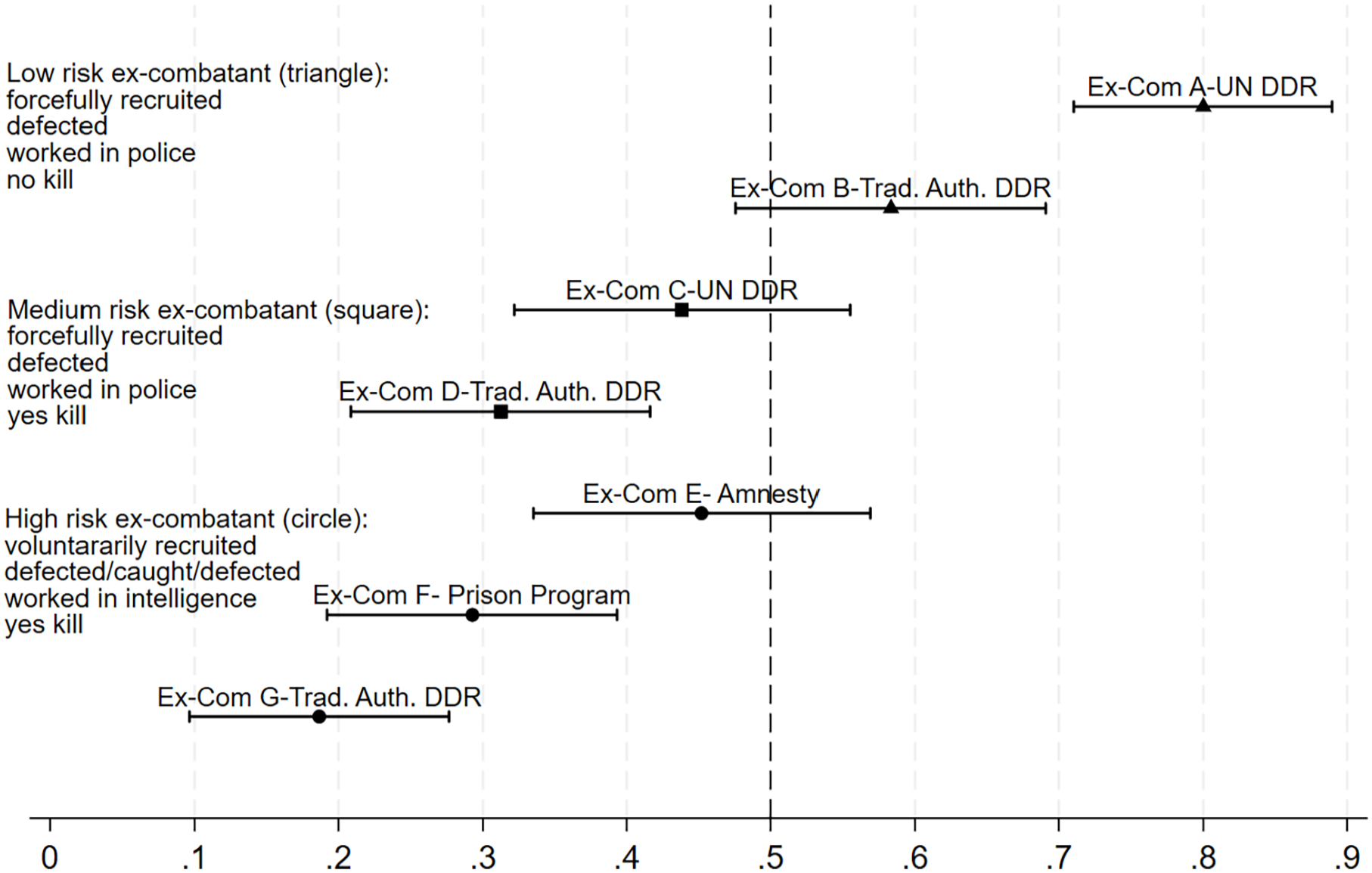
Probability of being preferred for reintegration by risk and DDR type. Marginal means of being preferred for ex-combatant acceptance into the community (95% CI). The estimates on the vertical axis are for the types of traits associated with the three different risk categories from low (triangles), medium (squares) to high (circles). n = 80, 84, 73, 80, 73, 82 and 75 for Ex-combatants A to F, respectively.
We first focus on low-risk ex-combatants: those forcibly recruited, serving in non-lethal roles and who defected. These individuals had two reintegration pathways: UN DDR programs (Ex-combatant A) or TA mechanisms (Ex-combatant B). The results showed that civilians preferred Ex-combatant A by 22 pps over Ex-combatant B. For medium-risk ex-combatants (Ex-combatants C and D), who shared attributes with A and B but had killed someone, acceptance dropped from 80% to 43% for those in the UN DDR program and from 58% to 31% for those on the TA path. Additional analysis for low- and medium-risk ex-combatants in the justice section, instead of police, showed similar results, probably due to the al-Shabaab justice system’s reputation for fair rulings based on sharia, which even some Somali citizens in government-controlled areas seek for dispute resolution (Gelot and Hansen, 2019).
We now focus on high-risk ex-combatants, classified by criteria such as voluntary recruitment, capture by security forces, involvement in the intelligence unit, and participation in killings. Qualitative studies have identified the al-Shabaab intelligence unit as the most feared among Somali citizens, conducting espionage and assassinations disguised as civilians (Khalil et al., 2019). High-risk ex-combatants may receive amnesty, enter prison programs or reintegrate through TA channels, though not all who accept amnesty go through the formal DDR program, especially high-value targets (Felbab-Brown, 2015). Our results indicated that high-risk ex-combatants were 27 pps more likely to be accepted (Ex-combatant E over Ex-combatant G, 45 pps over 18 pps) if they chose amnesty over the TA channel. This finding aligned with the UNSOM and AMISOM (2016) survey (Figure C1, Online Appendix), which shows 59% of civilians in Baidoa and 40% in Mogadishu and Kismayo support the government amnesty program.
To gauge civilian understanding of security-related attributes, we tested preferences for high-risk ex-combatants in the UN-supported DDR program. In reality, these ex-combatants are not sent to DDR centers but are either imprisoned or granted amnesty if they defect. The results showed a 27.3% acceptance probability for high-risk ex-combatants caught and sent to DDR centers, versus 44.4% for those who defected and chose the DDR option. For robustness, Figure D5 (in the Online Appendix) displays MMs, illustrating the interaction between security attributes and DDR pathways. These findings further validated our community-based threat categorization by revealing significantly lower preferences for ex-combatants using TA channels compared to those using formal pathways.
Taken together, our results point to one central implication regarding the reintegration pathways ex-combatants undertake: for the three categories of ex-combatants in terms of threat – low, medium and high – the TA mechanism was deemed the least favored. This differs from prior literature that highlights the constructive roles these actors generally play in rural African communities (Blattman et al., 2014). While we found that the community distrusted the TAs with the very function of reintegration, we would not go so far as to argue that community members generally delegitimized their role in managing intergroup relations. The TA mechanism in Somalia is known to be clan-biased, and occasionally obstructs government security forces’ attempts to apprehend al-Shabaab suspects. In fact, separate tests showed that our participants were not biased towards the UN in their responses. We asked participants to rate their trust in the ability of these two institutions to carry out their duties: 84% of our sample showed trust towards the TAs, as opposed to only 52% trusting the UN. Our findings suggest that in Somalia, reintegration efforts are influenced by complex ethno-political fears, partly due to the perception that some TAs have been co-opted by al-Shabaab (Gelot and Khadka, 2024). This validation highlights the critical need to account for community-specific dynamics in the design and implementation of DDR programs.
Robustness tests
A key finding of our study was that civilians assessed ex-combatants’ potential for violence primarily based on specific attributes. To explore whether these assessments stem solely from concerns about spoilers or are also influenced by moral repugnance and the perceived need for punishment, we conducted three additional tests. First, we asked participants to assess the level of security in their communities regarding ongoing violence. Conflict studies show how threat perceptions shape public perspectives on war, peace and conflict resolution, triggering avoidance-oriented responses aimed at reducing risk (Hirsch-Hoefler et al., 2016). In Figure D6 (left-hand plots; Online Appendix), the coefficients for security-related attributes, such as voluntary participation, were negative by the largest margins for individuals who felt insecure in their communities. More importantly, for this insecure group, all coefficients representing the acceptance of ex-militants undergoing different reintegration channels dropped significantly (UN = 0.256 to 0.109; prison = 0.376 to 0.045; and amnesty = 0.533 to 0.006), with only the UN DDR program remaining statistically significant.
Second, we conducted a behavioral measure to assess respondents’ willingness to sign a petition supporting the Somali government’s 2017 amnesty policy for al-Shabaab militants, which allowed them 60 days to surrender. Some 90.42% of our respondents signed the amnesty petition (see Table D9 in the Online Appendix for details of the petition). We anticipated that those unwilling to sign the petition would be influenced by both the security-related attributes of ex-combatants and their disapproval of reintegration mechanisms other than the UN-supported program. The results (Figure D6; right-hand plots in the Online Appendix) validated our expectation that those unwilling to sign the amnesty petition did not support amnesty or prison programs as opposed to those willing to sign the amnesty petition (both results were statistically significant at p < 0.5). This group also showed significantly less preference for ex-combatants who have killed. Lastly, we aimed to confirm whether respondents linked their threat perceptions specifically with al-Shabaab and distinguished the potential for violence among ex-combatants affiliated with al-Shabaab versus clan militias. Tellez (2019) found that civilians in conflict zones in Colombia exhibited increased support for the peace process but were less willing to reintegrate with demobilized fighters, particularly in communities with heightened conflict intensity. Our respondents were presented with a scenario involving the choice between reintegrating an al-Shabaab former combatant or a clan militia ex-combatant into their community. Our findings showed that nearly 60% of respondents favored clan militias over other options provided (refer to Figure D7 in the Online Appendix). These results further supported our conclusion that heightened threat perceptions amplify concerns about recidivism and threats to local security.
Ex-combatants and UN-supported DDR programs
Our findings showed a strong preference for ex-combatants who had completed DDR programs, raising the question: what drives this preference? Surprisingly, few empirical studies have examined reintegration dynamics from the perspective of ex-combatants, especially those in Islamist conflicts (Daly et al., 2020; Kaplan and Nussio, 2018b; Phayal et al., 2015; Tellez, 2019). To address this, we surveyed 200 former al-Shabaab militants in July 2021, vetted by the Somali government as low risk. These former militants had either completed DDR programs and reintegrated between 2018 and 2020 or were awaiting DDR enrollment. We compared the outcomes between individuals who had participated in DDR programs with UN support and those who had not focusing on: (1) employment status, and (2) community involvement. It is worth noting that the program’s vocational and educational components rely on UN and donor support (UNSOM, 2019). We also evaluated violence-related outcomes by asking ex-combatants to rate their agreement with the following statements: (3) acceptability of violence for political ends (1= agree to 2=disagree), (4) call for violence by religious leaders (1=strongly agree to 4=strongly disagree), and (5) obligation of armed jihad for Muslims today (1=strongly agree to 4=strongly disagree). See Table C3 for summary statistics.
The results depicted in Figure 4 indicate that ex-al-Shabaab fighters who underwent DDR programs with UN support experienced a 42 percentage point increase (p < 0.001) in the probability of being employed and a 0.85-point increase (p < 0.001) in cooperative behavior with host community members, compared to those who did not undergo DDR. These findings align with DDR literature, which suggests that providing ex-combatants with training combined with either immediate or guaranteed future economic incentives can deter them from engaging in illicit and mercenary labor, thereby facilitating their reintegration into communities (Blattman et al., 2017, Phayal et al., 2015). Interestingly, the DDR graduates expressed positive attitudes towards nonviolence. Specifically, responses indicated a belief that violence for political purposes was less acceptable (by 0.25 percentage points decrease, p < 0.10), violence against those who insult Islam as deemed by religious leaders was less justifiable (by 0.68 point decrease, p < 0.05), and that armed jihad is not a universal obligation for Muslims (by 0.86 point decrease, p < 0.001). While we acknowledge the possibility of selection effects influencing the results, a sample of real former fighters who have reintegrated into communities is uniquely important for providing empirically grounded insights into the challenges and successes of reintegration processes. 4
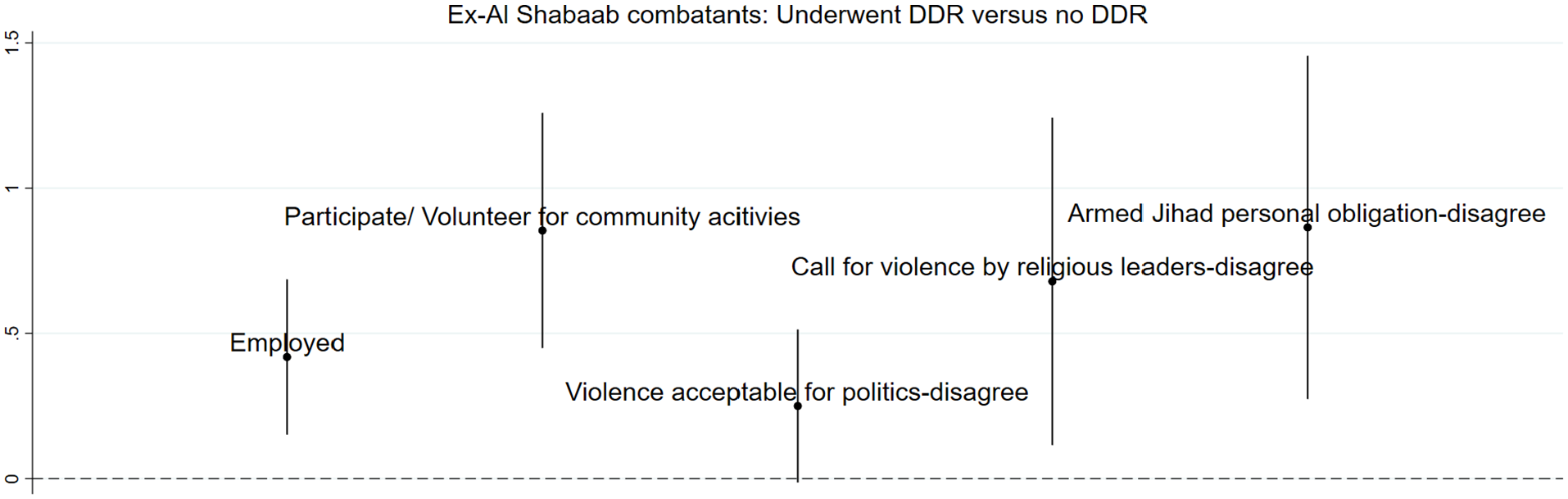
Comparison of ex-al-Shabaab combatants who underwent UN-supported DDR programs and those who did not. Coefficient plots of regression results (see Table C7 in the Online Appendix) with dependent variable: ex-al-Shabaab fighter underwent formal DDR program or no DDR program (N = 200). Controls included age, gender, education, dominant clan, and victim of violence in the past year (95% CI).
To validate our findings, we conducted a focus group with eight former al-Shabaab militants. They unanimously reported that vocational training and DDR center support improved their livelihoods and confidence in the host communities. These findings highlighted three significant observations regarding the potential impact of DDR centers on fostering positive perceptions of former combatants among civilians. Firstly, the inclusion of vocational support and livelihood training initiatives in DDR centers may have helped ex-combatants identify alternatives to their violent or criminal social identity. Secondly, the design of formal DDR programs in Somalia may have facilitated the transition back into community life by contributing to greater participation in community volunteering and cooperative behavior. Lastly, the significant and positive outcomes for violence-avoidance related to political and religious reasons (Plots 3 to 5 in Figure 4) tentatively suggest that the educational programs in DDR centers aimed at encouraging former militants to move away from violence have made a positive impact. Our conjoint analysis indicated that civilians acknowledge these positive outcomes associated with DDR programs, which in turn fosters a preference for ex-combatants who have completed such programs.
Conclusion
This paper has examined the determinants of host community preferences for the reintegration of former Islamist militants. Given their involvement in systematic violence against civilian populations, the challenges of reintegrating such individuals into society bear substantial significance for post-conflict recovery (Blair et al., 2021). We argue that community preferences are shaped along perceived threat levels influenced by three factors: organizational profile, identity traits, and reintegration channels. We empirically examined our pre-registered hypotheses using a conjoint survey involving 1500 Somali civilians from three cities where both formal and informal reintegration methods are employed, and a separate survey of 200 former al-Shabaab DDR graduates. Our results indicated that community threat perceptions during reintegration are intrinsically linked to the organizational profile of ex-Islamist militants, including voluntary recruitment, association with abusive units, and involvement in killings. Furthermore, our results revealed that ex-combatants who participate in formal reintegration channels, such as DDR program reintegration facilitated by the UN or government amnesty and prison programs, experienced higher levels of community support in comparison to those integrated through TAs.
While previous research has recognized the importance of discerning various types of spoilers (Kaplan and Nussio, 2018a; Menkhaus, 2006), our study sheds light on how the micro-foundations of heightened threat perceptions specifically related to former Islamist militants significantly shape citizens’ wartime preferences. This heightened perception of threat accentuates individuals’ tendencies to prioritize security considerations over other factors, thereby intensifying concerns about threat classifications and the risk of recidivism. Our findings align with recent literature highlighting individual wartime preference formation as an important mechanism for civilians’ capacity to evaluate risk and choose survival strategies (Ghosn et al., 2021; Godefroidt and Langer, 2023; Milliff, 2024). Rather than a uniform process of stigmatization, the findings suggest that community members tend to rank their threat perceptions of former combatants on specific attributes. Moreover, our study indicated that donor-supported DDR programs can mitigate local fears of recidivism, aligning with literature on the UN’s role as an external security guarantor (Hartzell et al., 2001; Phayal et al., 2015).
While these findings underscore the potential of formal reintegration pathways, such as UN DDR programs, it is essential to validate their generalizability across a broader range of Islamist conflicts. The pronounced effects of these programs have been observed in areas with DDR centers, suggesting that their presence is a significant scope condition affecting their effectiveness. Nevertheless, the results offer valuable insights into community perceptions of the threat categorization of former Islamist militants. These insights could help align DDR programs with globally recognized threat categories and address growing concerns about violent extremism. Building on these insights, understanding how individuals perceive and manage control and predictability during conflict is crucial for comprehending decisionmaking processes in these contexts (Milliff, 2024). Further research should explore the complex dynamics between micro-level risk assessments, informal vetting of ex-combatants, and how these factors influence behavioral responses within host populations. Specifically, examining the factors contributing to the decreased preference among host communities for ex-combatants reintegrated through TA channels, especially in the context of Islamist militancy, warrants further investigation (Gelot and Khadka, 2024).
Footnotes
Acknowledgements
Our sincere thanks to the reviewers and the journal editors for their helpful feedback and support. We thank Cyrus Samii, Han Dorussen, Nicholas Haas, Blair Welsh, Faten Ghosn, Mehmet Arslan and Niklas Karlén for their feedback. We thank Abshir, our research manager in Somalia, for his invaluable assistance and contributions.
Replication Data

Conflict of interest
The author declared no potential conflicts of interest with respect to the research, authorship, and/or publication of this article.
Funding
The authors disclosed receipt of the following financial support for the research, authorship, and/or publication of this article: This research was supported by the Swedish Research Council (grant no. 2015-03476) and the Folke Bernadotte Academy (grant no. 22-00274).