



Abstract
Recent literature on autocracies focuses on elite politics to study ruling party stability. I focus on the lowest level of the ruling party structure, party members, to introduce new data on party-based autocracies. Party members are unique connectors between ruling party and society, and ruling parties can recur to them for policy enforcement, political control, co-optation and legitimation to secure power. I present the One-Party Membership Dataset (OPAMED), a comprehensive dataset on party membership in autocracies, covering 42 ruling parties across party-based regimes from 1945 to 2020, and introduce two new variables: party size; and party membership volatility. The first variable measures the membership-to-population ratio, while the second measures the rate of co-optation growth from one year to the other. In conclusion, the OPAMED provides a new, flexible and easy-to-use toolkit on ruling parties in party-based autocracies.
Introduction
The dictator–society relationship can be a source of regime threat (Lust-Okar, 2005; Blaydes, 2010; Paine, 2020). Recent literature shows that party-based autocracies are more durable than other authoritarian regimes (Geddes, Wright & Frantz, 2014), which is widely explained by the crucial role ruling parties have for elite-leader bargaining power (Gandhi & Przeworski, 2007; Magaloni & Kricheli, 2010; Levitsky & Way, 2012; Svolik, 2012; Miller, 2020; Meng, 2021; Meng & Paine, 2022). However, at the bottom of ruling parties’ hierarchy there are party members, another unique feature of party-based autocracies and also the closest hierarchical level to society. Ruling parties can use party members to secure and strengthen their regime while preventing bottom-up threats in at least three ways: policy enforcement and political control; co-optation of social groups; and securing popular legitimacy.
Multiple studies show the importance of party membership, drawing from single or small-n cases (Rigby, 1968; Koss, 2018; Grzymala-Busse, 2002; Blaydes, 2020). However, previous literature is fragmented and prevents extensive comparative studies on whether party members are a source of party-based durability and whether there are different party membership strategies that ruling parties use to secure power and political control, among others. A wealth of literature shows that ruling parties have mobilized, demobilized and purged their masses, pointing at widely different party–society relationships. Building on previous findings, I propose that party memberships have different functions depending on the ruling party’s challenges and needs to stabilize its relationship with society and, collecting data from a wealth of sources, I present the One-Party Membership Dataset (OPAMED), a new dataset on party membership in party-based autocracies.
The OPAMED contributes to the current literature in at least four ways. First, it expands our knowledge about ruling parties’ organizational structures in authoritarian regimes. The OPAMED features 1,845 year-observations on party membership in 42 ruling parties during the 1945–2020 period. It allows extensive comparative studies on recruitment strategies, creates the foundations to explain within-party variation and opens the path to test theories of regime survival from a bottom-up standpoint. Second, it introduces two new measurements on party membership: ruling party size; and membership volatility. These two dimensions are fundamental to further exploring ruling parties’ strength and their approaches to the party–society relationship. Third, the OPAMED features a broad set of variables on geography, ideology, historical persistence, leadership transitions and elections, which facilitates the integration with other existing datasets. Fourth, these data on party membership are complementary to already available data on elite politics, which can be used to assess a party-based regime’s durability from multiple levels.
Party members as a party–society connector
Autocrats must secure mass support to prevent coups and bottom-up upheavals (Paine, 2020), and ruling parties in party-based autocracies can achieve this by investing in party membership, strengthening their position within the political system. Previous literature shows the importance of ruling parties for elite-leader bargaining power and for regime durability (Magaloni, 2006; Gandhi & Przeworski, 2007). Similarly, dictators, personalistic or within a military junta, without a ruling party do not have direct connection with the population that party membership would grant to autocrats with a ruling party, highlighting a fragility in the autocrat–society relationships. Hence, ruling party members can help the ruler in strengthening the relationship with society. Party masses are the most efficient connector between ruling party and population, and they also are the biggest section of the party’s hierarchical structure, providing an efficient organization that can penetrate remote and challenging areas of the national socio-economic structure.
However, the comparative advantage autocracies with ruling parties have come with the cost of managing the party structure. Although not every ruling party might have a detailed policy on membership recruitment, they all face the challenge of managing their masses. Failing to organize recruitment and party members could potentially pose a threat to political power or, worse, its survival. Party members could develop political dissatisfaction, voting for opposition parties, leaving the party ranks, or even acting against the elite’s interests.
In regimes where opposition parties are outlawed, the centrality of party members can be elaborated in two primary branches: control and co-optation. Party members are crucial for ruling parties to efficiently enforce policy, capillary political control and constant information collection. Some of their functions resemble the duties of security and secret services, yet the fundamental difference is that the broadest majority of party members are non-professionals. Taking the example of the Chinese Communist Party (CCP), party members efficiently help to: (a) prevent contentious actions at the local level; (b) implement the regime’s core policies; (c) organize and control civil society to serve the regime’s goals; (d) collect information on citizens’ ideas and political positions; and (e) provide constant surveillance where the regime could find more challenges (e.g., private businesses).
Ruling parties’ adaptation to social changes passes through their co-optation of specific social groups. On the one hand, ruling parties can be distinguished between exclusionary and inclusionary regimes depending on whether they co-opt opposition or not (Huntington & Moore, 1970; Lust-Okar, 2005; Magaloni, 2006; Paine, 2020). On the other hand, ruling parties tend to adapt their masses’ socio-economic background following changes at national levels. Hence, party members are pivotal for ruling parties’ flexibility and adaptation, which is fundamental for durability.
In competitive authoritarian regimes where opposition parties are allowed, party members provide the authoritarian incumbent with substantial advantages over the opposition, reducing the ruling party’s hunt for votes to secure electoral victory. Nonetheless, if party members are not loyal, this can hinder electoral victory capacity and undermine a ruler’s power. Taking the example of Malaysia, Figure 1 shows the United Malays National Organization’s (UMNO) vote-share and party membership development in the 21st century. In 2004, the UMNO secured more votes than party members, showing electoral strength. However, in the 2008 and 2013 elections, party members exceeded vote-share, signalling a progressive decrease in the UMNO’s political capacity, leading to the 2018 electoral defeat where one million UMNO’s members did not even vote for their party.
Other datasets
Available datasets on party membership are scarce. There is another dataset on party membership, the Members and Activists of Political Parties (MAPP) by Van Haute, Paulis & Sierens (2018), The United Malays National Organization’s vote-share and absolute membership, 2004–2018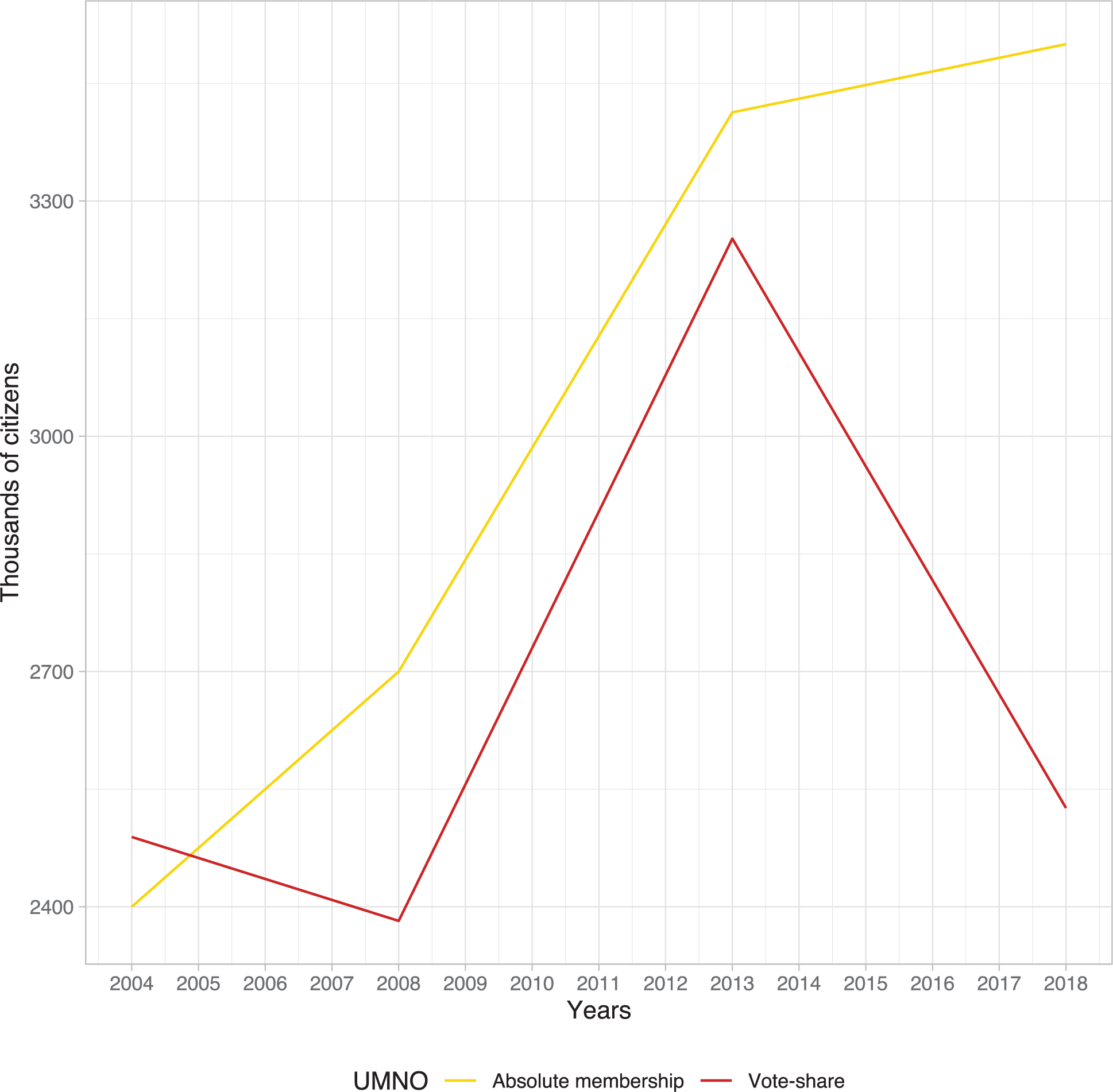
To create the OPAMED, I construct a sample of 42 ruling parties drawing from Geddes, Wright, & Frantz (GWF) (2014) and Miller (2020) as the most comprehensive sources on authoritarian regimes and ruling parties, respectively. I use GWF to select ‘party-based’ regimes, collect data on their ruling parties, and consult Miller (2020) as complementary source. Furthermore, I select only cases where party membership is voluntary rather than imposed. One significant exception from GWF is Russia, which is categorized as ‘personalistic’ but is featured in the OPAMED for two primary reasons: (a) United Russia (UNITRUS) plays a growing role in winning elections and controlling society; and (b) UNITRUS data on membership would allow further scrutiny on leader–party and party–society relationships, and authoritarian regimes’ classification. Figure 3 summarizes ruling Party membership variation in democracies and party-based regimes, 1945–2020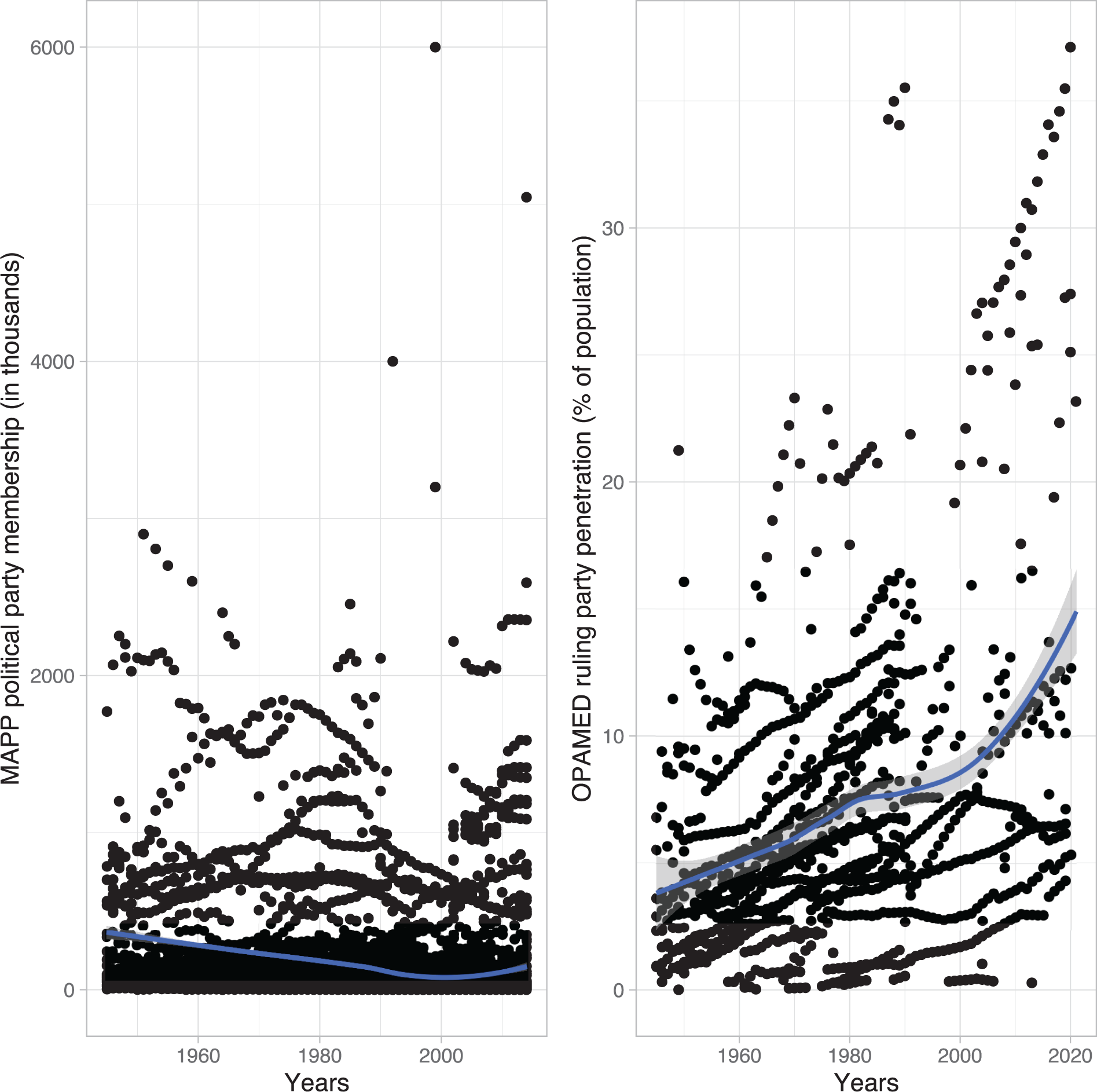
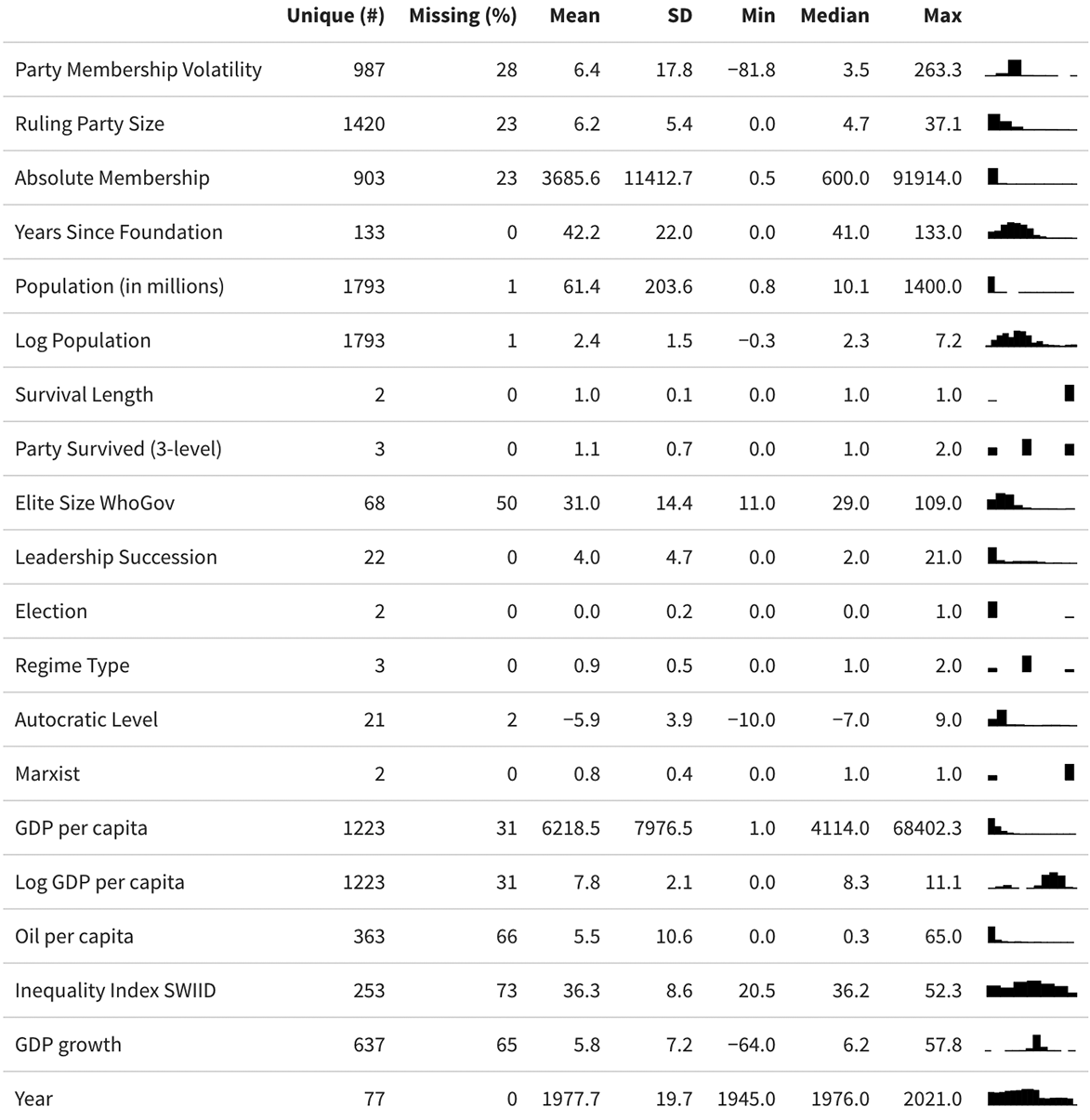
The OPAMED has 1,845 year-observations, covering the 1945–2020 period. In obtaining the data, I selected three primary sources and implemented a triangulation procedure where sources allowed. Academic publications such as journal articles, academic reports and books compose the bulk of the data, along with ruling parties’ digital archival material, their congresses’ report and speeches and their historical outlets and magazines. I also used the United States Central Intelligence Agency (CIA)’s reports monitoring international communism that left valuable information on communist ruling parties’ membership growth between the 1940s and 1960s. Ruling parties’ names in the One-Party Membership Dataset The One-Party Membership Dataset descriptive statistics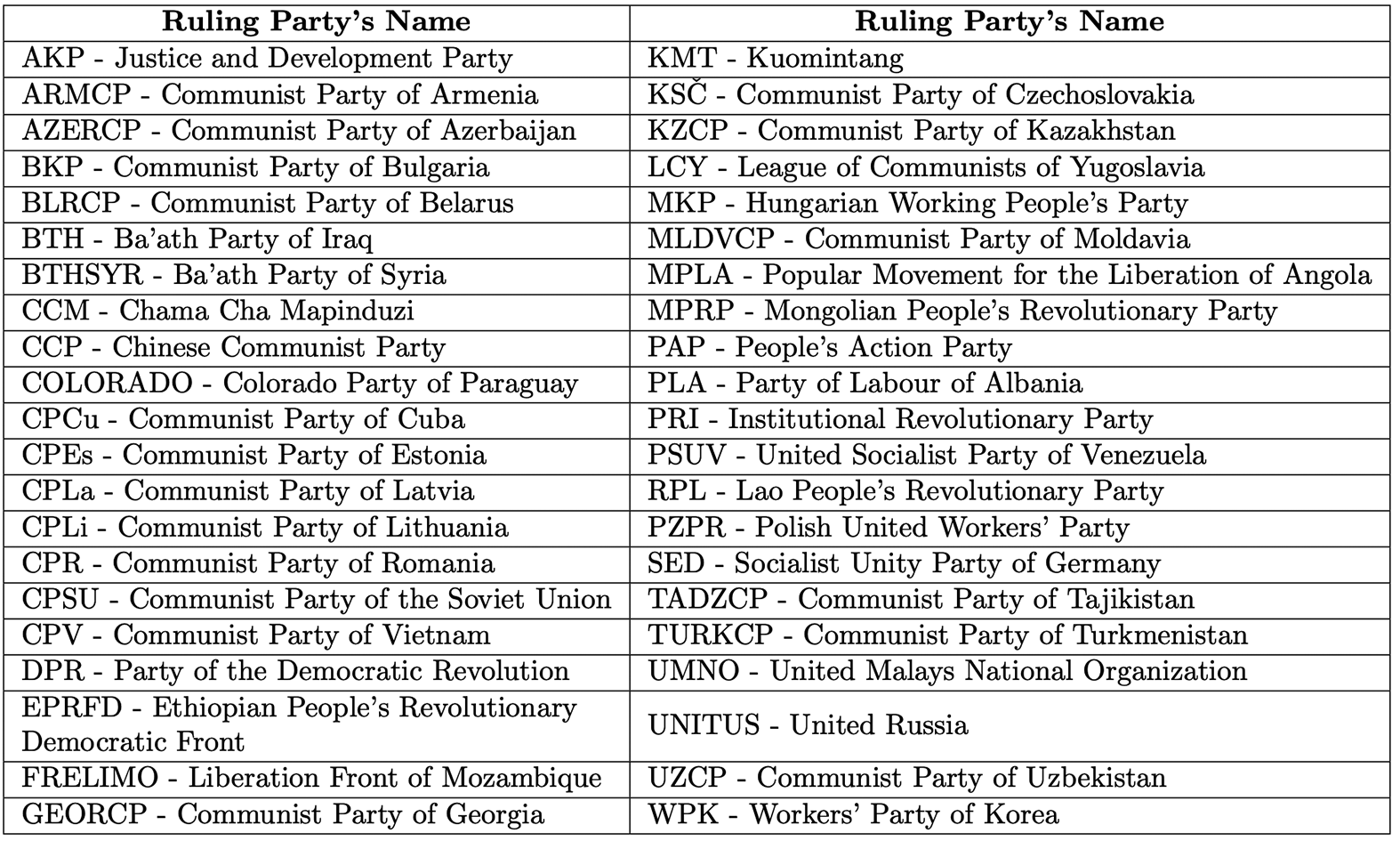
Ruling party size
Ruling party size is an indicator that captures the ruling party members to total population ratio, or:

A ruling party with more members is bigger than a ruling party with a smaller members-to-population ratio. Ruling party size is a valuable indicator for at least two reasons. Traditional literature on mass support in party-based autocracies refers to ruling party breadth as pivotal for regime survival, suggesting that the bigger the party masses, the stronger the ruling party (Huntington, 1968; Sartori, 1976). However, this assumption has not found empirical evidence, primarily because of cross-national data scarcity. Second, returns to party membership are an essential feature in describing a ruling party’s resource redistribution to society (Wintrobe, 2000). Hence, a broader party base can either reflect higher investments on returns to party membership to secure members’ legitimacy or a massive size in society with lower individuals’ returns, resulting in possible ideological defection in favour of a higher quantity of party members. Figure 5 shows ruling parties’ size between 1945 and 2020. They are sorted by size, from the smallest, People’s Action Party (PAP) in Singapore, to the largest, Colorado Party in Paraguay. I also clustered ruling parties by region to visualize geographical differences better. Contrary to common wisdom, ruling parties’ size is much lower than expected. 62% of ruling parties in the OPAMED are smaller than 10%; as Figure 4 shows, the entire sample’s average is 6.2%, and it is possible to define three broad ruling party size categories.
First, a small ruling party. Most ruling parties are small when seizing power due to their organizational origins and challenges in building membership before establishing their government (Levitsky & Way, 2012; Miller, 2020). However, at later stages, some of these parties maintain their elitist posture while others progress towards becoming bigger. It is important to emphasize how party size is unrelated to population size. The Communist Party of Vietnam (CPV) and PAP in Singapore sizes are similar to those adopted by UNITRUS and the CCP in China. Communist vanguard ruling parties fall in this category as well. Second, a medium-sized ruling party. Examples are UMNO in Malaysia and the Justice and Development Party in Turkey. Their primacy within the political system is stable, and they consolidate this advantage by strengthening their party base to prevent possible challenges from opposition parties during electoral turnouts. Third, a mass ruling party. Examples include the Communist Party of Romania (CPR) during the late 1980s, the Workers’ Party of Korea (WPK), and Colorado Party. Ruling parties in Latin America and Africa are outstanding cases, especially the People’s Movement for the Liberation of Angola in Angola, the Institutional Revolutionary Party in Mexico between the 1960s and the 1990s before being defeated, and the United Socialist Party of Venezuela in recent years.
Finally, Figure 6 shows that hegemonic ruling parties have, on average, a higher size in society than closed single-party regimes. As previously stated, one of the primary reasons can be that dominant parties in competitive autocracies have to face electoral challenges, where party members provide an important comparative advantage to the incumbent.
Membership volatility
I measure membership volatility using a ruling party’s yearly membership growth’s variation. This allows focusing on year-to-year ruling party political development. I calculate this variable as follows:
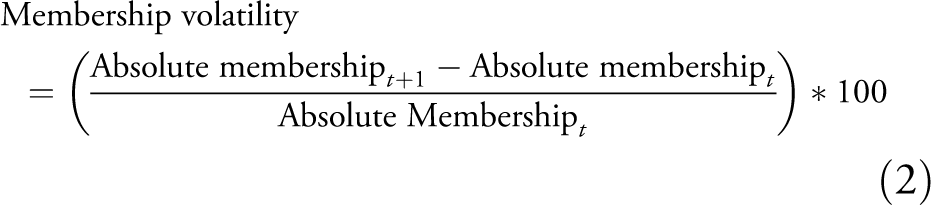
Where membership
First, at the onset of their regime, ruling parties generally experience great peaks, which can be explained as one of the results of seizing power and establishing their rule. Although ruling parties can mobilize non-party members, it is also in their interest to expand their membership growth. Hence, they can politicize society to ensure party members’ policy enforcement, political control and information gathering, and, especially in competitive autocracies, secure popularity in the ballot boxes. Second, and opposed to the first point, ruling parties suffer steep troughs shortly before their regime failure. A first explanation can be the possible detriment of party Density plot of ruling parties’ size, 1945–2020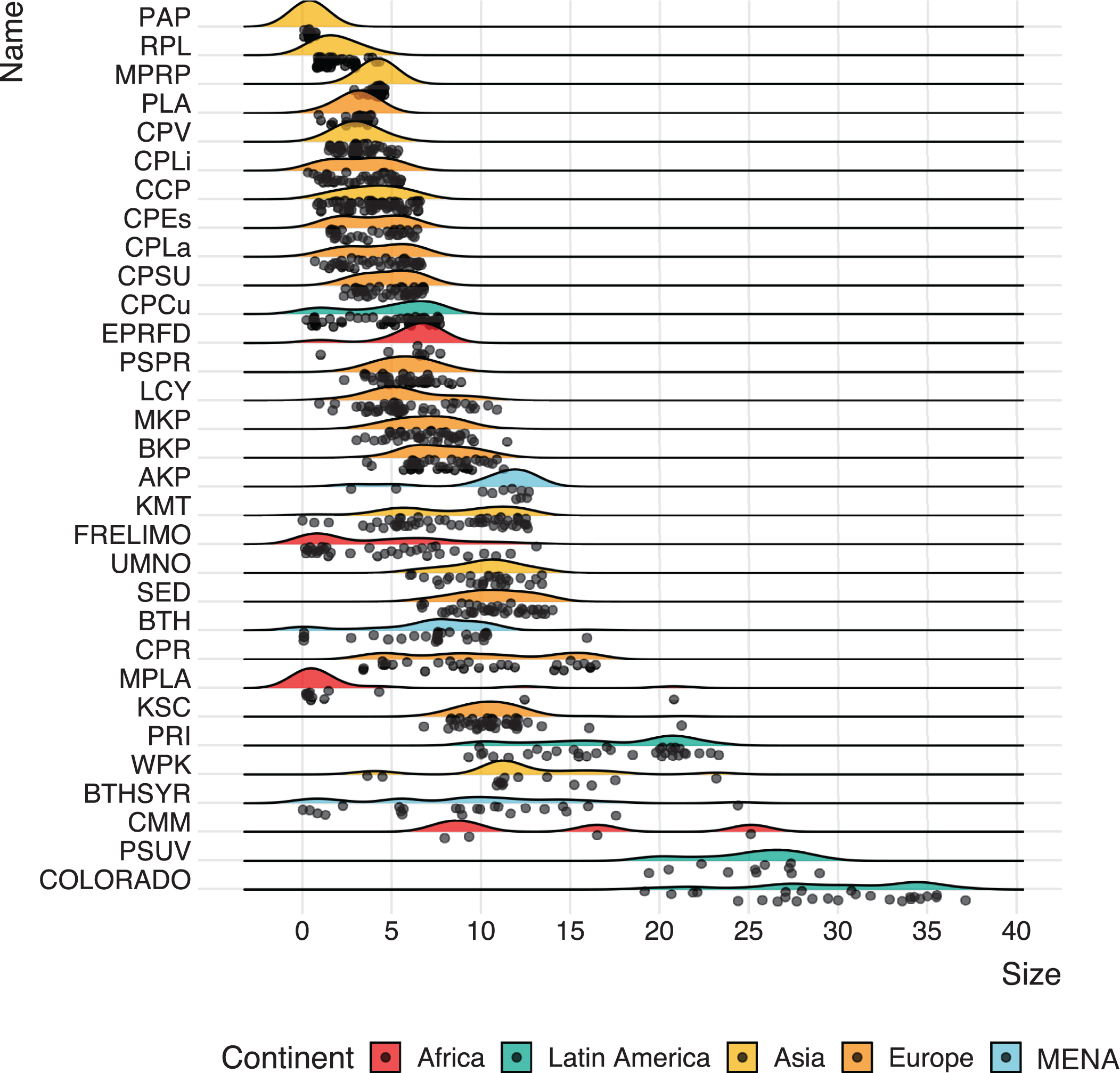
Some ruling parties implement a highly controlled recruitment system that efficiently enforces a screening process. Successful applicants have to prove their capacity Differences between hegemonic and single parties’ size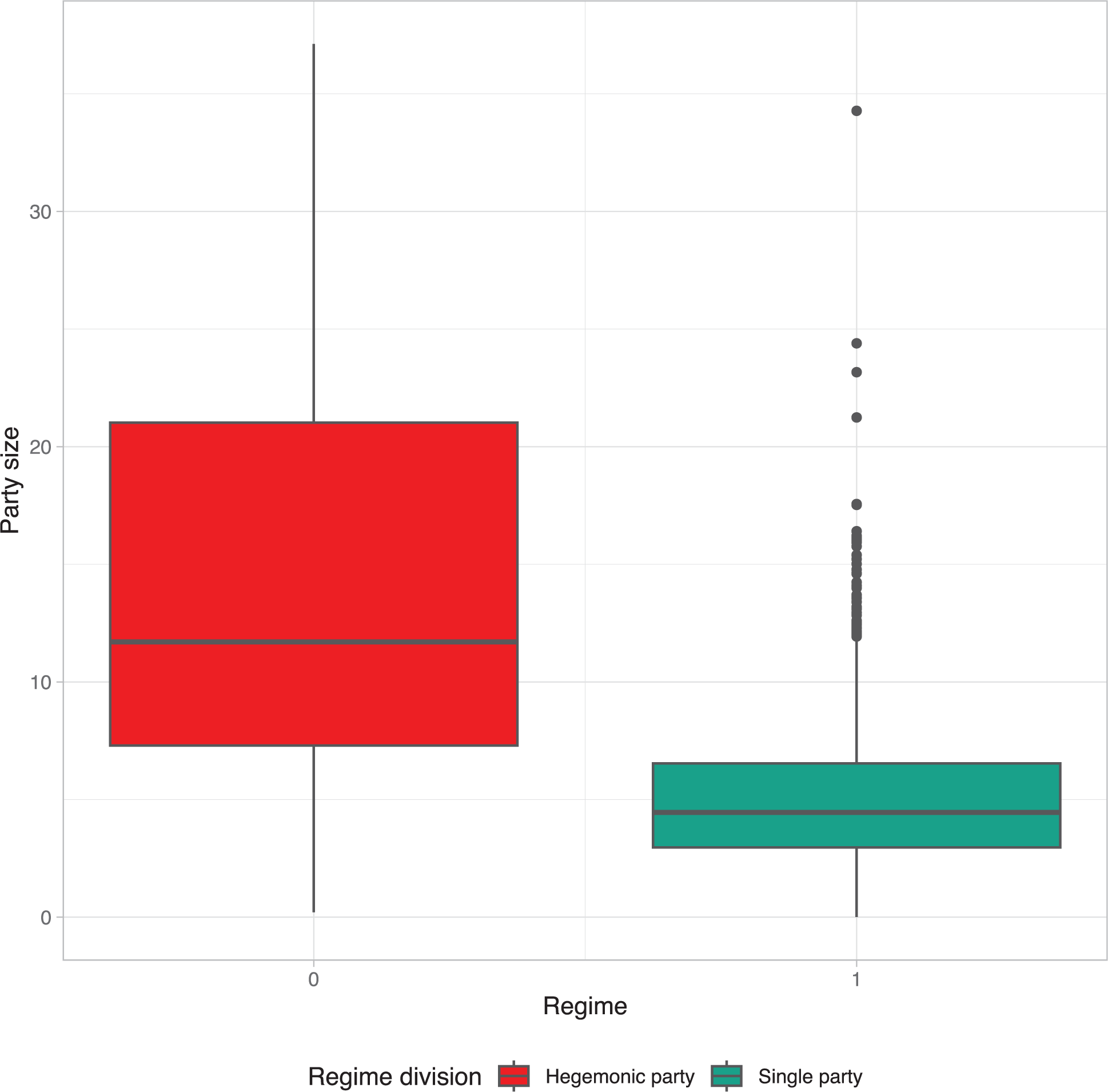
Conversely, uncontrolled growth happens when ruling parties do not have screening processes for new members, reflecting a higher interest in increasing the quantity of co-opted members rather than following specific citizens’ backgrounds or ideology selection (Lenin, 1969 [1904]). Elections are another reason for a looser membership selection, which echoes the differences between hegemonic and single-party regimes. Membership volatility by ruling party, 1945–2020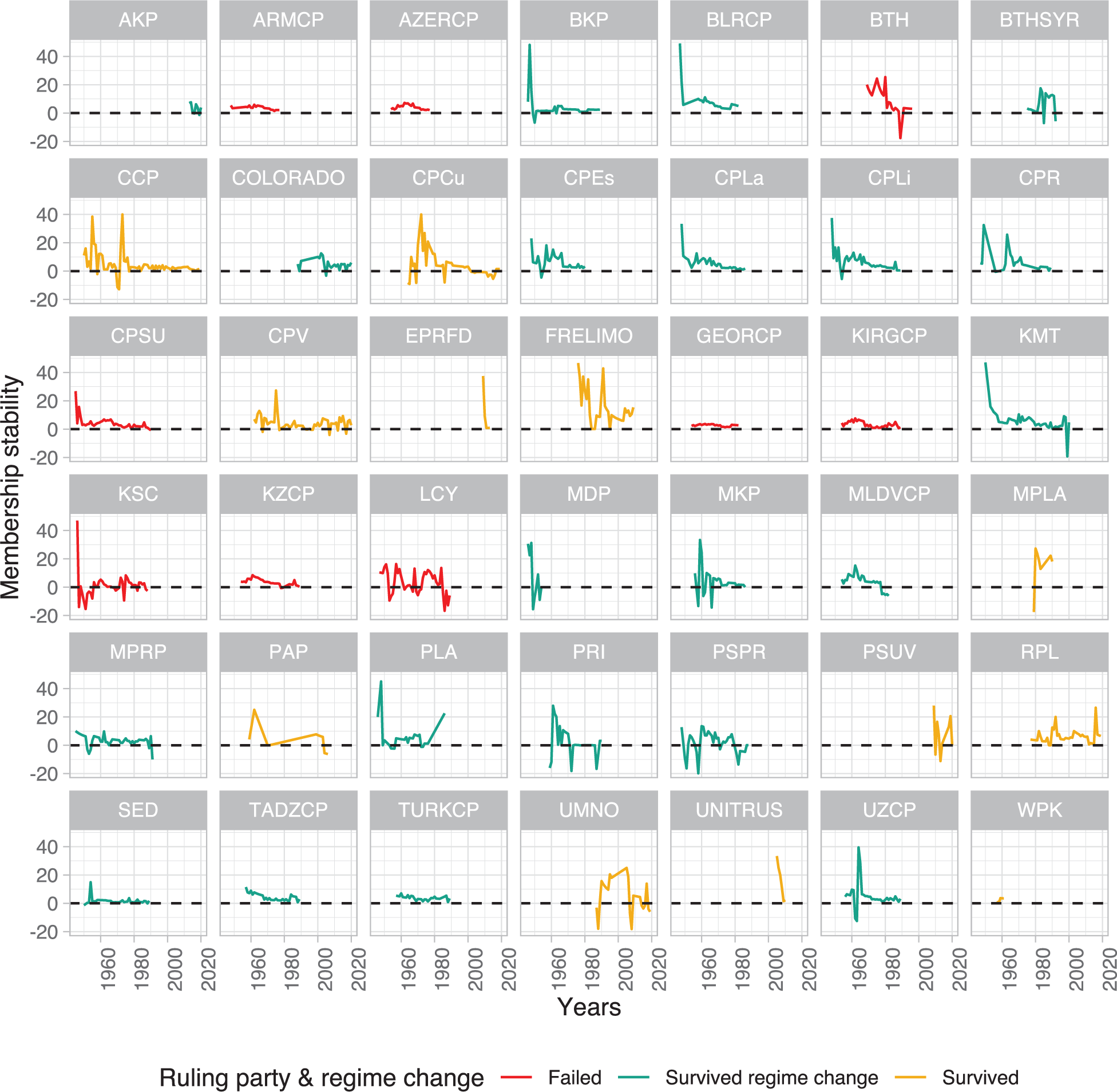
In its most extreme form, ruling parties with uncontrolled selections encourage (or impose) the entire population to apply and directly join the party ranks. Totalitarian regimes have systematically used this strategy: Stalin’s Communist Party of the Soviet Union (CPSU), Maoist CCP and the North Korean WPK are key examples. However, excessive uncontrolled membership growth can also be provoked by exogenous factors such as international wars, territorial invasions and economic shocks. During the Cold War, the Communist Party of Cuba (CPCu) was repeatedly at the centre of the US–USSR battleground, and Figure 7 presents the peaks in membership growth that the CPCu enforced, which subsequently decreased as regime stability improved. Similarly, the efforts the CPV and the Lao People’s Revolutionary Party needed to face the Second (1955–1975) and Third (1975–1991) Indochina Wars affected their membership growth towards an uncontrolled selection.
Missing data
As with most social science datasets covering historical data, the OPAMED has missing values. There are three primary sources of missingness. First, ruling parties tend to publish their membership statistics during their congresses, which rules out the possibility of publication under specific conditions only (e.g., substantial membership growth). Second, most of the data are reported by area study scholars based on reports and intense fieldwork. Party membership is frequently reported as marginal data in most publications, suggesting that data are missing because researchers simply neglect to collect them, perhaps due to their difficulty accessing archives of living ruling parties rather than a deliberate omission. Third, data on party membership might be missing because of poor institutional capacity by the ruling party in recording the yearly statistics. As a result, especially non-communist ruling parties sometimes did not register their membership yearly.
In coding the variables, I address the problem of missingness in a qualitative way. Consistent data sources come from the same archival, the same scholar publishing on the same ruling party and data published in the same peer-reviewed journal. Ruling parties produce consistent data sources through party outlets, congress reports and yearbooks. I occasionally encountered problematic data on similar years but with highly different numbers. To overcome this problem, my approach is conservative, selecting the source presenting similar data to the lagging and leading years.
A second challenge is when some data are not reported in absolute membership but as relative percentages compared to other ruling parties. The most frequent case is within the USSR. Central Asian communist parties’ growths are often reported as percentage variation in the absolute membership of the CPSU in Moscow in the same year. To overcome this challenge, I computed the membership growth of Central Asian ruling parties from the CPSU absolute variation and the percentage growth of each ruling party. Luckily, the entire series of the CPSU membership growth comes from Rigby (1968) and Gill (1994), two independent sources focused predominantly on the CPSU organizational structure in Moscow. Hence, what could have opened a data report bias is limited by the independence of the source. Furthermore, there is a high consistency in membership growth for USSR satellite parties from multiple academic sources, increasing data confidence.
During the Cold War period, ideology played a relevant role also in reporting statistics. In cases such as Cuba and Vietnam between the 1950s and 1960s, communist parties’ membership declarations differed substantially from those presented by the CIA. In the most extreme case, during the Second Indochina War (1955–1975), the CPV and the CIA reports on the communist membership are highly volatile. In both cases, party membership, armed forces and civil supporters were interchangeable in their reports. Hence, data between 1953 and 1960 are not present in the OPAMED. During the 1960s, CIA estimates relied on communist secret documents obtained by their agents, which gives more confidence and homogeneity to the data measurement.
When necessary, I impute the mean growth if: (a) an academic source provides enough details on the data missingness; and (b) there are short periods and only for those ruling parties with consistent party stability. As an example, Wu argues that ‘the party membership increased from 282,000 in 1952 to 509,000 in 1957 (5.29% of the population), to 667,000 in 1963 (5.69% of the population) and to 919,327 in 1968 (6.83% of the population). It had an average annual growth rate of 20% during the first two decades of KMT [Kuomintang] rule in Taiwan’ (Wu, 1987: 91), and I computed KMT membership between 1952 and 1969 accordingly. Similarly, some ruling parties have shown solid membership growth through decades. If missing values appear during a consistent number of years (20 years), I impute the mean if the missing gap does not exceed four years. Although such limits are arbitrary, 20 years is a reasonable benchmark for party durability, while four years is the smallest gap between congresses. This procedure allows absorbing ruling parties’ congresses reports’ data gaps without influencing the long-term time series. For example, the CPR had stable membership growth between 1960 and 1981, with missingness in 1972–1973 and 1975–1979. I computed the values for 1972 and 1973 with the mean membership growth during the previous years, but missingness for 1975 to 1979 remains because it is greater than four years.
Furthermore, the mean is not computed when political, economic, or social shocks happen between congresses. A clear example of this practice is the PSUV between the congresses in 2014 and 2018. The OPAMED presents missing data in 2015 and 2016, after Hugo Chávez’s death in March 2013.
I do not compute any data preceded by vague adverbs such as ‘around’ and ‘almost.’ This increases the dataset precision. Unfortunately, during the data gathering, many CIA reports, peer-reviewed articles and some ruling party outlets present data in this way, rendering such sources unusable.
These explanations on data missingness also apply to ruling parties missing from the OPAMED but coded by GWF. Although the OPAMED features 42 ruling parties, the data gathering attempt was broader. The most challenging region was Sub-Saharan Africa, where the OPAMED could only extract three ruling parties out of the total 19 party-based coded by GWF. Currently, it does not seem possible to have systematic access to other ruling parties’ membership data.
Relationship between size and volatility
Relationship between size and volatility
Our understanding of the different roles that party members have in party-based autocracies increases when we analyse the two new measurements together. Here, I focus on three primary aspects influencing the relationship between the two variables: the baseline relationship; ideology; and ruling party longevity.
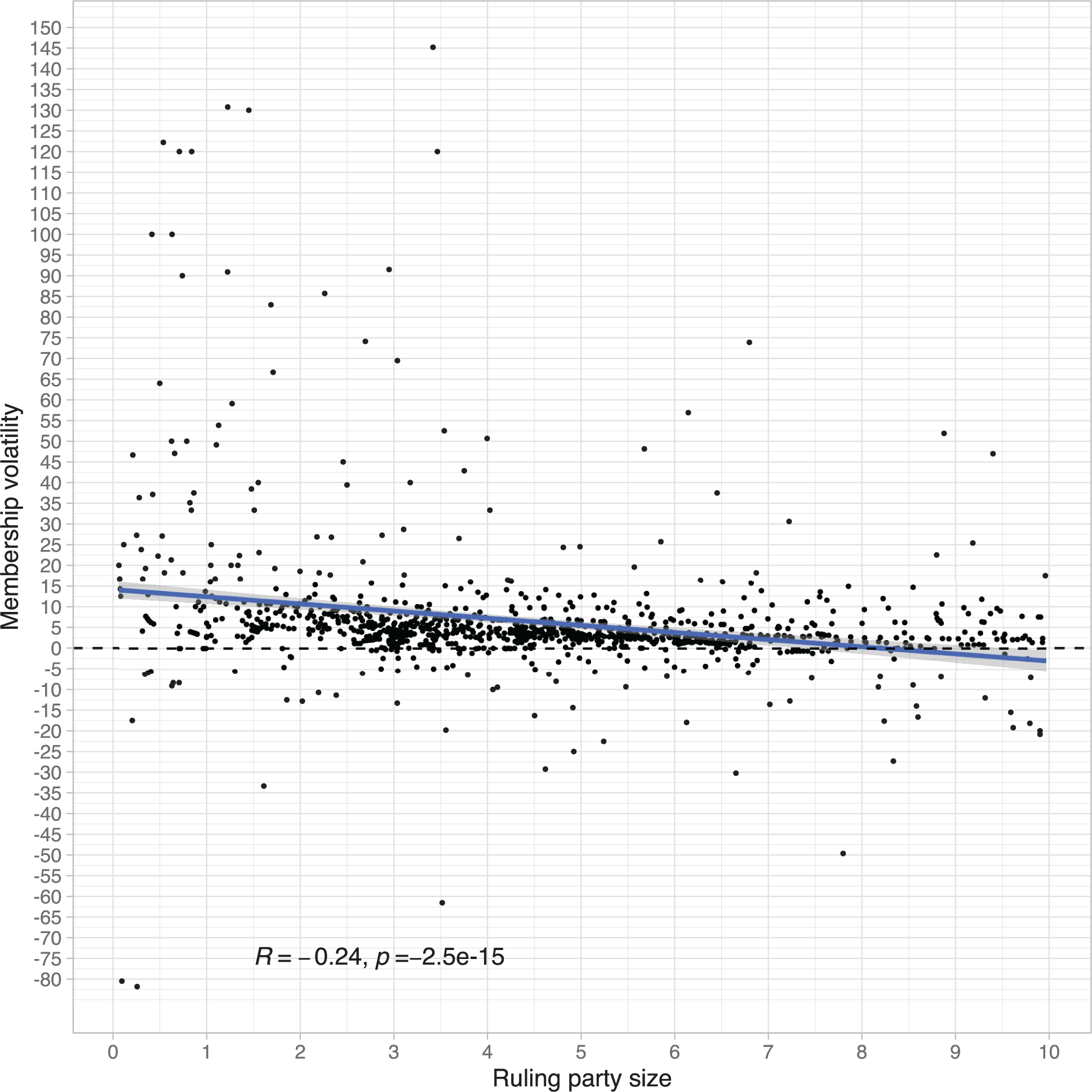
Figure 8 shows the negative relationship between ruling party size and membership volatility. Smaller parties tend to experience membership growth, aiming at increasing ruling party size. Nonetheless, the bigger the party, the more ruling parties’ membership growth contracts. When ruling parties’ size is around 8%, their growth bounces around zero, reflecting minimal volatility. A possible interpretation is that once ruling parties consolidate around 10% of citizens within their ranks, it is not required to further expand within society. An alternative explanation could be that ruling parties’ Ruling parties’ history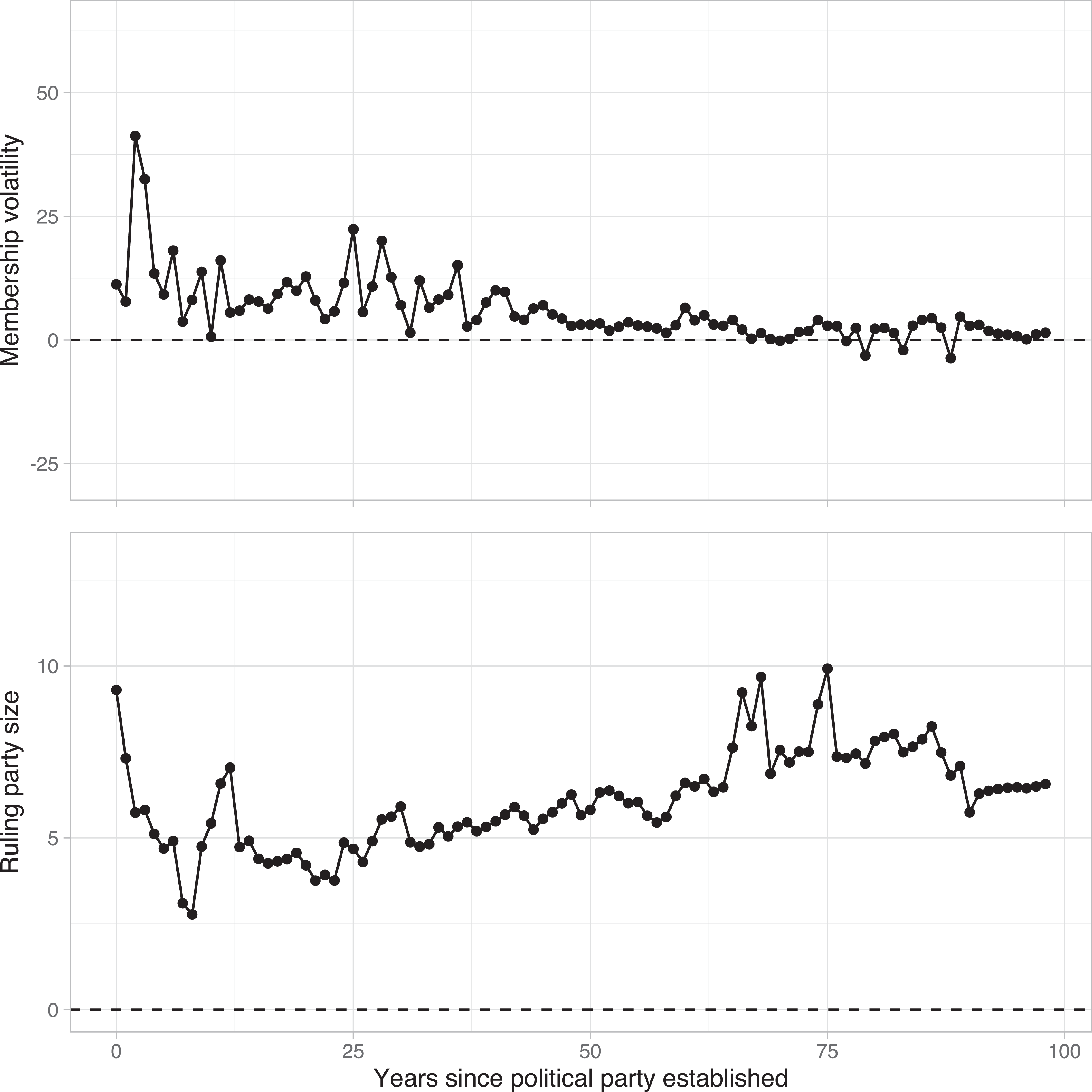
To address this second option, Figure 9 shows the evolution of membership volatility and ruling party size since the ruling parties’ foundation. Starting from the upper plot, years in proximity of the foundation are vital for ruling parties to establish their membership base. The average membership growth of newly established ruling parties is 75%, and it narrows to less than 10% only after five years since foundation. Notwithstanding the impressive membership growth in the early stages, ruling parties’ membership volatility remains steady throughout a ruling party’s life, on average. The older the ruling party, the more stable the membership growth, which is evident in the second part of the upper plot in Figure 9. Figure 9 also hints toward the possibility of low party membership volatility (i.e. around zero) to increase the possibility of ruling party survival chances. The longer the ruling party’s life, the more the membership volatility seems to flatten.
The lower plot in Figure 9 strengthens the findings presented earlier in Figure 5 about ruling party size and Party membership volatility and ideology, 1945–2020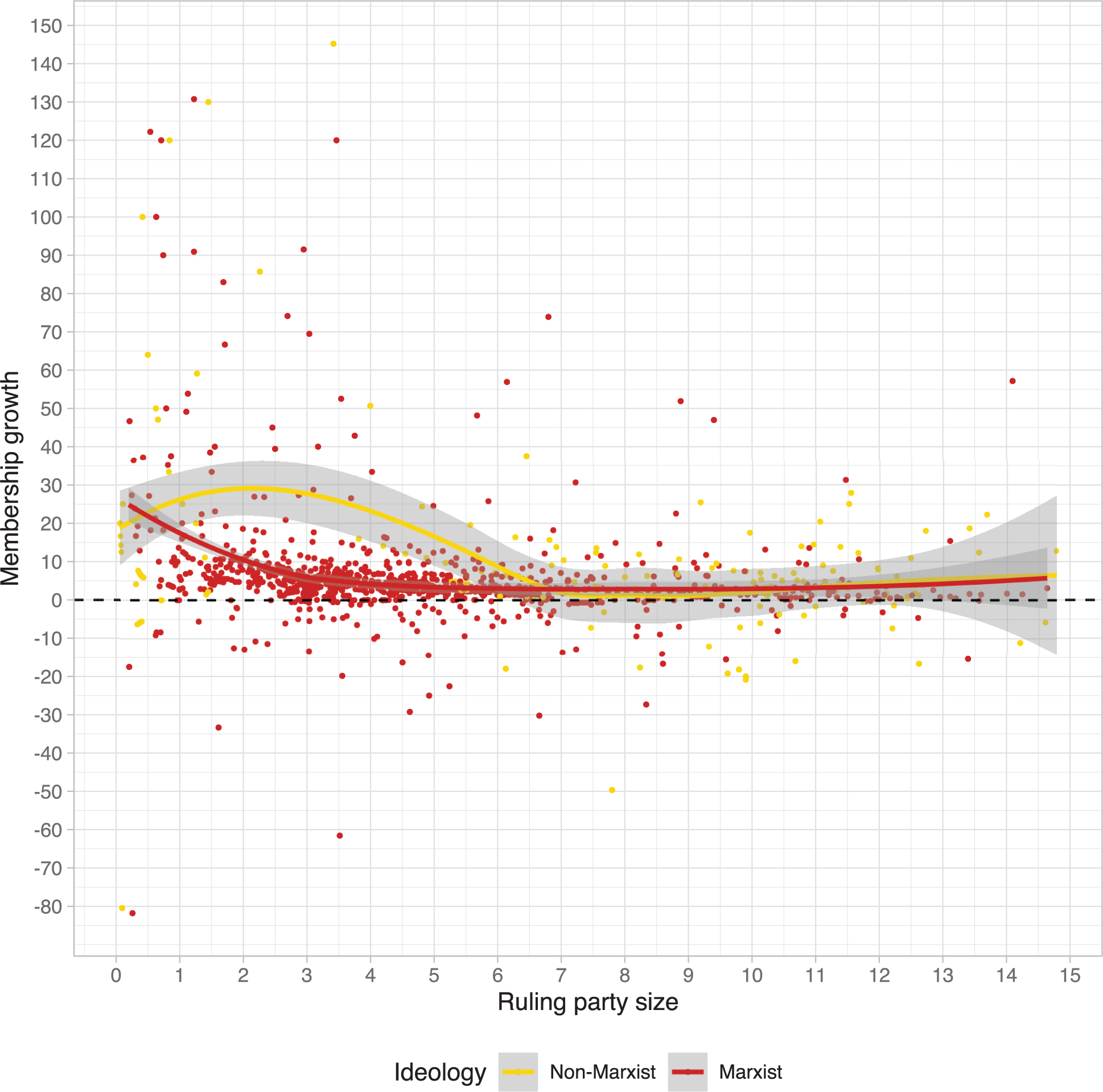
Finally, Figure 10 compares the role of ideology in ruling parties’ membership policies. Marxist parties have low membership volatility regardless of their size, while non-Marxist ruling parties use uncontrolled selection to consolidate their position. These two curves flatten and overlap once ruling party size is above 5%.
This critical finding speaks to previous research predicting ruling parties’ survival according to their origins. Revolutionary parties’ origins matter, but the OPAMED shows that party membership policies also matter. Leninist theories on the structure of political party organization provide a counterargument to the elitist resources and alliance theories of ruling party survival (Levitsky & Way, 2012; Miller, 2020). Lenin (1969 [1904]) theorized a blueprint for the structure of political party organization, and most communist parties followed it – or were strongly inspired by it. This finding encourages us to complement the previous literature’s focus on elite-centric arguments of party survival with a broader bureaucratic ability to implement party membership policies.
Conclusion
This article introduces the OPAMED, the first comprehensive dataset on party membership covering 42 ruling parties through 1,845 year-observations across party-based autocracies. Focusing on the bottom rung of the ruling party’s ladder, the masses, which have been neglected when analysing party organization structures, this article helps redefine the value of party membership for the ruling party. Policy implementation, political control, information gathering, co-optation of new members and legitimation especially during electoral turnout are among the fundamental roles party members can play in strengthening the ruling parties’ relationship with society.
The OPAMED introduces two new variables on party membership: ruling party size; and party membership volatility. The first is defined as the ruling party members-to-population ratio. Contrary to common wisdom, most ruling parties are small, while moderate and bigger parties are less frequent. The second variable measures the yearly variation of party membership growth. Ruling parties have either a controlled or uncontrolled membership selection depending on their rigidity in new members’ screening procedures.
The OPAMED provides an easy-to-use toolkit to foster research on party-based autocracies, party–society relationships and political policy evaluation. It provides new research questions, the possibility to test existing hypotheses further using new data and broadens our understanding of puzzling relationships that remain unsolved. More scrutiny should be given to exogenous and endogenous variables in influencing party membership variation and the effects of party instability on survival. As a window into the relationship between the broad population to the formal political participation with a ruling party and from the ruling party structure to the general population, this research will deepen our knowledge about a critical juncture in authoritarian political systems.
Footnotes
Replication data

Acknowledgements
I thank the editor and the three anonymous reviewers for their generous and constructive comments. For their feedback and discussions, I thank Thomas Pepinsky, Erica Frantz, Anne Meng and Lee Morgenbesser.
Funding
The authors received no financial support for the research, authorship, and/or publication of this article.