




Abstract
We introduce a new dataset, Contemporary Slavery in Armed Conflict (CSAC), coding instances and types of enslavement in armed conflict from 1989 to 2016, building on Uppsala Conflict Data Program data. CSAC currently covers 171 armed conflicts from 1989 to 2016, with the unit of analysis being the conflict-year. We identify different types of enslavement within these conflicts and find that 87% contained incidences of child soldiers, 34% included sexual exploitation/forced marriage, 23% included forced labor, and 16% contained instances of human trafficking. The use of enslavement in armed conflict to support strategic aims is also identified and found in about 17% of cases. Next, drawing upon key variables from the Uppsala Conflict Data Program, we present a series of cross-tabulations looking at the presence of slavery and conflict broken down by conflict incompatibility, intensity level, and type. We see the coding of slavery within conflict as a step toward generating greater understanding of when and how state and non-state actors use enslavement within conflict, with the goal of mitigating and possibly eradicating slavery in warfare.
Keywords
Introduction
An estimated 40 million persons are enslaved globally within many types of slavery, including debt bondage, state-sponsored forced labor, enslavement into commercial sexual exploitation, and forced marriage (Alliance 8.7, 2021). Recent studies have illuminated the breadth and size of contemporary slavery (e.g. Bales, 2012; Bales & Trodd, 2008; Global Slavery Index, 2016; Skinner, 2008), prompting action by public and private stakeholders. In 2015, the United Nations (UN) General Assembly adopted the Sustainable Development Goals (SDGs). Goal/Target 8.7 calls nations to ‘take immediate and effective measures to eradicate forced labor, end modern slavery and human trafficking and secure the prohibition and elimination of the worst forms of child labor, including recruitment and use of child soldiers, and by 2025 end child labor in all its forms’ (UN Stats, 2021).
Goal 8.7 demonstrates the need for scholarship at the intersection of modern slavery and armed conflict. While child soldiers are known in conflict (e.g. Beber & Blattman, 2013; Gates & Reich, 2010; Haer & Böhmelt, 2017; Hoiskar, 2001; Lasley & Thyne, 2015), less understood is how much, and in what ways, other types of enslavement are perpetrated by combatants. What predicts the risk of enslavement in conflict? When might combatants use enslavement tactically or strategically in warfare? When conflict ends, what happens to the enslaved and how might they reclaim their lives? Such questions drive our interest and the creation of the Contemporary Slavery in Armed Conflict (CSAC) dataset.
Among studies of forced sexual exploitation within armed conflict (e.g. McAlpine, Hossain & Zimmerman, 2016), or forced marriage in armed conflict (e.g. O’Brien, 2016), few data exist. Despite this, interest has increased around issues such as forced ‘brides’ in war (Topol, 2017). The Nobel Committee underlined this by awarding the 2018 Peace Prize to Nadia Murad, a member of the Yazidi community in Iraq. Murad was captured, tortured, raped, and enslaved by ISIS forces in 2014. After her escape, Murad became a UN Goodwill Ambassador speaking out against sexual assault and enslavement in war.
Responding to such evidence, we developed coding to identify when and how state and non-state actors have used enslavement within conflict. Taking inspiration from the work of Cohen & Nordås (2014) on sexual violence in armed conflict, our coding analyzed armed conflict from 1989 to 2016 in the Uppsala Conflict Data Program. Using these data, we interrogated sources to find instances of enslavement, conflict-by-conflict, year-by-year. This is the first systematic and large-scale inquiry into the prevalence and types of enslavement within modern armed conflict.
Definitions and scope
The Uppsala Conflict Data Program (UCDP) defines conflict as, ‘a contested incompatibility that concerns government and/or territory where the use of armed force between two parties, of which at least one is the government of a state, results in at least 25 battle-related deaths in a calendar year’ (Gleditsch et al., 2002; Pettersson & Öberg, 2020). In our subset, there are 171 unique conflicts, some of short duration, others much longer, altogether totaling 1,113 conflict-years. All conflicts had at least two sides: Side A (a nation-state), and Side B (a nation-state, or one or more non-state actors, such as rebel groups, insurgents, or other substate actors). To examine variation in how enslavement might be used in conflict over time, the unit of analysis is the conflict-year, and instances of enslavement are coded by conflict-year.
Key search terms used for identifying slavery in armed conflict
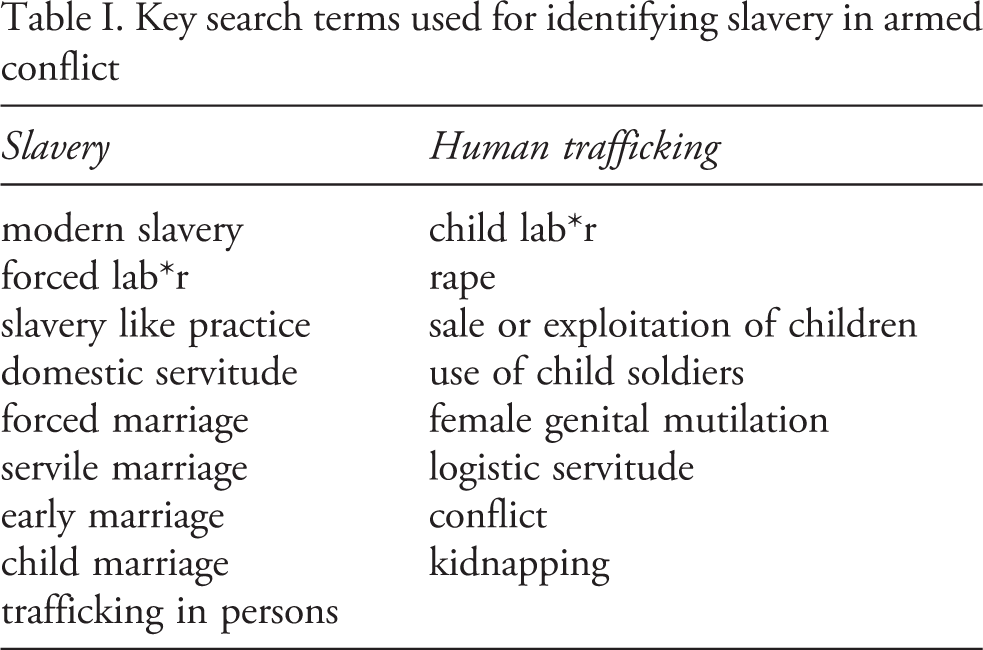
Media reports were included only when researchers were able to triangulate the information with sources that met the inclusion criteria. Due to the nature of conflict and the limited scope of peer-reviewed research in this field, we relied heavily on grey literature, specifically International Organizations and NGO reports. To avoid Type I and Type II errors, we triangulated data with additional sources, only coding enslavement if another source substantiated the claim. This presented challenges, as the reported data could differ in each record. For example, the reported prevalence of cases may have varied, or one source may have noted a specific date/year while another had not. Our priority was to determine if and what type of enslavement was used in a conflict. In the case of Afghanistan, for example, 68 sources were used to corroborate the types of enslavement within the conflict, ranging from peer-reviewed journals to International/NGO reports to media articles.
Types of enslavement, their definitions, and sources
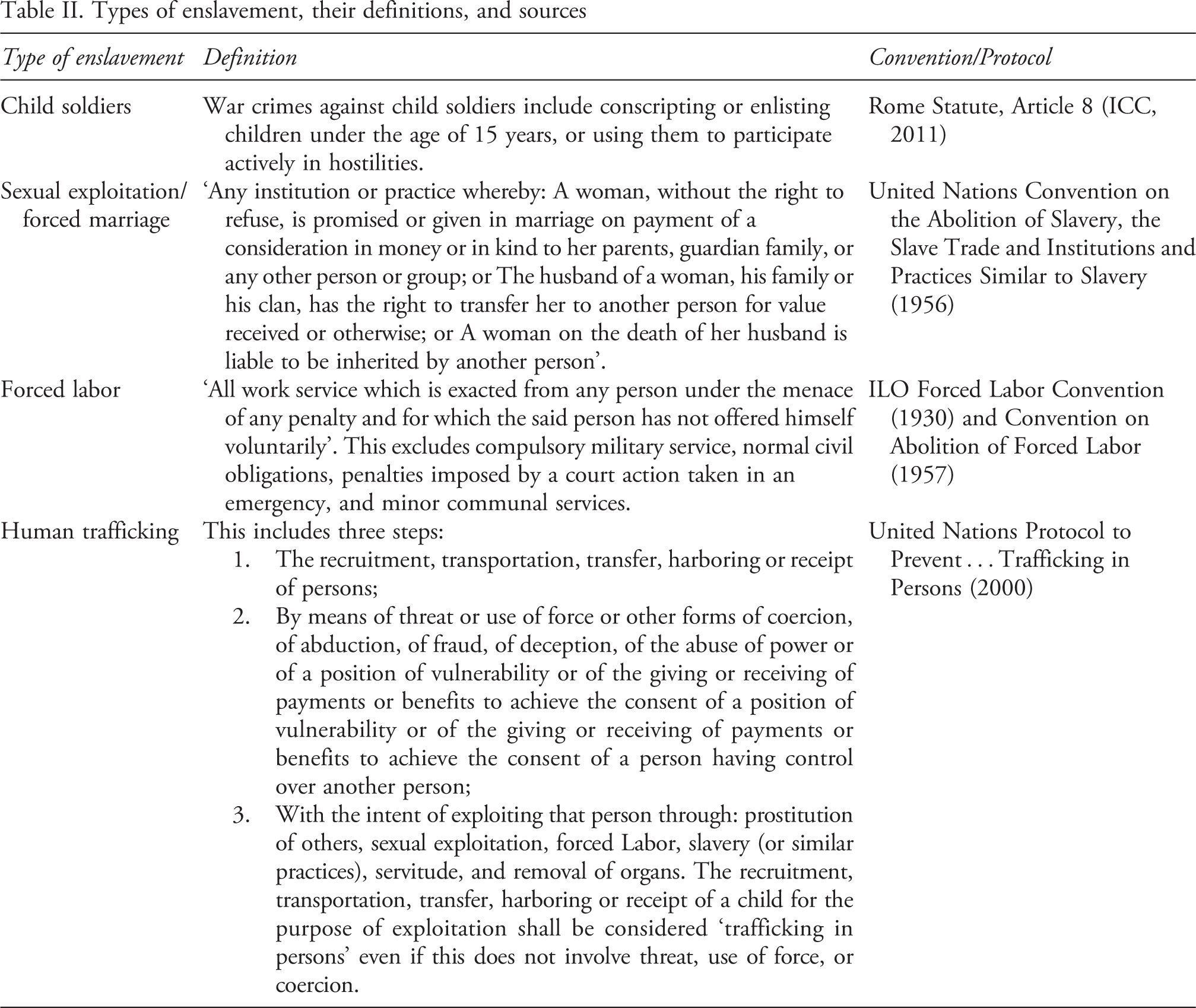
Table II lists the types of enslavement, with their corresponding legal definitions, that we incorporated as new variables.
In coding the data, if we identified any of these types of enslavement (child soldiers, sexual exploitation/forced marriage, forced labor, and human trafficking), we coded this as a ‘1’: [this subtype of enslavement] was used in the conflict. If there was no evidence of enslavement, then we coded that instance as a ‘0’: it is unknown if [this subtype of enslavement] had been used in the conflict in question. If limited evidence existed, then we coded this as a ‘2’: an educated guess that [this subtype of enslavement] had occurred, based on evidentiary reports, but without a specified date. Making an educated guess reflects a limitation in this study and the difficulty in identifying enslavement based largely on an analysis of research reports. NGO reports, a significant part of our sources, often did not specify exact dates for enslavement in conflicts. The cases given an ‘educated guess’ code were small in number: 3 cases for child soldiers (0.27% of total cases), 23 cases for sexual exploitation/forced marriage (2.07% of total cases), 26 cases for human trafficking (2.34% of total cases), and zero cases for forced labor. Our aim, therefore, was a conservative assessment of the materials analyzed.
In addition to coding these types of enslavement, we recorded which side of the conflict within the UCDP Database (identified as ‘Side A’ or ‘Side B’) used enslavement. Documents that reported incidents of slavery, categorized by country for each conflict, were annotated by the researcher and then saved onto an online citation database, Mendeley.
Questions of terminology
There are ongoing debates about the definition of contemporary slavery, as well as definitions of subtypes of enslavement. The use and understanding of key terms like ‘modern slavery’ and ‘human trafficking’ vary with cultural, social, and political differences. For example, in the United States, policy makers regularly use ‘human trafficking’ to refer to enslavement, while the United Kingdom’s Modern Slavery Act (2015) specifies the overarching term is ‘modern slavery’.
Such differences often rest on local legal definitions that required consideration as we developed our coding. In identifying and coding child soldiering, for example, we considered the UN’s (2002) Optional Protocol to the Convention on the Rights of the Child on the Involvement of Children in Armed Conflict and the ILO’s Convention on the Worst Forms of Child Labor (ILO, 1999). In the latter, the ‘worst forms of child labor’ specifically includes forced recruitment of children for use in armed conflict. We also considered an expanded definition, the Cape Town Principles, used by child protection agencies, NGOs, and UNICEF. This definition states a child soldier is: Any person under 18 years of age who is part of any kind of regular or irregular armed force or armed group in any capacity, including but not limited to cooks, porters, messengers, and anyone accompanying such groups, other than family members. The Cape Town Principles definition includes girls recruited for sexual purposes and forced marriage. (United Nations Children’s Fund, 1997)
Strategic enslavement within conflict
The uses of enslavement in conflict are normally tactical, but throughout history, as well as today, slavery has also been used to serve strategic aims – for instance, on both sides of the American Civil War; as part of the strategy of genocide pursued by German/Axis forces in World War 2 (von Plato, Leh & Thonfeld, 2010); and in the genocide by Pol Pot in Cambodia. More recently, ISIS made enslavement part of its strategy to exterminate the Yazidi people in Northern Iraq (Al-Dayel, Mumford & Bales, 2020).
Strategic enslavement in conflict is often linked to genocide and the practice of ‘ethnic cleansing’. It differs from tactical enslavement in ways that are both subtle and significant. Tactical enslavement is based upon a classification, often implicit rather than formally specified, of who is ‘eligible’ for enslavement and exploitation. In strategic enslavement, that classification often specifies who is ‘eligible’ for extermination. Enslavement and exploitation become part of a strategy of genocide.
The one non-lethal form of strategic enslavement we have identified is ‘ethnic cleansing’ through rape. In this form, a woman deemed eligible for extermination is enslaved, but used initially, possibly primarily, to produce offspring for the enslaving group. In the case of ISIS, this meant impregnating women from an ethnic group marked for extermination. For ISIS, pregnancy erased a woman’s ethnicity, replacing it with the ‘ethnic status’ of the sperm and fetus forced upon her (Al-Dayel, Mumford & Bales, 2020). In strategic enslavement, as in genocide, there is a clearly understood ‘target group’ that is eligible for both enslavement and extermination.
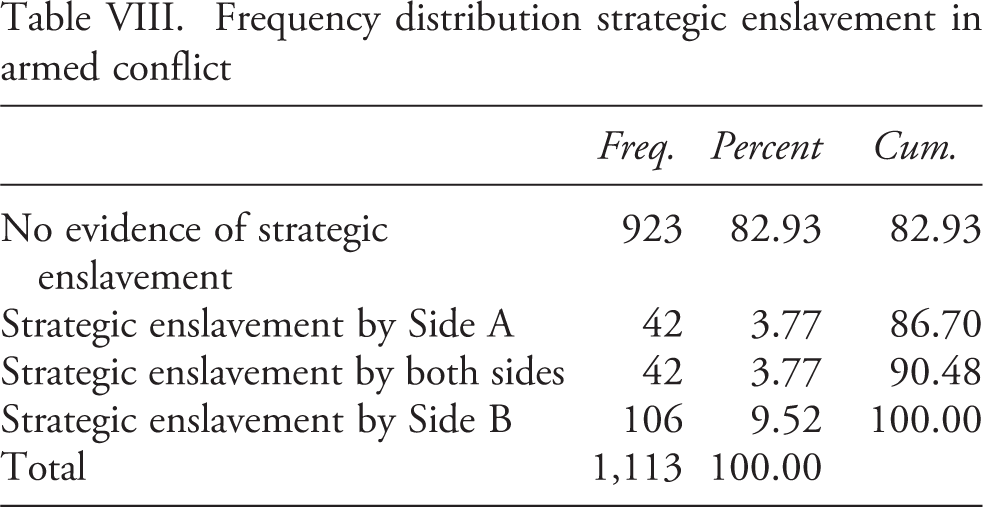
Our coding also aimed to clarify how strategic enslavement was used. A code of 0 (not present) meant no evidence of strategic enslavement. A code of 1 was assigned if ‘Target group members are enslaved and exploited in ways that support tactical aims, including within the strategic genocidal process, but with the assumption that they will be worked to death or disposed of when desired’. This code reflects the short-term utilitarian exploitation of labor from people marked for death, as was common in Nazi concentration camps. A code of 2 was assigned when female target group members were isolated, aborted if pregnant, then forcibly impregnated in order to: (a) remove them from the ‘target’ group through possession and use; and (b) generate non-target group offspring; with the possible outcome of (c) Being killed when no longer fertile/useful. A code of 3 was assigned if the conditions specified in both categories 1 and 2 obtained. We found strategic enslavement occurred in 190 of the 1,113 conflict-years.
Descriptive statistics
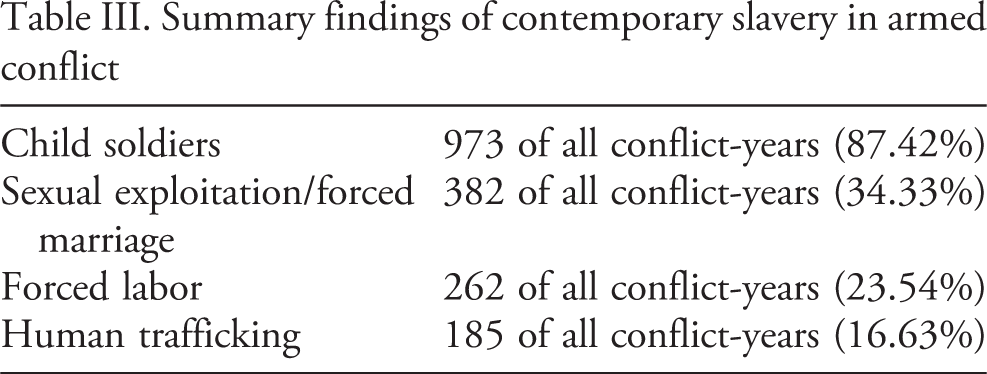
After creating new variables for these types of enslavement, we found that enslavement was pervasive in the 1,113 conflict-years recorded by the UCDP for 1989 to 2016, as Table III shows.
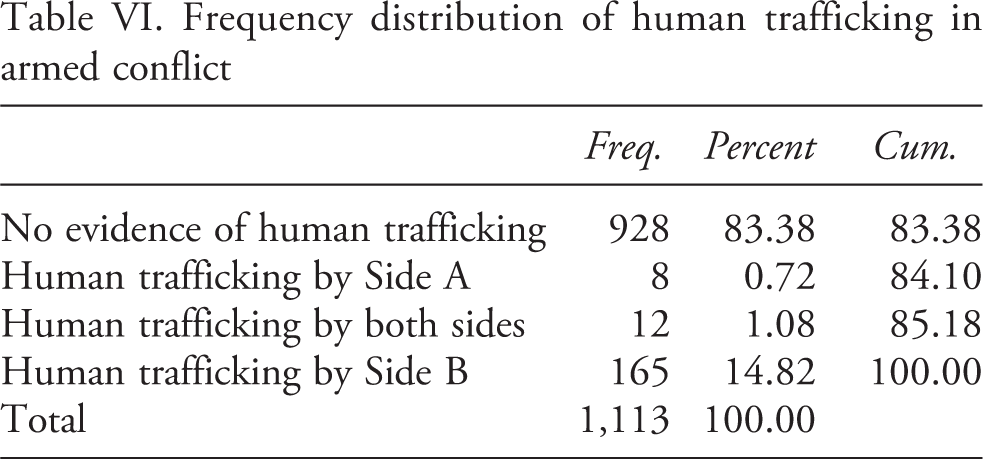
Among the 1,113 conflict-years, 87% contained incidence of child soldiers, 34% sexploitation/forced marriage, 23% forced labor, and 16% human trafficking.
Child soldiers
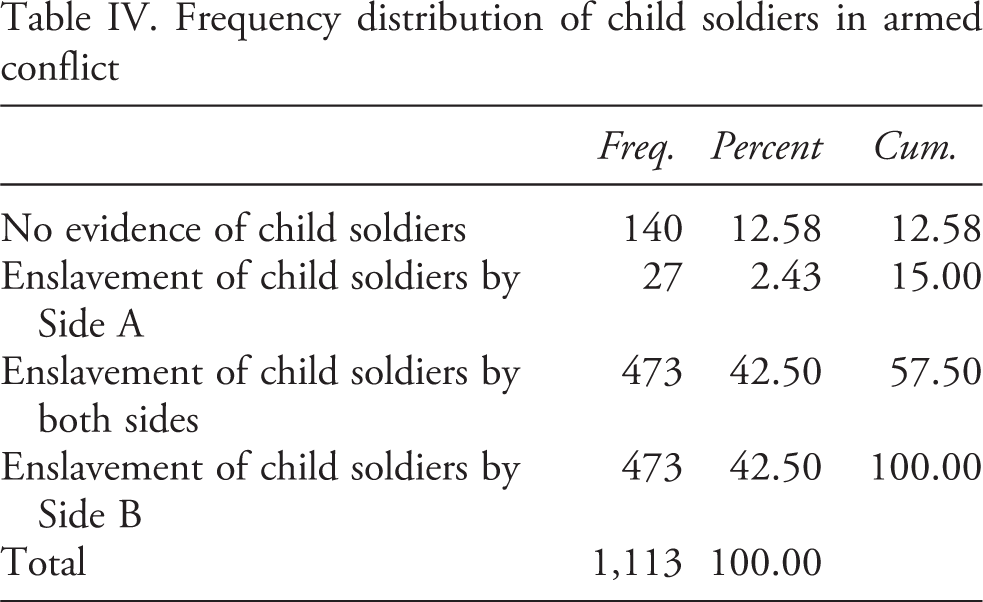
The most current academic research and policy discussions on slavery in conflict tend to focus on child soldiers (e.g. Coundouriotis, 2010; Haer & Bohmelt, 2017; Harding & Kershner, 2018). Table IV notes the frequent use of child soldiers by belligerents.
Summary findings of contemporary slavery in armed conflict
Frequency distribution of child soldiers in armed conflict
Frequency distribution of sexual exploitation/forced marriage in armed conflict
When Side B (a state or non-state actor) was the lone offender, child soldiering occurred in 473 conflict years, or 43% of conflicts. Non-state actors are too numerous to list here but are found in the CSAC website. In 42.5% of conflict-years, both Sides A and B used child soldiers.
This incidence of child-soldier use suggests that enslavement is a significant part of modern warfare (see Haer, 2019) and highlights the need to address the underlying causes of this form of exploitation.
Sexual exploitation/forced marriage
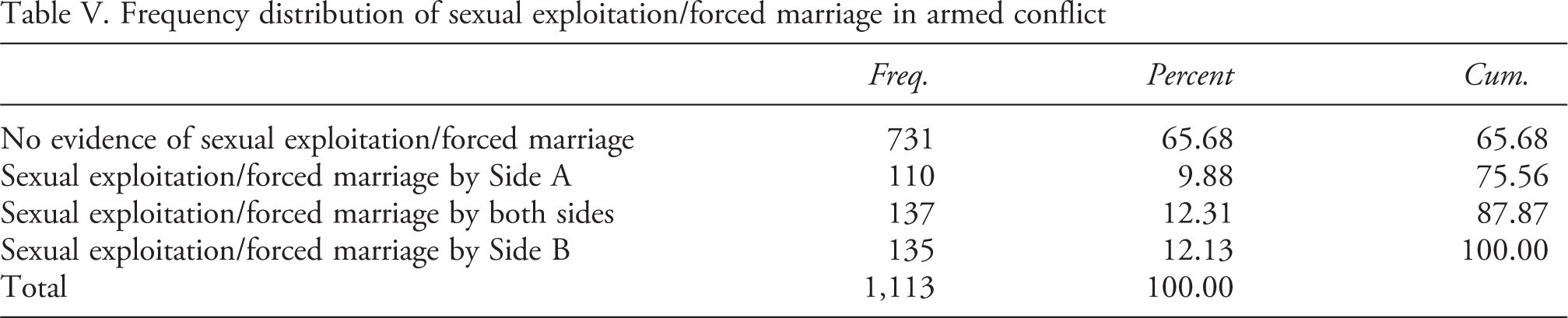
Sexual exploitation/forced marriage occurs in roughly one-third of the conflict-years we observed, as Table V illustrates.
Compared to the use of child soldiers, sexual exploitation/forced marriage is evenly distributed across sides within a conflict. For Side A, this occurs in 110 cases, or 10% of conflict-years. For Side B, there are 135 instances, or 12% of conflict-years. When both sides are involved, there are 137 instances, also about 12% of conflict-years.
Forced marriage resurfaced as a global issue after the discovery that more than 6,500 Yazidi girls and women were captured and sold, or forced into ‘marriages’, by the Islamic State (Dearden, 2017). Nobel Laureate Nadia Murad (2018) notes that more than 3,000 of these women and children are unaccounted for and are likely still held by ISIS. Murad’s work speaks to broader questions that might be explored using these data: is it possible to liberate persons enslaved in forced marriage? How might the international community mitigate, or eradicate, this crime?
Human trafficking in armed conflict
Frequency distribution of human trafficking in armed conflict
Frequency distribution of forced labor in armed conflict
Frequency distribution strategic enslavement in armed conflict
Forced labor in armed conflict
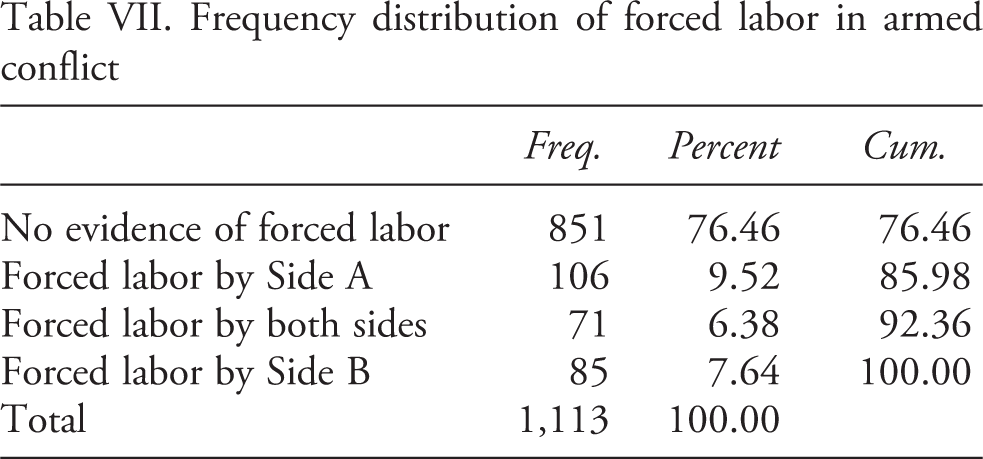
Forced labor is present in armed conflict, with Side A being the sole offender in 9% of conflict-years, and Side B being the sole offender in about 8% of conflict-years, as Table VII shows.
Strategic enslavement in armed conflict
Table VIII shows that although strategic enslavement is not common (occurring in about 17% of all cases), Side B is more likely to employ strategic enslavement than Side A.
Cross-tabulations
Enslavement occurs across armed conflict in a variety of ways. A person may be enslaved in different ways at different times (a child soldier might also be a victim of sexual exploitation or sold on in human trafficking). Given that our database is preliminary, we hesitate to perform inferential statistical analysis. That said, we look forward to discovering how these data might be used, through multivariate models, to illuminate the causes of enslavement in conflict. Given other measures of conflict within the UCDP Database, we offer cross-tabulations examining different types of enslavement and their intersection with the following UCDP variables: Incompatibility, Intensity Level, and Type of Conflict.
Conflict incompatibility
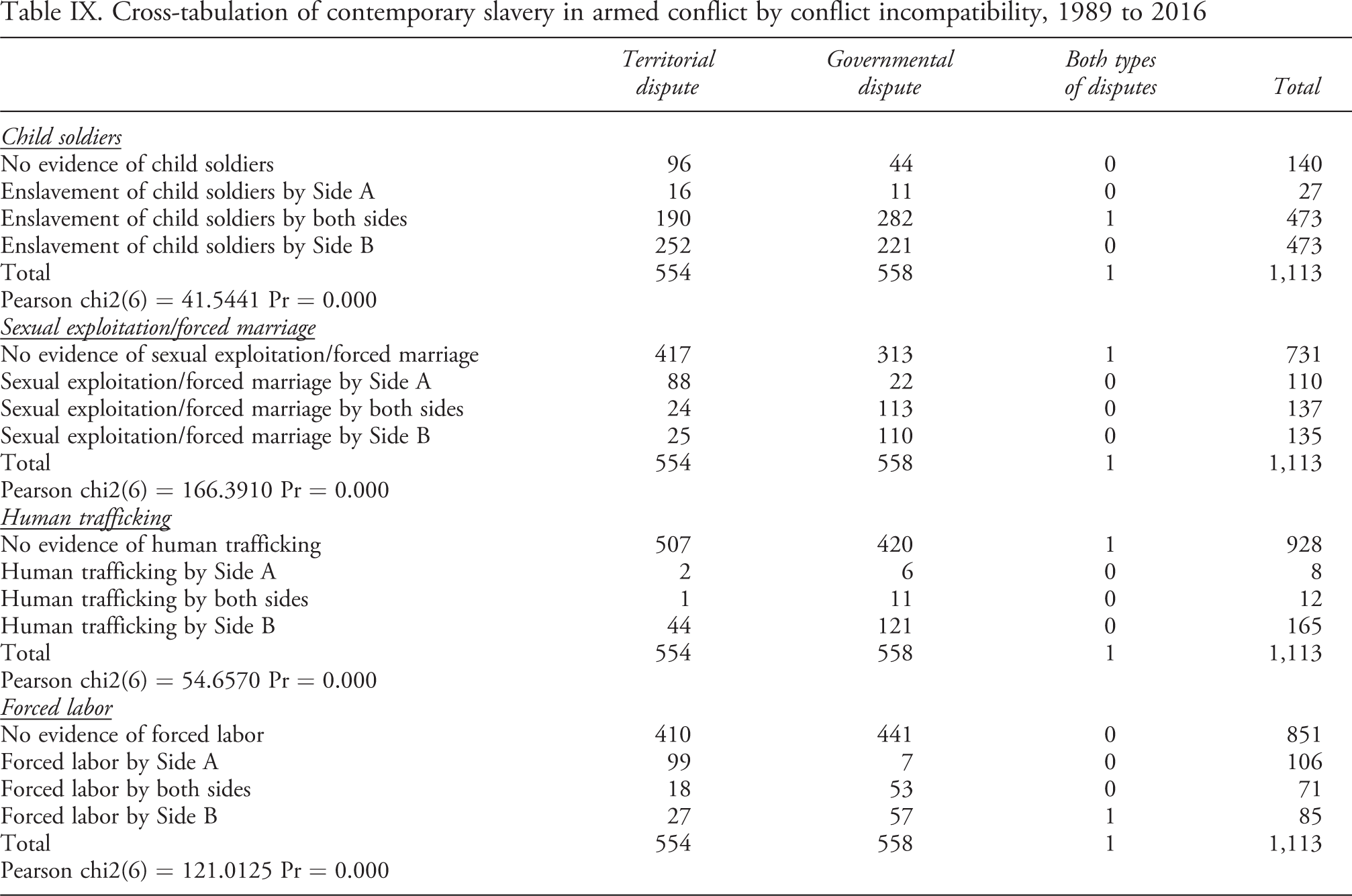
Incompatibility identifies what drove belligerents toward conflict: (1) a territorial dispute; (2) a governmental dispute; or (3) both. Table IX cross-tabulates our coded measures of enslavement with these types of incompatibility. Side A was rarely the lone offender. Side B, in comparison, was often the sole offender, enslaving children during 252 conflict-years over territory, and 221 conflict-years over governmental issues. When Side A and Side B both enslaved children, 190 conflict-years were over territory, and 282 were due to governmental disputes.
Table IX also examines the intersection of sexual exploitation/forced marriage and conflict incompatibility. In territorial disputes, Side A was the sole offender in 88 conflict-years, more than triple when Side B, or both sides, were involved. In governmental disputes, a mirror image appears. Side B was the sole offender in 110 conflict-years, five times more than Side A. When human trafficking occurred, Side B was usually the sole offender. When forced labor took place, Side A was more often the offender in territorial disputes, and Side B more often the offender in governmental disputes.
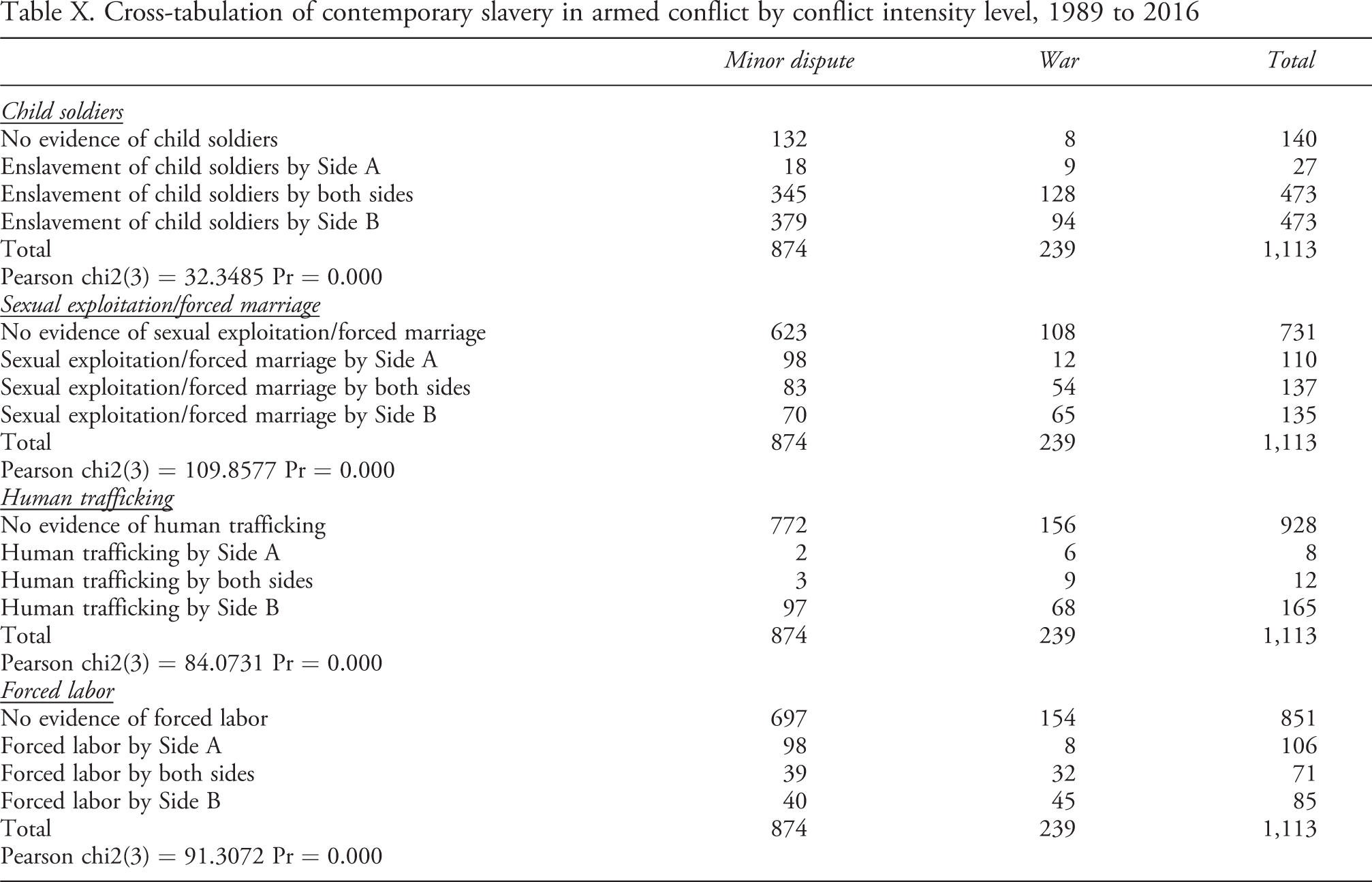
Conflict intensity level
The UCDP database measures the intensity level of a conflict: (1) a minor dispute, if the conflict resulted in fewer than 1,000 battle-related deaths in a given year; and (2) war, if there were at least 1,000 battle-related deaths.
Cross-tabulation of contemporary slavery in armed conflict by conflict incompatibility, 1989 to 2016
Cross-tabulation of contemporary slavery in armed conflict by conflict intensity level, 1989 to 2016
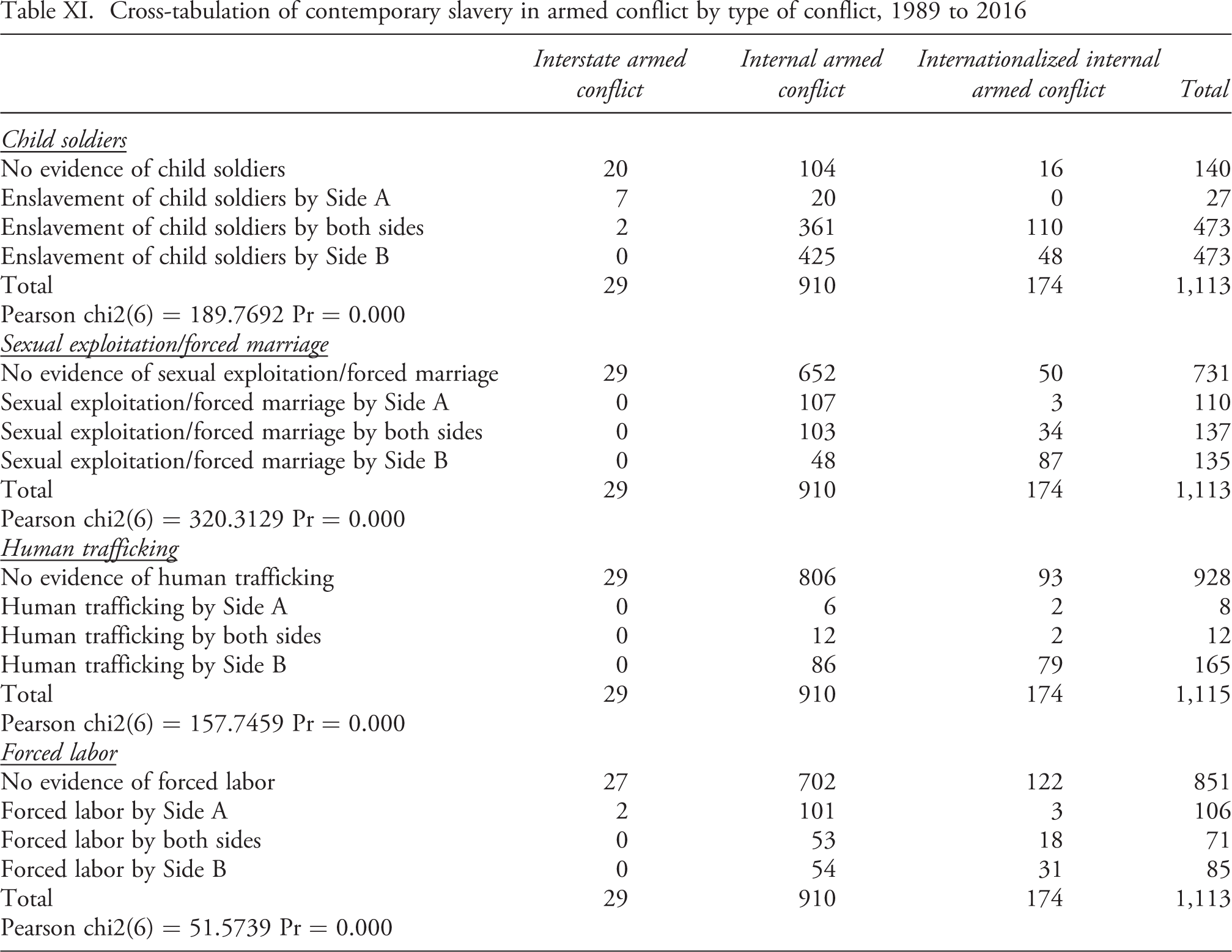
Cross-tabulation of contemporary slavery in armed conflict by type of conflict, 1989 to 2016
Type of conflict
Table XI examines contemporary slavery and UCDP’s four conflict types. First, a conflict is extrasystemic if it ‘occurs between a state and a non-state group outside its own territory’. Second, an interstate conflict ‘occurs between two or more states’. Third, a conflict is internal if it ‘occurs between the government of a state and one or more internal opposition group(s) without intervention from other states’. Fourth, a conflict is internationalized if it ‘occurs between the government of a state and one or more internal opposition group(s) with intervention from other states (secondary parties) on one or both sides’.
When child soldiering, sexual exploitation/forced marriage, human trafficking, or forced labor took place, it was most often during an internal armed conflict, and rarely ever during an interstate armed conflict. Indeed, Table XI shows there are only 9 instances of child soldiering and 2 instances of forced labor during an interstate armed conflict. Enslavement during internationalized internal armed conflicts was the second most common occurrence.
Strategic enslavement
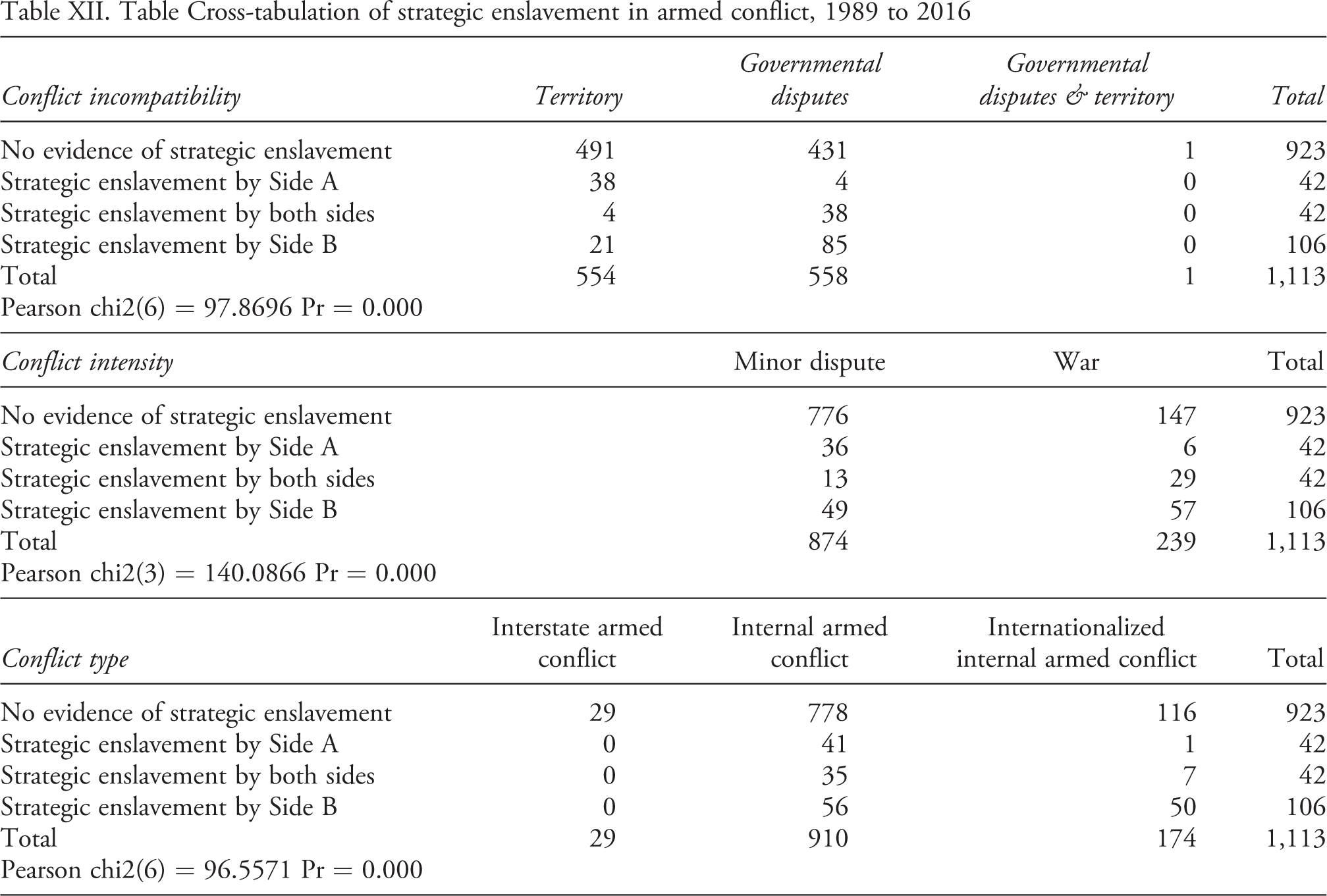
Although strategic enslavement is rare in armed conflict, Table XII sheds light. In terms of conflict incompatibility, Side B is most often the lone offender in governmental disputes. In terms of conflict intensity, Side B is often the culprit in major disputes. With respect to conflict type, Side B is likely the lone offender in internationalized internal armed conflicts.
Conclusion
Table Cross-tabulation of strategic enslavement in armed conflict, 1989 to 2016
We note that slavery in conflict is distinctly and powerfully gendered. These data point to the widespread violent capture, enslavement, and exploitation of women by men in conflict. Parallel to this gendered enslavement is the fact that conflict facilitates predation on the very young – often by those not that much older. Children are vulnerable to abuse and enslavement, easier to control in the fluid context of battle, and likely to be seen as disposable inputs into the war effort. Exploitation of children within conflict stands in stark contrast to the social norms of the same warring societies in peacetime. Our intention is to support research addressing the specific exploitation of women and children in conflict.
Our aim is to extend these data further into the past and nearer the present. There are many unanswered questions: What are the reasons/predictors for tactical enslavement, and for strategic enslavement? Does enslavement in conflict continue into times of peace, and in what ways? How can policymakers, NGOs, and practitioners best understand the mechanisms of enslavement within conflict in order to prevent its occurrence? How might we best help survivors of enslavement in conflict? What are the physical and psychological effects of conflict enslavement on the victims and perpetrators? We are considering these and other questions as we move forward with this research agenda – and we invite consultation, collaboration, and cooperation.
Footnotes
Acknowledgements
The authors would like to think Dr Maeve Ryan, Department of War Studies, King’s College London, for her insights on this project, as well as Gabriel Bales for his assistance with coding.
Replication data
The dataset and codebook for the empirical analysis in this article are available at https://www.prio.org/jpr/datasets/ as well as at  . All analyses were conducted using STATA 15.1.
Funding
The authors disclosed receipt of the following financial support for the research, authorship, and/or publication of this article: UK Arts and Humanities Research Council – Antislavery Usable Past project (AH/ M004430/1 and AH/M004430/2). UK Economic and Social Research Council – Modern Slavery: Meaning and Measurement (ES/P001491/1) (Including funds from ESRC International Impact Prize).