




Abstract
Existing research provides no systematic insights into if and how mediation impedes battle-related deaths. Therefore, this article presents a temporally disaggregated analysis and assesses the effect of mediation on monthly fatal violence. The article predicts that adversaries evaluate opponents’ trustworthiness from both fighting and negotiation behavior. It argues that reducing fighting intensity during negotiations is a sign of cooperation, which can be negotiated by mediators to build trust. Over the course of mediation, the content of negotiations provides information about how genuinely a conflict party is interested in conflict resolution. Only if mediation achieves negotiation of core incompatibilities will conflict parties be willing to reduce fighting intensity. Under these conditions, information revealed in a mediation process can build trust and substantively reduce violence. An empirical analysis of all African conflicts between 1993 and 2007 supports this prediction and shows that on average mediation is followed by substantive and lasting reductions in fatal violence, if mediation discusses the conflict’s main incompatibility. In contrast, mediation on other topics is associated with a small, fleeting reduction in violence. Data of battle-related fatalities in Syria during negotiations as well as qualitative evidence further support the theoretical mechanism and the model prediction. The study concludes that mediation can reduce conflict intensity substantively, if it achieves exchange between conflict parties on the main conflict issues.
Introduction
The impact of third-party mediation on conflict lethality is a question of great policy relevance. Nevertheless, we have little quantitative evidence about how effectively meditation prevents conflict fatalities. Moreover, we do not know whether such an effect persists over time. In this article, I examine the effect of mediation on battle-related deaths and theoretically and empirically illuminate the dynamic relationship of bargaining and fighting.
Mediation is one of the most frequent conflict resolution efforts in civil wars. Between 1945 and 1999 alone, Regan, Frank & Aydin (2009) code 352 mediations. 1 In Syria, one of the most brutal wars in recent history, a mediation effort was initiated through the Geneva talks between the Syrian government and rebel representatives in February 2016, after years of fighting. It cumulated in a partial ceasefire agreement (Barnard, 2016). However, the agreement led merely to a brief reduction in fatality numbers (Barnard, Samaan & Watkins, 2016). The present article evaluates if, on average, mediation is able to achieve a change in intensity which lasts longer than a few months.
The effect on battle intensity has not been analyzed by mediation scholars thus far. Most existing research examines whether mediation increases the probability of a signed agreement (cf. Clayton, 2013; Greig, 2015; Svensson, 2009; Savun, 2008). Only a few studies investigate the probability of conflict incidence or escalation, but these analyses rely on yearly binary indicators of whether a conflict exceeds a predefined casualty threshold in a given year (cf. Regan & Aydin, 2006; DeRouen & Möller, 2013; Svensson, 2007; Quinn et al., 2013). Consequently, we lack insights into how mediation affects the short-term dynamics of conflict intensity, which often varies substantively from month to month. This article addresses this gap and uses temporally more fine-grained monthly data to analyze whether mediation effectively reduces fatal violence in civil war over time. It adds a mediation perspective to an emerging literature which disaggregates conflict intensity and studies the violence-reducing effect of interventions such as peacekeeping or sanctions (cf. Costalli, 2014; Hultman, Kathman & Shannon, 2014; Hultman & Peksen, 2017).
Theoretically, the study illuminates the temporal dynamics of mediation interventions in ongoing conflicts. I build on the theoretical perspective that wars will end, when fighting has revealed enough information for the combatants to strike a deal (cf. Wagner, 2000). I argue that bargaining and diplomacy are not irrelevant in this process. Conflict parties can learn even from failed negotiations and extract information which complements insights gained on the battlefield (cf. Slantchev, 2003). In this process, mediation can build trust and mitigate conflict intensity through an iterative process: mediators may use information and possibly carrots and sticks to foster negotiations between adversaries. When negotiations signal progress, for example by moving towards more sensitive issues, such progress encourages subsequent mediated negotiations on further topics. Additionally, conflict behavior after talks also reveals whether the opponent can be trusted, because adversaries are able to observe if their opponent abides by negotiated results.
Based on this reasoning, I predict that only mediated talks which are able to discuss the core conflict issues are associated with reductions in fatal violence which last for more than a few months. In contrast, talks that fail to address core issues will produce short-lived ceasefires, at best. The statistical analysis of all African conflicts between 1993 and 2007 provides strong evidence for this prediction. Moreover, an out-of-sample case study of recent mediation in Syria underscores the theoretical and statistical predictions.
Reviewing mediation effects
Many studies have sought to evaluate the effect of third-party mediation on conflict (Kleiboer, 1996; Wallensteen & Svensson, 2014). In this article, I measure mediation effects in the form of a reduction in conflict intensity, that is, whether mediation reduces the number of fatalities. This outcome measure fills a gap left by previous studies of mediation effectiveness and opens new theoretical perspectives.
Existing studies conclude that mediation significantly improves the likelihood of agreements in international crises, intrastate ethnic crises, and civil wars (Frazier & Dixon, 2006; Greig, 2015; Clayton, 2013; Quinn et al., 2013; Beardsley et al., 2006). Nevertheless, an agreement does not necessarily indicate successful conflict resolution. Although the signing of an agreement may be an important step towards peace, the value of the agreement is subject to both its content and whether the agreement is implemented. An agreement may be signed, but not contain all relevant issues. 2 Moreover, several studies include partial agreements as part of an agreement indicator (e.g. Savun, 2008; Beardsley, 2008; Greig, 2015; Clayton, 2013). Such mediated partial agreements may have only a limited impact on the conflict and often fail after a short time (cf. Gartner & Bercovitch, 2006). Hence, this indicator is an ambiguous indication of whether mediation is capable of resolving a conflict and stop lethal fighting. Only a few studies investigate the probability of conflict and find that mediation reduces the probability of conflict incidence in a given year (cf. Regan & Aydin, 2006; DeRouen & Möller, 2013; Svensson, 2007; Quinn et al., 2013). However, since these analyses rely on yearly binary indicators of whether a conflict exceeds a predefined casualty threshold, they do not give nuanced insights into mediation effects on conflict intensity.
Once conflict has ended, mediation seems to reduce the risk of conflict relapse (Beardsley, 2011; Quinn et al., 2013). Nevertheless, work on ethnic conflict indicates that this effect may vanish after some time (Quinn et al., 2013). Beardsley (2008, 2011) argues that, compared to unmediated outcomes, mediation may even increase the risk of conflict recurrence in the long run. This echoes arguments that in some conflicts it might be best to let actors fight it out, in order to settle the conflict decisively (cf. Luttwak, 1999). However, Ruhe (2018) shows that a methodologically correct interpretation of Beardsley’s data suggests no negative long-term effects of mediation.
Hence, research indicates that mediation increases the probability that the conflict parties sign an agreement and prevents conflict incidence or short-term recurrence, once conflict has ended. However, we lack evidence about how mediation affects conflict intensity during ongoing fighting. Moreover, we have few theoretical insights into how meditation may affect conflicts through bargaining while fighting. While mediation attempts often produce some form of agreement, we do not know the impact on fighting. Additionally, not all mediated talks result in a formal outcome in the first place. Yet, the exchange between the conflict parties might still alter the conflict, even if no formal agreement is reached. In fact, assuming that violent conflict is a result of information asymmetries and fighting helps to reveal private information (cf. Fearon, 1995; Wagner, 2000), conflict parties can similarly learn from negotiations, even if bargaining fails (cf. Slantchev, 2003). Based on the acquired information, the warring parties will likely adjust their fighting efforts and decide whether to give peace a chance.
The civil war in Burundi highlights this complexity of bargaining while fighting. The conflict involved several warring parties and numerous rounds of mediation (cf. Cunningham, 2014). Figure 1 graphs the conflict evolution and third-party mediation for the main conflict dyads in Burundi according to the Uppsala Conflict Data Program (UCDP) (Sundberg & Melander, 2013; Croicu et al., 2013). Before each conflict dyad was eventually appeased, the conflict saw many months of mediated talks. Some of these mediation efforts seem to be associated with changes in conflict intensity. In the case of the CNDD,
3
fighting stopped with the start of mediated negotiations, long before an agreement was reached. These talks eventually resulted in the Arusha Accords. During the negotiations, however, the militant wing of CNDD formed the CNDD-FDD
4
and resumed the fight (cf. Cunningham, 2014: 142). With the start of the first negotiation attempts which involved the CNDD-FDD, the average fighting intensity reduced somewhat. However, negotiations were repeatedly stalled. Several months of successive negotiations eventually moved from addressing conflict behavior to the main conflict incompatibility. During this period in 2002 and 2003, battle-related deaths decreased sharply. At the time of the final agreement, fighting had already Battle-related deaths and third-party assisted talks during the conflict in Burundi 1994–2007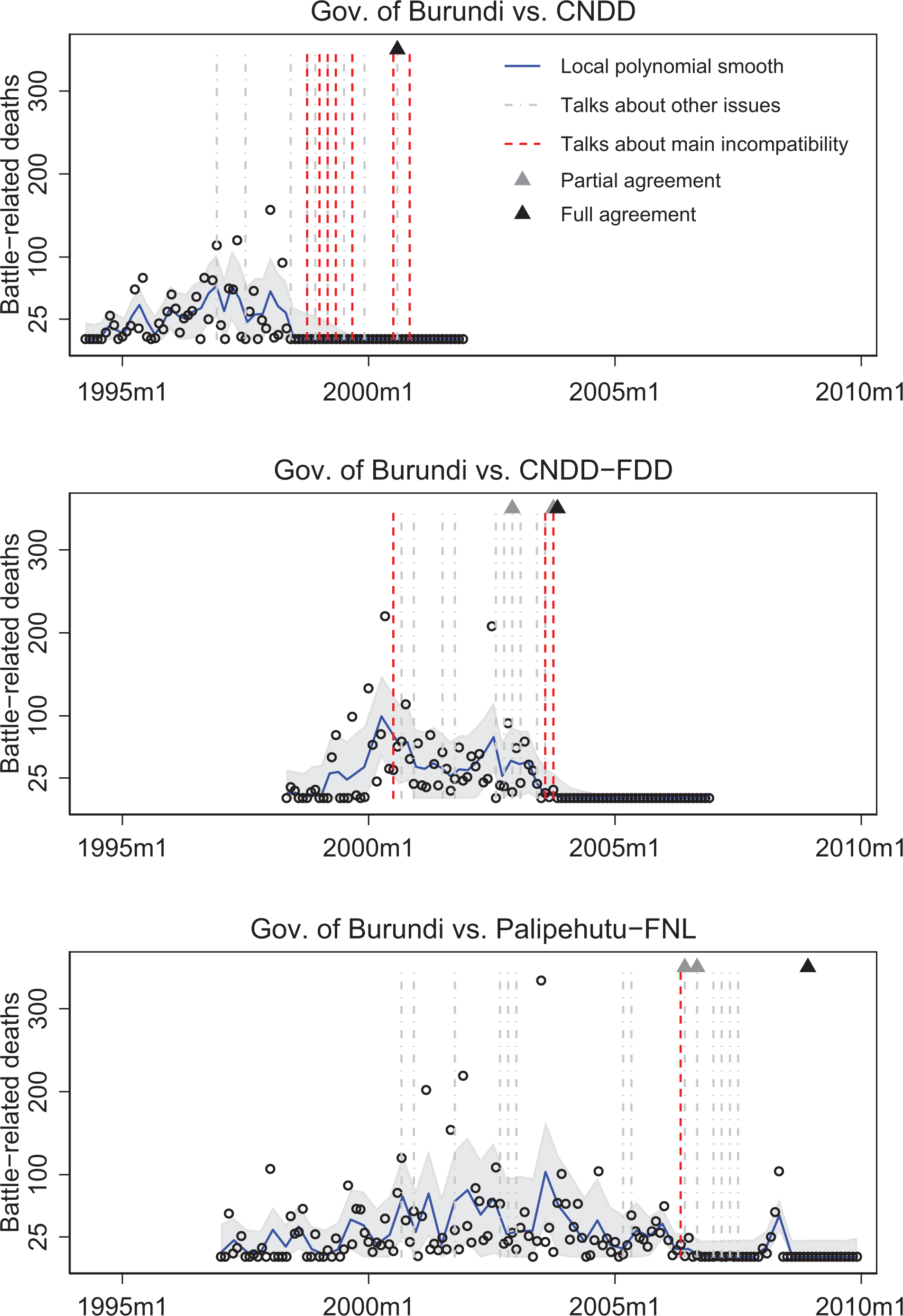
The example highlights how mediation may reduce fighting intensity even before a full agreement is signed. Conceivably, in some situations an agreement might only become possible because mediated negotiations create a change in conflict behavior or signal a negotiation progress. The fact that an adversary abides by initial negotiation results, for example a pause in fighting, and is willing to further negotiate core issues may send an important additional signal that ending the conflict is actually feasible. Hence, a reduction in conflict intensity can be both a goal in itself and a central signaling device. In the next section, I outline a theory how such signals can be initiated by mediation and reduce conflict intensity substantively.
A theory of mediation and conflict intensity
The most widespread theoretical explanation of positive mediation effects has been based on the bargaining model of war (cf. Regan & Aydin, 2006; Svensson, 2007; Savun, 2008; Clayton, 2013). Based on this theoretical perspective, mediation can address information asymmetries and commitment problems at the heart of the conflict, if the mediator is able to credibly provide information and build trust (Kydd, 2010, 2006). 7 However, as in Burundi, negotiations are usually not the stylized one-shot interactions implied by basic bargaining models; empirical mediation often occurs repeatedly while the conflict is ongoing. According to a Clausewitzian logic, war is a process of bargaining while fighting. In this process, the actors repeatedly interact and failed bargaining leads to fighting which sequentially reveals the capabilities and costs of the actors. The conflict itself therefore enables actors to learn and, unless one side is decisively defeated, it eventually produces a convergence of beliefs (cf. Wagner, 2000; Smith & Stam, 2003, 2004; Slantchev, 2003; Powell, 2004).
According to this logic of bargaining while fighting, the actors fight because they have diverging beliefs. The mediator might alter these beliefs by transmitting and providing information, thereby facilitating a proposal of how the conflict issue could be resolved. Given this new information, the actors may be less likely to fight and, if they fight, the disagreement of beliefs could be smaller and fighting less intense. However, unless the mediator has superior intelligence capabilities, pure information provision strategies by the mediator will be ineffective. A mediator without its own intelligence gathers information in exchanges with the conflict parties, who have similar incentives to misrepresent information to a mediator as when they communicate directly with the opponent (Fey & Ramsay, 2010).
In addition to these information problems, commitment problems may prohibit resolution (cf. Walter, 2002). Deep distrust among adversaries will not disappear quickly and will require repeated signals and reassurance that the opponent is trustworthy. Mediators can ease these difficulties and build trust by sharing their assessment of whether an actor can be trusted (cf. Kydd, 2006). However, in order to confirm the mediator’s signal about trustworthiness, the actions of an opponent will have to speak for themselves.
To provide opportunities for trust-building signals, mediators can negotiate initial costly concessions. However, the more the opponents distrust each other, the less likely they are to agree to major concessions at the outset of a negotiation process. The mediator thus has to walk a fine line, proposing interim results which opponents are realistically willing to honor but which are costly enough to signal genuine interest in a negotiated conflict resolution.
Several forms of such concessions can signal readiness for resolution. Providing opportunities for humanitarian relief and honoring the commitments made in this process may be a first, but still ambiguous signal. Removing certain heavy weapons from the front lines or refraining from shelling specific neighborhoods are somewhat stronger signals, which should be reflected in lower battle-related fatalities. Agreeing on and abiding by a ceasefire can be a further, more extensive sign of trustworthiness. Nevertheless, none of these steps solve the conflict and it is easy to back out of these commitments. Such reductions in fighting intensity are thus naturally fragile, especially since they may be exploited to militarily rebuild and prepare new offensives.
In addition to these signals from opponents’ conflict behavior, conflict parties are able to learn from negotiation processes and extract information which complement insights gained on the battlefield (cf. Slantchev, 2003). To convince conflict parties that a conflict resolution is possible, mediation therefore has to go beyond discussions of conflict behavior. The willingness to engage in more detailed negotiations on core issues can send such a signal.
The central conflict incompatibilities are often highly sensitive and emotionally charged. For governments to formally accept discussions about granting rebels access to power or to discuss autonomy of specific regions is often an extremely high cost to pay. In fact, it grants substantive political legitimacy to the adversary (Melin & Svensson, 2009). Similarly, rebels who rally around the call to oust a regime or who promise independence pay a cost, if they begin to discuss compromise with an enemy who they pledged to defeat. Hence, both the government and rebels risk alienating substantive parts of their support base if they agree to negotiate core conflict incompatibilities. The breakup of the CNDD in Burundi exemplifies the risk that groups could splinter in opposition to such talks.
If opponents agree to discuss core conflict issues, they therefore signal considerable resolve to attempt a negotiated solution. In order to not jeopardize this opportunity, ceasefires are often called for. In the absence of a truce, mediators will press the conflict parties to at least restrain their military engagement, relying on verbal persuasion, but possibly also more forceful carrots and sticks strategies. Simultaneously, adversaries will vigilantly eye any of their opponent’s actions. If they perceive that the other side responds with less aggressive behavior on the battlefield, they will become more likely to mirror this action and reduce their own fighting intensity.
Based on these signals from negotiations and adjusted fighting behavior, reciprocity can be a simple but profitable strategy in an otherwise complex and uncertain environment (Axelrod, 1984). Empirical studies confirm such reciprocal interactions during negotiation phases in intrastate conflicts (cf. Goldstein & Pevehouse, 1997). Along these lines, small mutual signs of cooperation can thus foster subsequent cooperation and substantively reduce violence levels. At the same time, failure to return or uphold cooperative signals may result in further conflict. Mediators can direct this process by negotiating small concessions, carefully directing talks towards core conflict issues, and by pressing conflict parties to honor initial negotiation results.
Nevertheless, actors will not change their beliefs completely due to a single round of mediation (Böhmelt, 2013). One mediation effort is unlikely to end a conflict. Any initial progress will be judged based on the output of subsequent rounds. If mediation successfully starts negotiations over central conflict issues, such as constitutional questions, territorial autonomy or similar questions related to central incompatibilities, it signals an alternative path for the actors to achieve their goals. The fact that the opponents are willing to engage in these negotiations, and therefore acknowledge that their adversaries have some legitimacy, is a costly signal. It will reinforce trust in the negotiation process and the likelihood of future cooperation. As argued above, mediators will press conflict parties to not jeopardize this opportunity and reduce battle intensity. Hence, on average, negotiations about the main incompatibility should be followed by declining violence. The theoretical argument therefore generates a first statistically testable prediction: H1: With the start of mediation which discusses the core conflict issues, conflict intensity decreases substantively and permanently, on average.
However, such reductions in violence are conditional on negotiation progress. If the negotiations fail to generate progress on core issues underlying the conflict, the conflict parties will see their initial distrust confirmed and abandon strategies to halt or reduce the fighting. In these cases of negotiation deadlock or even breakdown, conflict intensity should surge again. Sometimes, new violence will reach approximately pre-negotiation levels. Other cases will see higher violence levels than prior to the negotiations. However, such intensity increases should not be the norm. Especially if adversaries have already fought with everything at their disposal, they have few resources left to inflict even more harm. Moreover, negotiation phases are often used to evacuate remaining civilians caught between the fighters. Following these evacuations, the risk of battle-related fatalities should be lower.
The prediction that negotiation content signals how genuinely conflict parties are interested in a bargaining solution also allows us to deduce implications for mediation which fails to discuss conflict incompatibilities. Negotiations that merely discuss conflict behavior will produce short reductions in conflict intensity, which last for a few months, at best. Without an additional signal that the opponent is willing to engage in difficult talks on the main conflict incompatibility, conflict parties may be willing to reduce violence for a few weeks or months, to explore the opportunity for diplomatic solutions. However, in the absence of signs for negotiation on the core issues, adversaries will resume their fight. This theoretical prediction generates a second, statistically testable prediction: H2: Mediation that discusses only conflict behavior reduces violence for a few months, but is not associated with longer reductions in conflict intensity.
The next section examines this process empirically.
Empirical conflict intensity after mediation attempts
Research design
The empirical analysis relies on data regarding all intrastate armed conflict dyads in Africa between 1993 and 2007. The data on conflict intensity are drawn from the UCDP Georeferenced Event dataset 1.5 (GED) (Sundberg & Melander, 2013). Information on conflict management activities is taken from the UCDP Managing Intrastate Conflict dataset (MIC) (Croicu et al., 2013). Each dyad enters the analysis when it becomes active for the first time according to UCDP data 8 and continues to be observed for three years after the conflict has become inactive. This corresponds to the coding rules for the UCDP MIC dataset (Nilsson & Croicu, 2013) and helps to ensure that the results are not distorted by right-censoring.
Since the purpose of the study is to account for the short-term evolution of violence, the unit of analysis is a government-rebel dyad-month. Compared to previous yearly studies, the monthly level allows a meaningful investigation of short-term changes in conflict intensity. It further corresponds to recent work on, for example, peacekeeping or sanctions (cf. Hultman, Kathman & Shannon, 2014; Hultman & Peksen, 2017). At the same time, compared to, for example, daily data, the monthly level does not artificially inflate observations of single events or processes which last for several days or even a few weeks, such as battle offensives or mediation rounds.
As the dependent variable, I use the monthly number of reported battle-related deaths that result from fighting within a dyad. In the analysis, the best estimate of the number of fatalities is used. If events span more than a single month, the casualties are added to the month in which the event ended. Since the data are always positive and highly skewed, I take the natural log of the number of fatalities and specify the following model:

where
I specify
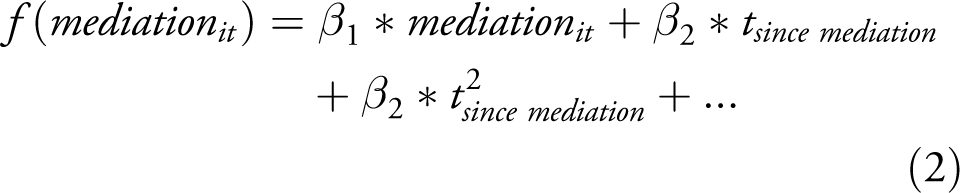
where
In order to differentiate whether mediation is able to generate negotiations on core conflict issues, I distinguish between talks which discuss the main incompatibility and talks which did not touch on this issue. The information on the content of talks is taken from the UCDP MIC dataset (Croicu et al., 2013; Nilsson & Croicu, 2013). The latter talks, which do not cover the main incompatibility, were held to prepare more detailed talks, but also to discuss conflict behavior, for example ceasefires.
The analysis uses linear dyad fixed effects models. Nevertheless, alternative models provide substantively similar conclusions. These results for count models, dynamic panel models, regression with panel corrected standard errors and alternative model specifications are documented in the Online supplementary files. All models account for government-rebel dyad fixed effects (
Despite the fixed effects, time-varying confounders
Empirical research shows that the capability ratio of the rebel group and the government predicts mediation onset, mediation effects, and conflict intensity (Clayton, 2013). Hence, I control for the relative strength of the rebel group vis-à-vis the government. I create binary variables which indicate whether the rebels are, in a given time period, militarily weaker or much weaker; parity serves as the reference category. The information is drawn from the Non-State Actors data (Cunningham, Gleditsch & Salehyan, 2009). As both regime type and economic prosperity tend to correlate with the likelihood of mediation and conflict intensity, I include GDP per capita and the combined polity score (polity2) in the model (World Bank, 2013; Marshall & Jaggers, 2011; Teorell et al., 2013). Lastly, I account for the overall number of democracies in the world, since the global supply of democratic mediators may explain mediation onset and mediated agreements (Crescenzi et al., 2011). 12 Finally, the model includes polynomials of time since conflict onset, to account for a potential general convergence of beliefs over time.
Finally, mediation may be more likely in particular conflict contexts and could therefore be subject to a self-selection bias. Recent work has shown that mediation in civil wars is predicted by developments on the battlefield (Ruhe, 2015). In the supplementary files, I address this concern through the use of endogenous treatment models. These models enable estimation of linear regression models with endogenous covariates (Greene, 2012: 890 ff.). The analysis with endogenous treatment models does not alter the substantial conclusions. Furthermore, the errors of the equations do not seem to be correlated, that is, the fatality model can be estimated on its own. Additionally, a Wald test provides no evidence that a selection equation is needed.
Results
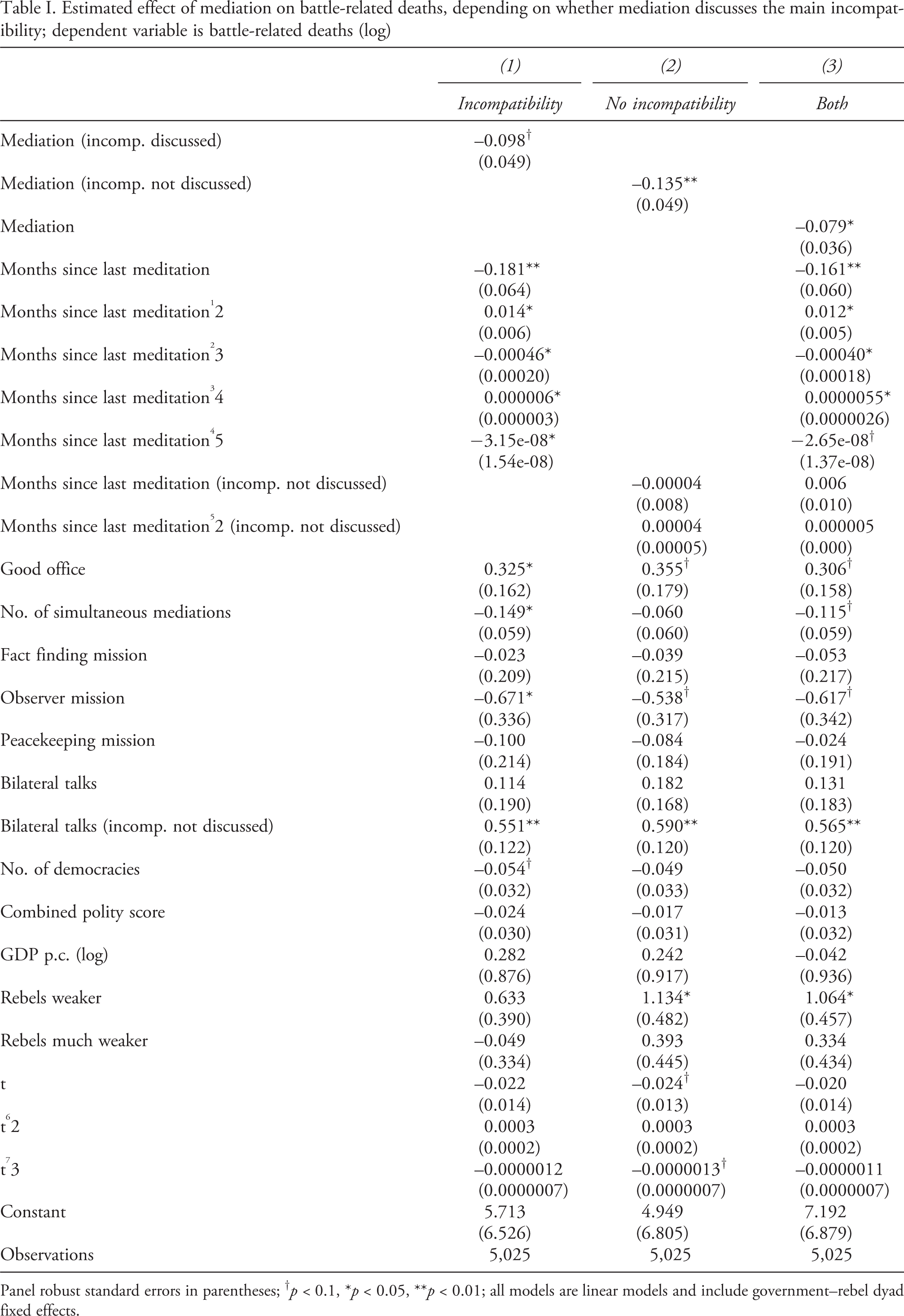
Table I presents the estimation results. The models estimate how conflict intensity changes after mediation that addresses the main incompatibility and mediation that does not. Since the dependent variable is the natural logarithm of monthly battle-related deaths, the interpretation is straightforward: the exponentiated coefficient gives the multiplicative change in battle-related deaths for a one-unit change in the independent variable. Model 1 examines mediation that discusses the incompatibility. For these types of mediation, the estimated coefficient for the step variable is negative and suggests a reduction in the number of battle-related deaths by roughly 9% immediately after mediation (
Nevertheless, despite this similar initial effect, the results for Models 1 and 2 are strikingly different, if we examine how the effects change over time. In order to estimate a changing effect, the models include polynomials of the time since the last mediation attempt occurred. The best fitting degree of polynomials was chosen using Akaike’s Information Criterion. 13 Based on the different degree and the estimated coefficient alone, it becomes apparent that the temporal effect differs drastically. These coefficient estimates and standard errors remain unchanged, if both types of mediation are included in the same model (see Model 3).
Estimated effect of mediation on battle-related deaths, depending on whether mediation discusses the main incompatibility; dependent variable is battle-related deaths (log)
Panel robust standard errors in parentheses; †p < 0.1, *p < 0.05, **p < 0.01; all models are linear models and include government–rebel dyad fixed effects.
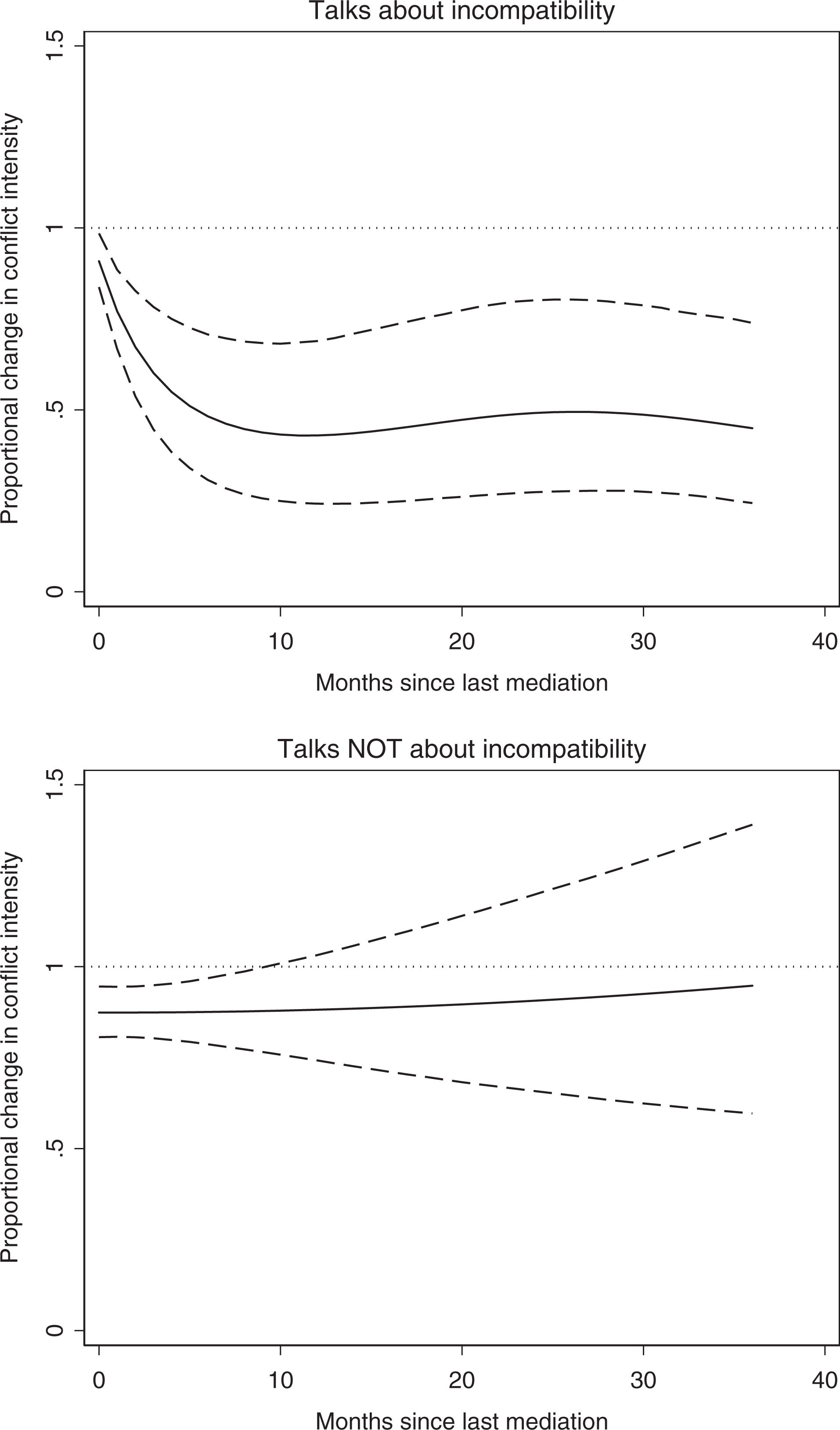
Change in fatalities following mediation, distinguishing whether the main incompatibility is discussed
In stark contrast, mediated talks which do not address the main incompatibility appear much less effective (lower plot). On average, conflict intensity decreases about 5% to 20% relative to the level before mediation started, but this effect becomes insignificant after a few months. Furthermore, the estimation uncertainty increases substantively over time, indicating that this type of mediation does not predict any particular evolution in conflict intensity beyond a few months. 15
Figure 2 indicates that the change in conflict intensity after mediation differs significantly, depending on whether the main incompatibility is discussed during the talks. Neither of the confidence intervals contains the point estimate of the other type of mediation, except for the first two to three months. The results correspond perfectly to the theoretical predictions. While talks about conflict behavior may signal that an opponent might be willing to work out a deal, it is not a reliable signal. Hence, these types of talks will have a minimal effect on conflict intensity since the validity of the signal can quickly be falsified based on the opponent’s actions. As a sign of goodwill, fighting intensity might be reduced. If the opponent actually follows through on the promise of talks on more substantive issues, fighting intensity will most likely decrease further. However, this reduction will then be attributed to these new rounds of talks. If no further talks are held, the level of violence will in most cases return to its previous level or escalate even further.
Since these talks on conflict behavior are unable to generate a reliable signal of the opponent’s intentions or trustworthiness, the subsequent conflict intensity evolution will vary considerable across contexts. In some cases, we will see further escalation. In others we might see a fragile process emerging, which leads to further, more substantive talks. Given this effect heterogeneity, the estimated effect and the quickly expanding confidence intervals for talks which do not address the main conflict issues confirm the theoretical argument.
In contrast, talks about the main incompatibility are a costly signal that the opponent is willing to engage in negotiation. Furthermore, it can provide actual information on what a settlement could look like. While this information will take more time to be revealed in longer talks, it will give the conflict parties a much more comprehensive sense of an alternative option to continued fighting. Although not all talks will stop or at least reduce the killing, a conscious adjustment of the war effort based on this new knowledge will likely have lasting effects. Even if fighting does not stop completely, fighting parties will be advised to reduce their fighting intensity, in order to not jeopardize the negotiation process.
Overall, the empirical analysis supports the theoretical argument by uncovering the predicted empirical patterns. The results suggest that mediation may lead to a persistent reduction in the average number of monthly casualties, albeit only for mediation that achieves talks about the main incompatibility of a conflict.
The 2016 and 2017 talks on the Syrian civil war: An out-of-sample example
The statistical model relied on data for African conflicts. Yet, how well do the model predictions explain the evolution of other conflicts, for example during the Geneva negotiations on the Syrian civil war? Moreover, does this qualitative evidence support the theoretical argument? To probe these questions, I analyze these talks in greater detail. The Syrian conflict is arguably the most pressing contemporary humanitarian crisis and, due to its complexity, should pose a hard example for a model prediction. As Syria is not part of the estimation sample, it is an out-of-sample prediction, which is ‘generally considered the gold standard for model assessment’ (Beck, King & Zeng, 2000: 22). To compare the results for talks with different content, I assess how well the model explains the conflict dynamics surrounding the Geneva talks held in early 2016, as well as the process of the Geneva and Astana-based talks since late December 2016. The former rounds of talks did not achieve any exchange over the political future of Syria, whereas the latter talks managed to discuss some dimensions of a potential future constitution, governance, and elections, albeit with no substantive agreement.
The negotiations in Geneva, which started in early 2016, were the first attempted peace talks in over two years (Miles et al., 2016). However, the UN-mediated indirect talks between the Syrian government and the opposition negotiation team were quickly suspended after only three days (Miles, 2016a). Nevertheless, under pressure from the United States and Russia, the Syrian conflict parties agreed to a partial ceasefire at the end of February (Barnard, 2016). The ceasefire appeared more durable than anticipated and encouraged a continuation of the talks in March (Barnard, Samaan & Watkins, 2016; Miles & Nebehay, 2016). Yet, these new talks were not able to discuss any of the main conflict incompatibility, as the government side refused talks over a political transition (Miles & Irish, 2016). Despite this refusal and recurring violations of the ceasefire, the negotiations continued in April (Miles, 2016b). However, as violence began to surge and the government side maintained that Assad’s position would not be negotiated, the opposition eventually walked out of the negotiations in late April (Davison & Nebehay, 2016). In early May, attempts were made to revive the ceasefire and the peace talks through local suspensions of the fighting. However, these attempts ultimately failed (Dyomkin & Devitt, 2016). Throughout the following months, it remained unclear whether the talks would reconvene (Charbonneau, 2016).
Based on the description in the press, the UN peace talks for Syria in early 2016 were a clear case of mediation which did not achieve any exchange over the main conflict incompatibilities. The discussion also confirms the theoretical argument that conflict parties interpret negotiation content to decide if they remain invested in the negotiation process. The refusal of the Assad regime to discuss a political transition confirmed rebel distrust and accelerated the breakdown of the ceasefire (Davison & Nebehay, 2016).
In addition to the qualitative evidence, the statistical results can be compared against reports of conflict fatality in Syria.
16
For the months of the peace talks, data are available from three of the four sources mentioned by Casualties in the Syrian civil war during the Geneva talks in Spring of 2016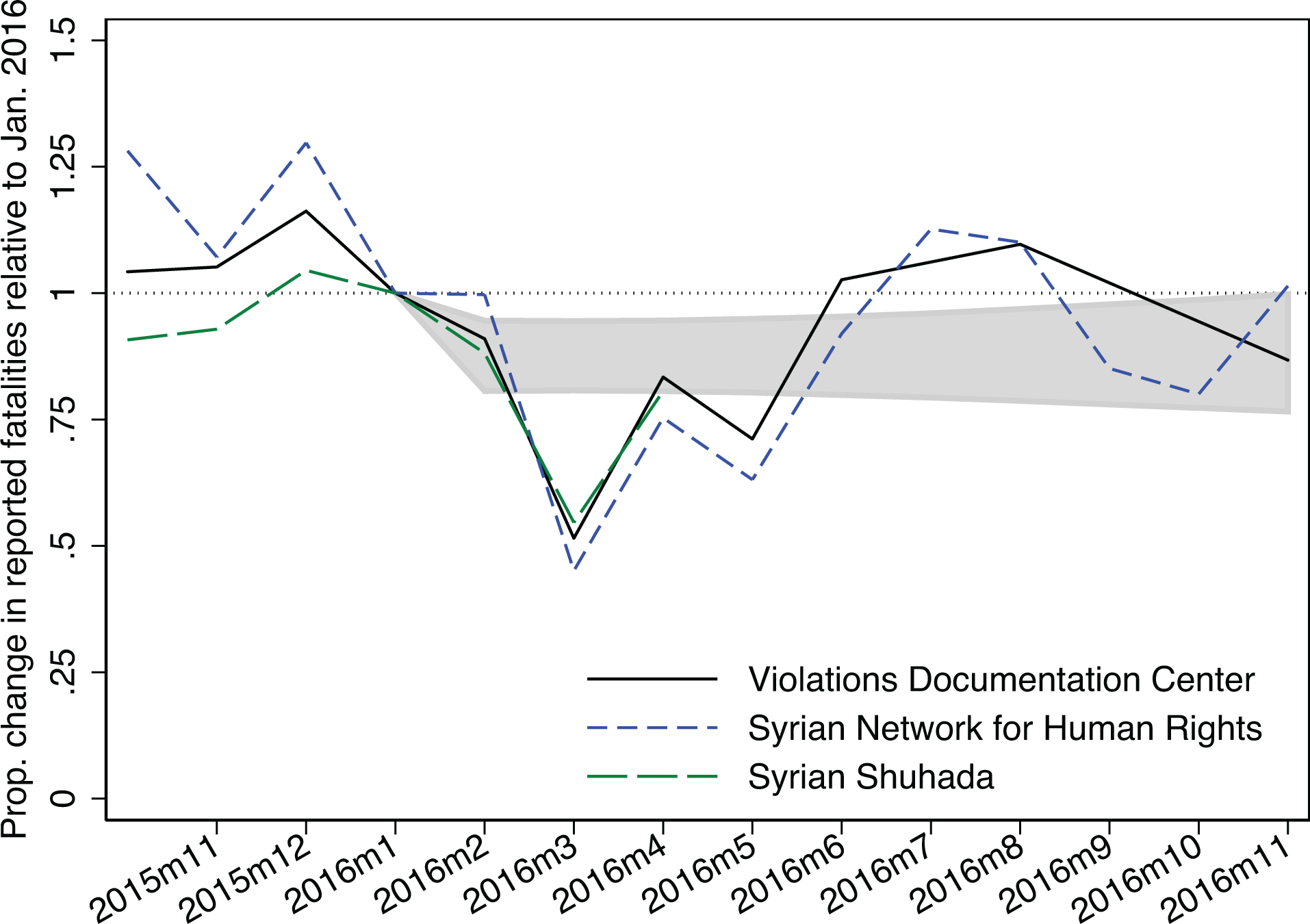
Figure 3 plots Model 2’s prediction (in grey) against reported fatalities in Syria. All three time series evolve largely in parallel. Compared to the reported casualties in January, the general level of violence in February is roughly 10% lower. The reports for March by all three organizations indicate a reduction in violence by approximately 50%. This decrease is significantly larger than the expected effect suggested by the statistical model. Hence, if these reports are correct, the ceasefire would indeed have resulted in a greater than average reduction in fighting intensity. Nevertheless, the overall pattern for the subsequent months mirrors the model prediction, since the violence level rebounded to a level similar to January’s. Consequently, the conflict evolution following the ceasefire appears to generally support the statistical results for the African sample.
In late December 2016, a new Turkish–Russian initiative evolved into a separate diplomatic track alongside a new push to revitalize the UN-backed Geneva talks. These negotiations produced a nationwide ceasefire, which was followed by repeated talks held in the Kazakh capital Astana. The initiative focused on military issues and upholding the ceasefire (Agence France Press, 2016, 2017d). Simultaneously, the UN launched a new negotiation process based in Geneva. Despite repeated local violations of the ceasefire, the conflict parties were able to agree on an agenda for continued peace negotiations, which, for the first time, included the main conflict issues, including governance, constitutional process, and elections (Agence France Press, 2017b,d). This agenda led the way to talks in March, which discussed these topics further (Agence France Press, 2017e).
During late spring, all conflict parties overcame a renewed escalation of violence and gathered for continued talks in Astana. The parties agreed on so-called de-escalation zones, in which fighting would be suspended (Agence France Press, 2017c,g). Subsequently, the continued Geneva talks deepened the discussion on constitutional issues, but the Syrian regime seemed to play down their relevance (Agence France Press, 2017f). Throughout July, the Astana and the Geneva negotiations provided no breakthrough. Nevertheless, the UN emphasized that some incremental progress had been made (Agence France Press, 2017a,j). In August 2017, more details for some of the de-escalation zones had been worked out. Meanwhile, the UN planned for continued peace talks in Geneva in late 2017 (Agence France Press, 2017h,i).
Hence, the process initiated in December 2016 was the first time that negotiations discussed elements of a political transition. The data on conflict intensity during the parallel Geneva–Astana peace processes can therefore be compared against Model 1’s statistical prediction for talks which discuss the main incompatibility. 18 Following the same procedure as before, violence levels are standardized according to the number of reported fatalities in November 2016, the month prior to the negotiations. As before, this allows comparison of the Syrian intensity directly with the results for Model 1 reported in the upper plot of Figure 2.
Figure 4 graphs the resulting relative change in violence compared to November 2016. The grey area depicts Model 1’s statistical predictions for mediation that negotiates the main conflict incompatibility. The Casualties in the Syrian civil war during the Geneva/Astana talks since late 2016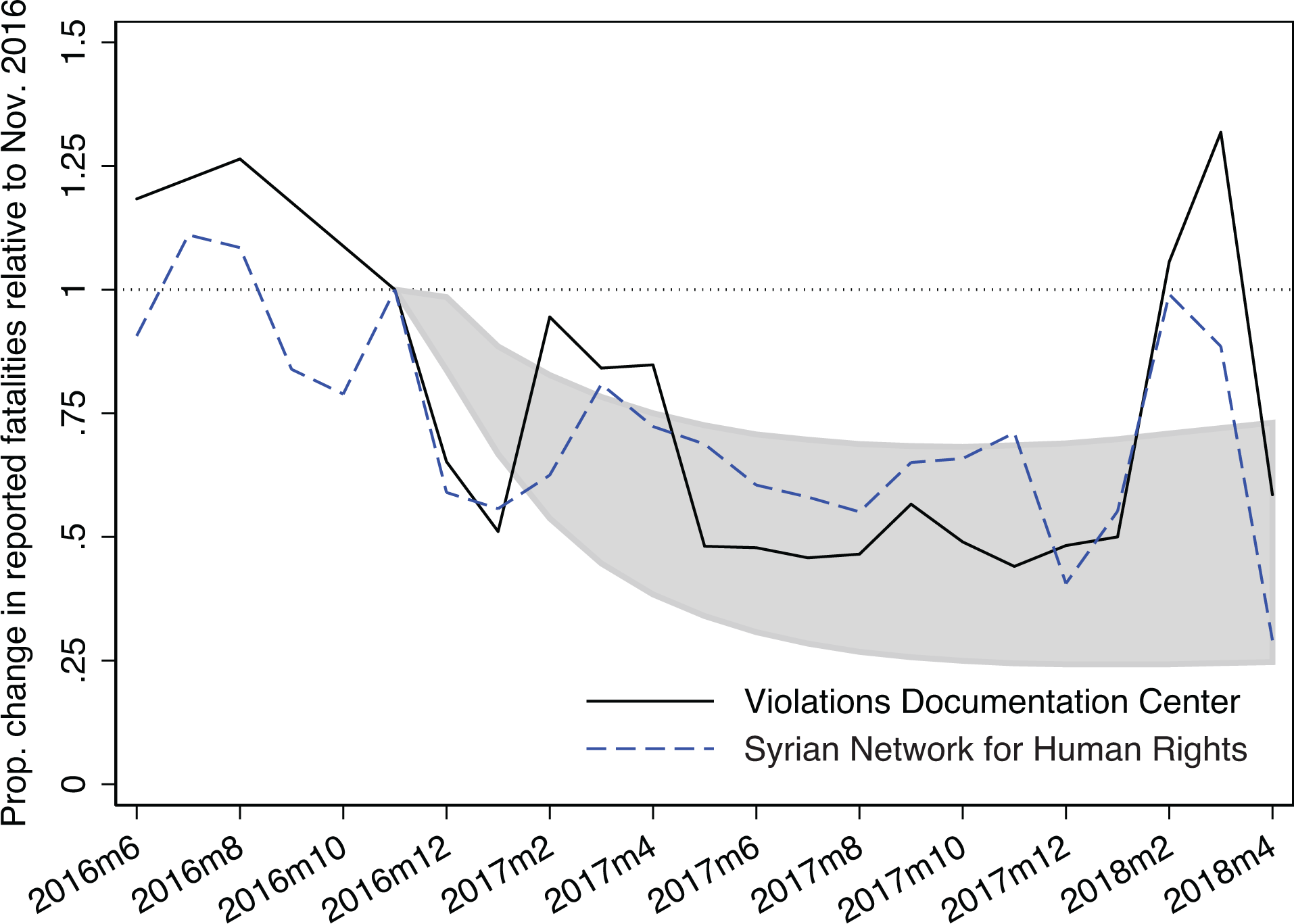
Similar to the analysis of the 2016 talks, the pattern of violence during 2017 closely corresponds to the model prediction. This underscores the statistical model. Furthermore, the anecdotal evidence from Syria supports the theoretical argument, that reciprocity is a key element which explains whether a mediation effort is able to reduce violence levels. In 2016, the talks highlighted that the Assad regime was reluctant to discuss the political future of Syria. Although the mediation effort by the UN, backed by US and Russian pressure, was able to uphold a ceasefire and ease the fighting for a few months, negative reciprocity spiraled the conflict back to previous hostility levels. In contrast, the talks in 2017 produced both a ceasefire and initial discussions of constitutional issues. Although not much substantive progress was made, the violence during the summer of 2017 remained lower than before the diplomatic interventions, which corresponds to the theoretical and empirical predictions. The spike in violence in February and March of 2018 highlights, in line with the theory, that reciprocal interactions without substantive progress are always at risk of spiraling out of control.
Conclusion
This study analyzes the dynamic effect of mediation on conflict intensity based on data on intrastate armed conflicts. The study adds to both the theoretical and empirical analysis of mediation. In contrast to existing quantitative studies of mediation, it examines the impact of mediation on battle-related fatalities. The analysis sheds light on the process of how mediation can initiate cooperative signals and reduce conflict intensity. Furthermore, the use of temporally fine-grained event data enables us to analyze the role of the content of negotiations in this process and provides a more detailed view of mediation and bargaining while fighting.
In line with the theoretical argument, the empirical analysis suggests that mediation is associated with lower levels of violence and that the effect size and change over time depend on the content of the talks. Following mediation that addresses the main conflict issue, battle-related deaths decrease strongly, on average by an estimated 50%. This average drop in conflict intensity is very persistent and stabilizes at this significantly lower level. On the other hand, mediation which does not cover the main conflict issue does not correlate with larger reductions in conflict intensity and the small effect disappears after a few months. These different effects underscore the theoretical argument that negotiation content signals willingness for compromise. This suggests that third-party diplomacy can be a highly relevant contribution to conflict management, if it negotiates core conflict issues.
While the article thus gives insights on both mediation effectiveness and the role of mediation in a dynamic conflict environment, the result that the content of talks matters may also speak to research on the stages or sequencing of conflict resolution (Findley, 2013; Mattes, 2018). Third parties should only expect a more significant reduction in conflict intensity once the parties engage in substantive talks over the main conflict issues. In the absence of these central discussions, it is unlikely that conflict parties will be willing to significantly reduce their fighting efforts. This does not imply, however, that prospective mediators should refrain from strategically withholding central conflict topics from early, preparatory talks. Nevertheless, it indicates that third parties need to be patient in these situations and have the ability to continuously push for more substantial negotiations, even when fighting resumes after short truces or when it does not change at all.
The analysis of recent negotiation processes in the Syrian civil war highlights that conflict behaviors, such as ceasefires, also serve as important signals. The case description underlines the theoretical expectation that a mediated reduction in conflict intensity which is obeyed by all parties can build trust and pave the way for more extensive talks. It also underscores the theoretical argument that adversaries interpret both conflict behavior and negotiation content when deciding whether to attempt further de-escalation or to re-escalate military conflict. In addition to this qualitative support, the evolution of conflict intensity in Syria also corresponds closely to the predictions of the statistical analysis. This out-of-sample accuracy reinforces confidence in the statistical model and provides evidence that the results have external validity beyond the African context.
Overall, this article suggests that mediation may have a substantive appeasing effect and reduce battle lethality, if it is able to discuss central issues. Nevertheless, a reduction in violence does not automatically imply a complete end of the fighting. Future research may scrutinize this finding and examine if the content of talks moderates the results in more aggregated studies of mediation. Future research may also assess how alternative mediation strategies or mediator characteristics affect conflict intensity, especially over longer horizons. Lastly, this study only covers dynamics in intrastate conflicts and thus more research is needed to examine if interstate conflicts display similar patterns.
Footnotes
Replication data

Acknowledgments
I would like to thank the editor and three anonymous reviewers for their valuable feedback, as well as Gerald Schneider, Nils Weidmann, Margit Bussmann, Tobias Böhmelt, Kristian Skrede Gleditsch, Mathilda Lindgren, and Allan Dafoe for comments on earlier drafts.
Funding
The author(s) received no financial support for the research, authorship, and/or publication of this article.