



Abstract
Exposure to stigma and stereotype threat is detrimental for numerous marginalized groups. Research has demonstrated that individuals with specific learning disabilities (SLDs) are vulnerable to stigmatization. The purpose of this systematic review was to summarize the studies investigating associations between SLD-related stigma and stereotype threat and psychological and academic outcomes in individuals with SLDs, as well as examine the overall effect size of these associations across studies. A total of 16 studies met inclusion criteria—12 studies (52 effect sizes) examined SLD stigma with psychological adjustment or academic outcomes, and six studies (eight effect sizes) examined SLD stereotype threat. Greater SLD stigma scores had a medium-sized and significant correlation with less self-esteem across nine effect sizes (r = −.39, p = .002). Other outcomes were not powered enough for meta-analyses, although studies generally showed that greater SLD stigma and stereotype threat was related to less optimal psychological adjustment. These results suggest that these negative experiences should be a target of intervention and support efforts for individuals with SLDs. The associations between SLD stigma and stereotype threat and academic performance outcomes were comparatively more heterogeneous and less robust. These findings highlight the need for more research on SLD-related stigma and stereotype threat.
Specific learning disabilities (SLDs) are a set of neurodevelopmental disorders characterized by challenges in acquiring academic skills in one or more areas. These difficulties occur despite typical intelligence and adequate access to instruction Diagnostic and Statistical Manual of Mental Disorders (5th ed.; DSM-5; American Psychiatric Association [APA], 2013). Specific learning disabilities are recognized worldwide by various diagnostic classification systems (APA, 2013; World Health Organization, 2019), and their prevalence rate ranges from 5% to 15% among school-age children (Grigorenko et al., 2020; Moll et al., 2014). In the past 50 years since SLDs began to be formally recognized, significant strides have been made in terms of the identification of and interventions for SLDs (Grigorenko et al., 2020). However, individuals with SLDs continue to lag behind their peers without SLDs in terms of academic achievement (Goran & Gage, 2011; Schwartz et al., 2019). Moreover, research is increasingly recognizing that individuals with SLDs experience more negative socioemotional outcomes than their peers without SLDs, including lower self-esteem and increased mental health problems (Haft et al., 2016; Mammarella et al., 2016; Nelson & Harwood, 2011). Understanding precursors to such outcomes in individuals with SLDs is critical—research shows that academic and socioemotional adjustment difficulties can persist into adulthood if left unaddressed (Aro et al., 2019; Wilson et al., 2015).
Two potential contributors to the less optimal outcomes among individuals with SLDs are stigma and stereotype threat. Stigma is a broader term referring to negative beliefs about an individual based on a certain characteristic (Major & O’Brien, 2005), while stereotype threat is a more specific situation in which an individual fears confirming those negative beliefs (Pennington et al., 2016). Qualitative and quantitative research have shown that the SLD diagnosis is stigmatizing, and that individuals with SLDs experience stereotype threat (May & Stone, 2010; Shifrer, 2013). Separately, numerous reviews and meta-analyses have confirmed the detrimental effects of stigma and stereotype threat on other marginalized groups (Nguyen & Ryan, 2008; Pennington et al., 2016; Spencer et al., 2016). Although several studies suggest that stigma and stereotype threat are similarly harmful to individuals with SLDs (May & Stone, 2010; Shifrer, 2013), no review has focused on these constructs in SLD samples. Overall, a more comprehensive understanding of stigma and stereotype threat in individuals with SLDs is needed. Thus, the goal of the present review is to conduct systematic review and quantitative meta-analysis of the psychological and academic consequences of stigma and stereotype threat in individuals with SLDs. Findings from this review have implications for social psychology research in illuminating how the content, valence, and consequences of stigma and stereotype threat align with current findings in other marginalized groups. This review can also help inform programs and interventions focused on improving academic, occupational, and socioemotional outcomes for individuals with SLDs.
Stigma and Specific Learning Disabilities
Stigma refers to the devaluation of an attribute based on negative attitudes, stereotypes, or beliefs (Crocker & Major, 1989). The stigmatized characteristic may be visible or invisible and is typically linked to membership in a particular social group. One key element of stigma is separation, or a marker of an individual as “different” (Link & Phelan, 2001). According to Labeling Theory, assigning individuals with a certain label influences others’ perceptions and legitimizes differential treatment based on that label (Mehan et al., 1986). For individuals with SLDs, the SLD diagnosis can function as such a label. In particular, the use of the term “disorder” or “disability” when referring to individuals with SLDs can imply some level of inherent weakness (Fleming & Wated, 2016). In addition, students with SLDs may be physically separated from classmates during the school day for special education or tutoring instruction, demarcating them as different. Research has shown that the SLD label can stigmatize individuals—for example, leading teachers and parents to have lower educational expectations of individuals with LDs in comparison to their similarly achieving peers (Shifrer, 2013). Peers without SLDs may also stigmatize their classmates with SLDs, leading to bullying and peer victimization within the classroom (Baumeister et al., 2008).
Over time, individuals with SLDs may become alert to negative societal attitudes regarding SLDs and may expect to be treated differently because of that stigma—a phenomenon termed stigma consciousness (Pinel, 1999). Despite holding similar identities, members of stigmatized groups may vary in their stigma consciousness (Link & Phelan, 2001). Recently, a stigma consciousness measure was developed and validated specifically for youth with SLDs (Stigma Consciousness Questionnaire—Learning Disabilities; Daley & Rappolt-Schlichtmann, 2018). Within this measure, stigma consciousness among youth with SLDs consists of items such as worry over judgment because of the SLD, belief of differential treatment based on the SLD, and expectations that others think there is something “wrong” with them because of the SLD. Thus, stigma consciousness encompasses an individual’s perception of societal views of their identity, and self-stigma refers to the extent to which individuals internalize those stigmatized views (Pryor et al., 2004). Research shows that individuals with SLDs are susceptible to self-stigma and may use stigmatizing terms to describe themselves such as “stupid” or “not intelligent” (Evans, 2014; May & Stone, 2010). In summary, in a context of societal stigma, individuals with SLDs may be hyperaware of the stigma of the SLD label, and may eventually begin to endorse some of the negative beliefs and stereotypes themselves.
Understanding variations in stigma consciousness and self-stigma is informative in better understanding individual differences in adjustment outcomes. Research demonstrates that higher stigma consciousness is linked to poorer academic performance, lower sense of belonging, and greater anxiety among stigmatized groups (Brown & Pinel, 2003; Good et al., 2012; Son & Shelton, 2011). In a similar manner, a meta-analysis of 49 studies of self-stigma scores and mental health outcomes showed a mean correlation of −.28 across studies (Mak et al., 2007). Several studies conducted with SLD samples also show that higher stigma consciousness and self-stigma relate to less optimal academic and mental health outcomes (Abraham et al., 2002; Chan et al., 2017; Daley & Rappolt-Schlichtmann, 2018). However, a comprehensive meta-analysis of relations between stigma and adjustment outcomes has not been undertaken. Nonvisible stigmatized identities—such as SLDs—are at particular risk for poor mental health (Quinn & Chaudoir, 2009). Thus, it is plausible that the effects of stigma on individuals with SLDs may vary in magnitude in comparison to other stigmatized groups. Understanding the overall relation between stigma and adjustment outcomes for individuals with SLDs has the potential to inform social psychology research, as well as interventions focused on socioemotional well-being in SLD groups.
Stereotype Threat and Specific Learning Disabilities
Stereotype threat involves a situation in which members of a social group fear judgment or unfair treatment stemming from a negative group stereotype. The concern about confirming the stereotype may elevate anxiety, co-opt cognitive resources, and impair achievement motivation (Pennington et al., 2016). Consequently, members of stereotyped groups may underperform on evaluative tasks in the stereotyped domain. The construct of stereotype threat was demonstrated in a seminal study comparing the performance of Black and White participants on a challenging verbal task (Steele & Aronson, 1995). Black participants underperformed compared with White participants when the task was presented as diagnostic of intelligence (a racially stereotyped domain), but not when the task was presented as non-diagnostic. The racial stereotype threat effect found in this study has since generalized to numerous other groups about whom a negative stereotype exists. For example, stereotype threat has been used to understand gender differences in mathematics achievement (Stoet & Geary, 2012), age differences in memory performance (Hess et al., 2003), health disparities in sexual minorities (Fingerhut & Abdou, 2017), lower occupational attainment in religious minorities (Ghumman & Jackson, 2010), and differences in academic achievement between immigrant and nonimmigrant youth (Appel et al., 2015).
To be susceptible to stereotype threat, individuals must hold an identity that is the target of a negative stereotype in one or multiple contexts (Spencer et al., 2016). According to this definition, individuals with SLDs are vulnerable to stereotype threat effects. Research shows that individuals with SLDs are often stereotyped as “stupid,” “lazy,” or “careless,” or as “cheaters” or “needy” given the academic or occupational accommodations they may receive (Haft et al., 2019; May & Stone, 2010; Riddick, 2000). These stereotypes are highly salient in educational settings, especially in the context of academic tests or assessments (Shifrer, 2013).
Studies have experimentally induced stereotype threat in samples of individuals with SLDs, such as by altering test descriptions to indicate that performance is diagnostic of academic skills that are challenging for individuals with SLDs. Results from these studies are mixed, where some found the expected stereotype threat effects on task performance, and others found no such effects (Aquino, 2011; May & Stone, 2014; F. Zhao et al., 2019). These mixed findings parallel stereotype threat research overall—several meta-analyses show that stereotype threat effect sizes range from negligible to moderate depending on the sample, setting, and outcome measure (Flore & Wicherts, 2015; Shewach et al., 2019). To date, however, reviews have not included a specific focus on stereotype threat in SLD samples. Such an investigation is critical in illuminating the conditions under which stereotype threat may occur in this group, as well as the extent of its effects.
The Present Review
The objective of the study was to conduct a systematic review and quantitative meta-analysis of studies examining the academic and psychological consequences of stigma and stereotype threat in individuals with SLDs. Specifically, the first aim was to review studies examining stigma and estimate the magnitude of the association between stigma and academic and psychological outcomes. The second aim was to review stereotype threat manipulations on outcomes in samples consisting of individuals with SLDs. We also conducted a quality assessment of the reviewed studies and noted overall strengths and limitations of the literature on this topic.
Method
Search Strategy
We located relevant articles by searching several electronic databases: PubMed, PsycINFO, ProQuest Dissertations and Theses Global, and ERIC, with the latest search conducted on July 19, 2021. We did not restrict our search by dates to obtain the maximum number of articles on our topic. Although the definition of SLDs has shifted over the years, our focus on the SLD label rather than exact neuropsychological criteria allowed for a broader search. We entered keywords that combined terms related to stigma or stereotype threat (stigma OR stereotyp* OR “stereotype threat” OR “identity threat”) and terms related to SLDs (“learning disab*”, OR “learning disorder*” OR “learning difficult*” OR “specific learning disorder*” OR “dyslexia” OR “dyscalculia” OR “dysgraphia”). Based on this search, we identified a total of 443 articles after duplicates were removed. We also conducted backward searching in examining the reference lists of articles that were included after full text screening, as well as forward searching in using the “Cited Reference Search” feature in Web of Science to examine articles that cited included articles generated from database searching. This citation searching resulted in four additional articles for screening. In addition, we hand-searched the following journals that publish on topics relevant to the present review, including all years that were available in journal archives: Annals of Dyslexia, Disability & Society, Dyslexia, Exceptional Children, Journal of Community and Applied Social Psychology, Journal of Learning Disabilities, Journal of Special Education, Learning Disability Practice, Learning Disability Quarterly, Learning Disabilities: A Multidisciplinary Journal, Remedial & Special Education, Research in Developmental Disabilities, and Social Behavior and Personality: An International Journal. Finally, we contacted authors of included studies or research groups that we are aware of study stigma or stereotype threat in SLDs for any unpublished data. Hand searching and contacting authors did not generate any additional relevant articles.
Inclusion and Exclusion Criteria
We reviewed the abstracts of articles for inclusion based on the following criteria: (a) focused on the self-reports or performance of individuals diagnosed with SLDs; (b) included a quantitative measure or experimental induction of stigma or stereotype threat; and (c) reported a statistical relationship between stigma/stereotype threat and at least one other psychological adjustment or academic outcome variable. For the measure of stigma, we included measures of both stigma consciousness and internalized stigma, as long as they were specific to the SLD identity. We considered psychological adjustment outcomes to be any variable that measured socioemotional well-being and has been included in past meta-analyses of stigma (Mak et al., 2007), such as self-esteem, anxiety, depression, quality of life, self-worth, self-efficacy, or sense of mastery. We did not include articles that qualitatively examined stigma or stereotype in individuals with SLDs. We did not impose restrictions on publication date, methodological rigor, age range, or publication status (e.g., unpublished work such as dissertations that meet inclusion criteria are included).
Search Procedures
Search procedures consisted of three separate stages of title and abstract screening, full-text screening, and data extraction. The first and second authors conducted each procedure independently using Covidence systematic review software (Veritas Health Innovation, 2021) and resolved discrepancies through discussion until they reached consensus. As illustrated in Figure 1, title and abstract screening resulted in 19 articles to proceed to full-text screening with substantial interrater agreement (Cohen’s κ = .63; Cohen, 1960). We thoroughly reviewed the full texts of the articles and determined that 13 articles met inclusion criteria (κ = .74). The excluded articles did not contain a measure of stigma or stereotype threat induction (n = 2), did not report on the perspective or performance of a sample of individuals with SLDs (n = 2), did not report a quantitative association between a stigma/stereotype threat measure and an outcome (n = 1), or reported on a duplicate dataset of an included article (n = 1). Ultimately, in combination with the three relevant articles from citation searching, 16 articles met the criteria to be included in the present review.
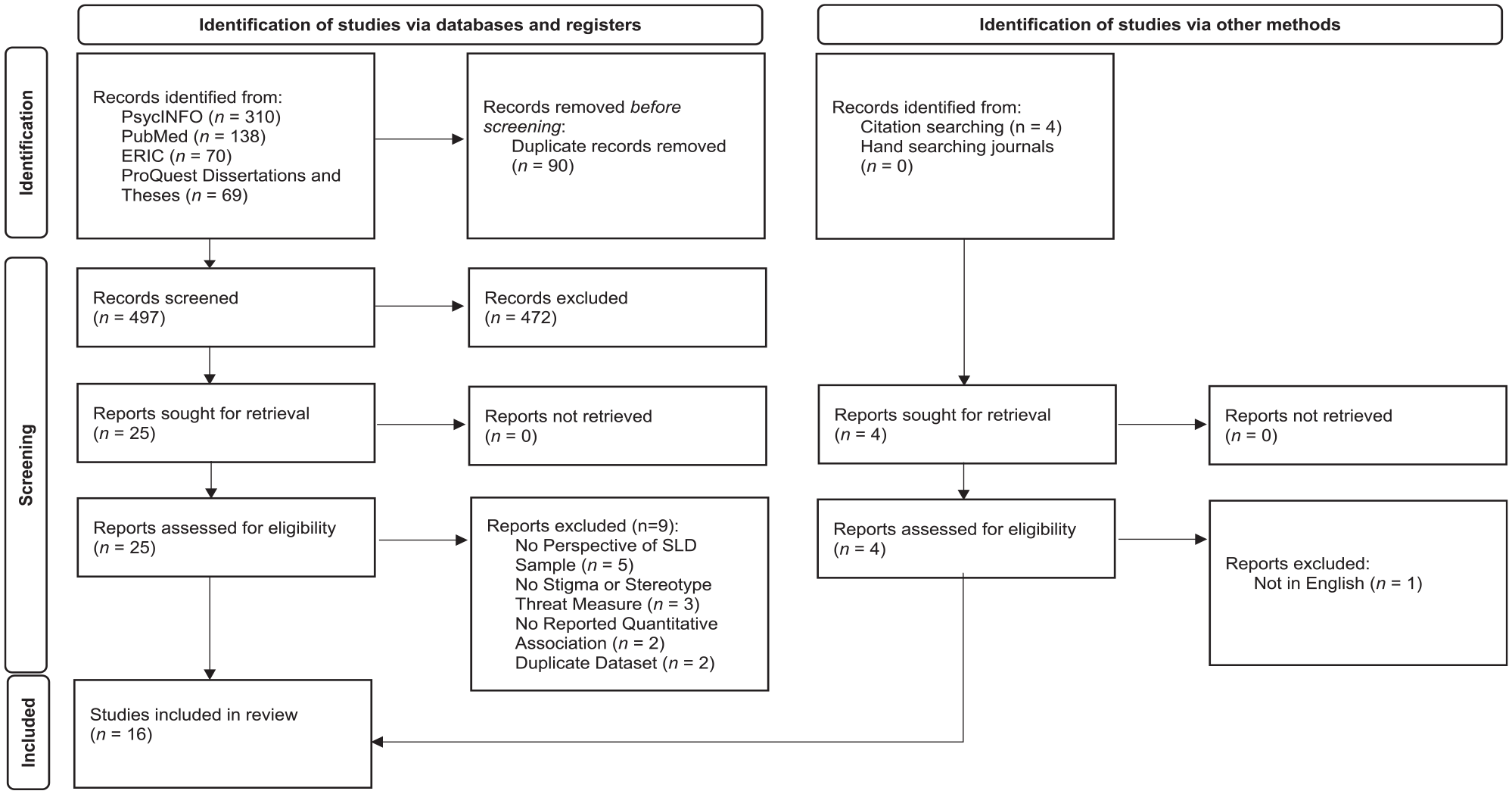
Preferred Reporting Items for Systematic Reviews and Meta-Analyses (PRISMA) 2020 flow diagram for the systematic search on SLD-related stigma and stereotype threat.
Data Extraction and Effect Size Calculation
In the data extraction stage, the first and second authors independently extracted key study characteristics, calculated effect sizes, and computed study quality ratings for each study. Interrater agreement was 84.7% for data extraction and 80.3% for study quality ratings. We resolved discrepancies through discussion until we reached consensus. For studies focusing on associations between LD stigma and psychological and academic outcomes, we extracted correlation coefficients (r) from each individual study as the effect size. When relevant, we reversed effect sizes to maintain consistency in directionality, such that greater (more negative) effect sizes indicated that greater stigma was associated with a more detrimental outcome. For the studies focusing on the effects of SLD stereotype threat manipulation, we calculated Hedges’s g as the effect size by dividing the difference in outcomes between high and low stereotype threat conditions by the pooled standard deviation, as outlined by Rosenthal (1995). One study displayed the values needed to calculate the effect size in a bar graph—we extracted the values using the Web Plot Digitizer program (Rohatgi, 2017). Following the practices adopted by previous stereotype threat meta-analyses (e.g., Appel et al., 2015), we based our effect sizes on the mean difference between individuals with LDs in conditions of high and low stereotype threat, rather than an interaction effect (stereotype threat condition by SLD or non-SLD status). This is because interaction effects may be driven by stereotype lift among participants without SLDs (Walton & Cohen, 2003), which was not the focus of the present investigation.
To synthesize effect sizes across similar outcomes, we used robust variance estimation (RVE) with an adjustment for small samples, which accounts for correlated effect sizes within studies and eliminates the requirement to select a single effect size per study (Hedges et al., 2010). We conducted all RVE models in R using the robumeta package (Fisher & Tipton, 2015). Following recommended guidelines (Hedges et al., 2010), we did not pool effect sizes when the RVE models had less than four degrees of freedom. Before the calculation of the pooled effect size, we transformed correlation coefficients into Fisher’s z to stabilize variance in the analyses and then converted back into correlation coefficients (r) for ease of interpretation. The weight assigned to each effect size was the inverse variance (Hedges & Olkin, 2014), which minimizes bias from the effects of studies with smaller sample sizes. We calculated the weighted average (pooled) effect size using a random-effects model. We selected a random effects rather than a fixed-effects model because such a model is more conservative in estimation, and is appropriate for social science research where variability across studies is standard (Lipsey & Wilson, 2001).
Heterogeneity and Sensitivity Analyses
We computed the I2 value and tau-squared (τ2) to test the heterogeneity of the overall effect sizes. The I2 value quantifies the percentage of variation in effect sizes due to heterogeneity and is categorized as low (25%), moderate (50%), and high (75%; Higgins et al., 2003), while τ2 is a measure of between-study variance. As is recommended (Fisher & Tipton, 2015), we also conducted sensitivity analyses to examine changes in the average computed effect size based on different values of ρ.
Study Quality Ratings
We investigated study quality for each of the included studies based on adapted criteria from Downs and Black (1998). Adapted versions of this checklist are widely used by recent systematic reviews and meta-analysis that investigate stigma and/or stereotype threat in various populations (Livingston et al., 2012; Ma & Loke, 2020; Ma et al., 2019; Nyblade et al., 2019). The adapted version used in this study consists of 13 items and four subscales (reporting, sampling, bias, and power) that assess methodological quality (see online supplemental Table S1 for all the items and their description). A higher score indicates better methodological quality. Following a criterion similar to Livingston et al., 2012 systematic review, the item and subscale power of the checklist was modified to assess whether the study authors reported power calculations that indicated an appropriate sample size for detecting important effects. Although the checklist does not have a prespecified cutoff for acceptable studies, following a procedure adapted from Ma et al. (2019) and Ma and Loke (2020), we assigned each paper a grade of “excellent” (11–13 points), “good” (9–10 points), “fair” (6–8 points), or “poor” (<6 points). The first and second authors reviewed each of the items together before rating each of the studies independently.
Results
Study Characteristics
The search yielded a total of 60 effect sizes from 16 different studies that met inclusion criteria. These studies examined the correlation between stigma and psychological outcomes (n = 11 studies) and/or an academic performance outcome (n = 3 studies); and/or included a manipulation of stereotype threat using a sample of individuals with SLDs (n = 6 studies).
Stigma studies
The characteristics of the 12 studies examining the association between SLD stigma and a psychological or academic outcome measure are displayed in Table 1. A total of 936 participants were included in these 12 studies. Of the 52 effect sizes (correlation coefficients) reported in these studies, seven (13.5%) were insignificant, 18 (34.6%) were small effects, 20 (38.4%) were medium effects, and seven (13.5%) were large effects according to Cohen’s (1992) guidelines. The most common outcomes examined were self-esteem/self-worth (n = 7 studies), anxiety (n = 3 studies), depression (n = 2 studies), and a metric of academic performance (n = 4 studies). Of these 12 studies, seven occurred in the context of the United States (Daley & Rappolt-Schlichtmann, 2018; Fleming & Wated, 2016; Haft et al., 2019; Heyman, 1990; Hoehn, 1999; Maki, 2021; Thornton, 2020), three in the United Kingdom (Abraham et al., 2002; Stoeber & Rountree, 2021; Szivos, 1991), and two in China (Chan et al., 2017; F. Zhao et al., 2019).
Characteristics of Studies Reporting Correlation Coefficients Between a Measure of Stigma and an Outcome Pertaining to Psychological Adjustment (A) or Academic Performance (B) in a Sample of Individuals With SLDs.
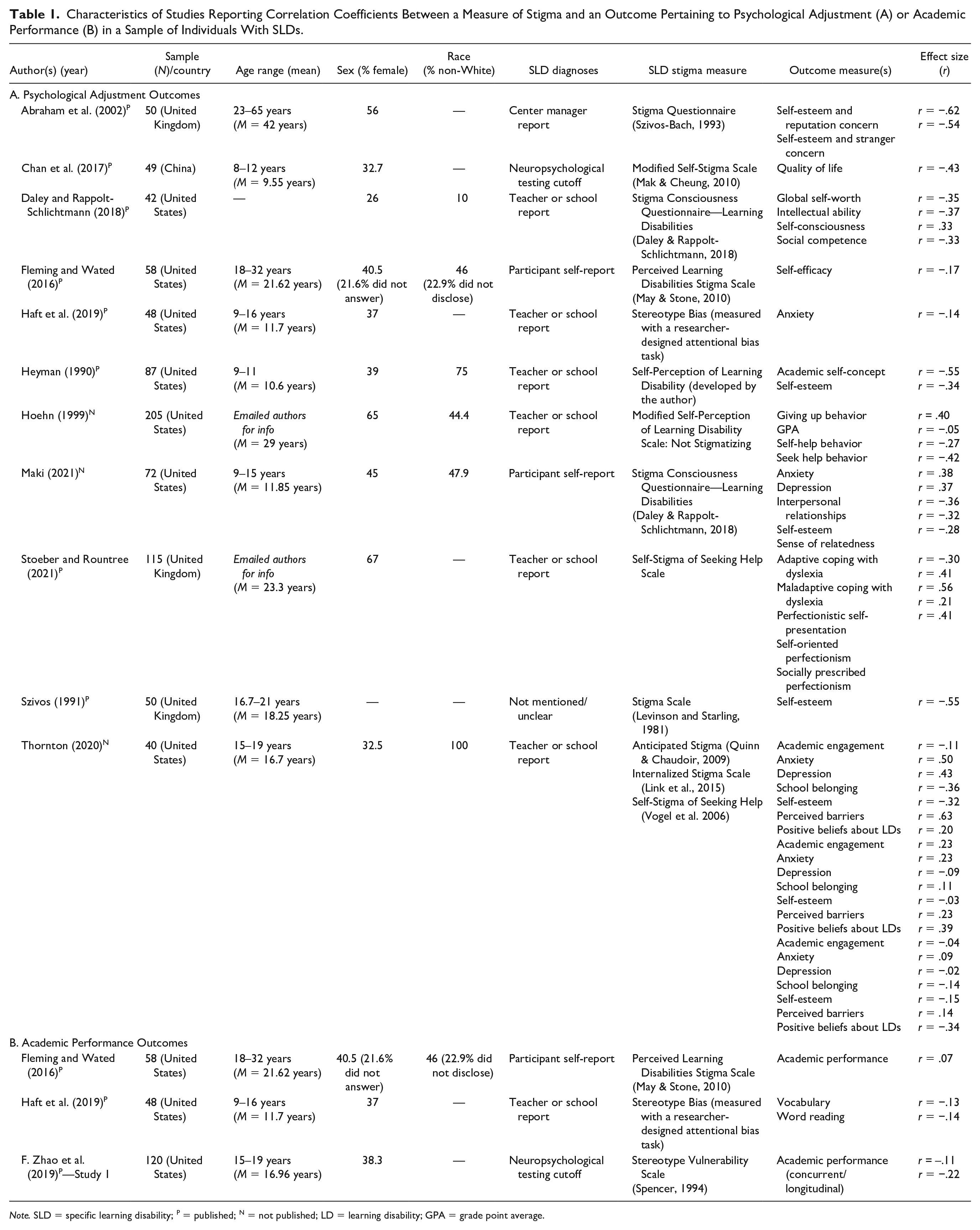
Note. SLD = specific learning disability; P = published; N = not published; LD = learning disability; GPA = grade point average.
Eight studies sampled participants in the childhood or adolescent age range (total of 508 participants; Chan et al., 2017; Daley & Rappolt-Schlichtmann, 2018; Haft et al., 2019; Heyman, 1990; Maki, 2021; Szivos, 1991; Thornton, 2020; F. Zhao et al., 2019), with the remaining four reporting data from adults (total of 428 participants; Abraham et al., 2002; Hoehn, 1999; Stoeber & Rountree, 2021; Szivos, 1991). Sex among the sample of individuals with SLDs was relatively balanced (45–55% female; 428 total participants) in only one of the studies (Maki, 2021)—females were slightly overrepresented in the SLD sample in three of the studies (Abraham et al., 2002; Hoehn, 1999; Stoeber & Rountree, 2021) and were underrepresented in the SLD sample in seven of the studies (Chan et al., 2017; Daley & Rappolt-Schlichtmann, 2018; Haft et al., 2019; Heyman, 1990; Szivos, 1991; Thornton, 2020; F. Zhao et al., 2019). Half of the studies (n = 6) did not report the racial-ethnic composition of their sample of SLD participants. White participants (243 participants out of 504) comprised a majority of the sample in four of the remaining studies (Daley & Rappolt-Schlichtmann, 2018; Fleming & Wated, 2016; Hoehn, 1999; Maki, 2021). These studies varied widely in terms of the stigma measure used—all were self-report scales except for a study that measured participants’ attentional bias toward stimuli associated with stereotypes of SLDs (Haft et al., 2019).
SLD diagnoses were confirmed by center manager, teacher or school report for the majority of the studies (n = 7; Abraham et al., 2002; Daley & Rappolt-Schlichtmann, 2018; Haft et al., 2019; Heyman, 1990; Hoehn, 1999; Stoeber & Rountree, 2021; Thornton, 2020), by participant self-report for two studies (Fleming & Wated, 2016; Maki, 2021), by neuropsychological testing cutoff for one study (F. Zhao et al., 2019), and for one study it was unclear (Szivos, 1991). Three of the 12 studies were unpublished work from dissertations (Hoehn, 1999; Maki, 2021; Thornton, 2020). Only five studies reported information related to socioeconomic status or income of the SLD sample. Chan et al. (2017) reported that for 36.7% of their SLD sample, family monthly income was less than $20,000 HKD (Hong Kong Dollar), but this information was missing for 36.7% of the participants with SLD. Hoehn (1999) reported that household income was $10,000 USD or below for 12.7% of their sample; $10,000 to $30,000 for 31.2%; $30,000 to $50,000 for 24.9%; $50,000 to $70,000% to 12.2%; and over $70,000 for 11.7%. In Maki’s (2021) study, 77% of the participants were high affluence; 20.8% middle affluence; and 2% low affluence. All the participants from Thornton (2020) study came from schools that receive federal funds due to a high concentration of low-income students. Finally, 44.2% of F. Zhao et al.’s (2019) sample had an urban birthplace and 55.8% a village birthplace. The results for the association between SLD stigma and a psychological or academic outcome measure should be interpreted in the context of the overall quality of these studies, which was fair (average score eight). One study had poor quality (Szivos, 1991), seven were fair (Chan et al., 2017; Daley & Rappolt-Schlichtmann, 2018; Haft et al., 2019; Heyman, 1990; Maki, 2021; Stoeber & Rountree, 2021; F. Zhao et al., 2019), and four were good (Abraham et al., 2002; Fleming & Wated, 2016; Hoehn, 1999; Thornton, 2020).
Stereotype threat studies
As shown in Table 2, six studies implemented an experimental manipulation of stereotype threat using a sample of participants with SLDs (Aquino, 2011; Haft et al., 2019; Jodrell, 2010; May & Stone, 2014; J.-Y. Zhao et al., 2008, F. Zhao et al., 2019). A total of 270 participants were included in these six studies. All studies reported a positive effect size, signifying better performance in the low stereotype threat condition as compared with the high stereotype threat condition. Of the eight effect sizes (Hedges’s g) reported in these studies, four (50%) were insignificant, two (25%) were medium effects, and two (25%) were large effects according to Cohen’s (1992) guidelines (see Note 1). Two studies (Aquino, 2011; May & Stone, 2014) investigated stereotype threat effects on academic performance (full scale IQ, GRE), three studies (Jodrell, 2010; J.-Y. Zhao et al., 2008; F. Zhao et al., 2019) examined performance-related psychological constructs as outcomes (academic task self-efficacy, thought suppression and intrusion, academic persistence), and one study examined a cognitive measure (attentional bias to stereotype threat) as the outcome (Haft et al., 2019). These studies included samples spanning from middle childhood to early adulthood and took place in the United States (n = 3; Aquino, 2011; Haft et al., 2019; May & Stone, 2014), United Kingdom (n = 1; Jodrell, 2010), and China (n = 2; J.-Y. Zhao et al., 2008, F. Zhao et al., 2019). Five studies employed a more indirect cue (as classified by Nguyen & Ryan, 2008) to activate stereotype threat, such as by priming the SLD identity (Aquino, 2011; J.-Y. Zhao et al., 2008), priming unique stereotypes of SLD (Haft et al., 2019), or by altering test instructions to indicate diagnosticity of a stereotyped domain (May & Stone, 2014; F. Zhao et al., 2019). The remaining study used a more blatant cue of stating that individuals with SLDs did not perform as well on the test (Jodrell, 2010). All studies were published, except for one study which was a dissertation (Aquino, 2011).
Characteristics of Studies That Included a Stereotype Threat Manipulation With a Sample of Individuals With SLDs.
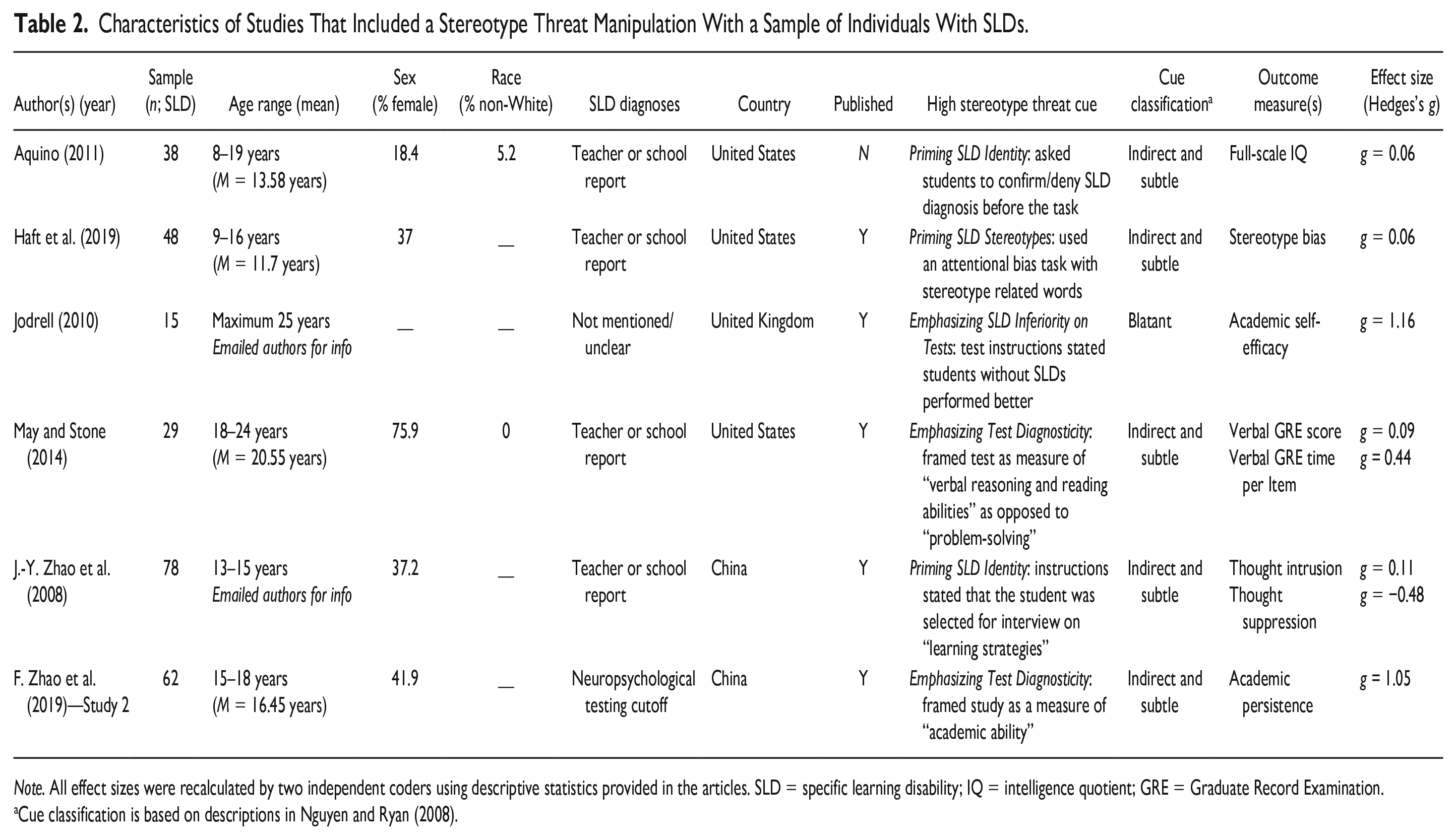
Note. All effect sizes were recalculated by two independent coders using descriptive statistics provided in the articles. SLD = specific learning disability; IQ = intelligence quotient; GRE = Graduate Record Examination.
Cue classification is based on descriptions in Nguyen and Ryan (2008).
Females were underrepresented in four (Aquino, 2011; Haft et al., 2019; J.-Y. Zhao et al., 2008; F. Zhao et al., 2019) of the five studies that had information about the sex of participants; and overrepresented in one study (May & Stone, 2014). A total of 102 female participants were included in these six studies (Jodrell, 2010 did not report the number of females included in their sample). White participants (65 participants out of 67) comprised the vast majority of the sample for the two studies (Aquino, 2011; May & Stone, 2014) that reported the racial-ethnic composition of their sample of SLD participants. SLD diagnoses were confirmed by teacher or school report for the majority of the studies (n = 4; Aquino, 2011; Haft et al., 2019; May & Stone, 2014; J.-Y. Zhao et al., 2008) by neuropsychological testing cutoff by one study (F. Zhao et al., 2019), and for one study it was unclear (Jodrell, 2010). Only one of the six studies was unpublished work from a dissertation (Aquino, 2011). Finally, only F. Zhao et al.’s (2019) study reported information related to socioeconomic status or income: 53.2% of the participants were from an urban area and 46.8% from a rural area. Interpretation of these findings should consider the overall quality of these studies, which was fair. One study was classified as poor (Jodrell, 2010), three as fair (Haft et al., 2019; J.-Y. Zhao et al., 2008; F. Zhao et al., 2019), and only one as excellent (Aquino, 2011).
Study Quality Ratings
The quality ratings of included studies are reported in Table 3. Most of the studies were categorized as either moderate (eight), good (five), or excellent (one) based on the quality assessment; only two were qualified as having poor quality (Jodrell, 2010; Szivos, 1991). The most common reason for point deduction on quality ratings was not reporting a statistical power analysis or indicating the study’s power to detect an effect (15 out of the 16 studies did not report power analysis). The second most common reason was not indicating the proportion of research participants who were asked to participate that actually participated (reported by four studies). The third most common reason was not reporting all the relevant characteristics (age, sex, and race/ethnicity) of the participants included in the study, in particular, race/ethnicity for participants with SLD was reported by only six of the 16 studies included. Overall, studies scored highly on minimizing bias—the majority of results were based on a priori hypotheses, and statistical tests used to assess the main outcomes were appropriate.
Study Quality Assessment Ratings for Included Studies, Based on Adapted Criteria From Downs and Black (1998).
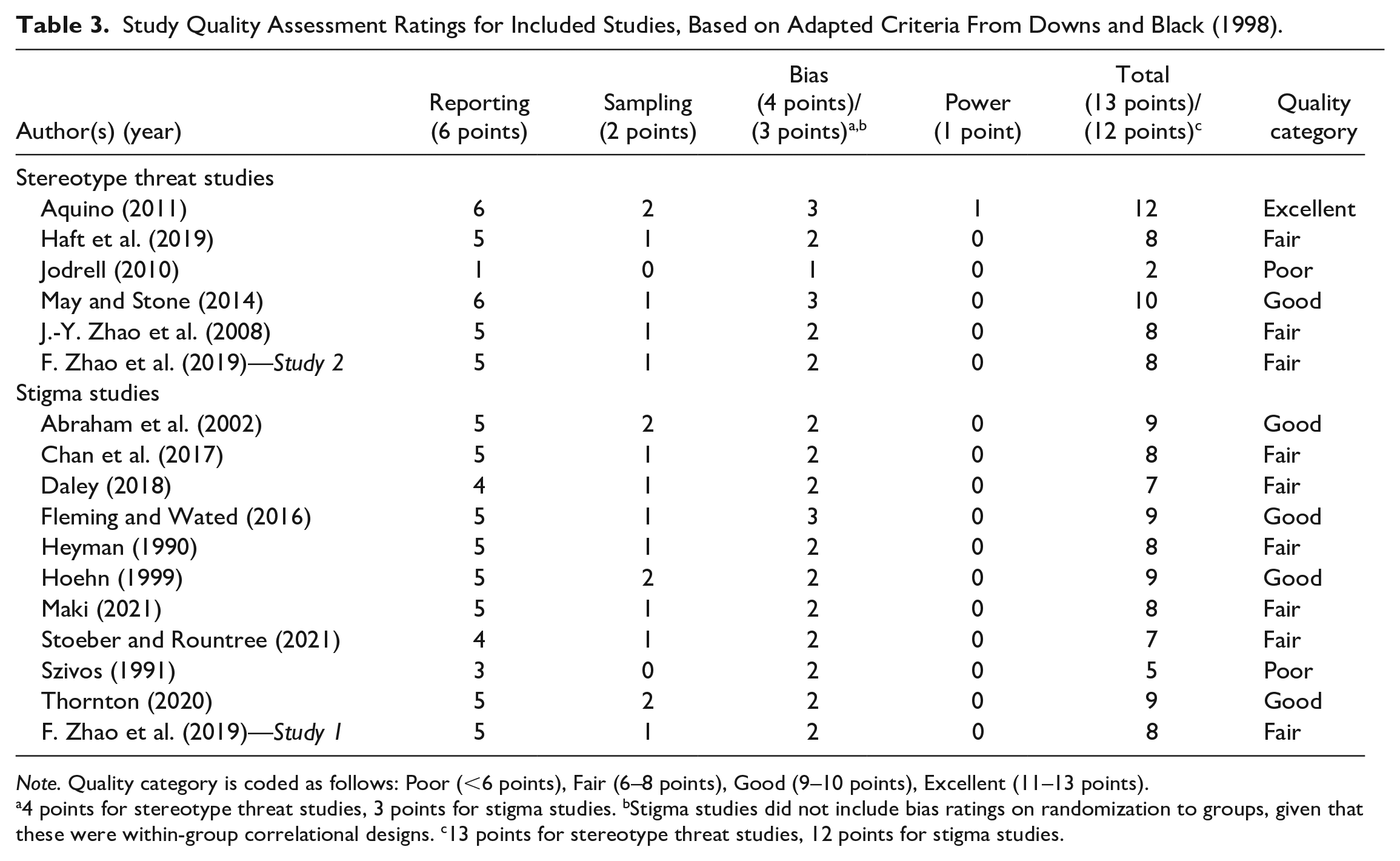
Note. Quality category is coded as follows: Poor (<6 points), Fair (6–8 points), Good (9–10 points), Excellent (11–13 points).
4 points for stereotype threat studies, 3 points for stigma studies. bStigma studies did not include bias ratings on randomization to groups, given that these were within-group correlational designs. c13 points for stereotype threat studies, 12 points for stigma studies.
Meta-Analytic Results
With the limited number of studies and heterogeneity of outcomes examined, only one association (stigma and self-esteem) was powered enough (df > 4) for RVE models to pool effect sizes. This pooled association also included one study reporting an outcome of self-worth, given that the measure of self-worth aligned with measures of self-esteem in assessing one’s positive or negative attitudes and evaluation of oneself (Rosenberg et al., 1995). In pooling the nine effect sizes (correlation coefficients) from six studies of the association between SLD stigma and self-esteem, there was a statistically significant and negative overall association (r = −.39, 95% CI = [−.60, −.24], p = .002). There was moderate heterogeneity in effect sizes (I2 = 42.2%, τ2 = 0.014). All individual studies’ effect sizes were within three standard deviations of the mean effect size, suggesting no substantial evidence for the presence of outliers. The individual and combined effect sizes are displayed in a forest plot in Figure 2. This combined r represents a medium effect according to Cohen’s (1992) guidelines, and reflects that greater endorsement of SLD stigma is associated with less reported self-esteem.
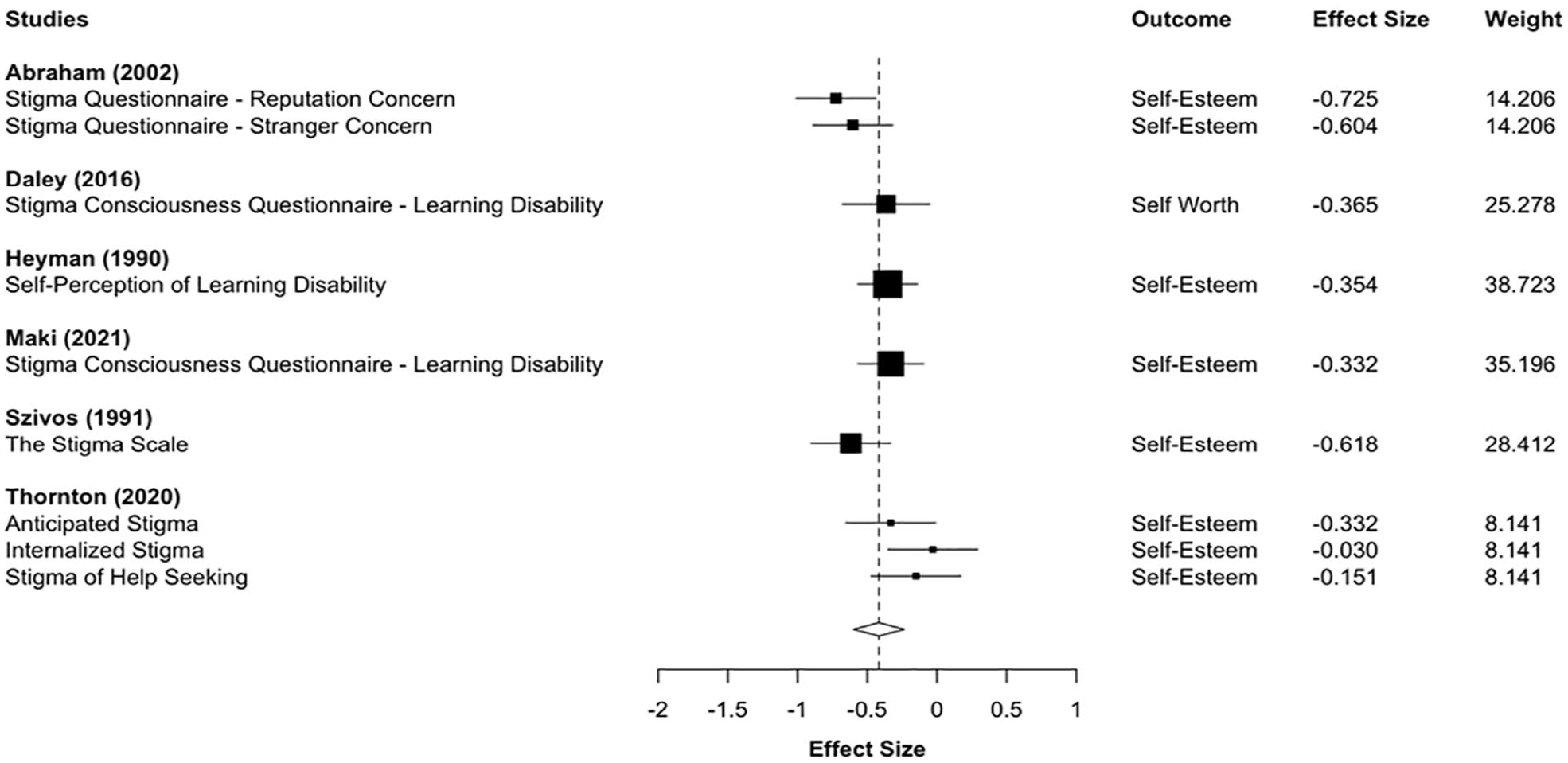
Forest plot displaying individual studies’ weighted effect sizes and the random effects pooled Fisher’s z for the association between SLD stigma and self-esteem.
Discussion
The objective of the review was to examine the association between stigma and stereotype threat and psychological and academic outcomes in individuals with SLDs. Our search yielded 60 independent effect sizes derived from 16 studies for inclusion. A meta-analysis using RVE with nine effect sizes showed that the self-reported stigma of SLD showed a medium and significant correlation with measures of self-esteem (r = −.39, p = .002). Other associations were not powered enough to pool effect sizes across outcomes—however, these studies generally showed that greater SLD stigma was associated with less optimal outcomes including greater anxiety and depression and lower academic performance, adaptive coping, self-efficacy, and quality of life. Conditions of high stereotype threat result in less optimal outcomes for individuals with SLDs overall in half of the stereotype threat studies—in the other half, stereotype threat effects were not significant. Overall, some outcomes examined are likely proximal mechanisms or potential mediators of the more downstream consequences of SLD stigma or stereotype threat, as categorized in prior reviews (Pennington et al., 2016). Contributing factors, significant links with outcomes examined across studies and their theorized roles are displayed in Figure 3.
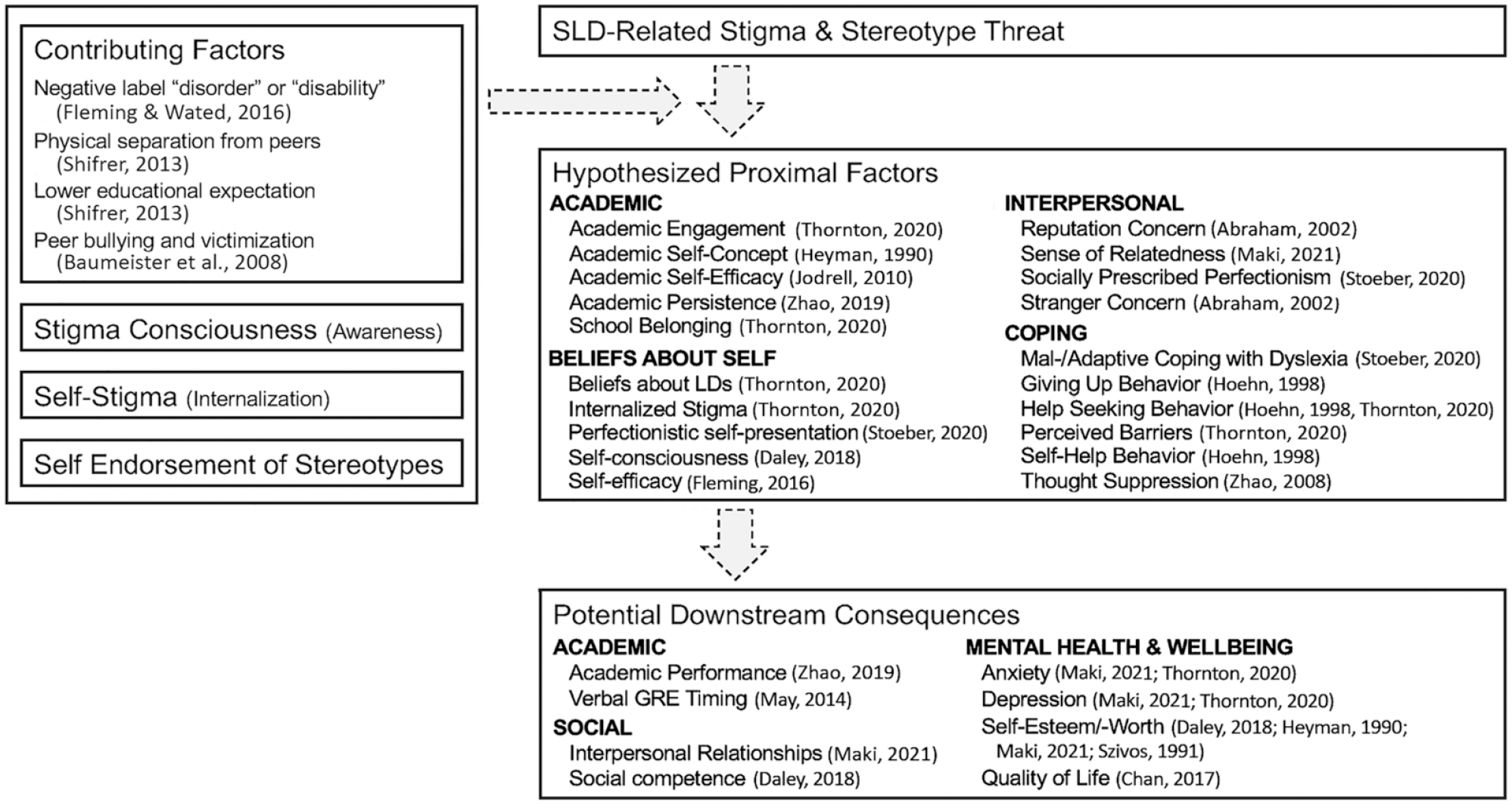
A summary of research on SLD-related stigma and stereotype threat.
SLD Stigma and Psychological Adjustment
The magnitude of the aggregate correlation between the stigma of SLD and self-esteem (r = −.39) is within the range of effect sizes reported from other meta-analyses on psychological consequences of stigma in individuals who are overweight (r = −.35; Emmer et al., 2020), have epilepsy (r = −.20 to −.44; Shi et al., 2017), have HIV (r = −.40; Logie & Gadalla, 2009) or are diagnosed with mental illness (r = −.28 to −.58; Livingston & Boyd, 2010). The 11 studies (52 effect sizes) examining stigma and psychological adjustment were moderately heterogeneous in the magnitude of effect sizes—most (56%) of correlations reported were medium or large effect sizes. The heterogeneity could be due to the large variability in the scales used to measure SLD stigma, as well as the different psychological adjustment outcomes investigated. Moreover, some of the variables examined (such as internalized stigma, help-seeking or giving up behavior, maladaptive coping) are purported mechanisms of how external stigma influences more downstream outcomes (such as anxiety, depression, self-esteem; Fox et al., 2018). Future longitudinal studies are needed to identify mechanisms by which external stigma influences mental health to inform treatment targets—all 11 studies in the present review on stigma and psychological adjustment were cross-sectional. Notably, the number of effect sizes examining the psychological correlates of stigma in individuals with SLDs in the present study (k = 52) is on the lower end of the number reported in the aforementioned meta-analyses on stigma (k range = 37–497 effect sizes). Taken together, these results reflect that in comparison to other stigmatized groups, the stigma of SLD appears to be just as psychologically harmful, but it is less investigated in the literature.
SLD Stigma and Academic Outcomes
Although 11 studies (52 effect sizes) investigated the association between SLD stigma and psychological adjustment, only three studies (five effect sizes) investigated relations between SLD stigma and academic outcomes. One study did not find a significant association between SLD stigma and academic performance (Fleming & Wated, 2016), and two of the three studies found that greater SLD stigma was associated with worse performance on academic measures (Haft et al., 2019; F. Zhao et al., 2019)—these effect sizes were all small in magnitude. Overall, results from this review suggest that SLD stigma has a comparatively more robust effect on psychological outcomes compared with academic outcomes—however, it may also be a result of the very small number of studies (n = 3) investigating this association. The fact that very few studies investigate the relation between SLD stigma and academic outcomes is surprising. Stigma consciousness and internalized stigma show well-documented associations with academic outcomes in other groups experiencing stigma from their race or gender (Brown & Lee, 2005; Mosley & Rosenberg, 2007). Moreover, examining academic performance outcomes in individuals with SLDs seems especially relevant, given that the stigma surrounding SLDs often pertains to deficits in academic performance (Shifrer, 2013).
One possibility is that SLD stigma may influence academic performance outcomes through more proximal mediators, such as through self-esteem and other psychological adjustment variables. These patterns may only be revealed through longitudinal studies. Indeed, in one of the studies in the present meta-analysis, the relation between stigma and later academic performance (r = −.22, p = .008) was comparatively stronger than the relation between stigma and concurrent academic performance (r = −.11, p = .11; F. Zhao et al., 2019). Given the limited number of studies, the present review is unable to conclude that SLD stigma shows robust associations with academic performance outcomes in individuals with SLDs.
SLD Stereotype Threat
The results from our review suggest heterogeneous effect sizes (four insignificant, two medium, two large across six studies) of experimental stereotype threat manipulation on a range of outcomes in individuals with SLDs. The range of effect sizes reported (0.06–1.16) encompasses the average effect sizes from meta-analyses investigating gender-based stereotype threat (d = 0.24; Picho et al., 2013), age-based stereotype threat (d = 0.32; Lamont et al., 2015) and stereotype threat based on immigrant background (d = 0.63; Appel et al., 2015). The studies in the present review reporting the largest effect sizes examined outcomes that were more psychological in nature, such as academic self-efficacy (d = 1.16; Jodrell, 2010) and academic persistence (d = 1.05; F. Zhao et al., 2019). Studies examining more cognitive or academic performance-based outcomes reported significantly smaller or nonexistent stereotype threat effects. Academic self-efficacy and academic persistence both relate to an individual’s performance motivation and have been shown to be mechanisms by which stereotype threat influences exam performance (Pennington et al., 2016). Future research would benefit from measuring these motivation-related variables in combination with academic performance outcomes in individuals with SLDs in the same study to test for mediating relationships.
Another moderator variable that is relevant for studies looking at stereotype threat effects is the activating cue used in the study, which can be blatant (e.g., emphasizing inferiority of individuals with SLD on tests), moderately explicit, or indirect and subtle (e.g., priming SLD identity or stereotype, and emphasizing test diagnosticity; Nguyen & Ryan, 2008). As demonstrated by Nguyen and Ryan’s (2008) meta-analysis, there is a complex pattern of relations between the type of threat-activating cue and the characteristics of the participants in the study (e.g., women and minorities). For minorities, explicit stereotype activation yielded greater effect sizes, while for women, subtle stereotype threat cues resulted in the largest effects (Nguyen & Ryan, 2008). In the present review, only one study (Jodrell, 2010) used a blatant cue classification and the other five studies (Aquino, 2011; Haft et al., 2019; May & Stone, 2014; J.-Y. Zhao et al., 2008; F. Zhao et al., 2019) used an indirect and subtle cue. However, given the small number of studies, we were not able to conduct a moderator analysis in this review. Implicit threat cues—which are more prevalent in the natural environment—might have a stronger effect on performance for individuals with SLD, acting on a subconscious level and directly and negatively affecting performance (Nguyen & Ryan, 2008). Future studies should investigate the impact on performance under the different levels of stereotype activation for individuals with SLD, given that these findings will have implications for the development of stereotype reduction strategies.
Our findings have implications for better understanding the challenges faced by individuals with SLDs in academic or occupational contexts. Specifically, in efforts to close academic achievement gaps between students with and without SLDs, more attention should be devoted to creating environments that do not unintentionally prime stereotype threat. For example, intervention research has shown that self-affirmations, mindfulness training, and providing positive role models from a stereotyped group are all promising methods to reduce stereotype threat (Spencer et al., 2016). However, the results from studies are quite heterogeneous and the possibility of publication bias could not be definitively ruled out—other stereotype threat meta-analyses have found evidence for publication bias in the stereotype threat literature (Flore & Wicherts, 2015; Nguyen & Ryan, 2008). Overall, this review highlights the need for more research on stereotype threat in individuals with SLDs so that results can be replicated, and moderators can be identified and leveraged for interventions.
Study Characteristics
An examination of study characteristics shows that the majority of studies sampled participants with SLDs during adolescence—perhaps because this is a key time for identity formation (Meeus, 2011). Indeed, some authors have argued that because a coherent sense of self does not emerge until adolescence, younger children may not be vulnerable to stereotype threat and stigma (Aronson & Good, 2002). This trend was not borne out in the present review, however—studies including participants in middle childhood still found medium and large effects of SLD stigma on psychological adjustment (Chan et al., 2017; Heyman, 1990; Maki, 2021). For individuals with SLD in particular, stigma and stereotype threat effects might be expected to be stronger in childhood, adolescence, and young adulthood when individuals are embedded in academic contexts and consequently more frequently primed of their SLD identity. Only one study investigated SLD stigma in adults no longer in school (Abraham et al., 2002), and this study found large effects of SLD stigma on self-esteem. Thus, no discernible pattern between age and stigma and stereotype threat effects emerged in the present review, although more studies are needed to conduct formal moderator analyses.
Overall, females were underrepresented and White participants comprised the majority of the samples of the included studies. Although in the past males comprised the majority of SLD diagnoses, current prevalence estimates suggest that SLDs are diagnosed relatively equally by sex (Moll et al., 2014). Data also show that the proportion of students receiving services for SLDs is equal to or higher in non-White groups (Musu-Gillette et al., 2017). Therefore, the underrepresentation of females and members of racial and ethnic minority groups is particularly concerning as these groups are most susceptible to stereotype threat effects (Nguyen & Ryan, 2008). Without ample representation of females and racial and ethnic minorities, results from included studies may be underestimating the detrimental influence of SLD stigma and stereotype threat.
Limitations and Future Directions
There are several limitations to the present review that help to inform future directions. First, the relatively small number of studies included prohibited the use of meta-analysis on all outcomes, as well as moderator or subgroup analyses. Future research should empirically examine the role of moderators in the links between stigma and stereotype threat and outcomes. Other studies have suggested that in-group identification, performance outcome difficulty, social support, and age have all moderated the effects of stigma and stereotype threat (Nguyen & Ryan, 2008; Spencer et al., 2016). Second, studies represented only three geographic regions (United States, United Kingdom, China). Other stereotype threat meta-analyses have found that the effects of stigma and stereotype threat may vary across different countries due to regional differences in the extent to which societal stereotypes are endorsed. Thus, the findings from this review have restricted cross-cultural generalizability (Picho et al., 2013). Third and relatedly, given that samples came from different countries, there may be subtle variations in diagnostic criteria used to identify individuals with SLDs. In addition, within samples of individuals with SLDs, there is likely high heterogeneity in the severity and academic area in which the SLD occurs. The present meta-analyses were unable to account for such heterogeneity, which perhaps could be investigated as a moderator of stigma or stereotype threat in future research. Fourth, given the limited number of studies, we included all of the available studies regardless of their methodological quality which might lower confidence in the results. Future studies should consider including power analysis; reporting the proportion of participants who were asked to participate that actually participated; and including race/ethnicity of their participants which would allow future meta-analysis to consider this variable as a moderator. As highlighted by May and Stone (2014), the effect of race-related stereotype threat effects might be confounded with SLD-related stereotype threat effects.
Conclusion and Implications
Stigma and stereotype threat are two of the most widely investigated phenomena in social psychology. However, few studies investigate their role in the lives of individuals with SLDs—a stigmatized disorder and identity. To understand the current state of the literature and determine areas for future research, the current review examined relationships between stigma and stereotype threat and outcomes in studies focused on individuals with SLDs. Results showed that stigma has an overall medium and significant effect on self-esteem in individuals with SLDs and appears to detrimentally influence other psychological adjustment outcomes. Stereotype threat effects have also been observed with individuals with SLDs, although these associations vary widely across studies and appear to be more robust when considering psychological outcomes. Although the findings are limited by a small number of studies, the results suggest that the lives of individuals with SLDs may be meaningfully affected by the presence of SLD-related stigma and stereotypes. The findings show a crucial need for more research on stigma and stereotype threat in individuals with SLDs overall, especially work that examines potential moderators of their effects. Research in this area can yield useful information that can be leveraged in supporting both the academic skill development and the psychological well-being of individuals with SLDs.
Supplemental Material
sj-docx-1-ldx-10.1177_00222194221087383 – Supplemental material for A Systematic Review of the Consequences of Stigma and Stereotype Threat for Individuals With Specific Learning Disabilities
Supplemental material, sj-docx-1-ldx-10.1177_00222194221087383 for A Systematic Review of the Consequences of Stigma and Stereotype Threat for Individuals With Specific Learning Disabilities by Stephanie L. Haft, Caroline Greiner de Magalhães and Fumiko Hoeft in Journal of Learning Disabilities
Footnotes

Declaration of Conflicting Interests
The author(s) declared no potential conflicts of interest with respect to the research, authorship, and/or publication of this article.
Funding
This research is funded by the Oak Foundation.
Supplemental Material
Supplementary material for this article is available on the Journal of Learning Disabilities website with the online version of this article.
Notes
References
Supplementary Material
Please find the following supplemental material available below.
For Open Access articles published under a Creative Commons License, all supplemental material carries the same license as the article it is associated with.
For non-Open Access articles published, all supplemental material carries a non-exclusive license, and permission requests for re-use of supplemental material or any part of supplemental material shall be sent directly to the copyright owner as specified in the copyright notice associated with the article.
