



Abstract
This study explores the perceived effectiveness of shop stewards and the extent to which these perceptions influence trade union members’ attitudes and involvement. Employing a cross-sectional approach, the study analyses responses from an online survey completed by 170 trade union members in Malta. It reveals significant demographic influences on members’ perceptions of shop stewards’ effectiveness. Key findings include a lower perceived effectiveness among females, younger, more qualified, and higher-status members, and those employed in smaller companies. Crucially, positive perceptions of shop stewards are strongly correlated with increased confidence in and overall satisfaction with the union, and greater satisfaction with the union's representation of the members’ personal interests. These perceptions are significantly related to members’ willingness to engage in union activities, such as attending meetings, participating in industrial action, renewing membership, and encouraging others to join the union. This study highlights the vital role of shop stewards in shaping union dynamics and offers insights for strategies aimed at enhancing union effectiveness and member engagement.
Introduction
Shop stewards are crucial to many countries’ industrial relations systems, through their position ‘at the centre of a complex set of multi-directional triangular relationships involving management, trade unions and workers’ (Murray et al., 2014: 341). They represent workers on the shop floor, address grievances, and defend union members in disciplinary cases. They also advocate for worker rights, resolve collective disputes, negotiate with management on behalf of their members and lead union campaigns within their organisations.
Research has emphasised shop stewards’ challenging intermediary role within changing legal, normative, cultural, technological, business and economic circumstances (e.g., Frederiksen and Hansen, 2022; Houeland and Jordhus-Lier, 2022; Martínez-Íñigo et al., 2020; McBride and Stirling, 2014). They often experience conflicts and extensive responsibilities, leading to significant skill demands and role overload (Pilemalm et al., 2001). They are increasingly required to get involved in technically complex issues and manage industrial relations that are becoming more complicated (Murray et al., 2014). Research also indicates that the experiences, perceptions and behaviours of shop stewards are affected by their demographics (Le Capitaine et al., 2013; Murray et al., 2014). While shop stewards might have little control over many aspects of the environment in which they operate, they need to carve their own role ‘to actively cultivate and promote their own legitimacy’ (Butler and Tregaskis, 2015: 907). Their ability to tap different power resources and act strategically tends to determine their influence in the workplace (Murray et al., 2014).
The challenges outlined above within the context of a declining membership encouraged research into renewed trade union capacity to remain effective in changing circumstances (Murray et al., 2013). In particular, there has been growing interest in the role played by shop stewards in promoting greater worker participation in unions (Waddington, 2015). This study seeks to contribute to such a line of research, by focusing on the trade union members’ perceptions of the effectiveness of shop stewards in Malta.
Malta's labour market comprises around 335,000 active individuals, with an overall employment rate of 80.8%. The employment rate stands at 73.7% for women and 86.7% for men (National Statistics Office, NSO, 2025a). The public sector employs around 53,200 workers, or 18.3% of all the workers in Malta. The majority of employees are engaged in wholesale and retail trade which also includes the repair of motor vehicles and motorcycles (12.2%), administrative and support service activities (11.6%), manufacturing (8.6%), and accommodation and food service activities (8.1%) (NSO, 2025b). The large majority of companies in Malta (92.6%) consist of micro-enterprises with up to 9 employees, employing 32.4% of the workers. Large companies with 250 or more employees employ 26.3% of workers, medium-sized enterprises (50–249 employees) account for 21.2%, while small enterprises (10–49 employees) account for 20.2% (NSO, 2024). In terms of union representation, Malta has about 40 trade unions, the majority of which form part of three main union blocs: The General Workers’ Union (GWU), the Confederation of Malta Trade Unions (CMTU), and the Forum Unions Maltin (For.U.M.). The GWU is by far the largest, representing about 51% of unionised workers, while the CMTU and For.U.M. represent approximately 31% and 15%, respectively. Union membership spans most industries, with higher representation in the public sector and manufacturing (Debono and Fiorini, 2023).
Trade unions in Malta operate within a unique framework shaped by historical and cultural influences. Although following the British model (Debono and Baldacchino, 2019; Zammit et al., 2015), the Maltese context of trade unions presents distinctive characteristics and challenges that warrant a deeper exploration. Understanding these nuances is crucial for appreciating the role and impact of shop stewards in Malta's industrial relations system. In line with the British model, Malta's industrial relations system mainly relies on enterprise-level bargaining, where negotiations on wages and working conditions are conducted at the individual company level rather than through broader sectoral agreements. This structure enhances the centrality of shop stewards, who act as the primary link between union members and management at the workplace. Unlike the more centralised systems seen in other European countries, Maltese shop stewards bear significant responsibility in advocating for workers’ rights and addressing grievances directly at their places of employment.
Despite the historical strength of the trade union movement in Malta, the country is experiencing a declining unionisation rate in line with that observed in many industrialised nations (Debono and Fiorini, 2023). This trend is partly attributed to changing economic conditions, evolving labour markets, the rise of precarious employment, the increasing prevalence of individualistic work cultures, and the erosion of traditional collective identities. The challenges to the strength of trade unions in the context of the enterprise-level bargaining structure in Malta places unique pressures on shop stewards, requiring them to be more adept and resourceful in their roles. The skills and motivations of shop stewards may vary widely, and their ability to represent workers effectively is sometimes questioned by employers, who argue that an increasing number of shop stewards are either motivated by personal grievances or lack the necessary skills for industrial relations (Malta Employers Association, 2015).
Despite their critical importance, very little research has been conducted on the topic of shop stewards in Malta (Debono and Fiorini, 2023). There is hardly any data on their prevalence and demographics, their evolving role, the challenges faced, their training needs, and their relationships with other stakeholders. Such gaps hinder our ability to evaluate the effectiveness of shop stewards. This study aims to start filling the existing research void by exploring the role of shop stewards in influencing the relationship between trade union members and their union in Malta. In particular, the three objectives of the study are to:
Investigate the perceptions of shop stewards among various groups of trade union members, considering factors such as their qualifications, job status, employment sector, company size, gender, and age. Probe whether there is a link between how members perceive their shop stewards and their unions; and Inquire into whether there is a connection between union members’ perceptions of shop stewards and their active involvement in trade unions.
The study thus aims to provide useful insights to both national and international literature into the dynamics of trade unions, particularly in understanding steward-member relationships and perceptions. These insights may assist the development of strategies aimed at enhancing union effectiveness, fostering greater member engagement, and bolstering membership numbers.
Review of literature
This review of literature is divided into three sections. The first investigates shop stewards’ challenging role as intermediaries between management and workers, which influences their perceived effectiveness by union members. The second section addresses the evolving dynamics between shop stewards and their unions, which assists to contextualise current perceptions and attitudes towards shop stewards. The third section focuses on existing research and theories on workers’ perceptions of shop stewards and trade unions.
Shop stewards’ balancing act with management
Shop stewards must balance cooperation with management and independence to serve union members effectively. This balance is difficult to maintain and may lead to considerable frustration (Butler and Tregaskis, 2015). Regular interaction with the nearest managers may result in closer relations and loyalty towards them, despite the formal adversarial nature of their roles (Hjalager et al., 2009).
Shop stewards’ work experience is of key importance in such a balancing act. Hjalager et al. (2009) observed that longer-serving shop stewards of nurses in Denmark developed more affirmative relations with management than their less experienced counterparts. Similarly, Pilemalm et al. (2001: 20) found that younger and less experienced shop stewards in various Swedish economic sectors ‘frequently reported problems related to traditional workplace disputes and an antagonistic relation to the employer’.
While continuous conflict between management and shop stewards is not conducive to organisational effectiveness and employees’ wellbeing, overly close collaborative arrangements may compromise the latter's standing. Involvement of shop stewards in workplace partnerships aimed at assisting employees, can inadvertently lead to new tensions or conflicts that may undermine the union (Geary and Roche, 2002). For instance, Rittau and Dundon (2010) warn of the risk that activists, by becoming too integrated with management, might favour management interests over employees’ job security and salaries. Furthermore, it has been extensively documented that human resource practices, such as direct communication with employees and participative decision-making strategies, may weaken the position of shop stewards and their unions by diminishing the perceived need for unionisation and involvement in union activities (Fiorito, 2001; Valizade, 2014; Waddington, 2014). However, Rittau and Dundon (2010) found that Irish shop stewards in partnership arrangements viewed them positively, noting enhanced information sharing, communication, and consultation with management. Despite this, the authors noted that partnerships effectively addressed minor issues, while contentious matters required collective negotiation. They emphasised the need for shop stewards to represent workers independently from management partnerships, highlighting the complexity and occasional antagonism in their relationship with management.
At the heart of the shop steward's role is the question of power in the workplace. Navigating between management and workers means constantly managing asymmetries in authority and influence. Power dynamics shape how cooperation, conflict, and representation play out-making them central to understanding industrial relations. This also frames the evolving relationship between shop stewards and their unions, where power is again negotiated in new ways.
The changing relationship between shop stewards and their union
Shop stewards and full-time trade union officials occupy very different social spaces, which may lead to conflicts over ideas and power. Unlike the latter group, shop stewards are normally unpaid for their union services and are concerned with their specific work organisation, rather than having a broader perspective. Pilemalm et al. (2001) argue that as unions face declining membership and power, the role of the shop steward has become more crucial, with increasing responsibilities at the workplace level to maintain union visibility, effectiveness, and member engagement. For example, Peetz et al. (2002) state that union renewal in Australia relies heavily on the development of activism amongst workplace delegates. While this approach reflects aspects of Blyton and Turnbull's (2004) union organising model, it also highlights the need for coherence and communication between union levels to prevent stewards from being isolated or misaligned with broader union goals.
Research in several European countries revealed that shop stewards might not be sufficiently supported by their unions. Le Capitaine et al. (2013) suggested that female delegates might experience more difficulties than male delegates in such situations, as they often depend more on union support for empowerment. These difficulties were not directly attributed to the gender composition of the occupation or industry, but rather to broader structural and cultural factors within unions and the labour market. Pilemalm et al. (2001) reported that Swedish shop stewards often found their roles demanding and time-consuming, and criticised the union structure as rigid or insufficiently equipped. This tended to lead to a sense of inadequacy among the stewards, a sentiment that was often noted by union members, resulting in their diminished enthusiasm for union involvement (Pilemalm et al., 2001). Similarly, Waddington (2006) argued that the weakening support that shop stewards receive from the union contributes to membership decline. On the other hand, research in Spain showed that shop stewards’ loyalty and discretionary behaviours supportive of their union predicted members’ loyalty to the union (Martínez-Íñigo et al., 2020).
The internet has the potential of forging significant links between shop stewards and unions and also provides the potential for mutual support and solidarity (McBride and Stirling, 2014), although the extent of its use across trade unions in Europe is unknown. However, research also highlights that social media, while offering new channels for connection and support, can disrupt union strategies and destabilise shop steward roles by exposing internal divisions, amplifying dissent, and undermining leadership authority and negotiation coherence (Hau, 2022; Hau and Hansen, 2025; Panagiotopoulos and Barnett, 2015).
Darlington and Upchurch (2012) charted Britain's shift from a strong, independent grassroots shop stewardship to a phase of reduced steward influence and autonomy, corresponding with a decline in grassroots organisational strength. However, Murray et al. (2014: 342) argued that trade union decline, which decreased the central union presence at places of work, resulted in shop stewards’ ‘loss of external references and a degree of autonomy in the new opportunities to redefine themselves’. Indeed, international research has shown new roles that some shop stewards are taking up, such as those of coordinators of employee-driven innovation (Rocha, 2010) and informal contributors to the green transition (Houeland and Jordhus-Lier, 2022).
Workers’ perceptions of trade unions and shop stewards’ effectiveness
Workers in Malta often cite the absence of trade union presence at the workplace as a primary reason for not joining a union (Debono, 2015). Along the same lines, research among young workers across Europe revealed that the primary reason for not joining a trade union was simply because they had not been asked (Hodder and Vandaele, 2019). On the other hand, an analysis of Dutch workers indicated that those who had been approached by a union or who had attended a union meeting were more likely to join (Visser, 2002).
Turner and D’Art (2012) found that the presence of a union in the workplace greatly enhanced attitudes towards unions. However, non-members were less inclined to join a union if they perceived it to be ineffective (Waddington, 2014). Conversely, when unions were seen as effective, both non-members’ interest in joining and members’ engagement and satisfaction with their representation rose (Bryson, 2003, 2006 in Bryson and Freeman, 2013; Buttigieg et al., 2014; Pilemalm et al., 2001). As several studies suggest, social media can also significantly shape unions’ reputations – either enhancing credibility and engagement when used strategically, or undermining leadership and cohesion when it exposes internal divisions, member dissatisfaction, or ineffective communication (Hau, 2022; Hau and Hansen, 2025; Panagiotopoulos and Barnett, 2015).
Some studies have focused specifically on the link between the union leadership styles and behaviours – including those of union representatives in the workplace – and members’ attitudes towards unions. Quantitative research conducted in various countries has linked transformational and servant leadership to perceived union effectiveness and union commitment (Fortin-Bergeron et al., 2013; Kaminski, 2023). Leaders’ behaviours that demonstrate responsiveness to members’ needs, adherence to procedural justice, and loyalty to the union have also been associated with positive members’ attitudes, such as loyalty and commitment (Fortin-Bergeron et al., 2013; Martínez-Íñigo et al., 2020; Plimmer and Blumenfeld, 2012).
Waddington (2014) discovered that a majority of members in most of the studied unions across 12 European countries expressed dissatisfaction with their representation. Many members remained dissatisfied even when having workplace representatives, due to perceptions of insufficient numbers of representatives or inadequate representation of their interests (Waddington, 2014). Previous research by Waddington (2006) identified key dissatisfaction sources among union members, including poor member-representative contact, scant union information, minimal problem assistance, limited decision influence, and inadequate pay and conditions improvements. On their part, Daniels and Mcllroy (2009) highlighted the challenge of managing the negative perceptions held by many members and non-members that unions do not make a significant difference at work. One should point out that low employee support undermines the capacity of shop stewards to negotiate effectively with management (Ilsøe, 2012).
Despite the highlighted negative perceptions and experiences, employees may still see benefits in union membership, even when representatives lack the resources and skills to address grievances (Dlamini, 2018). External factors may play an important role in members’ valuation of collective representation. For example, recession effects in the United Kingdom like stagnant salaries and restricted opportunities for paid overtime heightened employee inclination towards collective expression (Valizade, 2014). Similarly, a study conducted in Taiwan showed a significant increase in support for more robust unions during the difficult economic period from 2000 to 2005 (Chang and Chang, 2010).
The current study investigates the relationship between attitudes towards shop stewards and various demographics of trade union members, namely qualifications, job status, employment sector, company size, gender, and age. Many of these variables have not been adequately researched. Workers with lower education levels and in lower-status jobs are more inclined to seek trade union representation (Bryson and Freeman, 2013; Turner and D’Art, 2012). However, research on how union members’ academic qualifications or job status affect their views of shop stewards is limited. Likewise, research into the perceptions of shop stewards within organisations of different sizes is scarce. It is speculated that in larger organisations (with 250 or more workers) where shop steward roles are clearly outlined, their influence on union members could be more favourable. Conversely, shop stewards in smaller entities might face unclear interactions with management, leading to negative perceptions among union members. Quantitative studies comparing public and private sector views on shop stewards are absent, but some qualitative evidence suggests more favourable opinions in the public sector due to enhanced union stability and representation (Waddington, 2006).
The influence of trade union members’ gender and age on their attitudes towards shop stewards, which has been researched more thoroughly than the other demographics of interest in this study, will be investigated in turn. Working women often possess a greater awareness of the benefits unions offer compared to their male counterparts, due to their heightened workplace vulnerability and the recognition that unions can help combat gender-based discrimination (Givan and Hipp, 2012). However, in Waddington's (2014) European research, women were particularly discontented with their union representation. This study corroborates an earlier one by the same author which found female union members in the United Kingdom to be dissatisfied with the low level of contact and communication with union representatives (Waddington, 2006). Similar results indicating a gendered alienation from trade unions have also been replicated in Malta, and are apparent among both unionised and non-unionised working women (Debono, 2019). The rise of women in the labour market and their increased unionisation have not led to equal representation in top union positions, potentially undermining union democracy and equality (Amini et al., 2018; Le Capitaine et al., 2013; Waddington, 2014). The under-representation of women in senior union leadership positions has been attributed to factors such as masculinist union cultures and traditional gender stereotypes, gendered job segregation and family responsibilities, lack of support, limited nominations, and experiences of victimisation (Amini et al., 2018; Le Capitaine et al., 2013; Matjie, 2024; Santos et al., 2020). Although recent data on the prevalence of women shop stewards is lacking, it is likely that their traditional underrepresentation persists due to the enduring influence of these structural and cultural barriers. The lack of gender parity in leadership roles leads to concerns about the adequate representation of women's interests by male leaders. Indeed, when union leadership remains male-dominated, there is a risk that unions may inadvertently perpetuate workplace discrimination, both through their actions and the attitudes of their leaders (Beirne and Wilson, 2016). When compared to their male counterparts, women union members may ‘prioritize social over economic interests and affective over instrumental relationships’ (Cunnison and Stageman, 1993 in Waddington, 2015: 213). Due to their gendered roles within their families, women may seek union support to improve their work-life balance, though they might not necessarily receive the assistance they require (Tomlinson, 2005). When compared to their male counterparts, women may rely more on support from unions, including shop stewards, if they have a problem at work (Waddington, 2015). This highlights the significance of having shop stewards who are attuned to the challenges faced by female workers. Women's attitudes towards shop stewards may be more positive when they perceive union representatives as sources of meaningful support, capable of addressing issues that are often unique to their gender.
The challenge of enticing young individuals to join trade unions has become apparent in many Western countries. Turner and D’Art (2012) highlighted the varying attitudes of younger workers towards unions, ranging from indifference to outright hostility. Researchers have proposed different reasons for this rift, many of which relate to trade union representation at places of work. Waddington and Kerr (2002) found that one out of every three young UK non-union members who had not been invited to join a union, worked in unionised workplaces, suggesting shop stewards may not be effectively networking and recruiting. Similar findings were reported in Portugal, where lack of contact with trade union representatives together with insufficient trade union knowledge were cited as obstacles to young workers’ unionisation (Kovács et al., 2017). The traditional stereotype of shop stewards in the United Kingdom often depicts them as white, middle-aged men working in blue-collar jobs (Greene et al., 2021). Research among young workers similarly suggests that they often viewed unions as predominantly consisting of middle-aged men who are out of touch with their members (Waddington and Kerr, 2002). This common view makes young people hesitant to join trade unions, as they feel that union representatives are too different from them to understand their needs. A study across Europe found that passive young union members were likelier to leave, highlighting the importance of ongoing engagement and organisation for retaining membership (Hodder and Vandaele, 2019). It is concerning that young members often showed reluctance to actively engage in union activities (Waddington, 2015). ‘They wish to benefit from union membership without necessarily engaging directly in union activities’ (Waddington, 2015: 216). But such reluctance to get involved might also be due to the previously-mentioned negative image of unionism which seems to continue influencing young workers’ attitudes even after they become unionised. Indeed, a study identified that negative perceptions significantly hindered the commitment of young public service union workers in Canada, primarily due to scarce interaction with union representatives and a felt disconnect from the union's messages, values, and culture (Hennebert et al., 2021).
This literature review provides an overview of the context in which shop stewards operate and more specifically, the way workers and trade union members perceive them and their unions. The current study focuses on shedding more light on the relationship between shop stewards and trade union members within the Maltese context. The following three hypotheses were formulated taking into consideration the review of literature:
Hypothesis 1: Shop stewards are perceived as less effective by female and younger trade union members, members with higher qualifications and in higher-status jobs, members working in the private sector and in smaller companies.
Hypothesis 2: Trade union members who perceive shop stewards as more effective have more positive attitudes towards their union.
Hypothesis 3: Trade union members who perceive shop stewards as more effective are more likely to be actively involved in their union.
Methodology
Research design, research instrument and data gathering procedure
A survey-based cross-sectional approach was devised to address the above hypotheses (Bell et al., 2022). Such design enabled the provision of a snapshot of the attitudes and behaviours of a sample of trade union members in relation to their shop stewards and their unions. It allowed the identification of statistical associations between the variables of interest in the study.
Data was collected via an online survey on Google Forms, mainly featuring close-ended questions. The survey was piloted among union members, whose feedback refined the final version. Participants provided information on their demographics, shop stewards’ effectiveness, attitudes towards their union, and active union involvement.
The effectiveness of shop stewards was assessed by amalgamating the following three items, each measured on a three-pointed scale: ‘Do the shop stewards at your place of work provide a good link between your union and workers?’; ‘Do the shop stewards at your place of work provide a good link between workers and management?’; and, ‘Do the shop stewards at your place of work protect the interests of workers rather than those of management?’. These items were adapted from a Maltese study by Zammit and Rizzo (2003).
Attitudes towards trade unions were investigated through three single-item variables, namely: ‘How much confidence do you have in your trade union?’; ‘Are you satisfied with the work done by your trade union in general?’; and ‘Are you satisfied with how your trade union represents your own interests?’. Each variable was measured on a five-pointed scale.
Active trade union involvement was measured through five single-item variables, namely: ‘Do you attend trade union meetings?’; ‘In general, would you be willing to take part in industrial action if asked by your union?’; ‘Would you be willing to get more involved with union?’; ‘Do you encourage fellow workers to join your union?’; and, ‘Do you intend to renew your union membership?’. Each variable was measured on a three-pointed scale.
After obtaining ethical approval from the University of Malta, a two-stage data gathering process was carried out between June and December 2022. Initially, data was collected through an online survey distributed via trade unions, but this approach yielded an insufficient number of responses (78). To address this limitation and ensure a larger sample, a second data-gathering mechanism was employed, promoting the survey on social media platforms (Facebook and LinkedIn), which resulted in 126 additional responses. This brought the total to 204 responses, with 170 usable responses after data cleaning. To validate the reliability and consistency of the data collected through these two different mechanisms, statistical analyses were conducted, including Independent Sample t-Tests and Mann-Whitney U Tests (Harrison et al., 2020). These analyses revealed no statistically significant differences between the responses obtained through the trade union distribution and those gathered via social media platforms, indicating that the two sets of data were statistically similar. This finding supports earlier research suggesting that, even when different online recruitment strategies are used, consistent questionnaire design tends to yield comparable statistical results (e.g., Bartneck et al., 2015; Jaeger and Cardello, 2022).
Sample
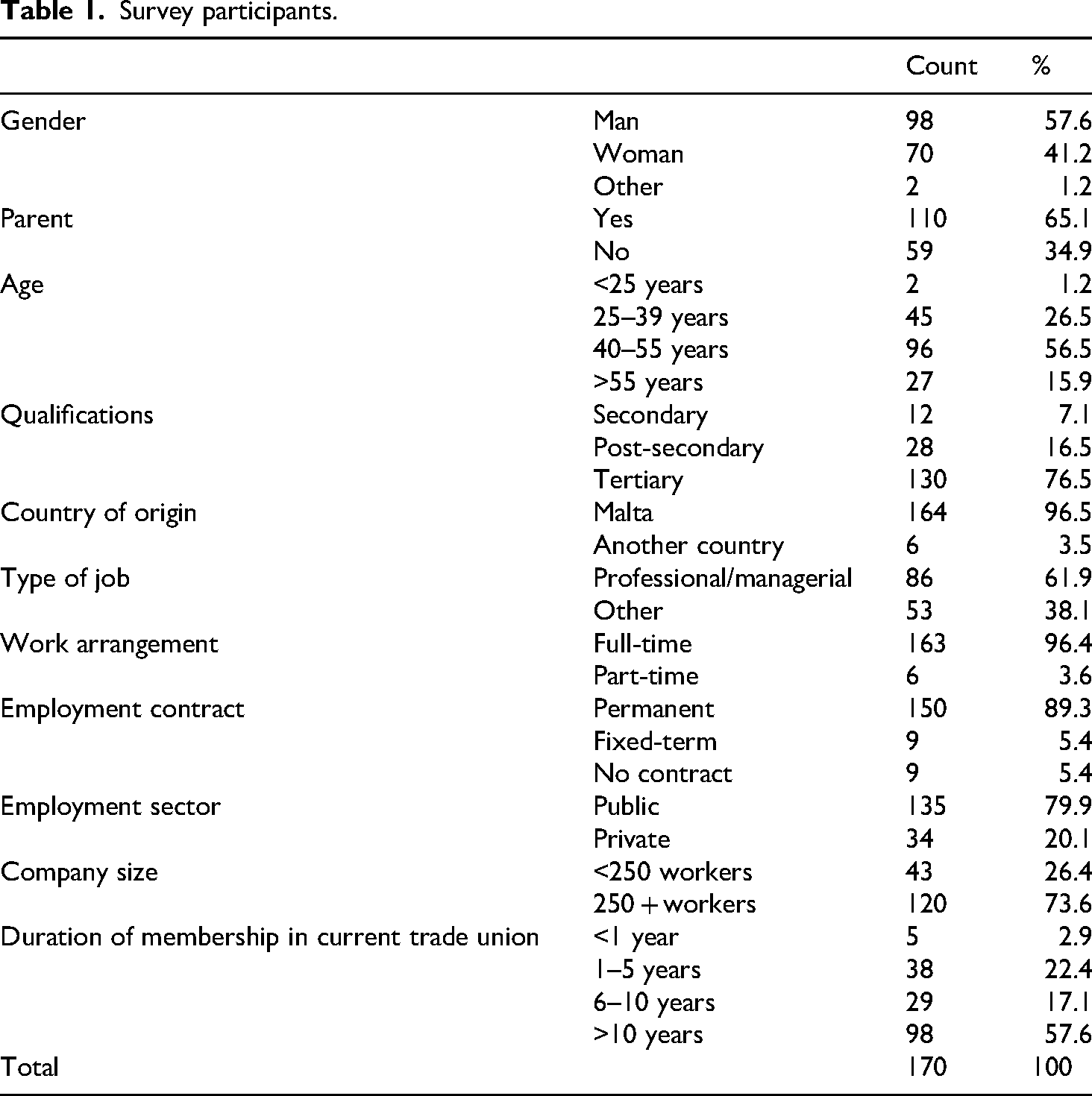
Table 1 illustrates some demographic details of the sample. The largest proportion of respondents were men (57.6%), while 41.2% were women and 1.2% other. Most respondents were parents (65.1%). The majority were aged between 40–55 years (56.5%), achieved tertiary qualifications (76.5%) and had professional or managerial jobs (61.9%). The country of origin of nearly all respondents was Malta (96.5%). 96.4% of the respondents worked full-time and 89.3% had a permanent contract. In total, 79.9% of the respondents worked in the public sector and 73.6% worked in an organisation that employed over 250 workers. The majority of respondents were members of their current trade union for over 10 years (57.6%), while only a small proportion were members for less than one year (2.9%).
Survey participants.
Results
This section presents the main results of the relationship between perceived effectiveness of shop stewards and trade union members’ demographics, attitudes, and active involvement.
Perception of shop stewards’ effectiveness by trade union members’ demographics
Table 2 shows the results of Independent Sample t-Tests examining the relationship between perceived shop stewards’ effectiveness and trade union members’ demographics.
Independent sample t-tests of perception of shop stewards’ effectiveness and demographics.
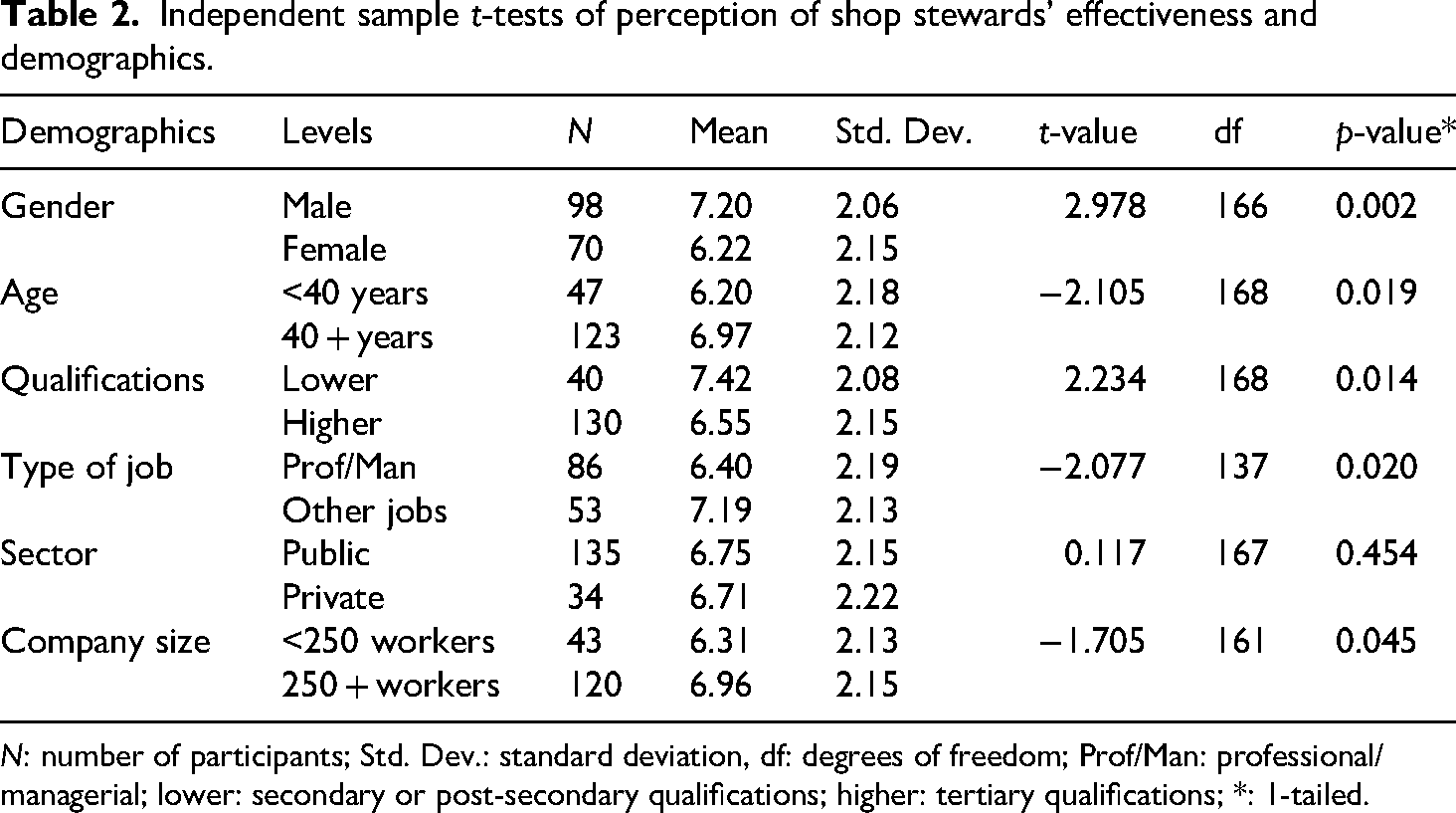
N: number of participants; Std. Dev.: standard deviation, df: degrees of freedom; Prof/Man: professional/managerial; lower: secondary or post-secondary qualifications; higher: tertiary qualifications; *: 1-tailed.
Shop stewards were perceived as significantly more effective by male (M = 7.20, SD = 2.06) than female participants (M = 6.22, SD = 2.15); t(166) = 2.978, p < 0.001. Participants who were younger than 40 years had a significantly lower mean score (6.20) than those who were 40 years or older (6.97) in terms of perceived shop stewards’ effectiveness; t(168) = −2.105, p < 0.05. Participants with lower qualifications had significantly better perceptions of shop stewards’ effectiveness (7.42) than participants with higher qualifications (6.55); t(168) = 2.234, p < 0.05. In line with this finding, participants in professional or managerial jobs had significantly worse perceptions of shop stewards’ effectiveness (6.40) than their peers in other jobs (7.19); t(137) = −2.077, p < 0.05. Trade union members working in companies with 250 or more workers had significantly better perceptions of shop stewards’ effectiveness (6.96) than their peers working in smaller companies (6.31); t(161) = −1.705, p < 0.05. On the other hand, sector of employment was not significantly related to perceptions of shop steward effectiveness.
As a second step in the analysis of the relationship between perceived shop stewards’ effectiveness and trade union members’ demographics, Mann-Whitney Tests were conducted to examine any demographic differences in the three individual components of the variable shop stewards’ effectiveness (See Table 3). Gender and age were significantly related to all three components of stewards’ effectiveness. However, there were only significant differences between members holding different qualifications with regards to: the link between trade union and workers (U = 1975.5, N1 = 40, N2 = 120, p ≤ 0.05, one-tailed); and the link between workers and management (U = 1862.5, N1 = 40, N2 = 121, p = 0.01, one-tailed). Similarly, participants in professional or managerial jobs had significantly worse perceptions of shop stewards’ link between trade unions and workers (U = 1639.0, N1 = 82, N2 = 51, p ≤ 0.05, one-tailed) and between workers and management (U = 1610.5, N1 = 82, N2 = 50, p ≤ 0.05, one-tailed). On the other hand, members working in companies with 250 or more workers had significantly better perceptions of the link between workers and management (U = 1849.0, N1 = 40, N2 = 115, p ≤ 0.05, one-tailed) and protect interests of workers not management (U = 1946.0, N1 = 42, N2 = 116, p ≤ 0.05, one-tailed). Sector of employer was not significantly related to any of the three components of perceived shop stewards’ effectiveness.
Mann-Whitney U test of the three components of shop stewards’ effectiveness and demographics.
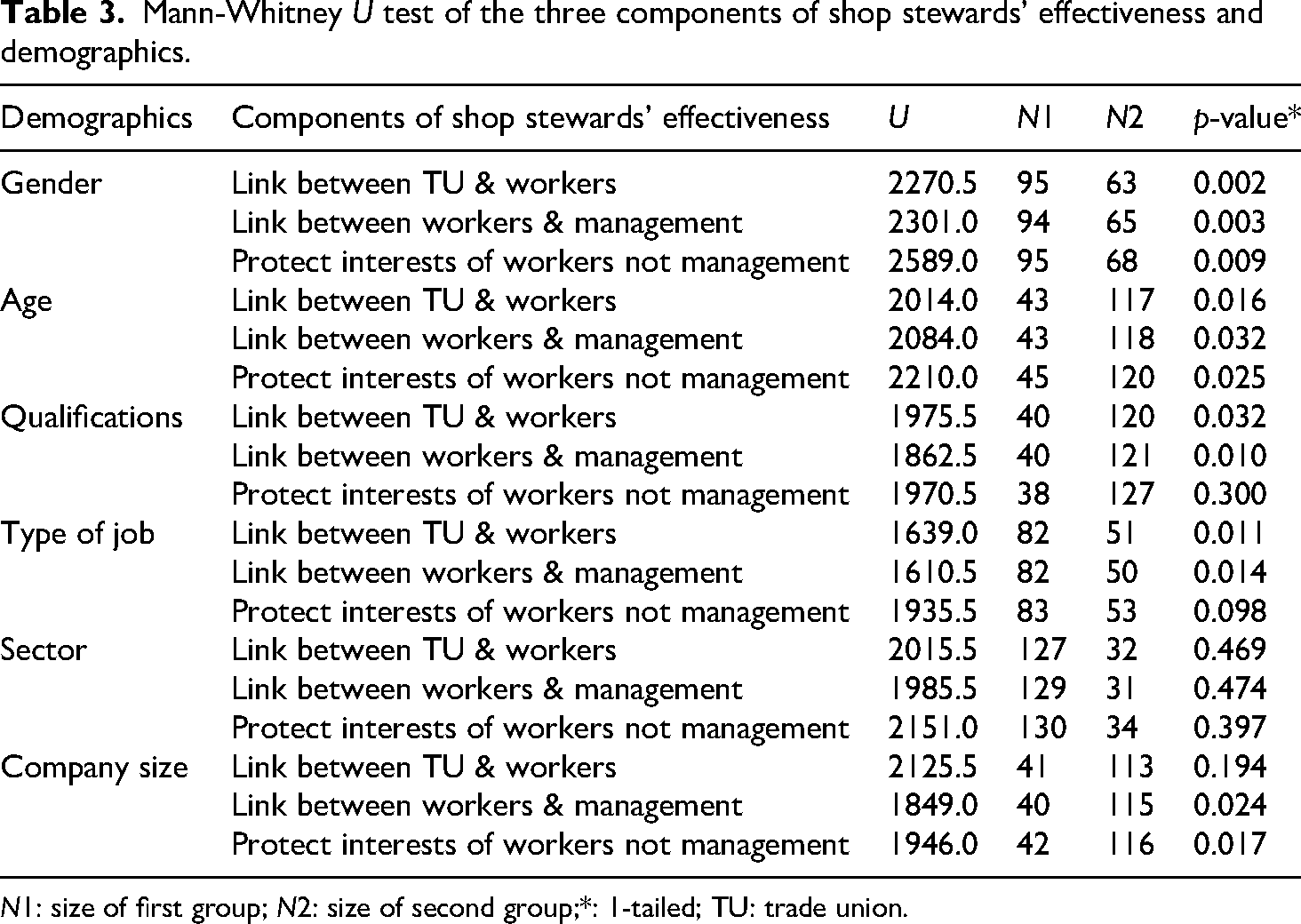
N1: size of first group; N2: size of second group;*: 1-tailed; TU: trade union.
Perceived shop stewards’ effectiveness and attitudes towards one's trade union
Table 4 presents the Spearman's rho correlation coefficients between the following four variables: Perceived shop stewards’ effectiveness; confidence in one's trade union; general satisfaction with work done by one's trade union; and satisfaction with trade union's representation of personal interests. Significant positive correlations emerged between perceived shop stewards’ effectiveness and the other three studied variables, namely with: confidence in one's trade union, rs = 0.491, N = 170, p < 0.001, one-tailed; general satisfaction with work done by one's trade union, rs = 0.463, N = 170, p < 0.001, one-tailed; and satisfaction with trade union's representation of personal interests, rs = 0.500, N = 170, p < 0.001, one-tailed.
Spearman's rho correlation coefficients of perceived shop stewards’ effectiveness, confidence in one's trade union, general satisfaction with work done by one's trade union, and satisfaction with trade union's representation of personal interests (N = 170).
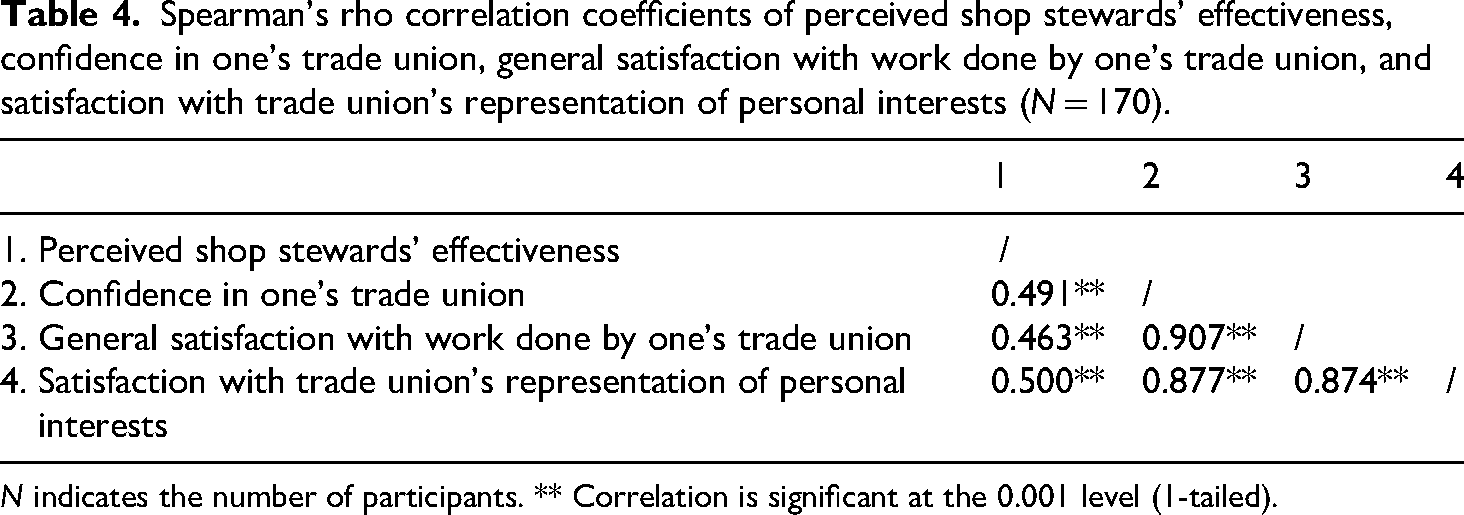
N indicates the number of participants. ** Correlation is significant at the 0.001 level (1-tailed).
Perceived shop stewards’ effectiveness and trade union members’ active involvement in trade union
Kruskal-Wallis tests were carried out to examine the relationship between perceived shop stewards’ effectiveness and members’ active involvement in their trade union (see Table 5). Respondents who had a higher opinion of shop stewards’ effectiveness were significantly more likely to be willing to take part in industrial action than those who had a lower opinion; H (1, N = 167) = 5.782, p < .05. Participants who scored lower on perceived shop stewards’ effectiveness were the most likely to wish to be less involved with their trade unions; H (2, N = 170) = 14.824, p = .001. Besides, participants with a positive perception of shop stewards’ effectiveness were significantly more likely to attend trade union meetings: H (2, N = 158) = 25.535, p < .001. Trade union members with a more positive perception of shop stewards’ effectiveness were also more likely to intend to renew their trade union membership: H (2, N = 170) = 31.802, p < .001, and to encourage fellow workers to join their trade union: H (2, N = 162) = 20.342, p < .001.
Kruskal–Wallace tests of perceived shop stewards’ effectiveness and members’ active involvement in their trade union.
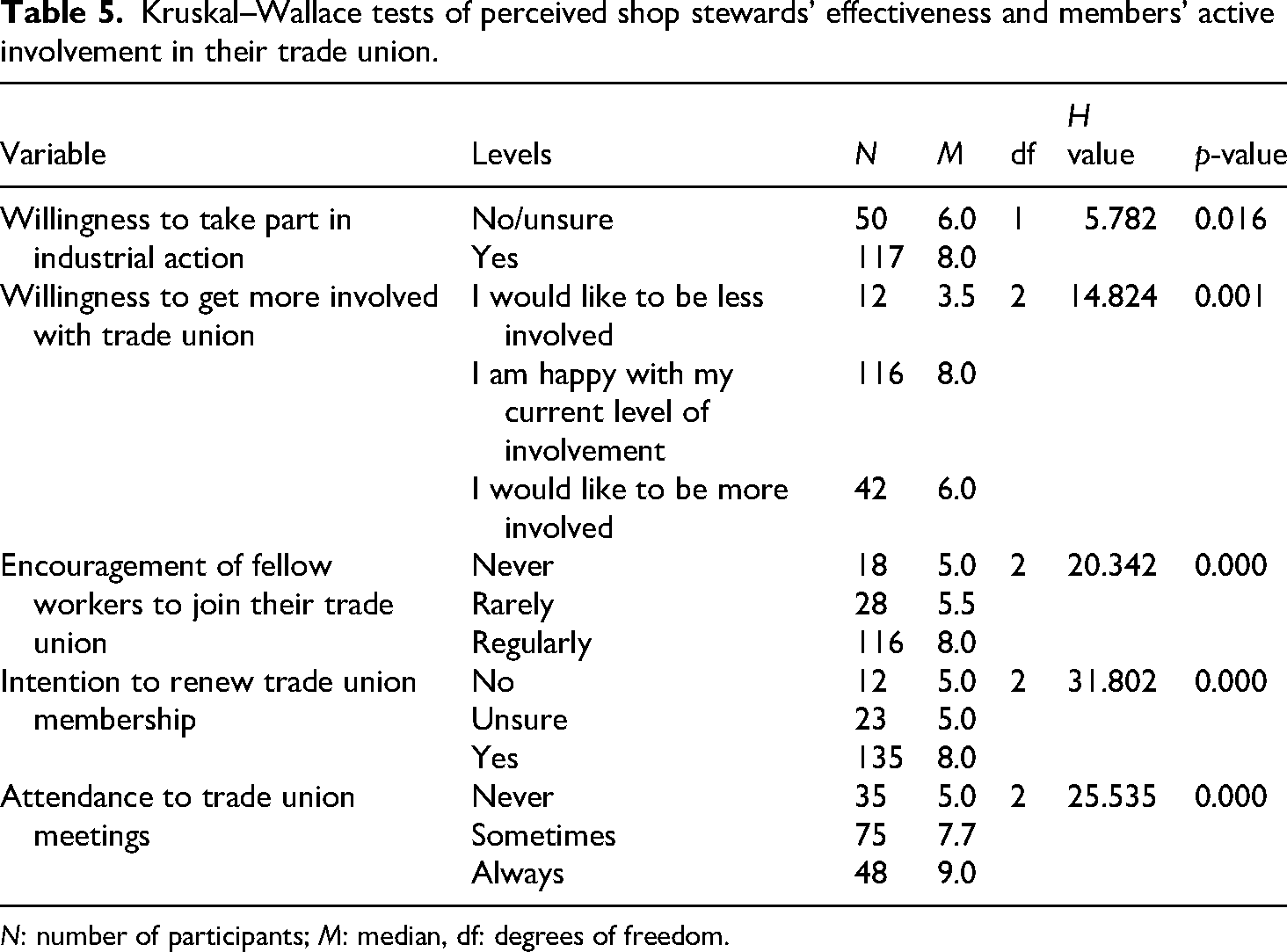
N: number of participants; M: median, df: degrees of freedom.
Discussion
In line with findings from international literature (Murray et al., 2014; Pilemalm et al., 2001), the results from this study suggest that shop stewards may play a vital role in the industrial relations system within the sampled Maltese context. Shop stewards are an essential link between trade union members, their union, and their management. This discussion first examines the relationship between perceptions of shop stewards’ effectiveness and trade union members’ demographics. Then it analyses the relation between such perceptions and attitudes towards and active involvement in their unions. Finally, the discussion concludes by highlighting the study's relevance within a broader international context.
Perceptions of shop stewards’ effectiveness and trade union members’ demographics
This study generally supports the first hypothesis, namely that the way trade union members perceive their shop stewards is significantly associated with the members’ demographics. Indeed, shop stewards are viewed as less effective by female and younger trade union members, members with higher qualifications and in higher-status jobs, and members working in smaller companies. Perceived ineffectiveness or lack of representation by shop stewards for certain groups might not only negatively affect current union members but might also discourage non-members from joining unions. These patterns may reflect underlying power imbalances, where some groups feel less heard or represented in workplace structures. These findings echo Murray et al. (2013), who highlighted the significant disconnect between representatives’ backgrounds and those of potential members.
Based on the authors’ personal observations and experiences, shop stewards in Malta tend to be male, reflecting the traditional British stereotype on which the Maltese industrial relations system is based (Greene et al., 2021). It is possible that stewards primarily advocate for the interests of male workers, or at least give that impression. In support of this premise, male trade union members report considerably better perceptions of their shop stewards than their female counterparts. This finding reflects international literature (Waddington, 2006, 2014) showing that despite their growing numbers, female union members often feel underrepresented by shop stewards, whose priorities may not align with theirs. Due to their greater family responsibilities, women often require more flexibility at work, which might not always be forthcoming. Male trade union members might also find it easier to relate to and communicate with male shop stewards, especially if the stewards share similar backgrounds, experiences, perspectives or priorities. This relatability can lead to a perception of better representation and understanding.
Drawing on the findings of the current study, younger trade union members perceive shop stewards as less effective compared to their older peers. There could be various reasons for such findings. When shop stewards are older, they might lack the skills and knowledge to effectively engage with younger members (Waddington and Kerr, 2002). While younger members might often rely on digital platforms for information sharing, older shop stewards might primarily use traditional communication methods, such as in-person meetings or printed materials, which young members might perceive as less desirable. Despite the potential for interactive engagement, international research suggests that trade unions might adopt a limited approach to online communication, using it as a ‘one-way’ channel. This restricts their capacity to engage with both union members and non-members (Carneiro and Costa, 2022). Besides this, as discussed in the literature review, social media might negatively influence young members’ perceptions of their trade union (Hau, 2022; Hau and Hansen, 2025; Panagiotopoulos and Barnett, 2015). There might also be substantive reasons for the younger trade union members’ lower perceptions of their representatives. Indeed, they might feel that shop stewards do not adequately represent their needs or concerns. Young trade union members’ attitudes might also be influenced by their limited work experience; they might not have had as much exposure to the role of the shop steward and might have never required the shop stewards’ intervention (Debono, 2015). Besides, young people might prioritise their immediate job tasks and remuneration over wider organisational issues, such as the fairness of management decisions and additional employment rights. All these aspects might lead to a limited appreciation of the role and impact of shop stewards.
This study indicates that participants with lower qualifications and those in lower-level jobs have more positive perceptions of shop stewards’ effectiveness when compared to participants with higher qualifications and those in professional or managerial positions. An inspection of the individual components of perceived shop stewards’ effectiveness reveals that there is no significant difference in whether shop stewards are believed to protect the interests of workers rather than management. However, participants with lower qualifications and in lower-status jobs are more likely to perceive shop stewards as providing a good link between workers and their trade unions and between workers and management. Higher-qualified workers and those with higher occupational status might not value the linking function of shop stewards as much, as they might be better placed to contact management or trade unions themselves if required. Conversely, individuals with lower qualifications and job status might lack this access, often finding themselves in roles with less control and inferior conditions (Turner and D’Art, 2012). As a result, they might place greater value on the bridging role of shop stewards. Besides, higher-qualified participants and those in professional or managerial positions might have raised expectations of the leadership qualities, professionalism, and problem-solving skills that shop stewards should have. Thus, it might be harder for shop stewards to meet or exceed these expectations, resulting in their lower opinions of shop stewards’ effectiveness.
The current study reveals that when compared to their peers working in smaller companies, workers in larger companies believe that shop stewards offer workers a better link with management and protect more the interests of workers rather than those of management. Industrial relations dynamics and the consequent role of shop stewards might vary considerably according to the size of the company. Larger organisations tend to have more standardised rules and procedures which is reflected in a greater formality in the work of the shop stewards. This might in turn make the role of shop steward in larger companies more indispensable, visible and appreciated. On the other hand, the informal structures and procedures typically found in small companies might facilitate direct communication between workers and management, thereby reducing the perceived need for shop stewards to fulfil such a role. Previous research indicated the challenge faced by shop stewards to balance secrecy and transparency in building trust with both workers and management (Frederiksen and Hansen, 2022). In smaller organisations, the reduced formality might lead to perceptions of shop stewards being too aligned with management, potentially prioritising management interests. Additionally, balancing competing interests in such settings could be more challenging for shop stewards.
Perceptions of shop stewards’ effectiveness and trade union members’ attitudes towards and active involvement in their union
This study supports the second and third hypotheses, namely, that trade union members who perceive shop stewards more favourably have more positive attitudes towards their union and are more inclined to be actively involved in their union.
Positive perceptions of shop stewards can enhance the overall image of the union. Indeed, such perceptions are not only correlated to satisfaction with how one's trade union represents one's interests, but also to confidence in and general satisfaction with the work done by one's trade union. These results support previous research highlighting the pivotal role that shop stewards play in shaping members’ overall union experience (Murray et al., 2013; Pilemalm et al., 2001).
Shop stewards are often the first contact of trade union members who need help. The process and outcomes of such interactions may play a big role in forming the members’ attitudes towards their union. Perceiving shop stewards as effective advocates who bridge the gap between members, their union, and management builds trust and confidence in the union's representation of members’ interests. Such perceptions also reflect members’ belief that stewards can help rebalance workplace power in favour of workers, reinforcing the union's relevance. This finding is consistent with leadership research within trade unions which emphasises the importance of trust and confidence in leaders for organisational loyalty (Martínez-Íñigo et al., 2020; Plimmer and Blumenfeld, 2012).
Constructive interactions with stewards encourage positive sentiments, fostering confidence and belief in the union's effectiveness. So when members believe that their representatives are competent and effective, this perception extends to the union itself, reinforcing member confidence in the union's ability to negotiate and advocate effectively. This positive relationship between perceptions of shop steward and union attitudes emphasises the meaningful impact that shop stewards can have on members’ overall attitudes towards their trade union. Such findings are particularly important in a context in which many trade union members may be dissatisfied with their union (Waddington, 2014).
In line with international research (Buttigieg et al., 2014; Pilemalm et al., 2001), positive perceptions of shop stewards’ effectiveness in the current study do not only translate into members’ positive opinions about the union, but also increase their inclination to be actively involved in the union. Findings indicate that favourable perceptions of shop stewards are related to both current and predicted future involvement in trade unions. When members have a high opinion of shop stewards’ effectiveness, they generally want to increase their union involvement and are more likely to attend trade union meetings. Participating in such meetings is important for various reasons, such as getting the latest information on important topics, exchanging ideas and engaging in decision-making processes. Such participation indicates a healthy, democratic, and well-organised union (Twarog, 2007).
The strength of a union is often linked to membership numbers and their readiness for collective action. The current findings that positive perceptions of shop stewards are related to a greater inclination to renew trade union membership, to encourage fellow workers to join their union, and to be willing to take part in industrial action are especially important considering the challenges faced by trade unions in recruiting new members and retaining existing ones (Debono, 2019; Waddington, 2006). Active union involvement strengthens trade unions.
Broader implications
While this study focuses on Malta, its findings have broader relevance for international contexts (e.g., Ibsen and Tapia, 2017; Visser, 2024). Malta presents a unique industrial relations environment that blends British-influenced structures with Southern European socio-cultural dynamics (Debono, 2018; Debono and Fiorini, 2023). This hybrid setting allows for the exploration of shop steward roles in a smaller, less formalised labour market, offering a perspective that is often underrepresented in the existing literature. In addition, Maltese industrial relations are shaped by the country's membership in the European Union, incorporating EU labour laws and regulatory frameworks. Trade unions in Malta are also represented within EU-level structures, embedding national industrial relations within a broader supranational context (Debono and Fiorini, 2023).
The challenges identified – including the perception among women, younger workers, higher-qualified members, and those in smaller workplaces that shop stewards are less effective – may be symptomatic of deeper structural shifts in workplace power. As employer influence has expanded and union power declined, shop stewards’ capacity to represent diverse member groups has become increasingly constrained. These structural imbalances help explain why some members feel disconnected from their representatives, and why the role of the shop steward must continue to evolve to remain credible and inclusive. Malta serves as a microcosm through which these evolving dynamics can be observed and better understood.
This study also addresses an understudied relationship by linking perceptions of shop steward effectiveness to union attitudes and levels of active engagement, providing actionable insights for union renewal strategies. These findings resonate with broader EU-wide concerns about declining union density, legitimacy, and representational gaps (Waddington et al., 2023). They can inform policy and practice not only in Malta, but also in other countries seeking to revitalise union participation and strengthen workplace-level union presence.
Conclusion
This study, consistent with previous research, shows how important shop stewards are in influencing the attitudes and engagement of union members. As Pilemalm et al. (2001) concluded, union members largely see shop stewards as the embodiment of the union organisation. This study reveals significant insights into the perceptions of shop stewards by trade union members and the potential effects of such perceptions on union dynamics. Key findings indicate that members’ demographics influence perceptions of shop stewards’ effectiveness, with female, younger, higher-qualified members, as well as those in higher-status roles and smaller companies, tending to hold more negative views. This poses a significant concern for trade unions, especially as the labour market sees a growing influx of women and highly qualified individuals seeking higher-status positions. Perception of effectiveness is closely linked to union confidence, satisfaction with representation, and likelihood of active union involvement.
This study brings forth novel elements in the examination of trade union dynamics, particularly within the Maltese context. It delves into the relationship between shop stewards’ perceived effectiveness and the demographic profiles of union members, an area that has not been adequately explored. While the study is limited in scope, the approach in linking these perceptions to broader members’ attitudes towards unions and their active involvement suggests the central role of shop stewards in contemporary trade union dynamics in Malta.
By leveraging insights from this study, the trade union movement can strengthen its capacity to advocate for workers’ rights by developing more member-centric policies and strategies. Trade unions need to ensure that all union members, regardless of their demographics or job status, feel their interests are being adequately represented. Trade unions need to diversify their approaches and policies to appeal to the varied demographic groups and remain relevant and effective. Union members can benefit from a broader range of services and support that are more aligned with their specific needs and circumstances.
In particular, trade unions need to strengthen and facilitate the critical role of the shop stewards as their frontline representatives, which can have a profound impact on member satisfaction, engagement and loyalty. Unions should aim to attract more female, younger and highly educated shop stewards. At the same time, they should invest in enhanced training and development programmes for shop stewards, to help them better represent and address the concerns of the diverse groups at work, in particular those who perceive stewards less favourably (Debono and Garzia, 2023). These programmes can focus on awareness of the diverse needs and perceptions of members across different demographic groups, enhancing communication skills, conflict resolution, and inclusive leadership practices. While the specific roles of shop stewards must inevitably reflect the circumstances of their workplace, stewards should always focus on building strong, trust-based relationships with members, as this directly impacts members’ perceptions of and involvement in their union (Murray et al., 2014). Active engagement can improve member retention and attract new members, strengthening the unions’ bargaining power.
Despite its contributions to theory and practice, this study has certain limitations, particularly deriving from its limited sample, potentially reducing the generalisability of the findings across the unionised workforce in Malta. Additionally, the study focused on perceptions within the industrial relations within one country, which does not represent the diversity of trade union environments globally. Future research should aim to address such limitations by expanding the sample size to enhance the representativeness of the data. Investigating similar dynamics in different cultural and industrial contexts would also be beneficial. Besides, exploring the impact of shop stewards’ training and development programmes on member perceptions and union engagement could provide valuable insights for enhancing union effectiveness.
Footnotes

Funding
The authors received no financial support for the research, authorship, and/or publication of this article.
Declaration of conflicting interests
The authors declared no potential conflicts of interest with respect to the research, authorship, and/or publication of this article.