




Abstract
The role of labour union staffers-as-workers, crucial to the functioning of a union, involves a growing number of increasingly complex demands and requirements. A Quebec union concerned about the health of its members, union counsellors employed by another union, commissioned a study of a prominent psychosocial risk factor: work overload. A case study based on a mixed exploratory participatory design (qual→QUAN; 25 semi-structured interviews, 82 questionnaires) identified individual, interpersonal and organisational determinants, consequences, strategies and possible solutions for the prevention of work overload. The study specifies the workload associated with certain tasks, which are perceived as being more demanding both quantitatively and emotionally. High emotional exhaustion and poor work-life balance underline the urgency of preventing overload. The results point to solutions that mitigate collateral impacts and adopt approaches differentiated by sex/gender, career stage and work-life situation. These reflections on the prevention of a type of psychosocial hazard in trade union action emphasise the importance of understanding the components of workload, and may apply to other professional jobs involving care functions and the management of complex cases.
Preventing psychosocial hazards in the workplace is a priority for employers and trade unions as labour force shortages and the exploding costs of mental health problems in the workplace put pressure on labour relations (World Health Organization, 2022). World Health Organization guidelines urge organisations to take action given the individual and organisational consequences of mental health problems in the workplace (World Health Organization, 2022).
Psychosocial risk factors at the workplace arise from well-documented factors related to work or organisation such as work demands, job control, workload, role clarity, rewards, social support, etc. More recently, studies have also shown that job insecurity, constant changes, injustice and various types of violence are among the psychosocial hazards resulting in physical and mental health issues (Gallagher and Underhill, 2012). Addressing their impact is particularly crucial, especially in a context of work intensification and extensification. Extensification refers to the duration of time spent at work while intensification refers to the level of intensity during that time (Green, 2001; Rubery et al., 2005). This includes instances where workload objectives are not aligned with contractual working hours (intensification) and the increasing permeability of work-life boundaries due to technologies enabling an ‘always-on’ work culture and the 24/7 economy (extensification), which complicates the balance between work and social time (Le Fevre et al., 2015; Rubery et al., 2005). Eliminating psychosocial risk factors is complex. On the one hand, this phenomenon spans multiple levels, and on the other hand, it must not rely solely on individual actions. The development of interventions fostering individual resistance to stress or the acquisition of time management skills is a major trend that is worth addressing (Martin et al., 2016).
In Quebec, the Act to Modernize the Occupational Health and Safety (OHS) Regime (2021), namely Bill 27 introduced in 2021, obliges employers to prevent psychosocial risks at the workplace. In this context, trade unions must take on a dual challenge: (a) to protect workers (members) in union-represented workplaces from psychosocial risks and (b) as an employer, to protect the mental health of their own employees (e.g., labour union staffers).
In parallel with these new obligations, unions face the challenges of recruiting and retaining permanent labour union staffers positions such as ‘officials’, ‘organisers’, ‘advisors’, and ‘counsellors’. Being external to workplaces, and carrying out direct service functions to local union executives or strategic/political functions related to organising, negotiation, research, and so on, these staffers are particularly exposed to psychosocial risks in the course of their duties (Franzway, 2000; Rooks, 2003; Sin and Grima, 2019; Tremblay, 2016).
In Canada, union permanent staff access these positions through internal recruitment among lay officers in local unions or external recruitment among graduates of university programmes in industrial relations or law (Frege and Kelly, 2004). Although the Canadian union system differs slightly from countries such as Australia or the United States, Canadian unions, as employers, face similar issues to unions in these other countries in terms of the scarcity of resources to train their permanent employees, given the challenges associated with union renewal and the downward trend in unionisation (Frege and Kelly, 2004; Murray, 2017).
This study, carried out in a partnership approach, follows a request from a large Quebec union to identify potential solutions aimed at improving the quality of life at work by targeting the workload of one category of staffers, its union counsellors. The union partner had conducted preliminary investigations in the context of increased long-term absences and found that work overload was one of the main reasons provided by counsellors who developed mental health issues by being exposed to this psychosocial risk factor. 1
Psychosocial risk factors related to the role of trade union staffers
Trade union staffers play a pivotal role between the trade union organisation they represent and the union executives elected at workplaces, but also more broadly, by taking a public stance on issues in the field of labour relations. Their repertoire of actions is vast and includes complex tasks requiring political, strategic, social and organisational skills (Frege and Kelly, 2004; Rhéaume et al., 2008). The literature on the working conditions of union staffers and the impacts on their health is scant, but the findings point to important psychosocial risk factors and consequences for mental health.
Union staffers are known to have a significant workload due to the nature of the work. First, both member services and more specialised functions (legal services, training, organisation, etc.) are characterised by high, unpredictable and often urgent demands (Cooper, 2001; Franzway, 2000; Rhéaume et al., 2008; Tremblay, 2016). Granted a great deal of autonomy on the job, the flexibility of time and place of work available to union staffers is seen as essential to their work, but is also detrimental because it paves the way for 24/7 availability, and work weeks exceeding 40 hours (Franzway, 2000; Tremblay, 2016). Working conditions can be challenging, given the need to regularly travel long distances to member organisations, respond to emergencies (workplace conflict, dismissal, and so on) and deal with the significant stress generated by organising, negotiating and employing pressure tactics (Rooks, 2003; Tremblay, 2016).
Union staffers’ work also carries an emotional burden because of the service, or even care, function they perform for unionised workers (Franzway, 2000; Rhéaume et al., 2000, 2008). Their workload is characterised by a significant investment of time as well as physical and mental energy. It is supported by commitment, work devotion and loyalty to the causes defended and the union values, underpinned by idealism and a quest for performance (Franzway, 2000; Rhéaume et al., 2000, 2008; Rooks, 2003; Tremblay, 2016).
Some authors refer to unions as greedy organisations that absorb everything that staffers can offer without giving back the necessary resources (Franzway, 2000), or attribute the erosion of democratic life to work overload that disenfranchises the organisations’ resources (Rhéaume et al., 2008). The job of union staffers is described as requiring special skills, notably a ‘natural’ tolerance for heavy workloads (Tremblay, 2016) and the development of a personal register of diversified actions, depending on seniority, to assume the functions (Sin and Grima, 2019). Further, the profession of union staffer is also viewed as being difficult to compare with others, given the ambiguity of the tasks to be carried out, often a source of dilemmas that the ‘activist’ must face alone (Tomás et al., 2014). In addition, ethical stakes are typically high, especially during negotiations (Lapointe et al., 2003). Finally, all these considerations need to be approached from a gendered perspective as prevailing norms and expectations regarding the role of union staffer may imply that the ideal employee is a man who is always available, unhindered by personal constraints (Acker, 1990), thus disadvantaging women workers who traditionally bear a greater share of domestic and family responsibilities.
Consequences of work overload for the health of trade union staffers and prevention challenges
The consequences of organisational work overload on physical and mental health are well documented (Bowling et al., 2015). Three Canadian studies of union counsellors and stewards (a function dedicated to ensuring mental health at accredited workplaces) show that the effects of workload are manifested in several ways. The problems related to counsellors’ mental health stem from the suffering associated with the loss of meaning at work, induced by overload (Rhéaume et al., 2008), or difficulties in reconciling work and family life, given the obligation to work evenings and weekends (Tremblay, 2015). For stewards, chronic fatigue and ill-being at work resulting from work overload can lead to burnout and depression (Dufour-Poirier and Bourque, 2013). These consequences need to be further documented.
Among trade union staffers, overload can also have organisational and collective consequences. For example, it hinders the sharing of expertise and the provision of material or emotional support (Franzway, 2000). Moreover, a study of Quebec (Canada) union counsellors highlighted that overload contributes to the weakening of the work collective, and may generate competition between counsellors due to the individualisation of work in this profession (Rhéaume et al., 2008). Another study of Quebec union counsellors’ work-family balance has observed that overload is associated with major challenges which can motivate some counsellors to leave the profession (Tremblay, 2016).
The prevention of the consequences of psychosocial risk factors such as overload must consider the strong professional ethos in trade union action. Long working hours and tolerance of irregular schedules are viewed as signals of performance (Tremblay, 2015, 2016). The combination of long hours, unflagging professional commitment and solitary work has been compared to a ‘cowboy’ mentality (Rooks, 2003). In this rather ‘macho’ culture, work competes with personal life and creates a norm of ‘sacrifice’ where staffers must accept worse working conditions than those they defend for the organisations that they serve (Rhéaume et al., 2008, 2000; Rooks, 2003).
High workload as a psychosocial risk factor
Workload can be defined as the sum of the demands and obligations of a person's work and includes quantity, pace and drudgery (Bowling et al., 2015; Fantoni and Verkindt, 2015; Fournier et al., 2013; Janssen, 2001). High workloads are among the main psychosocial risk factors causing stress at work (Bowling et al., 2015), affecting both physical and mental health because of the physical, cognitive, emotional and social resources that a person must mobilise to cope with this load (Bowling et al., 2015). Workers must then deploy strategies, at work and in their personal lives, to preserve their health and performance (Fournier et al., 2013).
Workload can therefore be understood as work-related demands with which individuals attempt to cope by mobilising the resources at their disposal (e.g., energy, health, autonomy, work flexibility). They draw on the same resources to protect themselves from the effects of these demands (Bakker and Demerouti, 2007; Janssen, 2001).
In concrete terms, to support sustainable organisational interventions that prevent or reduce work overload, it is essential to contextualise the work activity to identify the factors that contribute to or mitigate it (Fournier et al., 2013; Humphrey et al., 2007). Accordingly, one must look at the prescribed workload, linked to the assigned work task. It is also important to examine the actual workload, which refers, on the one hand, to the strategies deployed in action, making the same task more or less demanding for one person than another, and, on the other hand, the variability of the situations that force people to draw on a repertoire of strategies (Fournier et al., 2013). From a broader perspective, sustainable organisational interventions targeting psychosocial risk factors adopt a systemic framework integrating several levels of analysis and their interaction to propose primary prevention-related actions, that is, at the source of exposure before any health problems occur (Martin et al., 2016).
Research request and objectives
Prevention of psychosocial risk factors is one of the OHS obligations that employers, including unions, must fulfil. To our knowledge, no study has specifically looked at the prescribed and actual workloads of union staffers as workers related to preventing psychosocial risk from an occupational health perspective. Studies of union staffers’ workload tend to construe workload as an explanatory factor for the challenges of unionism (Cooper, 2001; Franzway, 2000; Rooks, 2003; Sin and Grima, 2019; Yu, 2019) or as a determining factor in work-family balance (Tremblay, 2015, 2016) and mental health (Rhéaume et al., 2008). Prompted by a Quebec union partner's request to specifically analyse their union counsellors’ workload, this study builds on those works to identify sustainable solutions related to work overload prevention and, more broadly, to prompt reflection on the prevention of psychosocial risk factors in other union labour positions and unionised white-collar occupations.
The objective of this participatory study is to describe the workload of counsellors who are members of the partner union. More specifically, this article aims to: (a) characterise the experience and effects of workload on counsellors; (b) understand how individual, interpersonal and organisational factors influence workload; and (c) identify concrete avenues for solutions and discuss their implications.
Methodology
This exploratory study was conducted in partnership with a Quebec union employing 120 union counsellors in servicing or specialised functions. A steering committee composed of academic and non-academic partners facilitated joint decision-making related to all stages of the research. Nine meetings were conducted between July 2018 and June 2020. While the partners initially called for the development of a workload measurement tool, the committee members collectively determined that it was important to take a step back to better understand its antecedents and consequences, considering the potential heterogeneity of the experiences of different counsellors for future interventions. This determined the study design based on a single case study involving sequential mixed methods (qual→QUAN). The goal was to develop a thorough and nuanced understanding of workload experiences than to verify how perceptions were distributed among the group of counsellors. Data were collected in two successive phases during 2019. The union partners participated in defining the research question, the data collection tools and analyses validation, and the knowledge mobilisation strategy. They also facilitated researchers’ access to the email lists for participant recruitment. All ethical precautions were taken, in accordance with the certification obtained from the institutional committee.
Qualitative component
For the semistructured interviews, which lasted 60–75 min, all the trade union counsellors were recruited by e-mail. A sample of volunteers (n = 24) representative in terms of sex/gender, region and positions held (Table 1) was formed.
Distribution of interview participants by sex/gender, function and region.
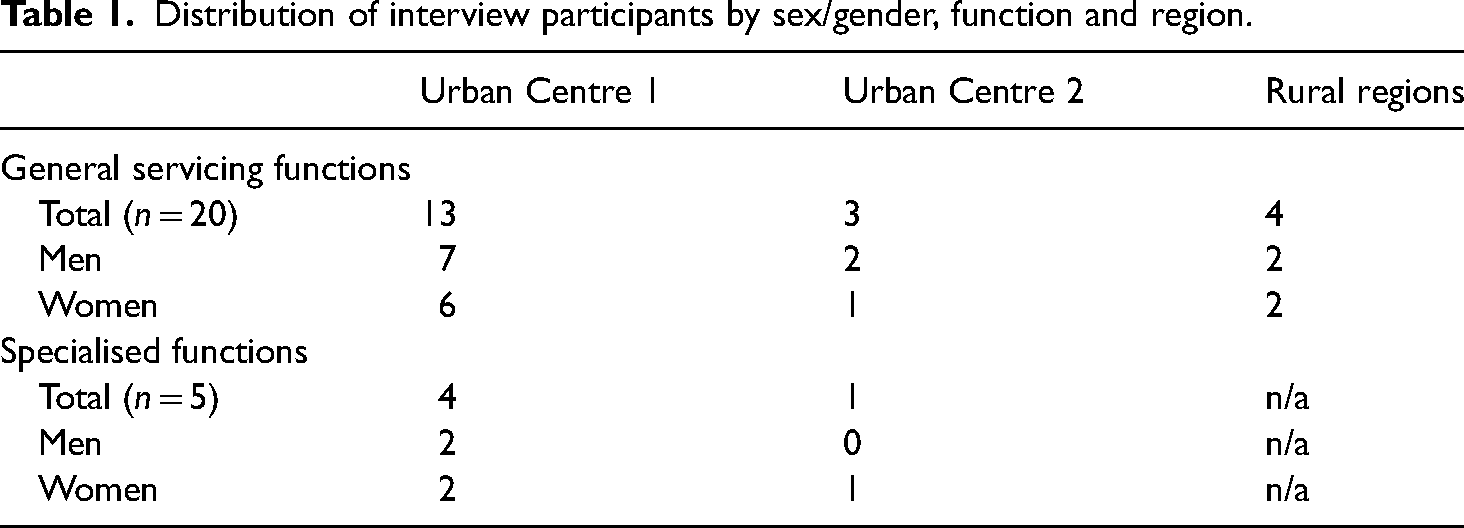
In terms of socio-demographics, most of the participants are older than 35 years. Half have family responsibilities (dependants under age 18 or sick/ageing relatives) and three people (2F, 1H) are responsible for both children and sick/ageing relatives. Two-thirds of the sample (n = 16) had 10 or fewer years of seniority, including five participants (3F, 2H) with between 0 and 3 years of service.
The interview grid aimed to capture the counsellors’ perceptions of workload, along with its determinants and perceived consequences on health and work. Other questions were intended to determine the strategies used to cope with work demands and possible solutions to implement (Appendix A in the online supplemental materials). The interview transcripts were subject to a thematic analysis approach, that is, a sample of the corpus was first analysed independently by the authors and two research assistants. A coding comparison meeting resolved any discrepancies by reaching a consensus. The themes were then organised in a thematic tree to code all the verbatim in NVivo 12 (2019) while allowing new categories to emerge (Table 2).
Thematic analysis categories.
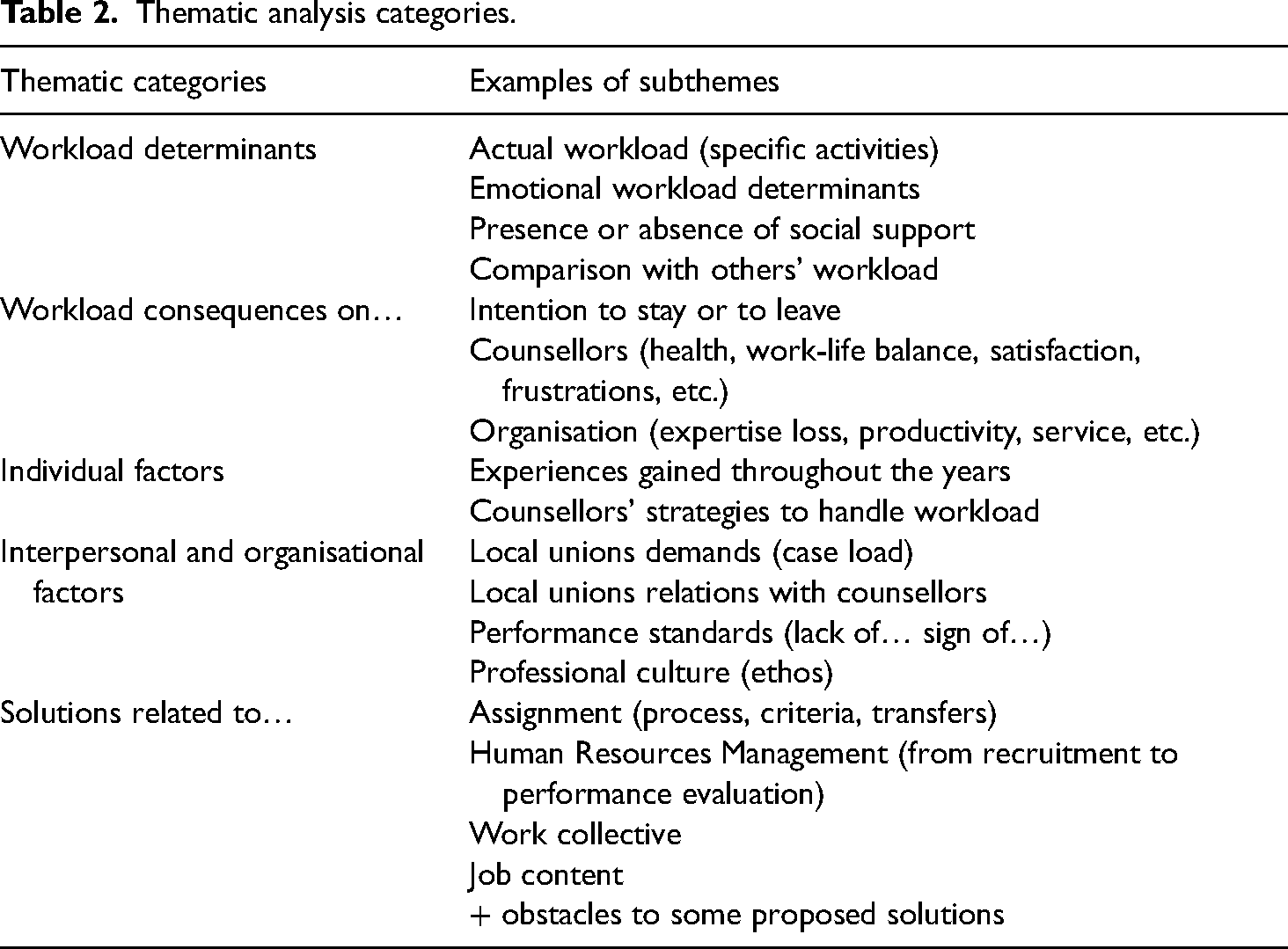
The preliminary qualitative analyses were then validated with two focus groups composed of volunteers recruited among interview participants (Urban Centre 1, n = 5, Urban Centre 2, n = 3).
Quantitative component
Based on the results of the qualitative analysis, the steering committee identified the most relevant dimensions to be verified from both a scientific and practical standpoint. In that sense, data were collected by questionnaire to supplement the portrait drawn from the interviews and to reach more respondents. All the union counsellors, including those who already participated in semi-structured interviews, received an email inviting them to participate in an online survey. The sample (n = 82, 40 male, 40 female, two not specified, 75% response rate) is representative of the population in terms of sex/gender, position held and seniority in the organisation (Table 3).
Distribution of survey respondents by type of task and organisational tenure.
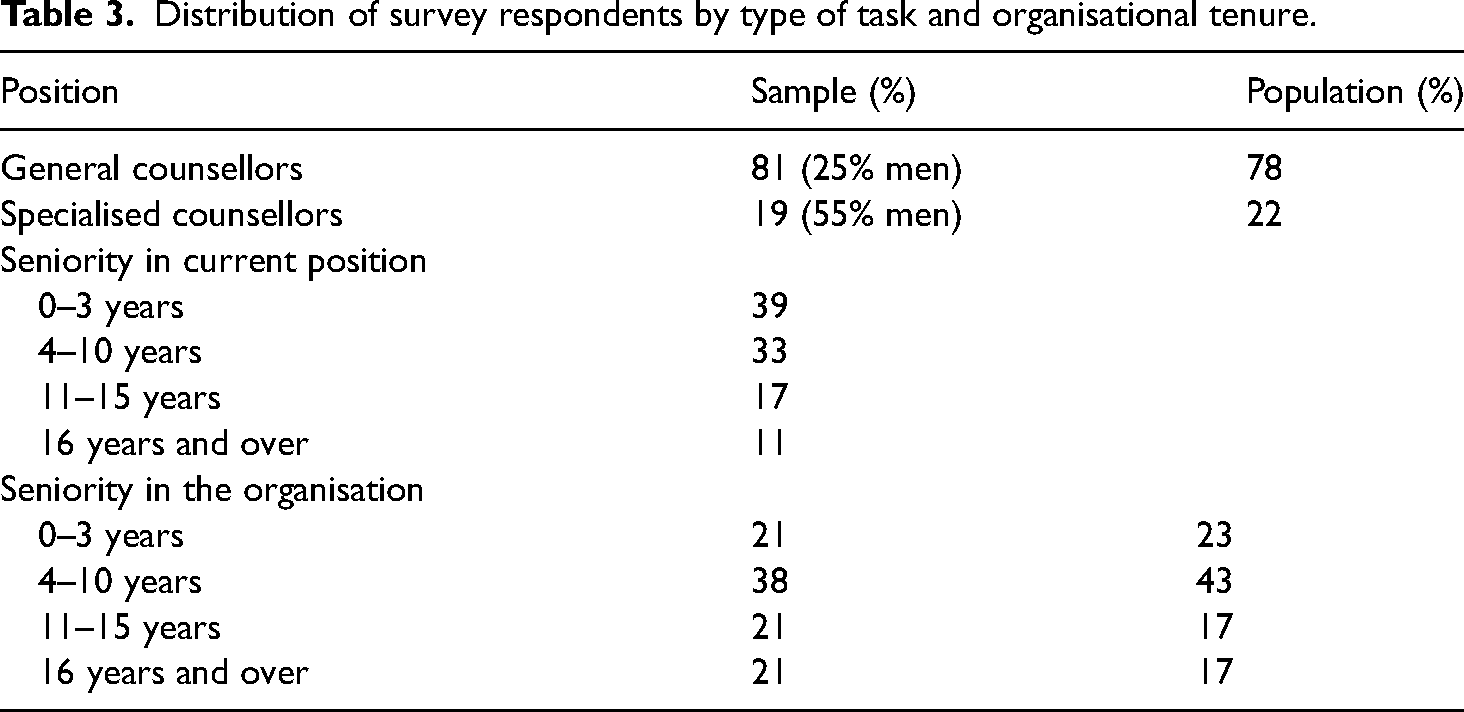
Most of the respondents are aged between 35 and 54 (67%), have a university degree (62%), are in a couple (81%), have between one and five or more dependent children (65%) and do not have sick/ageing dependents (64%).
The survey variables were measured using validated scales that were translated and adapted to the organisational context. The items were assessed using a 5-point Likert scale. To best reflect the particularities of the union counsellor role and the organisational context studied, items were created and validated scales were adapted (see Appendix B in the online supplemental materials for complete survey instrument).
Workload To capture the many dimensions of workload, several measures were used. Prescribed and actual workload were measured using seven items from Duxbury et al.'s work role overload scale (Duxbury et al., 2018) (α = .84). In addition, four items from the Copenhagen Psychosocial Questionnaire (Pejtersen et al., 2010) measuring emotional load were used (α = .68). Nine additional items were developed based on the qualitative data to capture the perception of workload expectations, to compare counsellors’ workload with that of colleagues and to identify the level of demand of certain tasks typical of counsellors’ work. Work interruptions were measured by three items (Pereira et al., 2015) (α = .74).
Other variables of interest were measured: work-life balance, one item (Matthews et al., 2010), organisational commitment, six items (Stinglhamber et al., 2002) (α = .92); occupational commitment, six items (Blau, 2003) (α = 93); well-being, three items from the ‘emotional exhaustion’ dimension (Maslach and Jackson, 1981) and one general perceived health item (Statistics Canada, 2017); instrumental support from management (two items r = .74), colleagues (two items r = .76), and the union (one item), and emotional support from management (two items r = .78) and colleagues: (two items r = .67) (Schreurs et al., 2012); boundary management strategies, three items (Desrochers et al., 2005) (α = .77); and psychological detachment, four items (Sonnentag and Fritz, 2007) (α = .87).
Two items aimed to distinguish between intention to leave the profession and intention to leave the union employer. Six original questions aimed to understand the importance placed on certain working conditions mentioned in the interviews (number of hours worked, flexible hours and location) and the ease of using work time measures (recovery days, vacations). The potential of 15 solutions proposed to improve workload, derived from the interviews, was also measured. Two open-ended questions allowed for general or targeted comments. The survey also measured socio-demographic variables (age, sex/gender, seniority, income, dependents, family status, etc.) and other variables identified by the steering committee and interview participants as affecting workload (e.g., number of local unions and members per union; degree of autonomy of local unions; seniority in the job and the organisation; average commuting time per week for work-related travel; number of hours worked per week including work-related travel).
Descriptive and inferential statistical analyses were carried out using SPSS 27.0 (IBM Corp., 2017). The open-ended survey questions were coded using NVivo 12 software (QSR International Pty Inc., 2019) according to the same thematic tree used for the semi-structured interview data.
Triangulation and validation of data
The qualitative and quantitative data were triangulated and interpreted based on the scientific literature. At the end of the analyses, three successive virtual meetings lasting approximately two hours each were held to validate the results with the project's steering committee (June 2020), the union employer, and union members (autumn 2020). The feedback received indicates that the results reflect the reality and challenges that counsellors experienced. Moreover, the partners affirmed that the problems identified in the study were still relevant yet amplified by the rapid adaptations imposed by the COVID-19 pandemic.
Results
The results from this case study provide a multidimensional portrait of union counsellors’ workload along three axes that emerged through the qualitative analysis: (a) The influence of organisational, interpersonal and individual factors on the experience of work overload; (b) The consequences of work overload on health; and (c) The solutions to manage workload or minimise its impact. Quantitative and qualitative results are triangulated within each axis.
Workload experience and influencing factors
The results of the survey and the interviews consistently show that counsellors’ perceived workload is very high: 52% of the respondents report that they are often or always in a situation of work overload. Almost all of the counsellors interviewed reported that their workdays are busy, with work weeks often extending to evenings and weekends. The survey data support this perception: most respondents (69%), significantly more women (F = 4.56, P < 0.05) and specialist counsellors (F = 3.81, P < 0.05), perceive that they typically work longer hours than the normal work week. For 70% of respondents, these long hours meant working more than 45 hours per week.
Nonetheless, 74% of the counsellors would like to work fewer hours per week. In addition, 57% say that it is difficult to take vacation time. For 91% of the counsellors, taking recovery days, that is, leave provided by the employer to compensate for the occasional work overload, is practically impossible as expressed in this verbatim: ‘It's used to give you a break when you put in a lot of hours…but in periods when you work many hours, you don't have time to take a break’ (COUN-2). (Note: extracts are gender-neutral and identified by a numerical code to protect the confidentiality of respondents).
Some factors help to explain the source of this overload. First, 50% of the load is dictated by local unions’ demands, and much less by the employer (29%) or colleagues (2%). The interviews underline that the counsellors largely assume this load alone, and avoid asking for relief because they know that their colleagues are also overloaded. One participant explains that ‘…it also has a perverse effect on us all because we know that everyone has good workloads, and we know that if someone has one less file, for sure someone else got it’ (COUN-9).
The number of local unions assigned to a counsellor directly influences their experienced workload (β = −.21, P < 0.05), whereas the number of members does not (β = −.03, P = 0.75). For the counsellors we interviewed, this is explained by the fact that the number of local unions increases the potential number of different collective agreements to be applied. Also, smaller unions often need more support. On the other hand, a local union with a large number of members has greater internal resources (e.g., leave time, training, number of stewards, etc.) and therefore a greater capacity to settle grievances or labour relations issues without recourse to the counsellor. However, the number of members is the indicator employers currently use to determine counsellor assignments. This measure is presented by the employer as an indicator ensuring fair sharing of workload, despite the concerns raised by counsellors. Quite the contrary, these factors appear to influence the perception of workload fairness among counsellors who find comfort (or resent the unfairness) in comparing themselves with one another. An open-ended survey response highlights this perception: ‘There is a clear difference between the workload, depending on the sector, the number of members, the number of collective agreements, and on our executives’ experience. I don't know how it will be possible to make it [the workload of assignments] fair, but I hope one day we’ll get there.’ Another counsellor adds how the size of unions and the distance of the assigned territory has an impact on workload: ‘If we could factor the number of kilometers into the ratio… also, that a small local union requires more work than a large one… take the example of my colleague who has twenty or so local unions covering a very large territory… you know, if she ends up with 10 negotiations at the same time, I can't imagine that's possible, but she manages it!’ (COUN-24). Many mentioned how the distance between small local unions contributed to the intensity of work comparing it to a ‘milk run that takes you at one place in the morning, eat on the go and you’re at another place in the afternoon, 30,000 km per year!’ (COUN-9). Further, despite the perception that everyone is working hard, some mention that there can be inequalities between colleagues because tolerance or capacity to cope with the load differs. For some counsellors, this meant having to cover the workload of colleagues who are perceived as less enduring.
In addition, the emotional burden is an important dimension in union counsellors’ work: almost 70% of respondents report that their work is often or always emotionally charged. This burden can be explained by the fraught implications of some of their cases (e.g., psychological or sexual harassment), or the stress associated with certain activities (e.g., pleading cases) as explained by the counsellor: ‘…there are some [counsellors] when it comes to arbitration issues, who get stomach aches, get stressed out about it, who loses it, who isn’t ready, who don’t have the experience, and who don't want to do it’ (COUN-15). Another emotional burden is linked to cases where people invest without achieving the expected results. The outcomes of pleading cases imply an important emotional investment as outlined by this counsellor: ‘…every time we plead a case [that is abandoned], we put our heart into it, we die a little each time…’ (COUN-16).
Organisational consequences of work overload
As one of the effects of high workload, counsellors reported that they need to weigh the investment in terms of the time and energy available, given the absence of benchmarks for measuring whether the work done is sufficient or not. Most often, counsellors do more rather than less, but this can vary, creating a blurring of the expected quality standards as expressed by this counsellor: ‘On one file, you can work on it, improve it, there's no limits…in our organisation, I think everyone has their own scale of self-satisfaction with their own work because there are no real standards’ (COUN-9). They also need to assess priorities given too many urgent and simultaneous requests, which affects the quality of the service offered and clashes with counsellors’ conception of their role. ‘That’s what's frustrating, it's an image, but each day, there's 100 things to do, but practically, it's impossible to do more than 35’ (COUN-7). To better understand this paradox revealed in the qualitative phase, we measured two variables in the survey: commitment to the organisation and the profession, and intention to leave.
Commitment and intention to leave
Counsellors’ level of commitment is extremely high, indicating a high level of intrinsic motivation to work, despite the high workload reported: 90% are strongly or very strongly committed to their organisation and 89% are strongly or very strongly committed to their profession. Note that this commitment to the profession is associated with a weak intention to leave (β = −.57, P < 0.01).
Few participants reported an intention to leave their current job. Nevertheless, some felt torn between the union values they defend for their members and the feeling of being treated unfairly by their organisation: ‘They do not ask us our opinion, they DEMAND! We negotiate agreements, and our members would [never] accept that the boss can change them without them having a say’ (open-ended survey response). However, the workload and emotional burden they experience are related to intention to leave the profession (β = .22, P < 0.05; β = .31, P < 0.01), whereas the intention to leave the employer to work as a counsellor in another union organisation is not influenced by workload or emotional burden (β = .003, P = 0.98; β = .12, P = 0.26). Counsellors thus associate their workload with the nature of their job rather than their employer. Further, intention to leave the profession is relatively low: 57% of the participants rarely or never think of leaving the counselling profession (x̄ = 2.3/5; SD = 1.1). The intention to leave the employer is even lower, with an average of 1.6/5 (SD = 0.8); finally, 85% of participants rarely or never think of leaving their employer.
These results reflect the motivations for remaining in their position. The motivation most often shared in the interviews is a passion for the work: ‘… I like the adrenaline, I work a lot and I like it…until I reach a limit where I don’t have fun anymore…But in general, I love my work, it's dynamic…I feel useful, I have nice intellectual, human, leadership challenges’ (COUN-2).
Individual consequences of workload
The interviews identified many individual impacts of high workload on health: involuntary spillover of work into personal life; mental health issues (anxiety, anguish, depression, psychological distress) and physical issues (sleep disorders, dizziness, chronic fatigue, etc.). Men were more likely to talk about negative effects on their life as a couple, physical health and substance abuse.
The survey results indicate that workload strongly influences physical health (β = .34, P < 0.01): the higher the workload, the more often poor physical health is reported. Regarding psychological health, both workload and emotional burden very strongly explain the emotional exhaustion experienced (β = .75, P ≤ 0.01; β = .51, P < 0.01), making it the most important consequence in our sample. This is especially important given that 48% of counsellors report experiencing high or very high emotional exhaustion. Among other negative effects of high workload, only 23% of the counsellors surveyed have a good or very good balance between work and personal life. Further, the higher the workload, the lower the work-life balance (β = −.36, P < 0.01), consistent with the perception shared in the interviews.
To summarise, the fact that counsellors seem to exhibit a high level of commitment despite a high workload and notable individual consequences suggests that they often put their work before their health.
Determinants of workload
Our data clarify the components of the workload of trade union counsellors at organisational, individual and collective levels.
Organisational determinants
Table 4 shows several aspects of work organisation that influence trade union counsellors’ workload.
Work organisation factors affecting workload.
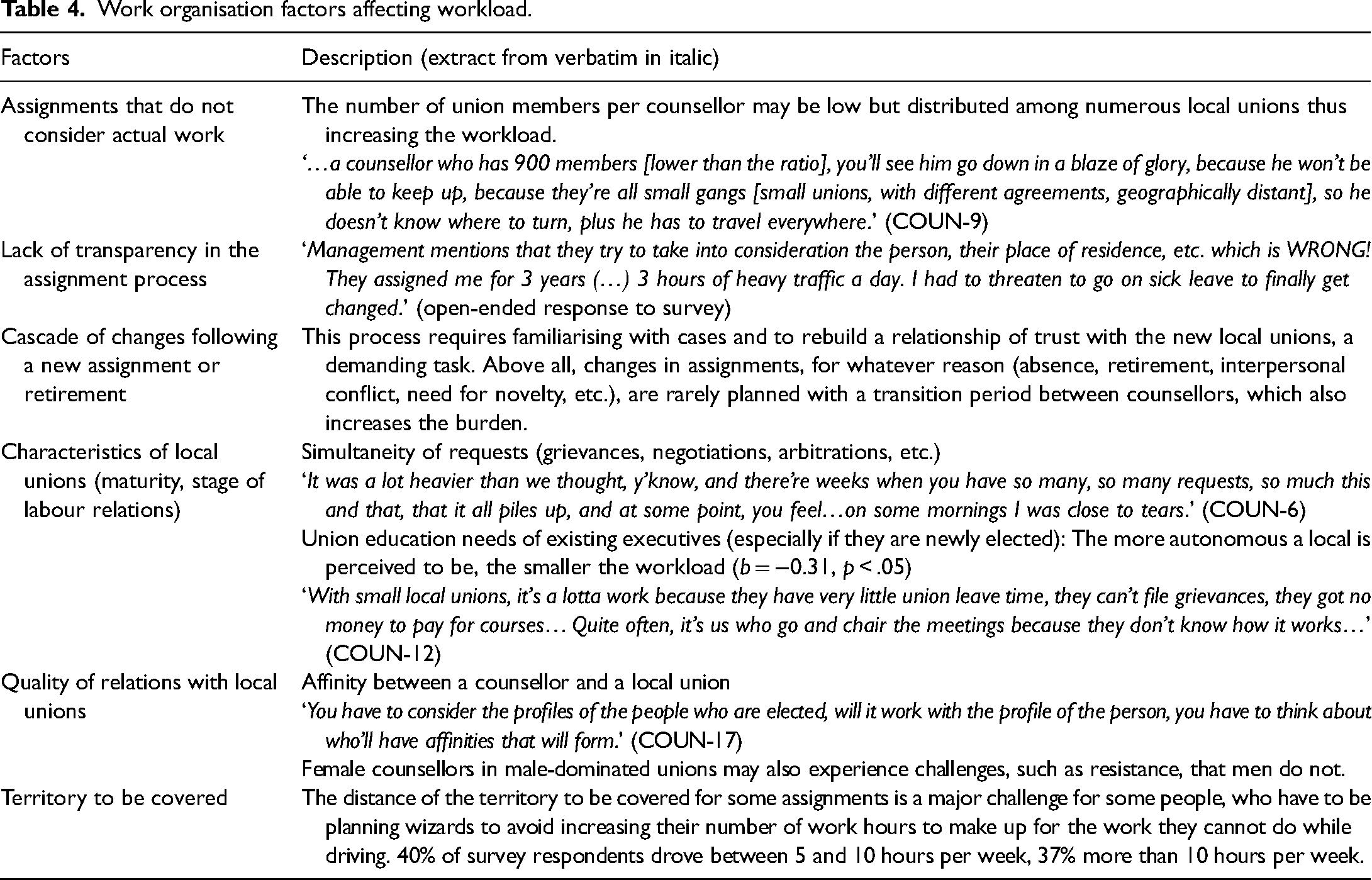
The data indicate various activities related to counsellors’ work, the proportion of which varies: (a) grievance, arbitration; (b) ad-hoc requests or events (negotiation, organising campaign, labour dispute/strike, special committee, legal opinion); (c) urgent intervention with a member or in local unions (e.g., special committee, imminent or missed deadline); (d) routine activities (labour relations committees, file follow-up/preparation); (e) starting up a local union or educating a new executive; and (f) mentoring and supporting colleagues. The analysis of the survey suggests that two of these activities are associated with high workload: grievances and arbitrations (β = .27, P < 0.05) and routine activities (β = .37, P < 0.05). In terms of emotional burden, urgent interventions with a member or in local unions (β = .29, P < 0.05) and routine activities (β = .36, P < 0.05) are most prominent, regardless of socio-demographic characteristics. Mentored counsellors perceive grievances and arbitrations as less demanding (F = 4.21, P < 0.05). Further, single individuals report routine activities as less demanding than married, partnered or separated counsellors. This result may be linked to the workload management strategies discussed below.
Another important organisational determinant of workload is related to the many interruptions in counsellors’ daily work. According to one interview participant: ‘…responding to emergencies, 90% of our work is that’ (COUN-11). The survey confirms this assertion: 72% of the participants report often or always experiencing interruptions in their work, which partly explains their perception of work overload (β = .30, P < 0.01). Note that counsellors under age 35 experience more interruptions than those 35 years and older, and counsellors between 35 and 54 years of age experience more interruptions than those 55 years and older. Women experience significantly more interruptions to their work than men do. In addition, it is important to consider the concerns shared by many counsellors regarding the recent implementation of new technological tools for managing communications (e.g., IP telephone, workspace chat application), which may increase interruptions and blur the boundaries between work and personal life.
Finally, the fact that requests related to work can come at any time of the day with a wide variety of topics and priority levels which require that counsellors learn to manage their agenda to keep control of their working time. This can be learned the hard way, like this counsellor who found himself overloaded after misunderstanding the advice he was given when he was hired: ‘When the director at the time hired me, he told me that your main challenge was to manage your agenda. I laughed because for me it was easy, it was part of my rigour. But then I understood what it meant, it meant “take care of yourself…” because there are 7 days in a week and 24 hours in a day and, if you want, you can occupy it all, but he didn't say it like that and that's what I did … ’ (COUN-10).
Individual determinants
A second group of explanations for work overload highlights the role of individual strategies. The counsellors interviewed mentioned different strategies for juggling all their responsibilities when they experience a high workload (see Table 5).
Individual strategies to manage workload
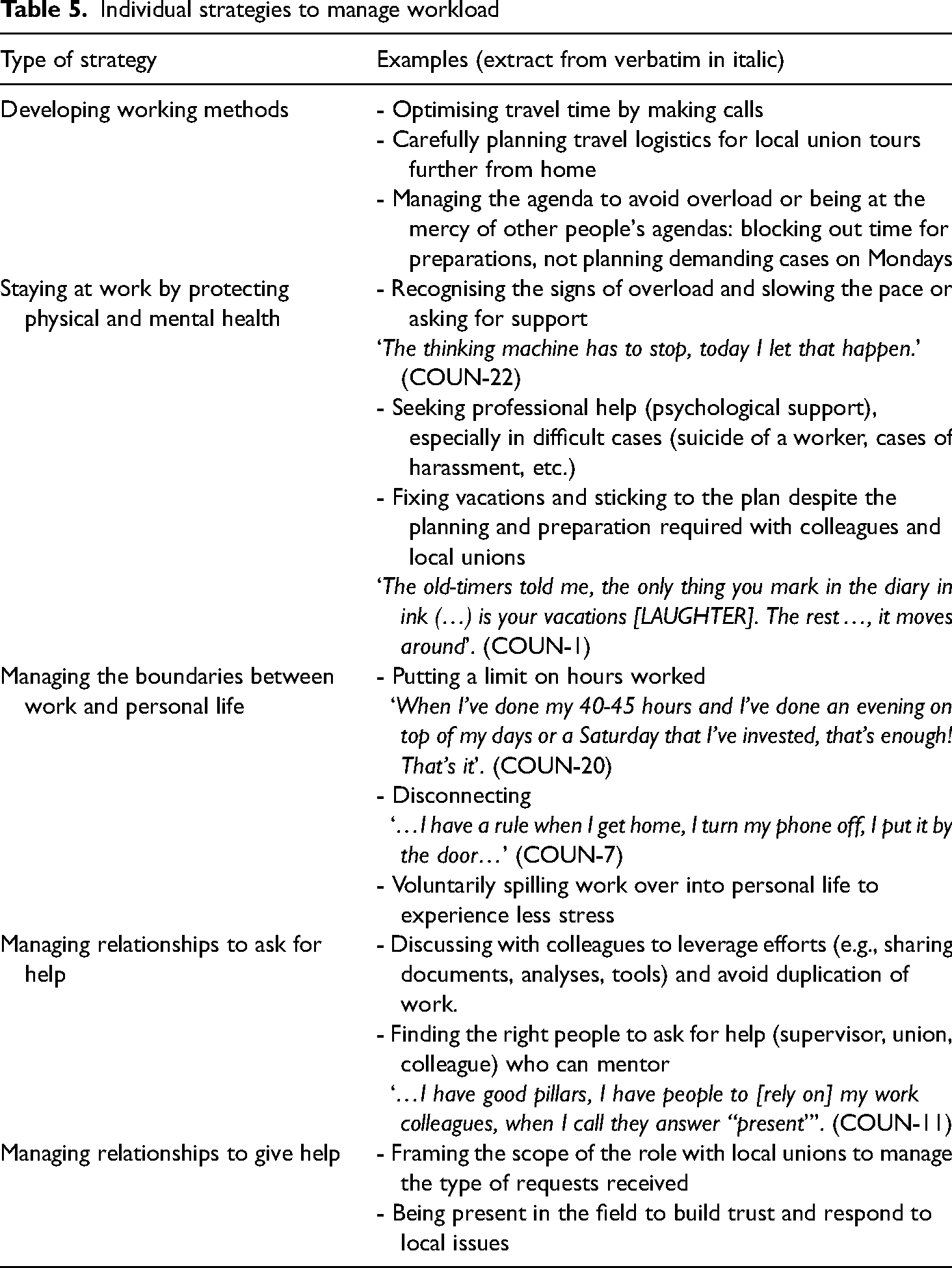
Note that the reconciling of work schedules with family responsibilities is most evident in the comments of counsellors at the beginning of their careers, which suggests that this strategy becomes less necessary as their children get older. Further, while e-mailing in the evening, on weekends or during vacations seems to be fairly widespread, most participants report that this practice induces guilt about sacrificing personal time or, on the contrary, triggers a feeling of well-being associated with the impression of regaining control over their work.
Individual strategies for managing work overload include psychological and emotional detachment from work and establishing impermeable boundaries between work and personal life. Psychological detachment refers to being mentally disengaged from work outside of working hours (Sonnentag and Fritz, 2007) and emotional detachment refers to the ability to maintain an emotional distance from work (de Jonge and Dormann, 2003). For example, the counsellor can understand the situation experienced by a member without experiencing the same emotions as that member. Emotional detachment is important in a helping relationship to ensure that counsellors do not exhaust their personal resources. The survey shows that counsellors with greater psychological detachment from their work have a significantly lower workload on all levels: they work fewer hours (β = −.36, P = 0.006), report a lower quantity of work (β = −.25, P < 0.05) and experience a lower emotional burden (β = −.29, P < 0.05). As reflected by the following verbatim, some counsellors described their efforts to frame their role to manage the type of requests received, thus decreasing their perception of emotional burden. ‘We're union counsellors, we're there to settle cases, refer [the workers] to the appropriate [mental health] resources, but we're not psychologists either… y’know someone who has a psychological injury, I'm not there to be a caregiver, that's not my role. And if I do, I burn myself out, that's for sure, I don't have the time’ (COUN-1).
Role segmentation refers to maintaining a clear distinction between work and personal/family roles (Ashforth et al., 2000). Counsellors who reinforce this boundary have significantly lower workload and emotional burden (β = −.30, P < 0.05; β = −.24, P < 0.05). Conversely, this boundary is unrelated to the average number of hours counsellors work.
Interpersonal determinants
Counsellors expressed contrasting perceptions of the social support they have received. The interviews indicated that management was providing support for health or work-life balance issues caused by work overload. Conversely, several examples of lack of support were also shared, particularly concerning the dearth of efforts to prevent overwork: ‘The lack of willingness of the organisation to explain to local unions the limits of the level of services that can be offered is a shortcoming of organisational leadership’ (open-ended survey response). Some counsellors point out that, when changing assignments, management takes into account the perceived high workload of those with whom it has a close physical or affinity relationship. This finding triggered a perception of unfairness, particularly for those working in geographically remote offices. That said, apart from a few exceptions, the participants described a good team spirit and solidarity, and a climate worth protecting, despite many reports of fatigue.
Regarding measures of social support, 77% of counsellors report receiving instrumental and emotional support from colleagues, compared with 24% who report instrumental support and 57% emotional support from the supervisor. In total, 70% of counsellors report high support from their union. Contrary to what is usually observed in workload studies (Seiger and Wiese, 2009), support received from colleagues and supervisors does not protect counsellors from the negative effects of a high workload. However, instrumental support from colleagues apparently reduces burnout (β = −.25, P < 0.05), and instrumental support from supervisors is associated with better physical health (β = .24, P < 0.05).
Some socio-demographic or organisational characteristics influence the support received. First, women report receiving slightly more emotional support from their colleagues (F = 3.08, P < 0.05). Counsellors with less than three years’ seniority in the organisation reported more instrumental support from their colleagues (F = 3.04, P < 0.05). Indeed, younger counsellors, typically hired to replace a counsellor on leave, on vacation, or who retired, reported during the interviews that during the onboarding and training process, they formed connections that enabled them to build a network early in their career. This converges with the fact that counsellors who have completed the mentoring programme upon joining the organisation receive more support from their colleagues (instrumental and emotional). Further, those mentored by a colleague also report receiving more instrumental support from their colleagues. In addition, some of the counsellors interviewed highlighted the difference in career paths among the staff, depending on whether counsellors had risen through the ranks from the union base or joined soon after graduating from an industrial relations or law bachelor programme, and described the strengths and limitations of each trajectory. These diverse career paths may generate different management needs, which may also inform training content.
To summarise, it seems that despite a high perception of support from different sources, the perception of high workload persists.
Dealing with workload
The interviews conducted pointed to 15 solution options grouped into seven categories. These options were measured in the survey. Table 6 shows examples of the categories and solution paths.
Categories of solutions proposed by the counsellors.
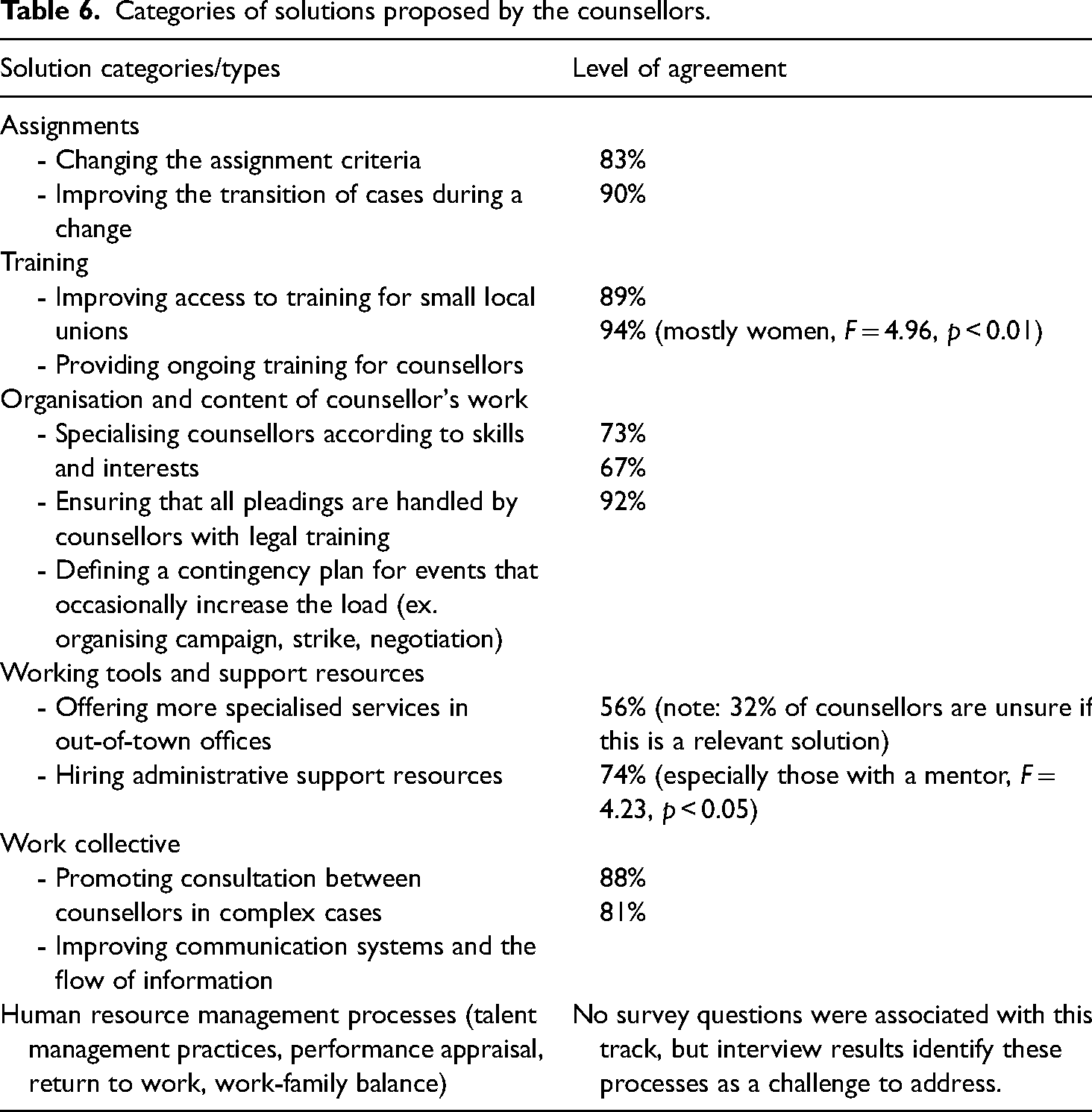
Note that the survey affirmed that counsellors value three existing characteristics of their work, which underline the importance of flexibility in their quality of work life: flexible working hours (95%); flexibility with regard to the workplace (77%); and control over the amount of work done (92%).
Perceived barriers to solutions
The counsellors described two main obstacles to the changes needed to reduce the psychosocial risks associated with their work. First, there is a fairly widespread awareness of the barrier posed by the potential costs of implementing the solutions identified (hiring, training programmes, etc.) given that increasing union dues would be impractical and compromise membership. Second, there is a perception that the willingness to get involved varies among union counsellors and elected local representatives, creating an imbalance of workload and underlining the importance of managing the concerns of those affected by or involved in potential future transformations. Third, the high degree of flexibility associated with counsellors’ work is a double-edged sword: while it enables them to deal with the demands of personal life, when necessary, it blurs the boundaries between work and private life to the benefit of productivity imperatives. This counsellor outlines how flexibility may sometimes come with a high price: ‘We’re in a golden prison which means that there are no bars, no keys, no cells, but you have autonomy and don’t take advantage of it… I love this liberty, I adore it, but you have to deliver the results…’ (COUN-10). Thus, while a potential solution to workload could be to better control it, notably by measuring it, some counsellors were reluctant if that meant losing the flexibility they cherish, despite some inconveniences.
Discussion
Our study makes an original contribution by specifying the organisational, individual and interpersonal determinants of workload in the particular context of trade union action to develop interventions to prevent psychosocial risk factors based on a multi-level analytical framework (Martin et al., 2016).
A multi-faceted ironclad workload
The first contribution of the study is that it demonstrates that although the perception of high workload is widely shared, nuances exist relative to the type of workload experienced, its components and the individual, collective or organisational strategies for coping with it.
The high workload of the counsellors studied, both quantitative and emotional, is considered a ‘norm’ in the counselling profession (Tremblay, 2016). The influence of this norm is illustrated in our results by professional commitment so unshakable that the intention to leave among the counsellors in our sample is not affected by the indicators that generally lead employees to leave their organisation (Jones et al., 2007; Meyer and Herscovitch, 2001), including counsellors in another Quebec union (Tremblay, 2016). Counsellors’ desire to remain in their role despite heavy workload might also be linked to the great levels of flexibility related to their function in terms of timing and location of work as well as favourable employment conditions compared to golden handshakes by some participants. This resignation to high workloads is a particularity of the case examined and could be further explored through the interaction between organisational commitment, job devotion and employment/working conditions.
This dual finding, involving devotion and emotion, is potentially explained by the nature of the work, which has a helping relationship component for local union members that echoes work on the notion of ‘care’ in the role of union counsellor (Franzway, 2000) and other jobs that are characterised by this care/overwork duality, such as nurses or social workers (Halper et al., 2019; Ross, 2017). However, our findings highlight that counsellors who can maintain some psychological and emotional distance from their work report the most positive indicators of workload (hours, perceived workload and emotional burden). Although the ability to be emotionally detached is mainly related to personality, this detachment can be cultivated through training (Slaski and Cartwright, 2003). To avoid emphasising individual responsibility, recruits might be supported by encouraging them to share their experiences and providing continuous and accessible organisational support for debriefing problem situations (Rooks, 2003) that add to the emotional burden.
Further, the interaction between three elements, (a) more demanding tasks (grievance or arbitration, urgent intervention with a member/colleague); (b) frequent interruptions; and (c) the magnitude of the emotional burden compared to a more quantitative load—provides avenues to understanding the limited protective role of social support about this specific type of load, contrary to the findings in the literature (Seiger and Wiese, 2009). The very strong professional ethos influences the performance standards that counsellors impose on themselves based on their perception of their organisation's expectations and their role, reinforcing the myth of the ‘good, overworked and always available counsellor’ (Rhéaume et al., 2008; Rooks, 2003; Tremblay, 2016). However, the experience of this professional ethos varies in terms of sex/gender, age, which is associated with seniority, and family situation.
In terms of sex/gender, our study highlights that both women and men experience high emotional burden, whereas other work finds this burden predominantly among women in the profession (Franzway, 2000). In contrast, women report a higher perception of the expectations of the union employer regarding the number of hours they must work, which may be explained by the challenges women face in union service roles (Franzway, 2000). The absence of organisational measures to support the management of work-life boundaries can imply expectations of around-the-clock availability underpinned by the “ideal worker” gendered norm (Acker, 1990). Under these conditions, women may internalise such norms and perceive that they must work harder to match the company's values (Williams et al., 2013). This is especially common in contexts embracing a ‘work devotion’ schema which ‘induces cognitive, emotional, and moral understanding that work is a vocation, which demands and deserves single-minded dedication’ (Blair-Loy et al., 2015), a definition that can reflect unions-as-employers’ work culture. In this sense, unions could initiate a reflection on the presence of practices or discourses conveying implicit norms about what is valued in a counsellor, including how to manage the workload, and which may expose women and men consultants differently to the consequent psychosocial risks. Further, the fact that women in our sample report experiencing significantly more work interruptions than men do may stem from the stereotypical supportive roles of women counsellors, positioning them in a caregiver role (Franzway, 2000). In effect, women may feel more internal pressure to be always available to care for colleagues’ and local union executives’ requests to be consistent with the feminine representation of care work. Future studies could look at the source (local unions, colleagues, employers, etc.) of and reasons for interruptions, to support targeted actions to reduce gender inequalities related to care work in the workplace.
The observed difference in the decreasing number of interruptions reported with age sheds light on how the professional ethos develops over one's career. One factor might be linked to workload management strategies: younger counsellors have not yet mastered them, unlike older counsellors. Consequently, younger counsellors are ‘interrupted’ more often. A second possibility could be that counsellors over 55, and thus approaching retirement, have fewer local unions to manage because they avoid assignments with many small unions in a large area, co-ordinate a particular job sector or assume a more specialised role. A third possibility may be that more experienced counsellors have become more integrated into the culture of ‘interruptions’ associated with the job, and therefore perceive it as ‘normal’ so that the effect of interruptions is felt less as they gain experience. Researchers have affirmed that counsellors’ capacity for detachment increases with experience (Franzway, 2000). Lastly, an age-related explanation for this professional ethos would be that counsellors under age 35 seek out counsellors aged 35–44 years rather than those over age 55, to whom they have less access. This may lead to overload among counsellors in the 35–44 age bracket, who are also most likely to have work-life balance obligations. Conversely, this practice under-mobilises counsellors aged 55 and over, whose wealth of knowledge is not shared. All these possibilities call for reflection on how to provide appropriate support for newly recruited counsellors, with mentoring proving beneficial (Franzway, 2000). Concomitantly, mid-career counsellors must be protected from overload caused by mentoring younger counsellors. Organisations must also plan for the transition to retirement of older counsellors to ensure that their expertise is transferred.
The final difference in how work culture influences workload concerns the articulation between work and personal life (Tremblay, 2016). Poor work-family balance, which affects men and women alike, reflects the norm of having to invest long hours in work. This norm may hinder the ability to assume family and professional responsibilities. Beyond the challenges they pose for achieving balance, a long work schedule (55 hours or more per week) has a recognised impact on occupational health (Pega et al., 2021), which amplifies the urgency of addressing the deconstruction of this norm of continuous availability.
Given that the strategy of maintaining an impermeable boundary between work and family life reduces counsellors’ emotional burden and favours their psychological and emotional detachment, it is important to reflect on the pressure stemming from interruptions outside ‘normal’ working hours on the deployment of this strategy. All initiatives to modify existing communication modes, which currently generate considerable interruptions and tend to blur work-life boundaries, should consider the demonstrated influence of the use of communication technologies on strategies to balance work and personal life, including family (Boswell and Olson-Buchanan, 2007; Park et al., 2020). However, a reorganisation of work through the integration of collaboration platforms or more instantaneous communication tools may ostensibly appear to increase efficiency but ultimately increase interruptions and consequently work overload. Another important reflection revolves around the fact that atypical work hours are inherent to union counsellors’ duties since the workers they represent do not necessarily work regular hours. Since this cannot be modified, at least the union-as-employer should support counsellors’ boundary strategies to take time off, either vacation or compensatory time, by addressing barriers currently preventing them from doing so (e.g., lack of coverage, constant pressure to work, agenda management strategies, insufficient capabilities of local unions).
Performance behaviours that are valued in the organisational culture should thus be emphasised, along with support for work-life balance (Tremblay, 2016). A more inclusive management style (Rooks, 2003) should be implemented to allow both men and women to feel supported by their organisation, regardless of their personal/family situations or health status.
Intervening at individual, collective and organisational levels to prevent a spiral of work overload
The second contribution of the study is that it highlights pitfalls to be avoided in work overload prevention actions in the trade union context. By highlighting the interplay between action levers at individual, collective and organisational levels (Martin et al., 2016) organisations and OHS workers can ensure a better match between the intervention and the context (Nielsen and Randall, 2015). In the case studied, considering all levels is particularly sensitive because the negative consequences of overload on mental health weaken the work collective. Several counsellors appeared to be nearly depleting their resources to remain at work. The health effects of maintaining a high level of commitment and a fast work pace should be a warning signal about the potential vicious circle that perpetuates the organisational and individual impacts of work overload.
On the organisational level, the high degree of burnout observed suggests significant consequences for the employing union, such as departures on sick leave or presenteeism. The union must then train replacements, reassign work to already overloaded colleagues, or reduce service to members. Although the effect of balancing the workload among colleagues raises frustrations, competition or judgements between counsellors were not very salient in our results. Further research could investigate the influence of organisational culture on workload perceptions, including corporate values or internal codes of ethics, since interpersonal dynamics may have refrained participants in our sample from expressing their dissatisfaction with certain colleagues’ lack of engagement, contrary to what has been observed in another Quebec union (Tremblay, 2016).
At the collective level, organisational cultures and union histories influence the adoption of new organising modes (Cooper, 2001). Thus, the union organisation studied follows the trend over the past two decades to focus on the specialisation of work by separating the more general service roles of local unions from other specialist roles (Cooper, 2001; de Terssac, 2014). This creates a contrast in the recognition of service work, which is demanding and essential to maintaining membership (Cooper, 2001). The apparent tension between servicing counsellors’ workload and that of specialist counsellors should be considered to avoid devaluing one position over the other.
At the individual level, the decision latitude that counsellors possess creates favourable conditions for developing new adapted workload management strategies. However, work overload impedes the ability to think about different ways of doing things by preventing workers from taking the necessary mental and emotional distance. In addition, overload has been found to constrain the exchange of good practice between counsellor colleagues. It is therefore necessary to ensure that counsellors have sufficient leeway to invest in changes in practice aimed at reducing the workload without feeling overloaded by practices. Further, it is important to address the issue of counsellors’ psychological and emotional detachment from work. Integrating training, encouraging the use of the employee assistance programme and facilitating the sharing of strategies to further segment work and family are examples of measures to be integrated into counsellors’ work to enhance their individual and relational skills that allow them to protect themselves from the negative effects of their workload. Offering off-job and on-job recovery activities serves a similar purpose (de Jonge, 2020).
The interaction between these individual, collective and organisational levels highlights the importance of actions situated along the prevention continuum (Martin et al., 2016). In terms of tertiary prevention, the process of returning to work after a prolonged leave for mental health reasons must, to be sustainable, take place under conditions that promote health, particularly in the context of burnout (Durand et al., 2014). This success depends largely on the appropriate design of working conditions and constant and local organisational support (Andersen et al., 2012; Durand et al., 2014). However, high participant commitment to the employer and the very low intention to leave the organisation suggest that the counsellors studied put work well ahead of their health, which is a significant risk factor for relapse. Acting on the performance culture would allay the counsellors’ reluctance to ask for help while preserving their decision-making latitude associated with flexible working hours and autonomy in case processing.
To act in primary prevention, for example, before the onset of health problems, a first reflex to ease the workload would be to control the time and place of work through changes to management practices or the negotiation of collective agreement clauses. However, this approach is complex because of the great variability of the workload (over time and according to experience), not to mention the high value that counsellors place on work flexibility. A second approach could be to limit the intrusions of work into personal life by negotiating a ‘right to disconnect’ (e.g., banning emails outside ‘normal’ hours) and deconstructing the norm of the ‘good, overworked and always available counsellor’ mentioned earlier. This would also address the difficulty in achieving emotional and psychological detachment reported by counsellors. However, if applied too rigidly and without upstream action on workload, such measures may be perceived negatively by people whose strategy is to catch up in the evening or on the weekend (Schlachter et al., 2018).
Alternatively, valuing work based on objectives that clearly inform union leaders of the actual work performed could be a source of satisfaction for counsellors, as could provide space for counsellors to carry out personal projects (Yu, 2019). Mentoring or training activities could help transfer knowledge about more individual strategies related to work methods, time management and staying healthy at work, and more collective strategies on how to manage supportive relationships (Yu, 2019). In addition, within risk analysis done to prepare for the return following a work-related injury (tertiary prevention), organisations should envision actions intended to prevent injuries from occurring (primary prevention). This integrated OHS approach favours a more sustainable return to work and improves working conditions globally by eliminating psychosocial risks such as work overload at source (Cooklin et al., 2017; Martin et al., 2016). That said, such preventive actions are often associated with the collateral impacts of implementing systems involving forms of control, measurement or rewards related to workload, which are important to consider. In their quest for efficiency, trade unions may adopt profit-based rather than activist-based managerial approaches (Cooper, 2001), which can be very confrontational for union counsellors. It is therefore necessary to build consensus and commitment among all stakeholders to implement reforms to the organisation of union work, and thus to assess the acceptability of certain changes to reduce the burden. To this end, participatory approaches in the development of interventions aimed at preventing psychosocial hazards have proven their efficiency (Tafvelin et al., 2019).
Strengths, limitations and directions for future research
The design of the present study (single case) does not allow for a broad generalisation of the results, but this was compensated for by the triangulation of the data, the participatory process and the theoretical interpretation. Similarly, the cross-sectional data collection did not allow us to affirm causal links between the variables examined. Replication of the present study with a larger sample could test the generalisability of the results obtained. Further, the qualitative sample may have included an over-representation of people dissatisfied with their workload, but the high rate of completion of the questionnaire (75%) enabled us to balance the weight that more typical discourses could have had on our analyses. Note that the results of this study are limited to counsellors’ perspective because the managers’ perspective was not gathered during the data collection. Finally, work observation, which was impossible in the context of this study, could more tangibly illustrate the impact of elements such as the nature of daily work interruptions or specify the forms of workload linked to the various tasks or types of assignments.
Conclusion
This participatory case study provides a nuanced understanding of the dimensions of workload, a psychosocial risk factor, and identifies targets for action. Given the new legal obligations in the area of OHS in Quebec, it is important to act diligently while keeping in mind the possible perverse effects of interventions that apply managerial models that clash with democratic union practices or initiatives that do not target all levels—individual, interpersonal and organisational—that workload can affect.
At a time when the profession is facing the challenges of union renewal posed by changes in the world of work, as well as issues of mobilisation and succession management (see special issue of Haiven et al. 2006), the workload of counsellors who are members of the partner union likely resembles that of people holding similar positions in other unions. The study findings may thus be useful for unions that are struggling to offer their employees sustainable and healthy working conditions while renewing their membership base.
The study findings certainly contribute to knowledge on this issue and, more broadly, are relevant to unionised white-collar jobs with a service or care component.
Supplemental Material
sj-docx-1-jir-10.1177_00221856241265273 - Supplemental material for Ironclad work overload: prevention of psychosocial hazards among union counsellors in Quebec
Supplemental material, sj-docx-1-jir-10.1177_00221856241265273 for Ironclad work overload: prevention of psychosocial hazards among union counsellors in Quebec by Mélanie Lefrançois and Mélanie Trottier in Journal of Industrial Relations
Supplemental Material
sj-docx-2-jir-10.1177_00221856241265273 - Supplemental material for Ironclad work overload: prevention of psychosocial hazards among union counsellors in Quebec
Supplemental material, sj-docx-2-jir-10.1177_00221856241265273 for Ironclad work overload: prevention of psychosocial hazards among union counsellors in Quebec by Mélanie Lefrançois and Mélanie Trottier in Journal of Industrial Relations
Footnotes
Acknowledgements
We would like to thank the union partner for its financial support and continued involvement in co-constructing this participatory project. We also thank all the participants who generously shared their experiences and validated the results of this study. Finally, we thank UQAM's community outreach service for their advice throughout the project.
Declaration of conflicting interests
The authors declared no potential conflicts of interest with respect to the research, authorship, and/or publication of this article.
Funding
The authors disclosed receipt of the following financial support for the research, authorship, and/or publication of this article: This work was supported by the Union partner (confidential),

Supplemental material
Supplemental material for this article is available online.
Notes
Author Biographies
References
Supplementary Material
Please find the following supplemental material available below.
For Open Access articles published under a Creative Commons License, all supplemental material carries the same license as the article it is associated with.
For non-Open Access articles published, all supplemental material carries a non-exclusive license, and permission requests for re-use of supplemental material or any part of supplemental material shall be sent directly to the copyright owner as specified in the copyright notice associated with the article.
