




Abstract
This study evaluated the effects of an equine-assisted positive psychology intervention (EAPPI) on flourishing among adults in Diepsloot, a marginalised South African community. Flourishing was conceptualised as a multidimensional construct encompassing emotional, psychological, and social well-being, life satisfaction, and affect balance, alongside reduced psychological distress. Given limited mental health resources in under-resourced settings, equine-assisted interventions offer a nature-based, experiential approach aligned with eco-existential positive psychology. A quasi-experimental within- and between-groups design was employed, with 149 participants assigned to an intervention group (n = 78) or control group (n = 71). The intervention consisted of eight 120-minute equine-assisted sessions integrating experiential learning and psycho-education. Standardised self-report measures, Mental Health Continuum Short Form, Satisfaction with Life Scale, Scale of Positive and Negative Experience and Depression Anxiety and Stress Scale – 21 items, assessed flourishing at pre-intervention, post-intervention, and 3-month follow-up. Results revealed significant improvements in flourishing within the intervention group, including increased emotional, social, and overall well-being and life satisfaction. Negative affect decreased, but affect balance showed unexpected reductions. Older adults reported greater life satisfaction, and baseline differences showed lower initial well-being in the intervention group, which improved post-intervention. These findings underscore the efficacy and cultural relevance of EAPPI in community-based mental health promotion, contributing to the growing evidence for nature-based therapeutic interventions. Future research directions and study limitations are discussed.
Keywords
Introduction
Historically, South Africa has faced critical gaps in community-level mental health care, especially in under-resourced settings (Docrat et al., 2019; Morar et al., 2024; Spedding et al., 2014). Diepsloot, one such under-resourced community, is a densely populated area on Johannesburg’s northern boundary, and is acutely affected by intersecting adversities of poverty, migration, unemployment, and inadequate services, driven by legacies of apartheid-era policies and persistent socio-economic inequalities (Cross, 2014; Hasel, 2014; Mahajan, 2014; Mushongera et al., 2017; Statistics South Africa, 2021; Zhujiworld, 2023). Evidence shows that these factors are associated with heightened trauma exposure, chronic stress, limited access to psychosocial support, and pervasive stigma around mental illness, increasing the risk for poor mental well-being, particularly in low-income urban settings such as Diepsloot (Jürgens et al., 2013; Morar et al., 2024; Mushongera et al., 2017).
Mental health is increasingly recognised as a fundamental human right, demanding not only the absence of illness but the promotion of well-being and flourishing (World Health Organization, 2022). A rights-based perspective underscores the ethical and practical imperative to ensure that all individuals, including those in under-resourced, marginalised communities, have meaningful access to psychosocial resources and opportunities for mental well-being.
Flourishing
In this context, flourishing is conceptualised as a complex multidimensional construct involving emotional, psychological, and social well-being, low psychological distress, high life satisfaction, and an affect balance favouring positive emotions (Keyes, 2002, 2005, 2007; Peterson & Seligman, 2004). Despite its increasing salience as an optimal mental health outcome, flourishing remains underexamined in quantitative research on adults in under-resourced South African settings, with empirical attention historically focused on university and workplace populations (Basson & Rothmann, 2019; Keyes et al., 2008; Van Zyl & Rothmann, 2012).
These realities highlight the urgent need for innovative, contextually responsive mental health interventions designed to address entrenched inequality and promote flourishing in settings where it is most urgent. South African policy frameworks and contemporary scholarship consistently highlight that such interventions must be anchored in principles of equity and social inclusion, not only as ethical obligations but as methodological requirements for overcoming barriers, fostering participation, and securing meaningful impact across all segments of historically marginalised populations (Basson & Rothmann, 2019; Keyes et al., 2008). Evidence increasingly demonstrates that quantitative interventions adapted to cultural and social contexts, those that deliberately engage the plurality of social identities and lived realities found in communities such as Diepsloot, hold particular promise for advancing equitable well-being outcomes (Basson & Rothmann, 2019; Keyes et al., 2008).
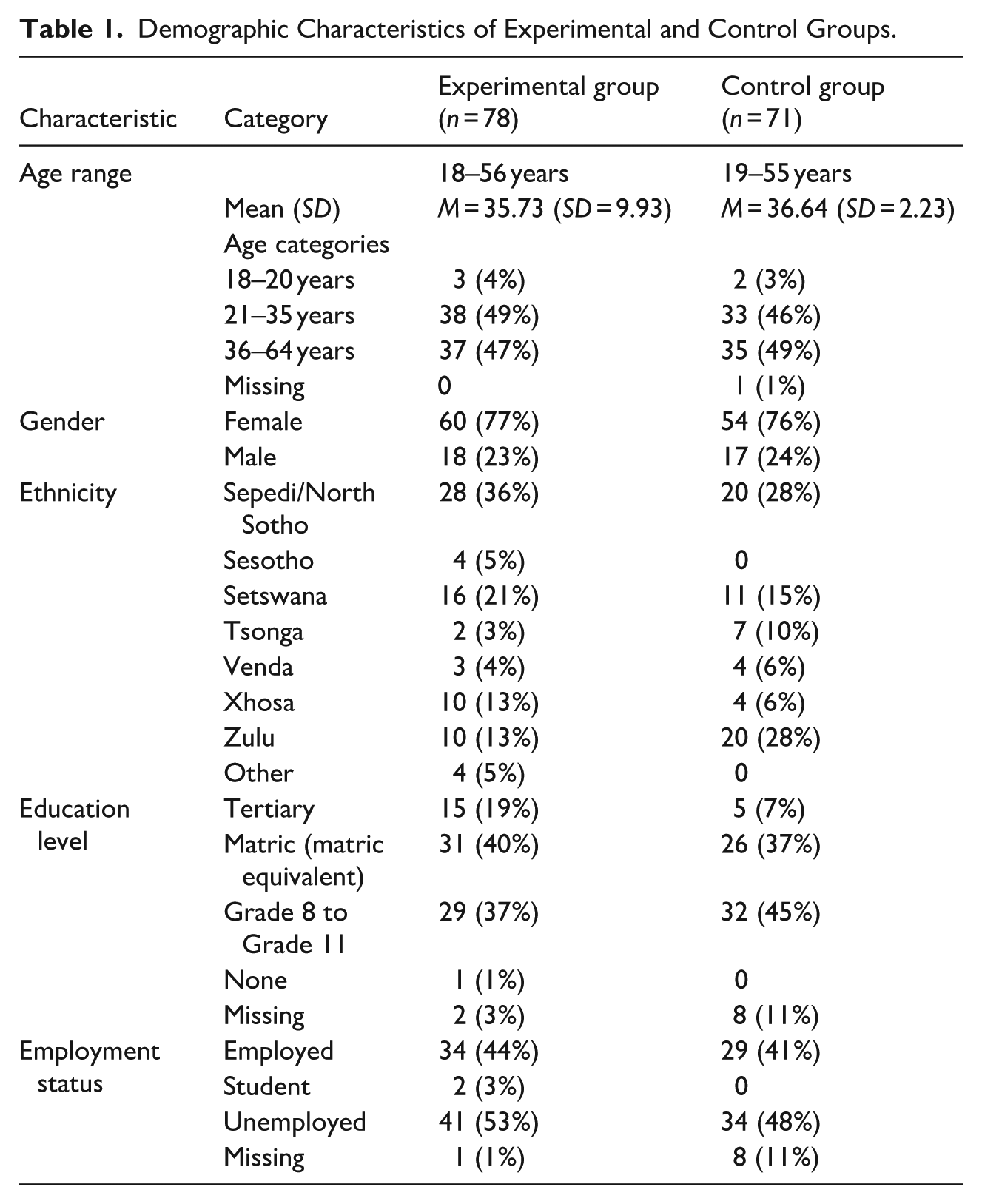
Guided by equity, social inclusion, and contextual sensitivity principles, this study evaluates the quantitative outcomes of a community-based EAPPI on flourishing among adults in Diepsloot. Inclusive recruitment strategies, language and logistical barriers reduction, and purposeful representation of the community’s diverse demographic profile (see Table 1) ensured that the intervention was accessible and relevant across population subgroups. Grounded in eco-existential positive psychology (Eco-EPP) and nature-based therapeutic practice, this intervention offers a novel contribution to community-level mental health research by assessing whether participation can meaningfully enhance flourishing among adults living in under-resourced urban contexts (Passmore & Howell, 2014; Wong, 2020).
Demographic Characteristics of Experimental and Control Groups.
Equine-Assisted Psychological Interventions
Equines have played diverse roles throughout human history, from transportation and labour to companionship and therapy across civilisations (Frewin & Gardiner, 2005; Kelenka, 2009). The therapeutic benefits of equine interactions were recognised as early as ancient Greece (Latella & Abrams, 2015), and today, equine-assisted psychological interventions are increasingly being adopted as multidimensional, complementary strategies within global mental health practices (Dewkett et al., 2015; Stern & Chur-Hansen, 2019). These interventions characteristically employ structured, purposeful activities involving equines, such as grooming, leading, and groundwork exercises, to facilitate emotional and psychological growth (Esposito & Fournier, 2023; Notgrass & Pettinelli, 2015). What distinguishes this modality is the recognition that equines, as sentient and emotionally attuned beings, actively contribute to therapeutic change by responding to human emotions and behaviour, promoting self-awareness, emotional regulation, and social connectedness (Latella & Abrams, 2015; Wood et al., 2021).
The theoretical landscape of equine-assisted psychological interventions is characterised by ongoing diversity and conceptual evolution. Contrary to the notion of a consolidated paradigm, the field integrates a wide array of frameworks, including but not limited to cognitive-behavioural, psychodynamic, attachment-based, trauma-informed, and experiential traditions (Coetzee et al., 2022; Fry, 2021; Notgrass & Pettinelli, 2015). Humanistic and existential psychology, particularly through Gestalt, narrative, and integrative perspectives, has been especially influential in recent discourse (Bachi, 2013; Fry, 2021; Lac, 2017, 2023). Nonetheless, these perspectives represent one significant stream within a broader multidisciplinary field, rather than a singular foundation.
What is increasingly recognised, however, is that equine-assisted interventions often resonate with the core tenets of humanistic and existential psychology: relational authenticity, narrative reconstruction, and embodied presence. The horse is conceptualised as a responsive coparticipant in the therapeutic process. Scholars such as Lac (2017, 2023) and Bachi (2012) have explored how attuned, present-moment encounters with equines can facilitate client self-exploration, narrative authoring, and existential meaning-making. In addition, Fry (2021) highlights the importance of integrating equine-facilitated experiences into established, evidence-based therapeutic models, rather than advancing equine-assisted psychotherapy as a stand-alone or monolithic discipline. This diversity remains a challenge and a strength, as the field continues to clarify what is unique, transferable, and most impactful about equine-assisted practice across different therapeutic contexts.
Within this evolving landscape, the Arenas for Change (ARCH) facilitation approach has gained attention as an innovative, emergent, story-based framework for equine-assisted mental health interventions (Arenas for Change, 2023; Boyce & Esposito, 2022). ARCH is firmly grounded in postmodern social constructionist theory, conceptualising therapeutic work as a collaborative process of narrative building and meaning-making, wherein the equine environmental elements together become characters in evolving life narratives (Anderson, 2003; Boyce & Esposito, 2022). Participants engage experientially to author stories that integrate past, present, and future aspects of self, an approach that resonates with, but is not directly derived from, humanistic and existential concerns for agency, continuity, and purpose amid change and adversity (Boyce & Esposito, 2022).
Although ARCH is innovative and theoretically robust, it does not yet have an extensive empirical evidence base, and is best described as an emergent practice model (Boyce & Esposito, 2022). However, its framework aligns with widely recognised best practices, such as narrative co-construction, embodied experiential learning, and the intentional support of client agency. Moreover, its congruence with multicultural and community adaptation strengthens its relevance for application in resource-constrained, diverse contexts, making it a practically promising and theoretically coherent addition to the field (Boyce & Esposito, 2022).
While ARCH represents an innovative and emergent model, its theoretical emphasis on collaborative story-building, agency, and meaning-making is powerfully complemented by parallel developments in the field. Recent scholarship has called for increased conceptual and cultural specificity, particularly in adapting equine-assisted interventions to diverse sociocultural landscapes and under-researched populations (Berg et al., 2025; Haig & Skinner, 2022). Among such developments is Eco-EPP, which connects narrative, humanistic, and existential traditions with nature-based, multispecies approaches. This integrated perspective is especially relevant in contexts marked by structural adversity, where interventions such as Eco-EPP offer unique opportunities for fostering resilience, existential meaning, and collective flourishing (Passmore & Howell, 2014; Wissing, 2020; Wong & Roy, 2018).
Despite these interventions’ integrative and contextually relevant conceptual promise, empirical research examining their impact in non-WEIRD, under-resourced adult populations remains limited (Coetzee et al., 2022; Potgieter, 2019). This highlights the ongoing need for critically evaluative research that bridges narrative, experiential, and nature-based innovations while attending to the specific lived realities of diverse communities.
In light of these advances and ongoing gaps in the literature, the present study evaluates whether an equine-assisted positive psychology intervention, explicitly informed by eco-existential and narrative paradigms, and delivered through innovative story-based facilitation, can meaningfully foster flourishing among adults in an under-resourced South African community. The following theoretical framework section further elaborates the study’s grounding in existential, humanistic, and eco-psychological traditions, while the subsequent methodology section provides a detailed description of the intervention design, facilitation, and cultural adaptation.
Theoretical Framework
The present study is underpinned by Eco-EPP, an integrative nascent paradigm intentionally built upon the foundational insights of existential and humanistic psychology, and expanded through contemporary positive psychology and eco-psychology (Passmore & Howell, 2014; Wong, 2016; Wong & Roy, 2018). Early positive psychology emphasised happiness and positive traits, promoting flourishing as an individual achievement. However, this initial approach has been broadly critiqued for overlooking existential-humanistic principles, notably the centrality of suffering, meaning-making, authenticity, and agency in human growth (Bohart & Greening, 2001; Churchill & Mruk, 2014; Wong, 2011).
Recognising this, Wong (2011) asserted that positive psychology is inherently humanistic and that it is unnecessary to question the influence of humanistic psychology within the field. In a similar vein, Froh (2004) advocated for a mature positive psychology that fully embraces its humanistic roots. Explicitly acknowledging the humanistic dimension of positive psychology clarifies its philosophical lineage and broadens its relevance and effectiveness in addressing the full complexity of human flourishing.
Recent advances in the field, including second- and third-wave positive psychology, have addressed these limitations by explicitly embracing the complexity and dialectical nature of flourishing (Lomas et al., 2021; Wong & Roy, 2018). Existential positive psychology (EPP), in particular, deliberately synthesises the work of existential theorists such as Viktor Frankl and humanistic psychologists such as Carl Rogers, establishing flourishing as a dynamic dialectic of suffering and growth, agency and acceptance, and authentic engagement (Frankl, 1969; May, 1983; Rogers, 1946). This expanded view understands flourishing as arising from the dynamic integration of positive and negative experiences, contextual dependencies, and the pursuit of values with personal and collective meaning (Keyes, 2002, 2016; Seligman, 2018; Wissing, 2020).
Eco-EPP extends these principles by asserting that human flourishing is cultivated through reciprocal engagement with nature, animals, community, and self. Addressing existential challenges alongside emotional needs, and facilitating meaning-making through interactions with animals and the natural world, especially in adversity-exposed, under-resourced communities, creates opportunities for flourishing (Amiot & Bastian, 2015; Capaldi et al., 2015; Passmore & Howell, 2014). In South Africa, the relational philosophy of Ubuntu profoundly enriches this perspective by framing individual flourishing as fundamentally interconnected with collective well-being, not only among humans but also encompassing relational ties with animals and the natural environment (Chibvongodze, 2016; Wilson Fadiji & Wissing, 2022; Wissing et al., 2014).
The study’s intervention programme embodies these philosophical foundations. Sessions are thematically structured around existential life questions and delivered through a blend of psycho-educational content and experiential equine engagement, supporting emotional awareness, values-based living, and narrative agency (Arenas for Change, 2023; Thornton, 2017). Through adopting the ARCH narrative and story-based approach that emphasises collaborative, authentic relationships among participants and the natural world, the intervention places the lived participant experience at its heart (Bugental, 1963). This facilitation fosters self-authorship, values-clarification, meaning-making, and an integrative understanding of past, present, and future, all of which are central to existential-humanistic psychology (Koole, 2010; Ryff, 2014; Wong, 2010, 2016).
Methodology
The study employed a quasi-experimental between-group and within-group design (Creswell, 2013). There were two groups: the experimental group that attended the intervention and a wait-listed control group. The quantitative findings presented in this article focus on assessing changes in flourishing at three time points: pre-intervention, post-intervention, and 3 months post-intervention.
Participants and Sampling
Due to time and financial constraints, the study employed a non-probability purposive sampling technique (Babbie, 2021; Gravetter & Forzano, 2012). Purposive sampling occurred at Shumbashaba Community Trust (SCT) and its partner community-based organisation sites, where willing adult residents of Diepsloot volunteered to participate in the study after attending an information session presented by the first author of this paper and supported by an SCT programme coordinator. All participants provided written informed consent.
Adulthood is defined variably across cultures and disciplines (Caneo & Neirotti, 2017). The World Health Organization (2013) defines adulthood as beginning at 20 years, whereas in South Africa, legal adulthood starts at 18 (South African Government, 1992). The American Psychological Association (2025) categorises adulthood into early (20–35 years), middle (36–64 years), and late adulthood (65+ years).
Youth classifications also differ. The United Nations defines youth as individuals aged 15 to 24 years (United Nations Department of Economic and Social Affairs, 2013), whereas the African Charter extends this range to 15 to 35 years (African Union Commission, 2006). Given these variations, and for statistical purposes, the study adopted age categories that align with international and regional conceptualisations while remaining contextually relevant to South Africa’s socio-demographic landscape.
An a priori power analysis was conducted using G*Power (version 3.1.9.4) to determine the quantitative sample size needed to detect significant differences between pre- and post-test results (Bartlett et al., 2022; Faul et al., 2007; Field, 2013). The power analysis was based on the anticipated effect size (Cohen’s d) between 0.3 and 0.5, aiming for a statistical power of 0.80 at a 5% significance level (Anderson et al., 2017; Lakens, 2022). Given the alpha = .05 and the selected power = .80 with Cohen’s d set at .30 (between small and medium effect), the required sample size was calculated to be 90. Similar calculations for effect size d = .50 (medium effect) determined the minimum sample size as 34.
Hence, the final sample of 149 participants, ranging in age from 18 to 56, was deemed an adequate sample size for the study. Table 1 presents the demographic characteristics of the sample.
Participants were identified at different times during a 10-month period, from January to October 2022, and placed in seven cohorts. Only one cohort had over 30 participants from the same organisation, so participants were randomly assigned to the experimental and wait-list control group, utilising a computer randomisation process in Excel. The remaining six cohorts were assigned on a first-come basis, with early participants placed in the experimental group (n = 78) and the rest in the wait-list control group (n = 71). All members of the wait-listed control group had the opportunity to attend the intervention at the end of the research process. Group size was capped at 15 participants to facilitate meaningful interaction across diverse backgrounds, ensure equitable participation, and foster an inclusive, respectful environment for both humans and equines (American Psychological Association, 2019; Ezhumalai et al., 2018).
Intervention
The study intervention is an EAPPI, ‘Surviving 2 Thriving’, developed as a multi-component eco-existential positive psychological intervention (Eco-EPPI), designed explicitly per the earlier theoretical foundations. As delineated in existential positive psychological intervention literature, EPPIs intentionally address the dialectical realities of adversity and growth, fostering flourishing by supporting meaning-making, agency, self-authorship, authentic relationships, and connection to nature and community (Bolier et al., 2013; Carr et al., 2020; Guse, 2022; Koydemir et al., 2021; Passmore, Yang, et al., 2022; Worth & Lyle, 2022). The intervention’s session structure and facilitation methods intentionally reflect these tenets, offering an integrative model for advancing well-being in under-resourced, multicultural South African settings.
Session Structure and Themes
Sessions were designed around themes aligned with flourishing outcomes and EPP principles. Each week, a specific existential topic is focused on: emotions, identity, meaning and purpose, belonging, value-centric living, and death anxiety. Each session involved psycho-education and experiential activities with horses and donkeys, allowing participants to practice mindfulness, emotional expression, values-driven decision-making, and relational skills in a supportive group setting.
Table 2 overviews the session themes, anticipated outcomes, and core activities.
Overview of the Surviving 2 Thriving Intervention.
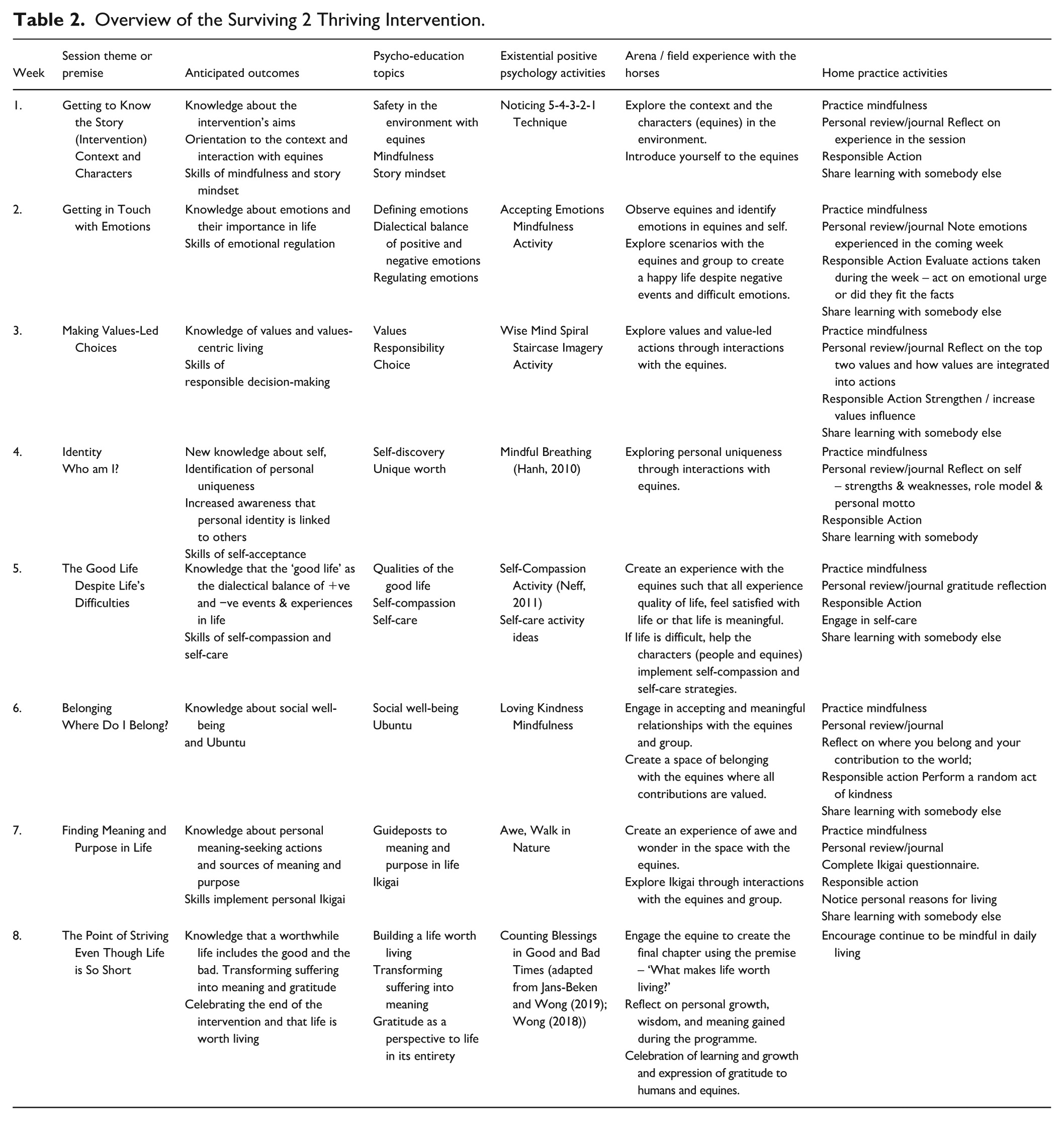
The facilitation followed the ARCH facilitation approach, enabling participants to collaboratively generate, revise, and share personal narratives with peers and equine partners. (Anderson, 2003; Arenas for Change, 2023; Thornton, 2017). The session and activities were adapted for the local cultural context and infused with the philosophy of Ubuntu, which emphasises collective resilience, community belonging, and the interconnectedness of human and animal well-being (Chibvongodze, 2016; Wilson Fadiji & Wissing, 2022). Thus, the intervention provided a safe, empowering space for participants to practice new emotional, relational, and self-reflective skills. It integrated evidence-based equine-assisted techniques with narrative and EPP intervention practices, explicitly tailored for under-resourced multicultural South African communities.
The ‘Surviving 2 Thriving’ manualised intervention was delivered in eight weekly, 2-hr group sessions at the SCT outdoor equestrian farm. The facilitation team included two counselling psychologists and two equine behaviour specialists trained in the Eagala and ARCH facilitation approaches. To maintain facilitation fidelity, the facilitation group agreed that the same mental health and equine specialist would facilitate all eight intervention sessions for a particular group. SCT required all facilitators to sign a confidentiality agreement before working on the programme.
The SCT facilities included an outdoor classroom and a large grassy enclosure of approximately one hectare with accessible, clean water and grazing. The study included ten horses and three donkeys regularly engaged in equine-assisted services. The number of equines allocated to each intervention group depended on the space available and the number of participants, so there was no overcrowding, and the equines and people could be apart if they so chose. There was a maximum of seven equines in each herd during the intervention.
Measures
Biographical Questionnaire
Collected socio-demographic data including gender, age, ethnicity, home language, community of residence, highest education level, and employment status. Although the study did not address disability directly, one participant disclosed a physical disability.
Psychometric Assessments
The reliability of all measures was evaluated using the pre-intervention data.
Mental Health Continuum Short Form
This 14-item scale (Keyes, 2002), assesses flourishing through emotional (EWB), psychological (PWB), and social well-being (SWB). Items are rated on a 6-point Likert scale (0 = never, 5 = every day), with total scores ranging from 0 to 70. High scores indicate flourishing, while low scores reflect languishing. Diagnosis criteria involve the frequency of hedonic and positive functioning symptoms (Keyes, 2009).
The three-factor structure has been validated globally and in South Africa (de Bruin & du Plessis, 2015; Kabir et al., 2021; Karaś et al., 2014; Keyes et al., 2008; Khumalo et al., 2011; Lamers et al., 2011; Luijten et al., 2019; Lupano Perugini et al., 2017; Petrillo et al., 2015). The test demonstrates good test-retest reliability, indicating sensitivity to change and stability over time (Lamers et al., 2012; Petrillo et al., 2015). Aligned to global and South African research, this study yielded Cronbach’s α ranging between .69 and .84, confirming good internal consistency.
Satisfaction with Life Scale
The Satisfaction with Life Scale (SWLS) measures global judgments of life satisfaction using five items rated on a 7-point Likert scale (Diener et al., 1985; Pavot & Diener, 2008). Scores between five and 35 are categorised from ‘extremely dissatisfied’ to ‘extremely satisfied’ (Pavot et al., 1991).
Prior research reported excellent reliability (Cronbach’s α ranging from .87 to .91) in diverse global contexts, including South Africa (Cotton Bronk et al., 2009; Diener et al., 1985; Disabato et al., 2016; Keyes et al., 2008). Test-retest reliability over two months was r = .82 (Diener et al., 1985). In this study, Cronbach’s α was .75.
Scale of Positive and Negative Experience
The Scale of Positive and Negative Experience (SPANE) assesses positive (SPANE-P) and negative (SPANE-N) feelings and the overall affect balance (SPANE-B) through 12 items rated on a 5-point Likert scale (Diener et al., 2009). Subscale scores range from six to 30, and the SPANE-B score is calculated by subtracting SPANE-N from SPANE-P, with values ranging from −24 (the unhappiest possible) to 24 (the happiest possible) (Diener et al., 2009).
Previous studies involving multicultural adult populations, including South Africa, reported Cronbach’s α values between .70 and .89 (du Plessis & Guse, 2017; Jovanović, 2015; Li et al., 2013). The scale has shown acceptable test-retest reliability over one month (r = .62–.68) (Li et al., 2013). In this study, Cronbach’s α ranged from .70 to .81.
Depression Anxiety and Stress Scale – 21 items
The Depression Anxiety and Stress Scale – 21 items (DASS-21) measures depression, anxiety, and stress through three separate subscales of seven items each, rated on a 4-point Likert scale (Lovibond & Lovibond, 1995). Subscale scores are summed and doubled to determine severity, with categories ranging from ‘extremely severe’ to ‘normal’ (Lovibond & Lovibond, 1995).
Dreyer et al. (2019) confirmed support for the three-factor model of the DASS-21 (depression, anxiety, and stress) in a non-clinical South African context. Numerous international and national studies demonstrate that the scale and subscales have consistent reliability with Cronbach’s α ≥ .70 (Coker et al., 2018; Dreyer et al., 2019; Lovibond & Lovibond, 1995; Moya et al., 2022; Norton, 2007; Oei et al., 2013). Furthermore, the DASS-21 demonstrates test-retest reliability over periods ranging from 3 weeks to 3 months, with intraclass correlation (ICC) values above 0.74 for Western and non-Western (including African) adult communities (Asghari et al., 2008; Gomez et al., 2014; Kakemam et al., 2022; Moya et al., 2022). The current study yielded a Cronbach value of .92 for the total scale, with subscale values ranging from .75 to .81.
Procedure
Quantitative data were collected at accessible community sites in Diepsloot, including the SCT facility and local organisation offices. Assessments occurred at three points: pre-test (before intervention), post-test (immediately after intervention), and post-post-test (3 months later). The experimental group completed assessments at SCT, while the control group participants used SCT or a convenient community site.
Participants completed the pen-and-paper questionnaire in 20 to 40 min. Names were recorded only for researcher follow-up, redacted after data collection, and replaced with an assigned alphanumeric code for anonymity. Data capture utilised only the identification code. Assessment dates were communicated via text or WhatsApp. Attrition occurred due to employment, relocation, scheduling conflicts, or time constraints, which reduced the number of completed questionnaires. No incentives were provided.
Normality of the Data and Statistical Analysis
The quantitative data analysis was conducted using IBM SPSS Statistics Version 28®. Descriptive and inferential statistical analyses were conducted. Initially, the Kolmogorov-Smirnov statistic determined a lack of normality in the distribution of scores in the sample; therefore, non-parametric statistics were used (Field, 2013; Pallant, 2020).
A preliminary investigation into changes in participant flourishing was conducted by examining the prevalence of well-being, life satisfaction, affect balance, and psychological distress. The participants’ overall well-being diagnostic categories were determined based on Keyes’ (2009) guidelines using the Mental Health Continuum Short Form (MHC-SF) scores. The various levels of satisfaction with life were classified according to the procedures outlined by Pavot et al. (1991). A summary of these categories and classifications was provided earlier. The prevalence of affect balance and the amount of positive and negative emotions experienced were calculated by determining the percentage of participants who reported scores equal to or greater than the median. The severity of the constructs of depression, anxiety, and stress was determined according to the categories defined by Lovibond and Lovibond (1995).
After that, a Wilcoxon Signed-Rank test was performed to assess the null hypothesis that there was no difference in flourishing dimensions pre-, post-, and post-intervention median scores within the experimental and control groups. The Mann–Whitney U test was employed to assess whether there were statistically significant differences in flourishing dimensions between the experimental and control groups at pre-, post-, and post-post-intervention time points (Field, 2013; Pallant, 2020).
Finally, the influence of session attendance and demographic factors on the experimental group’s significant results was investigated. The demographic characteristics were categorised as depicted in Table 1. The Kruskal-Wallis test was performed on factors with more than two groups/categories to assess the null hypothesis that the distribution of significant scores determined on the measures of flourishing was the same across the categories of age, levels of education, and number of sessions attended. Where the null hypothesis was rejected, a subsequent pairwise comparison was conducted.
In addition, independent samples Mann–Whitney U tests were conducted within the pooled sample to test the null hypothesis that the distribution of flourishing scores did not differ across demographic categories, having two groups, specifically gender (male/female) and employment status (employed/unemployed) (Field, 2013; Pallant, 2020).
Ethical Considerations
Ethical permission to conduct the study was obtained from the Faculty of Humanities’ Ethics Committee, protocol number HUM007/1220. Permission was granted by a trustee of SCT for the research to be conducted at the facility. Participation in the study was voluntary, and all participants provided informed consent. Informed consent included information regarding the risks of interacting with equines, which are large, flight prey animals that move quickly. Safety guidelines for behaving around equines were given during the initial session. Participants were not required to touch the equines, and all activities took place on the ground without requiring horseback riding. The facilitation team monitored the welfare of the human and equine participants throughout the study. No welfare concerns were raised, and neither equines nor humans sustained any injuries during the study.
Results
The listwise deletion method was used to manage the missing data (Peeters et al., 2015). Table 3 includes the descriptive statistics for the experimental and control groups on all psychometric measures at the study’s three assessment time points.
Descriptive Statistics for Sample Flourishing Across the Study.
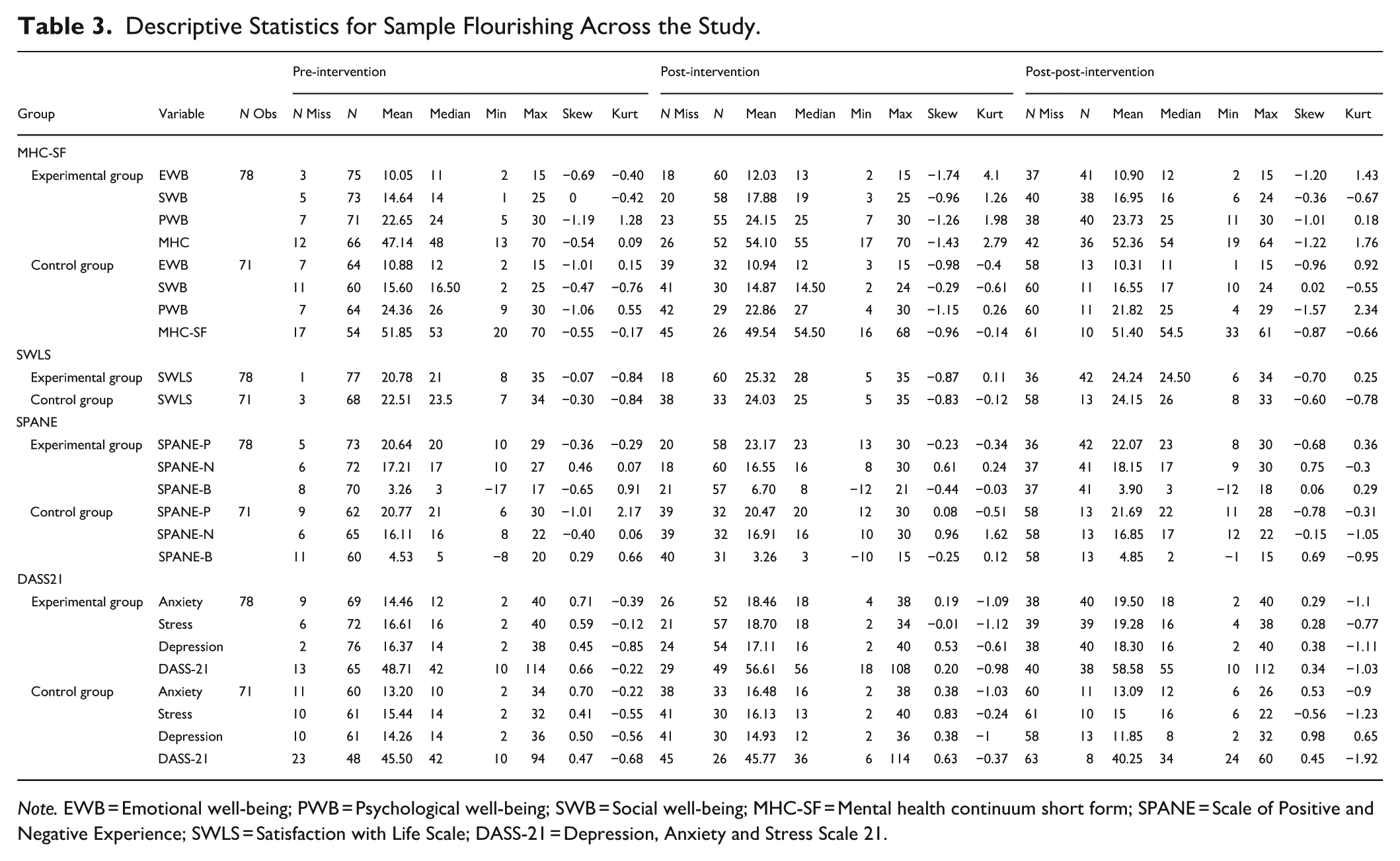
Note. EWB = Emotional well-being; PWB = Psychological well-being; SWB = Social well-being; MHC-SF = Mental health continuum short form; SPANE = Scale of Positive and Negative Experience; SWLS = Satisfaction with Life Scale; DASS-21 = Depression, Anxiety and Stress Scale 21.
Prevalence
Throughout the study, sample participants reported a greater than 50% prevalence of flourishing, satisfaction with life, and affect balance with slightly more positive than negative emotions. Simultaneously, there was a prevalence of mild-to-normal depression and stress levels accompanied by remarkably high levels of anxiety (see Table 4 for a summary of the prevalence scores). Hence, both experimental and control groups reported flourishing despite having increased levels of psychological distress. However, fluctuations in the prevalence of the dimensions of flourishing were observed across the study. Therefore, it was essential to investigate the significance of these changes in these different facets of flourishing to determine if the intervention played any role in these changes.
Prevalence of Main Flourishing Dimensions in the Sample Across the Study Period.
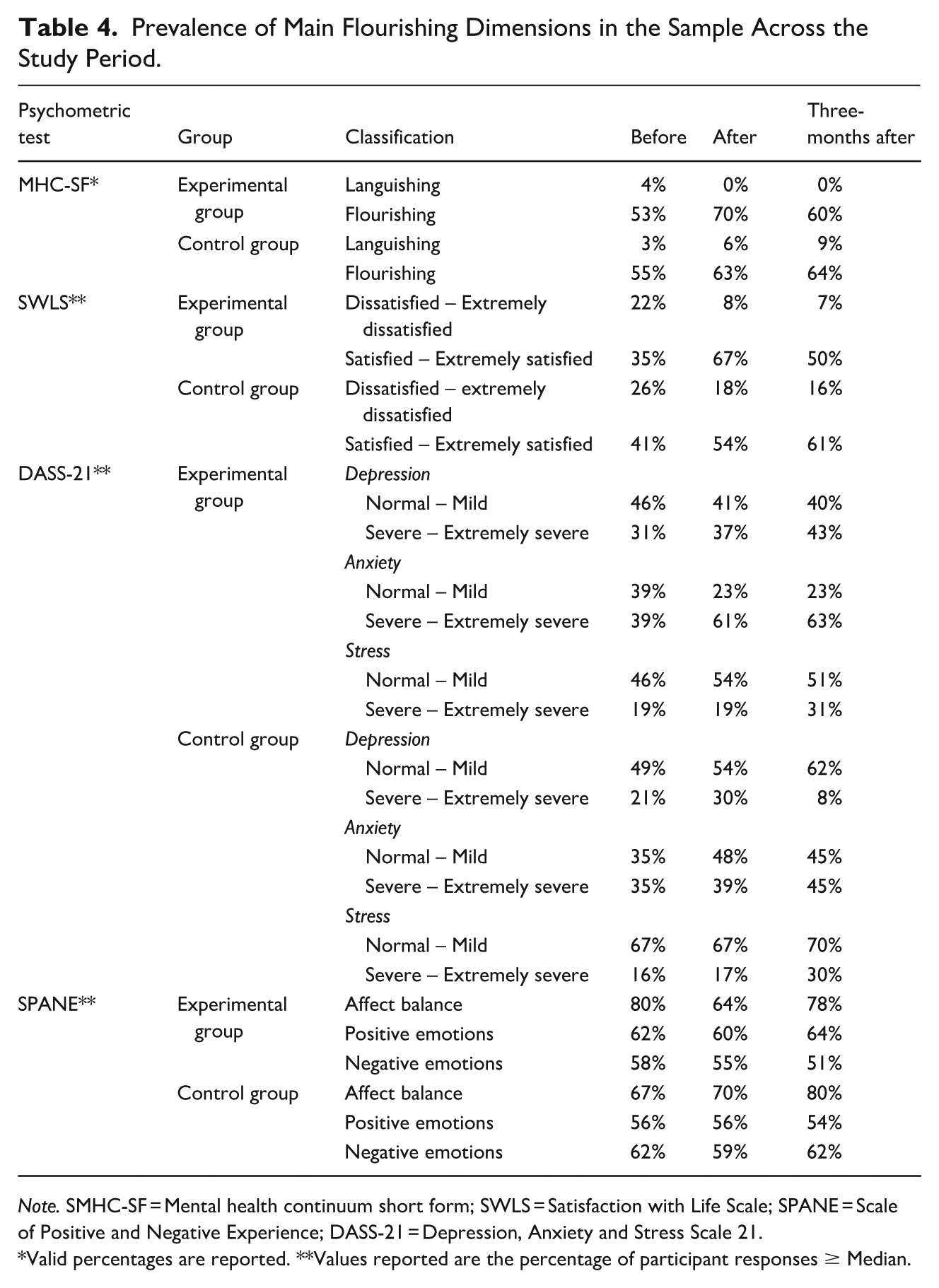
Note. SMHC-SF = Mental health continuum short form; SWLS = Satisfaction with Life Scale; SPANE = Scale of Positive and Negative Experience; DASS-21 = Depression, Anxiety and Stress Scale 21.
Valid percentages are reported. **Values reported are the percentage of participant responses ≥ Median.
Next, the statistical analyses of the differences within each experimental condition, followed by the differences between the experimental and control groups at pre-, post-, and post-post-intervention, will be presented.
Determining the Significance of Differences in Changes of Flourishing Within the Experimental and Control Groups
A Wilcoxon signed-rank test revealed significant differences within the experimental group participants’ scores on the MHC-SF, SWLS, and SPANE when comparing pre-intervention scores with post-intervention and post-post-intervention scores and post-intervention with post-post-intervention scores.
Pre-Intervention Versus Post-Intervention
After the intervention, the experimental group reported large, significant improvements in EWB, PWB, overall well-being (MHC-SF total score) and satisfaction with life. They also reported a significant decrease in the experience of negative emotions (SPANE-N). These differences are detailed in Table 5.
Wilcoxon Signed-Rank Test Significant Results for Experimental Group Flourishing Pre-Test Versus Post-Test.
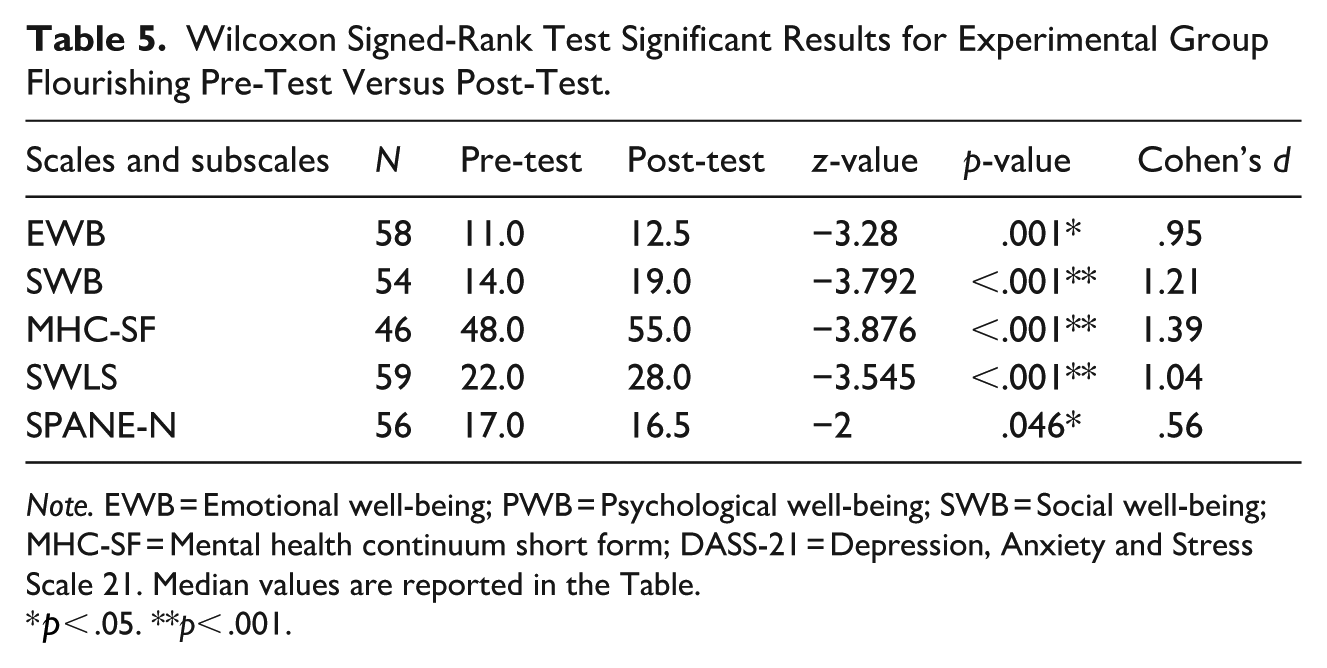
Note. EWB = Emotional well-being; PWB = Psychological well-being; SWB = Social well-being; MHC-SF = Mental health continuum short form; DASS-21 = Depression, Anxiety and Stress Scale 21. Median values are reported in the Table.
Pre-Intervention Versus Post-Post-Intervention
A Wilcoxon signed-rank test revealed a large statistically significant increase in overall well-being 3 months after participating in the EAPPI (Table 6).
Wilcoxon Signed-Rank Test Statistics for Experimental Group Flourishing Pre-Test Versus Post-Post-Test.
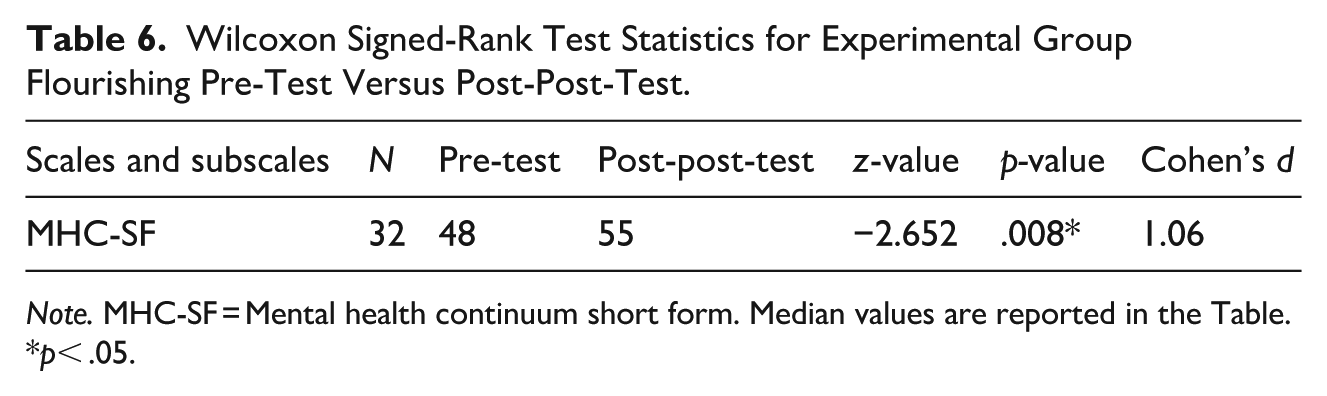
Note. MHC-SF = Mental health continuum short form. Median values are reported in the Table.
p< .05.
Post-Intervention Versus Post-Post-Intervention
As indicated in Table 7, the Wilcoxon signed-rank test results revealed a moderately significant decrease in participant emotional well-being and affect balance from before to 3 months after the intervention.
Wilcoxon Signed-Rank Test Significant Statistics for Experimental Group Flourishing Post-Test Versus Post-Post-Test.
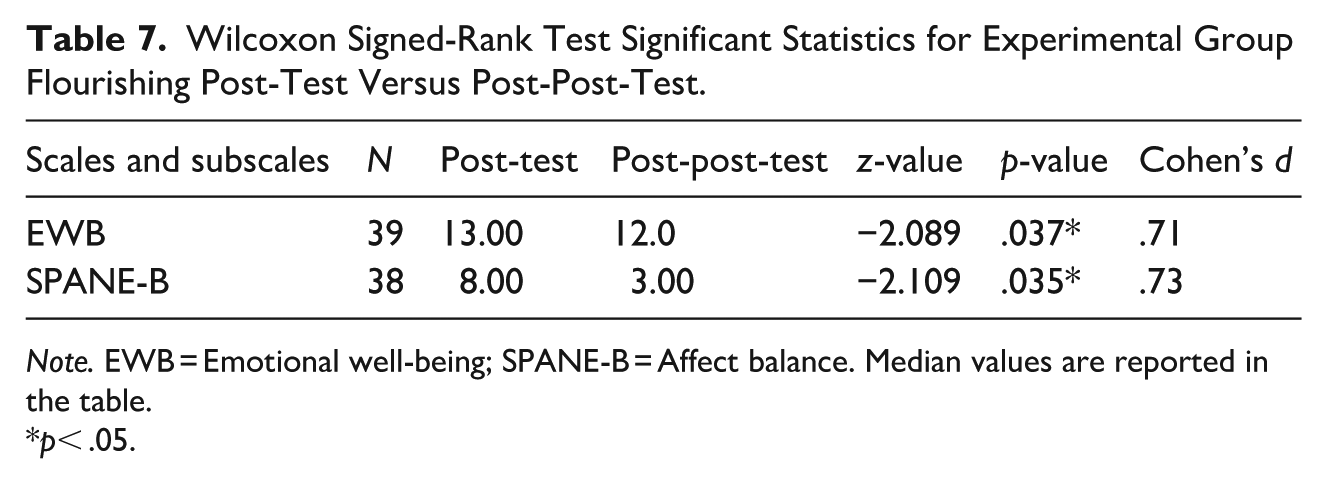
Note. EWB = Emotional well-being; SPANE-B = Affect balance. Median values are reported in the table.
p< .05.
Within the control group, a Wilcoxon signed-rank test revealed no statistically significant difference on any scale and subscale median scores when compared pre- vs. post-intervention, pre- vs. post-post-intervention, and post- vs. post-intervention.
Determining the Significance of Changes in Flourishing Between the Experimental and Control Groups
Experimental and Control Groups Pre-Intervention Difference in Flourishing
Table 8 shows that before the intervention, a Mann–Whitney
Mann–Whitney
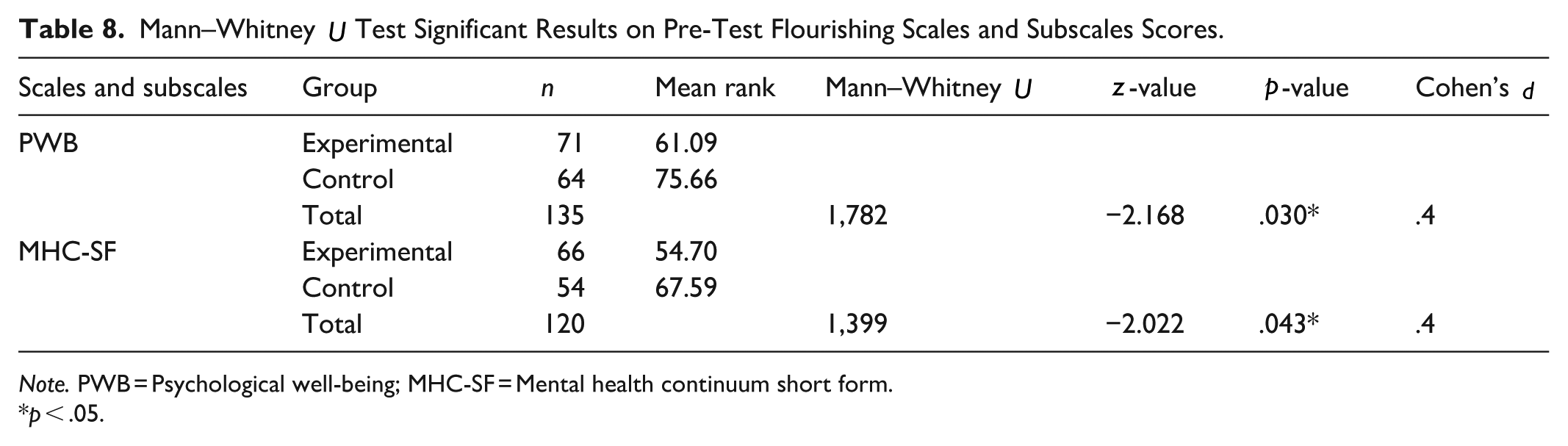
Note. PWB = Psychological well-being; MHC-SF = Mental health continuum short form.
p < .05.
Experimental and Control Groups Post-Intervention Difference in Flourishing
After the intervention, the experimental group showed moderately significantly greater SWB, positive affect balance, and positive emotions as compared to the control group, as depicted in Table 9
Mann-Whitney
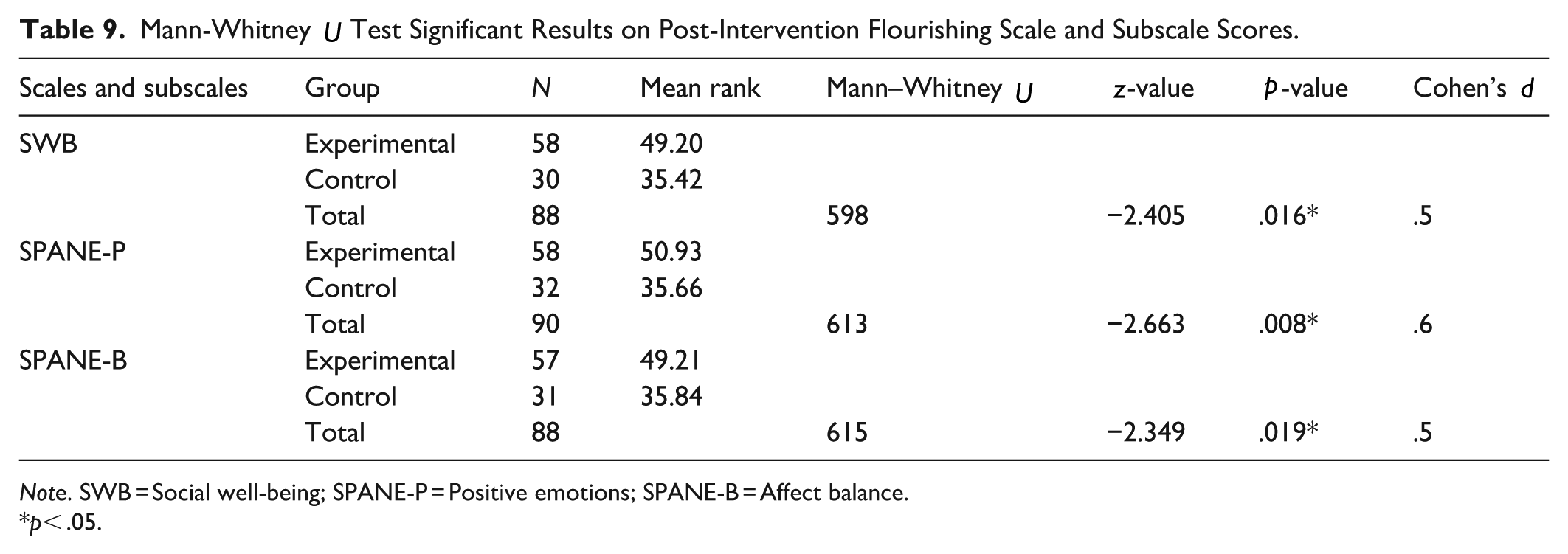
Note. SWB = Social well-being; SPANE-P = Positive emotions; SPANE-B = Affect balance.
p< .05.
Experimental and Control Groups Post-Post-Intervention Difference in Flourishing
The Mann-Whitney
To further understand the significant changes observed in the experimental group, the influence of demographic factors was determined. However, with regard to the control group, there was no need to determine the impact of demographic variables, as the lack of significant differences in the measure scores suggests stability in their flourishing.
Determining the Effect of Demographic Variables on Flourishing
Non-parametric statistical analysis tested the null hypothesis that the experimental group distribution of significant scores on the measures would be the same across gender, age, education level, employment status, and number of intervention sessions. No differences in the distribution of significant scores were reported for gender, education level, and number of sessions attended. Therefore, the null hypothesis was retained for these demographic variables.
An independent Kruskal-Wallis test indicated the retention of the null hypothesis across the age categories, except for the post-post SWLS, as indicated in Table 10.
Summary of Significant Results of the Independent Samples Kruskal-Wallis Test for the Distribution of Flourishing Measure Scores Across Three Age Categories.
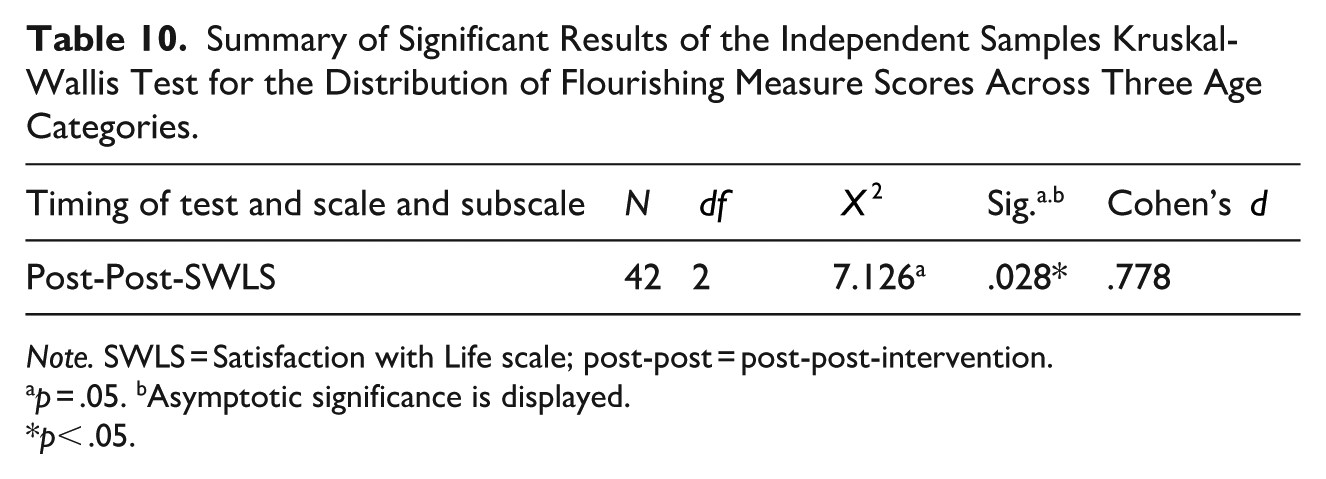
Note. SWLS = Satisfaction with Life scale; post-post = post-post-intervention.
p = .05. bAsymptotic significance is displayed.
p< .05.
Subsequently, a pairwise comparison of the age categories on the post-post SWLS rank scores was conducted (Figure. 1)
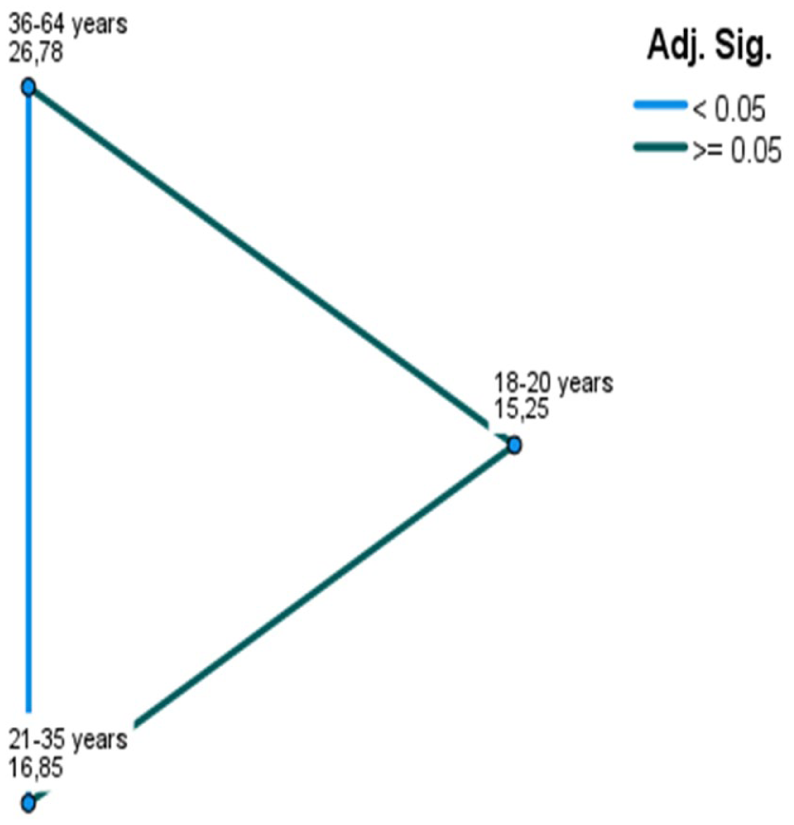
Pairwise comparison of age category on the post-post-SWLS scores.
The pairwise comparison indicated that the participants in middle adulthood (36–64 years) recorded a significantly higher mean rank score on the SWLS 3 months after the intervention than those in early adulthood (21–35 years).
Finally, an independent samples Mann–Whitney
Summary of Results of an Independent Samples Mann-Whitney
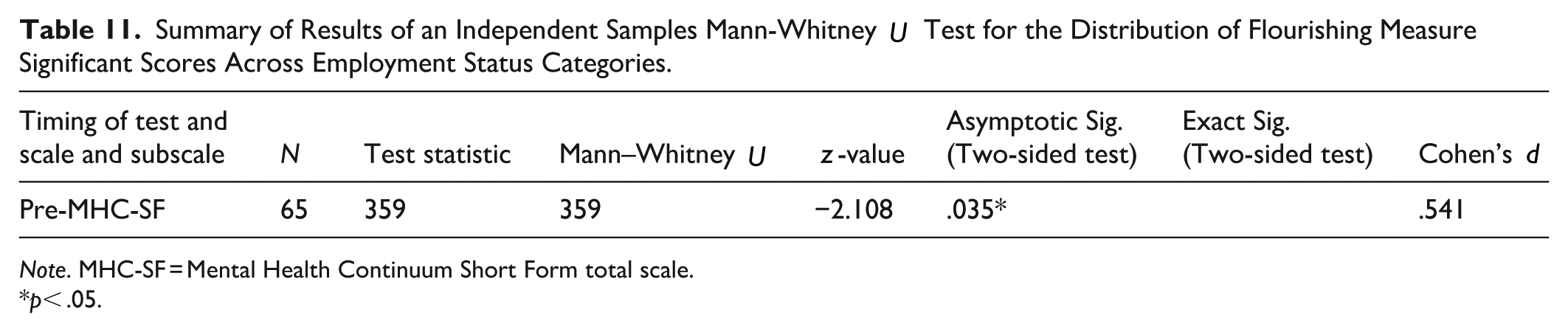
Note. MHC-SF = Mental Health Continuum Short Form total scale.
p< .05.
The results revealed that the employed group reported significantly greater overall well-being before the intervention than the unemployed. Notably, the distribution of the measure scores was the same for both the employed and unemployed groups, after and 3 months after the intervention,
Discussion
At baseline, 47% of the experimental and 45% of the control groups were not flourishing, with the experimental group reporting lower overall and psychological well-being, and higher levels of psychological distress. Furthermore, the unemployed members of the experimental group reported lower overall well-being than their employed counterparts. The experimental group included a higher proportion of unemployed individuals, students, and immigrants, groups typically associated with lower well-being due to economic pressures, transitional uncertainty, and experiences of marginalisation such as xenophobia and social exclusion (Abdullah et al., 2020; Bantjes et al., 2023; Hasel, 2014; Mokwena & Mokwena, 2022; Pillay, 2019). These contextual disparities align with prior research identifying unemployment and migration-related stressors as substantial impediments to psychological health in under-resourced South African communities (Morar et al., 2024).
Following the intervention, the experimental group showed statistically significant improvements in overall well-being (MHC-SF), SWB, and positive affect balance (SPANE-P), as well as increases in life satisfaction (SWLS) alongside a marked decrease in negative affect (SPANE-N). Notably, flourishing prevalence increased by 20%, with no participants classified as languishing post-intervention. At the 3-month follow-up, flourishing gains were maintained, with levels not reverting to baseline, even though differences between experimental and control groups were no longer statistically significant. The consistency of these findings across multiple indicators highlights both the breadth and durability of the intervention’s effect.
The sustained increases in life satisfaction and overall well-being, coupled with reduced negative affect and reports of psychological distress, confirm the intervention’s capacity to enhance flourishing in contexts of persistent psychosocial adversity. However, the observed reduction in emotional well-being and positive affect balance at follow-up suggests that affective components of well-being remain susceptible to ongoing structural and environmental stressors. Despite this sensitivity, participants continued to report more positive than negative emotions overall, demonstrating notable emotional resilience. This pattern, initial elevation followed by modest readjustment while maintaining above-baseline well-being, aligns with existential positive psychology (EPP) principles, which posit that flourishing emerges not from the elimination of suffering but from the integration of meaning, acceptance, and growth in the face of ongoing challenge (Wong, 2016, 2021).
Accordingly, the results suggest that the intervention enabled participants to cultivate both emotional and existential resources necessary for enduring well-being under sustained adversity.
Philosophical congruence between the intervention and its outcomes was evident. Informed by EPP and the African philosophy of Ubuntu, the EAPPI situated flourishing as a relational, meaning-centred process arising from authentic connections among individuals, animals, and nature (Frankl, 1969; Wissing et al., 2021). Group-based equine activities operationalised core existential processes of agency, self-reflection, and belonging while affirming interdependence in the presence of shared adversity. This alignment underscores the eco-existential theoretical framework’s view that relational and ecological interactions foster well-being by integrating personal agency with communal identity and collective resilience (Lomas et al., 2021; Passmore & Howell, 2014). The sustained gains in overall well-being and social functioning thus reflect the intervention’s coherence with its foundational philosophies: flourishing as a balance of autonomy, connection, and engagement with life’s paradoxes.
The results also reinforce the growing evidence base for equine-assisted and nature-based psychological interventions. Reductions in negative affect and the maintenance of positive well-being mirror earlier findings that contact with natural environments supports emotional regulation and eudaimonic well-being (Capaldi et al., 2015; McMahan & Estes, 2015). The particular gains observed among older adults at follow-up further highlight the potential relevance of such interventions for promoting purpose, connection, and life satisfaction later in adulthood (Lee et al., 2020; Passmore, Lutz, et al., 2022).
While these outcomes are promising, several methodological limitations should be acknowledged. The study relied on convenience sampling within a single community, which may limit generalisability. Although participants were assigned to experimental and control groups as systematically as possible, complete randomisation was not feasible in this community-based design. Participant attrition and the length of the questionnaire also contributed to missing data, and as the study relied exclusively on self-report measures, response bias cannot be excluded. Nonetheless, ethical and logistical supports, such as transport allowances and meal provision, enhanced inclusivity and retention throughout the intervention, mitigating typical barriers to participation in low-income community research (Docrat et al., 2019; Spedding et al., 2014).
Overall, the findings advance evidence for equine-assisted positive psychology interventions as feasible, culturally attuned mechanisms for promoting flourishing in diverse, under-resourced populations. The medium-to-large effect size improvements observed immediately after and 3 months following the intervention confirm its empirical relevance within the framework of EPP. The study contributes meaningfully to contemporary well-being research by confirming that flourishing can emerge and be sustained through adversity, when interventions are philosophically coherent and contextually responsive to lived realities.
Footnotes

Ethical Considerations
Ethical approval for this research was obtained from the Faculty of Humanities and Health Sciences at the University of Pretoria [HUM007/1220]. The Faculty of Health Sciences is registered with the National Health Research Ethics Council (NHREC) of South Africa.
Consent to Publication
All authors listed above are informed of the article and granted consent to it being submitted for publication consideration.
Funding
The authors received no financial support for the research, authorship, and/or publication of this article.
Declaration of Conflicting Interests
The authors declared no potential conflicts of interest with respect to the research, authorship, and/or publication of this article.