




Abstract

Keywords
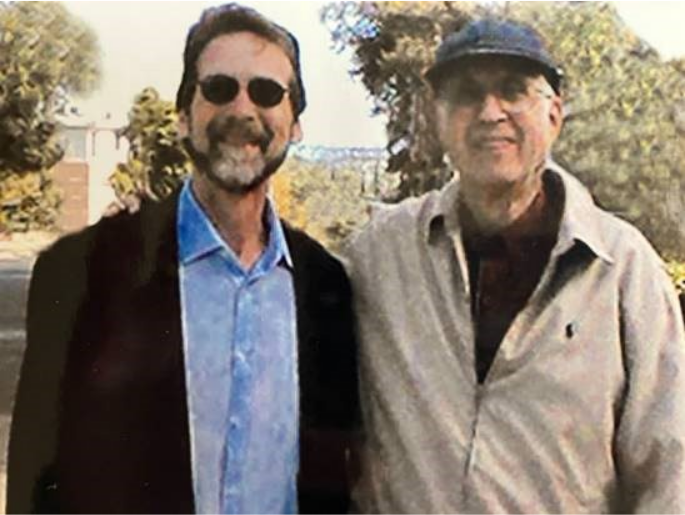
Way back in 1985, I attended a festive humanistic psychology conference at the Jack Tar hotel in San Francisco. Amid the luminaries I witnessed were Carl Rogers, Rollo May, and James Bugental. But standing tall and sturdy was a lively middle-aged man overseeing a booth dedicated to the Journal of Humanistic Psychology (JHP). That man was Tom Greening, and it was the first time I met him in person. To be sure, I did hear about Tom from my mentor James Bugental. He told me how Tom took a fledgling periodical and heroically turned it into a blockbuster journal. This was a time, Jim elaborated, when humanistic psychology needed such a journal to keep up with its growing popularity, and Tom stepped up to the task.
Coincidentally, I had also just submitted a piece to JHP—my very first—titled “Encountering and Integrating Kierkegaard’s Absolute Paradox.” Tom expressed enthusiasm for my article at that initial meeting, but he also made it clear that it needed much work before it was ready for publication. He could be direct like that, but he was also direct about recognizing potential and working intensively with authors to realize that potential. About a year later, he published my article (Schneider, 1986), which formed the basis of my first book—The Paradoxical Self.
The first thing that struck me about Tom was his folksy, Jimmy Stewartish congeniality and his sardonic humor. Tom had few illusions about much that passes for “truth” in our field, notwithstanding, at times, our own subdiscipline of humanistic psychology, and he was not reserved about it. On the other hand, he took his responsibilities as editor of our flagship journal, the journal inspired by Maslow, very seriously, as he did the progress and gravity of our humanistic mission. In short, Tom made a considerable impression on me as a fledgling young professional, and that impression sparked an increasingly warm relationship. The relationship evolved right through the years in which he asked me (well, maybe “implored” is the more accurate word) to take over the Journal’s editorship following his rigorous and inimitable oversight for over 35 years. I heartily accepted Tom’s invitation, despite Jim Bugental’s warning that if I did so I would never have a normal life again!
My relationship with Tom extended further when on behalf of my Existential-Humanistic Institute colleagues, I asked him to join us for the experiential intensives we offered to Saybrook University students in the late 1990s and early 2000s.
Tom was such an animated addition to our team, bringing a whole new tone of levity, Bessie Smith recordings, and absorbing stories of his unique and colorful past. These tales included his time as a young associate of Jim Bugental in the late 1950s and later as a humanistic psychology ambassador of sorts to Central and Eastern Europe, Japan, China, and other far-away places. He loved his colleagues in those regions and once mused that he seriously thought of living in Vienna.
As indicated above, Tom and I also shared a beloved mentor—Jim Bugental. Jim was in his early 40s when he took Tom on at his Westwood office near UCLA, and he was in his mid-60s when he took me on as a wonder-struck graduate student and then intern at his and his marvelous wife Liz’s low-cost counseling center “Interlogue.” Tom and I would joke about this bookended apprenticeship with Jim and trade stories about the little dramas we witnessed in very different yet related contexts. When Jim died in 2002, we coauthored an obituary for him that appeared in the American Psychologist (Schneider & Greening, 2009).
In later years, following a very close and collaborative relationship as editors of JHP, Tom and I would meet periodically. Sometimes these meetings took place at conferences and sometimes at his order-challenged house, where reams of JHP drafts, not to mention books and journals, lay scatter-shot all over his office furnishings. They flopped and fluttered on his floor, his desk, and his chairs, and I relished that organized chaos (probably because it validated my own!). His parade of dogs over those decades was also endearing, as they ever accompanied him and saw him through the darker—as well as bemusing and exuberant—hours.
I cannot end my commemoration of Tom without mentioning the profoundly touching poem he sent me and my wife Jurate in 1995 at the time of our son Benjamin’s birth. The poem was such an affectionate synthesis of personal lineages, appreciation for new life, and homage to our mutually treasured Rollo May. Rollo had just died a year earlier but somehow found new life in Tom’s rendering through our son, and in a larger sense the children of each emerging generation as they replace and renew the generations that preceded them. Here is the poem in its entirety: For Benjamin Moses Schneider Rollo’s gone—we grieve our loss. The world is lacking noble men. Now just in time new hope arrives— The fates bestow on us young Ben. Kirk and Jurate did their part, But greater forces were at play. Long Baltic history bore fruit And birthed him in the USA. But little Ben is just a kid— Let’s shield him from our human strife. May we deserve this newborn child And celebrate the gift of life. Tom Greening
In sum, I hail Tom Greening. He was and ever will be a sagacious and youthful character, ever chiding us, ever prodding us, ever bemusing us about life’s unending turns.
Love you, Tom, and cherish your abounding spirit.
Footnotes
Declaration of Conflicting Interests
The author(s) declared no potential conflicts of interest with respect to the research, authorship, and/or publication of this article.
Funding
The author(s) received no financial support for the research, authorship, and/or publication of this article.
Author Biography
