




Abstract
This study explores the design and evaluation of a pedagogical agent persona (PAP) to enhance project-based learning (PBL) in Ghanaian senior high schools. Using a design-based research approach, a multimodal human-like PAP was developed and tested with 15 students and two teachers. Data from interviews, observations and usability scales revealed high learner engagement and satisfaction, with the Learner Attenuated System Paced model scoring highest (SUS = 92). Findings suggest that a PAP can support instructional equity, autonomy, and engagement in large-class settings. The study offers practical insights for scalable learner-centred technology integration in under-resourced educational contexts.
Keywords
Project-based learning (PBL) has gained increasing attention in education as an instructional approach that fosters student engagement, critical thinking, and collaboration by immersing learners in authentic real-world tasks (Song et al., 2025). In contrast to traditional teacher-centred methods, PBL shifts the responsibility of learning to students by positioning them as active investigators and creators while the teacher serves as a facilitator (Beem, 2021; Ramamurthy et al., 2023).
One emerging technology with strong potential to enhance PBL is the Pedagogical Agent Persona (PAP). A PAP is a type of pedagogical agent which is an interactive computer-generated character designed to deliver guidance, feedback and scaffolding in a human-like manner during the learning process (Lin et al., 2020; Pérez-Marín, 2021; Schroeder et al., 2025). Pedagogical Agent Personas (PAPs) may appear as animated avatars, virtual tutors, or character-based guides, capable of simulating social cues such as gaze, facial expressions and gestures. For example, a PAP in a visual arts class might demonstrate brush techniques through animated movements, provide instant feedback on a student’s project, and encourage reflection through prompts. By embedding such support directly into multimedia learning environments, PAPs can personalize the PBL experience and extend the teacher’s capacity in large or resource-constrained classrooms (Li et al., 2022; Ryong et al., 2023).
In Ghana, the context for this study, class sizes are typically large; thus, making it difficult for teachers to monitor each student’s progress in project-based learning (Aidoo, 2023; Essel et al., 2022, 2024). Recent national education statistics compiled by the Ghana Statistical Service (2023), drawing on EMIS administrative data, indicate that senior high school class sizes in Ghana often average 50–60 learners per classroom, with some urban senior high schools exceeding this figure. This contrasts with the sub-Saharan African regional average of about 44 students per secondary-level class and a global average of roughly 26 (UNESCO Institute for Statistics UIS, 2024). These figures illustrate the structural challenge of overcrowded classrooms in Ghana and highlight the pedagogical value of scalable digital supports such as pedagogical agent personas, which can extend teacher presence and promote equitable participation in large-class contexts. Additionally, most teachers in Ghana are used to traditional teaching methods where students are passive learners (Boakye et al., 2024). This is in contrast to project-based learning, which puts students in charge of their own learning and requires teachers to act as facilitators rather than knowledge holders and controllers (Beem, 2021; Ramamurthy et al., 2023).
Pedagogical practices in most senior high schools in Ghana are currently teacher-centred, with teachers acting as ‘knowledge disseminators’ (Boakye et al., 2024; Douglass, 2020; Woods, 2020). This method of teaching does not enable students to develop the necessary skills to function effectively in a modern society. In any case, senior high school students in Ghana are examined at the end of their 3-year programme by the West African Examinations Council (WAEC) in both the core subjects and the electives with visual art students always having a project work component in their electives (Annan-Brew, 2020; Appah et al., 2021).
PAP technology offers an alternative to the current teacher-centred practices (Mathews, 2021). This technology involves a new class of learning technologies known as artificial intelligent-instructional systems, which incorporate simulations, expert systems, fuzzy logic, and intelligent agents. The agents appear as pedagogical characters in a multimedia package and can provide guidance, feedback, and tutoring to students as they work through the courseware (Mathews, 2021; Ryong et al., 2023; Wu et al., 2021). With the rising popularity of e-learning, a human-like pedagogical agent (PA) that shows eye gazing and gestures is frequently used in online multimedia lessons to boost social connection and improve learning in e-learning settings (Li et al., 2022). Further, the PAP has attained popularity in recent years as a technology-supported instructional innovation that utilises the classroom period for students to actively engage in interactive learning tasks, which incorporate scaffolding and individualised feedback from the agent. As such, the importance of designing a pedagogical agent that can suit a PBL environment is very crucial, as the research conducted by some scholars also showed that most of the higher education students preferred constructive type of practices such as using technology applications in their work (Elfeky & Elbyaly, 2023; Žerovnik & Nančovska Šerbec, 2021). Pedagogical agents can demonstrate human-like intelligent behaviour such as reasoning, problem-solving and understanding natural language (Kadam & Vaidya, 2021; Laureano-Cruces et al., 2022). These digital characters are capable of providing real-time, contextualized, and individualized tutoring to students. Research has consistently shown that the use of pedagogical agents leads to significant improvement in retention, engagement, and the overall learning experience (Lin et al., 2020; Li et al., 2022; Wang et al., 2022).
Despite the abundance of perspectives and computational models in the literature on agents and multi-agent systems, little is known about how pedagogical agents are designed and developed to enhance project-based learning in different pacing conditions, specifically at the Senior High School level. This reality has prompted many scholars to emphasize a dearth of understanding on successful pedagogical agent design, particularly in the literature on pedagogical agents for project-based learning (Boss & Krauss, 2022; Kumar, 2021; Pan et al., 2021) and that is a gap in the literature that this research study aims to explore.
Hence, this study explores the design, development, and evaluation of a PAP tailored to different pacing conditions: System Paced, Learner Paced, and Learner Attenuated System Paced, to enhance PBL in drawing among students in Kumasi Senior High Technical School. By integrating human-like instructional support into visual arts project work, the PAP aims to increase learner autonomy, engagement, and skill mastery while ensuring equitable access to quality guidance regardless of class size.
Literature Review
The Role of Pedagogical Agent Personas in Education
In educational technology, Pedagogical Agent Personas (PAPs) are often presented as animated, human-like characters, though alternative designs can range from animals to abstract forms. Such agents may communicate with humans using a variety of modalities including speech, gesture, and facial expressions (Alisa et al., 2020; Pérez-Marín, 2021; Weber et al., 2021). In the field of technology in education, PAPs are also called ‘learning companions’ because they can accompany students in the learning process, like a real teacher or tutor.
Students can be engaged in active and reflective learning with the help of such agents (Grivokostopoulou et al., 2020; Lin et al., 2020). Sustained interaction between learners and PAPs fosters familiarity and rapport, which scholars emphasize as central to learning engagement. They see PAPs as ‘situated and embodied’ in their research. (Lin et al., 2020; McCallen & Johnson, 2020; Schroeder et al., 2025).
Building on this, Alisa et al. (2020) define PAPs as characters that actively facilitate learning, while Veletsianos & Russell (2013) distinguishes between teachable agents and conversational agents. While teachable agents are fictional characters whom students can train to perform tasks, conversational agents are capable of carrying on dialogues with learners. In his discussion of teachable agents, Blair (2007) highlights their shared visual representations and capacity to serve as an example for effective learner behaviour. A thorough analysis of the design elements and pedagogical agents’ effects is given by Martha & Santoso (2019), who also identifies the many types of design and their beneficial effects on student behaviour and learning.
The educational study of PAPs gained momentum in the late 1990s (Clarebout et al., 2002), marking a shift from earlier research that had focused more on technological than on pedagogical considerations. According to Martha & Santoso (2019), each passing year is different in how pedagogical agents grow. Researchers asserted that pedagogical agents served as mentors, motivators, facilitators, navigators, and collaborative assistants in the educational process between 2007 and 2017. Research on pedagogical agents has up to this point focused on the agents’ appearance, their verbal and nonverbal interactions with students, and how they give feedback to enhance student performance, expand learning opportunities, inspire students, and boost engagement. More realistic and human-like educational agents can be made due to developments in human-computer interface technology.
Based on their first work from 2005, Kim & Baylor (2016) examined the state of the research on the functions and capabilities of pedagogical agents. They discovered that students need two things from an agent: the capacity to motivate them (the agent should be polite and friendly) and outstanding teaching abilities (the agent should be knowledgeable).
According to one of the principles of pedagogical agent designs of Moreno & Mayer (2007), known as the principle of modalities, the design of pedagogical agents has five forms: text, voice, 2-D character, 3-D character, and human (Clarebout & Heidig, 2012; Moreno & Mayer, 2007). In a systematic review by Martha & Santoso (2019), the study revealed that spoken text is a more effective means of communication for educational agents than text or voice alone. According to the study, text is the form that is most frequently used (72%), with 31 publications using text together with other forms and five papers using text alone. 3-D characters are the second most often utilized format (52%). Schroeder & Adesope’s (2013) review suggests that a 3-D agent form that is more realistic can be more accurate and efficient than a 2-D agent form. Two studies employ exclusively 3-D characters, whereas 24 use 3-D characters in conjunction with other forms as an instructional tool.
The PAP approach from previous studies has several advantages, such as better opportunities for students to interact with learning materials, more positive viewpoints, greater motivation to learn science, higher levels of student satisfaction, and higher scores in science examination for high school students. A lot of studies, however, have focused on high school students studying other subjects like science, chemistry, and mathematics (Piedrahita-Ospina & Moreno-Cadavid, 2019) rather than studio-based visual arts courses like PBL in picture making. Thus, additional investigation of the design and development of a PAP and its pacing influence on picture-making students’ knowledge and skill is necessary for the context of project-based learning in visual art education.
Potential of Pedagogical Agent Persona in Providing Quality PBL
PAPs offer several potential benefits for Project Based Learning. These include scaffolding learning, enhancing engagement, promoting self-directed learning and addressing large class sizes. Furthermore, the United Nations Sustainable Development goal 4 identifies Project-Based Learning (PBL) as a valuable tool for promoting the United Nations Sustainable Development Goal 4 (SDG 4) on Quality Education, as it encourages active and inclusive learning (Pérez-Sánchez & Sanchis, 2021). SDG 4 aims at ensuring inclusive and equitable quality education and promoting lifelong learning opportunities for all. By fostering critical thinking, creativity, and collaboration, Project-Based Learning (PBL) directly contributes to sub-targets such as 4.1 (universal free and equitable education), 4.4 (relevant skills for employment), and 4.7 (education for sustainable development). Research shows that PBL enhances creative thinking and real-world problem-solving skills by aligning with the competencies emphasized in SDG 4 (Prahani et al., 2025). Moreover, it facilitates the development of transversal competencies and sustainability awareness in engineering and vocational education (Llopis-Albert et al., 2024). Therefore, in integrating PBL-aligned assessment practices, PAPs not only represent instructional innovation but also advances global development goals (Hazard, 2023). As such, a PAP can provide additional support and guidance to students throughout the project by personalizing the learning experience which also helps students to develop relevant skills such as critical thinking and problem-solving for employment (Lluch et al., 2020).
PAPs can provide personalized guidance and support throughout the project stages by acting as a virtual coach or mentor thereby providing scaffolding in learning (Bundsgaard, 2018; Jin, 2010). Bundsgaard (2018) and Jin (2010) highlight the significance of technology in delivering personalized guidance and support in project-based learning. Both Bundsgaard’s Practice Scaffolding Interactive Platform (PracSIP) and Jin’s pre-programming analysis tutors employed technologies to scaffold learning. PracSIP simulates a professional practice, while Jin’s tutors offer online cognitive support. PAPs can also increase student engagement with PBL through interactive features, humour, and storytelling thereby enhancing engagement. PAPs can also guide students in setting goals, monitoring progress, and reflecting on their learning. As such, PAPs promote self-directed learning. Moreover, PAPs can offer individual support to students by alleviating the strain on teachers in large classrooms (Reategui et al., 2012). Schroeder & Adesope (2015) highlights the potential for pedagogical agents to facilitate learning in various subjects, while Reategui et al. (2012) demonstrates their ability to improve the efficiency of instructional conditions. These findings collectively suggest that PAPs can offer individual support to students and potentially alleviate the strain on teachers in large classrooms.
Method
Research Design
This study employed a design-based research approach that combined the Design Science Research Process Model (DSRPM) by Vaishnavi & Kuechler (2008) with the Analysis, Design, Development, Implementation, and Evaluation (ADDIE) framework. This integration ensured a systematic process for identifying instructional challenges, designing the PAP, and evaluating its effectiveness under three pacing conditions: System Paced (SP), Learner Paced (LP), and Learner Attenuated System Paced (LASP). Each pacing configuration was defined by specific learner control parameters, ranging from no control (SP) to full control over playback (LASP), with LP allowing for segmented learner-driven navigation. Both the ADDIE and DSRMP models have five phases. The framework for developing the model is shown in Figure 1 below. The Persona Creation Framework for Developing the PAP Module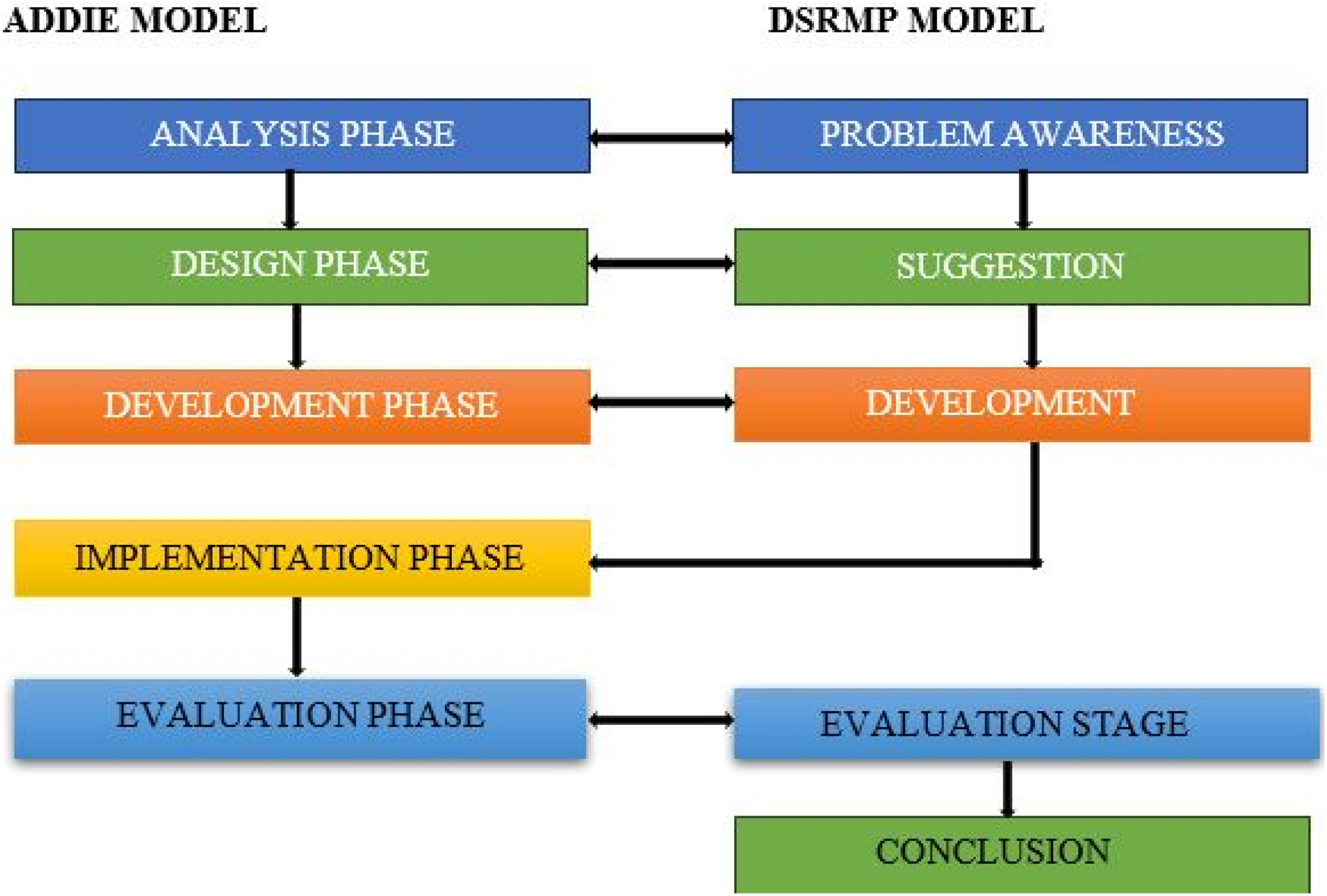
By integrating these models, the researchers sought to gain from a thorough framework that directs every step of the research process, from problem identification to solution implementation. Since both models have been successfully employed in disciplines like education and information systems, this combination can be especially helpful in these areas (Bannan-Ritland, 2003).
Pedagogical Agent Persona Creation Process
Analysis (ADDIE) and Problem Identification (DSR)
The development of the Pedagogical Agent Persona (PAP) began with the analysis stage, where both primary and secondary data were gathered to identify the instructional needs in project-based learning (PBL) for senior high schools. Primary data came from teacher and student interviews as well as classroom observations. This provided insights into instructional practices and challenges in PBL delivery. Secondary data were drawn from a review of relevant literature, which highlighted the need for multimodal communication, flexible pacing, and culturally relevant visual representation. The problem was identified as the lack of effective strategies for teaching PBL in visual arts.
Design (ADDIE) and Suggestion (DSR)
Based on the analysis, the researchers designed the PAP through an iterative creative process. Initial thumbnail sketches of facial gestures and expressions were produced using Adobe Photoshop. These sketches were refined into comprehensive illustrations (see Figure 2), aligning with the principle that design evolves through iterative investigation and refinement to achieve its intended purpose (Jalil et al., 2024). Expert feedback from an educational technology specialist and an animation artist guided improvement to ensure that the design addressed both instructional and aesthetic needs. Sketches of Different Facial Gestures of the Agent Used in the Study
Development Phase (ADDIE) and Development (DSR)
In the development stage, the refined sketches were animated in Filmora to simulate natural blinking, mouth movements, and expressive gestures. Emotion was further conveyed through facial expressions such as smiling. The principal author recorded the instructional content with his phone recorder and later transferred it into the Filmora software to deliver voice in the instructional content, as research confirms that human narration fosters learner engagement by conveying prosody and emotional nuance (Ryu & Ke, 2018).
Suggestions made by experts and improvements made afterwards

Source: Field Survey, 2024

Image of the Revised PAP Used in the Study
Implementation Stage (ADDIE)
At this stage, the revised PAP was introduced in the visual arts classroom for PBL on perspective drawing. The PAP acted as a virtual teacher, providing animated guidance through gestures, slides, and symbols. This scaffolding helped students to understand and execute their projects more effectively. Research by Mohammad (2019) similarly found that multimedia tools can aid teaching by making abstract content more accessible. Students were also oriented on how to interact with the PAP before the lessons commenced (see Figure 4). Learners Interacting With the PAP on Their Projects
Evaluation Phase (ADDIE) and Evaluation (DSR)
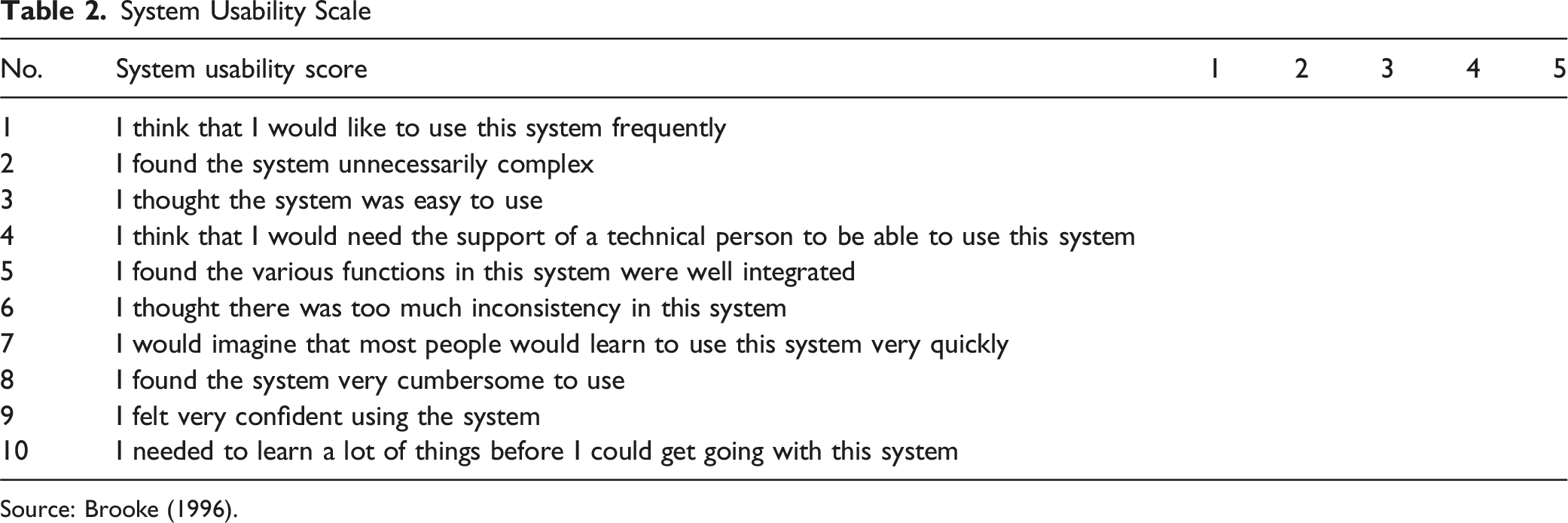
The PAP’s effectiveness was evaluated using the System Usability Scale (SUS) to measure usability, satisfaction, and user-friendliness across the three pacing modes. The SUS is widely recognized as a reliable instrument for usability testing across various contexts and sample sizes (Bangor et al., 2009; Martins et al., 2015; Setemen et al., 2019).
Conclusion (DSR)
Conclusions were drawn on the PAP’s usefulness for teaching PBL in visual arts. The evaluation pointed to its potential to enhance learner engagement and understanding. Findings were linked to the objectives of the study, with recommendations for future research focussing on refining multimedia artefacts to further support PBL delivery.
Participants
Participants comprised fifteen (15) second-year Visual Art students (average age 17.6 years) and two Visual Art teachers from Kumasi Senior High Technical School. Purposive sampling ensured that all participants had prior exposure to project-based learning in visual arts as verified through curriculum records, teacher confirmation, and preliminary interviews. Two experienced teachers, each with over 5 years of experience in PBL facilitation, were included to provide informed pedagogical perspectives. The 15 participants that consented to full participation were randomly placed, 5 students in each of the pacing conditions.
Ethical approval for the study was obtained from the Ghana Education Service (Reference Number: 14/90/148), along with written informed consent from all participants and guardians, where applicable. Verbal and written assent was also secured for participants under 18.
Data Collection
Observation
In research, observation is a useful technique for comprehending complicated problems (Weston et al., 2021). According to Speldewinde (2022), the degree of researcher participation in education settings varies. This may have an impact on the advantages and restrictions of the study. Observation was used at the analysis stage and implementation stage. The principal author was a participant observer and he actively immersed himself as a facilitator while observing and recording data about the activeness, enthusiasm, attention, exploration, usability and quality of work of learners. The goal was to gain a deeper insider perspective during the implementation of the prototype.
Questionnaire
System Usability Scale
Source: Brooke (1996).
Semi-Structured Interview
During the analyses stage of the research, semi-structured interviews were conducted in both English and Twi to accommodate participant language preferences. The interviews explored participants’ views on current PBL methods, their expectations for the pedagogical agent, and their perceived usability of the platform. Interview guides were developed based on the research questions and validated by experts in educational technology.
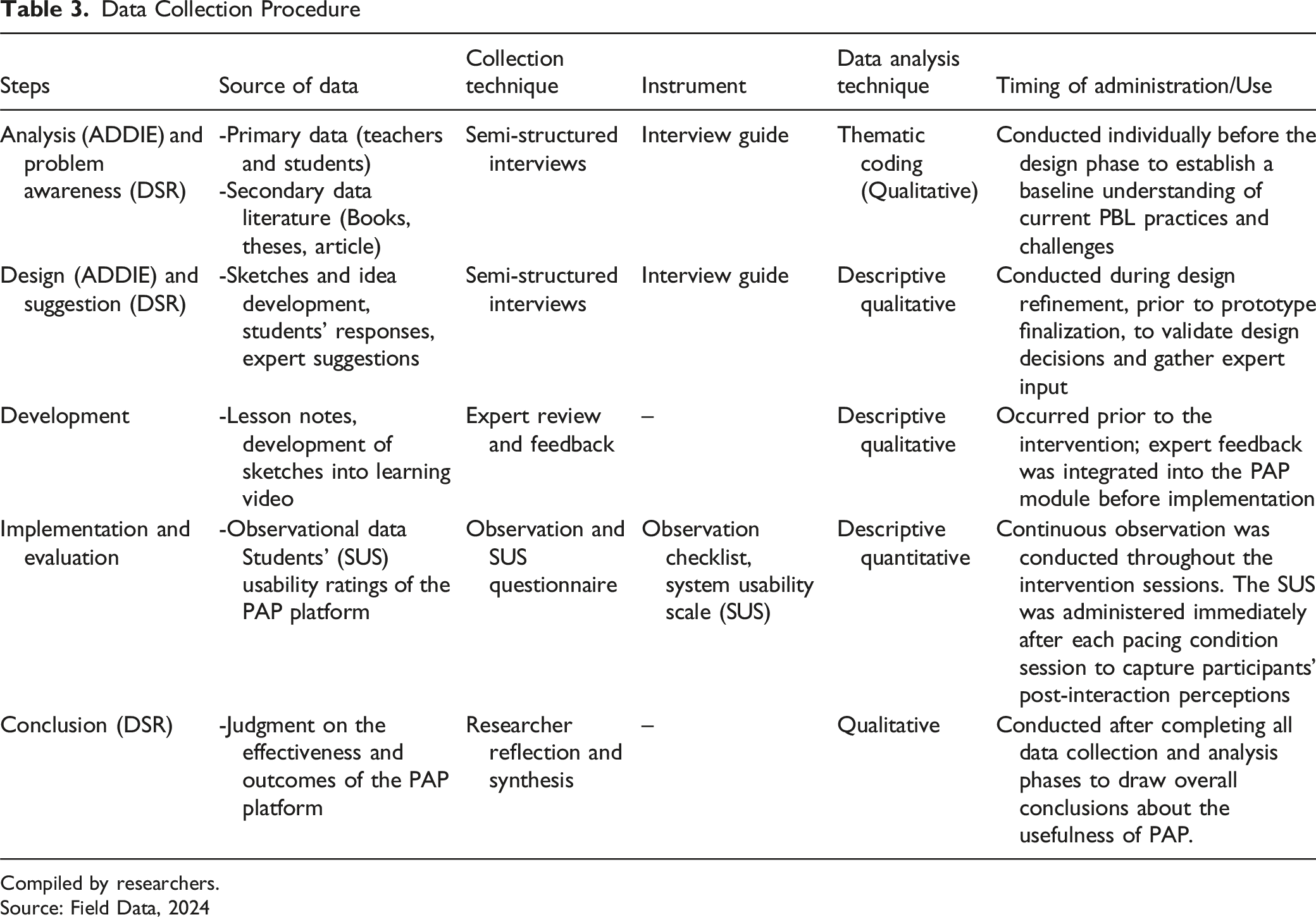
Data Collection Procedure
Compiled by researchers.
Source: Field Data, 2024
Semi-structured interviews with students and teachers during the analysis phase established the baseline pedagogical context before design work began while expert interviews took place during design refinement. Observations were conducted during each PAP-facilitated PBL session, and the System Usability Scale (SUS) was administered immediately after the intervention in each pacing condition. This structure ensured that each instrument captured data at the most contextually relevant point in the research process (Kumar, 2017; Weston et al., 2021).
Data Analysis
The study employed a mixed-methods approach to ensure triangulation and a comprehensive evaluation of the PAP’s impact. Qualitative data from semi-structured interviews with students and teachers were transcribed and thematically analysed using NVivo. Coding focused on recurring patterns related to perceptions of project-based learning (PBL), preferred characteristics of the PAP, and challenges with traditional instructional methods. This thematic analysis provided nuanced insights into participant experiences, which directly informed the iterative design and development of the PAP.
Quantitative data were analysed descriptively to complement the qualitative findings. System Usability Scale (SUS) responses were examined to determine usability scores across the three pacing conditions; System Paced, Learner Paced, and Learner Attenuated System Paced (Bangor et al., 2009; Martins et al., 2015; Setemen et al., 2019). Mean scores, percentages, and usability ratings were computed to assess effectiveness and user satisfaction. Observation checklists were also summarized using frequency distributions to capture patterns of student engagement, time management and enthusiasm during implementation. Together, these analyses ensured both depth and breadth in understanding the usability and instructional impact of the PAP.
Results
This section presents the empirical findings from the design, development, and implementation of a PAP aimed at enhancing project-based learning (PBL) in Ghanaian senior high schools.
Pedagogical Limitations in Current PBL Implementation
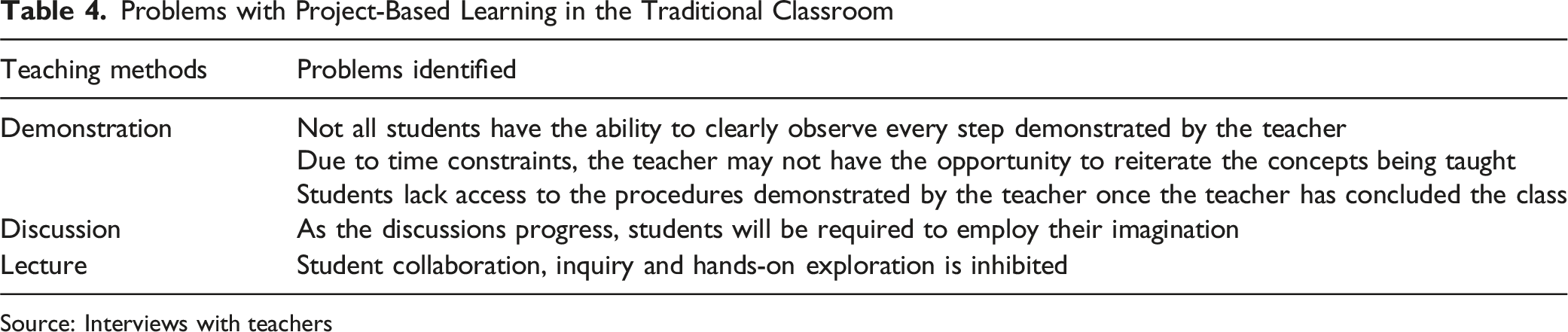
Qualitative data obtained through semi-structured interviews with two experienced visual art instructors revealed a pedagogical mismatch between traditional instructional practices and the requirements of effective PBL. Teachers identified significant challenges in monitoring individual progress and facilitating differentiated instruction in large class settings. Both educators consistently described current methodologies which are the lecture, discussion, and teacher-led demonstration as rigid, teacher-centred, and insufficient for fostering independent exploration, especially during studio-based projects.
One instructor noted that time constraints and students’ staggered arrival patterns often led to fragmented learning experiences, with key demonstration steps being missed by latecomers. The absence of visual references in syllabi and instructional materials was further cited as a limitation to student comprehension and autonomy.
These findings establish a compelling rationale for the development of a PAP that can function as a virtual facilitator to aid students internalize complex tasks without direct teacher intervention.
Problems with Project-Based Learning in the Traditional Classroom
Source: Interviews with teachers
Learner-Driven Design Features of the PAP
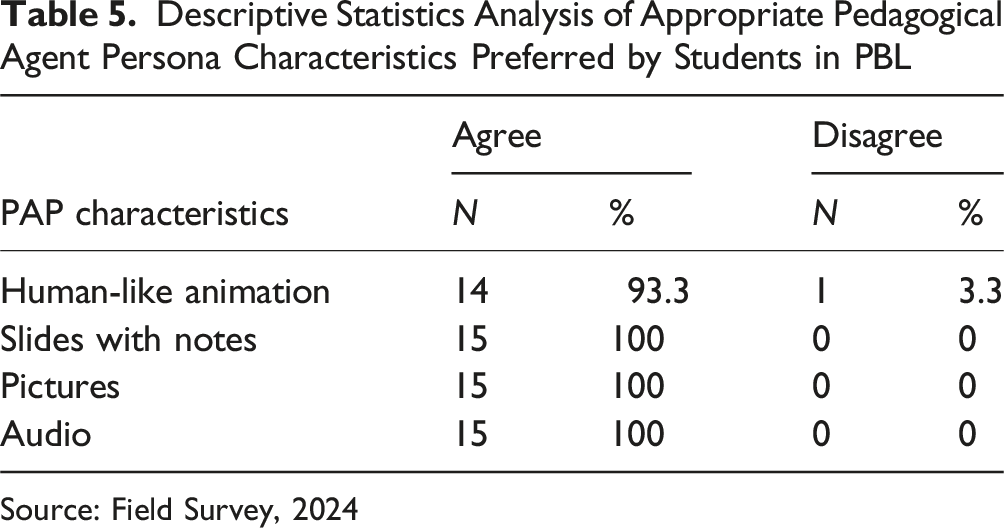
Descriptive Statistics Analysis of Appropriate Pedagogical Agent Persona Characteristics Preferred by Students in PBL
Source: Field Survey, 2024
Students emphasized the value of visual aids for clarifying abstract or technical aspects of drawing projects. Furthermore, interview responses indicated a need for design features that mirror traditional teaching methods while incorporating additional flexibility and interactivity. Concerns were raised regarding infrastructure challenges, such as unreliable electricity, suggesting that offline access or minimal-resource versions of the PAP may enhance future scalability.
Research on project-based learning (PBL) has demonstrated its positive impact on students’ content knowledge, skills development, motivation, and engagement (Megayanti et al., 2020). However, implementing PBL can be challenging, especially in terms of time management, monitoring, and assessment (Meng et al., 2023). PBL has shown particular effectiveness for students with learning difficulties, as it enhances their academic performance, motivation, and ability to work in groups (Filippatou & Kaldi, 2010).
Evidence of Enhanced Learner Engagement During Implementation
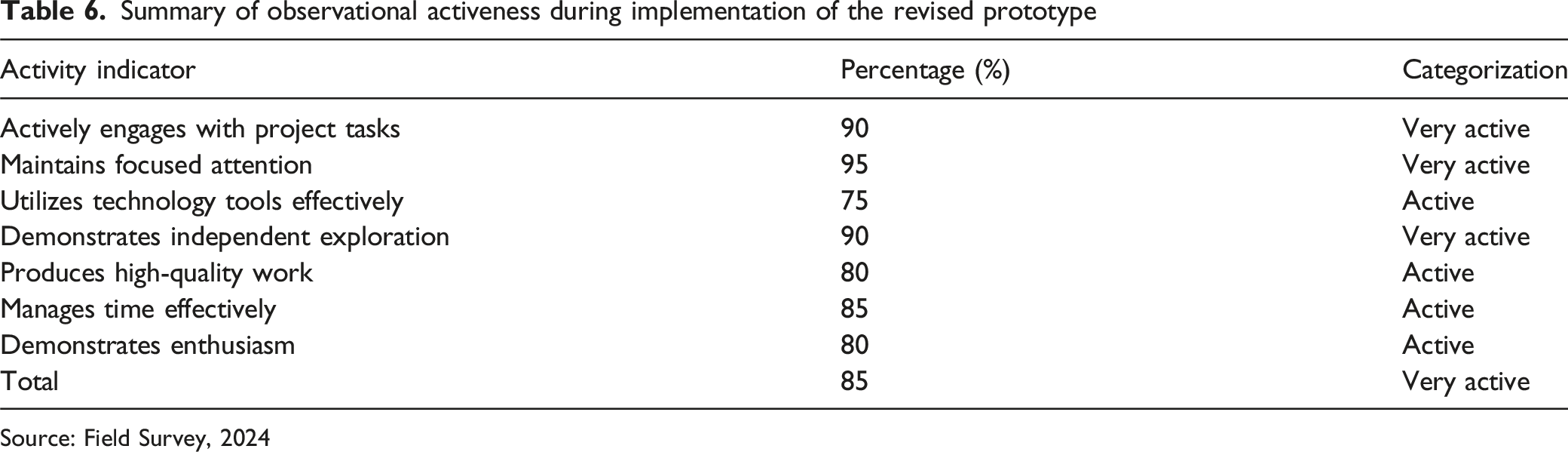
Summary of observational activeness during implementation of the revised prototype
Source: Field Survey, 2024
The above table suggests that the activeness in the improved prototype is practical. It can be seen from students’ activities with an average percentage of 85% in the category of very active students.
The mean activity engagement rate was 85%, categorized as ‘very active’, confirming the PAP’s ability to elicit high levels of independent, sustained involvement in a studio-based visual arts task. This finding supports the PAP’s effectiveness in promoting the ‘learn-by-doing’ ethos of PBL.
Usability Outcomes Across Pacing Conditions
Usability Outcomes Across Pacing Conditions
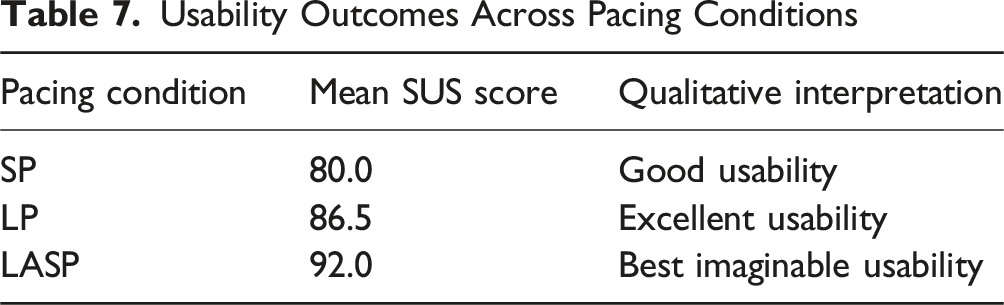
All three conditions achieved usability scores well above the accepted benchmark of 68 (Sauro, 2011), with the LASP model emerging as the most effective in balancing structure and learner control. This finding aligns with emerging theories on optimal learner-system pacing convergence (Goguey et al., 2021; Schroeder & Craig, 2017). A representative comment from the SP group illustrates this: ‘Though I couldn’t rewind or forward the video, the way the teacher explained with diagrams helped me understand everything’.
This suggests that even in less interactive modalities, a well-designed pedagogical agent can compensate for pacing constraints through clarity, scaffolding, and visual cues. The above comment synchronizes with the studies on ‘Interaction Pace and User Preferences’ by Goguey et al. (2021) which clearly identified that the overall pace of interaction is determined by the combined pace of the user and the system. A mismatch in pace could potentially hinder user preferences. However, in the research by Schroeder & Craig (2017), their results on the three pacing conditions indicated that pedagogical agents were perceived similarly, regardless of whether learners had any control over the pacing of their learning environment or not.
Tan et al. (2022) argue that this it is important to take into account individual learning styles and preferences and design courseware that can accommodate these differences since the design of blended courses can have a significant impact on the academic performance of students.
The graph below further gives a graphical representation to the usability scores of participants on the developed PAP (Figure 5). System Usability Scale Score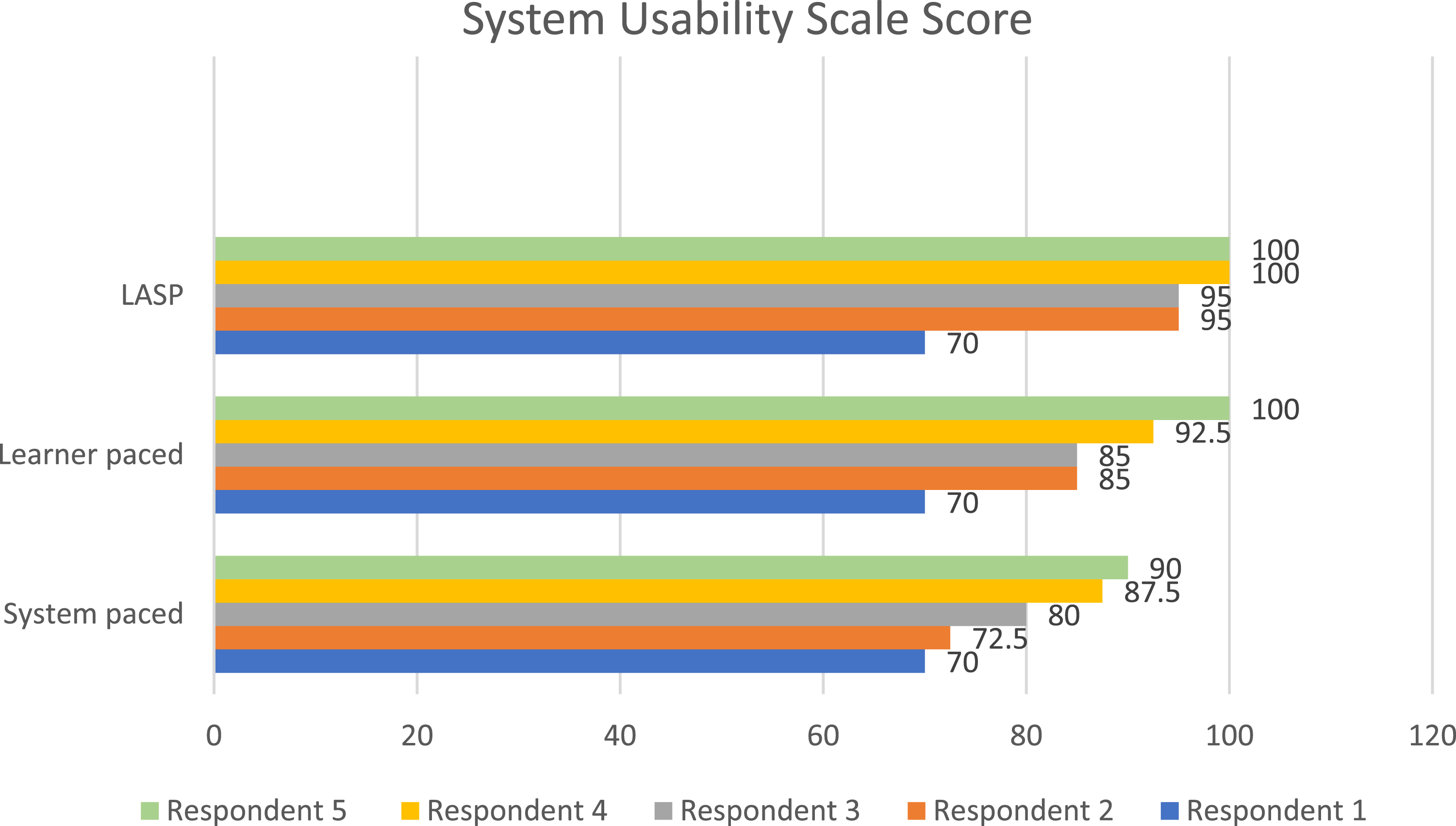
Discussion
Advancing Constructivist Learning through Agent-Supported PBL
The findings affirm that Pedagogical Agent Persona (PAPs) are well-positioned to enhance constructivist pedagogies, particularly in settings where instructional individualization is constrained by large class sizes and limited teacher resources. As theorized by Jonassen (2011), PBL environments require tools that support student-driven exploration, iterative learning, and collaboration. The PAP functioned not merely as a content presenter but as a situated instructional actor, capable of guiding learners through scaffolded, multimodal experiences in the absence of continuous teacher intervention.
This design approach aligns with sociocultural learning theory (Vygotsky, 1978), where the agent acts as a mediated scaffold, extending the learner’s zone of proximal development. The high engagement levels observed, particularly in tasks requiring independent application, suggest that well-designed agents can simulate core aspects of human mentorship in digital contexts.
Human-like Design and the Multimedia Principle
Students’ strong preference for human-like, visually rich agents supports longstanding research on multimedia learning (Mayer, 2005) and recent studies on embodiment in digital agents (Lane & Schroeder, 2022). By integrating voice, gesture, facial expression, and diagrammatic cues, the PAP leveraged dual-channel processing to reduce cognitive load and enhance retention, especially critical in visual art education, where process-based learning is central.
Furthermore, learners’ comments reveal that the agent’s ability to ‘show and tell’ clearly was a decisive factor in usability satisfaction. This aligns with findings by Schroeder & Adesope (2013) showing that 3D agents outperform static visuals in skill-oriented domains. In this study, the PAP became a multimodal tutor; blending narrative, demonstration, and affective cues to deepen learner understanding.
Instructional Pacing: The Promise of Attenuated Autonomy
A notable contribution of this study is its comparative analysis of pacing models, particularly the introduction of the Learner Attenuated System Paced (LASP) condition. While Learner Paced (LP) models often prioritize autonomy, they can inadvertently burden novice learners with the task of managing complex workflows (Goguey et al., 2021). Conversely, System Paced (SP) models may oversimplify and constrain learner agency.
The LASP condition, where learners operated within structured sequences but retained some control, offered an optimal balance. With a SUS mean score of 92, this group reported the highest satisfaction, suggesting that hybrid pacing designs may represent a best-practice model for agent-led instruction. This aligns with the work of Lajoie & Poitras (2017), who argue that successful instructional technologies blend system-driven scaffolding with learner-responsive feedback.
Addressing Global Equity and Sustainable Development Goals
The context of this study, involving an urban Ghanaian classroom with infrastructural limitations, makes its contribution particularly relevant to ongoing debates about equity in educational technology. The academic community continues to emphasize the need for scalable and inclusive educational interventions that support the global commitment to Sustainable Development Goal 4, which guarantees inclusive and equitable quality education and promotes lifelong learning opportunities for all (United Nations, 2015).
The PAP’s ability to provide accessible, repeatable, and differentiated instruction, despite logistical constraints, positions it as a viable strategy for closing equity gaps in under-resourced educational systems. While most PAP literature is situated in high-income, digitally saturated environments (e.g. Mathews, 2021; Pérez-Marín, 2021), this study indicates that meaningful agent-based innovation is possible in lower-middle-income settings, provided the design is sensitive to the local context.
Limitations and Directions for Future Research
This study offers valuable insights into the use of pedagogical agents in project-based learning (PBL), but several limitations also point to opportunities for future research. First, the study took place in a single urban Ghanaian senior high school with a small, purposively selected sample. While the findings are contextually rich, they may not apply universally. Future research should explore similar interventions across diverse regions, school types, and cultural settings to strengthen external validity. Second, the intervention was brief, so longer-term effects such as sustained motivation, knowledge retention, and transfer could not be assessed. Future studies should track learners over an academic term or year to evaluate deeper educational impacts. Third, unreliable electricity and limited access to devices affected implementation. These challenges reflect real barriers in many under-resourced settings. Further research should explore how PAPs can be designed for low-tech environments, including mobile-first or offline models. Fourth, the agent supported one-on-one learning but did not address peer collaboration, which is a key element of PBL. Future iterations could integrate collaborative tools or multi-agent systems to support group work and the co-construction of knowledge. Fourth, this study did not compare the PAP with other instructional methods or technologies. Comparative studies would help determine how PAPs perform against traditional teaching, videos, or AI-based chat interfaces. Fifth, while this study successfully evaluated learners’ perceptions of the system through the System Usability Scale (SUS) and qualitative reflections, it did not include a direct assessment of the learners’ perceptions of the pedagogical agent itself. Future studies could incorporate a validated agent-specific measure, such as the Agent Persona Instrument–Revised (API-R; Kim & Baylor, 2016), to complement the SUS. Using both instruments together would enable a more holistic understanding of learners’ cognitive, affective, and social responses to the pedagogical agent.
By addressing these areas, future research can strengthen the design and implementation of pedagogical agents and extend their relevance to broader educational contexts.
Implications for Practice, Research, and Design
From a practical perspective, the findings of this study demonstrate how pedagogical agent personas (PAPs) can transform classroom practice within under-resourced senior high schools. The integration of a PAP in project-based learning (PBL) environments offers a new instructional paradigm that enhances learner autonomy, engagement, and instructional equity. Teachers, who often face the challenge of managing large classes and providing individualized support, can employ the PAP as an instructional companion that extends their pedagogical reach. This allows them to focus on higher-level facilitation tasks while the agent provides scaffolding, demonstrations, and continuous feedback. The implication for practice is that teachers must evolve from being knowledge transmitters to becoming facilitators of inquiry and creativity, supported by technology. Effective professional development in digital pedagogy is therefore crucial to enable educators to design, implement, and evaluate PAP-based interventions meaningfully within learner-centred frameworks.
The study also highlights that hybrid pacing models, such as the Learner Attenuated System Paced (LASP) condition, promote deeper learner engagement by striking a balance between autonomy and guided structure. In practical classroom settings, this means teachers and instructional designers should provide learners with some degree of control over pacing without sacrificing coherence and progression. Moreover, the PAP’s demonstrated capacity to provide consistent, individualized feedback supports its potential as a mechanism for ensuring equity in learning outcomes across large and diverse classrooms. At the institutional level, integrating PAP-supported learning aligns with Ghana’s educational technology policies, including the One-Teacher-One-Laptop initiative and the national agenda for achieving Sustainable Development Goal Four (SDG 4). Consequently, the study advocates for institutional investment in scalable, context-aware educational technologies that can enhance the accessibility and quality of project-based learning.
From a design and research standpoint, the study presents several imperatives for future work. Effective PAPs require culturally grounded humanization, where gestures, language, and affect resonate authentically with learners’ cognitive and emotional expectations. Hybrid pacing models like LASP should be further explored across disciplines and learning contexts, especially where learner variability and task complexity converge. Additionally, teachers should not merely be end-users of agent-based tools, but active co-designers who shape the agent’s instructional behaviour to fit their local classroom realities. Future research should examine long-term learning outcomes, transfer effects, and collaborative learning gains associated with PAP integration, particularly in group-based PBL contexts. These directions are essential for refining both the pedagogical design and sustainable deployment of PAPs as integral components of equitable, learner-centred education.
Theoretical Contribution and Novelty
This study advances theoretical understanding in three areas. Firstly, it operationalizes Vygotskian scaffolding in a digital format, demonstrating that agents can extend instructional reach in skill-based subjects such as visual arts. Secondly, it offers a framework for learner-attenuated pacing, which has not been extensively explored in the literature on pedagogical agents. Thirdly, it contributes to the globalization of PAP research, broadening the field’s empirical base beyond high-income contexts.
Conclusion
This study suggests that pedagogical agent personas (PAPs) can enhance project-based learning (PBL) by supporting learner engagement and autonomy, particularly in resource-constrained educational environments. The findings revealed that the Learner Attenuated System Paced (LASP) condition, where learners exercised partial control within a guided digital environment, resulted in the highest usability and satisfaction outcomes. This indicates that adaptive pacing models that combine learner agency with system scaffolding can sustain engagement and optimize instructional interactions.
The successful implementation of a multimodal, human-like PAP also demonstrated its capacity to supplement teacher instruction, extend teacher presence in large-class settings, and provide equitable access to personalized learning support. These outcomes underscore the transformative role of contextually designed instructional technologies in strengthening participation and engagement in PBL environments. While the present findings are context-specific, they offer a credible foundation for future studies to examine how the sustained use of PAPs may influence broader outcomes, such as critical thinking, collaboration, and lifelong learning.
Footnotes
ORCID iDs

Funding
The authors received no financial support for the research, authorship, and/or publication of this article.
Declaration of Conflicting Interests
The authors declared no potential conflicts of interest with respect to the research, authorship, and/or publication of this article.
Data Availability Statement
The data supporting the findings of this study are not publicly available due to institutional restrictions.