




Abstract
This scoping review aims to identify what is known about the barriers to and facilitators of inclusive physical education for Canadian elementary and middle school students. Six electronic databases were searched to identify Canadian articles published between 2000 and 2022. Overall, 38 studies were included and after summarizing their results, four categories of barriers and facilitators were identified: disabilities, cultural diversity, gender binary, and teacher related factors. Within each, seven themes were identified. The review also revealed limited exploration of disabled students’ first-hand perspectives, ethnically diverse groups, gender diverse youth, intersectionality, and inclusion training within physical education teacher education programs.
Regular participation in physical activity during childhood serves as a key contributor to both physical health and psychosocial development (Shields & and Synnot, 2014). Physical education (PE) offers students a range of benefits that support overall well-being, academic engagement, and social skill development (Bailey, 2006; Booth et al., 2012; Opstoel et al., 2019; Rodriguez-Ayllon et al., 2019). As a core component of school curricula, PE is intended to build the foundation for lifelong physical activity, a goal that is especially relevant today, as 61% of Canadian children aged 5 to 17 years do not meet the recommended guideline of at least 60 minutes of moderate-to vigorous-intensity activity per day (Kuzik et al., 2023).
The PE curriculum in schools is a viable strategy for encouraging children to adopt more active lifestyles, which can support physical health and help reduce the risk of several chronic diseases such as obesity, diabetes, heart disease, and cancer (Booth et al., 2012). Regular physical activity also has the potential to positively impact mental health by helping manage mood, stress, and negative emotions, while enhancing self-esteem, life satisfaction, and overall happiness (Bailey, 2006; McClelland et al., 2014; Rodriguez-Ayllon et al., 2019). Additionally, PE promotes the development of critical social skills, including leadership, cooperation, and communication, through structured social interactions (Opstoel et al., 2019). Moreover, when children acquire fundamental movement skills, along with confidence, motivation, and understanding of benefits of physical activity, they are more likely to maintain active lifestyle into the future (Bailey, 2006; Cairney et al., 2019; Whitehead, 2019).
Literature Review
Concerns have increasingly been raised in the field of PE regarding the exclusionary practices that can exist within integrated PE settings (Shah, 2007). Despite efforts toward inclusion, not all students, particularly those with disabilities, have equitable opportunities to participate meaningfully in PE classes, as these environments are often not designed to fully accommodate diverse needs. This exclusion may partly arise from educators perceiving the physical presence of students with disabilities in mainstream PE as a sign of success, rather than prioritizing meaningful engagement and enjoyment for all students (Fitzgerald, 2012). Such issues are exacerbated by teachers’ reluctance to adapt or rethink activities to make them more inclusive (Kirk, 2009).
Moreover, the literature highlights ongoing concerns about bullying and social isolation experienced by students with disabilities in integrated settings. These challenges may be reinforced by implicit messages from educators that reflect limited expectations or preconceived assumptions about students’ abilities (Coates & Vickerman, 2008; Fitzgerald, 2005; Haegele & Zhu, 2017; Healy et al., 2013). Merely sharing the same physical space does not guarantee an equal experience, as students with and without disabilities may engage with the environment in profoundly different ways (Wilhelmsen et al., 2018).
Given the persistent challenges associated with integrated education, it is unsurprising that scholars have questioned whether physical education (PE) in integrated settings offers genuinely inclusive experiences for students with disabilities (Block, 1999; Fitzgerald, 2005; Haegele, 2019; Lavay & Depaepe, 1987; Wilson et al., 2020). The concept of “inclusion” can have varied interpretations across contexts, it may be defined at the individual level or in a broader socio-cultural context (Petrie et al., 2018). In PE literature, inclusion has been framed in multiple ways, including equal opportunity, placement in mainstream settings, commitment to social justice, or fostering a sense of belonging and acceptance (Fitzgerald & Jobling, 2009; Spencer-Cavaliere et al., 2017).
At the individual level, one of the main barriers to inclusive PE is a physical activity environment that is not suitably adapted to the diverse needs of children (e.g., insufficient training of teachers, insufficient special education teachers or assistants, or a lack of adapted equipment and activities) (Haegele et al., 2018; WHO, 2018;). As a result, students with disabilities are often excluded from fully participation in traditional PE programming (Coates & Vickerman, 2008). In a socio-cultural context, the interaction between the PE environment and the student’s intersecting identities (e.g., gender, body type, and ethnocultural background) can have an exponential impact on PE participation. Multiple international studies have shown that students may experience exclusion based on gender, sexuality, ethnicity, social class, religion, and/or race (Azzarito, 2010; Azzarito et al., 2017; Barker et al., 2014; Dagkas et al., 2011; Fitzpatrick, 2013; Hills, 2007; Larsson et al., 2011; Macdonald et al., 2009; Stride, 2014; Walseth, 2015; With-Nielsen & and Pfister, 2011).
Moreover, traditional PE teachers often report a lack of competence, resources, and/or support to meet the needs of students with disabilities (Karamani et al., 2024; Rekaa et al., 2019). As demonstrated, inclusivity in PE is shaped by multitude of interconnected factors. Overall, we define inclusion as a personal sense of belonging, acceptance, and value, as experienced by the student (Spencer-Cavaliere & Watkinson, 2010), in line with Stainback’s (Stainback & Stainback, 1996) description of meaningful inclusion.
While a considerable body of research has explored barriers and facilitators to physical activity participation among children with disabilities, most of this work has focused on out-of-school contexts (Shields et al., 2012; Shields & Synnot, 2014; Shields & Synnot, 2016; Stanish et al., 2015). Few studies have specifically addressed facilitators, and even fewer have examined these dynamics within school-based PE (Haegele et al., 2018; Lieberman et al., 2002). To our knowledge, there are limited reviews that explore this issue from a holistic perspective. Therefore, this scoping review guided by the Joanna Briggs Institute methodology (Peters et al., 2020) aims to assess the barriers to implementing an inclusive PE curriculum for Canadian elementary and middle school students, identify facilitators that address these barriers, and synthesize existing knowledge to highlight gaps for future research. The findings of this review aim to inform educators, policymakers, and researchers in developing evidence-informed strategies that encourage equitable participation and support more inclusive PE environments for all students. This scoping review will address the following research question: What factors and strategies have been identified in the literature as influencing equitable participation and the development of inclusive physical education environments for Canadian students in grade one to eight?
Method
Scoping reviews are employed to comprehensively explore existing knowledge within a discipline, revealing gaps in evidence and guiding the need for further, more targeted research (Arksey & O’Malley, 2005). As the research questions were exploratory, a scoping review was conducted following the Joanna Briggs Institute framework (Peters et al., 2020) and Preferred Reporting Items for Systematic Reviews and Meta-Analyses Extension for Scoping Reviews (PRISMA-ScR) guidelines (Tricco et al., 2018).
A comprehensive search was conducted by one author (PN) in collaboration with a Health Sciences librarian (LB) during November and December 2022, targeting articles published between 2000 and 2022 across six electronic databases: Web of Science, ERIC, SportDiscus, Sociological Abstracts, APA PsycInfo, and Medline. To supplement the formal database searches, an additional search was carried out using google scholar. The database searches included terms such as “elementary,” “school-aged,” “primary school,” “physical education,” “gym,” “HPE,” and “Canada,” along with their corresponding Medical Subject Headings (MeSH) where applicable. A sample search strategy is provided in Supplemental Materials. The search was limited to studies conducted within Canadian provinces, with no language restrictions applied.
All articles retrieved from the search were imported into the systematic review management tool Covidence for title/abstract and full-text screening. PN conducted the initial title and abstract screening, including studies that met the following criteria: (1) focused on elementary and middle school students (grades 1–8); (2) discussed barriers to inclusive PE and/or their respective solutions; (3) belonged to qualitative, quantitative, mixed methods, cross-sectional, and prospective study design, content analysis design and expert publications; (4) written in English language; and (5) within Canada. Studies were excluded if they: (1) addressed extracurricular or recreational physical activities and (2) focused on secondary and post-secondary school experiences. The selection process is outlined in Figure 1 using PRISMA flow diagram. Two reviewers (PN and ACA) independently and in duplicate reviewed the full-text articles that passed the abstract screening. Any discrepancies were discussed and resolved through consensus to finalize the list of included studies. PRISMA Flow Diagram of Studies’ Selection Process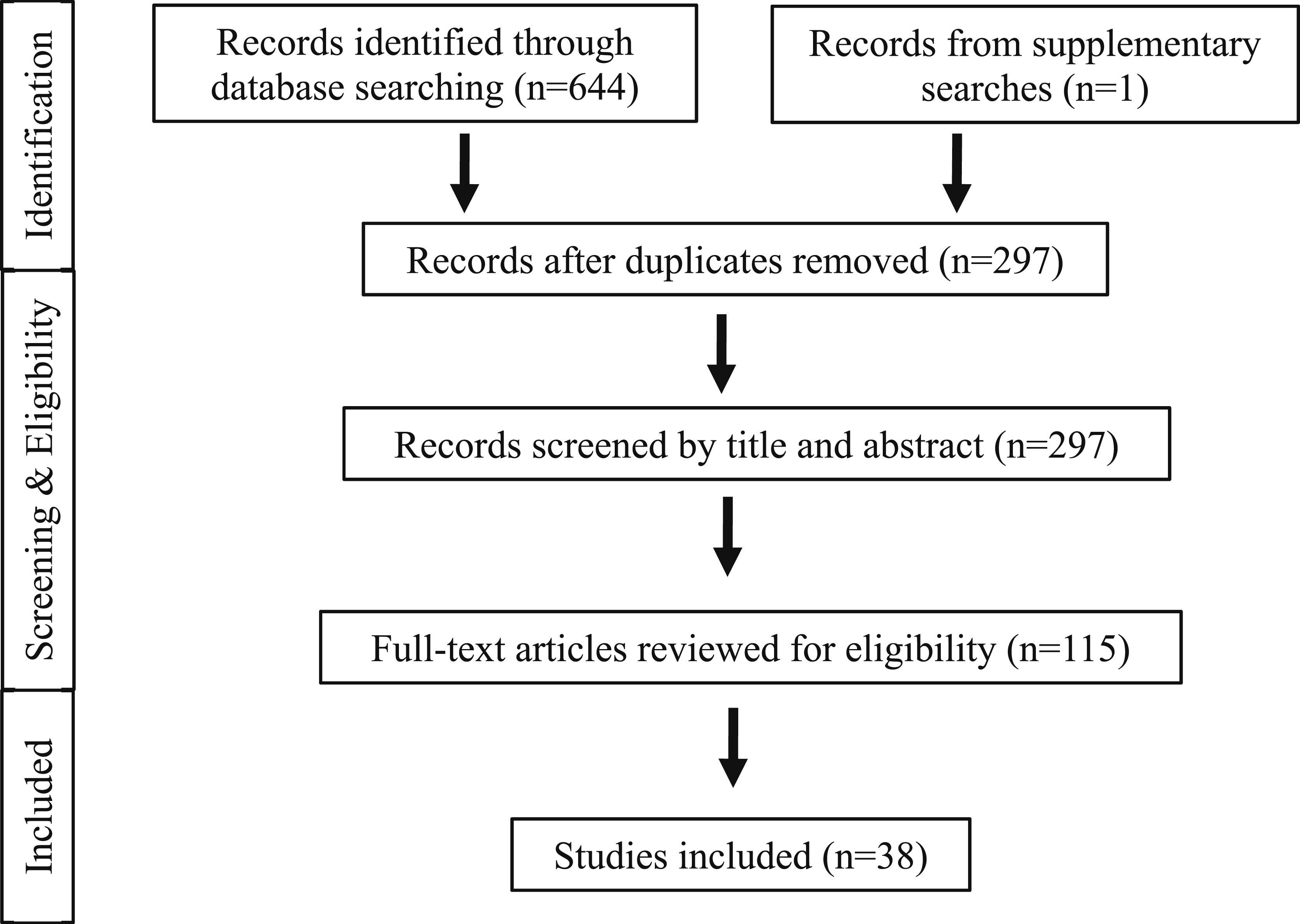
Data Extraction and Synthesis
Two reviewers (PN and ACA) independently, and in duplicate extracted data from each included article. Under the guidance of the senior author (RJdS), an excel spreadsheet was developed and used specifically for data extraction in this project. Extracted information included authors, year, title, location, study methods, barriers to inclusion, facilitators/strategies for inclusion, limitations, and next steps. Risk of bias assessment was not conducted, as this is a scoping review, in accordance with the Joanna Briggs Institute’s methodology (Peters et al., 2020).
The reviewers conducted a thematic analysis of the data following the completion of data extraction. This study employed a coding process informed by the thematic analysis framework of Clarke & Braun (Clarke & Braun, 2014). An initial reading of the included studies was carried out to identify key outcomes and recurring patterns.
This thematic analysis consisted of six-phase approach: (1) familiarization with the data, (2) generating initial codes, (3) identifying potential themes, (4) reviewing themes, (5) defining and naming themes, and (6) report writing. In phase one, two researchers independently reviewed the articles to identify patterns related to barriers and facilitators. Each data point, whether a short phrase or full sentence, was analyzed to extract its central idea and assigned to an initial theme.
During phase two, an inductive coding approach was used tag segments of publications containing recurrent language or concepts. In phase three, the assigned codes were grouped into broader conceptual categories, each with a concise label reflecting its meaning. As coding progressed, the framework was refined to include emerging themes, and previously coded studies were revisited for consistency.
In phases four and five, two researchers (PN and ACA) collaboratively discussed final thematic categories. Any disagreements in coding or theme assignment were resolved jointly. In phase six, findings were synthesized into the final report (Clarke & Braun, 2014). To ensure transparency, study findings were organized by primary themes
Results
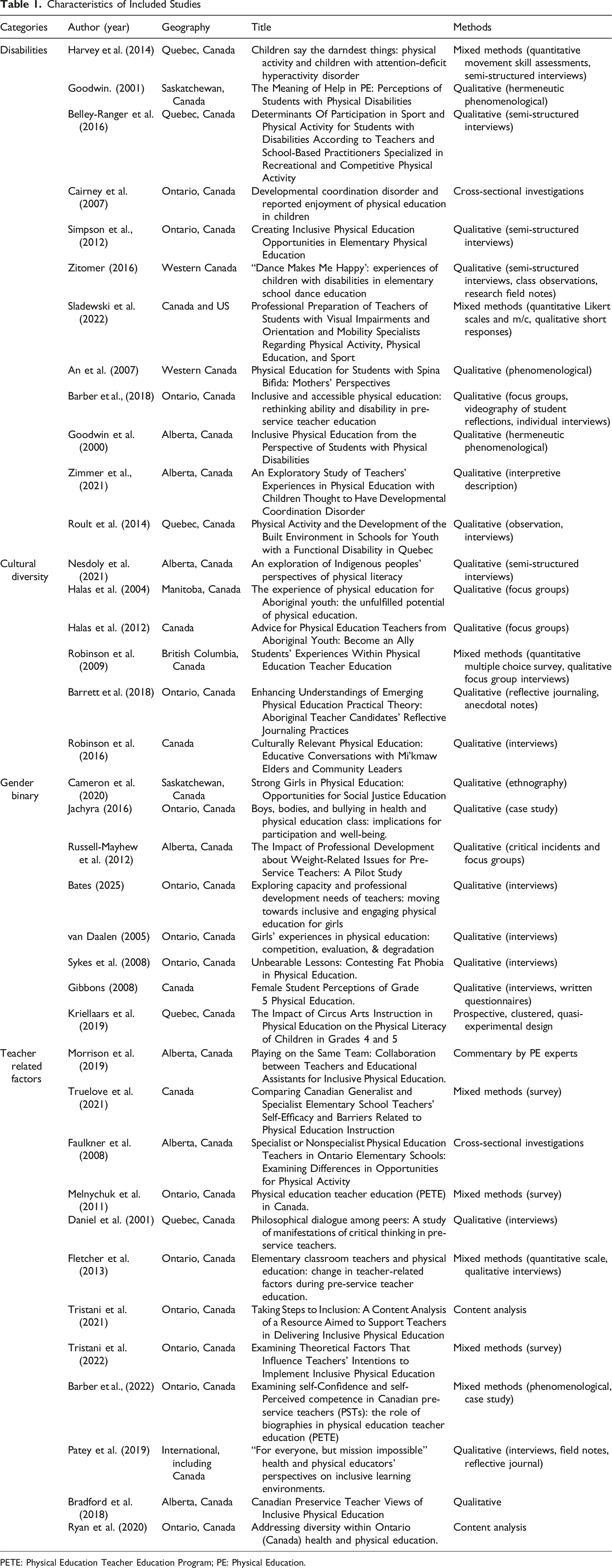
A total of 297 studies were identified, with 182 studies excluded after title and abstract screening. The remaining 115 underwent full-text review, resulting in 38 studies being included in this review. Of these, 26 studies employed qualitative methods (i.e., interviews, focus groups, written questionnaires, case studies, ethnographic observations, reflections, interpretive descriptions, and hermeneutic phenomenological approaches), three employed quantitative designs (i.e., cross-sectional or prospective studies), and eight used mixed methods approaches incorporating quantitative elements such as physical skills tests, Likert scales, and multiple-choice questionnaires. Additionally, two studies used content analysis, and one was a commentary paper.
Characteristics of Included Studies
PETE: Physical Education Teacher Education Program; PE: Physical Education.
Thematic analysis of the articles included resulted in four categories with seven themes (Figure 2). The four categories were disabilities, cultural diversity, gender binary, and teacher-related factors. The category Disabilities included the following themes (1) “Challenges with motor skills and peer dynamics limit meaningful participation in PE” and (2) “Accessible Facilities and Supportive Environments Foster Student Motivation and Safety in PE.” The category Cultural Diversity included the theme of “Culturally safe and inclusive learning environments are essential for engaging marginalized students in PE.” The Gender Binary category included the following themes (1) “Gender bias and aggressive behaviors from boys limit girls’ participation and engagement in PE” and (2) “Fear of judgment and body image concerns undermine students’ confidence and participation in PE”. The Teacher-related factors included the following themes (1) “Fixed beliefs about ability and competitive norms in PE undermine inclusion and student confidence” and (2) “Inclusive PE requires specialized training and collaborative support across school personnel”. Overview of Emergent Categories and Themes of Reviewed Studies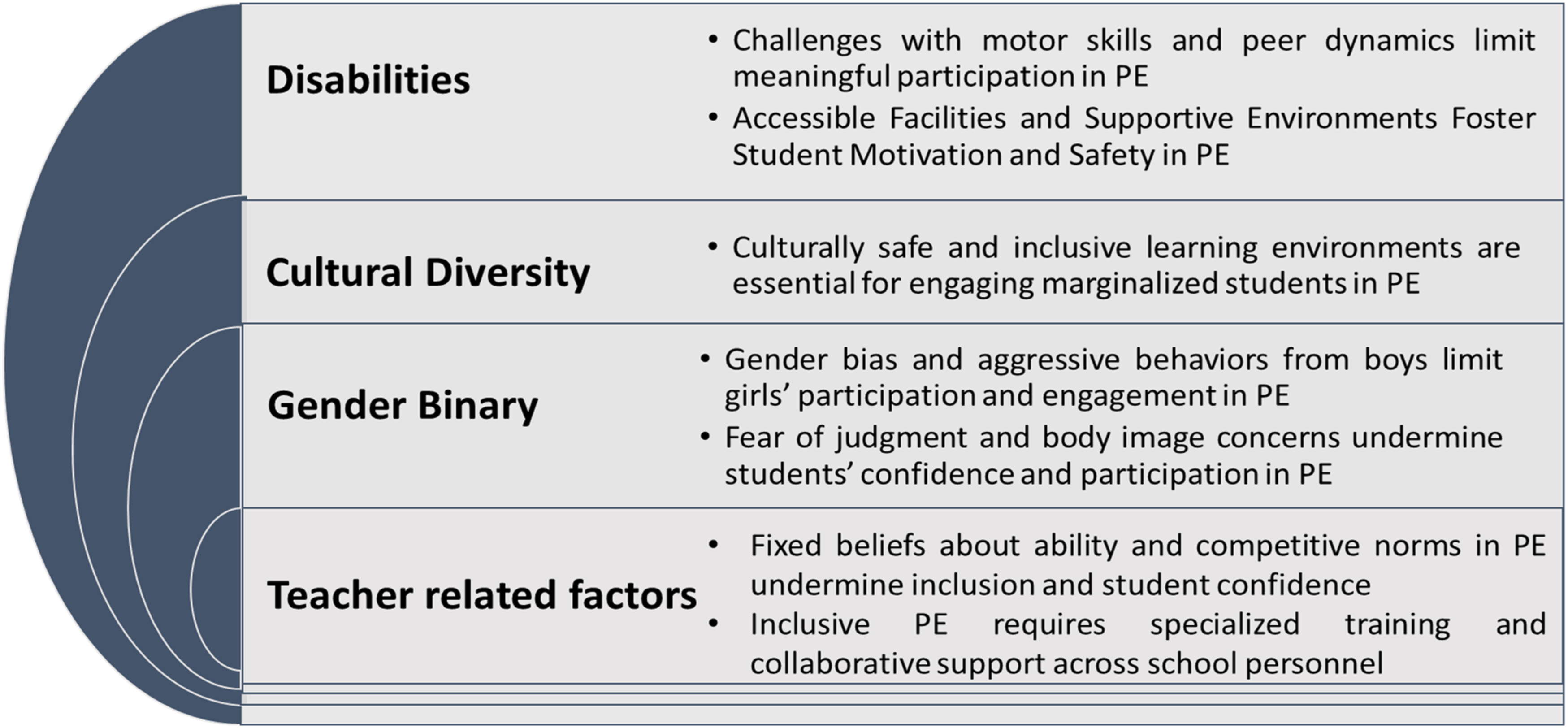
Disabilities
Challenges with Motor Skills and Peer Dynamics Limit Meaningful Participation in PE
Students with both physical and mental disabilities often face challenges in developing fundamental motor skills
To address these challenges, effective strategies include structured lessons, tasks adaptation, one-on-one support, and fostering a positive classroom climate (Belley-Ranger et al., 2016; Zimmer & Causgrove Dunn, 2021). Studies advocated offering a diverse range of inclusive sports to help students feel part of a team and engaged in physical activity suited to their abilities (Belley-Ranger et al., 2016). Teaching peers to offer help in practical, respectful ways (Goodwin, 2001) and promoting cooperative rather than competitive activities (van Daalen, 2005) can further enhance participation and inclusion.
Accessible Facilities and Supportive Environments Foster Student Motivation and Safety in PE
Certain PE activities posed safety risks when appropriate equipment was unavailable, leading to exclusion of some students (An & Goodwin, 2007). Moreover, simply “getting to the gym” was a barrier for some students, highlighting the need for more accessible and safe school facilities (Simpson & Mandich, 2012). Teachers reported that repeated unsuccessful experiences in PE can lead to helplessness among children with movement difficulties (Zimmer & Causgrove Dunn, 2021). “Bad days in physical education” often involved social exclusion, challenged self-confidence, or restricted participation (Goodwin & Watkinson, 2000). To improve inclusion, modified equipment and accessible facilities should be standard in schools (An & Goodwin, 2007; Simpson & Mandich, 2012). Students with physical disabilities felt included when they could participate effectively, experience supportive peer interactions and recognize the benefits of PE.
Cultural Diversity
Culturally Safe and Inclusive Learning Environments are Essential for Engaging Marginalized Students in PE
Barriers identified include instances where teachers were unable to make Indigenous students feel safe and valued, leading to an unsupportive learning climate (Hyde et al., 2019). Although most teachers today were not involved in the residential school era, the legacy of distrust between some Indigenous families and the education system remains (Halas et al., 2012). Another barrier reported across three studies was the disconnect between PE activities and Indigenous worldviews were identified in three studies (Barrett et al., 2018; Halas et al., 2004; Nesdoly et al., 2021). When culturally relevant activities were included, they were often accompanied by stereotypical expectations rather than meaningful inclusion (Barrett et al., 2018).
Supporting factors included the moral obligation to ensure safe, caring, and empathetic learning spaces for each student to learn and grow (Robinson et al., 2016). Teachers were encouraged to become allies by developing cultural competence through engagement with various cultural community members (Robinson et al., 2016). Indigenous youth also emphasized the importance of encouraging diverse student voices to improve the learning environment (Barrett et al., 2018; Halas et al., 2004, 2012; Nesdoly et al., 2021). Teachers who demonstrated humility, such as participating in activities alongside students, can foster a sense of equality and enhanced engagement (Halas et al., 2012; Nesdoly et al., 2021). Additionally, promoting laughter and fun was seen to enable inclusive and healing environment (Halas et al., 2012; Nesdoly et al., 2021). To address the systemic oppression, Indigenous community members emphasized the need to listen to Indigenous youth and center approaches that respect their choices (Barrett et al., 2018; Halas et al., 2004; Nesdoly et al., 2021).
Gender Binary
Gender Bias and Aggressive Behaviors from Boys Limit Girls’ Participation and Engagement in PE
Regarding the challenge, studies have shown that interaction with boys can create barriers to girls’ participation in PE. Boys tend to hold gender biases, underestimating girls’ physical skills and abilities. Teachers also observed that the strength, competitiveness, and aggression displayed by boy classmates could make girls feel intimidated and reluctant to participate in PE (Bates, 2025). Additionally, girls expressed frustration when teachers failed to adapt activities to their needs or to address boys’ aggressive behaviors (Gibbons, 2008).
With regard to facilitators, adapting teacher training programs could help overcome these barriers. Recommendations included training teachers to discuss and challenge gender stereotypes, avoid reinforcing bias, understand all possible barriers and facilitators affecting girls’ participation, recognize gender inequity, reflect on their own assumptions, deconstruct their PE experiences, and apply strategies to promote the inclusion of girls (Bates, 2025).
Fear of Judgment and Body Image Concerns Undermine Students’ Confidence and Participation in PE
From the perspective of barriers, studies reported that fear of social judgment and low perceived physical competence lead to bullying, low self-esteem and disengagement among students (Bates, 2025; Gibbons, 2008; Jachyra, 2016; van Daalen, 2005). Moreover, body image, defined as the mixed positive and negative perceptions one holds about their body, can be influenced by internal and/or external factors (Body image, 2022). Students reported feeling uncomfortable and self-conscious about their bodies during PE and some experienced ridicule from peers (Jachyra, 2016; van Daalen, 2005).
To address these barriers, classes should focus more on physical activity rather than competitive sport, assess the students based on participation rather than athletic performance and teach skills without evaluating students solely on mastery. Offering a choice of activities in each class was also recommended (Jachyra, 2016; van Daalen, 2005) suggested teaching critical health literacy skills to help students understand and challenge dominant ideals of the fit body and to create a safe space for open discussion about body image (Jachyra, 2016). Increasing body image awareness in school-aged children as early interventions may help instill health perceptions about body diversity was also emphasized (Russell-Mayhew et al., 2012).
Teacher Related Factors
Fixed Beliefs About Ability and Competitive Norms in PE Undermine Inclusion and Student Confidence
Inclusion policies may fail due to teachers’ low expectations or fixed beliefs about student abilities (Barber, 2018). Two studies reported that many students associate PE with competition, believing success was limited to those with specific athletic identities (Barber et al., 2022; Fletcher et al., 2013). This mindset along with their own experiences, may hinder empathy for students who struggle with physical competence (Barber et al., 2022). Boys also reported feeling humiliated and ostracized by teachers when unable to meet physical expectations (Jachyra, 2016). With regards to Facilitators
Inclusive PE Requires Specialized Training and Collaborative Support Across School Personnel
Specialist teachers, who receive dedicated PE training demonstrate greater competency in delivering inclusive PE than generalist teachers, who receive minimal PE training (Bates, 2025; Faulkner et al., 2008; Truelove et al., 2021). In Ontario, generalist teachers reported that limited training made it difficult to create inclusive environments compared to their specialist peers (Bates, 2025; Melnychuk et al., 2011). Standalone, knowledge-dense resources were found to be ineffective in improving inclusive PE practices, as they lacked practical application (Tristani et al., 2021). Although teachers wanted to support all students, many felt they could not be solely responsible for the outcomes (Zimmer & Causgrove Dunn, 2021).
To address these challenges, school immersion and integrated teacher education programs were recommended as more effective preparation for inclusive teaching (Faulkner et al., 2008; Harvey et al., 2014; Robinson & Melnychuk, 2009). PE training should also include strategies for adapting to diverse student needs (Belley-Ranger et al., 2016; Bradford & Loreman, 2018; Melnychuk et al., 2011) and foster belonging and social support for diverse students (Tristani et al., 2021). Additional support from other school personnel, educational assistants, and consultants and parents was seen as beneficial (Zimmer & Causgrove Dunn, 2021). Educational assistants helped teachers better understand the students with disabilities (Morrison & Gleddie, 2019; Simpson & Mandich, 2012), though they are often absent from PE classes, limiting their impact (Simpson & Mandich, 2012).
Discussion
The aim of this scoping review was to identify what is known about the barriers to and facilitators of inclusive PE for Canadian elementary and middle school students while also highlighting gaps in literature. A thematic analysis was utilized to examine how current PE programming in Canada may exclude students with disabilities, diverse culture and/or based on their gender binary. This review aimed to widely define inclusivity in terms of disabilities, culture, and gender. In contrast, previous literature in this area has focused on the inclusion of individuals concerning only a certain one of these components (Müller & Böhlke, 2023; Pocock & Miyahara, 2018; Thorjussen & Sisjord, 2018). Nevertheless, studies from around the world mostly corroborate the findings of this review (Arora & Wolbring, 2022; Guerrero & Guerrero Puerta, 2023; Hutzler et al., 2019; Pocock & Miyahara, 2018; Pollock & Mindzak, 2018).
A commonly identified theme in the literature within barriers to inclusive PE was the accommodation of individuals with disabilities (Barber, 2018). In 2006, 3.7% of children aged 14 and under in Canada were reported to have a disability, and this percentage is believed to have steadily increased since then (Zwicker et al., 2017). In this review, disabled students are often physically and socially excluded in PE, calling for modified lesson plans, teacher collaboration, and more accessible resources. A 2017 qualitative meta-analysis that reviews 12 international articles, including 2 Canadian, on the inclusion of students with disabilities had a very similar dialogue as found in this review (Pocock & Miyahara, 2018). The article emphasizes how disabled students are excluded in PE due to the lack of support, resources, and teacher training. It also calls for a collaborative teaching effort that centers the needs of disabled students and makes them feel physically and socially included.
Cultural diversity is the coexistence of multiple knowledge forms (Lin, 2020). Such cultural differences were found to pose a barrier for PE. This theme was central in five (15%) of our included studies, most of which explored barriers faced by Indigenous student populations within PE; however, such concepts are likely applicable to other marginalized student groups as well. Furthermore, this review found that diverse student groups are not adequately supported, emphasizing the importance for teachers to actively listen to students from diverse backgrounds and develop cultural competence. A 2021 scoping review discussed that 18 international articles on equity, diversity, and inclusion in PE emphasized the importance of cultural sensitivity, inclusive pedagogy, and multicultural interactions in PE (Arora & Wolbring, 2022). Similar to this review, it notes that teachers should be educated on barriers faced by marginalized groups to reflect on their teaching style. Different from this review, it recommends the inclusion of multilingual or culturally relevant resources that engage diverse student groups.
Gender binary refers to the inaccurate concept that there are only two distinct genders, man and woman, despite the existence of gender identities beyond or outside this binary (Hyde et al., 2019). Results from this review indicate that students experienced barriers to participating in PE due to gender binary norms. Here, it should be noted that the studies discussed here define gender as being aligned with one’s biological sex. Moreover, this review found that stereotypes, socialization, and self-image hindered inclusive PE experiences for both male and female students. These barriers could be addressed through revised teacher training, inclusive lesson planning, and more equitable evaluations. A recent systematic review of 13 international studies examining gender in PE similarly highlighted the importance of gender inequalities in contributing to girls’ disengagement from PE (Guerrero & Guerrero Puerta, 2023). In alignment with the present findings, this review also emphasizes the need for improved teacher training that enables the breakdown of gender stereotypes for equitable learning environment. Yet in contrast to this review, it focuses on how gender stereotypes exclude female-identifying students, with limited focus on how male-identifying students might be excluded as well.
Teachers play a vital role in delivering inclusive PE. A teacher’s vision of inclusion ultimately shapes students’ experiences in PE (Boyle et al., 2020), but their efforts should be supported by education systems through appropriate resources, training, and policies (Boyle et al., 2020). The literature highlights several teacher-related barriers to student participation (Hutzler et al., 2019; Pollock & Mindzak, 2018). This review found that PE teachers are a key factor in promoting physically active lifestyles, and that additional training is needed to ensure they can effectively instill confidence in children from diverse backgrounds. Similarly, a literature review of 197 documents concluded that involvement of specialist PE teachers can enable student achievement and foster active lifestyles (Pollock & Mindzak, 2018). In addition, a narrative review of 75 international articles on teacher attitudes suggested that increased school immersion experiences during pre-service teacher training could promote more positive teacher attitudes towards inclusion, while highly competitive school environment can contribute to less supportive attitudes (Hutzler et al., 2019).
Limitations
There are certain limitations to this review as well. For one, grey literature was not mapped extensively in this review, which may have excluded the representative voices of multiple interest groups within inclusive PE. Additionally, there was limited scholarly research available on inclusive PE outside of Ontario, resulting in underrepresentation of the other provinces and territories in Canada.
Future Directions for Research
For school policy, all schools should have accessible facilities and tools to enable the safe PE participation of students with disabilities (Simpson & Mandich, 2012). Schools should also provide teachers with adequate support by means of educational assistants or consultants to aid in student PE inclusion (Zimmer & Causgrove Dunn, 2021). We identified several gaps in literature. Firstly, along the theme of “disabilities,” although multiple barriers to inclusive PE have been explored within this theme, the literature is concentrated on teacher perspectives. The perspectives of children, or parent/guardians of children with disabilities themselves, are rather limited. And so, to create a more engaging environment for students with disabilities their first-hand experiences, especially after interventions, as well as their suggestions for change should be further studied.
Secondly, much of the literature under “cultural diversity” theme provides insight on Indigenous student cultural barriers and possible facilitators. However, with Canada home to more than 250 ethnic or cultural origins, the literature is lacking in explorations of other specific diverse student populations and their cultural barriers in PE (Canada, 2023). The inclusion of such information could enhance PE engagement for many more students as well. Thirdly, a deeper exploration of “gender binary” theme is still needed. For instance, a study of high schoolers found intersectionality between religion and gender that poses a barrier for Muslim girls to participate in PE (McIntyre, 2012). Such concepts on intersectionality should be explored within the elementary and middle school setting to provide inclusivity earlier on for students. Furthermore, the current literature observes barriers according to a gender binary. Future studies should thereby explore the barriers that non-binary youth face and possible solutions to them.
Lastly, many strategies to promote inclusivity were found to rely on teacher training. However, the current literature does not analyze the current PE teacher education program in terms of its promotion of inclusive teacher practices. Such information will enable a thorough understanding of how teacher education can be enhanced to create more inclusive teachers. A key strength of this review lies in its search strategy. The use of broad and language allowed for the identification of studies that addressed inclusivity from holistic perspective. This review defined inclusivity in terms of physical and mental disabilities, cultural diversity, and gender binary. Furthermore, the inclusion of subject-specific databases ensured multidisciplinary approach. For instance, databases spanning sociology, psychology, education, kinesiology, and medical sciences were all included to capture the full scope of relevant literature.
Implications for Practice
As the Canadian population grows, its educational policies should change accordingly to meet new societal needs. The PE experiences during youth have the power to define a student’s relationship with physical activity throughout their lives. To promote a healthy active population, inclusive PE that allows youth to positively engage with physical activity is crucial. Changes in curriculum, PE teacher training, and school policy can promote PE inclusiveness. In terms of curriculum policy, there should be the inclusion of diverse activities in PE that engage students with disabilities and/or of different cultures (Belley-Ranger et al., 2016). Students should be provided with a choice on which activities to participate in (Barrett et al., 2018; Halas et al., 2004; Nesdoly et al., 2021). A supportive classroom climate should be fostered by including a mix of individual and cooperative activities with the minimization of competition amongst peers (van Daalen, 2005; Zimmer & Causgrove Dunn, 2021). Peers should be taught to help physically disabled peers in a manner that is practical, caring, and considers consent (Goodwin, 2001). There should be a focus on marking for participation rather than athletic ability (van Daalen, 2005). There should also be the inclusion of critical health literacy skills that enable body image awareness (Jachyra, 2016; Russell-Mayhew et al., 2012).
For PE teacher training policies, continuous teacher education is needed related to diverse student populations and including/adapting activities for students with disabilities or cultural differences (Barrett et al., 2018; Belley-Ranger et al., 2016; Bradford & Loreman, 2018; Halas et al., 2004; Melnychuk et al., 2011; Nesdoly et al., 2021; Zimmer & Causgrove Dunn, 2021). Generalist teachers specifically should have more PE training time while both generalist and specialist teachers should engage in more school-based experiences to better prepare for inclusivity challenges (Barber et al., 2022; Faulkner et al., 2008; Harvey et al., 2014; Robinson & Melnychuk, 2009). There should also be training that would enable teachers to discuss gender stereotypes and body image, minimize gender bias, recognize gender inequity, and have practical strategies to promote the inclusion of girls in PE (Bates, 2025). There should be increased cultural competence training needed for the largely intercultural spaces of today with resources that foster belongingness and social support for diverse students (Robinson et al., 2016; Tristani et al., 2021). Teachers in training should critically analyze their prior PE experiences to challenge personal biases and instead model inclusive teaching practices (Barber et al., 2022; Fletcher et al., 2013).
Conclusion
This scoping review has identified areas where PE programming within Canadian elementary and middle schools may exclude students based on their disabilities, cultural diversity, and gender binary. Teacher training and support for inclusion were also found to be inadequate. Given this understanding, policy changes in the curriculum, PE teacher training, and school environment could enable a more inclusive PE experience. Multiple gaps within the inclusive PE literature were also identified. There is a limited exploration of students’ first-hand experience of disability, ethnically diverse groups, intersectionality, gender diverse youth, and inclusive training within the PE teacher education program. Addressing these literature gaps will be a step towards normalizing inclusive practices, ensuring that more students can meaningfully engage in PE.
Supplemental Material
Supplemental Material - Exploring the Barriers to and Facilitators of Inclusive Physical Education for Canadian Elementary and Middle School Students: A Scoping Review
Supplemental Material for Exploring the Barriers to and Facilitators of Inclusive Physical Education for Canadian Elementary and Middle School Students: A Scoping Review by Praveen Nadesan, Mehnaz Munir, Angenie Christy Antony, Laura Banfield, Shania Bhopa, Gita Wahi, Matthew Kwan, Nick Bellissimo, Sujane Kandasamy, Deborah D. DiLiberto, Rosemary Condillac, Joseph Beyene, Diana Sherifali, Kyoung June (David) Yi, Mary Crea-Arsenio, Younghoon (Daniel) Lee, Russell J. de Souza, in Journal of Education
Footnotes

Author Contributions
Conceptualization: Nadesan, de Souza
Data Curation: Nadesan, Munir
Formal Analysis: Nadesan, Munir, Bhopa
Investigation: Nadesan, Antony, Munir, Bhopa
Methodology: Nadesan, Munir, Banfield, Bhopa, de Souza
Project administration: de Souza
Supervision: de Souza
Writing (original draft preparation): Nadesan
Writing (review and editing): Nadesan, Munir, Antony, Banfield, Bhopa, Sherifali, Wahi, Kwan, Bellissimo, Kandasamy, DiLiberto, Condillac, Beyene, Yi, Crea-Arsenio, Lee, and de Souza.
Funding
The authors received no financial support for the research, authorship, and/or publication of this article.
Declaration of Conflicting Interests
RJ de Souza has served as an external resource person to the World Health Organization’s Nutrition Guidelines Advisory Group on trans fats, saturated fats, and polyunsaturated fats. The WHO paid for his travel and accommodation to attend meetings from 2012-2017 to present and discuss this work. He has presented updates of this work to the WHO in 2022. He has also done contract research for the Canadian Institutes of Health Research’s Institute of Nutrition, Metabolism, and Diabetes, Health Canada, and the World Health Organization for which he received remuneration. He has received speaker’s fees from the University of Toronto, and McMaster Children’s Hospital. He has served as an independent director of the Helderleigh Foundation (Canada, and as a member of the Nutrition Science Advisory Committee to Health Canada (Government of Canada). He serves as co-chair of the Method working group of the ADA/EASD Precision Medicine in Diabetes group, and is a co-opted member of the Scientific Advisory Committee on Nutrition (SACN) Subgroup on the Framework for the Evaluation of Evidence (Public Health England). He has held grants from the Canadian Institutes of Health Research, Canadian Foundation for Dietetic Research, Population Health Research Institute, and Hamilton Health Sciences Corporation as a principal investigator, and is a co-investigator on several funded team grants from the Canadian Institutes of Health Research. All other authors declare no potential conflicts of interest with respect to the research, authorship, and/or publication of this article.
Supplemental Material
Supplemental material for this article is available online.
References
Supplementary Material
Please find the following supplemental material available below.
For Open Access articles published under a Creative Commons License, all supplemental material carries the same license as the article it is associated with.
For non-Open Access articles published, all supplemental material carries a non-exclusive license, and permission requests for re-use of supplemental material or any part of supplemental material shall be sent directly to the copyright owner as specified in the copyright notice associated with the article.
