




Abstract
Burnout among teachers in Mexico remains a critical yet understudied issue shaped by structural and contextual stressors. This study examines burnout among preschool and primary teachers, focusing on systemic, interpersonal, and environmental factors. Drawing on twenty semi-structured interviews, we present an in-depth analysis of six focal cases selected through maximum-variation sampling to illuminate contrasting patterns. Findings show that institutional pressures such as excessive workloads, unsafe conditions, and lack of support undermine teacher well-being, whereas resilience is strengthened through collective action, boundary-setting, and coping strategies. Implications include school-based support, peer collaboration, and leadership that promotes emotional-support strategies and mediates conflicts.
In September 2015, during the 70th United Nations General Assembly, representatives established the Sustainable Development Goals (SDGs) to tackle global challenges like poverty, inequality, climate change, and peace, serving as a blueprint for a sustainable future (United Nations Educational, Scientific and Cultural Organization [UNESCO], 2015). The fourth goal, focusing on quality education by 2030, is particularly relevant to this study, emphasizing proper teacher training, rigorous hiring processes, and well-resourced environments (UNESCO, 2016). Research consistently shows that teachers significantly influence student performance, socio-emotional skills, behavior, and motivation (Organisation for Economic Co-operation and Development [OECD], 2021). Effective teaching requires preparing engaging lessons presented in an understandable way, but this can be hindered by teacher burnout, a work-related phenomenon linked to prolonged job stress and recognized in the ICD-11 (Madigan & Kim, 2021; World Health Organization [WHO], 2019).
Theoretical Background
Burnout is a syndrome caused by prolonged job stress arising from interpersonal conflict, high-pressure environments, and sustained emotional demands, ultimately producing dysfunctional responses (Maslach & Leiter, 2016). It is described as having three dimensions. The first is emotional exhaustion, a depletion of energy that manifests as chronic fatigue (García-Arroyo et al., 2019). The second is depersonalization, involving cynicism, emotional detachment, and a reduced sense of commitment (Maslach & Leiter, 2016). The third is reduced personal accomplishment, marked by feelings of inefficacy and dissatisfaction with one’s achievements (García-Arroyo et al., 2019).
Teacher Burnout
Teaching is widely recognized as a high stress profession, partly due to its service-oriented and caregiving responsibilities (Schaufeli, 2006). Teachers face growing educational and administrative demands, limited support and recognition, student discipline challenges, and psychological factors such as low self-efficacy or difficulty with emotional regulation (Freire et al., 2020). Excessive administrative tasks, coupled with poor institutional support, leave teachers overwhelmed, especially when managing disruptive students without proper resources (Chang, 2013; Rodríguez Ramirez et al., 2017).
Consequences of Burnout in Education
Teacher burnout negatively impacts educators and students by reducing teaching quality, draining energy and empathy, and lowering student engagement (Shen et al., 2015). It leads to job dissatisfaction and emotional exhaustion, raising turnover rates that destabilize schools and undermine learning (Gold & Roth, 1993; Ingersoll, 2001; Jennings & Greenberg, 2009). Beyond individual outcomes, burnout disrupts learning environments and weakens institutional stability (Maslach & Leiter, 1999; Skaalvik & Skaalvik, 2017). Burnout is a major factor in the global teacher shortage (Education International, 2024), and improving job satisfaction is key to retention (European Commission, 2021; McJames et al., 2023; Toropova et al., 2020). Teacher burnout is especially severe in rural and marginalized areas, where inadequate resources, multi-grade classrooms, and limited support intensify teacher strain (UNESCO, 2023b).
Beyond Individual Strategies: Addressing Burnout as an Organizational Issue
The Job Demands-Resources model (Bakker & Demerouti, 2007) explains burnout as the result of demands that exceed available resources. While demands are not inherently harmful, their persistence generates psychological and physical costs. Resources such as autonomy, support, and professional development buffer these effects and promote engagement. This interaction over time makes the JD-R framework especially relevant for analyzing how institutional conditions shape burnout.
Social support, emotional regulation, and resilience programs can reduce burnout symptoms (Gil-Monte, 2019), but their effects are temporary if structural causes persist. When teachers face chronic overload, scarce resources, and poor support, relapse is common (Drayton, 2021; Van Dam, 2021). Burnout reflects systemic dysfunction; effective prevention requires lighter administrative burdens, adequate training, competitive salaries, supportive leadership, and work–life balance (UNESCO, 2023a; García-Arroyo et al., 2019).
The Need for Contextualized Research and Policy Development
Despite extensive research on teacher burnout, significant gaps remain in understanding this phenomenon in Mexico (Baldeón Davila et al., 2023). Most studies of teacher burnout focus on high-income countries (Thompson, 2021), overlooking the influence of socio-economic and structural factors on burnout in middle- and low-income regions. UNESCO (2023b) reports that primary school teachers in low-income countries manage an average of 52 students per class, double the global average, increasing job strain and burnout risk. Rural and underprivileged areas face additional challenges, such as multi-grade, multilingual classrooms with limited resources.
Mexico exemplifies these challenges, with high student-teacher ratios, scarce resources, and ongoing educational reforms contributing to stress and job dissatisfaction (Saltijeral & Ramos, 2015). While García-Arroyo and Osca Segovia (2018) have identified burnout trends in Latin America, the lived experiences of Mexican teachers remain underexplored. This study addresses this gap through research focused on four guiding research questions: (1) How do preschool and primary teachers in Mexico experience burnout? (2) What factors do they perceive as its main causes? (3) What strategies or protective factors do they identify to cope with it? (4) What solutions do they propose to prevent or reduce burnout? By exploring these questions, the study offers evidence-based insights to inform policies aimed at improving teacher well-being in similar contexts.
Method
Given the complexity of teacher burnout, a qualitative design was used to capture teachers’ subjective experiences and the psychosocial dynamics involved (Patton, 2002). This approach enabled us to analyze how participants interpreted and made sense of their work. The study followed ethical standards consistent with the Declaration of Helsinki. Approval was obtained from local authorities, and all participants gave informed consent. They were informed that participation was voluntary, and confidentiality was safeguarded through pseudonyms and anonymized transcripts. Data access was limited to the research team, and the identification key was destroyed after coding. In line with authority policies, teachers did not receive individual feedback on burnout scores but had access to training and resources on stress management.
Participants were teachers from urban and semi-urban public preschools and primary schools in Nuevo León, Mexico. They typically managed 30–35 students per class, exceeding international averages (OECD, 2024). Teachers taught multiple subjects to the same group, as public schools rarely employ subject specialists. Although policies mandate support staff such as psychologists or social workers, these resources were inconsistent (Mejoredu, 2022a). Consequently, teachers often had to address diverse learning needs without external support, in schools largely serving students from low-income backgrounds (UNICEF, 2019).
Researcher Positionality
Both researchers bring direct experience in Mexican education that informed the study. The first author recently taught in public schools, providing firsthand insight into daily classroom realities. The second author, now teaching in higher education, contributes extensive expertise in educational research and policy. While rigorous qualitative procedures were followed, we acknowledge that our backgrounds in education and psychology may have shaped interpretations. To mitigate this influence, coding and analysis were carried out independently and then compared to ensure balanced perspectives.
Sampling
Participant Information.
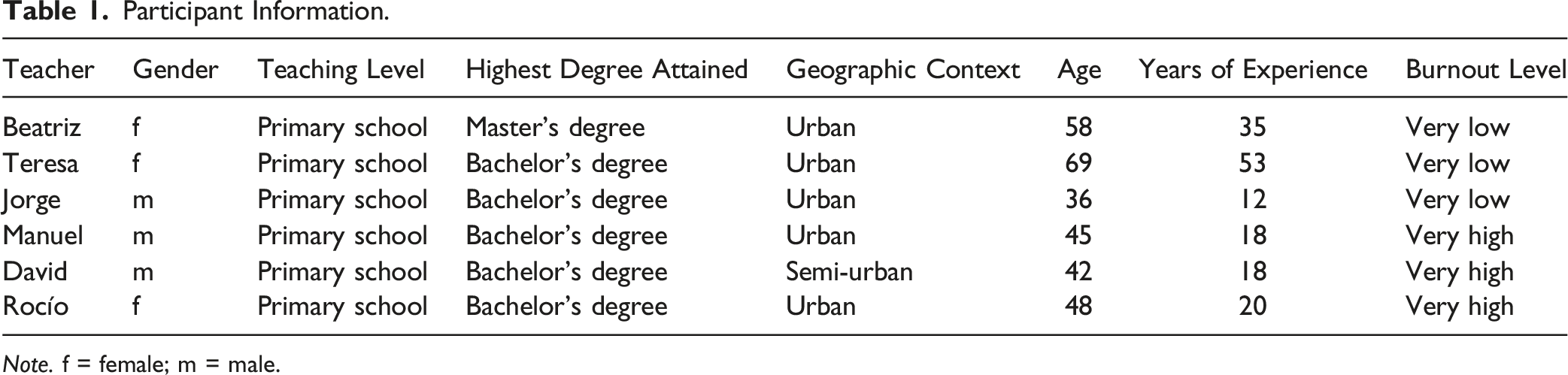
Note. f = female; m = male.
Interviews were semi-structured and guided by seven core questions addressing stressful teaching experiences, role overload, institutional and parental influences, and potential solutions. For example, participants were asked: “What is the most stressful situation you remember in your teaching career?” All were conducted via Zoom in Spanish, transcribed, and translated into English. The first author carried out the translation and the second author reviewed it to ensure accuracy. Data were analyzed with MAXQDA 2020 using qualitative content analysis (Kuckartz & Rädiker, 2023). The process involved familiarization, category development, coding, and thematic synthesis into narrative findings (Sandelowski, 2000).
Findings
This section presents six case narratives drawn from the extremes of the sample: three teachers with very high burnout and three with very low burnout. Although 20 interviews were conducted, these focal cases best illustrate the contrasting ways burnout is shaped by organizational and contextual conditions, as well as the coping strategies teachers employ. Organized from highest to lowest burnout, the cases highlight distinctive patterns and their implications for support.
Rocío (Highest Burnout Level)
Rocío, a 48-year-old first-grade teacher with 20 years of experience, reported the most severe burnout symptoms among all participants, reporting clear signs of chronic stress-induced cognitive decline and a sense of irreversible exhaustion. One of the main stressors she identified was managing a student with severe behavioral difficulties, who was present when the researcher met her: “For four consecutive weeks, it was daily screaming, tantrums, crises, he clinging to my blouse, biting me, and pulling me [...]. I would leave school covered in scratches and bite marks. I kept thinking, ‘This is never going to change.’” Her statement conveyed a persistent sense of futility and loss of control after repeated unsuccessful attempts to manage the student’s behavior.
Beyond the challenge posed by this student, Rocío identified the lack of discipline at home as a key obstacle to maintaining classroom order and supporting the student’s learning process: “The mother says, ‘I’m the only one who sets rules’, but the aunt and grandmother give in to all his whims […]. In the end, he adapted to the classroom rules, but it’s still a constant negotiation.” This clash between home and classroom norms created an ongoing emotional burden for Rocío. She had to manage conflicting expectations and maintain consistent boundaries within the classroom setting.
She reported that her stress level was further aggravated by what she perceived as authoritarian school leadership: “The principal enforces the rules rigorously, but it feels like she’s paying you out of her own pocket. You have no freedom to do anything without her authorization. She is very demanding.” In her reporting, this leadership style created an environment of low professional autonomy, where even minor decisions, such as turning on the air conditioning, required approval: “We have to ask for permission to turn on the air conditioning. [...]. I have to go and ask, ‘Good morning, may I turn on the air?’ And if she says no, then we just have to endure the heat.” Beyond the physical discomfort, for Rocío, this level of micromanagement reinforced her feeling of having no control over her work environment, amplifying her exhaustion.
This reflects a state of constant hypervigilance, where she felt watched and judged at all times: “What stresses me out the most is the feeling of always being watched, always feeling like you’re doing something wrong, either for the principal or for the parents.” This perception of constant surveillance is a key trigger for chronic stress. It prevents any sense of security in the workplace. As these sources of stress have accumulated, she has seen a significant decline in her cognitive abilities: “‘Either I’m going crazy, or I’ve just gotten old, [...]’ I used to be one way, and now I’m a completely different person, nothing like before. I feel like my abilities have dropped by about 50%. I forget everything.” Rocío’s account shows how chronic stress progressively eroded the mental resources she relied on to carry out her work. What had once been routine tasks became increasingly difficult, as lapses of attention and memory limited her sense of competence and continuity in her role, suggesting a vulnerability to burnout.
Asked about solutions, Rocío primarily expressed frustration regarding the curriculum and her inability to keep up: “I find the third-grade Spanish textbook dreadful, because I don’t have the capacity to teach it the way they want me to [...]. I don’t have time to prepare, to scan, or anything, and so I feel frustrated.” Notably, her inability to create tailored materials, a task she once mastered, indicates motivational paralysis. Burnout severs the link between effort and reward. While other teachers with lower burnout levels reported managing stress through peer support or active coping strategies, Rocío reported that she lacked these resources: “Honestly, I have felt extremely stressed. There is no real relief. I try to calm myself, focus on breathing, but that’s all I can do.” Rocío has reached a point where burnout has severely impaired her cognitive functions, leaving her in a state of near-total emotional exhaustion. While some teachers implement active coping mechanisms, she perceives no viable solutions beyond enduring the situation.
Rocío exemplifies an advanced stage of teacher burnout. Her experience reveals severe emotional exhaustion, marked by chronic depletion and loss of recovery capacity. While she did not detach from her students, depersonalization appeared as systemic cynicism and alienation from her professional role. Reduced personal accomplishment was also evident in her persistent sense of inefficacy and frustration, particularly her inability to plan or adapt curriculum materials as she once did. These patterns show how sustained stress and cognitive decline can compromise both professional identity and the capacity to remain in the teaching profession.
David (Very High Burnout Level—Second Highest)
David, a 42-year-old first-grade teacher with 18 years of experience, reported the second-highest level of burnout among the participants. One of the most alarming episodes of his career occurred while working in a rural community, where he had a direct encounter with members of organized crime. As is common in unitary schools in Mexico, he was simultaneously the teacher, principal, and janitor: “A convoy of drug traffickers arrived at the school, all armed with rifles. [...] They warned me not to talk to the soldiers, and of course, I wouldn’t, because the moment I did, I’d be finished, I’d be dead.” The need to protect his students while facing direct risks imposes an intense psychological toll, potentially leading to hypervigilance and anxiety.
David also faced recurrent vandalism at his school, increasing his frustration with the lack of action from authorities: “There is only one functional bathroom for boys and one for girls; [...] I barely have three or four windows in my classroom, [...] mosquitoes are everywhere, biting the children. You know it can reach up to 40°C here.” This deterioration in working conditions reinforces the perception of institutional abandonment, which can lead to demoralization and a sense of helplessness.
Unlike other teachers with extreme burnout, David implemented more active coping strategies to reduce his stress and maintain his psychological well-being: “Look, as a strategy to manage stress, having fun is essential […]. When you go to the stadium, you yell and let everything out […]. For me, going to the stadium completely changes my mood.” This type of active, enjoyment-based coping, is reported as an effective way to release accumulated tension, acting as a buffer against burnout.
Additionally, David made the decision to request a school transfer, prioritizing his well-being and working conditions: “Next school year, I’ll be working at another school […]. The school is in better condition […]. I need to be in a place that at least has the minimum necessary to work properly.” This decision reflects a proactive coping strategy, where David is not only recognizing his burnout but also taking concrete steps to modify his environment and reduce stress factors.
David represents a high-risk profile at an early stage of teacher burnout. Emotional exhaustion is evident, driven by acute stressors such as exposure to organized crime, extreme heat, and deteriorated infrastructure. Depersonalization emerges not as detachment from students but as withdrawal from institutional structures and distrust of authorities. His sense of personal accomplishment, however, remains largely intact, sustained by active coping and proactive decisions such as requesting a transfer. His case illustrates how protective factors can buffer chronic stress and support professional resilience.
Manuel (Very High Burnout Level—Third Highest)
Manuel, a 45-year-old primary school teacher currently teaching 4th grade, with 18 years of experience, comes from a family of educators. He describes an incident in which a father tried to assault him after a classroom comment: “A girl came in with her whole hand and arm marked up with a marker. I said, ‘Don’t do that, only gang members or people who do drugs mark themselves like that.’” “The next day, her father came wanting to hit him: “I was threatened.”
This episode reveals physical endangerment well beyond a mere misunderstanding, underscoring the absence of firm institutional protections for teachers: “The Department of Education says you can’t defend yourself […]. If a parent hits me, what do I do? Just take it?” He also recounts another dangerous situation in which a thief scaled the school fence: “Those were the longest 20 minutes of my life […] the thief was out there in the courtyard until the police arrived. They couldn’t handle him […] Look, we’re exposed.” As the only male staff member on site, Manuel feels pressured to act as protector, adding a layer of responsibility beyond his formal role.
Manuel frequently adopts responsibilities beyond teaching: “I’ve had to take care of a student with a head wound, mediate with parents, help a colleague with a parent who was yelling at her. […] These situations […], lead me to tackle issues that technically aren’t my responsibility.” Although these actions reflect Manuel’s sense of moral duty, they also draw him into a cycle of overcommitment—the more he is seen as capable, the more tasks he inherits. This accumulating burden erodes his emotional reserves, aligning with the dimension of emotional exhaustion.
As solutions, Manuel believes school leaders must be held accountable: “I think the regional authority should evaluate the inspectors […]. Because each district belongs to a different community, and each community is very different.” His stance locates institutional power in leadership and calls for top-down reforms. In Manuel’s view, if administrators can shape policies and environments, they should also bear measurable responsibility.
Despite high stress levels, Manuel preserves his quality of life through a strict work–life separation: “As soon as I finish at school, I leave it all behind. Weekends are sacred for my family […]. If parents message me on Saturday, I don’t feel obligated to respond.” He also practices emotional detachment: “I’ve come to understand that if something isn’t my problem, I shouldn’t get involved […]. It’s better to let there be just one fool instead of two.” By refusing to absorb every crisis, Manuel emphasizes the importance of boundaries and resists the expectation that teachers must constantly go above and beyond at the expense of their well-being.
He speaks of a “shell,” describing how educators regularly encounter child abuse, violence, and poverty: “We see so many things […]. I take the good with the bad, I concentrate on supporting my students, and if something really gets to me, I talk it over with my wife or my friends.” His emotional regulation and selective engagement help him remain functional, illustrating that burnout can be a gradual process of endurance rather than a sudden collapse.
Manuel exemplifies a mid-stage burnout profile, showing symptoms across all three dimensions. Emotional exhaustion is evident in his hypervigilance, overextension, and the burden of multiple informal roles. Depersonalization is selective, directed toward aggressive parents and institutional failures rather than students. His sense of accomplishment remains largely intact, sustained by his teaching role but tempered by frustration with inadequate protections. What distinguishes Manuel is his capacity to set boundaries—refusing out-of-hours demands and preserving personal time—which helps slow his progression toward more severe stages of burnout.
Jorge (Very Low Burnout Level)
Jorge, a 36-year-old primary school teacher with 12 years of experience, teaches first grade in an urban school. Although he faces significant stressors, his case contrasts with that of other participants in this study who reported severe cognitive deterioration, exposure to violence, or threats to their physical well-being. He describes the emotional demands of his role, particularly the need to closely monitor students for signs of distress or potential issues at home: “Teachers have to help children overcome emotional struggles […]. Years ago, I dealt with a sensitive case of abuse. A child’s body language says a lot; if they’re reluctant to sit down, something’s likely wrong at home.” A constant need to emotionally monitor students and be responsive to student stress, as reported by Jorge, can be a cumulative stress for teachers and may contribute to emotional exhaustion.
Jorge identifies the lack of parental support as a major stressor within his professional practice, as he feels it directly impacts his ability to help students succeed academically: “We have the task of achieving a high educational level, of improving students, and one of the things that pressured me the most was not being able to achieve my goals because there is no support or follow-up at home.” He reports his frustration stems from the disconnect between classroom instruction and home reinforcement. According to Jorge, without parental engagement, students lack continuity in their learning, forcing teachers to fill the gaps in foundational skills.
Jorge also reports that excessive paperwork and short-term administrative demands conflict with his educational priorities: “For years, there has been constant pressure to meet certain administrative requirements; exams, planning tests, council meeting reports. Those in particular are excessive and create a huge workload, preventing me from focusing on what really matters, which is teaching.” The administrative burden diverts time and energy away from classroom instruction, directly undermining his goal of achieving high educational standards. This frustration stems from a system that prioritizes bureaucratic efficiency over pedagogical effectiveness.
To address some of these challenges, Jorge proposes leveraging social media to improve parental involvement: “Social media is an important communication tool […]. Parents often don’t know what their children should be learning. Through social media, we could keep them informed and engaged with their children’s education.” His proactive approach reflects problem-solving rather than passive frustration, aligning with a mindset that empowers him to find solutions within his reach.
Jorge also advocates for a clearer distribution of responsibility when addressing student disengagement: “If the student doesn’t listen to the teacher, then the director should intervene, and if not, then the supervisor. Some may say they don’t have time […] it would be a good idea for others to also hold parents accountable.” This reflects his belief in a systemic support framework, where administrative roles should share the burden of student management, rather than placing the entire responsibility on teachers.
Jorge recognizes that the physical environment directly impacts learning, arguing that outdated furniture and unsafe buildings distract students and undermine their ability to engage: “I would primarily invest in infrastructure. I’m not even asking for a projector or a smart classroom, just that schools have the basic services they should already have.” His focus on infrastructure reflects his concern that schools should provide the basic services already guaranteed; their absence not only undermines equity and dignity but also creates daily challenges for both teachers and students, which increase strain and contribute to burnout.
To manage stress, Jorge emphasizes the importance of maintaining clear boundaries between work and personal life: “I use a calendar to organize everything, so I can have my weekends free. It takes discipline, but it helps me have time for myself.” His structured time management appears to serve as a protective mechanism against burnout, allowing him to maintain a sense of control and predictability in a profession often characterized by unpredictability.
Aware of the emotional toll of teaching, Jorge has also sought professional support: “I think the best current teaching strategy is to meditate and go to therapy. I go to a psychologist once a month, and I wish I had more time for more frequent sessions.” Jorge reports that therapy provides a critical outlet for emotional processing, helping him navigate occupational stressors that might otherwise accumulate over time.
Beyond professional support, Jorge has cultivated personal strategies for stress regulation: “I think I have learned to let things flow more. Before, I used to worry and stress over things that were out of my control. […] if a person who should care doesn’t, then there’s nothing else I can do.” His ability to reframe challenges and focus on controllable factors aligns with well-established protective mechanisms against burnout.
Jorge illustrates a low burnout profile sustained by strong protective factors. Emotional exhaustion is minimal; although he faces stressors such as bureaucracy and limited parental support, he maintains energy through time management, work–life boundaries, and psychological support. Depersonalization is absent—he shows sustained empathy toward students and families. His sense of accomplishment remains high, grounded in pedagogical confidence and a focus on controllable factors. Rather than withdrawing, Jorge channels his energy into advocacy and constructive proposals. His case shows that burnout is not inevitable and highlights how proactive coping and emotional regulation can sustain resilience in high stress environments.
Beatriz (Very Low Burnout Level)
Beatriz, a 58-year-old primary school teacher with 35 years of experience, teaches first grade in an urban school, and scores very low in burnout. Having overcome multiple hardships, she holds dual bachelor’s degrees in primary education and nursing. She shared one case deeply impacted her; after discussing concerns with a student’s mother about the child being abused by her grandfather: “I spoke with the mother, and she told me I was crazy […]. The principal at the time told me: ‘Stay out of it, don’t get involved’. And I said: ‘How? I can’t just let this go.’” Her experience underscores the profound emotional burden teachers face in such cases. While her proactive approach blurs professional boundaries, it reflects her deep empathy and commitment to student welfare in contexts where institutional safeguards are lacking.
She has also worked with several students with severe behavior problems, but rather than using punitive approaches, she transformed their conduct through love and strategic intervention. However, their behavior was initially deeply troubling and stressful: “The students had no respect for anything or anyone. So if a teacher scolded them, they would go and break their windows or slash their tires […] that’s how the environment is over there, that’s how problems are solved there, with stones.” In a community where violence is a normalized conflict resolution strategy, her students’ reactions to discipline mirrored their harsh environment, yet, she refused to reinforce this cycle with punishment.
Beatriz attributes much of the stress in her role to the lack of psychological support for children, noting that trauma can create barriers to learning. She believes regular psychological evaluations could help address these issues early: “A psychologist could detect issues that impact children’s lives and remove learning barriers […]. Maybe not monthly, but at least every 2 months.” Her push for systemic support reflects an understanding of developmental psychology, where early trauma detection can prevent long-term cognitive and emotional deficits.
Beatriz emphasizes the importance of building trust with students by showing genuine care and creating a supportive environment. She believes this approach helps students feel safe and improves behavior: “Approach the child and say, ‘I care about you […]. What’s going on with you?’ When a child feels you’re interested in them and that they have the chance to express themselves, they behave better. Conveying that sense of security and happiness is key.” Her ability to foster emotional safety helped curb behavioral issues while offering students an alternative to the community’s destructive norms.
She also advocates for grade retention for students who have not developed fundamental skills, ensuring they are adequately prepared for the next grade level: “Requiring students to repeat a grade would help […]. It’s unfair to move them forward if they can’t read or write, affecting both them and the next teacher.” While grade retention can delay students’ progression, Beatriz sees it as a necessary intervention in an underfunded system with few alternatives.
In our analysis, Beatriz emerges as a proactive but sometimes confrontational teacher, an approach that may cause conflict but also enables her to solve problems and challenge perspectives: “If the mother can buy herself an expensive phone, why doesn’t the child even have breakfast? I do step in and ask them, ‘Why don’t you buy the notebook?’ Then they get upset and tell me I’m meddling.” By directly challenging parents on issues of neglect and inequality, she exposes uncomfortable societal truths.
She credits her supportive principal as playing a key role in preventing her burnout. “My principal prioritizes my needs. If I need something, he gets it. I’m so comfortable working there. It’s a marginalized area, but everyone wants to be there because he makes us feel at ease, and it reflects in the students.” Unlike teachers in more rigid environments, Beatriz reports that she has the autonomy to make decisions and focus on teaching rather than administrative burdens: “They let me work freely. They only ask for results, but they don’t burden me with bureaucracy. That helps me a lot to avoid feeling overwhelmed.” This combination of individual strategies and workplace support appears to be foundational to her sense of well-being.
Beatriz presents a very low burnout profile, with minimal symptoms across all three dimensions. Emotional exhaustion is low; while she acknowledges the toll of working with children exposed to violence and neglect, she maintains energy and motivation through purpose and supportive leadership. Depersonalization is absent—she shows sustained empathy for students and consistently responds with care. Her sense of accomplishment remains high, grounded in her belief in behavioral transformation through trust, structure, and emotional support. Her resilience is reinforced by empowering leadership, pedagogical autonomy, and her willingness to confront systemic neglect. At the same time, strategies such as directly challenging parents or advocating grade retention carry risks that rely on institutional support. Beatriz’s case shows how autonomy, trust, and professional respect can sustain teacher well-being even in marginalized contexts.
Teresa (Very Low Burnout Level)
Teresa, a 69-year-old preschool teacher with 53 years of experience, is currently teaching sixth grade, and scores very low in burnout. She recalls a challenging period in a previous school where she faced harassment and workplace bullying: “They got together and decided to have me removed from the school, and they succeeded. There was a lot of envy, a lot. It was like, ‘You’re working more so that parents see me as less’, a kind of selfish competition.” This experience happened several years ago, but now, her environment is different: “My colleagues are amazing; they actually encourage me to keep pushing forward. For me, that change has been incredibly positive. I’m happy because I truly enjoy being where I am now.” Unlike her previous school, where her dedication was met with hostility, Teresa now thrives in a collaborative and supportive environment.
Teresa acknowledges the emotional toll of carrying her students’ personal burdens, as they often confide in her about difficult family situations: “That really upset and frustrated me. The fact that such a small, innocent child wasn’t protected by the very person who was supposed to care for her […] As teachers, we carry all the children’s problems.” While many educators struggle with this emotional labor, Teresa actively imagines ways to prevent compassion fatigue rather than allowing it to accumulate unchecked.
She suggests holding regular peer meetings facilitated by a psychologist, similar to group support sessions: “Having a meeting just for us teachers would allow us to vent. Sometimes you just need a pat on the back from more experienced colleagues who’ve been there before.” She imagines that this structured outlet could help teachers process emotional challenges collectively, reducing stress and preventing burnout.
Teresa believes that much of teachers’ stress stems from parents’ level of involvement in their children’s education. To address this, she advocates for a “parent school” program to educate families on their roles in student success. She successfully implemented this in a previous school: “We had monthly parent sessions, and it helped a lot. Parents learned the importance of being present in their children’s activities […]. It’s a good option if the right person is leading it.” This proactive approach shifts some of the burden away from teachers by reinforcing parental responsibility, demonstrating that Teresa seeks systemic solutions rather than simply enduring stress.
Teresa emphasizes that feeling supported by colleagues and school leadership significantly reduces her stress: “When you feel supported […], it’s much easier to carry the weight of the pressure. And my principal is very compassionate […] He always makes sure nothing is missing in the school, […] The work environment here is really, pleasant.” Unlike many teachers who face administrative indifference, Teresa reports having a principal who actively fosters a positive school climate. She shares that this creates a sense of psychological safety which enables her to focus on her work without anxiety.
Teresa prioritizes work–life balance as a coping mechanism: “I try to organize myself and leave Sundays free […]. I try to finish everything, both personal and work-related, so that on Sundays I can truly have a work-free day and just spend time with my family or rest.” By proactively scheduling rest time, Teresa protects herself from exhaustion, a habit often missing in teachers with high burnout.
Teresa shares that she uses personal anecdotes to humanize herself and create a relatable, safe classroom environment. This fosters mutual trust, encouraging students to share their own experiences: “I always try to build trust with my students. Every day I share something with them, […] they start telling me things about their homes. Having that kind of connection with the kids helps me not to feel so stressed.” By cultivating open dialogue, she builds rapport and mitigates her stress through proactive problem-solving and emotional reciprocity.
Beyond personal strategies, Teresa also advocates for wellness initiatives within the workplace, such as incorporating stress management practices. She explained: “I would love for us to have yoga sessions, maybe once a week, but led by someone who truly knows how to work with breathing and posture.” Her focus on practical, research-supported well-being strategies showcases her belief that burnout prevention should be institutional, not just personal.
Teresa presents a very low burnout profile, with no significant symptoms across the three core dimensions. Emotional exhaustion is minimal; although she acknowledges the emotional toll of hearing students’ personal stories, she manages it through boundaries, rest, and peer support. Depersonalization is absent—she cultivates trust and openness by sharing aspects of her own life to strengthen student connection. Her sense of accomplishment remains high, sustained by her belief in her capacity to influence students and drive positive change. Teresa’s case highlights how collaborative school climate, compassionate leadership, and intentional well-being practices can sustain long-term resilience, reinforced by her advocacy for systemic solutions such as parent education and collective emotional processing.
Summary of Key Findings by Participant: Burnout Level, Sources of Stress, Protective Factors, and Stress-Relief Strategies.

Note. Burnout level was classified using CESQT percentiles (≤11 = very low; ≥89 = very high).
Discussion
This study aimed to explore how Mexican preschool and primary school teachers experience burnout throughout their careers, identify the main causes they perceive, understand the solutions they propose to reduce it, and examine the protective factors, or stress-relief strategies, they use to manage it. By using a qualitative approach, this study aims to answer these questions directly from the people who live these experiences.
Experiences of Burnout Among Teachers
All participants described some form of emotional exhaustion, though its intensity and expression varied. For instance, Rocío linked it to supervision and cognitive decline, David and Manuel to unsafe environments, Jorge to administrative overload, and Beatriz and Teresa to the emotional toll of student suffering. These cross-case patterns highlight how emotional exhaustion manifested differently while remaining a consistent feature in the data.
Depersonalization, a central dimension in quantitative studies of burnout (Maslach & Jackson, 1981), may not always be expressed in interviews as open withdrawal from students. Quantitative instruments such as the MBI operationalize depersonalization through standardized items, but this approach can miss the nuance of how teachers describe their experiences (Schaufeli & Taris, 2005). In this study, participants rarely acknowledged disengagement directly, as it implied professional failure and a violation of the ethic of care. Instead, they reported emotional regulation strategies, while prioritizing their students’ well-being. Beatriz rejected violent disciplinary practices while sustaining care; Jorge managed stress through strict work–life separation and psychological counseling; Teresa preserved recovery time and promoted peer dialogue; Manuel protected himself through firm boundary-setting and refusal of excessive demands; and David relied on leisure-based coping and sought a transfer to improve working conditions. Across burnout levels, these cases suggest that what survey instruments capture as depersonalization may, in practice, reflect the types of emotional regulation teachers use to remain functional rather than genuine detachment. This interpretation is consistent with Brotheridge and Grandey’s (2002) distinction between surface acting and deep acting. Surface acting—suppressing or faking emotions without changing feelings—has been linked to higher depersonalization scores, while deep acting—authentic emotional alignment and intentional boundary-setting—is associated with resilience and stronger personal accomplishment. Participants’ narratives more closely resembled deep acting, supporting well-being despite high stress.
Reduced personal accomplishment, by contrast, was less salient in the data: it was explicitly articulated only by Rocío, whose severe burnout coincided with cognitive decline and institutional constraints. Among other teachers, it appeared indirectly as frustration with systemic barriers rather than as diminished pedagogical ability. For example, David emphasized deteriorated infrastructure and institutional abandonment, Manuel expressed disillusionment with the lack of protection and excessive responsibilities beyond his role, Jorge pointed to bureaucratic overload and insufficient parental engagement, Beatriz highlighted the absence of psychological services for children, and Teresa underscored the need for institutional support to process the emotional burdens teachers carry. Overall, this reflects that accomplishment depends not only on individual effort but also on the availability of organizational resources (Leiter & Maslach, 2016). Teachers with access to leadership support, psychological services, or collegial collaboration were more likely to sustain professional motivation despite external stressors.
Beyond established models of burnout, our analysis also highlights a novel contribution: participants with the highest burnout levels described experiences that align with learned helplessness—that is, generalized expectations of noncontingency after repeated experiences of lack of control (Seligman, 1972). Rocío illustrated this through her assertion that “nothing is going to change” despite repeated efforts to manage her classroom, linking futility with cognitive decline. Manuel reported resignation when facing recurrent parental aggression and the absence of institutional protection. David emphasized institutional abandonment and unsafe conditions that persisted despite his complaints, reinforcing a sense of futility. While lack of control has long been recognized as a driver of burnout (Maslach & Leiter, 1997; Schaufeli & Enzmann, 1998), these high burnout cases show how the expectation that “nothing will change” translates directly into burnout. This application of learned helplessness provides an additional framework for understanding advanced stages of teacher burnout, complementing evidence of overlap between burnout and depressive processes (Bianchi et al., 2016).
Main Causes of Burnout Identified by Teachers
Teachers consistently highlighted five main sources of burnout: (1) lack of infrastructure and support, (2) micromanagement and autonomy deprivation, (3) violence and insecurity, (4) parental negligence and role expansion, and (5) compassion fatigue. Framed within the Job Demands-Resources model (Bakker & Demerouti, 2007), their accounts reveal how extreme job demands exceed the limited supportive resources. Consequently, burnout in these Mexican teachers was not due to individual failings but was instead fueled by systemic neglect and the unrealistic expectations embedded in Mexico’s educational system.
Lack of Infrastructure and Support
Teachers repeatedly pointed to deteriorating school conditions, citing crumbling infrastructure and unsafe environments. This lack of structural investment is reflected in national statistics, where only 73.85% of Mexican schools meet basic school standards (Mejoredu, 2022b). While high-income countries often emphasize bureaucratic stressors as key contributors to burnout (Skaalvik & Skaalvik, 2017), these existing national data and comparative literature suggest that Mexican teachers face a compounded burden that includes both administrative overload and unsafe working conditions, which are likely amplifying their emotional and mental strain. Such conditions can reinforce cultural expectations of teachers as protectors, placing emotional burdens that intensify burnout (Romero Andrade, 2024). For example, Manuel recounted an incident in which a thief climbed the school fence and remained in the courtyard for about 20 minutes until the police arrived; as the only male staff member, he felt compelled to act as a protector, illustrating how insecurity and role expectations translate into heightened emotional pressure on teachers.
Micromanagement and Autonomy Deprivation
Our findings reveal a clear pattern: participants such as Rocío and Jorge experienced micromanagement as a form of occupational strain—manifested through constant surveillance and an overload of administrative tasks—which undermined their professional autonomy. In contrast, for Beatriz and Teresa, autonomy and supportive leadership served as protective factors that mitigated stress. In theoretical terms, these divergent experiences reflect the Job Demands-Resources framework: where lack of autonomy functions as a demand, emotional exhaustion is exacerbated; where autonomy exists, it enhances resilience (Bakker & Demerouti, 2007). This contrast underscores the unintended consequences of centralized education reforms in Mexico: policies intended to standardize control have inadvertently amplified bureaucratic burdens and compromised teacher well-being (García-Arroyo et al., 2019).
Violence and Insecurity
OECD studies highlight student misbehavior as a key stressor for teachers (Toropova et al., 2020). In Mexico, this challenge is further compounded by widespread violence and insecurity. In our sample, all six teachers referred to violence, though in different forms: Rocío, David, and Manuel described direct threats such as student aggression, parental hostility, or encounters with organized crime, while Jorge, Beatriz, and Teresa reported structural or community violence, including child abuse, student behaviors reflecting violent environments, or workplace harassment. This shows that violence was not limited to teachers with high burnout but was present across the spectrum, shaping stress regardless of severity level. Teachers must navigate both classroom disruptions and external threats that extend beyond school grounds. In many cases, they not only struggle to manage student behavior but also fear for their own safety, creating a work environment where personal security becomes an additional burden. Unlike in high-income countries, where student misbehavior is often mitigated through disciplinary policies and specialized support staff, Mexican teachers frequently lack the institutional backing to address these threats, forcing them to rely on personal coping mechanisms for survival.
Parental Negligence and Role Expansion
A recurring theme in teacher testimonies was the expectation to assume parental responsibilities in addition to instructional duties. In our sample, four teachers (Rocío, Jorge, Beatriz, and Teresa) explicitly linked burnout to weak parental involvement, whether through inconsistent discipline at home, lack of academic reinforcement, or outright neglect of children’s basic needs. This aligns with global research connecting poor home-school collaboration to increased teacher stress (Britto et al., 2015). Unlike countries with state-funded parental involvement initiatives, Mexican teachers are often left to navigate these challenges alone, further stretching their emotional resources.
Compassion Fatigue: When Demands Eclipse Emotional Reserves
Accounts of compassion fatigue emerged repeatedly in the interviews, reflecting the emotional depletion that arises from prolonged exposure to student trauma and suffering. Rocío described reaching a point where even breathing exercises were insufficient to relieve her stress; Beatriz recounted cases of child abuse and violent community contexts that she faced with empathy despite their emotional toll; Teresa emphasized that “teachers carry all the children’s problems” and advocated for collective spaces to vent and prevent emotional overload; and Jorge underscored the importance of therapy and psychological support as protective measures. In total, four teachers explicitly reported this form of emotional strain. While compassion fatigue is a documented global phenomenon (Figley, 1995), its impact is magnified in Mexico due to the chronic shortage of school psychologists (Hupe & Stevenson, 2019). With few institutional mechanisms for emotional support, teachers internalize students’ suffering, gradually transforming empathy into exhaustion (Figley, 1995).
Teachers’ Proposed Solutions to Reduce Burnout
Participants described a series of solutions that reflected both the structural conditions of their schools and the everyday challenges of teaching. Their accounts emphasized the urgency of addressing gaps in support systems and highlighted concrete ways in which teacher well-being could be sustained. While international studies have long identified strategies such as psychological support, family engagement, and collaborative leadership as effective for reducing burnout, the present findings show how Mexican teachers themselves prioritize these measures in response to violence, scarce resources, and rigid bureaucratic structures. This distinction is important: rather than extrapolating from global literature, the analysis captures how teachers in this context define what support they need most urgently, offering grounded guidance for policy in Mexico.
Teachers consistently pointed to the absence of specialized staff as a critical gap in Mexican schools, though with varying degrees of explicitness. Beatriz directly advocated for regular psychological evaluations for children to detect trauma early, while Teresa emphasized the value of meetings with a psychologist to help teachers process accumulated stress. Other participants underscored the same gap indirectly: Rocío described the futility of managing exhaustion without institutional relief; David reported institutional abandonment in the face of violence; Manuel assumed responsibilities such as caring for injured students or mediating with aggressive parents; and Jorge relied on private therapy because no professional support was available at his school. Taken together, these accounts highlight how the lack of psychologists and special education professionals leaves teachers to manage both instruction and complex psychosocial demands. This aligns with research showing that specialized staff not only improve classroom dynamics but also reduce teacher stress (Benson et al., 2016; Franklin et al., 2009). In Mexico, however, full-time psychologists are so rare that official statistics do not track their presence; instead, only 31.4% of public schools receive psychological support, typically limited to a single visit every 2 weeks (Mejoredu, 2022a).
The importance of collaboration between schools and families emerged as a central theme in the interviews. Teachers described how the lack of parental engagement intensified their workload and stress, often forcing them to take on responsibilities beyond instruction. Rocío highlighted how inconsistent rules at home undermined classroom discipline; Jorge reported frustration when parents failed to reinforce academic work, leaving him to fill basic gaps; Beatriz described confronting parents about neglecting children’s needs, such as food or school supplies; and Teresa proposed structured “parent schools,” recalling a successful program in a previous setting that improved collaboration. These accounts reveal a shared demand that parents be held accountable for their children’s education, a call that mirrors UNESCO’s recommendations for stronger community-school partnerships (Landeros Aguirre et al., 2023). However, Mexican policies often reduce parental involvement to superficial engagement, lacking structured programs that foster meaningful collaboration.
Lastly, teachers stressed the importance of supportive leadership in creating a healthier school climate. Studies confirm that school leaders who foster autonomy, trust, and teacher collaboration can significantly reduce burnout rates (Tornuk & Gunes, 2020). Such findings underscore that leadership is not only administrative but also central to teachers’ emotional well-being. This was evident in our sample: Beatriz explicitly linked a supportive principal and reduced bureaucracy to sustained motivation, and Teresa associated a compassionate, resource-oriented principal with a positive school climate and lower stress. Jorge, for his part, advocated clearer distribution of responsibilities (director/supervisor) to share student management, highlighting how current administrative burdens undermine teaching. By contrast, Rocío described authoritarian micromanagement and constant surveillance; David reported demoralizing institutional abandonment; and Manuel pointed to the lack of protection from administrators when facing parental aggression. Taken together, these accounts show that in the Mexican context—marked by rigid hierarchies and heavy bureaucratic oversight—supportive leadership stands out as one of the few institutional resources capable of buffering stress and preventing burnout.
Strategies and Protective Factors Against Burnout
Teachers in this study emphasized the critical role of social support in mitigating burnout, aligning with the buffering hypothesis (Cohen & Wills, 1985), which posits that strong interpersonal networks reduce the impact of stressors. In our sample, Manuel highlighted the support of his wife and friends as essential for processing stress, Jorge pointed to therapy and professional guidance as protective, Beatriz underscored the role of a supportive principal, and Teresa proposed collective meetings among colleagues facilitated by a psychologist. By contrast, Rocío reported having no real relief, underscoring the risks of isolation. These findings show how collegial and social relationships provided emotional validation, practical advice, and a sense of solidarity. Prior research confirms this protective role: peer networks within schools reduce emotional exhaustion (Burke et al., 2007), and more recent evidence reinforces it. For instance, Israeli teachers experiencing higher levels of social support, gratitude, and hope reported significantly lower burnout (Einav et al., 2024), while a systematic review of higher education instructors concluded that institutional social support consistently alleviates burnout symptoms (Cao et al., 2024). Together, these converging findings underscore that the protective effects teachers in this study described are not isolated, but reflect a broader, empirically grounded pattern that validates their call for stronger institutional mechanisms to promote collaboration and collegial solidarity.
Rocío described authoritarian micromanagement, including the need to ask permission for minor decisions and the feeling of being under constant surveillance, while David highlighted institutional abandonment in the face of violence and Manuel emphasized the lack of administrative protection when confronting parental aggression. These accounts show how micromanagement and distrust in authorities eroded the possibility of peer collaboration. At the same time, community violence heightened hypervigilance: David reported encounters with organized crime, Manuel recounted threats from parents and intruders on school grounds, and Beatriz described students mirroring violent community norms by vandalizing teachers’ property. Together, these testimonies illustrate how collective stress made it difficult to build meaningful professional relationships. This aligns with Kaihoi et al. (2022), who warn that shared exposure to chronic threats can diminish the protective effects of collegial networks, potentially reinforcing burnout rather than alleviating it.
The World Health Organization (WHO) emphasizes that regular physical activity reduces stress and emotional exhaustion, and empirical evidence confirms that teachers who engage in such practices report significantly lower burnout levels (González-Valero et al., 2023). In our study, Teresa advocated for structured yoga sessions within schools as a collective way to reduce pressure, Jorge highlighted meditation as a regular practice to sustain emotional balance, and Rocío relied on breathing exercises to cope with moments of extreme exhaustion, though she admitted these provided only limited relief. These accounts illustrate how embodied practices function as protective mechanisms against burnout. Yet access to such activities remains limited in under-resourced Mexican schools, underscoring structural barriers that make it difficult for teachers in marginalized contexts to benefit from strategies widely promoted in international guidelines.
Research consistently shows that effective time management is associated with higher job satisfaction and reduced emotional exhaustion (Abayon, 2024). In our sample, Jorge described how maintaining a calendar helped him protect weekends for personal time, while Manuel emphasized that weekends were “sacred” for family life and refused to answer parent messages outside school hours. Rocío, by contrast, expressed frustration at no longer being able to plan or prepare materials as she once did, underscoring how exhaustion can undermine even basic organizational routines. These accounts illustrate both the protective potential of time management and the structural and psychological barriers that limit its effectiveness under conditions of burnout.
Hobbies provide emotional recovery and cognitive detachment from work stress, and international research has shown them to be a primary strategy for maintaining balance in teaching (Carvajo & Guijarro, 2024). David emphasized the cathartic value of attending stadium games, which allowed him to release accumulated tension, while Teresa described protecting Sundays as dedicated leisure time with her family. These examples reflect how personal interests and recreation offered temporary relief from occupational stress. However, as teachers themselves acknowledged, such activities could not substitute for systemic changes needed to ensure sustainable well-being.
Limitations
While a total of 20 teachers were interviewed, six cases were selected based on their ability to illustrate the most distinctive burnout patterns. These cases were chosen to highlight key themes identified in the broader dataset, ensuring a structured examination of how burnout manifests at different levels. Future research may build on these findings by examining broader samples, conducting comparative studies across regions, or integrating multiple data sources such as surveys or classroom observations.
Implications for Practice
We find that teachers in this study attribute burnout in Mexican public schools to structural pressures. These include excessive workloads, insufficient funding, and chronic shortages of materials. Rocío’s struggle with an overloaded curriculum, David’s accounts of vandalized facilities in extreme heat, and Jorge’s frustration with relentless paperwork all show that working conditions—not personal failings—drive the erosion of teacher well-being. We therefore recommend that policymakers target these stressors first; without lighter workloads, sustainable budgets, and basic resources, other interventions will have limited reach.
One structural improvement repeatedly mentioned was school-based psychological support for both students and staff. Beatriz and Teresa linked the absence of on-site specialists to unresolved child trauma and a lack of outlets for adults. Jorge, who pays for private therapy, and Rocío, who has none, underscore a pressing gap. Yet many schools lack even minimal coverage, so expansion must begin with steps such as group debriefings, scheduled consultation hours, or itinerant psychologists, while broader investment and a school-wide culture of well-being develop.
Research shows that neglecting teacher well-being sustains a cycle in which educator stress limits student support, and unmet student needs intensify teacher strain. Breaking that cycle in Mexican schools requires acknowledging burnout as systemic and adopting immediate, affordable measures. Participants pointed to three priorities: clear roles that include staff care, protected time for reflection, and peer networks that counter isolation. Teresa’s hope for psychologist-facilitated meetings, Manuel’s insistence on firm boundaries, and David’s recreational outlets all illustrate practical ways to ease stress before major reform.
A distinctive finding is that collective action protects teachers more effectively than individual coping. Where staff approached challenges together—as in Teresa’s peer circles, Manuel’s defense of colleagues, or Jorge’s call for shared responsibility—teachers reported greater resilience than in settings marked by isolation, such as Rocío’s school. Institutions should therefore promote mentorship, peer-driven support, and formal spaces for joint problem-solving that turn informal solidarity into an enduring resource.
Professional development must also equip teachers with proactive stress management skills. Participants with lower burnout described habits such as structured calendars, meditation, and leisure activities. Workshops on self-regulation, emotional intelligence, and time management would extend those gains. Training in assertive communication and conflict resolution is equally urgent, as Manuel’s and Beatriz’s experiences with confrontational parents show how unprepared teachers can feel.
Implementing these proposals depends on clear roles and visible leadership. Principals should promote emotional-support strategies, mediate conflicts, and enforce rules that safeguard authority. Supervisors should coordinate efforts, curb parental demands, and negotiate reductions in administrative overload. Without consequences for aggression or neglect, training risks becoming a double-edged sword that leaves teachers solely responsible for unresolvable conflicts. A functional support model requires shared structures in which psychologists provide emotional tools, teachers integrate pedagogy and well-being, and leaders cultivate safe environments.
Because each recommendation flows directly from teachers’ testimony, they offer a practical blueprint rather than an abstract wish list. Dual psychological support, collective action, targeted professional development, and institutional backing represent context-ready strategies that can be phased in while larger reforms take shape. Acting on these findings will help Mexican schools move from reactive crisis management toward a stable culture in which educators and students can thrive.
Conclusion
The findings of this study support prior research indicating that burnout is not a static condition but rather a progressive and context-dependent phenomenon (Maslach & Leiter, 1997). Longitudinal evidence also shows that burnout severity depends on the balance of job demands and resources (Hakanen et al., 2008). At the same time, the experiences reported here illustrate how systemic neglect, bureaucratic overload, and exposure to violence create working conditions that compromise teachers’ well-being, echoing international evidence from high-income systems (Oxley et al., 2024) and conflict-affected contexts (Dzuka & Dalbert, 2007; Rojas-Flores et al., 2015). Despite global frameworks affirming that “every teacher, professor, and school administrator should be able to teach and research in conditions of safety, security, and dignity” (Global Coalition to Protect Education from Attack, 2015), Mexican educators continue to work in deteriorating and unsafe environments. These results highlight both the global relevance and the contextual specificity of burnout processes, providing a foundation for the practical recommendations that follow.
Footnotes

Author Contributions
Dr. Angelica Janeth Cortez Soto: Conception and design of the study, data collection, and manuscript writing.
Dr. Yolanda Heredia Escorza: Data analysis and interpretation and critical revision of the manuscript.
Funding
The authors received no financial support for the research, authorship, and/or publication of this article.
Declaration of Conflicting Interests
The authors declared no potential conflicts of interest with respect to the research, authorship, and/or publication of this article.