




Abstract
Understanding teacher candidates’ (TCs’) developmental needs and framing teacher preparation with those in mind can provide education programs with actionable ways to further TC development that generate positive outcomes for them and their students. This novel case study explored four initial certification TCs’ teacher performance and stages of development to develop a profile of each. Increasing teacher candidate/novice teacher self-efficacy and professional agency empowers them, supports improved student learning in P-12 education, and may be especially important for those seeking alternative certification, particularly as we seek to diversity the teaching force. Implications and suggestions for teacher preparation programs are provided.
Introduction
Teacher educators are charged with the daunting task of preparing aspiring teachers for their vocational endeavors, including the acquisition of pedagogical and content knowledge, professional socialization, and translating learned theories into practical action. A diverse teaching force is essential to meet both professional challenges and the needs of all learners. Teacher preparation programs (TPPs) often have predetermined learning goals which may narrow the roles and relationships of teacher candidates (TCs) and teacher educators. These are important facets of teacher education, but aspiring for developmentally appropriate teacher education is a potentially more holistic and effective aim.
While developmentally appropriate practices have informed early childhood programs for decades, developmental perspectives have been much less prominent in early childhood and elementary teacher education. Nonetheless, we believe the relevance of developmental appropriateness in TPPs is potentially no less profound. Teacher educators do not presume to possess all the wisdom aspiring teachers need when they center a developmental approach, and instead, they work to foster more responsive and bidirectional relationships with TCs. From a developmental perspective, TCs learn experientially, constructing rather than acquiring professional competencies. Accordingly, a developmentally oriented teacher educator’s focus shifts away from predetermined lists of teacher competencies toward the realities of teaching environments. They plan interesting and meaningful experiences in response to their perceptions of TCs’ maturational stages. Being mindful of both a TC’s academic performance, professional goals, and developmental needs (e.g., affective, cognitive, and social-emotional) can help teacher educators differentiate instruction and professional development to provide strategic and deliberate support, much like we expect our TCs to do for their young learners. Using a holistic lens to teach “the whole candidate” by examining multiple factors contributing to a TC’s strengths and needs using performance assessments as well as other input sources, we can be more effective in our teacher preparation practices.
This case study research (Yin, 2017) examines the progress of four TCs, all identifying as women of Color, in an Elementary Education Master of Arts in Teaching (hereafter EEMAT) alternative TPP. The individual progress of each TC was analyzed as separately bound cases where teacher performance assessments were put in dialogue with interpretations of the TCs’ stages of adult development informed by constructive developmental theory (Kegan, 1982, 1994). To shed light upon the developmental dimensions of becoming a teacher, the study addresses the research question: What can be learned by reconsidering the outcomes of a TPP from a developmental perspective? Specifically, the following sub-questions guided our analysis. 1. What can be learned about the developmental needs of TCs by examining their performance and assessing their developmental stage? 2. How can understanding TCs’ developmental readiness help shape TPPs to best meet TCs’ needs and potentially help diversify the P-12 teaching force?
Background
The next section briefly shares some background information about the persistent challenges we face in diversifying the P-12 teaching force, adequately preparing TCs within the constraints of TPPs, and meeting the needs of our TCs in a manner congruent to how we advise them to meet the needs of their students before articulating our theoretical framework. We describe the case study methodology used to examine the outcomes of a university-based, graduate degree-conferring, alternative TPP, and then present four case studies to illustrate the potential implications of approaching teacher preparation from a developmental perspective. We argue that a developmental perspective for TCs centers the candidates’ needs, lived experiences, and cultural and linguistic assets to develop increasingly complex and sophisticated content knowledge, pedagogical skills, and reflective mechanisms to meet the needs of all learners with the understanding that each TC may be in different phases of readiness or need (see also Ammon & Levin, 1993; Olson & Finson, 2009; Pratt, 1989; Ryan, 1990 for further reading on various models or frameworks of developmental teacher preparation).
Alternative TPPs
“Closing the teacher diversity gap is one of the most important steps we could take to make public education more equitable” (The New Teacher Project, 2020, p. 1). This issue persists for many reasons, including certification rules prioritizing test scores, discriminatory hiring practices in districts, biased school cultures that inadequately support teachers of Color, and the lack of diversity in TPPs. Approximately 30% of TCs attend alternative certification providers. Two-thirds are housed in universities, and the remaining one-third in local education agencies, school districts, and regional education service agencies (Kuenzi, 2018). Alternative certification programs typically serve TCs who are provisionally allowed to teach while earning their credentials. These TCs frequently have prior professional experience working with children but do not have degrees in education (Matsko et al., 2021). “Alternative programs are [also] significantly more diverse. Traditional programs are 69.6% White, while alternative certification programs are only 46.8% White” (The New Teacher Project, 2020, p. 5), and alternative pathways often have significantly greater numbers of Black TCs (e.g., Matsko et al., 2021).
Alternative TPPs are also often more constrained than traditional undergraduate programs because they generally have fewer program course credit hours (e.g., Bowe et al., 2011; Matsko et al., 2021). The EEMAT alternative TPP highlighted in this study, for example, only requires 37 credit hours for program completion, 13 of which are clinical. Depending on their undergraduate experiences, TCs may be differentially prepared for program coursework that often emphasizes theory and pedagogy over content. Conflicting research findings further complicate things. Some research suggests the quality and quantity of the coursework in TPPs are most important (e.g., Carmi & Tamir, 2020), while other studies suggest it is the quality and quantity of clinical experiences that matter most (e.g., Ronfeldt, 2021). Still, other research suggests there is no difference in outcome by TPP type (e.g., Bowe et al., 2011) or even slightly better outcomes for alternative TPP graduates in some cases (Whitford et al., 2017).
The Goal of Teacher Preparation
Besides preparing TCs to earn official licensure, the goal of TPPs is to develop TCs’ pedagogical and content knowledge, instructional skills, and professional dispositions (Creasy, 2015). TCs’ sense of self-efficacy, the belief in their capacity to bring about desired learning outcomes, is another important outcome to monitor (Tschannen-Moran & Hoy, 2001). TCs with a strong sense of self-efficacy also demonstrate a stronger enthusiasm and commitment for teaching, persistence in the face of setbacks, increased patience and support for struggling learners, and longevity in the profession (Tschannen-Moran & Hoy, 2001). This is particularly important in economically disadvantaged schools, which frequently have more culturally and linguistically diverse students (Berry, 2010), as high teacher attrition rates negatively impact student achievement. But in our current hyper-standardized, hyper-tested educational culture, is developing TCs’ sense of self-efficacy sufficient in and of itself or are there other developmental considerations TPPs should consider as they prepare TCs?
TC Learning Outcomes in Alternative TPPs
“Although contributing to student achievement is a hallmark of teaching, an inadequate literature base exists directly linking student achievement outcomes to teachers, teaching, or how teachers are prepared” (Gansle et al., 2012, p. 312). Some research has found, however, that TCs pursuing alternative pathways feel less prepared to teach across various domains (e.g., planning, instruction, and environment), and these differences are significant on TCs’ perceptions of their readiness to teach in large, urban schools (Matsko et al., 2021). Some evidence suggests alternative pathway TCs plan to teach for a shorter overall duration, but they have stronger commitments to work in schools with minoritized, low-income, and/or low-achieving student populations (Bowe et al., 2011; Matsko et al., 2021). Research also suggests that requiring higher certification examination scores (e.g., edTPA or Praxis II) would make completing a TPP disproportionately harder for minority TCs (De Voto et al., 2021; Shuls, 2018) who are more likely to enroll in alternative TPPs. There is a rather substantial gap in the literature on the effect of TPPs on TCs’ preparation programs and the related effects on P-12 student achievement, however. Variability within TPPs and among TCs (e.g., Whitford et al., 2017), the lack of consistent evidence (Gansle et al., 2012), as well as systemic barriers to data accessibility (Goldhaber, 2018), complicate such research agendas. In the meantime, perhaps our focus should be on exploring ways to find more individualized or differentiated ways to support TC development.
Evaluating Teacher Candidate Performance Through a Constructivist Lens
Piaget’s constructivist developmental theory (1963), as it informs developmental teacher preparation, posits that TCs construct understanding gradually through their activity within and across various domains (Ammon & Levin, 1993). In alignment with our definition of teacher preparation from a developmental perspective above, Ammon and Levin state “An expert teacher (1) has well-developed constructivist understandings of pedagogy, and (2) the ability to act upon them in teaching, (3) with consistency, in different domains and with different learners” (1993, p. 320). Developmentally-minded teacher educators emphasize TC development across the domains of educational foundations, content knowledge, pedagogy and learning theory, child development, supporting differently-abled students, and culturally and linguistically responsive approaches to educational inclusion or transformation. As such, their program assessments align with these goals to gather evidence of candidates’ knowledge of content and pedagogy—as well as dispositions—to provide formative feedback and student evaluation.
Many states have relied on performance assessments (e.g., edTPA; De Voto et al., 2021) and standardized certification assessments (e.g., Praxis; Shuls, 2018) in their efforts to increase teacher quality. However, criticisms of these approaches (e.g., the unintended negative consequences of curriculum narrowing, impacts on student teaching, loss of internal control, increased privatization of teaching, and deleterious effects on social justice efforts), serve as counterstories to the blanket implementation of such measures (e.g., De Voto et al., 2021; Shuls, 2018). These criticisms highlight that a narrowing of what constitutes TC preparation can have the unintended effect of neglecting to look at the multiple domains of TCs’ development. While rigorously ensuring that TPPs are preparing TCs for classroom-based success is vitally important, we argue that developmental approaches may afford better opportunities to support all TCs, but particularly TCs of Color and other underrepresented groups in teaching.
“Practice-based teacher education has pedagogies of enactment (such as rehearsals), and it is through those pedagogies that novices develop their ability to enact core practices” (Bell et al., 2022, p. 2), which includes performance assessments. Performance assessments, unlike selected response assessments, are open-ended and require candidates to demonstrate and apply what they have learned in authentic ways. Some exist only in single sections of courses or with such a specific content focus as to be difficult to scale, while others are deliberately designed to support candidates across courses and even across majors. Typical TPP performance assessments include approximations and simulations (e.g., role plays, simulated virtual reality classroom environments like TeachLivE, and discussion), application tasks (e.g., lesson and unit planning, portfolios, and formal experiences like edTPA), and field placements with high-quality feedback (e.g., Bell et al., 2022; CREST/TeachLivE, n.d.; Matsko et al., 2021; Ronfeldt, 2021). Performance assessments are also designed on a developmental continuum from program entry through graduation, and this constructivist developmental mindset is reflected below.
Theoretical Framework
The intersection of two key constructs undergirds our theoretical framework (see Figure 1). The first is that learning is part of a developmental process. Whether the learner is a young child or an emerging professional, meaning is constructed within the framework of one’s evolving mindset. The second is that the learning environment serves as a critical mechanism for growth and should be developmentally appropriate for the learner. We argue that TPPs should consider the developmental needs of TCs and their learning environments to maximize learning as measured by performance outcomes both during candidacy and as novice teachers. Conceptualization of Theoretical Framework.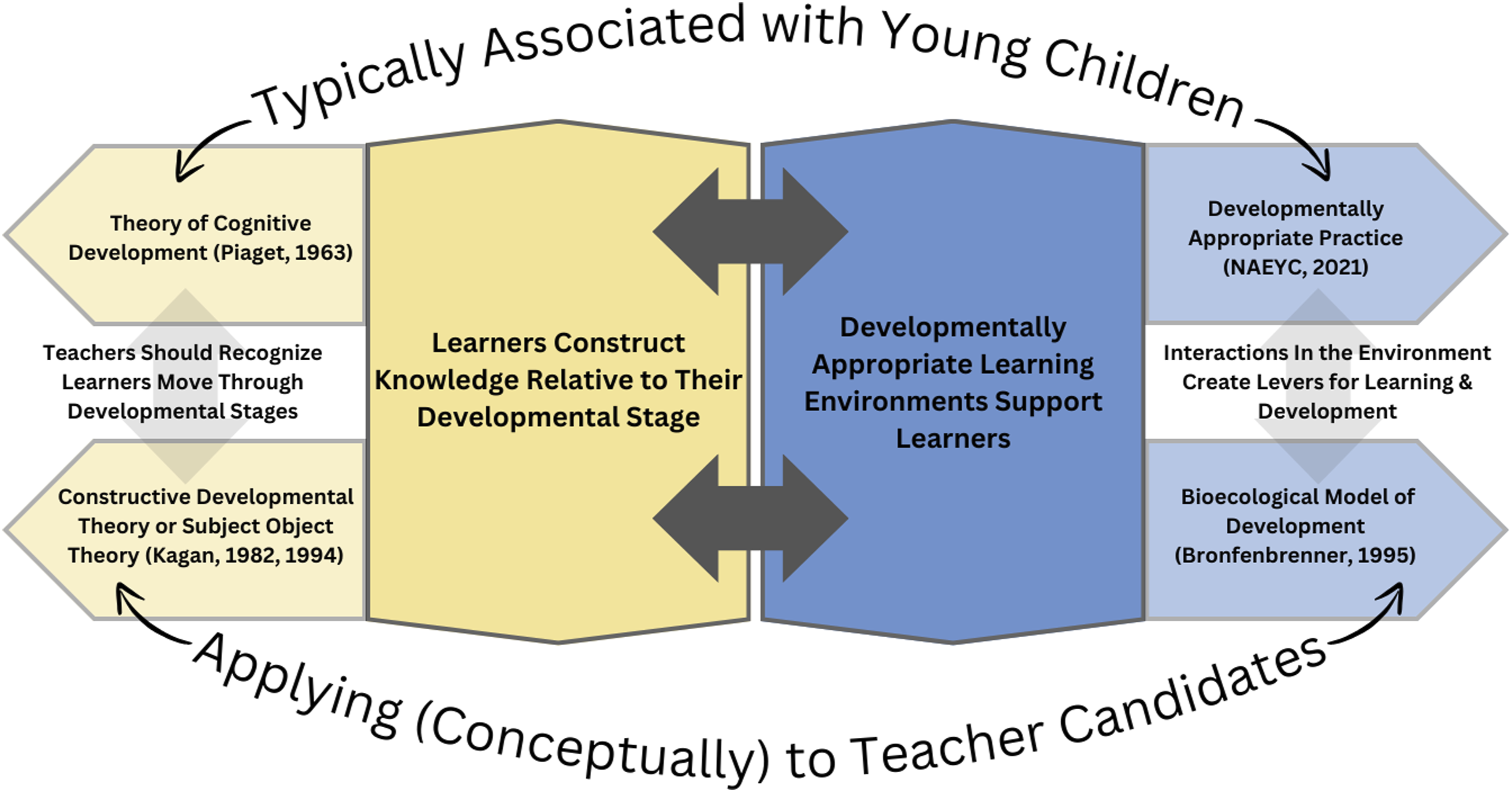
Learning is Developmental
Constructive Developmental Theory (CDT), also known as Subject Object Theory, is based on Robert Kegan’s research (1982, 1994) and extends Piaget’s child development theory (1963) into stages of adulthood. It describes three stages: the socialized mind, the self-authoring mind, and the self-transforming mind. This framework can guide TPPs in supporting TCs’ personal and professional development. This developmental epistemology marries the individual’s identity (the subject), which is embedded and infused, with that which is more tangible, malleable, and relatable (the object) to construct meaning based on experiences and the individual’s feelings about them (Eriksen, 2006), focusing on what he called subject-object relationships. (We acknowledge that the use of the term subjects is problematic, particularly with participants of Color, but we have elected to retain the use of this word when necessary to best align with and explicate Kegan’s theory).
Kegan’s (1982, 1994) theory describes adulthood through three stages of development. The first stage of adult development is the development of a socialized mind. Becoming subject to society, and more specifically the conventions of institutions, is important to the transition of being in the world as a responsible adult who is conscientious about the expectations of others. The next stage is the development of a self-authoring mind. Recognizing disparities among multiple and sometimes competing social demands and becoming subject to one’s moral compass constitute a shift toward a self-authoring mind. Lastly, when individuals can critically appraise the limitations of their ideology and consider the value of contributions derived from other ideological positions, they are operating from a self-transforming stage of development. TCs’ individualized personal and professional development is ongoing and can be supported in TPPs during coursework and clinical experiences. However, like Piaget’s Theory of Cognitive Development (1963), there is not a universal timeline for an individual’s development through these stages, and TCs’ environments (e.g., TPP courses, clinical experiences, lived experiences, and interpersonal connections) influence their developmental trajectory.
Developmentally Appropriate Learning Environments Support Learners
The National Association for the Education of Young Children’s (NAEYC, 2021) most recent edition of the seminal Developmentally Appropriate Practice [DAP] in Early Childhood Programs codifies the most up-to-date professional knowledge that informs early childhood education. DAP guides educators on how to best develop and sustain inclusive, joyful, and age- and stage-appropriate learning environments. It is, and has long been, a basis for informing practice that considers common features of human development shared among all people, unique characteristics of individuals, as well as social and cultural contexts of development and learning (NAEYC, 2021). The idea that context matters for development across the lifespan is well-established and explicated by Bronfenbrenner’s Bioecological Model of Development (1995).
While Bronfenbrenner’s model is often used to explain how school and other contextual factors influence children’s development, we can extrapolate this concept to consider how various factors influence TCs’ development. This theory emphasizes that human development is the result of synergistic interactions between proximal processes (e.g., interactions with people and objects), person characteristics (e.g., cognitive, affective, and physical), context (e.g., the various systemic interactions), and time (a person’s stage of life; Bronfenbrenner & Morris, 2006). Because TCs’ professional learning experiences involve all of these, we have the opportunity, if not the obligation, to ensure the environment best supports each TC relative to their developmental trajectory within the TPP (Figure 2). Bronfenbrenner’s Bioecological Model of Development Applied to Teacher Candidates.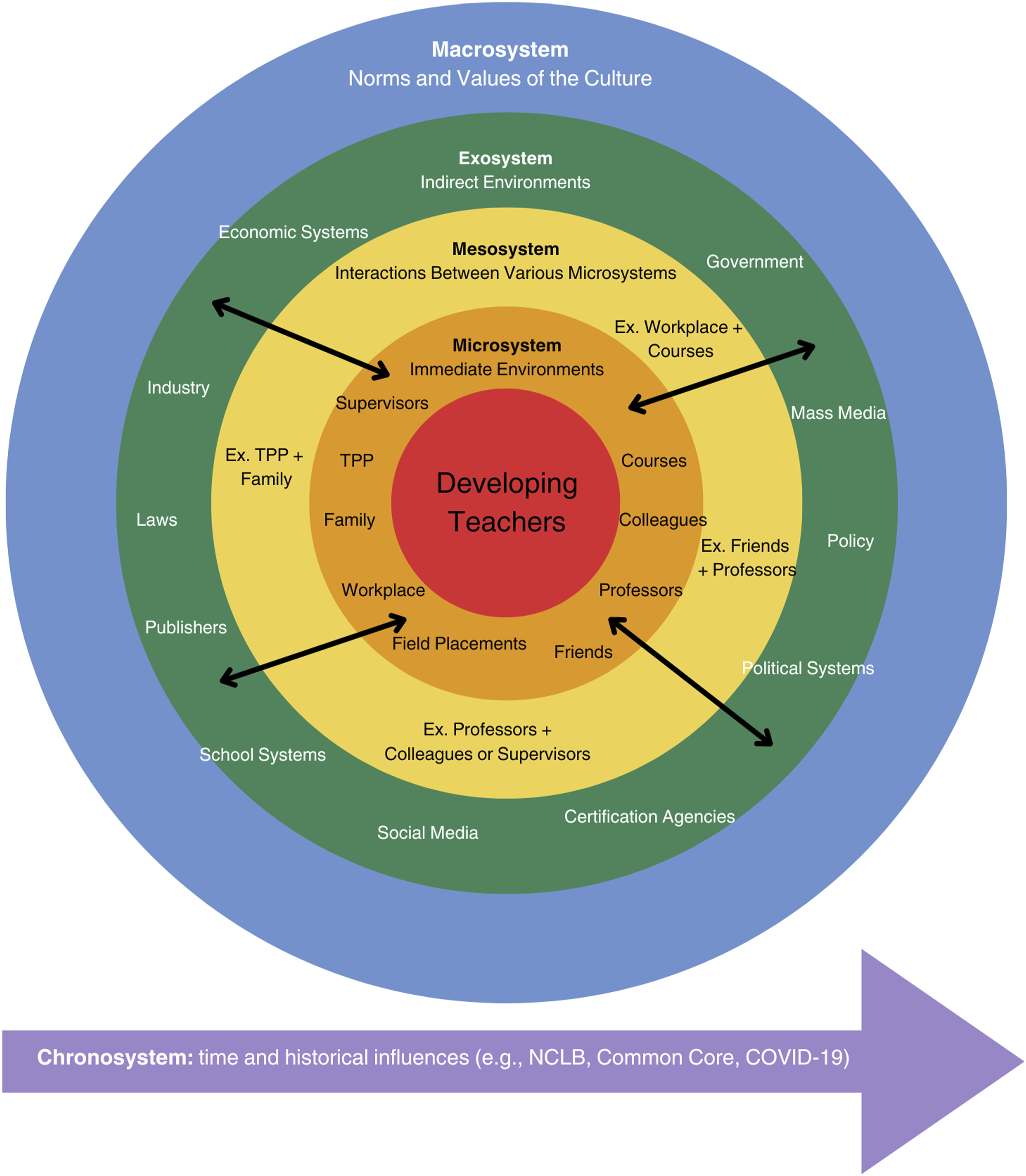
Methods
This bounded case study used document analysis, semi-structured interviews, and thematic coding to examine four TCs’ performance and developmental stages in an EEMAT program. Performance and professional acclimation were analyzed as context-specific phenomena through a combination of deductive and inductive coding. TCs’ performance, as well as their acclimation to professional life in schools, are ongoing and context-specific phenomena related to the process of becoming a teacher. Appreciating that teacher performance is developed and contextualized, professional development is ongoing, and stages of development are individualized, four TCs’ experiences were examined as separately bound cases (Creswell, 2022).
Positionality and Reflexivity
Together, the authors have a combined 54 years in elementary education as public school teachers and teacher educators. Each identifies as a constructivist who believes in using DAP with both young children and TCs to best support classroom learning and learner outcomes across domains. The first author teaches in the alternative program from which the study participants were recruited, and she worked closely with each of them in an instructional capacity. Her intimate knowledge of the students, the program, and the performance assessments was helpful to situate the TCs’ performance within the context of the specific TPP. The second author also teaches TCs in a TPP but had no personal knowledge of the study participants. He did, however, have deep background knowledge of Kegan’s developmental model and the subject-object interview, and his neutrality helped gather participant responses that were more likely to be candid. It was helpful for us to co-design the study relying on our mutual areas of expertise and funds of knowledge (González et al., 2005), engage in cycles of data collection and analysis that incorporated independent and collaborative meaning-making, and question each other’s methods, interpretations, or assumptions until we reached a consensus. While we individually collected and conducted first-round analyses, we came together for the second part of the data analysis to negotiate potential tensions or differences in our coding and to establish analytic trustworthiness (Nowell et al., 2017). Together, we discussed preliminary interpretations of the data from our multi-rounds of coding and theming and the possible relationships between the TCs’ performance and developmental stages as exercises in auditing and reflexivity.
Participant Selection
Greater than 85% of the students in this alternative pathway EEMAT program are currently teaching on a provisional certificate, and the student body is more racially and ethnically diverse than traditional undergraduate TPPs (Kuenzi, 2018). While we had more students of different gender and racial identities express initial interest in participating, the final sample was reduced to four women of Color due to scheduling conflicts and attrition and to align with our research questions. The overall demographic makeup of this graduate alternative TPP mirrors the statistics shared earlier in the background (TNTP, 2020). We did not collect descriptive statistics on the population at the time for this specific study, but a Summer 2023 enrollment report (N = 626), which includes the MAT alternative certification programs as well as traditional undergraduate certification and advanced degree programs, is representative of the typical student population at this TPP and can illustrate this point effectively. Of all enrolled college of education students, 61.3% (384) students are Black or African American and 29.1% (182) are White, and 38% (238) of students are between 25–34, with another 49.4% (309) 35 or older.
Opportunity sampling (Palinkas et al., 2015) was used to identify EEMAT participants in a large, metro area of the southeastern region of the US. We focused on a typical case approach to select participants so that their responses might “illustrate or highlight what is typical” (Palinkas et al., 2015, p. 535) for the TCs enrolled in this TPP. Participants were recruited from immediately past (i.e., had just graduated) or current students in the EEMAT program. At recruitment, current candidates were enrolled in the first author’s Spring 2021 (January-May) semester courses and recruited via the university learning management system. These students were in various phases of their program of study, some ready to graduate and others with approximately three semesters of coursework remaining. Former students who had already graduated from the program were recruited via email. To protect participant anonymity while simultaneously reflecting their characteristics, pseudonyms are used that are ethnolinguistically similar to the participant’s real names. The final sample included four female TCs of Color who, at the time of the interview (May-July 2021), were in various program stages. 1 Amina and Nasia were actively enrolled students completing final courses and preparing for their Internships, and Jasmine and Phyllida had just graduated in May 2021.
Data Collection
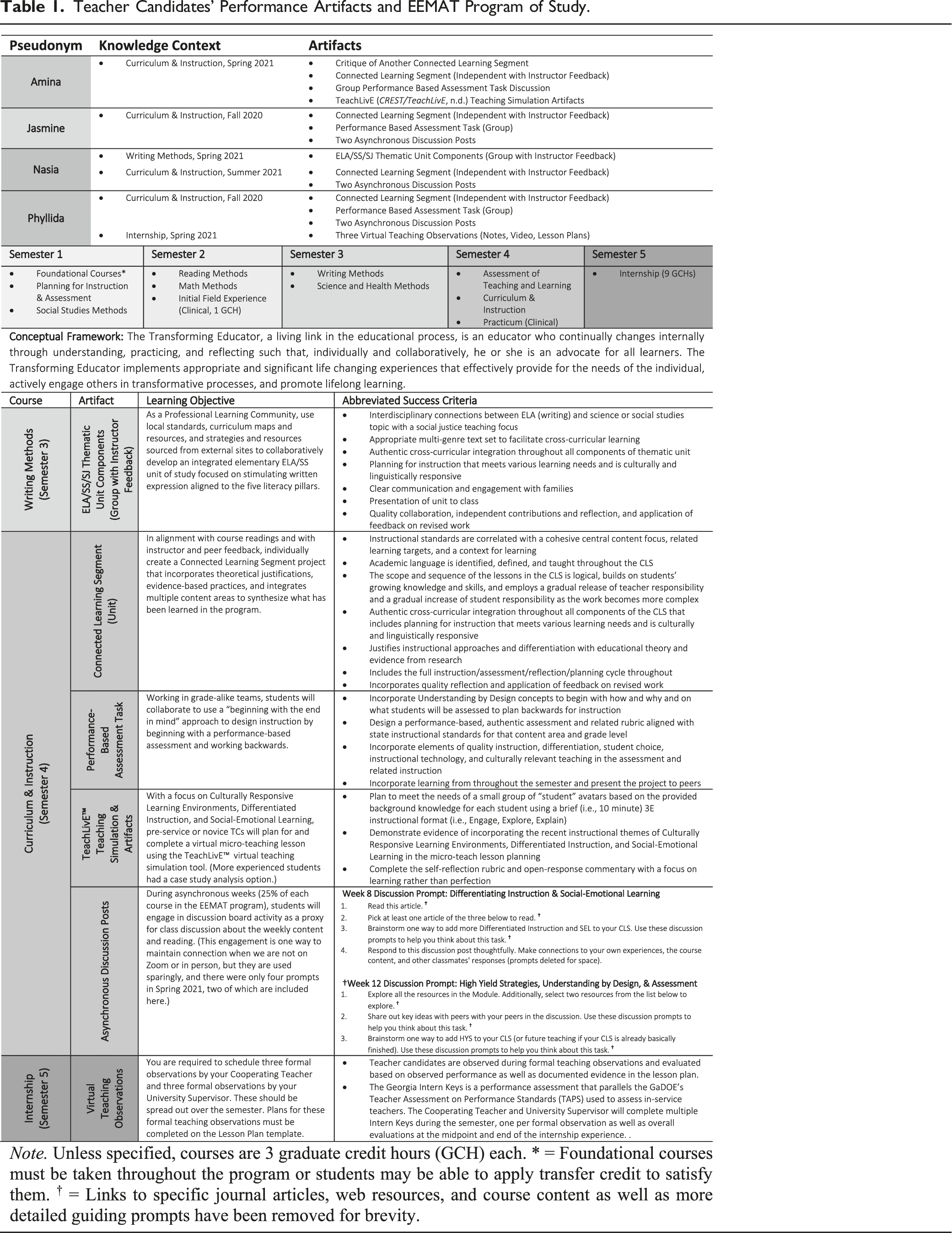
Data collection consisted of document analysis and interviews. Utilizing the first authors’ sustained interactions with the TCs, numerous forms of observational (e.g., notes, rubric scores, and feedback from observing teaching) and performance (e.g., assignments, discussion posts, and work products with specific learning outcomes and success criteria) data were collected to appraise TCs’ competency in program-related learning tasks for their courses and sampled for this study. The second author conducted “subject-object interviews” with each participant. The ∼60-min interviews were conducted during virtual (i.e., Zoom) one-on-one meetings over the summer (May-July 2021) and focused on the TCs’ professional developmental stages.
TCs’ Performance
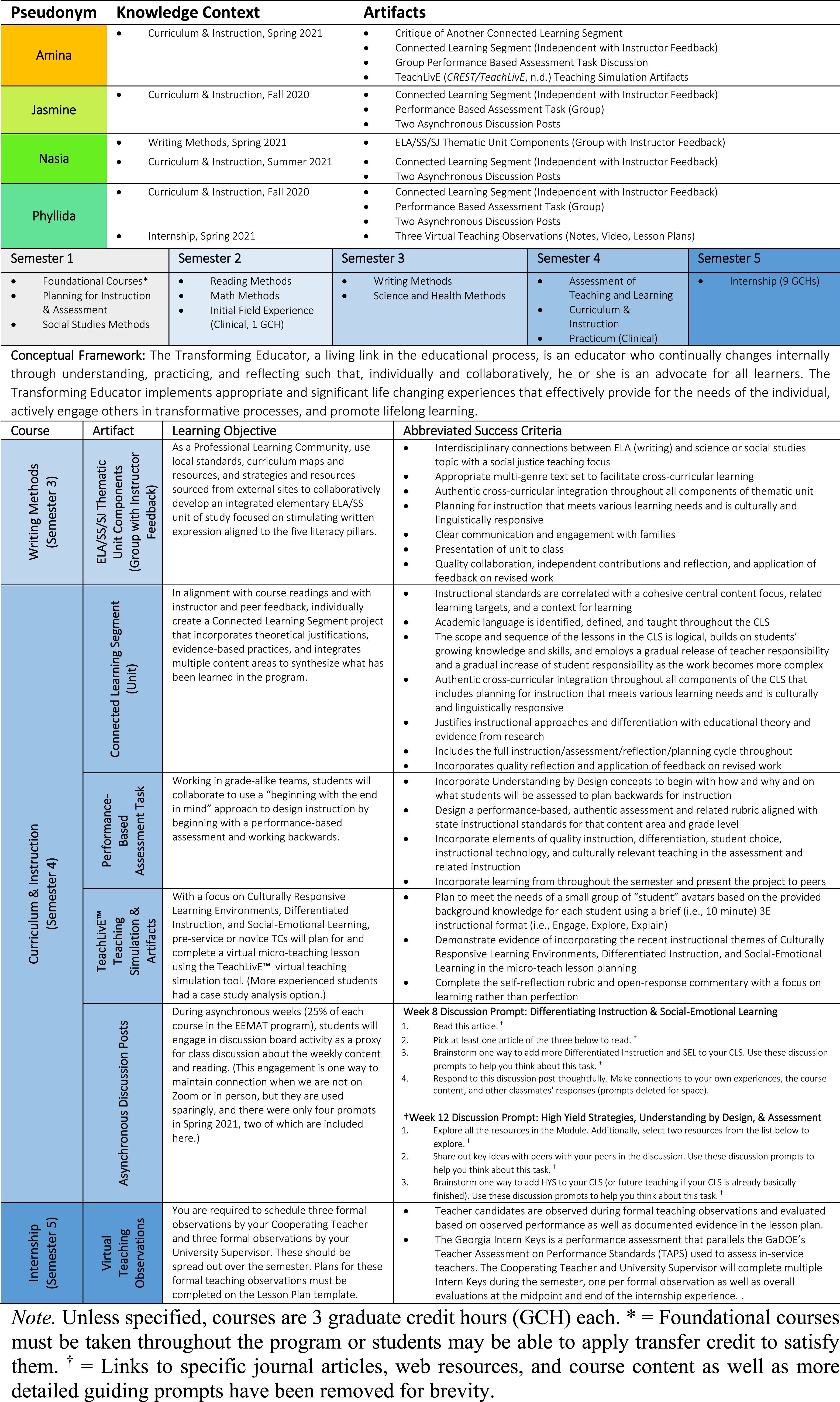
Teacher Candidates’ Performance Artifacts and EEMAT Program of Study.
Subject-Object Interviews
The subject-object interviews were analyzed through the lens of four of Kegan’s constructive developmental theory stages of development from the Impulsive Mind to the Self-Authoring Mind. The interview protocol was developed to foster open-ended conversations where TCs expressed a range of emotions in the process of becoming teachers. The interviewer began by asking the participant to review a list of commonly experienced emotions (e.g., angry/frustrated, anxious/nervous, successful, and a strong sense of conviction) and then asked the TC to think about times when they have felt these feelings in professional situations. Beginning with questions where the interviewee felt most comfortable, the interviewer continued by probing to prompt the TC to elaborate further and further. For example, What was at stake in this situation? What factors might have changed your experience? At the same time, however, the interviewer is monitoring the conversation to ask additional questions. These questions help the interviewer understand: To what extent does she take responsibility or the perspective of others? What evidence is there of biases or assumptions that influence what this TC believes to be true? What are the deep structures she is using to make meaning? To interpret each TC’s developmental stage, recordings of their reflections on becoming teachers were carefully considered, attending to how each positioned herself with perceived voices of professional authority.
Data Analysis
Data collected about the four TCs’ experiences becoming teachers were analyzed as separately bound cases in two steps. The teacher performance data was analyzed using open coding and reflexive, inductive thematic analyses to generate first-round concept codes (Saldaña, 2016). Words or phrases meant to capture larger concepts were entered into an Excel spreadsheet to facilitate organizing and analyzing the data, and a definition and example were added during the second and third rounds of teacher performance data analysis using a combination of concept and attribute coding. An iterative constant comparison method was used to compare individual participants’ artifacts to find agreement and disagreement as well as additional possible codes (Charmaz, 2006) to begin theming the data. The interviews were transcribed using Zoom transcripts that were cleaned for accuracy. Data from the subject-object interviews were interpreted using guidelines provided by the Guide to the Subject-Object Interview: Its Administration and Interpretation (Lahey et al., 2011). This process involved in vivo coding during the first round using the participants’ own words to identify patterns emerging in the data and then a second and third-round deductive thematic approach using Kegan’s stages of development as a priori codes. Then, a second-round data analysis continued collaboratively. During this second phase of data analysis, our conversations continued until we reached a consensus on the implications of understanding the relationship between each TC’s performance and the interpreted level of their professional maturation or development.
Findings
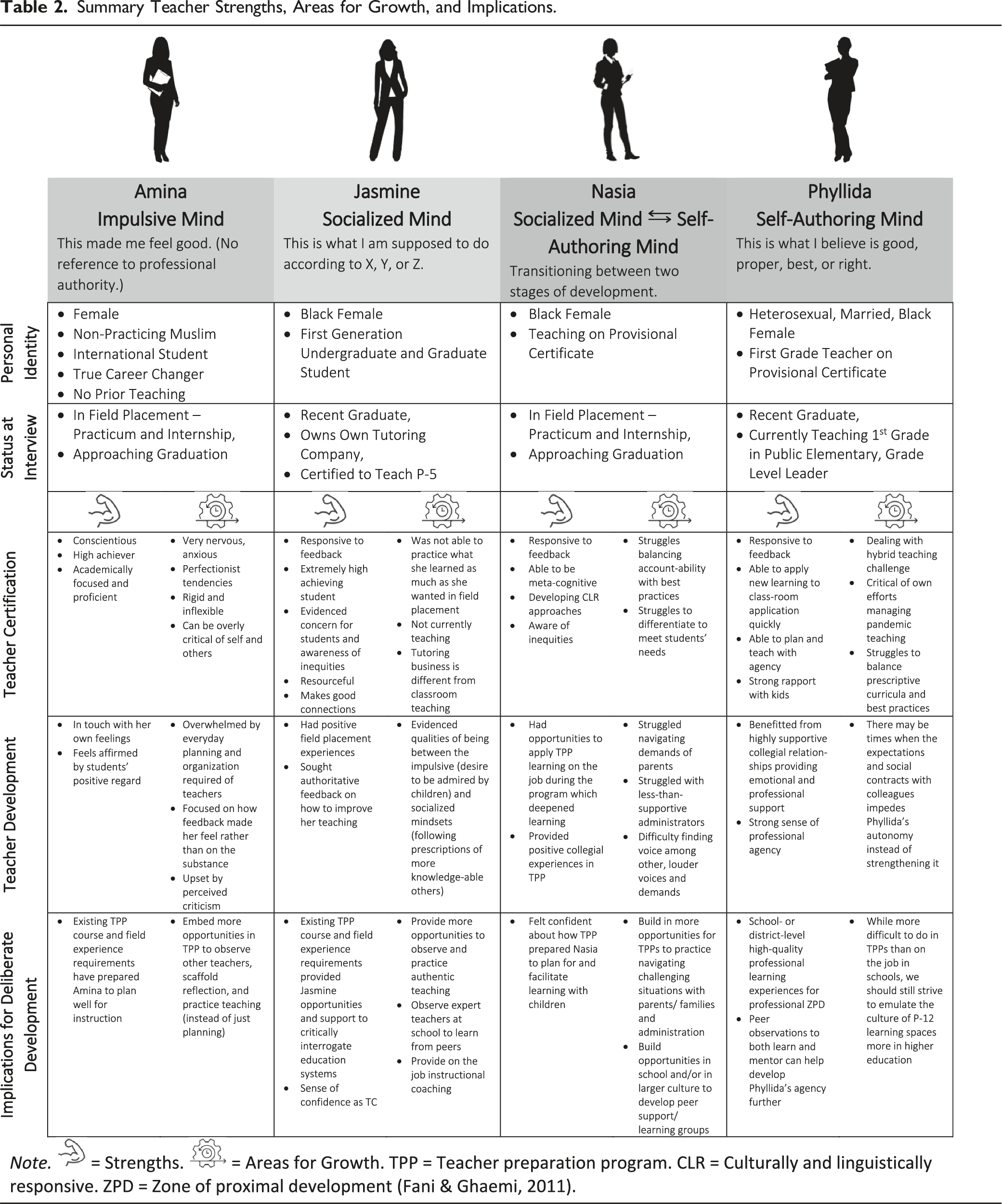
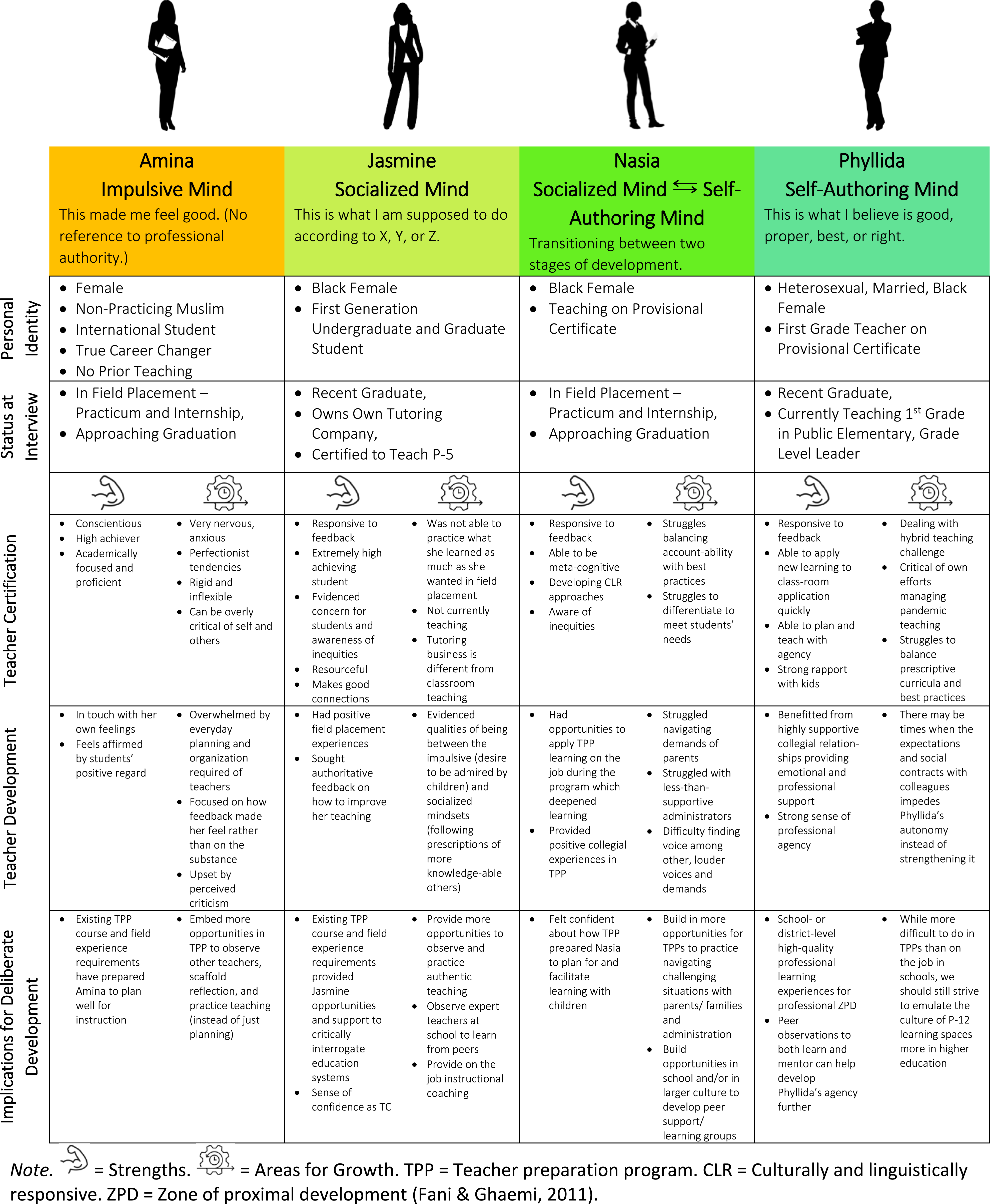
Summary Teacher Strengths, Areas for Growth, and Implications.
TCs’ Performance
Amina
As a student, Amina was extremely conscientious and a high achiever, earning a high A in the course. As a teacher candidate, Amina was nervous and extremely focused on “doing everything right.” During Amina’s microteach demonstration, using a virtual simulation tool called TeachLivE (CREST/TeachLivE, n.d.), she was visibly and audibly nervous. Her voice shook and she spoke quickly, she ran over the allotted time without making it through her planned lesson, and she expressed concern about her performance multiple times before and after the experience despite continued reassurance that the emphasis was on reflection and growth instead of perfection. Amina’s lack of content knowledge, her lack of practice planning for instructional timing and flow, and her inability to attend to both her teaching notes and her students’ needs led the avatars to ask clarifying questions, seek input, and inquire about directions. Amina was so determined to stick to her lesson plan, that she was unable to monitor and adjust when things were not going according to her script, but she prided herself on keeping “the lesson going no matter what.” She was the type of student who regularly emailed, called, and set up office hours appointments to pursue “perfection” in her work and express her overwhelming emotional distress. This desire to be perfect was in contradiction to interacting authentically with students, even during a simulation. Amina further explained, “I wish I could have engaged with the students more. I wish I had created a more interactive lesson; that is something I feel like I still need to learn how to do” and “I wanted to finish the experience as quickly as possible so that I could exhale.” Amina’s hyperfocus on perfectionism and getting the right answers or the best grades could often become a barrier for her to engage in TPP coursework critically, take risks in her meaning-making, and reflect deeply. Rather than trust teachable moments or “process over product” learning experiences that were intended to help TCs make deeper, more meaningful connections with pedagogical and disciplinary content, Amina tended to turn in technically well-done work (e.g., correctly cited and well-written) that neglected to deeply into her connections to what she was learning. She did not enjoy the “messiness” of meaning-making.
Jasmine
Jasmine graduated from the EEMAT program in May of 2021, passed the state certification exams, owns her own tutoring company, and became certified to teach Elementary Education (P-5). As a student, Jasmine stood out. In an asynchronous class session focused on how poverty and income insecurity in families can impact children’s learning, Jasmine showed evidence of both concern for students as well as reflecting on ways she could engage in practices that could potentially mitigate some risk and buffer students’ learning experiences. She posed questions that indicated she was thinking about the impact of factors such as students’ socioeconomic status and teacher bias on students’ learning and how instructional practices may exacerbate or mitigate externalizing behaviors that present in the classroom. She also demonstrated an understanding of child development and questioned the developmental appropriateness of educator expectations of children’s behaviors. Jasmine was able to apply the knowledge she learned from coursework about meeting students’ needs and increasing educational equity to lesson and unit planning. In her lesson plans, she articulated the needs of diverse (i.e., English learners, academically struggling, and advanced/gifted) fictional learners, used theory to justify how selected differentiated strategies should support these learners, and included multiple instances of culturally and linguistically responsive pedagogical approaches. Like many TCs, however, Jasmine interpreted some of the TPP course content as issues that needed fixing, but usually by someone else. For example, in a discussion post, Jasmine wrote, I wondered how can we as a society help decrease poor self-regulation skills despite a family's SES. I also had questions such as, are there specific programs that help families with understanding self-regulation and adult-child interactions, and if so, how accessible are they?
Jasmine’s growing awareness of persistent equity issues in education was more often perceived by her as something that children needed to be saved from rather than a function of systemic inequality that could be disrupted by engaging in critical and transformative teaching. While this is common in TCs, it does reflect a certain naivete or idealism that, if unchallenged, would make it hard for Jasmine to dig into the labor of pushing back on systems and reflecting on her practice to increase educational equity for students.
Nasia
Nasia was in her final semester and completing a full-time teaching internship. She embraced the goal of meeting the needs of all learners with empathy and compassion. Nasia collaboratively created an integrated, 5th grade thematic unit including language arts, social studies, and social justice standards centered around the theme of The Harlem Renaissance and The Roaring 1920s. During this experience, Nasia’s group was given explicit feedback to support their integration of multiple disciplines, their thoughtful and sensitive communication with families, and opportunities to engage in more critical and transformative learning experiences. Nasia and her peers consistently used the provided feedback to push themselves to think more deeply about instruction. In subsequent assignments, Nasia reflected upon the enduring effects of systemic racism and her identity as a Black educator. Reflecting on her professional responsibilities, she wrote, “How do I support all students equally while showing [White people] that … students that look like me come into school systems not having a fighting chance to be [as] educated and respected as children that … look like them?”
She went on to describe some of the culturally and linguistically responsive ways she was planning to adapt her unit planning to incorporate a celebration of differences and build an inclusive classroom community. She also engaged her peers in discussions about practical challenges associated with supporting marginalized students, which was helpful as many of her classmates were also already teaching in elementary schools. In a subsequent discussion board post, Nasia continued to show how she was wrestling with these challenges. She shared that she needed to learn “how to balance accountability and standards (what children need to learn) with how children learn best” and suggested that while she was confident in her ability to “plan [a] great lesson,” she always finds herself wondering “how will the students interact with this information, what am I expecting the students to learn from this lesson, and if it’s meaningful.” While Nasia certainly took more ownership of the problems of inequity she was grappling with, she had moved beyond Jasmine into activism mode. This, however, could come across as having an overly reductive understanding of the complex issues at play while also, ironically, perpetuating some of the stereotypes by presenting students’ race-based equity issues in dualistic terms (e.g., “not having a fighting chance”).
Phyllida
Like Jasmine, Phyllida was teaching first grade on a provisional certificate while a student in the EEMAT program, and she is still teaching in the same position. She, too, graduated in May of 2021, passed all her certification exams, and is fully certified to teach P-5 elementary students. Phyllida was working at a Positive Behavioral Interventions and Supports school and served as the grade level leader. In various discussion posts for asynchronous classes, Phyllida shared some of her emerging understandings about teaching. For example, she shared that she believed “social and emotional skills are essential because they help students become more creative, manage stress, and build self-awareness…” and “students can explore their curiosity with a real-world example to help them learn new skills.” However, Phyllida also frequently commented on perceived disparities between what she was learning in class and what she was expected to do in her classroom.
The first author observed Phyllida teach three lessons. During these observations, it was apparent that Phyllida was able to exercise a certain amount of agency and, at least for the observed lessons, was able to plan the entire experience rather than being required to use what was provided by the district. Some of Phyllida’s first experiences teaching independently were during the height of the COVID-19 pandemic. Amid the challenges of teaching using virtual learning modalities, she used responsive teaching practices like holding open discussions to build relationships, incorporating breaks and fun experiences like scavenger hunts, and seeking engagement from all students. Phyllida’s classroom environment, albeit virtual, and her rapport with students was warm and welcoming. She was organized and used a variety of digital tools fluently. Phyllida was an engaging teacher who used humor to connect with her students. While Phyllida was able to plan her instruction to a considerable extent, she was still required to function within the constraints of a district trying to manage instruction while physically distancing during a global pandemic. Phyllida approached these challenges, which were daunting for all teachers, with creativity and enthusiasm. She was willing to determine for herself when she needed to follow the letter of a policy or expectation and when she felt she could follow the spirit of it in service to her students. Her willingness to take risks and examine her biases, practices, and assumptions allowed Phyllida to engage in deeply reflective work much of the time as evidenced by her TPP performance artifacts.
TCs’ Developmental Differences
The four TCs are described below in order of developmental maturity following Kegan’s (1982, 1994) four stages, as they apply, from the Impulsive Mind to the Self-Authoring Mind.
Amina’s Impulsive Mindset
Amina made sense of her journey to becoming a teacher with frequent references to her feelings. She felt most affirmed when children expressed positive regard toward her. After her field experience her students told her that they liked her and would miss her, and this made her feel successful. In addition, she also spoke about the anxieties she felt during her daily activities in the classroom. Amina was overwhelmed by the everyday planning and organization expected of her. She looked to her cooperating teacher and university supervisor for support. She explained, Sometimes I could tell my cooperating teacher disapproved of what I was doing, but she didn’t always give very good feedback. So, I would call my university supervisor crying. She didn’t grade anything until the next week, but at least she would give me good suggestions about what to do.
Amina emphasized how formal evaluations and informal feedback made her feel instead of the content of the evaluations and feedback. Being subject to her desire to be emotionally affirmed by her students and supervisors are qualities of an impulsive mindset which is characterized by impulsivity, a preoccupation with the current moment, and an inability or unwillingness to take perspectives other than one’s own (Kegan, 1982, 1994).
Jasmine’s Transition Toward a Socialized Mindset
Similarly, Jasmine frequently spoke about the children’s admiration for her when making sense of her process of becoming a teacher. However, Jasmine demonstrated much more confidence than Amina in her emerging capabilities as a teacher. They would come to me and ask me to read to them. Then, they would hug me and say, ‘You are the best reader in the world.’ They were sad when it was time for me to go. When the kids make things for you and say nice things, it makes me feel good, and know I am a good teacher.
Jasmine also looked to her cooperating teacher and university supervisor for authoritative feedback on how to teach. However, unlike Amina, she did not look to them primarily for general affirmations. Instead, she looked to them for authoritative guidance on the selection and implementation of instructional strategies. Partly subject to her desire to be admired by children and partly subject to her cooperating teacher’s and supervisor’s prescriptions, Jasmine exhibited qualities of an impulsive as well as a socialized mindset thus occupying a liminal, transitional space. For example, she focused on her own needs and feelings, but she also engaged in some perspective-taking, although she did so through the lens of their own needs and emotions (Kegan, 1982, 1994). She also relied on rules and external authority (e.g., cooperating teacher and university supervisor) to evaluate her performance, which then shaped her perceptions of herself.
Nasia’s Socialization by Parents and Administrators
Two external sources of authority created persistent tensions in Nasia’s journey of becoming a teacher. On one hand, the parents of her students had very demanding expectations. “They feel entitled at the charter school because it is a choice school,” she explained. Then, Nasia elaborated that the parents “seem to think they are at a private school,” and she perceives them to see her as directly accountable to them. Compared to most public schools in the area, according to Nasia, students at her school benefited from smaller class sizes. Many parents chose this school for this reason, and they tend to “expect more teacher attention.” While sometimes Nasia found dealing with the intense demands of parents frustrating, she also appreciated their contributions. “At my charter school,” she explained, “I have a lot of parent engagement, and it feels more like a family.” On the other hand, Nasia described her administrators’ authority as a greater source of anxiety. The administration at her school was known to make sudden decisions. She was originally hired to teach kindergarten, however, her teaching assignment changed in the middle of her first year of teaching. “I thought I was losing my job” she recalled, “and I never forgot that feeling!” She explained that she still feels insecure about the stability of her position. Nasia realized her experiences being and becoming a teacher were subject to the expectations of parents and administrators. In this sense, she exhibited the qualities of a socialized mindset. Nasia, being more solidly in the Socialized Mind than Jasmine, demonstrated some different developmental characteristics. She exhibited a sense of loyalty and obligation, a strong identification with the opinions of different role-based groups and tended to focus on one relationship at a time with a sense of mutual reciprocity (Kegan, 1982, 1994).
Phyllida’s Shift Toward Self-Authoring
When Phyllida reflected upon her development as a teacher, she focused on two sources of authority. First, she emphasized the importance of her highly supportive collegial relationships. Phyllida talked about her grade-level teaching team and principal, and she held her colleagues in very high regard. She described her grade-level teaching team as a trusted group of colleagues with a shared commitment to their school saying, “We have got each other’s back.” She explained that sharing resources and lesson plans as well as routinely checking in and encouraging one another are regular occurrences among the first grade team. Their principal, according to Phyllida, was very supportive of their collaborations. Secondly, reflecting upon her daily teaching practices, Phyllida expressed a strong sense of professional agency. Discussing the seemingly impossible multitude of top-down initiatives, she focused on being a caring teacher who attends to children’s individualized needs. Reflecting on the sense of responsibility she feels toward an individual child, she said, I have a boy in my class this year who came to the first grade with a bad reputation… I decided that I was going to make things work for him. I was determined. He was going to have a good year… He was my first leader. I had lunch with him. He would tell me about his parents’ divorce. He would tell me what frustrated him in particular situations. Then, I would tell him that I could help him or get help for him, and that is what I did. At first, it was challenging, but he would have some success, and we would [be] celebrating his success with him, the whole class…It took some time, but he is part of our group. He is doing great.
Subject to the expectations of her colleagues to some extent, Phyllida exhibited the qualities of a socialized mindset. However, her reflections on her teaching practices were not bound to the opinions of others. The autonomy she expressed regarding decisions she was empowered to make in her classroom suggests she was shifting toward a self-authoring mindset. Characteristics of the self-authoring mindset include having a strong sense of one’s own identity and values, mature self-regulation in service of goals or objectives, an intrinsic sense of authority or agency, and the ability to take multiple individual and systemic perspectives (Kegan, 1982, 1994).
Supporting Shifts from Impulsivity to Professional Socialization and Self-Authoring
Amina, Nasia, Jasmine, and Phyllida illustrate four developmentally different TCs. Ranging from Amina’s impulsive mind to Phyllida’s emergence of self-authorship, these case studies are common representations of TCs, particularly those in alternative certification programs. Notable differences were observed regarding how the TCs experienced professional learning. Accordingly, we next highlight how teacher education can be differentiated for both Amina and Phyllida, representatives of the two ends of our developmental spectrum.
Amina
When used together, teacher performance assessments and developmental profiles can help teacher educators differentiate professional development. For example, Amina’s performance assessments indicated several areas for growth. Her goals included strengthening her content knowledge and planning well-organized lessons, as well as identifying and responding to the needs of students while she is teaching. Amina’s developmental profile indicated that she was very sensitive to formal and informal feedback. Children’s expressions of affection as well as her cooperating teachers’ critical feedback elicited emotional responses from Amina and were a primary basis for how she was making sense of her teaching experiences. Knowing Amina developmentally, a teacher educator might offer reassurance that her performance goals will improve with practice. Pushing her toward a socialized mindset, the teacher educator might also reassure Amina that even experienced teachers diligently work to refine their ability to plan lessons and practice responsive teaching. Further, it could be helpful to carefully pair Amina with a mentor teacher who not only serves as an exemplar of the pedagogical skills Amina is working to acquire but also the habits of reflective teaching and lifelong learning.
Phyllida
On the other end of the developmental continuum, Phyllida’s performance assessment and developmental profile had very different implications for her teacher education. Her performance assessments documented that she consistently demonstrates key characteristics of a confident and competent first grade teacher. Not only did Phyllida understand and adhere to the norms and expectations of her school, but she also adeptly used professional discretion to modify curricular and instructional plans according to her perceptions of students’ needs. She articulated a clear and coherent professional stance while demonstrating collegiality and even professional leadership in her collaborations with her grade-level teaching team. Phyllida’s developmental profile indicated that her collegial relationships were central to how she made sense of her experiences teaching. However, when she explained her appreciation for the collegial support she experienced at her school and university, she emphasized the reciprocity of these relationships. She believed her contributions to her professional communities were validated, and she felt empowered to make a difference in children’s lives.
Knowing about Phyllida developmentally, a teacher educator might expose competing perspectives on issues related to her school and classroom, such as social-emotional learning. Pushing her toward a self-authored mindset, the teacher educator might also encourage Phyllida to articulate her position on relevant issues after critically analyzing the implications and limitations of various perspectives found in the literature. Although exploring competing perspectives might overwhelm several of her classmates, Phyllida is developmentally ready to critically question the norms and expectations expressed at her school and within TPPs. Ultimately, teacher educators and colleagues who engage in conversations about the divergent viewpoints Phyllida is already noticing can help her complete her shift from a socialized to a self-authoring mindset.
Discussion
As four women of Color in an alternative TPP, the participants in this study represent TCs the workforce is striving to recruit and retain (TNTP, 2020) to better support our increasingly diversified P-12 student body (Heubeck, 2020). There is a long-standing need to recruit, train, and retain more diverse P-12 teachers and increase parity (e.g., race/ethnicity, gender, language, and ability) for the benefit of P-12 students (e.g., Sleeter & Thao, 2007), and TPPs have struggled to fulfill this need. TCs of Color may struggle to earn licensure for myriad reasons, not the least of which is due to the structures and cultures of TPPs that may impose barriers for some students while advantaging others thus maintaining disparities (e.g., Bowe et al., 2011; Gansle et al., 2012; Matsko et al., 2021). While the four TCs in this study all successfully graduated and achieved professional certification, at least one is not currently teaching in an elementary school environment which highlights the often-present gaps between recruiting, graduating, and retaining TCs of Color into the profession. Some of these reasons were explained earlier in the paper, but some other possible reasons emerged in our findings.
Limitations
Case study, by its very nature, employs a small sample size and is not generalizable to the larger population, is difficult to apply to larger theoretical contexts, and can be perceived to be more biased than other types of research (Flyvbjerg, 2011). The particular design of this study may also risk participants’ recall, response, or social desirability bias as well as interviewer bias or even researcher bias (Pannucci & Wilkins, 2010). All of these are risks inherent in qualitative research design, but there were protocols in place to mitigate these risks (e.g., balancing knowledge of participants with knowledge of interview protocols, and establishing inter-rater reliability through multiple rounds of coding).
Both assessments of the candidate’s teaching performance and their developmental profiles are useful tools for informing teacher education. Teacher performance assessments provide valuable information about the extent to which a candidate is demonstrating pedagogical competencies (assuming the performance criteria are clearly articulated and strongly related to the learning outcomes). With this information, a teacher educator can help candidates set meaningful professional growth goals. However, a candidate’s developmental profile provides teacher educators with a different type of information that focuses on how candidates tend to make sense of their teaching experiences. Instead of simply informing teacher educators about what TCs can and cannot do, a developmental perspective provides holistic information about how candidates are making sense of their professional learning experiences. Developmental profiles can help teacher educators determine the most effective way to communicate goals and expectations to candidates. Performance measures involve determining priority outcomes, ensuring alignment with the TPP mission and values, and recognizing (or at least looking for) systemic disparities. However, teacher educators must realize there are multiple convergent factors influencing TC development and outcomes both within and beyond the TPP context, and we may only be able to identify or affect some of them. Considerations of developmental profiles recognize that TCs come to the TPP with their worldviews and priorities.
Looking at performance and developmental profiles may be particularly important within alternative TPPs. Many alternative TPPs focus more on pedagogy than content and have shorter program lengths compared to traditional TPPs (e.g., Berry, 2010; Bowe et al., 2011; Gansle et al., 2012; Matsko et al., 2021). They may also experience life contexts, such as balancing their professional development with work and family responsibilities. Hence, comfort with self-directed learning may be particularly helpful for TCs in alternative TPPs. Nonetheless, any attempt to teach “the whole TC” using performance data and developmental profiles must also acknowledge that there are limits to those tools and TC growth may be correlated, but not always causally related. Many factors contribute to these TCs’ differences, most of which we were unable to analyze.
Keeping the focus on Amina and Phyllida, we shared in Table 2 that Amina was a non-practicing Muslim whose family still lived in the Middle East (she never disclosed exactly where). She did not want her peers to know she was Muslim and was anxiously secretive during a conversation with the first author about returning home for a student visa issue. She indicated on a few occasions that she lived alone in a local apartment. As a true career changer, she frequently expressed that she felt inferior to her peers who had more experience working with children in various capacities than she did. The first author inferred that she may have been trying to straddle two worlds without much social-emotional support, and having been raised to excel, her preoccupation with perfectionism was understandable. Phyllida, on the other hand, was married, had already been teaching for two years, and even had a leadership position on her grade-level team. It can be inferred that her familial support system, experience, and acclimation to her professional community buoyed her professional development. Of course, it is safe to presume that Phyllida had other factors in her life beyond the TPP that influenced her developmental stage. Nonetheless, to borrow from Bronfenbrenner (1995), Amina and Phyllida likely had very different micro and mesosystems. Regardless, these two TCs have different developmental needs as learners.
Implications for Practice
Based on our findings, we recommend the following implications for practice. Pre-service teacher educators in TPPs, in addition to analyzing program syllabi and learning objectives for alignment, gaps, and redundancy, should incorporate periodic developmental TC assessments. We recommend this happen minimally at program entry, at the midpoint, and just before field experiences to provide course instructors and field supervisors data by which to differentiate learning opportunities and instructional support to best meet TCs’ needs. Program faculty should also have periodic opportunities to meet and discuss both the program of study andragogical needs but also student needs and performance, if not at a granular level, then broadly at the developmental continuum level. For example, “How are we supporting candidates in the Impulsive Mindset, the Socialized Mindset, or the Self-Authoring Mindset?” Even when planning in broad developmental terms, consistent and deliberate conversations about how to support TCs through tailored learning experiences and resources in a TPP program of study will allow teacher educators to not only better meet TCs’ unique learning needs to support more optimal TPP outcomes, but we will better model ways to differentiate instruction for our TCs’ P-12 students. We recognize this is far easier said than done, both in small teaching-focused TPPs where instructors often wear many hats and in larger, more research-focused TPPs where instruction relies heavily on graduate assistants and adjunct faculty who may not often be included in the ongoing discourse of the TPP.
Based on our case-by-case presentation, we also suggest differentiated professional development for pre-service (i.e., during field placement) and practicing teachers. Opportunities to observe highly effective teachers in schools, practicing teaching in simulated environments more often throughout their programs, extending programs of study to offer more robust preparation in both content and pedagogy, and engaging in more scaffolded opportunities for role-play (e.g., using virtual teaching simulations with CREST/TeachLivE [n.d.]), reflection, and feedback (Bowe et al., 2011; Gansle et al., 2012; Matsko et al., 2021) are strategies likely help TCs improve their sense of self-efficacy (Ammon & Levin, 1993; Bronfenbrenner, 1995; NAEYC, 2021). The primary goal of differentiating professional development is to focus on the “whole TC” in ways that are also developmentally appropriate. If we truly wish to support the development of early childhood teachers’ professional autonomy, we must begin looking at professionals developmentally. While Kegan’s (1982, 1994) theory posits a certain amount of chronological aging that is typically associated with moving through these stages, teacher educators can help foster professional leadership.
Conclusion
Choosing to construct professional development experiences that better infuse the types of learning opportunities we recommend above and carefully considering TC’s individual and collective developmental needs is a good place to start. The payoff may benefit the Aminas, Jasmines, Nasias, and Phyllidas of our programs. After all, their increased efficacy and agency benefit not only them but their P-12 students, which is truly the mission of any TPP.
Footnotes
Acknowledgments
We wish to thank and acknowledge the teacher candidates who volunteered to participate in this study for their time, their willingness to share, and their continued efforts to become excellent teachers.
Declaration of Conflicting Interests
The author(s) declared no potential conflicts of interest with respect to the research, authorship, and/or publication of this article.
Funding
The author(s) received no financial support for the research, authorship, and/or publication of this article.
