




Abstract
This paper describes the nature of home-school value discrepancies perceived by students, and tests associations between such value discrepancies and teacher-student relationships with student generational status as a moderator. Using a sample of 1,551 students from grades 10 and 11, chi-square tests and ANOVAs were used to describe the nature of discrepancies, while hierarchical linear regressions were conducted to test associations. Second-generation students generally perceived more differences between family-school values. When experiencing less value discrepancies, students reported closer teacher-student relationships. Value discrepancies were also associated with conflict, third-plus-generation standing out. Practitioners should mitigate value discrepancies to improve teacher-student relationships.
Keywords
Introduction
As immigrant populations increase every year in Canada (OECD, 2018), challenges faced by youth with an immigrant background need to be addressed. During adolescence, most youth experience difficulties related to developmental tasks, such as identity construction (Steinberg, 2017). Although they are socialized within the cultural structure of their family, they also build their own sets of values in contact with school and peers. Throughout this process, young people are brought to identify with the social norms of the different groups they are in contact with, but also to self-individualize and construct their own set of values (Steinberg, 2017). Values are ideas, rules, or representations influencing one’s behaviours, goals, and relationships (Malewska-Peyre, 1993). People sharing a culture are more likely to share similar sets of values, because of common cultural landmarks and schemes of references (Schwartz et al., 2010). Thus, value construction and self-individualization can become more complex for youth socialized among various cultural systems. As youth construct their identity in multiple ways, this can give rise to value discrepancies (Hurrelmann & Quenzel, 2018). These challenges are likely to be faced by adolescents whose families display cultural norms that deviate from the mainstream, or for adolescents with an immigrant background (Hurrelmann & Quenzel, 2018). In order to mitigate their consequences, it is important to understand how adolescents are impacted by value discrepancies in different settings.
Literature Review
Value Discrepancies
Value discrepancies refer to divergences in terms of social roles, norms, and expectations that can appear between individuals from distinct social and cultural groups (Hwang, 2006). People sharing a similar culture or attending the same institutions are more likely to share similar sets of value, even though this is not always the case. While culture is an abstract concept and is external to individuals, values can influence their behaviours (Schwartz, 2014). Therefore, when cultural differences are observed between social contexts, discrepancies between values held by people may merge (Eccles & Roeser, 2011).
This is likely to occur in important socialization contexts like school. On different topics, beliefs and expectations from parents and teachers can converge or diverge depending on individual values. For example, both sets of actors typically expect students to be engaged and well behaved in school (Marks & Garcia Coll, 2018; Vedder & Motti-Stefanidi, 2016). Yet, in Western cultures, such expectations usually translate to listening to adults, participating in class, and collaborating with peers, which may be different in other cultural contexts (Weinstein et al., 2004). Values may also vary across generations of immigrant families. For example, first-generation (i.e. those born in a foreign country), second-generation (the children of first-generation immigrants), and third-plus-generation immigrants (i.e. also considered nonimmigrant, are those born in the host country to second-plus-generation parents) may have been socialized within school and family cultural systems that differ from one another, and thus, have constructed their identity and values in different ways (Wang-Schweig & Miller, 2021).
Researchers have documented many possible divergences between values displayed in immigrant family households and in school. For example, autonomy and liberty can be important for Western teachers, whereas some immigrant families may give more importance to commitment to cultural characteristics and established socioeconomic pathways (Motti-Stefanidi, 2018). The nature or themes of documented family-school discrepancies as perceived by students can concern discipline, teaching methods, male-female relationships, gender norms, religion, language, educational and professional aspirations, intimacy, social customs, etc. (Makarova & Birman, 2016; Patel et al., 2016). Value discrepancies perceived by students may thus contrast in terms of diversity (i.e. number of themes with family-school discrepancies) and intensity (i.e. magnitude of family-school discrepancies).
Nevertheless, it is common knowledge that variations in values enrich the school environment, as students have more opportunities to gain intercultural skills, tolerance, and curiosity for cultures, to share and learn about cultures, and to discover their own cultural identity by being in contact with other sets of values and cultural norms (Makarova & Birman, 2016; Schwarzenthal et al., 2019). However, when adolescents grow up in social settings presenting intense or diverse value discrepancies, this may lead to cultural dissonance. For instance, when youths are expected to follow different codes and rules, conflicts or dilemmas between cultures and expectations may arise (Allan, 2003). This is likely to increase their level of stress and, ultimately, jeopardize their academic and social success, undermine their psychological adjustment, and contribute to feelings of marginalization, psychological vulnerability, and school disengagement (Castillo et al., 2012; Howard, 2019; Kanwal, 2022; Makarova & Birman, 2016). In school, conflicts and dilemmas brought by family-school discrepancies could also affect teacher-student relationships.
Teacher-Student Relationships
Perceptions of teachers regarding students are known to differ according to cultural markers such as race, language, religion, and ethno-cultural backgrounds (Chiu et al., 2012; Hurrelmann & Quenzel, 2018; Spilt & Hughes, 2015). Intense and diverse value gaps may also negatively affect teacher-student relationships in terms of closeness and conflict (Sabol & Pianta, 2012). Teachers are more likely to have positive attitudes and share close relationships with students harbouring similar values or ethno-cultural backgrounds as themselves (Glock et al., 2013; Tardif-Grenier et al., 2022a). When such characteristics differ, youth from minority backgrounds more frequently report conflictual teacher-student relationships (Fitzpatrick et al., 2015). In this line, den Brok and Levy (2005) propose that differences in values as well as perception of unmet expectations between teachers and students could tarnish their relationships. However, the impact might not be as strong for first- or second-generation students as it is for their third-plus-generation peers.
According to the immigrant paradox perspective, first- and second-generation immigrant youth in North America often have better school and health outcomes than their third-plus-generation counterparts, even if they are less acculturated or have recent immigration backgrounds (Marks & García Coll, 2018). Few mechanisms have been identified to explain this trend. This paradox can be explained by differences in coping strategies used by youths from immigrant families and their nonimmigrant peers. A Canadian study found that differences in the use and effectiveness of coping strategies could explain why youth with more recent immigrant backgrounds may better adapt to stress (Tardif-Grenier et al., 2022b). However, this paradox is not observed in all contexts, with European countries being a notable exception (Crul & Mollenkopf, 2012). One of the main factors explaining this gap is likely the different geopolitical contexts that govern migratory movements in Europe and in North America. Yet, it can also be because countries differ in their immigration targets, in the rules that govern their immigrant selection processes, and in their immigration programs and policies, which can influence the characteristics of immigrants in a given context (Marks et al., 2018). For example, in Canada, a key selection criterion for immigrants is their ability to contribute to the economy based on indicators such as their level of education and their wealth (Government of Canada, 2019). In terms of education more specifically, Canada was also ranked fourth on the Migrant Integration Policy Index in 2015 (Huddleston et al., 2015). This can be explained by the country’s strong targeted education policies for immigrant youths, when contrasted with other countries where such programs are not systematically offered or insufficient (Huddleston et al., 2015). This context coupled with the presence of a higher proportion of economic immigrants in North America could explain why the immigrant paradox does apply in this continent and not in certain European countries. Following this line of thought, less acculturated students from immigrant families in Canada may present more positive teacher-student relationships when facing difficulties than more acculturated nonimmigrant youth. More research regarding these relationships and the contribution of stressors, such as value discrepancies, is thus warranted.
Most studies concerning value discrepancies have qualitative designs. Although such designs provide rich descriptions of student experiences, they are limited in external validity, restricting the generalization of findings to different contexts. Moreover, few studies have observed family-school value discrepancies among immigrant students, and, to our knowledge, none have compared their nature, diversity, or intensity. While numerous studies have observed teacher-student relationships, only a few have examined whether these school experiences are linked with value discrepancies or vary as a function of immigrant generational status. Such findings could help better understand the unique reality of students from immigrant backgrounds. Finally, few studies on family-school value discrepancies have looked at third-plus-generation (nonimmigrant) students. Therefore, it is unknown if value discrepancies are only experienced by immigrants or by their peers as well.
Methods
This paper presents two studies which aim to examine family-school value discrepancies (intensity, diversity) and teacher-student relationships (closeness, conflict) as perceived by students from first-, second-, and third-plus-generation status. The first studies aimed to describe family-school value discrepancies and teacher-student relationships perceived by first-, second-, and third-plus-generation students. The second study aimed to test transversal associations between family-school value discrepancies and teacher-student relationships, as well as variation according to student generational status.
Both studies are based on the same sample of secondary school students attending a francophone school in Montréal, within the province of Québec (Canada). Considering that culture and immigration reality are crucial for understanding immigrant student experience in school, some elements of context ought to be mentioned (Huddleston et al., 2015). First, Québec is the only fully francophone province of Canada. Immigrant populations are thus more likely to come from francophone countries such as France, Haiti, Morocco, and Algeria (in that order). First-generation immigrants represent 15% and second-generation immigrants represent 11% of the province’s population (Statistics Canada, 2023a, 2023b). Second, the majority religion in Canada and Québec is Christianity, although all institutions (i.e. schools and government) are secularized in the country. In fact, the proportion of individuals practicing a religion in group settings at least once a month is smaller (14%) in Québec than in any other province in Canada (Statistics Canada, 2021). Finally, when the data used in this study was collected in 2017/2018, the province of Québec welcomed 58% of economic immigrants (i.e. based on their capacity to contribute to the country’s economy in terms of diploma and wealth), 23% of immigrants sponsored by a family member, and 18% of refugees (Government of Québec, 2022).
Sample
This cross-sectional study conducted in 2017/2018 was approved by the institutional review board and used a subsample from a larger study on intercultural school climate (n = 1,598). Parental and participating school board consent was first obtained. Schools in three main regions of the province were next contacted by the research team, based on specific criteria (e.g. proportion of immigrants and neighbourhood wealth). Ultimately, eight schools located in rural and urban neighbourhoods agreed to have their students participate in the completion of the 30-min in-class questionnaire. The response rate was 73%. Participating students were in 10th and 11th grade (14 to 18 years of age) at the time of data collection, with 56.9% of participating students being girls. They were from first- (29.3%), second- (32.4%), and third-plus-generation (38.9%) of immigration.
Study 1: Generational Differences: Perception of Value Discrepancies and Relationship with Teacher
Study 1 describes the nature of student-reported family-school value discrepancies and teacher-student relationships, and compares perceptions of first-, second-, and third-plus-generation students in this regard.
Measures
Family-School Value Discrepancies was self-reported using a Value Discrepancies Scale from the report ‘Intercultural School Climate Impact on Academic Adjustment of Students with an Immigrant Background’ (Archambault et al., 2020). This scale was designed to assess value discrepancies as a part of the identity construction support dimension, one of five dimensions (see Archambault et al., 2020). The perception adolescents had of differences between home-school expectations and norms were measured using a list of six yes (= 1) or no (= 0) descriptors: Authority parents should have on their children; autonomy and liberty granted to youth; male/female differences; learning and teaching methods; importance of religion; and defining qualities of life success. This allowed the rating of nature/themes and diversity of value discrepancies (ranging from 0 = no discrepancies to 6 = discrepancies on all descriptors). Intensity of value discrepancies was assessed with a single item asking students the degree of general discrepancy between home and school (i.e. ‘I feel that the values of my family and my school are…’). Response options ranged from 1 = very similar to 4 = very different.
Teacher-Student Relationship was assessed using the Student-Teacher Relationship Scale (Pianta, 2001). The closeness dimension comprised 7 items (e.g. ‘I share warm and friendly relationships with my teachers’) and the conflict dimension comprised 6 items (e.g. ‘I often have conflicts with my teachers’). Responses ranged on a 5-point Likert scale (1 = totally agree to 5 = totally disagree), with higher scores meaning higher levels of closeness and conflict. This scale was validated with 134 French-Canadian secondary school students (Fallu & Janosz, 2003). Reliability of items was good for both conflict (alpha = .81) and closeness (alpha = .73).
Generational Status was assessed by student self-report of their parental and personal country of birth. Three ordered categories were determined to assess generational status, ranging from most to least recent immigration generation: (1) First-generation: youth and parents born outside Canada; (2) second-generation: at least one parent born outside Canada; and all other participants were in (3) third-plus-generation: both the youth and parents born in Canada.
Data Analytic Procedure
In Study 1, one-way ANOVAs and chi-square tests were conducted to compare the nature, intensity, and diversity of value discrepancies perceived by first-, second-, and third-plus-generation students as well as their perceptions of conflict and closeness with teachers.
Missing Data
Using SPSS 27, multiple imputation was conducted for teacher-student closeness and conflict, value discrepancy intensity, age, indiscipline, language, and school performance measures to correct for biases related to incomplete data (n = 201; 12.6 %). Ten datasets were used considering all variables in the statistical model and were subsequently aggregated. For non-imputable data (i.e. value discrepancy nature and diversity, generational status, gender, country of origin, and religion),T-test and chi-square analyses revealed no significant difference between participants with and without complete data. Participants with incomplete data were excluded, resulting in a sub-sample of 1,551 students.
Results
Descriptive Statistics for Predictor, Moderator, Control, and Outcome Variables (n = 1551).
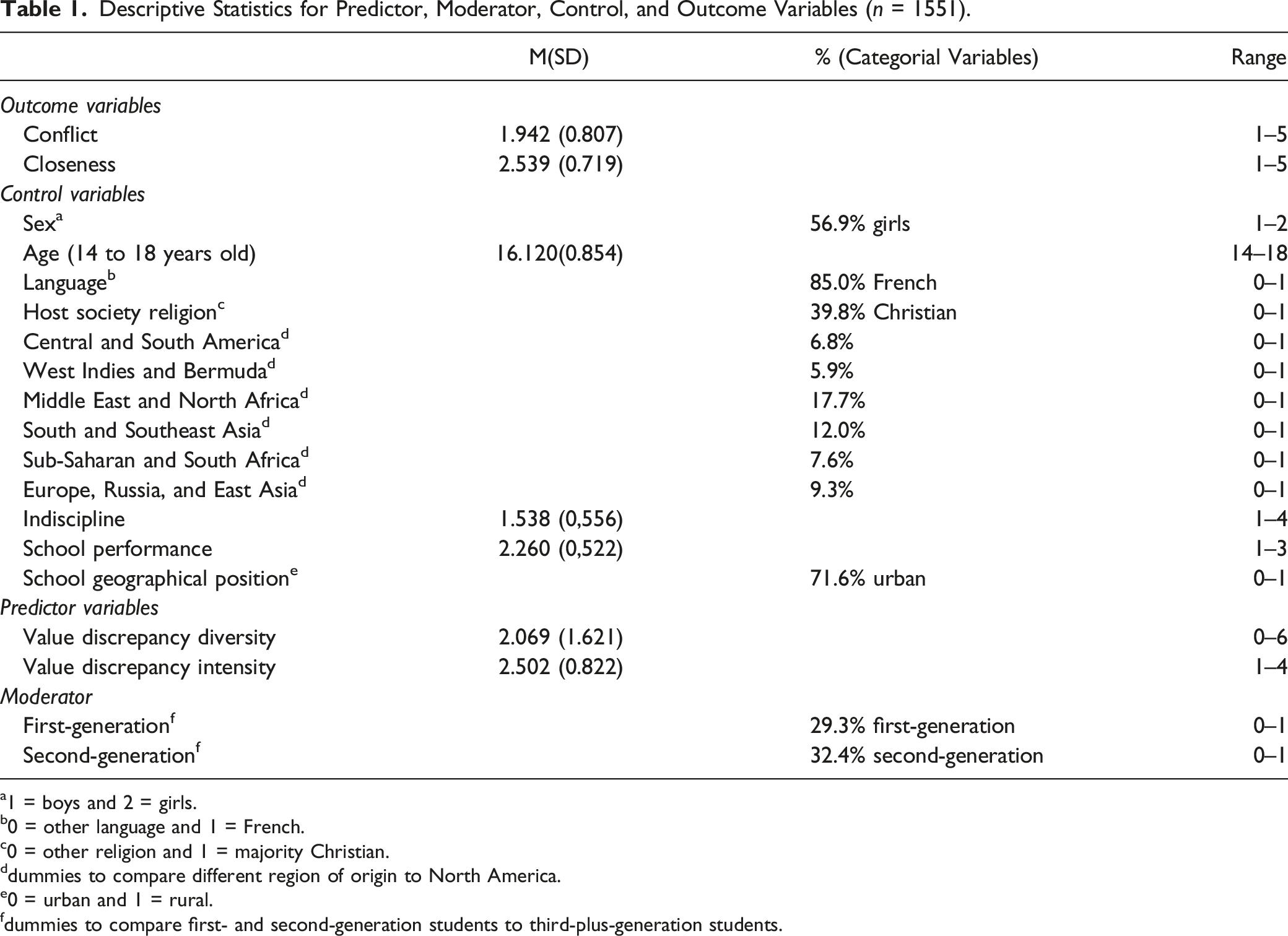
a1 = boys and 2 = girls.
b0 = other language and 1 = French.
c0 = other religion and 1 = majority Christian.
ddummies to compare different region of origin to North America.
e0 = urban and 1 = rural.
fdummies to compare first- and second-generation students to third-plus-generation students.
Study 1: Differences Between Generational Status for Student-Teacher Relationship and Value Discrepancies (ANOVAs).
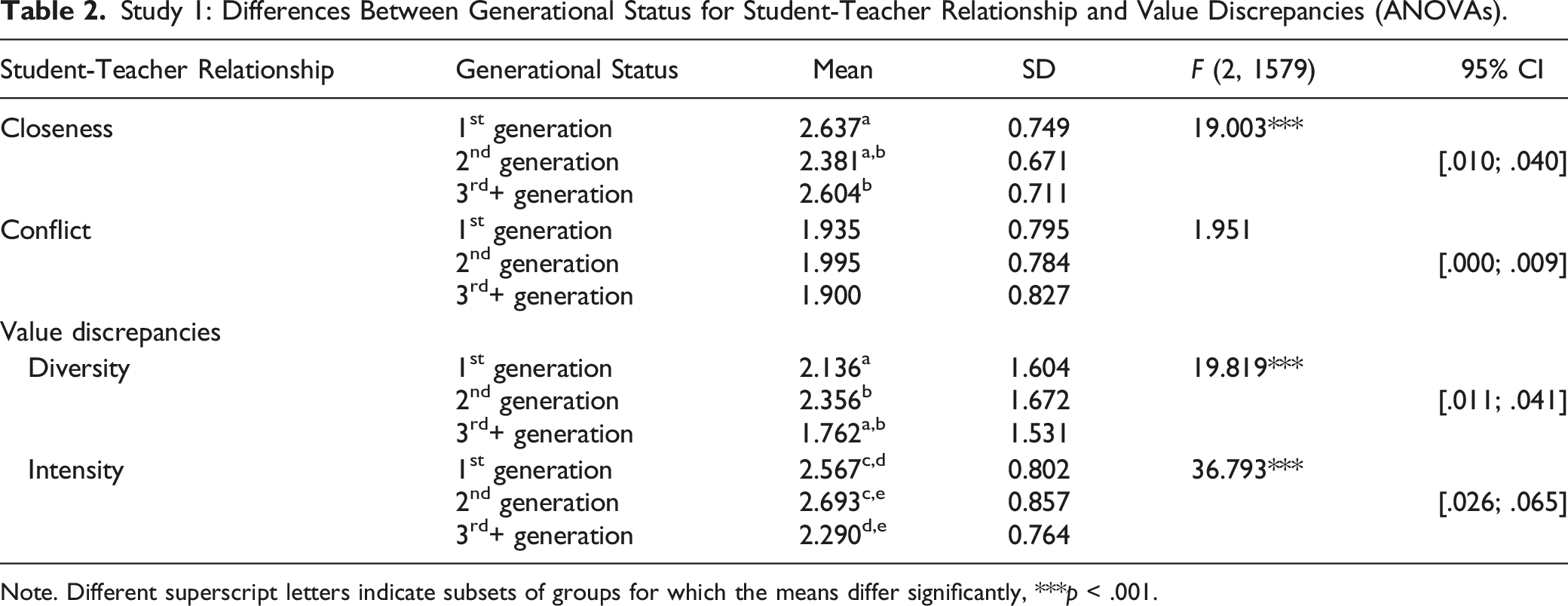
Note. Different superscript letters indicate subsets of groups for which the means differ significantly, ***p < .001.
Study 1: Differences in the Percentages of Students from Different Generational Status Perceiving Each Kind of Value Discrepancies (Chi-Square).
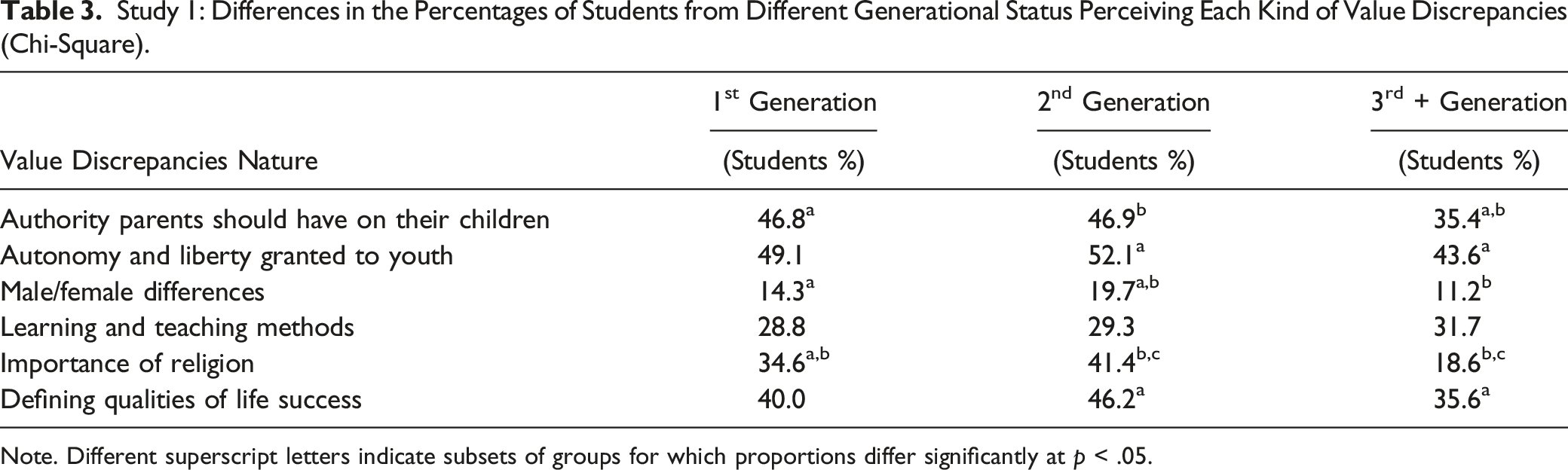
Note. Different superscript letters indicate subsets of groups for which proportions differ significantly at p < .05.
Study 2: Analysis with Immigrant Status as Moderator
In Study 2, transversal associations between family-school value discrepancies and teacher-student relationships, in terms of closeness and conflict, were first tested. Next, the variation of these links according to student generational status was examined. Figure 1 presents the moderation model used. It was expected that more intense and diverse family-school value discrepancies would be associated with more conflict in teacher-student relationships (den Brok & Levy, 2005). It was also expected that generational status would moderate the association of family-school value discrepancies with teacher-student relationships, leading to closer and less conflicted relationships for students from more recent generational status (better relations for first-, then second-, then third-plus-generation) (Marks & Garcia Coll, 2018). Moderating model used in study 2.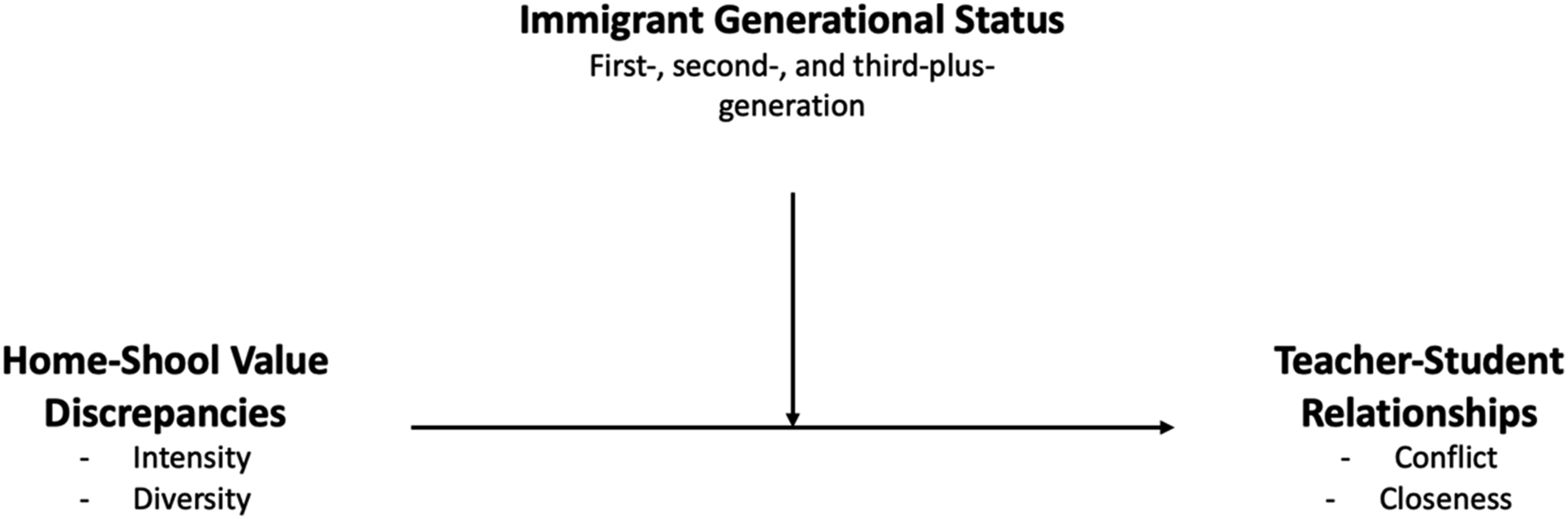
Measures
As in Study 1, Diversity and Intensity of family-school value discrepancies were self-reported using a Value Discrepancies Scale (Archambault et al., 2020). Conflict and Closeness in teacher-student relationship were further assessed using the Student-Teacher Relationship Scale (Pianta, 2001), while Generational Status was measured by student self-report of parental and personal country of birth.
For Control Variables, students self-reported their age (14 to 18 years of age), school performance (1 = 60%, 2 = 61–80%, and 3 = 81%), religion (1 = majority Christian and 0 = other or no religion), language spoken at home (1 = French and 0 = other), and region of origin (North America = 0 compared to others = 1, and dummies were created for each region of origin: That is, Central and South America, West Indies and Bermuda, Middle East and North Africa, South and Southeast Asia, sub-Saharan and South Africa, and Europe, Russia, and East Asia). Students also reported their gender (1 = boy and 2 = girl). There were too few participants identifying as other in the gender category (n = 10) to create such a category, and thus they were excluded from the sample. However, the research team recognizes the existence of other gender identities as well. School geographical location (0 = urban and 1 = rural) was drawn from administrative data. Youth indiscipline in school was assessed using a 4-item scale validated with a French-Canadian sample and ranked on a 4-point Likert scale (1 = never and 4 = very often, e.g. ‘Have you ever missed school without a valuable reason?’) (Le Blanc, 1996). In the present study, the reliability of this scale was acceptable (alpha = .65).
Data Analytic Procedure
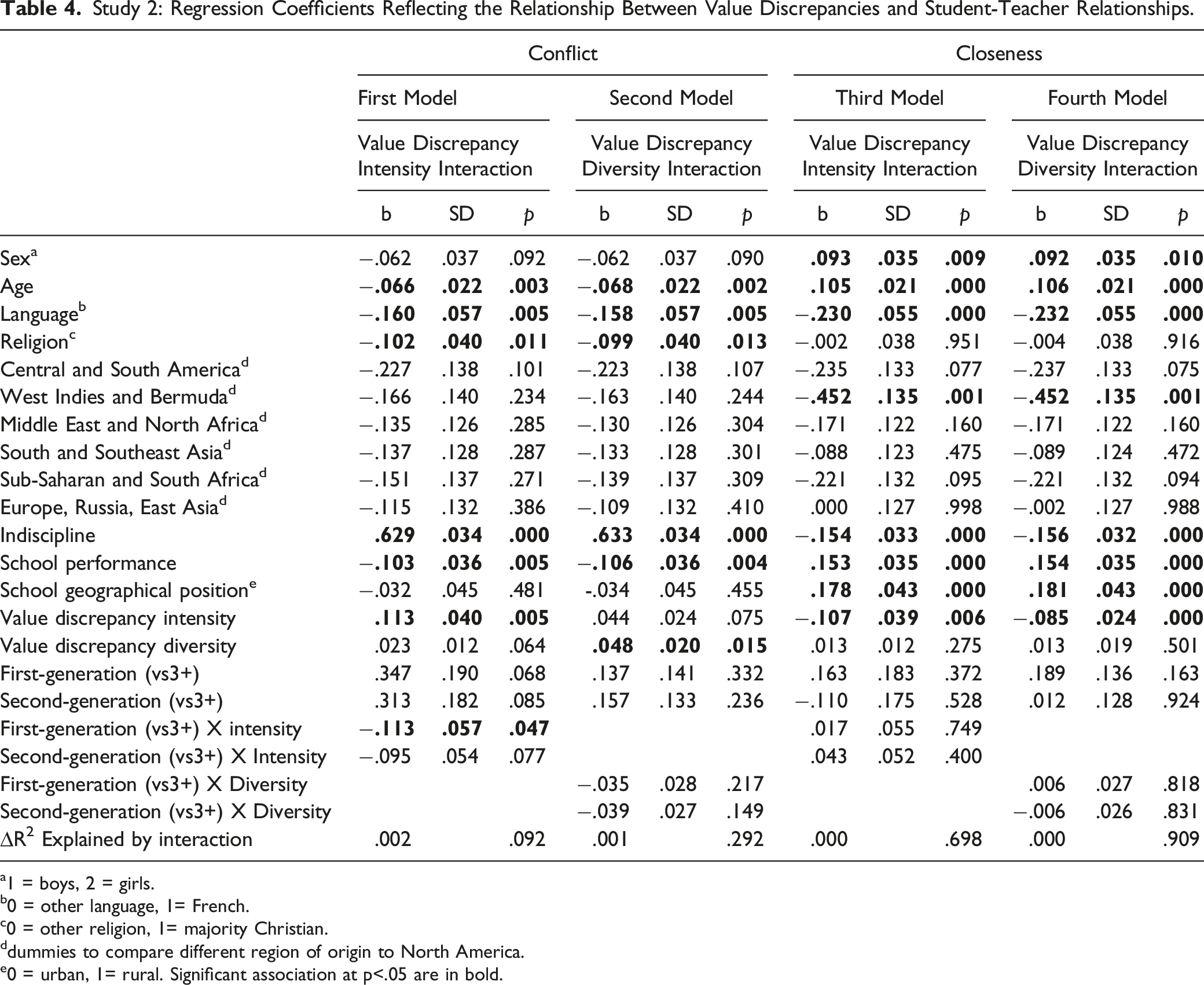
In Study 2, a series of hierarchical linear regressions were conducted with confound control to test associations between value discrepancies (diversity and intensity) and teacher-student relationship (conflict and closeness). Using the same sample of 1,551 students, models 1 and 3 considered the interaction between value discrepancy intensity and generational status, while models 2 and 4 considered the interaction with value discrepancy diversity. Process software extension was used to conduct moderation analysis (Hayes, 2022).
Results
Study 2: Regression Coefficients Reflecting the Relationship Between Value Discrepancies and Student-Teacher Relationships.
a1 = boys, 2 = girls.
b0 = other language, 1= French.
c0 = other religion, 1= majority Christian.
ddummies to compare different region of origin to North America.
e0 = urban, 1= rural. Significant association at p<.05 are in bold.
Results showed that control variables, intensity, and diversity of value discrepancies together explained 24.4% (p < .001) of the variance of teacher-student conflict. In the first model, considering the interaction with value discrepancy intensity, an increase in value discrepancy intensity was significantly associated with 11.5% more conflict (p < .01). The interaction between value discrepancy intensity and generational status made a significant contribution to teacher-student conflict in this model (0.8%), but only when comparing first- and third-plus-generation (Figure 2). The figure presents the decomposition of this interaction. It suggests an association between value discrepancy intensity and teacher-student conflict only for third-plus-generation students, with 0.6% more conflict when perceiving intense value discrepancies. Regarding the diversity of value discrepancy, the association with conflict was not significant. The second model considered the interaction between value discrepancy diversity and generational status. The association between teacher-student conflict and discrepancy diversity was significant (p < .05), suggesting 9.7% more conflict. The interaction was not significant, meaning that the association between value discrepancy diversity and teacher-student conflict did not vary as a function of generational status. Moreover, the association between the intensity of value discrepancy and conflict was not significant in this model. Study 2: Moderating role of generational status on the association between value discrepancy intensity and conflict in teacher-student relationship.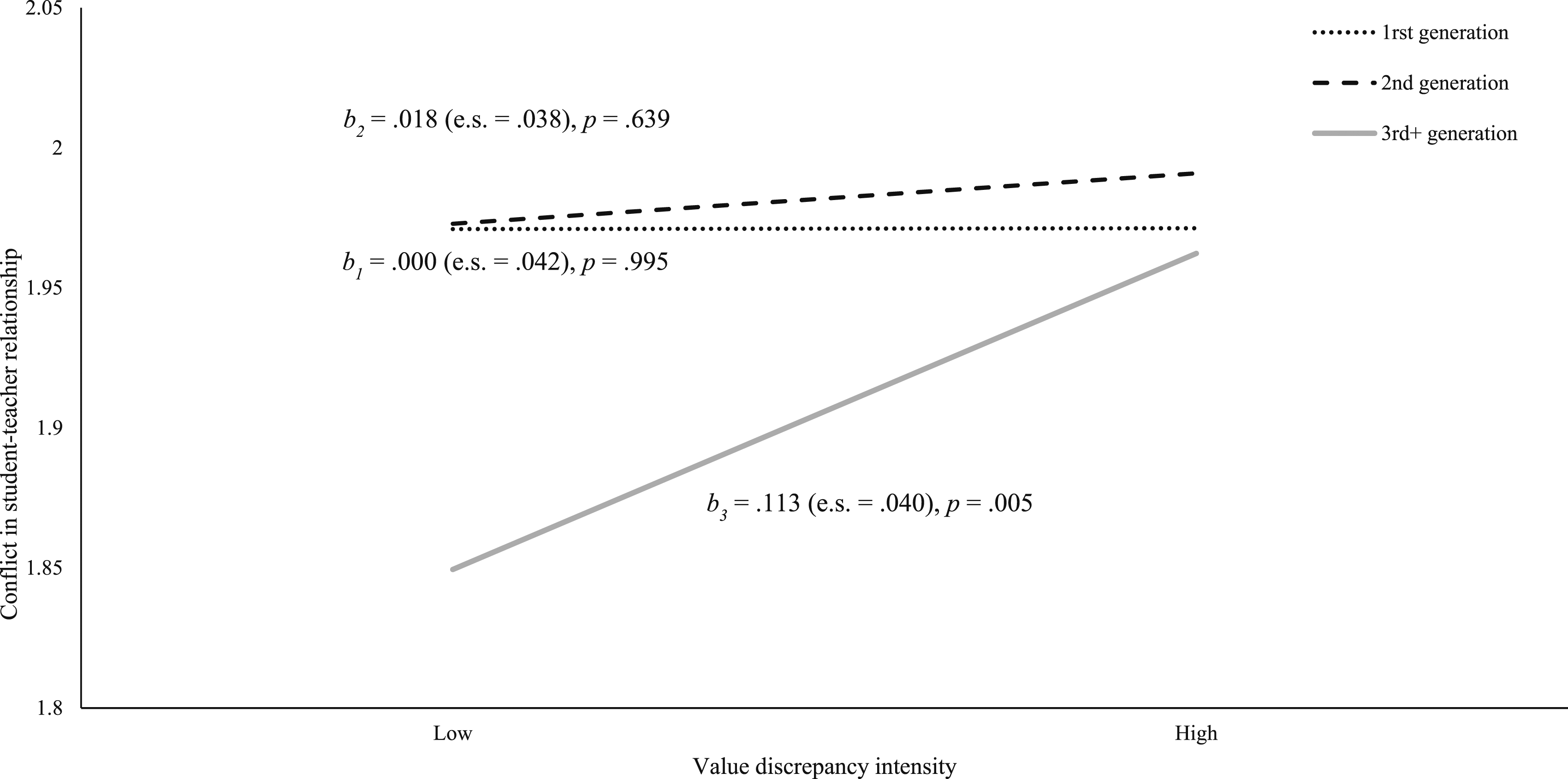
Regarding the teacher-student closeness variable, control variables, intensity, and diversity of value discrepancies first explained 10.9% of variance (p < .001). A decreased intensity of value discrepancies was significantly associated with 12.2% more closeness in the third model (p < .01), and 9.7% more closeness in the fourth model (p < .001). However, value discrepancy diversity was not associated with closeness. No group difference was found for these associations as none of the model 3 or 4 interactions (intensity by generational status; diversity by generational status) were significant. In conclusion, conflict was better explained by value discrepancies (intensity and diversity) and the control variables than closeness (24.4% vs. 10.9% of variance explained).
Discussion
Beyond achievement, the bond between teachers and students can be beneficial for youths. When students develop special relationships with teachers, school engagement and well-being are potentially enhanced. Yet, the present studies found that perceptions and values are not always shared between teachers and families of students from immigrant and nonimmigrant backgrounds. Moreover, they further indicate that when value discrepancies are mitigated, teacher-student relationships are more positive and open. This work is the first quantitative one to highlight links among a diverse sample of immigrant and nonimmigrant students. The findings of both studies offer important insights into how schools can potentially foster positive teacher-student relationships in culturally diverse settings.
As expected, the findings in Study 1 indicate that compared to nonimmigrant students, adolescents from immigrant backgrounds generally perceived more diverse and intense home-school value discrepancies. In fact, immigrant generational status was more strongly associated with perceived value discrepancy intensity than diversity. This suggests that students with an immigrant background perceived more value discrepancies in general, but the magnitude of home-school value discrepancies (intensity) were more important than the number of themes concerned by value discrepancies (diversity). This is not surprising because these students grew up in cultural settings different from the mainstream school cultural setting. However, the values they perceive from their family and school could be further away from each other on one or two themes (i.e. the importance of religion or parental authority), but might not concern many or all themes included in this study.
Yet, second-generation students were more likely to perceive differences in distinct spheres of life than first- and third-plus-generation (i.e. autonomy and liberty, life success, male/female differences, and importance of religion). This means that even if they were more acculturated, second-generation students more often perceived value discrepancies than did their first-generation counterparts. Interestingly, second-generation students also perceived fewer close relationships with teachers than their first- and third-plus-generation counterparts, although no group difference emerged in terms of teacher-student conflict. Even if they perceived more value discrepancies, youth from first- and second-generation may be kept from having conflicts with their teachers because of a documented tendency to have more respect for them (Chiu et al., 2012). However, in comparison to first- and third-plus-generation youth born in the same country as their parents, second-generation youth were born in a different country than their parents (Canada). They may therefore have been raised in socialization contexts (i.e. family, school, peers, and community) with many and much larger differences. It seems that the complexity of travelling from one cultural system to another could be harder for second-generation youth for whom cultural identity may not be as clear as it is for their peers, resulting in increased mental and emotional distance from school (Hurrelmann & Quenzel, 2018). In addition, value discrepancies on topics like religion and gender expectations tend to be polarizing in North American societies. This is in line with our results suggesting that generational status had the largest impact on students’ perception of value discrepancies regarding the importance of religion, followed by parental authority and gender differences. Second-generation students might thus be more sensitive to such societal debates and be more likely to perceive discrepancies related to these topics. Newcomers may still experience stereotyping, discrimination, or victimization, but they might be less sensitive or reactive to these experiences (Suárez-Orozco et al., 2018). The only aspect for which no difference was observed was in learning and teaching methods. This is surprising given that students might learn differently and prefer diverse learning styles across cultures (Gay, 2018). The importance given to achievement, as well as the respect given to Canadian institutions by immigrant families could explain the absence of difference in the perception of value discrepancies regarding learning and teaching methods (Shields & Lujan, 2019).
In the second study, there were two main sets of findings. The first important one is that, in general, when students reported more intense and diverse value discrepancies between family and school, they tend to report more conflicts with their teacher. Other studies have also found that cross-cultural differences are associated with unfavourable teacher-student relationships (Fitzpatrick et al., 2015). Results in this study further showed that value discrepancy intensity, referring to the extent to which home-school value gaps are wide, contributed to conflict with teachers for nonimmigrant students only. This finding supports the immigrant paradox theory suggesting that less acculturated youth tend to present more optimal outcomes when facing difficulties, compared with their more acculturated peers (Marks et al., 2014). It remains surprising that second-generation students, the group perceiving more intense and diverse value discrepancies, seemed to be less negatively affected in their relationships with teachers. Immigrant families and students often place a greater importance on academic success (Almroth et al., 2019). Consequently, their motivation to behave in class and keep warm relationships with teachers may be enhanced, limiting the consequences of value discrepancies. Also, with regards to education policies in Quebec, allophone first-generation students have access to a greater level of support through diverse integration programs (Government of Quebec, 2014). Based on their training or because students with an immigrant background might be more easily recognizable (i.e. as visible minorities or based on their language proficiency), teachers might be more aware of the cultural differences and the value discrepancies second-generation students might display than they are aware of (or comfortable with) in the case of third-plus-generation students. Thus, it is possible that teachers tend to better adjust to first- and second-generation students’ needs, mitigating conflicts in their relationships. Indeed, when discrepancies were more diverse and touched more than one aspect of their life, all students seemed to be affected in their conflicts with teachers. den Brok and Levy (2005) explain that even if they might show more respect for their teachers, students from immigrant backgrounds may have fewer positive relationships with them because of unmet expectations and differences between their respective values. Results suggest that differences may tarnish teacher-student relations, even though they are not explained by the immigration background of students. Discrepancies between home and school values can be influenced by many other family aspects other than immigration, like parental education, socioeconomic status, perception of school importance, religious values, or parental school experiences (Benner et al., 2016). Thus, perceptions or ideals of some families could diverge from those of school institutions, leading to value discrepancies.
Finally, the last set of findings from the second study suggests that no matter how many spheres were affected by value discrepancies, when the family-school gaps were less intense, students reported sharing warmer and friendlier relationships with teachers. However, this effect is smaller than for conflicts. It is possible that misunderstandings between family and school caused by value discrepancies lead to frustration from teachers and parents, making the teacher-student relationship more conflictual and youths more undisciplined (Freiermuth et al., 2023). It was expected that value discrepancies would predict less teacher-student closeness given that teacher attitudes are more positive with students harbouring similar values (Glock et al., 2013). Yet, as also suggested in Study 1, whether family-school gaps were reported on one or many spheres of life seemed to matter less than the extent to which these gaps were important in magnitude. In the process of acculturation, wide differences between cultures are associated with more complex behavioural changes to adapt to one or the other (Berry, 2017; Ward & Geeraert, 2016). For teachers and students, small adjustments on diverse aspects of life are probably not as difficult to achieve. In comparison, adjusting to larger and more intense value discrepancies could generate greater distance between both parties, making it less likely that they will share similarities and thus warm relationships (Kumar et al., 2018).
Limitations
Given its cross-sectional nature, this study is not without limitations. Even though it is possible to trust the presence of a relation, the longitudinal association between home-school value discrepancies and the quality of teacher-student relationships might have been different. The data are self-reported, which could have influenced its reliability. Since the aim of the study was to describe student perceptions of school experiences, self-reporting teacher-student relationships and value discrepancies remains relevant. Discrepancies in value intensity were also measured using a single item, limiting its reliability. Finally, participating schools that were motivated in the project might have been more sensitive to immigrant youth issues, possibly diminishing the existence and influence of home-school value conflicts.
Strengths
In a context where both political tension and population displacement are of international concern, this study provided important insights into how to better support immigrant youth. The first chief strength of this quantitative study is its estimates of associations between value discrepancies, both in terms of intensity and diversity, and conflict and closeness in teacher-student relationships, providing important insights into social connection. Second, it uses a large sample of schools from different urban and rural geographical locations. It is therefore possible to generalize the findings to a larger student population.
Conclusion
In conclusion, researchers, practitioners, and policymakers can benefit from the idea that reducing value discrepancies and favouring high-quality teacher-student relationships for all students is a shared responsibility between schools and society. Teachers should thus be more sensitive to the realities of students from immigrant and nonimmigrant backgrounds, make them feel closer to school, and help them deal with their multiple cultural identities. Knowing how perceived value discrepancies are associated with proximity with teachers could accentuate the sensitivity of practitioners towards cultural differences in schools. It could also influence perceptions they may have of immigrant youth, who are not the only ones to report some level of distance with school values and who do not seem to be the most affected by these gaps. Reducing value discrepancies could also mitigate the cultural dissonance youth may face in late adolescence, while being socialized in multiple cultural and social settings. This could definitely allow schools to better support the thriving of students from every background.
Footnotes
Author’s Note
All authors have had full access to all data in the study and take responsibility for its integrity and the accuracy of its analysis.
Declaration of Conflicting Interests
The author(s) declared no potential conflicts of interest with respect to the research, authorship, and/or publication of this article.
Funding
The author(s) received no financial support for the research, authorship, and/or publication of this article.
