




Abstract
This research analyzed the state of metacognition in South African Physical Science classrooms, the extent to which South African Physical Science teachers possess metacognitive awareness, and how effective the teachers are in fostering metacognition. Assessment of the current state of metacognition in a sample of Physical Science classes at two KwaZulu-Natal districts, inferring the observed and analyzed level of metacognition of the participants, was based on the assumption that low levels of metacognitive awareness was the reason for achieved poor results. The major findings of this research found; there is a poor state of metacognitive awareness within the studied Physical Science classrooms.
Keywords
Introduction
Scientific knowledge can provide solutions to most of the problems in South Africa. However, the number of learners pursuing Physical Science at the university level is comparatively low and many drop out of university before the degree course is over (Holtman & Rollnick, 2010). Despite significant funding in education, the Physical Science results in South Africa have not improved significantly, and the slow pace of progress is indistinctly understood (Dudu, 2016). For example, the pass rate in Physical Science for the national examination from 2009 to 2011 was below 54% (DOBE, 2011). Moreover, analysis of 20 years of the results of standardized international testing in mathematics and science concluded that South African learners acquire science and mathematics skills more slowly than those in competing countries, and three-quarters of South African learners fail to acquire the minimum set of mathematical and science skills (Reddy et al., 2015). In the global context, 80% of the world’s children live in developing countries and share similar challenges to learning quality as those seen in South Africa (Glewwe & Kremer, 2006). The findings of this research will be applicable and highly beneficial to schools in developing countries.
To date, a considerable body of research has sought to understand the impact of metacognition on the success of learning (Jahangard et al., 2016). Hence the aim of this research was to analyze the state of metacognition of the learners and the competence of teachers in fostering metacognition in South African Physical Science classrooms in order to infer and exhort workable teaching and learning strategies to expand learners’ metacognitive skills, and thereby improve Physical Science attainment. One reason for the poor attainment in Physical Science by learners in South Africa may be due to insufficient metacognitive skills as research by Akyol et al. (2010), Rahman et al. (2010), and Taasoobshirazi and Carr (2008) suggest. This is the motivation on which the study is based.
While previous research by Hartman (2001), Jahangard et al. (2016), Sinatra and Taasoobshirazi (2011), and Thomas (2012) has provided many important insights into the role played by good metacognitive skills in obtaining academic success in learning science, this study intends to add to existing empirical evidence by focusing on the metacognition of learners in South African Physical Science classes in order to improve their Physical Science results. This study is conceptually intriguing because it analyses the metacognitive processes of learners and considers the multidimensional nature of metacognition, which is often neglected (Angelone, 2010; Callan & Cleary, 2018; Hartman, 2001). The findings of this research may be credible and highly beneficial to schools in developing countries that have similar problems to those of South African Physical Science learners.
Accordingly, research question 1 is “What is the state of metacognition in the South African Physical Science classrooms?”. Teachers with high metacognitive awareness are more effective in fostering learners’ metacognition (Thomas, 2012). Consequently, the second and third research questions are “To what extent do South African Physical Sciences teachers possess metacognitive awareness?” and “How effective are South African Physical Science teachers in fostering metacognition?"
Literature Review
The Model of Metacognition of Schraw and Moshman
The traditional model of metacognition according to Schraw and Moshman (1995) consists of metacognitive knowledge and metacognitive regulation. Figure 1 describes the components of the traditional model using the topic of momentum in Physical Science. From figure 1, we see declarative knowledge is associated with formulating Physical Science theory that can be conveyed orally or in writing. Procedural knowledge is about how to implement the strategy to solve the science problem. Conditional knowledge allows the learner to select the most effective cognitive action. Components of metacognition in Physical Science problem solving (Adapted from Schraw & Moshman, 1995).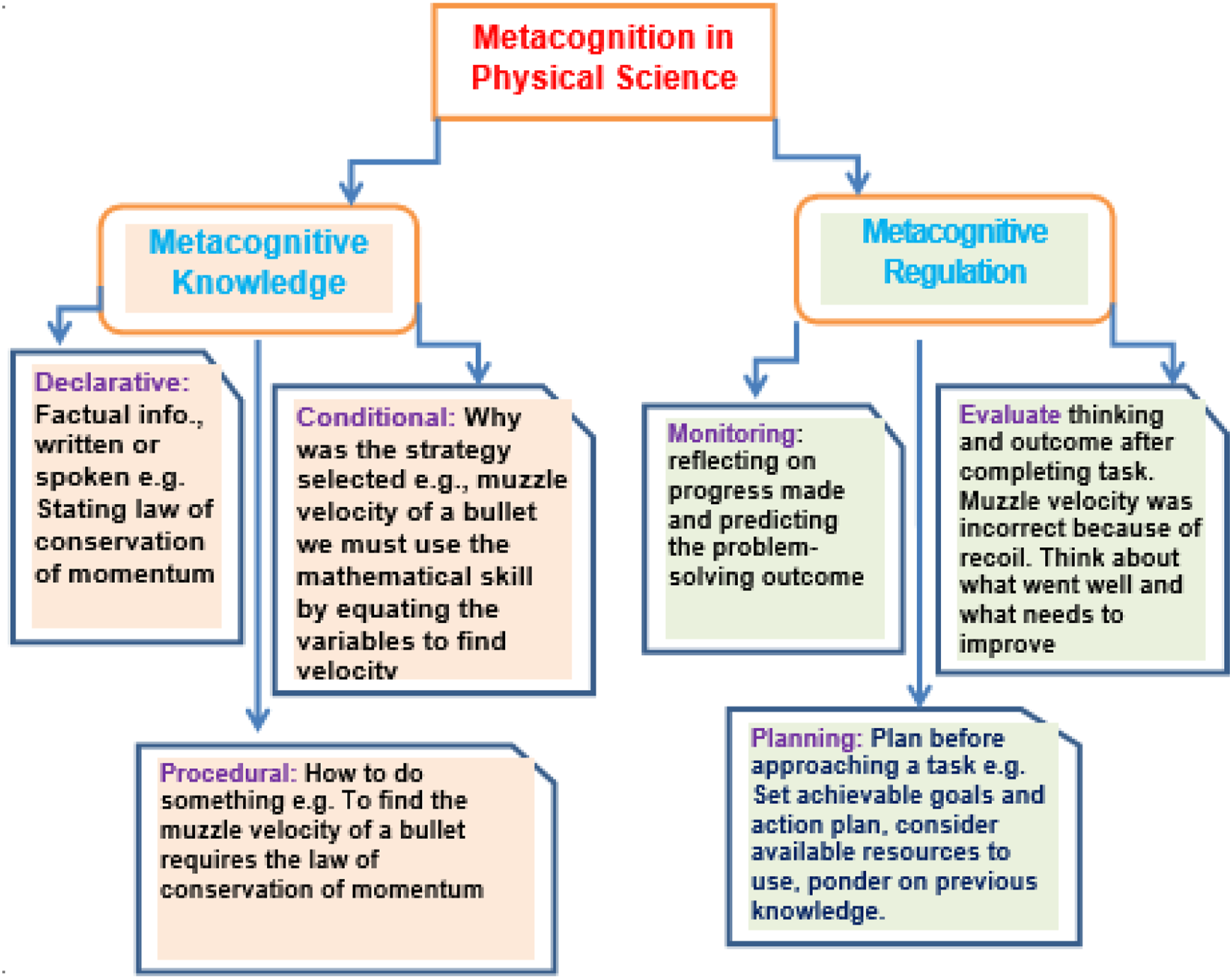
Figure 1 also shows the components of metacognition in Physical Science problem solving. It illustrates that the two subcomponents of metacognition are metacognitive knowledge and metacognitive regulation. The subcategories of metacognitive knowledge and metacognitive regulation are further broken down by focusing on higher-ordered thinking in deconstructing a Physical Science problem. The subcomponents of metacognitive knowledge and metacognitive regulation are briefly explained with each term, focusing on Physical Science problem solving.
The Physical Science principle used in the example to explain each sub-category of metacognitive knowledge and regulation is the real-life application of calculating the muzzle velocity of a bullet using the Law of Conservation of Momentum. The momentum problem involves finding the muzzle velocity of a bullet fired from a rifle. Declarative knowledge is associated with formulating Physical Science theory. Procedural knowledge is about how to implement strategies to solve the science problem. Conditional knowledge allows the learner to select the most effective cognitive action. The planning phase is the selection of the most efficient plan and provision of resources to solve the science problem effectively. During the monitoring phase the learner checks understanding, conception, and performance whilst solving the problem. The evaluation phase allows the learner to self-appraise the problem-solving process and reflect on what worked and what is needed to improve.
The contemporary approach to the metacognitive model of Schraw and Moshman (1995) promotes formal explicit theory as an effective approach to foster metacognition in Physical Science. The formal explicit theory is a theoretically structured system of thought. Formal theories involve highly organized systems and explicit theoretical structures. These include problem-solving prompt cards, and problem-solving steps and flow diagrams intertwined in models, as commonly observed in Physical Science. Formal theories provide an insightful influence over outcomes and the understanding of performance which includes a set of hypotheses that can be used to check and evaluate ones metacognitive knowledge. Formal theorists possess some explicit mindfulness, which involves purposeful efforts to build and transform their current metacognitive theories into more effective ones. This allows students to make informed choices about self-regulatory activities. In terms of higher ordered thinking skills, this study views metacognition as a cognitive management system in which learners plan goals, monitor progress, and evaluate the success of the outcome in order to have a deeper understanding of content studied and problems solved.
The Vygotskian and Non-Vygotskian Approach to Metacognition
During the teaching and learning process, it is recognized that metacognitive skills are acquired by the learner through social interaction. Vygotsky (1978) theorized that the capacity for cognitive and meta-skills during the learning process is developed during the learner’s interaction with more able peers or the teacher within the learner’s Zone of Proximal Development (ZPD). “What a child can do in cooperation today, he can do alone tomorrow” (Vygotsky, 1978). The aim of the approach is for facilitation to occur in the classroom whereby the learner gains sufficient knowledge and skills to work independently. The ZPD is the stage in problem solving when the learner cannot progress further without social interaction with more able peers or the teacher (Vygotsky, 1978). Figure 2 explains ZPD using the topic of Newton’s Second and Third Law of motion in Physical Science. ZPD is central in developing metacognitive skills where the less able learner is assisted by the more able individuals during meta-tasks until the less able learner becomes more competent and independent during problem solving. The teacher needs to foster the formal explicit model within social construction in the learner’s ZPD. ZPD of a Physical Science learner (adapted from Vygotsky, 1978).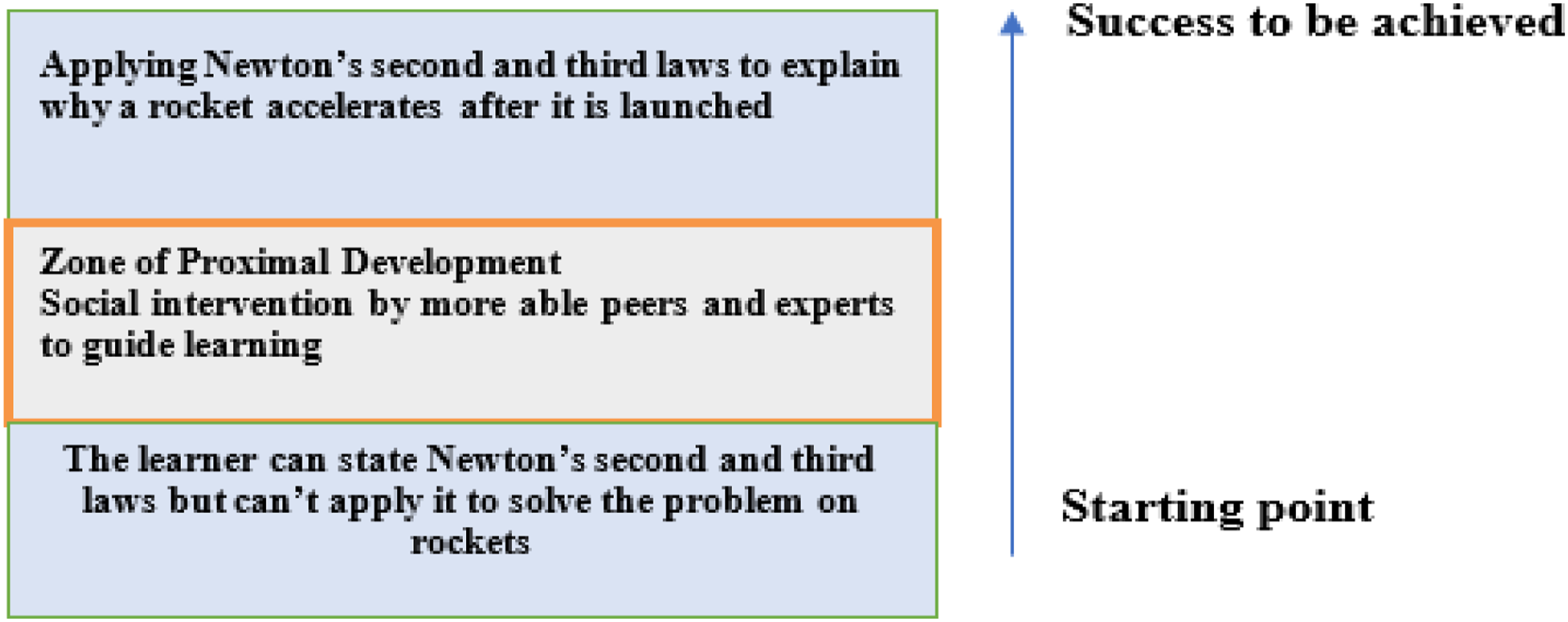
Contrary to the social influences on the development in metacognition, the research of Konto and Nichola (1986, as cited in Baker, 1994) found independent problem solving produced similar results as work on ZPD. This researcher agrees with this research but feels that the meta-skills associated with independent problem solving is the initial step and the final part of ZPD theory. Before and after the ZPD phase, the independent, non-Vygotskian approach is favored. Some learners may master independent problem solving through the ZPD with less assistance than others. The ZPD is the key phase where meta-skills are acquired. Teachers must note that incorrect skills may be coveyed through peer interaction therefore proper facillitation and formative feedback is key in making the social construction of knowledge successful.
Affective Domain of Metacognition
Research pioneered by Flavell (1979) defined metacognition as “knowledge and cognition about the cognitive phenomena.” To capture the multidimensional aspect of metacognition this research views metacognition as a cognitive management process where learners plan, monitor, and evaluate their learning process in a sociocultural environment with a growth mindset. Teaching intervention aimed at improving metacognitive skills improves learner’s metacognitive awareness and motivation (Zepeda et al., 2015). This is often overlooked. Dweck (2006) promotes motivation through the idea of growth mindset, where learners are encouraged to take risks, believe in themselves, and try harder if they do not succeed the first time.
Growth mindset underpins the effective domain of metacognition. Dweck’s (2006) studies revealed that learners with a fixed mindset showed a decline in attainment, whilst learners with a growth mindset showed a substantial rise in attainment. This stresses the importance of the motivational dimension to metacognition.
The values of a growth mindset are enhanced by guiding the learner through what Nottingham (2016) labels as the “learning challenge,” which is more popularly known as the “learning pit.” The model of the “learning pit” includes important metacognitive components. When a learner is given a challenging Physical Science problem such as “explain the concept of containment during a nuclear fusion reaction” the learner enters the “learning pit” of struggle and confusion. The learner needs to use metacognitive strategies and cognitive resources to emerge successfully from the pit and evaluate the learning experience through a growth mindset.
During the Begin part of the learning pit, similar to Vygotsky’s (1978) principles of social constructivism in the ZPD, the learner “begins” with some idea of the theory behind the “problem” or cognitive conflict (see Figure 3). The teacher needs to create this conflict or problem during the teaching and learning situation (Nottingham, 2016). This is when the learner falls into the learning pit, the problem part of Figure 3. All types of Physical Science problems should be practiced using this model. The model is only effective if the learner feels the emotions of confusion and struggle. The teacher must make it known that this is a normal part of learning, and if the learner does not fall into the learning pit, effective learning does not take place. It is common for some learners to solve the problem whilst not experiencing the learning challenge. The teacher must be aware of this and differentiate the task by making it difficult for learners to skip this stage during the learning process. Furthermore, not everyone gets out of the learning pit. Achieving success is a constant struggle and the learner with a growth mindset has the best chance of coming out of the learning pit. A learner with a fixed mindset would remain stuck in the pit, but the teacher could promote academic tenacity and perseverance necessary for the learner to climb out of the learning pit. Struggle and confusion should be accepted as part of the process, and the teacher should inform learners that being inside the pit is just temporary. The pit could be compared with the ZPD. This is where optimal learning and fostering of metacognition takes place. Cartoon image of the “learning pit” (adapted from Nottingham, 2016).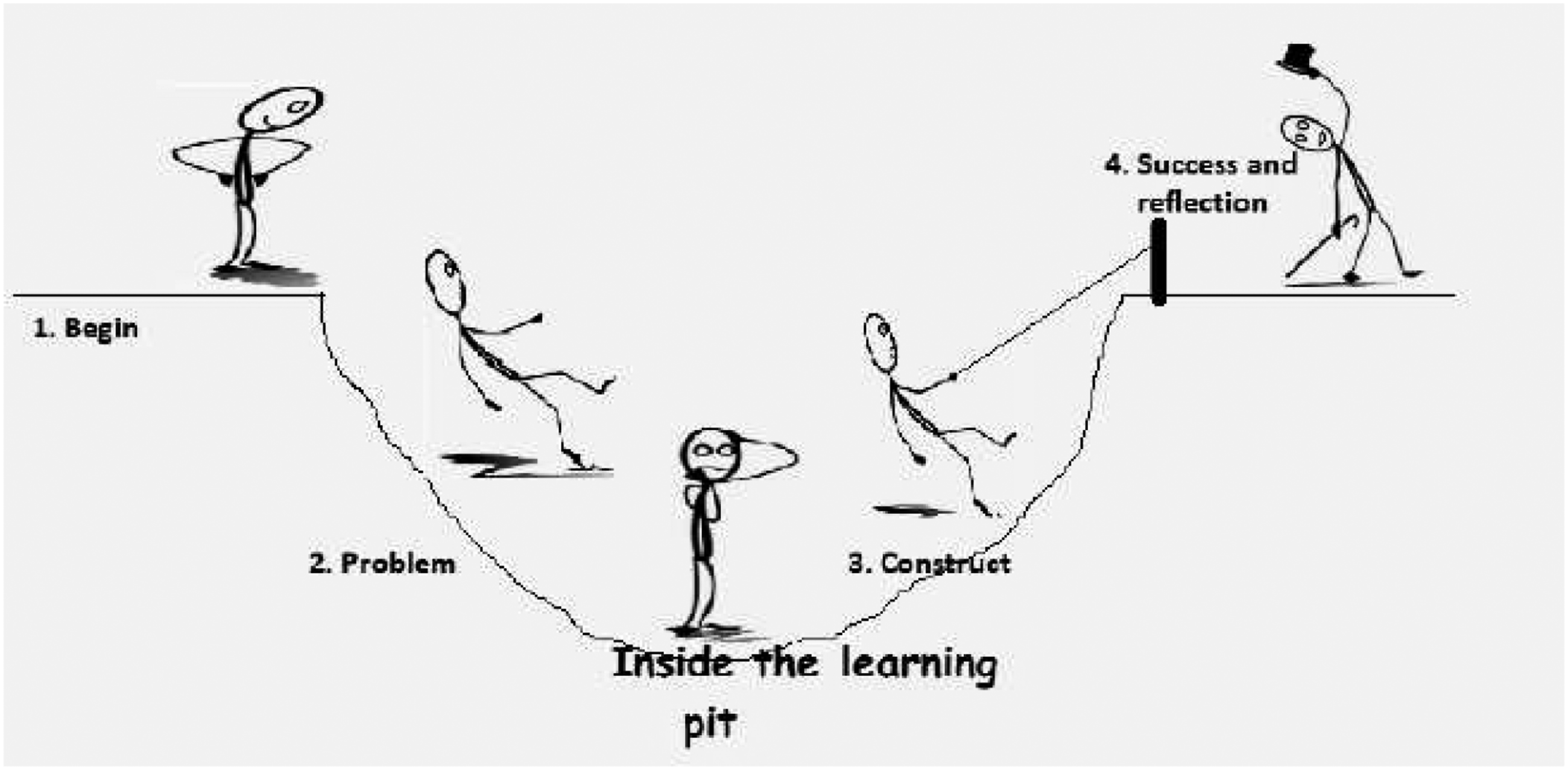
The third part of the learning pit is the construct phase. This is where learners socially construct ideas in conjunction with their prerequisite knowledge. This is where Vygotsky’s (1978) idea of social constructivism comes into play, with more able learners making headway in solving the problem for themselves, and then assisting less able peers. Whilst in the pit, metacognitive monitoring is encouraged, and the teacher assesses where the learner is in relation to the problem-solving process. The effective domain of the metacognitive process is at play when the teacher assists and monitors the emotions of the learner. Within the pit the learner needs to plan strategies metacognitively to get out of the pit, and metacognitively monitor his/her progress.
The learners finally achieve success once out of the learning pit. At this stage the teacher promotes metacognitive evaluation techniques so the learner reflects on the experience of the learning pit. The teacher must use this metacognitive model as often as possible until learners master the skill of “escaping” from the “learning pit”. Repeating the metacognitive processes will help develop metacognitive regulation in the learners. Research completed in promoting growth mindset in learners confirms that it leads to raised attainment (Dweck, 2006).
Eight-Phase Meta-Model for Physical Sciences
Figure 4 is an adaption of the eight-phase model for Physical Sciences of Hollingworth and McLoughlin (2001) as a meta-model which models formal explicit theory, ZPD and non-Vygotskian efforts. In Phase 1, the learner analyses the Physical Science problem of applying the knowledge of vectors to find velocity. In Phase 2, the learner meta-plans strategies to find velocity using vector diagrams. Phases 3 and 4 involve metacognitive conditional knowledge and monitoring skills in attempting to choose the best method and decide to what extent guided instruction is required. Phase 5 gives the learner an opportunity to construct knowledge socially within their ZPD when the non-Vygotskian approach breaks down because the learner is unsure. Phase 6 allows mastery of the problem by repeating phases 3 to 5 on more vector calculations of finding velocity which leads to the non-Vygotskian approach dominating. Phase 7 and Phase 8 practise the skills of metacognitive evaluation, to reflect on the process, and to create guidelines to find velocity using vector calculations. Merging the ZPD, non-Vygotskian model, learning pit, and the eight-phase model may be an effective intervention to fostering metacognition explicitly in Physical Science to improve attainment. Eight-phase model (adapted from Hollingworth & McLoughlin, 2001).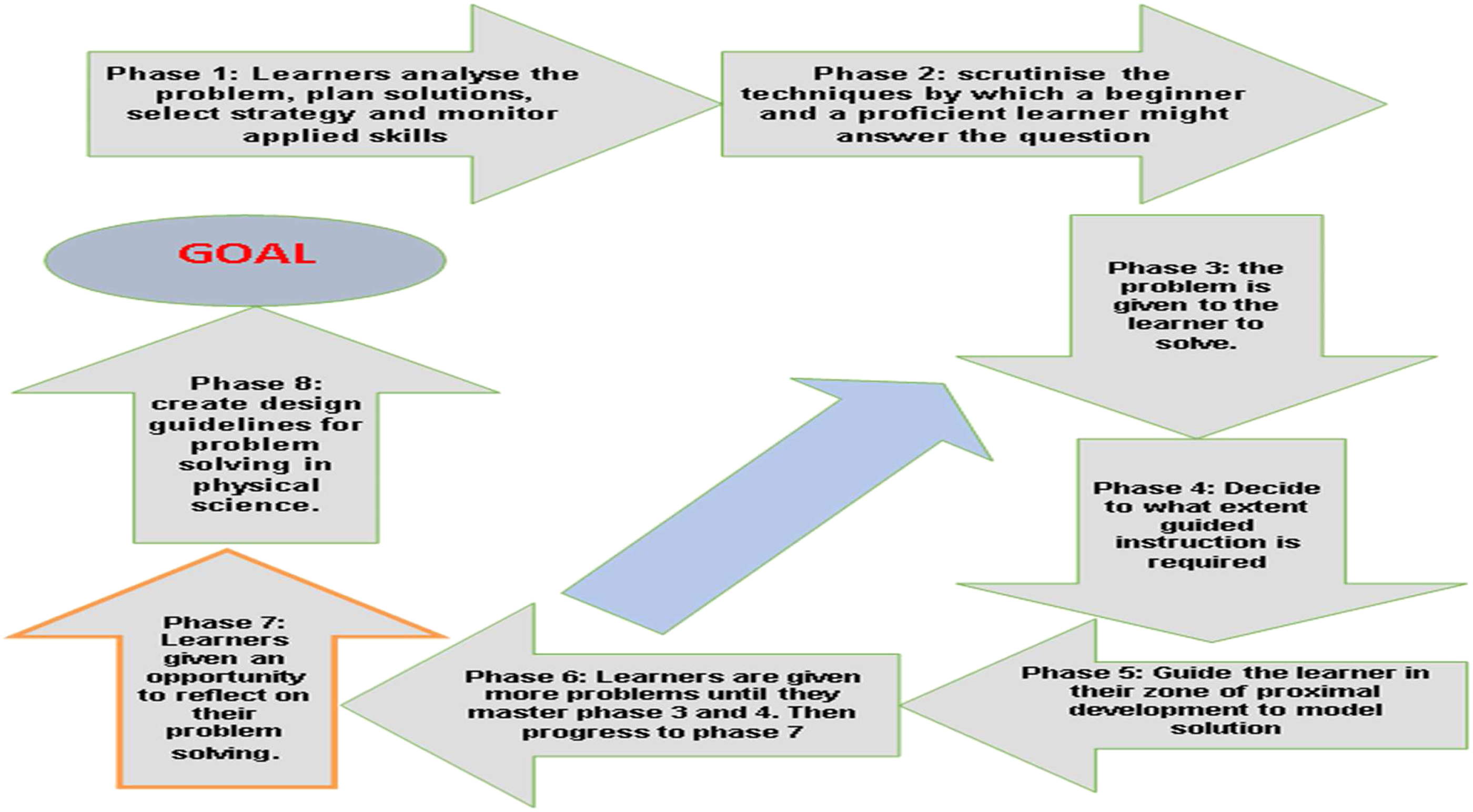
Theoretical framework
Metacognition in different domains is required (Zohar & Dori, 2012), therefore this research is pertinent. There is a strong link between academic success in science and metacognition (Thomas, 2011). This research analyzed the teaching and learning situation from the perspective of Physical Science learners in government-run schools in two KwaZulu-Natal districts. The intention was to generalize results obtained by the research and apply them to other Physical Science learners in South Africa.
This study constantly considered the four main theories as: 1. The Schraw and Moshman Metacognitive Model (1995) set out below formed the theoretical basis of the MAI (Metacognitive Awareness Inventory) and the MAIT (Metacognitive Awareness Inventory for Teachers), observation protocol and interviews. 2. Zone of Proximal Development. The ZPD theory provided insight into observing metacognitive awareness through a sociocultural lens. 3. The learning pit model underlined the effective domain of the metacognitive process which may be overlooked in the MAI, MAIT, and interviews, but was considered during the observational survey. 4. Eight-phase model linked to the domain of Physical Science to metacognition and guided the observation of formal explicit model in the study.
Research Design and Methodology
This research views metacognition as a consequence of a psychosocial environment which is an interrelation of sociocultural factors and individual thought and behavior (Thomas, 2012). Metacognition has a sociocultural element to it (Thomas, 2012). Therefore, the research design which considers the sociocultural aspects in terms of the Vygotskian approach was effective in researching metacognition in the South African Physical Science classroom. The learners’ learning environment was crucial to understanding the learners’ sociocultural, cognitive, and metacognitive awareness. Metacognition is a cognitive activity which cannot be directly detected, but its existence can be inferred (White cited in Thomas, 2012). In this study the verbal responses did not give a clear view of the participants’ answers. The participants could not articulate their views clearly and might have known more than they could verbally communicate. Therefore, non-verbal forms of communication such as questionnaires added clarity in this case. The researcher considered this and utilized qualitative and quantitative strategies to add validity and clarity of results. Therefore, the mixed methods approach was pragmatic in this research.
In the past 30 years, mixed methods became ever more popular with researchers and authors (Ary et al., 2010). The mixed methods approach to research is a combination of the qualitative and quantitative methods of information gathering wherein each method adds value to the understanding of the researched phenomenon (Creswell & Clark, 2011). The mixed methods design offered a better understanding of the research problem where a single method fails (Ary et al., 2010). Characteristics of the mixed methods research design is that it is intensive, and the researcher must be skilled in quantitative and qualitative data gathering (Ary et al., 2010). The mixed methods approach can be time-consuming and requires extensive resources (Ary et al., 2010). Using the triangulation model of mixed methods design, whereby the qualitative and quantitative data was integrated in order to validate discussion and solutions, was crucial in ensuring validity of results. Triangulation aims to avoid the intrinsic predisposition in a study that involves a single-method. The mixed methods design allowed the researcher to examine research questions from different angles to look for unexpected results and potential contradictions.
Words and numbers were triangulated to justify conclusions drawn during the integration of deductive and inductive reasoning used in the analysis of participants and in recording their behavior. This created a more persuasive argument than just words or numbers alone. The research included collection, analysis, and integration of data collected from the test results, surveys, classroom observations, and interviews. This approach to research was used because the integration of qualitative and quantitative methods in the process of triangulation provides a better understanding of the research problem than either type alone. For example, the MAIT suggested that the metacognitive awareness of the teachers was very high. Integrating these results with the teacher interviews and the lesson observation showed that the teachers overestimated their metacognitive awareness.
The sample population consisted of Grade 11 Physical Science learners in seven schools in the Phoenix and Tongaat central district in KwaZulu-Natal. The schools were labeled School A to G. Schools selected were from middle to lowerincome areas in the region, and attract learners from surrounding townships, namely: Phoenix, Tongaat, KwaMashu, Bumbai, Inanda, Verulam, Ntuzuma, and Amoati. These controlled variables aimed to replicate the majority of the classes in the South African context in terms of socioeconomic factors. The schools were located in densely populated areas. The participants consisted of seven teachers and 151 learners for the quantitative part of the research and the interviews. The Grade 11 learners were ideal for the research as they had studied Physical Science in Grade 10 and did not have the pressure of having to complete their National Certificate examinations that year. For the quantitative research, all learners and teachers from the sample group took part in the surveys. The sample sizes differed across studies due to the different class sizes between the schools.
Sources of data in phase 1
During phase 1, the researcher used results from the half-yearly examinations which tested the claims, evidence, and reasoning of theory covered in class and provided a quantitative benchmark to align with the premise of the research. The analysis of the exam results helped strengthen the assumption that poor achievement in Physical Science may be due to insufficient metacognitive skills. Poor exam results of the participating learners would justify the study in seeking to answer the research questions accurately. However, if most learners performed well in the exams this research would lack a sound bias. The Physical Science teachers gave the researcher a copy of the half-yearly Physical Science examination results. This was based on the marks obtained by the Physical Science learners from Paper One and Paper Two of the externally set examination. The results were in the form of percentages. Analysis of the highest percentage, lowest percentage, average percentage, and percentage range was carried out.
Instruments used in phase 2
The learning environment is crucial in understanding the learners’ sociocultural, cognitive, and metacognitive awareness. Subsequently, phase one of the research used the metacognitive observation protocol sheet to observe the classroom as a learning environment. The classroom observation focused on the state of metacognition by analyzing the observational data to answer research question 1. The classroom observations provided a holistic understanding of the research that is unbiased and precise within the limitations of the research method and this improves the validity of the study. The observation protocol guided the assessment of the elements of metacognitive regulation. Evidence of the elements of metacognitive regulation observed was noted on the observation protocol sheet and critically analyzed.
Examples of the analyses used on the observation protocol sheet are as follows: • Metacognitive planning: “learning objectives present”; “directed learners to where the thought process took them”; “show understanding of learning objectives”. • Metacognitive monitoring: “Encouraged learners to explain in their own words”; “asked for student input”; “Identified anything unclear”. • Metacognitive evaluation: “Checked whether objectives have been met”; “Checked for understanding”. • Metacognitive modeling: Models “thought process”; “brain storming”; “problem solving”
Instruments used in phase 3
The survey instruments used in the research were the MAI adapted from Schraw and Dennison (1994) and the MAIT adapted from Balcikanli (2011). The MAI has appropriate psychometric elements and factor analyses with high internal consistencies, which are a reliable assessment (Schraw & Dennison, 1994). The MAI was given to Grade 11 learners during their Physical Science lessons. The MAIT has been used successfully in many studies to assess the metacognitive awareness of teachers (Balcikanli, 2011). Studies carried out by Thomas (2012) suggest that teachers with strong metacognitive awareness foster metacognition effectively. The MAIT assessed the teachers’ metacognitive awareness, and the MAI assessed the inferred effectiveness of the teachers in fostering metacognition. This was critical in answering research questions 2 and 3.
The construct reliability of the MAI about the specific population was determined by calculations of Cronbach’s Alpha coefficients. Low alpha values, those less than 0.6, were indicative to a poor correlation between items and hence these items were discarded in the research (Tavakol & Dennick, 2011). For example, the procedural knowledge, conditional knowledge, comprehension monitoring, and evaluation constructs scored alpha values too low to be considered reliable and were therefore rejected in the analysis of the MAI. Discarded constructs were considered in the qualitative part of the study and were analyzed extensively during the triangulation of data analysis and scrutinised to ensure validity. This was a major strength of the mixed methods approach. The MAI and were given to Grade 11 learners during their Physical Science lessons. The teacher and the researcher both assisted learners in comprehending certain information and procedures that learners felt challenging whilst filling in the survey.
Examples of the four constructs used in the MAI are set out below:
Knowledge of Cognition
• Declarative knowledge– “I am good at organizing information”; “I know what the teacher expects of me.”
Regulation of Cognition
• Planning—“I set specific goals”; “I organize my time to accomplish my goals.” • Information management strategies—“I slow down when I find important theory”; “I try to break studying down into bitesize.” • Debugging strategies—“I ask others for help when I am stuck”; I change strategies when I fail.”
The MAIT followed a similar approach to the MAI. Cronbach’s Alpha coefficients for the MAIT could not be calculated because there were only seven teacher participants. However, it was still critical to assess the teacher’s metacognitive awareness because fostering metacognition development in science necessitates that teachers are themselves metacognitive (Thomas, 2012). Therefore, it was crucial to use the MAIT and conduct teacher interviews. This provided a more comprehensive assessment of the state of metacognition in the Physical Science classrooms studied. The teachers filled in the MAIT at their convenience and returned it to the researcher.
Instruments used in phase 4
Interviews between Grade 11 Physical Science learners and the researcher, as well as the interviews between the Physical Science teachers and the researcher, formed the basis of phase 4 of the qualitative instruments. Interviews with the teachers added to the holistic data analysis which analyzed the teachers’ metacognitive awareness (research question 2) and how effective they were in fostering metacognition (research question 3). Interviews with the learners described the effectiveness of the teachers in fostering metacognition (research question 3) guided by the interview schedules.
Focus group interviews collect data from many participants at once. This was the most effective strategy for interviewing 151 learners within the given time frame. The researcher had group discussions with the learners and used the interview schedule to guide the questioning. As with the structured interview with the teachers, the researcher did not deviate off point and remained neutral. The groups ranged between four to six learners. All learners took part in the interviews in which the medium of communication was English. Each interview lasted between 10 and 12 minutes. The researcher guided the discussions, monitored, and noted the responses verbatim and used member check to validate the response of the interview. The groups were given a chance to discuss their answers, and the group leader conveyed the group’s response. In some cases, the responses were split within the group. The researcher noted the opposing points of view verbatim. Analysis of the interviews focused on describing and calculating the frequency of the responses. Relevant words, sentences, and phrases that were repeated, or were similar to other responses, were coded in the interview schedule. The codes that were frequent and deemed important were categorized, the frequency calculated, and critically analyzed. Interview schedules assessed the learners’ metacognition by asking the following questions: “List the steps you take before and while solving a problem”; “What do you think about after you have solved a problem?”; “What would you do if you felt you have not understood the lesson?”; “How do you prepare yourself for a test or exam?”. Interview schedules assessed the teachers’ metacognition by giving the following instructions: “Discuss the training you have been given in promoting and teaching metacognitive skills”; “Describe how you promote metacognitive awareness in the classroom.”
Findings
Phase 1
Percentage Breakdown of the Half-Yearly Exam Results.

Descriptive statistics for half-yearly exam results.
Phase 2
Lesson observations focused on the extent to which metacognitive activities occurred during the teaching and learning process. The classroom observations identified “missed chances” where metacognition could have been supported but was not. In general, starter activities concentrated on conceptual understanding of the topic, but did not encourage learners to plan knowledge strategies to reach the goals of the lesson. For example, a teacher was observed leading a discussion on electric field lines, and explaining the equation E = F/Q but did not encourage learners to plan lesson goals using their prerequisite knowledge of electric charges. Similarly, another teacher introduced Faraday’s Law by referring to the equation: the teacher then proceeded with the lesson, neither motivating lesson goals setting nor stating the lesson aims.
Metacognitive knowledge was well promoted by teachers. They focused on procedure, equations used, and modeled answers on the board to show correct procedural and conditional meta-skills. However, results from the classroom observations concluded there were vital gaps in fostering the explicit model and metacognitive regulation. The teachers focused solely on the cognitive part of the thinking process and neglected to focus on the formal explicit theory of metacognition. The analysis of lesson observations found that 1. There were no clear lesson goals or success benchmarks to encourage metacognitive monitoring and planning during the lesson; 2. There was no evidence of effective formative assessment being used to monitor and evaluate learner’ progress; and 3. The teacher-led approach dominated the lesson which stifled learning in the ZPD.
Point 1 shows that the teachers missed opportunities to trigger the process of metacognitive regulation: where learners could plan how to achieve or reach the learning goals, monitor progress through success benchmarks within the ZPD, and evaluate which strategies were effective and which were not. Feedback must be ongoing and must direct the learner towards the goal of the lesson, however, the teachers missed opportunities (see point 2) by not providing effective feedback which is: elaborated, in bite-sized portions, clear and specific on how to improve; includes a positive comment; and can only be provided effectively in ZPD (Black & Harrison, 2010). Point 3 suggests that the teachers restricted learners’ control during the meta-process. The teachers used the “teacher-expert” model effectively, showing their in-depth knowledge of the subject. There was, however, no evidence of modeling strategies as analyzed by the observation protocol by most teachers. This was perhaps because the teachers did not feel such modeling was necessary during the lesson. However, one teacher used an analogy of the local streets and highways to explain series and parallel circuits in the topic of Electricity to which the learners responded well. Metacognition is best facilitated when learners have some control during the process (Crawford, 2014). Overall, the analysis of the lesson observation shows numerous missed opportunities to effectively encompass metacognitive awareness whilst teaching the Physical Science curriculum. To answer research question 1, analysis of the classroom observations concludes that the state of metacognition in the Physical Science classes observed was poor.
Phase 3
The MAI and the MAIT had options one to four. One represents the option “strongly disagree,” and the maximum number 4 represents the option “strongly agree.” “Agree” is represented by the number 3 and “disagree” is represented by the number 2. The percentage response was calculated using this scoring system. The number of participants responding to each question was denoted by the letter N. Cronbach Alpha quantities justified inclusion of the statistical data for the MAI.
Percentage Frequency Responses to MAI Constructs.

Descriptive statistics for the MAI.
Percentage Frequency Responses to MAIT.
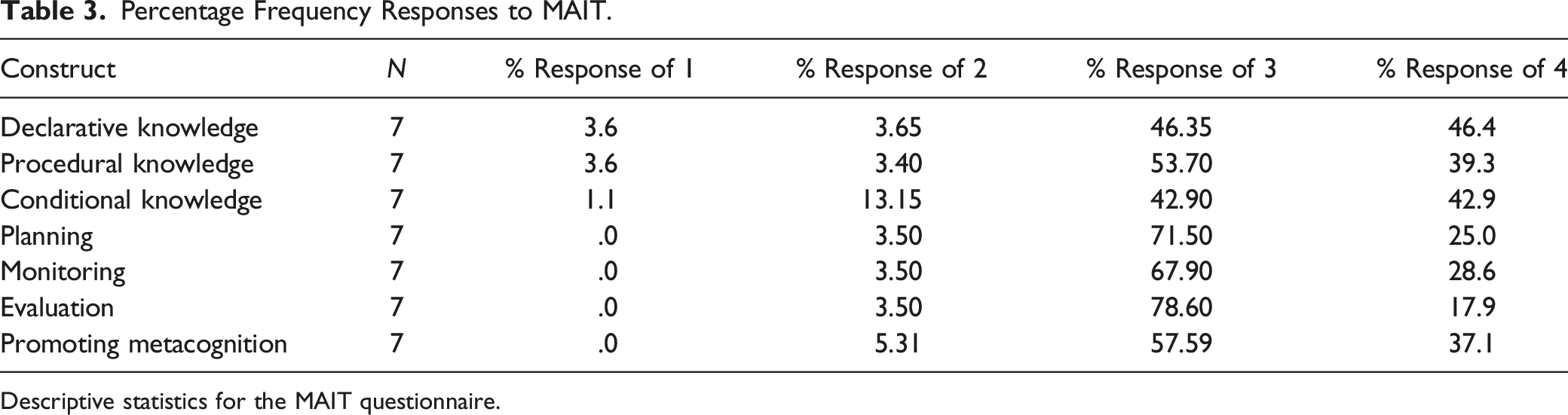
Descriptive statistics for the MAIT questionnaire.
Phase 4
When the metacognitive knowledge was assessed during the interviews, 38% of the learners used words such as “use appropriate physics formula”; “analyze question”; “find relevant scientific theory”; “highlight key points”; and “underline important science concepts”; to describe how they skim through scientific information. Thirty-seven percent of the learners used “read the question again”; “read twice”; and “read again,” to show how they handle important scientific theory. 53% of the learners used “relate problem to topic”; “analyze question”; “use keywords”; “use relevant science equations”; and “identify section in Physical Science,” to explain mental integration of scientific knowledge. For more complex problems, only 8% translated problems through physics diagrams and 18% effectively explained how they activated prior knowledge. The low percentage of effective responses, especially those linked to complex problems, inferred crucial gaps in accessing metacognitive knowledge skills. This was despite the teachers focusing on the acquisition of cognitive knowledge as observed during the classroom observations.
As few as 35% of the learners used “find relevant information”; “search for what is known and unknown”; “easy and best way to solve problem”; fastest way to solve problem”; “consider different ways to solve problem” to describe meta-planning, and only 12% of the learners considered meta-monitoring skills. However, 84% of the learners used words like “other way to solve it”; “other methods to solve”; “consider whether I applied the physics correctly”; “check answer”; “ask teacher”; “compare answers with friends”; “test using another method”; “verify answer”; “verify using maths”; and “check with tutor” to verify their meta-evaluation strategies. This result was quite surprising, despite not having been formally taught metacognitive skills, most learners effectively explained meta-evaluation. These metacognitive skills may be developed tacitly and informally during the learning processes in Physical Science. However, major gaps in metacognitive awareness were still evident as seen from the low percentage responses to describing most of the meta-skills. The analysis may also suggest that the teachers may not be adequately equipped to foster metacognition effectively (research question 3). In science the formal explicit model such as the eight-phase model may yield a higher percentage response to meta-skills.
Whilst assessing the teachers understanding of metacognition, the critical keywords used by the teachers were “no training”; “I did not come across the term metacognition”; “no training provided.” None of the teachers had heard of the term metacognition. They had no training in fostering metacognition and did not consciously apply any formal explicit model. Teacher training programs focusing on effectively promoting metacognitive awareness, which is key to promote metacognitive awareness (Baker, 1994), were lacking. To answer research question 2, the analysis concluded that the teachers were not equipped to promote metacognition effectively, drawing parallels with the conclusions of classroom observations, but contradicted the results of the MAIT.
Discussions and Recommendations
The strength of the research framework lies in its contemporary approach to metacognitive theory which is refined by the formal explicit theory of Schraw and Moshman (1995); a theory which is very effective in fostering metacognition in Physical Science. There was little indication of the fundamental principles of this theory being implemented by the Physical Science teachers. Also, the results from the observational survey yielded poor implementation of ZPD theory. The evidence found that meta-models to promote a growth mindset and effectively enhance metacognitive awareness were absent.
Due to the strong evidence informing the study of the crucial gaps in fostering metacognitive awareness, the framework was very useful. However, the framework lacked the theory to adequately prepare the researcher for the results of the MAI and MAIT. The quantitative analysis found that the MAI and MAIT yielded similar conclusions to research carried out by Huszti et al. (2016) and Siegesmund (2016), where participants tended to overestimate their metacognitive competence. The researcher overvalued what the MAIT and the MAI could accurately show because the teacher interviews revealed that none of the teachers had heard of the term metacognition and that they had not been given training in fostering metacognition in the classroom. However, the importance of the data analysis suggests that the Physical Science learners and teachers, despite major gaps in their metacognitive awareness, are confident and yet uninformed about their metacognitive awareness. The teachers exhibited several examples of promoting metacognitive awareness during their teaching of Physical Science despite not having been trained on the formal explicit model. This could be due to the tacit influences of prevailing metacognitive theory. Moreover, the theoretical framework fell short in examining the tacit influences of metacognitive awareness, which is attributed to the nature of Physical Science teaching which focuses on problem solving and examination preparation.
Triangulation of results drawn from the analysis of the MAI, interviews, lesson observations, and the half-yearly examination results aided in answering research question 1, “What is the state of metacognition in the South African Physical Science classrooms?” Analysis of the MAI further suggests that learners feel confident in their metacognitive abilities, but analysis of the learner interviews found low percentage responses to describing most of the meta-skills. The results of the interview may also suggest that the teachers may not be adequately equipped to foster metacognition effectively. Lesson observations concluded that the teachers showed no evidence of attempting to trigger the process of metacognitive regulation within the ZPD. Formal explicit theory was neither mentioned nor observed, despite there being many opportunities within the lesson to implement the model. Feedback must be ongoing and direct the learner towards the goal of the lesson. Conflicting results arouse when comparing the exam results to the analysis MAI. The analysis of the half-yearly examination results further implied that the state of metacognition is overall poor. There are crucial gaps in fostering metacognitive awareness within the Physical Science classrooms studied
Triangulating the data analysis from the MAIT, teacher interviews, and lesson observations to answer research question 2, “To what extent do South African Physical Science teachers possess metacognitive awareness?”, led to conflicting results. The analysis of the MAIT determined that teachers felt confident in their metacognitive abilities and their ability to promote metacognition. However, the teacher interviews revealed that none of the teachers had heard of the term metacognition, and they had not been given training in promoting metacognition in the classroom. A major problem lies in the average science teacher having no notion of metacognition, and the ones who do lack the skills to facilitate metacognitive awareness effectively (Georghiades, 2004). These conflicting results are due to the teachers exaggerating their metacognitive abilities or perhaps expressing a certain impression of themselves in order to minimize their own uneasiness. Furthermore, the lesson observations revealed that crucial elements of metacognition were lacking in lessons. The Physical Science teachers exhibited aspects of metacognition despite not being aware of the concept and not being trained in promoting metacognition. This was due to the less effective tacit nature of metacognition dominating the more effective formal explicit model. The teachers lacked the essential metacognitive skills needed to model the formal explicit theory.
The triangulation analysis used to answer research question 2 gave important insights in answering research question 3, “How effective are South African Physical Science teachers in fostering metacognition?” The Physical Science teachers relied heavily on the tacit influences of metacognition and metacognitive nature of Physical Science. Acquiring declarative, procedural, and conditional knowledge is essential during problem solving in Physical Science therefore, those skills occurred naturally in the teaching and learning of Physical Science due to tacit influences. The teachers exhibited several elements of metacognition during their teaching of Physical Science because their focus was on problem solving and examination preparation. However, the level of metacognition observed was markedly less than the results of the MAIT suggested. The analysis of the half-yearly exam results supported the assumption of the research, that low levels of metacognitive awareness were the reason for the poor results achieved. The teachers are not equipped to foster metacognition because of their lack of metacognitive awareness despite feeling confident about their metacognition.
Suggested workable strategies for further developing learners’ metacognitive skills could be the merging of the theoretical framework as a formal explicit model which is an effective way to foster metacognition which may improve attainment in Physical Science. Figure 5 shows the merged model including the components of the eight-phase model, the ZPD and the “learning pit” model. The model includes the three-pronged approach encompassing the Vygotskian principles of ZPD, formal explicit metacognitive theory, and the non-Vygotskian approach to independent problem solving. The aim of the model is to successfully foster metacognitive awareness and a growth mindset within the Physical Science classrooms in South Africa. Merged eight-phase, ZPD, and the learning pit metacognitive model.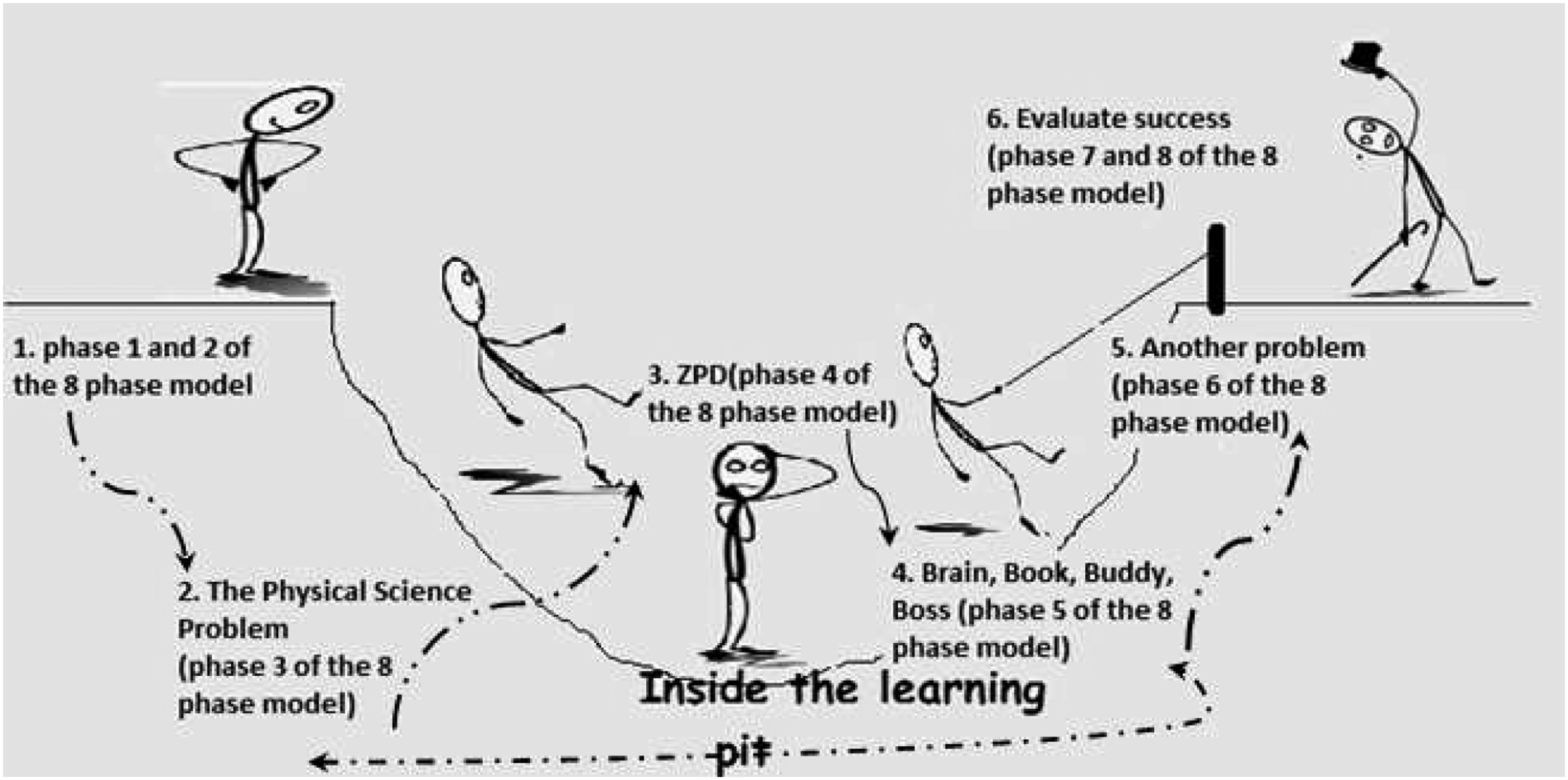
Number 1 in Figure 5 represents the start of the learning pit and the phases 1 and 2 of the eight-phase model. Learners are encouraged to analyse, plan solutions, select strategy, and monitor applied skills to kinematics to solve equations of motion for example. Number 2 is where the learner is given the problem to attempt, and the learners fall into the pit. The learners feel emotions of confusion and struggle not knowing which kinematic equation to use. The teacher must make it known that this is a normal part of learning, and if the learners do not fall into the “learning pit”, effective learning does not take place. Furthermore, not everyone gets out of the “learning pit”. The learner may not solve the problem at this point. Achieving success is a constant struggle and the learners with a growth mindset have the best chance of coming out of the “learning pit”. The teacher should make the learners aware that the emotions of struggle and failure are a natural part of learning and learners should persevere to escape from the “learning pit”.
Number 3 represents the ZPD which epitomizes phase 4 of the eight-phase model where the learner cannot progress further without guidance of an expert or more able peer. Without assistance the learners cannot progress further. The learners must use the emotional, physical, and social resources available in that order to utilize the initial non-Vygotskian approach effectively and then the Vygotskian approach to solve the kinematic problem. If the learner’s knowledge has failed him/her, the next step is using the physical resources such as notebook or textbook. If that fails, the learner seeks help from more able learners or experts. This represents phase 5 of the eight-phase model. Number 5 of the merged model represents phase 6 of the eight-phase model where the learners stay in the learning pit solving more kinematic problems. Numbers 3, 4, and 5 of the merged model are repeated until the learners are confident about solving the problem independently. Mastery is hence reached, and the non-Vygotskian method dominates. The learners move from initially non-Vygotskian, to a Vygotskian dominated approach, and then to the non-Vygotskian mastery stage, which is the aim of the meta-activity. During these phases the learners strategically access and absorb important information.
Once the learners have reached mastery, phase 6 of the merged model is reached. The learners get out of the pit and meta-evaluate the learning experience. Phases 7 and 8 of the eight-phase model are reached when the learner creates an effective strategy to solve kinematic problems which may be used in the future. Repeating this process to solve other types of Physical Science problems as often as possible encourages the learners to master these meta-skills in a constructivist environment which ultimately leads to independent learning.
The existing literature suggests that teachers need to effectively foster metacognition in order to raise attainment ( Hartman, 2001; Owo & Ikwut, 2015; Schraw & Moshman, 1995; Thomas, 2012). Current research conducted (Hattie & Zierer, 2019) called “visible learning,” which is the largest data set of empirical studies ever evaluated in education, suggests that metacognitive strategies have a significant impact in improving attainment. Visible learning became so popular it coined the term the “Holy Grail in Education” (Bergeron, 2017). This research had 300 million participants, tapped into more than 1400 studies on meta-analyses of raising attainment focusing largely on mathematics, science, literacy, and social studies, and combining 80 000 studies over a period of about 30 years (Hattie & Zierer, 2019).
Visible learning treats metacognitive strategies in isolation; however, after closer analysis this researcher finds metacognition intertwined with many of visible learning interventions that significantly improve attainment. Metacognition is multidimensional by nature and some of the highly ranked interventions as suggested by the visible learning research is interconnected with metacognitive theory. The selected interventions are listed below in order of their decreasing effectiveness and have been chosen because of its relevance to this research: self-reported grades; Piagetian programs; classroom discussions; feedback; teacher credibility; teacher–student relationship; metacognitive skills; and not labeling learners.
Self-reported grades are associated with metacognitive evaluation. In this intervention learners are encouraged to write down their predicted grade before taking the assessment to reflect learners’ effectiveness in metacognitive planning and monitoring, and in taking ownership of their learning. Piagetian teaching programs are built on Piaget’s theory of cognitive development, which is founded on fundamental phases in cognitive development of the learner. Piaget’s (1972) theory envisions the child developing thinking skills and knowledge through involvements, social interaction, and motivation. However, despite learning basic metacognition at an early age, the child may only be able to perform more advanced metacognition skills at a more mature age. Teachers should be trained to implement age-appropriate metacognitive skills which learners understand and can implement. For example, children under the age of 12 may find it difficult to develop abstract thinking; for the child to attempt tasks which involve hypothetical and deductive reasoning would be counterproductive.
Classroom discussions are linked to the ZPD. The idea of class discussions is to move away from the teacher-dominated approach to where the discussions provide opportunities for learners to lead their own learning, express their points of view, and socially construct their ideas. The discussions inspire thinking about prerequisite knowledge, teacher-led group discussions, small group discussions, and teacher and learner communication during the planning and monitoring phase of metacognitive regulation. Formative feedback is the fourth intervention on the list. Formative feedback encourages metacognitive monitoring and evaluation by the teacher providing immediate feedback during the problem-solving process. The formative feedback could encourage learners to persevere with the task during the eight-phases in metacognitive skills training for Physical Science.
Teacher credibility is maintained when the teacher is well prepared for the lessons and has expert knowledge and skills in his/her subject area. As with the other intervention, this study sees teacher credibility in line with metacognitive awareness. Physical Science teachers need to be extremely metacognitive, have a broad understanding of the nature and structure of Physical Science, be able to converse with the learners on the cognitive and metacognitive activities, and be able to model metacognitive strategies (Thomas, 2012).
The teacher–student relationship is vital in forging a positive and productive connection with learners. An effective attitude for teachers to achieve this relationship is to be caring, yet have high expectations of learners (Berns, 2013). A good teacher-student relationship is an intervention which encourages a positive teaching and learning environment. It might not be metacognitive by nature, but it addresses the motivational dimension of metacognition. The next intervention is metacognitive skills. Metacognition stands in isolation even though its multidimensional nature being connected with the other effective interventions. However, the visible learning does suggest that metacognition does have a significant impact on the learners’ achievement.
Furthermore, learners should not be labeled. Being labeled as not good in science or mathematics is a negative approach, while teachers should rather be encouraging and motivating learners through the principles of growth mindset. Teachers should always have high expectations of their learners. This addresses the affective domain of metacognition.
Current studies and the existing literature align themselves to fostering metacognition as crucial in raising attainment. Inferred solutions are aimed at effectively developing and enhancing the metacognitive awareness within Physical Science classrooms in South Africa as guided by theory which is both current and widely followed by scholars in the field of metacognition. The eight-phase model was merged with the learning pit to incorporate the multidimensional components of metacognition including metacognitive knowledge, metacognitive regulation, and motivation. Within the merged model, visible learning interventions (in Hattie & Zierer, 2019), support metacognition as a considerably effective tool in raising attainment. Using the merged model, metacognitive awareness is effectively fostered through social constructivism (Vygotskian approach), explicit instruction using models, and independent problem solving (non-Vygotskian approach).
Conclusion
Immense and irrefutable research completed by numerous researchers over the last 40 years has pointed to the conclusion that improved metacognitive abilities lead to raised academic levels. However, there seems to be a great distance between the vast theory of metacognition and the effective implementation within the classroom. If the vast theory is so credible, one may ask the question, Why is effective fostering of metacognition so rare in many classrooms? This study has has just touched on this question by concluding that there are fundamental gaps in the promotion of metacognitive awareness in the classes studied and the teachers themselves lack the training and essential skills to foster metacognition explicitly. To foster metacognition effectively the “dual curriculum” of metacognitive awareness and Physical Science content the teachers must have high meta-skills, have a broad understanding of the nature and structure of Physical Science, and be able to converse with the learners on the cognitive and metacognitive level. The research recommends the three-pronged approach, encompassing the Vygotskian principles of ZPD, formal explicit theory using models, and the non-Vygotskian approach to independent problem solving to foster metacognition effectively within the Physical Science classrooms in South Africa. The merged eight-phase, ZPD and the “learning pit” metacognitive model all effectively drives the three-pronged approach. Considering current theory on Hattie’s interventions adds success to the explicit model. Teacher training institutes need to play a vital role in developing highly skilled metacognitive teachers and teacher development programs should focus on ensuring quality standards in fostering metacognition, using formal explicit theory within Physical Science.
Footnotes
Declaration of Conflicting Interests
The author(s) declared no potential conflicts of interest with respect to the research, authorship, and/or publication of this article.
Funding
The author(s) received no financial support for the research, authorship, and/or publication of this article.
