




Abstract
This study investigated the self-reported school experiences of autistic students in Canada using a critical disability framework and a phenomenological research lens. Student perception data were collected using a mixed-method convergent parallel research design. Quantitative survey data (n = 72) and qualitative data (n = 19 open-ended responses and n = 10 email interviews) were collected using asynchronous and synchronous methods. Students reported most favorably on their school experiences when they felt welcome, respected, and supported by teachers. This study’s unique finding is that over half of participants preferred to use non-speaking modes of communication because methods such as typing and drawing helped improve the clarity of their messages and minimize feelings of stress and anxiety.
Introduction
Destabilizing ableist practices in research and education requires professionals to continually examine their ontological and epistemological positions and how their beliefs become implicitly and explicitly actioned in their day-to-day practices. For example, belief systems are conveyed in the language we use, including describing “norms” and “averages” and when using instruments standardized on the “general population” (Tremain, 2015, p. 5). The purpose of this study is twofold; first, to explore the self-reported school experiences of Canadian autistic high school students using a critical disability theory framework and a phenomenological informed research lens; and second, to contrast the viewpoints of autistic students with current research on the inclusive characteristics of schools and thus, create provocations for teachers and school leaders to consider ways they can improve the equitable inclusion of autistic students. The research question that guided this study is: What are the self-reported inclusive education experiences of autistic high school students in Canada?
Inclusive Education
The right to appropriate and meaningful education for all students is backed by law, including The International Convention of the Rights of the Child (United Nations in Convention on the Rights of the Child, 1989). Additional measures to protect the rights of students with disabilities are provided by The Convention on the Rights of the Person with Disability (United Nations in Convention on the Rights of Persons with Disabilities, 2006). Guiding principles for countries to develop inclusive education policies are guided by the Salamanca Statement and Framework for Action on Special Needs Education (UNESCO, 1994). While various international organizations have provided countries with definitions of inclusion (Thompson et al., 2015), “no country has yet succeeded in constructing a school system that lives up to the ideals and intentions of inclusion” (Haug, 2017, p. 206). This shortcoming is a dilemma between ideas and reality, where countries and educators philosophically agree with the concept of equal educational rights for persons with special education needs. However, they are uncertain about how to create inclusive learning environments to respond to diverse student populations (Haug, 2017; Messiou, 2019; Mitchell & Sutherland, 2020). Instead, jurisdictional definitions of inclusion have become “masterpiece[s] of rhetoric” (Haug, 2017, p. 207), leading to a “political oversell” (p. 207) that puts teachers in positions of unmanageability and failure. Researchers have identified several factors interfering with the union between theories and practices of inclusive education. For instance, inadequate teacher education and training (Domović et al., 2017; Lord, 2020, McCrimmon, 2015; Roberts & Webster, 2020), language used by governments that are based on the medical model of disability (Lord, 2020), and the increase in neo-liberal trends that value individualism (Haug, 2017). Further complicating discourse on inclusive education best practice is assertions from critical disability theorists that while the objective of integration may strive to create a more inclusive society, integration is a modern form of oppression because it aims to purify and normalize through assimilation (Paterson & Hughes, 1999).
While there are international laws to protect a child’s right to access free education, “Canada has no federal legislation protecting a child with a disability’s right to inclusive education because education comes under provincial and territorial jurisdiction” (Towle, 2015, p. 5). Provincial interpretation of inclusive education policy varies, and in some cases, is different between school jurisdictions within provinces and territories. Current research suggests that approximately 1.5% of Canadian school-aged children are autistic 1 (Public Health Agency of Canada, 2018).
Kluth (2003) identifies the following six key characteristics of inclusive schools: (a) committed leadership, (b) democratic classrooms, (c) reflective educators, (e) supportive culture, (f) engaging and relevant curricula, and (g) responsive instruction. Additional research suggests that the primary barriers impacting the inclusive experiences for both teachers and students are the quality of school leadership (Mitchell & Sutherland, 2020); a lack of teacher knowledge and training (Roberts & Webster, 2020); and the availability of resources to support the specific needs of students (Lindsay et al., 2013). Missing from these stakeholder perspectives are the self-reported viewpoints rooted in the lived experiences of autistic students; which are key if educators and policymakers seek to evaluate the integrity and effectiveness of current inclusive policy and practice.
Autistic Students’ Views on Their Inclusive School Experiences
In the last 20 years, approximately 23 single studies have been published internationally on the self-reported inclusive school experiences of autistic students. Six of these studies were exclusive to students attending secondary school settings (Danker et al., 2016; DePape & Lindsay, 2016; Williams et al., 2019. Since 2016, three meta-synthesis have been published on the self-reported inclusive school experiences of autistic students, and one single study published by Woodfield and Ashby (2016), where uniquely, participants were non-speaking and typed to communicate. A synthesis of these study findings indicates that based on self-reports, autistic high school students are primarily concerned with diagnostic labeling, depression, peer relationships, teacher qualities, access to professional support (Danker et al., 2016; DePape & Lindsay, 2016); and having “space and time” (Woodfield & Ashby, 2016, p. 441) to communicate.
The Current Study
Confronting Ableism: Critical Disability Theory and Phenomenology
Ableism is a form of discrimination that devalues persons with disabilities resulting in practices that aim to remediate or cure a person’s disability (Hehir, 2002). Critical disability theory has evolved from a social critique of disability to an inter/trans-sectionalist interpretation that examines disability from interconnected viewpoints, including postcolonial, political, queer, and feminist theories (Goodley, 2013). The inter/trans-sectionalist elements of critical disability theory allow researchers to consider how “conditions of dominance crisscross in ways that promote values and, simultaneously, justify forms of oppression such as disablism, racism, homophobia and orientalism that negate the existence of Others” (Goodley, 2013, p. 637).
Researchers use phenomenology as a theoretical framework and a research method (Eddles-Hirsch, 2015). This study’s application of phenomenology is to integrate elements of its theoretical and methodological strengths, and because each theoretical framework has its own unique biases, one framework’s strengths can be used to address the other’s limitations. For example, critical theorists have critiqued phenomenology for its over-reliance on “medicalised and individualised understandings of disability” (Paterson & Hughes, 1999, p. 597). Critical disability theory has been criticized by feminists and cultural studies scholars for its binary (medical-social) views of disability and impairment (Meekosha & Shuttleworth, 2009). Thus, to confront tenets of ableism found in phenomenology (Paterson & Hughes, 1999), critical disability theory is useful because it re-connects the disabled body back into the consciousness of the experiencer (Goodley, 2013). Phenomenology helps confront binary views of disability found in critical disability theory by seeking to understand the essence of the experience of disability and impairment and how people make sense of these experiences in their everyday world (Eddles-Hirch, 2015).
Methods
Student perception data was gathered through a mixed-method convergent parallel research design. Flexible opportunities for participants to self-select their preferred time and mode of engagement were supported through asynchronous (online survey) and synchronous (email interview) platforms (Friesen et al., 2019). Quantitative survey data (n = 72) were analyzed using descriptive statistics, and qualitative data (open-ended survey response n = 19 and email interview n = 10) were analyzed using inductive thematic analysis. Quantitative and qualitative data were given equal priority (QUAN+QUAL), and upon completing separate initial analyses, quantitative and qualitative findings were merged using a joint display technique called the Pillar Integration Process [PIP] (Johnson et al., 2019).
Ethical Considerations
The selection of instruments and the design of quantitative and qualitative research methods were informed by recommendations from the Person-Oriented Autism Research Ethics (Cascio et al., 2020) task force, suggesting five domains be considered by researchers designing studies with autistic participants. The domains are (1) Individualization, (2) Acknowledgement of Lived World, (3) Respect for Holistic Personhood, (4) Empowerment in Decision-Making, and (5) Researcher-Participant Relationship (Cascio et al., 2020). According to the Tri-Council Policy Statement: Ethical Conduct for Research Involving Humans (Government of Canada, 2018), participants between the ages of 14–17 years old may qualify as mature minors, and they should be provided with the adult/participant consent form if they possess decision-making capacity. Therefore, participants who met all eligibility requirements consented to participate in the research before beginning the survey and again before participating in the semi-structured email interview. Participant consent also included the publication of data, including student quotes.
Recruitment
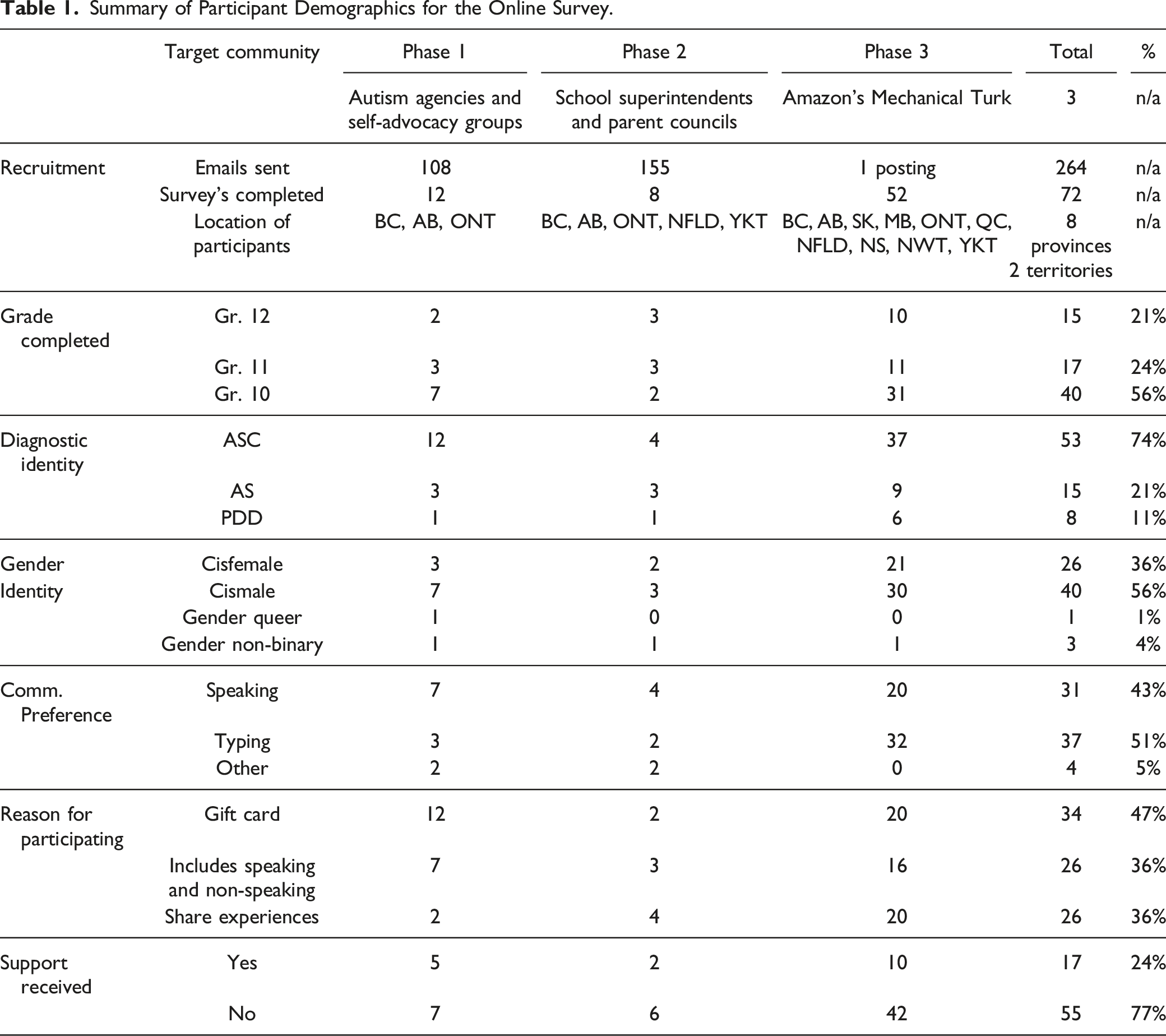
A convenience sampling method, specifically snowball sampling (Johnson, 2014), was used in the first and second phases of recruitment. An email invitation was sent to publicly available contacts at provincial and territory autism stakeholder groups. Approximately six weeks following, the same information was emailed to publicly listed school superintendents and parent councils. Three attachments were included in introductory emails, including the following: a parent information letter, a student information booklet, and a social media image of the research invitation. The third phase of recruitment occurred via a posting on Amazon’s Mechanical Turk (MTurk). MTurk has been used in research since 2005 (Buhrmester et al., 2011) and is described as an effective method to recruit hard-to-reach populations, including those with disabilities (Anderson et al., 2019; Smith et al., 2015). Research has also shown that MTurk participants are more attentive, thus perform better than comparison groups on completing online surveys (Hauser & Schwarz, 2016), which has positive implications on the benefits of using MTurk samples in social science research (Chandler et al., 2014).
Eligible participants were Canadian citizens between the ages of 15 and 21 who had completed a minimum of one year of high school in a general education setting. Participants self-reported having a diagnosis of Autism Spectrum Condition (ASC), Asperger’s Syndrome (AS) or Pervasive Developmental Disorder-Not Otherwise Specified (PDD-NOS).
Research Setting
Participants responded to the online survey and email interview questions from their own space (Sinclair, 2010). Providing an opportunity for participants to share their experiences from their own space is empowering because it allows autistic participants to “gain visibility and invisibility simultaneously claiming a voice without having to claim a body” (Parsloe, 2015, p. 340). Additionally, participant access to individually owned spaces supports self-determination on when and how long they engage in the research (Tavassoli et al., 2014).
Asynchronous Online Survey
Summary of Participant Demographics for the Online Survey.
Synchronous Email Interview
Summary of Participant Demographics for the Email Interview.

Materials
Quantitative Data Collection
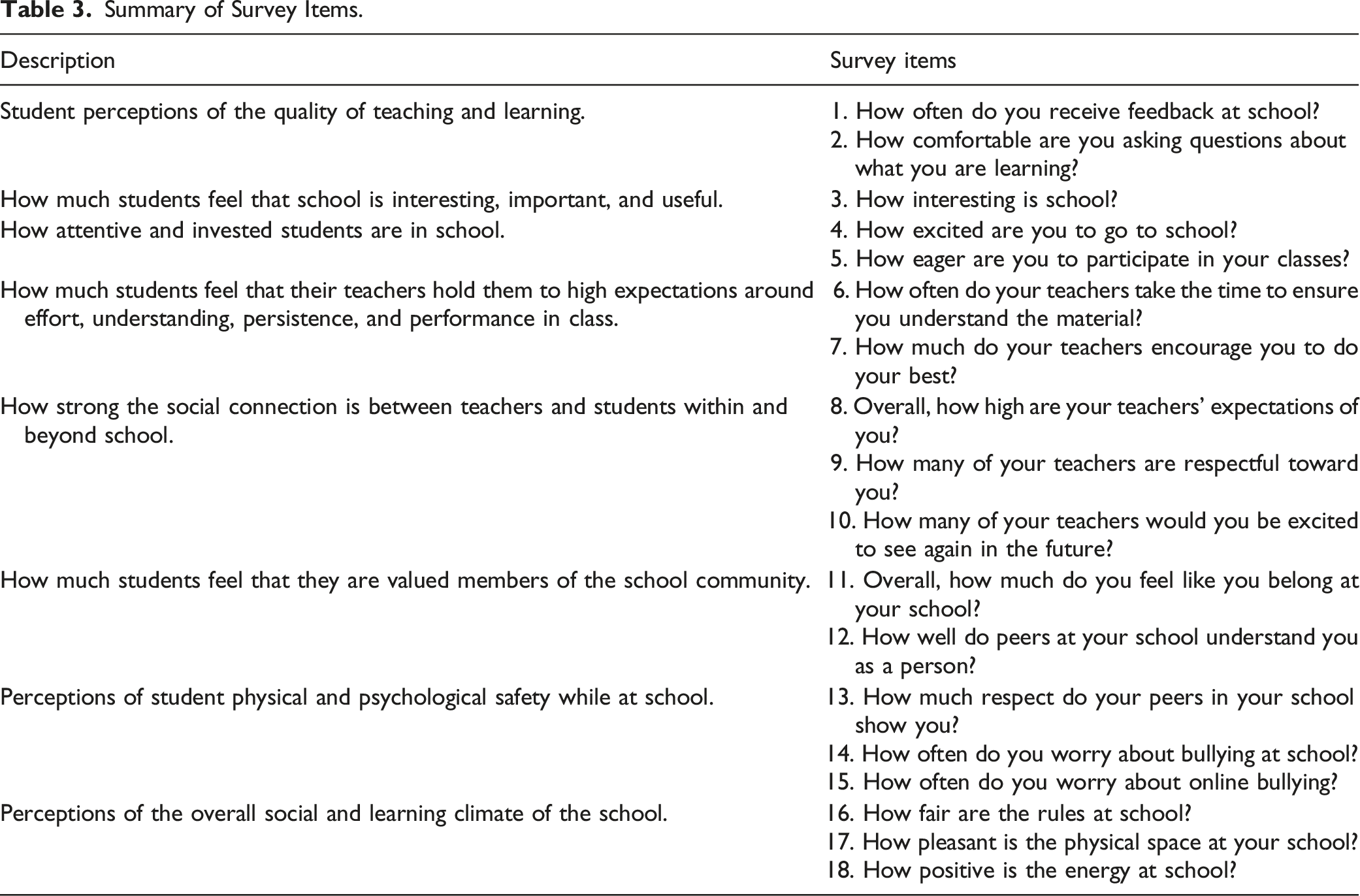
The Panorama Survey (Gehlbach, 2014) is a free and open-source survey developed by the Harvard Graduate School of Education (Geiger et al., 2019). The Panorama Survey (Gehlbach, 2014) consists of two main categories of scales, the first category relates to classroom and teaching, and the second category relates to the school in general. Each category consists of 10 scales that school organizations can select from, depending on their needs and context. The Panorama Survey (Gehlbach, 2014) was chosen for its robust design to gather student perception data on their educational experiences and its explicitly stated customizable features (Geiger et al., 2019). The Likert style questions apply to students from various socio-economic backgrounds in grades 6–12 who attend public, independent or charter schools. Each of the 10 survey scales has strong coefficient alpha, with each scale being 0.70 or greater and good structural validity established through confirmatory factor analysis (Panorama Education, 2015). Finally, in both pilot tests, different forms of the survey were presented to random samples of students to test phraseology and comparisons to other well-known scales. Test results indicated strong discriminant and convergent validity (Gehlbach, 2014; Panorama Education, 2015).
Summary of Survey Items.
Qualitative Data Collection
An open-ended question was included at the end of the survey to invite participants to share additional information on their school experiences. Additionally, participants were invited to participate in a 30-minute synchronous email interview. Participants (n = 10) consented to participation by voluntarily providing their email addresses within Qualtrics. Once participants provided their email addresses, they were contacted by the author via email to review the semi-structured email interview format and to set up a mutually convenient time to complete the interview. Based on the first interviewee’s response, the author learned that beginning the interview with an open-ended question may have been too ambiguous and perhaps inadvertently placed pressure on the participant to lead the interview. For example, in response to the following opening question: “
First, is there anything that stands out for you that you would like to share about your school experiences that were not captured by completing the survey? This email interview is flexible, so we can talk about whatever may be important to you or I can start with a couple of questions based on the survey”
The participant replied, “I am not really sure. I’ve had a lot of school experiences so nothing jumps out at me immediately. Do you have any topic suggestions or questions?” Thus, the semi-structured email format was adapted to enhance student engagement in response to participant feedback. This adjustment is an example of how researcher reflexivity was used to guide the succeeding structure and style of the semi-structured email interview. Bryman and Cassell (2006) describe this type of researcher response as cultivated reflexivity. Researchers make responsive decisions to make interviews more meaningful to participants, which requires researchers to be both observers and participants during the interview process (Scott-Barrett et al., 2018). Henceforth, each subsequent interview began with a question or prompt based on a survey item and an openness toward student-led topics. Also, when required, interview questions were altered to support students’ comprehension of the question. For instance, when asked a question about peers, a participant replied, “Could u ask me the same question again but with using different words. I can’t really get the question.” To ensure ongoing assent, participants were informed of the time left in the interview and were asked if they wanted to continue the interview.
Participants’ survey responses were not reviewed before conducting the interview. However, participants’ communication preferences identified in the survey’s demographic portion were reviewed before conducting the semi-structured interview. The reason for reviewing a participant’s preferred mode of communication before the email interview was to ensure that researcher questions and the ensuing discussion were not structurally presumptive toward speaking communication and to provide an opportunity for participants to expand on their communicative preference should they wish. Based on survey items, four main questions or prompts guided the semi-structured email interview. The formulation of questions and prompts were based on significant themes identified by autistic students from previous research and were flexibly used to encourage dialogue between myself and the participant. The four main questions and prompts used are: 1. What school spaces are the most calming for you? 2. Describe a time when you felt respected by a peer. 3. In your opinion, what are the characteristics of a great teacher? 4. Can you tell me more about your preference for non-speaking communication?
Since the interview was conducted via email, which included markers of dates and times, no additional transcription was required. While the average time to complete the interview was 35 minutes, the most extended interview took two hours, where the participant apologized for being a “slow typer.” Participants received a $25 Amazon e-gift card immediately following the interview.
Procedures for Data Analysis
The mixed-method convergent parallel design of the study meant that while quantitative and qualitative data were collected concurrently in a single phase, data sets from the survey responses and semi-structured interviews were analyzed separately and then integrated for final analysis. Quantitative data were analyzed using descriptive statistics, and qualitative data were analyzed using thematic analysis. Quantitative and qualitative data sets were given equal priority and merged using a joint display technique called the Pillar Integration Process [PIP] (Johnson et al., 2019). The current author and supervisory committee conducted all data analysis to complete the author’s doctoral degree program at the University of Calgary, Alberta, Canada.
Quantitative Data Analysis
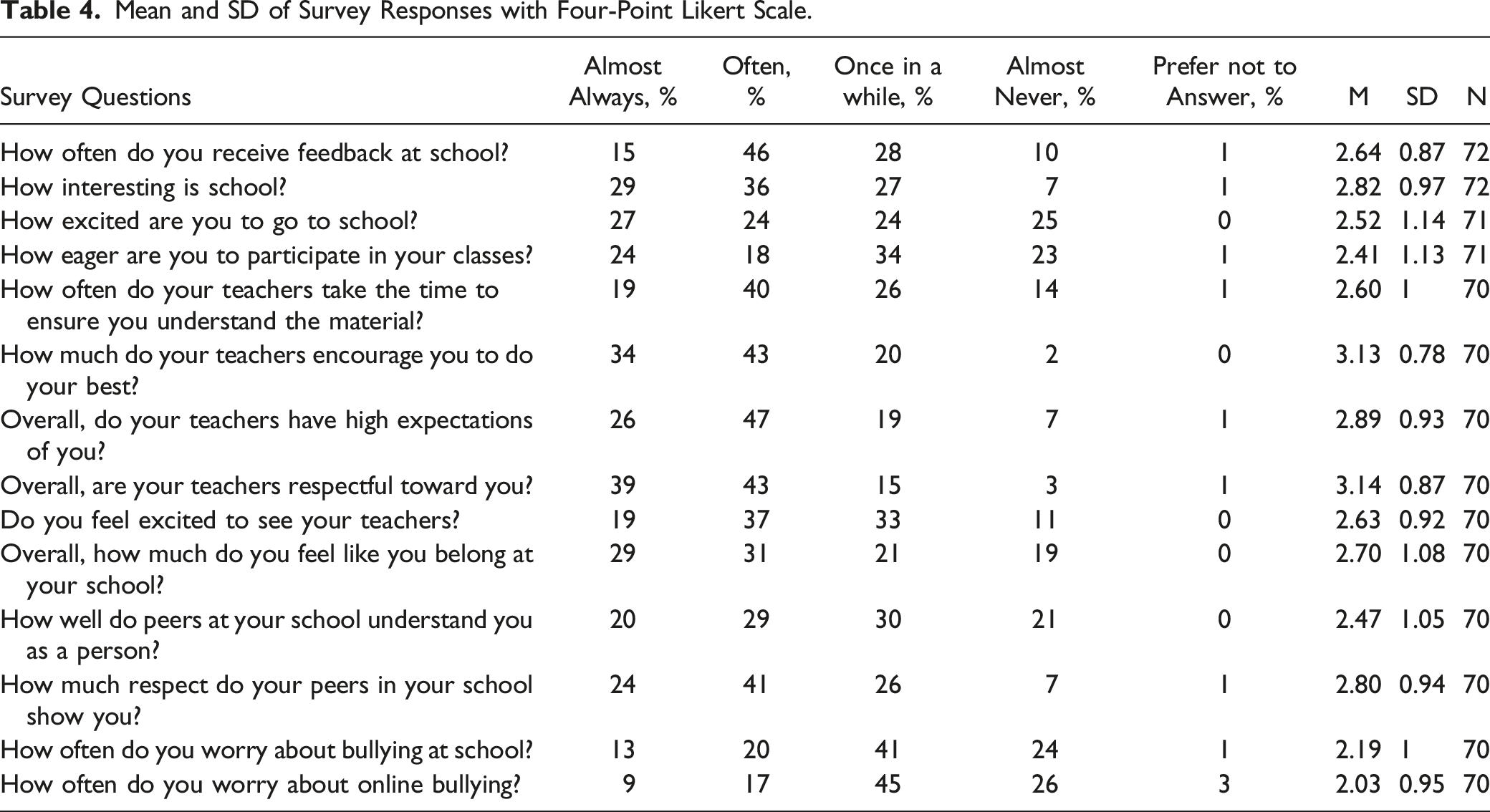
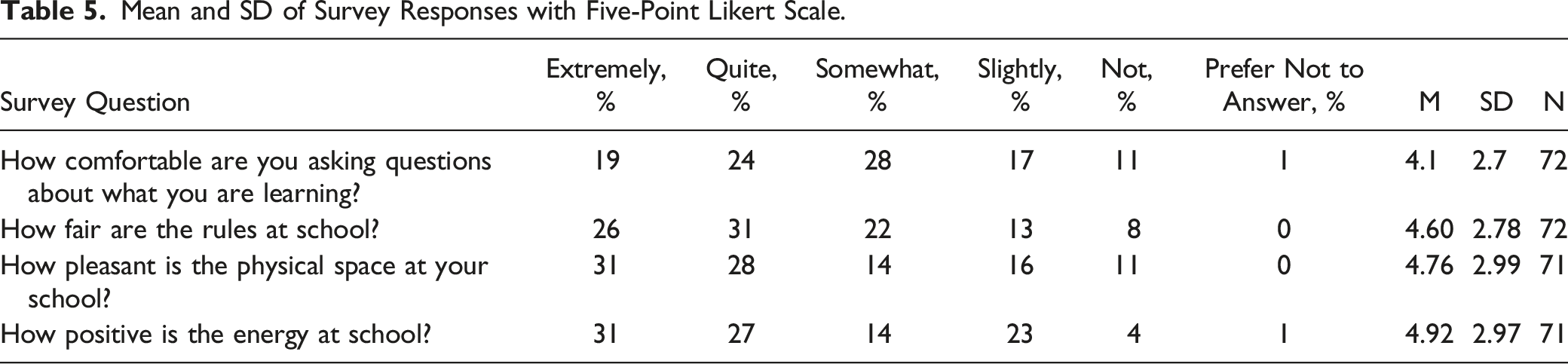
Descriptive statistics is the statistical description of the properties of a data set. Typical reports include the mean, median, mode, variance, and standard deviation (Creswell, 2014). Two analytical components of descriptive statistics, specifically mean and standard deviation of students’ survey responses, were used for quantitative data analysis because this study did not seek to test a hypothesis or compare within-subject experiences.
Qualitative Data Analysis
Open-ended survey data and email interview data were analyzed using inductive thematic analysis, which offers a set of techniques to analyze texts and explain main or frequent ideas or themes within a data collection. Inductive thematic analysis was beneficial because it avoided a priori theory and generated themes from the “bottom-up” as opposed to the “top-down” (Braun & Clarke, 2006, p. 12). This meant that qualitative themes remained strongly connected to students’ self-reports and were less influenced by researcher assumptions and interest in the phenomenon (Braun & Clarke, 2006). Additionally, interpretations of autistic students’ school experiences were not compared to “typical” students’ experiences, a problematic research practice because it perpetuates us-them type thinking (Krumer-Nevo & Sidi, 2012) and contributes to educator views that equate difference with a deficit.
Qualitative data were analyzed together by following six stages: (1) Familiarizing myself with data, (2) Generating initial codes, (3) Searching for themes, (4) Reviewing themes, (5) Naming themes, and (6) Writing themes (Braun & Clarke, 2006). The author read open-ended survey responses and email transcripts several times to become familiar with the qualitative data. In a separate word document, open-ended survey responses were combined with the email transcripts and two columns were added to the right of the transcripts. In the first column, initial codes from the line-by-line analysis were recorded, and in the second column, names of sub-themes were identified based upon line-by-line analysis.
Using the Pillar Integration Process (PIP) for Data Integration
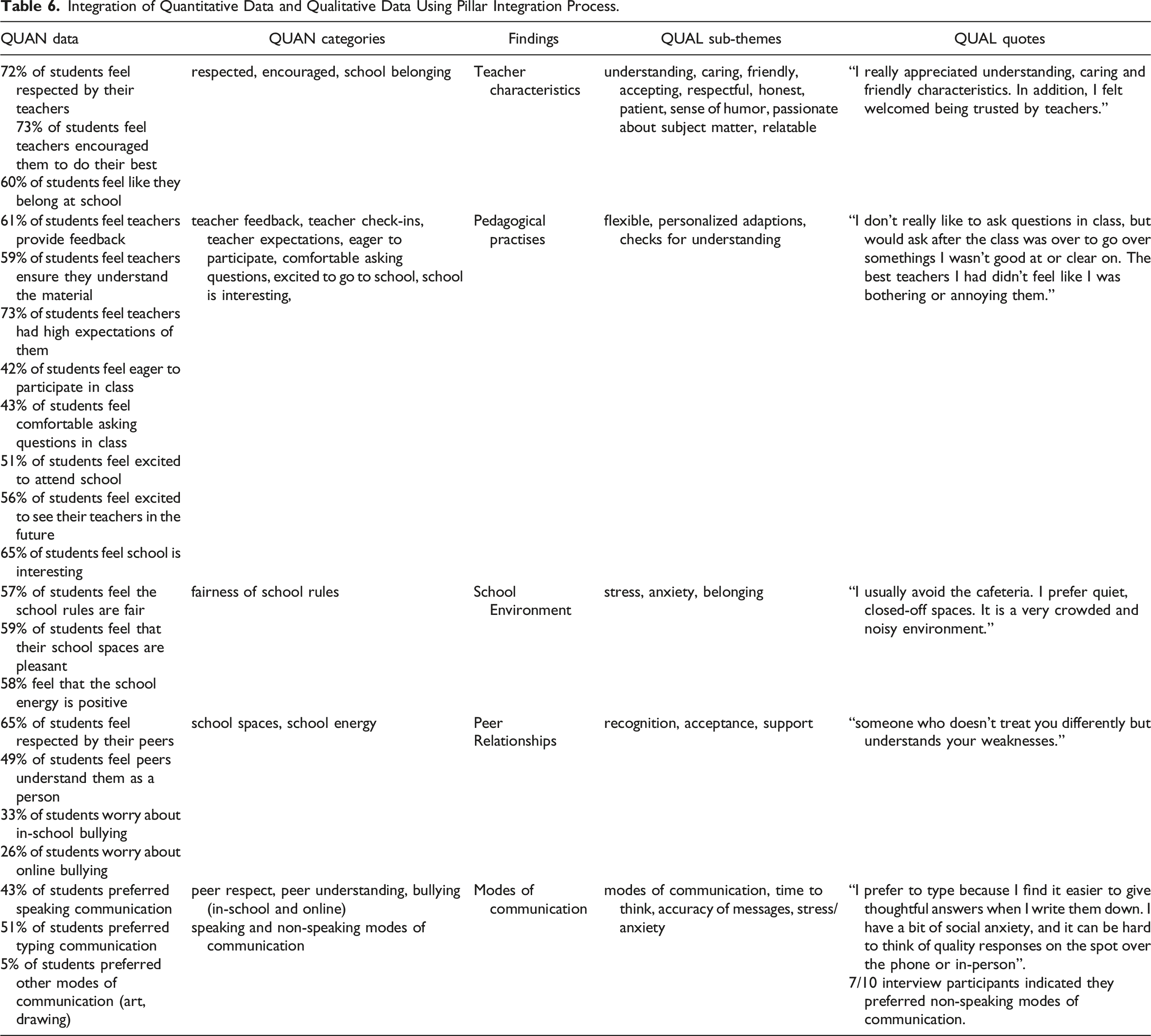
The Pillar Integration Process (PIP) is a four-stage analytical technique used to integrate mixed-method data (Johnson et al., 2019). The four stages of PIP are listing, matching, checking and pillar building, which is completed after initial quantitative and qualitative analysis. Each stage used to integrate QUAN and QUAL data using PIP is described below: 1. Listing: Raw data (e.g., percentages and selected quotes) were listed in the QUAN Data and QUAL Quotes columns. Next, QUAN categories and QUAL sub-themes identified from the initial analysis were entered in the corresponding columns. 2. Matching: Once relevant data were listed in the QUAN and QUAL columns, entries between QUAN and QUAL columns were matched horizontally to align similar data, which helped refine and organize categories between the two data sets. 3. Checking: Matched data was checked for quality and accuracy, and any identified gaps were verified to improve the quality of data integration. This stage was of particular importance because it served as an additional checkpoint to pause and reflect on QUAN and QUAL data separately and in relation to each other to identify emerging patterns. 4. Pillar Building: Findings identified from the listing, matching, and checking stages were compared to build the pillar of integrated findings from QUAN and QUAL data collection. Each of the integrated themes listed in the pillar is constructed from each row of matched findings in the QUAN and QUAL columns. The findings in the pillar represent the weaved-together viewpoints of students and are used to build a narrative of students’ school experiences.
Using PIP is beneficial because it synthesizes different data sources using a multi-stage technique. Consequently, allowing researchers to convey each step of the data integration process thus promotes transparency and replicability. Additionally, the PIP enables researchers to identify instances of divergence, which are also beneficial in generating new insights on the phenomenon being investigated (Johnson et al., 2019).
Findings
Quantitative Findings
Student responses to 18 survey items are summarized in three categories. These categories are the scales each survey item belongs to in the Panorama Survey (Gehlbach, 2014). The three categories and summary of results for each category are as follows: 1. Pedagogical Effectiveness, Rigorous Expectations and Student-Teacher Relationships: Most students reported feeling respected (82%) and encouraged (77%) by their teachers. While nearly three-quarters (73%) of students felt teachers held high expectations of students, more than half of students (61%) felt teachers did not provide adequate feedback or take the time to ensure students understood the material (59%). 2. Valuing School and School Engagement: While slightly over two-thirds (65%) of students found school interesting, less than half (42%) of students felt eager to participate in class or ask questions (43%). 3. School Belonging, School Safety and School Climate: Nearly two-thirds (60%) of autistic students felt a sense of belonging, and over half (57%) of students felt the school rules were fair. However, half (49%) of autistic students felt respected by peers, and less than a quarter (21%) of students felt that their peers understood them as a person. One-third (33%) of students worried about in-school bullying, and a quarter of students (26%) worried about online bullying. Slightly more than half of the students (58%) were pleased with their school environment.
Mean and SD of Survey Responses with Four-Point Likert Scale.
Mean and SD of Survey Responses with Five-Point Likert Scale.
Qualitative Findings
Upon completing inductive thematic analysis for the 19 open-ended survey responses and ten semi-structured interviews, 23 sub-themes were identified as relevant to autistic high school students’ school experiences. The presentation of themes and sub-themes are grouped based on their relatedness. The four main themes and 23 sub-themes are as follows: 1. Experiences with Teachers: At the core of students’ positive school experiences were the ordinary interactions they had with teachers. Students identified 13 teacher characteristics that they valued most, which consequently led to students feeling more welcomed and accepted in school. The most important teacher qualities students appreciated is understanding, caring, friendly, accepting, respectful, honest, patient, sense of humor, relatable, flexible, passionate about the subject matter, check-in, and personalizes learning. For example, Alex shared, “The ones that stand out to me are the ones who would loudly praise or compliment me for doing well on some assignment, were patient with me when I would ask them to explain some concept I had trouble understanding and would greet me with a smile if I happened to pass by them in the hallway.” Interestingly, of the 23 themes identified in qualitative analysis, over half (57%) relate to student’s experiences with teachers. 2. School Spaces: Three sub-themes emerged from students’ narratives on their experiences related to school spaces and sensory input. Consistently students made connections between school spaces and feelings of stress, anxiety, and overall sense of school belonging. For example, Charlie shared, “I avoid as much as I can open spaces or busy spaces because there is so much going on that I can’t focus on anything. I get anxious that someone will come up and talk to me or ask me for something, and I won’t notice them. I enjoy/spend time in bathroom stalls. They aren’t too great-typically fluorescent lights and bad smells/sights but the good part is you can lock yourself in and no one will bother you if you need a break. I used to lock myself in and break down when I was having a hard time and then pull myself together and go back to being Totally Fine. It helps avoid a lot of the stigma associated with crying or having sensory overload at school because if no one knows, you don’t need to explain yourself.” 3. Experiences with Peers: Three themes emerged from participant accounts of their experiences with peers. Participants shared that peer recognition, peer acceptance, and peer support impacted their identity and sense of value. For instance, Sam shared, “A student I wasn’t very familiar with approached me and said, “Wow, I had no idea you were so smart. I appreciated them saying that to me,” and Jules shared, “There was one time in my school’s anxiety group where people were really nice to me cause I said I was on the spectrum, and I made lots of friends that day.” 4. Communication Experiences: Four sub-themes emerged from students’ self-reports on their communication experiences and preferences in school. Students shared that having access to both speaking and non-speaking methods provided additional time to process information, which improved the accuracy of their messages, and minimized feelings of stress and anxiety in social situations. Interestingly, more than half of students shared that they preferred to use non-speaking modes to communicate with their teachers, such as typing and drawing. For example, Alex shared, “I put typing as my preferred method of communication because I often have trouble coming up with words on the spot when I am talking in person. Like I am always stumbling over my words or stuttering. When I type, I can edit and review what I have to say until it is something that I feel is satisfactory.”
Data Integration Using the Pillar Integration Process
Integration of Quantitative Data and Qualitative Data Using Pillar Integration Process.
Discussion of Findings
Using synchronous and asynchronous methods, autistic secondary students residing in Canada were asked to share their views on inclusive education. Autistic students identified the following five main areas as positively or negatively impacting their school experiences: teacher characteristics, pedagogical practices, school environment, peer relationships, and classroom communication tools.
Teacher Characteristics, Student Wellbeing and Achievement
Research shows that teacher relationships with autistic students are marked by higher conflict and less closeness than teacher relationships with non-autistic students (Blacher et al., 2014). Strong student-teacher relationships (STRs) are a protective and predictive factor impacting autistic students’ sense of wellbeing and learning achievement (Caplan et al., 2016; Noble & McGrath, 2014). Aligning with student’s views presented in this study, general education teachers also report that simple actions like greeting students at the door, taking an interest in autistic students’ special interests, and consistently providing compliments and feedback deepens their relationships with autistic students, resulting in less conflict, increased engagement in learning, and greater peer acceptance (Bolourian et al., 2021). Teacher characteristics, including being patient, empathetic, collaborative, adaptive, and active listeners, are considered a universal approach that benefits all students. The recognition of these STR-building strategies by both teachers and autistic students indicates that they are a critical component of inclusive classrooms. While seemingly obvious, these naturalistic teaching approaches do not require specialized funding or training to implement.
Autistic Students and Inclusive Pedagogies
Plenty of research underscores the positive outcomes of using personalized, strength-based approaches for all learners (Hattie & Clarke, 2019). Universal Design for Learning (UDL) is one such approach where educators are challenged to reframe traditional deficit-based thinking and teaching approaches and instead make learning more accessible to students by removing barriers (Meyer et al., 2014). The most reported barrier to learning expressed by autistic students in this study is that they did not feel comfortable participating in class or asking questions. Students shared that they appreciated when teachers understood the value of adapting classroom pedagogies to support their individual preferences and abilities to successfully participate in learning, including offering to talk one-to-one with students or corresponding via email after class. Previous research on the self-reported school experiences of autistic students confirms that when teachers provide flexible opportunities for autistic students to engage in learning, students feel less anxious and stressed at school and experience more academic success (DePape & Lindsay, 2016). However, the visibility of these accommodations and supports are equally important (Humphrey & Lewis, 2008; Saggers et al., 2011). While autistic students value personalized curricular adaptations and flexible pedagogical practices, they do not want accommodations and supports to negatively accentuate their differences, which is an important distinction for teachers to consider when evaluating the effectiveness of accommodations and supports. For example, does the strategy increase student access to learning or put an unnecessary spotlight on the student and their need for support?
School Spaces, Safety and Belonging
Students shared that school spaces significantly impact their engagement in learning, interactions with peers and teachers, feelings of wellbeing, and overall sense of school belonging. Most students stated that they tended to avoid noisy, crowded, and chaotic school spaces and consistently sought out school spaces that created feelings of safety, predictability, control, and ultimately personal success. For example, student accounts of feeling “distracted,” “trapped,” and “socially awkward” because of having to follow predetermined seating arrangements emphasize the importance of incorporating student voice to create alternative learning spaces that support student comfort and safety. Loud and busy school environments are known to overwhelm autistic students, often causing them to take alternate routes or avoid specific spaces altogether to minimize feelings of stress and anxiety (Humphrey & Lewis, 2008; Kopec, 2012; Saggers, 2015). The long-term adverse effects from repeated exposure to stressful and chaotic environments are highlighted in research from the UK that found approximately four in 10 autistic students were “being prescribed medication for anxiety as a result of not being able to cope with the school environment” (Marshall & Goodall, 2015, p. 3162). Research on design standards of classroom spaces is minimal compared to research on evidence-based practices to support autistic students in general education classrooms (Martin, 2016). More commonly, classroom organization is dependent on teacher preferences and the availability of school resources, which may inadvertently create restrictive and stressful learning environments for autistic students (Khare & Mullick, 2009).
Peer Relationships
Less than one-quarter of participants felt understood and respected by their peers. Consequently, these mistakes in recognition can lead to feelings of exclusion, self-doubt, loneliness, and depression (Rosa & Mountain, 2013). Research shows that autistic students experience higher levels of social anxiety and rejection when they attempt to conceal their autism from peers to be viewed as ‘normal’ (Humphrey & Lewis, 2008; Saggers, 2015). Efforts made by autistic students to camouflage their autistic traits result from prolonged exposure to external messages from non-autistic people and ableist practices telling them that it is not normal to be autistic. Similar to non-autistic peers, autistic students value peer recognition, acceptance, and support through friendships and shared activities (Daniel & Billingsley, 2010; Deckers et al., 2017; Petrina et al., 2014). Assigning autistic students school responsibilities to showcase interests and abilities is one of the most salient strategies teachers can use to promote bidirectional prosocial behaviors between autistic and non-autistic students (Bolourian et al., 2021). Positive peer relationships increase autistic students’ sense of in-school safety and belonging (Humphrey & Lewis, 2008; Poon et al., 2014; Saggers, 2015) and are the most effective way to reduce the frequency of bullying (Humphrey & Symes, 2010). While this research found lower reports of bullying than found in other studies, the discrepancy may be attributed to unexamined context factors such as the size of the school and student population, involvement with positive peer groups, teacher training, and jurisdictional commitments on the prevention of bullying. Furthermore, similar to general research on the lived experiences of autistic people, autistic self-reports on their experiences related to in-school and cyberbullying are minimal, thus restricting knowledge researchers and educators have to make solid comparisons.
Re-Thinking Communication
A novel finding in this study is that over half (56%) of the surveyed students shared that they preferred to communicate by typing or another mode of communication, and seven out of 10 students who completed the email interview stated that they preferred to type to communicate. Students shared that they preferred to type to communicate because it helped minimize their stress and anxiety when communicating with teachers in front of classmates and peers in social situations. This explanation is not surprising when anxiety is the most common co-occurring condition in autistic youth, with the highest prevalence (4 in 10) being social phobia (Vasa & Mazurek, 2015). Having “unreliable speech” (Sparrow, 2020; para 3) is also known to cause stress and anxiety when speaking communication is expected. Unreliable speech is when what is said does not match the intended message. Sparrow (2020) states he prefers typing communication over speaking communication when feeling stressed from sensory stimulation and unfamiliar situations. Informed by the self-reports of autistic students both within and beyond this study, school jurisdictions must consider the “‘humanness’ of conventionally accepted communication modes (Douglas et al., 2019, p. 10) used in their schools and the subsequent impact on autistic students’ learning and sense of school belonging. Teachers who provide additional space and time for students who type or draw to communicate improve authentic participation and help create a culture of respect in classrooms (Woodfield & Ashby, 2016).
Implications
Based on the perspectives of autistic students, which historically have been overlooked and undervalued, this study’s findings contribute to discourse and decision-making on inclusive best practices. The implications of these findings are that they offer jurisdictional leaders and teachers insider information to re-shape policies and pedagogical approaches to improve the inclusive landscape of school communities. Findings in this study strongly align with research on the essential characteristics of inclusive schools, as presented by Kluth (2003). For example, students reiterated the critical role welcoming classrooms, reflective educators, supportive school cultures, and responsive instruction has on their overall sense of school belonging and wellbeing. The following five recommendations offer practical suggestions for educators and policymakers to more ethically and successfully include autistic students: 1. Develop strong relationships with students by welcoming and accepting them as they are. School policies and practices that aim to remediate perceived deficiencies are rooted in ableist belief systems that have long-term adverse effects on autistic students’ identity formation, sense of wellbeing, and academic achievement. 2. Ensure multiple opportunities exist for autistic students to share their views and knowledge using speaking and non-speaking communication methods. Multiple representations of students’ voices should be included in the co-identification of supports and strategies to help students access the curriculum and participate in authentic assessment. 3. Provide flexible opportunities for autistic students to be members of school communities by including them in leadership positions to showcase their interests and abilities and to facilitate the development of positive peer networks. 4. To promote psychological and physical feelings of safety and wellbeing, provide autistic students frequent, non-contingent access to low arousal spaces and equipment. Ensure autistic students are included in decisions on locations of learning, including online and in-person learning and in-class seating arrangements. 5. Remove barriers to learning and self-advocacy, including policies that require autistic students to provide medical letters, psycho-educational assessments, speech-language assessments, and occupational therapy assessments to receive curricular adaptations, modifications, and access to assistive technologies.
Limitations
Participants’ financial compensation was variable; for example, only participants recruited through Amazon’s MTurk received payment for completing the online survey. Participants recruited through Amazon’s MTurk were required to be a minimum of 18 years of age to be registered users; thus, most participants of this study (n = 52 or 72%) were between 18 and 21 years of age. The study’s online format may have contributed to sampling bias, where respondents who preferred non-speaking modes of communication were more interested in participating. While most interview participants preferred non-speaking methods of communication, an option to participate in an interview via phone call or video call may have been beneficial. Additionally, participants who may not have had access to technology would have been excluded, potentially limiting the diverse representation of autistic perspectives. Participants who indicated that they received support were not asked to specify the type of support received, which would have been beneficial to strengthen the inclusive design of future studies. Lastly, the sample size was non-randomized, and there was an English-only version of the study.
Conclusion
Informed by the perspectives of Canadian autistic high school students, this study offers important insider information for educators and policymakers to consider as they pursue ways to improve their schools’ inclusive landscape structurally, professionally, and pedagogically. Although minimal in scope, previous research on the self-reported school experiences of high school autistic students supports many of this study’s findings, including the positive impact of building strong student-teacher relationships, using flexible pedagogical practices, offering choice in learning spaces, and positive peer networks have on autistic students’ feelings of acceptance and belonging in school. A unique finding of this study is that more than half of students preferred to use non-speaking modes of communication with their teachers because it helped reduce students’ feelings of stress and anxiety. While each of this study’s five findings highlight priority areas for educators to reflect and act on, viewing them from an intersectional lens will have the most meaningful impact on the wellbeing of autistic students and their everyday experiences at school.
Footnotes
Declaration of Conflicting Interests
The author(s) declared no potential conflicts of interest with respect to the research, authorship, and/or publication of this article.
Funding
The author(s) received no financial support for the research, authorship, and/or publication of this article.
