



Abstract
Teachers’ professional satisfaction promotes students’ educational success. Studies have shown that teaching in a context of high cultural diversity may affect teachers’ level of satisfaction (e.g., satisfaction with students, perceived warmth in the teacher–student relationship, sense of efficacy). This longitudinal study conducted among 69 Canadian elementary school teachers found that those who reported more openness to their students’ cultural diversity presented a more positive perception of students and reported greater warmth in their relationships with students but experienced a lower sense of professional efficacy. This study highlights the importance of teachers’ openness to cultural diversity, an understudied variable.
Introduction
In many countries, the dropout rate from the teaching profession is extremely high, especially in urban environments (Gaikhorst et al., 2017; Morettini, 2016; Sutcher et al., 2016). Of all the variables associated with this phenomenon, teachers’ professional satisfaction—that is, their work enjoyment—most directly influences the quality of their teaching, their psychological well-being, and ultimately their persistence in the teaching profession (Bennett, 2004). The contribution of professional satisfaction to teachers’ daily lives is direct and significant. Low satisfaction can create stress and psychological distress while negatively affecting self-esteem (Demirtas, 2010). When teachers experience low levels of professional satisfaction, they may be more prone to burnout and to perceiving their students negatively, which in turn can undermine students’ performance and motivation (Arens & Morin, 2016; Caprara et al., 2006).
Among students’ characteristics that can influence teachers’ professional satisfaction is their cultural diversity. Indeed, many teachers report feeling ill-equipped to teach in a multicultural context and may, in such settings, feel less effective professionally (Larochelle-Audet et al., 2013). Studies have also shown that teachers find it easier to bond with students from cultural backgrounds similar to their own and that they tend to perceive these students more favorably (Gay & Howard, 2000; Kumar & Hamer, 2012; Santoro, 2009).
In Western countries, while cultural diversity in schools is increasing, teachers typically are part of the majority culture (Organisation for Economic Co-operation and Development [OECD], 2018). Thus, teachers very often find themselves teaching students from a culture that differs from their own. In such a context, teachers with certain characteristics, such as openness to cultural diversity, may be more comfortable teaching in a multicultural context and would experience greater professional satisfaction (Bryan & Atwater, 2002; Hachfeld et al., 2015; Pohan & Aguilar, 2001). Openness is defined by attitudes and practices adopted by teachers to deal with cultural diversity in their classroom (Deardorff, 2006). It is a core component of teacher training programs, but its contribution to teachers’ professional satisfaction has not yet been studied (Alismail, 2016; Barrett, 1993; Kaur, 2012). Consequently, our aim in this longitudinal study was to examine the association between openness to cultural diversity and elementary school teachers’ professional satisfaction. To achieve this, a new instrument measuring openness to cultural diversity was created and partially validated. Ultimately, the goal of this study was to identify effective ways to improve teachers’ training and contribute to their professional satisfaction in order to foster professional retention.
Brief Literature Review
Teachers’ Professional Satisfaction
Teachers’ professional satisfaction is generally defined by their levels of pleasure and confidence at work (Bennett, 2004). Concretely, teachers with high professional satisfaction are more likely to experience a positive emotional state regarding their work. Three significant parameters can be considered for a multidimensional and rich definition of teachers’ professional satisfaction (Perrachione et al., 2008; Shann, 2010; Spilt et al., 2011). First, warmth in teacher–student relationships is defined by positive interactions (Demirtas, 2010; Kamanzi, Lessard et al., 2019; Kamanzi, Tardif et al., 2015; Klassen et al., 2012; Pianta, 1999). Teachers who have warm relationships with their students feel close to them and find it easy to understand how they feel. Second, satisfaction with students’ behavior and learning achievements is a critical component of teacher’s professional satisfaction (Locke, 1976). Professionally satisfied teachers have a more positive perception of their students’ motivation and academic commitment (Martin, 2006). A third parameter is teachers’ sense of professional efficacy, defined as their belief that they are competent and successful in their professional tasks (Chapman & Lowther, 1982). Teachers with a high sense of efficacy feel empowered to help all students improve, believe they are making a difference in their students’ lives, and feel they can handle most problems (Midgley et al., 2000). Teachers who perceive they are doing a great job have more pleasure and positive feelings about their profession (Brouwers & Tomic, 2000; Dellinger et al., 2008; Evans, 2000; Liu & Ramsey, 2008; Moè et al., 2010). Teachers experiencing high professional satisfaction are more satisfied with their students’ behavior and learning achievements, develop closer and warmer relationships with them, and feel more efficacious at work.
Certain teacher characteristics influence their level of professional satisfaction. For example, women generally experience more satisfaction in teaching and report less work stress than men, but feel less efficient and less satisfied with their students’ behaviors (Chaplain, 1995; Chapman & Lowther, 1982; Klassen & Chiu, 2010). Years of teaching experience also contribute to their satisfaction, with some studies suggesting that mid-career teachers are the most satisfied of all, more than those starting in the profession or nearing retirement (Demirtas, 2010; Fraser et al., 1998).
As well, student characteristics can play a role in teachers’ professional satisfaction. It is well documented that student behaviors and outcomes influence teachers’ stress levels, which in turn affect their professional satisfaction. Certain disruptive student behaviors or difficulties cause the teaching process to be interrupted, such that it may be more difficult for teachers to establish a warm relationship with disruptive students. These behaviors occur frequently, and teachers find them challenging (Sullivan et al., 2014). In fact, student misbehavior is one of the factors most strongly related to teacher work dissatisfaction; it negatively affects the teacher–student relationship and reduces teachers’ sense of professional efficacy (Aloe et al., 2014; Martin et al., 2012). Elementary school teachers also perceive students with ADHD symptoms as more stressful to teach and more reluctant to bond (Greene et al., 2002; Rogers et al., 2015). Students’ disengagement is also negatively associated with teachers’ professional satisfaction (Collie et al., 2012; Martin, 2006). Teachers whose classrooms have a higher prevalence of these student behaviors may experience lower job satisfaction (DuPaul et al., 2014; Ferguson et al., 2012). Of the many student characteristics playing a role in teacher satisfaction, students’ cultural diversity is among the least studied.
The Challenges of Teaching in the Context of Cultural Diversity
In most Western countries, schools are seeing a steady increase in the number of immigrant students, such that teachers, who are mainly from the majority culture, find themselves teaching in a context of cultural diversity. Culture can be defined by values and beliefs that guide people in assigning meaning to the world and to their lives, and is determined partly by the physical and social contexts in which an individual develops (Hofstede, 1980; Lane et al., 2009). Cultural diversity is defined as the existence of a variety of cultural or ethnic groups that differ from the dominant culture, namely the culture of the majority. These differences can be manifested as visible characteristics, as well as less visible elements such as attitudes and beliefs. As measuring culture and cultural differences objectively is a complex undertaking, in this study we used the birth countries of teachers, students, and students’ parents as a proxy for cultural diversity, since the context in which people grow and develop determines their culture (Ottaviano & Peri, 2006; Weinstein et al., 2004). The challenges of teaching in a context of cultural diversity are such that some authors speak of diversity-related burnout, resulting from the stress and adaptation efforts that teachers must deploy to respond to students’ needs (Swartz, 2003; Tatar & Horenczyk, 2003). Other studies have shown that when teachers from the majority culture teach a class with a high multicultural density, they may experience a form of culture shock (Mueller et al., 1999; Stearns et al., 2014). We also know that teacher turnover is higher in schools with more student cultural diversity, a worrying reality for many inner-city schools, which already experience teacher shortages and high rates of abandonment during the first five years of a teaching career (Burns & Shadoian-Gersing, 2010; Fairchild et al., 2012; Gay & Howard, 2000; Kumar & Hamer, 2012; Mukamurera & Balleux, 2013; Santoro, 2009). Among school personnel, elementary school teachers are those who have closer relationships with students, since they spend a lot of time with them. Therefore, they are the ones most affected by students’ cultural diversity, as their respective values are more likely to collide, given the deeper teacher–student relationships created in such a context (Fortuin et al., 2014).
Studies have shown that it may be more difficult for students from immigrant backgrounds to connect with a teacher from the majority culture, which is worrisome because these students in particular need support from their teacher to overcome challenges they may face (Dee, 2005; Garcia-Reid et al., 2005; Roffman et al., 2003; Steele, 1997; Suárez-Orozco et al., 2009). For instance, the cultural gap between a student and a teacher can impact the teacher’s attitude toward that student. Some American studies have shown that teachers tend to give more positive ratings to students with whom they share an ethnic background and to have lower academic expectations of visible minority students (Sleeter, 2008; Williams & Naremore, 1974). Moreover, teachers in culturally homogeneous classes tend to report a higher sense of efficacy (Dejaeghere & Zhang, 2008; Gutentag et al., 2018; Guyton & Wesche, 2005; Siwatu, 2007). Regarding the level of warmth in the teacher–student relationship, it has been documented that conflicts are more frequent when the student and the teacher come from different cultures (Gay, 2018; Sheets, 1996; Weinstein et al., 2004). Conversely, teachers establish relationships more naturally with students with whom they share a similar cultural background, due largely to the fact that expectations and behaviors are influenced by culture (Coleman, 1968; Gay & Howard, 2000; Kumar & Hamer, 2012; Santoro, 2009; Weinstein et al., 2004). For example, in some cultures, a child who maintains eye contact with an adult is committing an affront, while in others, lack of eye contact is seen as a sign of dishonesty.
Moreover, there are gaps in cultural diversity-related teacher training, such that most teachers report being ill-prepared to teach in such a context (Larochelle-Audet et al., 2013). Most teachers are, in fact, from the majority culture and were generally educated in monocultural institutions (Easter et al., 1999). They must therefore demonstrate high adaptability in order to teach all their students effectively (Banks & Banks, 2019; Fairchild et al., 2012; Gay, 2018; Moule, 2012; Rosen & Abt-Perkins, 2000; Swartz, 2003).
Cultural diversity within schools is not a problem in itself. It can undoubtedly be a challenge, but the way school actors respond to this diversity can positively or negatively affect students’ self-esteem and educational success, as well as determine whether teachers flourish professionally (Archambault et al., 2018; Brown, 2007; Prater & Devereaux, 2012). The sometimes-negative impacts of the cultural gap between students and teachers are therefore not systematic, and certain characteristics, such as openness to cultural diversity, can enhance teachers’ ability to teach in a multicultural context (Milner et al., 2003). Such openness promotes greater motivation at work and potentially higher satisfaction (Hachfeld et al., 2015).
Openness to Students’ Cultural Diversity: Teachers’ Practices, Attitudes, and Professional Satisfaction
Several attitudes toward cultural diversity are expressed in the literature. According to the liberal multiculturalist perspective, teachers should be open to diversity; that is to say, they should accept, celebrate, and promote their students’ cultural differences to foster a positive school climate and equality of opportunity among students, regardless of cultural background (Grant & Sleeter, 2008). Cultural diversity is, in this view, seen as an advantage within the school and valued through school actors’ attitudes and practices. However, according to Deardorff (2006), in the classroom, it is above all the teacher’s attitudes and practices that are central to intercultural competence. That author sees intercultural competence as a pyramid, at the base of which are attitudes (e.g., respect, openness, and curiosity) as prerequisites for practices. In line with the liberal multiculturalist perspective and Deardorff’s theory, openness to cultural diversity is therefore defined by attitudes and practices, two intrinsically linked elements reflecting a positive evaluation of cultural diversity in the classroom (Ritchhart, 2001; Wilkerson & Lang, 2007). According to Gay (2002), five practices characterize culturally responsive teachers: 1) acquiring knowledge about cultural diversity; 2) including cultural diversity content in the curriculum; 3) taking cultural diversity into account in delivering instruction; 4) fostering learning communities; and 5) communicating with ethnically diverse students. This is manifested concretely by: the interest that teachers take in their students’ origins; their use of teaching materials, books, and activities reflecting students’ cultural realities; their enjoyment of working in a multicultural context; and an active pursuit of exposure to cultural diversity in their personal life (Grant & Sleeter, 2008; Harding et al., 2017; Pohan & Aguilar, 2001; Stanley, 1996). Culturally responsive teachers also use the characteristics and perspectives of ethnically diverse students to situate the teaching within their frames of reference, in order to provide meaningful instruction (Gay, 2002). This openness plays a central role in teaching students with an immigrant background and promotes their motivation and achievement (Bryan & Atwater, 2002; Hachfeld et al., 2015; Kimberly & Mumford, 2007; Pohan & Aguilar, 2001; Terrill & Mark, 2000).
Teachers’ openness to cultural diversity is associated not only with students’ educational success but possibly also with teachers’ job satisfaction. Very few studies have explicitly looked at teachers’ openness to cultural diversity in relation to their professional satisfaction.
To our knowledge, no studies have documented the link between teachers’ openness to cultural diversity and their job satisfaction. Certain studies on related variables, such as the culture gap between teachers and their students, may suggest a link between students’ cultural diversity and teachers’ professional satisfaction. In fact, we postulate that it is not the gap itself that plays a role in teacher satisfaction, but how teachers respond to cultural diversity and how open they are to it. We might expect that teachers who show more openness will have a more positive view of their students, regardless of their origins, and will consequently feel greater job satisfaction (Chen & Goldring, 1994). Along the same lines, it is conceivable that teachers who show greater openness to cultural diversity can more easily establish warm relationships with students who exhibit behaviors and beliefs different from their own (Betoret, 2009; Gay & Howard, 2000; Kumar & Hamer, 2012; Santoro, 2009; Weinstein et al., 2004).
From this examination of current knowledge, we may conclude that professional satisfaction is crucial not only for students’ success and well-being, but also for teachers’ well-being and professional retention. In many schools there are cultural differences between teachers and students, and many teachers report feeling ill-prepared to teach in a context of cultural diversity. To limit staff turnover and burnout, which are more frequent in urban and highly culturally diverse schools, it is very relevant to focus on professional satisfaction and the variables favoring this satisfaction. The fact that students’ cultural diversity significantly influences the quality of teacher–student relationships and perceptions of professional efficacy suggests that teachers who are more open to this diversity are more satisfied with their work and thus less inclined to give up the profession. Therefore, it is likely that teachers’ openness to cultural diversity, a variable that can be altered by training and intervention, is an essential condition for their professional satisfaction when teaching in a multicultural school environment.
This longitudinal study’s main objective was to assess the relationship between elementary school teachers’ openness to cultural diversity and their professional satisfaction. We hypothesized that teachers reporting greater openness to cultural diversity would experience higher job satisfaction, manifested by more warmth in their relationships with students, satisfaction with students’ behaviors and learning, and a greater sense of professional efficacy. These associations were evaluated by controlling for the effect of other variables that influence teachers’ professional satisfaction, namely their sex and number of years of teaching experience (in the profession, in the current school, and in a multicultural context), as well as their previous level of professional satisfaction. Some variables characterizing the group of students under the teacher’s responsibility were also controlled, namely, their hyperactivity-inattention symptoms, behavior problems, and school disengagement. This study also pursued a secondary objective of exploring the validation of a self-reported instrument completed by teachers, which was created to capture their level of openness to the students’ cultural diversity.
Method
Sample
The project was presented to two school boards, who communicated the information to their school administrators. To be selected, administrators had to manifest their interest in participating and the schools had to have at least 70% of students with immigrant backgrounds. Five elementary schools in disadvantaged and multicultural areas of Montreal (Quebec, Canada) met these criteria, and 69 teachers from grades 3 to 6 participated and provided information on the behaviors of 709 students (M = 9.80 years of age, SD = 1.28). The proportions of students with immigrant backgrounds in these schools varied between 70% and 89%. A significant proportion of the students evaluated by the teachers in the study were born abroad (37%) or had at least one parent born abroad (46%). These students’ countries of origin were diverse, but Haiti, Algeria, and Morocco were the most commonly represented. The participating teachers, mostly females (68%), were between the ages of 31 and 40 years (35%), born in Canada (96%), with a range of 7 to 15 years of teaching experience (35%). Among teachers born outside of Canada (4%), the most common birth country was Algeria. Additionally, 31% of the teachers had at least one parent born outside of Canada, primarily Haiti, Algeria, and Peru. Of note, 83% of students were of immigrant backgrounds, as were only 35% of teachers, which could indicate a possible cultural gap between students and teachers.
Research Design
First, the research team presented the project to the school administrators. Once they approved the project, Institutional Review Board-approved consent forms were sent to the teachers, and 100% of teachers in each of the five participating schools provided positive written consent. The research design included two measurement times conducted during the same school year (fall 2012 (T1) and spring 2013 (T2)). Trained research assistants took care of the students for one hour to facilitate teachers’ participation. Teachers completed a one-hour written questionnaire that included questions about their job satisfaction, openness to students’ cultural diversity, and sociodemographic characteristics. In addition, teachers were asked questions about each student’s engagement and behaviors. Teachers completed the same questionnaire twice (T1 and T2).
Instrumentation
Note that all Cronbach’s alphas presented in this section were calculated with this study’s sample.
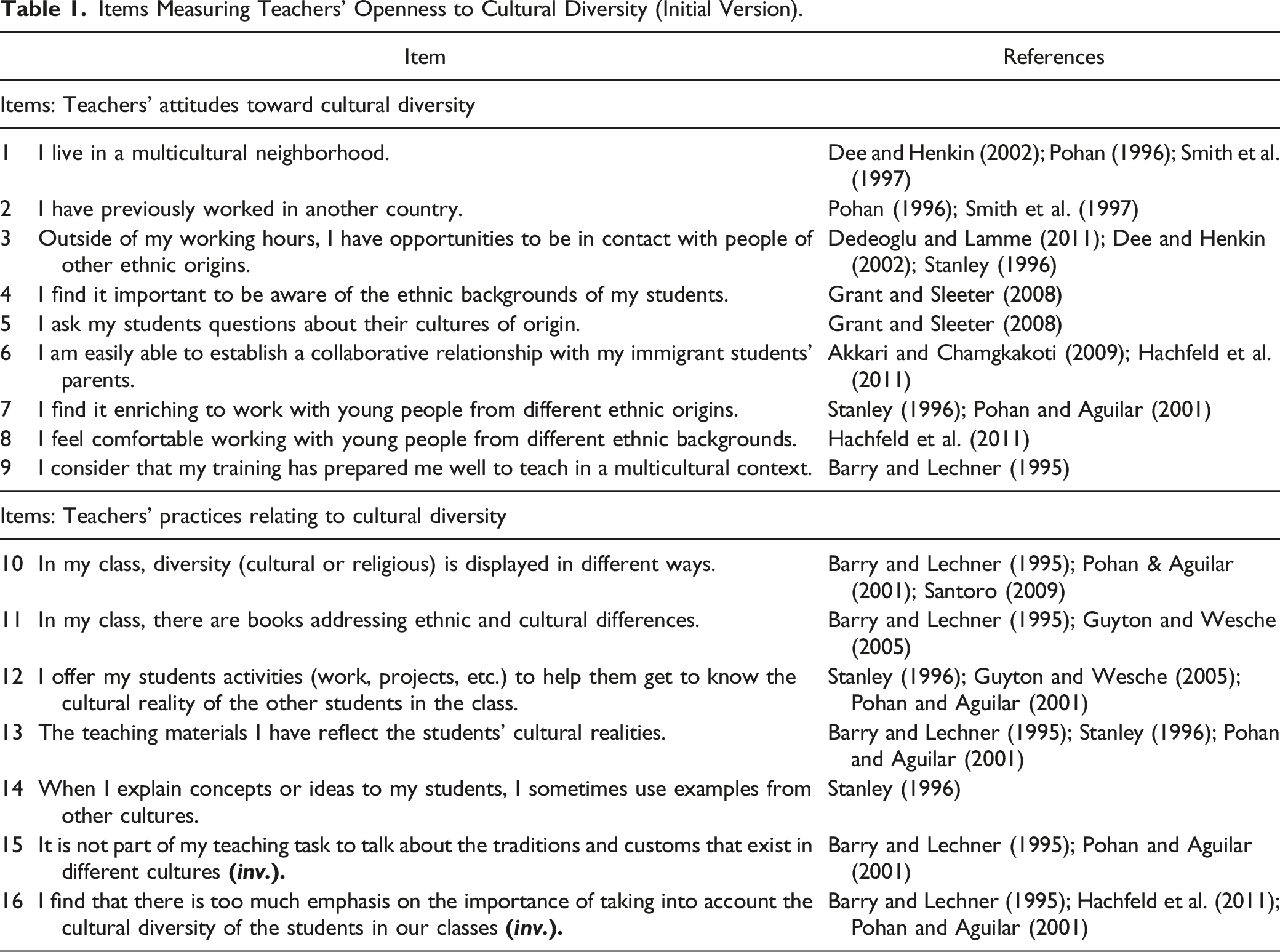
Teachers’ openness to cultural diversity
Items Measuring Teachers’ Openness to Cultural Diversity (Initial Version).
Teacher–student relationship warmth
A French adaptation of the Student–Teacher Relationship Scale (Pianta, 1999) was used to capture teachers’ perceptions of the level of warmth in their relationship with each student in the class (T2). This validated scale included four items (e.g., I share a close and warm relationship with this student) and was answered using a five-point Likert scale (1 = Absolutely not, to 5 = Totally) (α =.86). An average score was calculated for each teacher.
Teachers’ satisfaction with students
Three items developed for this study were used to account for the teachers’ satisfaction with their students (T2). Teachers were asked “How satisfied are you with: The relationships you have with your students? The quality of the learning done by your students? The general behavior of your students?” Teachers answered these questions using a five-point Likert scale (1 = Very dissatisfied, to 5 = Very satisfied) (α = .82).
Teachers’ sense of professional efficacy
A French adaptation of the Personal Teaching Efficacy subscale of the Patterns of Adaptive Learning Scale (PALS) was used to assess the teachers’ sense of professional efficacy (T2) (Midgley et al., 2000). Items in this instrument related to teachers’ ability to influence and help their students’ learning. This seven-item scale (e.g., I am sure I am making a difference in the lives of my students) was answered using a five-point Likert scale (1 = Completely disagree, to 5 = Completely agree) (α = .68).
Students’ disengagement, behavior problems, and hyperactivity-inattention symptoms
Two scales of the French version of the Strengths and Difficulties Questionnaire (SDQ) (Goodman & Goodman, 2009), as well as a Behavioral Disengagement scale (Fitzpatrick & Pagani, 2013), were used to account for the characteristics of each teacher’s group of students (T1). The Misbehavior Scale drawn from the SDQ has five items (e.g., This student often fights with other children or bullies them) (α = .75) (Goodman & Goodman, 2009). The SDQ Hyperactivity-Inattention Symptoms scale included five items (e.g., This student is agitated, hyperactive, does not sit still) (α = .85). Both SDQ scales were answered using a three-point Likert scale (1 = Not true, to 3 = Certainly true). Scores were added up and then compared to a norm to determine whether there were difficulties. The nine-item Behavioral Disengagement scale (α = .71) (e.g., This student disturbs the class on purpose) was answered using a three-point Likert scale (1 = Never, to 3 = Often). A mean score was calculated on the three variables for each student and an aggregated score was then produced for each classroom.
Teachers’ sociodemographics
Teachers answered questions about their sex (What sex are you?) (0 = Female, 1 = Male) (T1); their number of years of teaching experience (How long have you been working as a teacher?); in the current school (How long have you been working in this school?); and in a multicultural context (How long have you been teaching in a multicultural context?) using Likert response scales varying according to the question (e.g., 0 = Less than a year, to 7 = More than 25 years) (T1).
Data Analysis
The analytic strategy consisted of four stages. First, descriptive analyses were performed: mean, standard deviation, and correlations of each of the variables were computed. Second, the 16 items of the questionnaire measuring openness to cultural diversity were introduced into exploratory factor analyses with Oblimin-type rotation to carry out exploratory validation of the scale (SPSS, version 27). The different models of exploratory analyses were compared using statistical and theoretical criteria. The eigenvalue graph was consulted, then communalities and saturation weights were considered. The Kaiser criterion guided the choice of model, and models with eigenvalues lower than 1 were not considered (Braeken & van Assen, 2017). In addition, only items with factor loadings higher than .50 and saturation weights greater than .45 were kept in the final model (Comrey & Lee, 1992; Tabachnick & Fidell, 2019). Third, to answer the research question, the score of the selected factor was used as a latent construct in a predictive structural equation model (Mplus, version 7). The longitudinal association between teachers’ openness to cultural diversity and professional satisfaction (satisfaction with students, sense of professional efficacy, and warmth in their relationships with students) was tested while controlling for these same variables at T1, teacher’s sex, and years of teaching experience. Fourth, student-related variables were aggregated for each classroom and included as control variables for predictive analyses: behavioral disengagement, misbehavior, and hyperactivity-inattention symptoms.
Results
Descriptive Statistics and Correlations
Correlations between the variables.
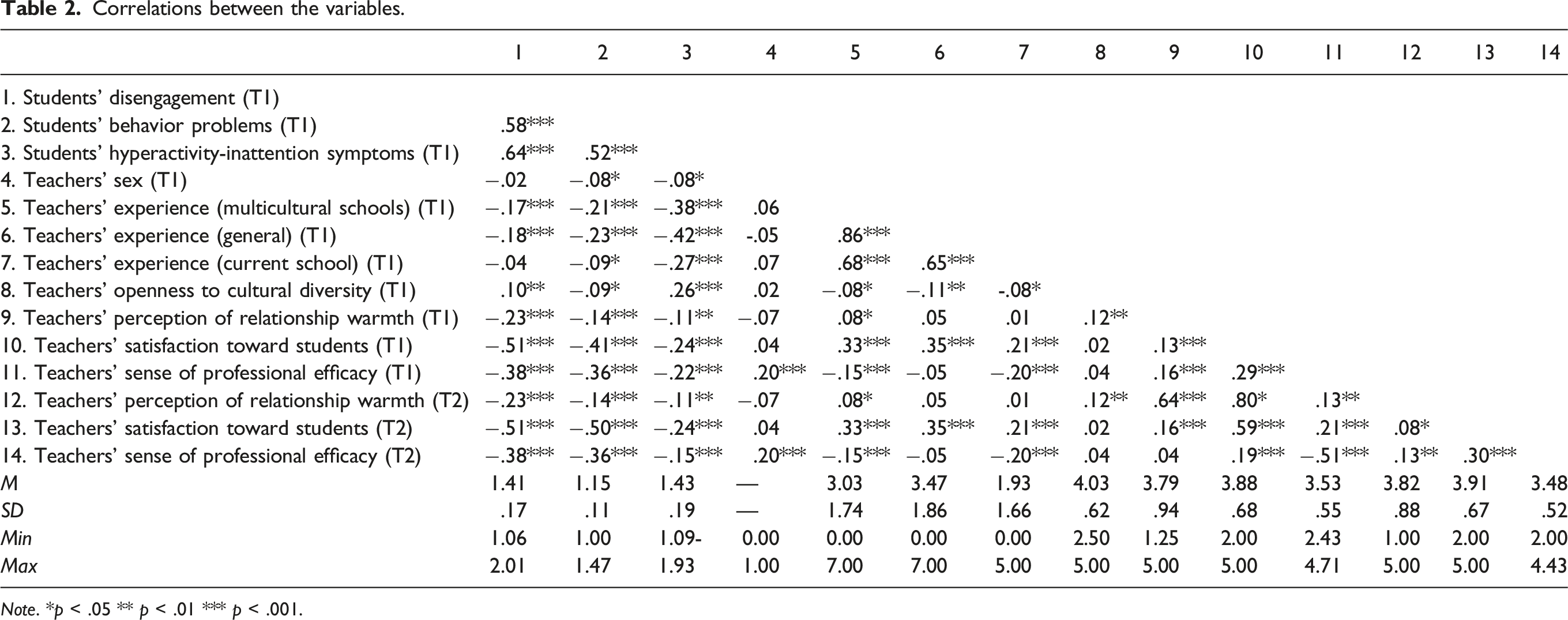
Note. *p < .05 ** p < .01 *** p < .001.
Correlations and Descriptive Statistics—Items Measuring Teachers’ Openness to Cultural Diversity.
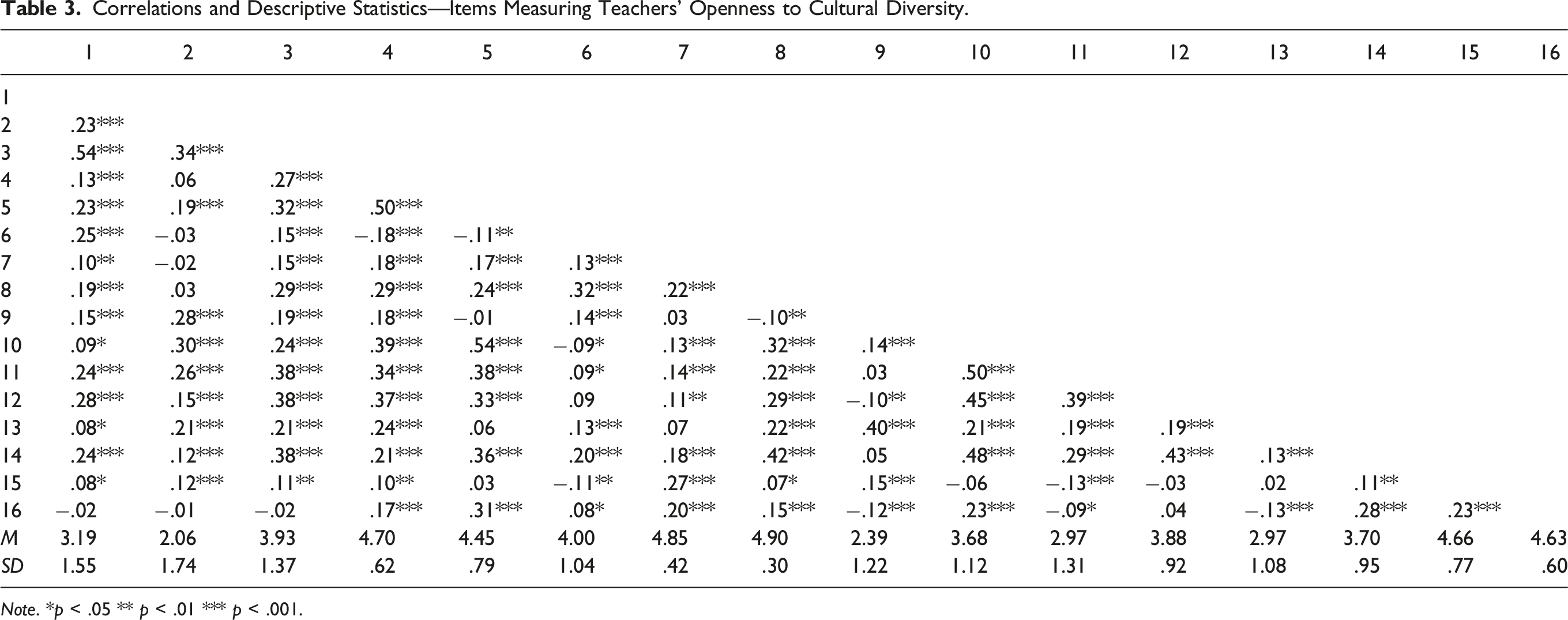
Note. *p < .05 ** p < .01 *** p < .001.
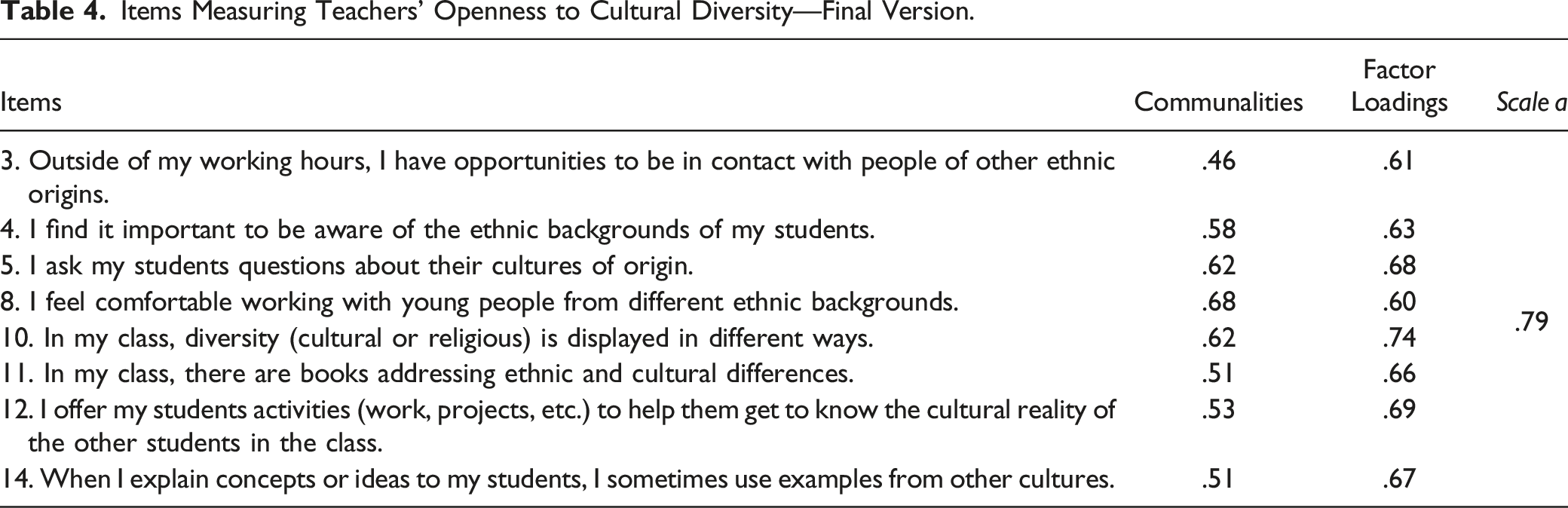
Exploratory Factor Analyses
Items Measuring Teachers’ Openness to Cultural Diversity—Final Version.
Structural Equation Model
The longitudinal associations between teachers’ openness to cultural diversity and the three indicators of their professional satisfaction (satisfaction with students, warmth in teacher–student relationships, sense of professional efficacy) were tested using a structural equation model (SEM) while controlling for the variables mentioned above. As shown in Figure 1, openness to cultural diversity was significantly and positively associated with satisfaction with students and warmth in the teacher–student relationship. Furthermore, openness to cultural diversity was significantly and negatively associated with teachers’ sense of professional efficacy. Structural equation model predicting teachers’ professional satisfaction.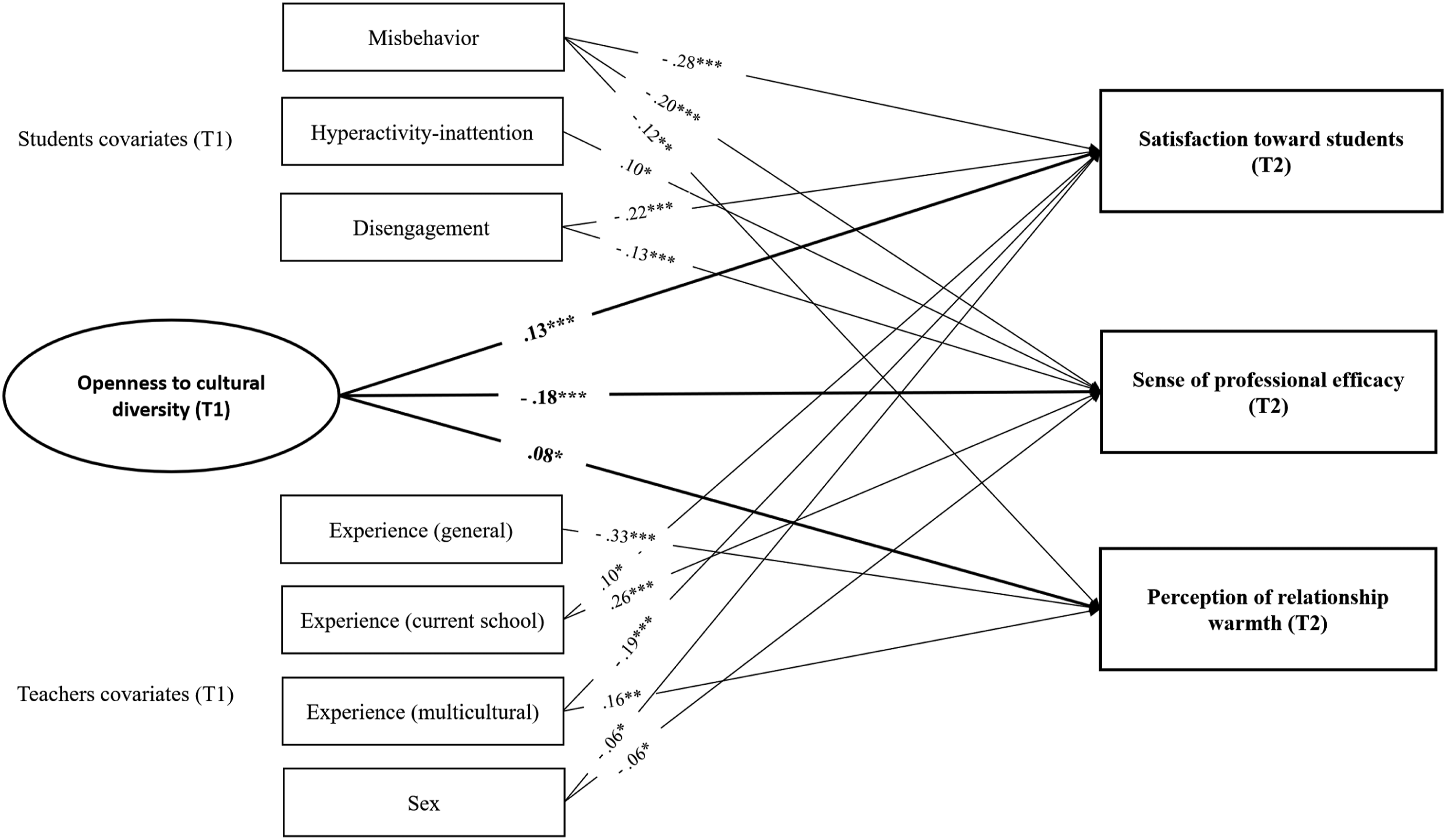
Discussion
This study aimed to assess the relationship between elementary school teachers’ openness to cultural diversity and their job satisfaction (satisfaction with students’ behavior and learning achievements, warmth in relationships with students, sense of professional efficacy). A secondary objective of exploring the validation of a new instrument measuring openness to cultural diversity was also pursued. Teachers’ openness to cultural diversity was positively associated with satisfaction with students and perception of warmth in teacher–student relationships, but negatively associated with teachers’ sense of professional efficacy. The impact of these results and the results of the exploratory validation of the scale measuring teachers’ openness will be discussed.
This study highlighted the relationship between elementary school teachers’ openness to cultural diversity and their job satisfaction. Likewise, while the literature on cultural gaps between teachers and students suggests that teachers’ job satisfaction is partly associated with such cultural gaps, the present study showed that openness to cultural diversity was also related to job satisfaction (Chen & Goldring, 1994; Coleman, 1968; Gay & Howard, 2000; Kumar & Hamer, 2012; Ordu, 2016; Santoro, 2009; Weinstein et al., 2004). Teachers who reported greater openness to cultural diversity were more professionally satisfied, as manifested by the fact that they perceived more warmth in their relationships with students and were generally more satisfied with students’ behaviors and learning achievements. Teachers’ responses on the scale measuring teacher–student relationship warmth suggested that those reporting higher levels of openness to cultural diversity found it easier to understand how their students felt and perceived that students shared their experiences more spontaneously with them. This result is relevant, considering the direct and positive impacts of relationship warmth on students’ academic success and engagement, suggesting that teachers’ openness to cultural diversity could contribute, at least indirectly, to students’ educational flourishing (Archambault et al., 2017; Hughes & Kwok, 2007). This attitude is all the more crucial for teachers in a multicultural environment, given that the quality of the teacher–student relationship plays an even more crucial role for students with immigrant backgrounds by providing them with a safe context within which to learn their new country’s cultural standards (Garcia-Reid et al., 2005; Roffman et al., 2003; Suárez-Orozco et al., 2009). The fact that the more culturally open teachers perceived their students’ behaviors and learning achievements more positively was also highly relevant considering the Pygmalion effect, in that these expectations and attitudes directly (positively or negatively) influence the achievements of the targeted students. This effect is more pronounced for students belonging to minority groups (den Brok et al., 2005; Katz, 1999; Payne, 1994; Reeves, 2006; Sadker et al., 2022). This finding suggests that teachers who are open to cultural diversity could indirectly promote their students’ educational flourishing.
It is, however, surprising that the teachers’ openness to cultural diversity was associated with a lower sense of professional efficacy. Concretely, according to teachers’ responses on the sense of professional efficacy scale, this meant that teachers who asked their students about their culture and who valued diversity in their classroom perceived that they were less able to make a difference in their students’ lives and to help them progress. This result may seem counter-intuitive, especially since some important students’ characteristics were controlled. It may be that teachers who reported openness and sensitivity to their students’ culture were more cognizant of the challenges presented by a culturally diverse context and the heterogeneity of their students’ profiles. It is important to note that studies have found that many teachers report not feeling sufficiently equipped to adopt culturally sensitive practices and being more comfortable teaching students of their own cultural group (Coleman, 1968; Gay & Howard, 2000; Kumar & Hamer, 2012; Santoro, 2009). In line with those findings, the teachers in our study may have felt less efficacious at work precisely because they were more aware of their students’ diverse characteristics and needs and felt less able to support them. This may relate to the Dunning–Kruger effect, which posits the existence of cognitive bias in self-assessment of skills (Dunning, 2011). This effect has also been observed among teachers (Ghaith & Yaghi, 1997; Wolters & Daugherty, 2007; Hoy & Spero, 2005). Individuals who demonstrate a lower level of competence tend to assess and perceive themselves more favorably, while the converse is observed among individuals with higher skills. Such bias may be operating here, in that being open to cultural diversity and adapting teaching practices accordingly are indicators of professional competence, and such competent teachers may tend to be more aware of the limits of their ability to influence their students concretely. In other words, even if their sense of efficacy is weaker, those teachers who adapt their practices to the diverse needs of their students are probably more competent and efficient than those who do not. More studies will be needed to deepen our understanding of this result.
As a secondary objective, this study explored the validity of a new instrument. The exploratory validation results informed on teachers’ openness to cultural diversity, a concept that has been little studied. While it was expected that the items would divide into two factors, teacher’s attitudes and practices, the results instead revealed the existence of a single factor. Although contrary to our initial hypothesis, this distribution was consistent with the work of Deardorff (2006), showing that these two aspects of openness to cultural diversity are closely associated. That author suggested that the more positive teachers’ thoughts or attitudes are toward students’ cultural diversity, the more culturally sensitive their teaching practices will be. It is thus likely that in a classroom context, where teachers’ attitudes and practices are constantly interacting and overlapping, the importance they attach to students’ origins and their positive attitude toward working in a multicultural context are expressed concretely and consistently through such behaviors as asking students about their origins, valuing diversity in the classroom, and using books that address cultural differences (Harding et al., 2017). This overlapping might mean that acting on beliefs could have an impact on practices and vice versa. While it was not our primary objective, the present study explored the validity of this new promising instrument. Further validity assessments will be needed to use this instrument in other contexts, such as research or training.
Strengths and Limitations
One strength of this study is that it sheds light on a subject that has to date received little research attention, namely openness to cultural diversity among teachers. Moreover, this study was based on robust statistical analyses considering the contribution of aggregated student characteristics. Having a majority of women in the sample could be seen as a limitation, but this ratio is similar to that found in the teaching population at large.
However, the study also has some limitations that should be taken into account. First, the sample size was not sufficient to proceed with complete validation of the instrument, which remains exploratory but nevertheless useful for the advancement of knowledge in the field. Future studies should complete the validation of the instrument, in particular by confirming its structure and testing its construct validity. Another significant limitation is that initial professional satisfaction level was not controlled due to a lack of statistical power. As mentioned earlier, most teachers responded affirmatively to three items of the instrument’s final version, which could indicate that this bias was involved in the present study. Since it may be socially uncomfortable for teachers to admit they are not interested in their students’ cultural background, it would have been relevant to control for social desirability (Crowne & Marlowe, 1960). Another limitation is that the data used for this study were based exclusively on teachers’ perceptions. On the one hand, this was necessary to capture thinking that would be difficult to glean from the outside. On the other hand, it would also have been germane, for example, to assess the level of warmth in the teacher–student relationship from the students’ standpoint, as their perceptions may be different, which could inform on any differential treatment they may be subject to because of their cultural status (Veldman et al., 2013).
Conclusion
As shown above, openness to cultural diversity among teachers merits a closer look, given its potential impact on teachers’ attitudes toward students and on the quality of teacher–student relationships. Although this was not measured, we may hypothesize that teachers’ positive attitudes and practices regarding their students’ cultural diversity may foster a more salutary relational climate within schools, especially where there is significant cultural diversity. In this sense, openness to cultural diversity could be seen as a professional obligation for teachers rather than a choice or a personal quality (Sirin et al., 2010). However, lack of openness is more often due to a lack of knowledge and training than to bad intentions. The fact remains that teachers’ ability to show such openness in their teaching is not based solely on their own beliefs and practices; it also depends on the school climate and the support teachers derive from colleagues and school administrators to better understand students’ needs (Brown, 2007). This means it is incumbent upon all stakeholders—including administrators, decision-makers, and researchers—to identify means of supporting teachers’ development of cultural knowledge and skills. The instrument developed for this study could be useful, after a complete validation, for this purpose, as it targets elements for which teachers show more openness and those for which they need support.
Footnotes
Acknowledgments
The authors would like to thank the Social Sciences and Humanities Research Council of Canada (SSHRC) (n˚410-2011-1013) and the Fonds de Recherche Société et Culture du Québec (FQRSC) (n˚012-RP-145548) for their financial support.
Declaration of Conflicting Interests
The author(s) declared no potential conflicts of interest with respect to the research, authorship, and/or publication of this article.
Funding
The author(s) disclosed receipt of the following financial support for the research, authorship, and/or publication of this article: This work was supported by the Social Sciences and Humanities Research Council of Canada (SSHRC) (n˚410-2011-1013) and the Fonds de Recherche Société et Culture du Québec (FQRSC) (n˚012-RP-145548)
