




Abstract
Introduction
The relationships between substance use disorders (SUD), homelessness, and trauma are extensive, nuanced, and reciprocal. In general, trauma refers to an enduring emotional and physiological response a person often experiences after living through one or more distressing or threatening event(s). Specifically, the Diagnostic and Statistical Manual of Mental Disorders (DSM-5) defines trauma as exposure to “actual or threatened death, serious injury, or sexual violence” (American Psychiatric Association, 2013, p. 271). However, trauma can be defined more broadly as any discrete or recurrent event that disrupts one’s worldview or overwhelms their capacity to cope (Substance Abuse and Mental Health Services Administration, 2014). Often referred to as ‘small t trauma’ (as opposed to capital-T traumas as described by the DSM-5), this broad definition captures more pervasive forms of distress such as bullying, parental divorce, lack of connection/nurture, persistent invalidation, or lack of acceptance (Yilmaz Di̇nç et al., 2023). Trauma is associated with numerous psychobiological issues and is thought to be a major etiological factor in many mental disorders (van der Kolk, 2000).
Decades of research indicate that individuals experiencing SUD have a greater incidence and severity of lifetime trauma compared to the general population (Garami et al., 2019; Skotnicka, 2018). A high prevalence of adverse child experiences are associated with substance use outcomes such as injection drug use and alcohol dependence (Wu et al., 2010). Unsurprisingly, there is a high degree of comorbidity between SUD and post-traumatic stress disorder (PTSD) (P. J. Brown et al., 1999; Torchalla et al., 2012). Similarly, robust evidence suggests that an overwhelming majority of unhoused individuals have trauma histories (Bransford & Cole, 2019; Buhrich et al., 2000), such as more adverse childhood experiences than the general population (Wiewel & Hernandez, 2022). For example, a meta-analysis found that individuals experiencing homelessness endured childhood physical and sexual abuse at higher rates than the general population (Sundin & Baguley, 2015). Homelessness itself can also be a traumatizing experience that perpetuates recurrent traumas (Deck & Platt, 2015; Goodman et al., 1991). Given the extent of trauma in populations experiencing SUD and/or homelessness, and the high degree of overlap between these two groups (Fazel et al., 2008; Torchalla et al., 2011), implementing programs that are sensitive to trauma histories is of the utmost importance to engage, retain, and enhance health and healing among service users in these populations.
One way for healthcare and social support organizations to best support client populations known to have extensive trauma histories is to embed principles of trauma-informed care (TIC). While there is no universal definition, TIC generally refers to, “a service delivery approach whereby programs (i) recognise the high rates of exposure to trauma in the patient populations they serve and (ii) provide a safe environment and services that accommodate the needs of patients presenting with a history of signficant trauma” (Killeen et al., 2015, p. 235). In recent years, the conceptual framework has expanded to include trauma- and violence-informed care (TVIC) which encompasses historical and ongoing systems of structural and interpersonal violence that are rooted in social structures as opposed to within the individual (Browne et al., 2012; Wathen & Mantler, 2022). However, much of the literature remains focused on TIC specifically. Core principles of TIC programs often include an awareness/understanding of trauma, an emphasis on physical and emotional safety, opportunities to rebuild control (i.e., choice and autonomy), and a strengths-based approach (Harris & Fallot, 2001; Hopper et al., 2010). By embedding these principles, treatment services can deliver empowering services that minimize risk of re-traumatization. TIC as a conceptual framework has been researched extensively to develop best practices for implementation (Substance Abuse and Mental Health Services Administration, 2014), and TIC approaches have shown promising results in contexts such as mental health treatment (Han et al., 2021), intimate partner violence (Chu et al., 2023), and perinatal health (Racine et al., 2021). Indeed, TIC is widely used as a best practice in mental health services (Sweeney et al., 2018).
Considering the prevalence of trauma histories in populations experiencing SUD and/or homelessness, there have been widespread calls to implement and expand TIC into treatment/support programs for these populations at both a philosophical and structural level (Magwood et al., 2019; Mills, 2015; Peacock-Chambers et al., 2021; Rosenberg, 2011). In substance use and homelessness support settings specifically, TIC approaches can address how common elements of care might re-traumatize service users and impede engagement, retention, and health/healing outcomes. For example, mandatory urine drug screening for clients in substance use treatment might feel particularly threatening for clients with trauma histories related to lack of choice (i.e., sexual assault) (Bartholow & Huffman, 2023). Alternatively, gender-neutral shelter structures where multiple genders cohabitate in the same space do not recognize the gendered dimension of homelessness and may further victimize, for example, residents with trauma histories of gender-based violence (Milaney et al., 2020). Thus, TIC is increasingly becoming standard of best practice in healthcare social services for addiction and homelessness (Hopper et al., 2010; Substance Abuse and Mental Health Services Administration, 2014), and evidence supports that TIC programs with these populations are associated with optimized outcomes (Hales et al., 2019).
Within the wide body of TIC research, prior reviews and meta-analyses have examined TIC intervention outcomes (Brown et al., 2022; Han et al., 2021). These reviews include TIC outcomes among populations such as incarcerated women (King, 2017), youth involved in the justice system (Zettler, 2021), and women experiencing intimate partner violence (Chu et al., 2023). However, the TIC literature has not yet consolidated intervention outcomes for populations experiencing SUD and/or homelessness (Bartholow & Huffman, 2023). To our knowledge, there has not been a review of TIC intervention outcomes for people experiencing SUD and/or homelessness that assesses the state of the contemporary literature. Thus, the aim of this review is to provide an overview of the current literature on TIC intervention outcomes for populations experiencing SUD and/or homelessness.
Methods
Due to the exploratory nature of our research question and the broad scope of outcomes we aimed to capture, a scoping review was deemed the most appropriate methodology. Indeed, scoping reviews are useful to assess the scope of the literature on a topic, map evidence, and identify knowledge gaps (Arksey & O’Malley, 2005). The PRISMA-ScR (Preferred Reporting Items for Systematic reviews and Meta-Analyses extension for Scoping Reviews) was used to ensure transparent reporting of the scoping review results (Tricco et al., 2018).
Search Strategy
Articles were identified through a structured search of MedLine, PsycInfo, EMBASE, and CINAHL. The development of the search strings was conducted in consultation with an experienced academic librarian around the following key concepts: substance use AND/OR homelessness AND trauma- and violence-informed care. The search was performed on October 30, 2023, and was restricted to articles published after 2008 and written in English or French. The keywords were adjusted for the different databases.
Inclusion and Exclusion Criteria
Identified references were uploaded to the Rayyan software and screened by title and abstract. Two researchers independently screened the first 25% of articles to confirm inter-rater reliability. After reliability was confirmed, one researcher independently screened the remaining 75%. Articles were included if their titles and abstracts clearly identified: 1) a population presenting with substance use disorder (SUD) and/or homelessness; 2); a trauma and/or violence informed care intervention and 3) outcome data. While individuals with SUD and individuals experiencing homeless are two distinct populations, the literature reports a high incidence of co-occurring substance use and homelessness (Lightfoot et al., 2018; McVicar et al., 2015). Furthermore, given the deep and reciprocal interconnections between substance use, homelessness, and trauma, both groups are often considered concurrently in trauma research (Alexander et al., 2022; Ararso et al., 2021; Davis et al., 2019). To remain consistent with this precedent, it was decided to consider both populations together in this broad review of outcomes. Due to the exploratory nature of this literature review, a broad range of outcomes were included (e.g., service retention, client satisfaction, substance use reduction, etc.). Articles that met all inclusion criteria were retrieved and a full-text review was conducted based on the inclusion criteria. This review included most forms of academic literature (e.g., conference abstracts, dissertations). Review articles and case studies were excluded.
Data Extraction
Data were extracted from eligible articles and categorized in an Excel spreadsheet. The categories included: study characteristics (i.e., title, author(s), country, publication year, population, methodology); intervention; comparison (if any); and outcomes. Two reviewers extracted data from 25% of the articles and compared results to establish inter-rater reliability. One of the reviewers then extracted from the remaining texts independently.
Results
The search yielded 2104 texts of which 964 were duplicates. The remaining 1137 texts were screened by title and abstract, and 58 texts met inclusion criteria. Fifty-seven full texts were reviewed as one journal article was unable to be retrieved. Thirty-two texts met inclusion criteria for the final review (Figure 1). Literature was published between 2008 and 2023. Most of the literature focused on North America, including the United States (US) (n = 26) and Canada (n = 4). One journal article focused on South Africa, and one journal article focused on Germany. The texts included quantitative (n = 19), qualitative (n = 6), and mixed-methods (n = 7) studies, including 7 studies that compared TIC interventions to a control group. Table 1 provides the full descriptive characteristics of the included texts. Although TVIC was included in the search strategy, no texts reported explicitly on TVIC interventions. Flow diagram for search results and selection process. Descriptive Characteristics of Papers Included in Review. Note. CAN = Canada. SUD = Substance Use Disorder. USA = United States of America.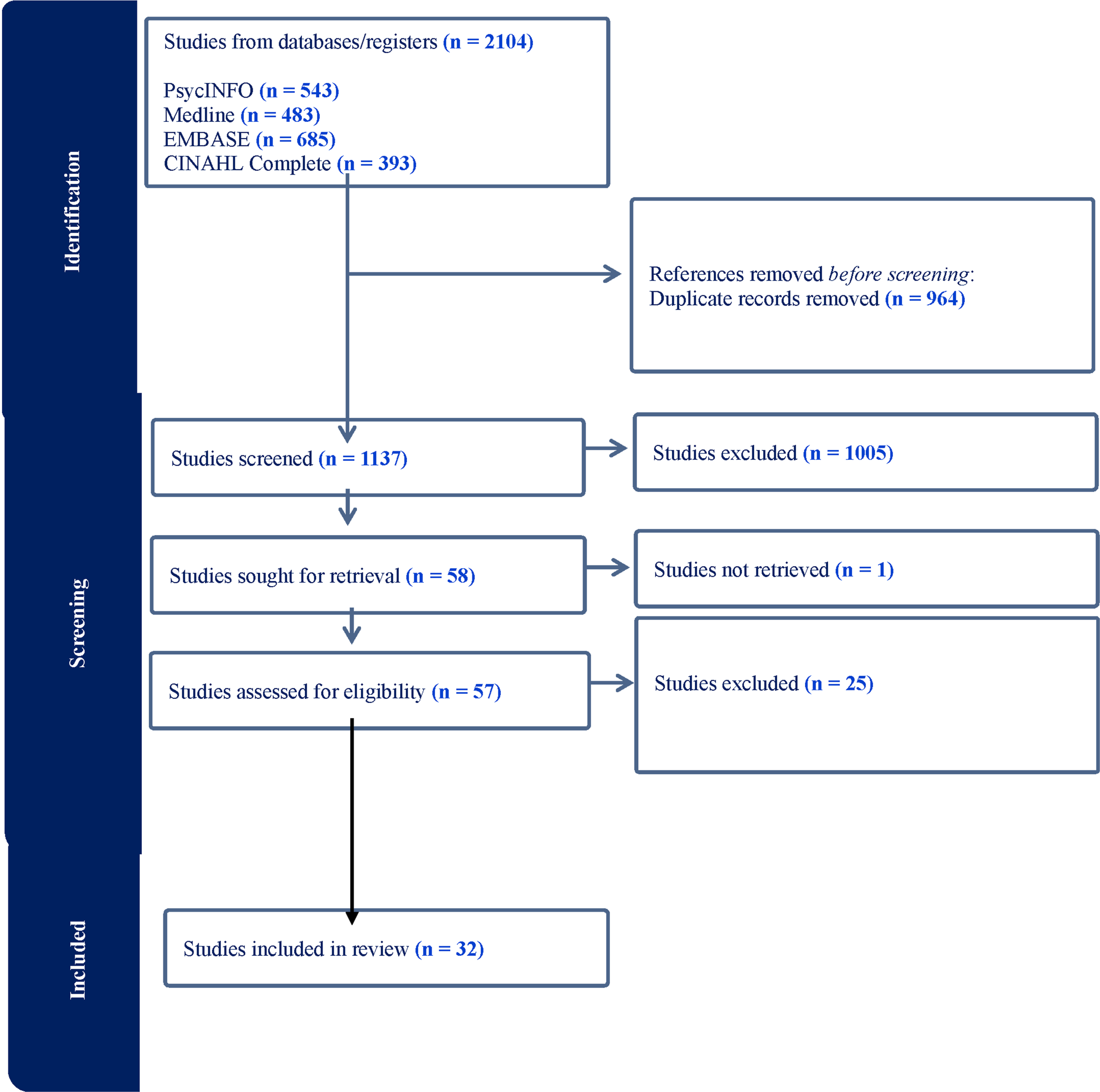
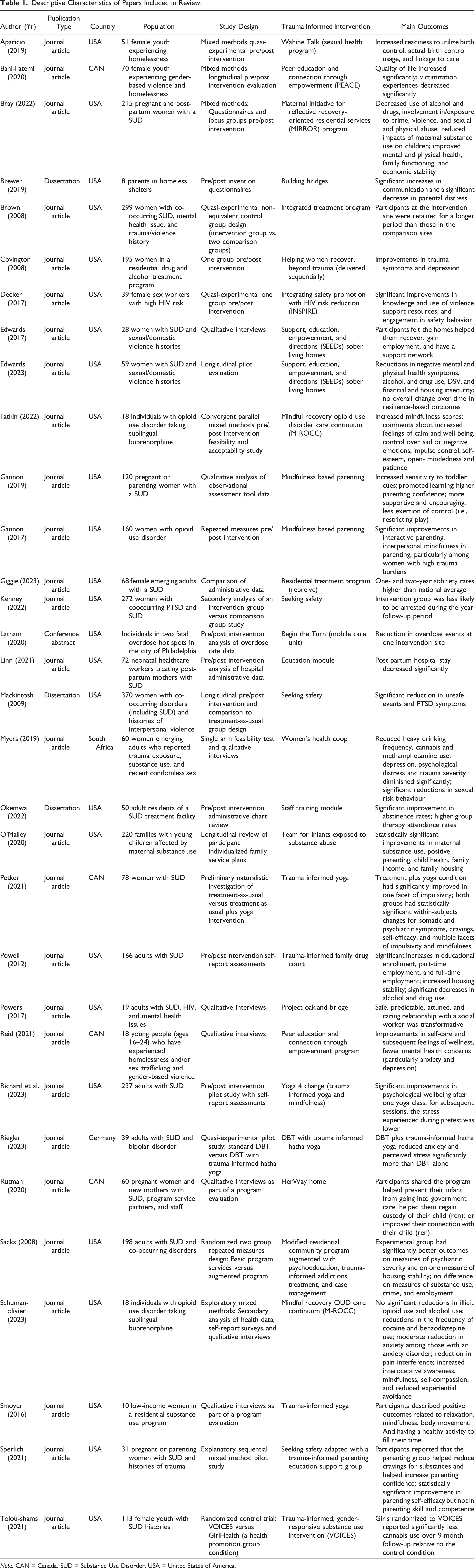
The following results are structured by outcome categories, which were determined by thematically grouping outcome data from the extraction table. These eight resultant categories are: 1) Psychological Well-being; 2) Substance Use; 3) Parenting; 4) Victimization; 5); Health; 6) Social Stability; 7) Criminal Justice; 8) and Retention/Adherence.
Psychological Well-Being
Most articles (n = 15) reported outcomes related to how TIC interventions impact participants’ psychological well-being. Results from various TIC interventions conducted with individuals experiencing SUD and/or homelessness indicated that interventions incorporating TIC can help improve overall quality of life (Bani-Fatemi et al., 2020), significantly decrease depression, psychological distress, and trauma symptoms (Covington et al., 2008; Myers et al., 2019; Reid et al., 2021), significantly decrease mental health problems (Bray et al., 2022; Edwards et al., 2023; Powell et al., 2012), and moderately reduce symptoms of anxiety among participants with an anxiety disorder (Schuman-Olivier et al., 2023). Of particular interest, a randomized two-group study of adults with SUD compared typical treatment with enhanced typical treatment (three additional services, including trauma-informed addiction care) and found the enhanced group had significantly better outcomes on multiple measures of psychiatric severity (Sacks et al., 2008). Further, female participants with SUD who participated in a TIC intervention (Seeking Safety) demonstrated significantly fewer PTSD symptoms over time compared to baseline, although these reductions were not attenuated by number of trauma-informed treatment sessions attended (i.e., no dose-dependent response) and became less significant when accounting for other variables (i.e., time spent in residential treatment) (Mackintosh, 2009).
Within the psychological well-being category, four texts focused on trauma-informed yoga interventions (Petker et al., 2021; Richard et al., 2023; Riegler et al., 2023; Smoyer, 2016). In a semi-structured interview study, women with SUD reported that weekly trauma-informed yoga classes were an adaptive activity that positively impacted their mindfulness, relaxation, and physical movement (Smoyer, 2016). Further, among individuals with concurrent SUD and borderline personality disorder (BPD), dialectical behavioural therapy (DBT) enhanced with trauma-informed hatha yoga was found to reduce trait anxiety (i.e., enduring anxiety, as opposed to situational anxiety) and perceived stress more than DBT alone (Riegler et al., 2023). In a similar comparison study of women with SUD that evaluated treatment-as-usual versus treatment-as-usual plus trauma-informed yoga, the yoga group was not statistically superior to treatment as usual in any measure of psychological well-being other than in one facet of impulsivity (Petker et al., 2021). Finally, preliminary results from adults with SUD who participated in a pilot trauma-informed yoga and mindfulness program (Yoga4Change) showed statistically significant improvements in psychological wellbeing compared to baseline after one class, with lower pre-test stress levels during subsequent classes (Richard et al., 2023).
Two articles reported outcomes from a trauma-informed mindfulness-based intervention for individuals with OUD taking sublingual buprenorphine (Mindful Recovery OUD Continuum; M-ROCC). The first article reported that participants gained calmness, control over negative emotions, open-mindedness, patience, self-esteem, decreased impulsivity, and had significantly higher scores on a five-facet measure of mindfulness compared to baseline (Fatkin et al., 2021). In a secondary analysis of data from the same study, findings indicated that participants experienced greater interoceptive awareness, mindfulness, self-compassion, and reduced experiential avoidance compared to baseline (Schuman-Olivier et al., 2023).
Substance Use
Ten articles reported outcomes related to TIC interventions and substance use. Broadly, outcomes in the various trauma-informed interventions indicated decreased alcohol and drug use compared to baseline rates (Bray et al., 2022; Edwards et al., 2023; Myers et al., 2019; O’Malley et al., 2021; Powell et al., 2012). Interestingly, participants with OUD taking sublingual buprenorphine in the Mindful Recovery OUD Continuum intervention reported significant reductions in illicit cocaine and benzodiazepine use frequency, but no significant reductions in illicit opioid and alcohol use (Schuman-Olivier et al., 2023). This outcome category included one comparison study, which investigated cannabis use among female youth with histories of substance use. Results indicated that a 12-session trauma-informed and gender responsive substance use program (VOICES) reduced cannabis use over 9 months significantly more than a health promotion control group (Girl Heath) (Tolou-Shams et al., 2021).
While most articles focused on substance use reduction, two articles reported on abstinence rates. Female emerging adults (defined as ages 18–25) with SUD taking part in a trauma-focused residential treatment program demonstrated sobriety rates at one- and two-year follow-up that were significantly higher than the national average (Giggie et al., 2023). Additionally, abstinence rates among adult residents of a substance use treatment facility significantly improved after staff completed a TIC training intervention (Okemwa, 2022). Finally, although not related directly to substance use, participants in a trauma-informed parenting support group (TIPS) showed significant reductions in substance cravings following the intervention (Sperlich et al., 2021).
Parenting
Eight articles provided outcomes related to parenting and/or childcare. Results from a trauma-informed program for parents experiencing homelessness (Building Bridges) found significant increases in parental communication and significant decreases in parental distress compared to baseline (Brewer, 2019). Similarly, a trauma-informed mindfulness-based parenting intervention for mothers with opioid use found significant improvements in interactive parenting and interpersonal mindfulness in parenting, with a dose-dependent response for participants with severe trauma (M. Gannon et al., 2017). Other trauma-informed interventions for pregnant, post-partum, and parenting women with SUD were found to reduce impacts of maternal substance use on infants and children (Bray et al., 2022), significantly improve positive parenting and child health (O’Malley et al., 2021), increase parenting confidence (Sperlich et al., 2021), and reduce length of post-partum hospital stay (Linn et al., 2021). Interestingly, one study found statistically significant improvements in parenting self-efficacy, yet no significant improvements in parenting skill or competence compared to baseline (Sperlich et al., 2021).
In addition to the quantitative data, three qualitative studies reported outcomes in this category. In a trauma-informed parenting program for pregnant and parenting women with SUD (HerWay Home), participants reported that the program supported them in regaining custody of their children, preventing lost custody, and improving the connection with their children (Rutman & Hubberstey, 2020). Results from a similar trauma-informed parenting intervention indicated that participants become more sensitive to their child’s (non)verbal cues, better promoted their child’s learning, increased their parenting confidence, and exercised less control over their child’s play activities (M. A. Gannon et al., 2019).
Social Stability
Six articles provided outcomes related to social stability, defined in this review as facets of life related to housing, employment, education, and support systems. In a comparison of typical treatment with enhanced typical treatment (three additional services, including trauma-informed addiction care) adult participants with SUD in the enhanced program demonstrated significantly better outcomes on a measure of housing stability (number of days making rent payments) compared to the control group (Sacks et al., 2008). Qualitative findings from triply diagnosed adults (HIV, mental health disorder, SUD) who participated in TIC intervention (Project Oakland Bridge) revealed that supportive relationships with a social worker were a transformative element of their care (Powers et al., 2017). In another qualitative study, women with SUD and histories of domestic/sexual violence reported that treatment in a trauma-informed and gender responsive SLH facilitated employment access and provided a supportive and loving social support network (Edwards et al., 2017). Later quantitative findings from the same SLH indicated that participants also experienced reductions in financial and housing insecurity compared to baseline (Edwards et al., 2023).
Three texts focused on social stability in a family context. Pregnant and post-partum women with SUD in the Maternal Initiative for Reflective Recovery-Oriented Residential Services (MIRROR) program reported improved family functioning and economic stability compared to the pre-intervention state (Bray et al., 2022). Similarly, families with young children impacted by maternal substance use supported by a trauma-informed service (Team for Infants Exposed to Substance abuse; TIES) showed significant improvements in family income and family housing compared to pre-intervention (O’Malley et al., 2021). Finally, adults with SUD involved in a trauma-informed family drug court reported that trauma-informed mental health support in conjunction with addiction care increased their education enrollment, full/part time employment, and lead to increased housing stability (Powell et al., 2012).
Health
Four texts provided health outcomes related to TIC interventions. A conference abstract described how a trauma-informed mobile access van (Begin the Turn) operating in two regions with high fatal overdose rates was associated with reduced overdose rates in one of the sites at three months post-intervention (Latham, 2020). Regarding HIV prevention, female sex workers with high HIV risk who participated in a brief trauma-informed health intervention (Integrated Safety Promotion with HIV Risk Reduction; INSPIRE) demonstrated significantly increased HIV safety behaviours and utilization of violence support resources compared to baseline (Decker et al., 2017). A feasibility study conducted in South Africa with women aged 18 to 25 who participated in a trauma-informed substance use and sexual risk reduction intervention (Women’s Health Coop) found significant reductions in STI symptoms and sexual partners at follow-up (Myers et al., 2019). Similarly, initial outcomes of a trauma-informed sexual health program (Wahine Talk) found that female youth experiencing homelessness reported increased birth control usage, increased connection to healthcare, and lower rates of pregnancy compared to local averages after program completion (Aparicio et al., 2019).
Victimization
Three articles reported on TIC interventions that decreased participants’ experiences of victimization. Here, victimization is defined as instances where participants’ safety is compromised, they are maltreated, or a crime is perpetrated against them. Women with SUD, cooccurring disorders, and histories of interpersonal violence who participated in a trauma-informed safety skills program (Seeking Safety) had significantly fewer unsafe events (e.g., non-consensual sex, physical abuse/neglect, witnessing violence, etc.) at six-month follow-up compared to baseline; these improvements were maintained at twelve-month follow-up (Mackintosh, 2009). Similarly, a TIC intervention for female participants aged 16 to 24 with histories of gender-based violence and homelessness (PEACE) was linked to significantly decreased experiences of victimization (defined as physical violence and other crime) (Bani-Fatemi et al., 2020). Finally, pregnant and post-partum women in the above-mentioned MIRROR program reported decreased exposure to victimizing scenarios compared to the pre-intervention state (Bray et al., 2022).
Criminal Justice
Two articles provided outcomes pertaining to individuals’ interactions with the criminal justice system. In a comparison between women with cooccurring SUD and PTSD enrolled in either a trauma-informed program (Seeking Safety) or a psychoeducational comparison group (no TIC intervention), participants in the TIC group were less likely to have been arrested at one year follow up (Kenney & Hien, 2022). However, a study of individuals with SUD and cooccurring disorders found no differences in engagement in criminalized activities when comparing a TIC intervention with a control group (Sacks et al., 2008).
Retention/Adherence
Of the articles included in the review, only one reported treatment retention outcomes, and one reported on how a TIC intervention impacted treatment adherence. In a population of women with cooccurring substance use and mental health disorders with histories of trauma/violence, participants in an integrated trauma-informed treatment intervention were retained in care longer at 12-month follow up versus the two non-TIC comparison groups (V. Brown & Melchior, 2008). Regarding adherence, findings from a dissertation report that adult residents of a substance use treatment facility demonstrated increased group therapy attendance and medication adherence compared to pre-intervention rates after facility staff underwent a TIC training intervention (Okemwa, 2022).
Discussion
The objective of this scoping review was to amalgamate and report on the extant scientific literature pertaining to TIC intervention outcomes among populations experiencing SUD and/or homelessness. An analysis of the 32 included texts revealed mixed, yet overwhelmingly promising outcomes for TIC interventions among these two populations in the domains of psychological well-being, substance use, parenting, victimization, health, social stability, criminal justice, and retention/adherence. Previous review articles with other populations have identified TIC intervention outcomes including significant reductions in PTSD symptoms (Han et al., 2021; King, 2017) and significant improvements in depression and anxiety (Chu et al., 2023; Han et al., 2021). Further reviews in this area have noted a lack of TIC outcome data as a gap in the literature in contexts such as TIC for justice-involved youth and TIC in emergency medicine (Brown et al., 2022; Zettler, 2021). In comparison, this scoping review has identified a more comprehensive range of TIC intervention outcomes that encompass domains beyond reductions in psychological distress.
Of the included articles, most of the literature reported outcomes related to psychological well-being and substance use. The results from these outcome categories indicate that TIC is a service delivery framework that supports positive mental health outcomes (e.g., reduced anxiety, mindfulness) and reductions in illicit substance use. At the same time, reductions in illicit substance use are neutral from a standpoint that drug use itself is not value-coded, and outcomes reflective of drug-related harms would be more informative. Even so, these findings align with recommendations to expand TIC interventions with people experiencing SUD/homelessness (Bartholow & Huffman, 2023; Rosenberg, 2011), including texts that did not meet review criteria such as book chapters (Bransford & Cole Michael, 2019; Sisselman-Borgia, 2018). The absence of articles reporting on TVIC indicates that this is still a burgeoning research area.
Beyond mental health and substance use outcomes, the review identified that TIC interventions among these populations address diverse outcome domains. Outcomes such as social stability, victimization, and criminality reflect a more holistic view of how TIC interventions can attend to diverse aspects of the individual and address their self-identified goals (Tiffany et al., 2012). For instance, there was a notable number of outcomes from TIC parenting interventions. Given intergenerational cycles of addiction and trauma and the associated sequalae of parenting patterns (Neppl et al., 2020), intervening at the parent-child relationship level could have important implications for the prevention of addiction/homelessness in future generations (Moreland & McRae-Clark, 2018). Further, four articles reported positive outcomes for TIC yoga interventions. Trauma-informed yoga has been gaining traction as a promising element of the continuum of care with other populations such as veterans, incarcerated people, and victims/survivors of sexual assault (Braun et al., 2021; Klukan & Lunsford, 2023). Research could further explore its role in SUD/homelessness programming.
While this scoping review found positive outcomes overall, it should be noted that many sample sizes were small, there was only one randomized control trial (RCT), and most studies (n = 19) utilized pre/post intervention designs that did not permit TIC to be assessed against a control group (see Table 1). Even in the seven studies where a TIC intervention was compared to control group, the impact of TIC as a specific treatment element is difficult or impossible to isolate. For example, in the study by Sacks et al., trauma-informed addiction treatment was one of three augmented services received by the experimental group (2008). Similarly, in the study by Riegler et al., the differences between the DBT group and the DBT plus trauma-informed yoga group could be accounted for by the yoga itself rather than the trauma-informed dimension of yoga delivery (2023). These findings suggests that future research might investigate TIC intervention outcomes with methodologies that provide higher levels of evidence, such as RCTs.
It is surprising that only 32 articles met criteria for review, particularly considering the broad range of outcomes that were included. TIC is not a nascent field of study (Harris & Fallot, 2001), and there have been numerous calls in the past decade for organizations to implement TIC services with populations experiencing SUD and/or homelessness and conduct the corresponding research (Bransford & Cole, 2019; Hopper et al., 2010). Situated within this overall lack, the domains of victimization, health, criminal justice, and retention/adherence contain only a small number of studies and thus require a greater depth of research to draw firm conclusions. Particularly given the extent of trauma histories among people experiencing SUD and/or homelessness, TIC intervention outcome research among this population using rigorous methodologies should be a stronger research priority to refine evidence-based service programming (Bartholow & Huffman, 2023).
Given recommendations to implement TIC that is culturally, racially, spiritually, and gender relevant (Rosenberg, 2011), this review identified sub-populations that require further TIC intervention outcomes research. Specifically, none of the included texts reported on Indigenous-specific interventions/outcomes despite Indigenous communities being priority populations that are disproportionately impacted by SUD, homelessness, and trauma due to enduring coloniality and systemic oppression (Lavalley et al., 2018; Spillane et al., 2023; Wendt et al., 2021). This gap was noted by a previous review of TIC interventions for Indigenous people experiencing substance use disorders (Pride et al., 2021), yet no research has addressed this gap in the intervening years. Additionally, while many articles in this review reported outcomes on TIC interventions designed for women, there were no outcomes for interventions specific to men or gender diverse people. Research indicates that both men and gender diverse people can have unique experiences of substance use, homelessness, and trauma (Deck & Platt, 2015; Shelton & Bond, 2017). Thus, outcome research specific to these communities is needed.
Limitations
This review has limitations inherent to the scoping review methodology. First, the quality of each study was not assessed which prevents us from drawing firm conclusions on the true effectiveness of TIC interventions. At the same time, the scoping review methodology allowed us to comprehensively map the current state of the literature on TIC outcomes for populations experiencing addiction and/or homelessness. Most of the article screening was conducted independently by one researcher. To mitigate risk of screening error, two researchers screened the first 25% of articles at both the title/abstract screening stage and the full text extraction phase to confirm inter-rater reliability.
Conclusion
This scoping review supports the implementation and expansion of TIC interventions for populations experiencing SUD and/or homelessness, as it appears to be a promising service delivery approach across diverse outcome domains. Future work should build upon these findings by investigating TIC intervention outcomes with rigorous methodological approaches and diverse clients bases to ensure populations experiencing SUD and/or homeless receive the best standard of care.
Footnotes
Acknowledgements
We would like to acknowledge Hakima Amoura for developing the search strategy used in this review. This project received administrative and coordination support from Karine Hudon and Marie-Josée Dion. We humbly acknowledge that this work took place on the unceded and traditional territory of the Kanien‘kehá:ka (Mohawk) Nation in Tiohtià:ke (currently known as Montréal).
Declaration of Conflicting Interests
The author(s) declared no potential conflicts of interest with respect to the research, authorship, and/or publication of this article.
Funding
The author(s) disclosed receipt of the following financial support for the research, authorship, and/or publication of this article: This work was supported by Health Canada and the Ministère de la Santé et des Services sociaux du Québec (Substance Use and Addictions Program) through the Équipe de soutien clinique et organisationnel en dépendance et itinérance (ESCODI) of the CIUSSS du Centre-Sud-de-l’Île-de-Montréal.
