




Abstract
This study aimed to describe and understand the links between musical activities (i.e. listening, playing, attending festive events, belonging to music-based communities) and the addictive trajectory of homeless young adults who experience problematic psychoactive substance (PS) use. Semi-structured qualitative interviews were conducted with 15 homeless young adults aged 18 to 30 years old, to explore how music modulated their addictive trajectory. A thematic and trajectory analysis were performed. Music most often constituted a tool used to control, reduce, or recover from problematic PS use, and sometimes led to the initiation of novel substances, increased consumption, and relapses. These benefits and harms varied according to specific individual and contextual factors. Almost half of the sample reported no link between music and PS use. A better comprehension of the links between music and the addictive trajectory will guide the development of adapted harm reduction interventions that account for homeless young adults’ strengths.
Keywords
Introduction
Problematic psychoactive substance (PS) use is characterized by the frequent use of alcohol or other drugs, the development of tolerance towards greater doses of the substances, and strong urges to use PS despite experiencing adverse consequences resulting from their consumption (Henry-Edwards et al., 2003; Tremblay & Blanchette-Martin, 2009). Problematic PS use is associated with multiple harms, including physical and mental illnesses, as well as interpersonal and financial issues (Goering et al., 2002). Specific populations are at increased risk of experiencing problematic PS use. Namely, young adults are more likely than older adults to experience problematic PS use (Cheng et al., 2014; Kairouz et al., 2008), and a majority of young adults who are homeless in Canada also experience problematic PS use (Bender et al., 2015; Goering et al., 2002; HSABC & BCNPHA, 2019; Ottawa Public Health, 2011). Homeless young adults are also disproportionately affected by PS-related harms compared to PS users from the general population (Chang et al., 2018; Ottawa Public Health, 2011; Statistics Canada, 2012).
Related to problematic PS use is the concept of addictive trajectory, according to which the severity of PS use and of its consequences vary dynamically over time (Hser et al., 1997, 2007). Such variations result from a combination of individual and environmental factors, including adverse life events, mental health issues, social networks, and access to treatment services (Hser et al., 2007; O’Donnell et al., 2019). Importantly, much of what is known about the factors that modulate the addictive trajectory targets users’ difficulties. However, the fact that few young adults actually access treatment services suggests that they mostly rely on personal resources to act upon their own PS use (Edidin et al., 2012; Winiarski et al., 2020). While the strengths and capacities used in their everyday lives remain understudied, they represent powerful tools for developing adapted outreach interventions with homeless young adults who experience problematic PS use.
Among the available resources, young adults from the general population report that music is one of the most appreciated (Boer et al., 2012; Bogt et al., 2017; Lonsdale & North, 2011; Papinczak et al., 2015; Schäfer et al., 2013). Indeed, musical activities, including music listening, practicing a musical instrument, composition, singing, and attending music events, are omnipresent in the many young adults’ lives. Research shows that they engage in music-related activities for multiple purposes. Mainly, music is used to promote emotional regulation, manage mental health symptoms, and facilitate the development of social networks (Lonsdale & North, 2011; Papinczak et al., 2015; Schäfer et al., 2013). Despite that music has numerous benefits in the well-being of young adults from the general population, research led with homeless young adults who use PS is scarce and reveals heterogeneous results when it comes to PS use.
An important part of the literature about the impact of musical activities on PS use suggests that different individual, social and environmental factors or music parameters pose risks to PS use (Dingle et al., 2015; Engels et al., 2012; Lee et al., 2011; Noroozi et al., 2018; Petering et al., 2017). Namely, lyrics that discuss PS-related themes are thought to encourage PS use among listeners (Brown & Bobkowski, 2011; Peters et al., 2003; Slater & Henry, 2013; Swartbooi et al., 2016). Some studies also demonstrate that the impact of music on PS use varies according to personal experiences with music. For example, listening to specific songs that have been repeatedly associated with PS use may lead to cravings and increased consumption upon subsequent listening (Short & Dingle, 2016). The environment in which music is presented is also thought to play a role in modulating PS use, where taking part in festive events and shows is associated with increased risks of PS use (Buvik & Rossow, 2015; Lee et al., 2011; Noroozi et al., 2018). Furthermore, some young adults identify with music-based communities (e.g. punk, hip-hop, electronic, heavy metal). In the context where some members within those communities encourage PS use, young adults who identify with them may be at higher risk of increasing their own consumption (Lee et al., 2011; Petering et al., 2017). Some research also suggest that these impacts are reflected across the different phases of the addictive trajectory, where musical activities could lead to the initiation, aggravation, and relapse towards PS use (Hardy & Hogarth, 2017; Klein et al., 2009; Nelson & Lenton, 2015; Petering et al., 2017; Slater & Henry, 2013). Importantly, these results are mostly issued from quantitative studies or secondary analysis, and the mechanisms underlying those harmful links between music-related activities and PS use remain misunderstood.
Nevertheless, some qualitative studies that accounted for the perspective of homeless young adults with problematic PS use highlighted the potential of music to contribute to control, reduce or quit PS use (Hense et al., 2014; Woelfer & Hendry, 2012). These benefits would result from the fact that music contributes to the promotion of well-being, namely by facilitating the experience of positive emotions, the development of social relationships, and breaking isolation, which may reduce the need to turn to PS use (Hense et al., 2014; Lee et al., 2011; Slater & Henry, 2013; Woelfer & Hendry, 2012).Yet, most of these results also emerge from secondary analysis and in-depth understanding of the means by which music could benefit PS use remains limited.
Overall, literature has been largely centered on the harmful consequences of music on PS use. Indeed, past research has mostly sought to explain the roots of problematic PS use through music rather than trying to understand how music may help individuals with problematic PS use (Cournoyer Lemaire et al., 2021a). Such research orientation also limits the consideration of young adults’ own perspective and results in heterogeneous findings which underlying mechanisms remain misunderstood.
Additionally, little to no research explored the ways musical activities modulated PS use over the longer term and across the different periods of the addictive trajectory, nor included at times the successes and challenges PS users face in relation to music. Similarly, little studies explored the benefits of music on PS use under a harm reduction perspective, which could help us understand its role in promoting control over PS use and in reducing the associated negative consequences.
Considering the demonstrated efficacy and the growing interest in strength-based research and practices (Harris et al., 2012), there is a need to better understand the benefits of music from young adults’ perspective, including how they use music to act upon their addictive trajectory. Moreover, maximizing the benefits of music inevitably requires a better comprehension of the mechanisms underlying its potential risks on PS use, in order to guide the development of strategies that contribute to the management and prevention of those risks.
Objective
This study aimed to describe and understand the links between the involvement in various musical activities and PS use, from the perspective of young adults experiencing homelessness and problematic PS use. More specifically, we aimed to understand the mechanisms by which different music-related activities modulate PS use over key periods of their addictive trajectory, in both beneficial and harmful ways.
Theoretical Perspective
This study was guided by the Individual and Community empowerment framework, which sits on the premise that vulnerable young adults possess strengths, capacities and resources to address some of their needs and to promote their well-being by themselves (Travis & Deepak, 2011). The framework considers music as one such resource used to promote well-being, and studies this phenomenon from two main perspectives: empowerment and risk. Firstly, it explores young adults’ capacity to use musical activities to promote their global well-being. Secondly, it considers the potential risks of musical activities in relation with PS use. Hence, it seeks to understand both beneficial and harmful influences of music. We adapted the framework to the study of addictive trajectories to understand how music-related activities modulate PS use throughout different consumption periods, including initiation, progression, aggravation, control or decrease, abstinence, relapse and recovery (Brochu et al., 2014; Hser et al., 1997).
Methodology
Research Design
This study used a descriptive interpretive design to promote in-depth understanding of complex phenomenon (Thorne, 2008, 2016). This design considers the perspective of people with lived experiences and the social contexts in which they evolve. This study was part of Gender-ARP, an international research project that aimed to understand recovery trajectories of people experiencing social precarity (Bertrand et al., 2018).
Sampling and Recruitment
The targeted population were young adults who experience homelessness and problematic PS use, including drugs and alcohol, in the Montreal urban community (Canada). Participants had to meet the following criteria: be aged between 18 and 30 years old, speak French or English, experience homelessness and problematic PS use within the last 12 months. To establish homelessness, we administered a questionnaire assessing the places where participants slept in the last year. Persons who spent at least one night per month without a home or an adequate place to sleep, or who accessed emergency shelters at least 3 times in the last year, combined with difficulties meeting basic needs (e.g. eating) were considered homeless (Roy et al., 2011).
To include young adults who experience problematic PS use, we used the CAGE-AID, a validated self-reported questionnaire, which we adapted to a 12-months time window (Ewing, 1984). While this questionnaire cannot be used to diagnose PS use disorders, it allows to quickly identify the presence or the absence of problematic alcohol and drug use. The questionnaire includes the four following dichotomic questions: In the past 12 months, have you felt that you ought to cut down on your drinking or drug use?; Have people annoyed you by criticizing your drinking or drug use?; Have you felt bad of guilty about your drinking or drug use?; Have you had a drink or used drugs first thing in the morning to steady your nerves or to get rid of a hangover (eye opener)?. One or more positive answers to these questions suggest probable problematic use of alcohol or drugs (Brown et Rounds, 1995). Thus, young adults who answered “yes” to one or more of the CAGE-AID questions respected the criteria of problematic PS use.
Participants also had to be exposed to any form of musical activity at least once a week for the past 12 months. This minimal threshold aimed to reach to young adults who had at least some recent experiences with music, while avoiding excluding those who have little access to music-related activities given their current living context of homelessness. To assess participation in musical activities, we questioned participants about their weekly involvement in music listening, composition, practice, and the annual frequency of music events attendance (e. g. shows and festivals). This questionnaire was developed and adapted from the literature (Chin & Rickard, 2012). Young adults were excluded if they experienced musical anhedonia, based on a validated questionnaire (Mas-Herrero et al., 2013).
The first author (ECL) recruited young adults using an iterative theoretical and snowball sampling methods so as to continuously guide the recruitment of participants with varied experiences and provide in-depth understanding of the phenomenon (Patton, 2002; Pires, 1997). Hence, the sample was diversified by age, gender, and musical experiences. The recruitment of new participants ended when we reached empirical saturation (Pires, 1997).
To facilitate the contact with this structurally marginalized population, we established a collaboration with a community organization designed for homeless young adults in Montreal. Flyers and posters were distributed in common spaces within the organization. ECL ensured a regular presence schedule on-site, which allowed for the development of trusting relationships with the community workers and young adults. Interested and eligible persons were invited to take the interview in a private space within the organization. Participants gave their written and informed consent prior to their participation. Participants who were intoxicated or experienced unstable psychotic symptoms causing inability to consent were invited to postpone their interview. Participants received a 20$ (CAD) compensation and were invited to tell their surroundings about the study. The ethics committee CIUSSS Estrie-CHUS approved the project.
Data Collection Tools
Fifteen in-depth, semi-directed individual interviews lasting around 90 minutes were led from November 2019 to July 2021 by the first author. ECL identifies as a women and young adult, and has a training in psychology and qualitative research. Interviews were mainly conducted face-to-face (n = 9), and six were conducted virtually due to the pandemic outbreak (Rubin & Rubin, 2012; Savoie-Zajc, 2003). Interviews were oriented by an interview guide comprised of 10 open-ended questions designed to understand individuals’ experiences with musical activities, their beneficial and harmful contributions to PS use, and their role in significant phases along the addictive trajectory, including initiation of PS use, aggravation, control, decrease and abstinence, relapse and recovery. For example, questions included “How did music relate to your PS use?”, and “How would you explain this relation?”. The guide was inspired from the literature and the theoretical framework, and has been developed by a research team comprised of two experienced researchers and a peer researcher corresponding to the eligibility criteria. The guide was revised iteratively throughout the data collection to enrich the quality of the data.
During the interview, we used a timeline that helped participants recall significant life events. Participants identified when they first initiated PS use, the moment when their consumption became concerning, periods of control, decreases or abstinence, relapses and recovery periods. They also identified the contexts and the music-related activities that accompanied these changes throughout their addictive trajectory. These timelines provided a global view of how music and PS use evolved over time and how they relate to each other. Interviews were audio-registered, transcribed and anonymized.
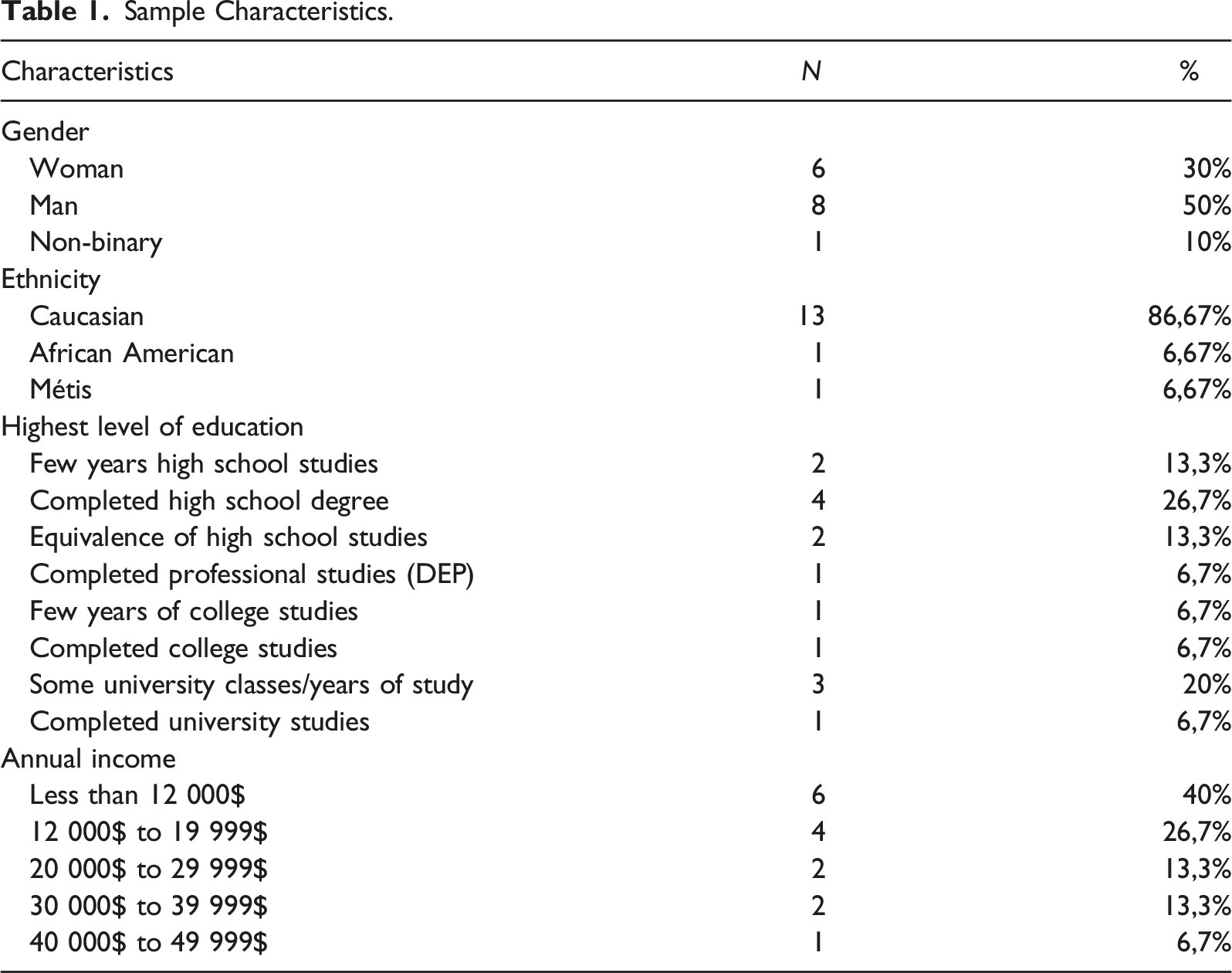
Lastly, a sociodemographic questionnaire was administered to characterize the sample, namely in terms of age, gender, education level, and residential status. The ASSIST (alcohol, smoking and substance involvement screening test; Henry-Edwards et al., 2003) was used to portray PS use profiles within the year preceding the interview.
Analyses
Interviews were transcribed and a thematic analysis was performed (Miles et al., 2014). The first author read each transcript to familiarize herself with the data and developed a mixed analytical codification grid from the conceptual framework and emerging themes (Miles et al., 2014). A detailed description was developed for each code to ensure rigour throughout the codification and analytical process. ECL performed first-cycle codification, and a second-cycle codification allowed grouping the initial codes into larger themes. To ensure the credibility of our analysis, ECL and a research professional co-coded two transcripts and reached an inter-rater concordance rate above 80%.
This thematic analysis was combined with a trajectory analysis of the music and PS use timelines, to understand how music contributes to changes in the addictive trajectory over time, both in beneficial and harmful manners (Brunelle & Bertrand, 2010). To do so, we identified participants’ significant life events and put them in relation with their engagement in music-related activities.
The global analytical process and results have been discussed and validated with a peer researcher. The analysis of the qualitative material was supported by NVivo 12 software. Descriptive analyses were performed on the sociodemographic questionnaire using SPSS.
Results
Participants
Sample Characteristics.
PS Use Profile and Music Involvement.
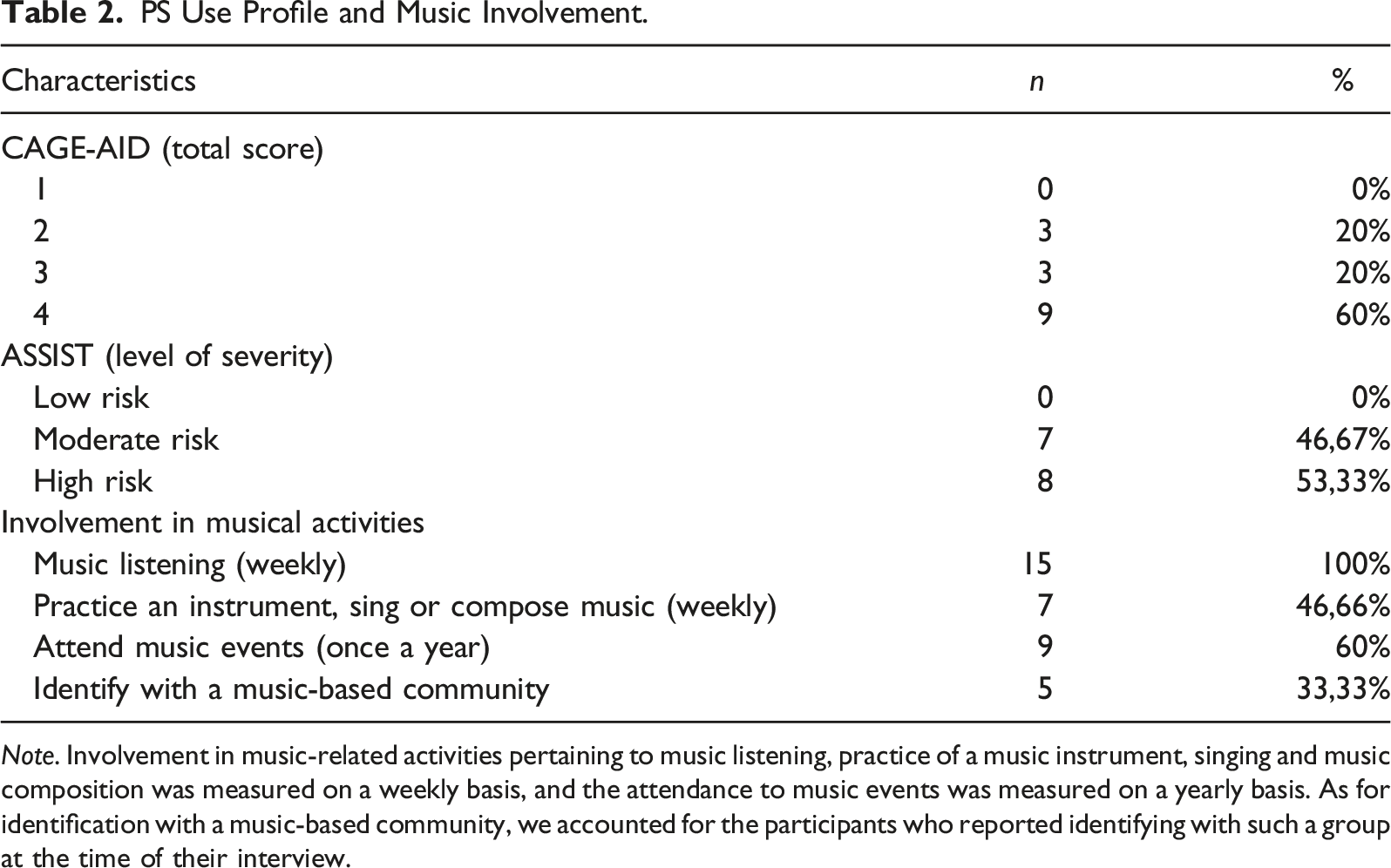
Note. Involvement in music-related activities pertaining to music listening, practice of a music instrument, singing and music composition was measured on a weekly basis, and the attendance to music events was measured on a yearly basis. As for identification with a music-based community, we accounted for the participants who reported identifying with such a group at the time of their interview.
Links Between Music and the Addictive Trajectory
Participants’ perception about the links between musical activities and the addictive trajectory were heterogeneous. Most reported that music empowers them to act positively on their PS use. According to them, different types of musical activities promote empowerment at the individual and collective levels, resulting in a capacity to reduce, control or quit problematic PS use, but also to reduce the PS-related harms during consumption periods. Some participants also reported that music sometimes poses risks for increased PS use and relapses, though these risks are limited to specific circumstances. Finally, though all participants acknowledged the importance of music in their lives, approximately half of them reported no influences of music on PS use.
Benefits of Musical Activities in the Addictive Trajectory
Most participants reported experiencing mental health issues. Because those issues are often at the root of their consumption, some referred to PS use as a self-medicating strategy. Similarly, music was viewed as an accessible tool despite experiencing homelessness, which main function is to address well-being related needs. Given that music and PS are used for similar reasons, participants reported using music to promote well-being and reduce the need for PS. These benefits were generally attributed to one’s active involvement in the practice of a musical instrument, singing, music composition, or identification with a music-based community.
Musical Activities to Control and Decrease PS Use
For participants who wished to exert greater control over their consumption autonomously, one strategy was to find alternative means to manage mental health symptoms, particularly in periods of high psychological distress. When facing challenges, music, and particularly musical practice, was considered an effective coping strategy that reduced the need for PS use. “[When I discovered music composition] that’s when, it is from then that my consumption… that’s the reason I experienced much less…overdoses. You know, it… it allowed me to change my ideas, to let go of my madness.” - Martin “When I practice [music] it helps me to cope. It happened sometimes, having been able not to drink because I was playing music.” - Mia
The use of music practice to cope with challenges and mental health issues was also demonstrated through the negative consequences of losing access to music, which for some, resulted in elevated distress, and to an escalation or relapse towards problematic PS use. “Well, it [playing drums] helped me tough until my twenties without doing stupid things before. You know, it feels like… but at 20, when I lost my band, I did: “Fuck off!”. I began to… I was anti-drug and all. I started everything. […] But until 20 years old, I had never used anything. So… no cigarettes, no nothing, neither alcohol. It took a while before I got off the ground, but I took off hard! During the same year, I have known all the drugs.” - Sam
In the cases where participants aimed to reduce PS use, some played music as a strategy to relieve cravings and withdrawal symptoms. “Playing music helps me pass time. […] and then I am less focused on my cravings. […]. Because I realised that when I do something really, that I’m passionate about, well I feel withdrawal symptoms to a lesser extent.” – Chloé
Musical Activities to Promote Abstinence and Recovery
Some of the benefits of playing a musical instrument emerged from individuals’ development and acknowledgement of their own capacities, which builds and reinforces self-esteem and self-valorisation. These constituted protective factors against further distress and relapses during abstinence periods. “Definitely, it [playing music] is a means of taking care of me and of being able to give myself a pat on the back since I did something by myself. It is very very rewarding. Very very rewarding.” - David
In addition, participants were able to identify the songs that when listened to, put them at higher risk of PS use. Thus, they consciously adapted their music-listening habits when they aimed to reduce or quit PS use. “I feel great now. I listen to music, it goes well. I did not listen too much to them, the songs I had listened to lately [associated with PS use], and it’s ok. In the moment, it saves me. Everytime I walk, I have my music. I choose my songs, yes, I really choose them.” - Sam
The addictive trajectory encompasses non-linear changes in the severity of PS use. Hence, there were also moments where participants used PS more actively. They somehow developed music-related strategies to reduce potential harms associated with increased PS use. “[When I play music] I would say I use less drugs. I tough it out longer between each consumption because I have a source of pleasure in between, you know, so it accentuates the effect, and I use less drugs, but more… more sanely.” - Sam
Finally, it is important to note that the use of music as a coping strategy is often a personal, individual activity. Yet, there are circumstances where music played a protective role within the larger community. Participants who identify with music-based communities, including punk, hip-hop and electronic, valued their identification with such communities for their non-judgemental support. Indeed, members of such communities reported looking after each other’s survival and well-being, including regarding PS use, whether one experienced PS use issues or tried to decrease their consumption. “[punk community] It represents the people who saved my life. Like, literally, many times. It represents, you know, solid friendships, love, peer support… yeah. […] When I overdosed. Often, I overdosed a lot.” - Kim
Risks of Musical Activities for PS Use
While music may encourage social contacts and community belongingness, social contexts like belonging to music-based communities or taking part in music events are also contexts where young adults may experience pressure to use PS. For some participants, this led to the initiation and discovery of novel drugs. However, most attributed those changes in PS use to the social contexts and ways of living anchored within those communities rather than to the music itself. “When I was younger you know alcohol, powder, K, they were all drugs I used to do with punks too. So you know, it came with people from my surroundings. But it was not because of music, well, it is more the way of living that comes with music that brings drugs, more than the music itself. Because I don’t think that, there are bands who encourage consumption but I think it’s more about anarchist activism or just anti-societal.” - David
Some participants also observed that attending musical events, shows and festivals, put them at higher risk of increased consumption and generally coincided with the initiation of PS use during adolescence. “Psytrance, it's like trance, trance music, like… it’s like electronic, kind off, well, not kind off, it is electronic. And it, it became fucking weird for me because it brought me in, you know, in the consumption of LSD and magic mushrooms and… You know going to raves and everything, it became toxic to me, it led me to psychosis.” - Emma
For others who were already using PS, attending such events led them to initiate novel substances. “It was really cool to follow [friends] and get drunk, but it lead to the consumption of stimulants. I met someone who had Adderall, I discovered it… slowly. […]. After that, I went to the Rockfest, I met other people, I got into coke.” - Julie
According to most participants, following the initiation of PS use, identifying with a musical community or attending music events, shows and festivals remained linked with the progression and aggravation of PS use. “It evolved into more consumption, going to more raves. I was going in raves like three times a week. And it became very weird like… I was on LSD and all, like every day and then I realised that it no longer made sense. Then it really damaged my brain and everything. So it was toxic at that time.” - Kim
One participant also attributed his initiation of a novel PS and the development of a problematic consumption to the listening of songs that contain lyrics discussing PS use. “There is always a message in a song. So, like, trap, there are no real messages except sex, drugs, money, kill people, know people who are being killed, go to jail. […]. You know, I mean, I would never have known Xanax if I had not listened to it. And now, it is one of the drugs to which I am the most addicted to […]. I bought it once, and it was over.” - Rémi
Importantly, whether music listening led to increased PS use or not was highly dependable on individuals’ interpretation of the music and on their own experiences with it. Namely, some participants could identify specific songs that had been repeatedly associated with consumption experiences. As a result, the mere exposure to the song triggered urges to use PS and posed risks of increased PS use or relapses after an abstinence period. “Music can bring me cravings. […] There are songs you know like… when I listen to old websites or fall on old tunes I was listening to when I was on substances it can make me relapse and make me want to consume.” - David
Some participants explained that belonging to groups like punks is highly valued and contributes to survival in the context of homelessness, yet may also hinder recovery. As group members often express their belongingness through their dressing style, they are often stigmatised and experience barriers to access treatment services. “[In addiction treatment center] you’re not allowed to have clothing with holes, with patches, with skulls, … anyway, overall, there was none of my clothing I was allowed to wear and they just gave me a jogging suit, they told me congratulations, get yourself set. So, you know, it didn’t work. Anyway, I found it a bit restraining like… you know I mean, you accept people with addiction at a certain point you need to leave them a certain dressing freedom. […] It is very important, it’s your identity you know.” - Emma
Beyond the Influence of Musical Activities on PS Use
For other participants, PS use did not evolve from self-medicating needs. They generally initiated PS use for exploration and pleasure-oriented purposes. In the meantime, music, and mostly music listening, has always been part of their lives, accompanies their daily activities and promotes well-being. According to them, music and PS use serve different purposes, and are completely independent from each other.
In the context where participants use PS daily, in addition to listening to music as frequently, it appears obvious to them that music listening and consumption behaviors necessarily overlap, without being linked. “[Music] has always been omnipresent in my substance use, but it’s not, I don’t think it has ever influenced positively or negatively you know. […]. You know, I am a chronic substance user. I use drugs everyday, regularly and all. […]. At a certain point, there needs to be music.” - Emma
Some participants took part in festive events and observed having used more PS in those events. However, they attributed it to the festive and social context of the event rather than the music itself. “Music is often associated with festive contexts. You go in a rave, you sure don’t go sober. You know, that’s for sure. Or if you go in a show, that’s much more fun if you drink beer. Definitely, I think that… and you know, I wouldn’t say that it’s the music itself, I would say it’s more about the mood, like, the vibe, the energy in those events. And also the fact that, yes we go there to have fun, for the music, to dance, to sing, we also go there to meet people, to get in contact with others, and it is easier when you’re not sober.” - Maëlle
Based on personal observations, some participants learned mechanisms by which music listening could present risks for their own PS use (e.g. lyrics, associating music with PS use). Based on this knowledge, they oriented their musical selection as well as the contexts where they listen to it to avoid being exposed to those risks. Hence, while they recognize the potential risks of music on PS use, they are empowered by their ability to select and engage in music-related activities that will not put them at risk of increased PS use. “I don’t think it has, no, I don’t think it influenced positively or negatively, you know. […]. I did not listen to music that dealt with drugs. You know, there is pro-drug music, but you know, I don’t think, no I don’t think it ever had an impact on whether I used more or less drugs. […]. So, it’s not like I put on a tune when I shoot myself. I never did it this way. […]. Well I know that some people, when they use drugs, they put their favorite music and do their heroin hit and get high on it, but I don’t do it.” - Emma
Importantly, music lyrics are sometimes used to understand specific experiences and challenges faced by young adults’ peers and communities. Thus, listening to music that addresses themes like addiction and homelessness is not necessarily perceived negatively. Interest in gaining knowledge and developing a greater comprehension of peers’ realities are valued reasons to listen to such thematic songs, which may empower communities to better support each other without influencing PS use. “So you know, those are very specific terms, that if I had not listened to this music, if I had not understood this music, I couldn’t have developed this relationship with him and understand. […] I really learned a lot so you know, I think music is also lots of learning on different topics.” - Chloé
Discussion
The study aimed to understand the mechanisms underlying the links between musical activities and the addictive trajectory, from the perspective of young adults who experience homelessness and problematic PS use. Results reveal empowering and risky influences of music, the latter being limited to specific circumstances. However, almost half of the sample reported no influence of music on their PS use.
Participants reported engaging in music to act upon their own addictive trajectory. As supported in literature, participants reported that PS use is often a means of self-medication in response to adverse experiences. Coherently, they expressed that musical activities had many benefits on global well-being and that it helped them cope with negative situations, emotional and mental health issues, which are often at the root of problematic PS use (Paul et al., 2020; Sarvet et al., 2018; Smith et al., 2017; Wong et al., 2013). Importantly, some participants highlighted that different music-related activities, including music listening, practice, and belonging to music-based communities, helped them better control their PS use, and ultimately reduce the harms associated with their consumption, a theme that had not been explored previously.
Hence, music reduces the need to turn to substances to cope, which promotes control, decrease and recovery from problematic PS use. Accordingly, there is a need to recognize the beneficial influence of musical activities on global well-being of PS users and their capacity to use music as a tool to act upon their own lives outside treatment services.
Despite that participants use musical activities as a tool, music listening and musical practice, in community organizations designed for homeless young adults, are generally conceived as a past-time activity. Also, though some organizations recognize the important role of those music-related activities, its use in health-promoting approaches is often limited to therapeutic settings, where music-based strategies are identified and applied by professionals rather than being freely accessible to young adults (Ghetti, 2004; Kayaoglu & Altun, 2021; Silverman, 2012). To sustain individuals’ empowerment in promoting their own well-being and PS use regulation, it would be relevant to consider music listening and practice as tools that should be made available in an autonomous manner in harm reduction services to facilitate young adults’ access to strategies they are interested in, at the moment they need them. Additionally, while literature had been largely centered on the role of music listening, our results suggest that participants who engage in the practice of music instruments, singing or composition, are more likely to experience benefits of music on PS use compared to those who engage in mere listening (Hohmann et al., 2017; Wright et al., 2020). Thus, young adults with problematic PS use could benefit from a better access to musical instruments, creative and practice spaces in harm reduction facilities.
Our study also brings a clearer understanding about the risks of musical activities on PS use. Our results are coherent with the literature about the risks of music for PS use. For example, Primack et al. (2010) and Slater and Henry (2013) have found that the exposure to music lyrics that discuss substance use was associated with greater substance consumption, and that this exposure played a role in the initiation of substance use in young people. In addition, Battisti et al. (2006) and Lee et al. (2011) also found that young people tended to use greater quantities of drugs in festive and music events. However, accounting for the perspective of young adults regarding their addictive trajectory and its relation with music allowed us to contextualise those risks. While literature largely emphasized those negative influences, few participants actually reported negative links between music and PS use, and those who did described the risks as being limited to specific circumstances. Paying attention to the individual and contextual factors surrounding music and PS use clarified the mechanisms underlying those links. In coherence with literature, results suggest that the negative links between music and PS use are explained by specific contexts like festive events or songs that either encourage PS use through their lyrics or are associated with one’s consumption behaviors (Brown & Bobkowski, 2011; Buvik & Rossow, 2015; Dingle et al., 2015; Lee et al., 2011; Noroozi et al., 2018; Slater & Henry, 2013; Swartbooi et al., 2016). As a result, though music has potentially harmful repercussions on PS use, the music that does so is limited to specific, identifiable, and controllable pieces or contexts. Hence, participants report avoiding listening to those risky songs or attending those contexts (e.g. festive events) when they aim to control, reduce or quit PS use. It is an important nuance given that the access to musical activities is often limited in addiction services due to professionals’ perceived risks of music on PS use. Our results suggest that rather than limiting access to musical activities, and thus limiting access to well-being promoting strategies in circumstances where young adults feel vulnerable, it is possible to identify and avoid engaging in risky musical activities, or to help them develop a different interpretation of risky songs to reduce their harmful potential.
Finally, it is important to highlight that around half of our sample reported no link between music and their PS use. This perspective received little attention in the literature yet reminds us that beyond the potential benefits and harms of music on PS use, the main reasons why young adults use music remain addressing personal needs related to well-being. As music becomes even more important during adverse life contexts such as homelessness, it should be noted that having no alternative means to address emotional and psychological needs also brings important risks in terms of aggravating PS use (Eitle & Eitle, 2014; Schindler & Bröning, 2015). This supports the importance of facilitating access to musical activities in services designed for homeless young adults who use PS.
Limitations
The results need to be interpreted in consideration of the following limitations. Despite our efforts to diversify our sample based on age, it was not possible to recruit participants aged between 18 and 22 years old. Similarly, few participants identified with ethnic minorities. Though our sample may be representative of young adults reached by community organizations, the experiences of younger adults or of people who identify with ethnic minorities may differ. Also, a part of the study has been conducted during the COVID-19 pandemic. While face-to-face meetings were privileged, some interviews were conducted virtually. It is possible that this modality had an impact on the comfort with which participants reported their experiences. Nevertheless, some participants (e.g. who experience social anxiety) reported that they felt more at ease to disclose sensitive experiences virtually.
Strengths
Our empowerment perspective allowed us to move beyond what had been done in past research and to gain a better understanding of what influences homeless young adults’ addictive trajectory beyond their difficulties. The use of qualitative methods highlighted individuals’ perspective and strengths in accessing personal resources to act upon their own consumption trajectories, which brought to light an in-depth comprehension of the phenomenon. Our collaboration with a community organization allowed us to ensure the relevance of the study, to facilitate the recruitment of our sample and the data collection within young adults’ own environment. Our collaborative relationship with young adults and community workers will also facilitate the dissemination and the application of our results within the community.
Implications and Future Research
Young adults could benefit from interventions that consider their interests and capacities while respecting their autonomy and resources in addressing life challenges, herein musical activities specifically. Access to music listening, practice, singing or composition, should be increased and adapted to the population’s needs. Knowing that listening to some musical pieces might negatively contribute to PS use, this study initiates a reflection about strategies to change one’s interpretation of some musical pieces to dissociate them from negative feelings and to reduce their harmful impact on the addictive trajectory. Such strategies would contribute to empower young adults to keep control over their PS use despite being exposed to consumption triggers.
This study also highlights the importance of considering young adults’ perspective and experiences to adapt research to their realities. Research should regard the relation between music and PS use in a contextualized manner, acknowledging that it also benefits PS use through its impact on well-being. Accordingly, there is a need to be more thoughtful about the approaches we use when studying music and PS use among structurally marginalised populations, to capture a fuller picture and avoid further stigmatizing them even regarding their well-being promoting strategies. Though some musical activities pose risks in some contexts, they most often constitute tools that promote well-being and control over consumption difficulties.
Footnotes
Acknowledgements
We wish to thank the research team and collaborators of the Research Chair on Gender and Intervention in Addiction.
Author Contributions
The study was mainly developed and realised by Elise Cournoyer Lemaire, under the supervision of Karine Bertrand and Christine Loignon. The study was part of a larger international project in which Marie Jauffret-Roustide and André Lemaître took part in developing the research protocol and design. For the specific research presented in this paper, data analysis was performed by Elise Cournoyer Lemaire. The first draft of the manuscript was also written by Elise Cournoyer Lemaire, and all authors commented on previous versions of the manuscript. All authors read and approved the final manuscript.
Declaration of Conflicting Interests
The author(s) declared no potential conflicts of interest with respect to the research, authorship, and/or publication of this article.
Funding
The author(s) disclosed receipt of the following financial support for the research, authorship, and/or publication of this article: This study was funded by the Programme Gender-Net (Canadian Institutes of Health Research) and the Fonds de recherche du Québec – Société et culture (FRQSC).
Ethical Approval
Informed consent was obtained from all patients for being included in the study. The study was approved by the CIUSSS de l’Estrie-CHUS (Sherbrooke, Canada, No. 2020-329).
