



Abstract
As the use of some psychoactive substances continues to be a global health risk, it is important to understand why people use them. We compared the predictive power of psychopathy and masochism with regard to lifetime recreational drug use and tested the underlying motives in a sample of 415 US-based adults. Psychopathy predicted use of illicit drugs, cannabis, and nicotine, while masochism predicted cannabis, alcohol, and caffeine use. Both traits were related to most motives, but the motives differentially predicted substance use. Expansion motivation was the sole motive for illicit drug use, whereas cannabis was predicted mainly by expansion and enhancement. Alcohol, nicotine, and caffeine were used to escape daily worries, and alcohol was further used for social reasons. Benign masochism is a newly identified predictor of popular drug use. Future research could investigate masochism and expansion motivation as predictors of potentially harmful substance use.
Keywords
Introduction
Recreational drug use continues to be common around the world. Caffeine is by far the most widely consumed psychoactive substance, with 89% of adult US Americans consuming it regularly (Fulgoni, Keast, & Lieberman, 2015). Alcohol is second, with just 27 countries worldwide (mostly those where it is illegal) listing consumption of less than 1 L (net alcohol) per person per year (World Bank, 2022), and 50% of US Americans reporting to have consumed alcohol in the past month (NSDUH, 2020). Despite decreasing numbers, smoking tobacco is still prevalent, with 21% of US Americans aged 12 or older having used nicotine products in the past month (NSDUH, 2020), and 15% of daily smokers (IHME, 2022). Apart from these popular and mostly legal drugs, there are a number of (mostly) illicit drugs that are consumed frequently around the globe, such as cannabis, cocaine, MDMA, amphetamines, and opiates (United Nations, 2022). As many drugs are harmful for physical and mental health (Nutt, King, Saulsbury, & Blakemore, 2007), it is important to identify potential risk factors. Here, we investigate trait psychopathy and masochism as predictors of lifetime recreational drug use of various psychoactive substances, with a particular focus on the motives that link these traits to drug use.
One of the personality traits most closely linked to drug use is psychopathy, both clinical and nonclinical manifestations of psychopathy (Hare, 1999; Lebreton, Binning, & Adorno, 2006). It is characterized by malevolent interpersonal behavior such as deceit and manipulation, affective deficits such as callousness and lack of empathy, and impulsive, reckless, often criminal behavioral tendencies (Mahmut, Menictas, Stevenson, & Homewood, 2011; Williams, Paulhus, & Hare, 2007). It is particularly the latter that relate psychopathy to psychoactive substance use (Schulz, Murphy, & Verona, 2016; Walsh et al., 2007). Psychopathy is characterized by low self-control (Jonason & Tost, 2010), pursuit of immediate gratification at the cost of long-term interests (Hare, 1999), risk taking (Jones & Paulhus, 2017; Lyons, 2015), and a high need for stimulation and sensation seeking (Blackburn, 1969; Hare, 1999). In combination, these tendencies result in the use of illicit drugs, nicotine, and alcohol (Jonason, Koenig, & Tost, 2010), often to alleviate boredom (Hare, 1999; Lebreton et al., 2006).
Opposed to Machiavellianism, which is characterized by a similarly manipulative interpersonal style (Jones & Paulhus, 2009), psychopathy is associated with extraordinary levels of impulsivity in situations where Machiavellianism predicts more thoughtful and controlled behavior, linking psychopathy to higher levels of risk taking (Jones & Paulhus, 2017). Notably, it is the lack of self-control and future perspective that link psychopathy to the use of illicit substances, whereas the interpersonal and emotional deficits—aspects they share with Machiavellists, for example—are unrelated or even negatively related to drug use (Schulz et al., 2016; Smith & Newman, 1990). Accordingly, research studying psychopathy jointly with Machiavellianism and narcissism as the Dark Triad constellation (Paulhus & Williams, 2002) found that only psychopathy predicts illicit drug use and cigarette smoking. In contrast, all three traits were linked to alcohol use—albeit possibly for different reasons (Jonason et al., 2010).
In part via shared sensation seeking tendencies, subclinical levels of psychopathy are linked to non-sexual, common masochism (Sagioglou & Greitemeyer, 2020). Masochism refers to the enjoyment of everyday aversive stimuli that simulate threat (Rozin, Guillot, Fincher, Rozin, & Tsukayama, 2013; Sagioglou & Greitemeyer, 2016, 2020). Typical examples are aversive aesthetic preferences (sadness-inducing art; disgust- and fear-inducing horror fiction), the liking of painful activities such as ice bathing (Ferris, 2018), and fear-inducing experiences such as haunted house attractions (Andersen et al., 2020), but masochism also encompasses the enjoyment of spicy food and strong tastes such as alcohol or black coffee (Rozin et al., 2013; Sagioglou & Greitemeyer, 2020). The pleasure in the experience seems to be due to (not in spite of) the negative arousal induced by the stimuli (Andersen et al., 2020; Ferris, 2018; Rozin & Schiller, 1980), and people’s favorite level of aversiveness is often the one they can barely tolerate (Klein, 2014; Rozin et al., 2013). For example, enjoyment of horror films and haunted houses is positively correlated with the fear felt during these experiences (Andersen et al., 2020; Andrade & Cohen, 2007).
A number of motivational accounts have been offered for masochistic pleasure. Rozin (1996) and Rozin et al. (2013) theorized that masochists enjoy the mind-over-body experience that aversive stimuli induce. Individuals react to the stimuli as though there was a threat as in the pounding heart when experiencing fear or the repulsive tendencies when consuming bitter substances. At the same time, at higher-order cognitive levels the mind is aware of the simulation and benign nature of the threat, leaving the person to feel in control and as if mastering a challenge. As such, caffeine and alcohol are prime candidates for masochistic pleasures and masochism should predict use of these substances beyond the effects of antisocial traits. Both substances trigger bitter taste receptors and thus signal toxicity to the brain, but consumers are aware of their rather benign nature and thus override impulses to reject the substance.
Baumeister (1988, 1997), on the other hand, argued that sexualized pain and comparable non-sexual behavior such as drug use or sky-diving are a means to escape the burdens of self-awareness. Indeed, escape is a prominently listed motive for drug use (Cooper, 1994; Simons, Correia, Carey, & Borsari, 1998), and could also be a motive linking masochism to drug use. Furthermore, masochistic pleasure is associated with sensation seeking (Sagioglou & Greitemeyer, 2020), and it is in part this need for intense, novel, and, at times, thrilling stimulation that masochism and psychopathy have in common (Sagioglou & Greitemeyer, 2020). Masochism and psychopathy also share lowered levels of self-control (Greitemeyer & Sagioglou, 2021). As masochism has not been studied in relation to drug use, it seems important to test such self-directed preferences for pain against the global antisocial tendencies of psychopathy. That is, masochism may account for some of the links previously found for psychopathy and drug use. Particularly masochism’s association with sensation seeking may thus partly link it to the use of psychoactive substances beyond alcohol and black coffee.
The consumption of various further psychoactive substances such as cocaine, amphetamines, or MDMA, however, is typically neither aversive (e.g., positive phenomenological experience) nor completely save (e.g., illegal purchase, potential contamination of the substance), and in most cases, the taste experience plays no part in the use of these substances. Although it is possible that masochism is related to the use of these substances due to sensation seeking needs, it seems unlikely that masochism is strongly linked to the use of illicit or rare substances over and above psychopathy, because it may not be perceived as a sufficiently harmless and controllable, simulated threat. Instead, as psychopathy’s sensation seeking and disinhibition reach beyond those of masochism, in direct comparison psychopathy may fully account for any potential link between masochism and illicit drug use.
Apart from direct links between trait variables and drug use, past research investigated specific motives people have to use drugs. Due to their popularity, particularly alcohol and cannabis have been examined with regard to the reasons people have for using them. A central motive for consuming alcohol and marijuana is to cope with negative internal states by trying to suppress and momentarily forget them, and the enhancement of positive affect (i.e., hedonic motives, consuming because it is enjoyed) (e.g., Cooper, 1994; Kuntsche, Stewart, & Cooper, 2008; Simons et al., 1998). Alcohol use is also predicted by social enhancement (i.e., because it makes social situations more fun) and conformity (i.e., due to external factors such as group pressure), while marijuana use is also predicted by expansion motives (i.e., to know oneself better, to expand one’s awareness; Simons et al., 1998). Moreover, classic work by Howard Becker (1953) showed that social settings for drug use function as positive reinforcement, in much the same way that social context contributes to the learning of liking coffee or alcohol (Rozin, 1990). Thereby, once coincidental settings can become motives. Generally, the pharmacological effects of drugs vary, and so do the dominant reasons users report for taking them (e.g., Hartwell, Back, McRae-Clark, Shaftman, & Brady, 2012). In fact, not much is known about the motives for illicit substance use, or how psychopathy and masochism may relate to drug use motives.
The Present Research
We thus designed a study to (a) investigate the predictive value of psychopathy and masochism with regard to recreational drug use, and (b) to compare the motives that link these trait variables to drug use. We examined a variety of substances such as popular drugs (i.e., cannabis, alcohol, nicotine, caffeine), illegal drugs (e.g., cocaine, LSD, methamphetamine), legal highs (e.g., N2O), and prescription drugs (e.g., cough syrup, oxycodone). While the effects of psychopathy are well-established, masochism was thus far studied only in relation to the liking of alcohol and caffeine. As masochism is reliably related to psychopathy and sensation seeking (Greitemeyer & Sagioglou, 2021; Rozin et al., 2013; Sagioglou & Greitemeyer, 2020), a central question is to what extent masochism predicts the use of psychoactive substances beyond the effects of psychopathy, and vice versa. Given that masochism and psychopathy have independent effects on substance use, a second question will concern potentially different motives for drug use.
Notably, we examine the four antagonistic personality traits that form “the Dark Tetrad” constellation of personality (Paulhus, 2014; Paulhus, Curtis, & Jones, 2018), that is, psychopathy, Machiavellianism, narcissism, and everyday sadism. Although prior research suggests that of these traits psychopathy is the most reliable predictor of less frequently consumed substances such as illegal and rare ones, alcohol use was also predicted by narcissism and Machiavellianism (Jonason et al., 2010). To test whether masochism has unique predictive value of alcohol use that goes beyond shared variance with antisocial personality traits, we measure the complete Dark Tetrad.
Method
We assessed recreational drug use, the Dark Tetrad, masochism, and motives for recreational drug use. As control variables, we measured general personality factors based on the HEXACO model of personality (Ashton & Lee, 2001). To recruit participants, we used Amazon’s Mechanical Turk (MTurk). Generally, data collected via online labor markets such as MTurk is of high quality when some measures of precaution (see below) are implemented (Buhrmester et al., 2016). Moreover, honesty rates are higher than in laboratory studies (Paolacci, Chandler, & Ipeirotis, 2010), which makes online labor markets particularly suitable for more delicate subjects such as drug use. To identify potentially invalid data due to bots or inattentive responders, we included two instructional manipulation checks (IMC; Oppenheimer, Meyvis, T., & Davidenko, 2009) and additionally screened for plausibility. Figure 1 illustrates the sequence of our measures and the selection of our final sample. Reliability coefficients indicate alpha as obtained in the present sample. Survey sequence and participant selection.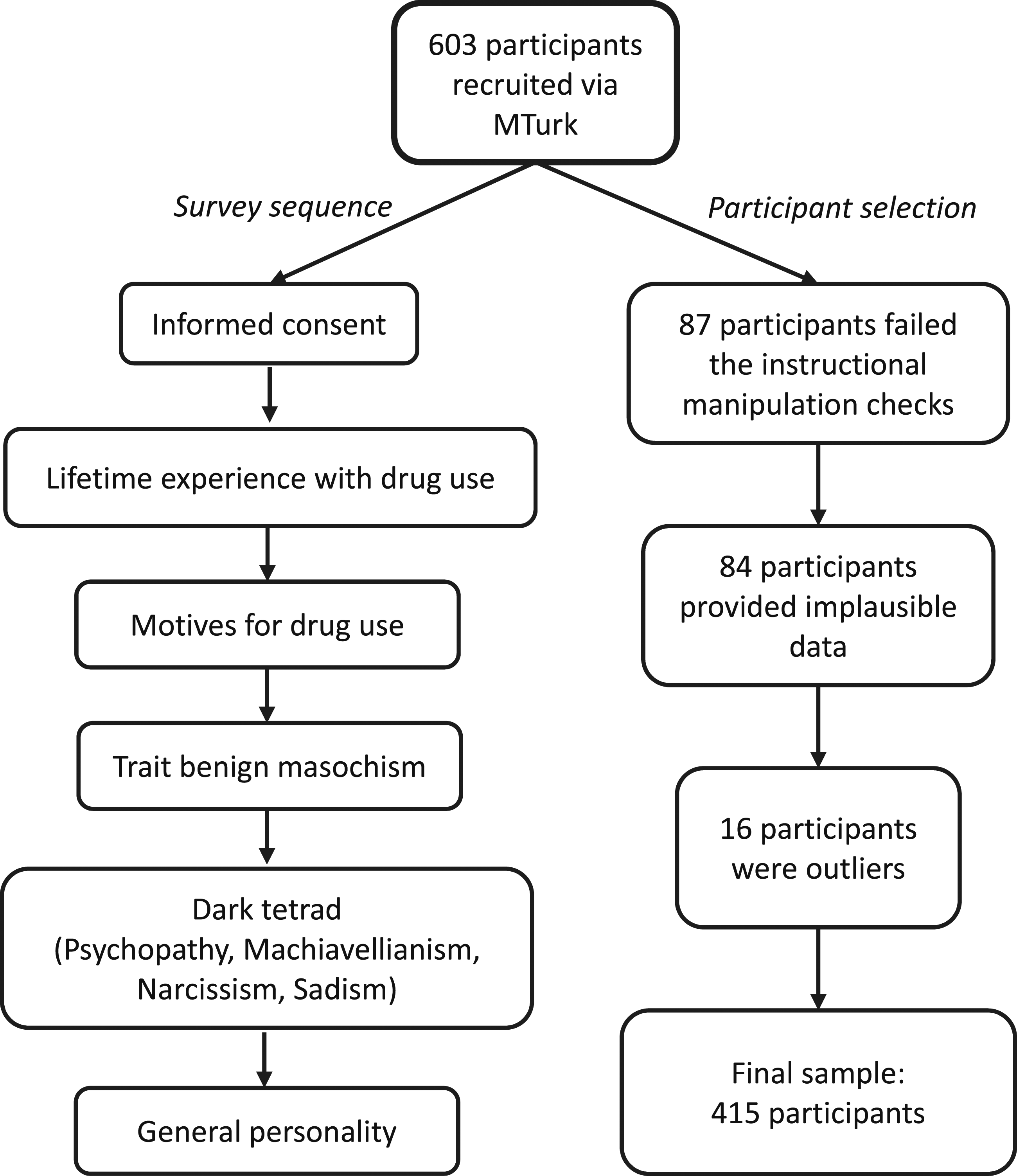
Participants
Six-hundred and three participants completed our study via MTurk. We excluded participants who did not pass the IMCs (n = 87), and then those who reported to have tried all 30 substances (n = 84). Because there were still 8 participants who reported to have taken 29 of the substances, we ran an outlier analysis on the remaining participants (n = 432). We identified outliers based on the outlier labeling rule (Hoaglin & Iglewicz, 1987), which uses an inter-quartile range (IQR) multiplier of 2.2. This resulted in an upper-level cut-off of 19 (25th percentile = 2, 75th percentile = 7, IQR = 5.5 × 2.2 = 11). The plausibility of this measure was supported by the fact that outliers were mostly participants who had indicated to have taken a number of extremely uncommonly-used substances “very often”, such as datura, deadly nightshade, and ibogaine. We decided to exclude all outliers, because there is reason to believe that these participants did not attentively respond to the questions and thus their data should be unreliable. Including the outliers led to much larger effect sizes in the predicted direction. The final sample were 415 English-speaking participants from the US (MAge = 38.83, SD = 10.68; 177 female, 237 male, 1 other; 408 US Americans, 7 other).
Materials and Procedure
Prior to participation, we informed individuals that there were two IMCs and only those who passed both would receive a bonus payment. After providing informed consent, participants completed a recreational drug experience questionnaire, a motives for recreational drug use questionnaire, a series of personality questionnaires, and demographics. At the end of the study, we informed participants about whether they would receive the bonus or not, and, in the latter case, which item(s) they had answered incorrectly.
The recreational drug experience questionnaire (Forstmann & Sagioglou, 2017) assesses people’s lifetime experience with 30 psychoactive substance classes. On a scale from 0—never, 1—very rarely to 5—very often (coded 1–6), individuals indicated how often they had taken a substance for “recreational purposes—that is, when not taken for treatment of a medical condition”. Items include, amongst others, psychedelic substances (e.g., LSD), dissociative anesthetics (e.g., ketamine), cocaine, heroin, opium, pharmaceutical opiates (e.g., codeine), empathogens (e.g., MDMA), amphetamines (e.g., Speed), methamphetamines (e.g., Crystal Meth), Cannabis, and popular legal drugs (e.g., alcohol).
To assess motives for recreational substance use, we used the Marijuana Motives Measure (Simons et al., 1998), which is an extension of the widely used Motives for Drinking Questionnaire (Cooper, 1994). It assesses five different motives with five items each. Participants indicated how often (1—almost never to 5—almost always) they had used drugs recreationally for the sake of enhancement (e.g., “Because I like the feeling”, “Because it is exciting; α = .91), conformity (“To fit in with the group I like”, “So I won’t feel left out”; α = .92), expansion (“To expand my awareness”, “To know myself better”; α = .93), escape (“To forget my worries”, “To cheer me up when I am in a bad mood”; α = .91), or social reasons (“Because it is a good social experience”; “It brings me closer together with other people”; α = .93).
Masochism was assessed with the list of experiences proposed by Rozin et al. (2013). Individuals rate the extent to which they like (0—not at all to 10—very much) 26 activities such as crying in response to sad novels, pain induced by a massage, burning mouth when eating spicy food, disgusting jokes, bitter foods, alcohol, or extreme physical exhaustion (α = .90).
The dark tetrad factors were measured with the Short Dark Tetrad inventory (Paulhu, Buckels, Trapnell, & Jones, 2020). There are seven statements per factor to which participants indicate their agreement (1—disagree strongly to 5—agree strongly). Sample items and reliabilities were: Psychopathy (“I sometimes get into dangerous situations.”; α = .84), Machiavellianism (e.g.,“I love it when a tricky plan succeeds.; α = .84), narcissism (“Group activities tend to be dull without me.”; α = .88), and sadism (“Some people deserve to suffer.”; α = .85).
General personality factors were assessed with the 60-item version of the HEXACO personality inventory (Ashton & Lee, 2009). It measures Honesty-Humility (α = .81; “I would never accept a bribe, even if it were very large.”), Emotionality (α = .80; “When it comes to physical danger, I am very fearful.”), Extraversion (α = .86; “In social situations, I’m usually the one who makes the first move.”), Agreeableness (α = .82; “I tend to be lenient in judging other people.”), Conscientiousness (α = .79; “People often call me a perfectionist.”), and Openness to Experience (α = .82; “People have often told me that I have a good imagination.”) with 10 items each (1—disagree strongly to 5—agree strongly).
Statistical Analyses
We first calculated raw correlations to examine the zero-order links between our variables of interest. To compare predictor strength and examine the indirect links of personality via motives on drug use, we then designed two path models using lavaan (Rosseel, 2012) for R (R Core Team, 2020; RStudio Team, 2021). Lavaan is a commercial-quality free open-source package for various multivariate statistical models (Rosseel, 2012). It was particularly suitable for our purposes, because we wanted to include all dependent variables (i.e. substance use) in one model to account for their covariation (i.e., the more a person drinks alcohol, the more likely they are to use an illicit drug), which is not possible using standard regression models. To test the significance of our indirect effects, we multiplied the effect of the independent variable (e.g., psychopathy) on the mediator (e.g., expansion) with the effect of the mediator on drug use, and estimated the symmetric confidence intervals (CIs) using the Monte Carlo method based on 1,000,000 simulated draws. An effect is considered significant when the 95% CI does not include zero (MacKinnon et al., 2004; Preacher & Selig, 2012). Finally, we consider our measures of drug use to be in interval-scaled, as (a) the Likert-scale included a zero point of never having tried the drug, and (b) the labelling of our scale anchors (0—never, 1—very rarely, 5—very often) suggests that the difference between each point should be construed as equidistant.
Results
We examined the popular drugs cannabis (marijuana and synthetic cannabinoids), nicotine, alcohol, and caffeine separately, and calculated a mean score for the rest of the substances, which included less frequently consumed legal and illegal substances. We refer to this composite score as “illicit drugs” (including technically legal-to-use, yet uncommonly used substances). People cannot logically report motives for something they have never done. Yet, only 6 individuals indicated to never have tried any of the 30 substances, and thus we completed our target analyses with the complete data set. Lifetime experience with each substance is displayed in Figure 2. There is no substance that has not been tried by at least 4 individuals. Lifetime experience with recreational use of psychoactive substances. Note. Percentage of people indicating to have had at least one experience with the respective substance for recreational purposes.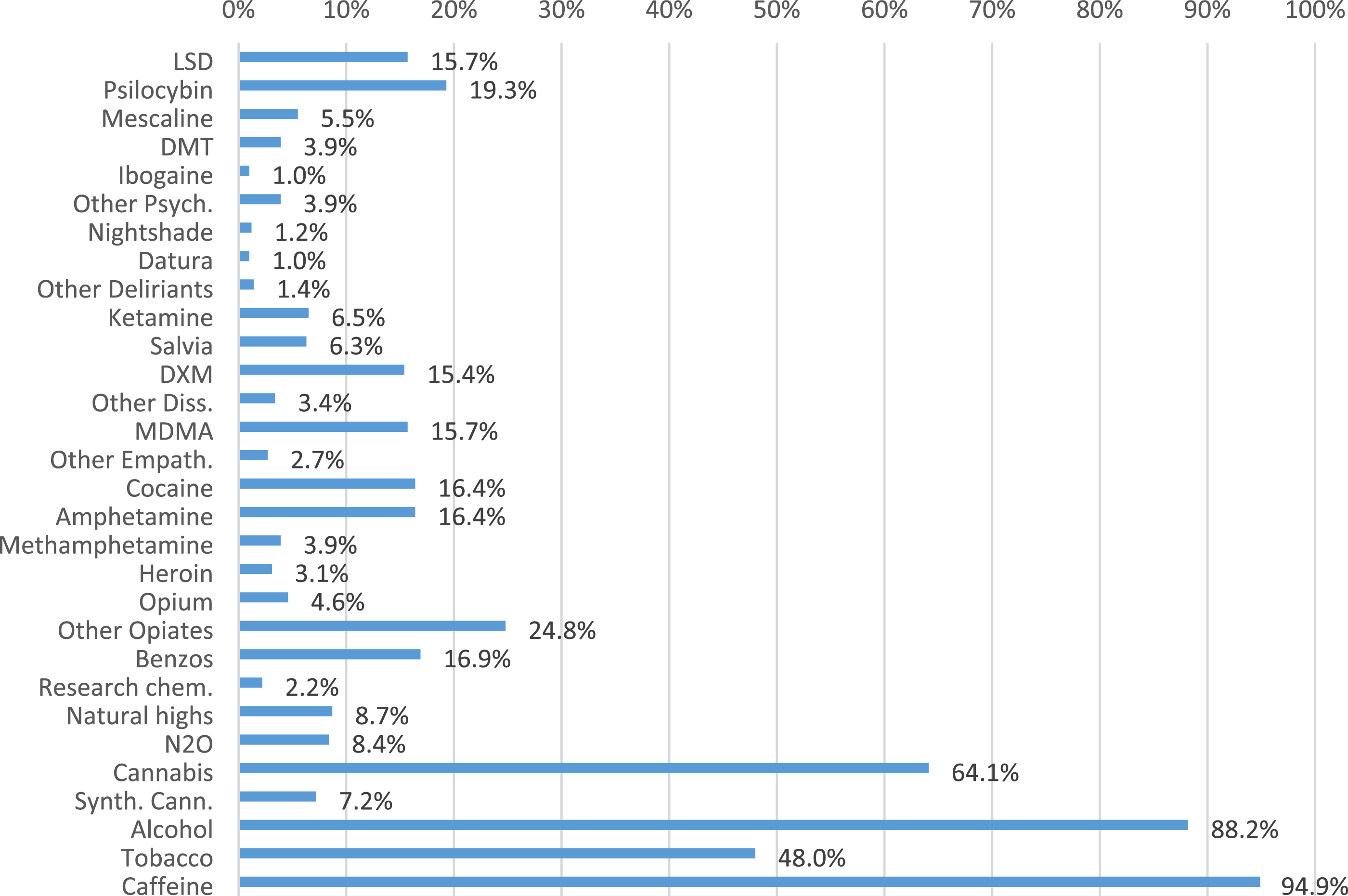
Means, Standard Deviations, and Zero-Order Correlation Coefficients.
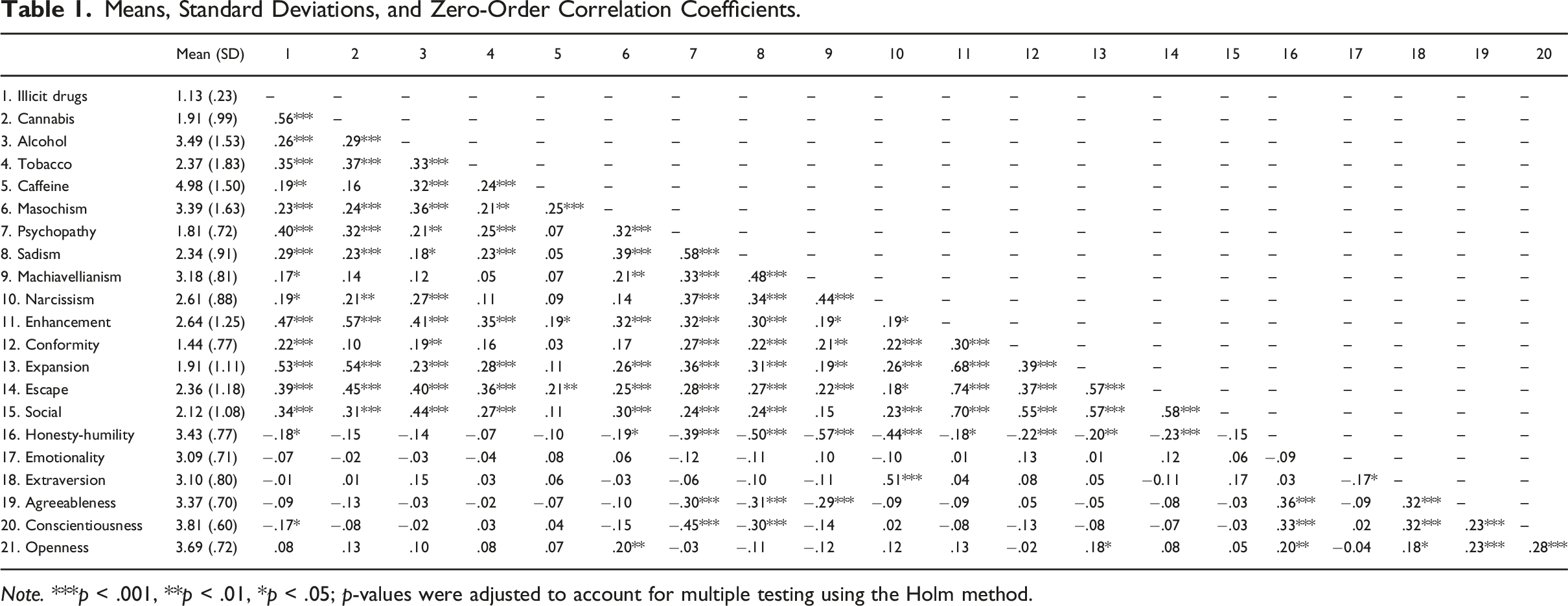
Note. ***p < .001, **p < .01, *p < .05; p-values were adjusted to account for multiple testing using the Holm method.
Significant Paths Linking Psychopathy and Masochism to Recreational Drug Use Frequency.
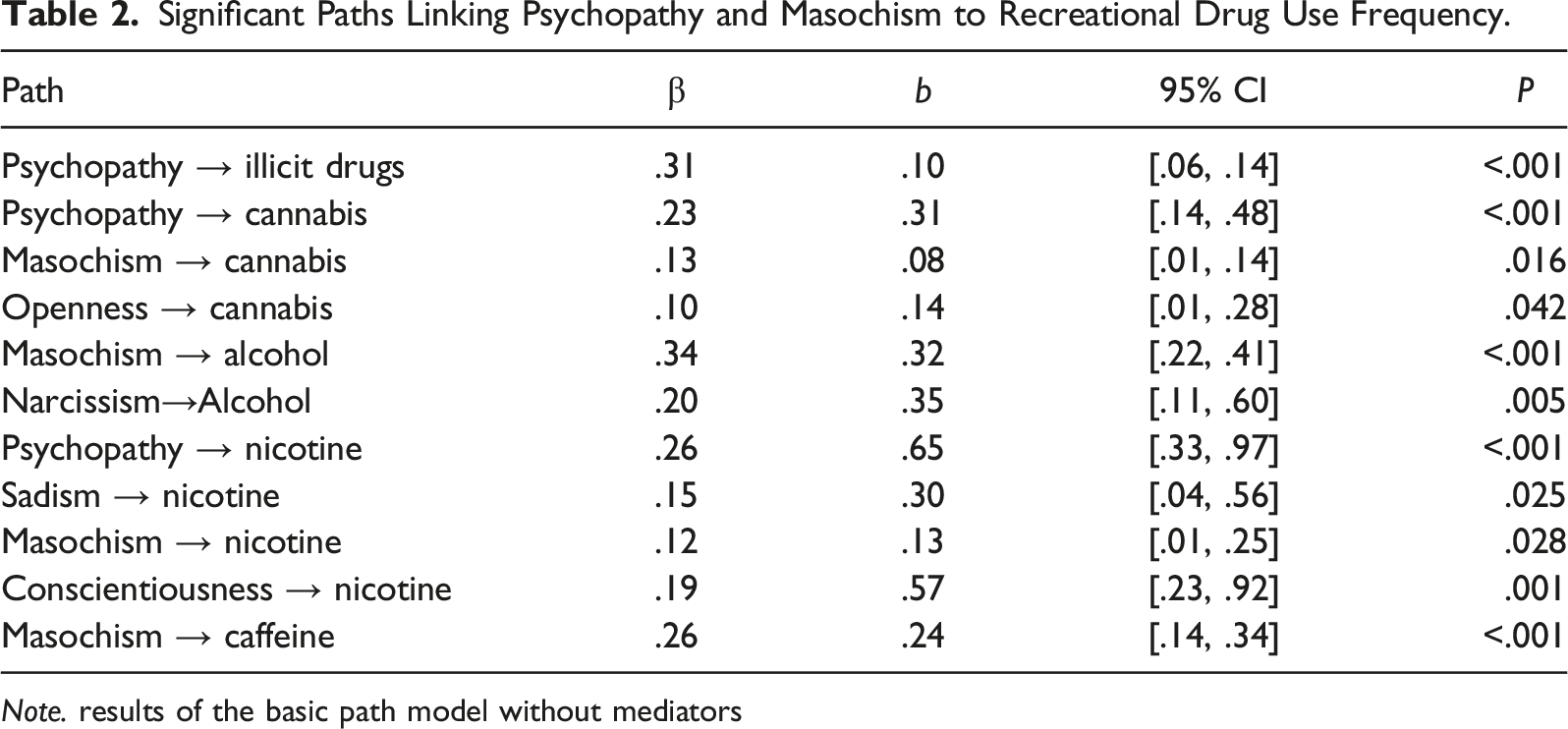
Note. results of the basic path model without mediators
To examine the different motives linking psychopathy versus masochism to drug use, we designed a second regression model in which the five motives for drug use were added as predictors of drug use frequency, and in which the motives were predicted by masochism and psychopathy. Model fit indices were as follows: CFI = .95; TLI = .83; RMSEA = .073, 90% CI [.06, .09]. The significant paths are displayed in Figure 3. Again, for the most part, the HEXACO factors did not predict substance use (see Table S2 for complete path statistics). Psychopathy and masochism predicting drug use via different motives. Note. Path model displaying the significant standardized effects of personality traits (left) on motives for drug use (center), and of personality traits and motives on drug use by substance category (right). Dashed lines represent direct effects between personality traits and substance use. *p < .05, **p < .01, ***p < .001.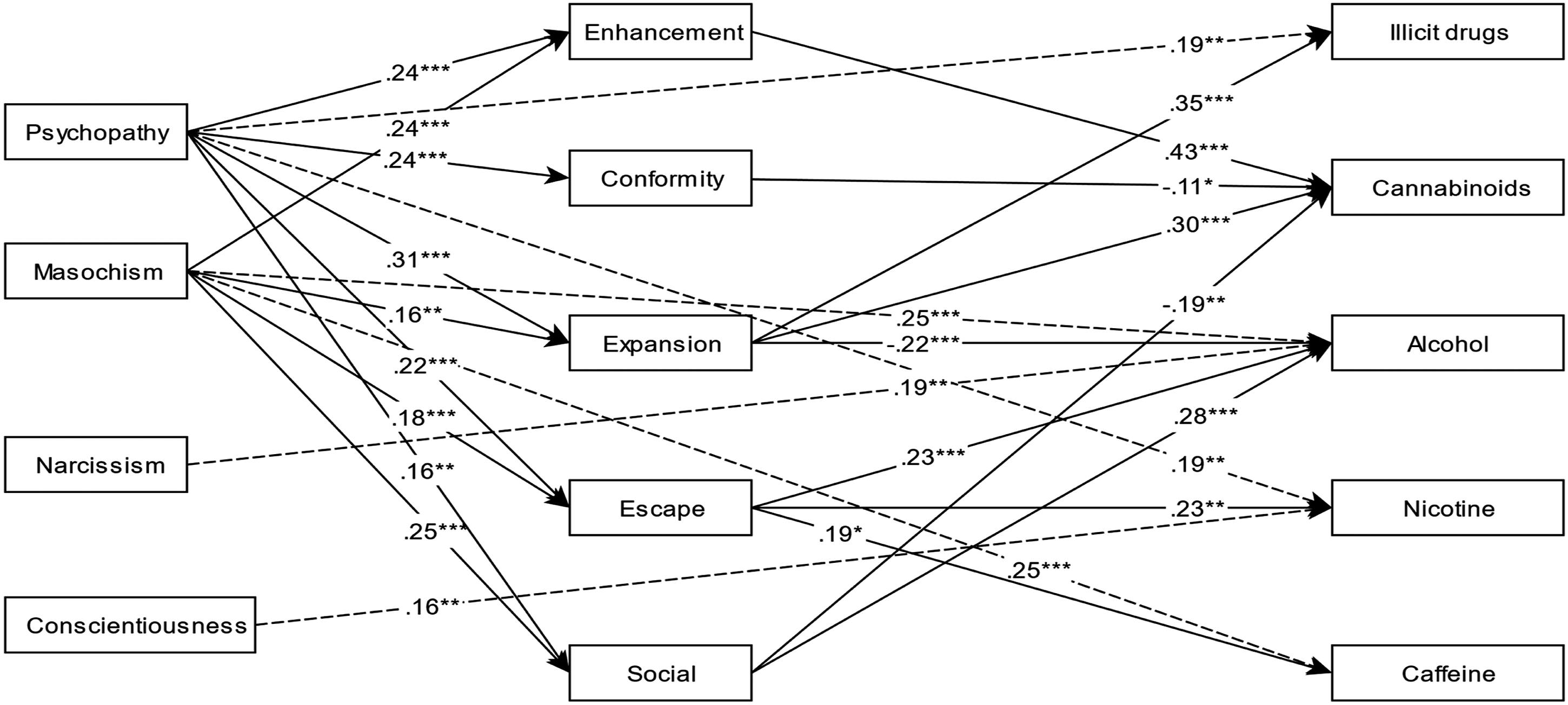
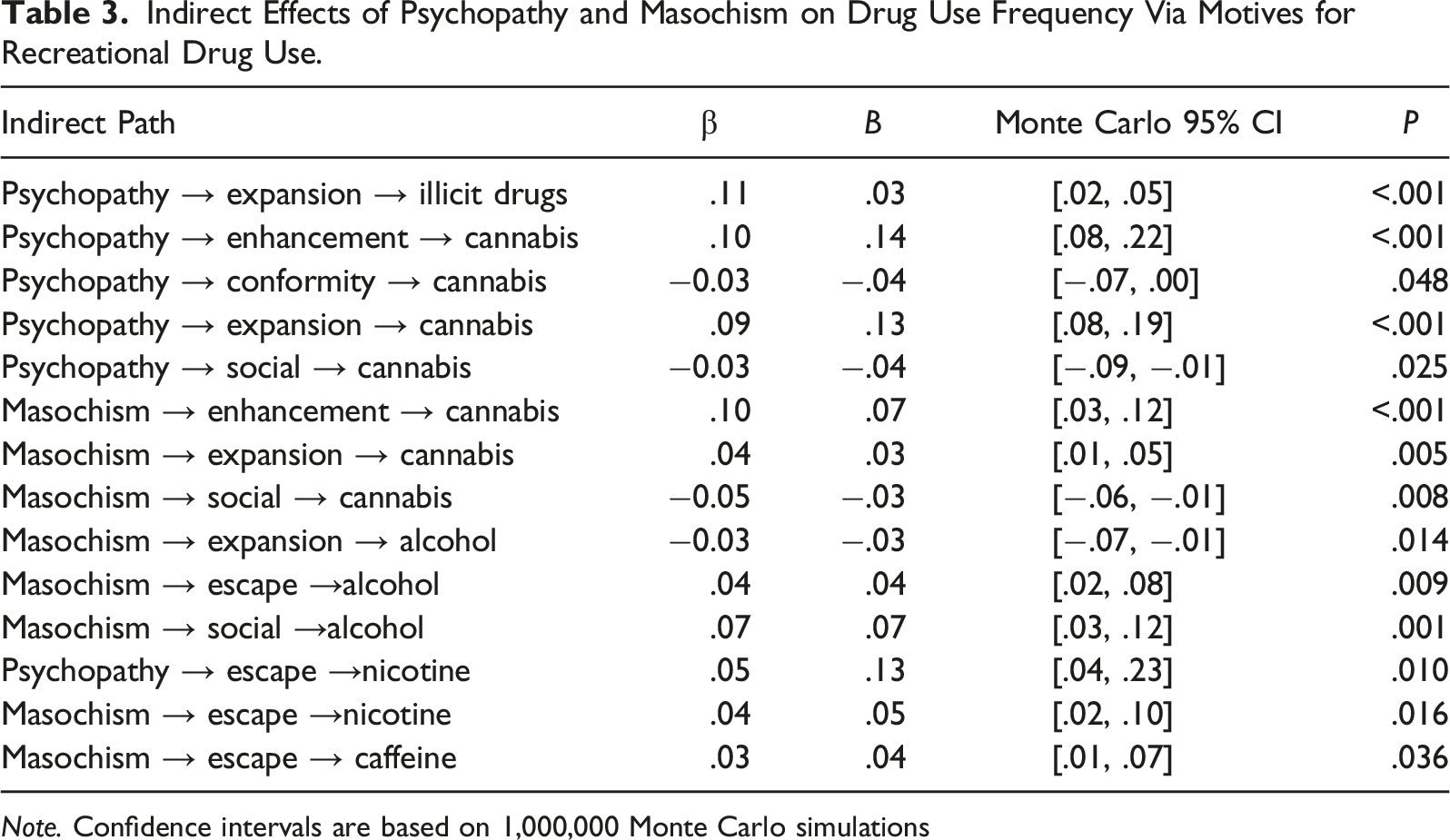
Indirect Effects of Psychopathy and Masochism on Drug Use Frequency Via Motives for Recreational Drug Use.
Note. Confidence intervals are based on 1,000,000 Monte Carlo simulations
Expansion motivation partially mediated the effect of psychopathy on illicit drug use. Cannabis use was fully explained by the underlying motives. The indirect effects of both masochism and psychopathy via enhancement and expansion, respectively, were significant. Due to the negative links between social and conformity motives and cannabis use, masochism and psychopathy have both positive and negative indirect effects on cannabis use, while the total effects all remained positive.
Alcohol consumption was directly predicted by masochism and narcissism. Similar to cannabis, masochism had both positive and negative indirect effects on alcohol use. The positive indirect effects via escape and social motives were significant as well as the negative indirect effect via expansion motives. Nicotine use was directly predicted by psychopathy and escape motivation. The indirect effects of psychopathy and masochism via escape motivation were significant. At last, masochism predicting caffeine consumption was partially accounted for by escape motivation.
Sex Differences
We also examined both models separately for women and men. In the basic model, it became evident that psychopathy was not a predictor of female overall drug use, but it was of male drug use, while narcissism was a strong predictor of female alcohol use, but not of male alcohol use. This pattern was replicated in the mediation model, where for men, psychopathy predicted all motives significantly, whereas for women, psychopathy weakly predicted only expansion and escape motives. Accordingly, the indirect links of psychopathy via motives on drug use were much weaker for women than they were for men. For masochism, no notable sex differences emerged. Full path statistics are given in Tables S3 and S4.
General Discussion
Who consumes which psychoactive substances and for which reasons? Overall, although masochism and the dark tetrad factors were correlated with multiple substances at zero-order, multiple regression analyses revealed clear differences between antisocial and masochistic tendencies in their relation to psychoactive substance use. Psychopathy was the only reliable predictor of illicit drug use, partially due to the underlying motive to expand one’s awareness and experiences. That is, psychopathy is linked to consuming drugs to become more open to experiences, increase introspection, and broaden the perspective on things. This is in line with the sensation-seeking, and, at times, illegal behavioral tendencies typical for psychopathy (Blackburn, 1969; Hare, 1999; Jones & Paulhus, 2017; Lebreton et al., 2006) and confirms prior research linking psychopathy but not Machiavellianism or narcissism to illicit drug use (Jonason et al., 2010). The fact that the other antisocial traits were unrelated to illicit drug use is in line with the assumption that it is not the malevolent interpersonal and deficient emotional characteristics of psychopathy that link it to substance use.
Cannabis seems to be consumed mainly for its effects (people enjoy how it makes them feel) and for its potential to expand consciousness, confirming prior findings on the motives for cannabis use in adults (Osborne & Fogel, 2008), and particularly the importance of adding the expansion motive (Simons et al., 1998). Notably, contrary to prior research (e.g., Simons et al., 1998), cannabis use was not linked to escape motives in the regression model. Psychopathy and masochism were both linked to cannabis use via increased enhancement and expansion motives. The more people take drugs to bond and share a nice social experience with others, the less cannabis they consume. Likewise, consuming drugs due to external pressure is negatively linked to cannabis use. Because psychopathy and masochism positively predicted social motives, they have both positive and negative associations with cannabis use, depending on the motives, but the overall effects remained positive.
As for the other popular and legal drugs, alcohol was consumed mainly to affiliate and escape everyday life (Cooper, 1994; Kuntsche et al., 2008), whereas individuals wanting to expand themselves through substance use were less likely to choose alcohol. Masochism was the only reliable predictor of both alcohol and caffeine use. While this was partly explained by motives to escape daily life, the mediation effects were generally small, and masochism maintained direct effects on the use of these substances. The results thereby partly confirm prior theorizing on the benefits of masochistic pleasures such as escaping self-awareness (Baumeister, 1988), but leave a number of open questions as to what precisely masochists gain from consuming alcohol and caffeine, if not their psychoactive effects. It could simply be their bitter tastes simulating threat but being essentially harmless (Rozin et al., 2013; Sagioglou & Greitemeyer, 2020). Although alcohol arguably is not harmless for health (e.g., Nutt, King, & Phillips, 2010), consumers may underestimate the harm (Vallance et al., 2020), and are likely to experience a sense of control in that they know why they are feeling this way and that this state will pass. Overall, the results confirm our assumption that masochism is not strongly linked to illicit drug use when psychopathy is considered simultaneously, but that alcohol and caffeine consumption are indeed reliable manifestations of masochistic pleasure.
Taken together, although this research investigated recreational drug use as opposed to drug abuse, for some of the substances there is risk involved even in the acute intake, such as for heroin and cocaine (Nutt et al, 2007). As such, the results have implications for understanding personality factors contributing to recreational as well as potentially harmful drug use. Importantly, the results clearly show that general personality factors are not diagnostic of drug use or abuse. Instead, the antisocial trait psychopathy is the central personality-related predictor of illicit drug use, in part mediated by the motive to expand one’s awareness in the present, non-clinical sample. Above average sensation-seeking tendencies and low impulse control thus seem to be a particularly risky constellation for illicit drug use (Hare, 1999; Jonason & Tost, 2010). Masochism, on the other hand, was directly linked to alcohol use, the most harmful of all psychoactive substances (Nutt et al., 2010). Future research could investigate how the predictors identified here might also relate to problematic substance use and abuse.
Limitations and Outlook
Before concluding, some limitations of the present study have to be acknowledged. First, because of the cross-sectional design, the exact causal directions could not be determined. That is, it is unknown whether personality has an impact on drug consumption and/or whether repeated drug consumption causes changes in psychopathy and masochism, or whether they are mutually reinforcing. Second, all measures were assessed via self-reports. Given the sensitive nature of the topics of the present research, some participants may not have accurately reported on how often they use drugs, have dark personalities, and are prone to masochistic tendencies. Yet, the combination of online (and hence more anonymous) surveys, multiple IMCs, and plausibility checks should have strongly counteracted dishonest responding (Paolacci et al., 2010; Saravanos et al., 2021). Third, to achieve high statistical power, an online survey with a US-based community sample was carried out. To improve the generalizability of our findings, future research could collect samples from different countries, and different age groups such as adolescents, an age during which particularly illicit drug use tends to be high (e.g., Chen & Kandel, 1995). A further factor to consider when investigating drug use is their effect on circadian rhythm, especially when investigating addictive behaviors (Adan, 2013). In fact, circadian typology (i.e., being an evening-type person) may play a crucial role in the link between psychopathy/sensation seeking and drug use (Prat & Adan, 2013), and may also explain the sex differences observed in the present research (Antúnez, Navarro, & Adan, 2014).
Conclusion
Psychopathy and wanting to expand one’s consciousness were the keys to illicit drug use. Masochism, which was tested as an additional trait due to its sensation seeking tendencies and its relation to the liking of alcohol and caffeine, did not predict illicit drug use—possibly because purchasing and consuming these drugs is not sufficiently safe. Masochism did, however, predict cannabis, alcohol, and caffeine consumption, that is, popular and typically legal drugs. This supports the notion that the involved risk level of masochistic pleasures is lower than that of psychopathic tendencies.
At this point, it is difficult to say whether masochism itself poses a risk factor for abusive alcohol and nicotine consumption or not. Yet, it may certainly interact with risk factors in promoting abuse and could therefore be worthwhile to consider in the treatment of abusive drug use, particularly because masochism manifests in multiple, mostly harmless domains such as simulated fear or agentic, safe pain. The masochism-related gains provided by alcohol should thus be replaceable with a more benign domain.
Overall, the results extend prior findings by showing that masochism is directly related to alcohol use and that expanding one’s awareness is not only important to understand cannabis use, but it is also a central motive for the use of various illicit substances.
Footnotes
Declaration of Conflicting Interests
The author(s) declared no potential conflicts of interest with respect to the research, authorship, and/or publication of this article.
Funding
The author(s) received no financial support for the research, authorship, and/or publication of this article.
