



Abstract
Recreational cannabis legalization has encouraged research regarding cannabis use among youth, especially the use of qualitative approaches. In fact, alcohol and drug use journals have recently encouraged qualitative submissions and provided criteria to ensure “high-quality” research. This study provides an objective account of the qualitative approaches used by researchers in this field and discusses implications for future research. A methodological review was conducted for studies published between January 2010 and November 2019. Targeted keyword searches in four research databases returned 1956 unique records. Pairs of reviewers independently screened records against eligibility criteria and charted data for study philosophical positioning, methodology, study aims, sampling, sample, data collection, and data analysis. 23 studies met the inclusion criteria. Several gaps in study quality criteria are observed: less than half of the studies specified the overarching methodology and just two stated philosophical positioning, with some methods unjustified. Implications for future research are discussed.
Introduction
Qualitative research has become increasingly popular within the field of addictions and drug use (Maher & Dertadian, 2018; Matilda et al., 2020; Neale et al., 2005; Nichter et al., 2004). Qualitative studies have a rich history and have contributed to our deeper understandings of the social and experiential dimensions of drug use, the user’s reasons for use, and insight into preventative interventions and harm reduction strategies (Brownstein, 2017; Maher & Dertadian, 2018; Nichter et al., 2004; Rhodes & Coomber, 2010; Sterk & Elifson, 2005). In the past decade, there has been an increasing call for high-quality qualitative research within this field. Peer-reviewed journals such as Addiction and Drug and Alcohol Review have openly committed to publishing “high-quality” qualitative studies and modified policies accordingly to promote qualitative submissions. Such journal submission policy changes include increasing manuscript word counts, allowing multiple manuscript formats, and acquiring reviewers who are experts in qualitative research (Neale et al., 2013; Olsen et al., 2015). In addition, such journals have offered general criteria to help authors prepare high-quality submissions, and aid reviewers with quality appraisal.
However, defining and assessing the quality of qualitative research is complex and remains an ongoing dialogue. Differences in researchers’ philosophical assumptions and methodological identities create a diversity of definitions and criteria for judging quality (Lincoln & Guba, 2003; Mays & Pope, 2000; Ravenek & Rudman, 2013; Rhodes & Coomber, 2010; Rhodes et al., 2010). These differences have contributed to considerable debate over the methods used and knowledge claims produced from qualitative studies, and whether quality can be assessed legitimately (Mays & Pope, 2000; Ravenek & Rudman, 2013; Seale, 1999). For example, if reviewers assess a qualitative article inappropriately, such as by using quantitative definitions of objectivity and generalizability, such inappropriate criteria can devalue the qualitative research and its contributions. As such, how one views qualitative research and approaches quality assessment can be pertinent for considering (i) what research is published, (ii) what research is funded, and (iii) the resulting impact of that research in informing health policy and practice (Stenius et al., 2008). This complexity is evident within the drug and addictions field, which remains dominated by biomedical and psychological approaches that emphasize quantitative methodologies (Matilda et al., 2020; Rhodes & Coomber, 2010; Rhodes et al., 2010).
To promote a common language for appraisal that respects the philosophical and methodological diversities of qualitative approaches, several “general” considerations for appraising quality have been put forth (Ballinger, 2006; Mays & Pope, 2000; Morrow, 2005; Ravenek & Rudman, 2013; Tracy, 2010; Whittemore et al., 2001). Examples include research with social value and significance, thorough data collection and interpretation, rich rigor, researcher transparency, methodological coherence, and due regard for participants (Ravenek & Rudman, 2013). One of the central considerations that is echoed in the criteria set forth by alcohol and drug use journals (Neale et al., 2013; Olsen et al., 2015) is coherence of the research approach (Ballinger, 2006; Mays & Pope, 2000; Morrow, 2005; Ravenek & Rudman, 2013; Tracy, 2010; Whittemore et al., 2001). Coherence implies an appropriate fit between the study components, including the study objectives, researchers’ philosophical assumptions, methodology, and methods (Ballinger, 2006; Caelli et al., 2003; Olsen et al., 2015; Ravenek & Rudman, 2013; Tracy, 2010; Whittemore et al., 2001). As a practical guide for qualitative researchers, in 2003, Caelli et al. (2003) advocated for a standard for researchers to (a) declare their philosophical position, (b) distinguish between methodology and methods, (c) clearly articulate their approach to promoting rigour, and (d) explain the analytic lens through which the data are examined. However, 18 years later, it is unclear whether qualitative researchers have answered this call through integrating and reporting such quality indicators in published research. By failing to report such standards, editors and researchers seeking to critique and/or build on previous work may fail to understand the qualitative approach that the authors employed and justifications for their research choices (Caelli et al., 2003; Kahlke, 2014). This can influence which qualitative research is published, funded, and utilized to inform policy and practice. Further, this can result in incoherence and incompatibility between philosophical positioning, methodology and methods (Kahlke, 2014). Therefore, it is valuable to review the current drug literature to determine the extent to which researchers in this field report such standards. In this paper, we first distinguish between philosophical positioning (i.e., paradigm), methodology, and methods, and then present a methodological review of how such qualitative approaches have been used by researchers in the drug use field. Specifically, this methodological review will focus on studies investigating cannabis use among youth as a case study. Our intent is to stimulate discussions that can help improve the quality of future qualitative drug research.
Paradigm, Methodology, and Methods
Paradigm
A researcher’s philosophical assumptions, or paradigm, guides all aspects of the research process. Paradigms involve researchers’ assumptions on the nature of reality (ontology), their role in the research process (epistemology), and the approach in which knowledge is generated (methodology). Lincoln and Guba (2003) describe five competing paradigms in research: positivist, post-positivist, constructivist/interpretivist, critical theory, and participatory paradigms. Researchers operating in a positivist and post-positivist paradigm believe in a true reality, value researcher objectivity, and use methods to reduce bias and verify findings. Meanwhile, constructivists/interpretivists believe in multiple socially constructed realities, value researcher subjectivity, and use participant interactions to search for meaning and co-construct findings. Critical theorists believe that reality is shaped by socio-economic, political, historical, and cultural events, value subjectivity, and use participant interactions to co-construct findings and empower participants to confront social oppression. Finally, participatory researchers believe in multiple co-constructed realities, value subjectivity, and use participant collaborative inquiry to co-construct findings. In the context of drug use, positivist and post-positivist researchers may focus on objectively measuring drug use and determining the profiles of those more likely to use, whereas constructivists may focus on participants’ lived experiences and how they identify as a drug user. In addition, critical theorists may focus on how people who use drugs are oppressed and work to liberate them from that oppression.
Methodology
Methodology refers to the approach in which phenomena are studied, and knowledge is generated (Guba & Lincoln, 1994). Each methodology encompasses different aims, research questions, and research methods (Finlay, 2006). Common qualitative methodological examples can include grounded theory, ethnography, and phenomenology, although several others exist. Grounded theory is an inductive method that uses data grounded in everyday experiences to generate a new theoretical framework (Glaser & Strauss, 1967). Ethnography often involves researchers that are immersed in the field over a sustained period and draw from a family of methods to understand social practices and make sense of the world (O’Reilly, 2012). Phenomenology is the study of a phenomenon based on a person’s lived experience (Finlay, 2006). Studies that do not assume an established methodology may be classified as a “generic” qualitative approach; these will be discussed later in this paper (Caelli et al., 2003; Kahlke, 2014).
Methods
Qualitative methods include techniques for sampling, data collection, and data analysis (Finlay, 2006, p. 10; Guba & Lincoln, 1994). Sampling in qualitative research is often conceptually driven (i.e., purposive or theoretical), conducted in a sequential, iterative process, and is reflexive with explicit rationale (Abrams, 2010; Curtis et al., 2000). Qualitative researchers typically seek to purposefully select “information-rich” cases (i.e., participants), which are those that provide the greatest insight into the research question. These strategies differ from probability (or random) sampling used by many quantitative researchers who aim to promote reliability and generalizability. Similarly, data collection in qualitative research is both iterative and reflexive and can comprise of many forms. Examples of data can include individual and/or group interview transcripts, participant observations, field journals, reflexive memos, and audiovisual materials (i.e., audiotapes, photos, videos). Once data is collected, there are several approaches for analyzing qualitative data. Rather than a distinct stage, qualitative data analysis is iterative and should begin once the first item of data is collected (Coffey & Atkinson, 1996). Generally, the first step involves reducing and organizing large collections of data (i.e., often through a process of coding), followed by producing one or more interpretations.
It should be noted that all qualitative methods must cohere with the researcher’s paradigm and methodology (Abrams, 2010; Coffey & Atkinson, 1996; Curtis et al., 2000; Flick, 2014; Miles & Huberman, 1994; Steward, 2006). For example, many traditions of grounded theory exist and encompass distinct philosophical positions and methods (e.g., Charmaz, 2014; Glaser & Strauss, 1967; Strauss & Corbin, 1994). Therefore, if a researcher used methods of coding consistent with a constructivist tradition of grounded theory but failed to declare their paradigm or guiding methodology, the article may lack coherence, be appraised inappropriately (e.g., with post-positivist assumptions), and be deemed poor-quality research.
Objectives of the Present Study
Via a case study example on research about cannabis use among youth, the purpose of the current study is to: (1) provide an objective account of the qualitative approaches used by researchers in this field; and (2) consider implications for future drug research. Cannabis use among youth is a topic of considerable interest, as cannabis remains the most commonly used drug worldwide among youth (United Nations, 2019) and was recently legalized and/or decriminalized for recreational purposes in a number of contexts (Cerdá & Kilmer, 2016; Drug Policy Alliance, 2018; Health Canada, 2018). Legalization offers a promising avenue for research by eliminating some of the regulatory, financial, and supply barriers that have previously been imposed on cannabis researchers (Lake & Kerr, 2016; National Academies of Sciences, 2017a). Therefore, we can expect an imminent growth in cannabis research, including a greater inquiry into cannabis use among youth. However, the growth of qualitative cannabis research specifically and its potential future impact on health policy and practice is still unclear. While alcohol and drugs use journals openly encouraged qualitative submissions, the United Nations (2019), the World Health Organization (2016), and the National Academies of Sciences, Engineering, and Medicine (2017b) recently provided recommendations to improve the cannabis research agenda and primarily emphasized quantitative approaches. These reports identified the need for clinical and epidemiological studies, the development of standardized and evidence-based tools, and the collection of objective and reliable data (2017b; United Nations, 2019; World Health Organization, 2016). Thus, while research on cannabis use among youth proves to be of interest, the diverging research priorities between drug and alcohol research journals and the national and international bodies establishing research priorities and associated funding underscore a critical gap. This gap highlights the importance of publishing “high quality” qualitative research within the drug use field – not only to display the important contributions that qualitative research can make on public health and policy initiatives – but also to elevate the impact of qualitative research to those determining research and funding priorities.
Methods
A methodological review was conducted to provide an objective account of the qualitative approaches used by researchers studying cannabis use among youth within the drug literature, with a specific focus on the uses and reporting of paradigm, methodology and methods. This review is guided by post-positivist philosophical assumptions described by Guba and Lincoln (1994). Unlike a systematic review and meta-analysis, the aim of a methodological review is not to appraise the quality of individual studies or synthesize study outcomes (American Psychological Association, 2010). Rather, a methodological review focuses on describing the research methods used within a given field. Presently, no structured guidelines exist to conduct methodological reviews. As such, to demonstrate the systematic and rigorous nature of this review and to promote transparency and replicability of our findings, we report results following the gold-standard approaches established by the Preferred Reporting Items for Systematic Reviews and Meta-Analyses extension for Scoping Reviews (PRISMA-ScR) (Tricco et al., 2018). The PRISMA-ScR guidelines were modified to suit the needs and scope of this methodological review (e.g., individual studies did not undergo quality appraisal, and individual study findings were not synthesized).
Search Strategy
Keywordsand Subject Headings Used in the Database Search.
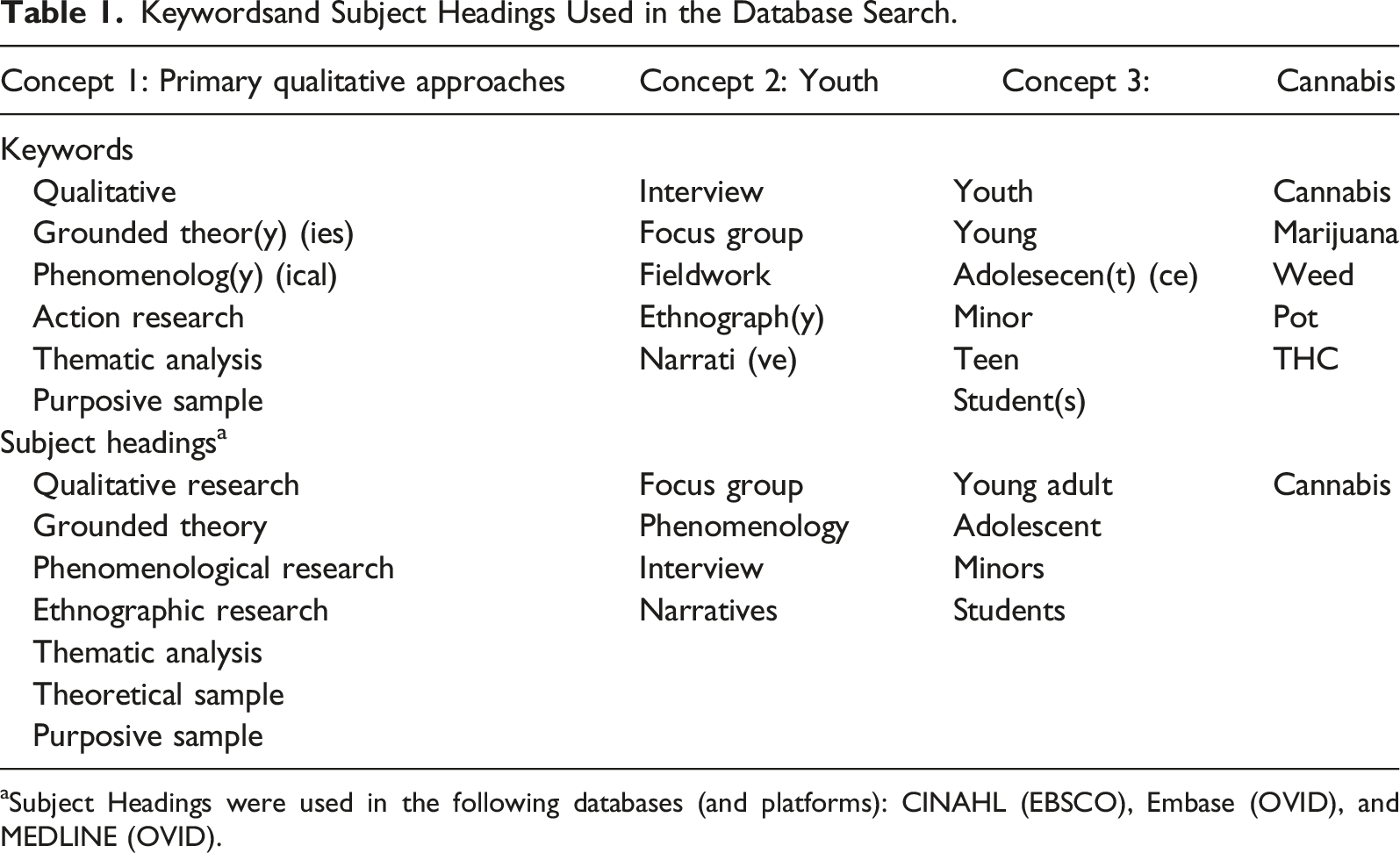
aSubject Headings were used in the following databases (and platforms): CINAHL (EBSCO), Embase (OVID), and MEDLINE (OVID).
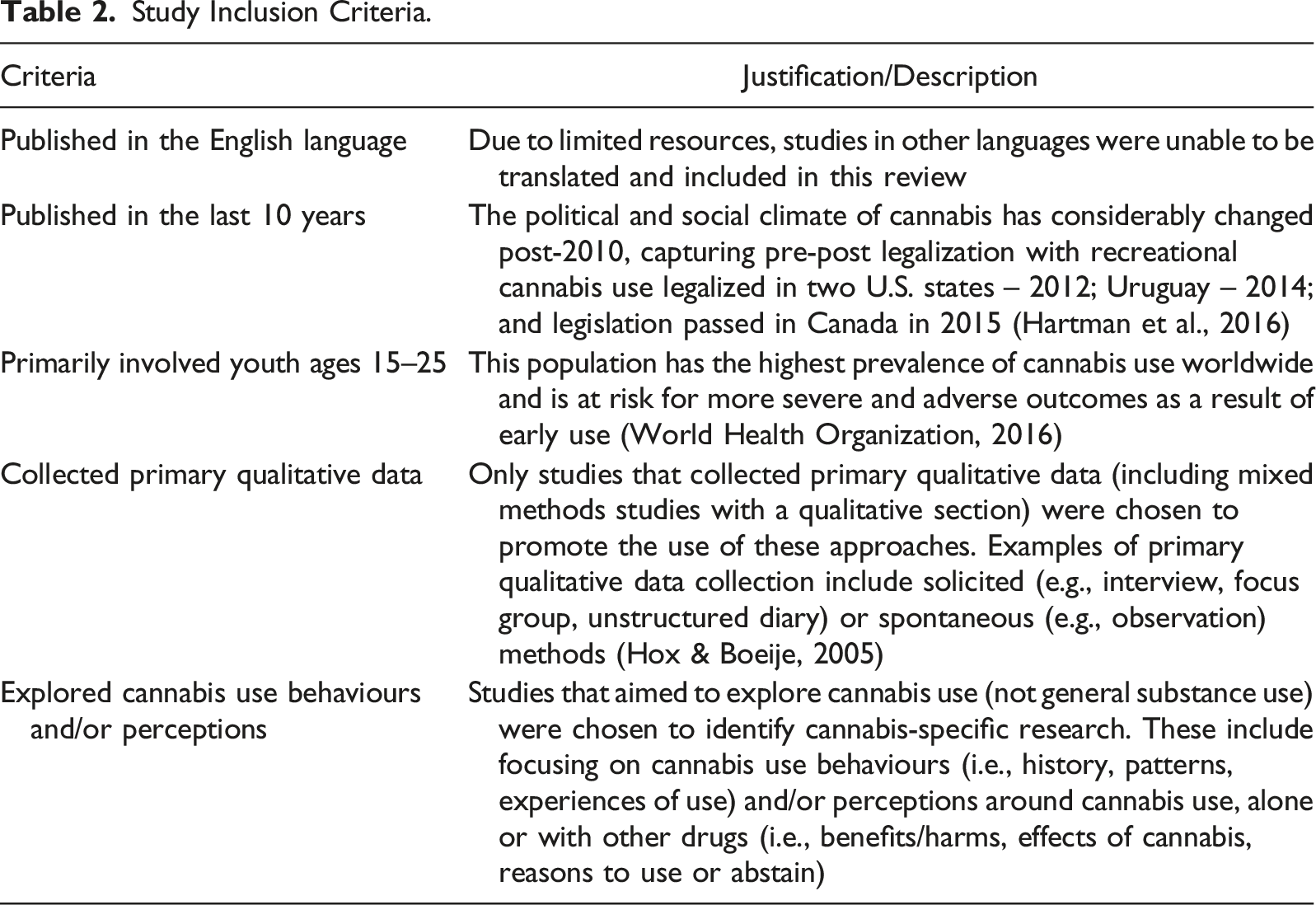
Study Selection
Study Inclusion Criteria.
Data Charting
Data items that were recorded from each study and charted to conduct this methodological review included: study author(s), year of publication, country, methodology, paradigm positioning explicitly stated by the authors, aim(s) of the study, sampling strategy, sample, data collection, and data analysis methods. Two authors (RC, MK) independently charted the study methodology and paradigm positioning. The lead author completed the initial charting for the other sections, and two additional reviewers (SK, RB) independently verified data to ensure accuracy.
Results
Search Results
The systematic database searches retrieved 6011 studies from Scopus (n = 2678), MEDLINE (n = 959), CINAHL (n = 711), and EMBASE (n = 1663). A PRISMA flow chart is presented in Figure 1. After duplicates and studies published before the year 2010 were removed, 1956 publications remained to undergo title and abstract screening. Of these, 84 met the inclusion criteria and were screened for full-text review, with 23 studies remaining for data charting. Inter-rater reliability was moderate among reviewers with agreement on 1862/1956 records (95.2%, κ=.57 (Landis & Koch, 1977)). Discrepancies were discussed among reviewers, and a consensus was achieved on all articles before progressing to data charting. PRISMA flow diagram.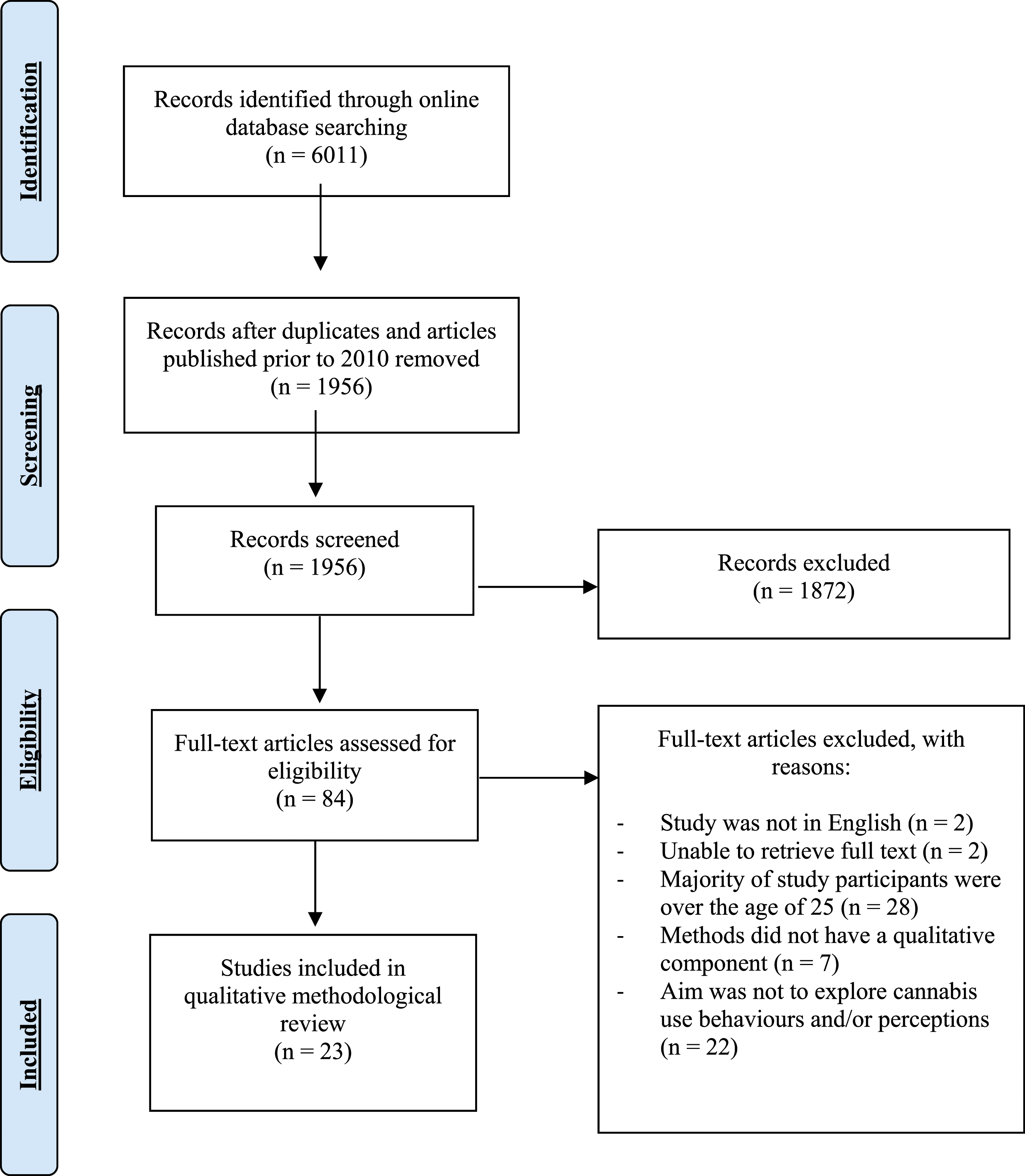
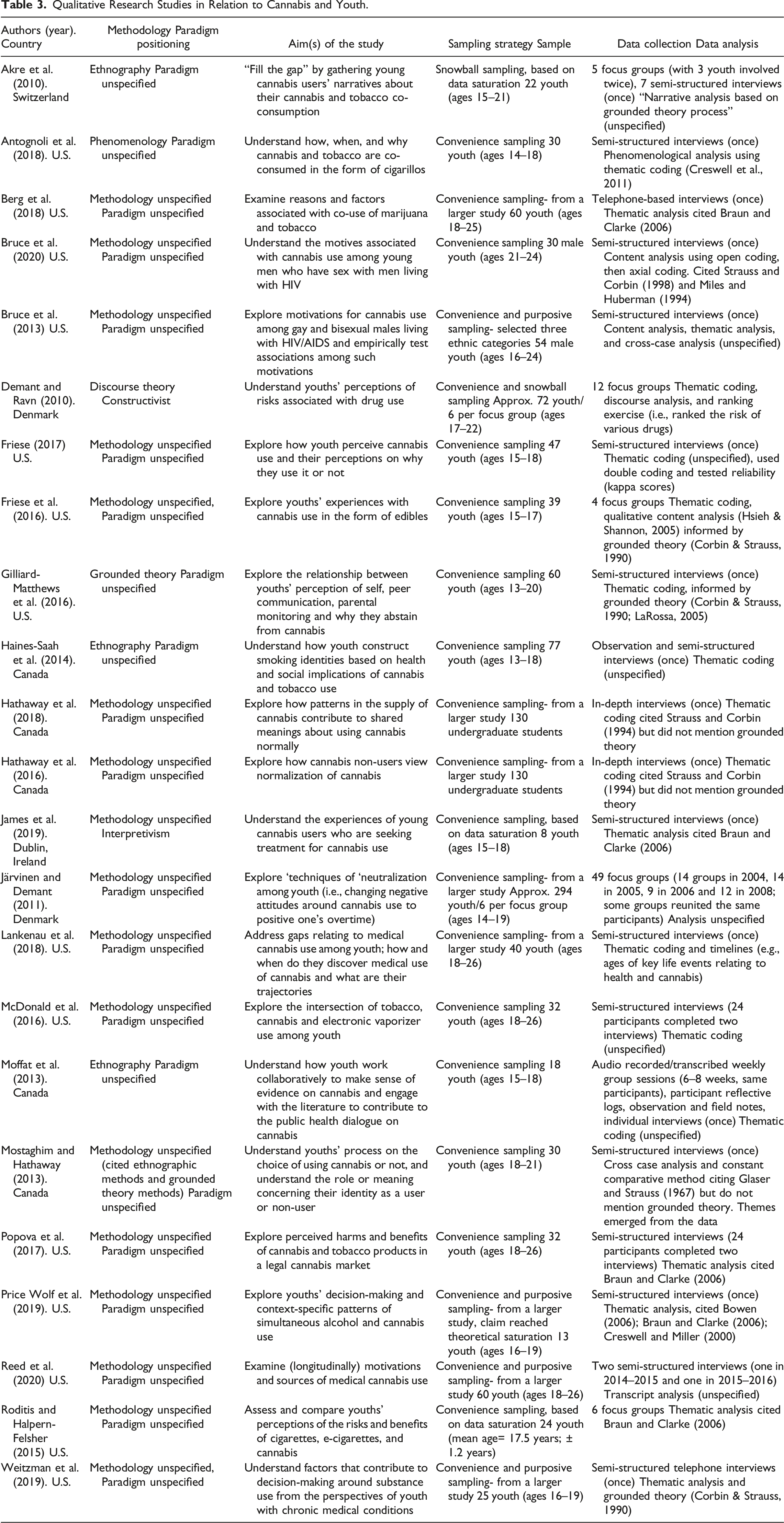
Qualitative Research Studies in Relation to Cannabis and Youth.
Paradigm Positioning and Methodology
Paradigm Positions and Methodologies Used in Qualitative Cannabis and Youth Research.
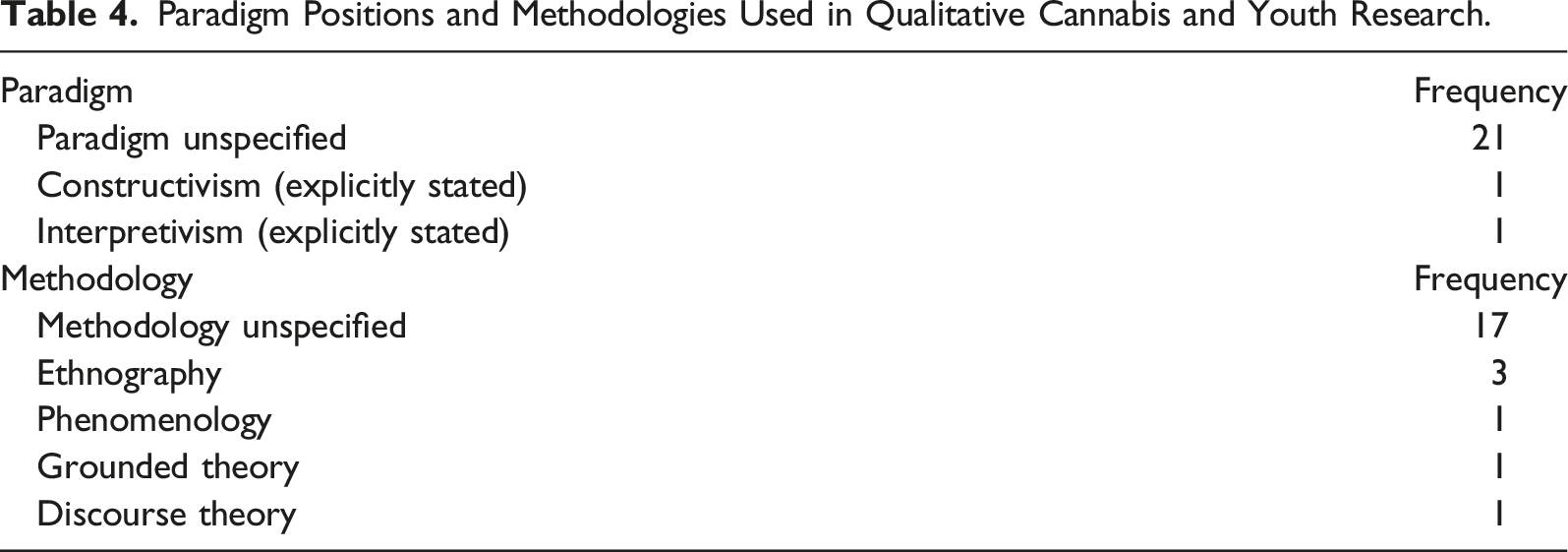
Next, six studies stated their methodology (Akre et al., 2010; Antognoli et al., 2018; Demant & Ravn, 2010; Gilliard-Matthews et al., 2016; Haines-Saah et al., 2014; Moffat et al., 2013), while 17 did not (Berg et al., 2018; Bruce et al., 2013, 2020; Friese, 2017; Friese et al., 2016; Hathaway et al., 2016, 2018; James et al., 2019; Järvinen & Demant, 2011; Lankenau et al., 2018; McDonald et al., 2016; Mostaghim & Hathaway, 2013; Popova et al., 2017; Price Wolf et al., 2019; Reed et al., 2020; Roditis & Halpern-Felsher, 2015; Weitzman et al., 2019). Of those that specified the methodology, ethnography was the most cited (n = 3) and was used to gather young cannabis users’ narratives about their cannabis use (Akre et al., 2010), understand how youth construct smoking identities (Haines-Saah et al., 2014), and understand how youth make sense of the evidence on cannabis (Moffat et al., 2013). While grounded theory was cited just once as a guiding methodology (Gilliard-Matthews et al., 2016), it is worth noting that six other studies either mentioned or cited grounded theory literature in data analysis; these findings will be presented in the data analysis section. Finally, phenomenology was cited once to understand how, when, and why cannabis and tobacco are co-consumed (Antognoli et al., 2018), and discourse theory once (Demant & Ravn, 2010).
Sampling and Sample
As outlined in Table 3, all but one study utilized variations of convenience sampling, with many of these samples conveniently obtained from a larger quantitative or mixed-methods study. Snowball sampling, which consists of participants recruiting other participants from among their acquaintances, was used in two studies (Akre et al., 2010; Demant & Ravn, 2010). Overall, seven studies (Akre et al., 2010; Bruce et al., 2013; James et al., 2019; Price Wolf et al., 2019; Reed et al., 2020; Roditis & Halpern-Felsher, 2015; Weitzman et al., 2019) stated that sampling was conceptually driven, with some claiming to reach a point of theoretical (or data) saturation. The methodologies and paradigm positions from these studies also varied. It is worth noting that of the five studies that cited (Corbin & Strauss, 1990; Strauss & Corbin, 1994) tradition of grounded theory (i.e., a tradition that states that theoretical sampling and theoretical saturation are necessary), only one study mentioned using conceptual or theoretical sampling techniques (Weitzman et al., 2019).
The size of the samples varied greatly from 8 youth up to approximately 294 youth. Approximately half of the qualitative studies discussed that a limitation of their study was the lack of generalizability due to the small sample size; a claim common among positivist/post-positivists researchers (Akre et al., 2010; Antognoli et al., 2018; Bruce et al., 2013, 2020; Friese, 2017; Friese et al., 2016; Gilliard-Matthews et al., 2016; Popova et al., 2017; Price Wolf et al., 2019; Reed et al., 2020; Roditis & Halpern-Felsher, 2015; Weitzman et al., 2019). An example of a constructivist/interpretivist stance can be viewed by (James et al., 2019), who stated that the aim of their study “was not to provide an objective view of young people’s cannabis use. Rather, it sought to provide an insight to the reader on the experiences and views of young people attending treatment for cannabis use” (p. 217).
Data Collection
In the reviewed studies, several incorporated more than one data collection method (see Table 3). Almost all studies (n = 19) incorporated individual interviews (Akre et al., 2010; Antognoli et al., 2018; Berg et al., 2018; Bruce et al., 2013, 2020; Friese, 2017; Gilliard-Matthews et al., 2016; Haines-Saah et al., 2014; Hathaway et al., 2016, 2018; James et al., 2019; Lankenau et al., 2018; McDonald et al., 2016; Moffat et al., 2013; Mostaghim & Hathaway, 2013; Popova et al., 2017; Price Wolf et al., 2019; Reed et al., 2020; Weitzman et al., 2019), six studies used focus groups or small group discussions (Akre et al., 2010; Demant & Ravn, 2010; Friese et al., 2016; Järvinen & Demant, 2011; Moffat et al., 2013; Roditis & Halpern-Felsher, 2015) two engaged in participant observation (Haines-Saah et al., 2014; Moffat et al., 2013), and two used reflexive journals/logs (Gilliard-Matthews et al., 2016; Moffat et al., 2013). For the studies that conducted interviews, the formats were mostly semi-structured, used a pre-established interview guide, and conducted on a one-time occasion. Only six of the reviewed studies collected data from the same participants more than once. For instance, Akre et al. (2010) had three females in their sample (n = 22) participate in two focus groups; Järvinen and Demant (2011) reunited focus group participants between 2004 and 2008; Moffat et al. (2013) used two weekly group sessions that met over six to 8 weeks; and McDonald et al. (2016), Popova et al. (2017) and Reed et al. (2020) each interviewed their participants twice. Furthermore, two studies had described using reflexive journaling/logs within their study methods. Gilliard-Matthews et al. (2016) reported that the authors engaged in reflexivity at the end of each interview using a debriefing form to contextualize the location and time of the interviews. In addition, Moffat et al. (2013) had participants maintain reflexive logs throughout their weekly group sessions (lasting six to 8 weeks) and discussed participant logs during individual follow-up interviews (no researcher reflexivity was mentioned).
Studies that described their methodology also provided a more generous description and rationale for data collection techniques. For example, each of the three studies that claimed using ethnography also provided detailed explanations for collecting various forms of data. Akre et al. (2010) stated that conducting both interviews and focus groups provided different types of social interactions and narratives. Haines-Saah et al. (2014) stated that observational methods (i.e., fieldwork, site visits) helped understand the social contexts of frequent cannabis users. Finally, Moffat et al. (2013) stated that multiple sources of data were collected to deliver a holistic approach in exploring how youth make sense of current evidence on cannabis. Overall, studies that did not specify their methodology compared to those that did generally lacked description and rationale for using specific data collection methods.
Data Analysis
Data analysis was clearly described, with all articles mentioning coding data. Eight of the articles coded according to grounded theory (Akre et al., 2010; Bruce et al., 2020; Friese et al., 2016; Gilliard-Matthews et al., 2016; Hathaway et al., 2016, 2018; Mostaghim & Hathaway, 2013; Weitzman et al., 2019), five coded based on Braun and Clarke’s (2006) thematic analysis procedure (Berg et al., 2018; James et al., 2019; Popova et al., 2017; Price Wolf et al., 2019; Roditis & Halpern-Felsher, 2015), and one coded using a phenomenological approach (Antognoli et al., 2018) and cited (Creswell et al., 2011). In addition, one (Demant & Ravn, 2010) coded according to discourse theory, which focuses on exploring relationships between language (e.g., spoken, written, and non-verbal interactions) and social structure (Fairclough, 2013). The remaining eight articles mentioned coding data but did not specify the approach employed (Bruce et al., 2013; Friese, 2017; Haines-Saah et al., 2014; Järvinen & Demant, 2011; Lankenau et al., 2018; McDonald et al., 2016; Moffat et al., 2013; Reed et al., 2020).
While the description of data analysis methods used was a relative strength in reporting of the published studies, many inconsistencies were evident across data analysis procedures across multiple methods. Specifically, inconsistencies pertained to coding and grounded theory. Of the included studies, seven (Akre et al., 2010; Friese et al., 2016; Gilliard-Matthews et al., 2016; Hathaway et al., 2016, 2018; Mostaghim & Hathaway, 2013; Weitzman et al., 2019) cited foundational papers in grounded theory, such as Corbin and Strauss (1990); Glaser and Strauss (1967); Strauss and Corbin (1994). These three foundational papers outline the various traditions of grounded theory, which differ by philosophical positioning and methods. As such, researchers must situate themselves within the broad range of accepted grounded theory perspectives to maintain the assumptions with that corresponding tradition. However, two articles (Friese et al., 2016; Weitzman et al., 2019) stated using grounded theory as a method to code data but not as an overall methodology. One paper (Akre et al., 2010, p. 76) stated that “narrative analysis was conducted based on the grounded theory process” (p. 76), although the particular approach was not specified or cited. The remaining three studies (Hathaway et al., 2016, 2018; Mostaghim & Hathaway, 2013) cited one of the traditions in data analysis, though they did not at all mention using grounded theory. Finally, one paper (Bruce et al., 2020) described using “open and axial coding,” which is foundational to one of the grounded theory traditions (Corbin & Strauss, 1990), though they did not state that analysis was informed by grounded theory. Such inconsistencies in reporting data analytic approaches raise concern related to methodological coherence, as these studies may not have maintained the philosophical assumptions that underpin each grounded theory tradition.
Discussion
The open commitment to publish “high-quality” qualitative studies from alcohol and drug use journals (Neale et al., 2013; Olsen et al., 2015) provides an encouraging outlook for drug researchers. Using a case study example, this methodological review provides an objective account of the qualitative approaches used by researchers investigating cannabis use among youth. Findings indicate that in the past decade, qualitative approaches have been used widely among cannabis researchers. Examples include using qualitative approaches to understand the experiences (Akre et al., 2010; Friese et al., 2016) and trajectories of young cannabis users (Lankenau et al., 2018; Mostaghim & Hathaway, 2013; Reed et al., 2020), youth’s perception of risks (Demant & Ravn, 2010; Roditis & Halpern-Felsher, 2015), and the motives for and perceptions towards cannabis use (Friese, 2017), including among specific populations (Bruce et al., 2013, 2020; James et al., 2019; Weitzman et al., 2019) and those who use cannabis with alcohol and/or other drugs (Antognoli et al., 2018; Berg et al., 2018; McDonald et al., 2016; Price Wolf et al., 2019). In addition, studies have explored how external factors – such as patterns in the supply of cannabis use, current evidence on cannabis, parental influences, and legalization – contribute to the meanings and dialogues on cannabis use (Gilliard-Matthews et al., 2016; Haines-Saah et al., 2014; Hathaway et al., 2016, 2018; Järvinen & Demant, 2011; Moffat et al., 2013; Popova et al., 2017).
While most of the studies did not articulate their philosophical positioning (n = 21) or describe an overarching methodology (n = 16), the clarity of reporting methods was a relative strength, with the exception of the little mention of the use of reflexivity. This lack of philosophy and methodology seemed to lead to many inconstancies in the study methods, particularly related to grounded theory. Thus, we offer three considerations to help improve the quality of future qualitative drug research.
Implications for Future Drug Research
The results of this methodological review give rise to several implications for future qualitative research within the field of drug research, namely: beware of the generic approach, declare philosophical positioning, and practice reflexivity as it relates to the approach used. Enhancing these three aspects of reporting in qualitative research manuscripts will help improve the completeness and transparency required to demonstrate the coherence between the research objective and study design enacted.
Beware of the Generic Approach
Due to limited reporting on paradigm positioning and methodology, many of the identified studies fit into the description of “generic” qualitative research. This is research that is “not guided by an explicit or established set of philosophic assumptions in the form of one of the known qualitative methodologies” (p. 4, Caelli et al., 2003, p. 4). These researchers often make the mistake of adopting a specific method, without first locating that method in terms of a broader methodology and philosophy (Finlay, 2006). The generic approach was apparent in the reviewed cannabis and youth studies, as most did not specify the methodology or paradigm, and many employed data collection and analysis techniques with no clear rationale. This has several implications in terms of research coherence and quality. By failing to consider and/or articulate the epistemological and theoretical foundations, issues of methodological coherence in the research design and incompatibility between methods employed may arise (Kahlke, 2014). Also, since no formal guidelines exist on how to conduct a generic study in a high-quality manner, generic qualitative research approaches can lack trustworthiness in terms of the study’s knowledge claims (Caelli et al., 2003). Qualitative drug researchers are therefore encouraged to beware of the generic approach.
However, this does not imply that all qualitative drug researchers must only engage with one of the few established qualitative methodologies to be methodologically rigorous. There are many instances in which research questions may not fit within the confines of an already established methodology, or researchers seek to combine and/or explore new methodological approaches. As stated by Kahlke (2014), generic approaches may “support new fields of research, new theoretical perspectives, new questions, or new approaches to old research problems” (p. 47). Although, in these instances, researchers are encouraged to be vigilant in reflecting and reporting on their theoretical positioning and how their approaches for data collection and analysis are coherent and methodologically rigorous. Qualitative drug researchers will benefit from Ravenek and Rudman’s (2013) discussions on quality considerations and the quality criteria set forth by journals in the addictions (Neale et al., 2013; Olsen et al., 2015). In addition, readers are directed towards Caelli et al. (2003) and Kahlke (2014) for further considerations on the potential pitfalls and benefits of generic qualitative approaches.
Declare Philosophical Positioning
Positioning a study philosophically is important since it frames, implicitly and explicitly, how researchers place their study to be interpreted and evaluated. To illustrate this, consider the concept of generalizability. A post-positivist believes in true reality and employs methods to control subjectivity and avoid bias to discover what is real (Lincoln & Guba, 2003). Thus, findings can be verified and generalized. Two of the reviewed articles that did not declare a paradigm stated that a limitation included “the lack of quantifiable data… and that the sample, in addition to being small, may not be representative of teens” (Friese et al., 2016, p. 308) and that “additional research is needed to ensure the generalizability of these findings” (Popova et al., 2017, p. 1826). A constructivist, on the other hand, believes in multiple co-constructed realities and, therefore, purposively seeks information-rich cases to gain an in-depth understanding of a particular topic or experience (Abrams, 2010; Curtis et al., 2000; Lincoln & Guba, 2003). Thus, without explicitly stated positionality, readers may not be able to adequately evaluate the knowledge claims that an article sets out, and therefore assume poor-quality research when this limitation may not be valid. Lacking positionality can also place qualitative research in a subsidiary position to quantitative research, hindering its full potential to add to the cumulative scientific knowledge on drug use. Therefore, qualitative drug researchers are encouraged to unpack and declare the philosophical assumptions used to situate research studies for readers to interpret and evaluate the knowledge claims produced accurately. Readers are directed to Lincoln and Guba (2003) for full descriptions of competing philosophical paradigms.
Practice Reflexivity
Reflexivity is the practice of critically reflecting on the self as the researcher and considering ones' role and influence on the research process (Lincoln & Guba, 2003). Reflexivity can be used to promote coherence in the overall research approach, starting from the pre-research phase through data collection and analysis (Finlay, 2002). Researchers can be reflexive, for example, when identifying their own philosophical stance (i.e., epistemological and theoretical self-awareness (Kahlke, 2014)) and when matching the research questions to appropriate methodology and methods. For example, constructivists may reflect on their role in the co-construction of findings, post-positivists may reflect on their assumptions to control bias (i.e., bracketing), and critical theorists may reflect on power relations between themselves and the research participants (Finlay, 2002; Holloway & Todres, 2003; Lincoln & Guba, 2003). Further, reflexivity can help all researchers – including those using a generic approach – anticipate and address practical and ethical challenges that may arise (Finlay, 2002; Holloway & Todres, 2003; Lincoln & Guba, 2003).
Despite such benefits, just two of the 23 identified studies indicated using reflexivity. However, considering that most studies fit a generic qualitative approach, this finding is not unexpected. Qualitative drug researchers are encouraged to consider practicing reflexivity to help promote future high-quality research, especially for studies on cannabis use among youth. The fact that cannabis use is now legal for youth starting at ages 18–21 years (Cerdá & Kilmer, 2016; Drug Policy Alliance, 2018; Health Canada, 2018) and discussions with youth using cannabis have been reported to be controversial, complex, and illicit emotional responses (McKiernan & Fleming, 2017), suggests that reflexivity may prove to be beneficial to navigating such circumstances and ethical considerations. Examples of considerations to reflect on can include: interactions with youth participants, participants' willingness to talk about experiences, social and political contexts, and influences of the social setting where the research is conducted. To better conceptualize the use and practice of reflexivity, readers are directed towards Watts (2011), Finlay (2002), and Lincoln and Guba (2003). In summary, by integrating the considerations of generic qualitative research with the importance of philosophical positioning and reflexivity, this will aid in promoting high-quality qualitative drug research in this expanding field.
Limitations, Strengths, and Future Directions
This study should be viewed in light of several limitations of the data and design. First, this study utilized a case study example on a rather narrow topic (i.e., cannabis use among youth) to provide a glimpse of how qualitative approaches are currently being used in the published drug literature. Findings from this case study do not reflect the rich history, contributions, and importance of qualitative research in the field of drugs and addiction (e.g., Hughes, 1977; Maher & Dertadian, 2018; Matilda et al., 2020; McKetin et al., 2005; Murphy & Rosenbaum, 1999; Neale et al., 2005; Nichter et al., 2004; Preble & Casey, 1969; Waldorf, 1973). Second, the search strategy was limited to only four databases and peer-reviewed research articles published in English. As such, additional articles may exist in other languages, databases (e.g., social science databases), or grey literature. Likewise, the search strategy focused on primary qualitative data collection and the most common qualitative methodologies (e.g., grounded theory, phenomenology, ethnography) and methods (e.g., interviews, focus groups, observations). Thus, studies employing visual and art-based methods (e.g., body mapping, digital narratives/storytelling, performative methodologies) may not have been fully captured. Third, the methodology and philosophical position of the included studies were located based on explicit statements in the text by individual study authors. As such, articles that may have assumed a paradigm or methodology but not articulated that in the text were classified as unspecified. Further, the description of paradigms offered in this paper was limited to the five posed by Lincoln and Guba (2003). Therefore, other theoretical positions, for example, (Creswell & Poth, 2016) description of “pragmatism” and “interpretive communities” (i.e., postmodern perspectives, feminist theories, critical theory, queer theory, and disability theory), may not have been fully represented (p. 24). Finally, as this review focuses on qualitative research engaging youth under the age of 25, studies were excluded if the majority of participants were over the age of 25. While this is an intentional methodological choice to enhance clarity on qualitative research in youth, we acknowledge that other studies exist where voices of youth are present on this topic.
This methodological review also has several strengths. Notably, adapting established gold-standard reporting guidelines for scoping reviews (PRISMA-ScR) to meet the needs of this research enhances the clarity, transparency, and replicability of the research methods used. Secondly, a systematic search strategy was developed in consultation with a university research librarian and professor of qualitative research. Third, title and abstract screens and full-text reviews were carried out independently in pairs by a team of four researchers to ensure all relevant studies were captured and to reduce publication bias. This is consistent with best practices recommending two or more independent reviewers during these stages to promote reliability in findings (Arksey & O'Malley, 2005; Tricco et al., 2018).
While this review focused on methodological coherence (i.e., fit between philosophy of the researcher, methodology and methods), several other considerations exist, with each contributing to the quality of a qualitative study. For instance, Tracy (2010) offered eight considerations of quality, including a worthy topic, rich rigour, sincerity, credibility, resonance, significant contribution, ethics, and meaningful coherence. Likewise, Ravenek and Rudman (2013) detailed five considerations, including the social value and significance of the research, the thoroughness of data collection and interpretation, the transparency and reflexivity of the authors, the coherence of the research approach, and due regard for the research participants. Although all these considerations have value, we believe that coherence is an ideal starting point for researchers, including those new to qualitative research and graduate students/novice researchers, to help avoid the generic approach (Caelli et al., 2003). Future reviews could further appraise the quality of individual articles across the drug literature according to these additional criteria.
We must also acknowledge the practical constraints that exist by virtue of page limits and manuscript submission guidelines that vary by discipline and journal. Such guidelines, along with the writing styles unique in each to target research findings to a specific journal readership, may support or detract from researchers’ capacity to engage in detailed discussions regarding philosophical positioning, methodologies and methods employed. Thus, authors are often forced to prioritize manuscript space to convey their study outcomes most effectively, leaving to the side topics that could require extended space. While outlining such philosophical and research design choices can, in certain circumstances, take on an extended format, this need not be the case. Even brief statements strategically placed at the outset of a methods section can highlight key information and sources underlying research approaches enacted that are most pertinent to a specific study and prime the reader to best understand, critique, and interpret the study findings. Prioritizing such methodological information in a concise manner will, in turn, enhance research clarity; highlight the coherence between your research objective and methodological design choices; enable researchers to disseminate research findings more effectively; and in turn, improve the reader’s understanding, interpretation, and uptake of key research findings.
Conclusion
Qualitative research on drug use is exciting and rapidly evolving. Qualitative approaches are highly encouraged to provide insight that may be unattainable when using quantitative methodologies alone. However, qualitative investigations should articulate philosophical and methodological considerations to promote coherence between the study components and the knowledge claims forwarded. If not, researchers run the risk of having their work assessed inappropriately, such as by using quantitative definitions of objectivity and generalizability, and therefore, deemed poor quality. In turn, this can influence which qualitative research is chosen to be replicated, published, funded, and utilized to inform policy and practice. By providing an objective account of the qualitative approaches used by researchers investigating cannabis use among youth, we discuss three considerations to help improve the quality of future drug research.
Footnotes
Acknowledgements
We gratefully thank Dr. Debbie Laliberte Rudman (Western University) for providing insightful discussions and feedback on an earlier draft of this manuscript.
Declaration of Conflicting Interests
The author(s) declared no potential conflicts of interest with respect to the research, authorship, and/or publication of this article.
Funding
The author(s) received no financial support for the research, authorship, and/or publication of this article.
