




Abstract
This paper examined representations of medicinal cannabis users in UK newspapers, 1990–1998. It is important to understand the significance of these newspaper articles during this early stage of the growing cultural normalisation of medicinal cannabis use, in the UK, which is not documented in the existing literature. This is a very different period in relation to access to information for members of the public because it was before the widespread use of the internet. The significance of these dates is also that I started interviewing medicinal cannabis users in 1998, which led to Coomber et al. (2003). Very significantly, almost half of the participants in that article indicated that newspapers were the source of the idea that cannabis was medicinally useful and that this accounted for why they began to use it medicinally. What was in those newspaper articles that encouraged this view? In the current article, I examined 60 newspaper articles about medicinal cannabis use, using a thematic analysis which also draws on aspects of critical discourse analysis. I report on the process of symbolic boundary work which negotiates the ambiguity of individuals portrayed as social insiders but who used cannabis. The representations within the articles emphasized the social insider characteristics of medicinal cannabis users, emphasized their genuine illnesses/impairments, but interestingly also articulated misunderstandings by the journalists which contributed to a positive portrayal.
Introduction
In recent years, the social, cultural, political and economic terrain around medicinal cannabis use has changed greatly in many parts of the world (though far less so in the United Kingdom). When I began researching this issue, in the late 1990s, we (Coomber et al., 2003) had to advertise for research participants in printed newsletters and magazines. Interested individuals telephoned my office, often seeking to ascertain that I was not a police officer trying to trick them before they considered taking part in our research. Whilst the House of Lords Select Committee on Science and Technology’s report (HoL, 1998) did not attempt to estimate the overall number of self-prescribing medicinal cannabis users in the UK at that time, it drew on numerous sources that collectively indicated prevalence to be a fraction of more recent estimates. A 2019 poll conducted in the UK by YouGov estimated the number of medicinal users of ‘street cannabis’ in the UK (a slightly problematic term, as it also says that around 10% may well be growing it themselves) to be perhaps as high as 1.4 million people (Pressat, 2019) out of a population of approximately 67 million people.
In the current paper, I examine representations of medicinal cannabis users in the UK national press, between 1990 and 1998. It is important to understand the significance of newspaper articles during this early stage of the growing cultural normalisation of medicinal cannabis use, in the UK, which is not documented in the existing literature. Though it may not seem that long ago to some of us, this is a very different period in relation to access to information for members of the public, because it was just before the widespread use of the internet. The significance of these dates is also that I started interviewing medicinal cannabis users in 1998, which led to Coomber et al. (2003). Of the 32 participants that we reported on in that paper, 14 mentioned the media (primarily newspapers) when accounting for how they came to think about cannabis as potentially being medicinally useful and came to use it in such a way. It is reasonable to presume, therefore, that newspaper articles were a big influence on many other people coming to use medicinal cannabis too, during this time. The aim of this paper is to investigate what was in those articles that influenced some of these users to understand cannabis, and use it, in medicinal ways? This is an important gap in the academic literature, as I believe that these newspaper articles contributed significantly to the growth of self-prescribing among medicinal cannabis users at that time and contributed to the growing normalisation of medicinal cannabis use, in the UK.
Medicinal Cannabis Use: A Brief Overview
Whilst a fuller historical overview of the history of medicinal cannabis use is beyond the scope of this article, I will provide the reader with a brief overview (though I also recommend Abel (1980) and Booth (2003) for those interested in knowing more). Evidence suggests that cannabis has been used for thousands of years, perhaps dating back to 4000 BC in China (Abel, 1980). Dioscorides’s Materia Medica described its medicinal use in 60 AD, remaining influential in Europe until early modern work, such as that of Gerard (1597) and Culpeper (1653) (House of Lords Select Committee, 1998, cited in Blackman, 2004). Cannabis tincture (an alcohol-based suspension of cannabis) was popular in Western medicinal practice between 1840 and 1900, though its use was already in significant decline by 1890 due to the availability of more powerful painkillers (such as opiates) which could be more accurately standardised, but also applied locally by way of the hypodermic needle (Grinspoon, 1994). By the middle of the 20th century, cannabis had become understood as a ‘drug’ without therapeutic value (Blackman, 2004), increasingly becoming more associated with deviance and the ‘counter-culture’ than as a medical substance. It was only in 1964 that cannabis’s chemical structure was elucidated and Tetrahydrocannabinol (THC) was isolated (Mechoulam and Lander, 1980). It is interesting to consider that had this breakthrough occurred 20–30 years earlier, we could now be living in a very different landscape regarding cannabis and medicine.
During the 1960s and 1970s, cannabis was often understood through ‘an ideology of healing as a force for change in society’ (Blackman, 2004: 180) with this legacy giving rise to the self-medication of cannabis. Booth (2003) discussed how by the 1970s and 1980s ordinary people, often by chance (i.e. they had previously used it recreationally and after acquiring chronic illness and/or an impairment they used it again and noticed that it helped), became aware of the medicinal uses of cannabis in a ‘technological-age folk tradition’ (2003: 402). Whilst interviewing participants for Coomber et al. (2003), we found participants who also recounted using cannabis in a recreational fashion, but then finding that it helped with managing impairments or illnesses. However, many of our sample had never used cannabis before acquiring an impairment and/or illness. Almost half of our sample reported finding out that cannabis could help them medicinally from UK national newspaper articles. Since the early 1970s in the U.S. (Dunn and Davis, 1974) and later in the UK (Coomber et al., 2003; Ware et al., 2005) and other countries, a growing number of people have reported self-prescribing cannabis for medicinal purposes. Typically, these are individuals with a range of chronic illnesses (e.g. multiple sclerosis or arthritis) or impairments (e.g. spinal cord injury) who report numerous benefits from using cannabis (Coomber et al., 2003; Sexton et al., 2016; Ware et al., 2005).
Despite what tend to be labelled as ‘anecdotal’ claims for cannabis’ medical efficacy, as well as clinical evidence (see Dansak, 1997; Hollister, 2001; Kickman and King, 2014; Leung, 2011; Musty and Rossi, 2001; Zimmer and Morgan, 1995), cannabis remains a controlled class B substance under the 1971 Misuse of Drugs Act, in the UK. Since 1 November 2018, expert doctors have been able to prescribe cannabis-based medicines in the UK (GOV.UK, 2018), not herbal cannabis. This has happened very rarely though, in practice. Many other parts of the world have liberalised laws around the medicinal use of cannabis itself, but the UK appears to be holding out against this changing tide of drug policy.
However, in the UK back in the 1990s, many chronically ill people and people with impairments were practising or were interested in self-prescribing cannabis for medicinal purposes. Before the widespread use of the internet, newspapers appear to have been the main source of information about this (Coomber et al., 2003). The overall aim of this article is to establish what was in those newspaper articles that may have influenced people to self-prescribe cannabis for medicinal purposes?
Media Representations of Drugs
“… drugs are symbols, charged with cultural tension” (Grinspoon and Bakalar, 1993: 163).
In media saturated societies, the study of meaning-making (the production, reproduction and contestation of narratives) inevitably involves the study of the relationship(s) between media and the particular object of social enquiry. Where those objects are ‘drugs’ and their users, the researcher must engage with socially constructed understandings that bare the connotations of moralised historical and contemporary social tensions around all manner of issues (e.g. social class, gender, ‘race’, criminality, sexuality, young people and so on). The social conversation around ‘drugs’, that is everything that has been said about them (Gee, 1999) has frequently involved societies articulating their fears around all manner of other issues via representations of drug use (Abel, 1980; Blackman, 2004; Booth, 2003; Gossop, 1993; Grinspoon and Bakalar, 1993).
So why do the media tend to misrepresent drug-related issues to such a degree and so often (see Coomber et al., 2000)? Davies and Coggans (1991) argue that those working within the media are just as misinformed about drugs and users as the rest of society. They also argue that the media have a tendency to create their own agenda and that drug ‘myths’ are so prevalent that journalists often follow the ‘script’. In previous research, we (Coomber et al., 2000) noted that in the late nineties, the government had promised to engage with media at all levels to try to ensure more balanced reporting around drug-related issues. We investigated the processes involved in the production of newspaper articles about drugs, but we found little evidence of improvement in such reporting. The main finding from this research was that newspapers rely much more on ‘good journalistic practice’ than fact checking or having journalists with expert knowledge on drugs. Of 10 national UK newspapers, just two said that they had any procedures for checking the accuracy of stories involving illicit drug use. One of these told us that it would check facts with medical doctors, hospitals or the police if it had doubts. The other merely tended to check drug-related stories with its solicitors. So, in the minority of cases in which newspapers do run any checks on drug-related stories, this is as likely to be to avoid legal action as to ensure factuality. Gossop commented that ‘If drugs could sue for misrepresentation, defamation and libel they would’ (1993: x). Drugs cannot sue, so newspapers only appear to worry about misrepresenting people (and even then, only those likely to have the means to bring legal action against them).
Newspaper reporting of drug use is not an entirely homogeneous picture. Different substances tend to receive different treatment in much of the press. Some substances receive much more coverage than others, as Manning found when comparing news coverage of ecstasy compared to volatile substance abuse (2006). Forsyth (2001) found a similar picture, in research looking at how many drug-related deaths were reported as a proportion of deaths believed to be caused by their use and comparing this across different substances. Reporting also varies in terms of certain publications tending to be more sensationalistic than others generally, although on occasion broadsheets can be just as sensationalist as tabloids. See ‘Drugs in Britain: Welcome to Cracktown’ (The Independent, 4 November, 2005) as an example of this. We can also identify times when there are waves of reporting about drug-related issues and times when such stories are less common too.
Research on Australian news media’s depictions of illicit drugs and users argues for a fairly diverse picture (Hughes et al., 2011). On the basis of a content analysis of newspaper articles, they concluded that sensationalism and imbalance in articles was found, but that this was associated more with certain drugs than others and was more common at times of heightened public concern. Of the articles analysed, 55.2% were neutral in moral tone, 32.0% portrayed the drug(s) in question as bad and 1.9% as good. More specifically, 0.6% of articles portrayed the drug(s) in question as pleasurable or having therapeutic benefits. The 0.6% of articles that Hughes et al. (2011) found to be portrayed as pleasurable or having therapeutic benefits may be statistically small, but potentially they are insightful. What is it that makes such portrayals different to the other 99.4%? In relation to previous research in which I had been involved, I noticed that newspaper representations of medicinal cannabis use were often different to the majority of representations that we see in relation to ‘drug use’. This may seem obvious, due to sympathy from the public for those who need to use cannabis medicinally, but it struck me that there was more to the issue than this.
Representations of Medicinal Cannabis Use in Media
There is a limited, but insightful, academic literature on how medicinal cannabis use has been represented in media, within a number of nations. Overall, this literature demonstrates an ongoing ambiguity around the meanings of cannabis more generally and medicinal cannabis use more specifically. Using a critical discourse analysis approach, Abalo (2021) employs the conceptual notion of recontextualization. This article focuses on how discourses are reshaped and reinterpreted when they are moved from one context to another. The author notes how media workers have a significant problem in attempting to untangle the polysemic character of the word ‘cannabis’ in order to provide unambiguous narratives for their readers, when few media workers understand the issues well enough to do so and, even if they do, probably lack the time to do so. Many national newspapers are published daily, so this is a significant problem. Acevedo (2007) found that UK media coverage in 2004 defined British cannabis users (including medicinal users) as otherwise law-abiding, but that cannabis use after the reclassification to class B was described in much of the media in far less positive ways. Even after the 2001 legalization of cannabis for medicinal use in Canada, Bottorff et al. (2013) found that the ambiguity between cannabis being a legal ‘medicine’ and an illegal ‘drug’ meant that stigma remained an issue for Canadian medicinal users over 10 years later. In a quantitative content analysis, Sznitman and Lewis (2015) found that 69% of stories in the three biggest selling Israeli newspapers, about medicinal cannabis, framed cannabis as a medicine. Yet even 31% of stories, that were about medicinal use, still framed cannabis as an illicit ‘drug’. To complicate matters even more, Asbridge et al. (2016) argued that whilst normalization is occurring around cannabis, de-normalization is occurring around tobacco. So, cannabis users (medicinal or otherwise) could, at some point, potentially be stigmatised more for their use of tobacco than for the cannabis they mix it with. Kępski (2020) found positive and uncertain constructions of cannabis in the Polish media and, as other work has, that cannabis can be defined through a number of discourses. ‘Definitions pertain to diverse marijuana meanings ranging from a negative marijuana-as-drug, through an ambivalent recreational marijuana up to a positively valued medical marijuana. The research pointed out that, from a discursive standpoint, the marijuana problem may be viewed as a complex network of relations between particular discourses, marijuana meanings, claim-makers and the media’. (Kępski, 2020: n. p.).
Albeit discussing the similarly polysemic word ‘drug’ (as opposed to the more particularly relevant polysemic character of the referent ‘cannabis’), Tupper (2012) discussed the three categories of psychoactive substances as ‘drugs’ (illegal psychoactives associated with negative connotations such as addiction and criminality), ‘non-drugs’ (legal psychoactives that tend to be seen as less dangerous, e.g. alcohol, or associated with little danger, e.g. coffee) and ‘medicines’ (psychoactive substances permitted for restricted use under the direction of medical staff). Interestingly, one may ask the question as to whether changes in the legal, social and political context of cannabis use in recent years in many countries around the world has meant that cannabis now occupies all three of Tupper’s (2012) classifications? Building on Tupper’s (2012) work, Duff argued that ‘cannabis’ can no longer be regarded as a singular entity at all, ‘… given the diversity of relations, practices, semiotic registers and political squabbles in which the drug is produced as an object of knowledge and practice’ (2017: 677). Duff (2017) also argued that ‘cannabis’ may be changing from a ‘drug’ to a ‘non-drug’. Overall, the existing literature suggests even more of a move towards complexity and ambiguity, which journalists are either not equipped to understand or not given adequate time to represent more accurately.
The current paper focuses on the UK situation, but does so in relation to 1990–1998, to fill a gap in the literature about an earlier point in the discursive formation of medicinal cannabis use in the UK. The data will be explored by way of the concept of symbolic boundary work. What is symbolic boundary work? Whilst a fuller discussion of this is provided by Lamont et al. (2015), I find the clearest and most concise summary to be that ‘symbolic boundaries are the lines that include and define some people, groups, and things while excluding others’ (Epstein, 1992: 232). Symbolic boundary work is therefore the practices that occur around the production, maintenance or challenging of such boundaries. What is the boundary in question here? Ultimately, the boundary is between those whose use of an ambiguous substance (cannabis) was adjudged to be ‘legitimate’ and those whose use is not. What follows is an exploration of this.
Methodology
Lexus Nexus was searched to find articles primarily about medicinal cannabis use in UK national newspapers (that is to say that medicinal cannabis use was the main focus of the articles). The newspapers specified in the search were: The Times/Sunday Times, The Telegraph, The Independent/Independent on Sunday, The Guardian, The Observer (published on Sundays only), The Mail/Mail on Sunday, The Sun, The People (published on Sundays only), The Morning Star, The Express/Sunday Express, The Mirror/Sunday Mirror. The search encompassed dates from 1 January 1990, to 1 February 1998, which is when I began interviewing medicinal cannabis users for the research reported on in (Coomber et al., 2003). I am interested in understanding symbolic boundary work in the articles and how the thinking of medicinal cannabis users, such as those I interviewed, were influenced by these newspaper articles, during the 1990s.
Newspaper Articles by Title of Newspaper.
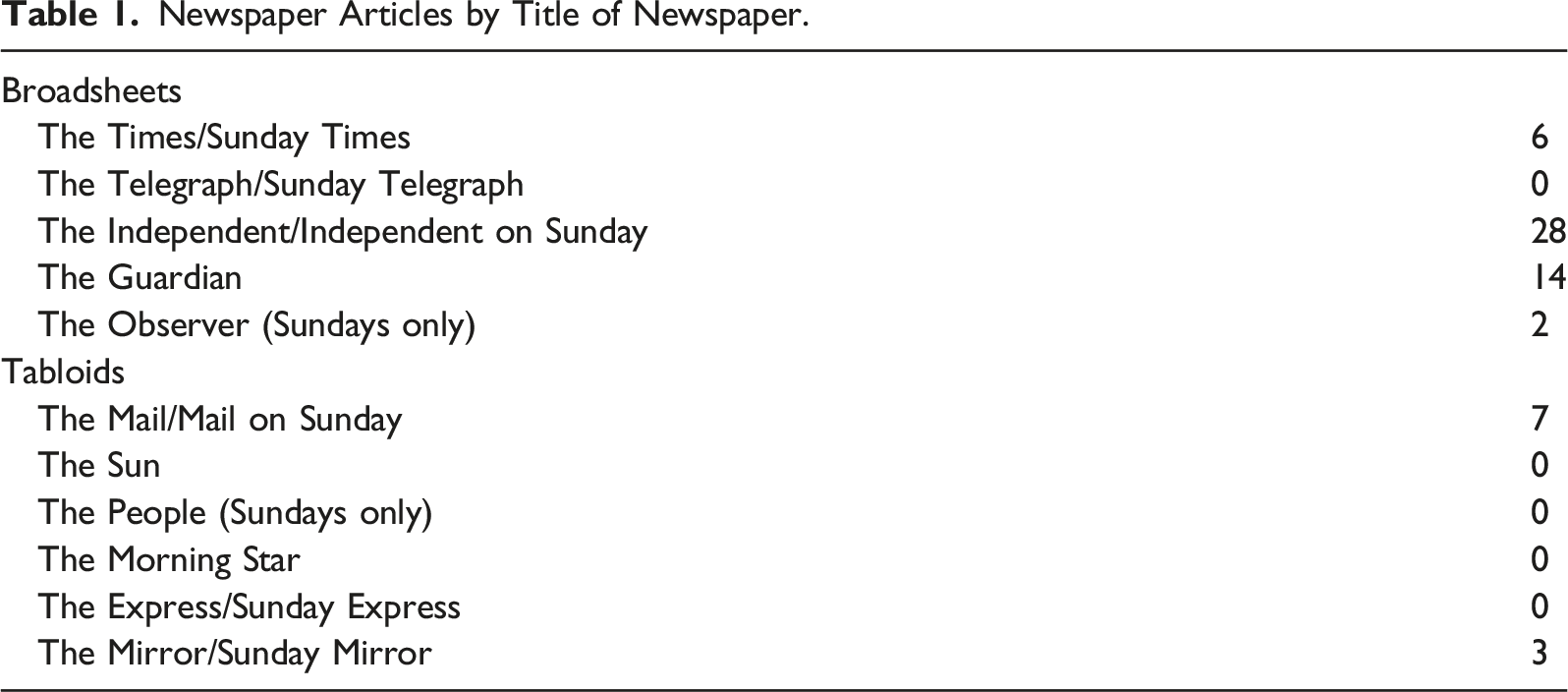
A thematic analysis approach, which also draws on aspects of critical discourse analysis (CDA), was employed. Simply put, I was interested in which themes were articulated in the newspaper articles (thematic analysis) and how they were articulated (critical discourse analysis). CDA, for those readers who are unfamiliar with this approach, has been described as ‘ … a qualitative analytical approach for critically describing, interpreting, and explaining the ways in which discourses construct, maintain, and legitimize social inequalities’. (Mullet, 2018:1). Critical discourse analysis involves reflecting upon the specific narratives, metaphors and phrases that are rhetorically organised within a given text to understand how and why the matter of interest is represented in the way that it is. What work is language doing and to what ends? My analysis involved particular interest in the following: - Occasioning: What occasioned the article, for example a criminal case, a politician’s speech and so on. This can sometimes help us to understand the representations seen within a text. - Who wrote the article and whether they claimed any expertise in their title (e.g. medical correspondent). This is interesting because claims to expertise may function to lend credibility to a particular representation, but so-called ‘experts’ can also reproduce myths. - Characterisation: How were medicinal cannabis users were represented within the articles? Which social characteristics were emphasized and to what end? - Were any particular linguistic terms, phrases, metaphors were found in the articles? -Were articles generally positive, neutral or negative in their overall tone? This was established by reading and reflecting on the articles and making an interpretive judgement about the overall view that the reader may have been left with. Was the overall view of medicinal cannabis use/users positive, negative or largely a relatively even mixture of positive and negative/on occasion a dispassionate reporting of events (both being seen in this analysis as neutral)? -Were any drug myths/misunderstandings reproduced in the articles? Many ‘myths’ about drugs and users persist across time and have come to possess the status of ‘truth’ due to their prevalence.
Other than Lexus Nexus, no other specialist software was used. A pen and paper approach was used for coding and counting, due to my preference for the closeness that this brings me to the data and interpretive process.
Findings
What are the newspaper articles ‘occasioned’ by?
This involved exploring what the articles were written in relation to (e.g. a politician’s comments on medicinal cannabis, a scientific journal article being published and so on) and whether some themes have a more positive overall tone to the article, that is is the article largely positive, negative or neutral in tone towards the issue of medicinal cannabis use (see Hughes et al., 2011). In this section, I am more interested in ‘mapping out’ the themes (Wetherell and Potter, 1992). N = 9 articles discussed British Medical Association (BMA) meetings or issues to do with the BMA and medicinal cannabis. Six were neutral in tone and three were positive. Most were neutral in tone as an outcome of discussing positive and negative views from doctors, so an overall neutrality resulted. N = 6 articles were occasioned by statements or comments by politicians, three were positive in tone, three were neutral. The neutral pieces tended to be relatively short in length and, therefore, rather matter of fact. The positive pieces tended to be longer in length, describing the symptoms of recognised conditions and stating that cannabis can help with them. The language tended to be more emotive, using the term ‘suffer’ for example. It is when articles start to talk about the issue less abstractedly and more in relation to the lived experience of chronic illness that more sympathetic depiction tended to be found. It may seem obvious that this would happen, as newspapers may be wary of portraying genuinely sick people in a negative light, due to reader reaction to this. However, I will argue below that there was rather more involved than this assumption might suggest. N = 6 articles discussed the founding of a pro-medicinal cannabis use campaign group and an advertising campaign it embarked on. All six articles were positive in tone. This is interesting and raises the obvious question of why? All of these articles discussed actual medicinal cannabis users and their circumstances – and this is highly significant. The articles contained highly sympathetic characterisations of medicinal cannabis users, as well as including particular language that was highly emotive. These articles also featured a number of myths, misunderstandings and conflations, which worked to legitimise the idea of medicinal cannabis use. These issues will be addressed, in depth, below. N = 6 articles reported on scientific/medical articles being published. Five of these were positive in tone, one was neutral. These articles focussed on research that had positive things to say about cannabis’ medicinal potential. They also characterised the research positively, with ‘science as progress’ type narratives and used the social accreditation of science and research institutions to argue in favour of medicinal cannabis use. The conflation between the medicinal use of cannabis itself and the medical potential of cannabis-based medicines was found in one of these articles. Another featured a highly emotive story about a chronically ill medicinal cannabis user. N = 5 articles discussed the BMA’s (1997) report on cannabis and its medical potential. Four were positive and one was neutral. Importantly, three articles conflated the BMA’s views on cannabis with cannabis-based medicines, misreporting the issues. (Montané et al. 2005: 475) found that 79.3% of Spanish newspaper articles that they analysed ‘ … did not manage the knowledge related to cannabinoids’. Perhaps the lack of expert knowledge was so pronounced among some journalists that they could not understand the distinction between herbal cannabis and cannabinoids/cannabis-based medicinal substances? This could well have inadvertently influenced some readers to try using cannabis medicinally, by thinking that the BMA had approved of the use of cannabis itself. N = 5 articles were not occasioned by a particular event but were feature articles about the issue of medicinal cannabis use. They tended to include emotive descriptions of medicinal cannabis users and chronic illness, as you might expect. Again, it appears to be the case that once articles moved from discussing medicinal cannabis use in abstracted ways, to telling human stories, they became much more sympathetic. This is not surprising, but in order to do so it appears that the articles had to establish not only that the medicinal cannabis users were genuinely ill, but also that they were the ‘right sort of person’ in regard to social characteristics. These were articulated from a symbolic palate of social class, occupation, social geography and age-related assumptions. The concept of ‘characterisation’ will be discussed further below. N = 4 articles were US-related medicinal cannabis use stories. As has been found already, the more the articles engaged with the lived experience of chronic illness, the more sympathetic the tone of the article tended to be. Specific conditions were mentioned, the term ‘sufferer’ was used, the rationality of withholding a medicinally useful substance was questioned in one article. One of the articles told the story of American medicinal cannabis activist, Robert Randall. Randall had been invited to give a lecture by at St Thomas’s hospital (London, UK) by a professor of physiology. However, Randall was denied permission to bring his US government supplied pre-rolled cannabis cigarettes with him and had to cut his visit short, as not having them made his glaucoma worse. We see in this story how it is established that Randall had a genuine chronic illness, but he is also established as ‘respectable’ by the purpose of his visit and the medical accreditation of who invited him. N = 4 articles were in The Independent, reflecting upon its own campaign around cannabis in the 1990s. At that time, the newspaper was very much in favour of the legalisation of cannabis for medicinal use. N = 4 articles reported on the announcement of findings from the House of Lords Select Committee’s investigation into the use of cannabis in the UK. Two articles reported on this positively, two neutrally. The two neutral reports were very brief, literally just mentioning it.
Interestingly, only N = 3 articles reported on court cases of medicinal cannabis users. All three were positive in tone and included very emotive characterisations of the accused. All three included the terms ‘sufferer’; or ‘sufferers’. All three articles also produced highly sympathetic characterisations, emphasising how ill they were, how debilitating their illnesses were and questioning the justice of bringing them to trial, even though one man had admitted to possessing 141 cannabis plants! So again, characterisation seems to be very important.
N = 2 articles reported on a meeting of police Chief Constables. A number of themes featured only N = 1 times, including: a TV programme, Channel Four’s Great Pot Debate; a report on parliamentary debate; a report on an upcoming conference; a story about Howard Marks standing in a local election; and a response to an article in another newspaper.
Claims to Journalistic ‘Expertise’, Myth, Misunderstanding and Conflation.
This part of the Findings section onwards will ‘map out’ but also engage with discourse from examples of newspaper articles a little more. It is fascinating to map out the myths, misunderstandings and conflations found within these articles and see what effect they had on the overall tone of the articles. I am also interested in whether journalists claimed any expertise in relation to drugs, health, science and related areas in these newspaper articles. Previous research has found that journalists writing about drug-related issues claim little, if any, expertise in relation to the issues (Coomber et al., 2000) and that there are problems with many journalists’ basic understandings and reporting of science (Montáne et al., 2005). Did journalists who claimed relevant expertise necessarily fare any better than those who did not?
In the majority of articles, n = 45, no specialism was stated by the author(s). Where a specialism was stated, some were not immediately relevant to the likelihood of the author necessarily having any expert knowledge on this issue. However, n = eight authors used descriptors suggesting some expert knowledge. Of these, one was a ‘science correspondent’, one a ‘science editor’ and five were ‘health’/‘medical’ correspondents, along with one article written by a medical doctor. Interestingly, of these eight articles, three featured misunderstandings and/or conflations. So even when journalists/writers claimed expertise, misunderstandings still featured in articles they wrote. The important point for the reader to note is that the misunderstandings actually encourage a positive view of medicinal cannabis use. There were three main themes of myth, misunderstanding and conflation identified within the newspaper articles:
The misunderstanding of herbal cannabis being a medically prescribed substance until the early 1970s, in the UK, features in 10 of the newspaper articles. Such articles misleadingly imply that cannabis was available as a prescribed medicine until then, possibly leading some people to feel that a medically useful substance was available until relatively recently and was now being unfairly withheld from them. Cannabis and its’ derivatives became a Schedule one controlled substance, in the UK, under the Misuse of Drugs Act, 1971. Yet it was not herbal cannabis that was used in British medicine, but a crude cannabis tincture, that was (as discussed above) already falling out of favour in Western medicine as far back as the late 1800s (Grinspoon and Bakalar, 1993). Cannabis tincture could have been prescribed up until 1973, as its’ licence of right granted in 1968 was not renewed. However, by 1973 it was ‘rarely prescribed except to patients who were already drug misusers’ (HoL 1998). An article in The Guardian, (2.9.1993) (written by a ‘Science Editor’) reported on an article in the journal Nature. The newspaper article commented that “It [cannabis] had a long history of medical use – until it was banned this century …” (1993: 6).
This idea can be drawn on by medicinal cannabis users and others, to argue in favour of the legitimacy of medicinal cannabis use. The title of ‘Science Editor’ adds to the authority of the article and increases the credibility of this misunderstanding.
This misunderstanding also features in an article published in The Observer (29.5.1994), written by a ‘Health Correspondent’, which is combined with the second misunderstanding that I would like the reader to note, concerning the 19th century British monarch, Queen Victoria. The article comments that: “ … an Observer survey reveals widespread support among Britain’s top doctors and nurses for cannabis to be available on prescription. Cannabis has a long medical pedigree – Queen Victoria is said to have taken it to ease her period pains – but it was removed from the pharmacological armoury in 1971, under the Misuse of Drugs Act.” (1994: 2).
Here we see claims of widespread support among current ‘top doctors’ (not just any doctors) combined with the idea of a long period of use, by way of royal approval. Again, this all adds to the legitimising of the idea of using cannabis medicinally. However, Queen Victoria was prescribed cannabis tincture by her personal physician, Dr. Reynolds, not herbal cannabis. The combination of a Health Correspondent citing the views of ‘top doctors’, the implication that cannabis was used as a medicine until fairly recently and the idea that a famous monarch used cannabis is a powerful combination of legitimising claims. Interestingly though, almost all of it is incorrect. The reader should note that the ‘Queen Victoria myth’ featured in n = 5 newspaper articles.
The final relatively common misunderstanding is the conflation of herbal cannabis and contemporary cannabis-based medicines/cannabinoids. This was found in n = 5 newspaper articles.
One article spoke only about herbal cannabis, although misleadingly at this point the political discussion of the time was considering the use of cannabis-based medicines. The Mirror (5.1.1998: 7) wrote an article with the headline ‘Prove Pot Fights Pain; Jack Straw Backs Cannabis on Prescription if Scientists Can Prove that it Relieves Pain’.
The other four articles had headlines that mentioned cannabis but then discussed cannabis-based medicines/cannabinoids, whilst also in places still talking about cannabis. This conflation of different ‘cannabis objects’ (Duff, 2017) may have confused many readers, further legitimising the idea that cannabis was being seriously considered for medical use/prescription:
The Independent (16.11.1997: 22) wrote an article with the headline ‘Cannabis Campaign: Legalise this Safe Drug, says BMA’. Not until the third paragraph does it mention that the BMA was actually in favour of allowing the prescription of cannabinoids, not herbal cannabis. To what extent this distinction was meaningful to readers is hard to say. Moving between speaking about herbal cannabis and cannabis-based medicines/cannabinoids may well have facilitated readers with far less than a clear distinction. Did it add legitimacy to the idea of using cannabis, by way of self-prescribing? Many of those we interviewed in Coomber et al. (2003) cited it as a major influence on how they had come to be doing so. Again, the reader needs to keep in mind that even by the late nineties, few members of the public were online yet. Newspapers were a far more influential medium then.
How are Medicinal Cannabis Users ‘Characterised’?
The concept of characterisation, developed in this article, draws on the idea that when stories are told about people, the people in those stories are constructed in a range of ways relevant to the telling of the story. Becker (2001) argues that the social construction of a substance as a ‘drug’, and therefore as a social problem, often involves a number of factors, including who the users are understood to be. As 43 out of 60 newspaper articles were positive in overall tone, might it be that this is related to who the medicinal users are seen as being and, therefore, how they are articulated in the stories? My argument is that newspaper articles involved the negotiation of the ambiguity of social ‘insiders’, but who were using ‘drugs’. Symbolic boundary maintenance is not always about ‘outsiders’ and it is not always about constructions of deviance. It can also be about inclusion and the minimisation of articulations of deviance.
Not all newspaper articles mentioned medicinal cannabis users at all, or spoke about actual individuals, but n = 16 did (slightly over one quarter of the sample). Importantly, all but three of these were positive in tone. The exceptions were because one featured a medicinal user who had smuggled six kilograms of cannabis (seemingly enough to disqualify the possibility of viewing her sympathetically), one article was neutral in tone as the positive portrayal was balanced by fears about cannabis and mental health and one article just seemed to be written very dispassionately.
In the remaining 13 articles, medicinal cannabis users were characterised by way of articulations that tended to be highly sympathetic. These are articulated from a symbolic palate of social class, occupation, social geography and age-related assumptions, recognisable illnesses/conditions (e.g. multiple sclerosis is frequently mentioned) and referents to social class, either explicitly ‘middle class’ or by way of occupation ‘former teacher’. Sometimes articulations involved social geographic referents like ‘suburban’. Often they also involved reference to age, with ‘grandmother’/’grandfather’ being common in articles. For example The Independent (23.2.1993) wrote of a ‘middle-aged, suburban housewife […] not remotely involved in the ‘drug scene …’. Towards the beginning of this article, this passage significantly distances (Simmel, 1964) the subject from any characteristics likely to construct her as deviant. In another example, in the right wing Daily Mail (9.8.1994), three medicinal cannabis users are discussed, variously described as ‘Oxford-educated’, a ‘GP’ (General Practitioner – Doctor) and a ‘a grandfather from Bristol’. Such signifiers function to ensure a picture of respectability.
When positioned within stories such as wheelchair using individuals being mugged trying to buy cannabis and descriptions of ‘crippling illness’, these accounts are compellingly sympathetic. By way of articulating medicinal cannabis users as genuinely ill, they are excused in the minds of many readers (Parsons, 1951) for using what many of them may still view as a ‘drug’, with all its connotations of risk, crime and moral decay. Such characterisations of respectability achieve considerable social distance (Simmel, 1964) from the stereotypical ‘drug’ user, an ‘outsider’ who is often stereotyped as wantonly risking their own health before a descent into drug-caused poor health, often criminality, is working or ‘under’ class, not of ‘respectable’ occupation, young and often ‘urban’ (with the racialised assumptions that this may carry). The ‘respectable medicinal cannabis user’ is marked out as ‘respectable’ not just because of who they are but also because of who they are not. See (Morris, 2018) for further discussion of this.
Is Any Particular Language Used in the Characterisation of Medicinal Cannabis Users?
The terms ‘sufferer(s)’ and ‘suffering’ appear in 24 of the 60 newspaper articles, more than once in seven articles and as frequently as five times in one article. Interestingly, the terms do not appear, in this sample, until late 1994. After this point, across different newspapers, it appears in half the remaining articles. A discourse of medical suffering, but also of suffering at the hands of an unjust justice system is consistently articulated. In a discussion of Western compassion for the suffering of others elsewhere in the world, Nussbaum (2001: 301) quoted in Hoijer (2004) argued that compassion is ‘ … a painful emotion occasioned by the awareness of another person’s undeserved misfortune’. The compassion that some readers may feel when reading stories about medicinal cannabis users, may pivot on their misfortune being undeserved. At its’ most emotive, the characterisation of the medicinal cannabis user as genuinely ill and of respectable social background leaves little room for questioning whether our compassion is deserved. This explains why the majority of newspaper articles that told stories about actual individuals, were positive in overall tone. As Nussbaum, (2001, cited in Hoijer, 2004) also discussed, the ‘ideal victim’ status of elderly people enhances still further the likelihood of positive portrayals of medicinal cannabis users, when labels such as ‘grandfather’/‘grandmother’ can be applied in their characterisations in stories. Of course, becoming a grandparent happens to many when only in their forties, but by mentioning this status without adding an age into the story, an old age is implied.
Discussion
This article has examined UK newspaper articles primarily discussing medicinal cannabis use, that were published between 1 January, 1990 and 1 February, 1998. The significance of these dates is that I started interviewing medicinal cannabis users in 1998, which led to Coomber et al. (2003). Of the 32 participants that we reported on in that paper, 14 mentioned the media (primarily newspapers) when accounting for how they came to think about cannabis as potentially being therapeutically useful (remember, the internet was something far less present in most people’s lives then, so newspapers were more important as a source of information about different issues in everyday life). I will now briefly summarise the main findings, before moving on to consider their significance.
The overall tone of the majority of newspaper articles in this sample was positive (n = 44). Other existing literature found positive portrayals too (plus some which were uncertain), see Kępski (2020). This is of course massively, and unsurprisingly, larger than the 0.6% of representations that Hughes et al. (2011) found, indicating that there is something very different about portrayals of medicinal cannabis use. N = 15 portrayals were found to be neutral and n = 1 being negative. Newspaper articles were most likely to be neutral in tone when addressing reports, meetings, conferences and politicians’ comments and most likely to be positive in tone when featuring the discussion of actual medicinal cannabis users. Myths, misunderstandings and conflations (see Abalo, 2021) were found in the newspaper articles, making medicinal cannabis use seem more credible. These misunderstandings centred around three themes: the idea that cannabis was a medicinal substance used up until the early 1970s, the idea that Queen Victoria used cannabis, and the conflation between herbal cannabis and cannabis-based medicines/cannabinoids (also found by Abalo, 2021). These issues were found in articles whether the author claimed some health or science related expertise or not. In terms of particular language, the terms ‘sufferer(s)’ and ‘suffering’ appear in 24 of the 60 newspaper articles. Interestingly, the terms do not appear, in this sample, until late 1994. After this point, across different newspapers, it appears in half the remaining articles. Further research may wish to establish why this was.
So, what is going on in these articles? It is my contention that the newspaper articles can be understood as performing symbolic boundary work in relation to medicinal cannabis users. Rather than the more common exclusion that typically happens by way of news accounts of ‘drug’ use, what we find in the newspaper articles I examined is the negotiation of ambiguity: the inclusion of people who are adjudged to be of social characteristics that would not usually be understood as deviant, yet simultaneously are ‘drug’ users. That is to say that the newspaper articles negotiate the ambiguity that exists because of an initially contradictory situation: the individuals featured in stories about medicinal cannabis use tend to be ‘insiders’ of mainstream society, but they are using a substance that was, and in many situations and societies still is, understood as a ‘drug’. They work partly by emphasising the insider status of the users, emphasising the genuine nature of their illness or impairment and partly by way of journalists reproducing myths, misunderstandings and conflations that have the outcome of inadvertently legitimising self-prescribing medicinal cannabis use. They contribute to the possibility of a ‘respectable medicinal cannabis user’ identity (Morris, 2018) and heterodoxical discourse (Bourdieu, 1979, 1992; Morris, 2018) that medicinal cannabis users articulate to legitimise their use of the substance and to challenge the potential stigma around its use. These newspapers articles are so interesting because they have to attempt to negotiate the complexity and uncertainty around the multiple meanings that ‘cannabis’ has (Abalo, 2021) though ultimately they often reproduce it too.
What is the boundary in question here? Ultimately, the boundary is between those whose use of an ambiguous substance (cannabis) was adjudged to be ‘legitimate’ and those whose use is not. This partly involves a negotiation of their social characteristics. Use being ‘legitimately medicinal’ is not just about medical need but also about the person being someone we are encouraged to trust. What appear to be the criteria by way of which this decision is made? Are those in question believed to be genuinely ill? The articles that mention individuals as medicinal cannabis users frequently emphasise that they are, by mentioning illnesses, impairments and often using the terms ‘sufferers’ and ‘suffering’. In doing so, great sympathy is generated. Also, there seems to be a need to ascertain that they are the ‘right sort of person’ too. As discussed above, this involves depicting them from a symbolic palate of social class, occupation, social geography and age-related assumptions, which may be explicitly stated or merely implied. As I argued above though, this is not just about who they ‘are’ (or at least articulated as being in the newspaper articles), but also who they are not. Such characterisations of respectability also depend upon achieving social distance (Simmel, 1964) from the stereotypical ‘drug’ user, an ‘outsider’ who is often stereotyped as wantonly risking their own health before a descent into drug-caused poor health, often criminality, is working or ‘under’ class, not of ‘respectable’ occupation, young and often ‘urban’ (with the racialised assumptions that this may carry). The ‘respectable medicinal cannabis user’ is marked out as ‘respectable’ in an explicit or implied oppositional relationship. See (Morris, 2018) for further discussion of this.
The myths, misunderstandings and conflations further legitimise this ‘respectability’. Whilst they were found in a minority of the articles, they added to the legitimacy of medicinal cannabis use. The misunderstanding that cannabis itself was being prescribed up until the early 1970s, the myth that a British monarch had used herbal cannabis and the conflation of herbal cannabis with cannabis-based medicines (with the legitimacy this brings) all added to the symbolic boundary work that allowed a positive portrayal of the issue in the majority of articles. In newspaper articles where the author claimed some health or science related expertise, this was even more the case.
The process was also reinforced by the appearance of particular discursive resources around ‘suffering’ that became increasingly common in newspaper articles, as a way of further emphasising the legitimate health problems of medicinal cannabis users. In a discussion of Western compassion for the suffering of others elsewhere in the world, Nussbaum (2001: 301) quoted in Hoijer (2004) argued that compassion is ‘ … a painful emotion occasioned by the awareness of another person’s undeserved misfortune’. The compassion that some readers may feel when reading stories about medicinal cannabis users, may pivot on their misfortune being undeserved (in contrast to the common feeling that recreational or dependent drug users bring problems ‘on themselves’). At its most emotive, the dominant characterisation of the medicinal cannabis user as genuinely ill and of respectable social background leaves little room for questioning whether our compassion is deserved.
Conclusion
On initial reflection, one may well assume that it is in the interests of national newspapers to write sympathetically about ill people, so as not to alienate some of their readers. However, whilst these newspapers had to be sympathetic when writing about sick people or those with impairments, in order to do so they had to negotiate the ambiguity inherent in medicinal cannabis use at that time. The articles are, in one sense, a justification of extending that sympathy and a negotiation of the identity of users, and of the meaning of cannabis when used medicinally, which allowed these largely positive portrayals.
The symbolic boundary work involved in this negotiation is aided by misunderstanding, myths and conflations which, for once, work in favour of the substance user and not against them. They work to include not exclude them. It was aided by powerful articulation of ‘suffering’, which functioned to legitimate the individuals portrayed in articles as being worthy of the readers’ sympathy. However, the amount of characterization work that was done within many of the articles, which qualified the users as ‘respectable’ shows that the symbolic inclusion of these people (or at least representations of them) needed to do a lot to achieve this. It appeared that demonstrating the legitimacy of their health condition was not enough on its’ own. Frequently, social class, occupation, social geography and age-related assumptions were articulated, as a way of further establishing their ‘respectability’. I have argued that this places social distance (Simmel, 1964) between them and the recreational or dependent drug user.
Over the period of the 1990s, in the UK, these newspaper portrayals contributed to the growth of the self-prescribing of cannabis for medicinal uses as something that ‘respectable’ people could do – and did. Whilst the relatively small sample used in this study limits the claims that can be made in relation to the findings, this article has demonstrated how ambiguity was negotiated in order to portray social insiders, who used a substance that could have led to them being labelled as outsiders, in a largely positive light and interestingly some of this happened due to journalistic misunderstandings. Future research may care to make comparison between representations of recreational cannabis use at this time and medicinal use, as the two are often represented as oppositional in certain regards. It may also like to consider why the discourse from late 1994 onwards suddenly comes to feature the terms ‘sufferer’ and ‘suffering’ so much more frequently than before.
Footnotes
Declaration of Conflicting Interests
The author(s) declared no potential conflicts of interest with respect to the research, authorship, and/or publication of this article.
Funding
The author(s) received no financial support for the research, authorship, and/or publication of this article.
