




Abstract
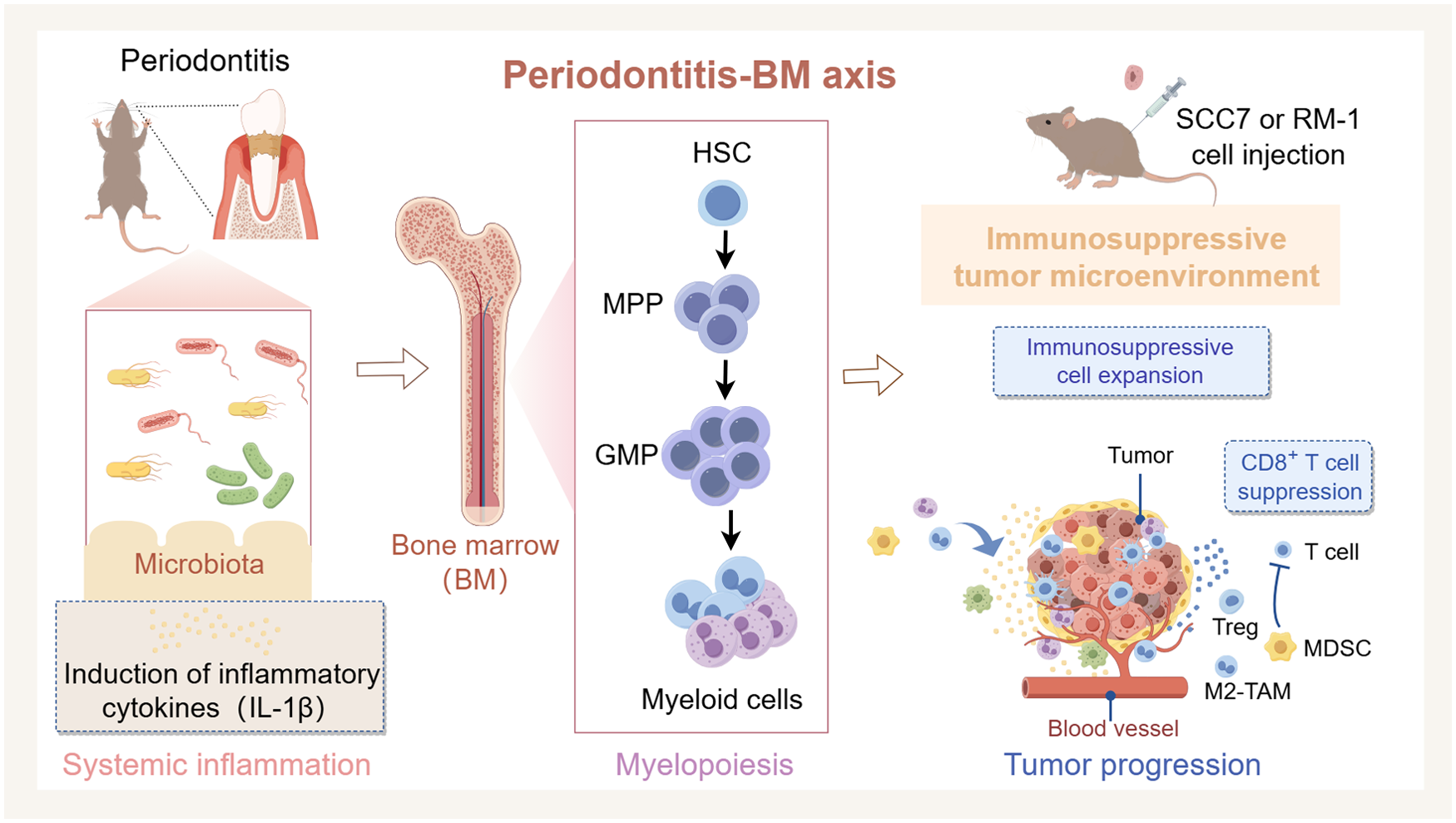
Inflammation is an enabling characteristic that contributes to the acquisition of hallmarks of cancer. Epidemiological studies have suggested a potential connection between periodontitis and increased risk of cancer. However, the underlying mechanisms of this connection remain insufficiently studied. Here, we found that periodontitis promoted the progression of oral squamous cell carcinoma and prostate cancer and fostered an immunosuppressive tumor microenvironment (iTME) characterized by expanded myeloid-derived suppressor cells (MDSCs), tumor-associated macrophages, and regulatory T cells in mouse models. Periodontitis also enhanced the immunosuppressive function of MDSCs and decreased the infiltration of CD8+ T cells. Moreover, periodontitis-induced systemic inflammation remodeled the bone marrow (BM) ecosystem, resulting in myeloid-biased hematopoiesis, which was accompanied by expansion of hematopoietic progenitors (LSK), multipotent progenitor 3 (MPP3), and granulocyte-monocyte precursors, followed by the subsequent augmentation of myeloid cell production. Mechanistically, interleukin (IL)–1 signaling, triggered by periodontitis, induced alterations in the myelopoiesis program. The conditional inhibition of IL-1R1 in the BM attenuated the tumor-promoting effect of periodontitis, diminished abnormal myeloid overproduction, and improved the TME. Thus, these findings reveal that periodontitis remotely induces a myeloid bias in hematopoietic stem and progenitor cells, and that the IL-1–mediated periodontitis–BM axis serves as a critical mechanism for periodontitis-facilitated tumor development and iTME establishment.
Keywords
Get full access to this article
View all access options for this article.
References
Supplementary Material
Please find the following supplemental material available below.
For Open Access articles published under a Creative Commons License, all supplemental material carries the same license as the article it is associated with.
For non-Open Access articles published, all supplemental material carries a non-exclusive license, and permission requests for re-use of supplemental material or any part of supplemental material shall be sent directly to the copyright owner as specified in the copyright notice associated with the article.
