



Abstract
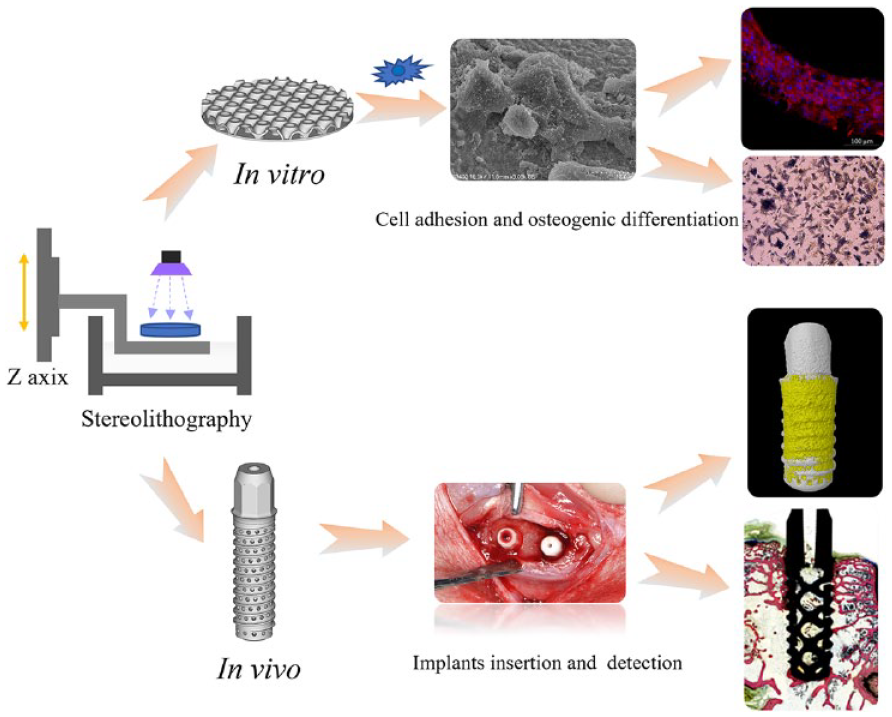
Research on 3-dimensional (3D) printed porous zirconia-based dental implants is still in its infancy. This study aimed to evaluate the biological responses of novel zirconia implants with p-cell structures fabricated by 3D printing. The solid zirconia samples exhibited comparable density, 3-point flexural strength, and accelerated aging properties compared to specimens prepared previously by conventional methods. Cell-based experiments showed that the p-cell structure promoted cell proliferation, adhesion, and osteogenesis-related protein expression. Mechanical tests showed that both p-cell and control implants could withstand a torque of 35 Ncm without breaking. The mean maximum breaking loads of p-cell and control implants were 1,222.429 ± 115.591 N and 1,903.857 ± 250.673 N, respectively, which were much higher than the human physiological chewing force and human mean maximum occlusal force. An animal experiment showed that the bone trabeculae around the implants were significantly thicker, more numerous, and denser in the p-cell group than in the control group. This work could provide promising guidance for further exploring 3D printing techniques for porous zirconia bionic implants in dentistry.
Keywords
Get full access to this article
View all access options for this article.
References
Supplementary Material
Please find the following supplemental material available below.
For Open Access articles published under a Creative Commons License, all supplemental material carries the same license as the article it is associated with.
For non-Open Access articles published, all supplemental material carries a non-exclusive license, and permission requests for re-use of supplemental material or any part of supplemental material shall be sent directly to the copyright owner as specified in the copyright notice associated with the article.
