



Abstract
Professor John S. Greenspan died on March 31, 2023. He was a renowned and accomplished academic, dentist/scientist, pathologist, and administrator who made sustained and significant international impacts on numerous fields over half a century. John was arguably best known for his work with his wife, Dr. Deborah Greenspan, on the oral aspects of AIDS and the role of viruses in oral epithelial and salivary gland lesions. He had a lifelong interest in Sjögren’s syndrome, culminating in the leadership of the Sjögren’s International Collaborative Clinical Alliance. He was also widely recognized as one of the leading investigators into the understanding of oral mucosal diseases, including recurrent aphthous stomatitis. He and his colleagues’ major contributions to HIV research and care included the discovery of the oral lesion “hairy leukoplakia,” its etiological association with Epstein–Barr virus, and other oral lesions in the natural history of HIV disease. In recent years, John turned his attention to global oral health inequalities, helping to establish the International Association for Dental Research’s Global Oral Health Inequalities Research Network and serving as its first president. He led many organizations with humble authority, knowledge, wit, and wisdom and mentored colleagues from all over the world, especially from lower- and middle-income countries. John leaves a very special legacy based on example and scientific curiosity, and his work has not only made a lasting impact on his colleagues but also translated to abiding benefit for patients.
Background and Early Years
John was born in London in 1938 and received an early education at Hendon County School, Hendon, England. He qualified as Bachelor of Dental Surgery (BDS) at the Royal Dental Hospital and earned a First Class BSc in Experimental Pathology at the Royal Free Hospital School of Medicine, a PhD at the Royal Postgraduate Medical School, and an MRCPath at St. George’s Hospital Medical School. He obtained lecturer and senior lecturer posts at the Royal Dental School (1963–76) and became consultant in pathology at St. Georges Hospital. John and his family moved from the United Kingdom to San Francisco, taking a position at the University of California, San Francisco (UCSF) in 1976 (Figure 1).
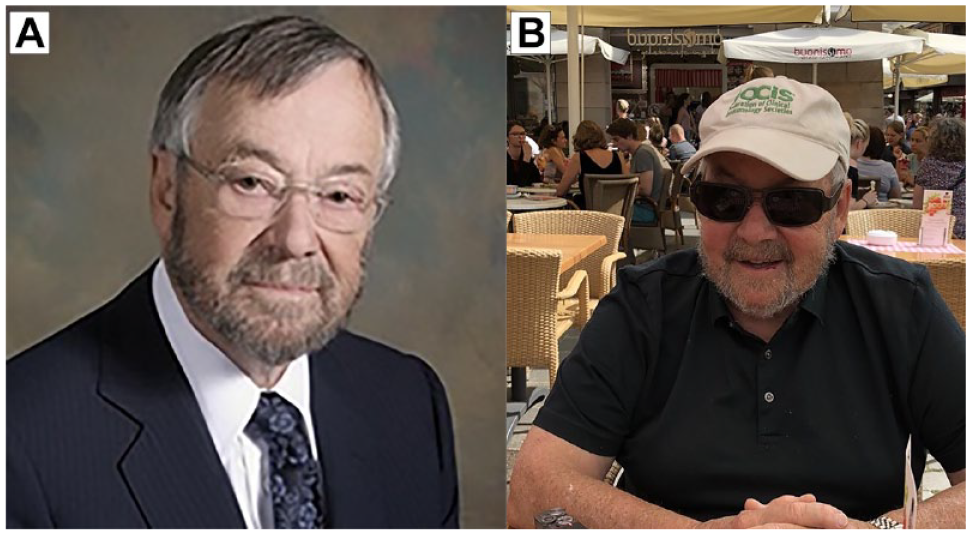
John Greenspan, BSc, BDS, PHD, FRCPath, FDSRCS(Eng), DSc(hon), FKC. 1938 to 2023. (
John demonstrated his inquisitiveness and questioning of mechanisms while still a student, and this contributed to gaining first-class honors in his first degree (BSc). While studying pathology at St. Georges Hospital in London with Professor R.B. Lucas, he contributed to the publication of the WHO Classifications of Odontogenic Tumors and of Salivary Gland Tumors. His move to UCSF enabled him to pursue research into a number of mucosal diseases, including recurrent aphthous ulceration (Yeoman et al. 1978), lichen planus (Greenspan et al. 1978), periodontal diseases (Seymour and Greenspan 1979), and oral cancer and herpes virus infections (Shillitoe et al. 1982).
Research Career
John’s research career spanned more than 5 decades and included numerous groundbreaking discoveries in the fields of oral pathology and medicine. Throughout his career, he was acutely aware of the linkage between oral disease and systemic disease and the need to investigate this relationship (Malladi et al. 2012), and he did so successfully with his extraordinary contributions to oral manifestations of HIV and to Sjögren’s syndrome (see below). He was particularly interested in the relationship between oral health and HIV/AIDS, and his work helped establish the field of oral HIV/AIDS research. Working closely with Deborah, he became well known for the identification of the oral condition they called “hairy leukoplakia” early in the AIDS epidemic (Greenspan et al. 1984, Greenspan et al. 1985a) and for their subsequent discovery of a connection between the condition and the Epstein–Barr virus (EBV) (Greenspan et al. 1985b; Peñaranda et al. 1997). This research demonstrated one of the characteristics of John’s approach, following through from a clinical observation to investigating and understanding the mechanisms involved that then led back to patient care (Greenspan et al. 1985a,b, 2016).
He established the UCSF AIDS Specimen Bank in 1982, foreseeing how useful the concept of biospecimen acquisition, storage, and utilization for scientific inquiry would be (De Souza and Greenspan 2013). Together with Deborah, he pioneered the concept of training nurses and physicians on the diagnosis of oral mucosal diseases associated with HIV and AIDS (Feigal et al. 1991; Katz et al. 1992; Shiboski et al. 1994, 1996). John was awarded one of the first National Institute for Dental and Craniofacial Research (NIDCR)–sponsored program project grants to study oral HIV disease and later became director of the UCSF AIDS Research Institute. He founded the World Workshops on the oral manifestations of HIV with the concept of bringing together basic, clinical, and social sciences around the world (see below).
John was the recipient of over $70 million in research funding from federal, state, and industry agencies during his 42-y tenure at UCSF. Indeed, for more than 25 y, he was one of the top 5% of National Institutes of Health (NIH) funding recipients by amount of total funding in all fields. He published over 300 papers and 4 books on oral aspects of AIDS, oral pathology, and immunopathology and was in huge demand as an international speaker. He was a founding editor of the journal Oral Diseases.
Service to UCSF
John and Deborah initially came to UCSF in 1972 on a short-term sabbatical for John to work with Norman Talal on Sjögren’s syndrome. They enjoyed the experience and environment, so after 3 more years in the United Kingdom, they returned to the San Francisco Bay Area to live and work. That early work on Sjögren’s syndrome set the scene for a lifelong interest in the condition and the links between oral and systemic disease (Greenspan et al. 1974; Talal et al. 1974). His leadership qualities and experience were reflected in his appointments as chair of the Division of Oral Biology (1976–88) and chair of the Department of Stomatology (which included the Divisions of Oral Biology; Oral Medicine, Pathology, and Radiology; and Periodontology), from 1988 until 2001. Subsequently, he served for many years as associate dean for research and then for global health.
John’s leadership responsibilities outside the School of Dentistry included serving as professor of pathology in the UCSF School of Medicine and as chair of both the UCSF Academic Senate and the UC Systemwide Health Sciences Committee. He was founder and director of 3 pioneering components of UCSF’s world-renowned AIDS program: the Oral AIDS Center, the campuswide UCSF California AIDS Research Center, and the UCSF AIDS Specimen Bank (De Souza and Greenspan 2013), all reflecting John’s wider medical perspective. John’s expertise as a histopathologist was widely appreciated, and he continued to contribute to the oral pathology service at USCF until very recently.
John’s clinical expertise was not limited to pathology, however. He was hugely influential in educating the profession on how to safely treat patients with AIDS or HIV in the dental office. John and Deborah demonstrated empathic care of patients with HIV infection before HIV was even identified. They treated patients with AIDS when most others would not do so, out of fear, ignorance, or homophobia. He was a champion of those unafraid to offer treatment to those living with HIV, like David Reznik, a clinician in Atlanta who started “HIVDent.” David recalls, “I remember, before my clinic was even in the plans, that I asked John for his support. He said there was no reason to have a HIV/AIDS standalone clinic; that people with HIV should be treated like everyone else. He was a champion for humanistic treatment, compassion, and education!”
It is difficult to overemphasize John’s immense contribution and legacy to UCSF scientifically, academically, clinically, administratively, and in mentoring (see below), but also his impact on clinical care more generally.
Service to the International Association for Dental Research
John loved the internationalism of the International Association for Dental Research (IADR) and its global perspectives on research. He served as president of the IADR Experimental Pathology Group in 1983–84, president of the American Association for Dental Research (now the American Association for Dental, Oral and Craniofacial Research) (AADOCR) in 1988–89, and president of the IADR in 1996–97. In all these roles, he was an active and committed participant, dispensing wise and persuasive counsel for the benefit of each. Those of us who served with John on the IADR boards (SJC) remember (perhaps with envy!) the apparent ease by which he knew the names and histories of all the 40 or so representatives around the table, some of whom he was meeting for the first time.
John was always aware of the need for change, especially in light of global events, technical advances, and global health research perspectives. Major changes to the IADR constitution were initiated on his watch. He was always ready, if asked, to offer advice about awards, research initiatives, international and industry linkages, council changes, and other topics and thus found himself very busy in service to many committees. It was a mystery as to how John continued to be so well informed about so many developments in so many health fields!
His service to AADOCR and IADR extended into the political arena, where he led many initiatives to seek and advocate funding for work in the field and for dental and biomedical research in general. He worked extensively with the press, where he was an articulate and effective advocate. Apart from his contributions to the IADR, he was a member of the Council on Dental Research of the American Dental Association 1987–90 and chair of the Dental Section of the American Association for the Advancement of Science in 1992–93. He was prodigious in gaining financial support for IADR, for instance, for the Distinguished Scientist award for the Oral Medicine & Pathology group and its symposia and, more recently, for the Global Oral Health Inequalities Research Network (GOHIRN), with the aims of addressing global oral health inequalities and establishing a research agenda (Sgan-Cohen et al. 2013). This work reflected his longstanding global perspectives (Baum et al. 2002; Greenspan and Greenspan 2007; Jin et al. 2016). John continued to be actively involved in both groups until the last IADR he attended 3 y ago.
World Workshops and the Oral Manifestations of HIV and AIDS
The first World Workshop on Oral AIDS was held in San Diego in 1988, organized by John and Deborah, who saw the need and advantages of bringing together all those health workers globally who were interested in oral aspects of HIV with a common purpose of advancing the field collectively and collaboratively (Figure 2). The aims of the first and all subsequent workshops over the next 30 y were to gather clinicians and scientists with an interest in the oral manifestations of HIV disease; to share worldwide perspectives, knowledge, and understanding of oral health and disease in HIV infection; to agree on global definitions and classifications of oral diseases; and to identify research needs taking account of the worldwide perspectives and opportunities.
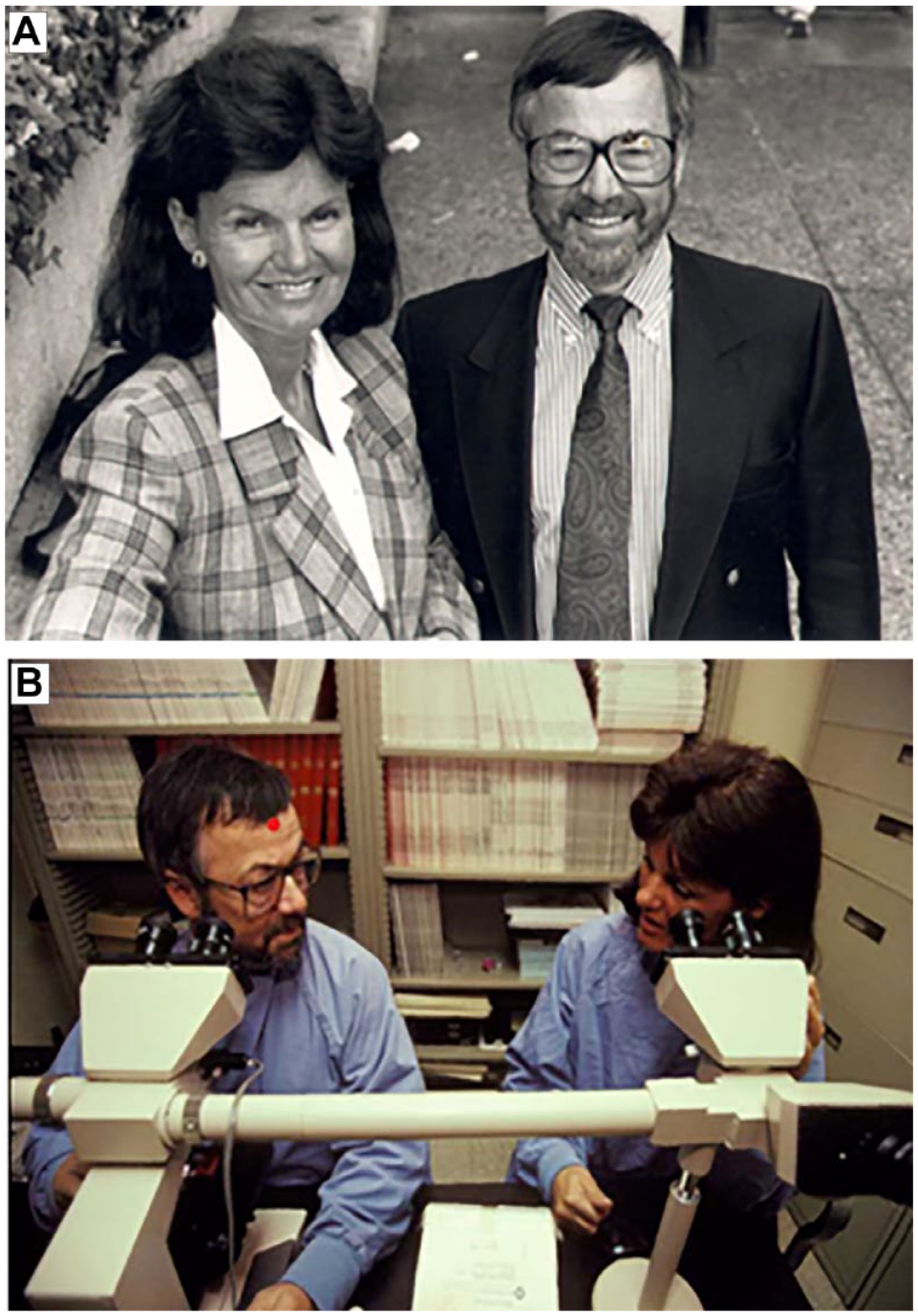
John and Deborah Greenspan. (
The workshops have had worldwide impact, leading to robust research agendas, changes in national HIV policies, and international collaborations (Greenspan and Challacombe 2020). Identification of research needs led to adoption of a research agenda by NIDCR and by the Oral HIV/AIDS Research Alliance (OHARA) linked to the NIH/National Institute of Allergy and Infectious Diseases–funded AIDS clinical trials group network (Shiboski et al. 2011, 2016). Evidence-based declarations from the workshops have led to policies regarding access to oral care as a basic human right for both HIV-positive and HIV-negative individuals and advancing the rights of HIV-positive health care workers to perform clinical practice. John spoke at all 8 workshops in the United States, United Kingdom, South Africa, Thailand, China, India, and Indonesia (the last by video link).
Sjögren’s International Collaborative Clinical Alliance (SICCA)
John’s research on the oral manifestations of autoimmune diseases spanned epidemiology, public and global health, and implementation science. He first came to UCSF to work on Sjögren’s syndrome and among his most important achievements was serving as the founding co-principal investigator, together with Dr. Troy Daniels, of the NIDCR-funded Sjögren’s International Collaborative Clinical Alliance (SICCA), which—20 y later—is the largest biorepository and data registry for Sjögren’s syndrome in the world. In an international collaboration over 7 countries, John and Troy enlisted colleagues in oral medicine, rheumatology, ophthalmology, epidemiology, biostatistics, and genetics to recruit patients with signs and symptoms suggestive of Sjögren’s syndrome. SICCA is a wonderful example of international and interdisciplinary collaboration with principal investigators leading teams in United States (UCSF) and Johns Hopkins (Alan Baer), China (Yan Zhao), India (M. Srinivasan), Japan (Hisanori Umechara), Denmark (Morten Schiodt), Argentina (Hector Lanfranchi), and the United Kingdom (Stephen Challacombe). In 2010, as part of a well-thought-out succession plan, John and Troy handed over the reins of leadership of SICCA to Drs. Caroline Shiboski and Lindsey Criswell at UCSF.
SICCA aimed to define the classification criteria for Sjögren’s syndrome, and by collating carefully acquired matched data from over 1,700 patients, this goal was accomplished (Shiboski et al. 2012). The characterization of this huge cohort of patients was so detailed that genome-wide association studies could be carried out (Taylor et al. 2017). The database and biobank have allowed valuable publications on the oral (Daniels et al. 2011), ocular (Whitcher et al. 2010; Rose-Nussbaumer et al. 2015), rheumatological (Baer et al. 2015), and systemic aspects of Sjögren’s syndrome. The value of the biospecimen bank materials was predicted by John and is likely to continue to produce results for many years to come.
Mentoring and International Perspectives
Together with Deborah, John created what many would regard as the world’s leading group of clinicians, translational and basic scientists, and students in the field of oral HIV. Working together (Figure 2), they made extraordinary contributions of broad significance in the diagnosis and care of patients with this infection. In his scientific and administrative roles, he was a superb and dedicated mentor to younger colleagues, many of whom have themselves gone on to great success and positions of leadership. He recruited many outstanding women and minority colleagues in his chair, associate dean, and director roles, most of whom are now full professors and occupy senior administrative and leadership positions. He trained over 40 basic and clinical science graduate students and over 20 fellows, including a number of now-prominent dental clinical scientists and physician-scientists, many continuing to work with John on research in their own countries (Chidzonga et al. 2008; Owotade and Greenspan 2008; Owotade et al. 2008).
Throughout his career, John mentored visiting clinicians and scientists from all over the world. There appeared to be a permanent stream of colleagues—from local to international—to experience and benefit from the unique welcoming environment that John created (which included both authors of this tribute). At whatever seniority, they all became lifelong friends. One of us (O.D.K.) remembers John’s mentoring style with deep appreciation and affection. His ability to simultaneously be supportive yet critical, and inclusive yet incisive, made him that rare academic mentor who was both a role model and a friend.
Honors and Awards
Throughout his career, numerous honors and prestigious awards recognized John’s science and leadership. His early academic promise was recognized by being awarded the 1962 Saunders Scholarship and Gold Medal for the best overall student performance in the Royal Dental School in London. He went on to receive the Distinguished Scientist Award in Pathology and the Oral Biology Award from IADR, was the Kreshover Lecturer at NIDCR, and was awarded the honorary ScD of Georgetown University. His work was recognized by the award of several fellowships, including fellow of King’s College London, the Royal College of Pathologists, and a fellowship in dental surgery from the Royal College of Surgeons of England in 1998. He was the Mentor of the Year of the National Student Research Group of the AADOCR and received the American Dental Association Gold Medal Award for Excellence in Clinical Research.
Jointly with Deborah, John was awarded the “Alumnus of the Year” for the Kings College London Dental Institute in 2012 and the UCSF Academic Senate Research Award in Translational Science. He is one of the few dentists honored with election to the US National Academy of Medicine.
Conclusions
There are very few who have made such an impact in our fields of dental, oral, and craniofacial research as John Greenspan. Few if any oral health scientists of recent generations can match his record in terms of investigations that have led to improvements in the health of the population worldwide. His encyclopedic knowledge, his compassion, and his generosity have enriched the lives of all of us. He leaves us with an enormous legacy, not only for what he achieved in a stellar career but for his vision of the research pathways that the field should follow globally and the questions to be asked, perhaps best demonstrated by his leadership of the world workshops in oral HIV, as well as IADR and AADR (now AADOCR).
He leaves a huge void that will take many to fill, and then only if we have a modicum of the inquisitiveness, drive, and breadth of knowledge that he demonstrated throughout a long career. John truly made a unique contribution to oral health research and science and its translation into clinical practice.
John was immensely proud of his family and adored by his wife Deborah, children Nick and Louise, and 4 grandchildren. The beautiful words and testimonies written by his friends and colleagues in the weeks after his death highlight John’s extraordinary emotional intelligence, encyclopedic knowledge, scientific curiosity, and generosity in opening doors to junior investigators. John was an exceptional visionary who had a keen understanding of the importance of team science and interdisciplinary collaborations. John was a wonderful man, and we will dearly miss his formidable presence.
Author Contributions
S.J. Challacombe, contributed to conception and design, data acquisition, drafted and critically revised the manuscript; O.D. Klein, contributed to conception and design, data acquisition, drafted and critically revised the manuscript. All authors gave final approval and agree to be accountable for all aspects of the work.
Footnotes
Acknowledgements
We thank Drs. Caroline Shiboski and Richard Jordan for critically reviewing the manuscript.
Declaration of Conflicting Interests
The authors declared no potential conflicts of interest with respect to the research, authorship, and/or publication of this article.
Funding
The authors received no financial support for the research, authorship, and/or publication of this article.