



Abstract
The purpose of this study was to determine the efficacy of a dental nurse–delivered intervention—the Dental RECUR Brief Negotiated Interview for Oral Health (DR-BNI)—in reducing the recurrence of dental caries in children who have a primary tooth extracted. It was based on a 2-arm multicenter randomized controlled trial with blinded outcome assessment. Participants were 5- to 7-y-old children (n = 241) scheduled to have primary teeth extracted in 12 UK centers. Test intervention parents (n = 119) received DR-BNI led by trained dental nurses. DR-BNI is a 30-min structured conversation informed by motivational interviewing with a forward focus to prevent future caries. Preventive goals are agreed, and a review appointment is made with child’s general dental practitioner, who is advised to treat the child as being at high caries risk. The control intervention (n = 122) was a parent-nurse conversation about child’s future tooth eruption, with advice given to visit a general dental practitioner as usual. At baseline, the DR-BNI group’s mean dmft was 6.8, and the control group’s was 6.3. A median of 5 teeth were extracted, mainly under general anesthesia. Final dental assessments were conducted by a single examiner visiting 189 schools 2 y after intervention; 193 (80%) of 241 children were examined. In the control group, 62% developed new caries in teeth that were caries-free or unerupted at baseline, as compared with 44% in the test group, a significant reduction (P = 0.021). The odds of new caries experience occurring were reduced by 51% in the DR-BNI group as compared with control. There was a 29% decrease in the relative risk of new caries experience in the DR-BNI group as compared with control. This single low-cost, low-intensity intervention was successful in significantly reducing the risk of recurrence of dental caries in children. This trial has implications for changing pediatric dental practice internationally. Training in and implementation of a motivational interviewing–informed brief intervention provides opportunities for dental nurses to facilitate behavior change improving the oral health of children at high caries risk (ISRCTN 24958829).
Keywords
Introduction
Dental extractions are the highest cause of planned admission to hospitals for children <11 y of age in England and Scotland (Royal College of Surgeons 2015; Information Services Division 2016). Surgery cannot prevent future decay because the underlying etiologic factors of high sugar intake, irregular toothbrushing with fluoride toothpaste, and symptomatic dental attendance (Public Health England 2017) are unchanged. A review of children having their first permanent molars extracted found that 40% had previous extractions of primary teeth (Albadri et al. 2007). Parents whose children develop new decay postextraction may have struggled to accept health advice or felt unable to change previous unhealthy behaviors (Amin and Harrison 2007).
In other habitual behaviors, such as smoking, motivational interviewing (MI) approaches have moved people from inaction to action (Prochaska et al. 2008). MI has been used in successful interventions influencing parents to adopt and maintain preventive child oral health behaviors (Weinstein et al. 2004; Weinstein et al. 2006; Freudenthal and Bowen 2010). A brief intervention used MI within a structured framework and was taught to practitioners in a short training program (Emmons and Rollnick 2001). The 30-min intervention was delivered in a medical setting and changed negative attitudes, beliefs, and behaviors; to date, no dental studies have been conducted.
We developed a psychosocial intervention—the Dental RECUR Brief Negotiated Interview for Oral Health (DR-BNI)—to be delivered to parents of children who have had a dental extraction of primary teeth (Pine et al. 2015). DR-BNI can be delivered by dental nurses (assistants) and is designed to develop shared understanding with parents through communication about adopting healthier behaviors to reduce recurrence of caries in their children. Our aim was to test the efficacy of a dental nurse–delivered intervention, the DR-BNI, in reducing the recurrence of dental caries in children who had a primary tooth extracted 2 y previously.
Methods
Study Design
This was a 2-arm multicenter randomized controlled trial with blinded outcome assessment.
Primary Outcome
The primary outcome was dental caries experienced in the 2 y postintervention on any tooth in either dentition at the dentinal level of involvement, which had been caries-free at baseline.
Sample Size
The primary outcome variable is binary, taking the value 1 where a child had caries experience after 2 y on any tooth in either primary or permanent dentition, which was caries-free (or unerupted) at baseline; 0, otherwise. From a previous clinical trial of 5- to 7-y-olds who had extractions (Curnow et al. 2010), 87% developed new carious teeth 2 y later. Setting the minimum clinically significant difference to 20% (67% in the test group), with 80% power and a significance level of 0.05, gave a minimum sample size of 78 per group. Allowing 30% with incomplete final assessments gave a final required sample size of 112 per group.
Governance
Research ethics and UK NHS approvals were obtained. Participants were recruited in 12 UK centers, including dental hospital clinics and secondary care centers, which provided extraction services. Principal investigators were pediatric dentists heading the centers. All staff received training in good clinical practice, trial protocol, and diagnostic criteria for baseline caries assessments. Each site had investigator site files and participant case report forms (protocol details in Pine et al. 2015).
Recruitment
Inclusion criteria were written consent from parents/legal guardians of patients aged 5 to 7 y who were scheduled to have at least 1 primary tooth extracted for dental caries under general anesthesia, inhalation sedation, or local anesthesia. Exclusion criteria were having all first permanent molar teeth extracted, participation in another trial or in the previous 3 months, severe disability, or no parental consent given. Randomization and intervention delivery occurred after enrollment and up to 6 wk postextraction (Appendix 1; Fig. 1). Randomization was stratified by site, and participants were randomized with sequentially numbered sealed envelopes.
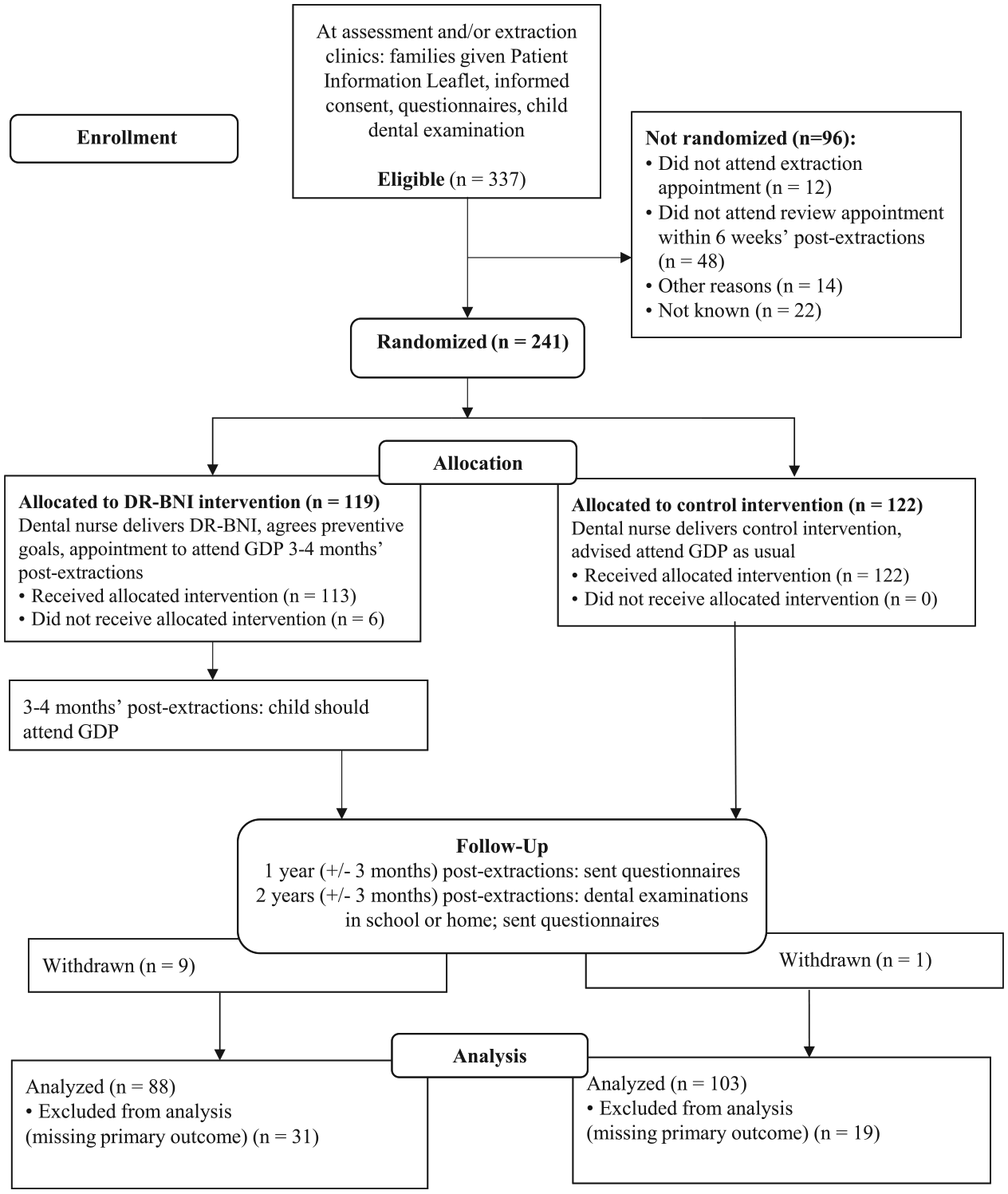
CONSORT flow diagram. DR-BNI, Dental RECUR Brief Negotiated Interview for Oral Health; GDP, general dental practitioner.
Test Intervention
DR-BNI is a “talking” intervention, a 30-min therapeutic conversation between dental nurse (assistant) and parent/caregiver, structured in 6 segments (Build Rapport, Ask about Pros and Cons, Feedback, Readiness to Change, Action Plan, Dental Appointment and Thanks). The intervention, developed by a clinical and health psychologist (P.M.A.), is informed by MI techniques. The focus is forward-looking about keeping the newly erupting dentition healthy. DR-BNI seeks to increase parental self-efficacy for 3 child oral health–related behaviors: twice-daily toothbrushing with fluoride toothpaste; controlling free sugars intake, especially at bedtime; and attending a dentist regularly for preventive care rather than symptomatically.
Dental nurses attended 1 d of training by P.M.A. in DR-BNI. Training followed MI principles combined with health behavior change techniques (Miller and Moyers 2006) for promoting oral health. The aim was to explore opportunities with parents that might lead to change in past behaviors rather than telling them what to do. Nurses were advised to try to agree on 1 or 2 goals with parents, if appropriate, using the behaviors described in a modified dental contemplation ladder (Coolidge et al. 2011; Appendix 1). Nurses were trained in change talk, developing a change plan and consolidating commitment. After training, nurses practiced in their clinics (Appendix 1).
The agreed-on goals were tailored for each family, committing to a specific dental health–related behavior for their child, such as changing from sugar-containing drinks to sugar-free or brushing their child’s teeth at bedtime with fluoridated toothpaste. At intervention end, the nurse assisted parents to make a recall appointment with their child’s general dental practitioner (GDP) 3 to 4 mo after the intervention, and in addition, the nurse sent a text reminder. Parents left the clinics with a copy of their agreed-on goals and the child’s review dental appointment (Appendix 2).
Placebo Control Intervention
This was developed by C.M.P. with the same structure as the DR-BNI, but the delivery mode was educational, giving information on tooth eruption between the ages of 6 and 14 y. The conversation was structured around concepts of growing up, shedding teeth, and growing new ones, with illustrations. There was no discussion on caries prevention, and parents were advised to attend their child’s dental practice as usual. All families in both groups received the same leaflet on dental development to take home.
Intervention Delivery
Most parents received the intervention at a routine appointment (assessment, preextraction, or extraction), and where this was not possible, an appointment was made between enrollment and 6 wk postoperatively. With parents’ permission, an audio recording was made of the intervention conversation (Appendix 1).
Contacts with Dentists
Letters to GDPs of DR-BNI participants noted the agreed preventive goals, and dentists were sent a booklet containing advice on preventive care advised for children at high caries risk, including 3-mo recalls (Scottish Intercollegiate Guidelines Network 2014; Public Health England 2017). GDP booklets contained case report forms to be completed and returned about child dental care in the first year. At the end of the second year, we contacted GDPs about appointments attended and dental care provided. Similarly, we contacted control group participants’ GDPs at 1 and 2 y (±3 mo) postenrollment. GDPs received payments from research funds to contribute to costs of completing case report forms.
Measures
At the intervention appointment, parents completed the Oral Health Behaviours Questionnaire incorporating measures of parental self-efficacy for child toothbrushing and dietary sugar intake (Adair et al. 2004). A general parental self-efficacy scale (Prochaska et al. 2008) and contemplation ladder measuring readiness to change behavior (Coolidge et al. 2011) and modified for oral health (Appendix 1) were also completed. Prior to extractions, pediatric dentists at the centers undertook dental examinations noting teeth with caries into dentine and teeth to be extracted.
A single examiner (C.M.P.) undertook the final clinical assessments in participants’ primary schools or homes 2 y after the intervention, ±3 mo. Children were examined supine with a single-use plane mouth mirror, and teeth were illuminated by Daray light of 2,000 lux. Upper anterior buccal plaque was recorded as an indicator of oral cleanliness. Teeth were examined for untreated caries into dentine, restorations, and fissure sealants (Pitts et al. 1997). Cotton wool rolls were used to dry teeth, and probes were available to remove debris and to check the integrity of restorations and the presence of sealants (Appendix 1). All dental assessments were blind to group assignment.
Statistical Analysis
Analysis of the primary outcome variable used logistic regression, adjusted for the stratification variable center and baseline dmft. Unadjusted relative risk estimates were calculated. The primary outcome was analyzed with the full analysis set by using the intention-to-treat principle as far as possible, with participants excluded only where outcome data were unavailable. Per-protocol analysis was conducted to test the robustness of the main results to departures from intention to treat. Sensitivity analyses were conducted with multiple imputation to investigate robustness of analysis to missing primary outcome data.
Results
The first patient was randomized in April 2015; more centers entered, and the last patient was randomized in November 2016. Ten centers were in England, 1 in Scotland, and 1 in Northern Ireland. A total of 119 children were randomized to the DR-BNI group and 122 to the placebo control (Fig. 1). Of these 241 children, 235 (98%) received the interventions.
Baseline characteristics (Table 1) were similar. Children were, on average, 6 y old. There were similar numbers of boys and girls; a third of mothers completed education at secondary school or earlier. Over half of parents reported that their children had sweets every day or most days, with over a third having sugary drinks frequently. Children had high levels of deciduous caries experience, with a mean dmft of 6.8 in the DR-BNI group and 6.3 in the control group. At recruitment, children had a median 5 teeth extracted, almost all under general anesthesia. Not all first permanent molars were erupted, with a mean DMFT of 0.1 in the DR-BNI group and 0.0 in the control group.
Baseline Parameters.
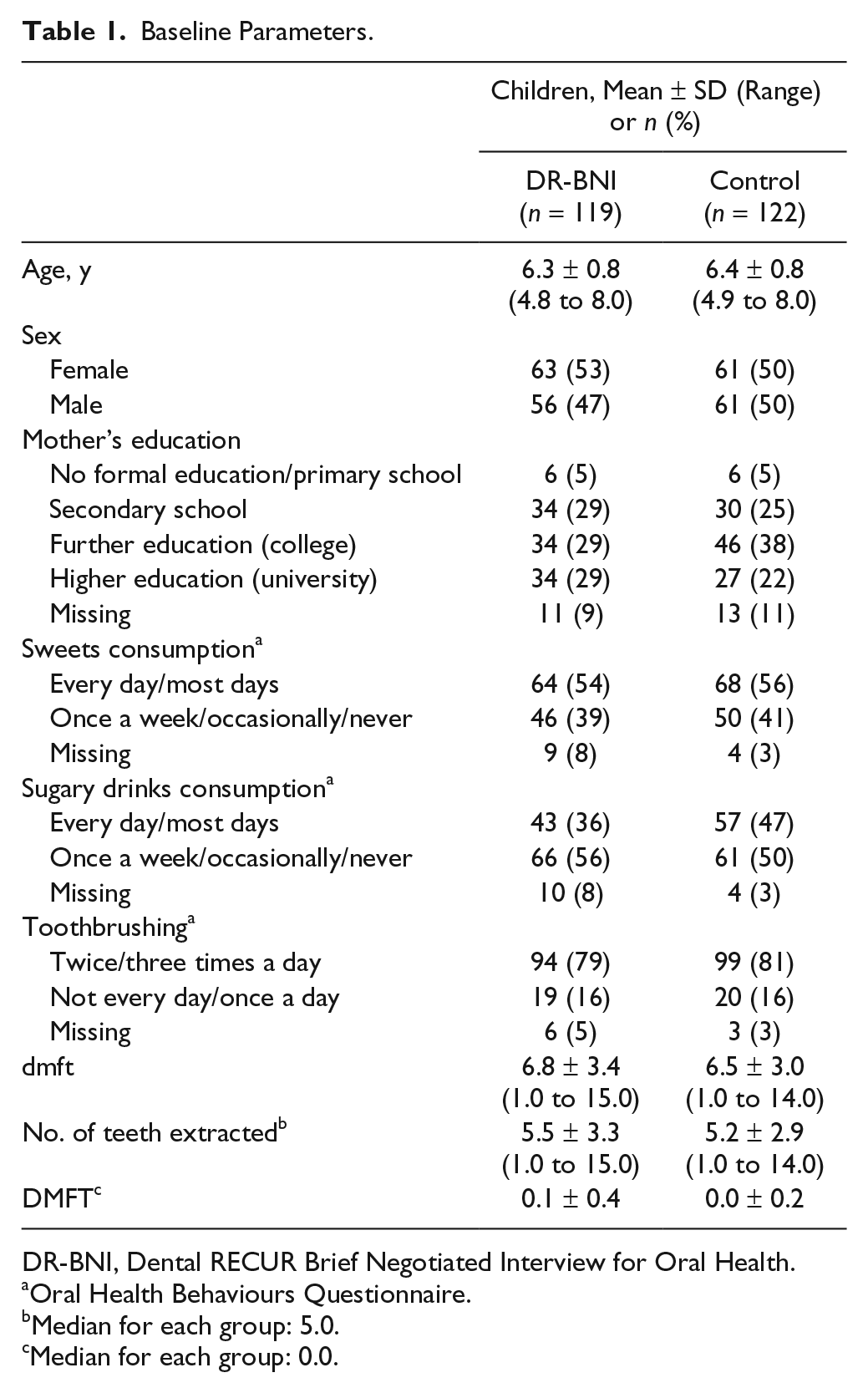
DR-BNI, Dental RECUR Brief Negotiated Interview for Oral Health.
Oral Health Behaviours Questionnaire.
Median for each group: 5.0.
Median for each group: 0.0.
Intervention compliance was >95% for both groups, with 96% of parents agreeing on preventive goals, such as to reduce specific sugar behaviors and/or improve toothbrushing frequency (Appendix 2).
Two years after intervention, final dental examinations were undertaken across the United Kingdom by a single examiner (C.M.P.) visiting 189 schools and 2 children at home. Of 241 children, 193 (80%) were examined. For 2 children, baseline assessments had not been completed; therefore, 191 of 241 (79%) were analyzed, comprising 88 (74%) in the DR-BNI group and 103 (84%) in the control group.
Table 2 shows that 62% of children in the control group developed new caries in teeth that were previously caries-free or unerupted, as compared with 44% of children in the test group, which was a significant reduction (P = 0.021). Figure 2 gives the distribution of new caries in teeth, providing a measure of severity. The odds of new caries experience occurring were reduced by 51% in the DR-BNI group as compared with control. There was a 29% decrease in the relative risk of new caries experience in the DR-BNI group as compared with control. Similar significant differences were found in 2 sensitivity analyses: 1 with the per-protocol data set and 1 with multiple imputation to replace missing outcome data.
Primary Outcome: Proportion of Children with Dental Caries in Previously Caries-free or Unerupted Teeth 2 y after Intervention.
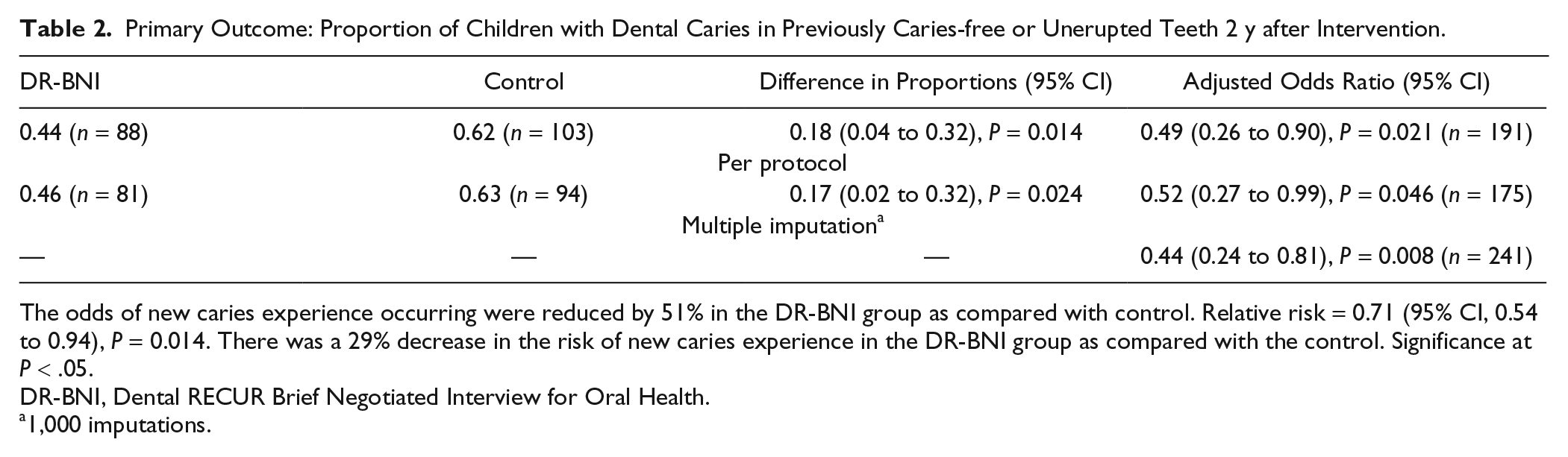
The odds of new caries experience occurring were reduced by 51% in the DR-BNI group as compared with control. Relative risk = 0.71 (95% CI, 0.54 to 0.94), P = 0.014. There was a 29% decrease in the risk of new caries experience in the DR-BNI group as compared with the control. Significance at P < .05.
DR-BNI, Dental RECUR Brief Negotiated Interview for Oral Health.
1,000 imputations.
Primary Outcome by Center: Proportion of Children with Dental Caries in Previously Caries-free or Unerupted Teeth 2 y after Intervention.
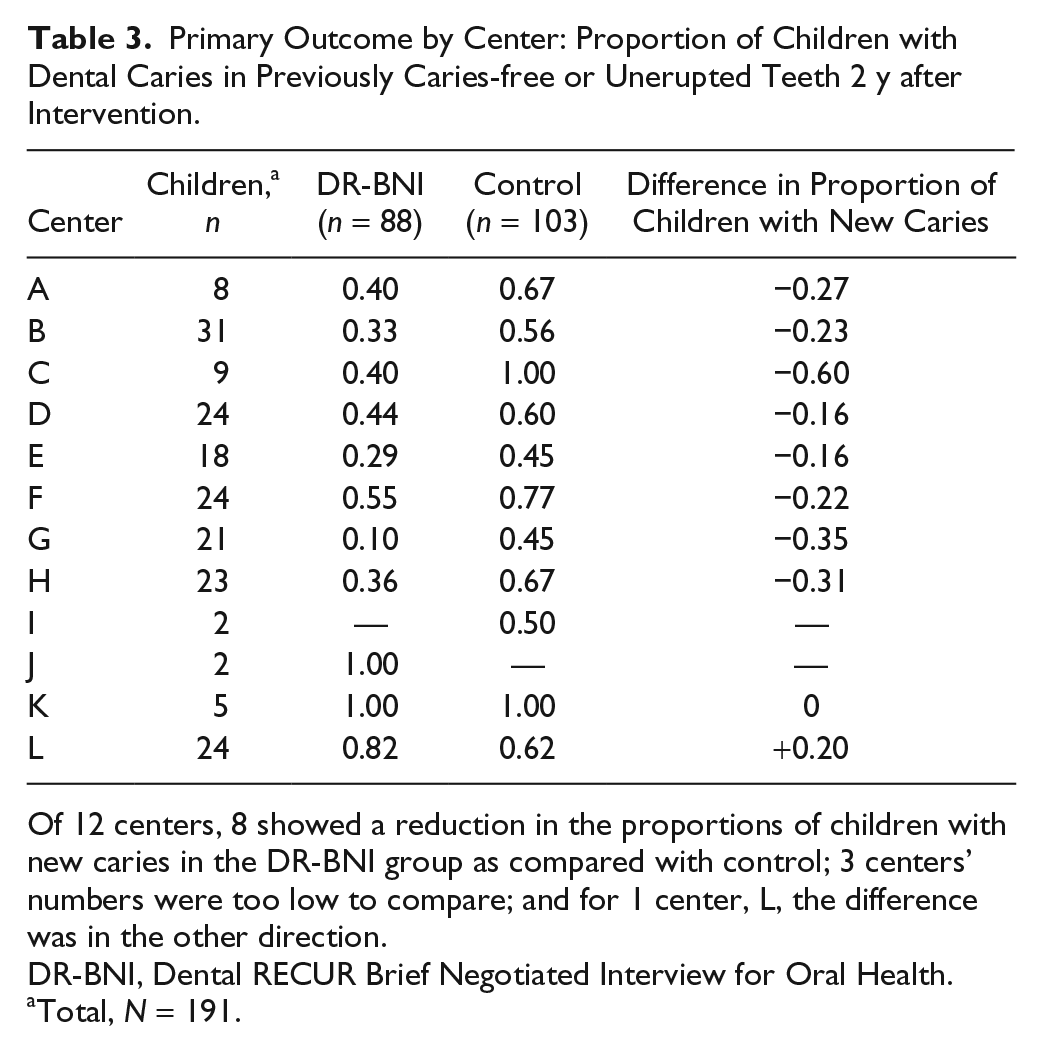
Of 12 centers, 8 showed a reduction in the proportions of children with new caries in the DR-BNI group as compared with control; 3 centers’ numbers were too low to compare; and for 1 center, L, the difference was in the other direction.
DR-BNI, Dental RECUR Brief Negotiated Interview for Oral Health.
Total, N = 191.
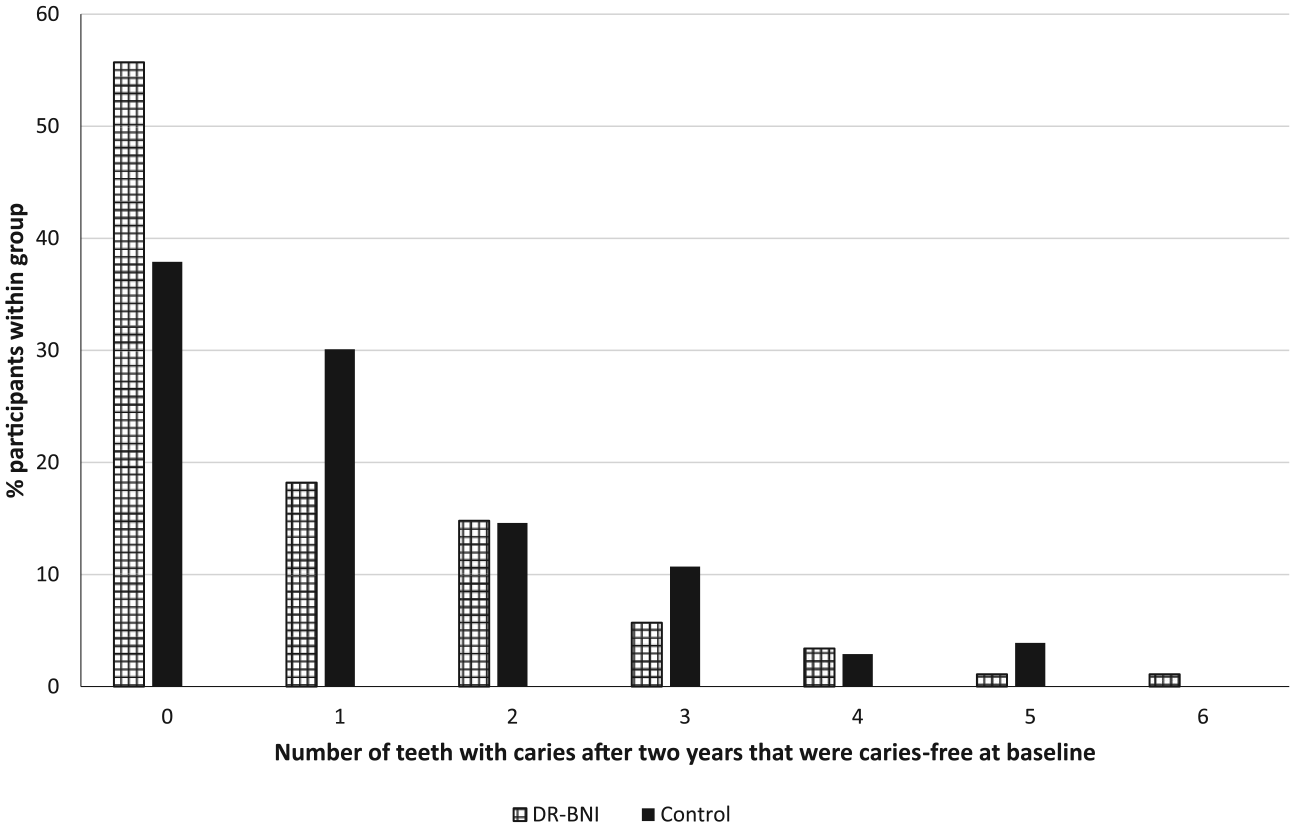
Proportion of children by group who developed new caries and number of teeth affected. DR-BNI, Dental RECUR Brief Negotiated Interview for Oral Health.
To explore whether the differences arose from a single center, perhaps due to a particularly effective nurse intervention, the direction of differences in proportions for all centers was analyzed (Table 3). Sufficient numbers were available in 9 centers, and in 8 of the 9, the direction was the same, showing consistency in benefit to the DR-BNI group.
Results from the ninth center, L, were in the opposite direction. Families were almost entirely of Bangladeshi heritage, with very high levels of childhood caries (Public Health England 2018). Although 1 of the 2 dental nurses delivering the interventions was bilingual in English and Sylheti, it is likely that additional interventions may be needed to facilitate changes in cultural norms in this community.
Over 2 y, around 60% of children returned to the same dental practice that had referred them for extractions (Table 4). There was a nonsignificant trend for DR-BNI children to return sooner, 3 to 4 mo after extractions. At the practices, similar proportions of children were given fluoride varnish applications (around 80%) and had fissure sealants placed (around 30%). The difference between the groups was in the proportion of children who had fillings placed—namely, 22% in DR-BNI group as compared with 40% in control. This mirrored the higher caries experience found in the independent final dental examinations.
Dental Attendance during the 2 y Postintervention and Dental Treatment Provided.
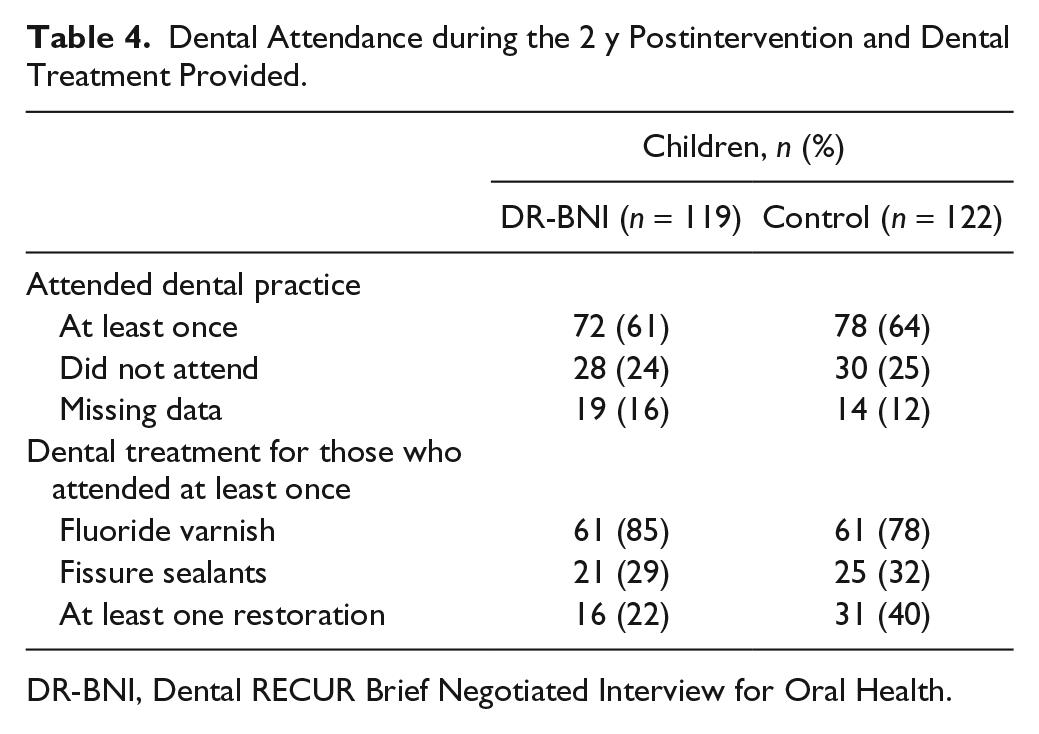
DR-BNI, Dental RECUR Brief Negotiated Interview for Oral Health.
Discussion
This trial tested the efficacy of a brief negotiated interview, which changed how dental teams traditionally talk to patients. Instead of direct advice on what not to do, nurses had a structured conversation supporting families to decide how they could improve their children’s dental future. The intervention was theory driven and targeted to children at the highest risk for developing new caries. The decision to extract multiple teeth is a “teachable moment” for many families, when they may be more receptive to considering making things better in the future (Papies 2016).
Formal training for nurses took 1 d, with posttraining practice in their clinics to develop conversational skills. During training, we challenged some nurses’ criticism of parents’ behaviors that had led to so much caries. We focused on empathic communication to support development of healthier routines for families.
Recruitment took >18 mo, as participants were a hard-to-reach group, intermittently engaging with dental care (Huntington et al. 2017). Some families were very disadvantaged and known to social services, as families came from many countries with diverse cultures. The importance of family environment (Mattila et al. 2000) and social determinants of health underpin barriers to healthy behaviors (World Health Organization 2008). Taking a nonjudgmental approach in the DR-BNI led families to engage in considering changes that they identified as possible to undertake for their children in their day-to-day life.
Nearly two-thirds of children returned to their referring dental practice, and higher numbers did not return in the DR-BNI group. As similar proportions of children in both groups had fluoride varnish and fissure sealants, this does not explain the reduced caries levels in the DR-BNI group. Therefore, it appears that it was the nurses’ intervention with parents addressing underlying etiologic factors, potentially reinforced in dental practices, that was critical to achieving a significant benefit for children in the DR-BNI group.
Undertaking final dental assessments in schools was a major endeavor, as children attended 189 schools across the United Kingdom. Nevertheless, it was worthwhile, given that 80% of children were examined, far more than if parents had been asked to bring children to clinics. Critically, this comprehensive data collection allowed demonstration of the consistency in the direction of benefit across 8 of the 9 centers. This supports the conclusion that the effect was not dependent on a single outperforming center or individual nurse but demonstrated that positive outcomes were general and attainable.
Conclusions and Implications for Clinical Practice
In a wide range of children at high caries risk, this single low-cost, low-intensity intervention was successful in significantly reducing the risk of new caries experience.
This trial has implications for changing pediatric dental practice internationally. Training in, and implementation of, an MI-informed brief intervention provides opportunities for dental nurses to go beyond clinical prevention to facilitate behavior change and to support oral health improvements for children at high caries risk. The lead research team has been invited by Health Education England (North West) to develop the DR-BNI into a training program for dental nurses in the NHS.
Author Contributions
C.M. Pine, P.M. Adair, G. Burnside, contributed to conception, design, data analysis, and interpretation, drafted and critically revised the manuscript; L. Brennan, contributed to data acquisition, drafted and critically revised the manuscript; L. Sutton, contributed to data analysis and interpretation, drafted and critically revised the manuscript; R.T. Edwards, contributed to design and data analysis, drafted and critically revised the manuscript; V. Ezeofor, contributed to data analysis, critically revised the manuscript; S. Albadri, M.M. Curnow, C. Deery, M.T. Hosey, J. Willis-Lake, J. Lynn, J. Parry, F.S.L. Wong, contributed to data acquisition, critically revised the manuscript. All authors gave final approval and agree to be accountable for all aspects of the work.
Supplemental Material
DS_10.1177_0022034519886808 – Supplemental material for Dental RECUR Randomized Trial to Prevent Caries Recurrence in Children
Supplemental material, DS_10.1177_0022034519886808 for Dental RECUR Randomized Trial to Prevent Caries Recurrence in Children by C.M. Pine, P.M. Adair, G. Burnside, L. Brennan, L. Sutton, R.T. Edwards, V. Ezeofor, S. Albadri, M.M. Curnow, C. Deery, M.T. Hosey, J. Willis-Lake, J. Lynn, J. Parry and F.S.L. Wong in Journal of Dental Research
Footnotes
Acknowledgements
Research ethics and governance approval via the IRAS system from the Greater Manchester Central NRES Committee (13/NW/0466) and the Salford Royal Foundation Trust R&D Department, the trial sponsor. Thanks are due to Beverley Greenhalgh, sponsor representative, and Stephen Brown, database manager. Further details are provided in  . Thanks are due to all those who assisted in recruitment and program delivery of this clinical trial—notably, to the families, children, GDPs, and dental nurses and to Geoffrey Pine, who supported the logistics for visits to many of the 189 schools. Dental nurses delivering the interventions at each center are thanked and recognized: Julie Bonar, Denise Champion, Rizwana Dakri, Francesca Davies, Beverley Gayle, Claire Hulme, Megan Lane, Emma Mahoney, Charlotte Marlow, Nicola McDowell, Alison McNealy, Louise Morris, Bethany Powe, Sutinder Saroi, Aimee Shaw, Eleanor Taylor, Stacey Teece; Kerry Whitmore, and Vanessa Wilson. Appendix 3 gives details of their NHS Trust sites.
This article reports independent research funded by the UK National Institute for Health Research under the Research for Patient Benefit Programme (grant PB-PG-0610-22310). The views expressed in this publication are those of the authors and not necessarily those of the National Institute for Health Research or the Department of Health and Social Care. The grant was awarded to Salford Royal NHS Foundation Trust with C.M. Pine as chief investigator. NOCLOR NHS Research Support Services provided recruitment costs to the Barts Health NHS Trust site.
The authors declare no potential conflicts of interest with respect to the authorship and/or publication of this article.
A supplemental appendix to this article is available online.
References
Supplementary Material
Please find the following supplemental material available below.
For Open Access articles published under a Creative Commons License, all supplemental material carries the same license as the article it is associated with.
For non-Open Access articles published, all supplemental material carries a non-exclusive license, and permission requests for re-use of supplemental material or any part of supplemental material shall be sent directly to the copyright owner as specified in the copyright notice associated with the article.
