



Abstract
In this paper, we consider how aspirations for “who I can be” in the future could shape support for prosocial actions that benefit an ethnic out-group, relative to their own group. We suggest that aspirations are, in turn, influenced by individuals’ group memberships, which vary in their degrees of collective agency. The hypotheses were tested using data collected from Afghan youth immigrants (N = 392) and Iranian youth (N = 672), representing a relatively understudied immigrant–host context. We explored the drivers of both in-group and intergroup prosocial behaviors, and how they differed in these unique social settings. The findings indicated that in-group identification was linked to in-group but not out-group prosocial behaviors. In addition, in-group identification was associated with three components of aspirations: personal, influence, and relational. Moreover, only the relational aspiration was associated with in-group prosocial behaviors while the influence aspiration was linked to out-group prosocial behaviors. Furthermore, the study revealed that the relationships between in-group identity and all components of aspirations were fully mediated by perceived collective agency among Iranian youth, but partially among Afghan immigrants, suggesting distinct effects for disadvantaged group members. The research highlights how identities shape aspirations and behaviors for a better world.
Keywords
I have cherished the ideal of a democratic and free society in which all persons live together in harmony and with equal opportunities. It is an ideal which I hope to live for and to achieve (Nelson Mandela, speech at his trial in Pretoria, 20 April 1964; Ratcliffe, 2014).
Multicultural societies are diverse and, as such, are inherently comprised of people from different cultural, ethnic, and religious backgrounds. It is well documented that such multicultural societies flourish when positive, supportive relationships exist across cultural, ethnic, and religious backgrounds (e.g., Darby & Mac Ginty, 2008; Shnabel & Nadler, 2008; Tropp, 2012). Decades of research on intergroup contact support the proposition that societies in which there are more positive intergroup experiences between (ostensible) host and immigrant group members, tend to have lower intergroup hostility (see Pettigrew & Tropp, 2006, for a meta-analysis; Bohman, 2015; Wilson-Daily et al., 2018; for an application to immigration). We conceptualize such experiences as prosocial behavior that can be directed to support members of one’s ethnic group (in-group prosocial behavior) as well as members of an ethnic out-group (out-group prosocial behavior).
At the same time, people can also aspire to—and dream of—bringing about such societies. Mandela’s quote above highlights that, alongside aspirations to raise a family, attain wealth or influence, and develop a career, people can also aspire to help promote equality, peace, and justice in the societies in which they live (Cook & Hegtvedt, 1983; Keshavarzi et al., 2022; Van Lange, 1999). Such aspirations are likely to be shaped by the groups that people belong to (including ethnic identities; Hogg et al., 1987). In this paper, we connect these observations to consider how aspirations for “who I can be” in the future can shape support for prosocial actions that benefit an ethnic out-group, relative to their own group. We propose that aspirations are shaped by group memberships that differ in their levels of collective agency. We test these propositions in the context of a multicultural but little-studied country: Iran. Moreover, this current study focuses on young individuals (aged 18–30 years) to capture the dynamics of aspiration formation and its influence on decision-making during this crucial period of personal development (Klimstra et al., 2013; Roberts et al., 2006).
In the last four decades, Iran has sheltered more than three million Afghan refugees fleeing brutal internal conflicts and economic hardship. Furthermore, after the Taliban’s takeover of power in 2021, the number of refugees increased due to highly insecure living conditions (United Nations High Commissioner for Refugees [UNHCR], 2023). Afghan immigrants are recognized as a systematically disadvantaged group in Iran (Chatty, 2010; Siavoshi, 2022), facing significant challenges in accessing essential services such as education, health care, transportation, and ownership rights. Moreover, the relationship between Iranians and Afghan immigrants has been highly conflictual, with frequent hostile and sometimes violent interactions (Alef, 2014; Keshavarzi et al., 2024; Ruhani et al., 2023).
The second generation shapes a significant population of Afghan immigrants in Iran due to the Afghan immigrants’ long-term residence and high fertility rate (Abbasi-Shavazi et al., 2012). Given our study’s focus on young individuals, our target population includes both second-generation Afghan immigrants, as well as young Afghan individuals who have recently traveled to Iran. Previous studies have shown that while Afghan youth have experienced upward mobility in terms of education and occupation compared to the previous generations and their counterparts in Afghanistan, they are nevertheless less advantaged than their Iranian counterparts (Abbasi-Shavazi et al., 2008, 2012; Hugo et al., 2012; Keshavarzi et al., 2024). Thus, in Allport’s (1955) terms, the two groups in question possess unequal status, emphasizing the significance of positive intergroup encounters. Facilitated through acts of everyday benevolence and kindness, positive intergroup encounters between Iranians and Afghan immigrants could play a crucial role in enhancing social cohesion. The current paper, therefore, examines prosocial behavior to support Afghan immigrants in Iran, as well as to support Iranians, among both Afghan immigrants and Iranian citizens.
The existing literature has extensively examined the influence of group identity and group memberships on prosocial behaviors (e.g., Over, 2018; Stürmer & Snyder, 2009a). In addition, previous studies have highlighted the significance of aspirations in guiding future decisions and behaviors (e.g., Bernard et al., 2014; Favara, 2017; Moulton et al., 2015). However, to the best of our knowledge, no study has specifically explained the intentions of prosocial behaviors by exploring the role of group members’ aspirations. Therefore, this study aims to investigate the relationship between group identity and intentions for (in-group and out-group) prosocial behavior, with a focus on the influence of aspirations as the link between both. Hence, this paper contributes to the existing literature by linking group-based processes of identity on prosocial behaviors, through aspirations, in a novel non-WEIRD (Western, Educated, Industrialized, Rich, and Democratic, Henrich et al., 2010) social setting, Iran.
Integrating (Group-Based) Identity and (Personal) Aspirations to Explain Prosocial Behavioral Intentions
Prosocial behavior is defined as actions intended to benefit others or promote the well-being of others (Penner et al., 2005). Prosocial behavior may be shaped by individual factors (micro), dyadic factors (inter-individual) as well as group-level factors (Penner et al., 2005; see also Stürmer & Snyder, 2009b). Our approach considers the interplay of group-based factors (relating to the affordances of group identity) and individual factors reflected in the role of individual aspirations that are, nevertheless, shaped by group memberships. In addition, prosocial behavior may be directed toward individuals who belong to the same group or those who are not part of the same group. We conceptualize these as in-group focused prosocial behavior and out-group focused prosocial behavior, respectively.
Individuals may aspire to attain a multitude of things, such as acquiring wealth, securing a fulfilling job, achieving educational milestones, or striving for a society and world characterized by equality and peace, that is, aspirations are multifaceted (Keshavarzi et al., 2022). Previous studies show that what individuals aspire to is related to their attitudes, intentions, and behavior in the future (e.g., Bernard et al., 2014; Moulton et al., 2015; Ray, 2006). Put differently, what people aspire to can shape their decisions and hence affect their achievements and behaviors in the future. For instance, the current literature suggests that aspirations can have a positive or negative impact on individuals’ future educational achievements (Favara, 2017; Khattab, 2015; McCarron & Inkelas, 2006), vocational outcomes (Ogrodzka-Mazur, 2017), risk-taking behaviors (Knight et al., 2016; Mahler et al., 2017), and can even have broader implications for the structural conditions of society as a whole (Bedock, 2020; Nauck & Genoni, 2019). Thus, what young adults aspire to, reflects how they frame their world, as well as the obstacles to attaining their goals (Keshavarzi et al., 2022). Moreover, youth in particular, can aspire to contribute to their groups and their society through prosocial behavior and other forms of civic engagement (Youniss et al., 1997). However, we are not aware of tests which connect aspirations and (in-group or out-group) prosocial behavior. Here, we propose that aspirations can influence prosocial behaviors toward both the in-group and out-group.
Alongside the role of more idiosyncratic personal aspirations in shaping prosocial behavior, we also expected that group identities would play a role in shaping in-group and out-group prosocial behavior—both directly and via their association with aspirations. Prosocial behaviors are not developed in isolation but rather are shaped and motivated by social settings, particularly by group boundaries (Betancourt, 1990; Esses & Dovidio, 2002). The current literature demonstrates that people are more likely to support their own group members over the well-being and interests of other group members (e.g., Dovidio et al., 1997; Maner & Gailliot, 2007; Simon et al., 2000). For instance, students are more likely to assist in collecting data when that project belongs to in-group students (Dovidio et al., 1997) or help an injured stranger if that person is dressed in the clothing of an in-group sporting team, relative to a rival team (Levine et al., 2005).
However, articulating with our introductory points, helping across group boundaries does occur and is a particularly important dimension of positive intergroup contact in multicultural societies (Dovidio et al., 2017; Mallett & Wilson, 2010). Conversely, hostile intergroup relations can undermine prosocial behavior toward out-group members, that is, when individuals are confronted with a negative image from out-groups, they exhibit reduced inclinations to offer help (Levine et al., 2005; Sun et al., 2013). Accordingly, we expect that for both Afghan youth and Iranian peers, group identity would be associated with their in-group prosocial behaviors (Afghan people helping Afghan people; Iranian people helping Iranian people) but not out-group prosocial behavior. Aspirations, on the other hand, may be associated with prosocial behavior across group boundaries, as we explain below.
Group Identity, Collective Agency, and Aspirations Shape Prosocial Behavior
A further complexity is that aspirations are likely also to be related to group identities. The starting point for our analysis is the idea that “who I aspire to be” (or, become) is likely to be anchored in “who I am” and “who we are” in the present (being, linked to identity; S. D. Reicher & Hopkins, 2001). The groups with which people identify help individuals interpret their world as well as the social order in which they are embedded (Simon, 2008; Turner et al., 1987). Meanwhile, these groups occupy different places in the power hierarchy, and hence resources are often not distributed equally among them. Therefore, there is disparate potential for groups to actualize their goals. As a result, members of groups in society—specifically, here, Iranian and Afghan youth—experience different rates of perceived power and ability (collective agency) to realize their aspirations (e.g., Besta et al., 2016; Obhi et al., 2012). Therefore, the sense of collective agency experienced by group members is influenced by their identification with the group, which in turn can impact their aspirations. Accordingly, aspirations are an outcome of identity-based feelings of collective agency, such that “what I can be” (aspirations) may be shaped by “what we can be” (collective agency, flowing from group identity).
In our study, we anticipate that the intensity of group identity will contribute to increased collective agency specifically among Iranians as the more advantaged and dominant group. Group identity has been found to have a varied impact on the sense of group agency, as highlighted by previous research (Li et al., 2019; Shteynberg et al., 2022). One primary influence is that group members who identify with a particular group are more likely to share common attitudes, goals, and aspirations (Loughnane et al., 2021; Zhang & Chiu, 2012). Consequently, the group identity could harness the collective efforts of members toward achieving shared objectives, thereby enhancing the overall sense of group agency within the group. Indeed, a sense of unity and solidarity with others empowers group members (Besta et al., 2016) and contributes to their increased efficacy in achieving shared goals. However, the nature of such impacts is not straightforward; depending on the intergroup hierarchies and power dynamics in the society (Kteily & Richeson, 2016). This means that heightened identification with a social group that holds a marginalized position can paradoxically undermine the sense of agency and effectiveness (Obhi et al., 2012). Conversely, feelings of powerlessness can diminish the sense of social connectedness with others and consequently diminish group identity (Foulk et al., 2020). Higher group agency expands the availability of resources and opportunities (Heiskanen & Jokinen, 2015), which has an impact on both collective and individual aspirations.
Finally, group memberships could be expected to directly influence aspirations. First, as group members strive to make meaningful goals for their lives, and achieve success within their chosen group, their aspirations are likely to be shaped by the values and goals that define their group’s identity. Group members typically possess shared interests, values, and cultural backgrounds that align with the collective goals embraced by the group (Turner, 1981; Turner et al., 1987). By adhering to the norms and expectations of the group, individuals seek to align their ambitions with the shared objectives of the group, thereby reinforcing the impact of group identity on their aspirations.
The Current Study
With a focus on the immigrant–host dynamics, data were collected from two groups of youth in Iran: Afghan immigrants and Iranians. Structural equation modeling was utilized to test the effects of group identity on intentions to engage in prosocial behaviors (in support of the in-group and out-group) via collective agency and aspirations. Our approach was characterized by both exploratory and more confirmatory (hypothesis-driven) aspects.
Specifically, we took an exploratory approach to the measurement and role of different forms of aspirations. In line with prior studies (Giuliani et al., 2017; Keshavarzi et al., 2022), we conceptualize the aspirations of individuals as a multicomponent variable. We took measures of the degree to which people aspire to wealth, educational success, fame, influence, marriage, and altruism, among others. We used an Exploratory and then Confirmatory Factor Analysis to identify three underlying factors of aspirations (relating to personal attainment, influence, and connection with others). However, we did not have a priori expectations about how these different facets of aspirations would relate to in-group and out-group prosocial behavior. This is because even the same aspiration can stem from different motivations. For example, an aspiration to attain wealth could reflect an individual or egocentric aspiration to be financially successful that would not be associated with prosocial behavior for either group but could also be driven by a desire to generate resources for aiding others or supporting charitable causes. Similarly, aspiring academic success may be rooted in the desire to contribute to the betterment of society, thereby supporting prosocial actions. We therefore adopted a specifically exploratory approach to how the different (personal, influence, and connection) aspirations relate to identification, agency, and prosocial behavior.
The primary objective of this study is to examine the relationship between group identity and in-group/out-group prosocial behavior intentions through the mediating role of group agency and (discrete forms of) aspirations. We therefore tested the following hypotheses. First, we anticipated a direct and positive association between in-group identity and in-group prosocial behavior intentions (H1a), no direct association is expected between in-group identity and out-group prosocial behavior intentions (H1b). In addition, we postulate that group identity will be directly related to aspirations (H2), and this relationship will be mediated by increased perceived in-group collective agency (H3). We further hypothesize that, unlike identification (H1), aspirations will be positively associated with both in-group (H4a) and out-group prosocial behavior intentions (H4b). Given the different affordances of their group memberships (citizen versus immigrant), we expect the indirect effects of in-group identity on aspirations through in-group collective agency to be significantly stronger among Iranians, compared to Afghans (H5). Moreover, we predict a stronger path from group identity to in-group prosocial behavior intentions for Afghans compared to Iranians (H6). The hypotheses about direct, indirect, and conditional (moderated) paths were tested using a multigroup structural equation model.
This study is a component of a broader research program, and the questionnaires include items not applicable to the focus of the current study. The hypotheses were not pre-registered but the full verbatim questionnaires (translated into English for peer review) and dataset used for the current study are available at: https://osf.io/tf4h9/?view_only=e84641abf86449aeab15bda14a88ea81. Items were reworded to be applicable to the two different samples, that is, the Afghan and Iranian samples both answered items worded to relate to those specific samples. Tests of measurement invariance assessed the degree to which there is construct equivalence between the two sets of measures as a pre-condition of subsequent comparisons.
Method
Participants
Afghan immigrants in Iran: Participants (N = 392) were Afghans who reside in Iran and were recruited through a questionnaire posted on online social networks; asking members aged between 16 and 30 to participate in our research via a provided link. In some cases, the communities were approached via an Afghan student, so that we achieved more trustful conditions, and hence a greater participation rate. All participants provided informed consent before participating in the questionnaire. The Afghan participants were primarily male (54.6%, 0.5% did not specify their gender), born in Iran (63.5%), aged between 16 and 30 years (M = 25.00, SD = 3.93) and a majority were university-educated (23.1% of participants had a Bachelor’s degree, 43.1% had a Master’s degree, and 22.6% had a PhD).
Iranian citizens: Participants (N = 672) were permanent residents/ citizens of Iran who were recruited online through a questionnaire link. We also asked the respondents to share the link with their friends and young relatives. The Iranian participants were aged between 16 and 30 (M = 22.67, SD = 3.97), were predominantly male (69%), and most participants were university-educated (Of the participants, 25% had a Bachelor’s degree, 44.1% had a Master’s degree, and 19.1% had a PhD).
Measures
The materials and approach were identical for both samples, except the questionnaire was reworded to match the sample. That is, the items for the Afghans who reside in Iran sample were worded so Afghans were considered the in-group and vice versa. The questionnaires for both groups were in Farsi, but minor changes were applied to the Afghan questionnaire due to the different Afghan accents. Unless otherwise indicated, respondents completed questionnaire items on a 7-point Likert-type scale (1 = strongly disagree, 7 = strongly agree).
In-Group Identification
Four items were adapted from Buchan et al. (2011) and Wang et al. (2021) to measure identification with in-group, Afghan sample α = .91, Iranian sample α = .91. These items are: “My Afghan [Iranian] identity is an important part of myself,” “I identify strongly with Afghan [Iranian] people,” “I feel a strong attachment to Afghan [Iranian] people” and “I feel a strong sense of belonging to Afghanistan [Iran].”
In-Group Collective Agency
We assessed the perceptions of group collective agency via four items adapted from Shnabel and Nadler (2008), Afghan sample α = .92, Iranian sample α = .89. For example: “Afghans [Iranians] have a lot of power as a group.”
Aspirations
Twelve items were adapted from Keshavarzi et al. (2022) to measure the extent to which participants aspire to each subject (academic, occupational, marriage-based, nationalistic, spiritual, world influential character, wealth-based, art-based fame, political, altruistic, independency, and health-based). In keeping with the exploratory approach described above, we conducted a Principal Components Analysis (PCA) of these 12 items for the two samples and the total sample (see supplementary file for full reporting; Tables S1–S3). The initial phase of dimension reduction revealed three components labeled as personal, power, and relational aspirations, as detailed below. The factor structure of the measure is tested using a Confirmatory Factor Analysis in the first step of the analysis.
Aspirations for Personal Attainment (Personal Aspirations)
The personal aspirations factor included five aspiration items: academic, occupational, wealth-based, independency, and health-based, Afghan sample α = .71, Iranian sample α = .72. An example item is, “Have a high-paying job with a high level of authority and effectiveness” (occupational aspiration).
Aspiration for Influence (Influence Aspirations)
The factor for influence aspirations included three items: world influential character, art-based fame (that is, fame acquired through the individual’s artistic endeavors), and political (becoming a politician), Afghan sample α = .73, Iranian sample α = .68. An example for art-based fame item is, “I aspire to become a famous artist (e.g., author, poet, and actor).”
Aspirations for Connection With Others (Relational Aspirations)
Four aspirations made up the factor of relational aspirations: marriage-based, nationalistic, spiritual (related to individual’s religion), and altruistic, Afghan sample α = .61, Iranian sample α = .65. The altruistic item is “Have the opportunity to express love and kindness to all humankind.”
In-Group/Out-Group Prosocial Behavioral Intentions
We adapted four items from Baumsteiger and Siegel (2019) to measure intention to engage in prosocial behaviors toward the in-group, the Afghan sample α = .87, Iranian sample α = .86. An example item is: “I comfort my Afghan [Iranian] compatriot in times of trouble and hardship.” We also adapted the items to measure intergroup prosocial behavior (toward the out-group), Afghan sample α = .89, Iranian sample α = .90. For example: “If an Iranian stranger (I do not know him or her) loses something, I will help him or her” (for the Afghan sample).
Results
Analysis Strategy
We first examined descriptive statistics (means, correlations) for the two samples. We then established reliable measures for the primary constructs (aspirations, identification, collective agency, in-group prosocial behavior, and out-group prosocial behavior) and assessed cross-national measurement equivalence. These measures then provided the basis for the formal tests of hypotheses using a multigroup structural equation model in IBM SPSS Amos 28. A good fit for the model was indicated by a CFI ≥ .95, an RMSEA ≤ .08 (Kline, 1998), and a SRMR < 0.08 (Hu & Bentler, 1999). The multigroup aspect of the CFA and SEM was assessed by assigning the two different samples (Afghan immigrants vs. Iranian citizens) as the grouping variable. We then constrained and released the paths in the model as tests of measurement equivalence, or moderation (per hypotheses). The presence of variance between the two samples in this model was determined by the criteria of ∆CFI ≥ .01 and ∆RMSEA ≥ .015 or ∆SRMR ≥ .03 (following F. F. Chen, 2007). Tables S4 to S10 in the Supplementary File contain the full details of (configural and metric) multigroup measurement invariance testing for all latent measures in the model.
Testing the Aspirations Measure
We first conducted a confirmatory factor analysis (CFA) of the three aspirations: personal attainment aspiration, influence aspiration, and connection aspiration (see Figure 1). Each aspiration was first modeled separately as a latent variable based on the factors established in the PCA (see supplementary file), with the observed variables being the items that load with that aspiration. As shown in Tables S4 to S6 in the Supplementary Materials, the personal and relational aspiration variables showed full metric invariance but there was partial metric variance for the influential aspiration (Table S6). Accordingly, the factor loading for the politician observed variable in the influential aspirations latent variable was released (see Figure 1). As such for measuring aspirations, we had three latent variables. As seen in Figure 1, the first latent variable was denoted personal aspirations and was indicated by five variables referring to academic attainment, occupational success, wealth, independence, and health. The second was a latent variable related to relational aspirations which had four manifest indicators that referred to marriage, national strength, spirituality, and altruism. The third variable reflected influential aspirations with three indicator variables of being an influential character, a famous artist, and a politician. The aspirations were allowed to covary.
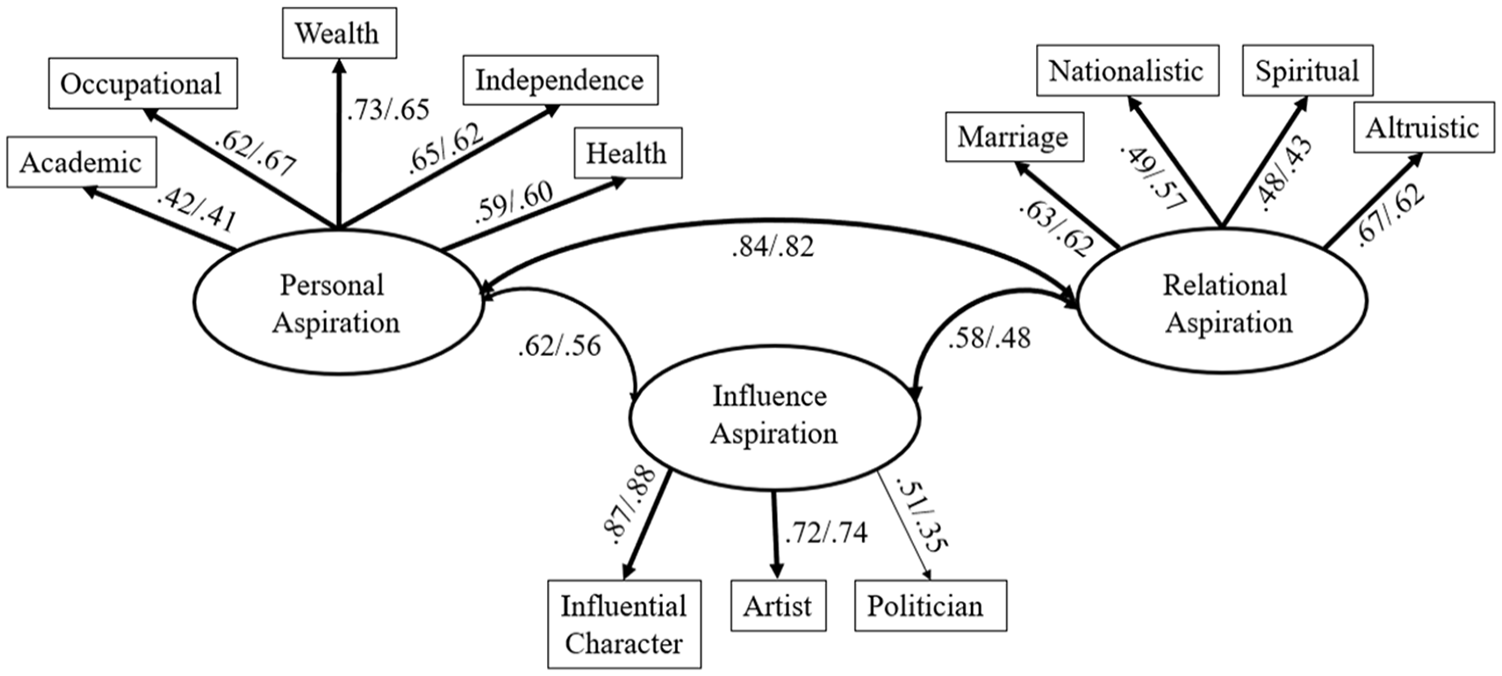
Standardized Regression Coefficients for the Multigroup Confirmatory Factor Analysis.
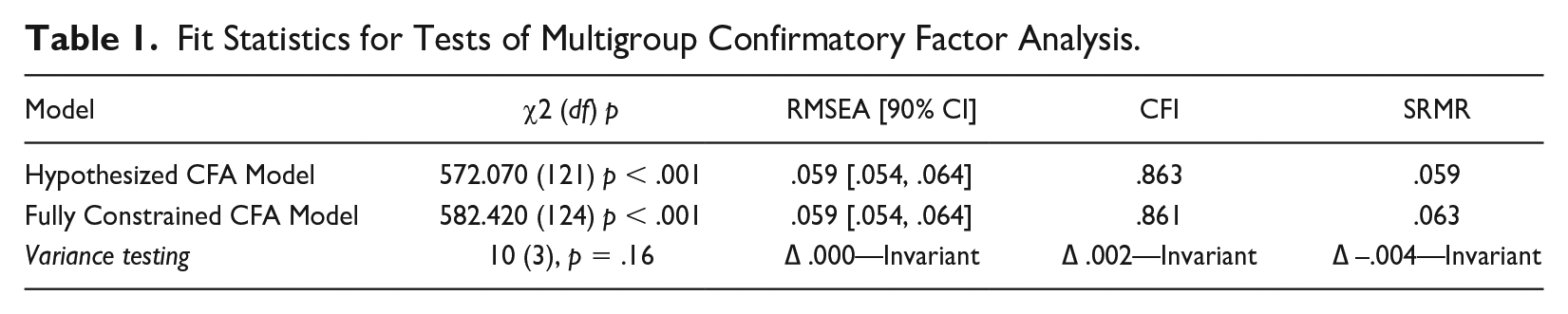
The CFA demonstrated an acceptable fit with the data (Table 1). The RMSEA and SRMR were within the recommended values, although the CFI was below the acceptable threshold. There was full structural measurement equivalence between the two samples and therefore the fully constrained (except the influential aspirations included partial variance) CFA model was the final measurement model for aspirations.
Fit Statistics for Tests of Multigroup Confirmatory Factor Analysis.
All other variables in the model were modeled as latent variables and we followed a similar approach to test the reliability and cross-cultural variance of the measures. Tables S7 to S10 in the supplementary file contain the full details of (configural and metric) multigroup measurement invariance testing for the other latent measures in the model—group identification, collective agency, in-group prosocial behavior, and out-group prosocial behavior. The final measurement model for each of the constructs indicated measurement invariance (except influential aspirations). Having established a reliable and minimally invariant cross-cultural measurement model, these latent variables became the basis for the tests of hypotheses in the full model.
Descriptive Information
The correlations for the key variables are presented in Table 2 for the Afghan sample, and Table 3 for the Iranian sample. For the Afghan immigrant sample, there was a strong positive correlation between in-group identification and in-group prosocial behavior, while the relationship between in-group identity and out-group prosocial behavior was moderately positive. For the Afghan sample, in-group identification weakly moderately correlated with all three aspirations. Collective agency was not related to personal aspirations but was weakly associated with influence and relational aspirations. All three aspirations moderately correlated with both in-group and out-group prosocial behavior.
Correlations of All Variables for the Afghan Sample.
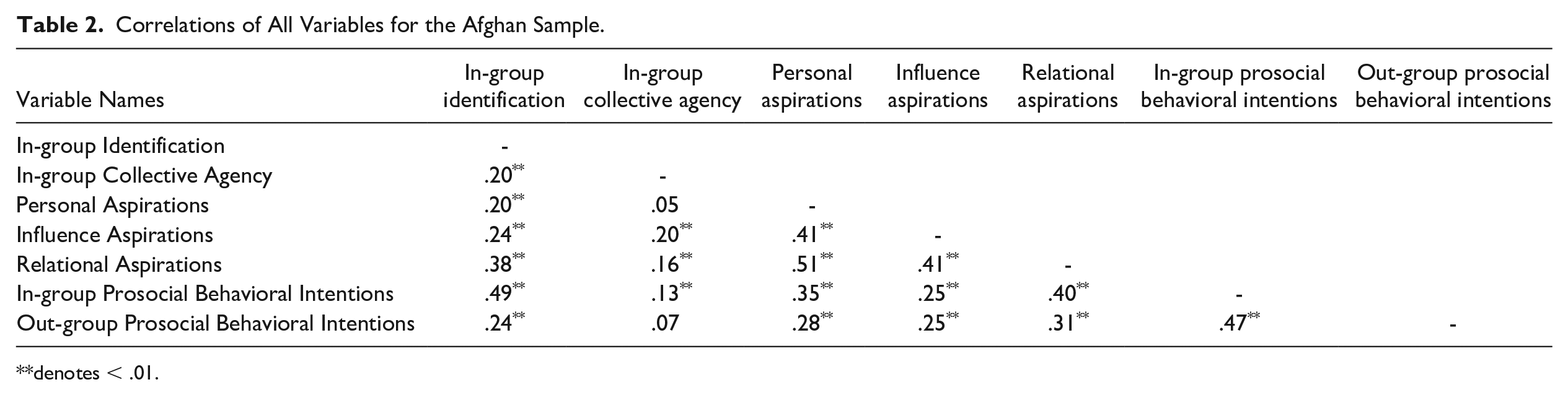
denotes < .01.
Correlations of All Variables for the Iranian Sample.
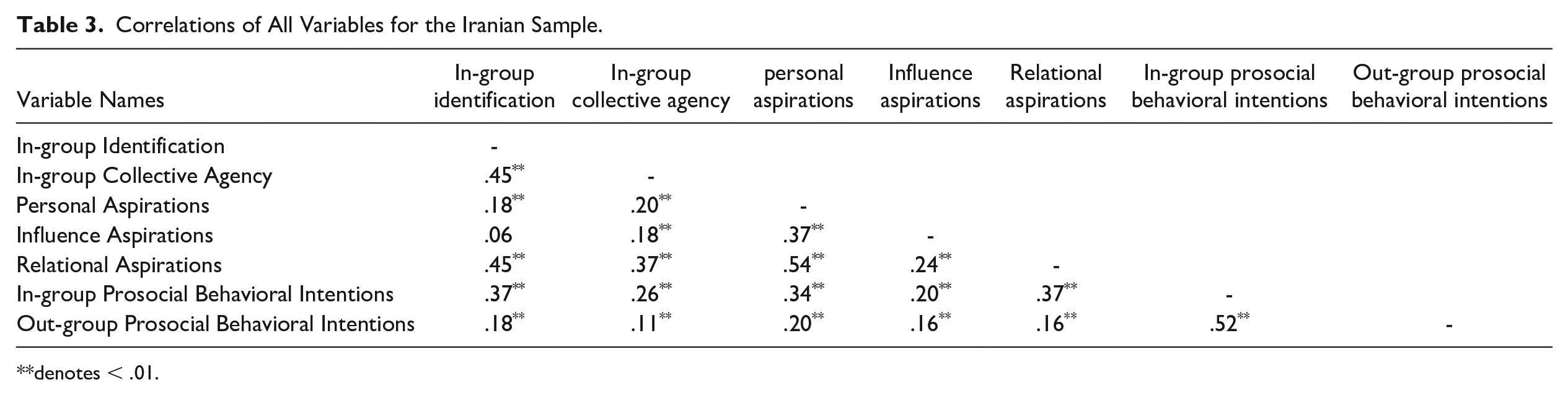
denotes < .01.
The Iranian participants had a moderately strong positive correlation between in-group identification and in-group prosocial behavior intention, while the relationship between in-group identification and out-group prosocial behavior was weakly positive. Iranians’ in-group identification was also associated with personal and relational aspirations but not the influence aspiration. All three aspirations were moderately associated with collective agency as well as both in-group and out-group prosocial behavior.
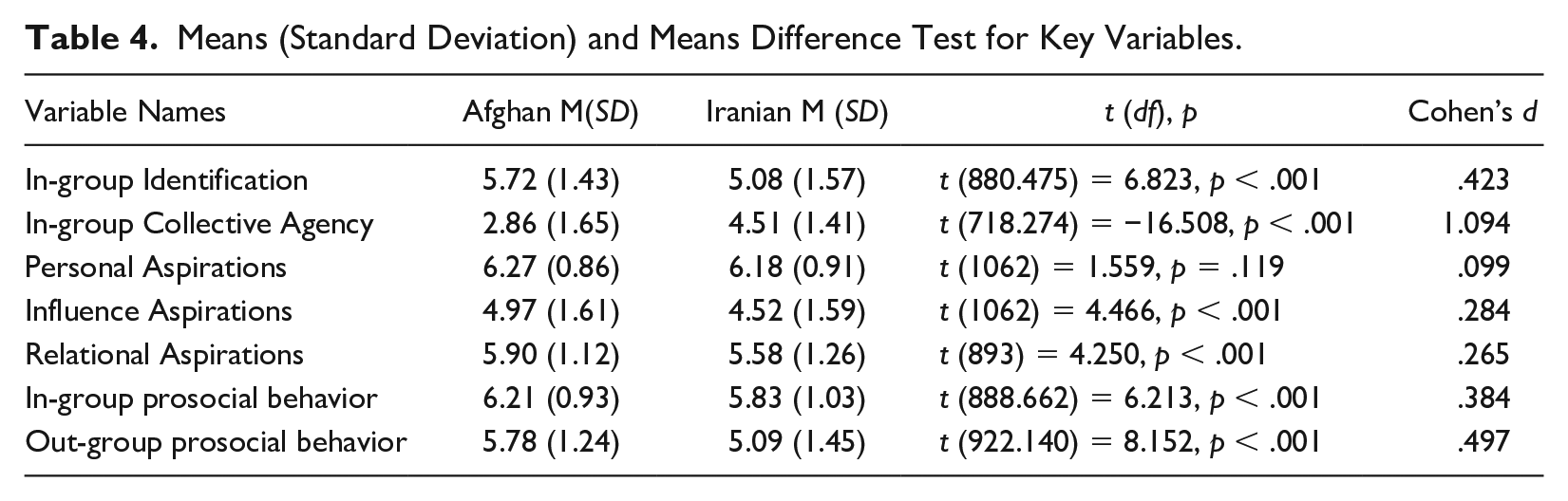
Table 4 displays the means (standard deviations) and means difference tests for the key variables between Afghan and Iranian participants. We note that testing for group means in the absence of full measurement invariance can lead to erroneous conclusions (Jeong & Lee, 2019) because these values are composed of both measurement and substantive differences—these results should therefore be viewed with that important limitation in mind. Nevertheless, Table 4 shows that the mean scores for in-group identification, the influence and relational aspirations as well as the in-group and out-group prosocial behavioral intentions were higher in the Afghan sample compared to those in the Iranian sample. In-group collective agency was higher for the Iranian sample compared to Afghans, and there was no difference in personal aspirations. In the Supplementary Materials (Tables S11–S15), information about the influence of socio-demographic characteristics—age, perceptions of status, educational attainment, and Afghan participants’ birthplace (Iran or elsewhere), as well as gender, on the key variables is provided.
Means (Standard Deviation) and Means Difference Test for Key Variables.
Testing the Hypotheses
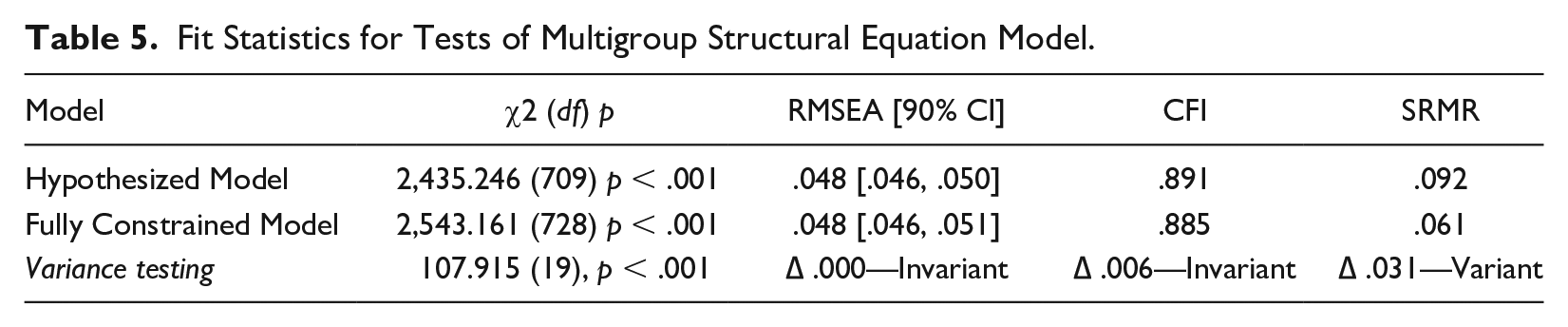
To test the hypotheses (H1—H6), we conducted a multigroup structural equation model (SEM) using Amos. The SEM was specified such that in-group identification (independent variable) had a direct path to collective agency (mediator 1) which had a path to the three aspirations (personal, influence, and relational aspirations; mediators 2–4). The aspirations then had direct paths to the dependent variables; in-group prosocial behavior and out-group prosocial behavior. In-group identification also had direct paths to the aspirations as well as in-group and out-group prosocial behavior. The aspirations were allowed to covary, as were in-group and out-group prosocial behavior. All variables in the model were modeled as latent variables based on the measurement models described above. To test the moderating role of being either an Afghan immigrant or an Iranian citizen, we tested the hypothesized, fully unconstrained model against the fully constrained model. A significant deterioration in model fit when all the paths are constrained provides evidence that the paths differ between groups. Table 5 displays the absolute fit statistics for the two models as well as the difference between the two models on the fit indicators (CFI, RMSEA, SRMR, and Chi-square). Accordingly, although the chi-square indicated a significant decrement in fit, the other indices suggested that fit was not significantly different between the groups. That is, contrary to Hypotheses 5 and 6, the multigroup SEM suggests that the magnitude of the effects was not statistically different in the two samples. Figure 2 shows the final model with the standardized regression coefficients. As displayed in Table 5, the model had an acceptable fit with the data. Although the CFI fit was below recommendations, all other fit indices demonstrated good fit with the data.
Fit Statistics for Tests of Multigroup Structural Equation Model.
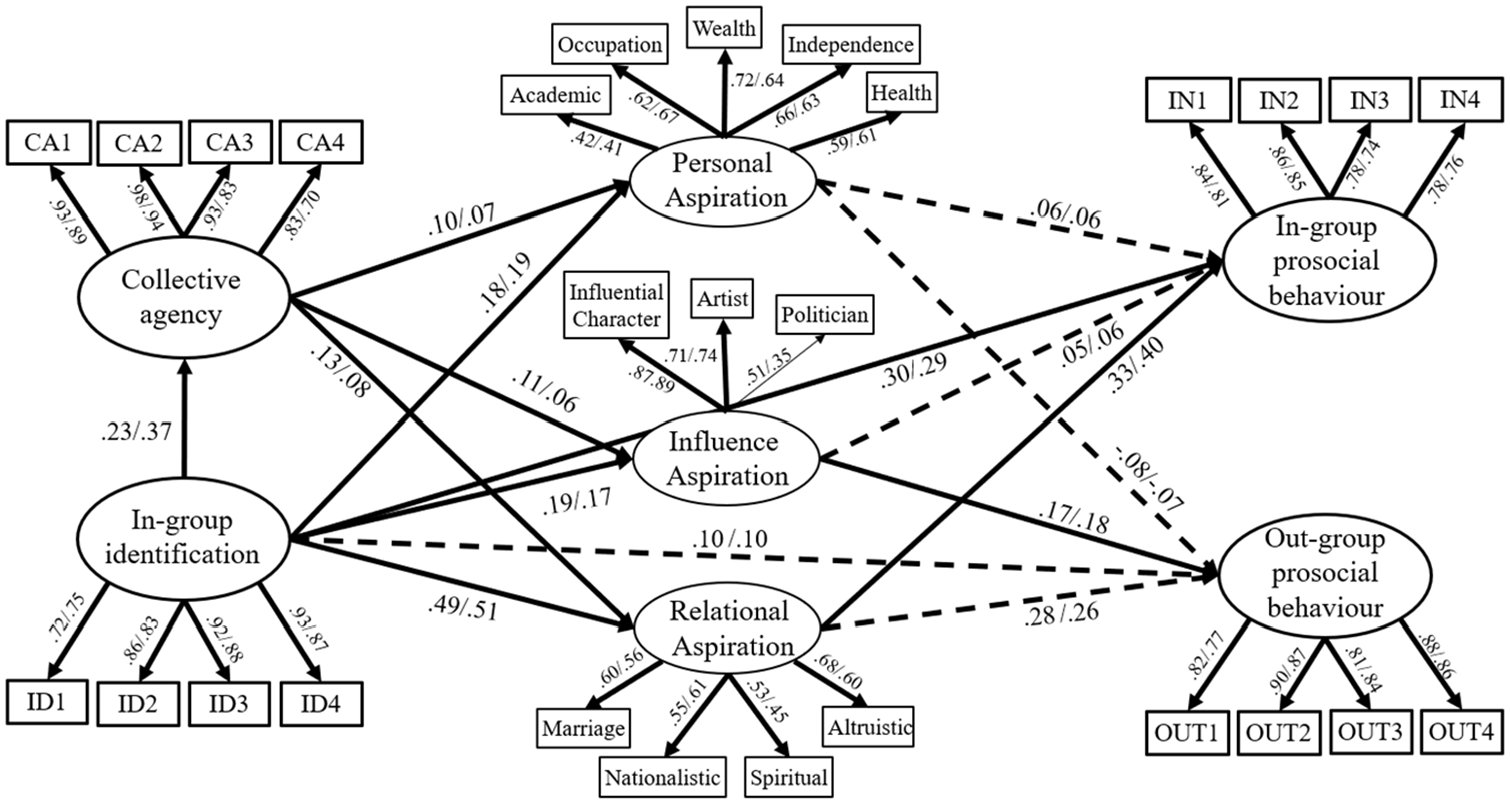
Standardized Regression Coefficients for the Multigroup Structural Equation Model.
Figure 2 indicates that for both samples, identifying with the in-group is positively associated with aspirations (supporting H2). In relation to H4, for both samples, only relational aspirations were associated with in-group prosocial behaviors (H4a), while only influence aspirations were related to out-group prosocial behaviors (H4b). Moreover, for both samples, in-group identification was positively associated with in-group prosocial behaviors (supporting H1a) but contrary to H6, this path did not differ between the two samples. The results also supported H1b as there was no relationship between in-group identification and out-group prosocial behavior. As predicted, collective agency did mediate the relationships between in-group identification and aspirations (supporting H3), although contrary to H5, these pathways did not differ reliably between the samples.
We next examined the patterns of indirect effects for the two samples (see Tables 6–7). For the Afghan sample (Table 6), the only significant indirect effect was from in-group identification to the influence aspirations via collective agency. However, the Iranian sample had positive indirect effects from in-group identification to all three aspirations via collective agency (Table 7). These findings are also in line with H5, such that the indirect effect of in-group identification on aspirations through collective agency was stronger for Iranians compared to Afghans, as expected. Thus, even though the individual paths were not significantly different (Table 5), the indirect effects of identification on prosocial behavior through agency and aspirations were significant for the Iranian sample but only significant through influence aspirations for the Afghan sample.
Indirect Effects of All Paths With 95% Confidence Intervals for the Afghan Sample.
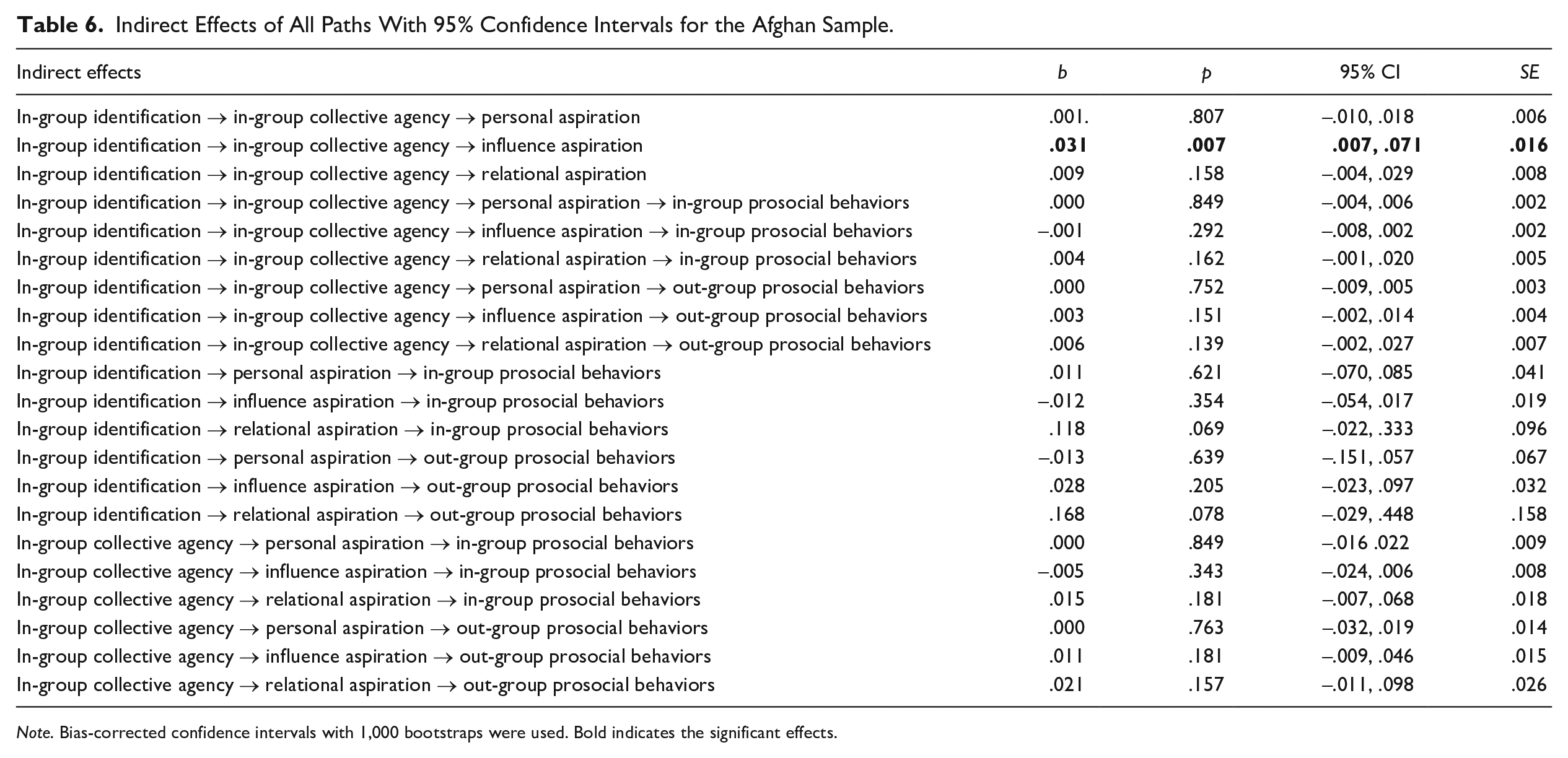
Note. Bias-corrected confidence intervals with 1,000 bootstraps were used. Bold indicates the significant effects.
Indirect Effects of All Paths With 95% Confidence Intervals for the Iranian Sample.
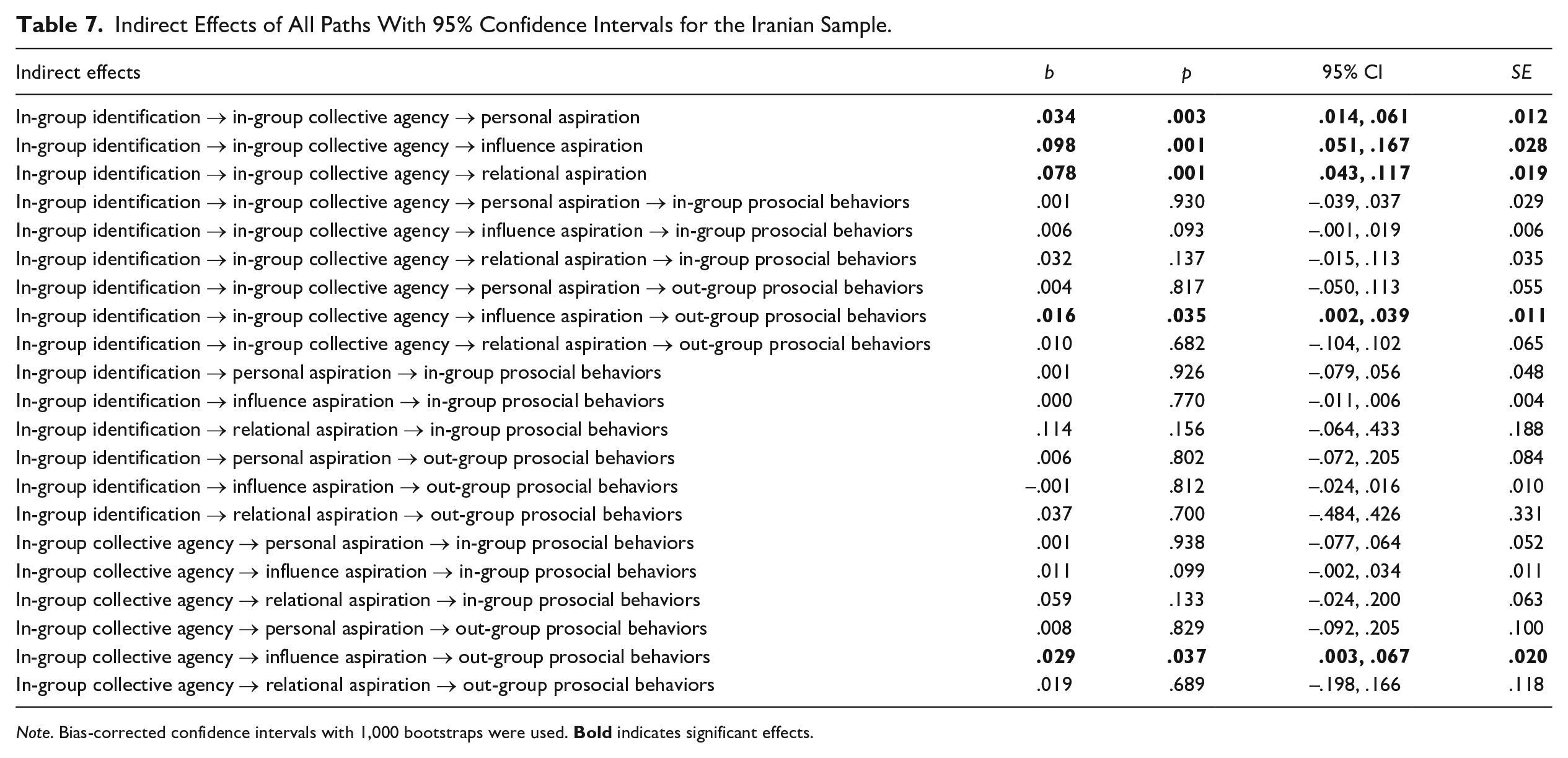
Note. Bias-corrected confidence intervals with 1,000 bootstraps were used.
Discussion
This study investigated the relationship between identification with a national group and intentions to engage in in-group/out-group prosocial behavior, focusing specifically on the role of aspirations among Afghan immigrants and Iranian youth. First, our analysis identified three discrete forms of aspiration that were relevant and reliable for both Afghan and Iranian youth: the aspiration to wealth, educational attainment, health, and independence (personal aspirations); the aspiration to influence (be an influential person, artist or politician); and the aspiration to connection (via marriage, spiritual, altruism, or nationalistic means). The findings indicated that in-group identification predicted all three aspirations for both populations. These results extend upon previous research, which emphasized the influence of group identification on individuals’ attitudes, values and behaviors (e.g., Mukherjee, 2015; Smith & Hogg, 2008; Terry & Hogg, 1996) to show that group identity also influences aspirations. That is, alongside influencing attitudes, values, and behaviors, “who we are” as group members can influence youth aspirations, “who I can be.”
Importantly, our findings suggested that a specific type of aspiration can statistically predict prosocial behavior toward out-groups, even in hostile intergroup relations. By classifying aspirations into three primary groups, we showed that aspirations shaped prosociality, but the type of aspirations matters. Specifically, the influence component of aspirations was only associated with out-group prosocial behaviors, while the relational type predicted in-group prosocial behaviors. That is, aspiring to be an influential person, appears to be associated with readiness to support out-group members, perhaps because of a more cosmopolitan mind-set (e.g., Pichler, 2012). It is also likely that individuals seek to attain social status by supporting disadvantaged groups (e.g., Hopkins et al., 2007; Owuamalam & Rubin, 2014). Another possible conclusion would be that individuals are more prepared to behave on behalf of others and even reach out and support those who belong to the out-groups when they aspire for things that cross the borders of self-achievement. Aspiring to be connected spiritually via altruism and a shared sense of nationhood was associated with in-group prosocial behavior only. Finally, aspiring to personal success (wealth, education, health, and independence) was not associated with prosociality in favor of either in-group or out-group. Hence, our analysis suggests that the more that aspirations and their realization are related to others, the more prosocial people are.
Moreover, in keeping with the social identity approach, our findings also revealed that collective agency mediated the effect of in-group identification on all types of aspirations for Iranians but only mediated the influence type of aspirations among Afghan immigrants. Even though the paths did not differ reliably according to the tests of the multigroup model, the patterns of indirect effects differed across the subgroups. This suggests that collective agency, defined as a group’s freedom to work together toward its goals, is particularly relevant in understanding the aspirations of Iranian youth. On the other hand, for disadvantaged group members, the perceived agency of the group, influenced by their group identity, does not have as strong of an impact on their aspirations (Kteily & Richeson, 2016). However, identity still exerted a direct positive effect on aspirations for this group—perhaps because the group identity acts as a resource to cope with disadvantaged group identity (Bowe et al., 2020; McNamara et al., 2013). Surprisingly, for both samples, the perceived collective agency was related to all three types of aspirations although it was a weak predictor. This weak relation may be attributed to the similar themes of aspirations. In addition, this may be due to the challenging circumstances that both understudied groups suffered in recent decades. Noting that Iran’s society has endured ongoing political and economic crises that seem to have significantly had an impact on people’s lives (Laudati & Pesaran, 2023; Maloney, 2015). Our finding highlight the role that group status hierarchies play in shaping members’ goals and ambitions (Jury et al., 2019; Ouellet & Laberge, 2022) but it also accentuates the relativeness of being advantaged. Indeed, individuals belonging to relatively disadvantaged groups may experience a reduced sense of agency when striving for certain aspirations but relatively advantaged members (who are still under pressure) group might feel similar. We note that the substantial social and structural limitations faced by Iranians, as a relatively advantaged group, may lead to distinct dynamics compared to dis/advantaged groups embedded in WEIRD settings.
The current research revealed that both Iranian and Afghan group identity was positively associated with in-group prosocial behaviors. This finding aligns with prior research, which suggests that identification with one’s own group fosters a willingness to assist fellow group members (Betancourt, 1990; Y. Chen & Li, 2009; Esses & Dovidio, 2002). Furthermore, in line with expectations (Hypothesis H1b), we discovered that in-group identity did not elicit an intention to support out-group members. Research has demonstrated that prosocial behavior can extend beyond boundaries to encompass members of out-groups due to ingrained norms within the group (S. Reicher et al., 2006) or to bolster the favorable perception of the belonging group (van Leeuwen & Täuber, 2011). However, our results may be better understood in light of the antagonistic and recently brutal interactions that have occurred between Afghan immigrants and their hosts (see Sirat, 2024; von Hein, 2024). Put differently, within the setting of hostility, group members are hesitant to assist other members of the hostile group, which is in line with other research findings (Levine et al., 2005; Sun et al., 2013).
In this study, we examined aspirations from a multifaceted perspective, encompassing personal, influence, and relational categories. Unlike previous studies that predominantly focused on specific aspects of ambitions, such as educational or vocational goals (e.g., Berrington et al., 2016; Kirk et al., 2012; Perry & Vance, 2010), our approach allowed us to capture the complexity of aspirations. By considering aspirations beyond personal ambitions, we shed light on their broader implications, including the pursuit of collective goods, such as a peaceful world (linking with Mandela, above). This comprehensive approach enabled a more nuanced understanding of the nature and scope of aspirations.
Due to the cross-sectional nature of our data, it is not possible to draw causal inferences based on our findings. As with all self-reported measures, it is important to note that there may be a discrepancy between actual behaviors and intentions and related motivations (Ajzen, 2005; Keshavarzi et al., 2021). To validate the processes outlined here, further experimental and longitudinal research is essential. It is crucial to acknowledge that self-report measures of prosocial behaviors, especially those that involve publicly recognized positive actions, may be susceptible to social desirability bias (Fisher & Katz, 2000). This means that participants may align their responses with societal expectations, which may lead to discrepancies between their reported intentions and their actual behaviors. Furthermore, our focus on the explanatory aspects of aspirations limits our ability to connect each type of aspiration to its specific motivational basis. Future research using a validated instrument could help differentiate aspirations based on their motivational grounds. For instance, individual personality traits such as openness to experience or cultural elements such as collectivist versus individualistic values may predict different facets of aspirations. The high percentage of participants holding a university degree is the other limitation of the study. Future studies could use different recruitment strategies to access data from a broader range of social groups. These limitations could impact the generalizability of our findings and the extent to which our arguments can be applied to the broader population.
Concluding Comments
We opened this paper with reflections on the importance of prosociality across groups in any multicultural society. We suggested that people’s aspirations may also shape their general prosociality across boundaries but that such aspirations are also likely to be informed (and constrained) by group membership and the associated agency that may (or may not in the case of disadvantaged groups) arise. Both target populations in our study were from non-WEIRD countries, with Afghan immigrants facing significant pressures, particularly following the Taliban’s resurgence to power in 2021. Our findings underscore the significance of implementing policies that target social hierarchies, aiming to establish fair and equitable platforms for immigrants and other disadvantaged groups to pursue their aspirations. In addition, our study recommends that policymakers prioritize social initiatives that promote youth collective ambitions, rather than individualistic ones, fostering improved intergroup relations and a more peaceful society.
Supplemental Material
sj-pdf-1-jcc-10.1177_00220221251321085 – Supplemental material for Beyond Boundaries: How Group Identification Influences Prosocial Behaviors Among Iranian Citizens and Afghan Immigrants via Aspirations
Supplemental material, sj-pdf-1-jcc-10.1177_00220221251321085 for Beyond Boundaries: How Group Identification Influences Prosocial Behaviors Among Iranian Citizens and Afghan Immigrants via Aspirations by Saeed Keshavarzi, Lucy Bird, Emma F. Thomas and Ali Ruhani in Journal of Cross-Cultural Psychology
Footnotes
Declaration of Conflicting Interests
The author(s) declared no potential conflicts of interest with respect to the research, authorship, and/or publication of this article.
Funding
The author(s) received no financial support for the research, authorship, and/or publication of this article.

Supplemental Material
Supplemental material for this article is available online.
References
Supplementary Material
Please find the following supplemental material available below.
For Open Access articles published under a Creative Commons License, all supplemental material carries the same license as the article it is associated with.
For non-Open Access articles published, all supplemental material carries a non-exclusive license, and permission requests for re-use of supplemental material or any part of supplemental material shall be sent directly to the copyright owner as specified in the copyright notice associated with the article.
