




Abstract
The Maya Ch’orti’ people are Indigenous to the border regions of Honduras and Guatemala. For a great number of years, they have faced structural racism and discrimination combined with continued land dispossession. In the contexts of colonization and the creation of the modern Honduran state, any identification with Indigenous groups has generally had negative connotations. Since the advent of the Indigenous Peoples’ Rights Discourses (IPRD), however, more communities have actively aligned with the Maya Ch’orti’ people. In our investigation of the ways in which cultural identity and belonging to a Maya Ch’orti’ community have shifted and evolved over time, we analyzed a total of 45 interview transcripts across three time points (1990s: n = 15, 2003–2004: n = 15, and 2018–2019: n = 15) using thematic analysis and a cross–data set analysis. Five major themes were developed: “Our land,” “In the past, we were oppressed and ashamed,” “Difficult present life: We are still oppressed,” “Maya Ch’orti’ revitalization and empowerment,” and “Being Indigenous.” As we compared these themes across our time points, it became apparent that notions of cultural identity have evolved in the Maya Ch’orti’ community from a negative appraisal to a positive, empowered, and confident notion. Our findings are being discussed in connection to the context of the IPRD and Indigenous peoples in other countries.
“The very notion of Aboriginality is a social construction that, as a ‘dividing practice’, both marginalizes and unites.”
Today, there are some 370 to 500 million Indigenous peoples living in more than 90 countries around the world (Hossain & Lamb, 2019; World Bank, 2021). Vast differences exist among the world’s Indigenous populations in their political and economic situations, cultures, and relationships with colonizing societies, encompassing more than 5,000 classifications and more than 4,000 languages (Alfred & Corntassel, 2005). But there are also many parallels in the histories of Indigenous peoples across the world (Kirmayer et al., 2008): most of these populations have been subjected to some form of marginalization (Walls et al., 2014) besides being targeted for cultural, political, and physical eradication by states and colonial authorities (Alfred & Corntassel, 2005). The economic and political systems of colonial states centered both on the repression of “native peoples” and on the exploitation of colonized lands through intensive resource extraction for the benefits of European markets and industry (Fanon, 2007).
Negative colonial ethnic associations permeated dominant social discourses and implicitly amounted to a justification of the appropriation of Indigenous peoples and cultures within colonial societies (Fanon, 2007). The oppression often combined the processes of land dispossession (Metz, 2010) while bringing rapid cultural changes among Indigenous peoples (Kirmayer et al., 2008). Often considered to be part of a historical trauma (Walls et al., 2014; Wexler, 2014), such processes have affected Indigenous peoples’ notions and experiences of collective and cultural identity (Kirmayer et al., 2008).
Collective Identity, Cultural Identity, and Indigenous People
Collective identity not only refers to representations that are shared within a group and based on common interests and experiences, but it also involves an active process of shaping the way in which the group views itself and wishes to be viewed by others (Brewer, 2001). Research on collective action has highlighted the important role of collective identity, a sense of “we-ness” among individuals and groups (Snow, 2001), which seems to be crucial for collective action (Flesher Fominaya, 2010). Movement participants can generate collective action because of a shared understanding of the movement based on mutual interests, experiences, and solidarity among members (Melucci, 1996). Recent findings in collective identity research illustrate collective identity as a process that is relational, contingent, and socially constructed rather than durable and static (Basir et al., 2022).
Cultural identity, a specific form of collective identity, refers to an individual’s affiliation with a cultural group, encompassing language, religion, rites of passage, leisure activities, music, and dietary habits (Bhugra, 2004). Traditionally, the concepts of culture and identity have been explored through an anthropological lens, particularly influenced by Edward Burnett Tylor’s work. However, this approach often portrayed culture as static and displayed European ethnocentric biases, comparing “other” cultures with European values and the notion of “civilization,” frequently tainted by racist chauvinism (Odello, 2012). Ethnographic perspectives have challenged this static view, emphasizing that cultures are in a constant state of flux, which is why “cultural and ethnic identity must be understood as a construction of contemporary people responding to their current situation” (Kirmayer et al., 2008, p. 20).
Cultural identity is not inherent but rather acquired, potentially crafted, or reshaped within diverse intercultural settings. Migrants and bicultural individuals, for instance, employ varied cultural identity tactics to adjust when encountering fresh intercultural and global professional environments (Duden et al., 2024; Karjalainen, 2020). Cultural identity is multifaceted, encompassing subcultures that shape a person’s identity, such as families, communities, and wider social groups (Trimble et al., 2003). Because cultural identity is always changing, it inherently includes both accuracies and inaccuracies as transient points of connection between the described and the describer, making it specific to context and time. This fluidity reveals a strength: cultural identity is never finished and should be examined by various scholars from different perspectives (Fiedeldey-Van Dijk, 2019).
Studies defining Indigenous cultural identity highlight its complexity. Research with Alaska Native university students revealed their identities as sequences of nested and intersecting identities centered on place, time, and relations across cultural groups (Buckingham & Hutchinson, 2022). Weaver (2001) describes Indigenous cultural identity as comprising self-identification, community identification, and external identification, influenced by both internal cultural factors and non-native definitions of Indigeneity. Neville et al. (2014) identified five dimensions of ethnic-racial belonging among Black Indigenous Australians: Sense of community; history/memory, place, and peoplehood; shared language and culture; acceptance and pride; and interconnections. They also noted three barriers to this belonging: social identity, phenotype, and history of colonization.
The construction of cultural and collective identity is deeply intertwined with systems of power, privilege, and oppression. Critical scholars, such as Said (1978) and Hall (1997), argue that dominant groups use cultural and discursive power to create and maintain hierarchical identity systems, marginalizing minority groups. This underscores the need to interrogate the politics of representation and challenge dominant narratives in studying cultural and collective identity. In addition, cultural identity is increasingly referenced as a “legal right” in legal documents to protect the cultural rights of groups (Odello, 2012).
Cultural identity acts as a protective factor promoting resilience (Usher et al., 2021). Whitbeck et al. (2001) found a positive link between participation in traditional culture and academic achievement among Native American students, showing that strong cultural affiliations enhance self-concept and overall well-being. Consistent correlations exist between cultural identity, positive engagement with traditional culture, and Indigenous mental health (e.g., Chandler & Lalonde, 1998). These affiliations also contribute to Indigenous resilience, which involves positive outcomes despite adversity (Fleming & Ledogar, 2008).
Research underscores the connection between Indigenous people’s well-being and their identification with their culture. Yet previous studies fail to provide a comprehensive framework for understanding how Indigenous people themselves experience their cultural identity. The interplay between personal and cultural meaning-making has not been adequately considered (Wexler, 2014). These processes are undoubtedly influenced by historical trauma for Indigenous people, yet little is understood about how these ideas about shared difficulties shape people’s identity, sense of purpose, and social roles (Wexler, 2014).
Changes to Cultural Identities as a Consequence of Colonialism
The loss of a group’s cultural identity can diminish a sense of collective self and lead to community dysfunction (Fiedeldey-Van Dijk, 2019). As the colonial movement in Latin America accelerated, Indigenous populations were increasingly portrayed as “savage,” and their behavior as subservient, reinforcing the colonizers’ self-perception of superiority (Adams et al., 2020). Many Indigenous people were aware of these negative perceptions (Casas et al., 1987). As a result of these colonial practices, which were destroying their heritage and threatening their traditional cultural practices, they suffered from shame and loss of their own cultural identity (Miller, 1996; Schumann de Baudez, 1983; Truth and Reconciliation Commission of Canada [TRC], 2015).
In Canada, for instance, through actions such as the implementation of residential schools for Indigenous people, “cultural identity was supplanted with an alternative that reflected the interests and values of the dominant group. This alternative was applied forcibly and relentlessly through the denigration of Indigenous identity and punishment for maintaining familial or cultural ties” (Matheson et al., 2016, p. 555). Negative self-associations, among them self-blaming for socioeconomic marginalization and disdain for concepts of Indigeneity, were internalized by many Indigenous peoples (Schumann de Baudez, 1983). De-colonial theorists view this process as a form of “colonial mentality” or “auto-oppression” (Adams et al., 2015). Coupled with the suppression of Indigenous cultures and collective identities, the rupture of “cultural continuity” (Kirmayer et al., 2011) has been associated with poor mental health outcomes and high suicide rates (Chandler & Lalonde, 1998).
Although the impacts of experiencing injustices regarding their cultural identities among the Indigenous and First Nations populations of North America have been relatively well documented, the research is still lacking for other populations. Studies are needed to shed light on the ways colonization affected notions of cultural identity among Indigenous peoples in other parts of the world. Mirroring the histories of colonization around the globe, the Maya Ch’orti’ people of Copán, in Honduras, have faced long-standing land dispossession, structural racism, and discrimination (Metz, 1998; Rodríguez-Mejía, 2016).
The Maya Ch’orti’ in Copán
The Maya Ch’orti’, an Indigenous group residing in Eastern Guatemala and Western Honduras, comprise a population between 50,000 and 150,000. Historically marginalized within Maya scholarship, their peripheral status has led to a dynamic and intersectional identity influenced by regional, political, economic, and sociocultural changes (Metz, 2009). The ancient city-state of Copán, established by Tikal in 427 A.D., was a central hub in the Maya world, known for its architectural and artistic achievements (Carmack et al., 2007). Copán’s decline around 800–830 A.D. led to a dispersed and ethnically diverse population in the region. Spanish colonization in the 16th century brought profound changes, including forced labor, disease, and displacement, significantly affecting native populations. The introduction of Spanish as the lingua franca and the imposition of a rigid class system further marginalized the Maya Ch’orti’ (Herranz, 1994).
Throughout the colonial period and beyond, Indigenous lands were expropriated, and the hacienda system exploited Indigenous peoples economically and socially (Metz, 2010). Modern state formations continued to marginalize Indigenous communities, emphasizing Eurocentric ideals that undermined communal lands and Indigenous cultures (Metz, 2009). This economic disenfranchisement, coupled with stigmatization and discrimination, perpetuated colonial perceptions of Indigenous inferiority (Metz, 2022). State-centric progress models, which viewed Indigenous ways as impediments, justified violence and exploitation under the guise of modernization (Anderson, 1983; Bodley, 2008). These dynamics contributed to severe interethnic tensions and violence, culminating in the Guatemalan civil war and massacres against Indigenous communities, including the Maya Ch’orti’, with lasting negative impacts on the Indigenous peoples in the region (Metz, 2006).
During the Guatemalan civil war, many Maya Ch’orti’ actively downplayed their Indigenous cultural identity due to fears of persecution (Metz, 2006). The internalization of negative stereotypes was a consequence (Metz, 2022). However, since the mid-1990s, statistics have seen a resurgence in Maya Ch’orti’ self-identification and cultural revitalization, particularly in places such as Copán, where the Maya Ch’orti’ language had disappeared (Mena Cabezas & Flores Mejía, 2007). The creation of the first Maya Ch’orti’ governing organization (Consejo Nacional Indigena Maya Ch’orti’ de Honduras [CONIMCHH]) in the 1990s was a pivotal moment in this cultural reclamation (Flores, 1997). Following the ratification of the International Labor Organization Convention 169, the Maya Ch’orti’ began mobilizing to regain land rights and redefine their identity, blending traditional practices with new forms of expression based on historical exclusion (Metz, 2010).
The Present Study
The aim of this study is to explore how the cultural identity of the Maya Ch’orti’ people of Honduras has evolved with the implementation of the Indigenous Peoples’ Rights Discourses (IPRD) and the Indigenous rights movement. Specifically, we seek to understand in which ways these movements have influenced their self-perception, community cohesion, and cultural practices. As is the case for many Indigenous groups, the sense of Indigenous cultural identity of many Maya Ch’orti’ living in Copán changed as a result of colonization and oppression. However, it might be hypothesized that, with the advent of the IPRD, Maya Ch’orti’ cultural identity may have shifted toward more positive associations. By examining this potential shift, we aim to contribute to filling the gap in existing research on Indigenous identities outside North America, offering insights into the broader impacts of global Indigenous rights discourses. This study will add to the literature by providing a nuanced understanding of how international policies and local activism can interact to reshape cultural identities, particularly in historically marginalized populations such as the Maya Ch’orti’.
Method
Our study is rooted in a subjectivist epistemology and uses qualitative methods of inquiry. Subjectivist epistemology is a philosophical stance that emphasizes the subjective nature of knowledge and reality, positing that individuals construct their understanding of the world through their unique perspectives, experiences, and interpretations (Creswell & Poth, 2016; Guba & Lincoln, 1994). In the context of qualitative research, subjectivist epistemology recognizes the importance of exploring individuals’ subjective experiences, meanings, and interpretations, acknowledging that reality is socially constructed and contextually bound (Guba & Lincoln, 1994). Our choice of subjectivist epistemology aligns with our goal to delve deeply into the lived experiences, perceptions, and interpretations of the participants concerning their cultural identities. By adopting this epistemological lens, we aim to uncover the complexities and nuances inherent in the phenomenon of Indigenous identities, understanding that individuals’ realities are shaped by their sociocultural contexts, interpersonal relationships, and personal histories (Creswell & Poth, 2016).
Data Sets
In this study, we used secondary data, meaning that we analyzed transcripts of interviews that had been conducted in the context of humanitarian and anthropological projects by trained anthropologists and human rights advocates active in the area. We obtained three different data sets from three different points in time: (a) the 1990s (1993–1996), (b) 2003–2004, and (c) 2018–2019. The interviews from the 1990s were collected by the Honduran National Anthropological Research Institute in Tegucigalpa, Honduras. Our team obtained access to the interview data with the permission of the authors and institutions involved as well as all interview participants. The 1990s data set resulted from surveys that were primarily quantitative but included elements of open-ended interviews. Daniel Bagheri Sarvestani accessed these surveys through archival research. The data from 2003 and 2004 were part of an ongoing anthropological work in the area and were collected through open-ended interviews. The interviews collected from 2018 onward were conducted by Daniel himself.
The data sets were collected in Copán, including Copán Ruinas and surrounding villages. Many testimonies were obtained and recorded after community meetings at the CONIMCHH. Our research team also transcribed the existing Council’s audio files. While the Maya Ch’orti’ language is still spoken in Guatemala, it is rare in Copán, Honduras, with only a few elders speaking it as far back as the 1990s (Metz, 2010). Recent efforts to revive Ch’orti’ in Copán by integrating it into the school curriculum and inviting Ch’orti’ teachers from Guatemala have had mixed results due to funding and support issues (Metz, 2010, 2022). Although Ch’orti’ leaders recall some words and phrases, Spanish remains the dominant language. All interviews, except one in Ch’orti’, were conducted in Spanish as participants were more comfortable with it.
The interviews from each of the data sets involved open-ended questions, asking participants to describe their daily lives and personal experiences in the communities. Upon completion of our analysis, we returned to the Copán to discuss our findings with the Maya Ch’orti’ community.
Participants
The interviews that were eventually selected for the purpose of analysis answered certain inclusion criteria. They had to involve participants who self-identified as Maya Ch’orti’ people, were at least 20 years of age, and were living within the geographical region of Copán at the time of the interview. The data that did not meet these criteria, and/or had not been collected as part of an interview of at least 5 min, were excluded from our analysis. Interviews whose content did not relate in any way to expressions of identity and/or indigeneity were also discarded. All participants were people involved in the political functions of CONIMCHH, community leaders, or rural or female counselors. More information on participants is provided in Table 1.
Participants’ Characteristics (N = 45).

There were some preexisting differences between the data sets. The interview sets were collected by various authors, each bringing their unique positionality, which influenced the constitution of the data, particularly in terms of gender and age. Notably, the institution of Anthropology collected data in the 1990s, during a period marked by recent conflict and deep-seated mistrust toward outsiders, which constrained the researchers’ ability to engage in particular with female Ch’orti’ members. The Ch’orti’ people have a long history of abuse and violence at the hands of foreigners, particularly White men. This has rendered community members more guarded and suspicious toward outside investigators. The leading anthropologist himself noted at the time that during his fieldwork, women and children would actively avoid him due to a general suspicion toward White men.
In contrast, the latter data set collected by Daniel presented a different dynamic. The author had established himself as an ally and advocate for Indigenous peoples’ rights. Between 2016 and 2019, the author worked with the Office of Maya Ch’orti’ Women as a volunteer, helping to promote fundamental rights alongside Ch’orti’ leaders. His efforts in building rapport and trust within CONIMCHH facilitated greater access to female participants. The author’s identity, which did not align with the typical image of a White man, might have also helped in reducing barriers in accessing Ch’orti’ participants. In addition, Daniel deliberately attempted to include as much gender diversity in his interviews as a key objective. This might not have been the case with the older interview samples, most likely due to circumstantial restraints. This intentional inclusion of female perspectives may account for some of the differences observed in the data sets.
Researcher Positionality and Establishing Trustworthiness
In reflexive Thematic Analysis (TA), researchers view subjectivity as an analytic asset, engaging thoughtfully with theory, data, and interpretation (Braun & Clarke, 2021). In our study, we utilized reflective journaling throughout data collection and analysis, encouraging ongoing self-questioning (Braun & Clarke, 2021). During this process, we aimed to be aware of our positionalities.
Daniel Bagheri Sarvestani who collected the third data set approached this research primarily as an ally and advocate, drawing from personal experiences navigating multiple cultures both as a child of immigrants and as a human rights advisor working internationally for the past 10 years. Inspired by his ancestral ties to Bakhtiyari nomadic communities, he completed a master’s degree in international law and human rights and is currently pursuing a PhD in Anthropology, specializing in the impacts of Indigenous people’s rights on the formation of local identities. He acknowledges his role as an outsider as a human rights advocate but having built and maintained extensive personal rapport with the local Ch’orti’ communities for the past 5 years.
Gesa Solveig Duden, coming from a White, German background, has studied intercultural psychology in Ireland, Brazil, and Germany. She positions herself as an outsider to the community, focusing on integrating psychological theories on cultural identity to interpret the data. For her, the research process involved finding an equilibrium between learned Western academic research practices and respectful engagement with the community. For that aim, she took specific courses on conducting research with Indigenous groups (such as at McGill University, Canada) and has received extensive training in qualitative methods and collaborative research practices.
In addition to the reflexivity, we employed several strategies to enhance trustworthiness: (a) Member checking (i.e., bringing data and results back to the communities and engage in discussion with community members) ensured participant validation of transcripts and findings, safeguarding accuracy (Nowell et al., 2017). (b) Peer debriefing involved collaborative data collection, analysis, and report production to incorporate diverse perspectives and reflect on researchers’ subjectivity as a research asset (Braun & Clarke, 2021). (c) Thorough documentation encompassed detailed records of research processes and decisions made during data collection and analysis (Nowell et al., 2017).
Analysis
For each data set, 15 transcripts summing up to 45 interview transcripts in total were analyzed. The data were analyzed using TA (Braun & Clarke, 2006). The two authors analyzed each of the three data sets independently, coding all transcripts line-by-line using the qualitative analysis software MAXQDA (VERBI-Software, 2020). Both authors have experience in qualitative data analysis. The authors subsequently organized the codes into a hierarchical coding tree consisting of two units of larger categories of meaning (subthemes and themes) all relating to the research questions. The hierarchical tree structure, labels, and connections of these themes and subthemes were discussed between the researchers until a consensus was found. The labeling and the discussion took place in English (researchers are fluent in both Spanish and English). The categories from the different time points were subsequently compared and contrasted.
Data set analyses were performed collaboratively, our findings being the result of a co-creative project in many ways. Our team included local collaborators, research assistants, and interpreters. We met with the Maya Ch’orti’ assembly on several occasions to discuss results. There was a general consensus among them that they should be identified as Maya Ch’orti’ (rather than Ch’orti’ or Ch’orti’ Maya). The community also emphasized the need to reevaluate the word poor, an adjective they considered as having derogatory connotations when used in connection with the Maya Ch’orti’ nation. Instead, the community members wanted us to make the distinction that, whereas many of the Maya Ch’orti’ peoples suffered from economic poverty, they were nevertheless “rich” with culture, “nobility,” and traditions. Finally, the community assembly also wanted the world to hear about their struggles against injustice. They asked our team to use this research opportunity as a means of mobilizing resources and support for the Maya Ch’orti’ people’s quest for fundamental rights. Although being unable to guarantee the results of our work, our team hereby acknowledges solidarity with the Indigenous rights movement among the Maya Ch’orti’ and other Indigenous nations.
Ethics
The ethics committee of the University of Kansas approved of this study. We only included data for which informed oral consent had been obtained (Coram, 2011). To further protect the names or personal information of our interviewees, the names of participants and other personal identification were removed, and replaced with number identification. Copies of the transcripts were kept in a secure digital file. Through these efforts, we hope to embody the spirit of a collaborative community-based research method in our work in line with the guidelines of International Indigenous peoples’ rights (Delaney, 2005).
Results
The five main themes that were developed during our analysis will be reported in detail here. Differences between the three data sets that became apparent will also be presented.
Our Land
The importance of land was a visible theme in all three data sets. Throughout the testimonies, “land” appeared to be deeply linked to the ethnic identity of the interviewed Maya Ch’orti’ people (Figure 1).
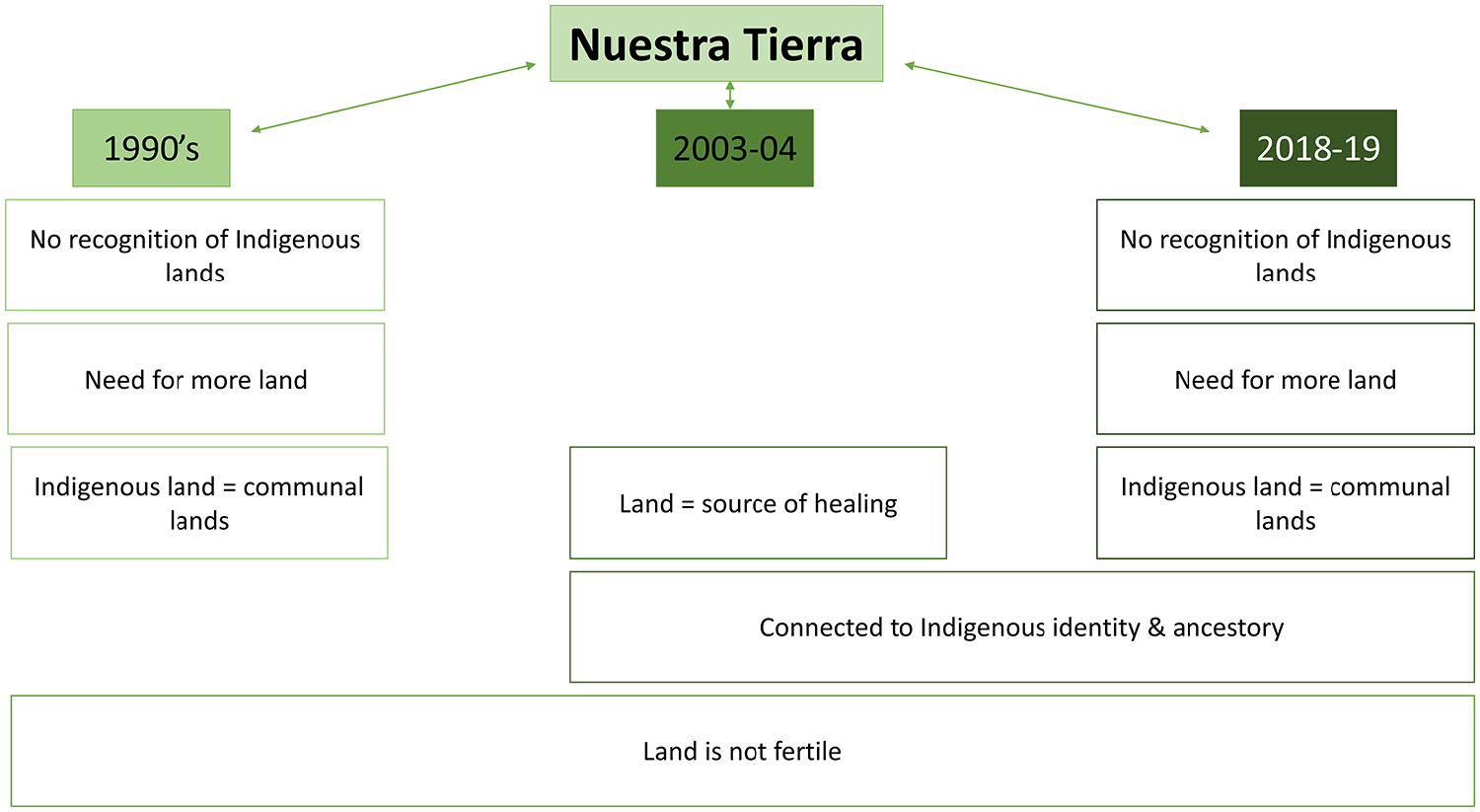
Our Land—“Nuestra Tierra” Theme and Subthemes
This reference to a specifically Ch’orti’ space, to “our land,” was discussed in relation to the issue of no recognition of Indigenous lands in the 1990s and 2018–2019. The need for the implementation of communal Maya Ch’orti’ territory through legal recognition coincided in both data sets with participants expressing the need for more land. In 2018–2019, participants stressed the need to expand previously established legally recognized territories to include all Maya Ch’orti’ communities in the area as the current areas were not considered sufficient to sustain the communities. In the 2003–2004 data set, there were no references to the need for more land. In the 1990s and 2018–19 data sets, community members also stressed the fact that they regarded Maya Ch’orti’ land as communal land as opposed to individual property. They made a distinction between Maya Ch’orti’ land and private land that was traditionally owned by Meztiso or Ladino elites. In the 1990s data set, participants made it clear that they did not consider private land to meet their needs as a Ch’orti’ community.
In the 2003–2004 and 2018–2019 data sets, particularly positive aspects of the land and its connection to Indigenous identity were stressed: participants perceived the land as a source of healing and medicine; as tied to ancestors, spirituality, and identity; and as life in and of itself: “soy poseedor de aquí y aquí vivieron mis abuelos y aquí vivo yo” [“I’m a proprietor here and my grandparents lived here and here live I”]. (P19, 2003–2004). In the 2003–2004 data set, there were strong references about the land being a source of “healing” for the Ch’orti’ community.
A subtheme across data sets was the problem of the land no longer being fertile. Infertility and loss of Indigenous land were perceived to be connected with the Maya Ch’orti’ peoples’ suffering and poverty as well as with a decline in well-being. In the 1990s and 2018–2019 data sets, participants also described the ongoing lack of recognition of Indigenous lands: tenemos 20 años de luchar, ya el patrón nos tiene como desconocidos porque tanto tiempo nosotros hemos luchado y no hemos podido conseguir una parcela de tierra para trabajarla ni para vivir. [we have been fighting for 20 years, now the boss sees us as strangers because we have fought for so long and we have not been able to get a plot of land to work on or to live on]. (P40, 2018–2019)
In the Past, We Were Oppressed and Ashamed
A theme that we generated for the data sets from 2003–2004 and 2018–2019, but was not apparent in the 1990s data set, was the description of oppression and having been ashamed to be Indigenous in the past (Figure 2). That theme encompassed all references to feelings of injustice and pain experienced by members of the Maya Ch’orti’ community.
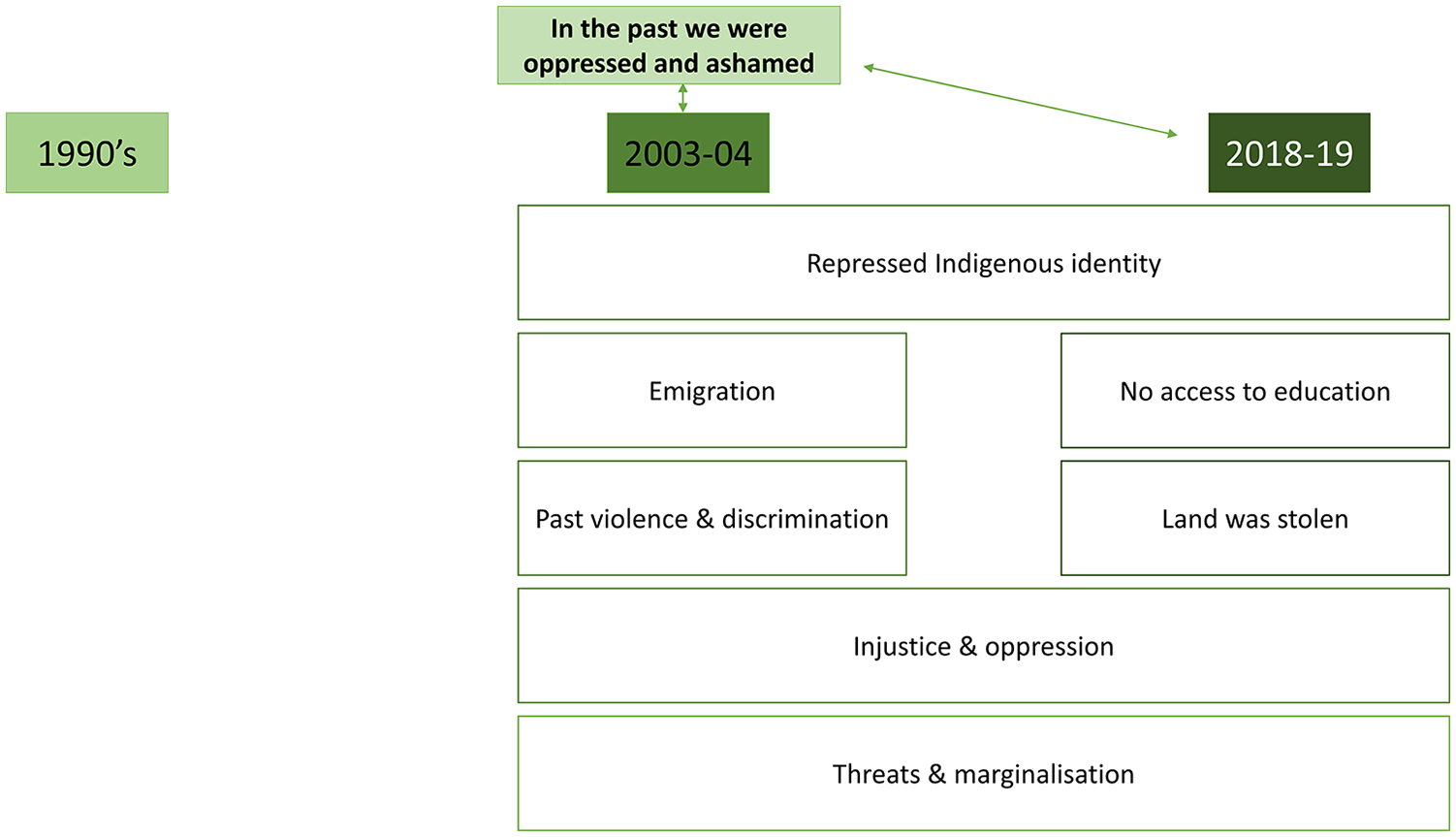
“In the Past We Were Oppressed and Ashamed” Theme and Subthemes
Participants explained that their grandparents and parents had repressed their Indigenous identities as they felt ashamed to be Indigenous. For instance, a participant in the 2018–2019 data stated, “Hoy ya no somos las mismas indígenas de antes que nosotros nos sentíamos con vergüenza” [“Today we are no longer the same Indigenous people we used to feel ashamed of”] (P38, 2018–2019). Participants in the 2003–2004 data set mentioned the emigration of community members as a result of war, economical poverty, and violence that was imposed on the community. They also alluded to past violence and discrimination. In the 2018–2019 data set, they further described how their people had had no access to education in the past, no governmental support, and also claimed that their lands had been stolen. In both the 2003–2004 and 2018–2019 data sets, Maya Ch’orti’ participants talked about experiences of injustice, oppression, threats, and marginalization lived by their people in the past. Although oppression was still present, participants felt that many things had changed since the beginning of the Indigenous rights movements: “Con el movimiento indígena hay más unidad, más educación, más salud, porque en ese periodo de dominación, incluso vivíamos en medio del ganado de los terratenientes, ahora con ya nuestro movimiento ya vivimos bien” [“With the Indigenous movement there is more unity, more education, more health, because in that period of domination, we even lived among the cattle of the landowners, now with our [rights] movement we live well”] (P23, 2003–2004). In short, the data suggest that, whereas much of the feeling of oppression and marginalization in the 2003–2004 and 2018–2019 data sets was related to the past, in the 1990s, all references to forms of oppression and injustice were described in the present tense.
Difficult Present Life: We Are Still Oppressed
Descriptions of oppression in the present were common across all data sets. Participants described the difficulties they were facing in their present lives, including experiences of injustice, violence, or repression imposed on the Maya Ch’orti’ community by non-Ch’orti’ institutions and people (Figure 3).
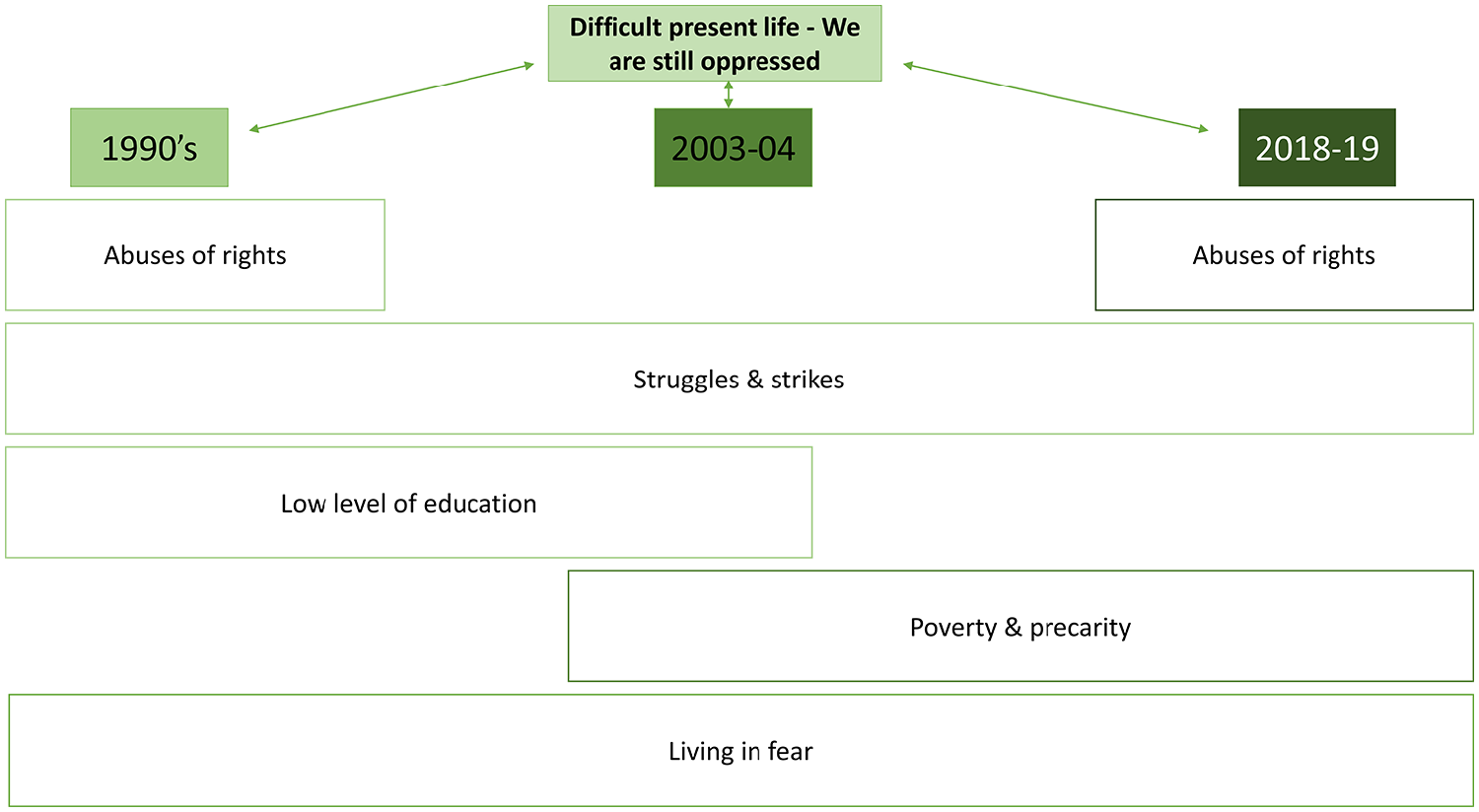
“Difficult Present Life: We Are Still Oppressed” Theme and Subthemes
In the 1990s and in 2018–2019, participants referred to ongoing abuses of their rights, particularly in connection with Maya Ch’orti’ land claims. These were almost always attributed to corrupt government officials and Ladino landowners who were described as disrespectful of Maya Ch’orti’ land. All three data sets included descriptions of ongoing strikes and struggles against the injustice or violence faced by the Maya Ch’orti’. For instance, a community member explained, pues yo llegue a conocer los derechos que ellos, que los abuelos de nosotros tenían, entonces yo lo que hice, pues, despertar y ver de qué manera podía pelear nuestros derechos, eh mi edad estaba de 21 años, yo, entonces conquiste a otros jovencitos, ver cómo podían sacar nuestros derechos. [Well, I got to know the rights that they, that our grandparents had, so what I did was to wake up and see how I could fight for our rights, I was 21 years old, then I convinced other young people, to see how we could obtain our rights]. (P19, 2003–2004)
In the 1990s and 2003–2004, participants described how low levels of education were hindering the life of their community and stressed that there was a great need for capacity building. In 2003–2004 and 2018–2019, the interviews were characterized by many descriptions of precarity and economic poverty. Maya Ch’orti’ participants in all three data sets explained that they were living in fear of the persecutions and repercussions they might endure for actively fighting for justice and their rights. A community member who was interviewed in the 1990s explained, “Ellos se sienten atemorizados verdad, porque piensan que los señores de poder les pueden hacer algo” [“They feel frightened, because they think that the people in power might do something to them”] (P13, 1990s), while a 2018–2019 participant stated, en el caso mío fui perseguida, me anduvieron de cerca, a veces agarrando por veredas donde no habíamos pasado y porque ya no podíamos pasar por el mismo camino donde habíamos pasado porque allí nos estaban vigiando, entonces nos querían asesinar despiadadamente. [In my case, I was persecuted, they followed me closely, sometimes taking paths where we had not passed and because we could no longer use the same ways where we had passed because there they were watching us, so they wanted to kill us mercilessly]. (P39, 2018–2019)
Maya Ch’orti’ Revitalization and Empowerment
The fourth theme was the empowerment of the Maya Ch’orti’ and revitalization of their culture (Figure 4). It was only present in 2003–2004 and 2018–2019. Participants talked about the fact that their community was developing, and that education levels were rising: “empieza a capacitarse la gente, la otra es de que hoy las capacitaciones llegan hasta las comunidades.” [“people are starting to get trained, the other thing is that today the training is reaching the communities”] (P17, 2003–2004). They described their wish for more empowerment and for allies in their fights for their rights. Whereas 2003/2004 participants mentioned that they felt that there was less discrimination of Indigenous people than there had been in the past, that feeling was not evident in the 2018–2019 interviews. In both data sets, participants stressed having become aware of the fact that they, as a group, had rights and were independent of others. In both data sets, Maya Ch’orti’ participants explained that their culture was experiencing a revitalization and restrengthening with time, meaning that the Ch’orti’ language, territory, and cultural practices (including ceremonies), had been revived in the Copán region by the members of their communities. A participant explained, “en eso estamos en volver a recuperar lo de nuestros antepasados.” [“We are in the process of recovering the heritage of our ancestors”] (P28, 2003–2004).
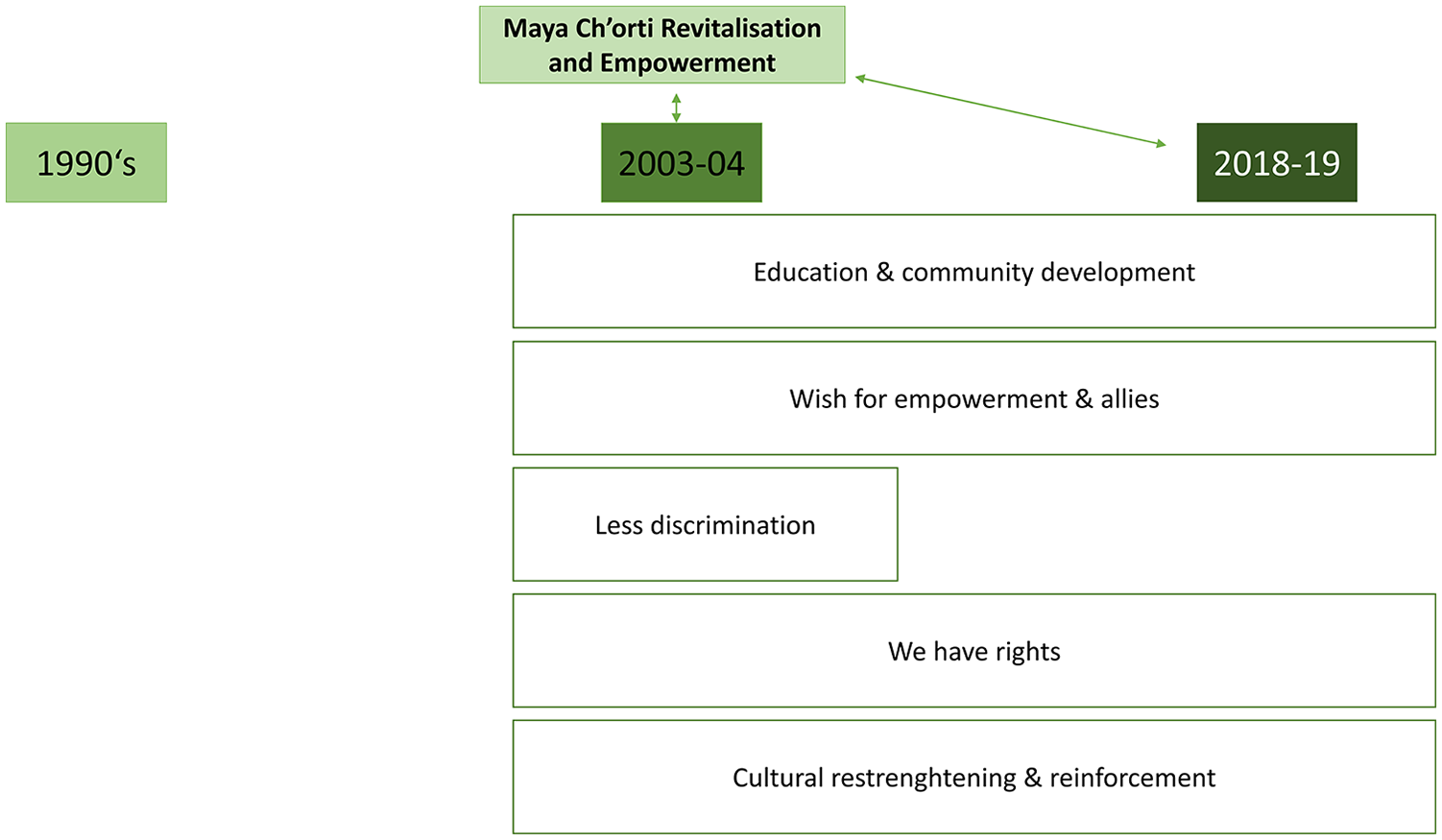
“Maya Ch’orti Revitalization and Empowerment” Theme and Subthemes
Being Indigenous
The fifth theme, which was the largest in all three data sets, occupied most of the space in the interviews and led to the highest number of subthemes (Figure 5).
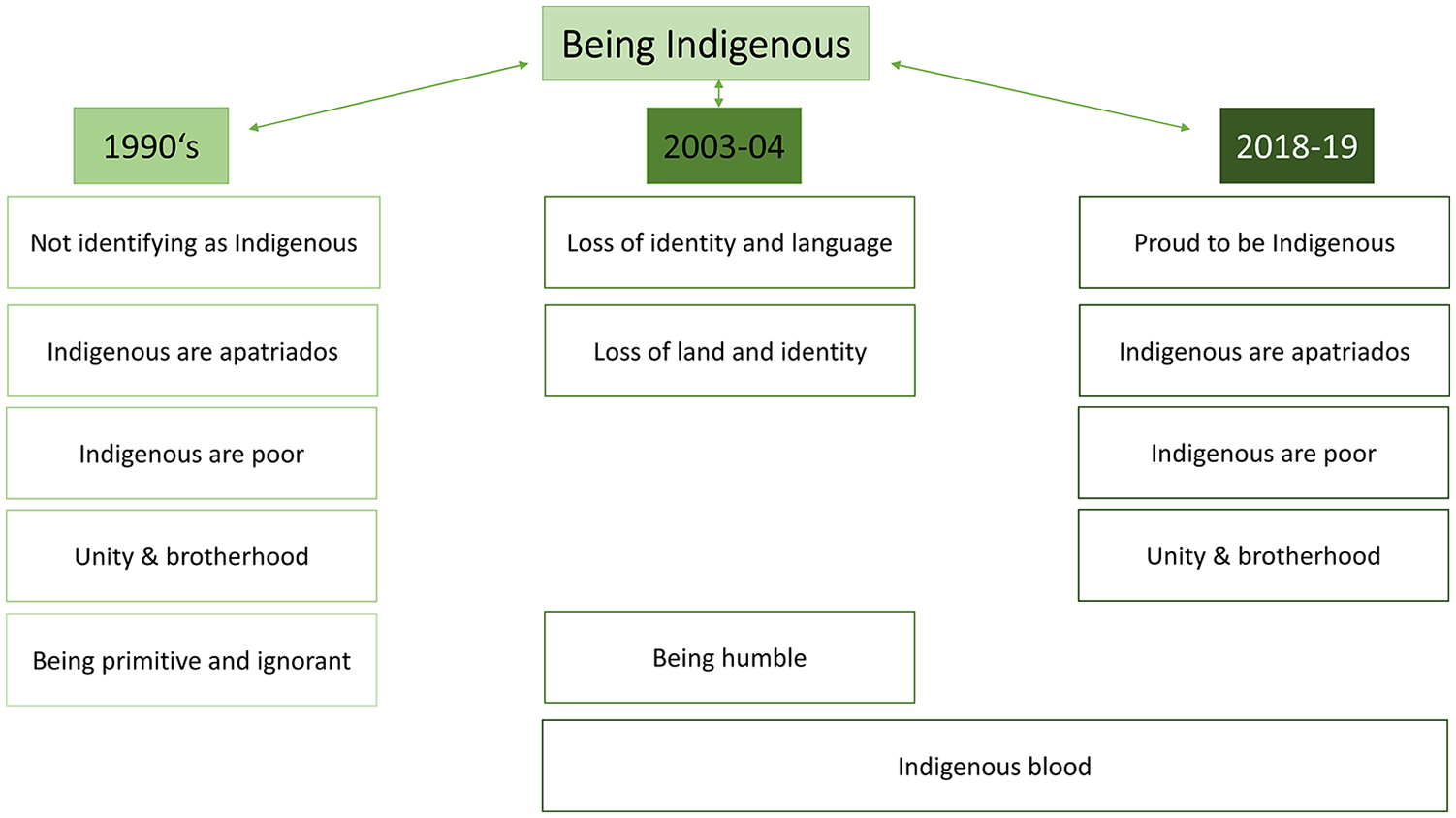
“Being Indigenous” Theme and Subthemes
In the 1990s, participants indicated that many members of their community were actually not identifying as Maya Ch’orti’ individuals. That lack of self-identification was linked to the second theme, the fact that community members refrained from self-identification because “in the past (they) were oppressed and ashamed” of being Indigenous. In 2003–2004, interviewees explained that many members of their community had experienced a loss of identity linked to the loss of the Ch’orti’ language, which was disappearing. By contrast, in 2018–2019, participants expressed the feeling of being proud to be Indigenous: para mi pues me orgullece ser una Indígena e Indígena Luchadora porque los indígenas nunca nos vamos a doblegar estamos en las buenas y en las malas aunque sea cayéndonos y levantándonos pero allí estamos. [For me, I am proud to be an Indigenous and an Indigenous fighter because we Indigenous people will never give up, we are here through thick and thin, even if we fall down and get up again, but we are here]. (P44, 2018–2019)
All three data sets dealt with the notion of “apatriados” [stateless], which referred to the idea that, over history, the Maya Ch’orti’ people became stateless because their territories had been taken away from them and they had to leave their native lands. Part of their description of what it meant to be Maya Ch’orti included the experience of expulsion from ancestral lands. This aspect was strongly related to the first theme “nuestra tierra” [“our land”], denoting the importance of ancestral lands for Maya Ch’orti’ identity. In the 1990s and 2018–2019, participants described Indigenous peoples as being economically poor. They explained how economic precariousness and poverty had been an ongoing part of Indigenous lives since colonization. Community members also explained in both data sets that important aspects of being Indigenous were the unity and brotherhood, which involved caring and watching out for each other. Only in the 1990s did participants mention negative aspects related to “being Indigenous,” some of them actually saying that being Indigenous meant being primitive and ignorant. The 2003/2004 participants felt that an essential feature of being Indigenous was being humble, which, in many of the interviews, went hand in hand with having a “campesino” [peasant] lifestyle. In 2003–2004 and 2018–2019, participants suggested that the most important aspect of “being Indigenous” was having “Indigenous blood”: tengo el deber y el derecho de no dejar en abandono a mi pueblo es mi pueblo, soy indígena, soy Ch’orti y donde quiera que me pare, donde vaya, tengo mi sangre indígena y por lo tanto estoy siempre a la orden del pueblo Ch’orti. [I have the duty and the right not to abandon my people, it is my people, I am Indigenous, I am Ch’orti and wherever I stay, wherever I go, I have my Indigenous blood and therefore I am always at the service of the Ch’orti people]. (P36, 2018–2019)
Notable Differences Across the Three Data Sets
When comparing the results of the three data sets, it becomes apparent that phrases, descriptions, and references reflecting a negative connotation of an Indigenous Maya Ch’orti’ identity were much more prevalent in the earlier 1990s data set than in those of 2003–2004 and 2018–2019. The latter two data sets contained more positive associations with an Indigenous identity. References to the revitalization of Maya Ch’orti’ culture and empowerment could only be found in 2003–2004 and 2018–2019, for instance, and pride in being Indigenous was only expressed in 2018–2019. Meanwhile, the need for a just and righteous struggle was a recurring theme across all data sets. However, the emphasis on empowerment through resistance, land reclamation, and cultural restoration was increasingly represented in 2003–2004 and 2018–2019. Related to the themes of struggle were recurring references to the oppression taking place right now, which was felt by the Maya Ch’orti’ participants in all three data sets. However, only in 2003–2004 and 2018–2019 did participants also refer to the oppression their people had experienced in the past, which suggests a measure of progress.
Discussion
This study indicates that various dimensions of Maya Ch’orti’ identity have been and continue to be in flux as they interplay with contextual developments. In what follows, we will highlight some of the ways in which Maya Ch’orti’ cultural identities express themselves and have changed over time. In particular, we will discuss the role of land in Indigenous identities, the importance of the economic situation for the Maya Ch’orti’, and the shift from negative to more positive notions of cultural identity as part of the de-colonial process.
The Importance of Land
Our study highlights that land can be a constitutive factor for and vital component of the Maya Ch’orti’ Indigenous identity. In all three data sets, land plays a major role for reasons, such as the impacts of land dispossessions on the disintegration of Indigenous communities, the struggles and fights for land, the importance of fertile land for the life of the communities, and the spiritual and ancestral ties to the land. It became apparent that this connection to the land was not only a reflection of a personal connection but also of the connection of the entire community, thus affecting the sense of collective identity. Furthermore, for the participants, land was more than just a source of resources; it also took on a symbolic representation of the resurgence of Indigenous identities. In this context, land can literally represent a space within which cultural identities can be expressed, a space to thrive as a distinct community.
Indigenous leaders, activists, and scholars have highlighted the fundamental spiritual relationship between Indigenous peoples and their land, which is central to their existence, customs, beliefs, traditions, and cultures (Bauer, 2016). For example, the president of the Central Organization of Indigenous Peoples and Communities of Eastern Bolivia (CIDOB) stated, We Indigenous peoples think and plan in terms of the territory, not only the individual plot; in this way, we assure the access of the community to the diverse resources [. . .] We Indigenous peoples know that without land there can be no education, there can be no health and there can be no life. (Urañavi, 1985, p. 20)
This quote speaks to the concept of land not as a personal, but as a communal aspect of identity.
The interwoven connections between land, sense of belonging, and cultural identity have also been brought up by others (Fiedeldey-Van Dijk, 2019; Harrison & McLean, 2017; Neville et al., 2014; Ojong, 2020). For instance, Stelkia et al. (2021) described “the spirits of the land, water, and territory are within us” as a central theme when aiming to identify First Nations’ connection to land—an “intersection of cultural identity, spirituality, ancestral knowledge, and health and well-being” (p. 361). Indigenous peoples in different contexts lend different meanings to land (Baer, 2002). An aspect that was described by our participants—the land as a source of healing as well as herbal and traditional medicine—was also found among the Maasai in Kenya (Karanja et al., 2002). Indigenous peoples worldwide experience ongoing grief from the dispossession of their land and of their political, socioeconomic, and cultural rights to govern their territories (Ojong, 2020). It might therefore not come as a surprise that land is also often conceived to be at the heart of the Indigenous resurgence.
Land has been described as being essential to the “regeneration of Indigenous knowledges and ways of being in the world” (Higgins & Madden, 2019; Wildcat et al., 2014, p. IV). That explains why ways of being (human, Indigenous, and Maya Ch’orti’) involve an engagement with the land. These interconnections coincide with Shweder’s (2003) notions of “mutual constitution,” the idea that people are socioculturally shaping and being shaped by their environments in an ongoing cycle, the land itself being conceived as a cultural space. Land also provides continuity through generations by tying people to the history of their groups, to their ancestors, and to spirituality (Metz, 2010). Indigenous, and in the case of our study, Maya Ch’orti’ claims for land have to be regarded in that light. It is not simply about the comparatively modern idea of distributing land to Indigenous farmers to guarantee their livelihood. It is also about the resurgence of their cultural identity, about their multidimensional connections to land, about feeling part of the land, and feeling that the land is part of them (Stelkia et al., 2021).
Being Economically Poor
In this study, particularly in our first data set, participants referred to Indigenous people as being economically poor. Although there are many conceptual problems with the assessment of Indigenous poverty, such as family composition and the role of nonmarket work, studies show that Indigenous people are two to three times more likely to live in precarious economic conditions than non-Indigenous populations, as is the case in Australia (Hunter, 1999), Canada (Hossain & Lamb, 2019), Bolivia, Guatemala, Honduras, Nicaragua, and Peru (Feiring, 2003; Patrinos & Psacharopoulos, 1994). Although Indigenous peoples form only 5% of the global population, they make up 15% of the extreme poor (World Bank, 2021). In Latin America, Indigenous peoples are among the most vulnerable and economically poor groups, living to a great extent in areas lacking infrastructure, sufficient education, and access to basic sanitation (Feiring, 2003; Fuentes Cordoba, 2019). It is therefore likely that the description of Indigenous people as being economically poor might just be a reflection of fact.
However, it is interesting to notice that economic poverty of Indigenous populations was not stressed to the same degree in the later data sets of 2003–2004 and 2018–2019, although material poverty remains a major issue (Hossain & Lamb, 2019; Montenegro & Stephens, 2006). This divergence might be explained by the much greater focus participants placed on positive community and cultural developments. To those later participants, “being Indigenous” meant much more than “being economically poor,” which transpired in the fact that the issues of language, mutual fights for rights, and Indigenous blood and traditions were the focal points of those latter interviews. Still, the fact that material poverty and economic insecurity continue to play a major role in Indigenous health and well-being across the world should not be overlooked (Hossain & Lamb, 2019; Montenegro & Stephens, 2006).
Cultural Identity in Context—Indigeneity as a De-Colonial Process
The shift from negative to positive self-association observed among the Maya Ch’orti’ participants is consistent with the ethnographic literature on the Maya Ch’orti’ movement. Metz (2010) highlights a shift in perceptions of Indigeneity among the Maya Ch’orti’ before and after the IPRD in Honduras and Guatemala. He argues that years of discrimination, dispossession, and marginalization (Rodríguez-Mejía, 2016) had created conditions where, by the 1980s, hardly anyone would self-identify as Maya Ch’orti’. A census from that period suggests that only a handful of isolated communities still spoke the Maya Ch’orti’ language (Metz, 1998). Social, political, and economic pressures informed negative stereotypes about Indigenous peoples as “backward” and “destined to disappear” (Metz, 2006). Indeed, the category of native person is in itself a product of colonial discourses. Frantz Fanon argues that Western colonialism inherently imposes a division of peoples along two eternally polar opposites: the settler colonist versus the subordinated native (Fanon, 2007). Coupled with a history of dispossession, the stigmatization of the Maya Ch’orti’ as impoverished “indios” served as a constant reminder of their lack of social status (Adams et al., 2020; Casas et al., 1987). It harbored negative self-perceptions among the Maya Ch’orti’, who internalized the oppressive conditions imposed upon their communities (Metz, 1998; Miller, 1996; Schumann de Baudez, 1983; TRC, 2015). As Fanon (2007) argues, the systems of exploitation and oppression have had enduring psychosocial impacts on colonized peoples. Shame of being Indigenous, which participants in this study described as an aspect of the past, likely resulted from the colonial legacies and contemporary practices of disconnection, dependency, and dispossession, as well as from the processes of destruction of heritage and traditional cultural practices (Alfred & Corntassel, 2005; Miller, 1996; Schumann de Baudez, 1983; TRC, 2015; Walls et al., 2014).
However, as our study results suggest, there seems to be a shift in attitudes regarding the associations with “being Indigenous” toward more positive notions. Statistics show that, by the early 2000s, more than 10,000 individuals in Copán (Honduras) alone started to self-identify as Maya Ch’orti’, a startling shift from 1980s numbers (Metz, 2010). Historically, this change coincides with two monumental events: (a) the formal end of the Guatemalan civil war in the 1990s, and (b) the rise of IPRD and the formal ratification of the International Labour Organization (ILO) Convention 169 by Honduras and Guatemala in the mid-1990s. A sense of solidarity with the broader IPRD across Central America inspired local resistance to discriminatory behaviors and attitudes (Rodríguez-Mejía, 2016). Participants in our study described that the sacrifices of the early Maya Ch’orti’ movement’s leadership were not in vain, and that their efforts were monumentalized in the collective memory of the Maya Ch’orti’. Particularly, the 2003–2004 and 2018–2019 data sets indicated that, far from being a source of stigmatization, associations with Indigenous identity are now a source of pride and solidarity for the Maya Ch’orti’.
Political activism, reconciliation, social movements, and empowerment are perceived as strengthening a sense of individual and collective agency and have the potential to transform associations of collective identities (Kirmayer et al., 2011; Koopmans, 2004). In the literature on social movements, collective identity is regarded not only as a result, but also as a necessary precursor, of collective action (Hunt & Benford, 2004). In that light, collective identity is created and enforced through local movements inside of which certain cultural traits are conceived, renegotiated, or adopted as a strategic response to emerging social and environmental conditions. Although Indigeneity is multifaceted and multi-subjective, it implies a common struggle against systematic oppression and state-sponsored coloniality (Alfred & Corntassel, 2005; Kirmayer et al., 2008; Walls et al., 2014). Whether one is referring to the Australian Aborigines or the Kichwa-speaking community of the Andean Highlands, what binds many of these communities together in solidarity is their common experiences of colonization and marginalization. Whether it be colonial repression, WEIRD impositions (Adams et al., 2015; Henrich et al., 2010), or state assimilation, the result has been the same for many Indigenous communities: they have been forcefully assimilated into the dominant socioeconomic system (Bodley, 2014). From a de-colonial perspective, being Indigenous is therefore not a set of unchanging characteristics, but rather an ongoing movement that is continually shaping up and being shaped by its response—or resistance—to the colonial narrative that has relegated Indigenous peoples to the margins of the nation-state power structure (Adams et al., 2020).
Limitations of the Study
The current findings must be understood within certain limitations. First, the study design was not longitudinal but included the perspectives of various participants in each data set. Thus, differences between perspectives across data sets may also reflect differences in individuals rather than being an effect of the passage of time. However, we observed similar trends among the various participants in each of the three data sets and therefore concluded that the findings reflect not only individual differences but also a more collective shift in perspective.
Second, our sources were secondary data as we did not conduct all of the interviews ourselves. We therefore could not be completely sure of the interactions between researchers and participants in each setting. However, the recordings allowed us to assess the comparability of interview stimuli by researchers searching for potential confounding aspects. Furthermore, as described in the Method section, there were some preexisting differences between the data sets, particularly concerning the gender ratio. While these discrepancies present challenges in comparing the data, it is crucial to understand that the information gathered is confined to what the community members are comfortable sharing with the researchers. Despite the greater gender diversity in the latter data set, the older data sets provide valuable insights and reflect the realities and constraints of the time when they were collected, including the community’s mistrust of outsiders. The greater female participation in the latter data set may arguably parallel a growing sense of confidence within the community and among Ch’orti’ leaders to engage with outsiders. This shift potentially validates the conclusions of our argument. Over time, as trust has been built and advocacy for Indigenous rights has strengthened, the Maya Ch’orti’ community, particularly women, might have become more willing to share their experiences and perspectives with outsiders. This increased openness can be seen as a positive development, indicating progress in community relations and empowerment.
Third, the two main researchers of this article are not Indigenous. This limits the accurate representation of Maya Ch’orti’ people’s own perspectives on the issue. However, the Daniel had lived and worked among the Maya Ch’orti’ for years and met many of the participants personally. In addition, we made sure to involve the communities at all phases of the research, particularly with the analysis and discussion of our findings. Furthermore, a local research assistant worked with us and supported our connection to the community as well as the analysis of the results.
Conclusion
The concept of “mutual constitution” in discussing individuals’ psychological development in relation to their environment and sociocultural context suggests that psyche and culture or society are part and parcel of one another (Shweder, 1990, 2003). Peoples and individuals cannot be understood in isolation from the various social, environmental, and cultural contexts that are shaping them. In discussing the rise of Indigenous people’s rights movements and the shifting notions of cultural identity among the Maya Ch’orti’ peoples, the intersectionality of social and cultural forces and self-perception becomes apparent. In many respects, the Maya Ch’orti’ revitalization movement coinciding with the ratification of the ILO Convention 169 by Honduras and Guatemala has facilitated a process of reemergence and reimagining Maya Ch’orti’ cultural identity among the communities of Copán, Honduras. Research indicates that, when various forms of local control are implemented—as Indigenous groups gain autonomy over their history and future—both individual and collective identities are bolstered, and conventional indicators of health and well-being often show significant improvement (Chandler, 2013). The recuperation of communal Indigenous land as a result of the Indigenous rights movement and the formation of Maya Ch’orti’ self-governing bodies may have played a central role in shifting people’s perceptions regarding the Maya Ch’orti’ cultural identity.
These findings portray the Maya Ch’orti’ people’s ability to reimagine themselves in a fluid manner (a) by providing an avenue for the community to renegotiate its cultural identity, and (b) by engaging in a meaningful reconciliation process, which may be a way to cope with unaddressed historical trauma. The reimagining of cultural identity and its fluidity among the Maya Ch’orti’ people, therefore, act as a powerful counternarrative to the hegemonic colonial discourses of modernity that have traditionally marginalized Indigenous peoples. Among the oppressed and marginalized, flexible cultural identity constructs can be a powerful catalyst both for the capacity to change and for a sense of belonging.
Footnotes
Acknowledgements
The authors would like to acknowledge all the Maya Ch’orti’ participants, particularly community members who took part in the reanalysis of results, the research assistant who helped contacting local communities in Copan, and the volunteers who proofread the manuscript.
Declaration of Conflicting Interests
The author(s) declared no potential conflicts of interest with respect to the research, authorship, and/or publication of this article.
Funding
The author(s) disclosed receipt of the following financial support for the research, authorship, and/or publication of this article: This work was financially supported through the Kwok Leung research award (International Association for Cross-Cultural Psychology [IACCP]).
