




Abstract
Parental ethnic-racial socialization messages play an important role in children’s development of ingroup knowledge and positive intergroup relations. This study investigated ingroup ethnic-racial socialization (transferring values and practices to children about the own ethnic group) and positive outgroup ethnic-racial socialization (transferring values and practices to children about other ethnic groups) by Turkish-Dutch mothers (n = 66, Mage = 36.18, SDage = 4.34) in the Netherlands, and examined associations with perceived ethnic discrimination, ethnic and national identity. Participants completed questionnaires and an observation task. Variable-centered analyses showed more observed ingroup than positive outgroup ethnic-racial socialization, but the opposite pattern for self-reported ethnic-racial socialization. Turkish-Dutch mothers with a stronger ethnic identity showed more ingroup ethnic-racial socialization, and mothers with stronger national identity showed more positive outgroup ethnic-racial socialization. No significant relations were found between perceived ethnic discrimination and ethnic-racial socialization. Using a person-centered approach, stronger national identity clustered with more ingroup and positive outgroup ethnic-racial socialization. The mixed results showed that it is important to use multiple methods and approaches yielding complementary insights about ethnic-racial socialization engagements of parents.
Keywords
Ethnic-racial socialization refers to transferring values and practices to children about the own (ingroup ethnic-racial socialization) or other (outgroup ethnic-racial socialization) ethnic groups (Hughes & Johnson, 2001; Hughes, Rodriguez, et al., 2006; Umaña-Taylor & Hill, 2020). Ethnic-racial socialization messages play an important role in children’s development of ingroup knowledge and positive intergroup relations (Priest et al., 2014). Most of the research on ethnic-racial socialization to date has been conducted in the United States (Hughes, Rodriguez, et al., 2006; Priest et al., 2014), where findings generally show that parents from underrepresented ethnic groups tend to engage more in positive outgroup ethnic-racial socialization (i.e., transferring values and practices that focus on positive intergroups relations to children about other ethnic groups) than in ingroup ethnic-racial socialization (i.e., transferring values and practices to children about the own ethnic group), or both equally (Hughes, Bachman, et al., 2006; Hughes et al., 2008; Rollins & Hunter, 2013). Furthermore, there is evidence that ethnic-racial socialization engagement might be related to parental factors such as ethnic identity and perceived discrimination (Atkin & Yoo, 2021; Hughes et al., 2016; Priest et al., 2014).
In the U.S. context, studies on ethnic-racial socialization in underrepresented ethnic groups usually focus on Black or Latinx families (Umaña-Taylor & Hill, 2020). In the Western European context however, one of the most salient underrepresented ethnic groups is the South West Asian/North African (SWANA) population, in particular the Turkish one, that is the biggest non-White ethnic group in countries such as Germany and the Netherlands. Because the demographic and migration history of this group is very different from African- or Latinx-American families, ethnic-racial socialization processes might also be different. This study investigates ingroup and positive outgroup ethnic-racial socialization in Turkish-Dutch mothers in the Netherlands and examines associations with perceived ethnic discrimination, as well as ethnic and national identity.
Ethnic-racial socialization is a multifaceted construct that refers to how parents socialize their children in terms of values and practices related to their own or other ethnic groups (Hughes, Rodriguez, et al., 2006; Hughes & Johnson, 2001; Umaña-Taylor & Hill, 2020). In the context of ethnic-racial socialization, parents can give color consciousness messages to their children, meaning that they discuss ethnicity-related issues with their children instead of being silent about them (Perry et al., 2021). Ethnic-racial socialization messages have a positive effect on children’s self-esteem development, academic adjustment, ingroup knowledge, and intergroup relations (Banerjee et al., 2011; Gonzales-Backen et al., 2017; Priest et al., 2014). Ethnic-racial socialization refers mainly to four themes, namely cultural socialization, pluralism/egalitarianism, preparation for bias, and promotion of mistrust (Priest et al., 2014). Cultural socialization includes messages with a focus on own ethic history, culture, heritage, and pride (Hughes & Johnson, 2001). Pluralism or egalitarianism refers to messages with a focus on diversity, awareness of other ethnic groups, and ethnic equality (Hughes et al., 2008; Hughes & Johnson, 2001). Preparation for bias focuses on preparing children for possible racism or prejudice because of their racial, ethnic, or cultural background (Priest et al., 2014). Promotion of mistrust focuses on issuing cautions about interaction with other ethnic groups (Hughes & Johnson, 2001). In this study, we focus on ingroup ethnic-racial socialization and on positive outgroup ethnic-racial socialization (i.e., multiculturalist ideologies and pluralism) that are generally intended to promote positive intergroup relations.
Studies with parents of various ethnic background in the United States (e.g., African American, Puerto Rican) have shown that positive outgroup ethnic-racial socialization was more commonly reported than ingroup ethnic-racial socialization (Hughes et al., 2016; Rollins & Hunter, 2013). There are also studies showing inconsistent findings between ethnic groups in terms of which form of ethnic-racial socialization was more common, with more positive outgroup than ingroup socialization in Mexican and Puerto Rican parents, but not in Dominican parents (Hughes, Bachman, et al., 2006; Hughes et al., 2008), and no difference in African American parents in one sample (Hughes, Bachman, et al., 2006), but more positive outgroup than ingroup ethnic-racial socialization in another sample (Hughes et al., 2008).
These inconsistent findings in ethnic-racial socialization engagement might be related to the personal motivations of parents regarding what they find important to transfer to their children. Depending on these personal motivations, the messages that parents give to their children about other ethnic groups can be positive or negative. In this study, we focus on positive outgroup ethnic-racial socialization. As Hughes et al. (2016) stated, positive outgroup ethnic-racial socialization (i.e., egalitarianism) is a mirror of the dominant cultural norm emphasizing the importance of equality of all people, which parents also might want to transmit to their children. Positive outgroup ethnic-racial socialization socializes children to value ethnic diversity which can promote intergroup contact (Hughes, Rodriguez, et al., 2006; Umaña-Taylor, & Hill, 2020). Parents of underrepresented groups could focus more on intergroup relations, for example, to socialize their children more with the dominant group to build relationship with this group (due to dominant position of power and privilege in society) for effective participation and achievement in society (Hamm, 2001; Priest et al., 2014).
Within the acculturation model formulated by Berry (1980), there are two basic dimensions based on the distinction between orientations toward one’s ethnic ingroup and outgroups, namely (1) the relative preference for maintaining one’s own heritage culture and identity and (2) the relative preference for having contact with other ethnic groups and participating in the larger society into which one has immigrated (Berry, 2005). Phinney (1990) made a similar two-dimensional proposal regarding cultural identity which consists of an ethnic and a national identity (Sabatier & Berry, 2008). Ethnic identity is the subjective sense of belonging to particular ethnic group (Phinney, 1990; Phinney et al., 2001). National identity is the feeling of belonging to the larger society (Phinney & Devich-Navarro, 1997; Phinney et al., 2001).
The identification with a social group strengthens the extent to which a person shows prototypical features of the group and the tendency to follow the norms of the group (Hogg, 2003; Tam & Chan, 2015). According to Berry’s model, individuals who identify more with their ethnic ingroup might focus more on their own heritage culture and avoid interaction with other ethnic groups (Berry, 2005; Berry et al., 2006). In addition, individuals who identify more with the dominant group in larger society might focus more on other ethnic groups and less on their heritage culture. In other words, individuals with stronger ethnic identity might show more ingroup ethnic-racial socialization and less-positive outgroup ethnic-racial socialization, whereas individuals with stronger national identity more positive outgroup ethnic-racial socialization and less ingroup ethnic-racial socialization.
Several empirical studies support these relations of ethnic and national identity with ingroup and positive outgroup ethnic-racial socialization. When parents of underrepresented ethnic groups in the United States (e.g., African American, Latinx) have a strong sense of belonging to one’s ethnic ingroup, parents also have stronger beliefs about cultural and ethnic knowledge of their ingroup that they want to transfer and are more likely to discuss these with their children (Hughes, Rodriguez, et al., 2006; Priest et al., 2014). In addition, more attachment to one’s ethnic ingroup is related to less-frequent positive outgroup ethnic-racial socialization among the African American and Latinx groups in the United States (Christophe et al., 2020; Hughes et al., 2016). Finally, national identity is positively related to positive outgroup ethnic-racial socialization, and negatively related to ingroup ethnic-racial socialization among underrepresented ethnic groups in the United States (Christophe et al., 2020; Schwartz et al., 2012).
According to Berry’s model, perceived discrimination is also an important predictor of the extent to which an immigrant individual participates in society. Individuals who perceive discrimination are more likely to reject national society and focus more on their ethnic ingroup (Berry et al., 2006). This reaction can also be seen in the socialization engagement of parents. Parents of underrepresented ethnic groups who experience more discrimination focus less on the transmission of values of the larger society and more on values of the ethnic ingroup (Tam & Chan, 2015).
Studies have indeed shown that perceived discrimination is positively related to ingroup ethnic-racial socialization among underrepresented ethnic groups in the United States (e.g., African American, Latinx; Hagelskamp & Hughes, 2014; Priest et al., 2014) and negatively related to positive outgroup ethnic-racial socialization (Hughes et al., 2016). However, there were differences between ethnic groups regarding the relation between perceived discrimination and ingroup ethnic-racial socialization. For the African American and Latinx groups in the United States, the positive relation between perceived discrimination and ingroup ethnic-racial socialization was found, whereas a negative relation was found for the Chinese group (Hagelskamp & Hughes, 2014). The authors interpreted these differences as follows: the African American and Latinx group focus on ingroup ethnic-racial socialization to develop a protective sense of self, which can serve as a psychological resilience to discrimination experiences. For the Chinese group however, perceived discrimination may result in focusing on assimilation, hard work, and language expecting that, for example, speaking English well and succeed academically, their children can avoid negative stereotypes and perceive less ethnic discrimination. To protect their children from discrimination experiences, they are less likely to engage in ingroup ethnic-racial socialization.
Dutch Context
Most research on parental ethnic-racial socialization is conducted with underrepresented ethnic groups in the United States (Hughes, Rodriguez, et al., 2006; Priest et al., 2014). Insights from those studies cannot be generalized to Europe without empirical evidence, because of cultural and historical differences regarding the background and societal status of the ethnic underrepresented groups (Zick et al., 2008). Studies in the United States are mostly focused on parent and children racialized as Black because this group is one of the largest underrepresented group in the United States. Although in Europe there is also a substantial underrepresented Black group (e.g., from former sub-Saharan African colonies, and descendants from African enslaved people in South America), the largest ethnic underrepresented groups in many European countries are those from SWANA descent (e.g., Turkish, Moroccan, or Algerian minorities), who overwhelmingly identify as Muslims and are typically characterized (and labeled) as such in public discourse in European societies.
The largest underrepresented SWANA group in the Netherlands is the Turkish-Dutch group (Centraal Bureau voor de Statistiek, 2021), representing 2.4% of the Dutch population. The Turkish group first came to the Netherlands as migrant workers in the 1960s, mostly from rural areas of the lowest socioeconomic regions of Türkiye (Akgündüz, 1993). Initially, they planned to return to Türkiye; however, most of them stayed and also brought their families to the Netherlands. The Turkish-Dutch group overwhelmingly identify as Muslim (Huijnk, 2018) and experiences substantial rates of ethnic or religious discrimination (Sociaal Cultureel Planbureau, 2020). In addition, there were also incidents reported in the Netherlands like hate crimes against Muslim women wearing headscarves and attacks against mosques (Abdelkader, 2017).
Studies with underrepresented ethnic groups (e.g., Turkish- or Moroccan-Dutch) in the Netherlands show that stronger ethnic identification is related to feelings of pride and satisfaction concerning ethnic identity (Verkuyten, 1999). Among the Turkish-Dutch group, there is often a strong “ethnic consciousness” and strong ethnic ingroup identification (Verkuyten & Thijs, 2001; Verkuyten & Yildiz, 2007). Verkuyten and Yildiz (2007) studied ingroup and outgroup identification among the Turkish-Dutch group and results showed that they had a strong ethnic ingroup identification and a more neutral Dutch national identification. Turkish-Dutch parents find it important to transmit values and positive aspects of Turkish culture and history to their children (Verkuyten & Thijs, 2001) and have a strong motivation for ingroup ethnic-racial socialization (Güngör et al., 2011; Van Bergen et al., 2019).
Although both Turkish-Dutch and Moroccan-Dutch parents may find that their effort to transmit ingroup ethnic values compete with messages from mainstream society, the motivation for ingroup ethnic-racial socialization is stronger for Turkish-Dutch parents than Moroccan-Dutch parents (Güngör et al., 2011; Van Bergen et al., 2019). The Turkish-Dutch group tend to show strong ethnic pride, a focus on their Turkish culture and identity, and strong ties with Türkiye (Sociaal Cultureel Planbureau, 2016). In addition, this strong ingroup orientation can be seen in their preferences to seek mainly contact with people from their own ethnic community and to marry a partner from their ethnic ingroup (Sociaal Cultureel Planbureau, 2016). These specific group characteristics indicate that Turkish-Dutch parents may show more ingroup ethnic-racial socialization than positive outgroup ethnic-racial socialization, in contrast to what has been found for underrepresented ethnic groups in the United States.
There is evidence that parental cultural identity and perceived ethnic discrimination are also related to ethnic-racial socialization in the Turkish-Dutch group. Within this group, connectedness to Dutch dominant culture was positively related to positive outgroup ethnic-racial socialization and negatively related to ingroup ethnic-racial socialization (Van Bergen et al., 2016). In addition, connectedness with the ethnic ingroup was positively related to ingroup ethnic-racial socialization (Van Bergen et al., 2016, 2019). In contrast to findings in the United States, there was no significant negative relation between connectedness with ethnic ingroup and positive outgroup ethnic-racial socialization (Van Bergen et al., 2016). In the Turkish-Dutch group, perceived rejection was related to stronger ethnic ingroup identification and to lower Dutch (national) identification (Verkuyten & Yildiz, 2007). These findings indicate that Turkish-Dutch individuals who perceive ethnic discrimination might show more ingroup ethnic-racial socialization and less-positive outgroup ethnic-racial socialization as found in U.S. studies.
Most of the studies regarding ethnic-racial socialization are conducted with underrepresented ethnic groups in the United States (mostly African American) and are based on self-report measures (Hughes, Rodriguez, et al., 2006). Because ethnic identities and socialization patterns are likely to be group- and context-specific, research in other regions and groups can add to our understanding of common and specific characteristics of these patterns. In addition, self-report measures have limitations because parents might be unaware of the many types of messages they transmit, or may be unable or unwilling to report them (Hughes, Rodriguez, et al., 2006). Observations have the advantage of being able to also capture unconscious behaviors.
The goal of this study is to investigate ingroup and positive outgroup ethnic-racial socialization in Turkish-Dutch mothers in the Netherlands and examines associations with perceived ethnic discrimination, ethnic and national identity. Patterns of ethnic-racial socialization are especially important to study among parents of children aged 6 to 10 years old, because meta-analytic evidence shows that ethnic prejudice develops early and peaks between 5 and 7 years, with a slight decrease between 8 and 10 years, and no developmental changes in adolescence (Raabe & Beelmann, 2011). The present study contributes to the existing literature by (1) including the largest underrepresented ethnic group in the context of the Netherlands (Turkish-Dutch) and (2) including an observational measure in addition to a self-report to examine ethnic-racial socialization. These contributions will help to get more insight about ingroup and positive outgroup ethnic-racial socialization and the relations with cultural identity and perceived ethnic discrimination among the Turkish-Dutch group, which is important to understand, given the fact that ethnic-racial socialization messages play an important role in children’s understanding of their own ethnic identity as well as developing positive attitudes toward other ethnic groups (Priest et al., 2014).
Hypotheses
We test the following hypotheses: (1) Turkish-Dutch mothers show more ingroup ethnic-racial socialization than positive outgroup ethnic-racial socialization; (2) Turkish-Dutch mothers with stronger ethnic identity show more ingroup ethnic-racial socialization and less-positive outgroup ethnic-racial socialization; (3) Turkish-Dutch mothers with stronger national identity show more positive outgroup ethnic-racial socialization and less ingroup ethnic-racial socialization; (4) Turkish-Dutch mothers who perceive more ethnic discrimination show more ingroup ethnic-racial socialization and less-positive outgroup ethnic-racial socialization; (5) Stronger ethnic identity, higher perceived ethnic discrimination, more ingroup ethnic-racial socialization and less-positive outgroup ethnic-racial socialization would cluster within individual families (person-centered approach); (6) Stronger national identity and lower perceived ethnic discrimination, more positive outgroup ethnic-racial socialization and less ingroup ethnic-racial socialization would cluster within individual families (person-centered approach).
Method
Sample and Procedure
The sample of this study consisted of Turkish-Dutch mothers and their children (nmothers = 66) in the Netherlands. This study is based on the data from only mothers. The recruitment of families took place in and around the Western region of the Netherlands called the Randstad. The families were recruited through different events or activities focused on children or on one of our target ethnic groups, (indoor) playgrounds, social media, and the network of the researchers. During the recruitment, mothers were given verbal information about the research and received a leaflet. Interested mothers filled in their personal details and a screening questionnaire to check whether the family met the inclusion criteria to participate in the research.
The following inclusion criteria were used: (1) families living in and around the Western region of the Netherlands, (2) participating mothers without mental or physical illnesses, (3) children should be aged 6 to 10 years old at the start of the study, (4) children without developmental disorders, (5) mothers of the children should have been born in Türkiye, in the Netherlands or in another country in North-Western Europe. If one or two of child’s parents were born in the Netherlands or in another country in North-Western Europe, at least one parent (grandparent of the child) of the parent had to be born in Türkiye.
The Turkish-Dutch mothers were between the age of 27 and 47 years (M = 36.18, SD = 4.34), and 27% of them had a high educational level (bachelor’s degree, higher vocational education or higher). Most of the mothers were born in Türkiye (59%), 38% were born in the Netherlands, and 3% were born in another country (i.e., France and Germany). More than half of the participating children (Mage = 7.65, SDage = 1.08) were girls (55%).
A priori power analyses using G*power 3.1 (Faul et al., 2007) indicated that sample sizes of at least N = 27 (paired t-test), N = 28 (repeated measures analysis of variance (ANOVA) within-group analyses), N = 84 (Pearson correlations), and N = 77 (multiple regression analyses) were needed to detect medium effects with a power of .80 (α = 0.05). The overall sample size (N = 66) was thus sufficient for the paired t-test and the repeated measures ANOVA within-group analyses. However, the overall sample size was somewhat smaller than the required sample sizes for the Pearson correlations and multiple regression analyses (respectively, N = 84, N = 77). Dalmaijer et al. (2022) reported that with K-means cluster analyses, power depends on the size of the subgroups rather than the total sample size. Furthermore, sufficient statistical power can be achieved with relatively small subgroups ranging from N = 20 to N = 30. In our study, we found two clusters with the sample sizes of N = 25 and N = 41, which corresponds with the given recommendation. In our study, we performed K-median cluster analysis (due to some not normally distributed variables), which is closely related to K-means analysis.
The participating families were visited at home, and mothers were asked to sign a consent form at the start of the home visit. Home visits were conducted by two trained researchers or assistants and consisted of different tasks (e.g., parent–child interaction, parent tasks). The home visits lasted about 1.5 to 2 hours and the tasks with the child were videotaped for post hoc coding. In the parent–child interaction task, mothers were instructed to have the conversation with their child in the language they normally speak. This means some conversations were in Dutch and other in Turkish. The conversations in Turkish were translated by a Turkish-speaking researcher/assistant. All questionnaires were available in both Dutch and Turkish. Mothers were allowed to choose in which language they wanted to fill in the questionnaires. A little more than half of the mothers (56%) completed the questionnaire in Dutch.
At the end of the home visit, children received a gift of about three Euros. Mothers received a gift card of 20 euros when they finished the online questionnaire that was sent to them a week after the home visit. The procedure of the study was approved by an Ethics committee.
Measures
Ethnic—Racial Socialization (Observed)—Color-Conscious Messages
A picture book, designed for this study, was used to measure ethnicity-related talk between mother and child (inspired by Margie et al., 2005). The book does not contain any text and consists of 10 pictures with White, Black, and SWANA children (a boy and a girl for each group) in different situations. The SWANA girl is pictured with a headscarf. In the first (introductory) picture of the book, all six children are standing next to each other. In the following six pictures, each child is seen in an ambiguous situation, which can be interpreted as an intentionally naughty behavior or an accident (e.g., the child standing next to a broken television). In the final three pictures, all children are presented together with a White, SWANA, or Black male and female adult in a cultural or religious setting associated with the mentioned three ethnic groups (e.g., a Dutch holiday “Kings day,” a Mosque, a Caribbean Carnival). In this study, with Turkish-Dutch participants the SWANA group refers to the ethnic ingroup.
Mothers were instructed to go through each picture and to tell a story to their children. The order of all pictures (except the introductory picture) was counterbalanced. Due to counterbalancing, there were six versions of the picture book. These books were randomly assigned to participated families. This task was videotaped for post hoc coding, and before coding, the statements made by mother were transcribed. For each picture, absence (score 0) or presence (score 1) of statements regarding ethnic appearance (hair or eye color, skin color, head scarf) and ethnic background (nationality, religion, cultural heritage) of the characters were coded per character. The category “cultural heritage” was related to the cultural setting of the picture and was only applicable to the cultural or religious pictures.
Our research team developed a reliability set of 24 videos with consensus scores derived from the development phase in which the team piloted the coding system, established intercoder reliability within the team, and generated consensus scores through discussion in case of discrepancies. Three trained (under)graduate students also coded the reliability set. Intercoder reliability for all variables was adequate, with kappa values >.80. The trained coders then proceeded to code the videos for the rest of the sample. The videos of the current sample were coded by six coders of different ethnic backgrounds (4 White Dutch, 1 Afro-Dutch, and 1 Turkish-Dutch).
For the analyses, three total scores of maternal color-conscious messages (CCMs; White, Black, and SWANA) were computed by summing all variables regarding absence or presence of statements about the ethnic appearance and background related to the ethnic group, respectively, while discussing the three cultural or religious pictures. Higher scores indicated more CCMs given by mothers.
Ethnic—Racial Socialization (Self-Reported)—Racial-Ethnic Socialization
The Parental Racial-Ethnic Socialization Behaviors Questionnaire (Hughes & Johnson, 2001) was used to measure the frequency of engaging in a range of parental behaviors and communications to children that concern race and intergroup relations in the past 12 months. This questionnaire was filled in by mother as part of an online survey after the home visit. The original questionnaire consists of 15 items answered on a 5-point scale, ranging from 1 (never) to 5 (more than 7 times). Owing to the young age of the participated children, two items regarding book reading (one item related to own and one item related to other ethnic group) were adapted from “Encouraged child to read books . . .” to “Read books with your child . . .” The original questionnaire consists of four subscales: cultural socialization, preparation for bias, promotion of mistrust, and pluralism (referring to pluralist socialization practices). In this study, we only used the subscales cultural socialization, which refers to transmitting, for example, history, heritage, culture, and pride of their own ethnicity to the child (four items, e.g., ‘Talked to child about important people or events in your group’s history’) and pluralism, which refers to, for example, emphasizing awareness of other ethnic groups (four items, e.g., “Done or said things to show that all are equal regardless of race”). A total score for each of these two subscales was computed by taking the average of the four items. Higher scores indicated more cultural socialization and pluralist socialization practices, respectively. The internal consistency of the subscales cultural socialization (Cronbach’s α = .75) and pluralist socialization practices (Cronbach’s α = .75) were both adequate.
Ethnic and National Identity
Identity was measured with an adapted questionnaire as used in the ICSEY study (International Comparative Study of Ethnocultural Youth; Vedder et al., 2007). This questionnaire was filled in by mother as part of an online survey after the home visit. This questionnaire consisted of four items answered on a 5-point scale, ranging from 1 (strongly disagree) to 5 (strongly agree). Two items referred to ethnic identity (e.g., “I feel that I am part of the Turkish culture”) and two items to national identity (e.g., “I feel that I am part of the Dutch culture”). A total score was computed by taking the average of the two items for ethnic and national identity, respectively. The internal consistency of ethnic identity (Cronbach’s α = .71) and national identity (Cronbach’s α = .76) was adequate.
Ethnic Discrimination
The Perceived Discrimination Scale (Vedder et al., 2007) was used to measure experiences of ethnic discrimination. This questionnaire was filled in by mother as part of an online survey after the home visit. The questionnaire consisted of eight items answered on a 5-point scale, ranging from 1 (strongly disagree) to 5 (strongly agree). An example item is: “I have been teased or insulted because of my ethnic background.” The average of eight items was computed. Higher scores indicated more perceived experiences of ethnic discrimination. The internal consistency of the scale was adequate (Cronbach’s α = .78).
Sociodemographic Variables
Maternal age and highest level of education were reported in the screening and the interview during the home visit. Maternal education was categorized as either (1) high (bachelor’s degree, higher vocational education or higher) or (0) low.
Statistical Analyses
First, missing values were inspected in the original sample (n = 75) and families with missing values on the outcome variable ethnic-racial socialization (observation and self-report) were excluded (n = 9). The excluded mothers (n = 9) were older, t(73) = −2.26, p = .027, d = −.80, compared to mothers of the total remaining sample (n = 66). There were no significant differences in the education of these two groups of mothers, χ2(1, N = 75) = 1.13, p = .288, or the gender of their children, χ2(1, N = 75) = 3.31, p = .069.
Outliers were inspected for all variables with the rule of 3.29 SD below or above the mean as outlying values (Field, 2005). Outliers were found in the total scores of White, Black, and SWANA CCMs, which were winsorized (brought closer to the rest of the distribution; Tabachnick & Fidell, 2007). Some variables were not normally distributed (cultural socialization, White, Black, and SWANA CCM); therefore, nonparametric tests were also conducted. No multivariate outliers were found.
Ingroup ethnic-racial socialization referred to the variables cultural socialization and SWANA CCM and positive outgroup ethnic-racial socialization referred to the variables pluralist socialization, White and Black CCM. To examine whether Turkish-Dutch mothers show more ingroup ethnic-racial socialization than positive outgroup ethnic-racial socialization (H1) paired sample t-test (difference between cultural socialization and pluralist socialization), repeated measures ANOVAs and Friedman test (difference between White, Black, and SWANA CCM) were used. For post hoc analyses (if results of repeated measures ANOVA and Friedman test were significant), paired sample t-tests and post hoc Wilcoxon signed rank tests were computed. Pearson’s and Spearman correlations were computed to examine the relations between ethnic and national identity, perceived ethnic discrimination, and ingroup and positive outgroup ethnic-racial socialization (H2, H3, and H4). When there was no difference in the results between the parametric and nonparametric tests, results from the parametric tests were reported. Age and education of the mother (possible covariates) were included in the correlation analyses to check whether they were significantly related to ethnic-racial socialization (observation and self-report). In case of significance, hierarchical multiple regression analyses (with and without bootstrapping) were performed to test whether perceived ethnic discrimination, ethnic and national identity in relation remained significant predictors of ethnic-racial socialization when controlled for maternal age and/or education. When the results with and without bootstrapping were comparable, results without bootstrapping were reported.
Finally, K-median cluster analysis was computed to examine whether stronger ethnic identity, higher perceived ethnic discrimination, more ingroup ethnic-racial socialization and less-positive outgroup ethnic-racial socialization would cluster within individual families (H5) and whether stronger national identity and lower perceived ethnic discrimination, more positive outgroup ethnic-racial socialization and less ingroup ethnic-racial socialization would cluster within individual families (H6). The NbClust package in R was conducted to find the recommended number of clusters according to 30 popular indices (Charrad et al., 2014). As the dissimilarity measure Manhattan distance was used. The K-median cluster analysis was performed on the standardized variables using Gmedian package in R (Cardot, 2016). Between-group differences were examined between the clusters using independent t-tests and also Mann–Whitney tests with the nonnormally distributed variables (when there is no difference, independent t-test results were reported). Both variable-centered approach (correlation, regression) and person-centered approach (clustering) are conducted to not only test broad general patterns between variables, but also to identify whether specific subgroups (clusters) exist within the sample showing their own specific patterns of characteristics and to identify nonlinear patterns of association of rank orders.
For each test, an effect size was calculated. The following effect size measures were reported in the results: Cohen’s d or Glass’ delta (Δ) for the paired sample and independent t-tests, Eta squared (η2) for the repeated measures ANOVA and standardized regression coefficients for the multiple regression analyses.
Results
Preliminary Analysis
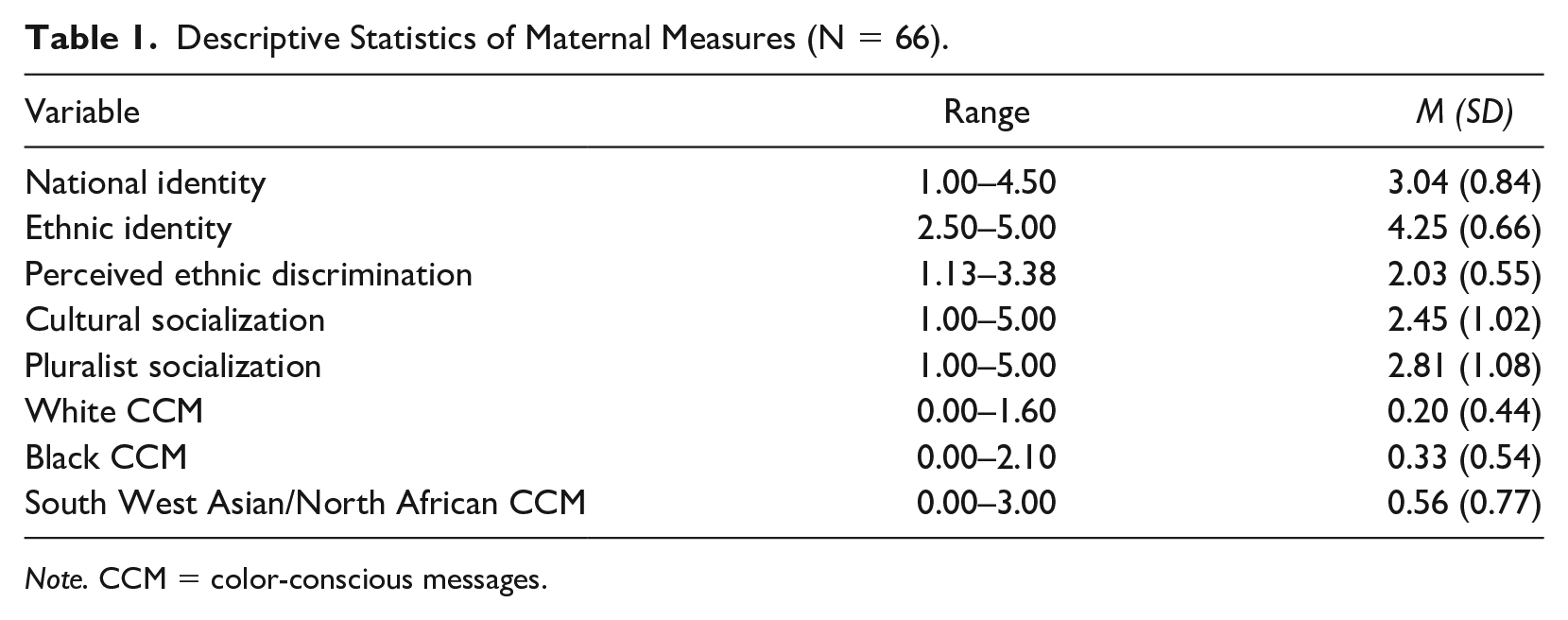
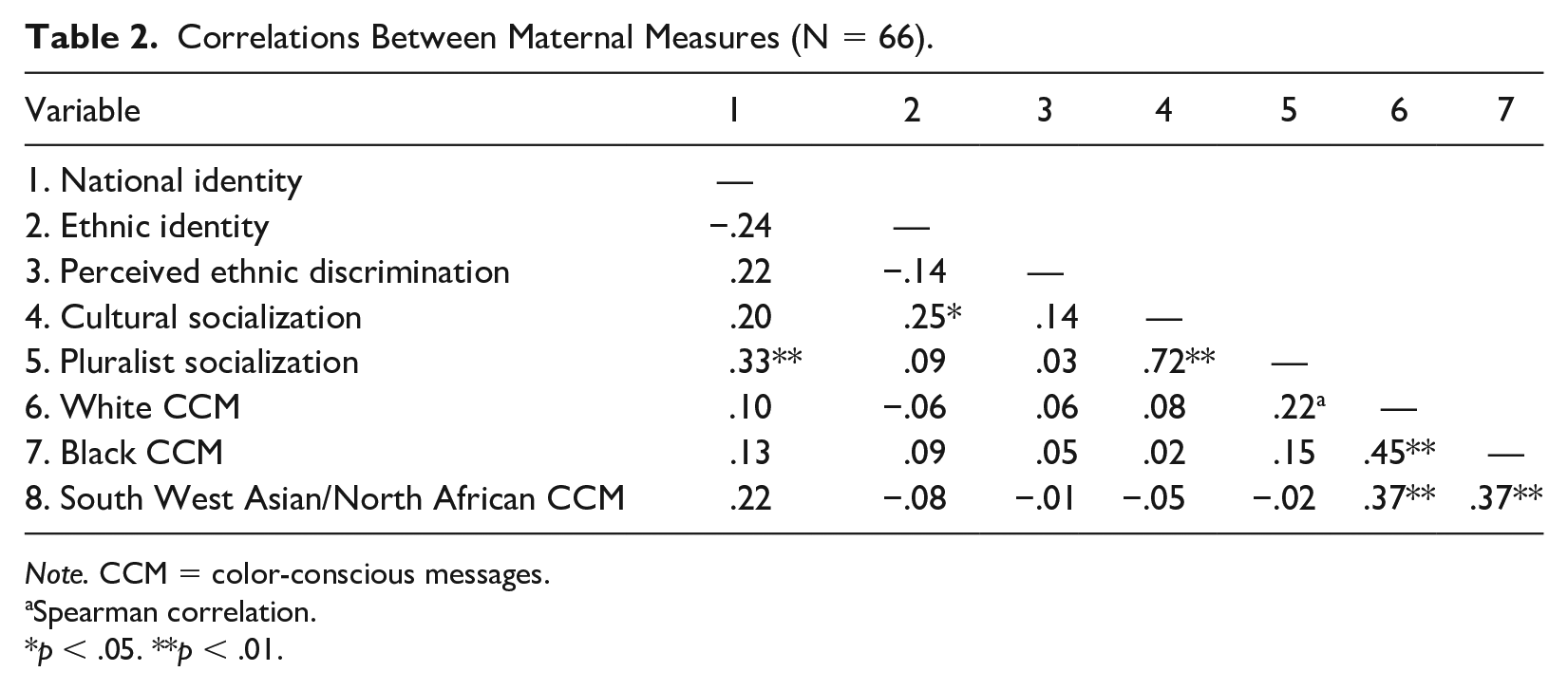
Table 1 presents the descriptive statistics for all maternal measures. Turkish-Dutch mothers scored higher on ethnic identity than on national identity, t(65) = 8.32, p < .001, d = 1.02. Almost all mothers had engaged in some form of cultural socialization (96%) and pluralist socialization (99%) in the past 12 months. A minority of the Turkish-Dutch mothers were observed to deliver White CCMs (18%), Black CCM (30%), and SWANA CCM (41%) to their children while reading the book. There was a positive relation between pluralist socialization and cultural socialization (Table 2). Neither maternal age and education correlated significantly with the ethnic-racial socialization variables.
Descriptive Statistics of Maternal Measures (N = 66).
Note. CCM = color-conscious messages.
Correlations Between Maternal Measures (N = 66).
Note. CCM = color-conscious messages.
Spearman correlation.
p < .05. **p < .01.
Main Analyses
Analyses testing whether Turkish-Dutch mothers show more ingroup ethnic-racial socialization than positive outgroup ethnic-racial socialization (H1) showed that Turkish-Dutch mothers scored higher on pluralist socialization than on cultural socialization, t(65) = −3.68, p < .001, d = −.45. There were also significant differences in scores for observed White, Black, and SWANA CCMs, with Huynh–Feldt correction, F(1.75, 113.86) = 9.50, p < .001, η2 = .13; Figure 1. Turkish-Dutch mothers had higher scores on SWANA CCMs (ethnic ingroup CCM) compared to White CCM, t(65) = −4.01, p < .001, d = −.49, and Black CCM, t(65) = 2.42, p = .018, d = .30. In addition, these mothers had higher scores on Black CCM compared to White CCM, t(65) = −2.10, p = .040, d = −.26.
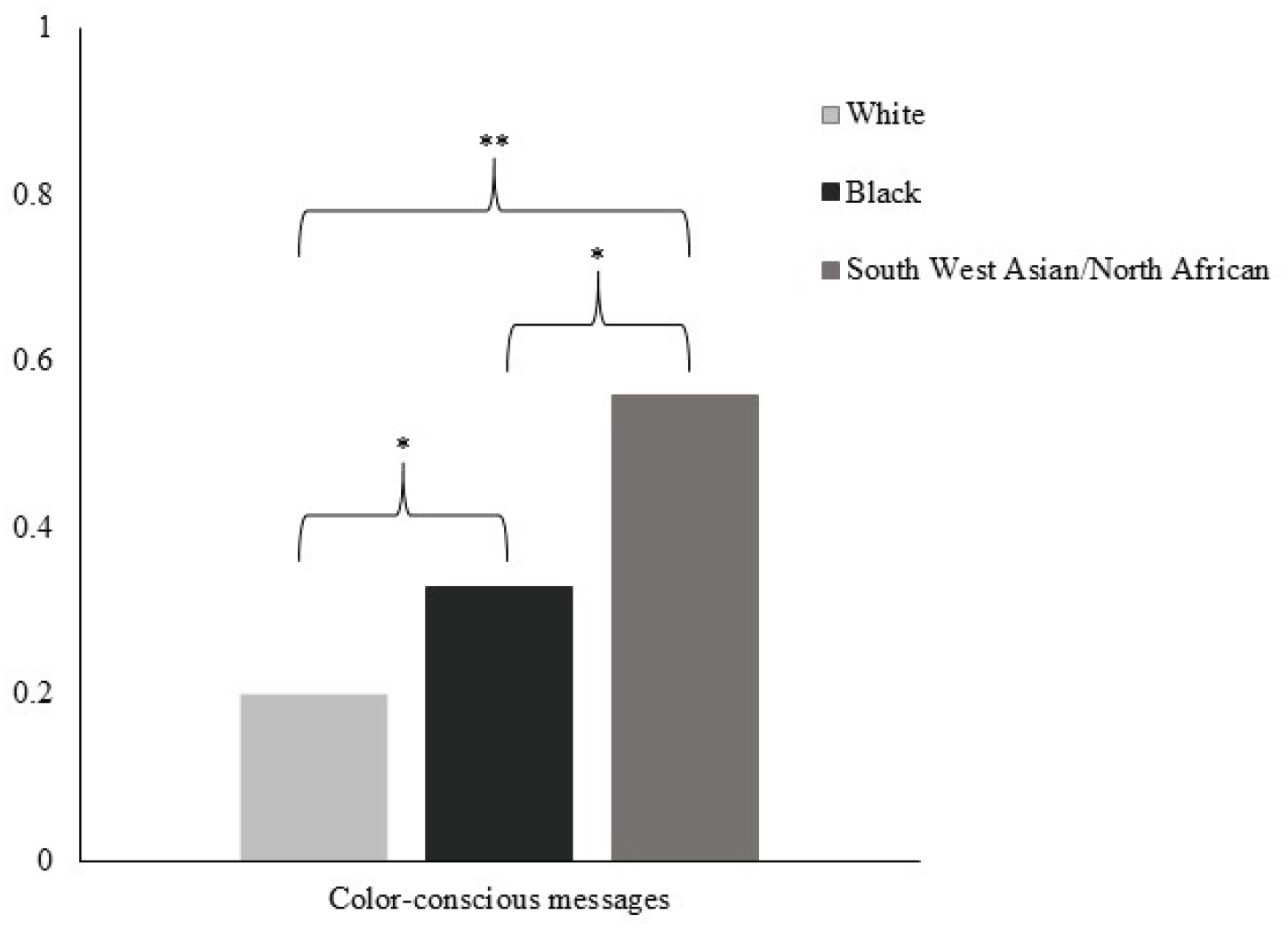
Scores for Observed Color-Conscious Messages by Turkish-Dutch Mothers About White, Black, and South West Asian/North African Characters in the Picture Book.
Analyses testing the relations between ethnic and national identity, perceived ethnic discrimination, and ingroup and positive outgroup ethnic-racial socialization (H2, H3, H4) showed significant associations between ethnic identity, national identity, and ingroup and positive outgroup ethnic-racial socialization (Table 2). Turkish-Dutch mothers with stronger ethnic identity showed more cultural socialization (ingroup ethnic-racial socialization; H2). Turkish-Dutch mothers with stronger national identity showed more pluralist socialization (positive outgroup ethnic-racial socialization; H3). There were no significant relations between perceived ethnic discrimination and variables regarding ethnic-racial socialization (H4).
In addition, while ethnic identity (β = .33, p = .003, 95% CI [0.22-0.85]) was found as a significant predictor for cultural socialization, national identity (β = .25, p = .055, 95% CI [−0.03 to 0.59]) showed a near-significant trend predicting cultural socialization (results with bootstrapping reported). For pluralist socialization only national identity (β = .38, p = .003) was found to be a significant predictor. For observed CCMs (White, Black, and SWANA CCM) no significant predictors were found.
Person-Centered Analyses
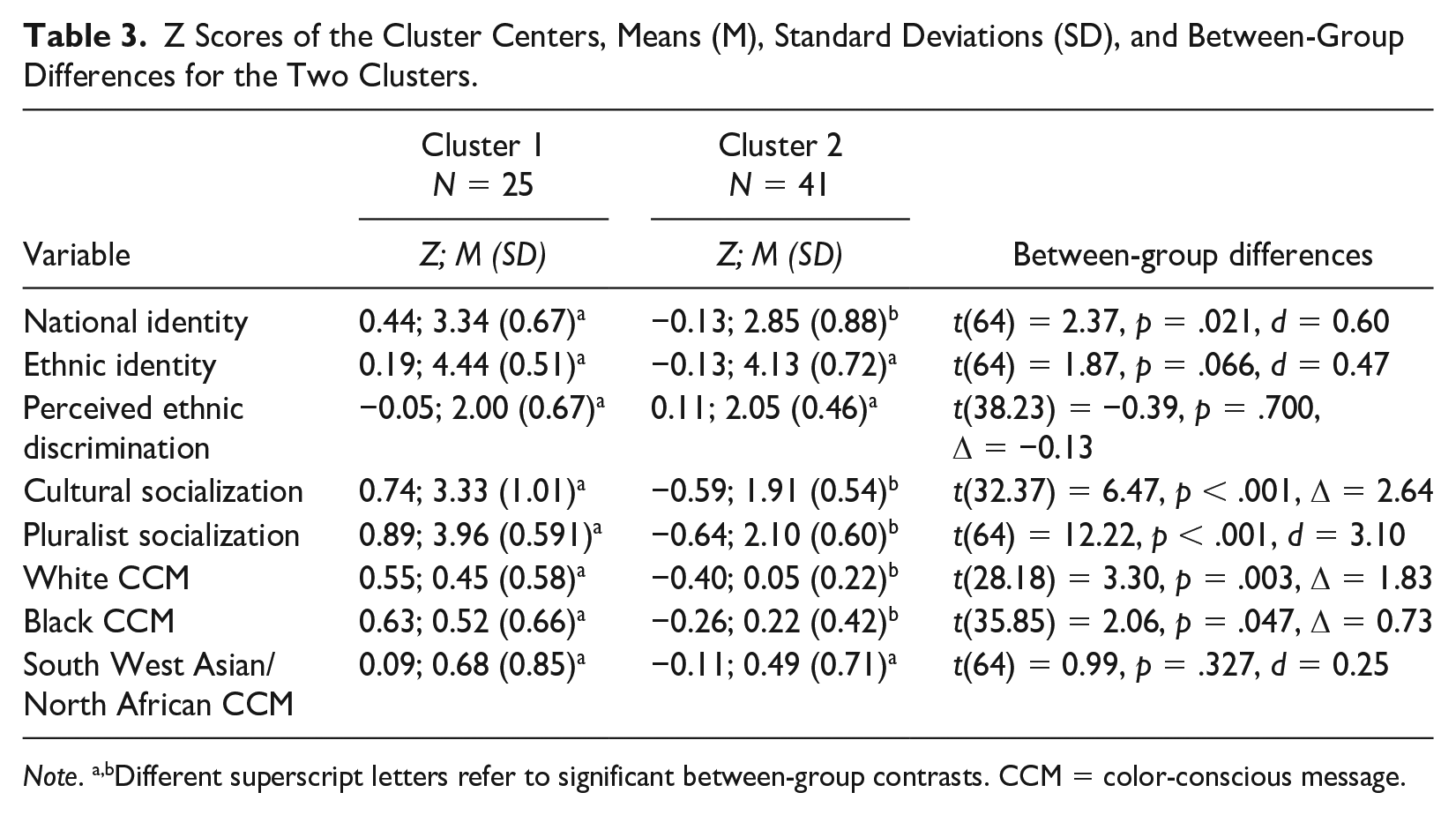
K-median cluster analysis was performed to cluster within individual families. The NbClust package in R showed that four-cluster solution was supported by 11 indices, a two-cluster solution was supported by eight indices, and 15-cluster solution was supported by six indices. All other solutions were supported by one index. The four-cluster solution revealed a cluster of families that scored low (below the mean) on all variables, except for national identity and ethnic discrimination, a second cluster that scored high (above the mean) on ethnic and national identity, cultural socialization and pluralist socialization, and low on ethnic discrimination, White, Black, and SWANA CCM, a third cluster that scored high on all variables, and a fourth cluster that scored low on all variables, except for ethnic identity, Black, and SWANA CCM. The goal of cluster analyses is to find clusters in the data that reflect natural groupings in the data that are theoretically interpretable (Greene & Cunningham, 2005); therefore, we proceeded with a K-median cluster analysis of the two-cluster solution, which was easier to interpret theoretically than the four-cluster solution. The two-cluster solution is reported in Table 3. The first cluster (n = 25) consisted of mothers with high ethnic and national identity, ingroup ethnic-racial socialization (cultural socialization and SWANA CCM) and positive outgroup ethnic-racial socialization (pluralist socialization, White, and Black CCM), and low perceived ethnic discrimination. The second cluster (n = 41) consisted of mothers with low ethnic and national identity, low ingroup ethnic-racial socialization (cultural socialization and SWANA CCM) and low positive outgroup ethnic-racial socialization (pluralist socialization, White, and Black CCM), and high perceived ethnic discrimination. Scores on all variables, except for ethnic identity, perceived ethnic discrimination, and SWANA CCM differed significantly between the two clusters (Table 3). The mothers from the first cluster scored higher on national identity, cultural socialization, pluralist socialization, White, and Black CCM than the second cluster. There were no differences in age or education between the mothers of the two clusters.
Z Scores of the Cluster Centers, Means (M), Standard Deviations (SD), and Between-Group Differences for the Two Clusters.
Note. a,bDifferent superscript letters refer to significant between-group contrasts. CCM = color-conscious message.
Discussion
The aim of this study was to investigate ingroup and positive outgroup ethnic-racial socialization among Turkish-Dutch mothers in the Netherlands, and examining associations with perceived ethnic discrimination, and ethnic and national identity. Turkish-Dutch mothers showed more observed ingroup ethnic-racial socialization compared to observed positive outgroup ethnic-racial socialization. However, when looking at self-reported ethnic-racial socialization, these mothers showed more positive outgroup ethnic-racial socialization than ingroup ethnic-racial socialization. Turkish-Dutch mothers with stronger ethnic identity showed more ingroup ethnic-racial socialization and mothers with stronger national identity showed more positive outgroup ethnic-racial socialization. No significant relations were found between perceived ethnic discrimination and variables regarding ethnic-racial socialization. Using a person-centered approach, stronger maternal national identity clustered with more ingroup and positive outgroup ethnic-racial socialization.
The first hypothesis was partially confirmed. Consistent with our expectation based on findings in Dutch context (Güngör et al., 2011; Van Bergen et al., 2019; Verkuyten, 1999; Verkuyten & Thijs, 2001; Verkuyten & Yildiz, 2007), Turkish-Dutch mothers showed more ingroup ethnic-racial socialization than positive outgroup ethnic-racial socialization. Specifically, they were observed to be more likely to talk about the appearance and culture of SWANA (ingroup) characters during picture book reading than about these characteristics of the White and Black characters. More ingroup ethnic-racial socialization among Turkish-Dutch mothers was expected because research shows that the Turkish-Dutch group shows a strong ethnic ingroup identification (Verkuyten & Yildiz, 2007), ethnic pride, focus on their Turkish culture and identity, and seek mainly contact with people from their ingroup (Sociaal Cultureel Planbureau, 2016). In addition, the transmission of values and positive aspects of Turkish culture and history to their children is important for Turkish-Dutch parents (Verkuyten & Thijs, 2001).
However, when looking at self-reported ethnic-racial socialization, mothers showed more positive outgroup ethnic-racial socialization compared to ingroup ethnic-racial socialization, which is in line with findings among underrepresented ethnic groups in the United States (Hughes, Bachman, et al., 2006; Hughes et al., 2008, 2016; Rollins & Hunter, 2013). This inconsistent findings between the two types of measures indicates that there is a difference between what mothers report and actually show regarding ethnic-racial socialization engagements. There are indeed weak associations between observed and self-reported behaviors (Hendriks et al., 2018), and self-reports have limitations because parents might be unaware, unable, or unwilling to report about their socialization patterns they transmit (Hughes, Rodriguez, et al., 2006). To increase our knowledge about the actual parental ethnic-racial socialization behavior, more studies would need to employ observational measures.
The second and third hypotheses regarding ethnic and national identity based on the acculturation model formulated by Berry (1980) were partially confirmed, indicating that individuals who identify more with their ethnic ingroup might focus more on their own heritage culture and avoid interaction with other ethnic groups (Berry, 2005; Berry et al., 2006). In addition, individuals who identify more with the larger society might focus more on other ethnic groups and less on their own ethnic ingroup. Consistent with previous findings (e.g., Priest et al., 2014; Van Bergen et al., 2016; 2019) and supporting Berry’s model, ethnic identity was positively related to ingroup ethnic-racial socialization and national identity was positively related to positive outgroup ethnic-racial socialization. However, this was only found for self-reported ethnic-racial socialization, which may indicate that this finding could be partly due to shared method variance. In contrast to our expectations, ethnic identity was not negatively related to positive outgroup ethnic-racial socialization, and national identity was not negatively related to ingroup ethnic-racial socialization. There is evidence that other parts of the Turkish-Dutch identity such as religious identity could play a role in predicting ethnic-racial socialization. For instance as found in the study by Van Bergen et al. (2016), Turkish-Dutch identity was not related to positive outgroup ethnic-racial socialization, but individuals who identified more as Muslim showed less-positive outgroup ethnic-racial socialization. Future research therefore needs to also focus on other than ethnic-racial social identities in relation to ethnic-racial socialization practices.
The fourth hypothesis regarding the link between perceived ethnic discrimination and ethnic-racial socialization was not confirmed. In contrast to our expectations which were based on previous findings (e.g., Hughes et al., 2016; Verkuyten & Yildiz, 2007) and on Berry’s model, perceived ethnic discrimination was not related to ethnic-racial socialization. This study did not show any significant relations between perceived ethnic discrimination and either ingroup or positive outgroup ethnic-racial socialization. An explanation for this unexpected result is that religious discrimination may be more salient among the Turkish-Dutch group than ethnic discrimination. Members of this group overwhelmingly identify as Muslim and are typically characterized as such in European societies and also experience religious discrimination (Sociaal Cultureel Planbureau, 2020). Therefore, religious discrimination instead of ethnic discrimination may play a stronger role in socialization engagements. Future research could include discrimination based on religion in addition to ethnic discrimination to explore their relations with ethnic-racial socialization.
The fifth hypothesis about stronger ethnic identity clustering with higher perceived ethnic discrimination, more ingroup and less-positive outgroup ethnic-racial socialization was not confirmed. The sixth hypothesis about stronger national identity clustering with lower perceived ethnic discrimination more positive outgroup and less ingroup ethnic-racial socialization was partially supported. The results showed that stronger national identity clustered with more ingroup as well as more positive outgroup ethnic-racial socialization. For ingroup ethnic-racial socialization, this was only found for the self-report measure. Turkish-Dutch mothers who feel more Dutch were more focused on culture and socialization about own as well as other ethnic groups. These mothers seem to be invested in teaching their children about cultural and ethnic diversity in a broad sense, not emphasizing the Turkish culture more than other cultures. These results are valuable as an addition to the results based on the variable-centered approach. However, the variable-centered approach (correlation, regression) shows broad general patterns between variables, the person-centered approach (clustering) identifies whether specific subgroups (clusters) exist within the sample showing their own specific patterns of characteristics. Also, in contrast to the variable-centered approach, in the person-centered approach, nonlinear patterns of association of rank orders can be identified.
This study has some limitations. First, the data include only information on mothers’ perspectives. Future research should also include father’s perspective to get a more complete picture of the socialization patterns within a family. Second, this study was cross-sectional in nature, precluding inferences about the direction of effects, which would require longitudinal studies. Finally, the ethnic discrimination questionnaire was based on discrimination regarding ethnic background. Future research with Turkish-Dutch parents should also include discrimination based on religion in addition to ethnic discrimination to explore their relations with ethnic-racial socialization engagements, given the fact that they also experience religious discrimination (Sociaal Cultureel Planbureau, 2020).
In conclusion, ethnic-racial socialization is a concept that warrants further exploration in relation to different parental factors among various ethnic groups. This study showed that Turkish-Dutch mothers engage in ethnic-racial socialization and their ethnic and national identity is related to the transmission of ethnic-racial socialization messages to their children. Our research contributes to the literature about ethnic-racial socialization by including the largest underrepresented ethnic group in the context of the Netherlands (Turkish-Dutch) and including an observational measure in addition to self-report measures. This study also used both a variable-centered and a person-centered approach, yielding complementary insights into the linkages between identity and socialization. Although Turkish-Dutch mothers reported more positive outgroup ethnic-racial socialization than ingroup ethnic-racial socialization, during observations mothers showed the opposite. Given that positive outgroup ethnic-racial socialization contributes to more positive interethnic relations, Turkish-Dutch parents could focus more on their actual behavior in which they can pay more attention to their messages regarding ethnic diversity. In addition, given that not all children engage with their parent about positive outgroup ethnic-racial socialization, teachers can also focus in class on culture and ethnic diversity. Teaching about cultures and ethnic diversity at home and school will help children to develop positive attitudes, which may play a role in preventing interethnic prejudices among young children.
Footnotes
Declaration of Conflicting Interests
The author(s) declared no potential conflicts of interest with respect to the research, authorship, and/or publication of this article.
Funding
The author(s) disclosed receipt of the following financial support for the research, authorship, and/or publication of this article: This work was financed by a Vici grant awarded to Judi Mesman by the Dutch Research Council (NWO), project number 453-16-008.
