



Abstract
This meta-analytic review examines the relationship between various dispositional characteristics and expatriate adjustment, including the Big Five constructs and other characteristics that have garnered more recent empirical attention (i.e., cultural empathy/flexibility, cognitive intelligence, emotional intelligence). Using 62 primary studies (n = 13,060), we found that the Big Five traits play an important role in expatriate adjustment; however, when assessing the relative influence of these predictors, characteristics such as cultural empathy, cultural intelligence (e.g., motivational CQ), and emotional intelligence appear to exert a stronger influence on adjustment outcomes. Various cultural variables (cultural distance, cultural tightness, gender inequality in the host country) and year of publication were found to moderate some relationships, indicating that sociocultural factors may temper some of these effects.
Keywords
In today’s globalized business environment, many organizations deploy employees abroad on temporary work assignments. The number of expatriates working overseas has steadily increased over the last few decades; a trend that is expected to continue despite recent pressures against globalization (e.g., Appadurai, 2020; Brookfield, 2016; Meyer, 2017). Expatriate assignments can benefit both organizations and employees in a number of ways. They enable organizations to expand into new markets, transfer corporate knowledge, and develop local talent (Collings & Scullion, 2009; Kraimer et al., 2016). From the workers’ standpoint, international assignments provide workers with an opportunity to experience a new culture, augment and diversify their work competencies, and facilitate their career growth (Jokinen et al., 2008). Working abroad, however, can also be a challenging and sometimes stressful experience in which expatriates must adapt to different cultural norms and expectations, navigate unfamiliar surroundings, and deal with uncertainty and ambiguity in both their personal and work lives (Chen et al., 2011; Harvey & Moeller, 2009).
Over the last few decades, a sizeable body of research has emerged exploring the influence of individual difference variables on expatriate adjustment (e.g., Huang et al., 2005; Huff et al., 2014; van Erp et al., 2014). Mendenhall and Oddou (1985) were among the first researchers to emphasize that individual difference variables play a central role in expatriate adjustment. In their model outlining the core dimensions of expatriate acculturation, they proposed that four general personal and situational factors impact adjustment, including a “self” orientation (attributes that enhance one’s confidence and ability to regulate oneself effectively), an “other” orientation (attributes that allow one to interact more effectively with host nationals), and a “perception” orientation (an ability to understand why foreigners behave the way they do). The fourth dimension is “cultural toughness,” which reflects the notion that some countries may be more difficult to adapt to than others. To date, research exploring individual differences in relation to expatriate adjustment have focused primarily on one’s “self” and “other” orientations. For example, studies have shown that personality traits, including the Big Five constructs and self-efficacy, are significantly positively associated with different dimensions of expatriate adjustment (Bhaskar-Shrinivas et al., 2005; Harari et al., 2018; Hechanova et al., 2003). These characteristics, however, reflect broad behavioral tendencies and do not capture perceptual and cultural elements that are integral to cross-cultural adaptation (Huff et al., 2014; Leone et al., 2005; Peltokorpi & Froese, 2012).
Accordingly, recently there has been a renewed interest in exploring the role of intercultural competencies in facilitating expatriate adjustment (Kraimer et al., 2016; Liao & Thomas, 2020). For example, one intercultural competency that has attracted increasing attention is cultural intelligence (CQ; e.g., Ott & Michailova, 2018). Moreover, personality traits that directly assess one’s thoughts and behavioral tendencies in an intercultural context have been advanced, including cultural empathy and cultural flexibility, which researchers have argued may be more proximal predictors of expatriate adjustment than more global personality traits (e.g., Caligiuri & Tarique, 2016; Leone et al., 2005; Shaffer et al., 2006). Finally, we also examine the influence of emotional intelligence (EI) on expatriate adjustment. Because effective acculturation requires a blend of self-management, interpersonal, and cognitive capabilities (Black et al., 1991; Leiba-O'sullivan, 1999; Mendenhall & Oddou, 1985), some researchers have argued that emotional intelligence should facilitate expatriate adjustment, including both work and non-work adjustment (e.g., Lii & Wong, 2008; Shmueli Gabel et al., 2005).
There are two primary objectives to the current meta-analytic review. The first objective is to examine the relative influence of CQ, intercultural traits, and EI predictors and whether they account for significant variance in expatriate adjustment beyond the Big Five. Previous meta-analyses have examined the validity of the Big Five personality constructs in relation to expatriate adjustment and performance (e.g., Harari et al., 2018; Mol et al., 2005); however, we have a limited understanding of whether EI and intercultural characteristics, such as CQ, cultural empathy, and flexibility also predict expatriate adjustment. Indeed, although these constructs more directly capture perceptual and cultural elements of adaptation delineated in previous theoretical models (e.g., Mendenhall & Oddou, 1985) and there is a strong basis for expecting these constructs to predict expatriate adjustment, empirical evidence has been somewhat mixed. For example, although different dimensions of CQ have been examined in relation to both sojourner and expatriate adjustment, results have varied by study and CQ dimension, with some studies reporting appreciable effects of motivational CQ on adjustment outcomes and others not (e.g., Guðmundsdóttir, 2015; Huff et al., 2014). Given the increasing empirical attention that EI and cultural competencies have attracted in recent years, an updated quantitative review is needed assessing the relationship between these variables and expatriate adjustment. A particularly pressing issue in this respect involves examining the relative influence of these predictors and whether they account for significant variance in expatriate adjustment beyond the Big Five (Kraimer et al., 2016).
A second objective of the current study is to examine whether the effects of dispositional characteristics on expatriate adjustment may be contingent on specific cultural factors. Researchers have posited that cultural factors, including cultural distance and cultural tightness, may hinder one’s ability to adapt to a new culture (e.g., Black et al., 1991; Mendenhall & Oddou, 1985). Consistent with this view, cultural distance has been found to be negatively associated with both expatriate and migrant cultural and work adjustment (e.g., Bhaskar-Shrinivas et al., 2005; Kashima & Abu-Rayya, 2014). Furthermore, previous research has indicated that female expatriates may face additional barriers to their adjustment, including workplace discrimination, stereotyping, and challenges in developing social networks (Bader et al., 2018; Shortland, 2014; Sinangil & Ones, 2003), which may be magnified in cultures in which gender inequality is more evident. Thus, guided by a person-situation interaction perspective and recent work suggesting that cultural factors may alter the effects of individual difference variables on expatriate adjustment (e.g., Kraimer et al., 2016; Ott & Michailova, 2018; Takeuchi, 2010; Zhang, 2013), we examine whether cultural distance, host country cultural tightness, and gender inequality moderate the influence of dispositional characteristics on adjustment.
Expatriate Adjustment
Expatriate adjustment has been defined as the extent to which expatriates successfully cope with the nuances of their new environment (Takeuchi et al., 2005). In their seminal framework, Black et al. (1991) posit that higher levels of adjustment exist when expatriates are psychologically comfortable along three dimensions of adjustment: work, interactional, and general (or cultural) adjustment. Many empirical studies in the expatriate adjustment literature have been based on this three-dimensional conceptualization (Hippler et al., 2014). General (cultural) adjustment reflects one’s adjustment to everyday life experiences in a new culture (e.g., food, housing, weather, transportation). Interactional adjustment refers to one’s level of comfort in interacting and socializing with host country nationals. Work adjustment refers to one’s level of adjustment to their work environment and work role, including their job responsibilities, type of supervision, performance expectations, etc. Previous research has indicated that although these dimensions of adjustment are conceptually distinct, dispositional characteristics tend not to be differentially associated with these dimensions (see Bhaskar-Shrinivas et al., 2005; Harari et al., 2018). Thus, consistent with previous research (e.g., Harari et al., 2018), we report results relating to each of the dimensions, but do not hypothesize differential relationships across dimensions. Figure 1 outlines the main variables examined in the study. 1
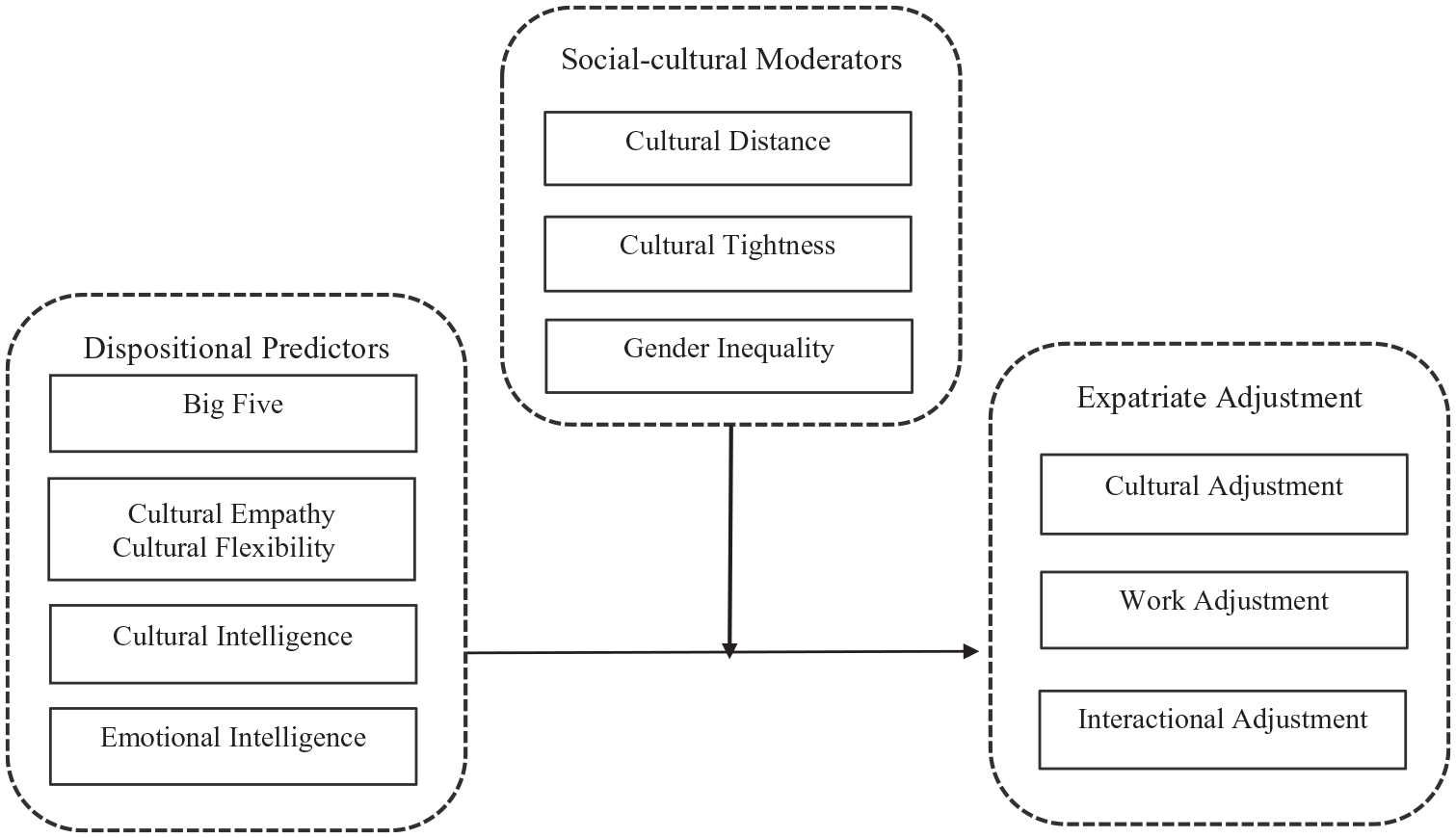
Overview of study: dispositional predictors, cultural moderators, and expatriate adjustment.
Hypothesis Development
The Big Five Personality Constructs
Arguably the most widely accepted taxonomy of personality, the five-factor model (McCrae & Costa Pt, 1987) provides a well-validated framework for assessing the influence of personality traits on expatriate adjustment (Caligiuri, 2000a; Harari et al., 2018; Shaffer et al., 2006). This model is comprised of five higher-order constructs labeled the “Big Five”: conscientiousness, agreeableness, emotional stability (or neuroticism), openness to experience, and extraversion. Previous studies have suggested that each of these Big Five constructs might influence expatriate adjustment for various reasons. For example, drawing on socio-analytic theory, Shaffer et al. (2006) argued that the Big Five would be key determinants of three fundamental human motives—one’s ability to get along, get ahead (to achieve status), and to find meaning—which, in turn, facilitate expatriate adjustment and effectiveness. The Big Five traits may also be associated with specific behavioral tendencies that enhance an expatriate’s adjustment. For example, individuals high in conscientiousness tend to be careful, diligent, thoughtful, organized, and mindful of details (John et al., 2008). Conscientiousness may, therefore, facilitate an expatriate’s adjustment to a new culture and their work activities through the display of a stronger work ethic and being more systematic in planning to adapt to the new culture. Furthermore, due to their lower levels of emotional reactivity and stronger coping skills (Piedmont, 1998), expatriates who are emotionally stable may function more effectively in a new, unfamiliar culture while extraverts may adapt better to other cultures due to their ability to elicit informational and emotional support from their social interactions and social networks (Farh et al., 2010).
In their recent review, Harari et al. (2018) used the five-factor model as an organizing framework to examine the relationship between personality traits and expatriate adjustment. Their results revealed that each of the Big Five were significantly associated with adjustment (emotional stability ρ = .29; openness ρ = .24; extraversion ρ = .30; conscientiousness ρ = .19; agreeableness ρ = .23). Moreover, relative weights analyses revealed that extraversion was the strongest predictor, followed by emotional stability and openness to experience. We expand on this previous work by examining these relations using a broader subset of studies, focusing on studies measuring the three specific dimensions of adjustment (not overall adjustment or expatriate performance), and also assessing the influence of the Big Five relative to other more proximal predictors (i.e., intercultural traits, CQ, EI). Based on the rationale above, we propose the following:
Hypothesis 1 (a–e): Each of the Big Five personality constructs, including: conscientiousness (1a), extraversion (1b), agreeableness (1c), openness to experience (1d) and emotional stability (1e), are positively related to expatriate adjustment.
Cultural Empathy and Flexibility
In addition to the Big Five personality constructs, we examine the extent to which two intercultural traits (also termed “multicultural traits,” van der Zee & van Oudenhoven, 2000)—cultural empathy and flexibility—are associated with expatriate adjustment. Cultural empathy and flexibility are two constructs formulated to better understand distinct patterns of thought and behavior relevant to cross-cultural adaptation (Van der Zee & Van Oudenhoven, 2001; van der Zee & van Oudenhoven, 2000). Compared to broad dimensions of personality (e.g., the Big Five), these traits reflect specific behavioral tendencies associated with cross-cultural effectiveness and provide an additional level of specificity in examining dispositional predictors of cross-cultural adjustment (van Oudenhoven et al., 2003). Accordingly, they have been shown to explain additional variance in intercultural settings beyond the Big Five (Leone et al., 2005; van der Zee & van Oudenhoven, 2000). Although these intercultural traits are some of the first traits studied in relation to expatriate adjustment (e.g., Black, 1990; Mendenhall & Oddou, 1985) and have garnered renewed interest in recent years (Caligiuri & Tarique, 2012; Peltokorpi & Froese, 2012), previous meta-analytic reviews have not examined these variables. 2
Expatriates with higher levels of cultural flexibility more readily adapt their behavior to new and unknown situations. They are more likely to perceive these situations as a challenge rather than a threat, adapt to social cues more readily, and are more inclined to learn from their mistakes (Peltokorpi, 2008; Shaffer et al., 2006). Cultural empathy (also referred to as cultural sensitivity) is the capacity to identify with the feelings, thoughts, and behaviors of people from different cultural backgrounds (van der Zee & van Oudenhoven, 2000). In this regard, expatriates with higher cultural empathy are better able to understand and relate to individuals from other cultures and are more likely to gain acceptance from host country nationals (Peltokorpi, 2008; Shin et al., 2007). This increased level of acceptance may translate into higher levels of social and emotional support, which can reduce perceptions of stress and facilitate the adjustment process (Froese & Peltokorpi, 2013; Parker & McEvoy, 1993). Several studies suggest that cultural empathy and flexibility are positively associated with expatriate adjustment (Halim et al., 2014; Peltokorpi & Froese, 2012; Shaffer et al., 2006). Other studies, however, have reported null results (e.g., van Erp et al., 2014). To develop a better understanding of the influence of these intercultural traits, we explore the magnitude of these relationships across different samples and dimensions of adjustment.
Hypothesis 2 (a–b): Cultural empathy (2a), and cultural flexibility (2b), are each positively related to expatriate adjustment.
Cultural Intelligence
Defined as an individual’s capability to function effectively in culturally diverse settings (Ang et al., 2007; Earley & Ang, 2003), cultural intelligence (CQ) has attracted growing attention in recent research on cross-cultural adjustment (Ott & Michailova, 2018; Rockstuhl & Van Dyne, 2018). With its focus on one’s intercultural competence, CQ is distinct from both general intelligence and personality (Ng et al., 2012) and has been linked to various indicators of intercultural effectiveness, including cross-cultural leadership effectiveness, and intercultural judgment and decision making (e.g., for recent reviews, see Ott & Michailova, 2018; Rockstuhl & Van Dyne, 2018).
CQ is comprised of four main dimensions: cognitive CQ, metacognitive CQ, motivational CQ, and behavioral CQ. Cognitive CQ refers to an individual’s knowledge about other cultures and cultural differences, including legal and economic systems in other cultures, the rules of a foreign language, and conventions and religious beliefs of a different culture (Ott & Michailova, 2018; Triandis, 2006). Expatriates high in cognitive CQ are more likely to reflect on the host culture and understand prevailing rules and conventions as well as appropriate verbal and non-verbal behaviors (Guðmundsdóttir, 2015). Metacognitive CQ reflects mental processes that individuals use to acquire and understand cultural knowledge. Metacognitive CQ enables expatriates to engage in mindful and deliberate learning and to assess their cognitive strategies to determine if they may require adjustment (Butler, 2013). Individuals lower on this characteristic are less likely to assess their cultural assumptions, and they might engage in inappropriate behaviors that impede their adaptation. Motivational CQ reflects an individual’s capacity to initiate and maintain their effort toward functioning effectively in intercultural situations (Ang et al., 2007; Rockstuhl & Van Dyne, 2018). Expatriates with high motivational CQ enjoy and actively seek out intercultural interactions. They are more likely to set goals, demonstrate initiative, and invest more time and effort into adapting successfully in an international assignment (Chen et al., 2010; Kanfer, 2012). Finally, behavioral CQ refers to an individual’s flexibility in exhibiting appropriate verbal and nonverbal actions when interacting with people from different cultural backgrounds (Chen et al., 2011; Rockstuhl & Van Dyne, 2018). Expatriates with high behavioral CQ are able to draw on a larger, more diverse repertoire of non-verbal and verbal behaviors that can facilitate their adjustment to a new culture (Guðmundsdóttir, 2015).
A number of studies have indicated that specific dimensions of CQ are positively associated with expatriate adjustment; however, some of these results have been inconsistent between studies (Kim et al., 2008; Ott & Michailova, 2018). For example, mixed results have been observed regarding the relationship between cognitive CQ and adjustment (Ang et al., 2007; Huff, 2013; Kim et al., 2008). Moreover, motivational CQ has been shown to exert a strong influence on expatriate adjustment in some studies, but not others (Butler, 2013; Evans, 2012). In order to further assess the magnitude of these relationships and the unique contribution of each component of CQ, we test the relationship between each CQ dimension and expatriate adjustment:
Hypothesis 3 (a–d): Each dimension of culture intelligence, including: cognitive CQ (3a), metacognitive CQ (3b), motivational CQ (3c) and behavioral CQ (3d), is positively related to expatriate adjustment.
Emotional Intelligence
Emotional intelligence (EI) may be defined as: “the ability to carry out accurate reasoning about emotions and use emotions and emotional knowledge to enhance thought” (e.g., Mayer et al., 2008, p. 511). Salovey and Mayer (1990) were the first researchers to formulate a multidimensional model of EI and have pioneered research relating to the ability-based model, in which EI is conceptualized and measured as a cognitive ability (Côté, 2014). The ability-based model posits that individuals vary in their ability to process information that is emotional in nature, and this ability can translate into a range of adaptive behaviors. The trait and mixed models of EI, reflected in the work of Goleman (1995) and Bar-On (1997), incorporate broader conceptualizations of the construct that include mental abilities, but also various other competencies, skills, and personality traits. For instance, Bar-On’s (2000) model includes mental abilities, but also characteristics such as social responsibility and optimism.
Recent research has suggested that EI can foster successful adaptation in various facets of one’s life. Empirical evidence indicates that EI is positively associated with job performance (e.g., O’Boyle et al., 2011), the quality of one’s interpersonal relationships (e.g., Lopes et al., 2005), and one’s overall emotional health and well-being (e.g., Sánchez-álvarez et al., 2016). Overseas assignments can place significant emotional demands on employees both in their work and personal lives (Konanahalli & Oyedele, 2016; Rosenbusch et al., 2015). Given these demands and the challenges that expatriates face interacting with others in a new environment, EI should facilitate expatriate adjustment. Indeed, due to their stronger capacity to recognize, regulate, and respond to their own and others’ emotions, expatriates higher in EI may be more effective in building social networks and coping with negative emotions that they may experience on their assignment (e.g., anxiety, frustration; Caligiuri, 2000a; Jhutty, 2007; Salovey et al., 2000). Higher levels of EI may also enable expatriates to recognize and adapt to cultural differences regarding the expression of emotions. Some studies have shown, for instance, that there are cultural variations in emotional display rules (Matsumoto et al., 2005; Porter & Samovar, 1996). For example, collectivistic and high-power distance cultures discourage the expression of certain negative emotions (e.g., anger, sadness, and disgust) and high-intensity emotional expression in particular (Matsumoto, 1991; Matsumoto et al., 1998). Higher levels of EI may enable expatriates to more effectively learn these display rules and manage the expression of their emotions. To sum up, individuals who are high in EI are more adept at both regulating their own emotions as well as reading others’ emotions, which may enable them to more accurately perceive and adapt to different social norms and emotional display rules that vary between cultures (Gullekson & Dumaisnil, 2016; Koveshnikov et al., 2014).
Hypothesis 4: Emotional intelligence is positively related to expatriate adjustment.
Relative Contribution of Dispositional Predictors
Building on previous meta-analytic research exploring the influence of expatriate characteristics on expatriate adjustment (Bhaskar-Shrinivas et al., 2005; Harari et al., 2018; Hechanova et al., 2003), the current study provides a unique contribution to the literature by investigating a broader range of dispositional constructs, including those that have attracted more recent empirical attention (cultural empathy/flexibility, CQ, EI). In response to calls to clarify how the validity of these constructs compare (e.g., Kraimer et al., 2016), we will assess the relative influence of these variables using relative weights analyses. In so doing, we also examine whether these dispositional characteristics predict expatriate adjustment beyond the effects of two key experiential individual difference variables that have been shown to predict expatriate adjustment in prior work: previous international experience and language ability (e.g., Bhaskar-Shrinivas et al., 2005).
Exploring Cultural Variables as Moderators
Most research exploring the role of dispositional characteristics in expatriate adjustment have explored direct predictor–criterion relationships (Bhaskar-Shrinivas et al., 2005; Harari et al., 2018; Hechanova et al., 2003). Research and theory relating to personality in the workplace, however, has emphasized that personality and situational factors may intersect in shaping work perceptions and behavior (e.g., Christiansen & Tett, 2013; Meyer et al., 2010; Tett & Burnett, 2003). Studies have shown that contextual factors (e.g., national culture, work climate, leadership style, occupational characteristics) may limit the effects of personality traits on various workplace perceptions and behaviors (Meyer et al., 2009, 2010; Mullins & Cummings, 1999). In his critical review of expatriate research, Takeuchi (2010) suggested that future studies should adopt a person-situation interactionist perspective to enhance theory development and test more complex models of the relationship between individual differences and expatriate adjustment. Drawing on this perspective, we explore whether three key cultural factors—cultural distance, cultural tightness, and gender inequality—may act as key contingency variables that moderate the influence of one’s personality (i.e., the Big Five) and cultural competence (i.e., CQ) on expatriate adjustment.
Cultural distance
Cultural distance refers to differences between an individual’s host and home country in basic aspects of culture, including core values, beliefs, customs, and rituals, as well as legal, political, and economic systems (e.g., Adler, 2008; Hofstede, 1980). Although cultural distance has primarily been tested as an antecedent of expatriate adjustment (e.g., Peltokorpi, 2008; Van Vianen et al., 2004), it may also reflect an important boundary condition that may magnify or weaken the influence of individual differences on expatriate adjustment. For example, individuals high in extraversion demonstrate a stronger social orientation and communication skills that enhance relationship-building and adjustment to new environments (Eaton & Funder, 2003; Wachi et al., 2016; Zellars & Perrewé, 2001). In this respect, expatriate extraversion may facilitate adjustment in a host country with greater cultural distance as it may enhance one’s capacity to form relationships with host nationals and more fully immerse oneself in the culture. At the same time, however, expatriates may find that with greater cultural distance and unfamiliarity with a host culture, certain social behaviors may be ineffective or viewed as socially inappropriate. This awareness that one’s social behaviors may not fit with norms in the host country may constrain the expatriate’s expression of certain personality traits, and for example, weaken the effects of extraversion on adjustment. Likewise, although expatriates with high levels of CQ may generally be better equipped to adapt to host countries, it is possible that even high CQ individuals may have difficulty when adjusting to cultures that are very different and unfamiliar to them (Kim et al., 2008; Zhang, 2013). Drawing on the person-situation interactionist perspective and previous work suggesting that cultural differences play an integral role in adjustment (Mendenhall & Oddou, 1985; Waxin, 2004), we explore whether cultural distance may moderate the influence of certain dispositional characteristics on expatriate adjustment.
Host country cultural tightness
Cultural tightness-looseness refers to the strength of social norms and the degree of sanctioning within societies (Gelfand et al., 2006). In this regard, cultural tightness-looseness has two dimensions: “how clear and pervasive norms are within societies” and “how much tolerance there is for deviance from norms within societies” (Gelfand et al., 2006, p. 1226). In nations that have higher cultural tightness, the stronger situational constraints placed on an individual’s behavior, coupled with less tolerance of behavior that deviates from social norms, may make it more difficult for outsiders to adapt (Gelfand et al., 2011). For example, the positive effects of certain personality traits (e.g., extraversion) on adjustment can be constrained in culturally tight host countries because clear norms and desired behavior in those countries prevent one’s unique dispositional tendencies from being expressed. On the other hand, clear norms in the host country may reinforce the effect of certain individual traits. For example, clear cultural norms may strengthen the effects of conscientiousness or cultural intelligence in facilitating the learning of appropriate behavior in the host country. Indeed, Geeraert et al. (2019) found evidence of joint effects of host country cultural tightness and certain personality traits (i.e., agreeableness, honesty-humility) on sojourner adaptation. In this study, we extend research in this domain by examining whether cultural tightness will moderate the influence of dispositional variables on expatriate adjustment.
Gender inequality
In some countries with high levels of gender inequality, women are more likely to experience harassment and discrimination in the workplace than men (Bader et al., 2018). Moreover, host countries with more traditional views of women might expect women to assume more submissive roles (Hofstede, 1980; Kim & Tung, 2013; Tung & Haq, 2012). On the one hand, these social norms and expectations pertaining to the behavior of women may act as constraints on the expression of an expatriate’s personality and cross-cultural competence. For example, female expatriates may encounter greater difficulty in accessing social networks due to negative stereotypes and discrimination, which may inhibit the influence of their relational characteristics and skills on their adjustment (e.g., Insch et al., 2008; Napier & Taylor, 2002; Shortland, 2014). On the other hand, expatriates who display characteristics that are stereotypically male (e.g., extraversion, emotional stability) may be more highly valued (and assumed to be more competent) in countries with more masculine values, thereby facilitating their adjustment. Indeed, previous research on gender differences in expatriate performance has uncovered somewhat mixed results. For example, Caligiuri and Tung (1999) have suggested that western female expatriates in host countries with fewer women in the workforce should experience poorer adjustment. Some studies, however, have shown that female expatriates may experience better adjustment in host countries in which greater gender inequality exists (Selmer & Leung, 2003; Sinangil & Ones, 2003). In order to explore how gender inequality may influence relations between our focal individual difference variables and adjustment, we examined gender and gender inequality in the host country as potential joint moderators of these relationships.
In summary, the present systematic and quantitative review has two primary objectives. First, given the expanding scope of research exploring individual differences in relation to expatriate adjustment, we provide an updated meta-analytic review of this literature subsuming a more comprehensive set of individual difference variables. Specifically, we contribute to this literature by examining the influence of EI, CQ, and intercultural personality traits (cultural flexibility, cultural empathy) in relation to expatriate adjustment and assess their relative contribution to adjustment outcomes beyond global measures of personality (i.e., the Big Five). Second, in response to calls to adopt a person-situation interaction perspective and to examine the role of sociocultural factors in contributing to expatriate adjustment (e.g., Kraimer et al., 2016; Shortland, 2014; Takeuchi, 2010), we test three cultural variables—cultural distance, cultural tightness-looseness, and gender inequality—as potential boundary conditions for these relationships. Although research in this latter domain is in its early stages, an initial assessment of whether cultural factors may moderate the influence of individual differences will assist in further elucidating how dispositional characteristics influence adjustment outcomes and whether these effects may differ depending on cultural context.
Method
Procedure
Literature search
In order to identify the relevant articles, we conducted a systematic search of the expatriate literature. In the first step, we consulted electronic databases in business management, psychology, and sociology, including Business Source Complete, JSTOR, PsycINFO, Science Direct Journals, and Web of Science. We used different combinations of keywords such as Big Five, agreeableness, conscientiousness, openness to experience, extraversion, emotional stability, neuroticism, open-mindedness, cultural empathy, cultural flexibility, Multicultural Personality Questionnaire, cultural intelligence, emotional intelligence, expatriate adjustment, expatriate adaptation, multicultural, international assignee, and personality. In the second step, we manually conducted a backward citation search in the reference sections of expatriate adjustment review articles such as Harari et al. (2018), Hechanova et al. (2003), Bhaskar-Shrinivas et al. (2005), Mol et al. (2005), Takeuchi et al. (2005), and Caligiuri et al. (2009). We also used a forward citation search of articles citing the expatriate adjustment measures developed by Black (1988) and Black and Stephens (1989), as well as the cultural intelligence measure developed by Ang et al. (2007). To minimize the risk of the “file drawer” and “selective outcome reporting” problem (Valentine, 2009), we searched the databases of Dissertations and Theses Global and Social Science Research Network for unpublished dissertations and articles. We also sent a request for unpublished studies via the mailing list of the Academy of International Business and Academy of Management—International Management discussion board. In total, this search identified 425 studies published between 1988 and 2019.
Inclusion criteria
To ensure that only relevant articles were selected, several inclusion criteria were specified. First, because the focus of the current meta-analysis is on expatriate adjustment, only studies that included expatriates who were employed on a work assignment were included. We, therefore, excluded studies examining cross-cultural adaptation that used samples such as migrants, international students, and expatriates’ family members. Although some of these groups have been included in previous meta-analyses (e.g., Deshpande & Viswesvaran, 1992; Rockstuhl & Van Dyne, 2018; Wilson et al., 2013), our focus is on employees working abroad, who may be expected to encounter different challenges in adjusting to a new culture than these other groups (McNulty & Brewster, 2017). Secondly, we only included studies published in English and that reported the required information, including sample sizes and measures of effect size (e.g., correlation coefficients). In cases in which all the required data were not reported, we contacted the authors to ask for the required information. If we could not obtain accurate and complete data, these studies were excluded from the analysis. Additionally, if multiple studies were based on the same data set and used the same independent and dependent variables, we only included the studies reporting all the required information. However, if these multiple studies were based on the same data set but included different variables, we included all these studies separately.
In total, 62 studies (number of samples (k = 65) were included with a sample size of 13,060 respondents. Most studies used cross-sectional research designs (57 vs. 8 longitudinal) and the average response rate was 46%. Most respondents in each sample were men (average percentage across samples = 74.8%) and their average age was 37.9 years old. Average tenure in the organization was 92.4 months and average length of time in the host country was 35.6 months. In terms of the expatriates’ countries of origin, 53.1% of samples enlisted respondents from a specific country or region, and 46.9% included expatriates from various countries. 17.2% of the samples focused on expatriates from the United States followed by Germany (6.3%) and Taiwan (6.3%). In terms of host countries, 58.1% of the samples focused on one specific host country, 41.9% included expatriates from more than one host country. China (14.5%), Malaysia (11.3%), and Singapore (11.3%) were the most popular host countries followed by Japan (8.1%). Summary statistics for the studies included in the data set are reported in the Appendix.
Data coding
Each study was reviewed and coded by two independent coders (Ph.D. students in Management). Agreement among the coders across all variables was 85.9%. Any discrepancies among the coders were resolved through discussion and consensus. For each of the independent variables of interest (i.e., the Big Five, intercultural traits, CQ, EI), widely accepted definitions employed in previous research were followed (e.g., Ang et al., 2007; van der Zee & van Oudenhoven, 2000). With respect to the dependent variable, most studies have employed Black’s (1988) three-dimensional operationalization of expatriate adjustment. With respect to aligning Black’s framework with other conceptualizations, general adjustment, work adjustment, and interactional adjustment (Black, 1988) were classified as cultural adjustment, work adjustment, and interactional adjustment respectively in the current meta-analysis, following the coding criteria employed by a previous meta-analysis (Bhaskar-Shrinivas et al., 2005). For studies using unidimensional measures of adjustment, we referred to the descriptions of the specific measures used (and corresponding items) to code the adjustment as cultural, work, or interactional (Bhaskar-Shrinivas et al., 2005). For studies using the psychological and sociocultural adaptation framework, the current meta-analysis classified sociocultural adaptation (Ward & Kennedy, 1999) as an indicator of cultural adjustment and did not include psychological adjustment.
To calculate the cultural distance variable, we employed the formula recommended by Kogut and Singh (1988), which assesses the distance between two countries using four of Hofstede’s “dimensions of country culture” (Hofstede, 1980). Based on the index scores of these four main dimensions (i.e., power distance, uncertainty avoidance, individualism/collectivism, masculinity/femininity), this measure has been widely used in the research literature on expatriates (e.g., Huff et al., 2014; Peltokorpi, 2008; Wu & Ang, 2011). This measure reflects the difference in cultural values among the countries assessed, with higher values indicating larger cultural distance. If there were multiple home or host countries reported, cultural distance scores were averaged according to the proportion in the sample. We coded the cultural tightness of the expatriates’ host countries by using the cultural tightness-looseness scores delineated by Gelfand et al. (2011, p. 1103). Higher scores on this variable indicate higher levels of cultural tightness in the host country. One limitation of the cultural tightness scores reported by Gelfand et al. (2011) is that their study only included 33 countries. The studies with host countries that could not be coded because of the lack of cultural tightness scores were not included in the moderator analysis. Finally, to examine the moderating effect of gender inequality, we coded the gender inequality index (United Nations Development Program, 2020) of the host country, and the percentage of men in the sample for each study. The GII scores range between 0 and 1, where higher GII scores indicate a higher level of gender inequality in the host country.
Analysis
To test Hypotheses 1 to 4, we used Comprehensive Meta-Analysis software (CMA; Biostat, Englewood, NJ) to analyze the correlations from the 65 samples. In accordance with prior meta-analyses on expatriate adjustment (e.g., Mol et al., 2005), a random effects model was chosen for the analysis due to the heterogeneity of the sample. We calculated the fail-safe k to estimate the influence of the “file drawer problem.” The fail-safe k indicates the number of non-significant and unavailable studies that need to be added to bring the effect size to a non-significant value. The larger the fail-safe k, the less likely the results are influenced by unavailable studies (Rosenthal, 1979). We also calculated Cochran’s Q statistic to test for homogeneity, where a significant Q statistic indicates significant variation of effect sizes unaccounted for by sampling error and suggests the presence of moderators (Hedges & Olkin, 1985).
Relative weights analyses (Tonidandel & LeBreton, 2011) were conducted to investigate the unique contribution of each of the dispositional predictors on the adjustment outcomes. Relative weights analysis decomposes the variance explained in a model, in this case demonstrating the relative variance explained by each of the dispositional antecedents of expatriate adjustment. The relative weights approach has been shown to provide good estimates of the relative importance of independent variables when variables are correlated (Tonidandel & LeBreton, 2015).
To explore the influence of potential moderators, we conducted random-effects meta-regression to assess whether the effect sizes of personality and CQ on expatriate adjustment varied as a function of each moderator. The continuous moderators included were cultural distance, host country cultural tightness, and the product of the host country gender equality index score and percentage of men in the sample (gender). To examine whether publication year may have also influenced the results, this variable was also tested as a potential moderator. We built models using each continuous moderator as independent variables and the effect sizes as dependent variables, and then conducted meta-regression analyses when sufficient primary studies were available. These analyses using CMA software determined whether there was a significant difference between studies according to different levels of the continuous moderator. In cases in which the regression model was significant, it was concluded that a significant moderating effect exists.
Results
Main Effects
Tables 1 to 3 summarize results of the tests of Hypotheses 1 to 4. As Hypotheses 1 (a–e) predicted, each of the Big Five constructs were found to be significantly positively associated with each dimension of adjustment. With respect to cultural adjustment, the following relationships were all nonzero: extraversion (ρ = .29), openness to experience (ρ = .26), emotional stability (ρ = .24), conscientiousness (ρ = .16), and agreeableness (ρ = .14). Similarly, the correlations between the Big Five and work adjustment were: openness to experience: ρ = .31, extraversion: ρ = .29, emotional stability: ρ = .25, conscientiousness: ρ = .23, and agreeableness ρ = .16. Finally, the correlations with interactional adjustment were: extraversion: ρ = .26, openness to experience: ρ = .25, agreeableness: ρ = .25, conscientiousness: ρ = .15, and emotional stability: ρ = .15. Taken together, these results are comparable to those reported by Harari et al. (2018) who found that extraversion (ρ = .30), emotional stability (ρ = .29), and openness to experience (ρ = .24) displayed the strongest relationships with expatriate adjustment.
Meta-Analytic Results for Cultural Adjustment (Average Reliability = 0.82).
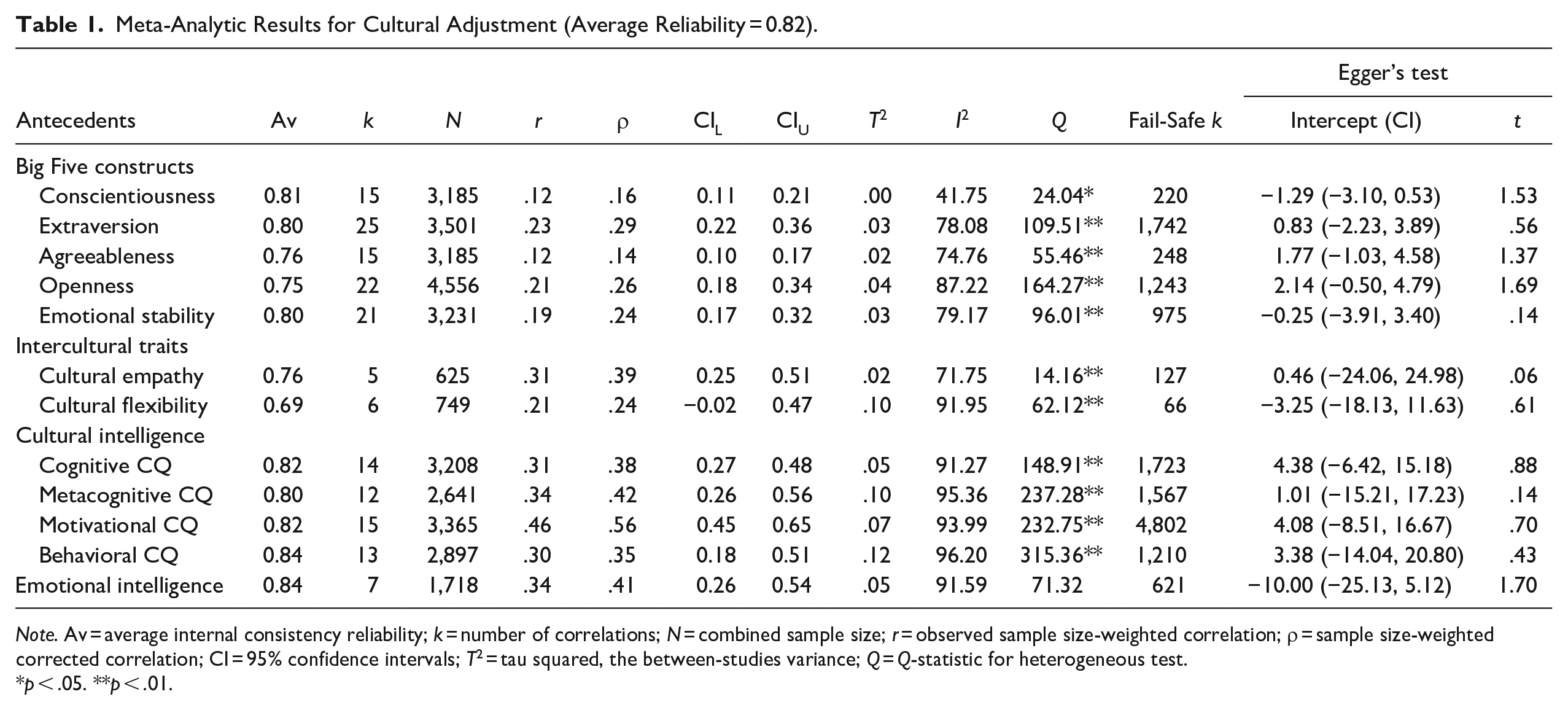
Note. Av = average internal consistency reliability; k = number of correlations; N = combined sample size; r = observed sample size-weighted correlation; ρ = sample size-weighted corrected correlation; CI = 95% confidence intervals; T2 = tau squared, the between-studies variance; Q = Q-statistic for heterogeneous test.
p < .05. **p < .01.
Meta-Analytic Results for Work Adjustment (Average Reliability = 0.87).
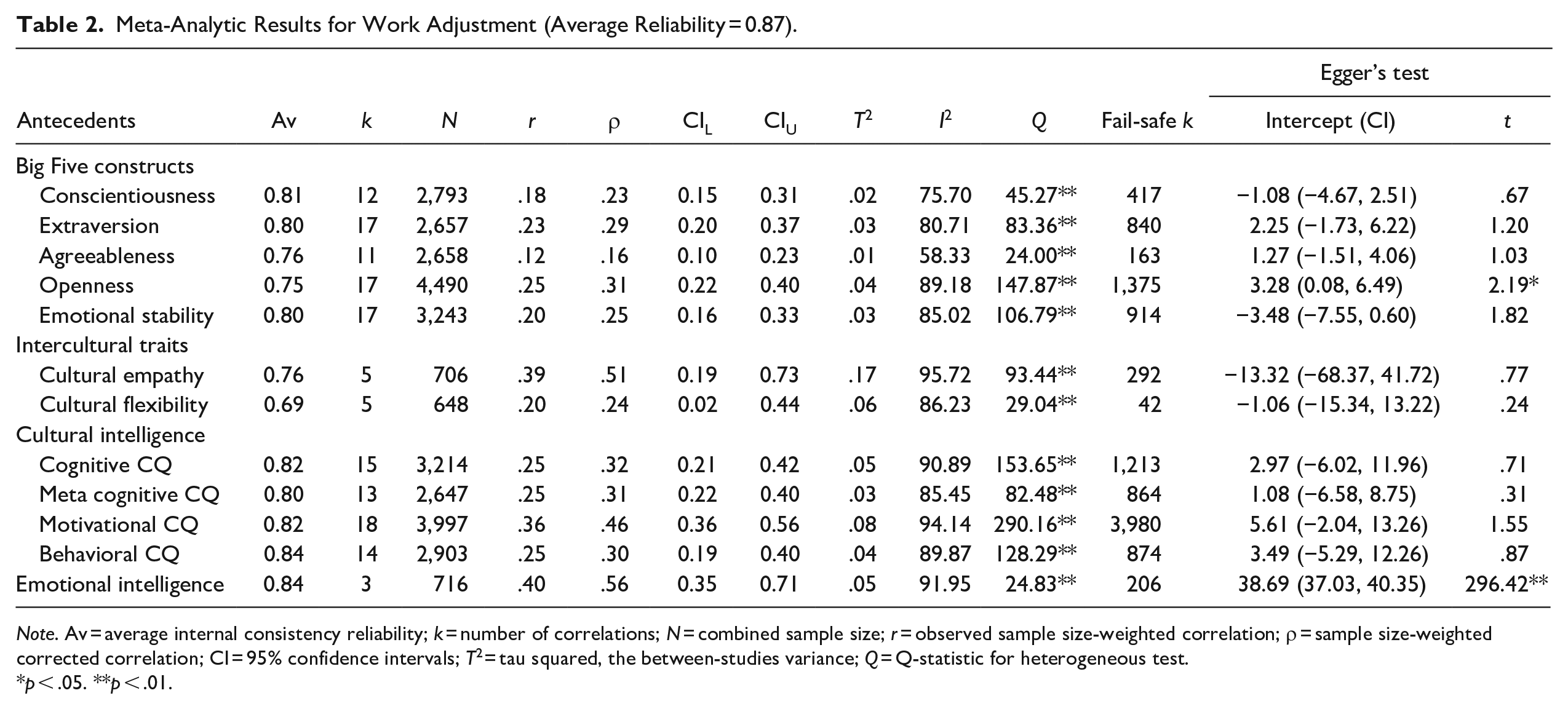
Note. Av = average internal consistency reliability; k = number of correlations; N = combined sample size; r = observed sample size-weighted correlation; ρ = sample size-weighted corrected correlation; CI = 95% confidence intervals; T2 = tau squared, the between-studies variance; Q = Q-statistic for heterogeneous test.
p < .05. **p < .01.
Meta-Analytic Results for Interactional Adjustment (Average Reliability = 0.87).
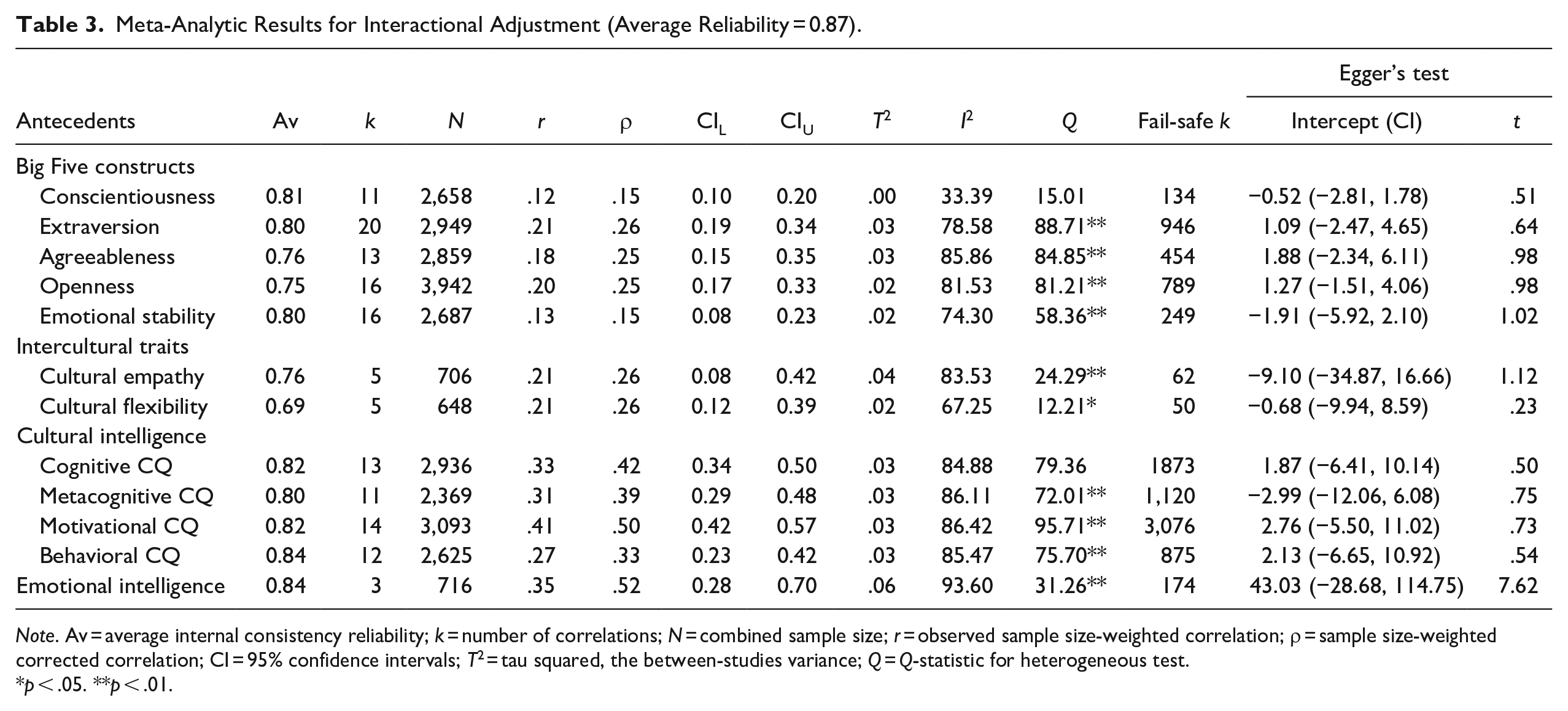
Note. Av = average internal consistency reliability; k = number of correlations; N = combined sample size; r = observed sample size-weighted correlation; ρ = sample size-weighted corrected correlation; CI = 95% confidence intervals; T2 = tau squared, the between-studies variance; Q = Q-statistic for heterogeneous test.
p < .05. **p < .01.
Hypothesis 2 predicted that two intercultural traits—cultural empathy and flexibility, will each be positively associated with expatriate adjustment. Consistent with hypothesis 2a, cultural empathy was found to be significantly positively associated each dimension of adjustment (cultural: ρ = .39; work: ρ = .51; interactional: ρ = .26). However, only partial support was provided for hypothesis 2b. Cultural flexibility was significantly associated with work (ρ = .24) and interactional adjustment (ρ = .26) as indicated by the non-zero 95% confidence intervals observed, but not cultural adjustment (ρ = .24, [−0.02, 0.47]).
Hypothesis 3 proposed that each dimension of cultural intelligence will be positively associated with expatriate adjustment. As shown in Tables 1 to 3, each facet of cultural intelligence (i.e., cognitive, metacognitive, motivational, behavioral) was found to be significantly positively associated with each adjustment outcome. Motivational CQ was the strongest predictor of each measure of adjustment (cultural: ρ = .56; work: ρ = .46; interactional: ρ = .50) while behavioral CQ displayed the lowest correlations (cultural: ρ = .35; work: ρ = .30; interactional: ρ = .33).
Finally, hypothesis 4 predicted that emotional intelligence will positively influence adjustment. In line with this prediction, emotional intelligence was significantly associated with each adjustment outcome (cultural: ρ = .41; work: ρ = .56; interactional: ρ = .52).
Relative Weights Analysis
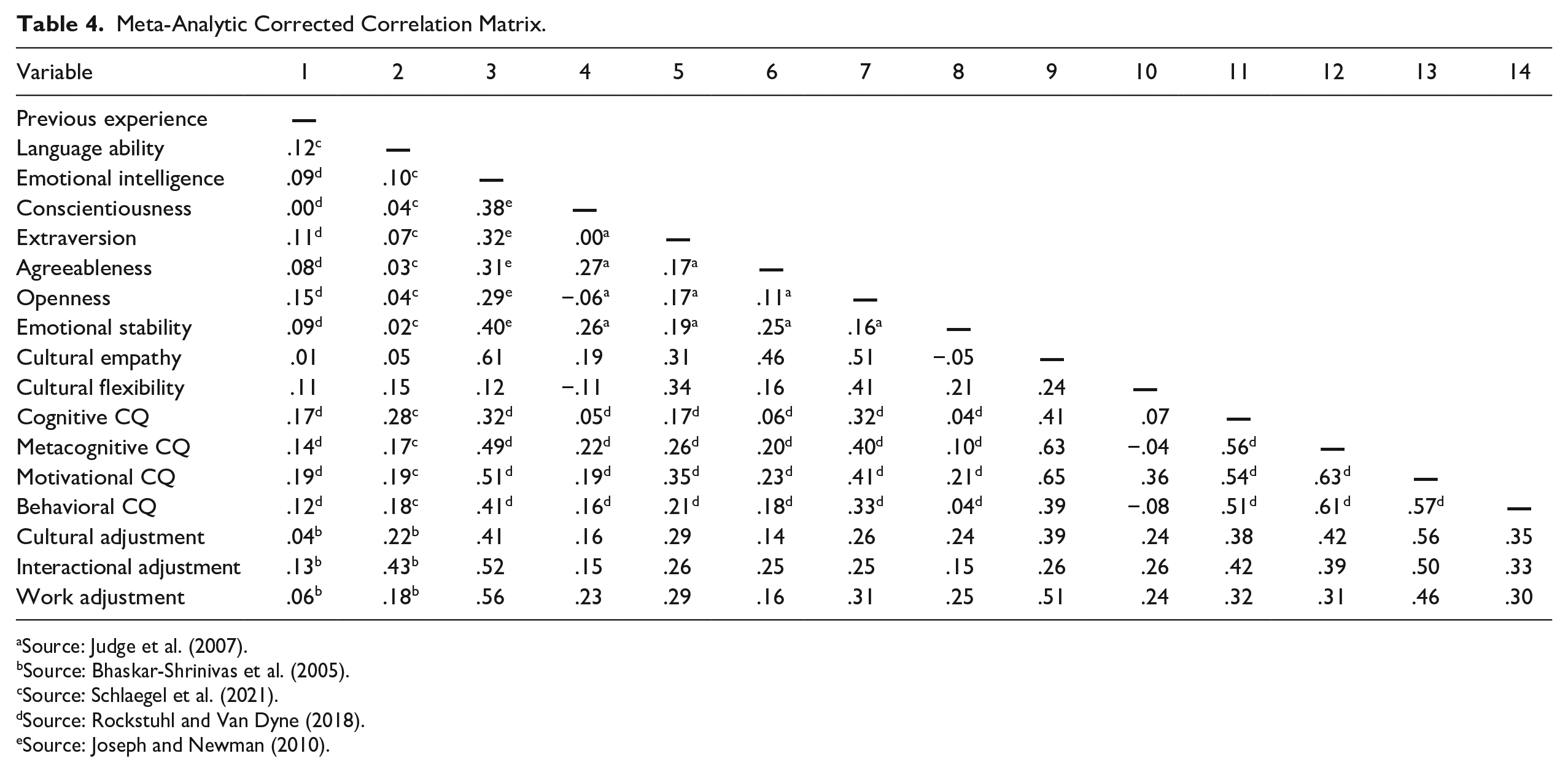
In order to assess the relative influence of each of the respective predictors on the adjustment outcomes, relative weights analyses were conducted. The corrected correlation matrix between all variables was built to carry out these analyses (see Table 4). Table 5 summarizes results from the relative weights analysis. We also report the uncorrected relative weights analyses in Supplemental Material. Overall, these results suggest that emotional intelligence, cultural empathy, and cultural intelligence, particularly motivational CQ, accounted for the greatest proportion of variance in the adjustment outcomes. Specifically, in terms of cultural adjustment, the relative weights suggest that motivational CQ accounted for the greatest proportion of predicted variance (R-RW = 25.50%) followed by metacognitive CQ (R-RW = 10.15%), cognitive CQ (R-RW = 9.87%), and emotional intelligence (R-RW = 9.64%). In terms of the work adjustment, emotional intelligence made the greatest contribution to predicted variance (R-RW = 23.00%), followed by cultural empathy (R-RW = 22.52%) and motivational CQ (R-RW = 8.81%). Finally, in terms of interactional adjustment, emotional intelligence accounted for the greatest proportion of variance (R-RW = 24.06%), followed by language ability (R-RW = 14.43%), motivational CQ (R-RW = 13.28%), and cultural empathy (R-RW = 9.50%).
Meta-Analytic Corrected Correlation Matrix.
Source: Judge et al. (2007).
Source: Bhaskar-Shrinivas et al. (2005).
Source: Schlaegel et al. (2021).
Source: Rockstuhl and Van Dyne (2018).
Source: Joseph and Newman (2010).
Results of Relative Weights Analysis of the Dispositional Predictors of Expatriate Adjustment.
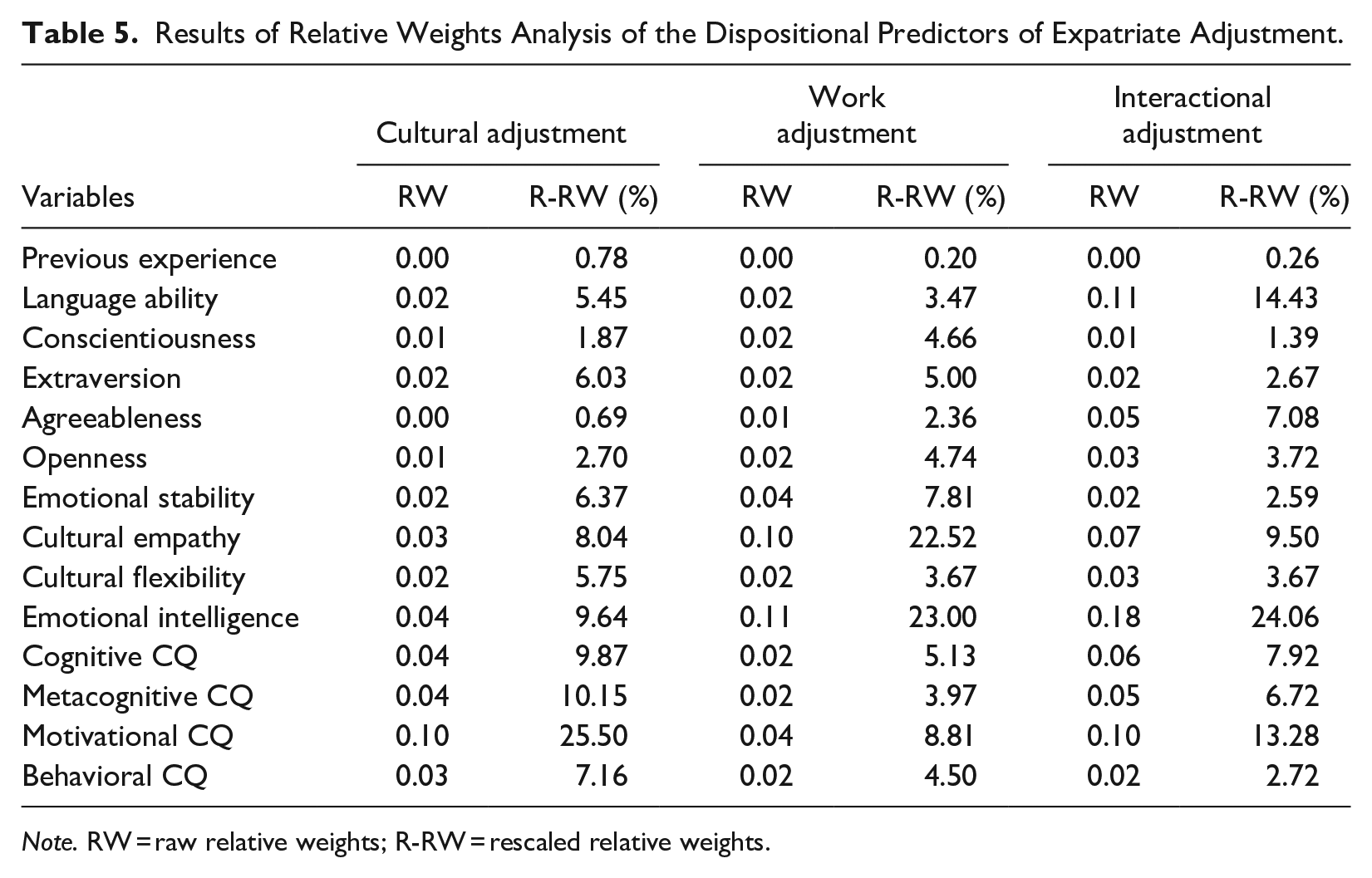
Note. RW = raw relative weights; R-RW = rescaled relative weights.
Moderation Analyses
Cultural distance
Table 6 displays the results from the meta-regression testing cultural distance as a moderator of the effects of the Big Five and CQ on adjustment. Cultural distance was found to have a significant negative relationship with the effect sizes of openness on cultural adjustment (b = −.06, p < .05), emotional stability on work adjustment (b = −.07, p < .05), and extraversion on work adjustment (b = −.09, p < .01). Likewise, there was some evidence that cultural distance attenuated the relationship between cultural intelligence and adjustment. Cultural distance had a significant negative relationship with the effect sizes of cognitive CQ on work adjustment (b = −.18, p < .01), motivational CQ on work adjustment (b = −.22, p < .01), behavioral CQ on work adjustment (b = −.17, p < .01), motivational CQ on interactional adjustment (b = −.19, p < .01), and behavioral CQ on interactional adjustment (b = −.11, p < .05). We also found, however, that cultural distance had a significant positive effect on the relationship between motivational CQ and cultural adjustment (b = .31, p < .01), indicating that this relationship may in fact be strengthened when greater cultural distance exists. Taken together, these findings suggest that higher levels of cultural distance may dampen the effects of specific Big Five traits and facets of cultural intelligence on adjustment; however, this is not always the case. Indeed, it appears that motivational CQ may be a stronger predictor of cultural adjustment at higher levels of cultural distance.
Meta-Regression Results: Cultural Distance as a Moderator.
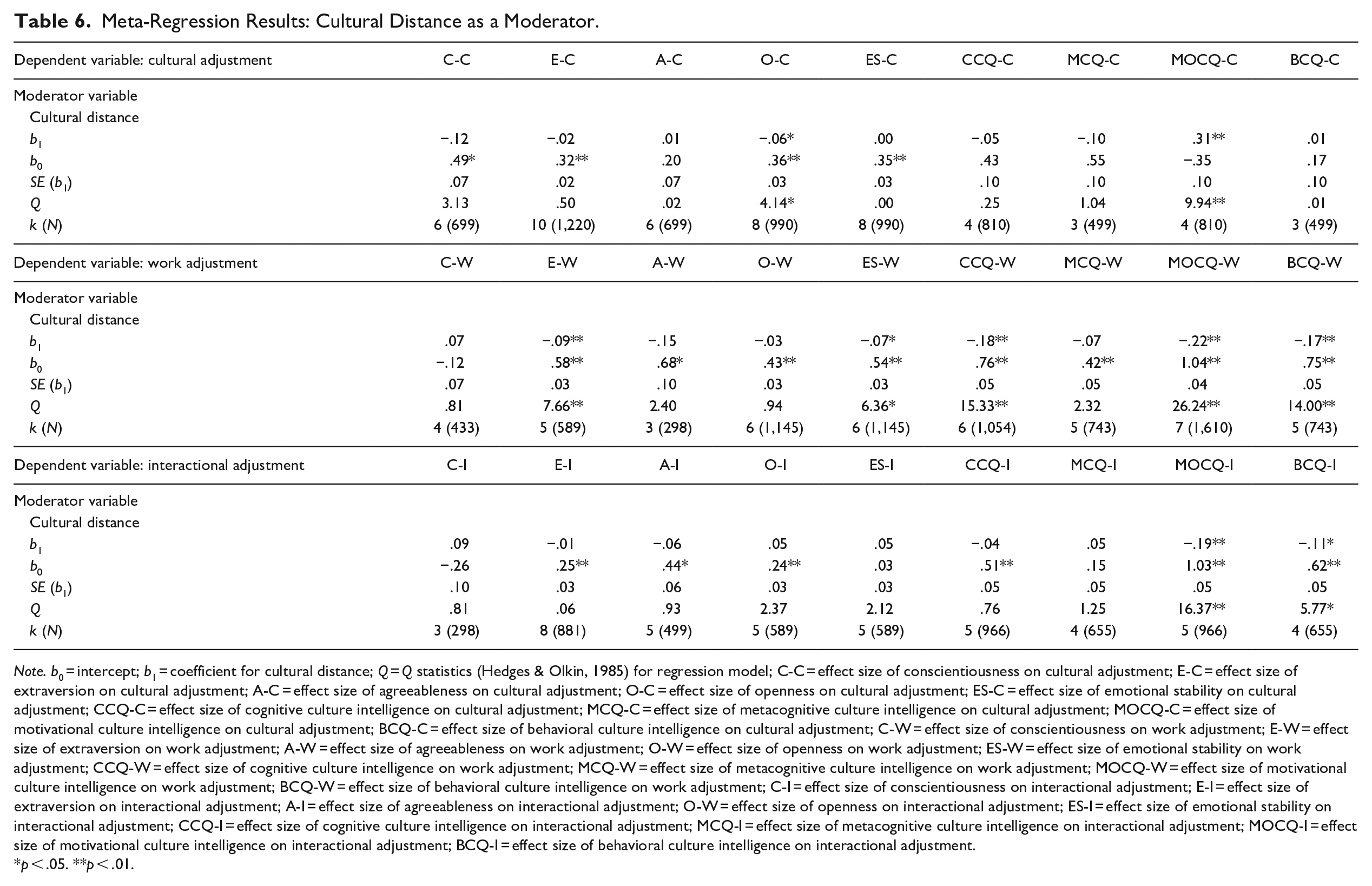
Note. b0 = intercept; b1 = coefficient for cultural distance; Q = Q statistics (Hedges & Olkin, 1985) for regression model; C-C = effect size of conscientiousness on cultural adjustment; E-C = effect size of extraversion on cultural adjustment; A-C = effect size of agreeableness on cultural adjustment; O-C = effect size of openness on cultural adjustment; ES-C = effect size of emotional stability on cultural adjustment; CCQ-C = effect size of cognitive culture intelligence on cultural adjustment; MCQ-C = effect size of metacognitive culture intelligence on cultural adjustment; MOCQ-C = effect size of motivational culture intelligence on cultural adjustment; BCQ-C = effect size of behavioral culture intelligence on cultural adjustment; C-W = effect size of conscientiousness on work adjustment; E-W = effect size of extraversion on work adjustment; A-W = effect size of agreeableness on work adjustment; O-W = effect size of openness on work adjustment; ES-W = effect size of emotional stability on work adjustment; CCQ-W = effect size of cognitive culture intelligence on work adjustment; MCQ-W = effect size of metacognitive culture intelligence on work adjustment; MOCQ-W = effect size of motivational culture intelligence on work adjustment; BCQ-W = effect size of behavioral culture intelligence on work adjustment; C-I = effect size of conscientiousness on interactional adjustment; E-I = effect size of extraversion on interactional adjustment; A-I = effect size of agreeableness on interactional adjustment; O-W = effect size of openness on interactional adjustment; ES-I = effect size of emotional stability on interactional adjustment; CCQ-I = effect size of cognitive culture intelligence on interactional adjustment; MCQ-I = effect size of metacognitive culture intelligence on interactional adjustment; MOCQ-I = effect size of motivational culture intelligence on interactional adjustment; BCQ-I = effect size of behavioral culture intelligence on interactional adjustment.
p < .05. **p < .01.
Cultural tightness
Table 7 summarizes results from the meta-regression testing cultural tightness as a potential moderator. Overall, we found evidence that cultural tightness is more likely to strengthen the effects of the individual differences examined on adjustment than weaken them. Higher cultural tightness appeared to magnify the positive relationship between conscientiousness and work adjustment (b = .04, p < .01), the relationship between openness to experience and cultural adjustment (b = .03, p < .05), as well as the relationship between cultural flexibility and cultural adjustment (b = .06, p < .01). Likewise, specific facets of cultural intelligence were found to be more strongly positively related to adjustment outcomes in tighter cultures. This amplifying effect of cultural tightness was evident for the following relationships: metacognitive CQ and cultural adjustment (b = .03, p < .01), motivational CQ and cultural adjustment (b = .04, p < .01), behavioral CQ and cultural adjustment (b =.03, p < .05), metacognitive CQ and interactional adjustment (b = .04, p < .01), motivational CQ and interactional adjustment (b = .03, p < .01), and behavioral CQ and interactional adjustment (b = .03, p < .05). Interestingly, the relationship between extraversion and work adjustment (b = −.03, p < .05) was the only relationship that appears to be weakened by cultural tightness. Overall, these results signal that, with one exception (extraversion), cultural tightness may be more likely to strengthen, rather than weaken, the effects of specific Big Five traits and cultural intelligence dimensions on adjustment.
Meta-Regression Results: Host Country Cultural Tightness as a Moderator.
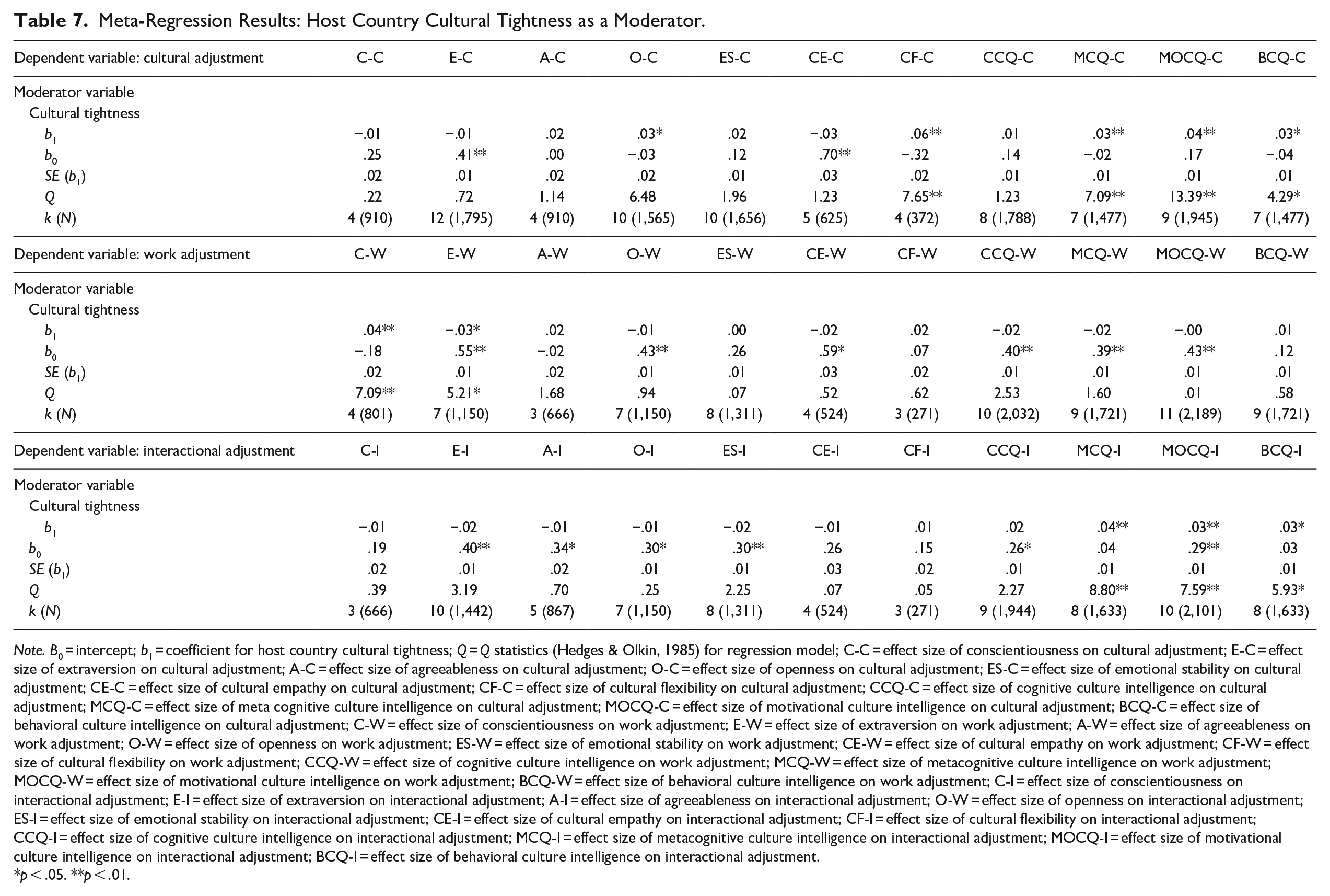
Note. B0 = intercept; b1 = coefficient for host country cultural tightness; Q = Q statistics (Hedges & Olkin, 1985) for regression model; C-C = effect size of conscientiousness on cultural adjustment; E-C = effect size of extraversion on cultural adjustment; A-C = effect size of agreeableness on cultural adjustment; O-C = effect size of openness on cultural adjustment; ES-C = effect size of emotional stability on cultural adjustment; CE-C = effect size of cultural empathy on cultural adjustment; CF-C = effect size of cultural flexibility on cultural adjustment; CCQ-C = effect size of cognitive culture intelligence on cultural adjustment; MCQ-C = effect size of meta cognitive culture intelligence on cultural adjustment; MOCQ-C = effect size of motivational culture intelligence on cultural adjustment; BCQ-C = effect size of behavioral culture intelligence on cultural adjustment; C-W = effect size of conscientiousness on work adjustment; E-W = effect size of extraversion on work adjustment; A-W = effect size of agreeableness on work adjustment; O-W = effect size of openness on work adjustment; ES-W = effect size of emotional stability on work adjustment; CE-W = effect size of cultural empathy on work adjustment; CF-W = effect size of cultural flexibility on work adjustment; CCQ-W = effect size of cognitive culture intelligence on work adjustment; MCQ-W = effect size of metacognitive culture intelligence on work adjustment; MOCQ-W = effect size of motivational culture intelligence on work adjustment; BCQ-W = effect size of behavioral culture intelligence on work adjustment; C-I = effect size of conscientiousness on interactional adjustment; E-I = effect size of extraversion on interactional adjustment; A-I = effect size of agreeableness on interactional adjustment; O-W = effect size of openness on interactional adjustment; ES-I = effect size of emotional stability on interactional adjustment; CE-I = effect size of cultural empathy on interactional adjustment; CF-I = effect size of cultural flexibility on interactional adjustment; CCQ-I = effect size of cognitive culture intelligence on interactional adjustment; MCQ-I = effect size of metacognitive culture intelligence on interactional adjustment; MOCQ-I = effect size of motivational culture intelligence on interactional adjustment; BCQ-I = effect size of behavioral culture intelligence on interactional adjustment.
p < .05. **p < .01.
Interaction between gender inequality and gender
We also examined the joint moderating role of the Gender Inequality Index (GII) and gender (percentage men in the sample) on the effect sizes of the Big Five and cultural intelligence on adjustment. In the meta-regression model, we entered host country GII score, percentage men in the sample, and the product of GII and percentage men. Results of the meta-regression analyses are reported in Table 8. Interaction terms of GII and percentage men were significantly negatively related to the effect sizes of specific personality traits and adjustment, including extraversion and cultural adjustment (b = −12.34, p < .01), and openness and cultural adjustment (b = −14.11, p < .05). However, this interaction term was positively related to the effect sizes for specific CQ dimensions and adjustment, including motivational CQ and cultural adjustment (b = 13.35, p < .01), motivational CQ and interactional adjustment (b = 13.34, p < .01), cognitive CQ and interactional adjustment (b = 6.95, p < .01), and behavioral CQ and interactional adjustment (b = 5.42, p < .05).
Meta-Regression Results: GII and Gender (Percentage Men in Sample).
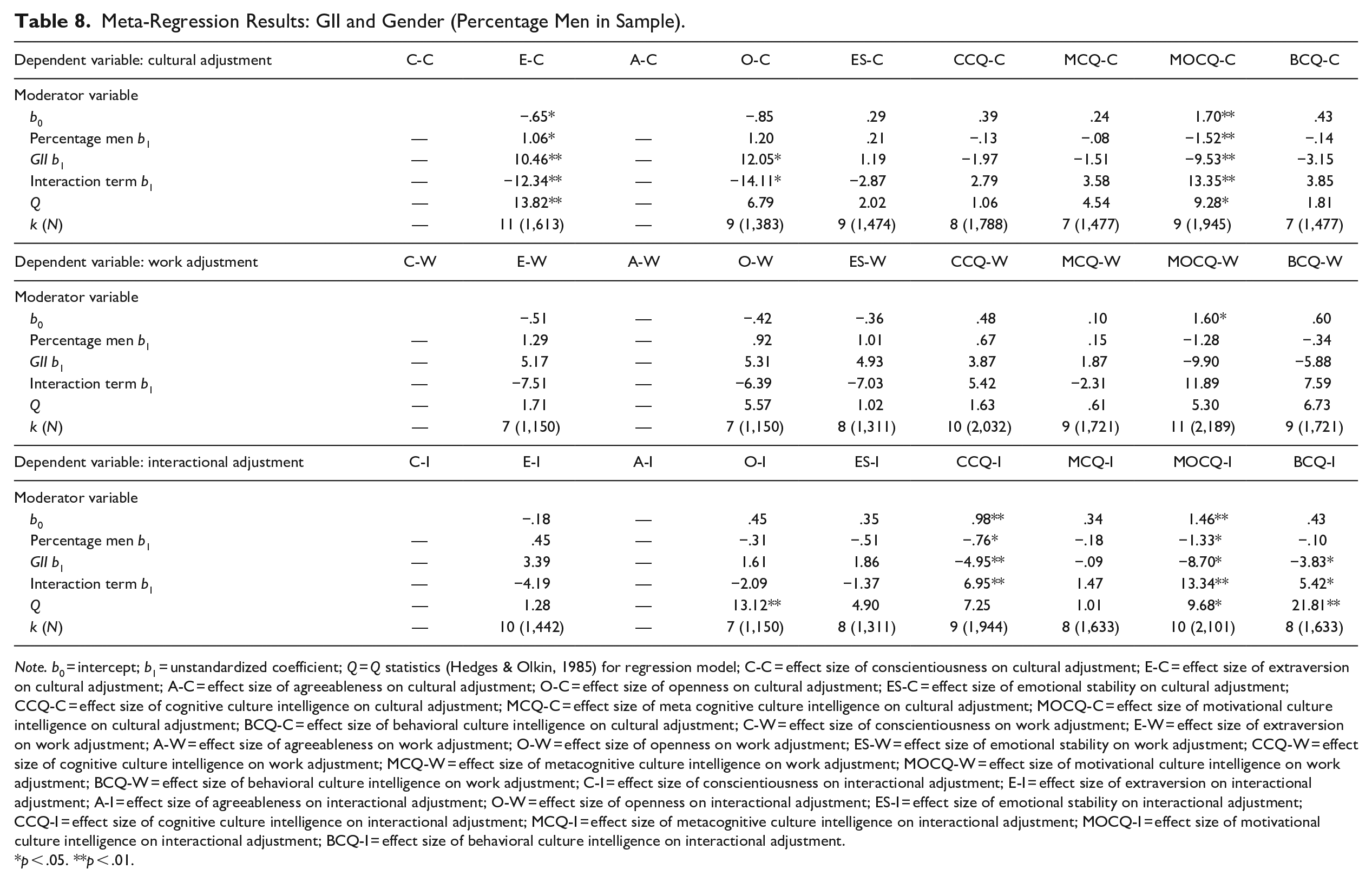
Note. b0 = intercept; b1 = unstandardized coefficient; Q = Q statistics (Hedges & Olkin, 1985) for regression model; C-C = effect size of conscientiousness on cultural adjustment; E-C = effect size of extraversion on cultural adjustment; A-C = effect size of agreeableness on cultural adjustment; O-C = effect size of openness on cultural adjustment; ES-C = effect size of emotional stability on cultural adjustment; CCQ-C = effect size of cognitive culture intelligence on cultural adjustment; MCQ-C = effect size of meta cognitive culture intelligence on cultural adjustment; MOCQ-C = effect size of motivational culture intelligence on cultural adjustment; BCQ-C = effect size of behavioral culture intelligence on cultural adjustment; C-W = effect size of conscientiousness on work adjustment; E-W = effect size of extraversion on work adjustment; A-W = effect size of agreeableness on work adjustment; O-W = effect size of openness on work adjustment; ES-W = effect size of emotional stability on work adjustment; CCQ-W = effect size of cognitive culture intelligence on work adjustment; MCQ-W = effect size of metacognitive culture intelligence on work adjustment; MOCQ-W = effect size of motivational culture intelligence on work adjustment; BCQ-W = effect size of behavioral culture intelligence on work adjustment; C-I = effect size of conscientiousness on interactional adjustment; E-I = effect size of extraversion on interactional adjustment; A-I = effect size of agreeableness on interactional adjustment; O-W = effect size of openness on interactional adjustment; ES-I = effect size of emotional stability on interactional adjustment; CCQ-I = effect size of cognitive culture intelligence on interactional adjustment; MCQ-I = effect size of metacognitive culture intelligence on interactional adjustment; MOCQ-I = effect size of motivational culture intelligence on interactional adjustment; BCQ-I = effect size of behavioral culture intelligence on interactional adjustment.
p < .05. **p < .01.
To further examine the pattern of relationships observed, we plotted the significant interactions. As shown in Figures 2 and 3, when the host country GII was higher, the positive effects of extraversion and openness on cultural adjustment became stronger when the sample contains a lower percentage of men (more female expatriates). These results suggest that host country GII can strengthen the effects of extraversion and openness on the cultural adjustment of female expatriates. Figures 4 to 7 provide graphical depictions of the joint moderating effects of GII × percentage men in the sample on the relationship between the CQ dimensions and adjustment. As shown in the figures, when the host country GII was higher, the positive effect of CQ on adjustment became weaker for samples with a lower percentage of men (more female expatriates). These results indicate that host country GII can weaken the effects of specific CQ dimensions (cognitive CQ, motivational CQ, and behavioral CQ) on adjustment for female expatriates.
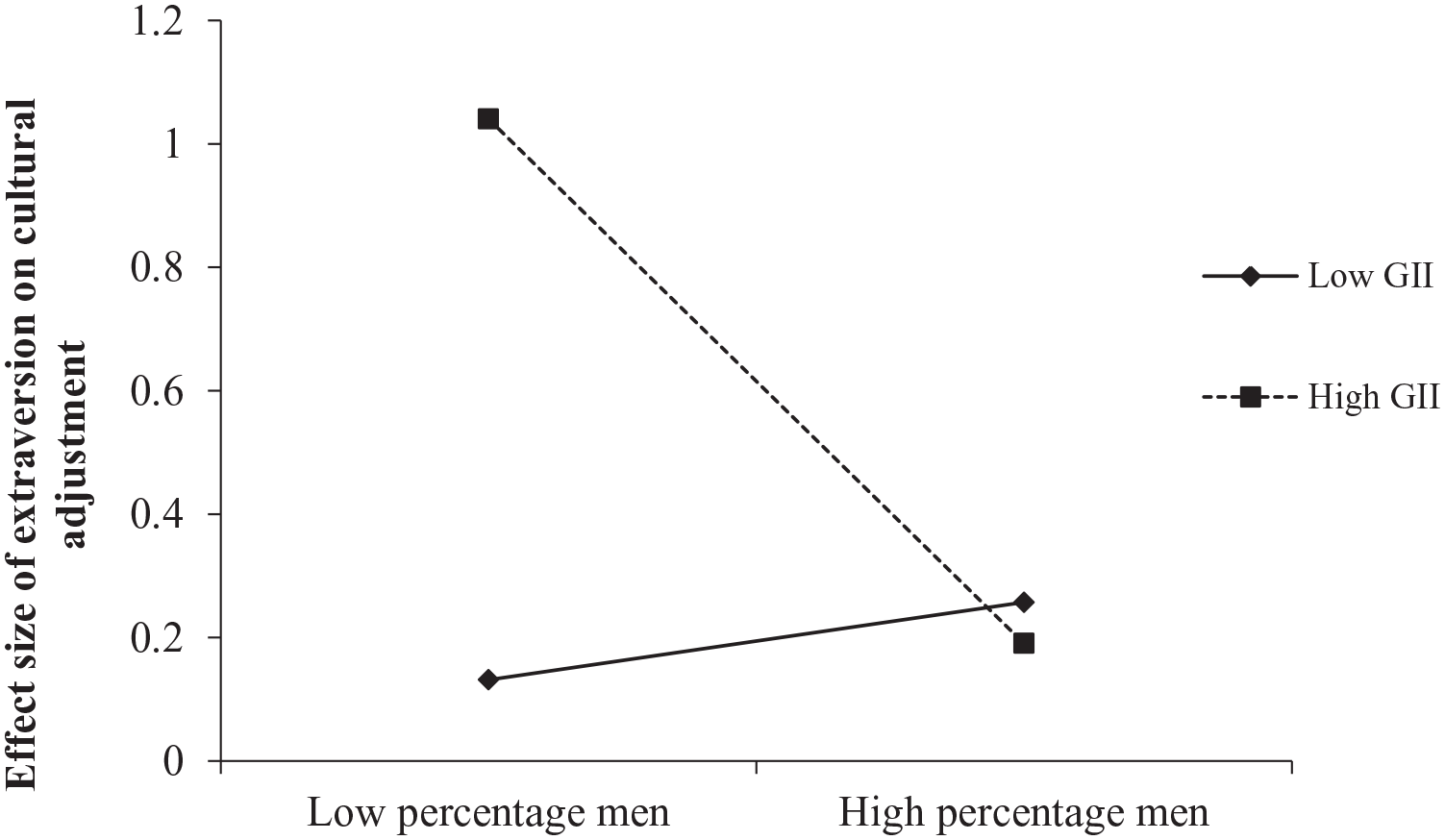
Joint moderating role of GII and gender (percentage men) on the effect size of extraversion on cultural adjustment.
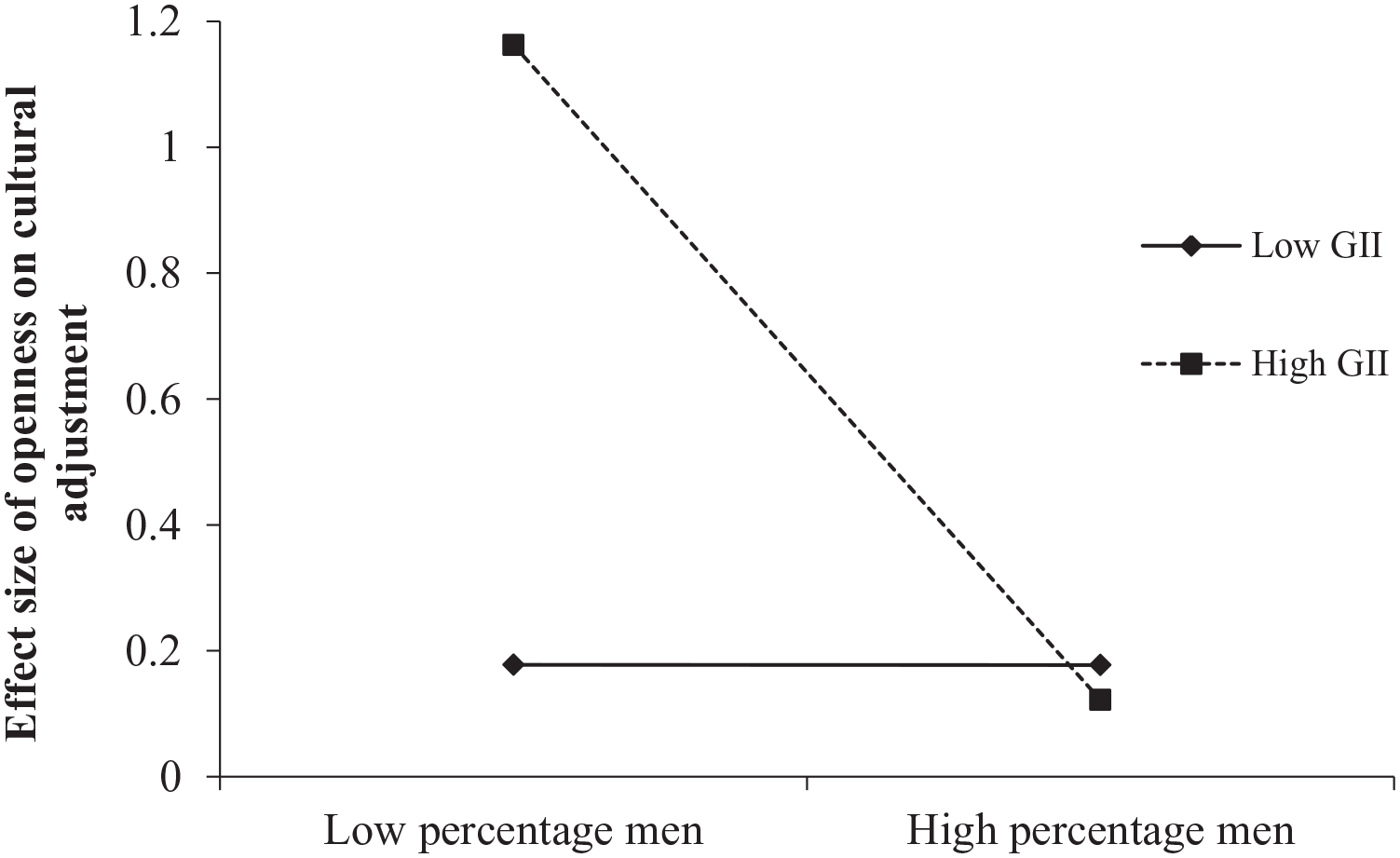
Joint moderating role of GII and gender (percentage men) on the effect size of openness on cultural adjustment.
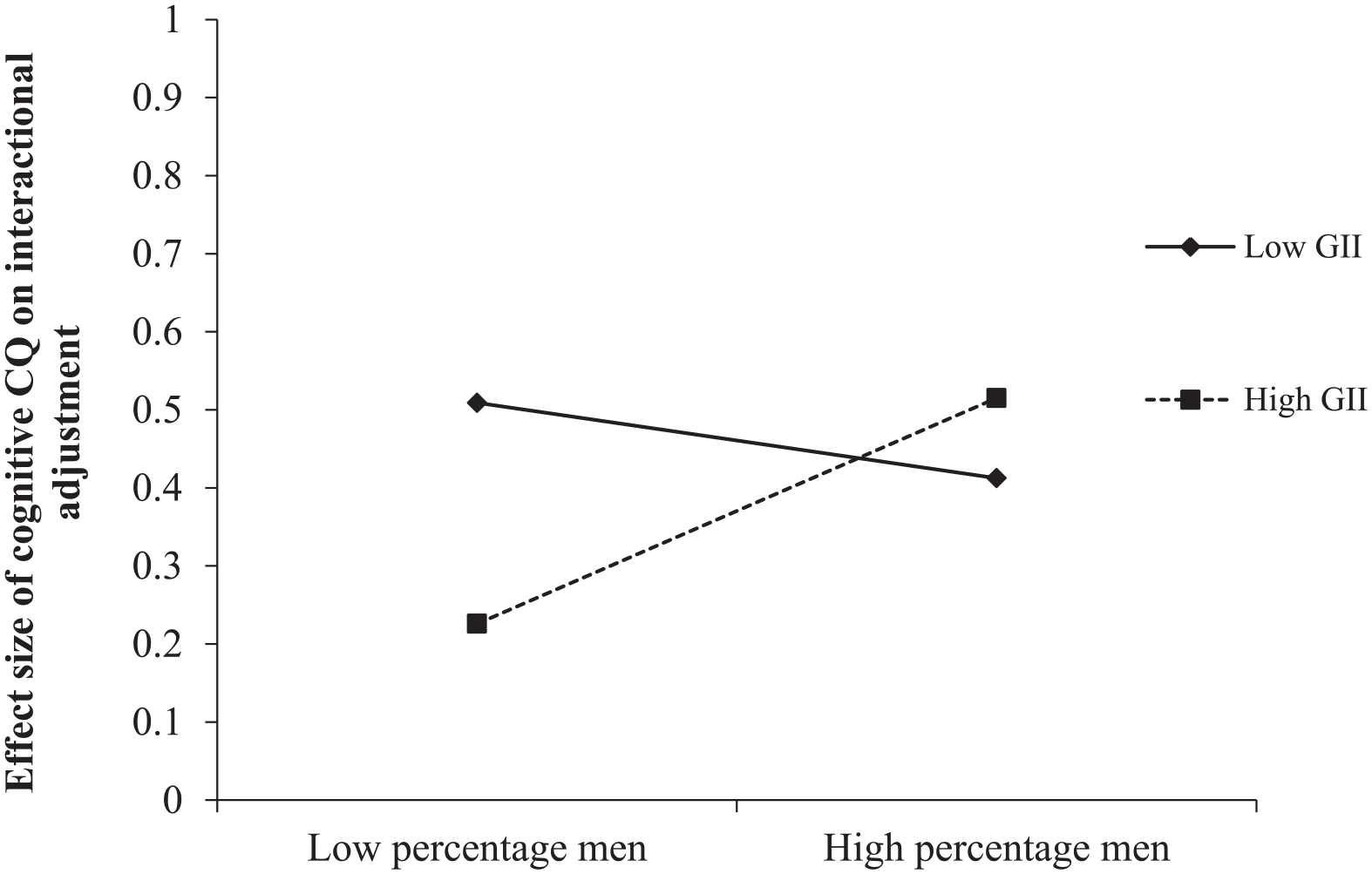
Joint moderating role of GII and gender (percentage men) on the effect size of cognitive CQ on interactional adjustment.
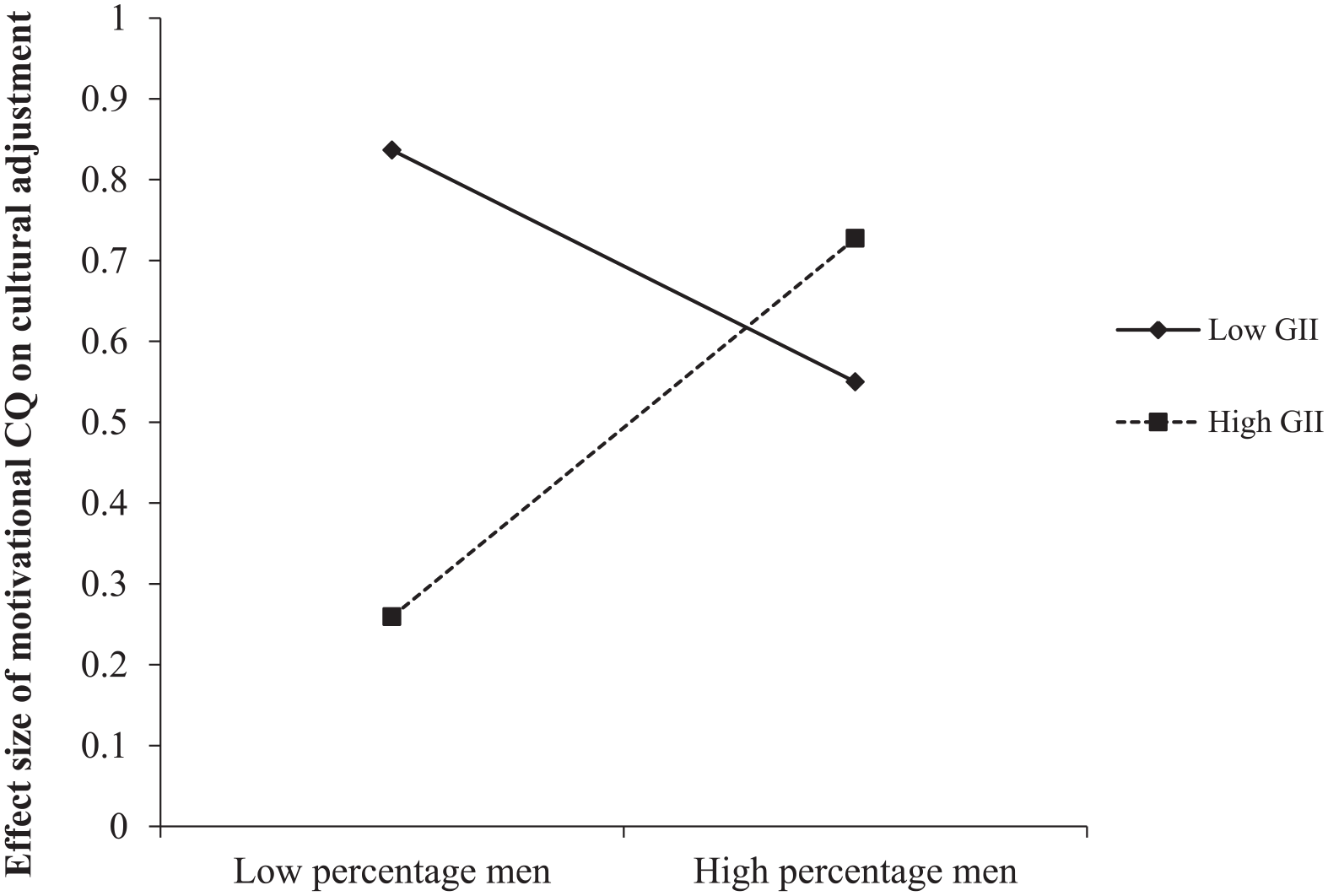
Joint moderating role of GII and gender (percentage men) on the effect size of motivational CQ on cultural adjustment.
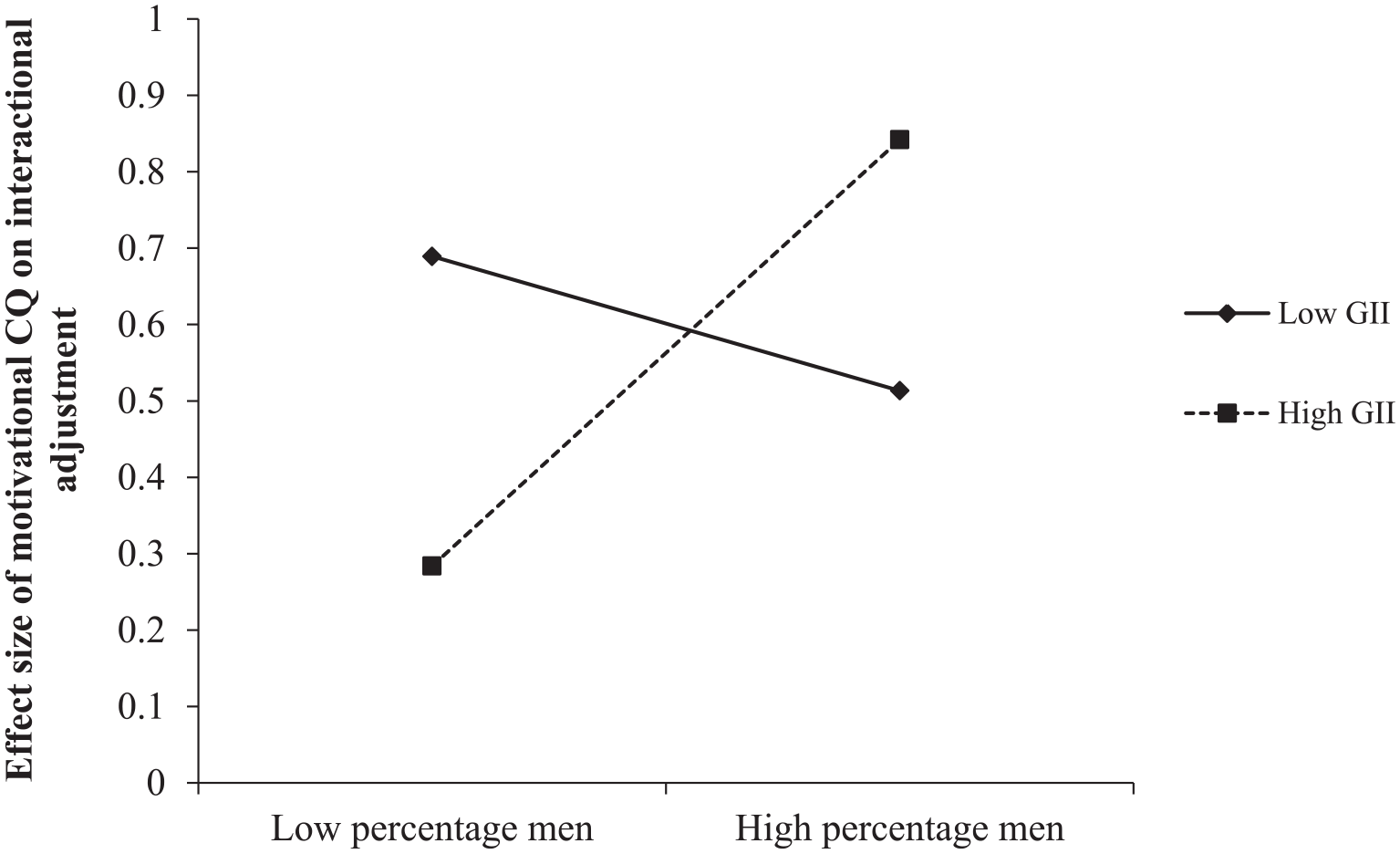
Joint moderating role of GII and gender (percentage men) on the effect size of motivational CQ on interactional adjustment.
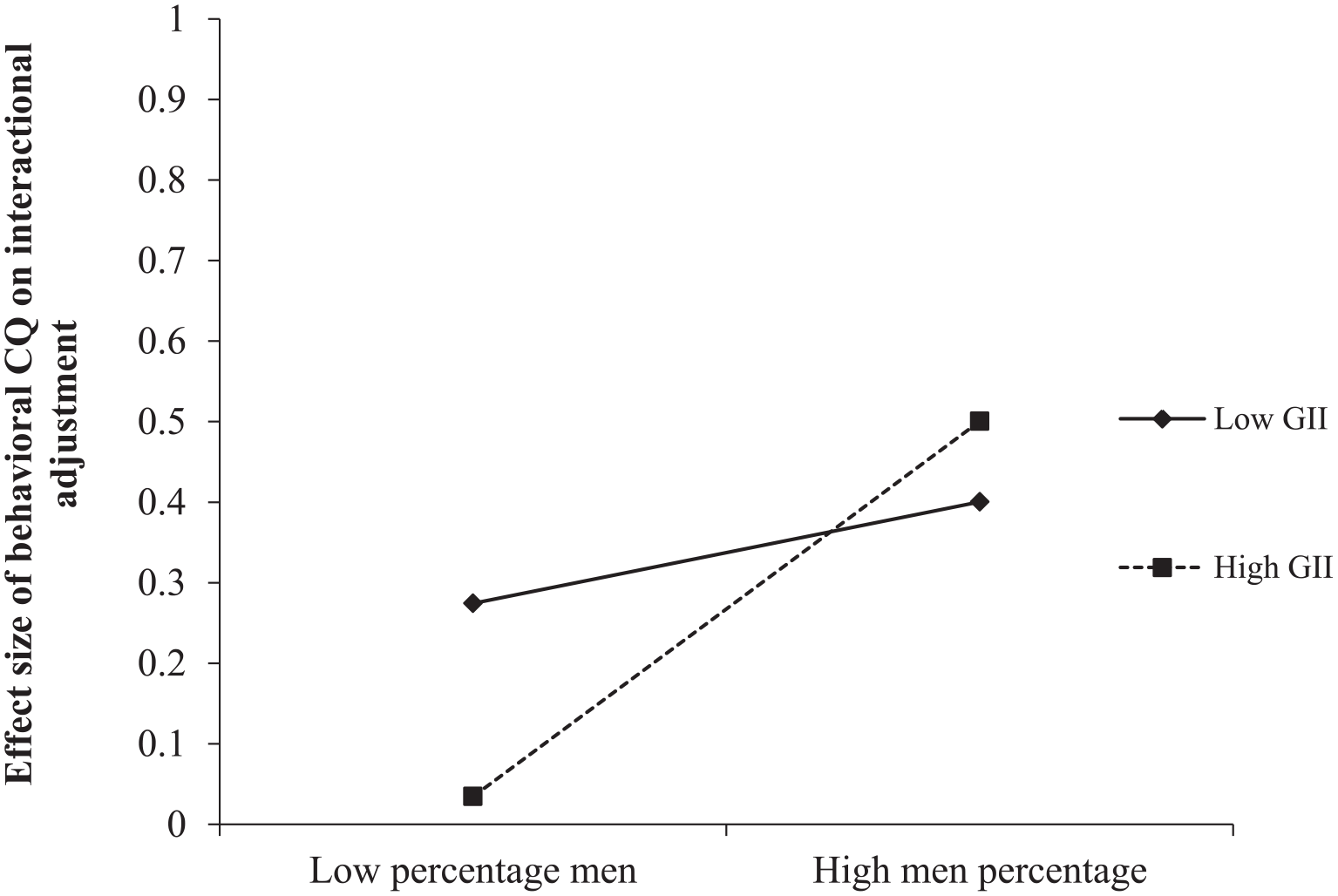
Joint moderating role of GII and gender (percentage men) on the effect size of behavioral CQ on interactional adjustment.
Year of publication
To examine whether the magnitude of relationships may have increased or decreased over time, we tested whether the year of publication influences the strength of the association between the individual differences examined and adjustment outcomes. Overall, we found that that magnitude of some relationships has somewhat declined over time (Table 9). The positive relationship between agreeableness and three adjustment dimensions (cultural: b = −.01, p < .01, work: b = −.02, p < .01, interactional adjustment: b = −.03, p < .01), between emotional stability and cultural adjustment (b = −.01, p < .01), between openness and work adjustment (b = −.03, p < .01), and between behavioral CQ and work adjustment (b = −.02, p < .01) were weaker in more recent publications. However, we also found that the positive associations between motivational CQ and two adjustment dimensions (cultural: b = .02, p < .01; interactional: b = .01, p < .05) were amplified (not weakened) in studies appearing more recently.
Meta-Regression Results: Publication Year as a Moderator.
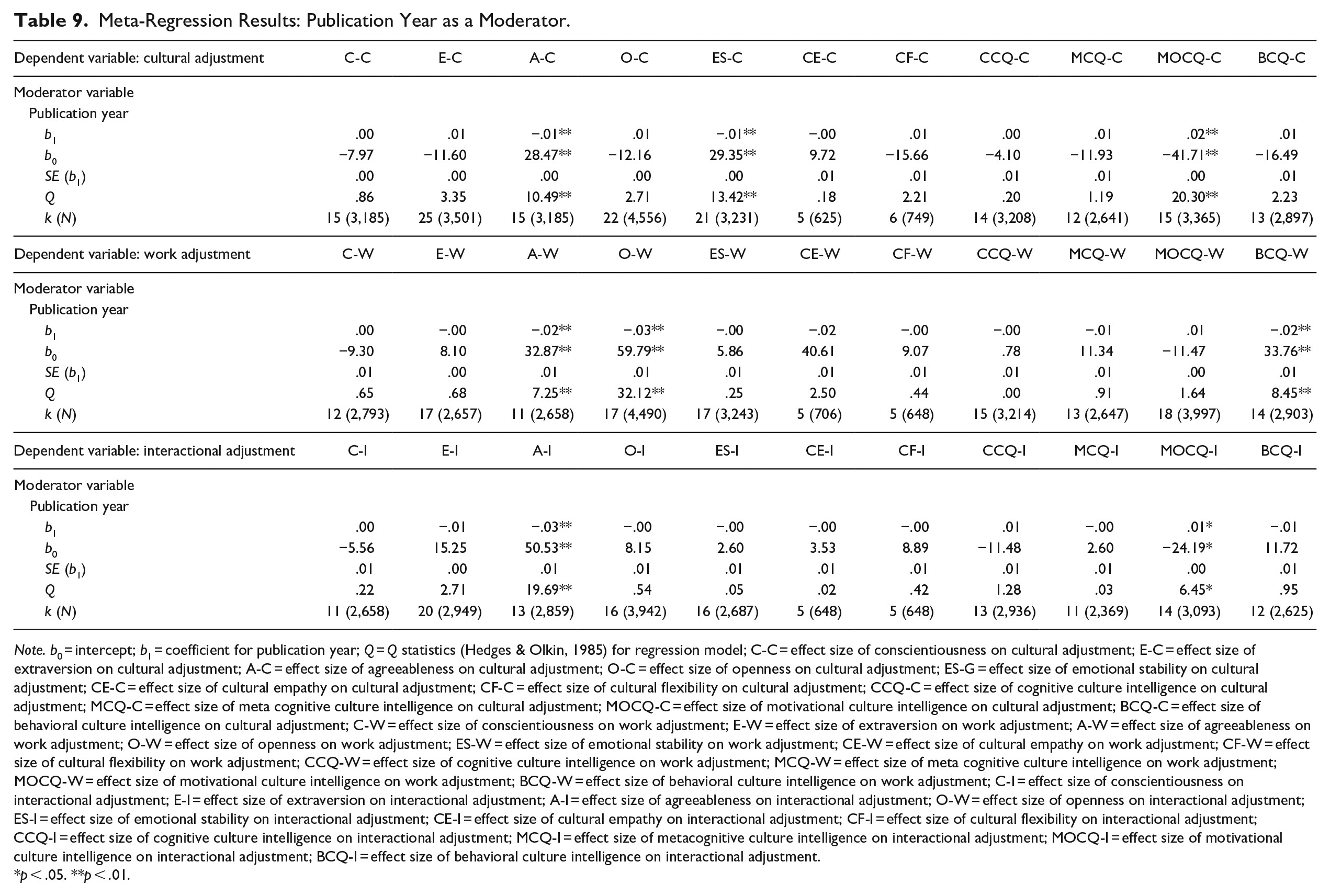
Note. b0 = intercept; b1 = coefficient for publication year; Q = Q statistics (Hedges & Olkin, 1985) for regression model; C-C = effect size of conscientiousness on cultural adjustment; E-C = effect size of extraversion on cultural adjustment; A-C = effect size of agreeableness on cultural adjustment; O-C = effect size of openness on cultural adjustment; ES-G = effect size of emotional stability on cultural adjustment; CE-C = effect size of cultural empathy on cultural adjustment; CF-C = effect size of cultural flexibility on cultural adjustment; CCQ-C = effect size of cognitive culture intelligence on cultural adjustment; MCQ-C = effect size of meta cognitive culture intelligence on cultural adjustment; MOCQ-C = effect size of motivational culture intelligence on cultural adjustment; BCQ-C = effect size of behavioral culture intelligence on cultural adjustment; C-W = effect size of conscientiousness on work adjustment; E-W = effect size of extraversion on work adjustment; A-W = effect size of agreeableness on work adjustment; O-W = effect size of openness on work adjustment; ES-W = effect size of emotional stability on work adjustment; CE-W = effect size of cultural empathy on work adjustment; CF-W = effect size of cultural flexibility on work adjustment; CCQ-W = effect size of cognitive culture intelligence on work adjustment; MCQ-W = effect size of meta cognitive culture intelligence on work adjustment; MOCQ-W = effect size of motivational culture intelligence on work adjustment; BCQ-W = effect size of behavioral culture intelligence on work adjustment; C-I = effect size of conscientiousness on interactional adjustment; E-I = effect size of extraversion on interactional adjustment; A-I = effect size of agreeableness on interactional adjustment; O-W = effect size of openness on interactional adjustment; ES-I = effect size of emotional stability on interactional adjustment; CE-I = effect size of cultural empathy on interactional adjustment; CF-I = effect size of cultural flexibility on interactional adjustment; CCQ-I = effect size of cognitive culture intelligence on interactional adjustment; MCQ-I = effect size of metacognitive culture intelligence on interactional adjustment; MOCQ-I = effect size of motivational culture intelligence on interactional adjustment; BCQ-I = effect size of behavioral culture intelligence on interactional adjustment.
p < .05. **p < .01.
Discussion
The present study provides an updated meta-analytic review of the role of dispositional factors in expatriate adjustment. We extend previous work in this area by examining the unique and relative influence of various individual difference variables, including those that have recently attracted increased empirical attention (e.g., intercultural traits, CQ, EI). In response to calls to explore potential boundary conditions surrounding these effects (Harari et al., 2018; Hechanova et al., 2003), we also explore various socio-cultural factors as potential moderating influences on these relationships.
Dispositional Predictors of Expatriate Adjustment
Consistent with previous meta-analytic findings (Harari et al., 2018), the Big Five constructs were found to be significantly associated with the three dimensions of adjustment, with effect sizes ranging between ρ = .14 and ρ = .31. Among the Big Five, extraversion has the largest corrected correlation with cultural adjustment (ρ = .29) and interactional adjustment (ρ = .26), and openness to experience for work adjustment (ρ = .31). Because extraverts are more inclined to form social relationships with host nationals and immerse themselves in the new culture, this may facilitate their cultural and interactional adjustment. Due to their greater receptivity to unfamiliar work values and customs, expatriates who are higher in openness to experience may be particularly well-suited to adapting to new workplace policies, procedures, and approaches to work.
In addition to the Big Five, we also found that two intercultural traits—cultural empathy and cultural flexibility—are also positively related to each of the dimensions of adjustment. Cultural empathy demonstrated larger effect sizes for each dimension of adjustment than most of the Big Five constructs; a pattern also reflected in the relative weights analysis. Individuals with high levels of cultural empathy tend to reflect on and appreciate different cultural values (Peltokorpi & Froese, 2012). They are more likely to find positive meanings in new cultural settings, understand and sympathize with the feelings of people in the host country, and effectively adapt to different social norms and communication styles (Leiba-O’sullivan, 1999). Because cultural empathy is a construct that was formulated specifically to assess one’s empathy in intercultural settings, the higher fidelity (vs. bandwidth) of this trait may enhance the predictive capacity of this construct relative to the Big Five (Leone et al., 2005). These results are comparable to those reported in Wilson et al.’s (2013) previous meta-analysis examining various personality traits and situational factors in relation to sociocultural adaptation among different globally mobile groups (international students, expatriates, immigrants, and other sojourners). They found small to medium effect sizes between the “Big Five” traits and sociocultural adaptation, and large effect sizes for more narrowly defined, culture-relevant factors, including cultural empathy and cross-cultural self-efficacy.
In the present study, cultural intelligence, and motivational CQ in particular, emerged as one of the most robust predictors of the adjustment outcomes. Among all dispositional predictors examined, motivational CQ accounted for the most variance in cultural adjustment (25.50%). This result underscores the importance of one’s internal drive and motivation to adapt to a new culture, and echoes previous meta-analytic evidence suggesting that motivational CQ may be a stronger predictor of cross-cultural adaptation than the three other dimensions of CQ (Rockstuhl & Van Dyne, 2018). Thus, while factors such as knowledge of a new culture, learning to communicate in the host country, and an ability to effectively interact with others are important for successful adaptation, expatriates must also be motivated to engage in these activities (Huff et al., 2014; Van Dyne et al., 2007). Indeed, individuals higher in motivational CQ are not only more likely to enjoy and actively seek out cross-cultural experiences, but they are also more inclined to engage in goal-setting when on an international assignment (Chen et al., 2010, 2012; Earley & Ang, 2003). In this respect, they demonstrate stronger self-regulation capabilities, invest more time in pursuing their goals, and are more likely to sustain persistent effort toward continuous adaptation (Huff et al., 2014).
Finally, although the focus of a smaller number of studies, emotional intelligence was found to be a comparatively strong predictor of expatriate adjustment. EI was significantly associated with each adjustment dimension, and relative weights analyses revealed that EI accounted for the greatest proportion of variance in work adjustment and interactional adjustment compared to the other dispositional characteristics examined. These results indicate that EI is capturing variance in adjustment distinct from the Big Five and intercultural characteristics (e.g., CQ, cultural empathy) and signal that one’s ability to deal with emotions is a critical but understudied element of cross-cultural adaptation. Indeed, the ability to be aware of and to manage one’s emotions, express emotions appropriately, and accurately interpret the emotional reactions of others may enhance adjustment through various means, including improved coping with stress and other emotions (e.g., frustration, sadness), and avoiding conflict and misunderstandings with host nationals (Carmeli & Josman, 2006; Côté, 2014; Konanahalli & Oyedele, 2016; Lin et al., 2012; Salovey et al., 2000).
In assessing the relative contribution of the main predictor variables, EI was found to be the strongest predictor of work and interactional adjustment, while cultural empathy was the second most robust predictor of work adjustment. Motivational CQ was the most important predictor of cultural adjustment. These results reinforce previous work suggesting that broad personality traits (e.g., the Big Five) play an important role in expatriate adjustment (Harari et al., 2018), but they also signal that characteristics more proximally linked to cross-cultural effectiveness (CQ, cultural empathy) and interpersonal competence (EI) can significantly enhance prediction. Indeed, these latter constructs demonstrated consistently higher relative weights than the Big Five constructs for each adjustment dimension.
Moderating Role of Cultural Differences
In order to assess whether the effects of dispositional characteristics vary as a function of cultural differences, cultural distance, cultural tightness-looseness, and gender inequality were tested as potential moderators of the influence of the Big Five and CQ on adjustment.
Higher cultural distance was, in some cases, found to mollify the relationship between specific Big Five traits and adjustment. The positive relationships of openness to experience with cultural adjustment, as well as emotional stability and extraversion with work adjustment, were each attenuated at higher levels of cultural distance. If expatriates are not as familiar with the host culture, they may experience greater difficulty in overcoming cultural barriers, which may constrain the influence of their personality. Furthermore, some of their characteristics may not “fit” with a host culture, or may expose their lack of fit. For example, behaviors linked to extraversion, such as talkativeness, warmth, and assertiveness may not be viewed favorably if social norms do not support the display of these behaviors (Ward et al., 2004).
A similar pattern of results was observed with respect to some dimensions of CQ. Cultural distance was found to constrain the positive effects of cognitive CQ, motivational CQ, and behavioral CQ on work adjustment, and also the positive effects of motivational CQ and behavioral CQ on interactional adjustment. Interestingly, however, one exception to this moderating trend was evidenced. We found that the positive association between motivational CQ and cultural adjustment was amplified (not weakened) when cultural distance was higher. While the specific mechanisms underlying this effect are unclear, it is possible that the more significant challenges and obstacles to adjustment faced in more distant cultures may be more likely to activate one’s motivational CQ. High motivational CQ can trigger expatriate effort to allocate personal resources to overcome cross-cultural challenges (Chen et al., 2010); however, this effect may be less likely to occur when expatriates do not possess high levels of motivation to overcome these challenges, or the challenges themselves are readily surmountable. Further research is needed replicating and probing the nature of this effect.
In addition to cultural distance, cultural tightness-looseness was also tested as a potential contingency variable. The positive effects of extraversion on work adjustment were weaker for expatriates working in countries with a tighter culture. When working in contexts with more constraints on behavior, extraverts may experience less opportunity to express themselves and to engage in relational and task-related behaviors that enhance their adaptation to the workplace (e.g., Gellatly & Irving, 2001; Meyer et al., 2010). We also found evidence, however, that cultural tightness, may in some cases, strengthen the influence of dispositional characteristics on adjustment. For example, conscientious expatriates reported significantly higher levels of work adjustment in tight (vs. loose) cultures. Similarly, cultural tightness magnified the influence of openness to experience on cultural adjustment, and a similar pattern surfaced for the effects of CQ on different facets of adjustment. Nations high in cultural tightness have clear norms and sanction individuals who do not conform. Conscientiousness reflects a propensity to follow socially prescribed norms for impulse control, to be goal-directed, planful, and able to delay gratification (Roberts et al., 2009). Because conscientious individuals are disciplined, follow norms and rules, and display stronger self-monitoring and regulation skills (Dudley et al., 2006; Hogan & Ones, 1997; McCrae & Löckenhoff, 2010), they may be more capable and comfortable in adapting to cultures in which social norms and expectations are more clearly defined. Likewise, because openness to experience and CQ may enhance social learning (Ang et al., 2007; Caligiuri, 2000b), these characteristics may facilitate adaptation when social norms are more clearly prescribed in the host country. High CQ expatriates may also better understand the risks and consequences of violating these norms, strengthening the influence of CQ on adjustment in countries with a tighter culture.
With respect to the moderating role of gender inequality of the host country, we found that the positive associations between two Big Five personality traits (i.e., extraversion and openness to experience) and cultural adjustment were stronger for women when host country gender inequality was higher. This result suggests that in cultures with greater gender inequality, it may in some cases be beneficial to demonstrate dispositional characteristics that may challenge negative stereotypes of women (e.g., that women are less open-minded, assertive, capable of being leaders) (e.g., Brescoll, 2016; Caligiuri & Cascio, 1998; Fischbach et al., 2015; Selmer, 2001). For example, it is possible that exhibiting behaviors associated with extraversion (e.g., assertiveness, positive affect/enthusiasm) may assist female expatriates in overcoming barriers to their adjustment (e.g., greater social exclusion). Interestingly, however, a different pattern of moderation was observed for the effect sizes of CQ on adjustment. In countries with higher gender inequality, the influence of CQ on adjustment appeared to be weaker for women than men. In this respect, it is possible that negative stereotypes (i.e., perceptions that women are inferior leaders) and discriminatory practices (e.g., structural exclusion from professional networks) that undermine the fair treatment of women in the workplace (Peltokorpi, 2008; Tung & Haq, 2012; Wellington et al., 2003) may limit female expatriates’ ability to display their capabilities and cultural intelligence. Although there are an increasing number of female expatriates, women are still largely underrepresented among the expatriate workforce (Bastida, 2018; Brookfield, 2016; David et al., 2021). If women encounter greater difficulty in accessing social networks and learning host country social norms due to negative stereotypes and discrimination, this may inhibit the influence of their cultural skills on their adjustment (e.g., Insch et al., 2008; Napier & Taylor, 2002; Shortland, 2014). We encourage further research to examine the effects of host country gender inequality and the mechanisms that influence the expression and perceptions of one’s CQ in overseas assignments.
In addition to cultural factors, we also found that year of publication moderated some of the relationships in the study. With one exception (motivational CQ), effect sizes of specific Big Five traits and cultural intelligence dimensions on adjustment were stronger for studies appearing earlier than for those appearing more recently. Although the specific reasons for the decline in some effect sizes cannot be inferred from the present study, it may be a function of factors such the use of more formal, structured selection processes, and more intensive predeparture or host country training, which are now more common (Caligiuri et al., 2009) and may reduce the influence of dispositional characteristics on adjustment. Thus, to the extent that external support may be having more influence on adjustment, the strength of associations between individual dispositional factors and adjustment outcomes may be decreasing over time.
Taken together, these findings may assist in reconciling some of the mixed and inconsistent results reported in the literature investigating various dispositional predictors of expatriate adjustment. Although research and theory on personality and individual differences emphasizes that situational and demographic factors may alter the effects of dispositional characteristics on various outcomes (Judge & Zapata, 2015; Meyer et al., 2010; Tett et al., 2013), this interactionist perspective has largely been neglected in research on expatriate adjustment. Our findings suggest that cultural distance, host country cultural tightness, and gender inequality may not only directly influence expatriate cross-cultural adaptation (e.g., Bhaskar-Shrinivas et al., 2005; Bierwiaczonek et al., 2017), but they may also act as contingency variables that moderate the effects of some dispositional characteristics on adjustment.
Limitations and Future Research Directions
One of the primary limitations of this study was that some of our analyses were constrained by the availability of data (e.g., the number of relevant primary studies, the type of information reported in these studies). For example, fewer studies were available to calculate effect sizes for constructs such as EI and the intercultural traits. Moreover, several studies did not include information on the specific home and/or host countries examined, which prohibited calculation of the scores for cultural distance and gender inequality index. We, therefore, were only able to test the moderating effects of the focal cultural variables on the relationship between two sets of predictor variables—the Big Five and CQ—and adjustment. Given that the cultural context of an international assignment may be critical for understanding how and when dispositional characteristics contribute to adjustment, we encourage researchers to report this information in future studies.
Second, although we had two coders review and code each study, we note that we had one author responsible for conducting the literature search. Thus, we report agreement statistics for the two coders but do not have a measure of agreement for abstract inclusion/exclusion. Another limitation relating our method is that we corrected correlations for measurement error and attenuation due to unreliability using the coefficient alphas of both independent and dependent variables. This approach has been widely used in previous meta-analyses (e.g., Bhaskar-Shrinivas et al., 2005; Rockstuhl & Van Dyne, 2018); however, we acknowledge that the use of coefficient alpha for such adjustments is suboptimal, and that retest reliability coefficients may also be used to correct for attenuation due to this source of error (cf., McCrae et al., 2011). We note that test-retest reliability estimates of established measures such as the NEO Personality Inventory (NEO-PI) range between 0.63 and 0.79 (3-year interval) and between 0.63 and 0.81 for each of the NEO scales (7-year interval; Costa & McCrae, 1994). As these reliability estimates are consistent with the range of coefficient alpha values used for corrections in the present study (see Table 3), we believe that the corrected associations reported in this study are not likely to differ significantly from those correcting for attenuation using test-retest reliability estimates.
In accordance with Kogut and Singh (1988), we used an objective (vs. subjective) measure of cultural distance in this study. Because expatriates’ perceptions of cultural differences may be more proximal predictors of cross-cultural adaptation (Jenkins & Mockaitis, 2010), future studies should endeavor to use both subjective and objective measures of these variables. In addition, the cultural distance measure we used in this study was constructed from Hofstede’s four cultural value dimensions. With the increasing number of studies on expatriate adjustment becoming available, future research should consider measuring cultural distance using other alternative conceptualizations, including Schwartz’s (1994) seven dimensions (i.e., affective autonomy, intellectual autonomy, egalitarianism, harmony, embeddedness, hierarchy, and mastery). Indeed, in their study of Australian immigrants, Kashima and Abu-Rayya (2014) found that objective measures of cultural distance constructed from Hofstede’s (1980) four value dimensions, Schwartz’s (1994) seven dimensions, and Smith et al.’s (1996) two dimensions (i.e., conservatism vs. egalitarian commitment, and utilitarian involvement vs. loyal involvement) produced different results in predicting adjustment difficulties and psychological well-being. Using additional measures of cultural distance can provide a more complete understanding of how and why some relationships between dispositional characteristics and adjustment outcomes may vary between samples. With more available studies, future research should also explore whether results may vary based on assessment instrument—it is possible that measures providing more detailed assessments of the Big Five, such as the NEO-PI or NEO-FFI (Costa & McCrae, 1994) may be more robust predictors of adjustment outcomes than others.
Finally, it is important to note that most studies in our sample used cross-sectional research designs, precluding definitive assessments of causality. Additional longitudinal research is needed investigating temporal dynamics and the process mechanisms that facilitate adaptation. Indeed, in their seminal study introducing the concept of cultural intelligence, Earley and Ang (2003) proposed that personality traits may be “antecedents or causal agents of CQ” (p. 160), suggesting that CQ may mediate the effects of other dispositional characteristics on cross-cultural adaptation. Offering some support for this proposition, our results indicated that dispositional attributes more directly linked to one’s cross-cultural and interpersonal capabilities (CQ, cultural empathy, EI) are more strongly associated with adjustment outcomes relative to the Big Five. Moreover, although stress-coping, socioanalytic, and social learning perspectives are the predominant theoretical lenses used for explaining the effects of dispositional characteristics on adjustment, specific pathways suggested by these models are rarely tested. In order to advance our understanding of both when and why dispositional characteristics impact adjustment, more nuanced process-oriented models should be tested incorporating components of these theories.
Practical Implications
Results from this study highlight the potential value of incorporating the assessment of dispositional characteristics in expatriate recruitment and selection processes. Consistent with previous research, each of the Big Five constructs were found to be associated with expatriate adjustment. Other characteristics, however, including cultural empathy, motivational CQ, and EI, emerged as more robust and consistent predictors of adjustment when assessing the relative influence of these variables. Furthermore, results suggested that some characteristics may be particularly beneficial when an expatriate is assigned to a host country with a culture that is different from what they are accustomed to. For example, higher levels of motivational CQ may be advantageous when an expatriate is assigned to a country with greater cultural distance. Given the costs of expatriate failure (e.g., Bebenroth & Froese, 2020; Bhaskar-Shrinivas et al., 2005; Wang & Varma, 2019), adopting a more systematic approach to selection and placement that takes into account both work requirements (i.e., task-related KSAOs) and adjustment considerations can significantly boost expatriate success rates and build a stronger return on investment for the organization.
Our results also suggest that organizations that are active internationally should consider providing training and development activities that cultivate their expatriates’ capacity to adapt to their assignment. Recent research on CQ has demonstrated that this competency can be strengthened through the use of self-awareness training, role-modeling, simulations, and role-plays (Earley & Peterson, 2004; MacNab et al., 2012). Likewise, EI can be developed through the use of more precise methods of EI measurement and various experiential and interactive training methods (e.g., video-taped performances, role-playing sessions, performance feedback, active listening exercises; Riggio & Reichard, 2008; Schutte et al., 2013). By implementing selection and training methods that target these characteristics while also taking into account cultural context, organizations can enhance the well-being and effectiveness of their expatriate workforce.
Summary
Given the expanding scope of research exploring individual differences in relation to expatriate adjustment, we update and extend previous reviews of this literature by including a broader set of dispositional characteristics, assessing the unique and relative influence of these characteristics, and exploring whether potential moderating factors (i.e., cultural distance, tightness, gender inequality, and publication year) may place boundary conditions on these relationships. Overall, results indicated that personality traits, such as the Big Five constructs, play an important role in expatriate adjustment; however, other dispositional constructs (e.g., motivational CQ, cultural empathy, EI) demonstrate stronger relationships with adjustment when assessing the relative influence of these predictors. Cultural distance, cultural tightness, and host country gender inequality were also found to moderate some of these relationships, suggesting that sociocultural factors may temper some of these effects. In line with extant models of expatriate adaptation and effectiveness (Awais Bhatti et al., 2013; Bhaskar-Shrinivas et al., 2005; Black et al., 1991; Mendenhall & Oddou, 1985), these results highlight the role of dispositional characteristics in expatriate adjustment; however, they also underscore the need for additional research probing the perceptual and temporal processes underlying these effects. We hope this review foments more systematic inquiry into these areas and greater consideration of how dispositional and contextual factors jointly contribute to adjustment processes.
Supplemental Material
sj-docx-1-jcc-10.1177_00220221221109559 – Supplemental material for Facilitating Cross-Cultural Adaptation: A Meta-Analytic Review of Dispositional Predictors of Expatriate Adjustment
Supplemental material, sj-docx-1-jcc-10.1177_00220221221109559 for Facilitating Cross-Cultural Adaptation: A Meta-Analytic Review of Dispositional Predictors of Expatriate Adjustment by Yu Han, Greg J. Sears, Wendy A. Darr and Yun Wang in Journal of Cross-Cultural Psychology
Footnotes
Appendix
Summary Statistics of Samples Included in Meta-Analysis.
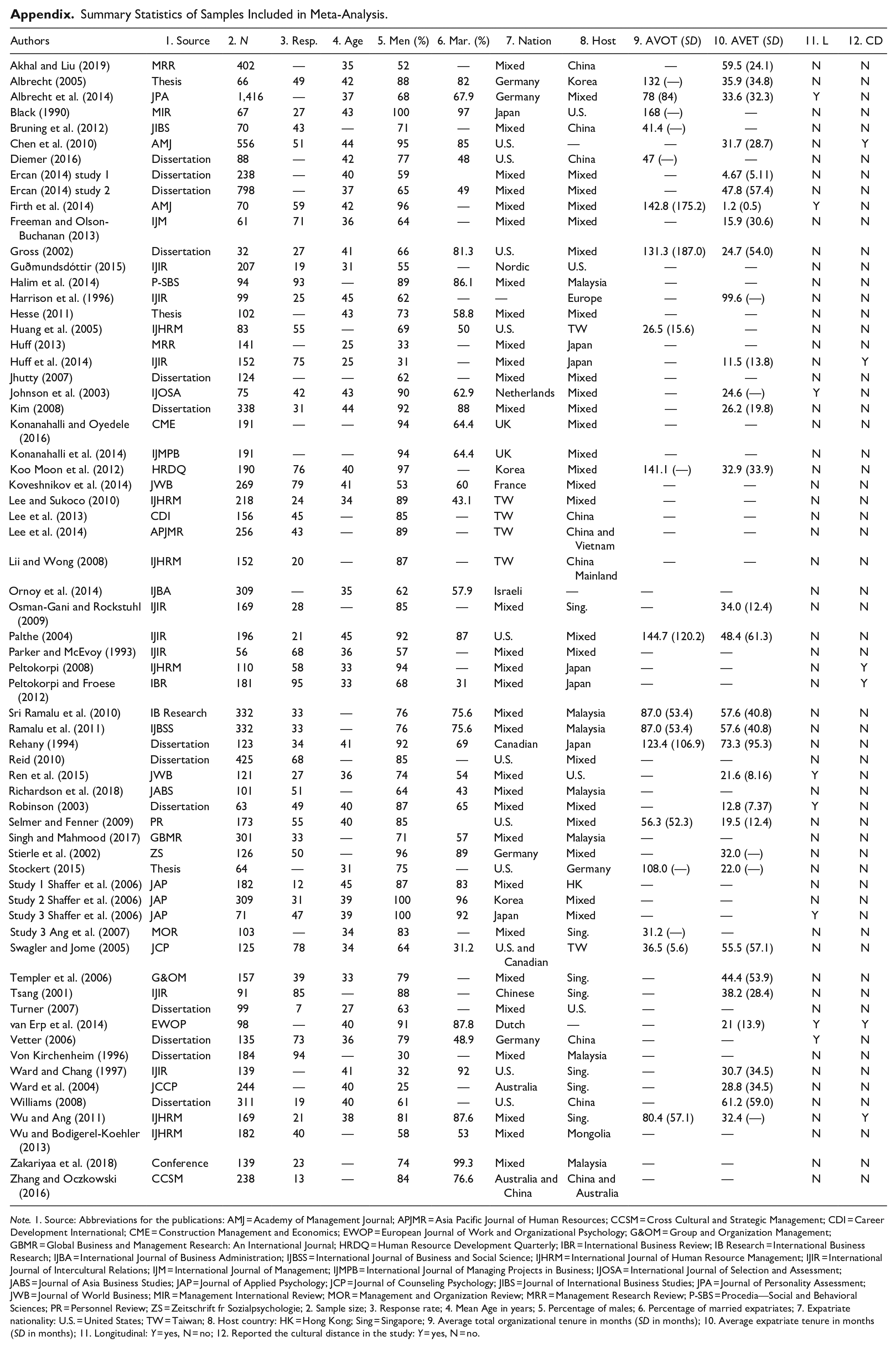
| Authors | 1. Source | 2. N | 3. Resp. | 4. Age | 5. Men (%) | 6. Mar. (%) | 7. Nation | 8. Host | 9. AVOT (SD) | 10. AVET (SD) | 11. L | 12. CD |
|---|---|---|---|---|---|---|---|---|---|---|---|---|
| Akhal and Liu (2019) | MRR | 402 | — | 35 | 52 | — | Mixed | China | — | 59.5 (24.1) | N | N |
| Albrecht (2005) | Thesis | 66 | 49 | 42 | 88 | 82 | Germany | Korea | 132 (—) | 35.9 (34.8) | N | N |
| Albrecht et al. (2014) | JPA | 1,416 | — | 37 | 68 | 67.9 | Germany | Mixed | 78 (84) | 33.6 (32.3) | Y | N |
| Black (1990) | MIR | 67 | 27 | 43 | 100 | 97 | Japan | U.S. | 168 (—) | — | N | N |
| Bruning et al. (2012) | JIBS | 70 | 43 | — | 71 | — | Mixed | China | 41.4 (—) | — | N | N |
| Chen et al. (2010) | AMJ | 556 | 51 | 44 | 95 | 85 | U.S. | — | — | 31.7 (28.7) | N | Y |
| Diemer (2016) | Dissertation | 88 | — | 42 | 77 | 48 | U.S. | China | 47 (—) | — | N | N |
| Ercan (2014) study 1 | Dissertation | 238 | — | 40 | 59 | Mixed | Mixed | — | 4.67 (5.11) | N | N | |
| Ercan (2014) study 2 | Dissertation | 798 | — | 37 | 65 | 49 | Mixed | Mixed | — | 47.8 (57.4) | N | N |
| Firth et al. (2014) | AMJ | 70 | 59 | 42 | 96 | — | Mixed | Mixed | 142.8 (175.2) | 1.2 (0.5) | Y | N |
| Freeman and Olson-Buchanan (2013) | IJM | 61 | 71 | 36 | 64 | — | Mixed | Mixed | — | 15.9 (30.6) | N | N |
| Gross (2002) | Dissertation | 32 | 27 | 41 | 66 | 81.3 | U.S. | Mixed | 131.3 (187.0) | 24.7 (54.0) | N | N |
| Guðmundsdóttir (2015) | IJIR | 207 | 19 | 31 | 55 | — | Nordic | U.S. | — | — | N | N |
| Halim et al. (2014) | P-SBS | 94 | 93 | — | 89 | 86.1 | Mixed | Malaysia | — | — | N | N |
| Harrison et al. (1996) | IJIR | 99 | 25 | 45 | 62 | — | — | Europe | — | 99.6 (—) | N | N |
| Hesse (2011) | Thesis | 102 | — | 43 | 73 | 58.8 | Mixed | Mixed | — | — | N | N |
| Huang et al. (2005) | IJHRM | 83 | 55 | — | 69 | 50 | U.S. | TW | 26.5 (15.6) | — | N | N |
| Huff (2013) | MRR | 141 | — | 25 | 33 | — | Mixed | Japan | — | — | N | N |
| Huff et al. (2014) | IJIR | 152 | 75 | 25 | 31 | — | Mixed | Japan | — | 11.5 (13.8) | N | Y |
| Jhutty (2007) | Dissertation | 124 | — | — | 62 | — | Mixed | Mixed | — | — | N | N |
| Johnson et al. (2003) | IJOSA | 75 | 42 | 43 | 90 | 62.9 | Netherlands | Mixed | — | 24.6 (—) | Y | N |
| Kim (2008) | Dissertation | 338 | 31 | 44 | 92 | 88 | Mixed | Mixed | — | 26.2 (19.8) | N | N |
| Konanahalli and Oyedele (2016) | CME | 191 | — | — | 94 | 64.4 | UK | Mixed | — | — | N | N |
| Konanahalli et al. (2014) | IJMPB | 191 | — | — | 94 | 64.4 | UK | Mixed | — | — | N | N |
| Koo Moon et al. (2012) | HRDQ | 190 | 76 | 40 | 97 | — | Korea | Mixed | 141.1 (—) | 32.9 (33.9) | N | N |
| Koveshnikov et al. (2014) | JWB | 269 | 79 | 41 | 53 | 60 | France | Mixed | — | — | N | N |
| Lee and Sukoco (2010) | IJHRM | 218 | 24 | 34 | 89 | 43.1 | TW | Mixed | — | — | N | N |
| Lee et al. (2013) | CDI | 156 | 45 | — | 85 | — | TW | China | — | — | N | N |
| Lee et al. (2014) | APJMR | 256 | 43 | — | 89 | — | TW | China and Vietnam | — | — | N | N |
| Lii and Wong (2008) | IJHRM | 152 | 20 | — | 87 | — | TW | China Mainland | — | — | N | N |
| Ornoy et al. (2014) | IJBA | 309 | — | 35 | 62 | 57.9 | Israeli | — | — | — | N | N |
| Osman-Gani and Rockstuhl (2009) | IJIR | 169 | 28 | — | 85 | — | Mixed | Sing. | — | 34.0 (12.4) | N | N |
| Palthe (2004) | IJIR | 196 | 21 | 45 | 92 | 87 | U.S. | Mixed | 144.7 (120.2) | 48.4 (61.3) | N | N |
| Parker and McEvoy (1993) | IJIR | 56 | 68 | 36 | 57 | — | Mixed | Mixed | — | — | N | N |
| Peltokorpi (2008) | IJHRM | 110 | 58 | 33 | 94 | — | Mixed | Japan | — | — | N | Y |
| Peltokorpi and Froese (2012) | IBR | 181 | 95 | 33 | 68 | 31 | Mixed | Japan | — | — | N | Y |
| Sri Ramalu et al. (2010) | IB Research | 332 | 33 | — | 76 | 75.6 | Mixed | Malaysia | 87.0 (53.4) | 57.6 (40.8) | N | N |
| Ramalu et al. (2011) | IJBSS | 332 | 33 | — | 76 | 75.6 | Mixed | Malaysia | 87.0 (53.4) | 57.6 (40.8) | N | N |
| Rehany (1994) | Dissertation | 123 | 34 | 41 | 92 | 69 | Canadian | Japan | 123.4 (106.9) | 73.3 (95.3) | N | N |
| Reid (2010) | Dissertation | 425 | 68 | — | 85 | — | U.S. | Mixed | — | — | N | N |
| Ren et al. (2015) | JWB | 121 | 27 | 36 | 74 | 54 | Mixed | U.S. | — | 21.6 (8.16) | Y | N |
| Richardson et al. (2018) | JABS | 101 | 51 | — | 64 | 43 | Mixed | Malaysia | — | — | N | N |
| Robinson (2003) | Dissertation | 63 | 49 | 40 | 87 | 65 | Mixed | Mixed | — | 12.8 (7.37) | Y | N |
| Selmer and Fenner (2009) | PR | 173 | 55 | 40 | 85 | U.S. | Mixed | 56.3 (52.3) | 19.5 (12.4) | N | N | |
| Singh and Mahmood (2017) | GBMR | 301 | 33 | — | 71 | 57 | Mixed | Malaysia | — | — | N | N |
| Stierle et al. (2002) | ZS | 126 | 50 | — | 96 | 89 | Germany | Mixed | — | 32.0 (—) | N | N |
| Stockert (2015) | Thesis | 64 | — | 31 | 75 | — | U.S. | Germany | 108.0 (—) | 22.0 (—) | N | N |
| Study 1 Shaffer et al. (2006) | JAP | 182 | 12 | 45 | 87 | 83 | Mixed | HK | — | — | N | N |
| Study 2 Shaffer et al. (2006) | JAP | 309 | 31 | 39 | 100 | 96 | Korea | Mixed | — | — | N | N |
| Study 3 Shaffer et al. (2006) | JAP | 71 | 47 | 39 | 100 | 92 | Japan | Mixed | — | — | Y | N |
| Study 3 Ang et al. (2007) | MOR | 103 | — | 34 | 83 | — | Mixed | Sing. | 31.2 (—) | — | N | N |
| Swagler and Jome (2005) | JCP | 125 | 78 | 34 | 64 | 31.2 | U.S. and Canadian | TW | 36.5 (5.6) | 55.5 (57.1) | N | N |
| Templer et al. (2006) | G&OM | 157 | 39 | 33 | 79 | — | Mixed | Sing. | — | 44.4 (53.9) | N | N |
| Tsang (2001) | IJIR | 91 | 85 | — | 88 | — | Chinese | Sing. | — | 38.2 (28.4) | N | N |
| Turner (2007) | Dissertation | 99 | 7 | 27 | 63 | — | Mixed | U.S. | — | — | N | N |
| van Erp et al. (2014) | EWOP | 98 | — | 40 | 91 | 87.8 | Dutch | — | — | 21 (13.9) | Y | Y |
| Vetter (2006) | Dissertation | 135 | 73 | 36 | 79 | 48.9 | Germany | China | — | — | Y | N |
| Von Kirchenheim (1996) | Dissertation | 184 | 94 | — | 30 | — | Mixed | Malaysia | — | — | N | N |
| Ward and Chang (1997) | IJIR | 139 | — | 41 | 32 | 92 | U.S. | Sing. | — | 30.7 (34.5) | N | N |
| Ward et al. (2004) | JCCP | 244 | — | 40 | 25 | — | Australia | Sing. | — | 28.8 (34.5) | N | N |
| Williams (2008) | Dissertation | 311 | 19 | 40 | 61 | — | U.S. | China | — | 61.2 (59.0) | N | N |
| Wu and Ang (2011) | IJHRM | 169 | 21 | 38 | 81 | 87.6 | Mixed | Sing. | 80.4 (57.1) | 32.4 (—) | N | Y |
| Wu and Bodigerel-Koehler (2013) | IJHRM | 182 | 40 | — | 58 | 53 | Mixed | Mongolia | — | — | N | N |
| Zakariyaa et al. (2018) | Conference | 139 | 23 | — | 74 | 99.3 | Mixed | Malaysia | — | — | N | N |
| Zhang and Oczkowski (2016) | CCSM | 238 | 13 | — | 84 | 76.6 | Australia and China | China and Australia | — | — | N | N |
Note. 1. Source: Abbreviations for the publications: AMJ = Academy of Management Journal; APJMR = Asia Pacific Journal of Human Resources; CCSM = Cross Cultural and Strategic Management; CDI = Career Development International; CME = Construction Management and Economics; EWOP = European Journal of Work and Organizational Psychology; G&OM = Group and Organization Management; GBMR = Global Business and Management Research: An International Journal; HRDQ = Human Resource Development Quarterly; IBR = International Business Review; IB Research = International Business Research; IJBA = International Journal of Business Administration; IJBSS = International Journal of Business and Social Science; IJHRM = International Journal of Human Resource Management; IJIR = International Journal of Intercultural Relations; IJM = International Journal of Management; IJMPB = International Journal of Managing Projects in Business; IJOSA = International Journal of Selection and Assessment; JABS = Journal of Asia Business Studies; JAP = Journal of Applied Psychology; JCP = Journal of Counseling Psychology; JIBS = Journal of International Business Studies; JPA = Journal of Personality Assessment; JWB = Journal of World Business; MIR = Management International Review; MOR = Management and Organization Review; MRR = Management Research Review; P-SBS = Procedia—Social and Behavioral Sciences; PR = Personnel Review; ZS = Zeitschrift fr Sozialpsychologie; 2. Sample size; 3. Response rate; 4. Mean Age in years; 5. Percentage of males; 6. Percentage of married expatriates; 7. Expatriate nationality: U.S. = United States; TW = Taiwan; 8. Host country: HK = Hong Kong; Sing = Singapore; 9. Average total organizational tenure in months (SD in months); 10. Average expatriate tenure in months (SD in months); 11. Longitudinal: Y = yes, N = no; 12. Reported the cultural distance in the study: Y = yes, N = no.
Acknowledgements
The authors would like to thank Associate Editor, Antonio Terracciano, and the anonymous reviewers for their helpful comments and suggestions.
Declaration of Conflicting Interests
The author(s) declared no potential conflicts of interest with respect to the research, authorship, and/or publication of this article.
Funding
The author(s) disclosed receipt of the following financial support for the research, authorship, and/or publication of this article: This research was supported in part by the Social Sciences and Humanities Research Council (Insight Grant 435-2022-0552).

Supplemental Material
Supplemental material for this article is available online.
Notes
References
Supplementary Material
Please find the following supplemental material available below.
For Open Access articles published under a Creative Commons License, all supplemental material carries the same license as the article it is associated with.
For non-Open Access articles published, all supplemental material carries a non-exclusive license, and permission requests for re-use of supplemental material or any part of supplemental material shall be sent directly to the copyright owner as specified in the copyright notice associated with the article.
