




Abstract
We report three studies to examine how culture may influence people’s tendency to see meaning in stressful experiences (MISE), as well as their coping responses. Using a newly developed MISE scale with established measurement invariance across both cultures, we found that Chinese participants were more likely than Euro-Canadians to see meaning in stressful experiences (Studies 1 and 2), to adopt acceptance and positive reframing coping styles (Study 1), and to respond more positively to the COVID-19 pandemic (Study 2). To establish a causal link between MISE and coping, we primed MISE in Study 3 with Chinese participants and found an increase in resilient coping. The research highlights the important roles of culture and meaning making in coping.
When encountering stressful or difficult situations, people often try to make meaning of the situations to understand or resolve them (e.g., Coleman & Neimeyer, 2014; Greenberg, 1995). Meaning making often changes people’s expectations about and response to the situations (Park, 2010; Wilson & Gilbert, 2008). Given its importance, more research is needed to better understand what contributes to one’s inclination to engage in meaning making in response to adversity and challenge. Building on research in cultural psychology, we investigate how culture—focusing on Canada and China—may influence meaning-making, and the implications for coping.
Meaning in Stressful Experiences
Meaning making refers to how individuals construe, understand, and make sense of life experiences (Gillies et al., 2014). Successful meaning making allows individuals to comprehend experiences and see the significance and purpose of experiences (George & Park, 2016; Martela & Steger, 2016). Meaning making is particularly important in stressful and negative situations, where it can help restore a sense of significance and purpose in people’s lives (Heintzelman & King, 2014). Stressful experiences can be caused by negative (e.g., loss of loved ones) or positive events (e.g., a wedding). We focus on people’s personal construal in this paper. If one construes an experience as stressful, regardless of the source of stress, then the experience has at least some negative elements and requires some sense making and coping. 1 In this paper, we focus on people’s tendency to construe value and meaning in stressful situations. We define this tendency to see meaning in stressful experiences (MISE) as comprised of two related components: (1) individuals’ belief that stressful experiences are meaningful and valuable, and (2) individuals’ active reflection on the meaning of stressful experiences.
Culture and Meaning in Stressful Experiences
Culture-specific thinking styles and beliefs may guide how we appraise and respond to stressful experiences. Compared to North Americans, Chinese people are more holistic in their thinking (Nisbett, 2003). Holistic thinking involves greater attention to the connectedness between an element (or an object) and its background (or field), and to the relationships between elements in a field. Such holistic thinking may lead Chinese to be more aware of the consequences of actions and events, and the goals of agents. Likewise, Tweed and Lehman (2002) discussed how Confucian learning emphasizes the ultimate goals and purpose of knowledge, suggesting that Chinese thinking is oriented more toward teleology—construal of an event in terms of its end, purpose, and goal. Applying such thinking patterns to suffering, Sullivan et al. (2016) found that Chinese were more likely than Americans to endorse teleological purposes and functions, but not causes, of suffering. In other words, relative to Americans, Chinese tend to believe that suffering ultimately has a purpose. Such teleological patterns of thinking may apply to stressful experiences, which are a form of suffering (Ji, Khei, et al., 2021). The teleological emphasis among Chinese may allow them to make sense of stressful events, provide significance when they connect such experiences to larger purposes, and provide purpose when the ultimate goals connected to the experiences motivate planned behavior toward achieving them (Scott, 2022). As a result, it may lead Chinese to be more likely than Americans to see meaning in such experiences.
Another characteristic of Chinese thinking is naïve dialecticism—the belief that opposing elements (e.g., good and bad; success and failure) not only coexist and complement each other, but also give rise to and reinforce each other (Ji et al., 2001; Peng & Nisbett, 1999). Therefore, relative to North Americans, 2 Chinese people are more likely to accept contradictions (Nisbett, 2003; Peng & Nisbett, 1999), and expect events to change from one direction to another (Ji, 2008; Ji et al., 2008). Such beliefs in contradiction and change can play an important role in individuals’ tendencies to see meaning in stressful experiences.
Stressful experiences are usually perceived as unwelcome and negative, regardless of the valence of the source of stress. When experiencing stress, the belief in the coexistence and transformation of opposing elements may help Chinese understand the situation and believe in the value that may come from such experiences. A famous Chinese philosopher, Mencius, once said, “When heaven is about to confer a great office on a man, it first exercises his mind with suffering, and his sinews and bones with toil; it exposes his body to hunger, subjects him to extreme poverty; it confounds his undertaking. By all these it stimulates his mind, hardens his nature, and supplies his incompetencies.” Thus, suffering and stressful experiences come with value, meaning, and purpose. Indeed, such beliefs have been endorsed by many Chinese teachers and parents, who practice them in everyday life and use them in educating upcoming generations. From a young age, Chinese students are taught to endure hardship and suffering in school so that they can succeed in life. That is, there is value and purpose in suffering (Ji, Khei, et al., 2021).
In addition, Chinese may be more likely than North Americans to think that similar stressful situations can reoccur in the future (Ji, 2005; Ji et al., 2001), and that the insights gained from the current experience can be relevant and helpful for similar encounters in the future (Meichenbaum & Novaco, 1985; Uchida & Kitayama, 2009), which ultimately gives value to the experiences.
Overall, due to their stronger tendency of teleological, holistic, and dialectical thinking, Chinese participants may be more likely than North Americans to derive meaning, value, and purpose from stressful experiences. Accordingly, they may find stressful situations less negative and more tolerable, which may further encourage/reinforce them to reflect more often on the meaning of stressful experiences.
Relationship Between Meaning in Stressful Experiences and Coping
Meaning making plays a crucial role in one’s coping with stress (Davis et al., 2000; Gillies & Neimeyer, 2006). It is important to examine how individuals’ tendency to see meaning in stressful experiences relates to their coping styles. Among the 14 different types of coping styles measured in brief COPE (Carver et al., 1989), “acceptance” and “positive reframing” are most relevant to individuals’ tendency to see meaning in stressful experiences. Indeed, many meaning making studies have used these two coping styles as a proxy-measure for people’s meaning making efforts (Folkman & Moskowitz, 2007; Park & Folkman, 1997). Acceptance coping refers to acknowledging the presence of the stressor and accepting the reality, and positive reframing refers to re-construing negative experiences in positive terms. Both are emotion-focused coping strategies that aim at reducing distress rather than dealing with the problem per se (Carver et al., 1989). Individuals who see meaning in stressful experiences may be more likely to accept the reality of a situation (i.e., acceptance), and re-evaluate it (i.e., positive reframing). As such, we predicted individuals’ tendency to see meaning in stressful experiences would be positively associated with acceptance and positive reframing coping styles.
Conceptually, MISE and the two emotion-focused coping styles (acceptance and positive reframing) are related but distinct. Acceptance refers to the accepting attitudes one holds toward a situation. People can accept what is happening in their lives because they see meaning in it, because they give up fighting against it, or because of other reasons. Likewise, positive reframing refers to seeing/looking for something good in what is happening. This may be closely related to MISE belief, but something good in what is happening does not have to be meaning or purpose. Positive reframing is about re-appraising a negative situation (i.e., power outage) in a positive way (e.g., this provides an opportunity to take a break from studying) to feel better without an attempt to understand the cause/purpose/significance of the negative experience. It simply focuses on the present moment without engaging in any form of reflective thought process (Vohs et al., 2019). In contrast, MISE involves a crucial process of comprehension and understanding of the significance of the event, how the event makes sense, and then integrating these thoughts into the existing knowledge or understanding of how things work in the world (George & Park, 2016; Heine et al., 2006; Heintzelman et al., 2013; Martela & Steger, 2016). Such a reflection process tends to focus on comprehension and interpretation of events across time. When people make meaning in stressful experiences, they attempt to ascribe significant interpretations to the events and incorporate the negative/stressful experience into a broader understanding of their life (Bauer et al., 2008; McAdams & McLean, 2013; Pals, 2006).
Meaning Making and Other Psychological Outcomes
Finding meaning in life in general has been associated with a host of positive psychological outcomes, including optimism, positive affect, and psychological well-being (Park, 2010). Indeed, meaning in life is considered as one of the protective factors that facilitate positive adaptation outcomes in various adverse situations (e.g., Masten & Reed, 2002). Seeing meaning and purpose in life not only helps people understand the adversity and challenge they are facing, but also helps them see beyond their immediate concerns (Krause, 2003). Such insights can contribute to optimism and life satisfaction. For example, researchers have found positive correlations between meaningfulness in life and optimism among cancer patients (e.g., Thompson & Pitts, 1993) and older adults (e.g., Krause, 2003). Meaning in life consistently predicts positive affect among university students (Pan et al., 2008; Zika & Chamberlain, 1987).
In addition to the correlational evidence reviewed above, research has also established causal links between meaning and optimism/positive affect. For example, Lee et al. (2006) showed that meaning intervention enhanced optimism and self-efficacy among cancer patients. Miao and Gan (2020) primed meaning among university participants after asking them to think about a frustrating experience. They found that, compared to those in the control condition, participants primed with meaning had stronger positive affect, which contributed to effective coping with future stressors. Based on these findings, we expected that seeing meaning in stressful experiences may lead people to experience relatively more positive (or less negative) affect in response to stressors, and to have more positive anticipation of the future (i.e., being optimistic) despite the current stressful experiences.
Both positive affect and optimism are psychological resources that help people cope with life challenges more resiliently (Scheier & Carver, 1985; Scheier et al., 1986; Tugade & Fredrickson, 2004). People who encounter stressful situations with optimism tend to appraise the situation as more controllable and use coping strategies that are problem-focused (Naseem & Khalid, 2010; Scheier et al., 1986). Resilient coping is a problem-focused coping strategy that refers to actively engaging in adaptive problem-solving despite stressful circumstances (Sinclair & Wallston, 2004). Thus, finding stressful experiences meaningful may lead one to be resilient in coping.
Present Research
The present research examined how culture may shape individuals’ tendencies to see meaning in stressful experiences (MISE), which may further influence coping. We argue that meaning making in stressful experiences may have positive effects on both emotion-focused and problem-focused coping. Specifically, seeing meaning in stressful experiences may allow people to engage more in active acceptance and positive reframing, feel increased positive affect, have more positive anticipation of the future (i.e., optimism), and cope more resiliently. Using a newly developed MISE scale with established psychometric properties and measure invariance, Study 1 examined individuals’ tendency to see meaning in stressful experiences across cultures and its associations with two coping styles: acceptance and positive reframing. Study 2 further examined the relationship among MISE, culture, and positive psychological outcomes (i.e., affect and positive anticipations of the future) in response to a real-life stressor—the COVID-19 pandemic. We predicted that, compared to Euro-Canadians, Chinese would be more likely to see meaning in stressful experiences, to engage in acceptance and positive reframing coping, to feel more positive affect, and to anticipate more positive changes in stressful situations. In Study 3, we established a causal link between MISE and resilient coping.
Study 1
Method
Participants
Assuming the power to be .90,
Materials and procedures
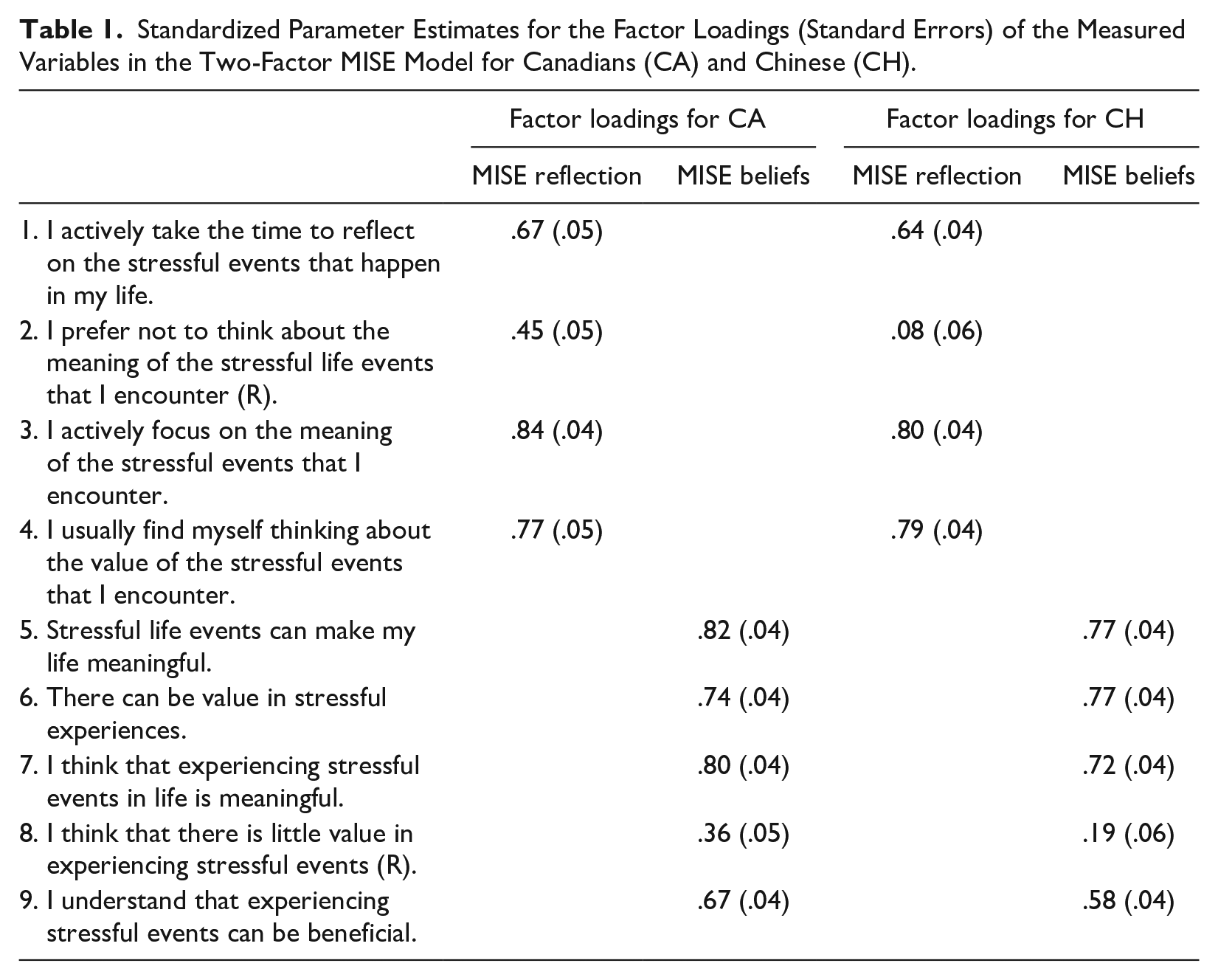
We conceptualize meaning in stressful experience (MISE) as people’s beliefs in, and tendency to actively reflect on, the meaning and value of stressful experiences. The current meaning making measures do not adequately capture such conceptualization as they do not focus on stressful experiences. By adapting van den Heuvel et al.’s (2009) meaning making scale, we developed a MISE scale to better assess the construct that fits our conceptualization. 3 Using various samples, we examined the structure of this MISE measure, established its psychometric properties that are deemed satisfactory, and assessed its relationship with other conceptually relevant constructs (see Table 1 for scale items and Supplemental Material for details of psychometric testing). Participants indicated their agreement with each of the statements in the MISE measure on a six-point scale (1 = Strongly disagree, 6 = Strongly agree).
Standardized Parameter Estimates for the Factor Loadings (Standard Errors) of the Measured Variables in the Two-Factor MISE Model for Canadians (CA) and Chinese (CH).
In addition to MISE, some of the participants in Study 1 (213 Euro-Canadians and 224 Chinese) 4 also completed the Brief COPE inventory (Carver, 1997), which consists of 28 items assessing 14 different coping styles. Participants answered questions about all 14 coping styles, although we were only interested in two of them: acceptance coping and positive reframing coping. Acceptance was measured by “I’ve been accepting the reality of the fact that it has happened” and “I’ve been learning to live with it.” Positive reframing coping was measured by “I’ve been trying to see it in a different light, to make it seem more positive” and “I’ve been looking for something good in what is happening.” Participants indicated the extent to which they had been engaging in each coping response when dealing with problems or stressors in their lives on a four-point scale (1 = I haven’t been doing this at all; 4 = I’ve been doing this a lot).
All participants reported their age, gender, and ethnicity. Euro-Canadians completed the study in English and Chinese participants completed the study in Mandarin Chinese. The study materials were translated into Chinese and checked by bilingual researchers to ensure its accuracy and equivalence across cultures. The same procedure applied to Study 2.
Results
Internal consistency and measurement invariance of the MISE scale
For the MISE scale (αCAN = .80, αCHN = .72 for belief; αCAN = .77, αCHN = .59 for reflection), we conducted confirmatory factor analysis across cultures in R (R Core Team, 2021) with lavaan (Rosseel, 2012). Table 1 shows the results of the confirmatory factor analysis, supporting the two-factor model, 5 although the loadings on items 2 and 8 were low for Chinese participants. These two factors—general beliefs in, and active reflection on, the meaning and value of stressful experiences—were moderately correlated among Euro-Canadians (r = .52) and Chinese (r = .53).
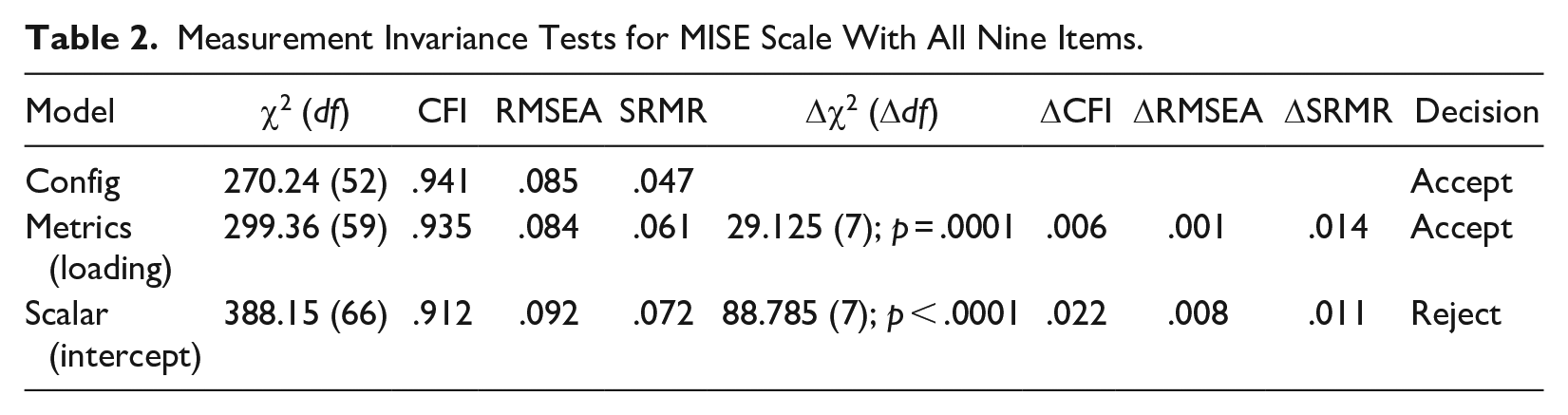
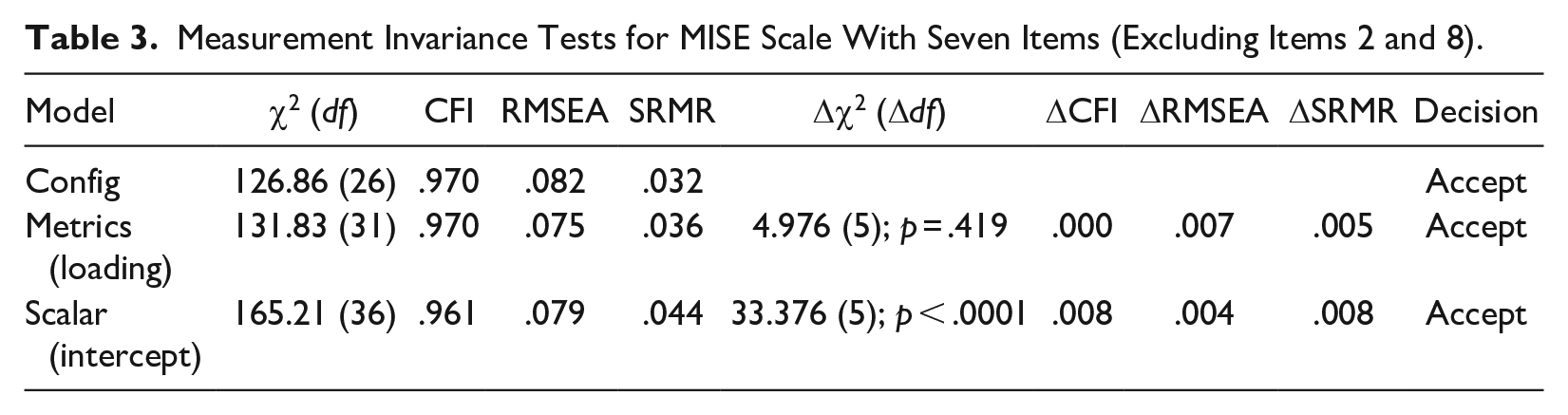
To make meaningful comparisons across cultures, we first tested measurement invariance for MISE in R (R Core Team, 2021) with lavaan (Rosseel, 2012) and semTools (Jorgensen et al., 2021). As seen in Table 2 and 3, metric invariance with the full scale was established, and scalar invariance was established when we excluded items 2 and 8.
Measurement Invariance Tests for MISE Scale With All Nine Items.
Measurement Invariance Tests for MISE Scale With Seven Items (Excluding Items 2 and 8).
Culture differences in MISE
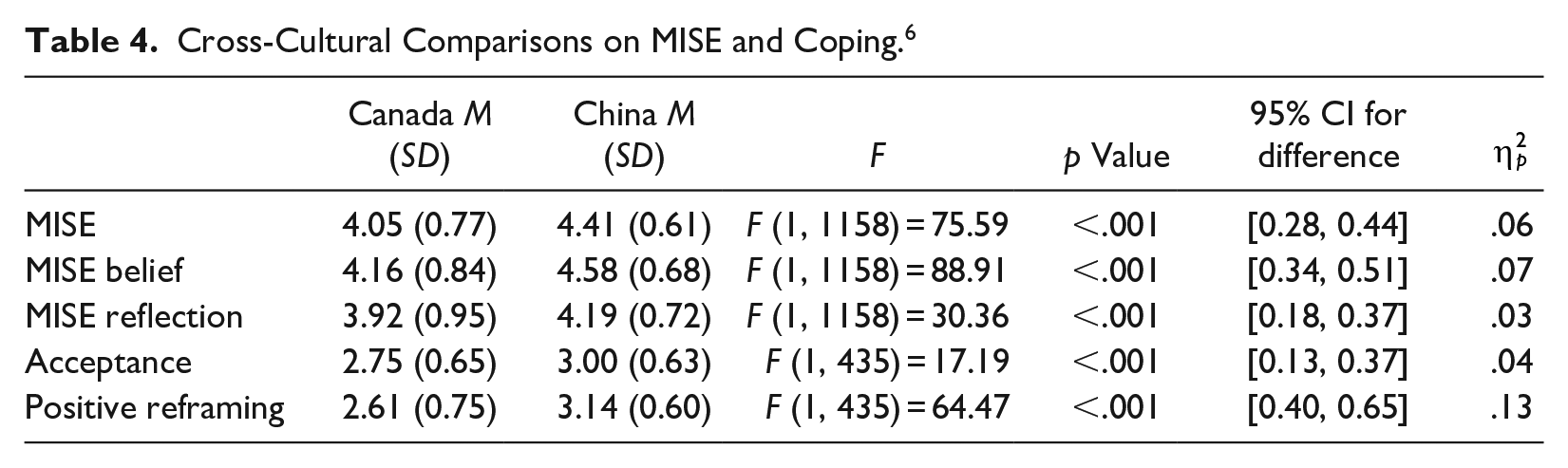
We report the results based on the full MISE scale, although the patterns of results are similar when we analyzed the seven measure invariant items only (see Supplemental Material). The nine items on MISE, after reverse coding as necessary, were averaged to form an overall MISE index. In addition, the items on the respective subscales were averaged to form the belief index and the reflection index, respectively. To examine culture differences in MISE, we conducted one-way ANOVAs on (1) the average MISE, (2) general beliefs in the meaning or value of stressful experiences, and (3) the tendency to actively reflect on the meaning of stressful experiences. As seen in Table 4 and in line with our prediction, Chinese reported higher averaged MISE than did Euro-Canadians, F (1, 1158) = 75.59, p < .001. Specifically, compared to Euro-Canadians, Chinese reported a stronger belief in the meaning/value of stressful experiences and a higher tendency to actively reflect on the meaning of the experiences.
Cross-Cultural Comparisons on MISE and Coping. 6
Cultural differences in acceptance and positive reframing coping styles
Next, we conducted one-way ANOVAs on each of the two coping styles, with culture as the independent variable. As seen in Table 4, Chinese participants reported engaging in acceptance and positive reframing coping styles more often than did Euro-Canadians.
Associations between MISE and coping styles
As displayed in Table 5, both Euro-Canadians’ and Chinese participants’ tendencies to engage in MISE were positively correlated with their acceptance and positive reframing coping styles.
Correlations of MISE With Acceptance and Positive Reframing Across Cultures.
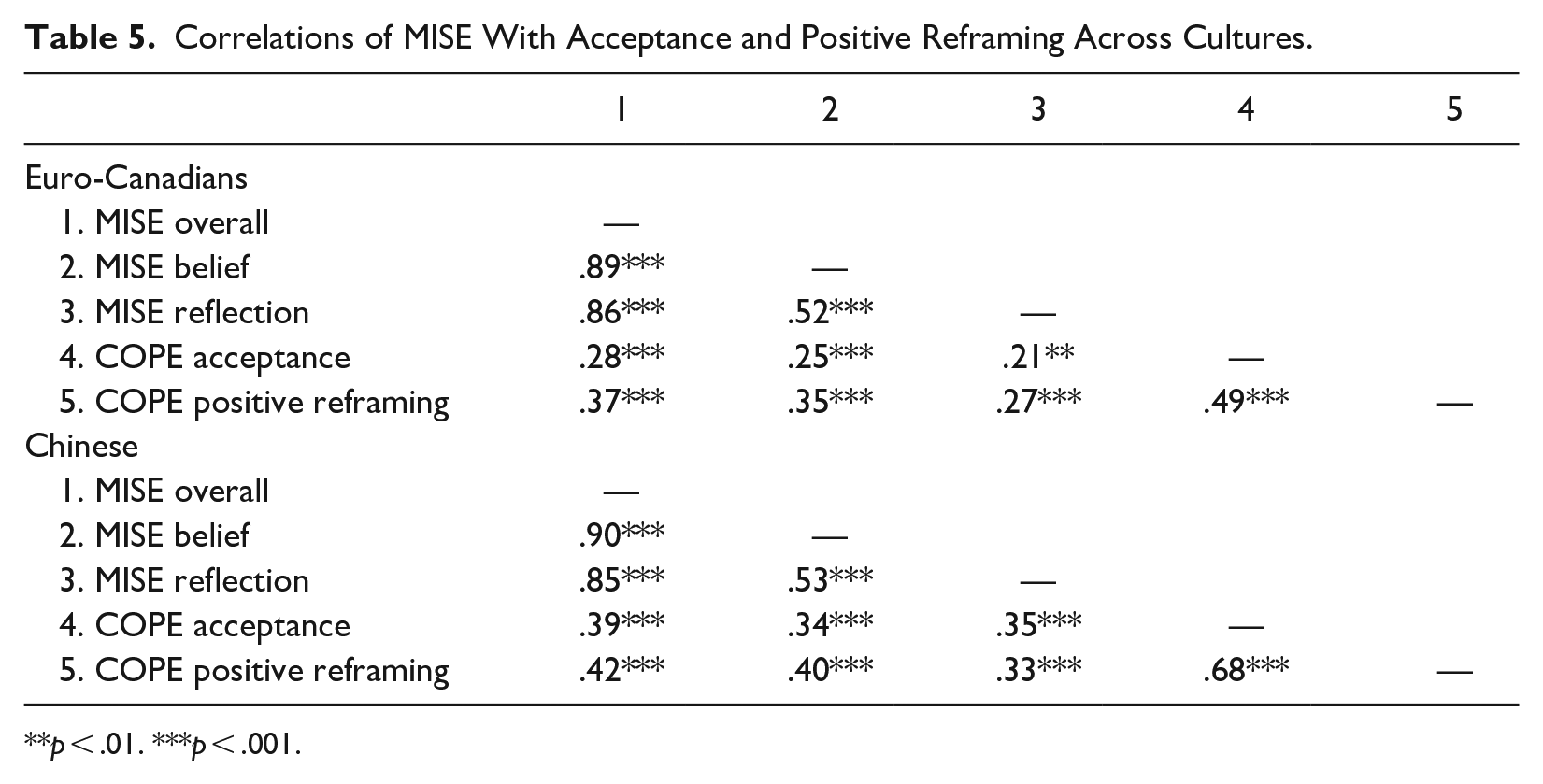
p < .01. ***p < .001.
Mediation analysis
Finally, we ran two mediation analyses (one on each coping style) to determine whether culture differences in individuals’ coping styles were at least in part due to their tendencies to see meaning in stressful experiences. Running Model 4 in Hayes’s (2018) PROCESS macro for SPSS (version 3.1), we entered culture (0 = Canadians, 1 = Chinese) as the predictor, average MISE as the mediator, and acceptance and positive reframing coping styles as the dependent variable, respectively, in each mediation analysis. 7
Acceptance
As seen in Figure 1, culture was significantly related to individuals’ average MISE tendency, b = .33, t(435) = 5.34, p < .001, which in turn was positively associated with individuals’ acceptance coping, b = .32, t(434) = 7.05, p < .001. A 95% confidence interval based on 10,000 percentile bootstrap samples showed that the indirect effect (b = .10) was entirely above zero [0.06, 0.16], indicating a significant indirect effect of culture on acceptance coping through MISE.
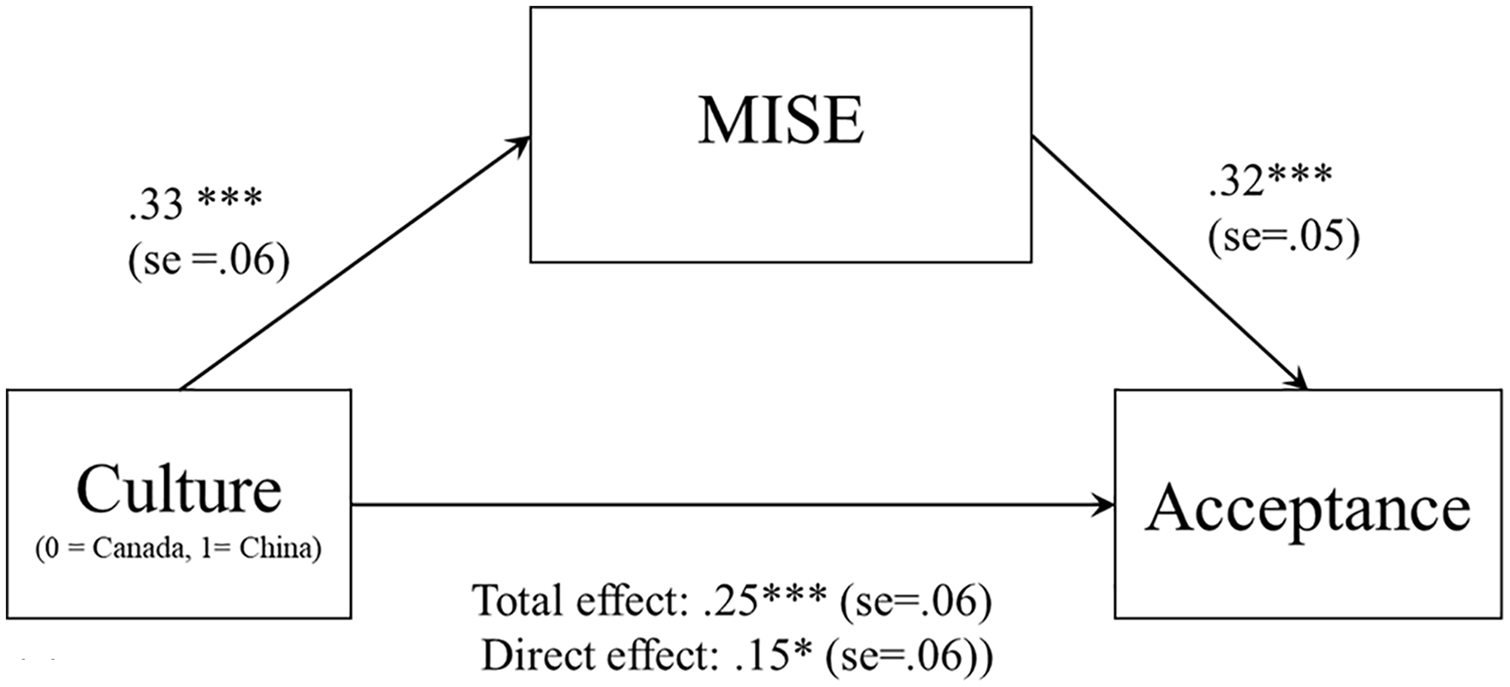
Relationship between culture and acceptance coping style as mediated by MISE (unstandardized regression coefficients).
Positive reframing
Likewise, individuals’ average MISE tendency was positively related to their positive reframing coping, b = .41, t(434) = 8.78, p < .001. A 95% confidence interval based on 10,000 percentile bootstrap samples showed that the indirect effect (b = .14) was entirely above zero [0.08, 0.20], indicating a significant indirect effect of culture on positive reframing coping through MISE (see Figure 2).
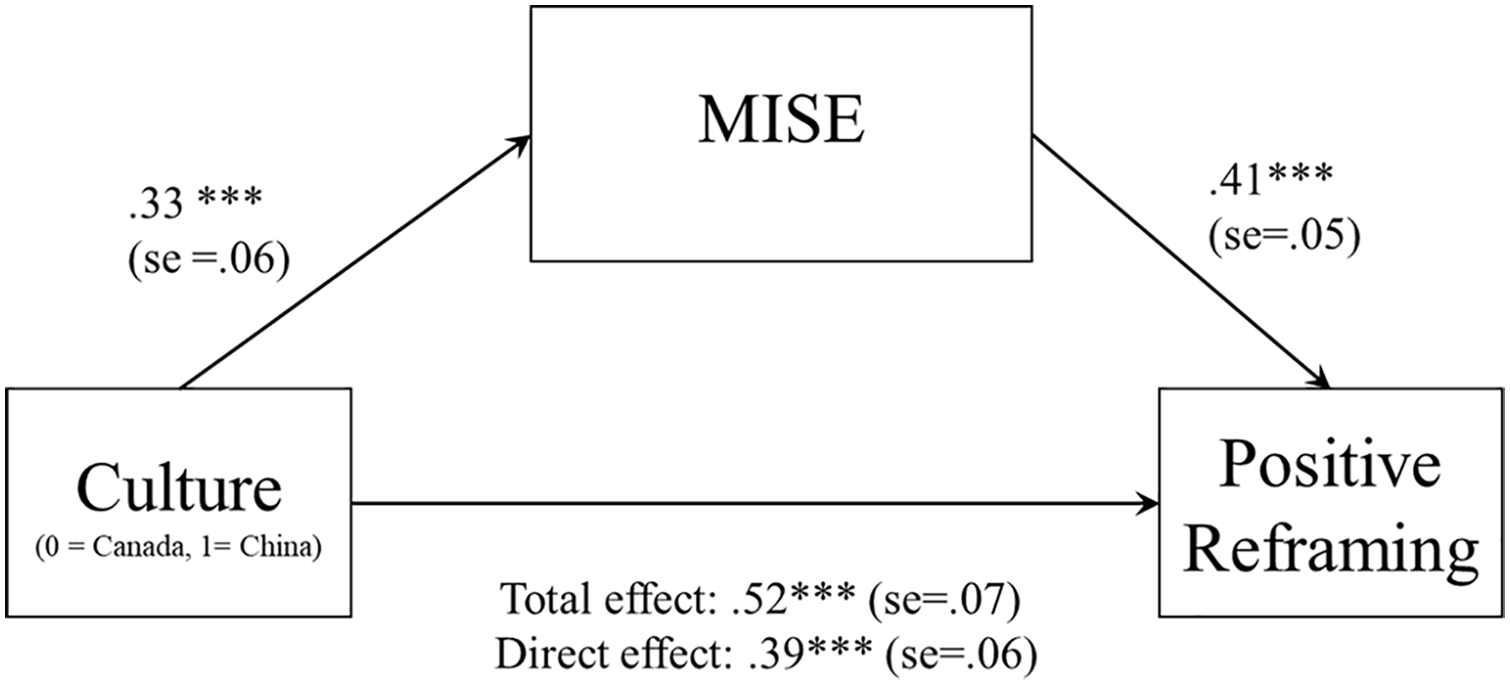
Relationship between culture and positive reframing coping style as mediated by MISE (unstandardized regression coefficients).
In summary, Chinese reported a higher tendency to see meaning in stressful experiences and to engage in acceptance and positive reframing coping styles, compared to Euro-Canadians. Furthermore, MISE partially accounted for cultural differences in coping styles.
Study 2
Study 1 indicated that seeing meaning in stressful events had implications for coping. The COVID-19 pandemic has been influencing people’s ways of life since early 2020, thereby causing tremendous stress. Study 2 examined how MISE may influence people’s affective and cognitive responses to the pandemic, from a cross-cultural perspective. Specifically, we examined people’s affect and anticipations of the impact brought by the pandemic.
Method
Participants
Assuming the power to be .90,
Materials and procedure
The study was conducted online in early 2021 during the COVID-19 pandemic. Participants reported their current affect (happy, calm, relieved, sad, anxious, and distressed) on a scale from 0 (not at all) to 9 (very much). Following Ji, Khei, et al. (2021), we asked participants to write about the possible outcomes (no more than 10) that the pandemic would bring to the world and people’s lives. Then, they rated each of their outcomes in valence (−5 = extremely negative; 0 = neutral; +5 = extremely positive). All participants completed MISE (αCAN = .86, αCHN = .89 for belief; αCAN = .82, αCHN = .70 for reflection) as in Study 1.
Results
MISE
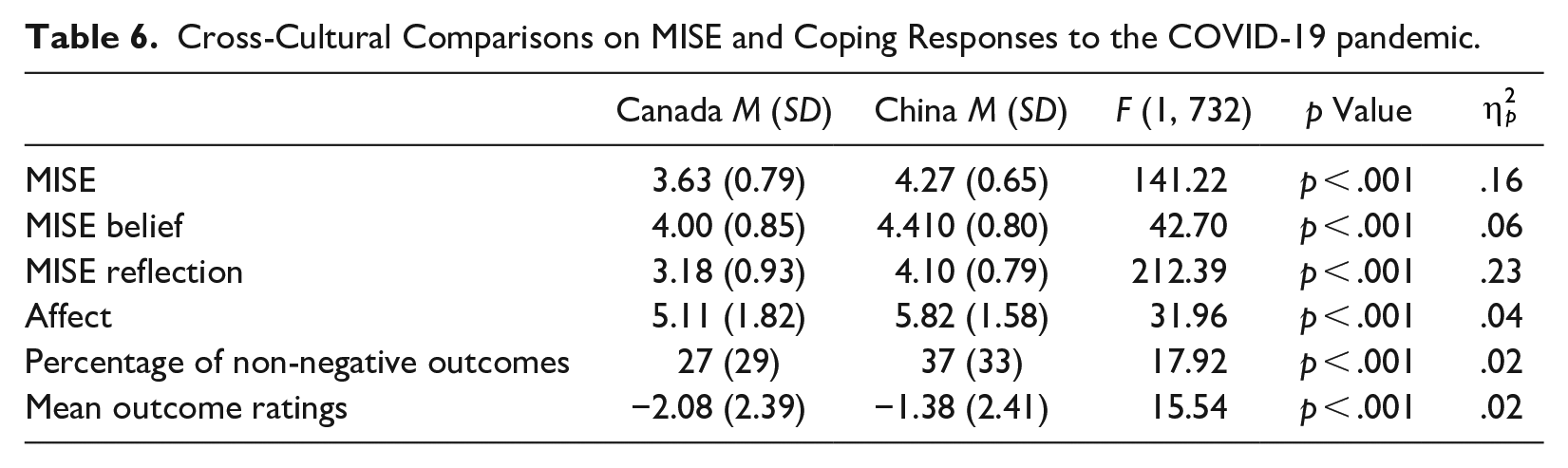
As seen in Table 6, Chinese scored higher than Euro-Canadians on the average MISE tendency, as well as on the two subscales (belief and reflection). 8
Cross-Cultural Comparisons on MISE and Coping Responses to the COVID-19 pandemic.
Affect
We averaged the seven affect items (after reverse coding the negative affect items; Cronbach α was .88 for Euro-Canadians and .83 for Chinese). As seen in Table 6, Chinese reported more positive affect compared to Canadians.
COVID outcome
Euro-Canadians (M = 6.42, SD = 2.25) generated a greater number of outcomes than did Chinese (M = 5.50, SD = 2.55), F (1, 732) = 26.41, p < .001,
Indirect effects
Did MISE mediate the effect of culture on affect and expected COVID outcomes? Hayes’s (2018) Process Macro (Model 4) showed that 95% percentile confidence interval for the indirect effect of culture on affect via MISE (b = .43, se = .06) based on 10,000 bootstrap samples was entirely above zero [0.31, 0.56], indicating that MISE overall mediated cultural differences in affect (see Figure 3). Likewise, the 95% confidence interval for the indirect effect of culture on the percentage of non-negative outcomes via MISE (b = 2.48, se = .96) based on 10,000 percentile bootstrap samples was entirely above zero [0.64, 4.40], indicating that MISE mediated the cultural effect on the outcomes generated (see Figure 4). 9
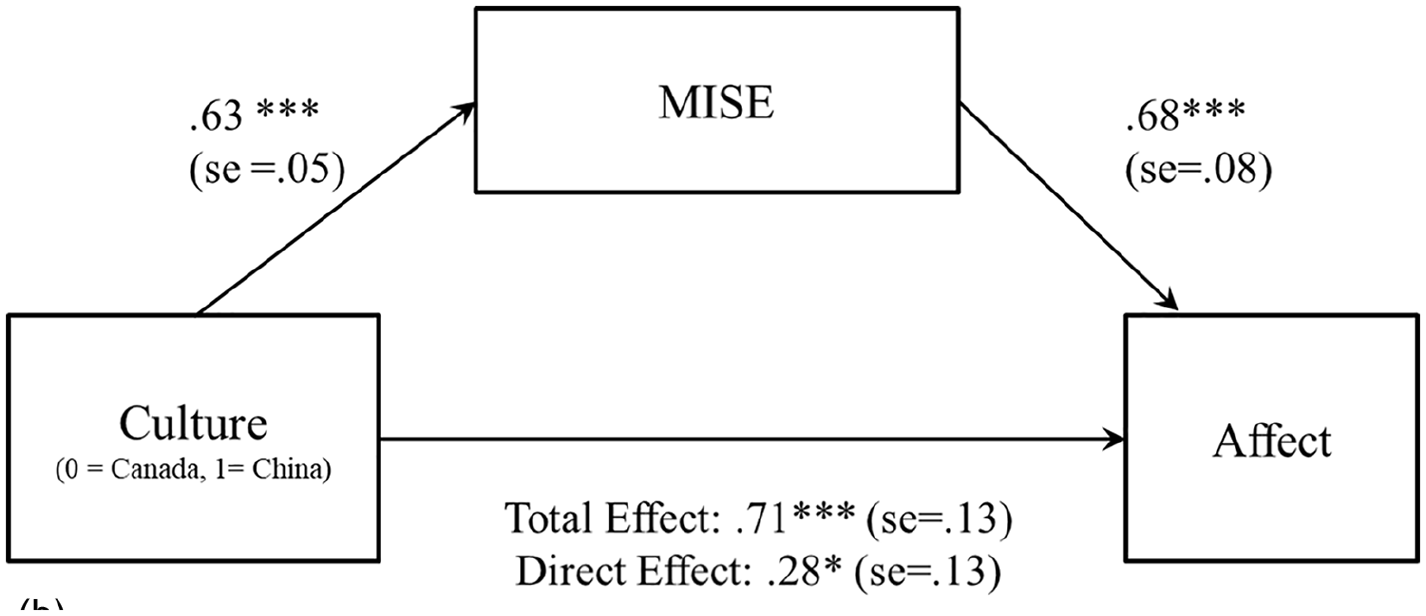
Indirect effect of culture on affect through MISE (unstandardized regression coefficients).
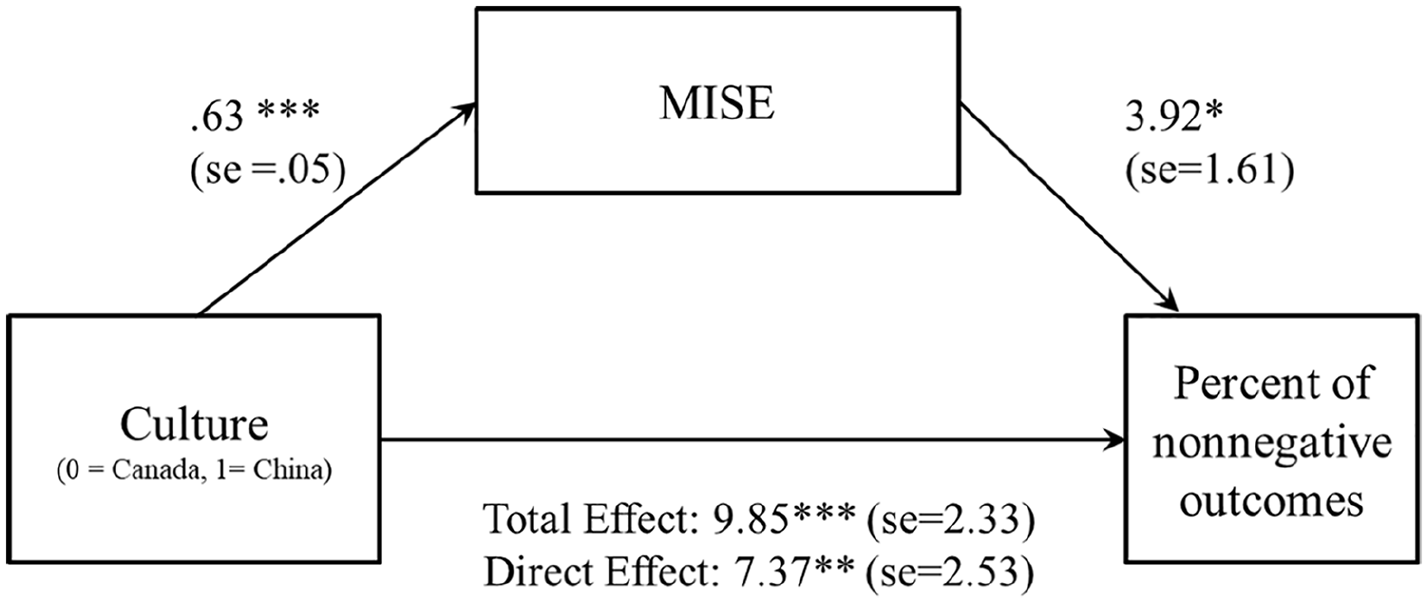
Indirect effect of culture on COVID-19 outcomes through MISE (unstandardized regression coefficients).
Thus, consistent with Study 1, Study 2 showed cultural differences between Chinese and Euro-Canadians in seeing meaning in stressful experiences, which mediated cultural effects on their affective and cognitive responses to the pandemic. 10
Study 3
Studies 1 and 2 consistently showed cultural differences in people’s tendency to see meaning in stressful experiences, which was associated with coping. The association between MISE and coping can go both ways, as the evidence from Studies 1 and 2 is only correlational. It would be important to examine whether seeing meaning in stressful experiences can foster coping, which was the goal of Study 3. Study 3 investigated among Chinese participants whether a manipulation of MISE beliefs would increase resilient coping.
Method
Participants
Assuming the power to be .90,
Materials and procedure
Pretest
A different group of Chinese university students (186 women and 24 men; Mage = 22.69, SDage = 2.41) were first asked to generate events considered stressful to them in life, following which they were then asked to select one event from the list that was moderately stressful to them. They then imagined that their best friend was going through such a stressful event and they would write a short letter to their friend.
Participants were randomly assigned to one of the following two conditions: In the meaning condition, participants were asked to emphasize in the letter that stressful experiences could have meaning and value; in the control condition, participants were asked to be encouraging to their friend and tell their friend that they were doing better than other people. Participants were encouraged to relate their own experience to support their points and had 5 minutes to write the letter. Afterward, they completed the MISE scale. The purpose of the pretest was to show that the manipulation influenced MISE beliefs.
As expected, participants in the meaning condition reported higher MISE belief (M = 4.59, SD = .72) than those in the control condition (M = 4.35, SD = .79), 95% CI [0.04, 0.45], F (1, 208) = 5.42, p = .021,
Actual study
In Study 3, following the same procedure as in the pretest, participants were randomly assigned to either the meaning or control condition, and wrote a letter to their friend. After writing the letter, they completed the four-item Brief Resilience Coping scale (α = .78; Sinclair & Wallston, 2004), by indicating their agreement—at the moment—with each statement (e.g., “Regardless of what happens to me, I believe I can control my reaction to it”), on a scale from 1 (strongly disagree) to 5 (strongly agree). The purpose was to test whether the meaning manipulation increased resilient coping.
Participants also completed the demographic questionnaire (e.g., their age, gender, and ethnicity).
Results
In line with our predictions, participants in the meaning condition (M = 3.87, SD = 0.53) scored higher on resilient coping than participants in the control condition (M = 3.65, SD = 0.50), F (1, 177) = 8.03, p = .005, 95% CI for the difference [0.07, 0.37],
General Discussion
The present research has found that, compared to Euro-Canadians, Chinese participants reported a stronger tendency to see meaning in stressful experiences, and were more likely to adopt acceptance and positive reframing coping styles and show positive coping responses to the pandemic. Furthermore, seeing meaning in stressful experiences enhanced resilient coping among Chinese participants.
The present findings on coping styles are consistent with previous research showing cultural differences in primary and secondary control. Weisz et al. (1984) have reviewed evidence showing that Americans value and emphasize primary control—the tendency to influence existing realities to enhance rewards, whereas Japanese value and emphasize secondary control—the tendency to adjust to existing realities in order to enhance rewards. Accordingly, Morling et al. (2002) have shown that influence situations are more common than adjustment situations in the U.S., while the opposite is true in Japan. Coping styles such as acceptance and positive reframing can be considered as secondary control or adjustment, as both involve accommodating to existing realities. In response to the COVID-19 pandemic, there has been little that people can do to change the pandemic. Instead, people have to change their own behaviors in order to accommodate or adjust to the new situation. As a result, seeing meaning in stressful experiences plays an important role in response to such a real-life stressor, leading to more positive affect and more positive (optimistic) anticipations of the impacts brought by the pandemic. The current results are also consistent with Yap et al. (2021), in which Chinese participants, compared to Euro-Canadians, reported higher state psychological well-being and higher state optimism in response to the COVID-19 pandemic and that the effect was replicated after a week’s delay.
The present findings also echo previous research on cultural differences in emotion. Research has shown that in response to a negative (e.g., self-failure) situation, Euro-Americans experienced mixed emotions as much as Japanese did (Miyamoto et al., 2010), or engaged in more hedonic regulation (—down-regulation of negative emotion and up-regulation of positive emotions) than Asians (Miyamoto et al., 2014). Cultural differences in their hedonic regulation are likely due to different appraisal of the situation: Euro-Americans had a greater desire to change the negative situation, whereas Asians were more likely to see motivational and cognitive utilities of negative emotional experiences. Consistent with these findings, our research shows that Chinese participants appraise stressful or negative situations less negatively.
Theoretical Contributions and Implications
The present research contributes to the current literature on culture, meaning making, and coping in a few ways. First, we have demonstrated cultural differences in meaning-making, specifically in seeing meaning in stressful experiences, suggesting that meaning making can be shaped and facilitated by cultural and social practices. This is in line with Park’s (2010) proposition that cultural and social environments have an impact on individuals’ meaning making. This new finding of higher MISE among Chinese than among Euro-Canadians may also help us better understand the resilient nature embedded in the Chinese culture. In response to real life stressors such as the current COVID-19 pandemic, we found that Chinese were more likely than Euro-Canadians to respond and cope with the pandemic in a positive way (e.g., more positive affect and more optimistic outlook on the pandemic) in part because they tend to see and reflect on meaning in stressful experiences more than their Euro-Canadian counterparts.
Second, adding on to the meaning making literature, we provide further evidence showing that individuals’ tendency to see meaning in stressful experiences is associated with coping. Many studies in the current literature define meaning making as the engagement in deliberate coping efforts to understand the situation (Park & Folkman, 1997; Folkman & Moskowitz, 2007). Most of these studies do not differentiate meaning making from coping efforts and often use selective COPE subscales (mostly positive reframing) as a proxy for meaning making (Boehmer et al., 2007; Danhauer et al., 2005). The present research indicates that, although the tendency to see meaning and think about meaning in stressful experiences is positively associated with certain coping efforts, they are not the same construct. Across both Euro-Canadians and Chinese, individuals’ MISE tendency was only moderately correlated with acceptance and positive reframing coping styles (rs ranging from .21 to .42, see Table 5). Apart from these two specific coping styles, we found that individuals’ MISE tendencies have downstream consequences on their general coping responses to real life stressors too. The more one sees and thinks about meaning in stressful experiences, the more positively one responds to (e.g., with more optimistic belief about pandemic outcomes) and cope with (e.g., with more positive affect during the current pandemic) stressful experiences.
Furthermore, we have demonstrated that seeing meaning in stressful experiences fosters resilient coping among Chinese participants. Individuals’ tendency to see meaning in stressful experiences has implications for resilience. Being resilient means being able to overcome stress, “bounce back” from or grow in the face of adversities, and eventually reduce one’s vulnerability to future stressors (Southwick et al., 2014). Our research suggests one approach in promoting resilience through enhanced meaning making in stressful experiences, although further research is needed to examine the reliability of such a finding and its generalizability across cultures.
Finally, we adapted a meaning making measure to assess individuals’ tendency to see meaning in stressful experience (MISE) and established its measurement equivalence across Chinese and Euro-Canadian samples. We also demonstrated that MISE showed good convergence with conceptually related constructs but was clearly distinct from them (see Supplemental Material). The MISE scale, as the first of its kind validated across cultures, provides a useful tool for future research.
Limitation and Future Directions
One limitation of the present research is that our samples included many more women than men, reflecting the gender distribution in the convenient subject pools available to us. In addition, all participants were university students. Thus, the samples were biased, which limits the extent to which we can generalize the results to other populations. Future research should aim for a more balanced gender ratio and more diverse samples (e.g., including community members) to investigate the generalizability of the present findings.
One limitation pertaining to Study 2’s results stood out: we examined participants’ affective and cognitive responses to COVID-19, but the pandemic situation in the two countries where data were collected might have differed. In particular, the pandemic situation at the time of data collection seemed to be under better control in China than in Canada, which could have differential influences on people’s responses. It would be important to examine how MISE may fluctuate in response to stressful situations in life. Yang et al. (2021) have shown with Chinese participants that meaning making increased during the pandemic from before the pandemic, and that such increase predicted less psychological distress. Furthermore, meaning making decreased after the pandemic had subsided, compared to during the pandemic. Thus, meaning making may vary depending on the situation, and it should not be treated as a stable individual trait. Furthermore, meaning making and coping can be investigated in response to specific stressful situations. Nonetheless, the finding of reduced MISE among Chinese with a better controlled COVID-19 situation (Yang et al., 2021) would have worked against our hypothesis. Other research (e.g., Ji, Vaughan-Johnston, et al., 2021) has shown similar patterns of cultural differences in anticipating positive outcomes in response to negative situations, suggesting that the findings in the present research are not limited to the pandemic situation.
The present research focused on the downstream effects of seeing meaning in stressful experiences (i.e., coping). It will be equally important to study the precursors of meaning-making. Our findings indicate that culture influences meaning making, but what is the process of such cultural influences? How does culture shape meaning making? What roles do socialization, social practices, cultural norms, and interpersonal communications play? Future research should investigate these crucial questions.
It is important to note that seeing meaning in stressful experiences, just as some coping styles, can be adaptive or maladaptive, depending on the situation. For example, it may be maladaptive for mistreated individuals in an abusive relationship to perceive their negative or stressful experiences as meaningful, as it may encourage them to endure and stay in these relationships instead of leaving them. Thus, meaning making may not work in all situations. Future research may explore the moderating effects of contexts.
The present research has focused on appreciating meaning in stressful experiences. We expect the findings to generalize to negative experiences in general. But what about mundane experiences that are not stressful, or happy experiences? Would Chinese be more likely than Euro-Canadians to see meaning in those experiences? Our speculative response is no, as these latter experiences may not prompt meaning making as much as stressful or negative experiences. Seeing meaning in stressful or negative situations helps people cope (Yang et al., 2021). People might engage in meaning making in non-stressful or even happy situations, but it would serve a very different purpose. It will be interesting for future research to study meaning making in these situations and its purposes.
Conclusion
The present research shows cross-cultural evidence highlighting the important role of culture in meaning making and coping: Culture influences individuals’ tendency to see meaning in stressful situations, which is positively associated with acceptance and positive reframing coping styles and positive affective/cognitive responses to stressors. The research contributes to the growing body of literature on the importance of culture in stress management and suggests that seeing meaning in stressful experiences may offer pathways to resilience.
Supplemental Material
sj-doc-1-jcc-10.1177_00220221221109552 – Supplemental material for Meaning in Stressful Experiences and Coping Across Cultures
Supplemental material, sj-doc-1-jcc-10.1177_00220221221109552 for Meaning in Stressful Experiences and Coping Across Cultures by Li-Jun Ji, Suhui Yap, Zhi Ao Mark Khei, Xinqiang Wang, Baorui Chang, Samantha Xiao Shang and Huajian Cai in Journal of Cross-Cultural Psychology
Footnotes
Acknowledgements
The authors thank the Culture and Cognition lab at Queen’s University for their help with data collection, and Hannah Del Gatto for her help on an early version of the paper.
Declaration of Conflicting Interests
The author(s) declared no potential conflicts of interest with respect to the research, authorship, and/or publication of this article.
Funding
The author(s) disclosed receipt of the following financial support for the research, authorship, and/or publication of this article: Study 1 was based on Mark Khei’s PhD dissertation at Queen’s University under the supervision of Li-Jun Ji. This research was supported by Social Science and Humanities Research Council of Canada (SSHRCC) research grants (435-2012-1279 and 435-2018-0061) to Ji.

Supplemental Material
Supplemental material for this article is available online.
Notes
References
Supplementary Material
Please find the following supplemental material available below.
For Open Access articles published under a Creative Commons License, all supplemental material carries the same license as the article it is associated with.
For non-Open Access articles published, all supplemental material carries a non-exclusive license, and permission requests for re-use of supplemental material or any part of supplemental material shall be sent directly to the copyright owner as specified in the copyright notice associated with the article.
