



Abstract
Making inferences in communication is a highly context-dependent endeavor. Previous research found cultural variations for context-sensitivity as well as for communication comprehension. However, the relative impact of culture and context-sensitivity on communication comprehension has not been investigated so far. The current study aimed at investigating this interplay and tested 4- and 6-year-old children from Germany (n = 132) and China (n = 129). Context-sensitivity was measured with an adapted version of the Ebbinghaus illusion. In this task, children have to discriminate the size of two target circles that only appear to be of similar size due to context circles surrounding the target circles. As expected, performance scores indicated higher degrees of context-sensitivity in Chinese compared to German children and that 6-year-olds were more context-sensitive than 4-year-olds. Further, in an object-choice communication-comprehension task, children watched videos with puppets performing every-day activities (e.g., pet care) and had to choose between two options (e.g., dog or rabbit). A puppet expressed what she wanted either directly (“I want the rabbit”) or indirectly (“I have a carrot”). The children had to choose one option to give to the puppet. In both cultures, 6-year-olds outperformed 4-year-olds and children understood direct communication better than indirect communication. Culture was found to affect children’s processing speed of direct communication. Moreover, culture influenced children’s context-sensitivity while context-sensitivity influenced children’s accuracy in the indirect (but not the direct) communication task. These findings demonstrate that taking context into account is especially important when we are confronted with indirect communication.
Keywords
Introduction
Understanding others’ communication is a daily endeavor, in which we need to infer a speaker’s intentions from what they said in order to know what the speaker wanted us to know or do (Grice, 1989; Sperber & Wilson, 1995; Tomasello, 2008). To infer a speaker’s intentions we take several information into account, for instance, ostensive cues such as gaze, prosody, and reference (Csibra, 2010), world knowledge (Abbot-Smith et al., 2022), or common ground (Clark, 1996; Tomasello, 2008). Thus, we try to establish why a given utterance is relevant by paying attention to the context (Bruner, 1983; Grice, 1989; Sperber & Wilson, 1995; Tomasello, 2008). Consequently, making inferences in communication is a highly context-dependent endeavor. This might not be so apparent when the speaker is directly communicating her intentions (e.g., by saying “Please turn on the heating” the speaker directly refers the recipient to the task that she wants her to do). Indirect communication, however, requires much more context-integration because the speaker does not explicitly say what she means, rather, she implies her intentions. For instance, by saying “It’s cold in here,” the speaker might imply that she wants someone to turn on the heating. It is the recipient’s task to infer this meaning using context-knowledge (Grice, 1989; Searle, 1975; Sperber & Wilson, 1995). This shows that taking context into account plays an important role in communication comprehension, especially in the comprehension of relevance implicatures in indirect communication.
Cultural and Developmental Differences in Context-Sensitivity
Context also plays an important role in other domains and influences how we perceive sensory input, for instance, for the interpretation of emotions (Masuda et al., 2008, 2012; Senzaki et al., 2018), or for the interpretation of physical stimuli (Doherty et al., 2010; Imada et al., 2013; Nisbett & Miyamoto, 2005; Oishi et al., 2014; for a review see Masuda, 2017). Therefore, being context-sensitive means taking context into account when evaluating perceptual input. Being sensitive to context might on the one hand result in easier detection of differences between stimuli (that differ in context) but on the other hand also lead to less accurate interpretations of that input. That is, for instance, a person’s neutral emotional expression may be interpreted differently when this person stands between angry, sad, or happy looking persons even though the target person’s expression never changes (e.g., Masuda et al., 2012). Also, the interpretation of perceptual input of physical stimuli is sensitive to context: In an adapted version of the Ebbinghaus illusion, Doherty et al. (2010) demonstrated that two circles that differ in size are harder to discriminate when surrounding circles create an illusion of equal sizes (Ebbinghaus, 1905; Titchener, 1901).
A number of studies indicate that there are cultural differences in context-sensitivity. For example, while North-Americans and Western Europeans (i.e., people from so-called Western cultures) are assumed to think more analytically, East-Asians (i.e., people from so-called Eastern cultures) are assumed to think more holistically, that is, they take more contextual information into account when interpreting events and social or perceptual input (Ji & Yap, 2016; Masuda et al., 2008; Masuda & Nisbett, 2001; Nisbett et al., 2001; Nisbett & Miyamoto, 2005; Oishi et al., 2014; Varnum et al., 2010). In particular, a previous study showed that East-Asians are more susceptible to an adapted version of the Ebbinghaus illusion, leading to less accurate discrimination of the target-circles, than Western samples. That is, in a scene in which surrounding context-circles create an illusion of two target circles appearing to be of similar size (while actually differing in size), East-Asians have a harder time to discriminate the size of those circles correctly (Imada et al., 2013).
Moreover, in a sample with 4- to 10-year-old British children and adults, Doherty et al. (2010) found a developmental trajectory for context-sensitivity, in that susceptibility to the Ebbinghaus illusion increased with age. This developmental pattern was replicated by Imada et al. (2013) in samples from the United States of America (U.S.) and Japan. These authors further showed that Japanese participants were more context-sensitive than the U.S. participants from the age of 6 years onwards. Thus, the Ebbinghaus illusion seems to be a paradigm that can be used in children and reveals cultural and developmental variations.
Cultural and Developmental Differences in Communication Comprehension
Cultural differences have also been found in relation to understanding direct and indirect communication. For instance, adult members of Western cultures tend to perceive direct requests as a more effective strategy for accomplishing their goals, whereas members of Eastern cultures tend to perceive direct requests as less effective under many circumstances (Kim & Wilson, 1994; see also Adair et al., 2004; Kapoor et al., 2003; for comparisons within Western samples see Gabbatore et al., 2019; Mäkinen et al., 2020). Moreover, in a study with Korean and U.S.-American undergraduate students, Koreans were found to be more inclined to search for indirect meanings than U.S.-Americans (Holtgraves, 1997). Overall, direct communication is considered to be used predominantly in Western cultures, whereas indirect communication is used predominantly in Eastern cultures (Gudykunst, 1997; Gudykunst et al., 1996; Hall, 1976; Park et al., 2012). This is often attributed to the fact that indirect communication, particularly relevance implicature, is a way to, for instance, refuse an offer or suggest an opinion without outright saying so (Brown & Levinson, 1987; Chen, 1995; Holtgraves, 1998) or a way to state reasons for a decision instead of the decision itself (Francik & Clark, 1985; Gibbs, 1986; Taguchi et al., 2013). Non-Western cultures, Chinese populations in particular, use indirect communication practices for face-saving and reputation management reasons as well as to preserve harmony (Chen, 1995, 2013). For example, indirect refusals are the most common refusal strategy for Chinese native speakers (i.e., saying no by stating reasons for the refusal, e.g., saying “I’m going to the movies” when refusing a dinner invitation; Chang, 2009; Hong, 2011).
While previous studies focused on preferences in the production of communication, the only study that investigated differences in communication comprehension found that adult Chinese native speakers performed better than non-native Chinese second language learners (from varying cultural backgrounds) in a task measuring accuracy and reaction times for responding to indirect communicative acts (Taguchi et al., 2013). However, to the best of our knowledge, comparative studies on communication comprehension between children from Eastern and Western cultures do not exist. 1
For Western cultures, Schulze et al. (2013) found that 3- and 4-year-old children understand indirect communication, specifically relevance implicatures (see also Schulze & Buttelmann, 2021a; Schulze et al., 2020). The children saw short stories between two puppets that ended with a choice between two objects (e.g., when the puppets wanted to eat breakfast, they had the choice between a roll and cereals). One puppet then indicated her preferred choice indirectly, and the children were asked to choose one object for the puppets. While 3-year-olds interpreted negated statements correctly (e.g., “I have no milk” as a refusal of the cereals), 4-year-olds also interpreted non-negated statements correctly (e.g., “I bought milk” as a request for the cereals). However, other research in indirect communication suggests that only older children correctly infer the speaker’s meaning in relevance implicatures (Bucciarelli et al., 2003; de Villiers et al., 2009; Loukusa et al., 2007, 2017; Verbuk & Shultz, 2010).
The Current Study
The current study aimed to investigate children’s context-sensitivity and communication comprehension and their developmental trajectories in children from two cultural backgrounds that differed in their preference for indirect communication practices: Chinese and Germans. More specifically, we included Chinese children because previous research found differences between Chinese and Western subjects in a number of different cognitive tasks (for a review, see Ji & Yap, 2016). We included German children because German-speaking children were shown to understand indirect communication (i.e., relevance implicatures) from age 3 to 4 (Schulze & Buttelmann, 2021a; Schulze et al., 2013, 2020). In order to investigate developmental differences, we included 4- and 6-year-old children. We chose these age groups because 4-year-olds have been found to understand indirect communication (i.e., relevance implicatures, see Schulze et al., 2013, see also Schulze & Buttelmann, 2021a; Schulze et al., 2020). Given that the literature on the development of context-sensitivity suggest differences between 4- and 6-year-old children, we included 6-year-olds as an older age group. We measured children’s communication comprehension (i.e., the understanding of direct and indirect communication) in an object-choice task adapted from Schulze et al. (2013). Context-sensitivity was measured with the Ebbinghaus task (Doherty et al., 2010; Imada et al., 2013).
Our overarching aim was to investigate whether differences in communication comprehension can be explained by culture, context-sensitivity, or a combination of both (see Figure 1). That is, we assumed that culture would influence context-sensitivity and communication comprehension, while inter-individual differences in context-sensitivity might also influence children’s performance in the communication task (Bruner, 1983; Grice, 1989; Sperber & Wilson, 1995; Tomasello, 2008).
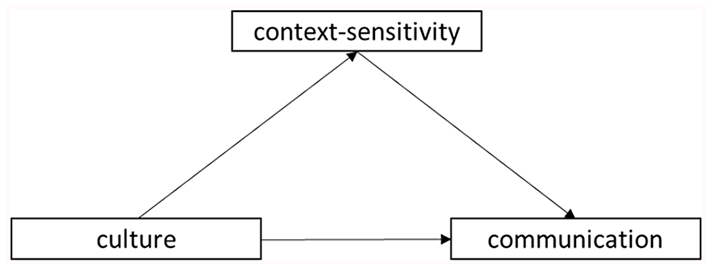
Assumed model of relations between culture, context-sensitivity, and communication.
Regarding context-sensitivity, we expected Chinese children to be more context-sensitive than German children, and we expected older children to be more context-sensitive than younger children (replicating the findings by Doherty et al., 2010; Imada et al., 2013). In addition, we expected cultural differences to increase with age (Imada et al., 2013).
Hypotheses concerning cultural differences in communication comprehension are more explorative in nature. However, given the cross-cultural differences between Eastern and Western speakers’ communication preferences (Chen, 1995, 2013; Gudykunst, 1997; Gudykunst et al., 1996; Hall, 1976; Park et al., 2012) and differences in the comprehension of indirect communication found between Chinese native speakers and speakers from other cultural backgrounds (Taguchi et al., 2013), we expected that Chinese children might outperform their German peers in indirect communication comprehension. Also, we expected an increase in task mastery in general with age (Bucciarelli et al., 2003; de Villiers et al., 2009; Elrod, 1987; Loukusa et al., 2007, 2017; Schulze & Buttelmann, 2021a; Schulze et al., 2013).
Method
Participants
Two hundred and sixty-one children of two age groups and two cultural backgrounds (Germany and China) participated in this study (for an overview see Table 1). Thus, at least 30 children participated in each condition to ensure enough statistical power (VanVoorhis & Morgan, 2007).
Overview of Sample Characteristics.
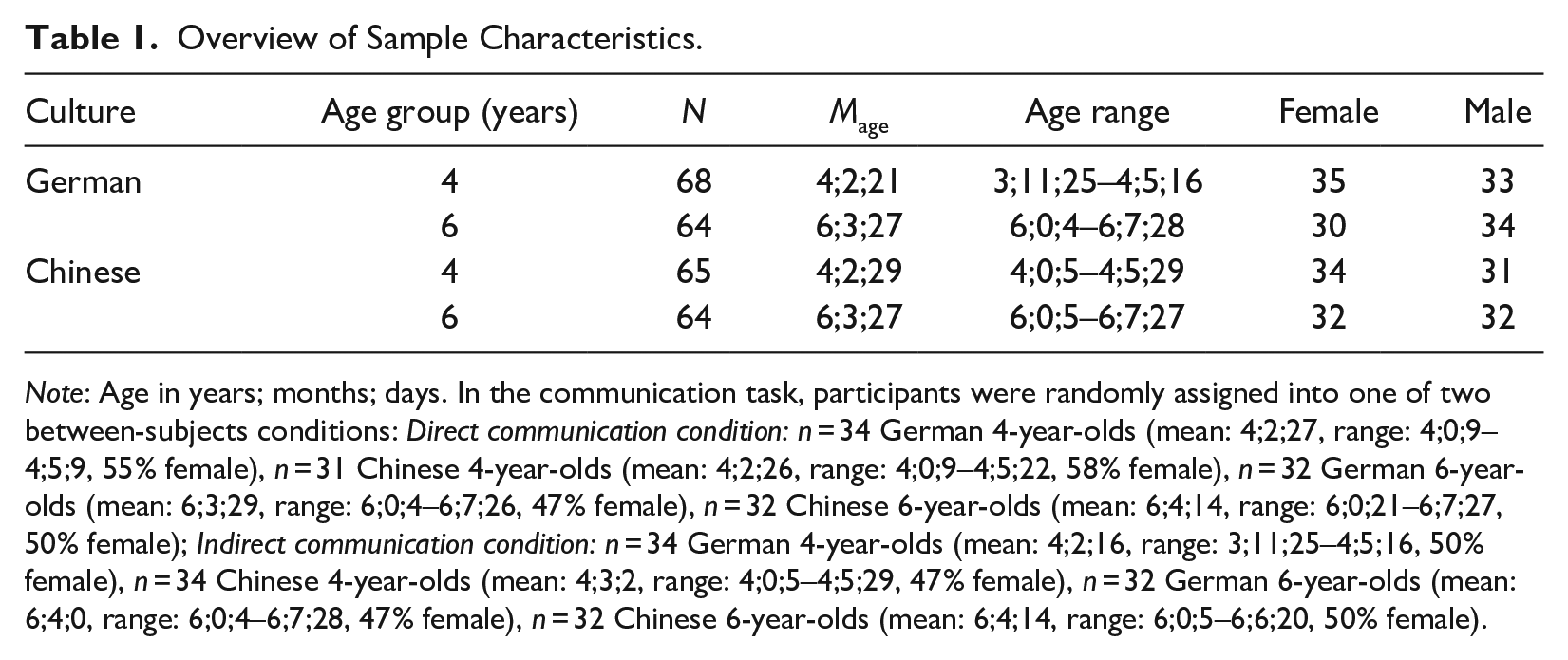
Note: Age in years; months; days. In the communication task, participants were randomly assigned into one of two between-subjects conditions: Direct communication condition: n = 34 German 4-year-olds (mean: 4;2;27, range: 4;0;9–4;5;9, 55% female), n = 31 Chinese 4-year-olds (mean: 4;2;26, range: 4;0;9–4;5;22, 58% female), n = 32 German 6-year-olds (mean: 6;3;29, range: 6;0;4–6;7;26, 47% female), n = 32 Chinese 6-year-olds (mean: 6;4;14, range: 6;0;21–6;7;27, 50% female); Indirect communication condition: n = 34 German 4-year-olds (mean: 4;2;16, range: 3;11;25–4;5;16, 50% female), n = 34 Chinese 4-year-olds (mean: 4;3;2, range: 4;0;5–4;5;29, 47% female), n = 32 German 6-year-olds (mean: 6;4;0, range: 6;0;4–6;7;28, 47% female), n = 32 Chinese 6-year-olds (mean: 6;4;14, range: 6;0;5–6;6;20, 50% female).
Three additional children were tested but had to be excluded from the final sample due to being too shy (dropout, n = 1, German 6-year-old), turning out to be bilingual (n = 1, German 4-year-old), or being 7 months below the age range (n = 1, Chinese 3-year-old).
This study was conducted in accordance with the ethical standards laid down in the Declaration of Helsinki and the standards of the local ethics committee of the University of Leipzig. The children were recruited by contacting kindergartens that had previously agreed to co-operate with the involved institute in studies on child development. The children’s parents had agreed to their children participating in studies on child development in their kindergarten.
Materials and Set-Up
All children were tested in a quiet room in their kindergartens. Throughout the study, the child sat at a table in front of a 10.1″ tablet (Lenovo MIIX 320-10ICR, resolution 1,280 × 800 pixel) mounted on a keyboard with the experimenter sitting on a chair next to the child. Stimulus presentation and data recording were carried out using OpenSesame 3.2.4 (Mathôt et al., 2012). Testing took place in a quiet room in children’s kindergartens. All sessions were videotaped.
Design
Children saw a modified version of Schulze et al.’s (2013, Study 3) communication task, followed by a task measuring children’s context sensitivity adapted from Doherty et al. (2010; see also Imada et al., 2013).
The context-sensitivity task consisted of two conditions (No-Context Condition and Context Condition) in a within-subjects-design (see Figure 2). The No-Context Condition served as a baseline condition and was, thus, always presented first. It consisted of 10 trials. In each of these trials, the children saw two orange circles (i.e., the target circles) on a white screen. These circles always differed in size. While one of these circles was 3 cm in diameter (i.e., 100%) in each trial, the diameter of the other circle ranged from 82% to 118% (2.46–3.54 cm, respectively) in steps of 4% between trials in a randomized order. The subsequent Context Condition consisted of 20 trials. Each of these trials consisted of the same target circle pairs as in the No-Context Condition, however, in this condition the target circles were surrounded by grey circles (i.e., the context circles). These context circles were designed to oppose correct discrimination of the target circles’ sizes. While eight context circles of a size of 1.5 cm in diameter surrounded the smaller target circle (making it look bigger), eight context circles of 3.75 cm in diameter surrounded the bigger target circle (making it look smaller). For counterbalancing reasons each target circle pair plus context circles was presented twice with the bigger circles on either side of the screen. The order of the circle pairs was pseudo-randomized in that the bigger target circle only appeared a maximum of two times in a row on the same side of the screen. Between trials, a fixation cross appeared for 500 ms. The children’s task was to tap the bigger target circle.
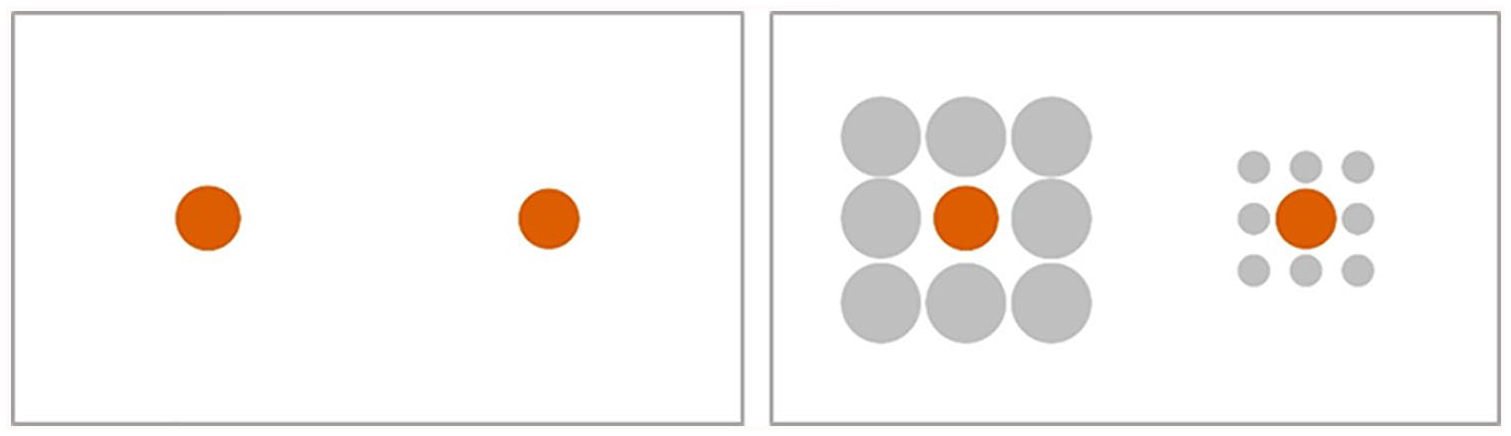
Overview of stimuli in the context sensitivity task.
The communication task consisted of six trials in two between-subjects conditions (Direct Communication Condition, Indirect Communication Condition, see below). The children were randomly assigned to one of the two conditions. Each trial consisted of four phases in which video vignettes (phases a, b, and d) or a static picture of two alternative objects (phase c) were shown (see Figure 3). The German stimuli have been used in a number of previous studies (Schulze & Buttelmann, 2021a; Schulze et al., 2013, 2020) and have also been implemented and adapted for the use in different cultural contexts (e.g., Abbot-Smith et al., 2022). These original stimuli were translated into Chinese and/or newly created to fit the Chinese cultural context based on suggestions from native speakers. To ensure that the vignettes matched the children’s cultural background, we then asked Chinese native speakers to evaluate the stimuli with respect to their cultural appropriateness and chose those stimuli that were considered most appropriate. As a result, two vignettes differed between German and Chinese children (trials 1 and 6, for an overview see Table A1 in the Appendix).

Overview of trial phases in the communication task.
All utterances were pre-recorded in order to ensure that the same intonation pattern (the so-called “Hutkontur,” see Schulze & Buttelmann, 2021b; see also Mehlhorn, 2001; Steube, 2001) was used across all participants. The order of the trials was fixed (due to the overall story of the puppets’ daily activities) as was the position of the objects, however, due to the puppets’ utterances, the left-right-position of the correct object was counterbalanced. The children’s task was to tap the object that they thought was the one intended by the puppets.
Procedure
Warm-up
In the testing room, the child sat at a table, opposite the touchscreen tablet. The experimenter sat next to the child and explained to the child that she was going to perform a task on the computer screen. In order to familiarize the child with the touchscreen, the child saw one explanation trial and four warm-up trials with pictures of two smileys in different colors, and they were asked to tap one of these smileys by mentioning the color (e.g., “Please tap the blue smiley”). If the child did not know the colors, the experimenter pointed to the smileys, told the child its color, and repeated the instruction.
Context-sensitivity task
The experimenter told the child that they would see pictures with two orange circles and that their task was to tap the bigger orange circle. The task started with the 10 trials in the No-Context Condition. If the child hesitated to tap a circle, the experimenter waited for 10 seconds and then repeated the instruction (“Please, tap the bigger orange circle”). After a further 10 seconds, the experimenter told the child that sometimes one might simply guess. If the child failed to choose within 30 seconds, the experiment proceeded with the next trial. After completing the No-Context Condition, the 20 trials in the Context Condition followed. The experimenter told the child that they would now again see the two orange circles but that these circles were now surrounded by grey circles. The experimenter told the child that they should still tap the bigger orange circle. If child hesitated to choose a circle, the experimenter proceeded as described for the No-Context condition.
Communication task
The experimenter explained that the child would now see two puppets showing their daily activities and that sometimes the puppets would need the child’s help. The child then saw two further warm-up trials were either of the two puppets asked her to give her an object by tapping on one of two objects displayed on the screen.
Then six test trials followed. Each test trial of the communication task consisted of four phases (context, utterance, object choice, and play) described below.
Context phase
In the context phase, the child saw pre-recorded video clips showing the puppets behind a table and depictions of two objects in front of the puppets. The puppets explained which action they were going to perform (e.g., “Now, we want to take care of our pets”) and introduced the two alternative options (e.g., “We have a rabbit and a dog”), pointing to both objects in turn. Then, one puppet asked the other which one she preferred to take care of (e.g., “Would you rather take care of the rabbit or the dog?”).
Utterance phase
The child then saw a video of the puppet that was asked the preference question placed centrally on the screen. The puppet’s utterance depended on the condition (for an overview of utterances see Appendix).
Direct communication condition
The puppet directly communicated her goal by labeling the intended object, saying for instance the German or Chinese equivalent of “I want / do not want the rabbit,” thus explicitly mentioning the object the child should choose.
Indirect communication condition
The puppet indirectly hinted at her goal, saying for instance the German or Chinese equivalent of “I have / do not have a carrot,” thus not mentioning any of the actual options the child had to choose from but uttering a pre-condition for taking care of one of the two pets.
Object choice phase
The child then saw a white screen with the two alternative options depicted on either side of the screen (object choice stimulus, e.g., rabbit and dog) and her task was to tap one object (whichever she thought was the one the puppet had requested). In the first 10 seconds no instruction was given. If the child did not choose during this time, the experimenter explained to the child that she should now choose one option for the puppet (“Which one did the puppet want, which one do you have to tap?”). If the child did not choose during a further 10-second interval, the experimenter said, “Look, the puppets have a rabbit and a dog, to give the puppets the rabbit, you tap the rabbit, to give the puppets the dog, you tap the dog. The puppet said: “I want the rabbit”/“I have a carrot.” Which one do you give to puppets?” If the child failed to choose during a further 10 seconds, the experimenter proceeded with the next trial, saying, “Okay, there will be another story in a moment, please pay close attention!”
Play phase
Irrespective of the child’s actual answer, the child then saw a video in which the puppets thanked the child and went on to perform the intended action (e.g., feeding the rabbit with a carrot).
Coding and Data Handling
As in prior studies, we measured the accuracy of children’s object choice. An object or circle was coded as chosen when the children tapped the side of the screen the object/circle was displayed on. Additionally, we measured children’s reaction times in both tasks. Reaction times can be taken as a proxy for children’s processing time and thus for the level of difficulty of the task (e.g., for communication comprehension, see Breheny et al., 2013; Holtgraves, 1999; Ruytenbeek, 2017; Schulze & Buttelmann, 2021a; Taguchi, 2013). Object choice as well as reaction times were recorded by OpenSesame (Mathôt et al., 2012) and entered into a data file.
Context-sensitivity task
Based on analyses in previous studies (Doherty et al., 2010; Imada et al., 2013), we only analyzed those trials, in which both target circles were hardest to discriminate (i.e., trials in which the diameter of the target circle was 6% smaller or bigger than the other target circle). As described above, children’s maximum response time in the context-sensitivity task was set to 30 seconds. In a total of 23 trials (out of 1,566 possible trials) no response was coded because the trials had finished before the children made a choice.
In order to assess children’s context sensitivity, we then subtracted the children’s mean accuracy in the Context Condition from their mean accuracy in the No-Context Condition (as the No-Context Condition serves as a baseline for their ability to discriminate the size of the circles). This context-sensitivity accuracy score thus indicated how much the illusionary context changed children’s initial performance in the No-Context Condition, with more positive scores indicating higher context sensitivity.
In order to access a second measure for children’s context sensitivity, children’s mean reaction times for correctly solved trials in the No-Context Condition were subtracted from their mean reaction times for correctly solved trials in the Context Condition. This context-sensitivity reaction-time score indicated how the context influenced children’s reaction times for correct choices. Positive scores indicate that children required more time in the Context than in the No-Context Condition and vice versa for negative scores. Thus, in this task, positive scores indicate a higher context-sensitivity. All p-values reported are two-tailed.
Communication task
We calculated children’s mean proportion of trials in which they chose the correct object and children’s mean reaction times for correctly solved trials. As described above, children’s maximum response time in the context-sensitivity task was set to 40 seconds. Due to a lack of children’s responses within this time frame, in a total of 22 trials (out of 1,566 possible trials) no response was coded. All p-values are two-tailed.
Results
Context-Sensitivity Task
A Univariate ANOVA with children’s context-sensitivity accuracy score as dependent variable and culture (Chinese and German) and age group (4- and 6-year-olds) as independent variables revealed significant main effects of culture (F(1,257) = 13.646, p < .001, η2 = .050) and age group (F(1,257) = 80.958, p < .001, η2 = .240, see Table 2). No interaction was found. That is, Chinese children were more sensitive to the context than German children (Chinese: M = 27.97, SD = 48.98; German: M = 8.14, SD = 47.71), and 6-year-old children were more context-sensitive than 4-year-old children (6-year-old: M = 42.05, SD = 43.90; 4-year-old: M = −5.87, SD = 42.23).
Descriptive Statistics for Children’s Context-Sensitivity Accuracy Score by Culture and Age.
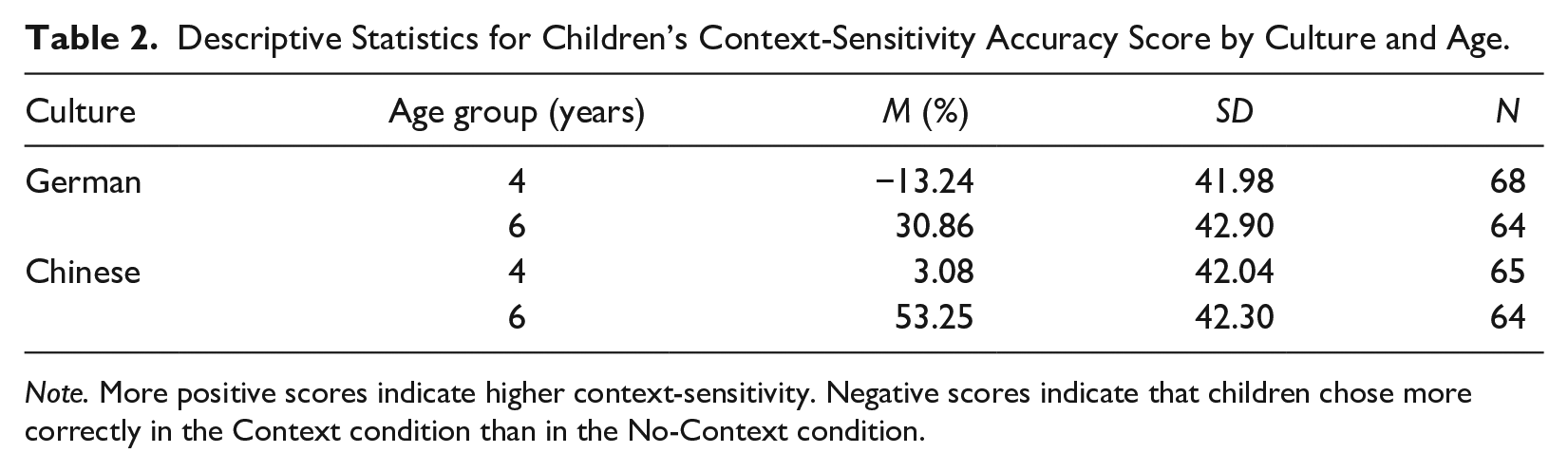
Note. More positive scores indicate higher context-sensitivity. Negative scores indicate that children chose more correctly in the Context condition than in the No-Context condition.
A Univariate ANOVA with children’s context-sensitivity reaction-time score (calculated for correctly solved trials) as dependent variable and culture and age group as independent variables revealed a significant main effect of age group (F(1,213) = 20.475, p < .001, η2 = .088, see Table 3). That is, 6-year-old children’s reaction times were more influenced by context than 4-year-old children’s reaction times (6-year-old: M = −0.40, SD = 3.24; 4-year-old: M = −2.94, SD = 4.73). No effect of culture and no interaction were found.
Descriptive Statistics for Children’s Context-Sensitivity Reaction-Time Score for Correctly Solved Trials as a Function of Culture and Age Group.
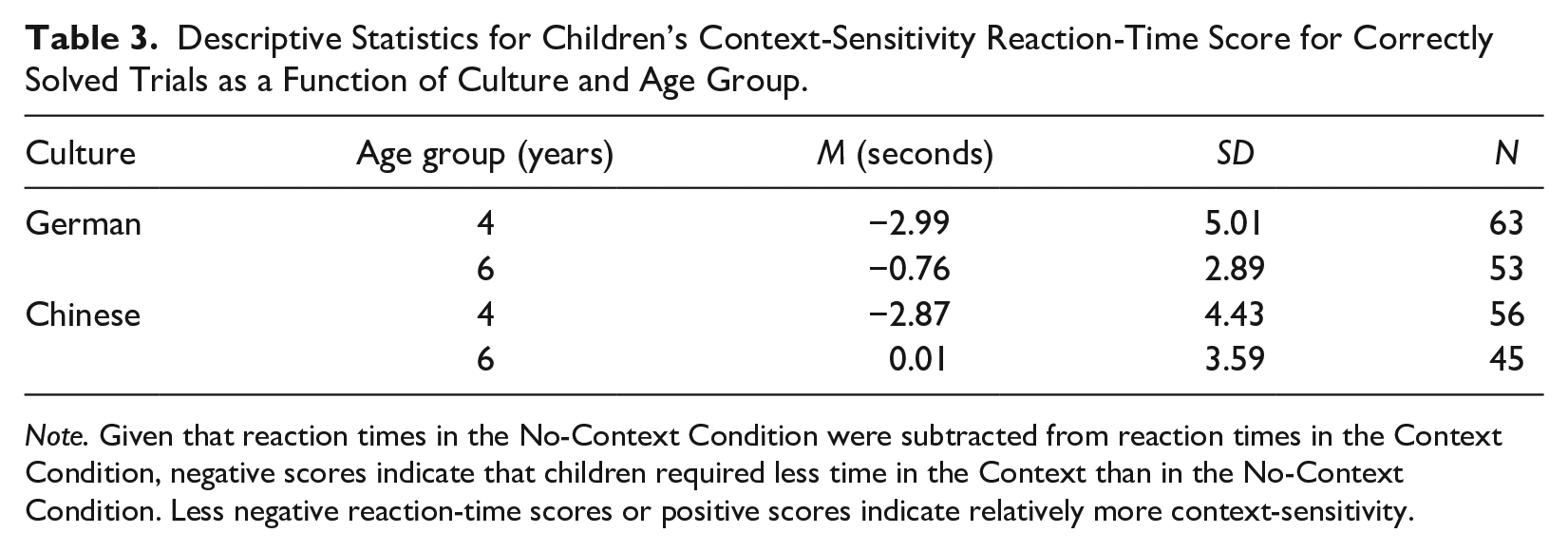
Note. Given that reaction times in the No-Context Condition were subtracted from reaction times in the Context Condition, negative scores indicate that children required less time in the Context than in the No-Context Condition. Less negative reaction-time scores or positive scores indicate relatively more context-sensitivity.
Communication Task
A Univariate ANOVA with children’s accuracy score in the communication task as dependent variable and culture (Chinese, German), age group (4- and 6-year-olds), and communication type (direct communication and indirect communication) as independent variables revealed a significant interaction between age group and communication type (F(1,253) = 9.910, p = .002, η2 = .038). Post-hoc t-tests, separately for communication type, revealed that 6-year-olds chose more correctly than 4-year-olds in the Direct Communication Condition (4-year-old: M = 95.78, SD = 11.71; 6-year-old: M = 99.47, SD = 2.98; t(127) = 2.457, p = .016, Cohen’s d = 0.4), an effect that was even more pronounced in the Indirect Communication Condition (4-year-old: M = 57.99, SD = 16.48; 6-year-old: M = 73.16, SD = 21.53; t(130) = 4.525, p < .001, Cohen’s d = 0.8). The ANOVA also revealed main effects of communication type (F(1,253) = 303.771, p < .001, η2 = .546) and age group (F(1,253) = 25.867, p < .001, η2 = .093). That is, children chose more correctly after hearing direct than indirect utterances (direct communication: M = 97.61, SD = 8.74; indirect communication: M = 65.34, SD = 20.49), and 6-year-olds outperformed 4-year-olds (4-year-old: M = 76.46, SD = 23.75; 6-year-old: M = 86.31, SD = 20.22). No main effect of culture and no further interaction were found (for descriptive statistics see Table 4). 2
Descriptive Statistics for Children’s Accuracy of Object Choice in the Communication Task by Culture, Age, and Communication Type.
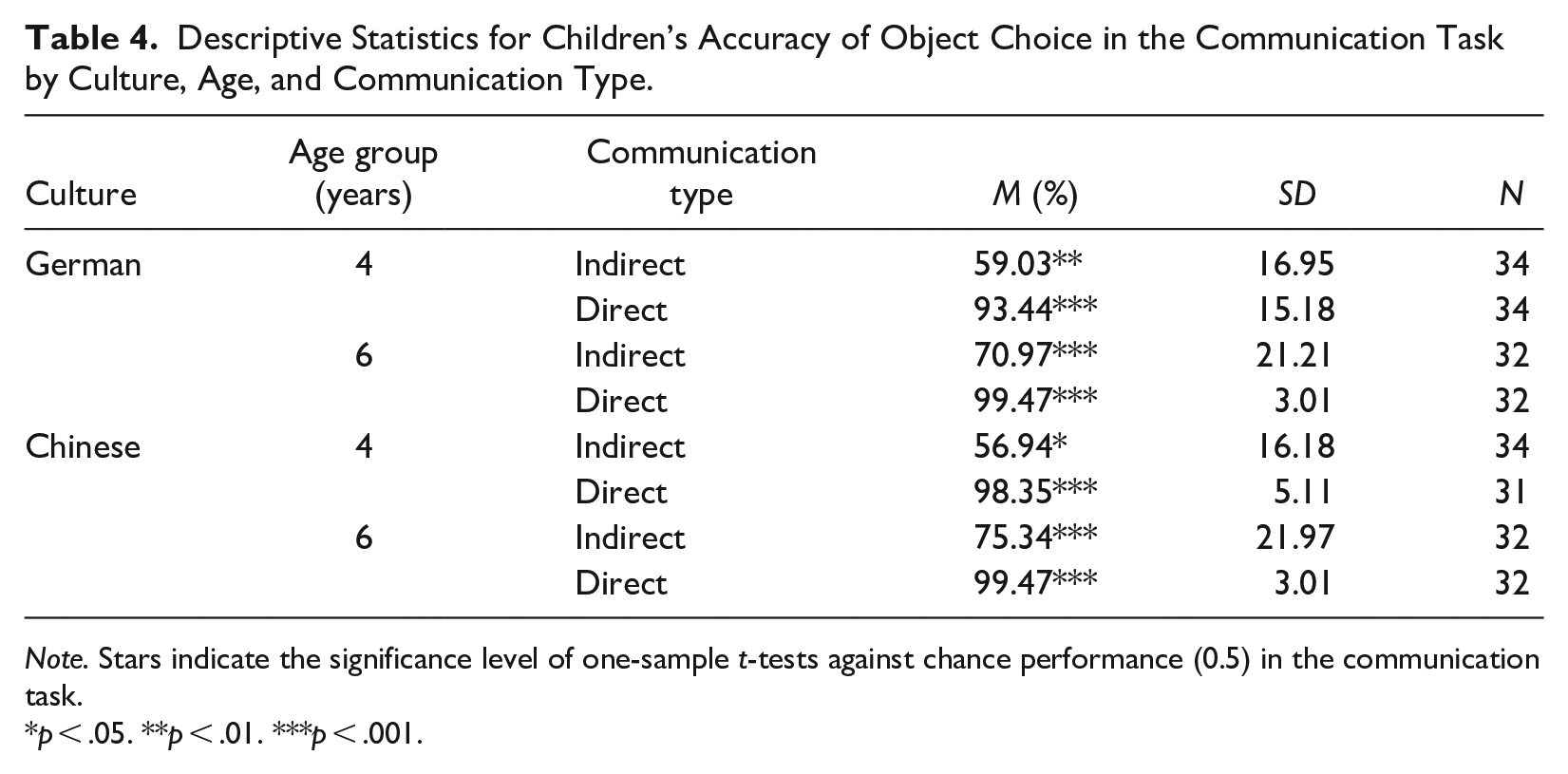
Note. Stars indicate the significance level of one-sample t-tests against chance performance (0.5) in the communication task.
p < .05. **p < .01. ***p < .001.
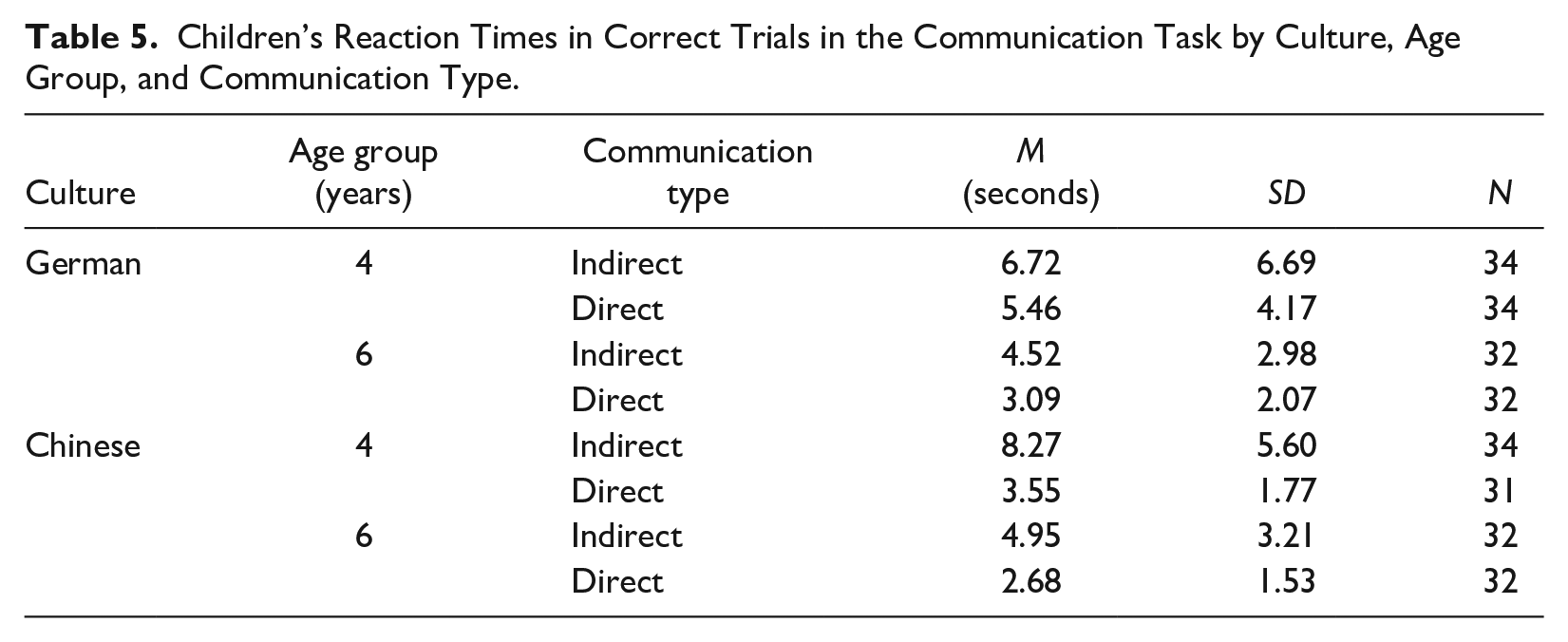
A Univariate ANOVA with children’s mean reaction time until choosing the correct object as dependent variable and culture, age group, and communication type as independent variables revealed an interaction of culture and communication type (F(1,253) = 4.745, p = .030, η2 = .018, see Table 5). Post-hoc t-Tests separately for communication type revealed that while Chinese children chose correctly significantly faster than German children after hearing direct communicative acts (t(127) = 2.491, p = .014, Cohen’s d = 0.4), no difference between cultures was found for indirect communication (t(130) = 1.138, p = .261, Cohen’s d = 0.2). Moreover, the ANOVA revealed significant main effects of age group (F(1,253) = 19.897, p < .001, η2 = .073) and communication type (F(1,253) = 24.224, p < .001, η2 = .087). That is, 6-year-olds chose significantly faster than 4-year-olds (4-year-old: M = 6.06, SD = 5.20; 6-year-old: M = 3.81, SD = 2.69) and children chose faster after hearing direct compared to indirect communication (direct communication: M = 3.72, SD = 2.83; indirect communication: M = 6.16, SD = 5.10). No effect of culture and no further interaction were found.
Children’s Reaction Times in Correct Trials in the Communication Task by Culture, Age Group, and Communication Type.
Relation of Context-Sensitivity, Culture, and Communication
Preliminary analyses
In preliminary analyses, we checked whether age moderated the mediation model assumed in Figure 1. We used the model 59 of Process macro (Hayes, 2017). Age did not moderate any of the paths between culture, communication comprehension, and context-sensitivity (for detailed results and zero-level correlation analyses see Supplemental Material). Thus, we did not include age as a factor in the main analyses.
Main analyses
In the main analyses, we ran the mediation model with communication comprehension as dependent variable, culture as independent variable, and context-sensitivity as mediator, separately for communication type (direct and indirect) and measure (accuracy and reaction times; see Figure 4) using model 4 of Process macro (Hayes, 2017).
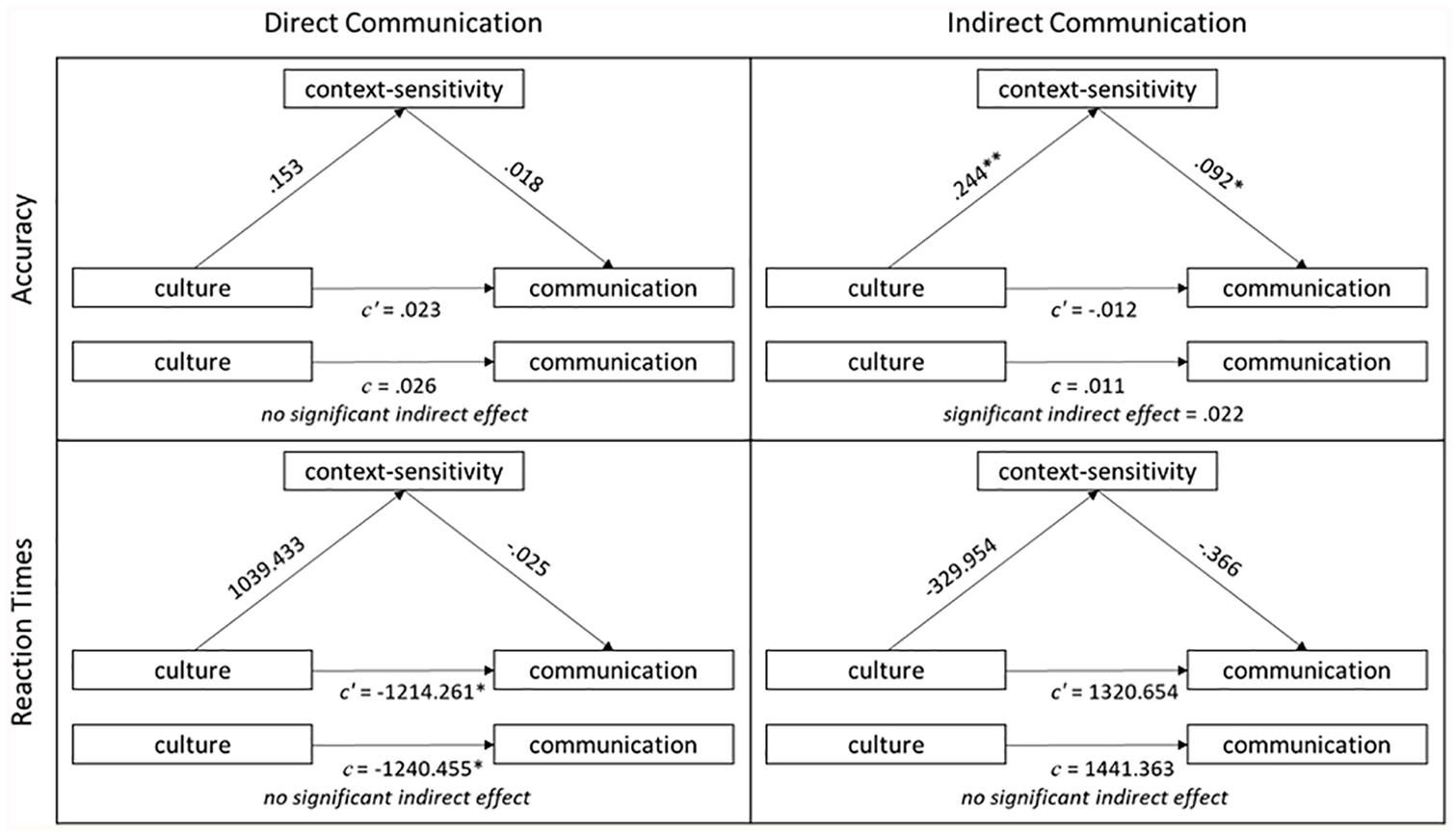
Overview of indirect effects analyses between culture, context-sensitivity, and communication comprehension.
For children’s accuracy in the indirect communication condition (see Figure 4, upper right section), both the total effect (B = 0.011, t(130) = 0.289, p = .772, R2 = .001) as well as the direct effect (B = −0.012, t(129) = −0.318, p = .751) of culture on communication were not significant. The indirect effect, however, was significant (ab = 0.022, SE = 0.012, 95% CI [0.004, 0.051]). That is, the context-sensitivity accuracy score significantly mediated the relationship between culture and the accuracy of indirect communication comprehension. Further, culture also influenced children’s context-sensitivity accuracy (B = 0.244, t(130) = 2.829, p = .005, R2 = .059). Finally, context-sensitivity accuracy influenced children’s communication comprehension accuracy (B = 0.092, t(129) = 2.492, p = .014, R2 = .047).
For children’s reaction times in the indirect communication condition (see Figure 4, lower right section), there were no significant effects (total effect of culture on communication: B = 1,441.363, t(106) = 1.366, p = .175, R2 = .018; direct effect of culture on communication: B = 1,320.654, t(105) = 1.190, p = .237; indirect effect of culture on communication: ab = 120.708, SE = 302.544, 95% CI [−717.953, 594.208]; effect of culture on context-sensitivity (B = −329.954, t(106) = −0.431, p = .667, R2 = .002; effect of context-sensitivity on communication comprehension (B = −0.366, t(105) = −1.139, p = .257, R2 = .088).
For children’s accuracy in the direct communication condition (see Figure 4, upper left section), there were no significant effects (total effect of culture on communication: B = 0.026, t(127) = 1.690, p = .094, R2 = .022; direct effect of culture on communication: B = 0.023, t(126) = 1.570, p = .119; indirect effect of culture on communication: ab = 0.003, SE = 0.003, 95% CI [−0.001, 0.009]; effect of culture on context-sensitivity (B = 0.153, t(127) = 1.807, p = .073, R2 = .025; effect of context-sensitivity on communication comprehension (B = 0.018, t(126) = 1.341, p = .182, R2 = .031).
For children’s reaction times in the direct communication condition (see Figure 4, lower left section), the total effect of culture on communication reaction times was significant (B = −1,240.455, t(107) = −2.196, p = .030, R2 = .042) as was the direct effect (B = −1,214.261, t(106) = −2.148, p = .034). The indirect effect, however, was not significant (ab = −26.193, SE = 98.566, 95% CI [−253.279, 172.141]). Culture did not influence children’s context-sensitivity reaction times (B = 1039.433, t(107) = 1.164, p = .247, R2 = .013), and context-sensitivity reaction times did not influence children’s communication comprehension reaction times (B = −0.025, t(106) = −0.332, p = .741, R2 = .044).
Discussion
The present study examined cross-cultural and developmental differences in communication comprehension and context-sensitivity. The main aim was to investigate whether children’s communication comprehension related to culture, context-sensitivity, or a combination of both. For this, we analyzed object-choice accuracy and reaction times for correctly solved trials in a communication task and a context-sensitivity task in Chinese and German 4- and 6-year-old children.
We found cross-cultural as well as developmental differences for children’s context-sensitivity: Chinese children’s object choice was more influenced by context than German children’s object choice. For both measures (accuracy and reaction times), 6-year-old children were more context-sensitive than 4-year-old children. These findings are in line with previous findings regarding cultural differences and the development of children’s accuracy in an adapted version of the Ebbinghaus task (Doherty et al., 2010; Imada et al., 2013). The present study extends these findings by revealing a developmental trajectory for children’s reaction times. This trajectory seems independent from the children’s cultural background.
While no cultural difference could be found for children’s accuracy in the communication task, children’s reaction times for choosing the correct object varied with regard to culture: Chinese children were faster than German children in responding correctly to direct communicative acts. However, no cultural difference was found for indirect communication. 3 Although we had no expectations regarding direct communication, this finding seems surprising. We had expected Chinese children to outperform German children in the comprehension of indirect communication. This expectation was based on prior research that indicated a preference for indirectness in communication in East-Asian cultures (Chen, 1995, 2013; Gudykunst, 1997; Gudykunst et al., 1996; Hall, 1976; Park et al., 2012). It seems plausible that this would indicate a preference for direct communication in Western cultures. Such preference could appear in terms of higher accuracy or faster reaction times when choosing correctly. The current finding that Chinese children were faster than German children in responding correctly to direct communication could be due to several factors that have been found to impact pragmatic abilities (Matthews et al., 2018). Most importantly, Chinese preschoolers have been found to outperform U.S. peers on executive function tasks testing their inhibition and attentional control (Lan et al., 2011; Sabbagh et al., 2006), which may have given the Chinese children in this study an advantage over their German peers. That is, it seems possible that Chinese children were more focused on the task which would give them an advantage especially when statements directly referred them to the correct choice (e.g., “I want the rabbit”). It is further possible that Chinese children were better in inhibiting the association arising from hearing a negated label: For example, when they heard, “I don’t want the rabbit,” rabbit might have been activated as the salient candidate for their choice. But since rabbit was negated, children needed to exclude this activated choice, a task that involves a tremendous amount of inhibitory control. Chinese children possibly mastered this more easily in this study. Further cross-cultural research should address these socio-cognitive underpinnings when studying communication comprehension.
Within cultures, we found effects of communication type and developmental trajectories in communication comprehension. That is, in both cultures, children understood direct communication more easily than indirect communication, and 6-year-olds outperformed 4-year-olds. These findings are in line with previous studies on children’s communication comprehension in Western samples (Bosco et al., 2013; Bucciarelli et al., 2003; de Villiers et al., 2009; Elrod, 1987; Loukusa et al., 2007, 2017; Schulze & Buttelmann, 2021a; Schulze et al., 2013, 2020). However, we now add an important cross-cultural finding to this body of research. The present study is the first to demonstrate successful comprehension of indirect communication in preschoolers from a non-Western sample.
Across cultures, we found that children solved some trials in the indirect communication condition more easily than other trials in this condition. In a post-hoc analysis, we had grouped our stimuli according to the relative strength between the item mentioned in the utterance. For instance, hearing that there is no bowl leaves several alternatives how one could eat cornflakes (e.g., from a soup plate, a cup, and without milk) whereas hearing that there is no paint implies more straightforwardly that the brushes cannot be used as there are fewer possible alternatives how to use a brush. Children’s choose objects more correctly for stimuli in which the relation between the utterance and the intended object was more straightforward. This finding is in line with prior findings regarding the difficulty of indirect communicative acts, namely that children’s performance depends on the number of inferential steps that need to be taken to arrive at the speaker’s meaning or the number of contexts and alternative meanings that one can think of when hearing an utterance (de Villiers et al., 2009). It is also in line with a recent finding that growing world knowledge positively influences children’s relevance inferencing (Abbot-Smith et al., 2022) since the relation between the item mentioned in the utterance and the intended object that the child should choose can only be established through world knowledge. It is, however, important to note that the children nevertheless chose the correct object above chance in both groups of items. We take this as evidence that it is harder for children to infer a speaker’s meaning in indirect communication when facing too many possible interpretations but that they can solve this task even under those more difficult circumstances.
Moreover, we want to emphasize that we deliberately chose objects and utterances in such a way that even young children could relate them to each other based on their world knowledge while this relation remained ambiguous because we never directly mentioned the object the child should choose. Irrespective of the strength of the relation between utterance and test objects in the communication task, the children needed to go beyond the words spoken to answer the questions “What does the speaker mean?”, “Why did s/he say what s/he said?”, and “What does s/he want me to do?” and thus infer the speaker’s meaning.
The main aim of the current study was to investigate the influence of context-sensitivity and culture on children’s communication comprehension. We expected that culture would influence context-sensitivity and communication comprehension, while context-sensitivity in itself would also influence children’s performance in the communication task (Bruner, 1983; Chen, 2013; Grice, 1989; Gudykunst et al., 1996; Park et al., 2012; Sperber & Wilson, 1995; Tomasello, 2008). Indirect effects analyses revealed that culture indirectly influenced children’s accuracy in the comprehension of indirect communication through context-sensitivity. That is, culture influenced context-sensitivity (Chinese children were more context-sensitive), and context-sensitivity influenced children’s comprehension of indirect communication (children who take context into account more strongly process indirect communicative acts more accurately than do children who pay less attention to context). That context-sensitivity mediates the relationship of culture and the comprehension of indirect communication is in line with theoretical assumptions about the role of context in the interpretation of indirect communication, especially relevance implicatures (Bruner, 1983; Grice, 1989; Sperber & Wilson, 1995; Tomasello, 2008). The finding that context-sensitivity in turn is influenced by culture is in line with previous findings regarding cultural differences regarding context-sensitivity (Imada et al., 2013). Taken together, the current result highlights the interplay of cultural and individual cognitive factors in communication interpretation and extends prior cross-cultural research on differences in culturally prevalent communication styles (e.g., Chang, 2009; Gudykunst, 1997; Holtgraves, 1997; Kim & Wilson, 1994). However, for children’s reaction times in indirect communication, no significant influences were found. This suggests that even though the correct interpretation of an indirect communicative act is influenced by cultural and contextual factors, the processing of these acts seems more independent from these factors.
That we did not find a direct effect of culture on children’s interpretation of indirect communication seems to be in contrast with previous cross-cultural research that found differences in culturally prevalent communication styles (e.g., Chang, 2009; Gudykunst, 1997; Holtgraves, 1997; Kim & Wilson, 1994) and with the more general observation that many Asian languages are more context-sensitive then Western languages (e.g., the use of certain linguistic material depends on the status of the communication partner; see for instance Gentner & Goldin-Meadow, 2003; Malt & Wolff, 2010). However, in the current study, the children did not hear linguistic input that relied on linguistically context-sensitive expressions (such as the differential use of communication-partner-dependent pronouns). Thus, systematic differences in this regard have not played a role in this study. Moreover, we could only speculate about whether children at the age of 4 to 6 would be influenced (or even aware) of such context-dependent language use and future research might address this question. Moreover, all prior research regarding the use and comprehension of indirect communication was conducted in adults (e.g., Taguchi et al., 2013). This is an important difference: Assuming that a preferential understanding of indirect communication arises from socialization in their respective culture, the Chinese children tested in the present study might have been too young to show this preference. This seems plausible given that cultural differences in other cognitive domains (such as aesthetic expressions through drawings) only arise during the later childhood (Senzaki et al., 2014).
Since the context-sensitivity task used in the current study included physical stimuli, the relation between performance in this task and children’s object choice in the indirect communication condition may be surprising to some degree. We described being context-sensitive as a cognitive inclination to take context into account when evaluating perceptual input. Context-sensitivity has been tested with emotional (Masuda et al., 2008, 2012; Senzaki et al., 2018) as well as physical stimuli (Doherty et al., 2010; Imada et al., 2013; Nisbett & Miyamoto, 2005; Oishi et al., 2014; for a review see Masuda, 2017). The Ebbinghaus task is one of the most common context-sensitivity measures applied to children and repeatedly revealed cultural and developmental variations (Doherty et al., 2010; Imada et al., 2013). These findings were replicated in the current study. Given that we measured context-sensitivity with physical stimuli, these results indicate that context-sensitivity is a kind of trait that influences people’s performance in different domains (e.g., perception and communication comprehension). Since communication is a social phenomenon, future research might investigate whether even stronger relations between communication and context-sensitivity appear when a more social context-sensitivity task was used (e.g., Ishii et al., 2017; Masuda et al., 2008). Moreover, given that there were inter-individual differences in children’s context-sensitivity (as evidenced by relatively high standard deviations in the current study) and that this ability plays a role in indirect communication comprehension, further research should include measures of context-sensitivity when exploring children’s ability to infer communicative intentions.
In contrast to indirect communication, no significant indirect effects of culture on communication comprehension mediated through context-sensitivity were found for children’s comprehension of direct communication. Interestingly, culture played a significant role for children’s reaction times after hearing direct statements (mirroring the effects found in the variance analyses discussed above). That context-sensitivity only influenced children’s comprehension of indirect communicative acts shows that taking context into account is uniquely important in the comprehension of indirect communication.
Prior studies suggested that children’s increase in the comprehension of indirect communicative acts could be a consequence of growing world knowledge (Abbot-Smith et al., 2022) or a number of other socio-cognitive abilities (e.g., executive functions, Theory of Mind, or working memory as well as language skills, see Matthews et al., 2018 for a review). The present study adds a new factor to this list: an increase in the comprehension of indirect communicative acts could be due to an increase in context-sensitivity which itself seems to be subject to cultural socialization.
Supplemental Material
sj-docx-1-jcc-10.1177_00220221221104952 – Supplemental material for Context-Sensitivity Influences German and Chinese Preschoolers’ Comprehension of Indirect Communication
Supplemental material, sj-docx-1-jcc-10.1177_00220221221104952 for Context-Sensitivity Influences German and Chinese Preschoolers’ Comprehension of Indirect Communication by Cornelia Schulze, David Buttelmann, Liqi Zhu and Henrik Saalbach in Journal of Cross-Cultural Psychology
Footnotes
Appendix
Overview of Context Scenarios, Object-Choice Options, Utterances by Condition and Correct Intended Objects of all Six Trials (German Version), and the Trials That Differed in the Chinese Version.
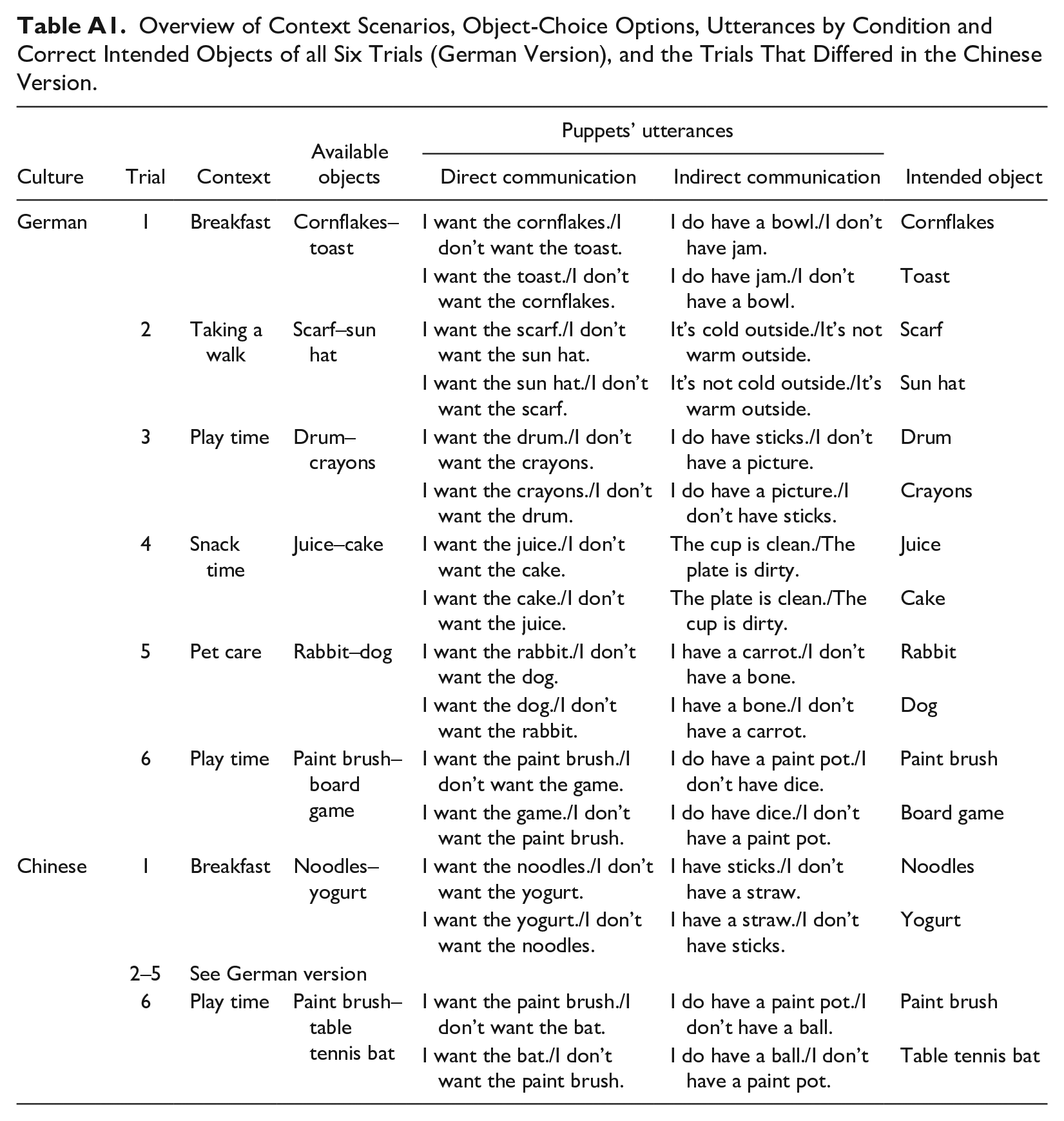
| Culture | Trial | Context | Available objects | Puppets’ utterances | Intended object | |
|---|---|---|---|---|---|---|
| Direct communication | Indirect communication | |||||
| German | 1 | Breakfast | Cornflakes–toast | I want the cornflakes./I don’t want the toast. | I do have a bowl./I don’t have jam. | Cornflakes |
| I want the toast./I don’t want the cornflakes. | I do have jam./I don’t have a bowl. | Toast | ||||
| 2 | Taking a walk | Scarf–sun hat | I want the scarf./I don’t want the sun hat. | It’s cold outside./It’s not warm outside. | Scarf | |
| I want the sun hat./I don’t want the scarf. | It’s not cold outside./It’s warm outside. | Sun hat | ||||
| 3 | Play time | Drum–crayons | I want the drum./I don’t want the crayons. | I do have sticks./I don’t have a picture. | Drum | |
| I want the crayons./I don’t want the drum. | I do have a picture./I don’t have sticks. | Crayons | ||||
| 4 | Snack time | Juice–cake | I want the juice./I don’t want the cake. | The cup is clean./The plate is dirty. | Juice | |
| I want the cake./I don’t want the juice. | The plate is clean./The cup is dirty. | Cake | ||||
| 5 | Pet care | Rabbit–dog | I want the rabbit./I don’t want the dog. | I have a carrot./I don’t have a bone. | Rabbit | |
| I want the dog./I don’t want the rabbit. | I have a bone./I don’t have a carrot. | Dog | ||||
| 6 | Play time | Paint brush–board game | I want the paint brush./I don’t want the game. | I do have a paint pot./I don’t have dice. | Paint brush | |
| I want the game./I don’t want the paint brush. | I do have dice./I don’t have a paint pot. | Board game | ||||
| Chinese | 1 | Breakfast | Noodles–yogurt | I want the noodles./I don’t want the yogurt. | I have sticks./I don’t have a straw. | Noodles |
| I want the yogurt./I don’t want the noodles. | I have a straw./I don’t have sticks. | Yogurt | ||||
| 2–5 | See German version | |||||
| 6 | Play time | Paint brush–table tennis bat | I want the paint brush./I don’t want the bat. | I do have a paint pot./I don’t have a ball. | Paint brush | |
| I want the bat./I don’t want the paint brush. | I do have a ball./I don’t have a paint pot. | Table tennis bat | ||||
Acknowledgements
The authors would like to thank Miriam Beneke, Annika Herrmann, Freya Heun, Alexander Prasser, Frederike Svensson, Kaixuan Chai, Yilin Li, Yingying Jiang, and Li Ma for help with data collection. The authors also thank Katja Kirsche for organizational help, and Frederik Hirschfeld, Elisabeth Schulze, Peter Troks, and Ting You for her assistance creating the test stimuli.
Data Availability
Neither the data nor the materials have been made available on a permanent third-party archive; requests for the data or materials can be sent via email to the lead author at
Declaration of Conflicting Interests
The author(s) declared no potential conflicts of interest with respect to the research, authorship, and/or publication of this article.
Funding
The author(s) received no financial support for the research, authorship, and/or publication of this article.

Supplemental Material
Supplemental material for this article is available online.
Notes
References
Supplementary Material
Please find the following supplemental material available below.
For Open Access articles published under a Creative Commons License, all supplemental material carries the same license as the article it is associated with.
For non-Open Access articles published, all supplemental material carries a non-exclusive license, and permission requests for re-use of supplemental material or any part of supplemental material shall be sent directly to the copyright owner as specified in the copyright notice associated with the article.
