




Abstract
Using person-centered latent profile analyses, this article reports two distinct sub-groups—nominal versus robust cultural allegiance—that characterize how a sample of 14- to 24-year-olds from stressed environments in South Africa (n = 576, nfemales = 314, nmales = 257) and Canada (n =V481; nfemales = 270, nmales = 211) engage with four cultural resources (spirituality, religiosity, family tradition, and community tradition). It considers how nominal versus robust cultural allegiance is associated with youths’ self-reported symptoms of depression and conduct disorder, age-group, and gender. In doing so, the article addresses pre-existing resilience studies’ general inattention to patterns of differential adaptation in how specific groups of youth adjust to adversity, and the role of cultural resources in youth mental health. The results draw attention to the importance of understanding resilience in sociocultural context and urge mental health practitioners and other resilience champions to be circumspect in their work with at-risk youth about which cultural resources they leverage for which mental health outcomes.
Keywords
The factors and processes that enable youth resilience to a stressed environment are culturally patterned (Masten, 2014; Ungar, 2011). Similarly, cultural values and norms inform mental health (i.e., an outcome that is associated with youth resilience) (Kirmayer, 2012; Masten et al., 2021). Despite this understanding, relatively few studies account for the cultural underpinnings of mental health resilience among youth exposed to significant stress (Raghavan & Sandanapitchai, 2020).
When culture is accounted for, it is often unhelpfully reduced to a single factor, such as race (Panter-Brick, 2015). Doing so is problematic, not least because culture encompasses the everyday values, beliefs, and practices of a culture-sharing group, which may or not have race in common (Rogoff, 2011). Instead of focusing on race, resilience studies should attend to the protective function of several cultural factors (Nadan et al., 2015). The latter informs the current article’s focus on cultural factors and youth mental health resilience. Specifically, the article reports a latent profile analysis (LPA) of two samples of youth from communities that were similarly stressed by the volatile oil and gas industry—one South African (SA), one Canadian—that participated in the 2018 Resilient Youth in Stressed Environments (RYSE) study. The LPA reports unique profiles of youth engagement with several cultural factors (i.e., spirituality, religiosity, family tradition, and community tradition) and their associations with internalizing mental health difficulties (i.e., depression) and externalizing ones (i.e., conduct disorder).
Globally, the prevalence of youth mental illness is high (13.4% for any mental disorder; Polanczyk et al., 2015). In general, heightened internalizing mental health difficulties (i.e., depression) are associated with adolescent girls/young women (Salk et al., 2017), and externalizing ones (i.e., conduct disorder) with adolescent boys (Eme, 2007). Typically, youth who report internalizing or externalizing mental illness are exposed to environments stressed by material constraints, human rights violations and other potentially traumatizing phenomena, degradation, and/or limited mental health services (Lund et al., 2018). An understanding of the factors—including cultural ones—that could protect the mental health of youth in stressed environments is a crucial element in the reduction of mental illness and promotion of health and wellbeing (Ungar & Theron, 2020; Williams & Merten, 2014).
An understanding of the factors—including cultural ones—that protect the mental health of youth in stressed environments needs to be responsive to the differential protective value that resilience-enabling factors could have (Ungar, 2019; Wright et al., 2013). Amongst others, the protective value of any given factor could vary for older versus younger youth, and for adolescent girls/young women versus adolescent boys/young men (Sanders et al., 2017a; Yoon et al., 2021). Accordingly, in the current article, latent profiles of distinct patterns of RYSE participants’ engagement with cultural resources in different gender and age-groups (younger/older youth) are associated with their reports of internalizing and externalizing mental health challenges. This focus advances insight into differential patterns of youth engagement with cultural resources and associated mental health outcomes. In so doing, understanding of differential patterns of adaptation, both within and across groups of SA and Canadian youth, is furthered. Insight into differential patterns will be helpful to mental health practitioners and others wishing to champion positive youth outcomes, particularly those (such as Shonkoff, 2020) who question one-size-fits-all approaches to mental health intervention.
Cultural Resources and the Mental Health Resilience of SA and Canadian Youth
Some accounts of resilience emphasize an individual’s contributions (e.g., the capacity to self-regulate) to the achievement of positive outcomes in the face or aftermath of significant stress. Many more, however, adopt a systemic or social-ecological approach and explain resilience as a dynamic process that draws on factors within individuals and the systems they are connected to (Masten, 2014; Rutter, 2013; Ungar, 2011, 2019). The usefulness of these factors is culturally patterned and so typically not uniform across communities, even when the same instrument is used to measure them (Höltge, Theron, Cowden, Govender, van Rensburg, et al., 2021; Renbarger et al., 2020). Still, from a social-ecological perspective, values, beliefs, or practices associated with a culture-sharing group’s everyday ways-of-being and -doing—such as spirituality, religiosity, family tradition, and community tradition—have the potential to support youth resilience (Masten, 2014; Panter-Brick, 2015; Raghavan & Sandanapitchai, 2020). This potential, particularly for youth mental health, is explained next.
Religiosity and Spirituality
Religiosity is associated with organized religion and related values and practices (including attendance of religious meetings); spirituality is more individualistic and foregrounds the subjective and the self in relation to others (including higher beings) (Garssen et al., 2021). Although they can be distinctly defined, religiosity and spirituality overlap (Garssen et al., 2021; Yonker et al., 2012). Still, it is possible to be religious without being spiritual and vice-versa (Andrade Vinueza, 2017). A case in point is Good and Willoughby’s (2006) finding that religiosity was resilience-supporting for Canadian young people, no matter their level of spirituality.
Religiosity is considered resilience-enabling because it facilitates access to a faith-based community that offers material resources, belonging, and moral guidance (Brittian et al., 2013; Garssen et al., 2021; Werner & Smith, 2001). A systematic review of 61 studies of SA child and youth resilience associated these same reasons with the protective value of religiosity for this population (van Breda & Theron, 2018). A study with 6,000+ adolescents from Canada drew a similar conclusion (Good & Willoughby, 2006).
Spirituality shapes resilience via comforting beliefs that facilitate meaning-making, acceptance, or hope (Kim et al., 2019; Raftopoulos & Bates, 2011; Rowhani & Hatala, 2017). For instance, SA cancer patients experienced consolation when they accepted their fate and believed that higher powers would empower them to cope serenely (Kim et al., 2019). Likewise, a review of resilience studies with indigenous Canadian youth reported that spiritual connections to the land—a sense of being “organic with their environments” (p. 51)—were integral to youths’ health and wellbeing (Rowhani & Hatala, 2017).
Systematic reviews of the relationship between religion/spirituality and youth mental health report a mostly positive, albeit modest, relationship. Yonker et al. (2012) meta-analyzed 75 studies (majority North American) of the effects of religion/spirituality on adolescent mental health and risk behavior. Religion/spirituality were associated with decreased risk behavior and increased wellbeing (including fewer depressive symptoms), Religion/spirituality were more likely to protect 18- to 25-year-olds than 12- to 17-year-olds from engaging in risk behaviors. In contrast, religion/spirituality were more strongly associated with low levels of depression for younger youth. A subsequent meta-analysis of 62 studies (majority North American) reported a negative relationship between religion and delinquency among youth younger than 18.5 years (average age 15.53; Kelly et al., 2015). However, given that an increasing number of Canadian youth report being non-religious/-spiritual (Statistics Canada, 2020; Young & Shipley, 2015), it is unclear whether the reported protective effects remain current. Similarly, despite the centrality of religion/spirituality to the mental health of Africans (Ojagbemi & Gureje, 2020), including South Africans (Tomita & Ramlall, 2018), African youth are not represented in the systematic reviews of the relationship between religion/spirituality and youth mental health. Individual SA studies (e.g., Brittian et al., 2013) have urged attention to how culture and religion shape the mental health of SA youth.
Although gender effects have not been meta-analyzed, individual studies have reported gendered protective effects for religiosity. For instance, a study with 1,615 youth from Atlantic Canada showed gendered protective effects of organized religion (Rasic et al., 2011). For girls, religiosity was associated with decreased risk behavior (specifically substance abuse) and improved mental health. For boys, it was only associated with decreased risk behavior (specifically binge drinking). Given the lack of studies exploring the association between religion and mental health among SA youth (Brittian et al., 2013), it is unclear whether religiosity/spirituality is differentially protective of the mental health of SA girls versus boys.
Family and Community Traditions
The protective value of traditional family and community interactions lies in the connectedness that the ritual potentiates (Masten, 2014; Skeer & Ballard, 2013). Additionally, family and community traditions facilitate youth access to cultural heritage (such as enabling values) that have protective potential for youth, including SA (van Breda & Theron, 2018) and indigenous Canadian youth (Rowhani & Hatala, 2017; Wexler et al., 2014). Nevertheless, many young South Africans are increasingly ambivalent about their cultural heritage, particularly African customs of family and community interdependence (Mhlongo, 2019; Ramphele, 2012). Similarly, white Canadian youth have been described as disconnected from cultural resources (Russell et al., 2015). Further, families and communities can constrain resilience, particularly when youth are obligated to realize impracticable expectations (Panter-Brick, 2015). This results in “entrapment” (p. 383), as in the case of Afghan youth who were obliged to fulfill cultural expectations (e.g., educational achievement) that were hamstrung by political and structural violence (Panter-Brick & Eggerman, 2012). When cultural expectations hamper resilience, some young people adopt a different set of beliefs or values, even when this prompts family or community alienation (Mhlongo, 2019). It is, therefore, unclear whether family and community traditions are protective of the mental health of current populations of youth in South Africa and Canada (and youth elsewhere; Brittian & Humphries, 2015). It is further unclear whether there are age and/or sex effects relating to the protective value of youth engagement in family and community traditions.
The Present Study
The present study responds to the currently inadequate understandings of the differential protective value of cultural resources for youth mental health resilience. We use LPA, a person-oriented approach, to investigate the variable protective function of four cultural resources (spirituality, religiosity, family tradition, and community tradition) within, and across, two samples of youth (one SA, one Canadian). Person-oriented approaches, which can be used to study individuals’ engagement with cultural resources (Collins & Lanza, 2010), use mixture modeling to identify unobserved subpopulations, examine the features of unobserved population heterogeneity, and evaluate the effects of covariates on latent profile membership (Wang & Wang, 2020). Put differently, person-oriented approaches fit the call to resilience researchers to account for how specific groups of youth engage variably with protective cultural factors (Panter-Brick, 2015; Wright et al., 2013).
Given our review of the relevant literature, we anticipated at least one profile showing robust engagement with all four cultural resources and we anticipated that strong engagement with cultural resources would relate positively to mental health. For Canada, we expected one profile characterized by lower levels of engagement with religious and/or spiritual resources given the growing number of non-religious/-spiritual Canadian youth (Statistics Canada, 2020; Young & Shipley, 2015). Although gender is underexplored in the resilience literature (Sanders et al., 2017) and complex (American Psychiatric Association [APA], 2013), we anticipated traditional gender effects (i.e., heightened depression for adolescent girls/young women, Salk et al., 2017; heightened conduct disorder for adolescent boys, Eme, 2007). We expected that these traditional gender effects would hold for any profile. Following Yonker et al. (2012), we anticipated that profiles showing high engagement with religion or spiritual beliefs would have inverse relationships with depression for younger youth, and with conduct disorder for older youth. Finally, given that resilience-enabling factors are typically understood differently by different groups of youth (Ungar et al., 2008), we suspected that we would find context/country/sample-specific profiles (as was done by Höltge, Theron, Cowden, Govender, van Rensburg, et al., 2021).
Method
The Resilient Youth in Stressed Environments (RYSE) Study
The RYSE study investigates the resilience of youth (i.e., adolescents and emerging adults) living in environments that are stressed by the oil and gas industry (Ungar et al., 2021). Typically, this industry is characterized by multiple stressors that challenge young people’s biopsychosocial wellbeing (Cox et al., 2017). Amongst others, such stressors include environmental degradation, economic volatility (including significant economic downturns), and disruptions to family and community life. The oil and gas industry focus meant that communities had to be dependent on the oil and gas industry to be included in the RYSE study. Further, given understandings that youth resilience to common stressors is likely to be heterogenous across diverse geographical contexts (Masten, 2014; Ungar, 2011; Wright et al., 2013), the RYSE study purposefully included a global North (i.e., Canada) and global South (i.e., South Africa) community. Because youth in both communities were similarly exposed to stressors associated with the oil and gas industry, each community constituted a comparable case of risk and youth resilience to that risk (Ungar et al., 2021).
Each community offered a rich opportunity to consider how cultural dynamics shape youth resilience. As detailed elsewhere (Theron et al., 2021), the SA community generally embraced “Ubuntu” values (i.e., traditional African values that promote human mutuality at family and community level) and encouraged religiosity and spirituality. The Canadian community appreciated family and community ties, but also valued independence; neither religiosity nor spirituality were overtly encouraged (Theron et al., 2021). These trends fit with studies elsewhere in Canada (Russell et al., 2015; Statistics Canada, 2020; Young & Shipley, 2015) and South Africa (Mhlongo, 2019; Phasha, 2010; Ramphele, 2012; van Breda & Theron, 2018). Nevertheless, SA authors caution that traditional African ways-of-being and -doing are eroding with youths’ growing preference for “Western” ways (Mhlongo, 2019; Ramphele, 2012).
Participant Selection, SA
Sampling method
Youth were purposefully sampled. Eligible participants also nominated others (i.e., snowball sampling). The research site, a town and adjacent township in Mpumalanga (a poorer SA province), originated to support a large coal-liquefaction plant that manufactures petrochemical products. Residents are challenged by oil price fluctuations and related impacts on employment at the liquefaction plant. Like other disadvantaged SA communities (Fransman & Yu, 2019), the site is characterized by multiple dimensions of poverty (including violence, crime, communicable disease, and structural disadvantage). Like other SA communities (Canham, 2018), the RYSE site is repeatedly disrupted by violent protests (including destruction of property and looting) to economic exclusion, poor service delivery, and local government corruption. These protests are so regular that there is local talk of a “protest culture” (M. Mboshane, personal communication, November 13, 2019).
Recruitment
As in other resilience studies (McCubbin & Moniz, 2015), recruitment was facilitated by a community-based advisory panel (CAP), comprising local youth and adults who volunteered to support the operationalization of the study. The CAP used flyers with study detail (including eligibility criteria) to recruit participants. To be eligible participants needed to be: (i) residents of the research site; (ii) 14 to 24 years old; (ii) conversant with English; (iii) willing to volunteer. Evidence of impaired decision-making capacity resulted in exclusion.
Participant demographics
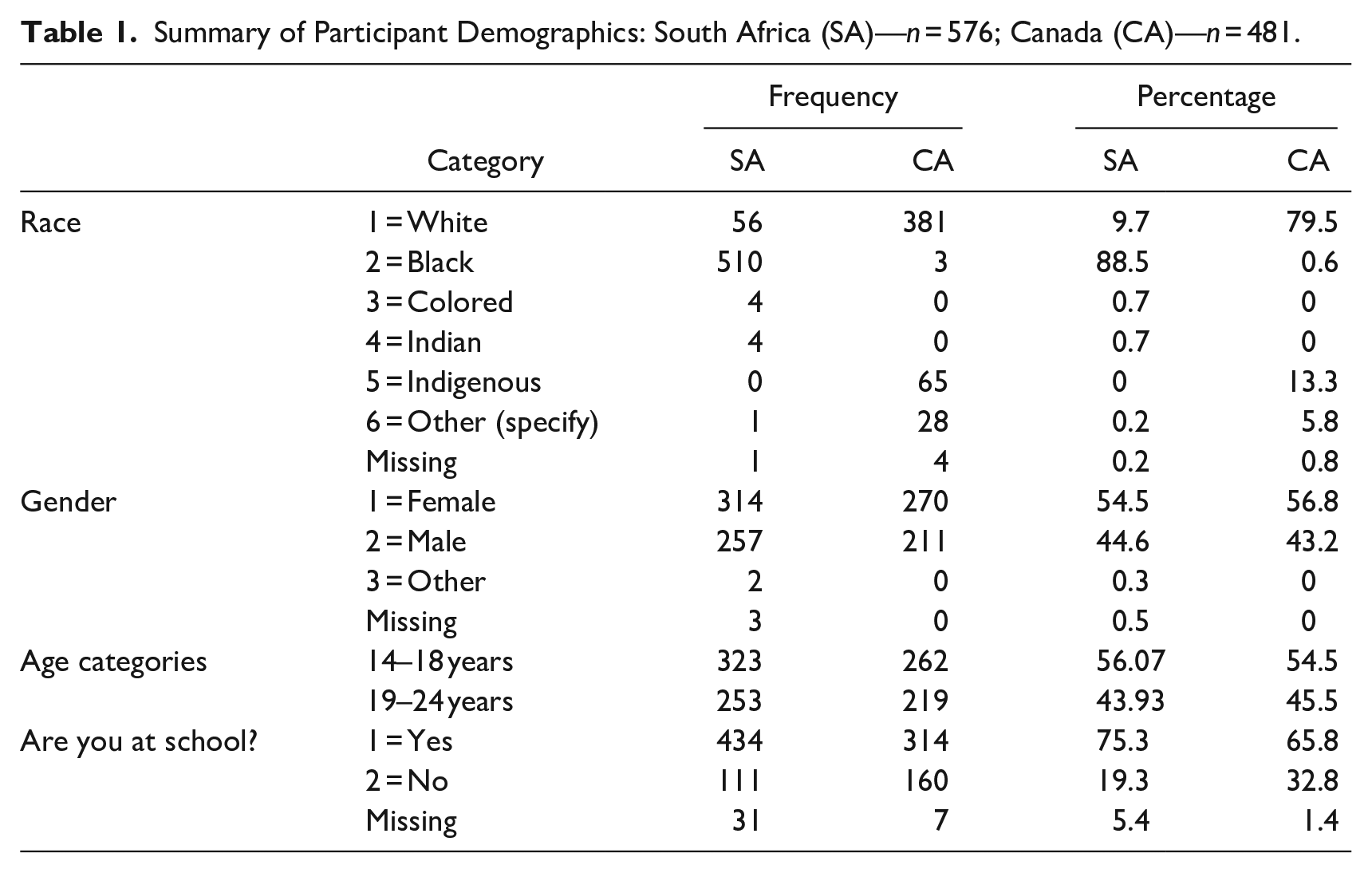
See Table 1 for a summary of participant demographics. Age was dichotomized into two groups (younger youth: 14–18 [i.e., adolescents]; older youth:19–24 [i.e., emerging adults; Arnett, 2000]). This categorization was a response to the need to better understand the differential value of resilience-enablers for young people in different stages of development (Sanders et al., 2017; Yoon et al., 2021).
Summary of Participant Demographics: South Africa (SA)—n = 576; Canada (CA)—n = 481.
Incentives
In line with CAP advice, participants received a ZAR150 supermarket voucher (equivalent, at the time, to $15). The recruitment flyers excluded incentive information.
Participant Selection, Canada
Sampling method
Youth were purposefully sampled from the Canadian RYSE research site, a rural boomtown in Alberta. As its economy relies entirely on oil and gas extraction, its prosperity is dependent on the oil price. Boomtowns are associated with substance abuse, domestic violence, higher crime and divorce rates, as well as lower educational outcomes (Ennis & Finlayson, 2015). At the time of the study, the longest recession in the history of the town was happening. Local social workers reported youth depression and anxiety rates that exceeded the national average.
Recruitment
The study was advertised on social media platforms (e.g., Facebook). RYSE researchers visited schools and other places frequented by local youth to advertise the study by word-of-mouth and flyers. A CAP co-facilitated recruitment. To be eligible participants needed to be: (i) 14 to 24 years old; (ii) living or spending significant time (like school or work) in the research community; and (iii) willing to participate. Evidence of impaired decision-making capacity resulted in exclusion.
Participant demographics
See Table 1.
Incentives
In line with CAP advice, participants received $25 for survey completion.
Data Collection
Measuring instruments
Biographical information
This included race, gender, age, and school attendance.
Cultural resources
The Child and Youth Resilience Measure (CYRM-28; Ungar & Liebenberg, 2011) measures resources associated with child and youth resilience across diverse cultures. Although recent studies have reported that the factor structure varies across communities (e.g., Renbarger et al., 2020; van Rensburg et al., 2019), the CYRM-28—which is based on empirical work with youth in 11 countries—is described as the resilience measure that “may be the best choice for a cross-national survey” (Windle et al., 2011, p. 16). Hence, it was included in the RYSE study (Ungar et al., 2021).
The CYRM-28 includes an individual, caregiver, and contextual subscale (Ungar & Liebenberg, 2011). The contextual subscale comprises 10 items that measure young people’s perceptions of educational, community, and cultural/spiritual resources. Considering the findings of Nielsen et al. (2016) that using single items compared to dimension scores revealed more distinguishing latent profiles, we utilized the four contextual subscale items that were specific to our focus on religiosity, spirituality, family tradition, and community tradition. The items were “Spiritual beliefs help me to be strong”; “I participate in organized religious activities”; “I enjoy my family’s/partner’s cultural and family traditions”; “I enjoy my community’s traditions.” Participants rated their agreement on a five-point scale, ranging from 1 = “Not at all” to 5 = “A lot.” Govender et al. (2017) reported acceptable test-retest reliability.
Depression
The Beck Depression Inventory-II (Beck et al., 1996) was used to measure symptoms of depression. It comprises 21 sets of 4 statements; statements increase in severity and correspond to a 4-point scale (0–3). Participants choose the statement that fits their experiences in the preceding 2 weeks. For example: “0 = I get as much pleasure as I ever did from the things I enjoy; 1 = I don’t enjoy things as much as I used to; 2 = I get very little pleasure from the things I used to enjoy; 3 = I can’t get any pleasure from the things I used to enjoy.”
Conduct disorder
Risk behaviors associated with conduct disorder (e.g., theft, aggression, destruction of property, serious violation of rules; APA, 2013) were measured using the 5-item Enactment of Violence Scale (Geldhof et al., 2014), and an additional item about bullying others. Participants reported how frequently they had enacted these behaviors (e.g. “Hit or beat up someone”) in the preceding year. Items were scored on a five-point scale (1 = “Never” to 5 = “5+ times”).
Data collection Procedures
Ethical clearance was granted by the institutional review boards of the Canadian and SA universities to which the principal investigators are affiliated (Health Sciences Research Ethics Board, Dalhousie University [2017-4321]; Faculty of Health Sciences Research Ethics Committee and Faculty of Education Research Ethics Committee, University of Pretoria [UP17/05/01]). In South Africa, trained research assistants (RA) administered the measures to small groups of participants. Small group administration was advised by the CAP and fit previous SA resilience research (Van Rensburg et al., 2019). An RA read each item aloud and participants self-completed a paper version. In Canada, participants self-completed a paper-pencil survey at home or wherever the trained RAs met them (e.g., school, work). A pilot with eight youth confirmed adequate youth comprehension when self-completing the survey.
Statistical Analysis
Descriptive statistics were computed with SPSS 26.0 (IBM Corp, 2020). The full information maximum likelihood method (FIML) in Mplus 8.4 (Muthén & Muthén, 2009–2019) was used to manage the few missing values in the dataset (Van Buren, 2018). LPA was used to determine whether distinctive profiles relating to youth engagement with four cultural resources (see measuring instruments) could be found in the data (Mplus 8.4; Muthén & Muthén, 2009–2019; Wang & Wang, 2020).
Different models with a variety of latent profiles were tested. The competing models were compared based on their Bayesian information criterion (BIC), Akaike information criterion (AIC), and sample-size adjusted BIC (ABIC) values. The model with the smallest value of information criterion (AIC, BIC, and ABIC) is preferred. Entropy is used to determine the quality of profile verification; values range from 0 to 1, with values closer to 1 indicating suitable classification (Geiser, 2013). The Lo-Mendell-Rubin test (LMR LR; Lo et al., 2001), the adjusted Lo-Mendell-Rubin (ALMR) test, and the bootstrapped likelihood ratio test (BLRT: Wang & Wang, 2020) were used to determine the optimal number of profiles. When individuals are assigned to specific latent profiles, a probability value of higher than .80 is generally considered a good indicator (Geiser, 2013). Point estimates of scale reliability were determined with coefficient Omega (ω) (Raykov, 2009). A cut-off score of 0.70 was used (Nunnally & Bernstein, 1994). To compare the correlations between the cultural resources in the SA and Canadian samples, Fisher’s r-to-z transformation were computed (Weiss, 2011). The q index as proposed by Cohen (1988) was used to interpret the difference between two correlations after applying Fisher’s z. Proposed cut-off points for q are as follows: 0.3 to 0.5 for a medium effect, and >0.5 for a large effect (Feinberg & Jurich, 2017).
The procedure to test the latent profile similarity of subpopulations in a sample (as suggested by Morin et al., 2016) was used. That procedure entails six steps, namely (a) test configural similarity to determine whether the same number of profiles could be identified in different groups; (b) test structural similarity to determine whether the indicators’ levels (i.e., within-profile means) are the same across groups; (c) test dispersion (i.e., within-profile variability); (d) test whether the size of the profiles is similar across groups (i.e., distributional similarity); (e) test the relations between predictors and profile membership (i.e., predictive similarity), and (f) test relations between profile membership and outcomes (i.e., explanatory similarity). These steps provide a systematic way to assess whether latent profiles will generalize across samples and is a vital source of evidence in support of the construct validity of a latent profile solution (Muthén, 2003).
To determine the mean of a distal continuous outcome across latent profiles the automatic Bolck, Croon, and Hagenaars (BCH) method was used (Asparouhov & Muthén, 2014; Bakk & Vermunt, 2016). To ensure that a shift in the latent profiles did not occur, means of the auxiliary variables across the different profiles were determined with the BCH approach (Asparouhov & Muthén, 2014).
The distal outcomes (depression and conduct disorder), gender and age-group (as covariates), and the BCH weights were used in the USEVARIABLES option in Mplus 8.4 and the BCH weights were used as training variables in the TRAINING option of the VARIABLE command. Two regression models were specified for each distal variable. Gender and age-group (younger youth: 14–18; older youth: 19–24) were used to predict the distal variables (depression and conduct disorder) through a linear regression model. In the latter model, the regression slope coefficients and associated parameters were restricted to be the same across the latent profiles. In the profile-specific subcommands the within-profile model specification removed the equality restriction on the regression parameters in the specific profiles. One-way analysis of variance was used to compare the depression and conduct disorder scores of gender and age groups in different profiles in Canada and SA.
Results
Descriptive Statistics and Correlations
The descriptive statistics and correlations for cultural resources in South Africa and Canada are reported in Table 2. Compared with Canadian participants, SA participants obtained significantly higher scores on the item about spirituality (“Spiritual beliefs help me to be strong”) and religiosity (“I participate in organized religious activities”).
Descriptive Statistics and Correlations for Cultural Resources in South Africa (SA) and Canada (CA).
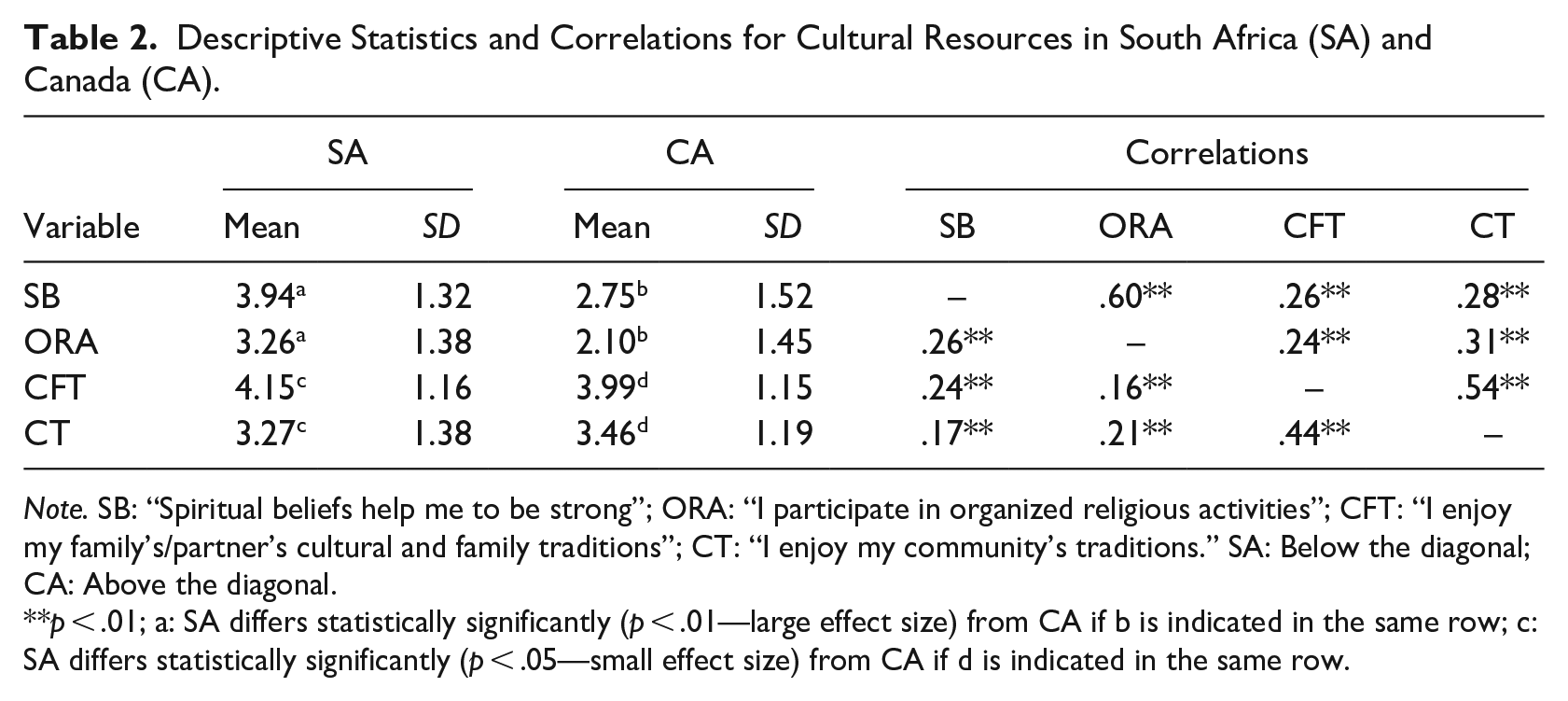
Note. SB: “Spiritual beliefs help me to be strong”; ORA: “I participate in organized religious activities”; CFT: “I enjoy my family’s/partner’s cultural and family traditions”; CT: “I enjoy my community’s traditions.” SA: Below the diagonal; CA: Above the diagonal.
p < .01; a: SA differs statistically significantly (p < .01—large effect size) from CA if b is indicated in the same row; c: SA differs statistically significantly (p < .05—small effect size) from CA if d is indicated in the same row.
The correlations between the following resources were higher in the Canadian sample: SB (“Spiritual beliefs help me to be strong”) and ORA (“I participate in organized religious activities”) − z = 6.86, p < .001, Cohen’s q = 0.44; CFT (“I enjoy my family’s/partner’s cultural and family traditions”) and CT (“I enjoy my community’s traditions”) − z = 2.22, p = .04, Cohen’s q = 0.13.
Latent Profiles for Canadian and SA Samples
To test for configural similarity, separate LPAs were conducted on participants’ responses to the four cultural resource items for each country. The random starts of all the LPA models were set to 200 with 40 optimization phases. After acceptable model fit indices were obtained, the random starts were increased to 2,000 with 400 optimization phases, to ensure findings remain the same. The fit indices are reported in Table 3. Configural similarity was reached since two latent profiles were found for both samples (see Figure 1).
Comparison of Different LPA Models.
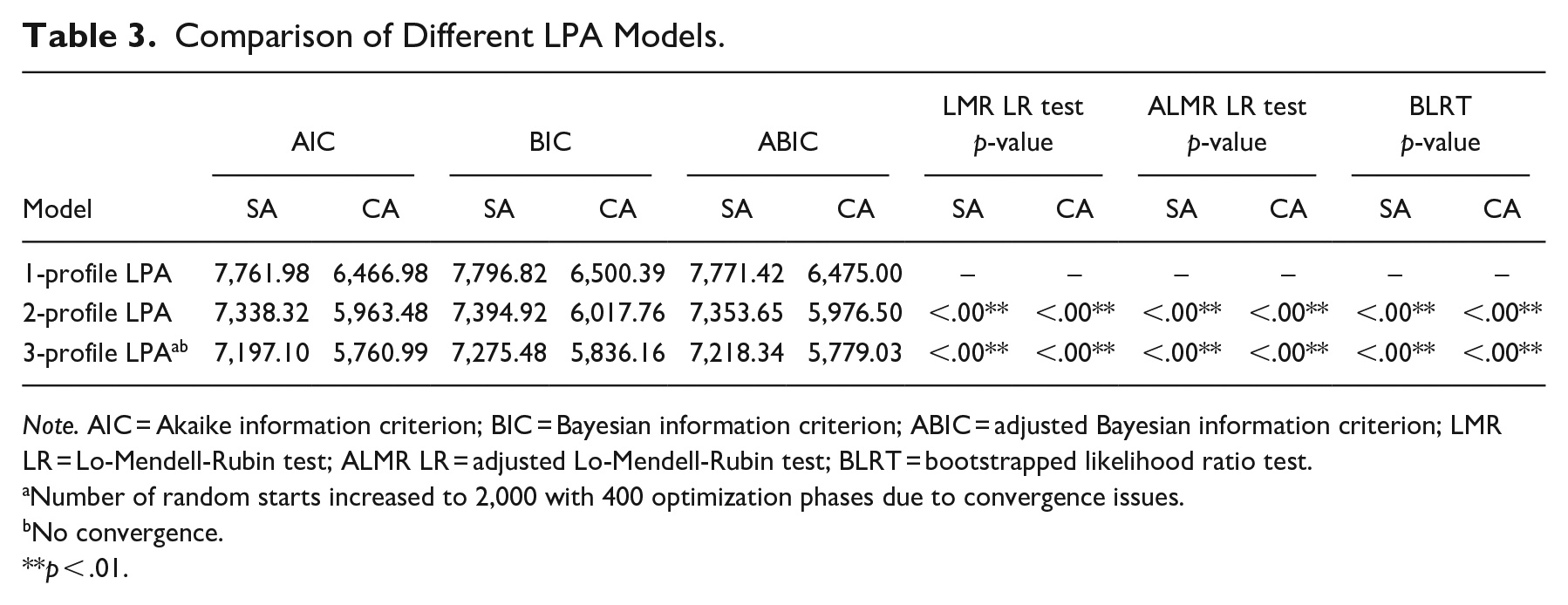
Note. AIC = Akaike information criterion; BIC = Bayesian information criterion; ABIC = adjusted Bayesian information criterion; LMR LR = Lo-Mendell-Rubin test; ALMR LR = adjusted Lo-Mendell-Rubin test; BLRT = bootstrapped likelihood ratio test.
Number of random starts increased to 2,000 with 400 optimization phases due to convergence issues.
No convergence.
p < .01.
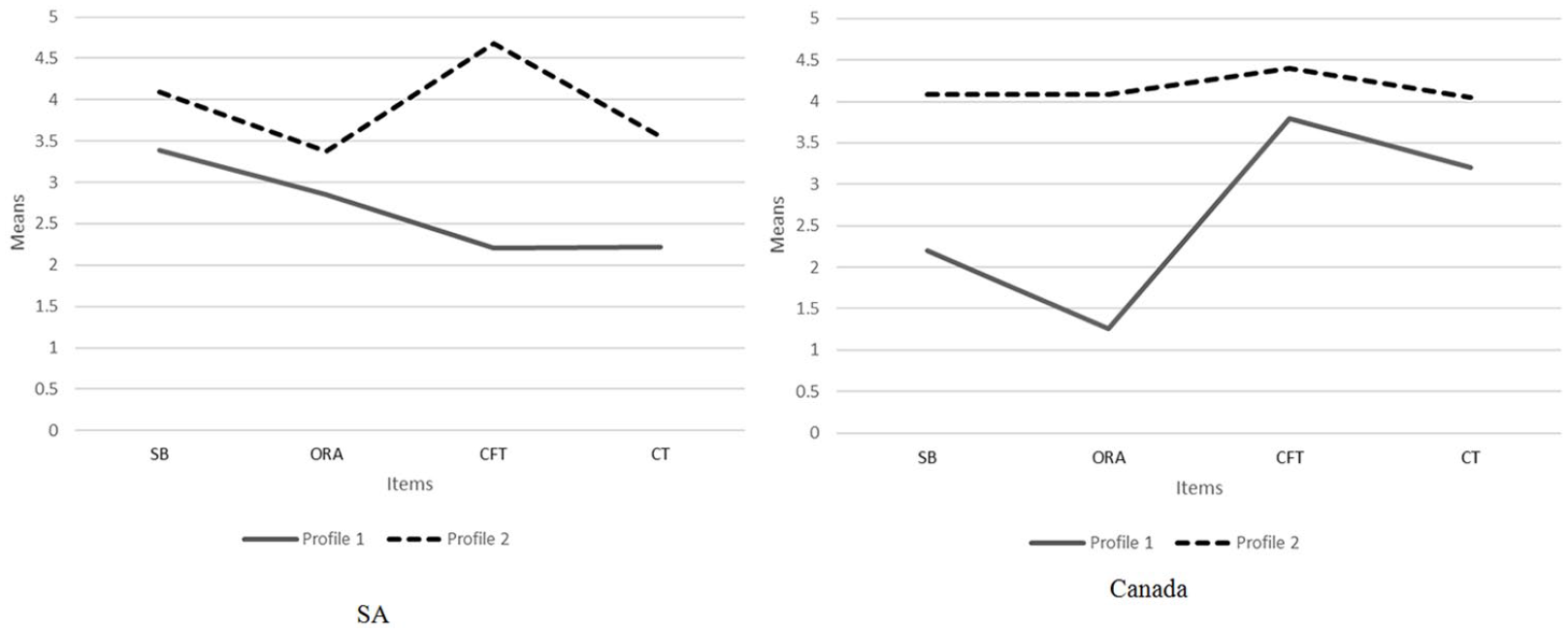
Two latent profiles based on four items relating to cultural resources in the SA and Canadian samples.
SA sample
The fit indices showed significantly better fit for Profile 2 compared with Profile 1 (ΔAIC = 423.66; ΔBIC = 401.90; and ΔABIC = 417.77). The LMR LR (p < .01), ALMR (p < .01), and BLRT (p < .01) for Profile 2 were also statistically significant. The fit statistics for Profile 3 were acceptable. However, the model did not converge, even after the number of random starts was increased.
Profile 2 had an entropy value of 0.95, suggesting good profile verification (Wang & Wang, 2020). Individuals were profiled with high certainty into the most likely latent profile: 0.99 (Profile 1) and 0.99 (Profile 2). Overall, Profile 1 had lower mean scores and comprised 22.4% of the sample (n = 129), whereas Profile 2 consisted of 77.6% (n = 447) of the sample.
Profile 1: Nominal cultural allegiance (22.4%, n = 129)
Compared with Profile 2, individuals in Profile 1 reported lower levels of supportive spiritual beliefs and participation in organized religious activities. Enjoyment of tradition (i.e., family’s or partner’s traditions; community’s traditions) was significantly low.
Profile 2: Robust cultural allegiance (77.6%, n = 447)
Individuals in Profile 2 showed high appreciation for spiritual beliefs and family traditions. They gained strength from organized religion and enjoyed community traditions. Scores for all four cultural resources exceeded those of individuals in Profile 1.
Canadian sample
Up to three potential profiles were tested. The model fit criteria preferred the three-profile solution (Table 3). The entropy increased slightly between the models with two (0.93) and three profiles (0.94). The largest increase in model fit was found between the 1- and 2-profile solution (ΔAIC = 503.50; ΔBIC = 482.63; and ΔABIC = 498.50); it flattened between the 2- and 3-profile solution (ΔAIC = 202.49; ΔBIC = 181.60; and ΔABIC = 197.47). The 3-profile model resulted in an additional profile that was very similar to one of the profiles of the 2-profile solution. Hence, the model with two profiles was chosen based on the elbow criterion and model parsimony (Bauer & Curran, 2003; Nylund-Gibson & Choi, 2018). Probabilities for assigning individuals to their respective profiles showed a high certainty: 0.98 (Profile 1) and 0.98 (Profile 2). Profile 1 comprised 69% of the participants (n = 332) and Profile 2 31% of the sample (n = 149).
Profile 1: Nominal cultural allegiance (69%, n = 332)
Individuals in Profile 1 were characterized by significantly lower levels of supportive spiritual beliefs and participation in organized religious activities compared to their enjoyment of their family’s/partner’s traditions and their community’s traditions.
Profile 2: Robust cultural allegiance (31%, n = 149)
Individuals in Profile 2 showed comparably high levels across all four resources. They gained strength from their spiritual beliefs, participated actively in organized religious activities, and reported a high enjoyment of family and community traditions.
Testing the Similarity of Profiles
We tested a multiple-group 2-profile model simultaneously estimated in both countries using the Mplus KNOWNCLASS function. Using the baseline model of configural similarity (AIC = 14,759.34; BIC = 14,893.32; ABIC = 14,807.57), we estimated a model of structural similarity by constraining the within-profile means on the four variables to be equal across the two countries. Compared to the baseline model, the structural similarity model showed substantially higher values on the three information criteria (ΔAIC = 306.14; ΔBIC = 266.44, and ΔABIC = 291.85), which does not support the structural similarity of the 2-profile model across the two countries. Therefore, the profiles did not have similar levels on the profile indicators across countries, which implies that the profiles have a different meaning across countries. Next, we tested for partial structural similarity by constraining profiles to be equal but relaxing the constraints on one indicator at a time. The values of the information criteria were lower when the constraints were relaxed on the first indicator (ΔAIC = −59.45; ΔBIC = −44.56, and ΔABIC = −54.09) and the second indicator (ΔAIC = −141.58; ΔBIC = −131.66, and ΔABIC = −138.02). However, the information criteria were still substantially higher than the values of the configural similarity model. Although we regarded structural similarity as a prerequisite for dispersion and distributional similarity, we also conducted tests for these types of similarity. Substantial higher values in the information criteria suggested poor dispersion similarity (ΔAIC = 356.40; ΔBIC = 297.39, and ΔABIC = 334.96) and distributional similarity (ΔAIC = 524.16; ΔBIC = 459.65, and ΔABIC = 500.94). Therefore, we decided to conduct further analyses separately for the two countries. Separate analyses fit with understandings that resilience is complex and likely variable across cultures, but that such variability should not jeopardize investigations of resilience across cultural groups (Masten et al., 2021; Ungar et al., 2008).
Figure 1 shows that in both countries the lines of the latent profiles did not cross, which indicates that the estimated latent profiles did not differ regarding the types of cultural resources. Rather, in both countries the latent profiles showed variation in terms of the degree of the measured resources. Furthermore, the differences between the correlations of resources in the Canada and SA samples might explain why equivalent latent profiles were not found.
Confirmatory Factor Analysis (CFA), Descriptive Statistics, Reliabilities, and Correlations
CFA was conducted to test the factor structures of the two mental health measures (i.e., Beck Depression Inventory-II and Enactment of Violence Scale). See Table 4 for the descriptive statistics, reliabilities, and Pearson’s correlations of the distal variables.
Descriptive Statistics, Reliabilities, and Pearson’s Correlations of the Distal Variables.
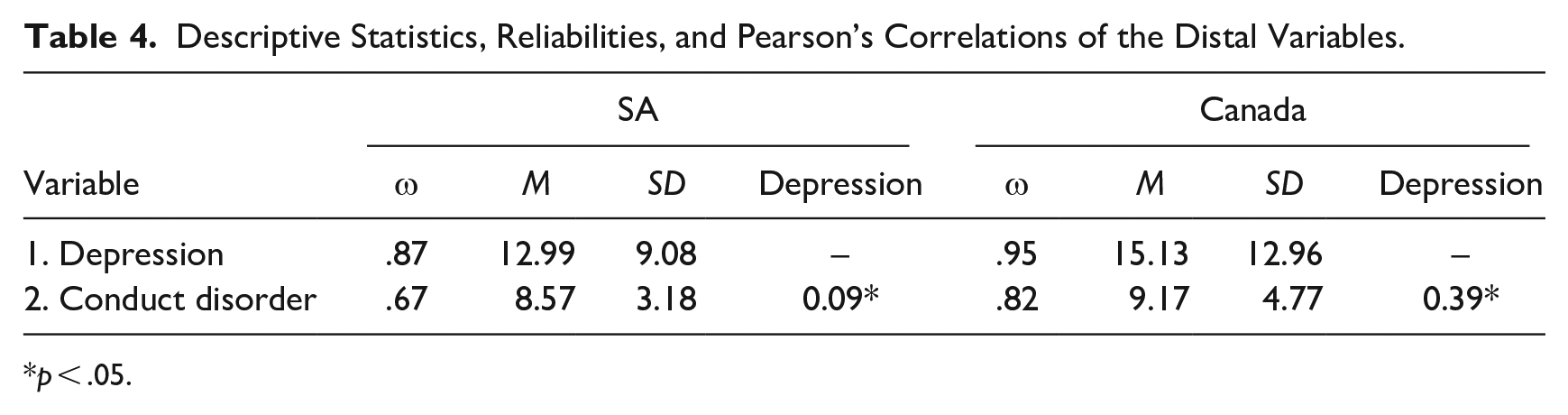
p < .05.
SA Sample
The CFA in the SA sample showed acceptable fit: χ2 = 429.38 (df = 274), p < .01, RMSEA = 0.03 (0.03; 0.04, p > .01), CFI = 0.93, TLI = 0.93, SRMR = 0.04.
Canadian Sample
The CFA in the Canadian sample also showed acceptable fit: χ2 = 643.97 (df = 323), p < .01, RMSEA = 05 (0.04; 0.05, p > .01), CFI = 0.94, TLI = 0.93, SRMR = 0.04.
Latent Profiles and Distal Outcomes
One-way analysis of variance was used to investigate the differences between the depression and conduct disorder of males and females in the different age groups in the nominal and robust cultural allegiance profiles (eight groups per country). Statistically significant differences between the eight groups were obtained in the Canada sample (FDepression [7, 433] = 4.51, p < .001, η = .07; FConduct disorder [7, 467] = 2.51, p = .015, η = .04), and the SA sample (FDepression [7, 529] = 8.99, p < .001, η = .11; FConduct disorder [7, 555] = 15.66, p < .001, η = .17). The descriptive statistics and comparison of groups based on country, latent profile, gender, and age category are reported in Table 6. The mean scores of depression and conduct disorder for younger/older female and male participants in Profiles 1 and 2 in South Africa and Canada are illustrated in Figures 2 and 3 respectively.
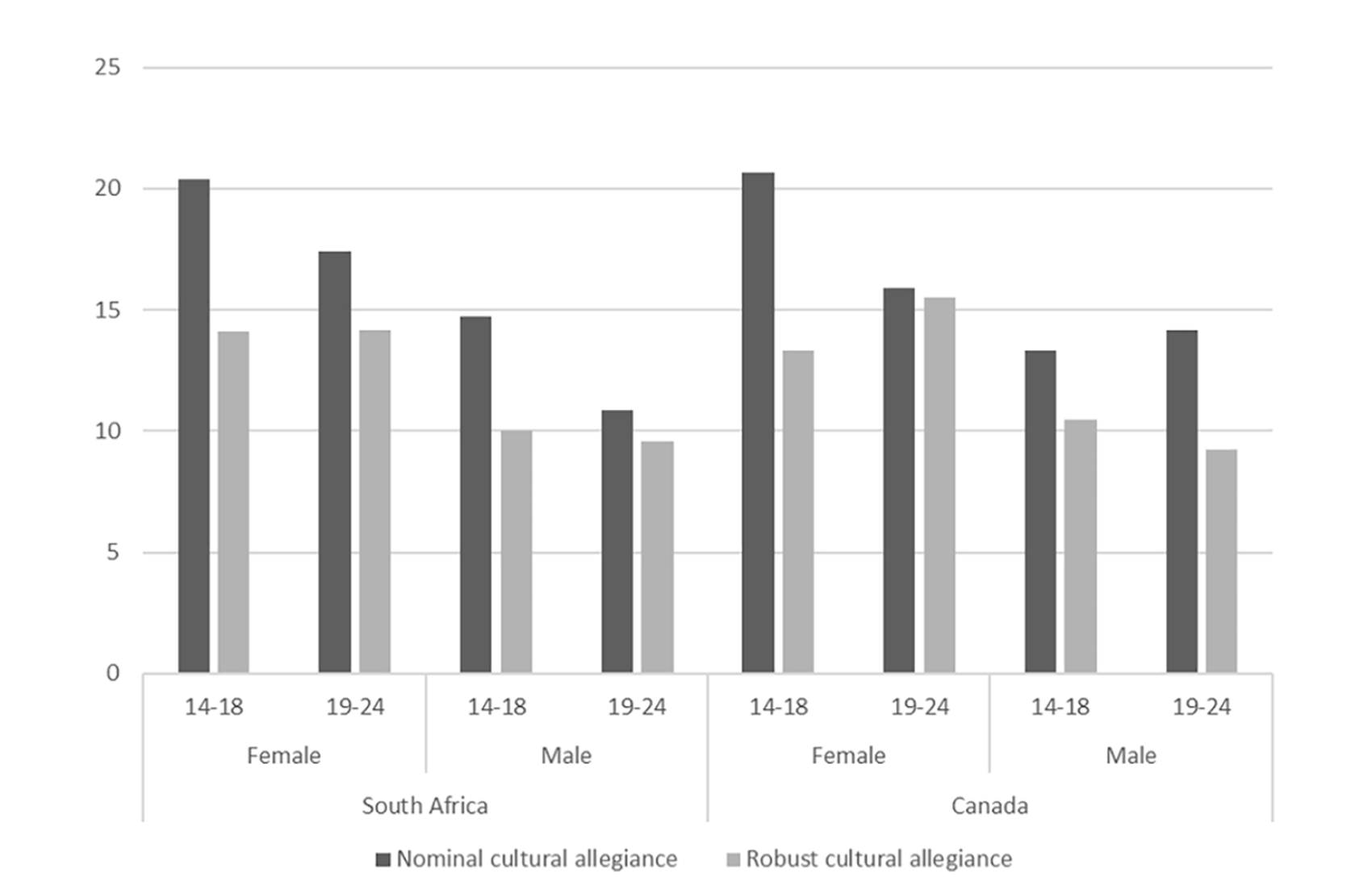
Depression of female and male participants of different age categories for nominal (Profile 1) and robust (Profile 2) cultural allegiance.
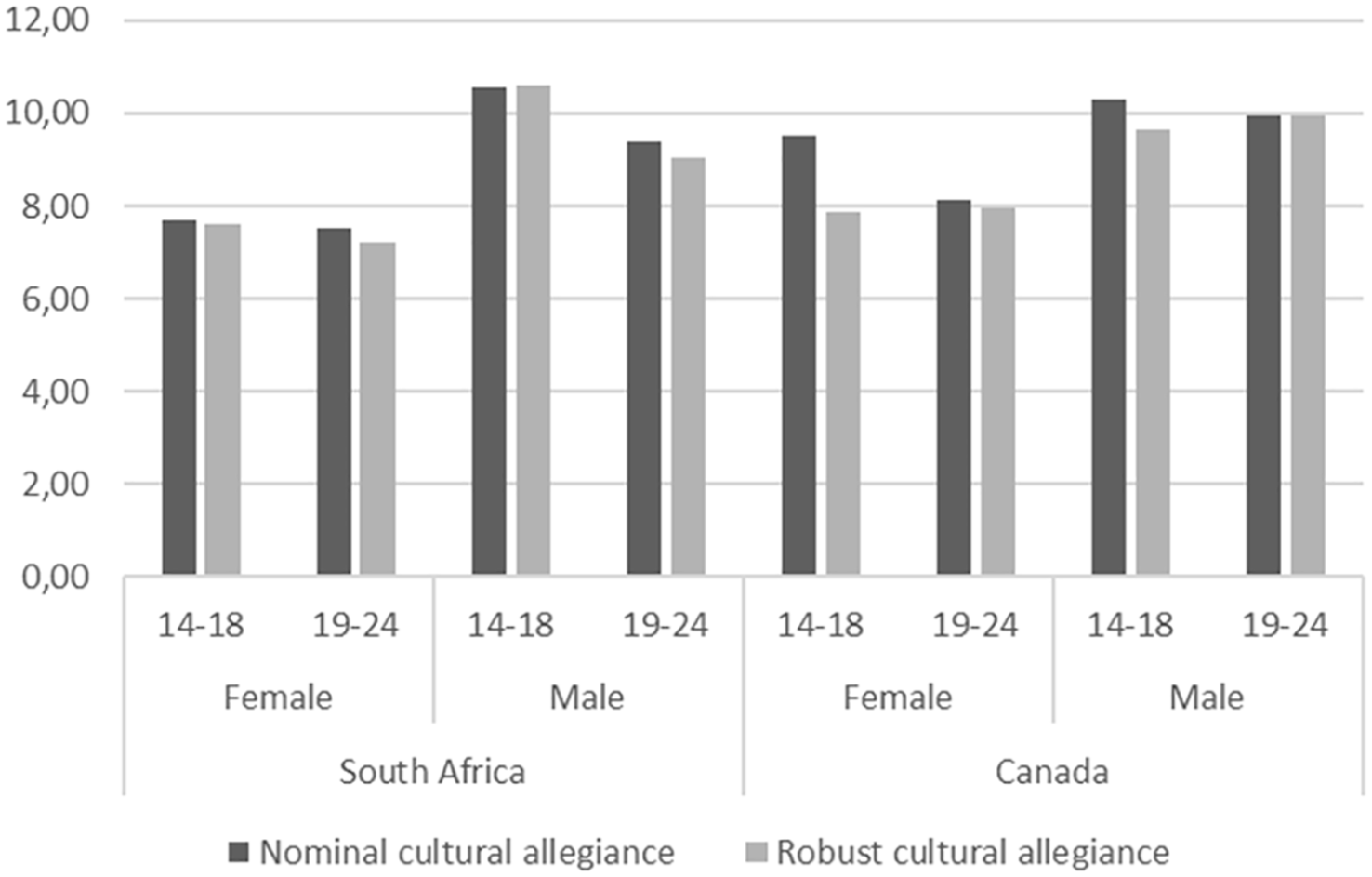
Conduct disorder of female and male participants of different age categories for nominal (Profile 1) and robust (Profile 2) cultural allegiance.
SA sample
As per Table 5, Profile 1 individuals scored statistically significantly higher on depression than those in Profile 2 (χ2 = 12.16, p < .01). No significant differences were found between the profiles regarding conduct disordered behavior (χ2 = 1.37, p = .08). Gender had a significant negative effect on the depression score in Profile 1 (estimate = −0.25, p < .01) and Profile 2 (estimate = −0.33, p < .01). Gender had a positive effect on the conduct disorder score in Profile 1 (estimate = 0.39, p < .01) and Profile 2 (estimate = 0.37, p < .01). Age had a significant negative effect on the depression score in Profile 1 (estimate = −0.19, p < .05), and on the conduct disorder score in Profile 1 (estimate = −0.15, p < .01).
Equality Tests of Means Across Profiles.
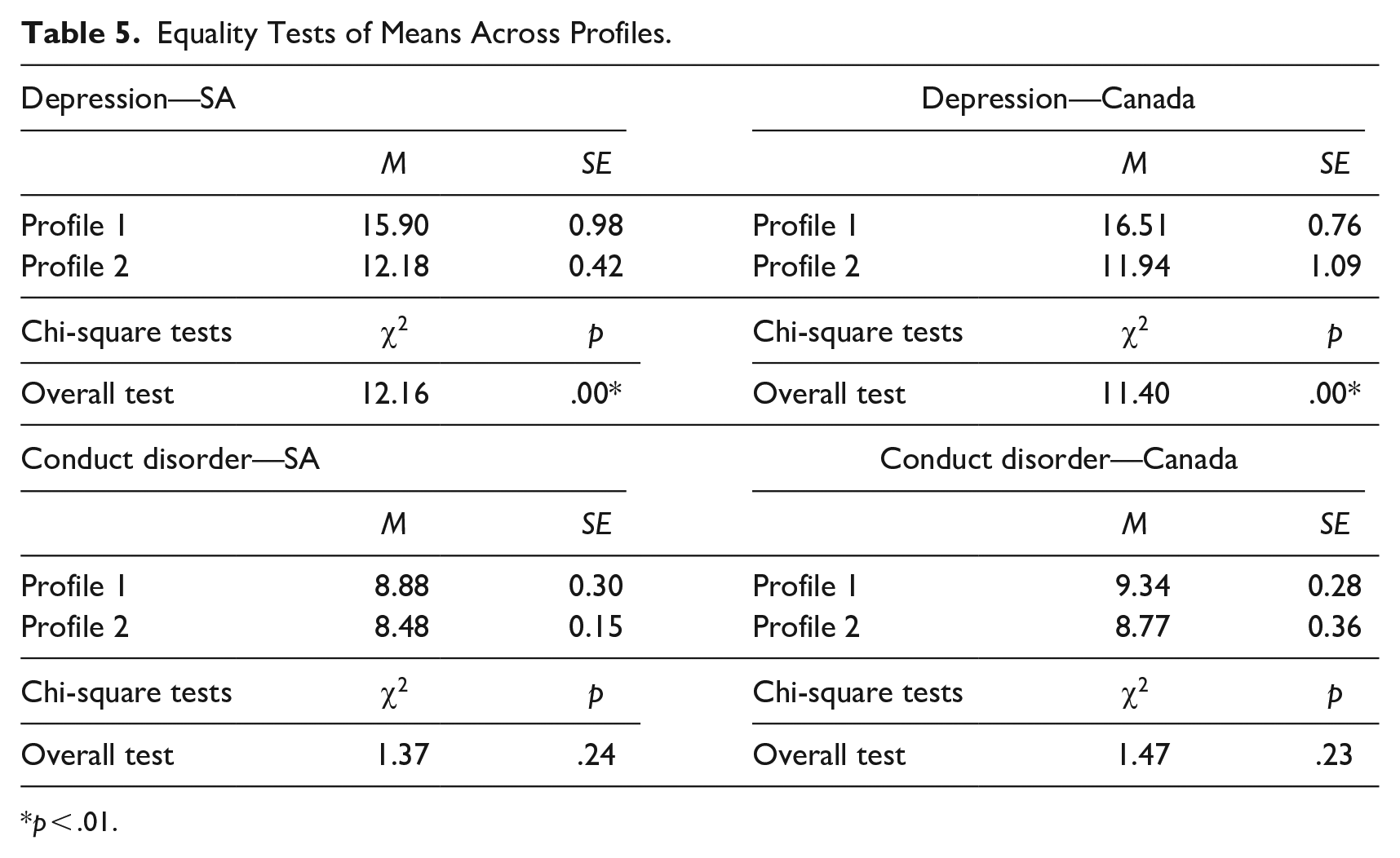
p < .01.
Table 6 shows that female participants in the 14 to 18 age group in Profile 1 show significantly higher levels of depression compared to 19 to 24 years old male participants in Profile 1 and male and female participants of both age groups in Profile 2. Female participants in the age group 19 to 24 in Profile 1 also show higher levels of depression than females in the same age group, and males in both age groups in Profile 2. Concerning conduct disorder, Table 6 shows that female participants in the age group 14 to 18 in Profile 1 score significantly lower than males in the same age group in both profiles. Male participants in the 14 to 18 age group in Profile 1 obtained higher scores than females in both age groups in Profile 2. Finally, female participants in Profile 2 obtained significantly lower scores than 19 to 24 years old males in Profile 2.
Differences Between Nominal and Robust Cultural Allegiance Profiles in Gender and Age Groups in Canada and SA.
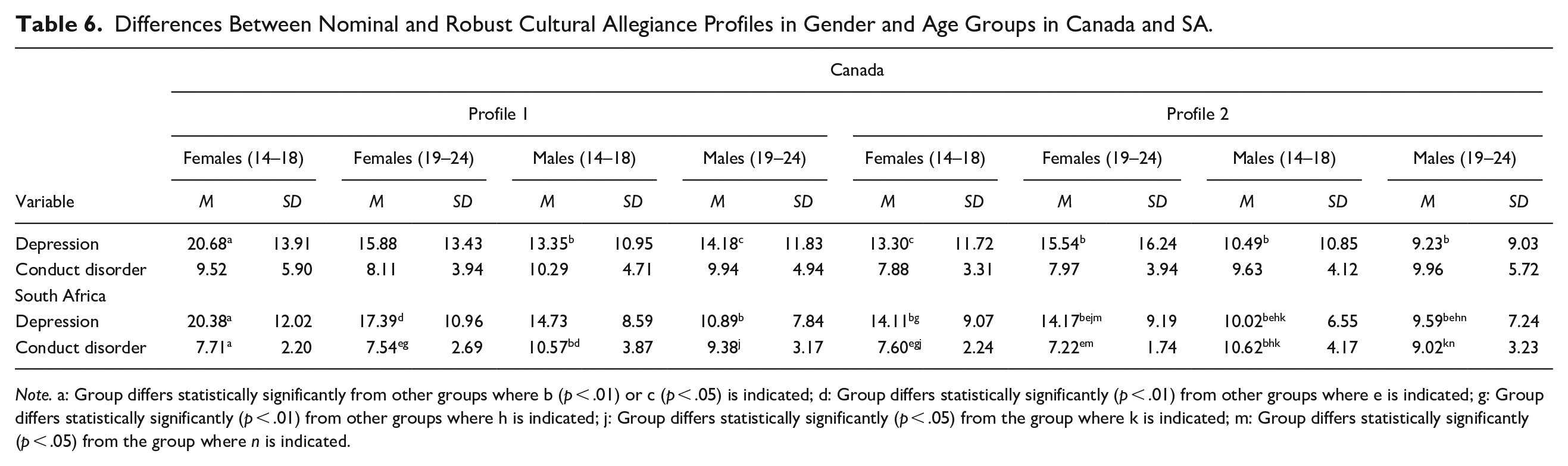
Note. a: Group differs statistically significantly from other groups where b (p < .01) or c (p < .05) is indicated; d: Group differs statistically significantly (p < .01) from other groups where e is indicated; g: Group differs statistically significantly (p < .01) from other groups where h is indicated; j: Group differs statistically significantly (p < .05) from the group where k is indicated; m: Group differs statistically significantly (p < .05) from the group where n is indicated.
Canadian sample
For Canada, Profile 1 shows a significantly higher level of depression than Profile 2 while no significant differences were found for conduct disorder. Gender had a significant negative effect on depression in Profile 1 (estimate = −0.16, p < .00) but no significant effect on depression in Profile 2 (estimate = −0.15, p = .07). Table 6 shows that female participants in the age group 14 to 18 in Profile 1 obtained higher scores on depression than male and female participants in both age groups in Profile 2.
Gender had a significant positive effect on conduct disorder in Profile 1 (estimate = 0.13, p = .03) and Profile 2 (estimate = 0.21, p < .00). Thus, male participants showed higher levels of conduct disorder in both profiles. Further, age had a significant effect on profile membership (estimate = 0.46, p = .03). However, Table 6 shows no statistically significant differences when gender, age and latent profile were computed for eight groups in Canada.
Discussion
The LPA showed that two distinct patterns of response, namely nominal cultural allegiance versus robust cultural allegiance, characterize a sample of SA, and Canadian youths’ engagement with four cultural resources. While we found configural similarity of these two latent profiles, the data did not support the structural or even partial structural similarity of the profiles. Because tests for configural and structural similarity have to do with the nature of the profiles themselves, we regarded them as prerequisite to testing for other types of similarity (Morin et al., 2016). There are various reasons for a lack of structural similarity of latent profiles. First, the items representing the profiles might not give an unbiased reflection of constructs across countries (as suggested by the descriptive statistics and correlations). Second, the structural differences might reflect true differences in the nature of the profiles (e.g., value differences). Both these potential reasons fit prevailing understandings that resilience is a complex, culturally sensitive process and that the resources (including spiritual/cultural ones) associated with resilience are likely to be interpreted and/or valued differently across cultural groups (Höltge, Theron, Cowden, Govender, Maximo, et al., 2021; Höltge, Theron, Cowden, Govender, van Rensburg, et al., 2021; Masten et al., 2021; Renbarger et al., 2020). Related to this, even though the CYRM-28 measures cross-culturally meaningful resilience-enabling resources (Ungar & Liebenberg, 2011), unique factorial structures for the CYRM-28 items have been found for diverse groups of youth (e.g., Daigneault et al., 2013; Sanders et al., 2017; van Rensburg et al., 2019). Such complexity may not, however, halt investigations of culturally embedded resources and how these matter for the mental health resilience of young people in the global North and South (Höltge, Theron, Cowden, Govender, van Rensburg, et al., 2021; Ungar et al., 2008).
Although the results cannot be statistically compared, a theoretical comparison shows that there were youth in each sample who showed a somewhat limited (i.e., nominal) versus strong (i.e., robust) engagement with the four cultural resources (spirituality, religiosity, family tradition, and community tradition). Whilst similar, the nominal and robust profiles were not identical for Canadian and SA youth (see Figure 1). For instance, what stood out in the nominal SA profile was very low enjoyment of family or community tradition. What stood out in the nominal Canadian profile, however, was very low levels of supportive spiritual beliefs and participation in organized religious activities. Such context-specific profile detail was probably predictable: an increasing number of Canadian youth report being non-religious/-spiritual (Statistics Canada, 2020; Young & Shipley, 2015); increasing numbers of young South Africans are ambivalent about their cultural heritage, particularly customs of family and community interdependence (Mhlongo, 2019; Ramphele, 2012). Still, the across-context variation in the profiles highlights the importance of better understanding which protective resources matter more, and less, for which youth in which contexts (Ungar, 2019; Wright et al., 2013). It also encourages follow-up qualitative work to better understand the within-context reasons for the devalued resources.
The prominence of the profiles also varied. In South Africa, most participants fit a profile of robust cultural allegiance; in Canada, most participants fit a profile of nominal cultural allegiance. It is possible that racial demographics (see Table 1) shaped this result. The Canadian sample was predominantly white. Whilst there is an evidence base for the protective role of cultural resources among indigenous Canadian youth (Rowhani & Hatala, 2017; Wexler et al., 2014), white Canadian youth are apparently disconnected from cultural resources (Russell et al., 2015). Similarly, previous SA studies have typified Black SA youth as culturally engaged (Brittian et al., 2013; Phasha, 2010). Still, the fact that both profiles were reported for both samples discourages race-related or stereotypical explanations of which protective resources matter for which participants.
As anticipated, robust cultural allegiance had mental health benefits (albeit for internalizing mental illness only) for the Canadian and SA youth participants. Regarding depression, robust cultural engagement was associated with significant protective effects for both samples. However, a within-group theoretical comparison of the nominal and robust profiles suggests that the protective effects were tied to different cultural resources for Canadian and SA youth. For Canadian youth, the greatest difference between their nominal and robust profiles related to religiosity and spirituality; for SA youth, it related to family and community tradition. Put differently, there is potential protective value in Canadian youth resisting the trend of disengaging from organized religion/spirituality (Statistics Canada, 2020; Young & Shipley, 2015), and in SA youth honoring family or community traditions despite growing preference for non-interdependent ways-of-being (Mhlongo, 2019; Ramphele, 2012). Whilst bucking these trends, so to speak, could be about conforming to time-honored expectations (Panter-Brick, 2015), it could also relate to youths’ experience that cultural engagement yields benefits (e.g., a sense of community; Werner & Brendtro, 2012). Given the latter, families and societies might want to advance opportunities for youth to experience cultural resources as beneficial.
Further, whilst the protective effects for depression fit with pre-existing reports of the protective effects of religion/spirituality for youth (Tomita & Ramlall, 2018; Yonker et al., 2012), they also broaden the repertoire of cultural resources that could protect youth from depression. Put differently, our results encourage mental health practitioners and other service providers to leverage not only religiosity and spirituality to support youth to manage/overcome depression, but also family and community traditions. As a first step, they might want to assess which cultural resources are available to youth clients who present with depression and the extent to which they engage with those resources. Further, it will be important to sensitize families and communities to the healing power of connectedness that family and community traditions potentiate (Masten, 2014; Skeer & Ballard, 2013). In other words, mental health advocates need to educate families and society that the form of the tradition is of less consequence than how well it facilitates meaningful connections between youth and their families/communities.
In comparison, there were no significant protective effects relating to conduct disorder. This was surprising, given the positive association between cultural resources, such as religion and prosocial behaviors, decreased delinquency, and risk behavior (Brittian & Humphries, 2015; Kelly et al., 2015; Rasic et al., 2011). This result cautions against assumptions that cultural resources are equally protective for internalizing and externalizing mental health difficulties. Beyond understanding which resources matter more for the resilience of specific groups of youth (Wright et al., 2013), we need to better understand which resources are most supportive of externalizing versus internalizing mental health. It is possible that a different cultural resource—for example, specific cultural values (Schwartz et al., 2012)—is key to protecting youth from externalizing mental illnesses. We probably also need to better understand whether/how contextual dynamics might reduce the protective value of cultural factors. For instance, the recurrence of violent protests in disadvantaged communities (Canham, 2018), such as that of the RYSE SA site, and resulting possibility of a “protest culture” (M. Mboshane, personal communication, November 13, 2019) could perhaps encourage behaviors traditionally associated with conduct disorder (such as destruction of property). Future studies should explore such complexity.
In South Africa, the gender effects mirrored traditional understandings that female youth are more likely to report depression and male youth conduct disorder (Eme, 2007; Salk et al., 2017). These gender effects held regardless of whether SA youth were profiled as having nominal or robust cultural allegiance. In Canada, male participants showed higher levels of conduct disorder in both profiles. However, anticipated gender effects for depression scores only applied to female participants in Profile 1. Canadian, female participants who were profiled as having robust cultural allegiance (i.e., Profile 2) did not report levels of depression that were significantly higher than male participants who reported robust cultural allegiance. Still, consideration of the depression scores of female and male participants in Canada shows that the differences between the genders are about the same in both profiles (meaning that young women with robust cultural allegiance might still show higher levels of depression, albeit not significantly so). This complexity strengthens concerns that studies of gendered patterns of resilience are overdue (Hirani et al., 2016; Sanders et al., 2017).
Yonker et al. (2012) reported that religion/spirituality were more strongly associated with low levels of depression for younger youth and low levels of risky behavior for older youth. The Canadian and the SA results fit the aforementioned understanding of the effect of cultural resources on depression in younger youth, if they were female. Younger Canadian and SA female youth were more likely to be profiled with higher levels of depression when they reported nominal (compared with robust) engagement with cultural resources. However, older females also obtained lower depression scores when they reported robust engagement with cultural resources (compared to those with nominal engagement). Concerning risky behavior, the age effects of cultural resources were not evident. The complexity of the protective value of engagement with cultural resources (including religiosity/spirituality) for the mental health of older/younger youth in the Canadian and SA sample affirms the value of cautious approaches to one-size-fits-all mental health interventions (Shonkoff, 2020).
Limitations
In the SA sample, the omega value for the conduct disorder scale is slightly lower than the recommended value (i.e., .67). However, confirmatory factor analysis supported the unidimensionality of the scale, which suggests relatedness of the different items, although the standard errors of the items were somewhat high. Whilst the reliability is somewhat low, Nunnally and Bernstein (1994) stated that modest reliabilities (i.e., around .70) can be used to save time and effort in novel or exploratory research. However, as Lance et al. (2006) pointed out, .70 cannot be proclaimed as a universal standard for reliability or accepted as adequate for all research or practice.
Given the lack of structural similarity, it was not possible to draw direct statistical conclusions about the cultural factors implicated in the mental health resilience of the Canadian and SA samples. Others who noted similar difficulties responded by doing country-specific analyses of CYRM data (Höltge, Theron, Cowden, Govender, van Rensburg, et al., 2021). Further, this study is limited by purposeful sampling and cross-sectional data. Given the complexity of resilience, random sampling and mixed method data generated overtime would be more useful (Ungar, 2019). A replication study might be necessary to rule out sampling variation as a reason for the lack of structural similarity of profiles in this study. In addition, cross-validation with multiple samples may support the generalizability of the identified latent profiles (Collins & Lanza, 2010). Also, profiles with similar larger samples should be aimed for since the missing but anticipated significant gender effect for depression in Profile 2 of the Canadian sample might be due to a limited sample size.
Age was dichotomized into two groups. While this categorization was a response to the need to better understand the differential value of resilience-enablers for young people in different stages of development (Sanders et al., 2017; Yoon et al., 2021), it nevertheless potentiates information loss. Still, knowing that cultural resources can have differential protective value for youth relative to their stage of development should advance practitioner attention to the value of a developmental lens when choosing or designing/adapting resilience-enabling interventions (Shonkoff, 2020; Yoon et al., 2021).
The current study did not use the whole CYRM-28 and each of the four cultural resources had one item. Future studies should also investigate what profiles result if other potentially culturally salient resources measured by the CYRM-28 were to be included (e.g., education aspirations or national pride). Moreover, other cultural resources not measured by the CYRM-28—for example, cultural values (Schwartz et al., 2012)—could impact mental health or gender effects and should be explored in future studies. Likewise, it would be useful to understand whether similar profiles are found for youth facing challenges different from economic recession and poverty (i.e., the challenges defining the RYSE study) or living in communities that are contextually dissimilar to those in the RYSE study. Doing so would show whether the results are generalizable to youth outside the RYSE-affiliated communities. Finally, qualitative studies would be useful to better understand the nature of the cultural factors that were investigated and confirm (or not) anomalies, such as the low protective value of religiosity/spirituality for younger SA youth.
Conclusion
There is widespread acknowledgment that for resilience studies to generate meaningful insights, they need to be sensitive to differential patterns of resilience that reflect which resources matter for specific groups of youth in specific contexts (Masten, 2014; Sanders et al., 2017; Ungar, 2019; Wright et al., 2013). In particular, such studies need to account for cultural resources that buffer negative mental health outcomes (Ungar & Theron, 2020). The finding that SA and Canadian youth living in communities that are dependent on the petrochemical industry and its fluctuating fortunes can be profiled as having nominal or robust cultural allegiance, and that those with robust cultural allegiance report fewer internalizing mental health problems, offers a starting point for society to better support youths’ mental health resilience. The finding that neither robust nor nominal cultural allegiance is associated with fewer externalizing mental health problems, and that gender and age effects were variable for the SA and Canadian youth, prompts continued attention to the complexity of resilience.
Footnotes
Acknowledgements
CIHR is gratefully acknowledged but not held responsible for the results reported in this paper. Likewise, the reviewers are acknowledged for their useful feedback.
Declaration of Conflicting Interests
The author(s) declared no potential conflicts of interest with respect to the research, authorship, and/or publication of this article.
Funding
The author(s) disclosed receipt of the following financial support for the research, authorship, and/or publication of this article: The RYSE study is funded by the Canadian Institutes of Health Research (CIHR; grant: IP2-150708). JH position was funded by the Swiss National Science Foundation (grant number P2ZHP1_184004).
