




Abstract
This paper examines intergenerational differences and similarities in value preferences among three generations of the Russian ethnic minorities in two North Caucasus republics of the Russian Federation. It also compares them with value preferences of three generations of Russians in the Central Federal District around Moscow and those of indigenous North Caucasus residents. The sample included 479 grandparent–parent–adolescent triads. Data were obtained using Schwartz’s Revised Portrait Values Questionnaire. Scores for Schwartz’s four higher-order value types (Openness to Change, Self-Enhancement, Conservation, and Self-Transcendence) were calculated. Analyses of variance showed that intergenerational differences were strongest for Openness values. For the three other values, preferences of grandparents and parents differed less than did preferences of parents and their offspring. Repeated measures analyses of covariance, controlling for differences in age, gender, and educational attainment in the five cultural groups, showed that intergenerational differences were moderated by cultural context. Intergenerational differences were consistently widest in the Central Federal District. Generally, value preferences of contemporary adolescents, their parents, and their grandparents are drifting apart in the most “modern” part of the Russian Federation, whereas in the periphery, the generations are staying more closely together, largely regardless of people’s ethnic belonging.
After the collapse of the Soviet Union, ethnic Russians in the North Caucasus republics of the Russian Federation, regardless of their exact number, became a diaspora minority (Silbereisen et al., 2014) of lesser significance, despite being the vast ethnic majority in the Russian Federation as a whole. In 13 out of the 22 republics of the Russian Federation, ethnic Russians are not the majority group; six of these republics are part of the North Caucasus Federal District, making that region the only one (of eight) where Russians are, ethnically speaking, a minority (Russian Federal State Statistics Service, 2012).
Building upon Schwartz’s (1992) approach to assessing value preferences, the current paper explores trends in value change and value transmission among three generations of diaspora Russians, their fellow (majority) Russians in the Central Federal District of the Russian Federation, and local majority members from two North Caucasus republics: Kabardino-Balkaria and North Ossetia-Alania 1 .
Three exploratory questions are at the forefront of the current project: (1) What role does ethno-cultural background, ethnic status, and the degree of modernity (Giddens, 1998) of a region play for differences in value preferences of representatives of three generations? (2) Are value preferences of the ethnic Russian minority living in the North Caucasus more similar to the values of the mainstream Russian culture in areas of the Russian Federation where Russians are the ethnic majority, or to those held by members of the mainstream culture of the North Caucasus republics? (3) Are there any conspicuous generation-specific features in these differences and similarities?
Value Transmission and Value Change in Context
Transmission of values takes place in all cultures (Phalet & Schönpflug, 2001); it is one of the pillars of societal continuity. Authors point to a great similarity between the values of children and their parents (Vollebergh et al., 2001), whereas others draw attention to substantial differences (Roest et al., 2009). Research suggests that the quality of family relationships (Lepshokova et al., 2016), ethnic and religious affiliations (Portes et al., 2009), ethnic group status (Hadjar et al., 2012; Rosenthal et al., 1996), and the immediate as well as wider socio-cultural context (Boehnke et al., 2007; Kuczynski & Parkin, 2007) may be reasons for such different, and even contradictory, findings.
The family is an important source of intergenerational value continuity (Grusec & Davidov, 2007). Greenburg et al. (2005) note that, unlike in society as a whole, differences in value preferences across a family’s generations are not necessarily antagonistic. Conflicting values among grandparents, parents, and offspring should rather be seen as productive stages of development of intergenerational relationships within the family system. Several studies (Craig, 1996; Troll, 1989) found that middle-aged people (sometimes called the “sandwich generation,” Lam, 2006) serve as a link between family custodians, linking the younger generation (their children) and the older generation (their aging parents). Moreover, even if they live separately both from their children and their parents, they nevertheless usually have regular contact with both. This relationship tends to intensify when family members incur difficulties (Troll, 1989).
The interaction of the older and younger generations (bypassing the middle-aged) has been found as related to both material and household assistance (Butts, 2005; Greenburg et al., 2005; Henkin et al., 2005), and to raising grandchildren (Bengtson & Robertson, 1985; Robertson, 1977; Troll, 1982). Robertson (1977) noted that grandmothers and grandfathers bring up a new generation, while at the same time not entering into conflicts with the generation of parents and parent–child tensions. In a society, where traditionally the grandmother (бабушка) has played an important role in bringing up the youngest generation, such close contacts between the oldest and young generations suggest a higher impact on value change and value transmission between them than is common in Western societies (Dolbin-MacNab & Yancura, 2018).
Intra-familial processes, of course, do not take place in isolation, but are embedded in a wider context. Therefore, the similarity between parental and offspring values is likely to differ in families of ethnic minorities and ethnic majorities, as their socialization contexts are only partially the same. Unlike members of ethnic majorities, parents as well as children from ethnic minorities are continuously involved in an acculturation process (Vedder et al., 2009). Additionally, parents typically tend to be more strongly interested in maintaining customary values, whereas children, especially adolescents, tend to be more eager to become part of the majority culture (Vedder et al., 2009). Migrant adolescents are most susceptible to influence from greater society. They are in a novel cultural and linguistic environment (Maliepaard & Lubbers, 2013) and not in the environment where their parents grew up. Hadjar et al.’s (2012) study of ethnic majorities versus minorities in Israel and Germany found that parent–child value similarity was greater in families from majority groups than in ethnic minority families. Their study included a resident (non-migrant) minority—Arab citizens of Israel. The finding supports suppositions that in migrant families the intergenerational change in value preferences and thereby lower similarities between value preferences of parents/grandparents and offspring are common. Cultural continuity/discontinuity contributes to parent–child value similarity/dissimilarity. Yet what is largely unknown is how intergenerational value change and value transmission function in a diasporic minority situation without recent migration experiences. Rather, these groups became diasporic minorities while staying put, as their status was redefined through political and societal processes after the collapse of the USSR, when indigenization intensified in the non-Russian majority republics of the Russian Federation (Kobakhidze, 2005).
Other factors—such as zeitgeist-based differences in value preferences between generations—are also likely to play a role in the value similarities/dissimilarities within families. A German study (Boehnke & Welzel, 2006) of children and their parents, wherein both groups were asked to not only indicate their own value preferences, but also those of their respective parents, found that through the three reported generations, Openness to Change value preferences (preferences for Hedonism, Stimulation, and Self-Direction values; Schwartz, 1992) increased dramatically. The authors interpret this as indication for a historic trend towards Openness values.
At the same time, all other three higher-order value preferences described by Schwartz (1992) - [Self-Transcendence (Universalism and Benevolence), Self-Enhancement (Achievement and Power), and Conservation (Tradition, Conformity and Security) value preferences] lost support either when comparing grandparents and parents (Self-Enhancement, Conservation) or parents and offspring (Self-Transcendence). The authors interpret the loss of support for Self-Enhancement values (parents vs. grandparents) as well as the decline in Self-Transcendence values (offspring vs. parents) as a period effect.
Period effects acquire importance when an entire population is influenced by specific historic events or milestones. For example, in Russia, researchers identify such milestones as the First World War, the thaw period after Nikita Khrushchev’s famous secret speech at the 20th Congress of the Communist Party, the period of stagnation under Leonid Brezhnev, perestroika and liberal reforms under Michail Gorbachev, and the period of stabilization after the resignation of Boris Yeltsin (Radaev, 2019).
Period effects are of particular importance if research takes a life-span perspective. Taking that very perspective, Borg et al. (2017) examined age-related differences in value preferences using data from the European Social Survey 2012 (ESS; N = 50,408) and of a recent German survey on crime prevention (N = 3,272). As predicted, the authors found that (higher) age was related to a clear shift away from Openness to Change and toward Conservation values. They also found a weaker negative correlation of age with Self-Enhancement values in both datasets, as well as an ESS specific positive correlation of age with Self-Transcendence (Universalism, Benevolence), in partial support of their hypotheses.
In light of the above-reviewed research findings, we formulate expectations that serve as a frame for our exploratory research: (a) The transmission of values is culturally specific (Friedlmeier et al., 2008; Greenfield, 2010). It is likely to differ between the—three—cultural contexts included in our study. (b) Ethnic group status is a factor affecting transmission success. Intergenerational similarity is likely to be greater in majority than in minority families (Hadjar et al., 2012; Rosenthal et al., 1996). (c) The general modal value climate or “zeitgeist” (Barni et al., 2012; Boehnke et al., 2007) is likely to affect value preferences in the sense of a period effect, and may, thus, exert its impact differentially across generations. The territory-specific level of what Giddens (1998) calls “modernity” is likely to affect value transmission.
From these expectations, two research topics evolve:
What role does cultural affiliation, ethnic status, and the level of modernity of a region play for differences of value preferences among representatives of three generations?
How do these sociocultural factors interact with participants’ age and cohort?
The study of value change and value transmission in three-generation families of ethnic Russians in two republics of the North Caucasus in comparison with ethnic Russian families in Central Russia (focus: the role of ethnic affiliation and minority/majority status) as well as with families of local peoples in the two republics (focus: the role of local value climate and of modernity) will help us to answer our research questions.
Ethnic Russians in the North Caucasus
As mentioned, the North Caucasus Federal District is a district of Russia where Russians are an ethnic minority. Russians began to settle in the North Caucasus more than 200 years ago (Chernous, 2005). The largest number of ethnic Russians lived in the North Caucasus between 1940 and 1970. Ethnic Russians actively participated in the implementation of engineering, technical, agricultural and cultural programs in this region, especially during the Soviet era. An integration of Russian and Caucasian cultures evidently occurred during this period (Chernous, 2005).
The collapse of the Soviet Union, processes of indigenization, an ethno-religious revival, and armed conflicts in the North Caucasus republics contributed to a severe outflow of ethnic Russians from the region (Belozerov, 2001). The identity of Russians living in the North Caucasus is also being transformed when they become aware of themselves as a diaspora minority (Soldatova, 1998), despite the fact they continue to be the overwhelming ethnic majority in the Russian Federation as a whole.
We studied values of (late) adolescents, their parents and their grandparents in two North Caucasus Republics—Kabardino-Balkaria (KBR) and North Ossetia-Аlania (RNO-A). These republics have similarities: both are multicultural, with the share of the dominant ethnic groups at more than 60%, and the share of the Russian population at about 20%. The share of Russians, however, declined by 10%–20% in these republics in the first decades of the 21st century.
Conversely, there are also differences between the two republics. First, in the composition of the dominant ethnic groups, in KBR there are two culturally dominant ethnic groups (Kabardians, 57% and Balkars, 13%), and in RNO-A there is one dominant ethnic group (Ossetians, 65%). The second difference lies in the religious affiliation. In KBR, 72% of the population are Muslims, whereas 28% are Orthodox Christians. In RNO-A only close to 9% are Muslims, whereas 91% are Orthodox Christians (Federal State Statistics Service, 2020). A third difference lies is interethnic attitudes. In KBR, members of dominant ethnic groups prefer contact with co-ethnics, and ethnic Russians prefer intercultural contact (Sklyarova, 2008), whereas in RNO-A both the dominant ethnic group and the Russian minority prefer equal-status interaction (Gutsunaeva, 2010). A fourth difference lies in intercultural relations. Only 40% of ethnic Russians are satisfied with the interethnic relations in KBR (Denisova & Ulanov, 2003), whereas 63% are satisfied with the interethnic relations in RNO-A.
In the current study, we examine both intergenerational similarities and dissimilarities in the values of Russian ethnic minority members in two North Caucasus republics compared with Russians as a dominant group in central Russia, as well as with Ossetians, Kabardians, and Balkars as dominant groups in these two republics. Our refined exploratory research questions focus on: (1) Value change: What are the intergenerational differences in the value preferences of grandparents, parents, and offspring of ethnic Russian minorities in the North Caucasus republics compared with Russians in central Russia and members of dominant ethnic groups in these republics? (2) Value transmission: What are intergenerational similarities in values of adolescents, parents, and grandparents from ethnic Russian minorities in the republics of North Caucasus republics compared with their counterparts among Russians in central Russia and members of the dominant ethnic groups in these republics?
Method
Participants
We gathered data in Kabardino-Balkaria (N = 93 grandparent–parent–child triads from ethnic Russian families and N = 90 triads from Kabardian and Balkar families), and North Ossetia-Alania (N = 108 grandparent–parent–child triads from ethnic Russian families and N = 103 triads from Ossetian families). Additionally, we gathered data in small cities of the Central Federal District (CFD) of the Russian Federation (Moscow suburban area, Tver Oblast, N = 86 grandparent–parent–child triads from ethnic Russian families). The total sample size was 1440 respondents; Table 1 presents their basic characteristics.
Gender and Age Characteristics of the Sample.
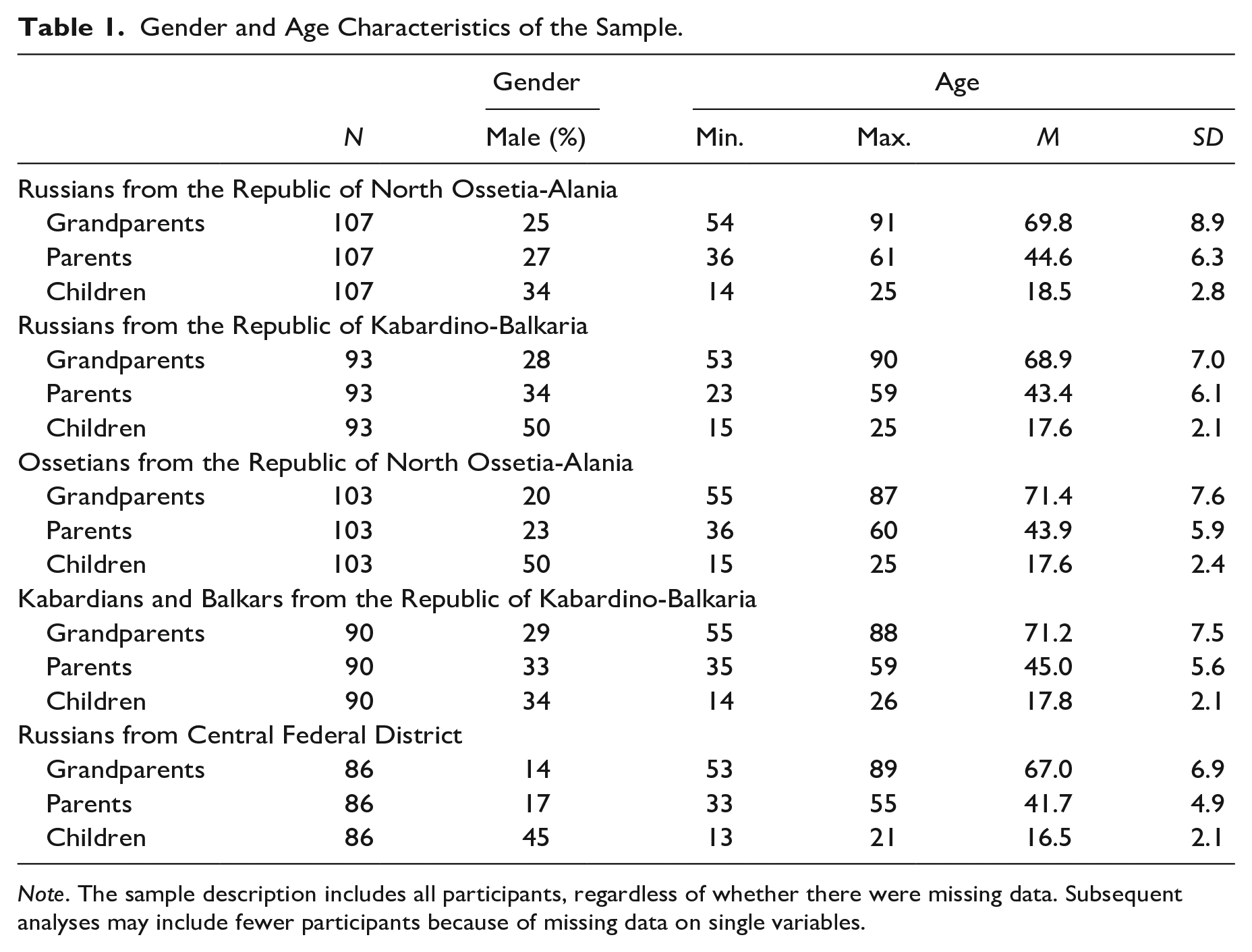
Note. The sample description includes all participants, regardless of whether there were missing data. Subsequent analyses may include fewer participants because of missing data on single variables.
Procedure
The adolescents were recruited from schools and universities in CFD, KBR, and RNO-A. Parents of non-university students filled in the questionnaires at parental meetings at the schools. Parents were asked to distribute the questionnaires among their own parents (thus, grandparents of the school students). The grandparents filled in the questionnaires at home, and passed them on to their grandchildren, who returned completed questionnaires to the researchers. University students distributed the questionnaires among their parents and grandparents. Completed questionnaires were returned to the researcher who administered the survey. Respondents were not remunerated. From a sampling perspective, our participants constitute a well-educated convenience sample.
Measure
Value preferences were assessed using the Russian version of the Revised Portrait Values Questionnaire (PVQ-RR57; Schwartz, Butenko, et al., 2012). Russian is the lingua franca of the Russian Federation and all participants speak it fluently. The PVQ-R contains 57 short verbal portraits that describe a person’s goals, aspirations, or wishes. The questionnaire is based on Schwartz, Cieciuch, et al.’s (2012) refined theory of values, assessing 19 values with three items for each. Respondents choose an answer indicating, “How much is this person like you?” For example, “He/she thinks it is important to do things the way he/she learned from his/her family.” As its response format, the PVQ uses a Likert scale, ranging from “1” (not like me at all) to “6” (very much like me). The 19 values of Schwartz’s refined theory of basic individual values can be combined into four higher- order values: Openness to Change (all αs > 0.82), Self-Enhancement (all αs > 0.76), Conservation of the Status Quo (all αs > 0.86), and Self-Transcendence (all αs > 0.81). In line with Schwartz’s repeated suggestion to use what he calls the MRAT-correction, value preference data were ipsatized before calculating scale scores. 2 Socio-demographic data were self-reported (gender, age, educational attainment, ethnicity, religious affiliation).
Statistical Analyses
We used IBM SPSS Statistics for Windows, Version 26.0 to calculate descriptive statistics, scale consistencies, interclass correlations, and tests for mean differences between generations and between different ethnic groups, as well as IBM AMOS26 to determine correlations between the generations.
Results
Value Change: Intergenerational Mean Differences
To answer the research question about value change, we compared means of higher-order values—Openness to Change, Self-Enhancement, Conservation, and Self-Transcendence—between three generations of Russians from CFD (Group 1), KBR (Group 2), and RNO-A (Group 3), with value preferences of the dominant ethnic groups from KBR (Group 4), and RNO-A (Group 5). Our analyses examined intergenerational differences in value preferences of ethnic Russian minority members in the North Caucasus in contrast with those of Russians from the Central Federal District and with members of the ethnic majorities in the two Caucasus republics. Analyses encompassed four separate repeated-measures analyses of covariance (ANCOVAs) with Group as a five-level between-subject factor and Generation as a three-level repeated-measures factor. In all analyses, we controlled for gender, age (z-standardized within generations) and level of education (ranging from “1”—incomplete secondary education’ to “4”—“higher education,” which stands for tertiary education of any kind). These controls were introduced in order to rule out that findings are a consequence of our specific sampling of gender distributions of the parent and the grandparent generations, or with regard to mere educational differences between the CFD and the Caucasus region. Control variables were partialled for offspring, the responding parent, and the responding grandparent. Results pertaining to these control variables are omitted for clarity (may be obtained directly from the corresponding author). Estimated marginal means are documented in Table 2.
Intergenerational Comparison of Value Preferences among Russians from CFD, KBR, RNO-A, Kabardians and Balkars from KBR, and Ossetians from RNO-A.
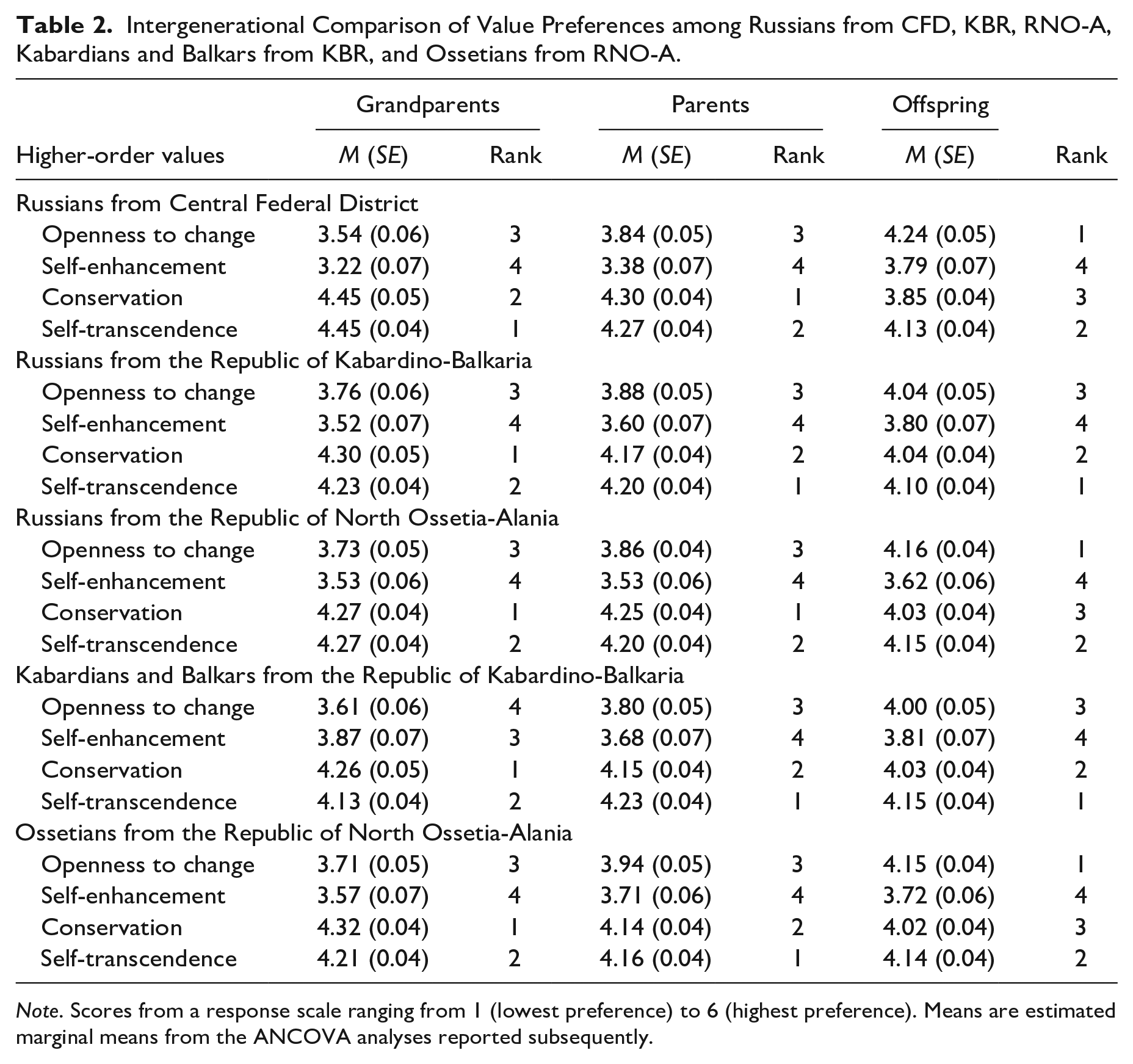
Note. Scores from a response scale ranging from 1 (lowest preference) to 6 (highest preference). Means are estimated marginal means from the ANCOVA analyses reported subsequently.
For Openness to Change, the intergenerational ANCOVA revealed a nonsignificant main effect of Generation (F(1, 421) = 0.248, p = .619, η2 < 0.01) . The interaction term Generation-by-Group was significant (F(4, 421) = 2.899, p = .022, η2 = 0.03). The between-factor Group also was significant (F(4, 421) = 2.667, p = .032, η2 = 0.03). The overall level of Openness value preferences, thus, did not differ across generations as such (main effect), but preference levels differed between the five samples, and more importantly, preferences of the three generations differed between these samples. As for Group means, they were highest in the two indigenous groups (KBR-Indigenous 3.92; RNO-Indigenous 3.94) and lower in the three ethnically Russian groups (CFD 3.88; KBR-Russian 3.90; RNO-Russian 3.80). Pairwise comparisons, however, show that only the mean difference between Russians and Ossetians in North Ossetia-Alania is significant (p = .029). Figure 1 documents changes in mean preferences of Openness values in the five studied ethnic groups. Unlike in the grand sample test reported above, intergenerational differences in means were significant at p < .05, except for the difference between the grandparent and parent generation among Russians in Kabardino-Balkaria. It is interesting to note that support for Openness values saw the strongest intergenerational shift in the CFD, where there was least support for Openness values in the grandparent generation, whereas in the offspring generation there was highest support for Openness values among the five ethnic groups. At the same time, Russian adolescents in the diaspora showed least support for Openness values among the five ethnic groups.
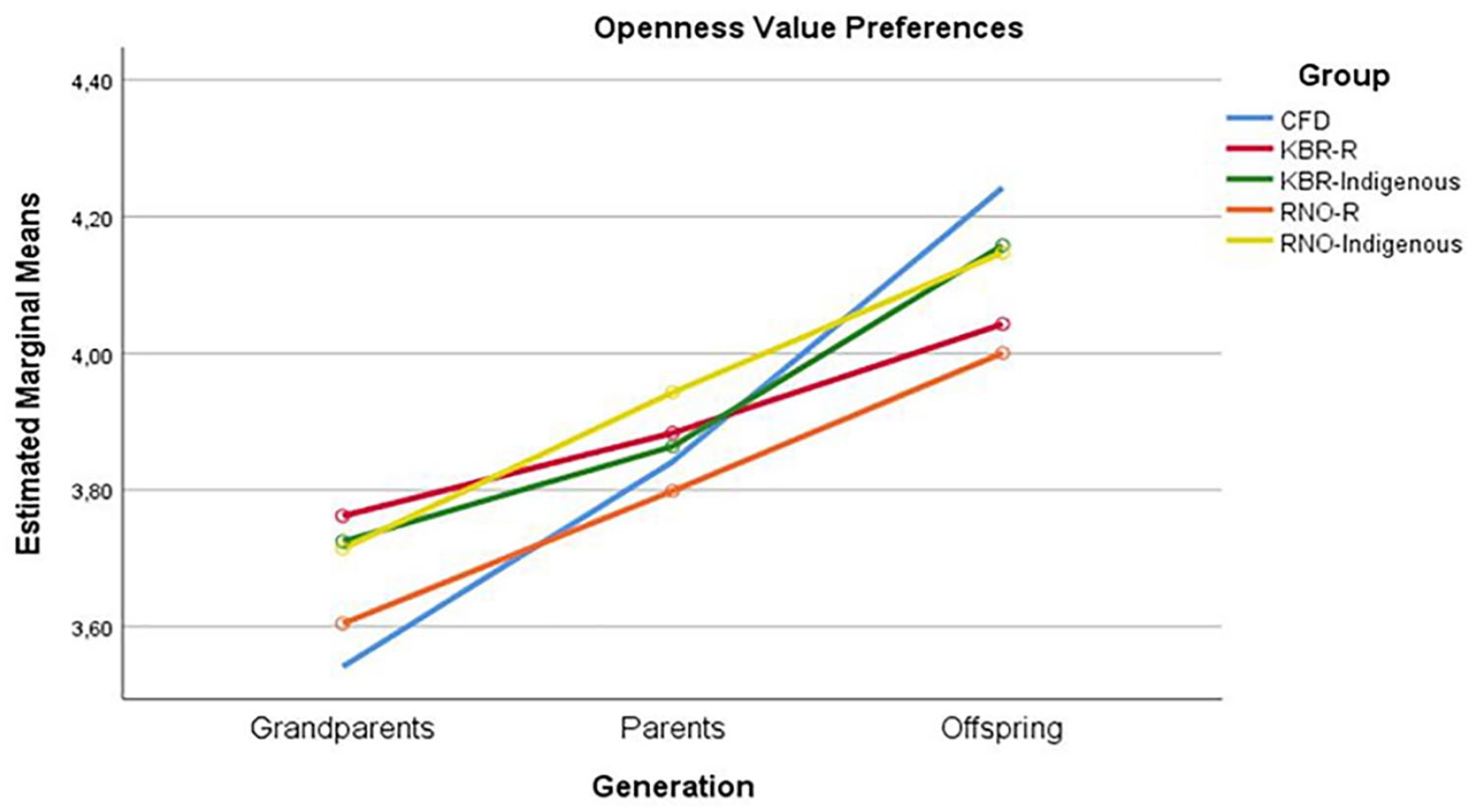
Preferences for openness values across generations and ethnic groups.
In substantive terms, results suggest that the apparent trend towards more support for Openness values across generations is not by any means ubiquitous, but is strongly affected by the immediate cultural context.
When conversely looking at Conservation values, which represent orientations that oppose Openness values in the Schwartz value circumplex, results are comparable, but slightly less pronounced. For the Generation main effect, once again a nonsignificant effect was found (F(1, 421) = 1.015, p = .314, η2 < 0.01) . The interaction term Generation-by-Group was significant (F(4, 421) = 5.511, p < .01, η2 = 0.05). As Figure 2 shows, the across-generations change gradients differ between groups of respondents. The main between-factor Group effect, however, was not significant (F(4, 421) = 0.531, p = .713, η2 < 0.01) in this case.
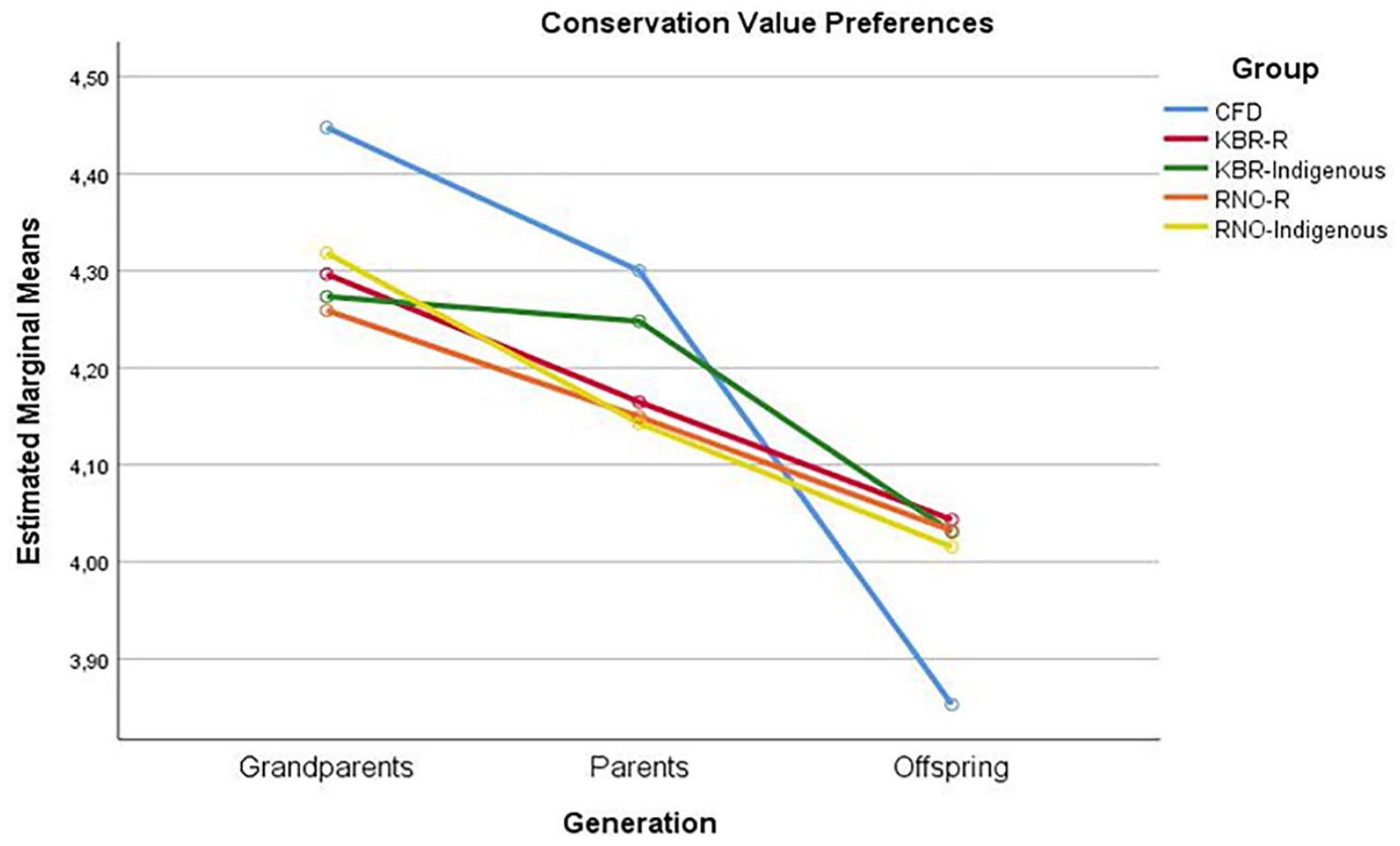
Preferences for conservation values across generations and ethnic groups.
Figure 2 documents changes across generations in mean preferences of Conservation values in the five studied ethnic groups. Once again, intergenerational differences in means are significant at p < .05, except for the difference between the grandparent and parent generation in the indigenous group in Kabardino-Balkaria. It is interesting to note that support for Conservation values once again saw the strongest intergenerational change in the CFD, where there was most support for Conservation values found in the grandparent generation, whereas in the offspring generation there is least support for Conservation values among the five ethnic groups. Once again, mean differences in support for Conservation values across generations were strongly affected by the immediate cultural context, with most pronounced intergenerational differences in the Central Federal District.
Results were only slightly different for value preferences on the other axis of the Schwartz value circumplex. The Generation effect again was nonsignificant for Self- Enhancement values: (F(1, 421) = 1.543, p = .215, η2 < 0.01) . The interaction term Generation-by-Group was significant (F(4, 421) = 4.999, p < .01, η2 = 0.05). In this case, the between- factor Group was strongest (F(4, 421) = 6.101, p < .001, η2 = 0.06).
Figure 3 documents changes across generations in mean preferences of Self-Enhancement values in the five studied ethnic groups. This time, only a few of the pairwise contrasts reached significance. Whereas there was a “generation gap” with significant intergenerational mean differences for all single comparisons in the CFD, there were no significant single comparisons for either of the two indigenous groups. For the two Russian diaspora groups, different results emerged. For Russians living in North-Ossetia-Alania significant differences (p = .016) emerged between the grandparent and parent generation, whereas for Russians living in Kabardino-Balkaria the offspring generation differed significantly from the two older generations.
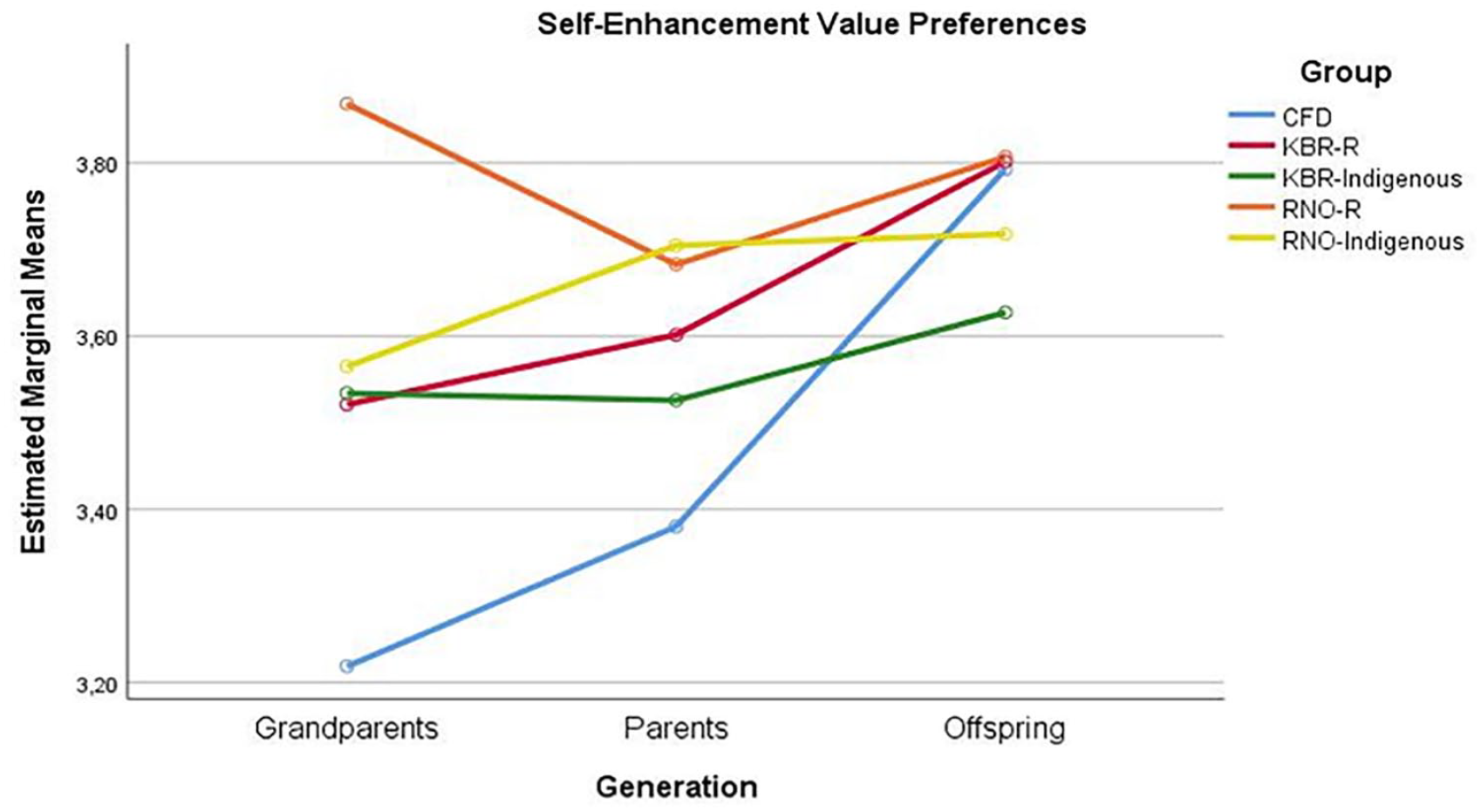
Preferences for self-enhancement values across generations and ethnic groups.
Yet again, mean differences in support for Self-Enhancement values across generations were strongly affected by the immediate cultural context, with most pronounced intergenerational differences once more in the Central Federal District. The overall impression confirmed by the pertinent single comparisons is that self-serving mentalities expressed in preferences for Self-Enhancement values are on the rise, but strongly so only in the CFD.
The picture was not very different for Self-Transcendence value preferences. The Generation effect again was nonsignificant for Self-Enhancement values: (F(1, 421) = 0.924, p = .337, η2 < 0.01) . The interaction term Generation-by-Group was significant (F(4, 421) = 3.557, p < .01, η2 = 0.03, as was the between-factor Group (F(4, 421) = 2.836, p = .024, η2 = .03).
Figure 4 documents changes across generations in mean preferences of Self- Transcendence values. Results mostly mirrored the findings for Self-Enhancement values. For Self-Transcendence, single comparisons were only significant in the CFD sample. At the same time, no significant single comparisons were found for both ethnic groups in North-Ossetia-Alania. In Kabardino-Balkaria, there was a significant difference between the offspring and the other two generations for the diaspora Russians, whereas for the indigenous group offspring only differed significantly from their grandparents. The overall impression again is that self-serving mentalities, here expressed in reduced support for Self-Transcendence values are on the rise, most strongly so in the CFD.
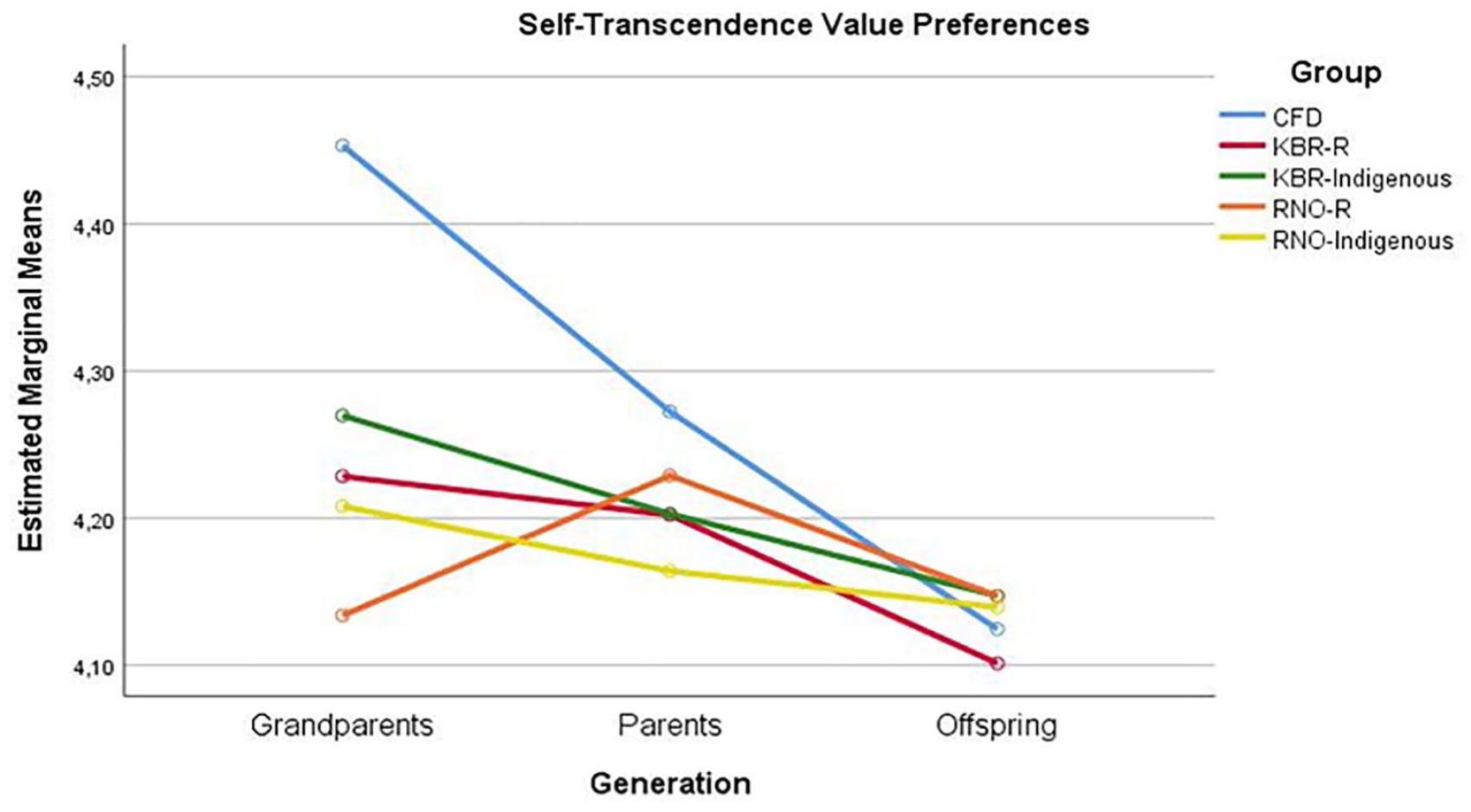
Preferences for self-transcendence values across generations and ethnic groups.
In summary, we find that intergenerational differences (seen as indicators of value change over time) were never significant as main effects, but were instead strongly affected by the immediate cultural context. Mean differences in value preferences across generations were always most pronounced in the heart region of Russia, the Central Federal District, while much less pronounced in the North Caucasus, sometimes non-existent.
Value Transmission: Intergenerational Similarities
To answer our second research question concerning value transmission operationalized as the size of intergenerational correlation(s), we initially performed simple structural equation modelling (SEM), specifying grandparent value preferences as an exogenous predictor variable, and parent, as well as offspring, values as endogenous criterion/dependent variables 3 . The results are identical to calculating all correlations independently; however, SEM-based analyses allow for simpler comparisons of sizes of correlation coefficient than do ordinary correlation analyses. 4 Table 3 documents all coefficients.
Intergenerational Correlations.
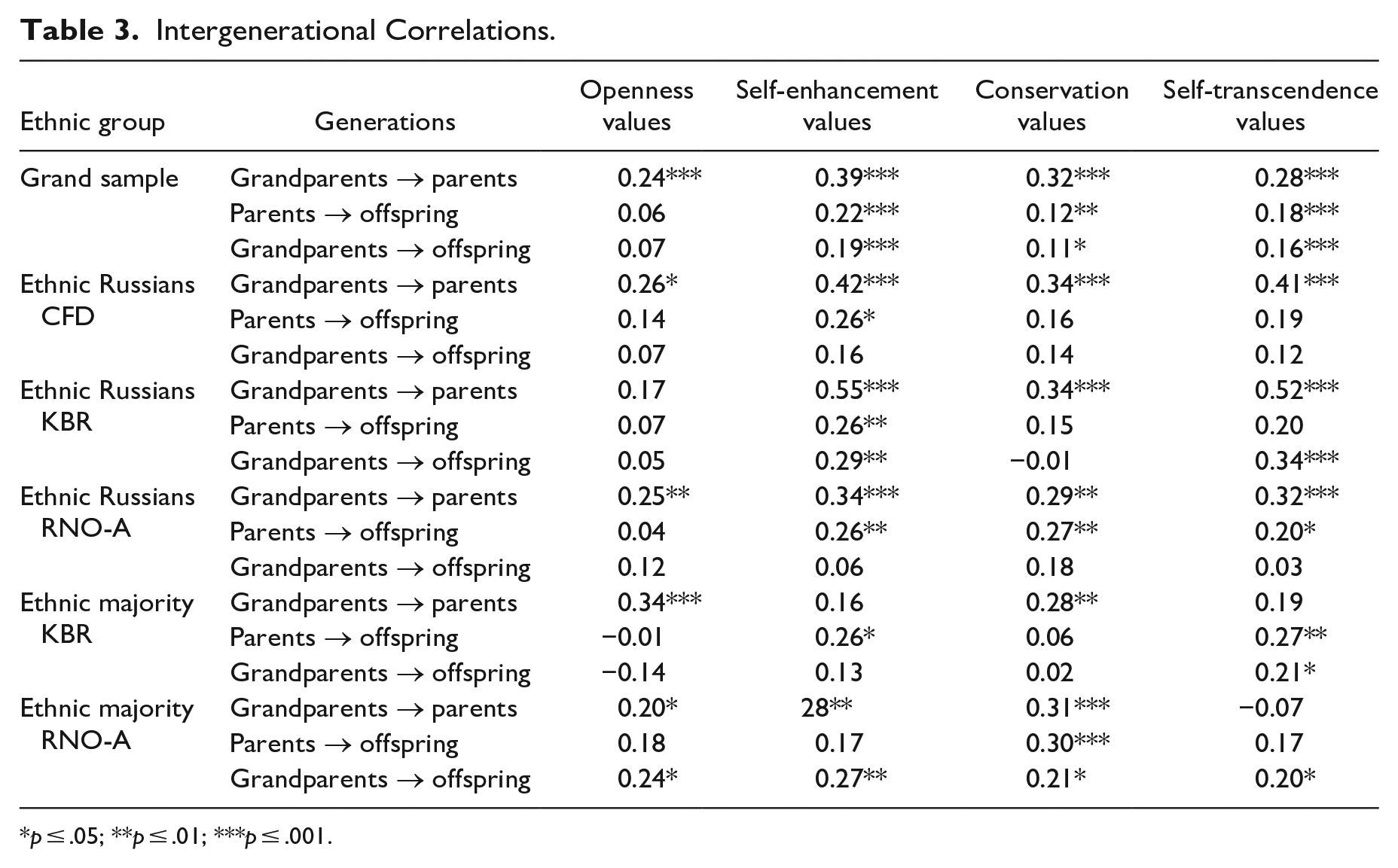
p ≤ .05; **p ≤ .01; ***p ≤ .001.
The table shows that value transmission (intergenerational similarity) is clearly stronger for the grandparent—parent dyad than for the parent—offspring or grandparent—offspring dyad. Sixteen of the possible 20 correlations of grandparent and parent value preferences were significant 5 . A mere eight of 20 correlations were significant for the parent–offspring dyad. For the grandparent–offspring dyad, seven correlations were significant; surprisingly, however, four of these regard Ossetian families 6 . There, the similarity between grandparents and their grandchildren is substantial: for all four value types, significant correlations above .20 were found.
The most basic question of value transmission research, of course, is whether value transmission indeed takes place. An inspection of the entire table of correlations supports a positive answer. Of all 60 correlation coefficients, only four are negative, while 31 are significantly positive. The remaining 25 are also positive, although not significant 7 : the median of all coefficients is .20. Readers should be reminded here that values scores have been ipsatized (MRAT corrected), so that an inflation of the correlation via a transgenerationally uniform response style can be ruled out. They are in our view a result of interpersonal interaction, in which variations in sample composition reflect real societal changes, not something that should be controlled for.
Another way to assess the intergenerational similarity/transmission size is to assess sizes of cross-generational correlations systematically in how far they differ between the five subsamples. In performing this assessment, we followed a proposal by Diedenhofen and Musch (2015) that relies on the r-to-Z transformation. A number of significant differences were found between the correlation coefficients obtained for the five groups. As results were largely inconclusive, we refrain from reporting statistical details. The only finding perhaps worth highlighting is that the grandparent–parent dyad seems to be more tightly knit (higher correlations) among ethnic Russians regardless of their place of residence than among the non-Russian majorities in KBR and RNO-A, for both Self-Transcendence and Self-Enhancement values. As the results of correlation analysis for individual values for intergeneration dyads offered inconclusive results, we additionally conducted interclass correlation analyses for dyads, which allowed identifying the similarity of value profiles of representatives of three generations (Table 4). The results showed that only the value profiles of grandparents and parents were significantly correlated across the five groups.
Interclass Correlations of the Value Profiles of Representatives of Three Generations.
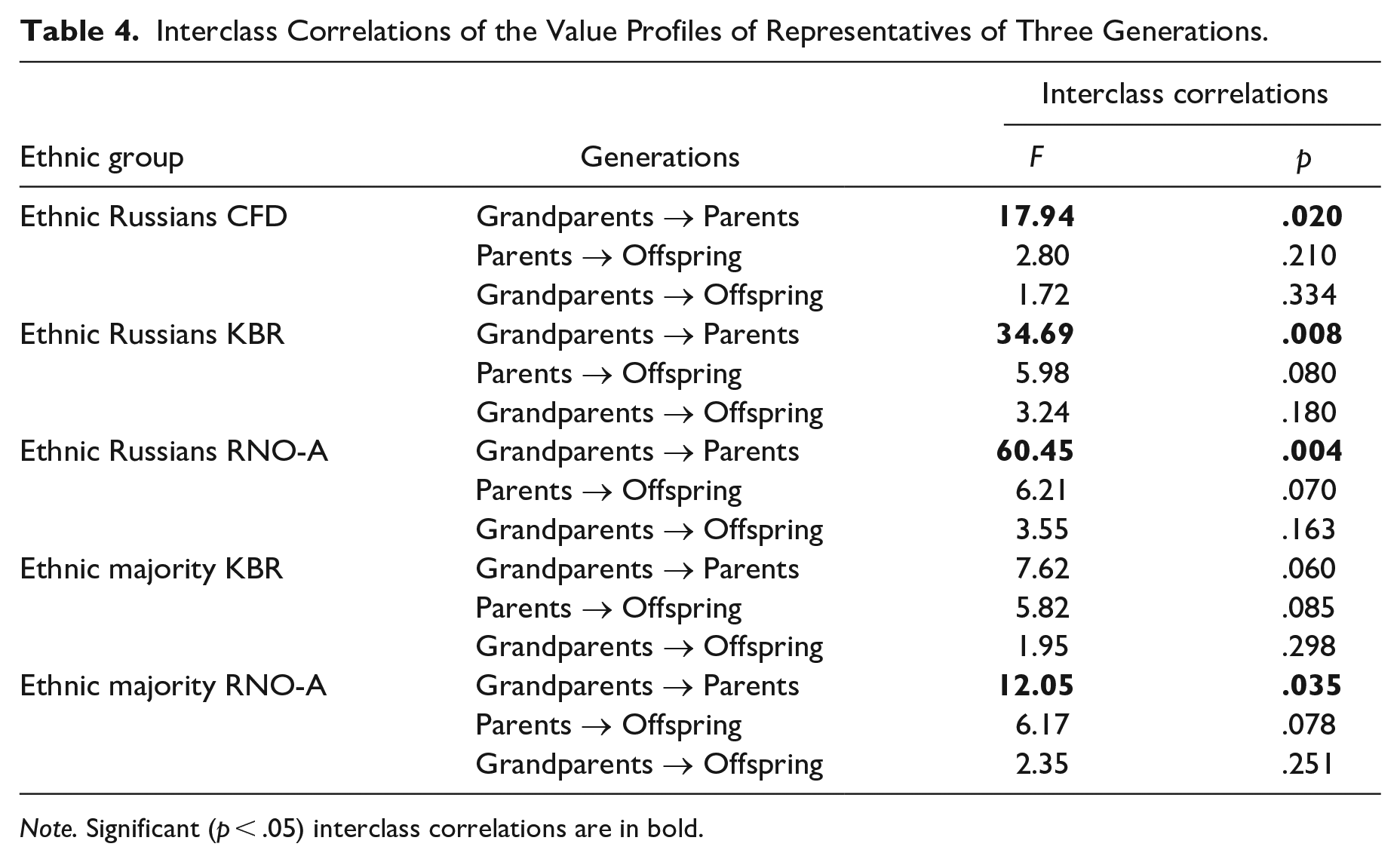
Note. Significant (p < .05) interclass correlations are in bold.
Discussion and Conclusions
This study investigated value change and value transmission among three generations of ethnic Russians living in North Caucasus republics compared with ethnic Russians living in the CFD and the dominant ethnics groups from KBR and RNO-A. Looking at the grand sample mean differences between generations appeared as being of a rather small size; the main generation effect was insignificant. However, when looking at the five ethnic groups separately, Openness to Change values were significantly higher among adolescent offspring than among their parents in all locations. The same applied for a comparison of grandparents and parents; parents already had significantly higher preferences of Openness values than their own parents did. This suggests that change gradients are grossly moderated by cultural context, being strongest in the CFD and less strong in the periphery of the Russian Federation.
Conversely, preferences for Conservation values were significantly higher among parents and grandparents than among youth. For Conservation values, the decrease in endorsement across generations was not fully linear, but accelerated slightly for the younger dyad. These results demonstrate classical cohort differences or the “generation gap” (Eisenstadt, 1956). Value change studies have usually shown Conservation value preferences are higher among the parent generation than the offspring generation (Boehnke & Welzel, 2006; Caprara & Steca, 2007; Caprara et al., 2003; Knafo & Schwartz, 2001, 2007), whereas Openness values have a lower preference in older cohorts. The present study confirms this based on data from a three-generation study, but again underscores that the immediate cultural context is a strong moderator.
The change was much larger for Openness and Conservation values than it was for Self- Enhancement and Self-Transcendence values. As for Conservation values (but not for Openness values), value change accelerated somewhat for the younger dyad compared with the older one, even as Self-Transcendence values lost popularity. 8 The opposite trend became evident for Self-Enhancement values. These values increased in popularity and most strongly so in the CFD, but still ranked last among the four higher-order Schwartz values. If one interprets Self-Enhancement values as what Hadjar (2004) calls a capitalist mentality when discussing the concept of hierarchic self-interest, it must certainly be acknowledged that more youth subscribe to such a value orientation than was common among their parents and grandparents. If, conversely, Self-Transcendence values are seen (also) as reflections of communist ideals, it must be conceded that they are on a certain downslide. The fundamentally neo-liberal ideology of globalization (“possessive individualism”, Macpherson, 1962; Reese et al., 2019) is likely to have added an extra twist to this tendency.
From a more sociological perspective, it is notable that means differ between generations much more strongly in the CFD than in the North Caucasus. If viewing the CFD as the center of societal development in the Russian Federation—and this can probably be claimed legitimately (Reyting sotsial’no-ekonomicheskogo polozheniya sub’’yektov RF, 2017)—it is abundantly clear that the velocity of societal development as reflected in (intergenerational) value change is much higher in the CFD than in the periphery. Moreover, where the “winds of change” originally brought about by гла́сность (“openness”) and перестро́йка (“restructuring”), later accelerated by neo-liberal variants of capitalism, globalization, and what Giddens calls modernity, are strongest. At the same time, it seems true for the Caucasus that regardless of ethnicity, the volume of intergenerational mean differences in value preferences is much smaller there than in the heart of Russia. Put metaphorically, the winds of change are only a gently breeze near the Elbrus.
How do these sometimes substantial (Openness values, Conservation values), sometimes mild (Self-Transcendence, Self-Enhancement) value climate changes come about? Older generations continue to impact offspring generations, but the overall impact is, at most, moderate. The grand mean of all intergenerational correlations (across all ethnicities/regions, all value types, and all three generations) is .20. This may be interpreted as meaning that intergenerational value transmission accounts for 4% of the variance in value preferences. This percentage is not all that far away from the overall findings reported by Boehnke (2001).
Beyond this general finding, there is one further important result: Value transmission (intergenerational similarity) is usually higher for the grandparent—parent dyad than for the parent—offspring dyad. This was true in 17 of 20 cases. Grandparents, in general, seemed to be more influential than parents were. Fifty percent of the correlations between value preferences of grandparents and a younger generation were significant, reaching a size of up to 0.55. Correlations between parental value preferences and the preferences of their adolescent offspring were significant only in 40% of the cases, reaching a maximum size of 0.30. This may also be an indication that the generation gap is widening.
Limitations
The main limitations of this study are the—in absolute terms—small sample sizes, the fact that it works with convenience samples, and the cross-sectional design. Although the study included well over 1400 people, the generation-specific subsamples in the included regions of the Russian Federation range in size from 86 to 110; additionally, sample sizes reduced due to listwise deletion of cases with missing data. Given that the samples were convenience samples, this fact may have produced results in part owed to sampling peculiarities, which were, however, accounted for by partialling for gender, education, and intra-generational age differences in tests for mean differences. Additionally, considering the long-term nature of intergenerational transmission, longitudinal studies are needed to clarify psychological mechanisms at work in the process of transmission. Our findings cannot clearly let us answer the questions of whether and how value preferences of the ethnic Russian minority are transmitted in the families between generations in the republics of the North Caucasus. Previous research showed the family relationships and family climate (Roest et al., 2009; Schönpflug, 2001) affect the parent–child value similarity and transmission. The same was true for the overall zeitgeist at the time of data gathering. Future research might clarify the relative contributions of different factors in intergenerational value transmission. Multi-level modelling that includes society-level indicators in its analyses is another potential avenue for better understanding the present results and putting our modernization hypothesis to an empirical test. For that, however, more than just three society-level units (the two North Caucasus republics and the CFD) would have to be included in the analysis.
To highlight the most pronounced finding, one can concludingly say that value preferences of contemporary adolescents, their parents and their grandparents are drifting apart in the most “modern” part of the Russian Federation, whereas in the periphery generations are staying more closely together with regard to their value preferences, and largely regardless of people’s ethnic belonging.
Research Data
sj-sav-1-jcc-10.1177_00220221211020444 – Research Data for Values of Ethnic Russians and the Indigenous Population in North Caucasus Republics of the Russian Federation: An Exploratory Three-Generation Comparison
Research Data, sj-sav-1-jcc-10.1177_00220221211020444 for Values of Ethnic Russians and the Indigenous Population in North Caucasus Republics of the Russian Federation: An Exploratory Three-Generation Comparison by Klaus Boehnke, Victoria Galyapina, Nadezhda Lebedeva and Zarina Lepshokova in Journal of Cross-Cultural Psychology
Footnotes
Acknowledgements

Author Note
The article was prepared within the framework of the HSE University Basic Research Program.
Declaration of Conflicting Interests
The author(s) declared no potential conflicts of interest with respect to the research, authorship, and/or publication of this article.
Funding
The author(s) disclosed receipt of the following financial support for the research, authorship, and/or publication of this article: The authors received funding from the Russian Academic Excellence Project “5-100.”
Notes
References
Supplementary Material
Please find the following supplemental material available below.
For Open Access articles published under a Creative Commons License, all supplemental material carries the same license as the article it is associated with.
For non-Open Access articles published, all supplemental material carries a non-exclusive license, and permission requests for re-use of supplemental material or any part of supplemental material shall be sent directly to the copyright owner as specified in the copyright notice associated with the article.
