




Abstract
Prison environments pose substantial health risks and may adversely affect the health and wellbeing of both prisoners and staff. Drawing extensively from international literature across several disciplines and supported by empirical data, this article presents a multidisciplinary study that focuses on mental health in prison settings and examines unconventional healthcare interventions, using yoga and meditation as a case study. Despite compelling research suggesting overall positive outcomes, the idea of yoga in prisons is not fully integrated into criminal justice policy and practice, and there are gaps in prison yoga research. Recognising the multifaceted roles of yoga within correctional institutions, this article specifically explores the impact of yoga on improving the mental health of incarcerated individuals and prison personnel. The primary aim is to raise awareness about mental health challenges in prisons and underscore the healthcare benefits of implementing prison yoga programmes. Accordingly, the article provides an overview of mental health issues in prisons, assesses the potential benefits and mechanisms of yoga and meditation as alternative mental healthcare methods and explores the barriers to integrating these practices into prison healthcare. It advocates for yoga and similar practices as viable mental healthcare alternatives for both prisoners and prison staff. The article's analysis contributes to a preliminary framework for policymakers, prison managers, staff, and scholars seeking to enhance mental health outcomes in penal facilities.
Introduction
Prison is inherently a bleak environment that can have a detrimental effect on the wellbeing of people living and working within its confines. Prisons are generally unhealthy places. 1 The prevalence of mental health problems among prisoners is consistently higher than that in the general population, 2 and prisoners are thus considered a ‘uniquely vulnerable population’. 3
Imprisonment is a criminal penalty usually reserved for those convicted of serious offences. Historically, the concept of prison has been primarily rooted in the goals of punishment, incapacitation and deterrence for individuals engaged in criminality, reflecting a prevailing sentiment of hostility towards offenders. 4 In Europe, criminal justice systems once commonly embraced ‘tough on crime’ political attitudes for some time, 5 and in many jurisdictions, a more punitive stance on conditions of confinement is still in fashion. 6
In the United Kingdom (UK), the purpose of prison is framed as punishing and deterring offenders through incarceration but also as rehabilitating them. 7 The prison authority, His Majesty's Prison and Probation Service (HMPPS), elucidates its priorities, aiming to establish secure and nurturing environments where individuals can address the root causes of their offending, while preparing for a more positive future. 8 These texts resonate with the notion of the ‘special duty of care’ outlined by the World Health Organisation, 9 which mandates nation states to ensure the wellbeing of prisoners, providing for ‘safety, basic needs’, and upholding human rights, particularly ‘the right to health’. Evidently, prisoner health reflects the prison service's ability to fulfil its ‘special duty’. And yet, providing healthcare for prisoners poses enormous challenges to state authorities. 10
Indeed, prison impacts not only incarcerated individuals; the staff, too, are exposed to emotional, psychological and physical harm due to the challenges intrinsic to their roles. 11 Recognising the unique health concerns within this public service, the UK Government pledges to ‘create a work environment that supports employee health and wellbeing’ and affirms the benefits of maintaining a healthy and committed workforce. 12 Notwithstanding these recognitions, finding an effective solution that balances the demands of security and care for prisoners and the wellbeing of prison personnel calls for more attention, dedication and ingenuity.
Research shows that recreational work and treatment activities play a central role in fostering a healthy environment and are beneficial to both prisoners and staff, 13 and yoga is named as one of the advantageous activities in this context. 14 However, as yoga is commonly viewed as a middle-class lifestyle or leisure activity, 15 introducing it to prisoners may create tensions between the traditional notion of imprisonment and the need for therapeutic care. In practice, despite various initiatives, the integration of yoga in correctional facilities lacks a consistent presence. Relatedly, although research on yoga in prison has evolved beyond its infancy, 16 there are still gaps.
Firstly, due to limitations in research methodology, existing studies do not commonly provide entirely convincing outcomes. 17 Secondly, past research primarily focuses on yoga's benefits for prisoners, 18 leaving a paucity of studies exploring how correctional staff engage with, experience and perceive yoga-related programmes for their wellness. Thirdly, owing to subject specialisation, limited criminal justice studies have looked into the mechanisms by which prison yoga programmes impact mental health and wellbeing. There is also a scarcity of inquiries into the challenges associated with integrating yoga in correctional facilities. Notably, as we will see, the concept of yoga, particularly in the prison context, remains somewhat enigmatic in society and academia, due to a lack of awareness and understanding.
This article endeavours to address some existing gaps, drawing predominantly from international literature across multiple disciplines, including psychology, sociology, criminal justice, public health and yoga studies. The sources encompass peer-reviewed articles, research monographs, official reports, and open-source information. The selection and use of these materials were conscious, with the goal of illustrating specific concepts, rather than making broad generalisations. This approach serves to assist the reader in better understanding the nuanced ideas about yoga, prison yoga and the discussions in the article. The study obtained ethical approval for its empirical component, and the qualitative data was largely derived from personal communications, given the current lack of empirical work in certain areas. 19 It is worth noting that, although the fieldwork did not involve formal interviews in the traditional sense, the narratives and insights were drawn from conversations held under approved research conditions. This data serves an illustrative purpose, complementing and verifying information obtained from other sources.
Yoga plays a multifaceted role in prison settings. 20 The present study specifically focuses on the impact of yoga in improving the mental health of incarcerated individuals and prison personnel. This article primarily aims to raise awareness of prison mental health issues and underscore the healthcare benefits of prison yoga programmes. The article has five sections. Following the introduction, it provides an overview of mental health challenges in prisons. Next, it examines the potential benefits and mechanisms of yoga and meditation as alternative mental healthcare methods in correctional institutions. Furthermore, it explores the difficulties in integrating yoga and related interventions into prison healthcare. The concluding section highlights the key arguments and advocates for yoga and meditation as mental healthcare alternatives for both prisoners and prison staff.
Mental Health and Structured Interventions in Prison
Prisons vary in terms of control level, population, design and conditions even within a single jurisdiction. 21 Universally, security is a primary concern for prison administrations. 22 Worldwide, mental health issues are pervasive among prisoners. 23
Prisoners’ Mental Health
Taking Britain as an example, existing data suggests that 70% of prisoners meet the mental health criteria for two or more diagnoses, and mental health problems stand out as the primary cause of prisoner morbidity, being a major challenge for the prison service. 24 Commonly, prisoners with mental health issues had pre-existing conditions like poor mental wellbeing, conduct disorders, or mental illness before entry. Histories of abuse, deprivation, homelessness, unemployment and substance use are widespread among incarcerated individuals. 25 Women prisoners, in particular, often have traumatic experiences, including violence, other forms of abuse and substance dependence, which are closely linked to their mental health problems. 26 The prison environment inevitably exposes inmates to a multitude of health hazards, resulting in a range of psychological implications. 27
Incarceration entails physical confinement, limited time outdoors, restricted in-cell activities and an overall lack of meaningful engagement. Being confined within a prison cell, the general living conditions often lead to excruciating boredom for individuals. During the COVID-19 lockdowns, monotony intensified among prisoners, with some having as little as 20 min outside their cells each day. 28 Extended confinement in cells makes prisoners increasingly sedentary and unfit, 29 and boredom, marked by a lack of mental stimulation, takes a toll on their mental wellbeing, frequently causing extreme stress, anger and frustration. 30
Innately, imprisonment ensues isolation and restricted communication between prisoners and the outside world. This profound social exclusion is potentially a determinant for mental distress. 31 Simultaneously, what goes on outside prisons continues to impact the lives of those behind bars. Personal communications with ex-prisoners confirm that family issues can significantly affect incarcerated individuals, leading to anxiety, depression, severe eating disorders and diminishing their motivations for rehabilitation. Isolation and family issues have a pronounced impact on women in prisons, many of whom are mothers and typically the primary or sole caregivers. Separation from female prisoners and their children can add to the mental health difficulties they experience. 32
The behaviour of inmates towards each other is an influential factor, too. 33 In prisons, violence, intimidation and bullying are commonplace. 34 For example, in the UK, violent incidents are the ‘most obvious’ issue for prisons, with a rate of 185 prisoner-on-prisoner assaults per 1000 prisoners. 35 Bullying, whether through physical or verbal victimisation, frequently results in deep loneliness, affecting inmates’ social, emotional and psychological wellbeing. 36 The sense of injustice resulting from bullying and violence, along with inequalities among prisoners, intensifies mental distress, making it more challenging for individuals to adapt to the institutional environment. 37
Other issues, including illicit substances, debt and disrespect, can also become sources of stress, anxiety and depression, 38 contributing to mental ill health among prisoner populations. For instance, misuse of drugs and alcohol during imprisonment is common, which often leads to adverse physical and mental health reactions; women especially have a high rate of substance use disorders, compared to male prisoners and women in the general population. 39
Furthermore, prison living conditions are detrimental to prisoners’ health and wellbeing. According to a 2017 UK report, prisoners were commonly held in conditions that are below what the general public would consider reasonable or decent; and around 48% of local prison inmates experienced overcrowded facilities, heightening already poor prison living conditions. 40 More recent inquiries revealed that two-thirds of prisons faced overcrowding issues, 41 with many operating at 50 to 60% above capacity. 42 Overcrowded prisons contribute to deteriorating health for incarcerated women and men. 43 There are links between prison environmental factors, living conditions and declining mental health, and overcrowding results in limited space, disrupting healthcare routines and impeding prisoner rehabilitation. 44
Clearly, the experience of incarceration – trauma, confinement, chronic boredom, isolation, minimal stimulation and cramped personal space – acts as a catalyst for mental and emotional difficulties amidst prisoners. Frequently reported conditions include fear, anger, a sense of losing dignity, depression, stress, anxiety, paranoia, fatigue, irritability and sleep problems. The spectrum of psychiatric morbidity ranges from common mental disorders to more severe conditions, including psychosis, personality disorders, and substance abuse problems, all of which are disproportionately high within prisoner populations. 45
In conjunction with the intrinsic challenges of imprisonment, individual factors also play a substantial role in shaping prisoner health and wellbeing. Due to a lack of life experiences, young prisoners, particularly those without adequate coping mechanisms, may grapple with acute fear, distress, isolation and helplessness, often resulting in self-harm. 46 Generally, self-harm and suicide rates remain persistently high in secure facilities. 47 Incarcerated women, typically with histories of abuse and trauma, are more prone than men to exhibit neurotic symptoms and require support for both physical and mental health difficulties. 48 Common mental health issues among women prisoners include anxiety, depression, post-traumatic stress disorder, personality disorders and self-harming. 49 Recent UK-based research indicates a greater risk of eating issues among women in prisons compared to the general population. 50 Prisoners commonly face mental health vulnerabilities.
In England and Wales, 71% of women and 47% of men reported experiencing mental health problems in prisons in 2019, 51 and 52% of prisoners acknowledged similar difficulties in 2020. 52 The challenges intensified during the COVID-19 restrictions, with over half of men and 76% of women self-reporting mental health conditions in 2021, 53 and as many as 70% of the prison population would likely require mental healthcare. 54 More specifically, as of June 2021, 45% of adult prisoners experienced anxiety or depression, and 8% were diagnosed with a mental illness. 55 Furthermore, in 2022–2023, there were 733 self-harm incidents per 1000 prisoners, along with 88 self-inflicted deaths. 56 Similar situations are observed in the United States (US). 57 Alongside a high level of mental healthcare needs, inadequate interventions fail to meet the demand in correctional facilities. In Britain, significant pressures on prison health services are widely acknowledged. 58
Structured Mental Healthcare Services in Prison
Conventional mental health services, such as pharmacotherapy and psychotherapy, are usually available in prisons but are often constrained due to limited resources. In England and Wales, unmet treatment needs are not significantly improved since being identified about two decades ago. 59 Still, in 2022, only around 22% of inmates found it easy to see mental health workers, 60 suggesting that over three-quarters of prisoners experienced constrained access. Consequently, prison healthcare services are characterised as ‘fragmented’. 61 Likewise, in the US, the structured mental health regimes are insufficient to meet the overall need in correctional institutions, where the state of mental healthcare has been described as ‘deficient’ or ‘sporadic’. 62
Formal prison mental healthcare services can be delineated in several dimensions. Firstly, there are commonly limited staff working in prison clinics, many of whom experience burnout. 63 As a result, in England, limited access to treatment is primarily directed towards those with the most severe conditions, leaving a service gap for inmates suffering from mild to moderate problems. 64 In Italy, a deficiency in facilities and personnel renders penitentiary police officers to be involved in prisoner treatment. 65 Similarly, in the US, without specialised training, prison staff struggle to identify and respond to symptoms of depression and emotional distress among prisoners, limiting their ability to provide appropriate assistance. 66 A deficit in healthcare professionals, compounded by a shortage of prison personnel and security concerns, profoundly hampers prisoners’ access to formal healthcare services. 67 A recent survey in England and Wales reported that despite their significant healthcare requirements, many prisoners struggled to receive hospital services. 68
Secondly, in addition to limiting prisoners’ access to care, the shortage of mental health professionals hinders treatment efficiency. Healthcare practitioners in the UK may not uniformly possess adequate experience or training for working in secure environments, and inconsistencies in clinical services across prison establishments are of concern. 69 Consequently, treatment effectiveness is in question. 70
Furthermore, psychologists and psychiatrists reportedly encounter challenges in correctional environments, where they navigate the dual roles of care and custody, juggling multiple responsibilities simultaneously. 71 It is also noted that the extent of prisoner mental health issues and the corresponding expenditures required for their treatment remain unclear due to a lack of data. 72 These concerns are typically entangled with reductions in prison budgets. 73 Globally, prisons are not a political priority. For instance, the spending on prisons among European Union member states averaged only 0.2% of national GDP in 2017. 74
The complexities of prison mental health services may be amplified by issues unique to prisoners themselves. Individuals entering the prison system typically possess limited education and personal skills, including literacy, and prisoners often lack the ability to actively engage in their own healthcare. 75 Even when regulated healthcare programmes are available, they may not perceive the relevance to their personal conditions. 76 Furthermore, stigma or shame is commonly associated with seeking mental health treatment among prisoners. 77 For incarcerated women, especially those with a traumatic past, there is a distinct need for strategies and tools to address problem-solving, parenting and regaining control of their lives. 78 However, conventional prison mental health interventions for women are often suboptimal, failing to meet their specific demands. 79
Formal health services prove inadequate in addressing persistent mental health issues in prisons. This reality hinders prisoners’ readiness for rehabilitation, 80 thereby impacting the prospects of successful transformation.
Mental Health of Prison Staff
In performing their roles, prison employees confront significant risks to both physical and mental wellbeing. 81 Prison work entails physical restrictions and isolation, 82 and operational staff, while on duty, typically have no communication with the world beyond prison walls. This seclusion can evoke a sense of being ‘cut off’ from the broader society, as if they, too, are sentenced. 83 Obviously, such isolation and seclusion carry mental health implications.
Prison personnel undertake a myriad of complex and inherently challenging activities. 84 Their everyday duties involve ensuring the security and effective running of correctional services, which includes handling disruptions in prison routines and aiding in the wellbeing and rehabilitation of offenders. 85 As previously mentioned, correctional staff may be expected to provide assistance to prisoners with mental health issues even without the necessary expertise. These responsibilities come with heavy workloads, time constraints, ambivalent staff-prisoner relationships and a lack of resources, and this frequently leads to work-related stress for prison workers, impacting their psychological wellbeing. 86
Operational work in prisons is intrinsically safety-critical, emotionally demanding and stress-inducing. As hinted earlier, prisoner populations are diverse. Managing incarcerated individuals – especially those with psychological distress, psychiatric disorders, or the potential to harm others – can be considerably challenging. On the job, correctional personnel unavoidably encounter distressing situations, including physical and verbal aggression, violence and threats from prisoners. This exposure generates intense and distressing emotions. 87
Prison environmental conditions – noise, chaos and disrepair 88 – not only impact inmates but also pose a significant source of distress, adversely affecting the health of prison employees. 89 Like the prisoners they supervise, correctional staff are prone to mental health issues that can jeopardise both their wellbeing and job performance. 90
Notably, within the traditional macho culture of the corrections profession and with longstanding perceived expectations, prison staff, particularly male officers, often refrain from discussing their mental health challenges. 91 This is exacerbated by a prevailing culture of cynicism and a noticeable lack of organisational and peer support within the occupational setting. 92 The demands on the job, coupled with organisational problems – including a lack of role clarity, resources and job control, and presenteeism 93 – contribute to a wide-ranging negative impact. The effect manifests in work-life conflict which is associated with burnout, absenteeism and employee turnover. 94
Taking a cue from England and Wales, official statistics reveal 96 assaults on staff per 1000 prisoners in 2022–2023. 95 In a recent survey, alarmingly, a substantial 80% of the 6582 operational staff members reported feeling unsafe in the prisons where they worked. 96 Furthermore, among the total prison officer population, an average of 14.1 days were lost to sickness. 97 These results align with academic research, indicating a connection between prison working conditions and stress-related outcomes, such as poor health. 98 These findings prompted the Chair of the Justice Committee to address critical issues, including severe staff shortages, dissatisfaction and the potential risk of the government failing in its duty of care to both prison staff and prisoners. 99
In other jurisdictions, matching situations are noticeable. For instance, in surveys, uniformed staff in US correctional facilities and counterparts in Canada commonly expressed serious concerns about job safety. 100 Regarding health implications, a US study involving 8334 prison operational staff found that 41% were informed by doctors of their high blood pressure risk and 16% had heart disease. 101 In Oregon, half of the 2500 corrections officers exhibited signs of depression, with 8% experiencing severe symptoms. 102 In addition, prison officers have a higher suicide rate than the general population and a lifespan 16 years shorter than the average US citizen. 103 These statistics broadly illuminate the adverse health impact of working in prisons, shedding light on the toll that prison work can take on employee wellbeing. In this context, US correctional staff describe their work environment as ‘a world of staggering mental and physical tumult’; 104 Also, a Canadian officer linked the corrections career to a ‘meat grinder’. 105
Thus, emphasising mental health in prisons is paramount. Untreated mental health issues among incarcerated individuals can have immediate and far-reaching consequences for society at large, 106 and safeguarding the wellbeing of prison staff is indispensable for an effective prison system, which directly contributes to secure custody and care for prisoners. 107 In Britain, over two decades ago, the Department of Health 108 initiated a shift in prison healthcare, moving from a traditional model to a more comprehensive focus on mental health promotion within correctional facilities. In 2018, the Care Quality Commission proposed a ‘whole system approach’, endorsed by the House of Commons 109 and NHS England. 110 This approach underscores comprehensive, integrated support by merging mental healthcare with other prison services, to address the high demand for treatment. This signifies a turning towards a holistic perspective and acknowledges the diverse needs of prisoners, particularly concerning their psychological wellbeing and rehabilitation.
Similarly, for prison staff, the need for addressing their health challenges through ‘carefully targeted’, ‘multi-level’, ‘integrated’ and ‘innovative’ interventions, including ‘secondary strategies’ like emotion self-regulation techniques, is widely recognised. 111 As we shall see, practices such as yoga and meditation can assist prison employees in ‘disengaging both physically and psychologically’ 112 and reducing tension. These programmes hold the potential to alleviate mental health problems and contribute to health and wellbeing for both staff and prisoners.
Yoga and Yoga in Prison Settings
As part of the physical culture movement, yoga is commonly perceived as a mode of exercise and a means of enhancing physical fitness. 113 Traditionally, yoga encompassed a broad spectrum of meanings and was once translated as ‘discipline’. 114 Incorporating physical practice, philosophy, self-discipline and spiritual observances, yoga has evolved over time to include techniques for self-mastery and self-control, ultimately seeking heightened consciousness and inner peace. 115 In the West, yoga's popularity aligns with two specific modern values: health and freedom; beyond physical strength, yoga facilitates mental resilience, autonomy and personal growth. 116
Yoga Philosophy, Meditation and Mindfulness
Traditional yoga is a ‘philosophical system’ that emphasises the inseparability of body and mind. 117 According to the Yoga Sutras of Patanjali (thereafter, ‘Patanjali’), a classical yoga text, this philosophy advocates beginning a life journey with ethical and spiritual observations, involving elements such as self-inquiry, the pursuit for truth, self-control and renunciation of possessions. 118 Relatedly, yoga is capable of guiding individuals to develop meaningful relationships by cultivating a conscious awareness of themselves and the environments. 119 The ultimate goal is to attain a clear and peaceful mind through teachings in philosophy, ethics, meditation and spirituality. 120 Historic texts, like Patanjali, emphasise the significance of recognising individuals’ capacity to break away from their past facilitating healing. 121 In the traditional notion, yoga guides practitioners to move beyond external distractions and focus on their own body and inner self, to promote health and wellbeing. 122
Modern yoga practices typically consist of opening relaxation, postural exercises (asanas), breathing techniques (pranayama) and guided meditation, although specific yoga styles may vary. Existing research exhibits yoga's multi-dimensional health benefits. Asanas – comprising various postures and movement sequences – enhance flexibility, strength, balance, posture and body awareness. They are instrumental for maintaining practitioners’ physical health 123 and help relieve chronic stress, contributing to long-term improvements in immunity. 124 Endorsing yoga, NHS England highlights its role in strengthening physical wellbeing. 125
While yoga classes today tend not to explicitly cover philosophy, appropriately trained teachers normally impart its core principles. 126 The overarching objective of yoga continues to be recognised as bridging the divide between inner and outer worlds through meditative practices, and the calming process aids in observing one's sensations, emotions and thoughts, 127 encouraging honest self-reflection. Through engaging both body and mind, yoga provides avenues for deep self-exploration that steer individuals towards attaining physical balance and mental equilibrium. 128 Notably, although physical exercises may appear to be the primary component, the true essence of classical yoga lies in its spiritual practice.
Spirituality refers to the development of beliefs and practices beyond the material world, involving exploring the purpose of life and personal growth. 129 This contemporary concept encompasses a wide range of practices like prayer, self-reflection and meditation. Despite its roots, spirituality in yoga may not involve religion, 130 and physical yoga often integrates spiritual elements: typically, meditation or mindfulness exercises.
Meditation, rooted in Buddhism, Hinduism and Taoism, holds an essential role in yoga practices. It enables practitioners to focus their thoughts, serving as a method to train the mind to concentrate and counteract distractions. 131 Meditation is considered to be associated with self-regulation and self-exploration, bringing about a profound understanding of oneself and the world, 132 and it cultivates a transformative environment that amplifies mental clarity and psychological wellbeing. 133 The meditative process in yoga, through various techniques like mindful breathing exercises, 134 leads to deep self-awareness, consciousness of reality and inner peace. 135
Mindfulness, initially tied to Buddhism, has evolved as a therapeutic tool for those with chronic conditions. 136 It entails attentively observing one's thoughts, feelings and bodily sensations in the present moment. 137 This focus on the present, rather than dwelling on the past, enables individuals to release trauma, tension and stress, fostering mental wellness. 138
Meditation and mindfulness practices share commonalities, yet they differ subtly. Mindfulness, concentrating on the present, can be exercised anywhere at any time 139 whilst meditation, with a broader application, requires a designated time and place for stillness. 140 In yoga, mindfulness may integrate into postural exercises, directing attention to physical sensations. 141 Meditation, typically separate from physical yoga, is practised at the start, end or during both phases of the session. Both meditation and mindfulness nurture inner calm, and thus these terms are commonly used interchangeably or in combination as ‘mindfulness meditation’, 142 particularly in the context of yoga in correctional settings. 143
In the literature on yoga in prisons, physical yoga and meditation are frequently intertwined; yoga is viewed as a wholistic healthcare regime, 144 a comprehensive system, a methodology, 145 a complementary therapeutic tool, 146 and a spiritual path. 147 Generally, yoga is considered a dual-purpose practice, serving as a spiritual guide for the mind and a remedy for the body. 148 As a holistic treatment, it aims to bring about a positive transformation in individuals’ overall wellbeing, attending to physical, mental and spiritual health.
In the following sections, the terms 'yoga' and ‘meditation’ are intentionally broad. ‘Yoga’ refers to an amalgamation of physical movements, breathing exercises and meditation, whilst ‘meditation’ encompasses mindfulness exercises in yoga, unless otherwise specified. ‘Prison yoga’ entails both postural yoga and meditation, sometimes labelled as ‘meditative yoga’. 149
Yoga for Prisoner Mental Health
Given its potential benefits, the introduction of yoga in correctional facilities has become a global trend, with prison yoga programmes emerging in countries including the UK, 150 Australia, 151 Canada, 152 Israel, 153 Sweden 154 and more. In the US, a variety of yoga-based initiatives are offered to meet the physical, psychological, emotional, educational, religious and spiritual needs of incarcerated individuals. 155 In Spain, virtually every Catalan penitentiary institution provides yoga and meditation to prisoners. 156 These endeavours aim to help inmates adapt and cope with the typically stressful prison environment.
A cavalcade of research outputs attests to the effects of yoga on prisoners. Existing review articles suggest a generally positive impact of yoga in secure settings, assisting prisoners in improving social and emotional wellbeing, managing the challenges of incarceration, and strengthening overall mental health. 157 Empirical studies on the physiological and mental health benefits of prison yoga have shown improvements in body flexibility, pain reduction and relief from mental and emotional distress, including anxiety, depression, anger, impulsivity, aggression, and poor sleep quality. 158 Research also indicates the effectiveness of yoga in response to more serious symptoms among prisoners, such as paranoid ideation, memory problems, concentration difficulties, obsessive thoughts, and somatisation. 159 It is, therefore, logical that meditative yoga has been introduced to correctional facilities, including maximum-security prisons. 160
Noticeably, past research has investigated yoga's impact on distinct groups in correctional settings, particularly focusing on youths, women, and young men. 161 In youth justice, yoga has demonstrated potential in assisting mental healthcare for juvenile sex offenders. 162 A US pilot study examined a yoga-centred, trauma-informed treatment programme for girls and young women in the juvenile justice system, unveiling positive outcomes. 163 The 52 participants reported acquiring valuable skills to maintain a positive and relaxed state of mind. The findings led researchers to assert that well-defined somatic, mind-body interventions hold promises regarding effectiveness, feasibility and accessibility for female youths, improving mental and behavioural health, self-regulation and overall life improvement within the correctional facility. Studies examining similar programmes have yielded comparable results, indicating that yoga-related interventions can establish ‘a safe space for participants to explore presence, breathing, body connection and self-soothing practices’. 164
Recognising women's unique, gender-specific healthcare needs and their profound susceptibility to physical and psychological distress due to past adverse life experiences, yoga programmes have been introduced in female prisons. 165 Rousseau and colleagues evaluated a yoga-centred initiative, known as ‘Trauma Informed Mind Body (TIMBo)’, in a US women's prison. 166 This intervention integrated physical yoga, breathing exercises, meditation, progressive psycho-educational discussions and other components, and the primary aim was to equip incarcerated women with effective tools to cope with the challenges of prison life. The quantitative and qualitative outcomes of the study suggested that TIMBo successfully achieved its objectives, benefiting participants by enhancing their ability to respond to stress, manage emotions and improve behavioural self-regulation. Examining various aspects of the initiative, the research shed light on the multifaceted physical, psychological and spiritual benefits of yoga for women in prisons. 167 Commonly, adult female prisoners regard yoga classes as a secure environment where they can take the time to mentally heal. 168
Amidst an expanding body of research, scholars focusing on prison yoga commonly acknowledge its positive mental healthcare effects in correctional settings. Yet, understanding how yoga and related programmes contribute to healthcare and bring about positive changes requires further exploration. Unravelling this transformative process is vital for convincing potential users, policymakers and prison workers to make informed decisions about incorporating these treatment approaches into personal self-care agendas and the prison environment. The following section explores how practising yoga leads to improved overall wellbeing, especially favourable changes in mental health and transformative experiences.
Yoga as a Transformative Intervention for Prisoner Mental Health: Processes and Testimonies
Previous research has made intermittent attempts to elucidate the specific mechanisms of yoga that enhance mental health for prisoners practising it. Derived from existing literature, Chart 1 illustrates a progressive journey of yoga-induced transformation. The process typically commences with physical practice, along with yogic breathing techniques, to fortify and pacify the body and mind. This physical engagement sets the stage for a deeper exploration of the mental and spiritual phases of the practice, comprising meditation and possibly the study of yoga philosophy. The end goal is a positive transformation in physical, mental and spiritual dimensions, encapsulating overall health and wellbeing.
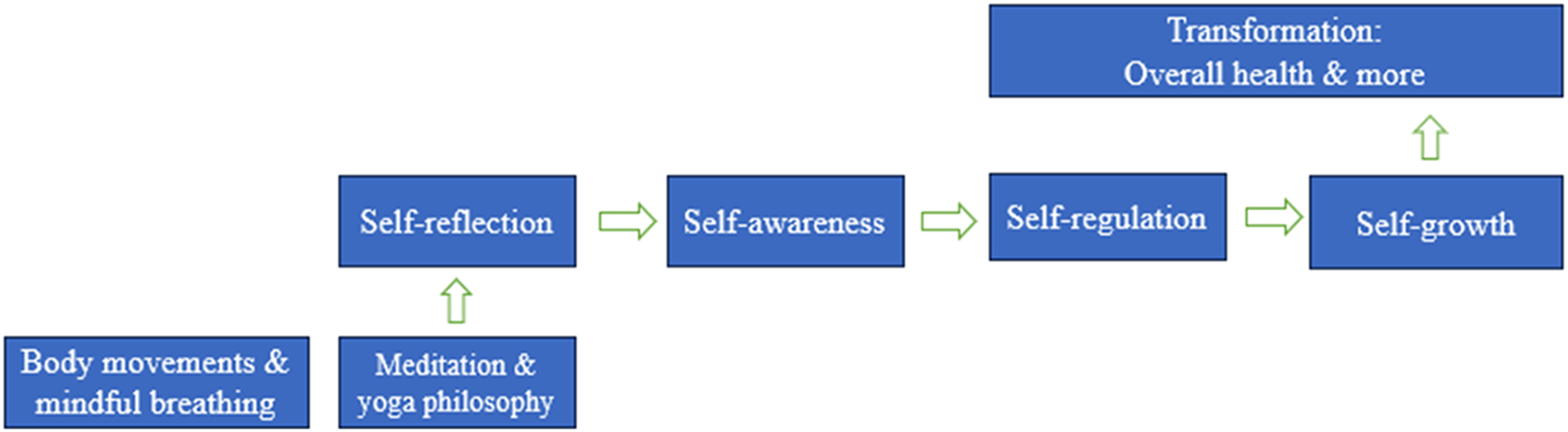
The self-transformation process via yoga.
As provided earlier, yoga sessions generally comprise postural yoga, yogic (‘mindful’ or ‘focused’) breathing exercises and meditation. Essentially, yoga is a somatic mindfulness practice, often initially understood as a regimen for physical wellness. Postural yoga involves body positioning – stretching, bending, twisting and balancing – to enhance physical health, and by releasing somatic tension, it induces relaxation in both the body and mind. Past research on prison yoga has documented its physiological benefits. 169
In psychology, an old adage asserts that there is no place for a tense mind in a calm body. 170 Following Jacobson's progressive muscle relaxation theory, muscular unwinding can alleviate psychological stress symptoms. 171 In other words, reducing muscle tension helps ease strain and anxiety, as this muscle deactivation lowers the activation levels of other physiological systems involved in the stress response. 172
Along with asanas, yogic breathing is also an essential part of yoga, proven to reduce heart rate and generate a soothing effect. 173 Testimonies from research on prison yoga programmes include that mindful breathing helps soothe the incarcerated women and keeps them focused. 174
In yoga, the mind is described as ‘a collection of thoughts from the past, touching the present and moving into the future’. 175 According to Sri M, the human mind is often in a state of constant flex, confusion and stress, and meditation can train it to become virtuous or ‘a friend’. It is essential to carefully observe the mind and seek truth through meditation. 176 Jon Karat-Zinn, Professor of Medicine Emeritus at the University of Massachusetts Medical School, opined that meditation involves ‘letting the mind be as it is’ and understanding its current state. This practice helps individuals gain mental clarity, comprehend difficulties in life, willingly work with challenges, and effectively manage stress, anxiety and other psychological problems. 177 Scientific evidence supports these beliefs, suggesting that meditation, including mindfulness practices, can gradually alter practitioners’ thought patterns and contents. Those with greater mindfulness are more likely to employ adaptive strategies when facing stressful situations to promote mental health. 178
As noted above, prisoners typically have a history of traumatic experiences, and depression is overrepresented within this population. Yoga, through mindfulness practices, can target the reduction of rumination and potentially lessen depression. 179 Rumination involves repetitive and intrusive negative thoughts, which is associated with the onset and persistence of emotional distress. 180 Practising yoga, including meditation and mindfulness promotion, provides ‘active ingredients’ similar to other successful treatments for depression. 181 Mindful meditation in yoga, emphasising the notion of ‘letting go’, guides individuals to direct their attention to physical sensations and emotions in the present, steering the mind away from dwelling on past events and future worries. 182 This shift helps mitigate depression levels by diluting the intensity of rumination. Therefore, yoga can have a relieving impact on mood disorders. 183
In addressing stress and anxiety, which are also prevalent among prisoner populations, meditation in yoga, promoting introspection and self-awareness, has the capacity to ease anxiety symptoms. 184 Yoga is proven capable of reducing the secretion of the body's primary stress hormone, thereby relieving stress intensity. 185 Emerging neuroscience research suggests that yoga – accompanying focused breathing and mindfulness – holds the potential to counteract stress effects, by activating the parasympathetic nervous system and engaging the vagus nerve, ultimately lowering allostatic loads and triggering the calming functions of the body. 186 Scientific evidence further indicates that intensive meditation positively affects critical brain areas for neurological self-regulation, promoting heightened self-awareness and facilitating more effective emotional processing. 187 Moreover, yoga practice may help activate the basic self-system, supporting intense emotion, improving self-esteem, and mitigating stress and anxiety. 188 Unsurprisingly, an overwhelming outcome of prison yoga is a decrease in stress symptoms. 189
Personal accounts support the existing literature, highlighting the benefits of prison yoga, including tension reduction, anger management, a sense of calmness and improved physical health, as illustrated by one practitioner: After the yoga session with me, he [the initially aggressive fellow prisoner] looked like a different person… calm, relaxed, and the [earlier] anger had gone. Another time, ‘a [fellow] inmate asked, “Why do you look 10 years younger [than your real age]?” I said, “It's yoga”.
The transformation is believed to emanate from spiritual practices, including self-reflection, self-regulation and self-growth. 192 As aforementioned, traditionally, yoga emphasises meditation and spiritual development. Research focusing on spirituality in prison yoga highlights that physical yoga can engender ‘transcendent experiences’, stimulating self-awareness and feelings of connectedness, 193 and enhancing mental clarity and personal advancement.
Measuring individuals’ spiritual development in scientific terms is inherently challenging. However, empirical studies reveal that engaging in self-reflection that fosters self-awareness can potentially mitigate prevalent psychological conditions among inmates, including anxiety, deviant aggression and impulsiveness. 194 Personal communications suggest that studying yoga philosophy through reading and meditation further nurtures positive attitudes, self-compassion, and a constructive outlook on the pain and suffering prisoners endure. 195 Self-compassion, in particular, may serve as a mechanism, through which mindfulness meditation ameliorates self-regulation among incarcerated individuals. 196 The transformative power of yoga and meditation is believed to foster positive changes, improving not only physical and mental wellbeing but also decision-making abilities. 197 These enhanced abilities are essential for prisoners, who may use yoga as an empowerment tool to exert control over their bodies and minds during incarceration, a period when freedom and autonomy are severely constrained. 198
It should be mentioned that the extent of self-transformation varies. In Rucker's study conducted in a US maximum-security prison, some participants acquired skills in anger control, stress management and relaxation (self-regulation); some embarked on a path towards self-discovery (self-directed exploration), whilst others reported a developed ‘sense of compassion and love’ towards themselves and others (self-liberation). 199 For prisoners in the Spanish system, yoga gave them a sense of purpose, marking the start of a spiritual journey towards meaningful changes. 200 Overall, participants’ narratives in these studies accentuate the dual (physical and psychological) benefits of yoga, positioning the pursuit of self-mastery through yoga as a spiritual endeavour distinct from interventions imposed on prisoners by the penal system. 201
In relation to spirituality and the mode of practice, research studies advocate for group yoga sessions, arguing that participating in yoga classes offers a collective experience and a sense of ‘shared inner time’ facilitated by peers. 202 This notion is further explored by comparing group yoga with team sports, highlighting how yoga, as a solitary physical activity, cultivates harmonious relationships in the room, generating feelings of safety, peace and comfort for everyone, ultimately promoting self-care and recovery. 203 The sense of connection stimulates mindfulness about one's impact on others, both within and outside the yoga practice, creating an environment conducive to a deeper understanding of human experiences, collective healing, liberation and wellbeing. 204
In Britain, the Prison Phoenix Trust (The PPT) stands out as the leading charity supporting prison yoga. ‘Richard’, 205 a former prisoner, was introduced to yoga by the charitable organisation during his incarceration. He considers yoga a ‘beacon of light’, as yoga practices not only helped him through difficult times in prison but also facilitated his transition to life outside. 206 Likewise, ‘Paul’ found solace in yoga and meditation that provided him a way to spend hours in his cell, cultivating peace and inner strength essential for time behind the bars. 207
As mentioned earlier, a dearth of opportunities for purposeful activity often subjects prisoners to prolonged periods of forced idleness which contributes to mental health problems. Yoga serves as a valuable tool to fill the large voids in time, benefiting inmates physically and mentally. A former prisoner reflected on the depth of this impact: At a time, I was so depressed and sucked into a kind of eating disorder. I ate biscuits all the time, and I couldn’t do anything else. Then it was yoga that intervened and saved me. From the moment when I started to practise, I knew my life was back. There is always someone [who] wants to pick on you… I was wrecked… but I could not show [that]… I could not show a sign of weakness… In prison, you cannot let anyone next to you thinking you are weak.
Overall, yoga programmes, requiring modest resources, offer a cost-efficient supplementary healthcare solution in correctional settings. 210 Furthermore, the acquired skills and transformative experiences can extend beyond prison walls, allowing ex-prisoners to continue to utilise yoga as a healthcare tool, during their reintegration into normal life.
Yoga for Prison Staff
Yoga, known for its efficacy in stress relief, has been applied in the workplace, 211 including correctional institutions. 212 A small number of studies have investigated the effectiveness of yoga, meditation and related techniques – such as self-regulation breathing exercises, mindfulness practices and yoga-based relaxation – for the health of correctional personnel, including both prison employees, community-based corrections staff, 213 and administrators in detention centres. 214 Conducted in the US, UK and India, these studies aimed to explore how yoga and related interventions could improve emotional awareness, alleviate stress and enhance the overall wellbeing for penal facility employees.
Collectively, research findings from short-term interventions – including yoga, meditation, breathing exercises, mindfulness practices and combinations of these techniques – suggest that these holistic programmes are promising in enhancing the mental, emotional and physical wellbeing for corrections staff. In the study undertaken by Davies and colleagues, participants who completed the mindfulness programme reported a significant reduction in stress levels, potentially due to improved mindfulness skills for self-regulation. 215
Research reveals that rumination amplifies the effects of job demands on emotional exhaustion; facing intensified emotional strain, prison officers frequently find it difficult to stop ruminating about work-related matters, which leads to a raised likelihood of resorting to unhealthy coping strategies, such as increased alcohol consumption, thereby exacerbating mental health issues. 216 As explained above, practising yoga may diminish rumination, easing psychological burdens. In another study, the overwhelmingly positive experiences have prompted detention centre staff to widely recognise the need for expanding the availability of yoga classes for their colleagues in correctional systems, as an effective therapeutic practice. 217
Although the potential benefits of yoga for correctional employees are evident, the existing literature commonly highlights the need for more robust research methodologies. Along with the limitations in research on the effects of yoga for both prisoners and staff, challenges exist in the practical implementation of yoga programmes in penal facilities.
Integration of Yoga into Prisons
Substantial evidence supports yoga's positive effects, and research has, to an extent, ‘scientifically’ expounded on how prison yoga works. However, there remains a scarcity of public information regarding the practical implementation of yoga in prisons. The Prison Phoenix Trust workshops at the 2023 OM Yoga Show offered valuable insight into the incorporation of prison yoga in the UK. The PPT, with over 30 years of experience in training prison yoga teachers and supporting in-cell and in-person yoga sessions, reported that more than 50 prisons (less than half of the country's total) offer yoga programmes with its support. Other charitable organisations, independent teachers, prisoners and staff also contribute to providing yoga classes for incarcerated individuals. The integration of yoga in correctional institutions is gaining recognition among experts and those familiar with the prison system. 218 Nevertheless, the extent to which yoga is incorporated into prisoner programmes remains unclear. Evidently, there is a lack of a clear policy regarding informal mental healthcare interventions such as yoga, which results in patchy practices, a problem also observed in other jurisdictions. 219 Given the established benefits and cost-effectiveness of yoga in prisons, it is important to address the gaps in policy, practice and research.
Recognisably, researching prison yoga and implementing yoga in the prison setting encounter several major challenges, with (mis)perceptions being a primary obstacle. Despite yoga's acceptance in mainstream societies, stereotypes and misconceptions linger due to its spiritual roots and associations. 220 Some academic disciplines may downplay yoga research as unscientific or lacking serious scholarship. At one time, believing that his interest in researching spiritual aspects of human lives might be considered unorthodox by fellow academics, Sir Alister Hardy, an Oxford University professor of Zoology, delayed studying spirituality until after retirement. 221 Similarly, prior prison yoga research might have faced rejection from academic journal editors due to perceived ‘New Age’ connotations or Western prejudices against the ‘Eastern’ practice. 222 This perhaps has resulted in inadequate research in the field and limited dissemination of findings, which contribute to a persistent lack of awareness but fallacies about yoga, especially in penal settings.
Recently, during an international conference on criminology and criminal justice, I conducted a mini survey by asking the audience if they had heard about prison yoga at the start of my presentation on yoga in prisons. Only around a quarter of the attendees raised their hands. The audience queries, such as whether yoga is offered to male prisoners, further suggest that even within academic circles, yoga is frequently misconstrued and predominantly perceived as an activity associated with women or a sport, with prison yoga not being widely known.
Admittedly, as touched upon earlier, due to methodological constraints, research on prison yoga encounters challenges in terms of robustness, typically lacking comprehensive, conclusive or consistent results, and revealing voids in the existing knowledge. Measuring the spiritual outcomes of yoga poses a formidable obstacle that contributes to enduring scepticism about its multi-layered wellness benefits.
To illustrate, in Britain, despite expert evidence acknowledging the efficacy of yoga as an innovative in-cell mental health resource 223 and lobbying by interest groups, 224 the terms ‘yoga’ and ‘meditation’ do not seem to have found a place in pertinent official documentation. And, the formal depiction of yoga as a healthcare intervention often neglects its spiritual aspect. For instance, introducing yoga alongside Pilates, NHS England links the postural and breathing elements of yoga with physical and mental health, 225 omitting any reference to meditation. In Catalonia, although yoga, meditation and other spiritual practices are widely available across penitentiary institutions, their implementation requires scientific justification. 226 This highlights the persistent scepticism and the prevalence of a limited understanding of the true nature of yoga.
There are negative attitudes particularly towards yoga in penal contexts, where the misperceptions are intertwined with pre-existing stereotypes of prisoner populations and biases against incarceration. This bias can be heightened by sensationalised news reports that distort prison life, perpetuating widespread erroneous beliefs about the actual conditions that the majority of prisoners experience. 227 Headlines, like ‘Inmates boast of drugs and phones in illicit TikTok videos’ (The Times, 16 Apr 2023) and ‘Prisoner serving 7 years in jail boasts about his ‘hotel room’ cell on TikTok showing off his flatscreen TV, air humidifier, sound system, landline telephone and designer clothes’ (Daily Mail, 22 February 2022), can be particularly jarring. Considering the commonly understood functions of prisons as institutions primarily for punishment, deterrence and rehabilitation, these journalistic portrayals risk engendering public resentment against the treatment of prisoners within the signatories to the European Convention of Human Rights, including the UK.
In Western developed societies, yoga is customarily geared towards more affluent, middleclass demographics, especially women. 228 It is not surprising that a local newspaper in the US reported disapproval from a member of the general public regarding the provision of free yoga to prisoners, implying that yoga is a luxury. 229 Also, former Canadian political party leader Tim Hudak once sparked controversy with remarks expressing concern about prisoners receiving yoga classes. 230 In contexts where yoga is considered a luxury leisure activity, opposition to offering it to incarcerated individuals may stem from the belief that these populations should only be given essential necessities, such as food, shelter and medical care. As James Bennett, a former UK prison governor, pointed out, people are not normally aware that male prisoners actively seek yoga, and the practice assists them on a path to better health, self-awareness and personal transformation. 231 Here, it is reasonable to posit that where prisoners are stereotypically portrayed as inherently violent, dangerous and resistant to change, introducing yoga into prisoner programmes could face resistance.
In addition, concerns about costs, particularly amid ongoing public sector funding cuts, can hinder acceptance. In England and Wales, the average annual cost per prison place was approximately £40,000 in 2019, amounting to £59,000 in Category A prisons, 232 before recent inflation. Public perception, also influenced by economic conditions, may label unconventional healthcare practices, like yoga, as inappropriate uses of taxpayer funds, especially without understanding the principles and benefits of these measures. Consequently, integrating yoga in penal facilities may not garner widespread support. In personal communications, yoga teachers and correctional staff acknowledged competing priorities and funding pressures within UK prison services.
Beyond funding, other practical factors may also impede the introduction of prison yoga programmes, including restricted access due to security and administrative concerns. Yoga teachers commonly agree that gaining access to prisons could be a hurdle, which involves establishing good relationships with key gatekeepers in prison administrations; 233 as a UK-based teacher reflected, ‘it [getting yoga classes into prisons] takes a lot of time and effort’. Typically, those aiming to teach yoga in prisons may need to seek support from charitable yoga organisations that have already established contacts within prisons, ‘And then, you go there, and you talk to them [prison staff]. Sometimes, you do a little like a taser session or something. You may set up a programme there… You have to keep at it’.
Following negotiating access, establishing yoga programmes involves a series of steps for the prison administration, including vetting and coordinating with teachers, risk assessment for prisoners, and overseeing the transfer of participants from their cells to the designated ‘yoga room’ and back. These tasks demand prison personnel to dedicate time and effort. As aforementioned, staff shortages remain a persistent concern for prison services among some Western jurisdictions. Any additional workload can aggravate the burden on workers already grappling with understaffing and a multitude of responsibilities. Hence, rejection from prison administrations and staff may arise against yoga initiatives. Cultural implications, including the belief that yoga may only be effective among specific cultural or ethical groups, 234 can further complicate its acceptance. Moreover, a lack of appropriately trained, suitable instructors to lead prison yoga has occasionally been cited as a practical issue.
Clearly, this reality poses significant barriers to harnessing yoga as a potentially impactful supplementary healthcare intervention in correctional institutions. Currently, the development of yoga programmes in UK prisons seems to be fragmented and relies largely on relationships among charitable organisations, yoga teachers and individual staff. This approach is susceptible to shifts in prison management that may lead to discontinuation. A similar scenario appears in other Western contexts. 235
Prisoners also face obstacles in embracing yoga, mirroring misconceptions and scepticism present in the wider society. ‘Paul’, an ex-prisoner who became a yoga teacher during his incarceration, having taught over 3000 classes in prison, shared his insights: I had this big, aggressive lad, a karate practitioner, coming to my cell, escorted by two officers… Once in, he raised his leg towards the ceiling and asked, “What are we doing?” I replied [in a slow, soothing tone], “We are doing yoga”.
236
For prisoners who try to practise yoga, there are practical challenges. Firstly, locating suitable spaces for group sessions is problematic. Available areas are usually hallways, yards and a small corner in the gym, where typically only a few can participate. This challenge is worsened by overcrowding, restricting opportunities for group practice. Furthermore, prison yoga programmes usually involve meditation, requiring solitude and freedom from distractions to achieve therapeutic benefits. 239 However, prison environments are challenging 240 where privacy is scarce; 241 and with limited quiet places, practising yoga and meditation is exceptionally difficult for inmates. 242
Secondly, although some prisons and staff members endorse yoga initiatives, there are officers resisting the idea of allowing incarcerated individuals to practise yoga collectively. Personal communications reveal that, like some members of the general public, certain prison personnel hold scepticism, prejudices, or lack understanding, who question whether prisoners deserve access to free yoga classes. This resistance, from the prisoners’ perspective, is a ‘power thing’, deriving from a desire for control, and, for de Viggiani, is an assertion of authority or a manifestation of patronising behaviour rooted in nepotism. 243 In some instances, denial of access or cancellations may be linked to security concerns. 244
Prison yoga teachers also encounter challenges, with participants exhibiting disruptive behaviour in group sessions, potentially affecting others. 245 However, specialised training can equip teachers with the techniques to manage these issues, mitigate risks and teach effectively in secure facilities. 246 Also, training prisoners to become teachers and enabling them to lead yoga classes in prisons could have additional advantages. 247
Currently, due to a combination of these factors, despite several prominent initiatives advocating for its implementation, yoga as a supplementary therapeutic intervention is not a common practice in correctional settings in the US, 248 nor the UK. At the same time, the difficulties faced by qualified and enthusiastic teachers in gaining access to teach yoga in prisons were noted in personal communications.
Turning to prison staff, in a US study, over half of the correctional personnel had no prior involvement in yoga. 249 The lack of knowledge and experience may contribute to reluctance in embracing holistic practices like yoga for themselves and the prisoners under their supervision. Potential barriers to staff engagement with yoga could be associated with the traditional subculture prevalent among penal practitioners. As discussed above, in a predominantly macho environment, officers and staff members may feel uncomfortable to acknowledge mental health difficulties and seek support. Developing an understanding of the wellness benefits of yoga could make it more acceptable to prison workers dealing with mental health issues, offering a stigma-free avenue for support. Globally, the World Health Organization 250 recommends a list of mental health initiatives for prison personnel, with ‘organising fitness offers’ roughly aligning with yoga in terms of purposes and benefits.
Discussion and Conclusion
The prison has a profound impact on health, especially mental health and emotional wellbeing. Health in prison is intricately linked to human rights, and it falls under the responsibility of prison services to safeguard the physical and mental welfare of both prison residents and staff. 251 As this article has shown, the current structured healthcare systems are inadequate to tackle mental health issues within correctional facilities. While poor health is bound to hinder prisoners’ engagement in rehabilitation, 252 for prison employees, functioning within the same ‘total institutions’ 253 as the prisoners entails an array of health implications, and often prison staff and their employers underestimate the potential complications linked to prison work. 254 This unhealthy workforce hinders the effective operation of correctional systems, leading to broader ramifications. 255
Rather than a reactive response to severe mental health issues with medical attention for prisoners and staff, a proactive approach to prevention and mitigation can be more productive. In this article, ample evidence reinforces the potential of yoga to enhance individuals’ health and wellbeing and contribute to nurturing a therapeutic atmosphere within correctional institutions. In contrast to the detailed scrutiny and typically lengthy processes associated with structural and organisational reforms, introducing yoga and similar interventions can be a simpler, more time-efficient and cost-effective approach.
This endeavour, importantly, requires a deep understanding of these unconventional methods. Here, a first stride is to raise awareness about yoga in prisons, thereby influencing public perceptions as well as institutional perspectives. Simultaneously, it demands developing strategies to cultivate empathy towards prisoners, increase consciousness of the impact of incarceration and working in prisons on mental health, and promote wellbeing within secure settings. It is possible for custody and care to coexist, 256 and both conventional and innovative healthcare approaches can complement each other. It is salient for prison administrations to recognise holistic strategies that benefit individuals, including prisoners and employees, ultimately contributing to a safer environment and a stable workforce with improved morale and overall staff efficiency. 257
It should be noted that yoga, while beneficial, is not a complete solution, and its impact varies among individuals. 258 Also, the concept of a ‘healthy prison’ is an oxymoron. 259 In the existing socio-political landscape, fundamentally, efforts should be directed towards addressing the social, structural and institutional determinants of prison health and fomenting systematic and organisational change. 260 Improving mental healthcare for prisoners, in particular, demands increased resources to advance conventional, systematic regimes within and beyond prisons; equally crucial is promoting positive social relations, 261 and fostering a healthy environment for transformation.
That being said, for prisoners, given the current constrained access to formal healthcare and generally limited employment and training opportunities in penal facilities, 262 incorporating complementary interventions like yoga is a prudent and viable option. As illustrated in the article, these practices, at the very least, alleviate the monotony of prison life and, at their best, instil hope, guide a path and facilitate mental wellness and rehabilitation; More generally, yoga possesses the potential to aid healing, guiding individuals from ‘injury’ to recovery and from ill health to wellbeing. The key lies in policymakers, prison managers and staff acknowledging the value of these measures.
Using yoga as a case study, this article offers rich insights into mental health issues in prisons, the healthcare benefits of prison yoga, and how yoga programmes impact mental health in correctional settings. The article has also examined the barriers impeding the incorporation of yoga into prison confines, shedding light on this understudied area. By doing so, the article addresses the voids in existing research, underscores lingering biases against yoga in society, academia, and criminal justice policy and practice, and highlights the need to reshape public viewpoints. Furthermore, it highlights the necessity for more robust research to demonstrate the value of innovative healthcare approaches in penal facilities, assessing the impact of yoga programmes on both prisoners and staff. The article urges policymakers and correctional practitioners to embrace unconventional mental health interventions, leveraging research findings to strengthen support and formulate policies for optimal implementation. For those seeking comprehensive solutions to the dynamic mental healthcare demands in prisons, this article serves as a guiding framework.
Finally, it is important to stress that yoga, as a supplementary healthcare method, must be treated as an integral whole, extending beyond its physical dimension. Yoga offers a tool for individuals to combat psychological conditions, directs a pathway to overall personal transformation for prisoners, and grants a valuable technique for prison staff for enhancing health and wellbeing. Hence, incorporating yoga and similar practices into the prison repertoire is imperative, promoting holistic wellness for all concerned – including prisoners, staff and the prison.
Footnotes
Declaration of Conflicting Interests
The author declared no potential conflicts of interest with respect to the research, authorship, and/or publication of this article.
Funding
The author(s) disclosed receipt of the following financial support for the research, authorship, and/or publication of this article: The author gratefully acknowledges the Faculty of Business and Law at Northumbria University for its internal funding, which primarily supported the travel expenses related to the empirical work for this study.