




Abstract
The law criminalising the possession of extreme pornography, first enacted in 2008 and amended to include rape pornography in 2015, continues to generate considerable controversy and calls for reform. In order to inform these ongoing discussions, we undertook a study to find out information about who is being charged with extreme pornography offences and their characteristics in terms of gender, age and ethnicity, as well as data on the specific type of pornography forming the subject-matter of those charges. Utilising freedom of information requests, our study provides valuable new information to help inform debates over the policing of extreme pornography across England and Wales. Overall, we found that the vast majority of those charged were white men across all age groups; that bestiality images formed the most common basis for charging and that, in respect of the data provided, the majority of charges were brought together with other sexual offences.
Introduction
A decade ago, there was a step change in the legal regulation of pornography, with the new criminal offence of possessing extreme pornography being introduced in the Criminal Justice and Immigration Act 2008. Focusing for the first time on the consumers of adult pornography, this Act marked a significant shift from the dominant obscenity-based approach targeting producers and distributors. 1 Introduced in response to growing concerns over both the ease of access to pornography, and its violent content, the new law proved contentious from the beginning. Challenged by some as a ‘hysterical’ overreaction by the ‘thought-police’, others argued that the law did not go far enough to tackle all forms of pornography. 2
In the ensuing decade, the law has been amended to encompass rape pornography 3 ; it has been extended to Scotland and Northern Ireland and, most recently, provides the basis for new provisions enabling enforcement action against commercial pornography websites hosting extreme pornography. 4 Not surprisingly, debate and controversy have continued in the light of this developing programme of regulation, together with technological developments making pornography access and use more straightforward than ever before. 5 As a result, the extreme pornography and obscenity laws continue to be subject to a range of law and policy reviews and inquiries. 6
The aim of this article is to provide new empirical evidence and analysis to underpin these ongoing debates, focusing particularly on the challenges of prosecuting the extreme pornography offences. We detail the results of a study investigating the nature and extent of police recording and charging of extreme pornography offences across England and Wales, drawn from Freedom of Information (FOI) requests. Having set out the key findings from these data, we go on to examine the implications for the policing, prosecution and reform of this offence. We identify problems with the current interpretation of the law, as well as reiterating long-standing concerns over the obscenity foundation for regulation in this area. Echoing others, we call for a wholesale review of this area of law, with harm rather than obscenity being the foundation for future legal regulation and reform.
Criminalising Extreme Pornography: Background and Context
The immediate impetus for the adoption of the extreme pornography laws was the sexual murder of Jane Longhurst by Graham Coutts in 2003 which sparked national controversy and debate. Longhurst was asphyxiated, with the case attracting national media attention due to evidence admitted in court regarding Coutts’ proclivity for online pornography featuring images of necrophilia, asphyxiation and forced sex. 7 Following a public campaign by Longhurst’s family, and motivated to ‘do something’ by the public outcry over both the murder and the revelation to much of the public as to the sorts of pornography easily available on the Internet, the Government proposed new legislation to criminalise the possession of what was termed ‘extreme pornography’. 8 The specific focus on consumers—possessors—arose from the recognition that the existing obscenity laws targeting producers and distributors were having little impact on the ease of access to pornography. 9 The Internet was enabling consumers to access pornography with little restriction, and with most of it being produced outside the UK, obscenity laws were increasingly redundant. Following the approach of laws on child sexual abuse images, the focus turned to prohibiting possession.
The Government initially stated that the aim of the new legislation was to ‘protect’ those engaged in the pornography industry and to ‘send a message’ that these materials have no place in society as they may exacerbate problems of sexual violence. 10 However, while such ambitions may have underpinned the initial development of the law, by the time the new legislation was enacted in the Criminal Justice and Immigration Act 2008, the debate had retreated onto familiar territory. Conservative-moralistic and disgust-based arguments and libertarian concerns with free speech dominated debate, largely eschewing more egalitarian aims to secure equality and to reduce violence against women. 11 Amendments to the proposed legislation both limited its scope, for example, not including all images of rape, and introduced an obscenity threshold which shifted the foundation of the legislation, as well as confusing and complicating the scope of the law. The result was a law that satisfied few: on the one hand, it had the potential to signal a more considered means of regulating pornography, but it also entrenched the obscenity frame of legislation in this field.
Not surprisingly, therefore, the reach of the law came under challenge. First, when Scotland was considering its own extreme pornography laws, it departed from the English example, ensuring that paradigmatic examples of ‘extreme pornography’, namely rape pornography, were included. 12 Following the Scottish developments, a campaign was launched by Rape Crisis South London and the End Violence Against Women Coalition in England and Wales which sought to ‘close the rape pornography loophole’ in England and Wales. 13 Concerned with the prevalence and easy availability of rape pornography, the campaign argued that this material was a form of cultural harm justifying criminal regulation. 14 The campaign received considerable public support and led to the Government introducing an amendment in the Criminal Justice and Courts Act 2015. 15 This amendment extended the definition of ‘extreme pornographic image’ to include images of rape and other forms of non-consensual sexual penetration. The reforms were introduced with widespread support, with Parliament’s Joint Committee on Human Rights endorsing the proposals on the basis that they were ‘human rights enhancing’ and that criminalising rape pornography was justified on the basis of its ‘cultural harm’. 16 In other words, this was a human rights and harm-based foundation for reform, rather than the focus on disgust, offence and obscenity. These reforms indicated the potential for regulation to be justified on a human rights rather than obscenity basis, providing an opportunity for further development in the future.
Nonetheless, the main elements of the original extreme pornography provisions remained in place, including the limited defences and inconsistencies with sexual offence laws. 17 Thus, the 2008 Act (as amended) sets out of the offence in s63, criminalising the possession of an ‘extreme pornographic image’. An extreme pornographic image is defined as one that: (a) ‘portrays, in an explicit and realistic way;’ (b) acts which are life-threatening, or result, or are likely to result, in serious injury to a person’s anus, breasts or genitals, or portray rape or other forms of non-consensual sexual penetration, as well as images of bestiality and necrophilia; and the images must be (c) ‘grossly offensive, disgusting, or otherwise of an obscene character’. 18
Obscenity Threshold and Foundation
The obscenity threshold was added during the final stages of the 2008 parliamentary process and was acknowledged by the Government to constitute the ‘most significant’ change to the original proposals. 19 Its impact is significant both in terms of the clarity of the law and its conceptual foundation. The new clause was intended to ‘clarify the alignment between this offence and the Obscene Publications Act’ and ensure that ‘only material that would be caught by’ the Obscene Publications Act would be caught by the new Act. 20 However, in doing so, the Government stated that their aim was not to ‘build directly’ on the Obscene Publications Act, but to ‘create symmetry’. 21 In particular, in interpreting this phraseology, Lord Hunt, then Parliamentary Under-Secretary in the Ministry of Justice, stated that the ‘test is drawn from the ordinary dictionary definition of “obscene”’ rather than the definition used in the Obscene Publications Act. 22 Lord Hunt went on to state that the effect of this change was that only material which was subject to the Obscene Publications Act would also be caught by the extreme pornography laws. 23 Unfortunately, this is not the clear effect of this provision.
In stating that the definition of ‘obscene’ was not that in the Obscene Publications Act, but in fact the ordinary dictionary definition, this means a lower threshold and certainly a different interpretation. The definition of obscene in the Obscene Publications Act is specific and higher than the ordinary dictionary definition, as established in Anderson. 24 The Obscene Publications Act requires that material is such that it would tend to ‘deprave and corrupt’ those likely to consume the material, interpreted in Penguin Books Ltd to mean moral corruption, debasement, perversion, debasement and defilement. 25 This is generally assumed to be a higher standard than the dictionary definition which refers to material being offensive, repulsive or disgusting.
This means that an image could be ‘obscene’ according to its ‘ordinary’ meaning, but not sufficiently ‘obscene’ to come within the scope of the Obscene Publications Act. There is, therefore, no ‘symmetry’ between the terms; they are interpreted differently, with different standards applying. In fact, whether the term is given its ‘ordinary’ or Obscene Publications Act meaning, there is still much confusion around what is covered, but at least in the case of the Obscene Publications Act, there is prosecutorial guidance and some previous practice on which to base the interpretations.
In sum, the obscenity foundation for the provisions remain, with the effect that while prosecutions for obscenity offences are in overall decline, the concept itself continues to form the bedrock of legal regulation in this area. 26 This foundation is conceptually problematic, demonstrating that the law has little concern for the wider impacts of pornography either on certain groups specifically, such as women and girls, or society more generally. But it also adds to the complexity and opacity of the law, likely to impact on decisions regarding policing and prosecution. Further, its inclusion in the law meant that the opportunity to shift from the obscenity framing towards a more harm-based standard had been lost for now. 27
Explicit and Realistic Images
A further threshold to be satisfied is that the images must be explicit and realistic. From the initial consultation, the aim of the Government was clear that it intended any new law to cover images depicting the harms covered whether a ‘real’ image or not: ‘we intend to catch material which is either genuinely violent, or conveys a realistic impression of fear, violence and harm’. 28 This includes, therefore, ‘actual scenes or depictions which appear to be real acts’. 29 This reference to material ‘appearing’ to be real was included in early drafts, but was amended during the Parliamentary process to include the requirement that any image must be ‘explicit and realistic’. 30 Lord Hunt explained that this amendment meant that ‘only graphic and convincing schemes will be caught’. 31 Attempts were made to amend the law which would have meant that only material involving non-consenting participants was criminalised, but these proposals were rejected on the basis that they would unnecessarily restrict the scope of the law. 32 Specifically, such an amendment was rejected as the offence was ‘not limited to photographs and film of real criminal offences which…would make the offence unworkable and of limited effect’. 33 Subsequent Ministry of Justice guidance stated that the terms ‘take their ordinary dictionary definition’. 34 No further guidance was given regarding their meaning other than that scenes in mainstream films were not included as they would not be ‘explicit’ (nor satisfy the other elements of the offence).
It is entirely clear and unambiguous, therefore, that not only does the law include images of actual violence and rape but also simulated acts. This reality was reflected in the commentary on the law, being a particular focus of those campaigning against the law that it captures ‘entirely fictional’ materials. 35 Campaign organisation Backlash, for example, at both the time of the legislative debates in 2008, and in its ongoing work, has focussed on the inclusion of such images which, while potentially portraying an unlawful act, are enacted with consent (that is, the actors or those involved consented to participating in the activities). 36
It should, therefore, be clear that the law applies to all ‘realistic’ images, not only recordings of ‘real’ activities. Realistic means representing something in a manner which portrays it as accurate or true to life. Any suggestion or approach by regulators or prosecutors to limit their role and the law to only real images is failing to follow the intention of Parliament, the specifics of the law and contrasts with the overwhelming understanding of the legislation. Not only is this important in terms of ongoing prosecutions for the possession of extreme pornographic images, but it will also take on greater significance with new regulatory powers under the Digital Economy Act 2017 to block websites hosting extreme pornography. 37
Prosecutorial Practice
The Government initially estimated that there would be approximately 30 prosecutions a year under the new legislation. 38 However, despite the complexities of the law, the numbers prosecuted have been far higher and have increased year on year. In 2016–17, there were just under 2000 prosecutions for extreme pornography, a figure that has risen steadily (for example, up from 1,165 in 2010–11). 39 Further, between 2009 and 2014, 405 defendants were found guilty of possessing extreme pornographic images. 40 In terms of policing, shortly after the law was introduced, police officers were issued guidance stating that they should not actively pursue the offence, only enforcing the law where breaches came to light. 41 In relation to those cases that have been taken forward, there have been a few high-profile failures, some of which have heaped due criticism on prosecutors, not least the attempt to prosecute an individual for possessing ‘tiger porn’ which turned out to be a man in a tiger suit. 42 While such a case is unusual, it seems from the evidence available that police and prosecutors have experienced a number of challenges in bringing charges, some of which may be down to the specifics of the legislation.
Investigating the Policing of Extreme Pornography Using FOIs
In order to find out more about how the extreme pornography offence is being policed, and whether current practice raises issues requiring review and reform, we undertook an investigation utilising the Freedom of Information Act 2000. Under this Act, individuals and organisations have the right to make requests to public bodies to access specified forms of data. 43 The data that can be requested from public bodies are restricted by the exemptions contained within the Acts, including data that would identify individuals, that relate to national security and data relating to ongoing investigations. Further, where a request would exceed the time and cost threshold for the public body to complete, the requests can be refused in full or part.
Utilising this method allowed us to access data held by police forces but which had not previously been collated or made public. As a research method, the value of the FOI legislation has been increasingly recognised over recent years. A number of analyses have emerged which have utilised FOIs, including studies examining sexual offences against older adults 44 and homicide of older adults 45 ; the whistle-blowing policies of UK police forces 46 ; and how restorative justice and community resolutions have been used by the police in domestic abuse cases. 47 Each of these projects has produced new empirical data adding significant strength to scholarly and policy debates. Our study, similarly, provides valuable new information to help inform debates over the policing of extreme pornography across England and Wales.
Specifically, we issued FOI requests to find out more detailed information about who is being charged with extreme pornography offences and the specific type of pornography forming the subject-matter of those charges. The aim was to provide detailed information to inform ongoing reviews and inquiries into the efficacy and reform of laws relating to pornography and obscenity.
Accordingly, an FOI request was sent by e-mail to all 44 forces across England and Wales. 48 The request comprised of four questions. The first two questions requested aggregated data on the total number of recorded (question 1) and charged 49 (question 2) extreme pornography offences recorded between 1 April 2015 and 31 March 2017, broken down by category of extreme pornographic image, namely: an act which threatens a person’s life (s 63(7)(a)); an act which results, or is likely to result, in serious injury to a person’s anus, breasts or genitals (s 63(7)(b)); an act which involves sexual interference with a human corpse (s 63(7)(c)); a person performing an act of intercourse or oral sex with an animal (whether dead or alive; s 63(7)(d)) and an act which involves the non-consensual penetration of a person’s vagina, anus or mouth by another with the other person’s penis, or an act which involves the non-consensual sexual penetration of a person’s vagina or anus by another with a part of the other person’s body or anything else (s 63(7)(A)). We requested that these data be broken down by year (1 April 2015–31 March 2016 and 1 April 2016–31 March 2017).
The third and fourth questions asked for data on offender gender, 50 age group (a multiple-category measure of nine-year sub-groups (i.e. 20–29) was used) and ethnicity, broken down by offence category for charged offences (as per question 2). The final question requested data on the number and nature of any other separate offences recorded at the same time and/or during the course of the investigation, again broken down by offence category. In total, 33 forces provided full data, constituting 75 per cent of forces responding. Two forces responded but had no reported incidents (City of London and Bedford), and several others responded but presented the data in aggregated formats which did not enable analysis. Three forces did not respond to the request despite reminder e-mails. Three forces refused, suggesting that the request would exceed the time/cost threshold.
Data were provided for 591 cases, with the majority of cases recorded by West Midlands, Cheshire and Staffordshire forces. As well as the variation in the sizes of force areas, individual forces have different recording practices which may explain why the majority of cases were recorded by these three forces. It should also be noted that some cases may not be caught by the data presented here, as the police only ‘record’ an incident that they consider constitutes a crime, on the balance of probabilities. We know from studies of sexual violence incidents that many cases drop out of the system as they are not even recorded as a crime by the police. 51 Accordingly, therefore, we have new data regarding those who are charged with extreme pornography offences across 33 forces, which aspects of the offence they are charged with and whether they are charged in connection with other offending.
Policing Extreme Pornography: Key Findings
Attrition From Police Recorded Incidents to Charge
We began by looking at the 591 cases for which we were given information and we were interested to find out whether there was any attrition from police recording of incidents to charges being brought. In cases of sexual offences, we know that this is a significant stage in the attrition process where cases drop out of the system. 52 Similarly, in relation to the offence of non-consensual disclosure of private sexual images, since 2015, one in three incidents have not been charged. 53
Our data revealed that the total number of recorded incidents for 2015–16 was 254, rising to 337 for 2016–17. However, the number of incidents that resulted in charge was significantly less. In 2015–16, there were 181 incidents charged, increasing to 239 for 2016–17. This means that overall only 71 per cent of recorded incidents led to a charge. As Table 1 presents, the categories with the highest charging rates were those involving an act which threatens life and an act which results or is likely to result in injury.
Recording and charging outcomes.
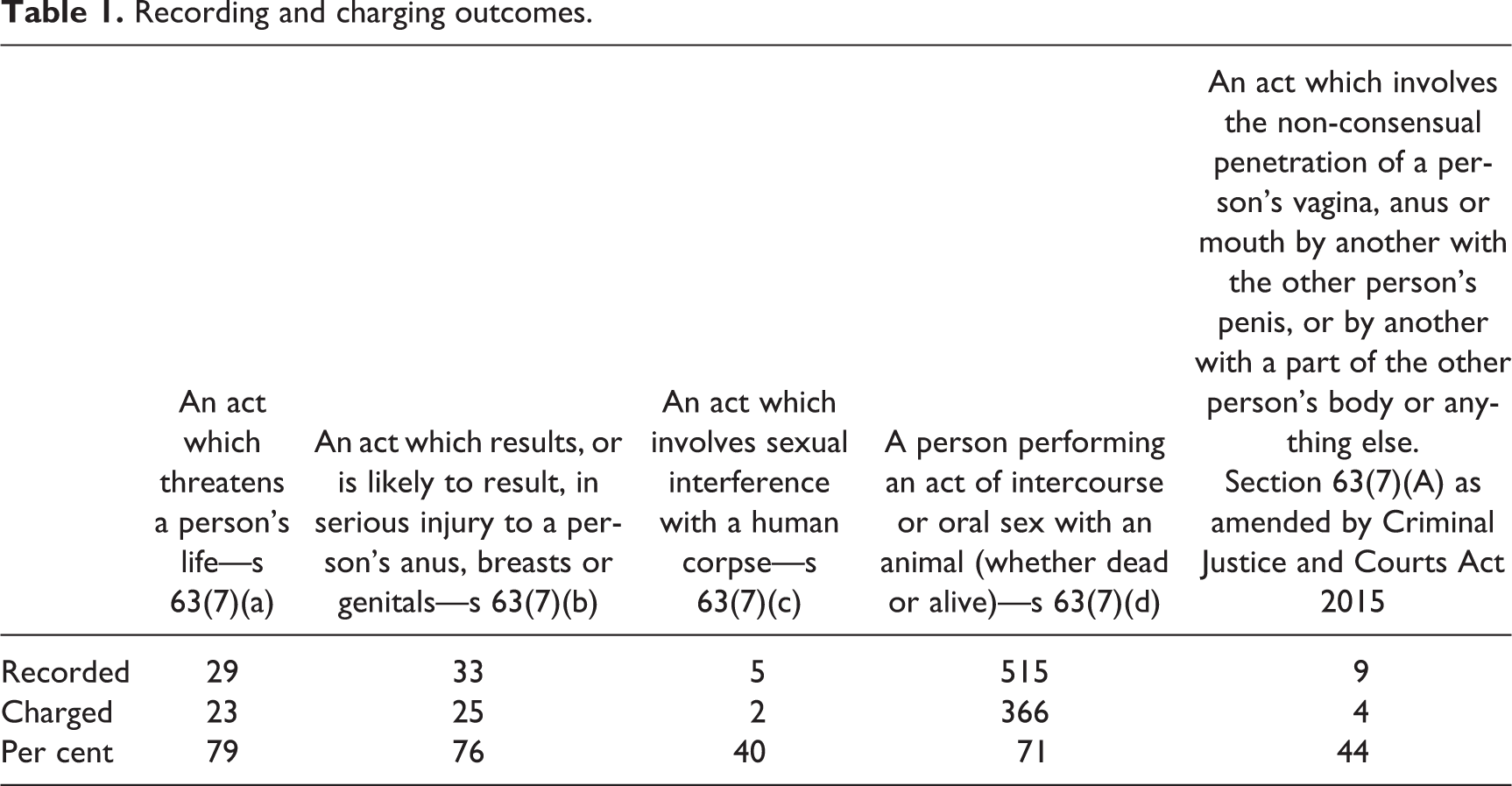
The categories with the lowest charging rate was sexual interference with a human corpse (40 per cent) and images involving rape or assault by penetration (44 per cent). These findings indicate that extreme pornography offences are being charged more often than not; and a higher proportion of recorded incidents are charged compared with other forms of sexual offending. 54
Nature of Extreme Pornography Being Charged
We were also keen to understand more about what types of pornography were the focus of police investigations and whether charges were being brought in connection with other types of offending. The evidence to date has found that while concerns were originally expressed that the legislation would target those practising BDSM, 55 in fact, the law had been transformed into a ‘Safeguarding Vulnerable Animals Act’ with proceedings for bestiality images dominating prosecutions. 56 Between 2009 and 2014, of the 405 defendants who have been found guilty of possession extreme pornography, 86 per cent related to bestiality images. 57
Our new FOI data found that of the total charged cases where data on the nature of the pornography were available (n = 366), the vast majority (85 per cent) related to bestiality images. This confirms the pattern already seen in the research described above, no doubt due to the easier identification of images involving animals as constituting ‘extreme pornography’.
In relation to the other categories of material, only two offences were charged for possession of material including a corpse (1 per cent). The figure was higher for images of serious injury to the anus, breasts or genitals (n = 25, 7 per cent), with a similar proportion (n = 23, 6 per cent) for images that are life-threatening, as detailed in Figure 1.
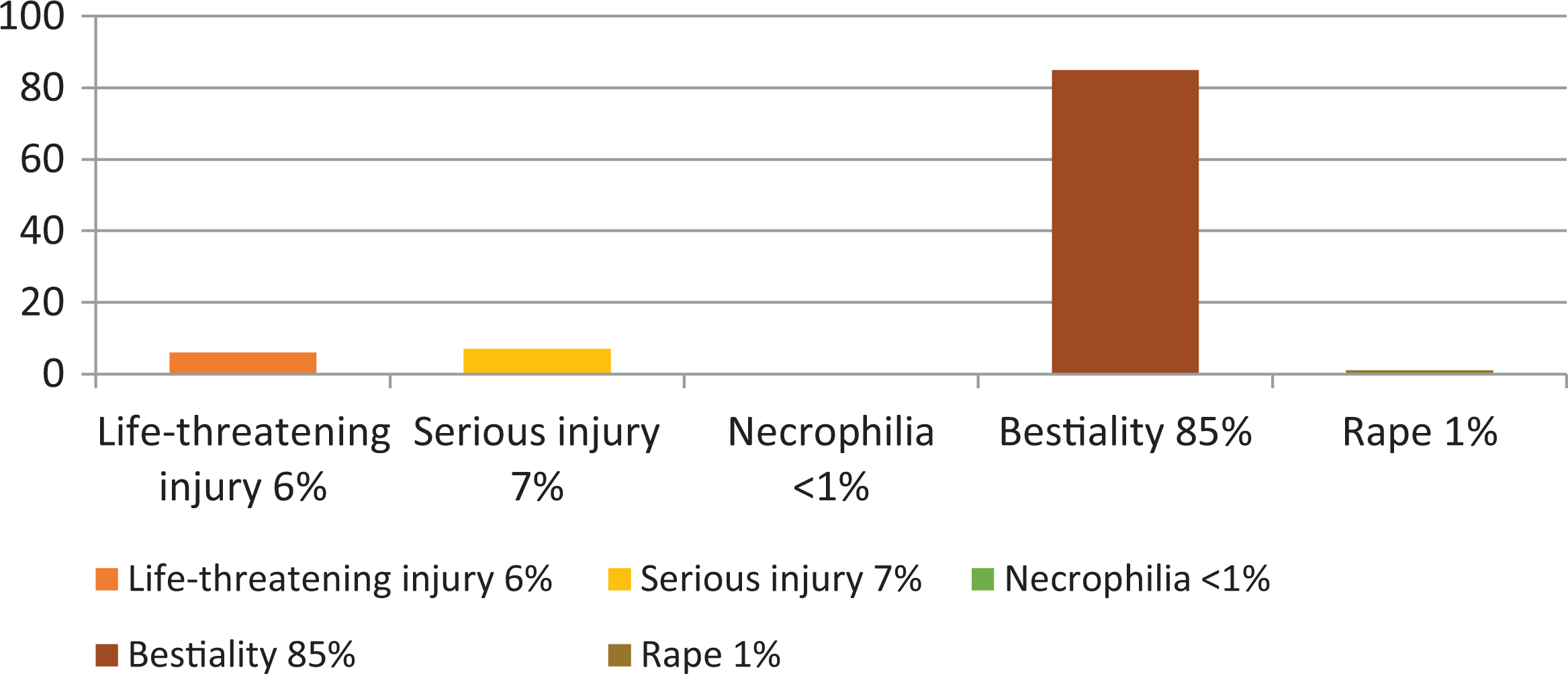
Charged offence categories %.
These data follow available information on prosecutions which together identify few charges and prosecutions relating to the ‘serious injury’ category, despite the initial fear that the legislation would ‘criminalise thousands of previously law-abiding people who have a harmless taste for unconventional sex’. 58 The organisation Backlash was established at the time of the Act to challenge the legislation as constituting a threat to sexual freedom and the fear the law would be used to challenge unconventional sexualities. Julian Petley argued that the Government intended to ‘intimidate and criminalise’ the ‘entire BDSM community’. 59 Another campaigner worried about: ‘How many tens or hundreds of thousands of people are going to be dragged into a police station, have their homes turned upside down, their computers stolen or their neighbours suspecting them of all sorts?’. 60
While there have been few prosecutions for this element of the legislation, the case of R v Walsh demonstrated many of the difficulties of the law. 61 Prosecuted for possession of images of consensual sexual activity between the defendant and two others, involving anal fisting and urethral sounding, the defendant was acquitted of all charges. 62 We cannot know, of course, the basis on which the jury reached its decision, but there was sufficient doubt that the images were either pornographic, obscene or depicting acts likely to lead to serious injury. As argued by Rackley and McGlynn, this prosecution was misguided, it being difficult to see how this case involving a small number of images, a very limited distribution and depiction of images on the margins of those covered by legislation was in the public interest. 63 Nonetheless, while this prosecution was misguided, it is plain from prosecution statistics that few cases in general are brought on the basis that the images are of serious injury. This is likely due to the challenge of being sufficiently clear that the images reach the thresholds of the legislation relating to the specifics of the type of image covered. 64
Rape Pornography
In relation to the rape porn offence, between 2015 and 2017, a total of nine incidents were recorded by the police. Only four of the rape porn incidents were charged (0 in 2015–16, 4 in 2016–17). This means that 56 per cent (5 in number) of these cases ‘dropped out’ at the first stage of the criminal justice process (see Table 1).
These new data reveal that few cases of possessing rape pornography are recorded with even fewer being charged. Importantly, the overall number recorded and the proportion that lead to a charge are considerably lower than most other forms of extreme pornography; the only category with a smaller proportion of charges is the act with a human corpse (s 63(7)(b)). Since the rape pornography provisions were introduced in 2015, the Crown Prosecution Service (CPS) has reported that in each of the three years since the law was introduced, it has prosecuted 3, 24 and 26 cases of rape pornography equating to, most recently, 1.7 per cent of all extreme pornography prosecutions. 65 This slight increase from the previous year (1.2 per cent) 66 is due to a fall overall in the number of extreme pornography prosecutions (down from 1,929 in 2016–17 to 1,542 in 2017–18).
There may be a number of possible reasons for the low numbers of prosecutions for possessing rape pornography. It seems most likely that as with images constituting ‘serious violence’, the interpretation of images and decision as to whether they come within the legislation is not as straightforward as for bestiality images. 67 Therefore, with police not proactively investigating this offence, even if some images that are potentially rape pornography come to the attention of the police, the decision to investigate further and then prosecute is likely to be exercised against further action. There is also a risk that the police, other criminal justice personnel and regulators are interpreting the law too narrowly, perhaps only focusing on rape images that are real, that is of actual assaults, rather than realistic images as the legislature intended. 68
In terms of the content of pornography, it is difficult to say the extent to which pornographic images of rape and forced sex are available. 69 Despite the contentious and ongoing nature of public debates over pornography content and its regulation, there are surprisingly few up-to-date empirical studies investigating the content of online pornography. 70 In the most comprehensive study to date, Fiona Vera-Gray et al. found that around 2 per cent of the images available on the front page of mainstream online pornography websites were labelled as relating to forced or coerced sexual activity. 71 While this may appear to be a small figure overall, to the extent that some of this material may well constitute extreme pornography, and it is easily and freely available on the front page of the most popular mainstream pornography websites, it is concerning and suggests such material may be freely available on a wider basis. In relation to specific rape pornography websites, recent research focusing on the distribution of non-consensual sexual images found a number of dedicated rape pornography websites on both the clear and dark net. 72
It is clear, therefore, that while the law on rape pornography has only been in force for a few years, it has yet to shift the approach to prosecutions more generally and despite there being such material available, there is little appetite for prosecutions. While the number of prosecutions is increasing, this forms a tiny proportion of the overall cases of extreme pornography and the numbers are extremely small. Therefore, if the law is to generate any change in behaviour or online content, it is going to come from the expressive role of the law in condemning such material rather than prosecutions and convictions. 73
Characteristics of the Defendants Charged
Gender of Defendants: Vast Majority Are Men
We were interested to find out the gender of those charged with extreme pornography offences. Before this study, Antoniou and Akrivos examined a sample of 16 extreme pornography cases and found that each of the defendants in their study was men. 74 The most recent information on extreme pornography prosecutions provided by the CPS does not break down offending by category of gender. 75
In our study, we received information on gender for 99 per cent of cases. The overwhelming majority of those charged were men 97 per cent (n = 356) compared to 2 per cent (n = 9) women (Figure 2). 76
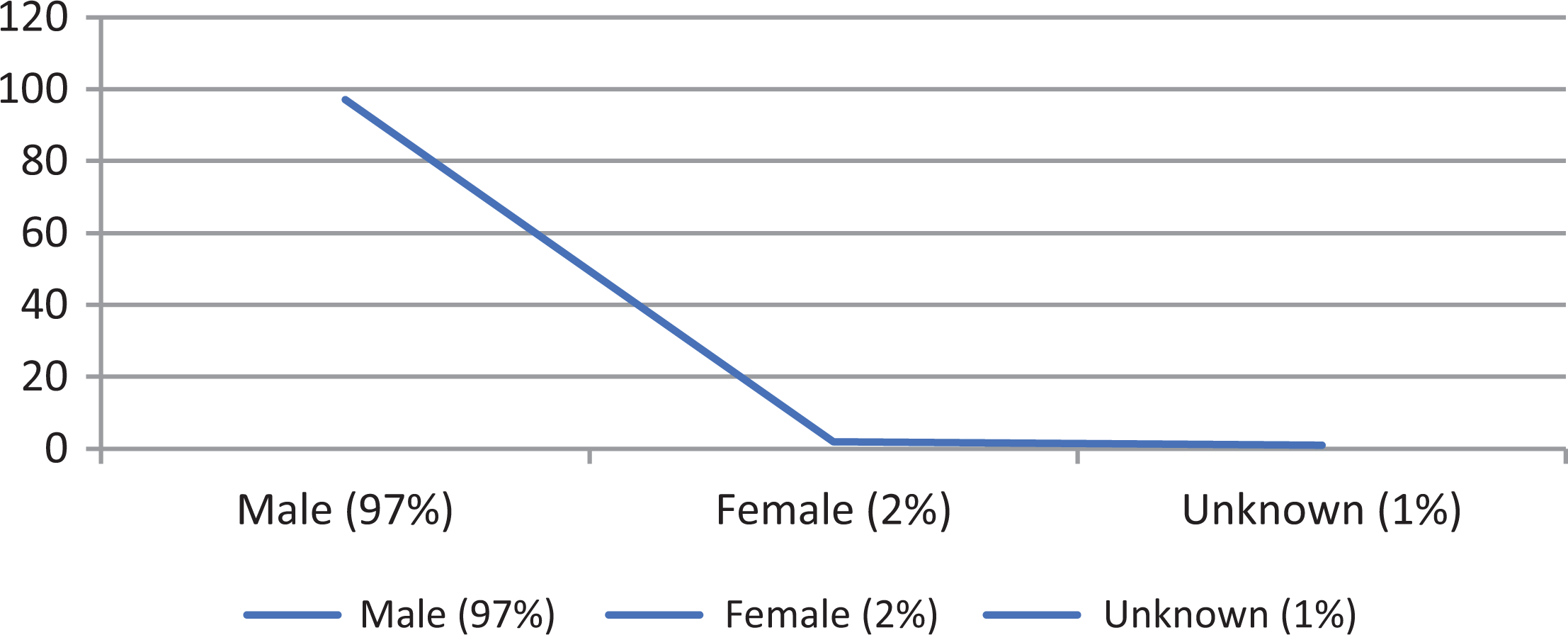
Gender of accused %.
While this result is not surprising, having the data nonetheless provides the evidence that it is predominantly men who are being charged with these offences. This does not, of course, tell us about the relative proportions of women and men possessing extreme pornography, but it does provide a starting point for hypothesising that more men than women may be viewing extreme pornography.
Age of Accused: Accused of All Ages From Under-16s to 80–89
There is a common assumption that pornography use is a younger man’s activity. For example, Walter DeKeseredy and Marily Corsianos suggest that ‘the growing body of research on porn reveals that, like criminal conduct in general, pornography use and distribution is “predominantly social behaviour” among young men’. 77 We were interested to find out whether this is reflected in the policing of extreme pornography.
Our data reveal that men across the life course are being charged with extreme pornography offences. While Figure 3 shows that the majority of men charged are between 20 and 50 years old, the data include 21 young men under 16 and 11 men over the age of 70. This suggests that these are not crimes perpetrated only by particular age groups such as young men and boys. It cannot be assumed, therefore, that use of extreme pornography is about the sexual experimentation by young men and boys, or sharing ‘gross’ images for fun, or a result of young people’s greater Internet use. The data also reveal that some of the concerns that the law would be used on a widespread basis to criminalise ‘experimentation’ have not been realised. 78
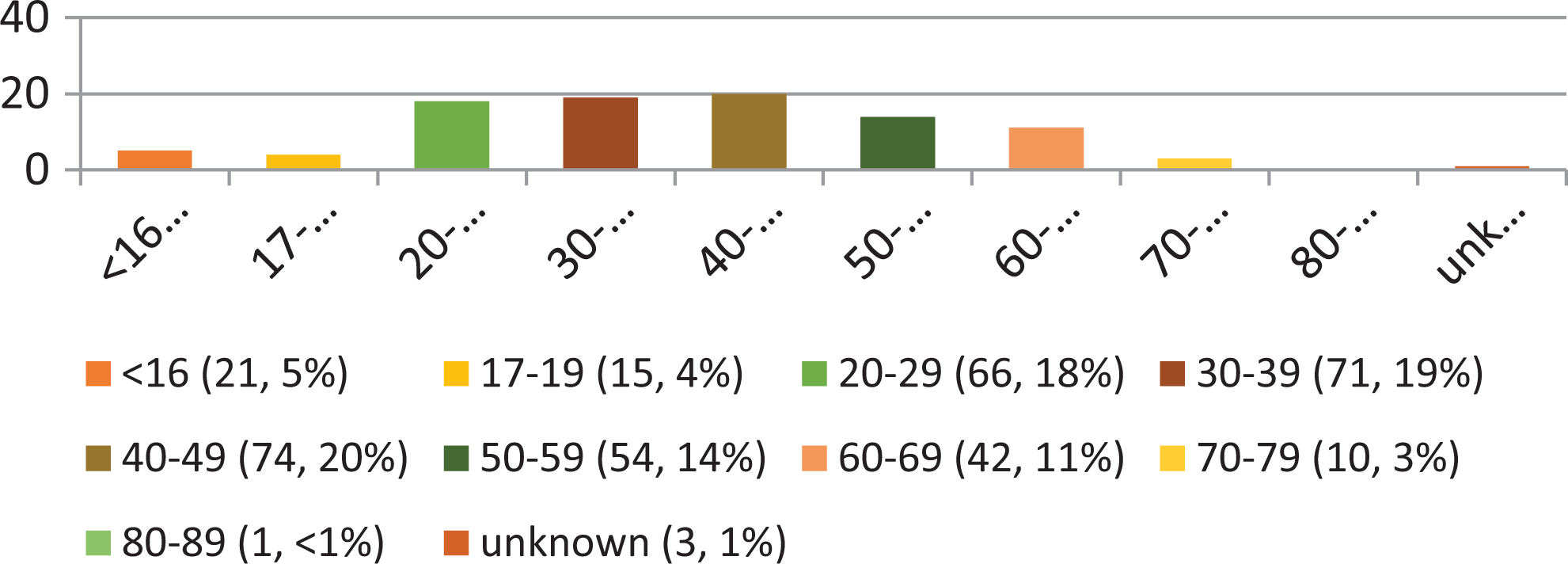
Age of accused %.
Of the nine women charged with offences, one was aged 30–39, three were aged 40–49, two were aged 60–69 and two were aged 70–79. In one case, the age was not known. The small number of women offenders makes it difficult to draw any meaningful conclusions about their characteristics.
Ethnicity of the Accused: Majority of Accused Are White
We sought information on the self-defined ethnicity of those charged with these offences. Antoniou and Akrivos had found that 13 of the 16 offenders in their study were white and such a finding was echoed in our data. As set out in Figure 4, our data reveal that of the 366 charged offences, the majority of those charged were ‘White’ (67 per cent), although in 25 per cent of cases, the ethnicity had not been recorded or was ‘unknown’. 79 Although our data came from 33 of 44 forces, these forces are diverse in terms of demographic and geographical location. Thus, although the findings do not represent all charges made across England and Wales, they are indicative of offender characteristics.
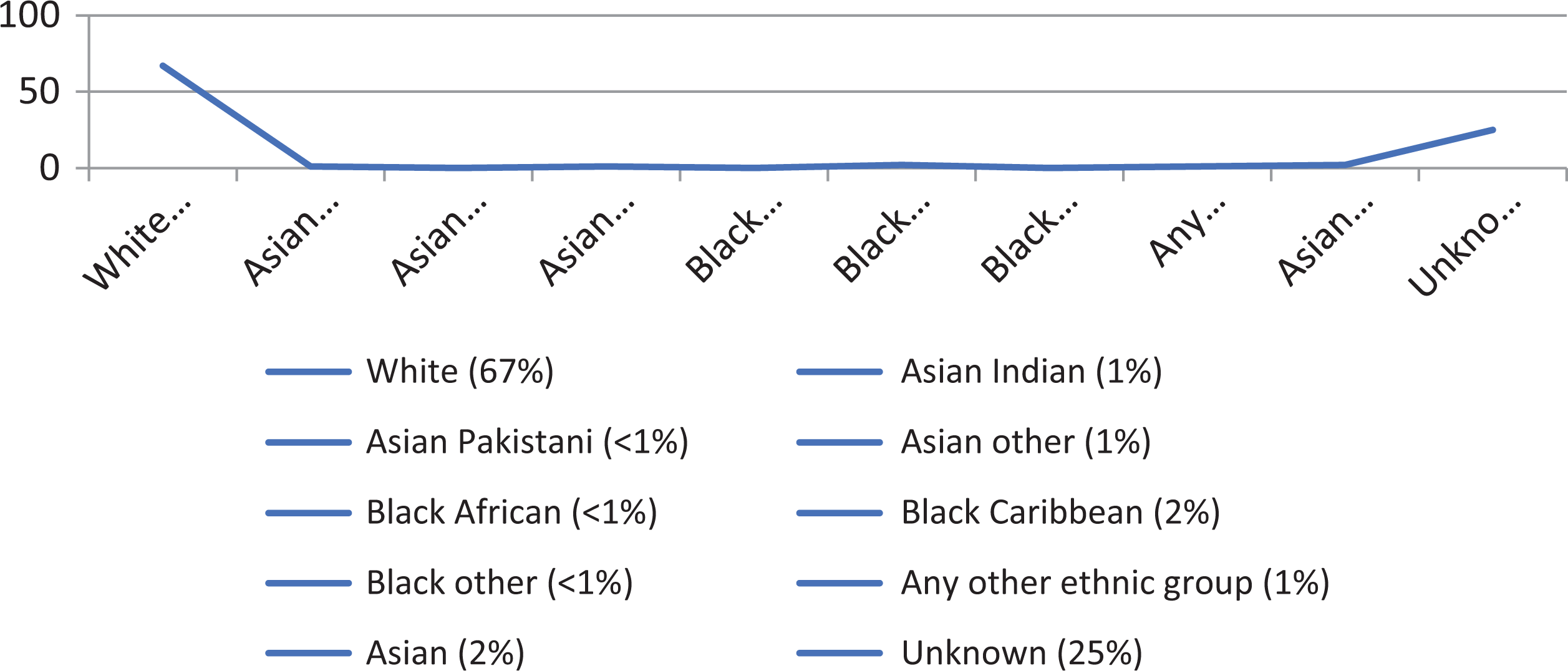
Ethnicity of accused %.
Extreme Pornography Prosecutions as Stand-Alone or With Additional Offences
We were interested to find out whether prosecutions for extreme pornography were stand-alone or were charged in conjunction with additional offences. When the legislation was first enacted, the police guidance was not to be proactive in relation to this offence, but to only investigate when presented in another context. 80 In the Antoniou and Akrivos study, only 4 of the 16 cases dealt exclusively with extreme pornography offences. In 11 of the remaining 12 cases, the extreme pornography offences were charged together with offences relating to indecent images of children. 81 Further, in all 16 cases sampled, the prosecution of the extreme pornography offence followed a ‘chance discovery’. 82 Most often, the images were discovered while executing a warrant under different legislation, though also while entering registered sex offenders’ homes for the purposes of risk assessment or from a tip-off. 83 This confirms the prediction made by Leigh at the time of the offence being introduced, namely that the prosecution of the offence would be ‘neither consistent, nor coherent but adventitious’. 84
Accordingly, we gathered information on whether other offences were charged together with the extreme pornography offence and these data were provided for 125 cases (34 per cent of 366 cases analysed; Figure 5). In the remaining 241 cases, the forces either did not respond to this question, were unable to answer the question (for example, where their databases and systems do not allow them to search for this information within the cost/time threshold provided for FOI requests) or refused to provide data.
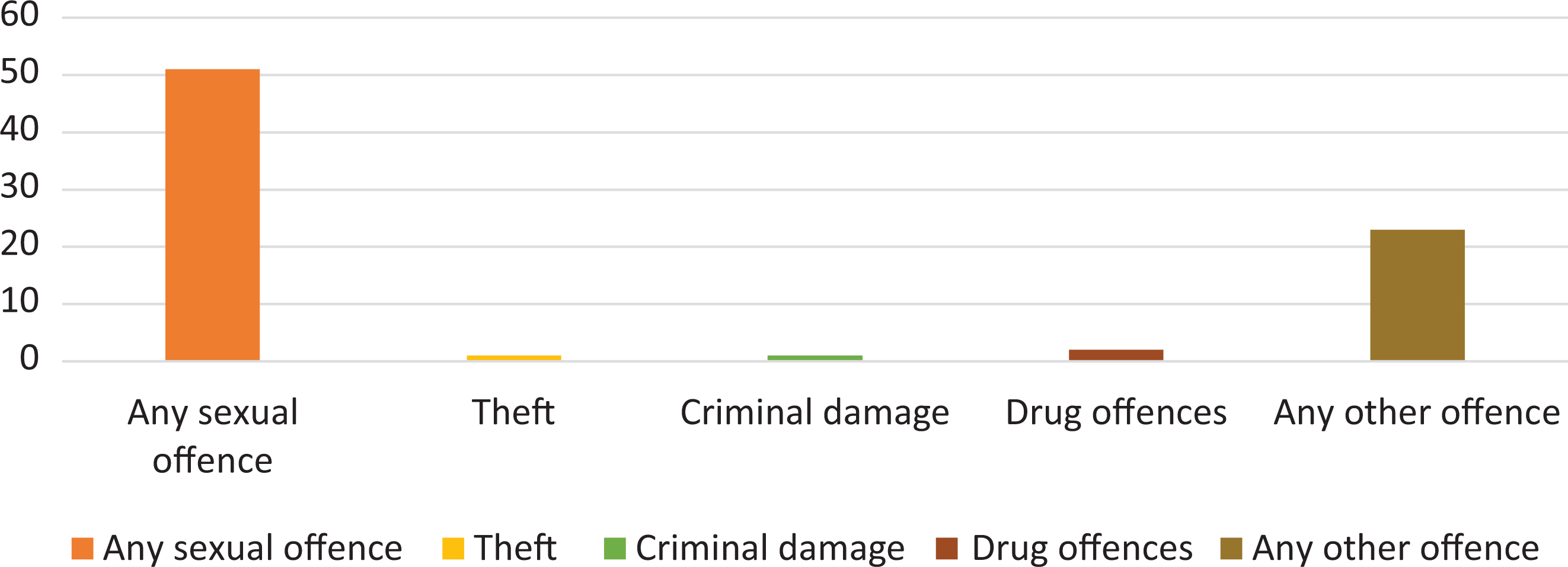
Number of offences (n=) recorded at the same time as extreme pornography charge.
Of the 125 cases where information was provided, the police indicated ‘not known’ in four cases. Consequently, we analysed the remaining 121 cases. For over half of those cases (64 per cent, n = 78), an additional offence was recorded at the same time as the extreme pornography offence. That is, in the majority of cases where information was available, the extreme pornography offence was not stand-alone. Most additional offences were classified as sexual offences (42 per cent, n = 51) although 23 (19 per cent) were categorised as ‘any other offence type’. It is not known how the police categorised any prosecutions relating to child sexual abuse image offences; that is, whether as sexual offences or ‘any other offence’.
Cases that were stand-alone (36 per cent, n = 43) may suggest a more proactive approach to investigating extreme pornography. However, it may also be that the only criminal offence passing a threshold for charging and prosecution is that relating to extreme pornography, affirming the concerns that the ‘possession offence is sometimes used when the real concern of the authorities is with the suspected commission of a different crime’. 85
Conclusions
This article has presented new data regarding recorded and charged incidents of extreme pornography between 2015 and 2017. Our findings indicate that the majority of recorded incidents result in a charge. The figures presented here are higher than the proportion of charges for other sexual offences, including sexual assaults and rapes, as well offences relating to the non-consensual sharing of intimate images.
In charged cases, the vast majority of those accused are white men. Interestingly, the age of those charged ranged from under 16 to between 80 and 89 years old, with the majority of offenders concentrated in midlife. This emphasises that pornography use is not confined to younger men. We found that the most common charged category of extreme pornography was that involving an animal, most likely such material is easier to identify and therefore prosecute. There were very few cases of threatening life, serious injury, necrophilia or rape pornography.
These findings echo previous research and discussions regarding extreme pornography being prosecuted on an ad hoc basis, commonly stumbled upon as part of another investigation, and with a predominant focus on bestiality imagery. It shows that the changes to the legislation to include rape pornography have yet to have any real impact on policing or prosecutorial practice.
It is yet to be seen whether the powers in the Digital Economy Act 2017 to enable the regulator to block websites hosting extreme pornography will be used. Abilash Nair describes these powers as a ‘golden opportunity’ to shift the approach to regulating extreme pornography from the possessor to those supplying such material. 86 Certainly, in view of the limited focus of police and prosecutors on the possession offence, as confirmed in the new data analysed in this article, alternative means of limiting the hosting and use of extreme pornographic materials would be welcome.
There is also a role to play by those companies which host violent and extreme pornography. Evidence suggests that the mainstream online pornography websites, while declaring such material as contravening their terms and conditions, continue to host such material. 87 It is hoped that the regulator appointed under the Digital Economy Act 2017, the British Board of Film Classification, will use their powers to take against such companies to limit their display of extreme materials.
At the same time, there remains considerable scope for the reform of obscenity and extreme pornography laws. Indeed, when reflecting on regulation overall, and the changing landscape of pornography, there is an urgent need for a wholesale review of the legal regulation of pornography. The starting point of any such review should be the removal of obscenity as the underpinning conceptual framing of the law. The focus of obscenity on the ‘corruption’ of the viewer fails to reflect more modern understandings of how pornography is consumed, produced and of its varying impacts. The laws on extreme pornography can then provide a basis for regulation, with their specific focus on the more violent and misogynistic forms of pornography. This concentration on the more ‘extreme’, in terms of representations of unlawful and harmful acts, is justified due to the cultural harm of such materials. At the same time, the law can only do so much to reduce the prevalence and adverse use of any extreme, violence and misogynistic pornography. A comprehensive approach to tackling sexual violence entails not only legal reform but also fully resourced preventative and educative strategies.
Footnotes
Acknowledgement
The authors would like to thank Fiona Vera-Gray for her valuable insights both when developing this project and reviewing an earlier draft of this article.
Declaration of conflicting interests
The author(s) declared no potential conflicts of interest with respect to the research, authorship, and/or publication of this article.
Funding
The author(s) received no financial support for the research, authorship, and/or publication of this article.