




Abstract
Recent studies have explored the history of consumerism in communist Eastern Europe, suggesting that socialist consumption followed its own rhythm and logic. However, when it comes to waste-making and recycling existing literature focuses on post-industrial waste practices of the Soviet bloc, paying little attention to post-consumer waste. However, socialist societies did not follow the West's example and refrained from introducing single-use materials, such as disposable beverage containers. Could this also mean that socialists did a better job to deal with their own post-consumer waste than the West? The current scientific knowledge does not answer that question. To cover that gap in the research, this article situates socialist beverage containers and especially recyclable soft drink bottles made of glass in a wider discourse about the meaning of waste, discards, recycling, and material culture in socialism, particularly in Hungary. It suggests that the socialist waste dilemma was unique to Eastern European economies because of its social, ideological, and cultural layers, of which the scientific community has limited understanding. It proposes that despite different ideological foundations, the socialists battled with similar waste problems than in the West, however systematic differences were large enough to produce less post-consumer waste and recycle that waste more efficiently compared to the West.
The process of defining trash and the decision of keeping it or dumping it seems to be a simple one: stay or go. However, it is a result of complex societal, ethical, cultural, economic, and technological mechanisms that differ from culture to culture. Before the twentieth century, human societies reused and recycled widely, and their systems were rather closed and circular. It was first the United States that developed a more open system that was based on factory production, brief use of goods, and packaging before sending them to incinerators and landfills. 1 After Second World War, open systems spread around the globe via Americanization and the American consumer lifestyle. Things got so bad that even though Americans and Europeans recycle much more today than in the 1960s and 1970s, the overall volume of total waste grows continuously in the United States and in the EU. 2 There are little signs of relief from the ever-widening waste stream because single-use packaging and containers make recycling expensive, difficult, and inefficient in the Global North up to today. 3
Compared with the West, the Soviets created a different system, where objects and consequently waste could mean different ideas than for Westerners. For example, disposable aluminum cans and plastic bottles were neither produced nor sold in industrial quantities in the Soviet Bloc. In fact, disposable aluminum cans were so rare that socialist citizens showed off their private collections of empty Western alu-cans as centerpieces of home decoration. However, the waste situation in the Soviet bloc was neither even nor constant, and most importantly, not without a series of crises. By the 1970s, social-, economic-, and environmental transformation processes sped up, which in many respects resembled the West but retained a unique character. The root cause of the problem was similar to that in the West: socialist industries produced a growing number of consumer goods, which included a widening share of packaging such as beverage containers. However, the manifestation of the problem was typically state-socialist.
Although some of the elements of the socialist consumer and waste-making practices included specific, extremely wasteful features that were directly adopted from the West, one such example was when the Hungarian laboratory samples of Pepsi Cola were transported airborne to Offenbach in West Germany to maintain regular quality control of the final product by the European headquarters of PepsiCo. 4 Other elements of this process, for example, some of the packaging materials, e.g., glass bottles, stemmed from the specific economic, social, and environmental conditions of state socialism. Nevertheless, the more socialists consumed, the more packaging material ended up in the waste stream, contributing to a growing socialist waste crisis.
The socialist post-consumer waste dilemma, on the other hand, was markedly different from the Western one, yet the scientific community knows very little about it. For example, despite the key environmental importance of consumer waste-making and recycling, there have only been a handful of historical studies devoted to that broader subject with regard to socialism, leaving the history of post-consumer waste and consumer recycling in the Soviet Bloc woefully underexplored. As a result, the scholarly community has a very vague understanding of the past of consumer recycling schemes outside of the West, particularly in the socialist bloc during the Cold War.
One paper cannot cover such a huge gap in historical scholarship but can contribute at least some instances to better understand such a fascinating subject. Thus, this research focuses on the particularities of socialist soft drinks and their discarded and recycled glass containers in Hungary within the wider history of socialist waste-making and the subsequent socialist waste crisis and aims to explain how socialist waste-making and recycling were different from what developed in the West.
The reasons why the scientific community knows little about socialist post-consumer waste are twofold. Firstly, the Cold War and post-Soviet scientific status quo denounced the existence of consumer practices in state socialism, and revolved around ideas that claimed consumers had few options for consuming and wasting in the socialist ‘shortage economy.’ For example, Kornai's ideas on the ongoing and varied shortages that crippled socialist economies, especially from the perspective of consumers, influenced discussion on the non-existence of communist consumerism during the last decade of communism and even beyond that period. 5
Recent studies have altered Kornai's grim image of shortages and explored the history of consumerism in the socialist bloc. Bren and Neuburger argued that consumption in communist Eastern Europe followed its own rhythm and logic, and the experiences of consumers in Cold War Eastern Europe were not mere imitations of the forms of consumerism in the West. If socialist consumer practices were tied to the idea of socialist modernity, this also meant the socialist state had a far more complex impact on consumption and, subsequently, on waste-making than under capitalism. 6
Gille et al. seconded that opinion and focused on the role of socialist ideology in consumption, which aimed to free people from the consumerist outlook of bourgeois society, allowing them to become versatile, harmoniously developed individuals. If this was the case, then the question emerges: how did socialism's alternative modernity improve consumer and, most importantly for this article, waste-making practices compared to the way they were already present in the capitalist system? 7
Clearly, there are more questions than answers in this regard, so it is no wonder that Crowley and Reid maintain that to understand socialist modernity better, it is essential to investigate the specificities of socialist consumerism and the results of consumerism as well! Crawley and Reid called for further research in the diverse national contexts of the Bloc, which this article will do by looking at the waste-making and recycling aspects of socialist soft drink consumption within the wider frame of socialist consumption. 8
Although the latest consensus suggests that consumer behavior not only existed in state socialism, but that consumer behavior was distinctively different in the Soviet bloc when compared to the West, on the subject of waste-making, discards, and recycling, existing studies do little help because a substantial body of literature focuses on the post-industrial waste practices of the Soviet bloc, with most works forming a consensus and condemning highly wasteful and inefficient industrial practices. 9 In that respect, newer research has criticized earlier scholarship that placed an emphasis on waste and environmental pollution that came from inefficient industrial practices that were seen as the result of state policies rather than a boom in consumption. 10
The question emerges, however, if socialist industries were so wasteful, could socialist consumers effectively curtail waste production as a result of their consumer practices, or rather, seconded the wasteful industrial practices of socialism? Sporadic earlier research suggests that socialist consumers might have recycled significantly more than consumers in many Western countries. 11 For example, Gille stressed that the ‘new,’ post-Soviet waste practices of Eastern Europe after 1990 had different, yet on occasion more horrific, environmental impacts than earlier socialist waste-making due to increased consumerism. 12 Ideological foundations might have had much to do with the hypothesized efficiency of post-consumer waste recycling in socialism. Beck Pristed suggested that recycling in the USSR did not have to entirely follow the same economically profitable principles as in capitalism; rather, communist recycling was built on ideological foundations as opposed to the profit motive in the first place and gradually changed during the Cold War to a more economically tuned direction. 13
This ‘rational’ change might have been influenced by the political reforms of the 1950s–60s that made way for the emergence of a new category of socialist consumers. It was the first period when consumption flourished throughout the socialist bloc, in Yugoslavia, post-1956 Hungary, post-1968 Czechoslovakia, and Poland in the 1970s, and even in Bulgaria and Romania before the austerity measures of the 1980s. 14
Sugary drinks represent a niche in many economies, but they occupied a symbolic and central societal space in socialism, even in wartime Stalinism. 15 Probably because of that key position, Soviet authorities prioritized the supply of precious raw materials such as sugar and saccharin, an expensive zero-calorie sweetener used in diabetic drinks, in Tallinn, the capital of the Estonian SSR for the Tallinn Soft Drink Factory only a few months after the end of Second World War in 1945. 16 During the darkest Stalinist times, production of soft drinks grew in Estonia significantly, with an increase from 17,450 hectoliters in 1947 to over 55,000 hectoliters by 1951. 17
The production of soft drinks under Stalinism started at a low volume and was a tiny part of a heavy industries-focused economy that put consumer needs on the margin. For example, in Hungary, war-like Stalinism disgruntled the population by 1951–52, and political, economic, and social tensions escalated, which combined led to an uprising in October 1956. The Soviet tanks put an end to the revolution, and when the new Kádár regime adopted Khruschev's reform strategy of ‘coexistence’ with the capitalist bloc, it instrumentalized the need for political reform to support the development of a ‘human-faced’ socialism. Kádár called for moderate reforms, which included the pursuit of the development of service industries. The time for the socialist soda pop boom has come. 18
Kádár focused many of the regime's economic efforts on improving living conditions to preserve ‘peace in society,’ such as new leisure time opportunities and adjacent new consumer practices, which included the mass production of refreshing and healthy food and drink choices. On the other hand, the public demand for such items was exponentially growing along with the consumer reforms. 19 Hungary's first iconic non-alcoholic brand to make a commercial success was Bambi, a synthetically flavored soft drink that was already selling 150,000 bottles per day in 1961, and its market was growing aggressively by a whopping 30 percent annually in the early 1960s. The Capital Mineral Water Company diversified and developed other products such as the Bear-Bambi, a mix of forest fruit flavors; the spearmint-orange Sleeping Beauty; the blackberry Daisy; and the lemon-flavored Traveler's Soda, which combined multiplied the problem between tailing supply and soaring demand, and the company has a hard time to satisfy consumer needs. 20
The rapid take-off in soft drink consumption in Budapest in the early 1960s was not unique to the socialist bloc. Similarly to capitalism, the modernization of production facilities was the socialist answer to increasing consumer demands. For example, in Yugoslavia, the Subotica based Subotičarcka beverage factory modernized the bottling department, which included the installation of a new bottling line, to reach the annual production of 20 million bottles of orange and lemon-flavored sodas in 1965, a whopping 100 percent growth within just a year. 21 Modernization spread everywhere in the Soviet bloc, even on the southwestern fringes of the USSR, where in the city of Beregovo within the Ukrainian SSR, the local fruit processing kombinat introduced a new conveyor belt-based technology as early as 1957 that more than doubled production. 22
The need for soda production modernization was recognized in Hungary too. In 1961, the City Council of Budapest discussed soft drink production issues at the Capital City Mineral Water Company and concluded that soft drink production had been too dependent on human power and thus had to be mechanized immediately. The Budapest report noted that for a daily output of 50,000 bottles, the manual input of 14 workers was needed in three work shifts, bringing the total number of employees to 42 per day. To solve the inefficiency problem and fill the rapidly rising thirst for sodas, the City Council recommended setting up a fully automatic assembly line, which would increase the quantity produced as well as the productivity of the process. 23
In Hungary, the increased production quickly led to supply chain issues and a lack of raw materials in the production process. In March 1961, the Executive Committee of the Budapest City Council discussed supply issues, among which fresh syrup seemed to be the Achilles heel of the process. For optimal results, fresh syrup had to be processed into soft drinks within a day or two. The committee report found out that the Budapest Cannery supplied bottlers with old syrup produced a month and even longer before. Although safe to consume, old syrup formed a gray, oily surface top layer in the soft drink that misappealed consumers and induced a series of consumer complaints. 24
Quality problems with increased soft drink production were typical and widespread in the socialist bloc. For example, in 1966, in Split, Croatia, local authorities seized 3000 bottles of contaminated lemon soda. Authorities assumed that the batch was spoiled; however, the chemical evaluation suggested that the drinks were safe to consume, and only the color of the beverage looked odd to consumers. 25
Domestic beverage production technologies and hygienic systems struggled to keep up with the centrally prescribed production growth rates in many Eastern European countries. Before the Thaw, Western soft drink brands could not be imported or produced in large quantities because, officially, they were frowned upon as symbols of Western decadence. For example, Coca-Cola was regularly labeled as ‘tar water’ a drink that contained nothing but ‘water and a little coffee.’ 26 But as part of the growing East–West cooperation during the Thaw, communist countries step-by-step gained access to foreign beverages and even production capacities. The first attempts at bottling Western sodas aimed to satisfy Western tourists in developing tourist resorts in Southeastern Europe. Bulgaria started to operate a Coca-Cola bottling plant in Varna on the Black Sea Coast in 1965 with a 50,000 bottles daily capacity. 27 Romania constructed a Pepsi bottling unit in the Munca factory in the seaside city of Constanta to produce 10,000 bottles a day. 28
Although the first attempts to cooperate with Western companies served primarily the needs of the developing tourist industry in the socialist bloc, Western soft drinks, and their adjacent technology and quality assurance system gradually grew to serve the entire population. Modest capacities were boosted. In Hungary, the initial 15 million annual capacity of the first Traubisoda plant – an Austrian grape-flavored soda developed and owned by the Lenz Moser company – was doubled in just 3 years by 1973. 29 Traubisoda did reach incredible popularity in the nation of 10 million by selling over 72 million bottles annually in the early 1980s. 30
Perhaps one of the reasons behind Traubi's incredible success was that it was better equipped to align with socialist ideology than ‘synthetic’ American brands. In 1981, the popular Hungarian daily Magyar Hírlap, celebrated the tenth anniversary of Traubisoda, which the newspaper referred to as ‘nature's gift’ to the People's Socialist Republic of Hungary. The article, one of many similar publications, trumpeted the perceived benefits of juice-based carbonated beverages to the public by citing the high content of pure fruit juice, which was sourced from domestically grown produce and manufactured via rigorous and clean technological processes overseen by Traubi's Austrian patenter.
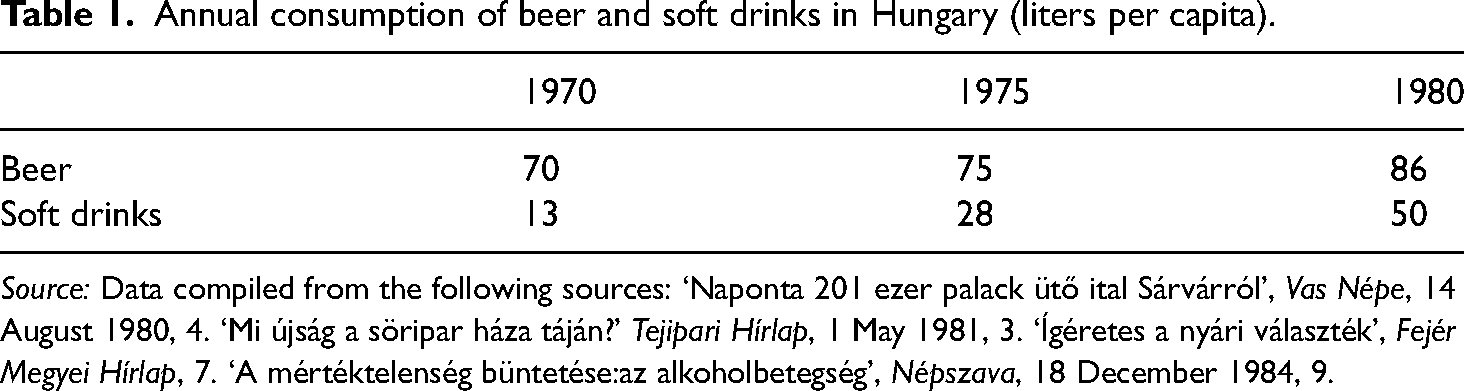
Socialist consumers poured down more than just Traubisoda in Hungary. Between 1970 and 1980, Hungarians drank an increasing volume of bottled non-alcoholic beverages along with the massive amount of alcohol, e.g., beer, supplied to the market. However, as a result of the aggressive campaigns to promote soft drinks, sodas began to overcome a large gap between alcoholic beer, traditionally marketed as a refreshment, and soft drink consumption, which increased from 13 liters per capita to 50 liters per capita yearly (Table 1).
Annual consumption of beer and soft drinks in Hungary (liters per capita).
Source: Data compiled from the following sources: ‘Naponta 201 ezer palack ütő ital Sárvárról’, Vas Népe, 14 August 1980, 4. ‘Mi újság a söripar háza táján?’ Tejipari Hírlap, 1 May 1981, 3. ‘Ígéretes a nyári választék’, Fejér Megyei Hírlap, 7. ‘A mértéktelenség büntetése:az alkoholbetegség’, Népszava, 18 December 1984, 9.
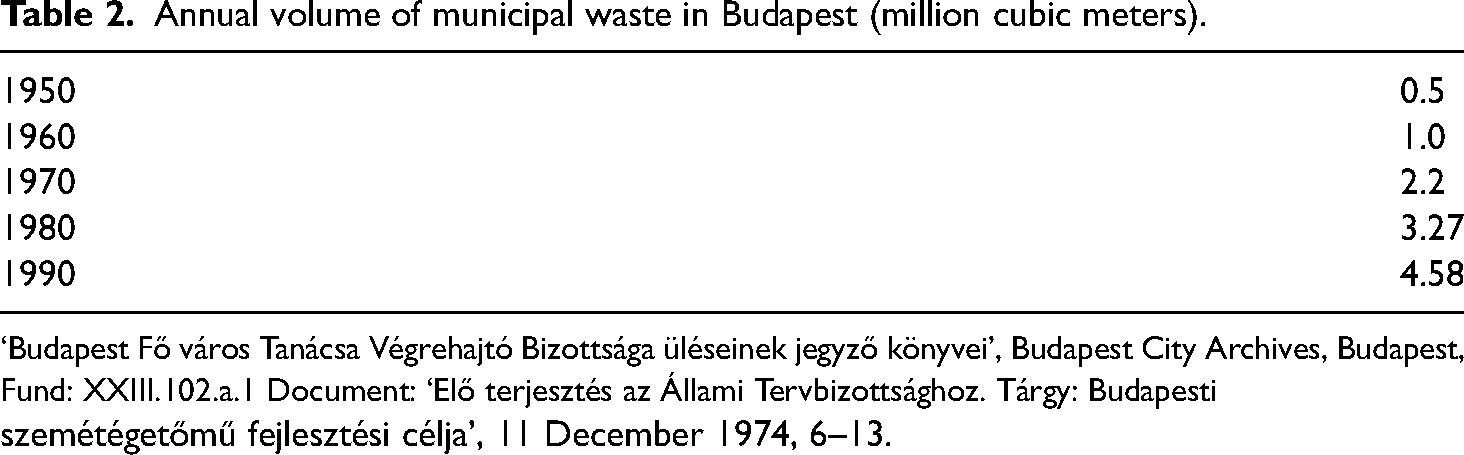
Annual volume of municipal waste in Budapest (million cubic meters).
‘Budapest Fő város Tanácsa Végrehajtó Bizottsága üléseinek jegyző könyvei’, Budapest City Archives, Budapest, Fund: XXIII.102.a.1 Document: ‘Elő terjesztés az Állami Tervbizottsághoz. Tárgy: Budapesti szemétégetőmű fejlesztési célja', 11 December 1974, 6–13.
That substantial growth in soft drink consumption was part of the larger restructuring of the domestic market and consumer practices in the 1960s and 1970s, when, according to Valuch, the first signs of socialist ‘overconsumption’ appeared in Hungary. During the 1960s, and especially after the economic reforms of 1968, the quantitative requirements of the socialist plans were fulfilled, and authorities were focused on the growth of selection. By the 1970s, ‘prestige products’ such as alcoholic and non-alcoholic beverages, cigarettes, and confectionery were consumed by a wide scope of society. Supply in most market segments surpassed consumption in socialist Hungary by the end of the 1970s, and that abundant supply sparked shopping tourism from neighboring countries, including Austria. Foreign shoppers looked for traditionally high-quality Hungarian products such as salamis and sausages, wine, pastas, and paprika-based products in the grocery stores of the ‘Happiest Barrack.’ 31 As a result of rapidly changing consumption patterns and relative abundance, fruit juice and carbonated soft drink production consumption tripled in Hungary between 1966 and 1970. 32
There was also an added ideological layer behind the skyrocketing soda production and subsequent glass waste in socialism, and alcoholism had a lot to do with it. Previously, it has been maintained that alcoholism was denied, for example, by Soviet authorities and that anti-alcoholism campaigns did not exist until Mikhail Gorbachev took over party leadership and initiated a strict anti-alcoholism campaign in 1985. 33 Documents from Hungary suggest otherwise. By the late 1950s, 60,000–80,000 Hungarian families were severely affected by alcoholism, which worried communist medical scientists, health professionals, and state authorities. At least one family member was an alcoholic in 250,000–300,000 families. In a country of less than 10 million, alcoholism became difficult to manage. 34
Late-19th and early-twentieth century European science linked non-alcoholic beverage promotion to lower alcohol consumption in society, and that anti-alcoholism discourse directly influenced postwar communist medical science. 35 In the late 1950s, scientific discourse on the social and economic costs of excessive alcohol consumption grew rapidly. Communist scientists disagreed on the causes of alcoholism, but they agreed that excessive alcohol consumption was one of socialist societies’ biggest challenges and was primarily a social, economic, and cultural issue. 36
Political decision-makers sought scientific help to address the complex issues related to alcohol consumption and invited experts in 1958 to the National Assembly's Health and Social Committee hearings about the latest scientific advances on the social, economic, and medical aspects of alcoholism with the purpose of informing political decision-making for the future. A long list of experts, including Boris Fáy (Head of Department, Hungarian Red Cross) and Béla Oravetz (Director, National Emergency Hospital), gave statements in front of the panel. They disagreed in many ways but agreed about the benefits of promoting non-alcoholic beverages to change the culture of alcohol consumption. The National Assembly adopted the expert advice when it established an anti-alcoholism committee in 1958 and aimed to curtail alcoholism through the promotion of non-alcoholic beverages. 37 László Maczelka, head of the Central Laboratory for the Confectionery Industry, summarized the committee's position by suggesting that product quality, steady production growth, and engaging marketing practices for soft drinks would aim to increase non-alcoholic beverage consumption and lower the consumption of alcoholic drinks. 38
The alcoholism prevention efforts failed in the short term, and the 1961 National Ambulance Service survey found a rise in acute alcohol poisoning hospitalizations. In response, stakeholders formed the interagency ‘National Committee against Alcoholism’ to develop an effective anti-alcoholism program. 39 The committee collected and organized information, negotiated with many experts and stakeholders, and created a comprehensive new program by the mid-1960s that was based on the extensive marketing and production of soft drinks instead of alcoholic beverages. The Council of Ministers in Hungary integrated the National Committee Against Alcoholism's program into the Third Five-Year Plan (1966–70), which placed emphasis on the development of the soft drink industry via modernizing and improving soda production as well as product quality and marketing. As a result, within the widening waste stream, the representation of beverage containers grew mostly because of changing consumption patterns and partly because of the ideologically motivated party struggle against alcoholism via the promotion of soft drinks.
Sodas were heavily demanded by the populace and were literally poured upon socialist consumers to save them from alcoholism. That trend fitted well with the changing general consumption trends in socialism that had a direct impact on the societal interpretation and quantity of waste produced. 40 In Budapest, the nation's capital, the amount of garbage discarded nearly doubled between 1950 and 1960, reaching 1,000,000 cubic meters of post-consumer waste per year (Table 2). 41
The growing amount of household waste coincided with the elimination of the notorious Cséry-telep, the Hungarian capital's formerly privately owned central landfill. The Cséry site was observed with horror both by communist officials and residents because of its unsanitary conditions and the masses of illegal and legal waste pickers who engaged in dangerous and humiliating waste sorting activities perceived by authorities and socialist media outlets as ‘undignified for socialist citizens.’ The Cséry landfill became a symbol of the country's pressing inequalities and a ‘relic of the capitalist past,’ both of which had to be eliminated according to the country's new post-1956 regime. 42
Once the Cséry dump was hastily closed, Budapest was left without a large central landfill, and by the mid-1960s, the city faced a very serious waste crisis, which was first discussed by the planners and politicians but eventually leaked out and was widely publicized. For example, the popular Esti Hírlap daily reported in 1965 that Budapest would run out of temporary landfill solutions in just 4 years. Even worse, trash was deposited in brickyard clay pits and in formerly used mining pits without a careful plan or consideration. Such pits offered only short-term ‘solutions,’ and the city's waste had to be transported further and further away from the center. 43
The widening of the waste stream accelerated in the 1970s. Additional problems arose from illegally dumped waste, which accounted for an unknown amount but nevertheless was collected in thousands of cubic meters. 44 Dumping was particularly prevalent around Budapest, the capital city. For example, in the Danube Bend, one of the most popular day-trip areas around the Hungarian capital, daily removal campaigns were organized to remove visitor's litter, such as food packaging, plastic bags, tins, and food scraps, as well as beverage containers. 45
Inaction regarding post-consumer waste sorting bothered a growing number of urban planners and scientists who mourned the stagnating or decreasing efficiency of the country's recycling system and the growing ignorance and carelessness of socialist citizens regarding recycling. Despite the growing need for sorting and the preliminary sorting plans of Budapest in 1964, it took another two decades before the first concrete steps were taken to create municipality-wide sorting of post-consumer waste in the Hungarian capital in the mid-1980s. 46
During the 1970s, municipal waste problems threatened to get out of control, and the use of central resources to begin building new waste disposal facilities in large towns and the capital city was more pressing than ever. According to the minutes of the Executive Committee of Budapest City Council, the city had been nearing capacity for municipal waste disposal facilities during the 1970s; thus, it was extremely urgent that modern landfills or other waste utilization projects be financed by public investments. 47 The minutes of the Executive Committee regularly listed inadequate local funds as a notorious problem. Thus, Hungarian towns, including Budapest, turned to the state and expected large state investments to improve garbage collection and waste disposal. 48
As part of this process, after pit management was introduced in the capital in 1968, the Budapest City Planning Company 49 assessed possibilities for waste disposal within the administrative boundaries of the city and found a 23 million cubic meter landfill capacity in former clay and quarry pits. The report calculated that with an expected average annual waste volume of 2.8 million cubic meters (which soon underwent a steep incline), the capital's municipal landfills would be available until 1980. Even when the report worked with lower waste production figures than what commenced, the extreme limitations of the waste disposal system became evident. In response to that urgency, the Executive Committee of the Capital City Council discussed the waste disposal options on 20 January 1971, where waste experts presented two main options: a new central landfill and a waste incinerator. 50
The incinerator option presented several advantages compared to the landfill possibility because it promised to speed up waste management and elimination close to the source in what was seen as ‘an environmentally friendly’ alternative, even when operating close to residential areas. The incinerator option was considered the ‘most suitable for public health’ as well, and other presumed advantages of the incinerator included easy handling and efficient burning of up to 2000 tons a day with a single plant as opposed to the time-consuming process and specific environmental conditions needed for successful landfilling. The added benefit of the incinerator was thermal energy generation because it was to produce ‘free energy’ for the city. If there were any skeptics in the city council, they probably were convinced by the over 100 incinerators working throughout Europe, both east and west, by the early 1970s. When decision-makers read the report's recommendation on possible future landfills, the advantages of incineration became even more apparent. The report stated that because of the complex technical, public health, and environmental protection aspects, disposal had to be considered only outside the city limits of Budapest, for example, in and around the suburban city of Vác, with an average distance of 30–40 kilometers from the city, needing over 600 new waste transport vehicles to be purchased. The landfill solution had two major shortcomings, there was a possibility that local groundwater sources may have been polluted, and the new landfill might provide a place to dump only for a decade or two when new locations even further from the city had to be looked for. In that context, the planned incinerator with a daily capacity of 1200 metric tons, managing about 60 percent of municipal waste, was seen as putting a permanent band-aid on the waste ‘problem.’ After the council decided to build the incinerator in 1974, construction began in 1976–77 and operation started in 1981. Due to structural limitations and frequent boiler failures, the actual capacity of the incinerator was significantly lower than the intended capacity. Also, the plant needed further reconstruction. Simultaneously, with the partial failure of the incinerator option, Budapest's municipal solid waste has undergone significant growth and change in terms of composition between 1970 and 1990. The proportion of paper, plastic, glass, and metals increased significantly. The annual volume of waste more than doubled from 2.2 million cubic meters to 3.27 million cubic meters between 1970 and 1980 and further skyrocketed to 4.58 million cubic meters by 1990. 51 It is particularly challenging to compare East–West data, especially during the Cold War; however, when compared with the present situation, in Austria, an ecologically conscious nation of nearly 9 million, roughly 250 million cubic meters of waste are generated annually, which is about 10 times more per capita per annum than in Budapest in 1990. 52
By the 1980s, major cities in Eastern Europe faced a fully fledged waste crisis similar to the one in Budapest. Despite similarities between East and West when it comes to the production of waste and the mounting waste issue, there were distinctive differences in the volume and composition of post-consumer waste produced on both sides of the Iron Curtain. These differences were driven by the different political, economic, and social structures and resulted in diverging challenges and responses to the post-consumer waste issue.
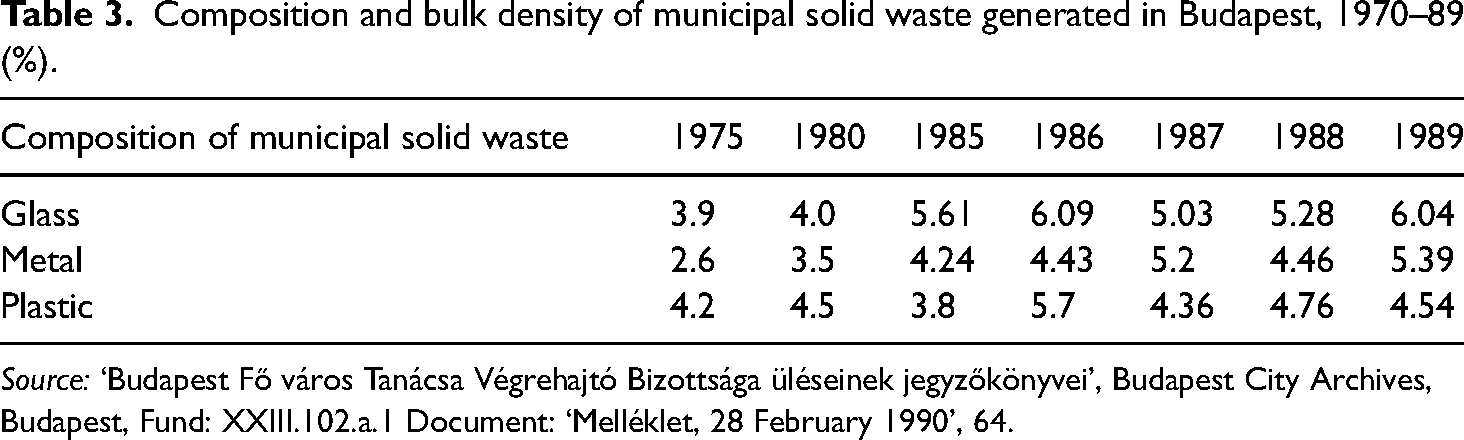
In the West, for example, the gross production of plastic packaging grew sixfold, while the volume of glass packaging only doubled in West Germany between 1970 and 1990. As a result, plastic packaging represented a four-times larger market than ‘traditional’ glass packaging in the Federal Republic by the end of the Cold War. 53 In contradiction to that, the bulk share of glass in the waste stream far surpassed plastic throughout state socialism in Budapest (Table 3).
Composition and bulk density of municipal solid waste generated in Budapest, 1970–89 (%).
Source: ‘Budapest Fő város Tanácsa Végrehajtó Bizottsága üléseinek jegyzőkönyvei’, Budapest City Archives, Budapest, Fund: XXIII.102.a.1 Document: ‘Melléklet, 28 February 1990’, 64.
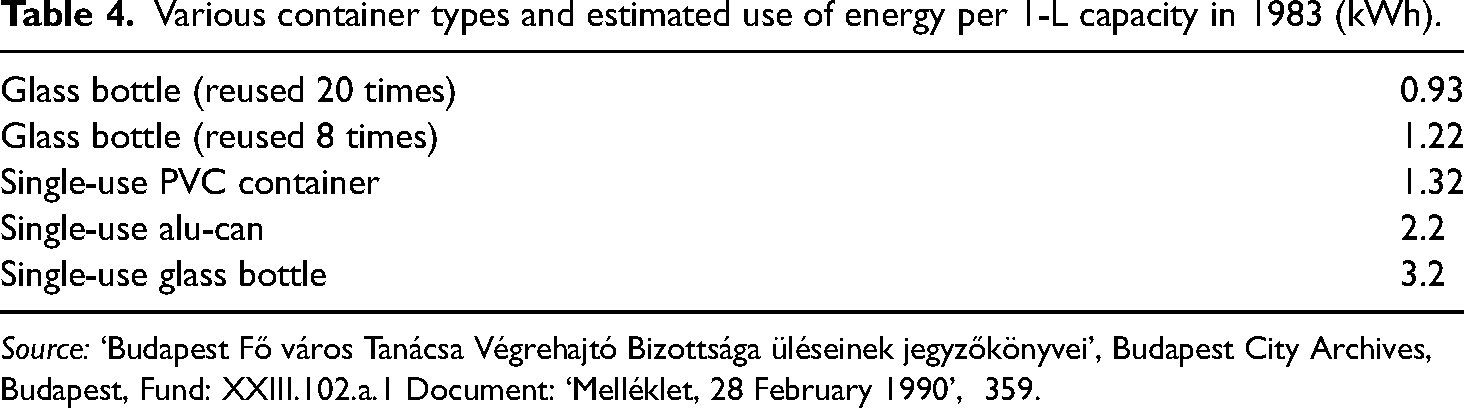
Various container types and estimated use of energy per 1-L capacity in 1983 (kWh).
Source: ‘Budapest Fő város Tanácsa Végrehajtó Bizottsága üléseinek jegyzőkönyvei’, Budapest City Archives, Budapest, Fund: XXIII.102.a.1 Document: ‘Melléklet, 28 February 1990’, 359.
Although the comparison of data is hard because of different methods and ideas about materials, it is reasonable to say that socialist consumer practices produced significantly less waste than capitalist consumerism, and more so, the socialist glass containers and their supremacy in state socialism over plastics may be portrayed as less heterogeneous and hence less hazardous waste-making practices than in the West.
Because of significantly lower consumption levels and more conservative choices of packaging materials than in the West, the socialist waste crisis had a smaller magnitude. Yet the increased volume of waste and especially the increased volume of glass beverage containers in the waste stream suggest that the socialist waste system had its own flows. Relying solely on glass when it came to beverages and various types of canned food was neither a miracle solution nor one that would have effectively eliminated waste. From a technical perspective, about 5–10 percent of household waste was glassware in the Soviet bloc, thus a significant utilizable resource. Glass held several advantages over single-use containers; for example, significantly less energy was required per unit when the glass containers were effectively recycled. In addition to the repeated use of the bottle, another option for recycling was the return of broken glass to the production process in the form of glass chips. However, that method presented the problem of separation between the colored and white glass. More so, white glass itself had many different chemical compositions that corresponded to various processing temperatures in the manufacturing process. Therefore, the use of broken glass in most cases could not account for more than 10–25 percent of the new glass product. Conclusively, the reuse of entire bottles was significantly more effective in terms of energy and materials used. On the downside, it was a process that required large human resources and a complex network of recycling (Table 4). 54
Because socialism operated mostly with recyclable and reusable containers and packaging, particular features of the recycling system, and in the case of the glass beverage containers, the bottle redemption process itself, should be looked into for hints on what could have gone wrong with the socialist waste.
In Hungary, beverage recycling began to form a separate system in 1961, when beverage container recycling points were tested in Budapest with positive feedback from consumers. The experiment showed that when collection points were located conveniently, for example, the one at Bartók Béla Road 51, a busy thoroughfare in central Buda, and when the recycling process was managed smoothly, consumers brought back their used beverage containers gladly to collect the deposits. 55
However, most beverage container recycling points did not work with as much efficiency as the flagship test unit in Inner-Buda. According to the law, grocery stores and bars were obliged to recycle the type of bottles they sold, regardless of whether particular bottles were purchased at the same location or elsewhere. Also, according to regulations, salespoints could not dispute the right to recycle, and they were obliged to pay out the deposit fees. In reality, however, the beverage container recycling system worked with fits and starts and was a constant source of criticism and ridicule. Over the decades, the inefficient recycling system grew into a symbol of the economic misorganization in socialist Hungary. For example, in 1974, Ludas Matyi, Hungary's satirical magazine 56 depicted the beverage container waste issue as a ‘Mountain of Glass … from the fairy tales’ when referring to the ‘towering pile’ of not recycled bottles. Satirists of Ludas Matyi came up with ‘ingenious’ solutions for socialist citizens on how to succeed in their ‘struggle with the irredeemable bottles.’ Their top suggestion was to find a ‘deserted plot’ in the city where the bottles could be left ‘under the cover of night.’ For more business-minded comrades, Ludas authors suggested starting an export business because recycled glass sold like ‘sugar’ in the West was only ‘more expensive’ and paid for in ‘convertible currencies.’ Editors reminded readers of an important cultural difference: that recycled bottles themselves did not pay in the West because capitalists did not recycle bottles but bought only glass chips. To overcome this ‘minor technical problem,’ Ludas recommended crushing bottles into glass chips ‘in a washing machine, meat grinder, or copper mortar.’ Once business-minded readers collected several rail wagons worth of crushed bottles at home, editors recommended they travel to the West and ‘find a buyer for them.’ 57
Socialist satirists at Ludas Matyi targeted the heart of the communist beverage container problem. According to planners, most of the beverage container packaging was supposed to be returned for a deposit fee. This plan, however, quickly ran into organizational issues, power battles, and disputes within the trade network as well as between traders and consumers. Individual problems were often attributed to a lack of clear central guidelines and central control; local actors often distorted the recycling process and pocketed profits at the expense of consumers. For example, in 1960, in District XIII of Budapest, the managers of the local grocery company instructed employees to pay less than the legally binding deposit fees for recycled bottles. 58
Local councils increased inspections over the 1960s to discover misuses of the bottle return system, including the mistreatment of customers and the disregard of central regulations. But resources were inadequate, and for example, in 1969, only 65 return locations were inspected in Budapest out of several hundred. 59 Trade authorities were struggling to increase the frequency of inspections and to fine managers who attempted to misuse the system. Although some cases were brought forward to set an example, most irregularities were left unpunished. For example, in 1971, criminal proceedings were put forward against a grocery store manager in the North Pest area of Budapest, who 60 refused to return glass bottles and failed to indicate recycling prices. 61
What the authorities did not manage to reach, scientists attempted to deliver. Kereskedelmi Szemle, a scientific-economic quarterly edited and published by the Research Institute for Domestic Trade, reported on the 1963 case study by Dr. László Vilász, that tackled problems with the bottle return system at the District XIV Grocery Company in the historical Zugló neighborhood of Budapest. Vilász argued that based on his case study, a combination of three new solutions was needed to reform the broken bottle return system. Firstly, stand-alone beverage container recycling points had to be established. Secondly, an independent division had to be created to deal with beverage containers within the recycling system. Thirdly, the government had to provide adequate authority and resources to the Secondary Raw Materials and Waste Utilizing Company to deal with the beverage container recycling challenge as a whole. 62
Vilász's study well symbolized that the technocratic, efficiency-centered bottle recycling system had reached its limits by the 1960s. Soon after, the socialist recycling system received impetus from an unlikely source via the infiltration and gradual adoption of anti-capitalist, leftist, and environmentalist theories from the West. For instance, the Hungarian press initially dismissed Rachel Carson's book ‘Silent Spring’ as sensational and unscientific; however, in the late 1960s, more scientists in Hungary spoke out against ecological destruction, erasing Carson's bad reputation and making Western (leftist) environmentalism accessible to a wider audience. 63 Hungarian philosopher-engineer-author Lajos Jócsik was one of the first popular environmentalists who warned about deforestation, animal extinction, chemicals, and predatory farming, often directly copying Carson's and other anti-capitalist Western scientists’ arguments in his popular environmentalist books published in hundreds of thousands of copies in the 1970s. 64
Hungary's rapidly changing environmentalist discourse affected all aspects of environmentalism, including beverage container recycling. In 1972, the communist government added a resolution from the First UN Conference of the Human Environment to the Hungarian Constitution as Section 57, ‘The Principle of Protecting the Human Environment.’ As a direct result, environmental research and development gained political and economic support alongside that shift. The Hungarian Academy of Sciences launched the ‘Protecting the Human Environment’ research program in 1977, which received 130 million Forints during the Fifth Five-Year Plan (1976–81) and targeted, among other issues, municipal waste and recycling systems. 65
Despite the growing attention to recycling, the recycling system continued to decline in Hungary in the 1980s. The regime that placed such importance on satisfying customer needs via the rapid development of consumer opportunities, for example, soft drink production was not able to make the same effort to secure the safe recollection of soda bottles. Bottle recycling complaints evolved to represent a significant segment of consumer complaints by the 1980s. In 1981, when the Department of Organization of the Budapest City Council discussed consumer complaints for the preceding year, they concluded that the number of complaints regarding bottle returns grew, thus continuing to represent a significant proportion of all consumer complaints. For example, in District XX, the Erzsébeti Grocery Company received over a quarter of local customer complaints related to the corrupt recycling practices of local supermarkets and grocery stores. 66
The ill-functioning system inspired investigative journalists to take a deeper look into the discrepancies in the bottle recycling mechanism in Hungary. A report by Cs. Benkő Judit, published in the popular Esti Hírlap, suggested that the majority of customers did not know the exact technicalities for returning glass bottles to collect a deposit fee. Despite the grave issues of recycling in Hungary, about 50 percent of the 100 million glass containers produced in 1980 were recycled via grocery stores. 67 Even though communists complained about the lack of efficiency of their system, Hungarians recycled glass in the 1980s at an 11–12 times higher rate than US consumers today. Ironically, three-and-a-half decades after the collapse of communism and nearly two decades of EU membership, the Hungarian recycling rate has dropped to approximately the same level as in the United States. 68
In the 1980s, sorting was discussed as a new opportunity to increase recycling rates, and the Capital City Council of Budapest approved plans to install post-consumer waste sorting equipment in multi-story buildings, particularly in large housing blocks. The council opened a public competition for designing a complex system, requiring consumers to pre-separate secondary raw materials like paper and cardboard for recycling. The project was coordinated by various public bodies, but implementation was slow and failed to take off. 69 Authorities were aware of the deep structural problems that hindered the introduction of sorting. Hard data have been available since the early 1980s to help guess the root causes. During the 1980s, when periodic recycling campaigns were organized regularly to recover glass, paper, and textiles, the recycling campaign experiments yielded extremely unfavorable results. Little useful material was collected, which was partly attributed to public indifference and indiscipline but also to a lack of systematic education on the subject. Although the cost of preparation (propaganda, distinctive containers, etc.) and carrying out the selective collection gradually grew over time, the amount of recovered materials remained negligible. However, reports summarized that efforts remained sporadic throughout the early 1980s, and a more systematic approach probably would have resulted in better yields. Research suggested the collaboration of the agencies involved to be the first step before introducing a city-wide sorting system in Budapest. 70
Despite the fiasco of efforts to establish systematic sorting, sorting recyclable waste campaigns, with a focus on paper, metal, plastic, rags, and glass, continued throughout the 1980s. The council of Budapest aimed to increase public engagement via propaganda, with a special focus on school-aged children and young adults, as well as to increase the comfort factor of the sorting solutions for residents. One such step was the establishment of a new type of secondary raw-material and waste utilizing company depos, where a wide array of recyclable waste could be returned in exchange for cash payments in the inner-city districts and new socialist housing estates, close to masses of consumers. 71
Decision-makers, however, were well aware of the near-impossible challenges the socialist recycling system was banging against. Scientists who regularly consulted the Budapest council studied foreign experiences, which they believed proved that the sorting had extreme limitations and that the sorting processes, as such waste processing plants, did not live up to the preliminary expectations of these facilities. One such negative example studied in detail was the Rinterzelt waste sorting plant in Vienna that began operations in 1980. The Austrian experience suggested that sorted materials often could not be reused or sold to third parties, and even theoretically easy-to-recycle materials such as glass and paper ended up in landfills or incinerators in large quantities because the processing industry did not require them. 72
Post-industrial pollution and waste in the Soviet bloc have been the subject of substantial historical investigations, but there are only sporadic academic studies that focus on post-consumer waste in communist Eastern Europe. This study aimed to shed light on the particular features of consumer practices and their direct results: post-consumer waste in the Soviet bloc by focusing on the Hungarian history of beverage containers, a peculiar and symbolic group of recyclables in socialism.
After the political reforms of the 1950s–60s the socialist waste stream widened, mostly due to the facilitation of new consumer practices that were unique to socialism but also due to ideological tools such as the fight against alcoholism via the promotion of soft drink consumption.
As a result, waste production skyrocketed in the East, but it still lagged capitalist waste production in quantity and was different in composition. Glass remained a significant packaging material in Hungary until the end of communism, and despite frequent discussions on the subject, the rate of beverage container recycling remained relatively high throughout the socialist period, hindering the recycling rates of many OECD states today.
Conclusively, although the socialist post-consumer waste management and recycling system, and especially the case of beverage containers, battled with a number of strategic shortcomings, it managed to keep post-consumer waste relatively successfully under control in terms of quantity and composition. The socialist ideology about building an alternative society had not only a direct impact on the ways consumerism evolved in socialist Hungary but also on the quantities and types of waste produced, as well as on the methods by which those materials, including beverage containers, were recycled.
Footnotes
Funding
The author disclosed receipt of the following financial support for the research, authorship, and/or publication of this article: This article has been produced with the financial support of the European Union under the REFRESH – Research Excellence For REgion Sustainability and High-tech Industries (project number CZ.10.03.01/00/22_003/0000048) via the Operational Programme Just Transition.
Notes
Biographical Note
 ).
).